Posts

Here are all published articles, sorted by date in descending order.

301 posts total
7 pages total
Inferring Network Evolutionary History via Structure-State Coupled Learning

Inferring Network Evolutionary History via Structure-State Coupled Learning

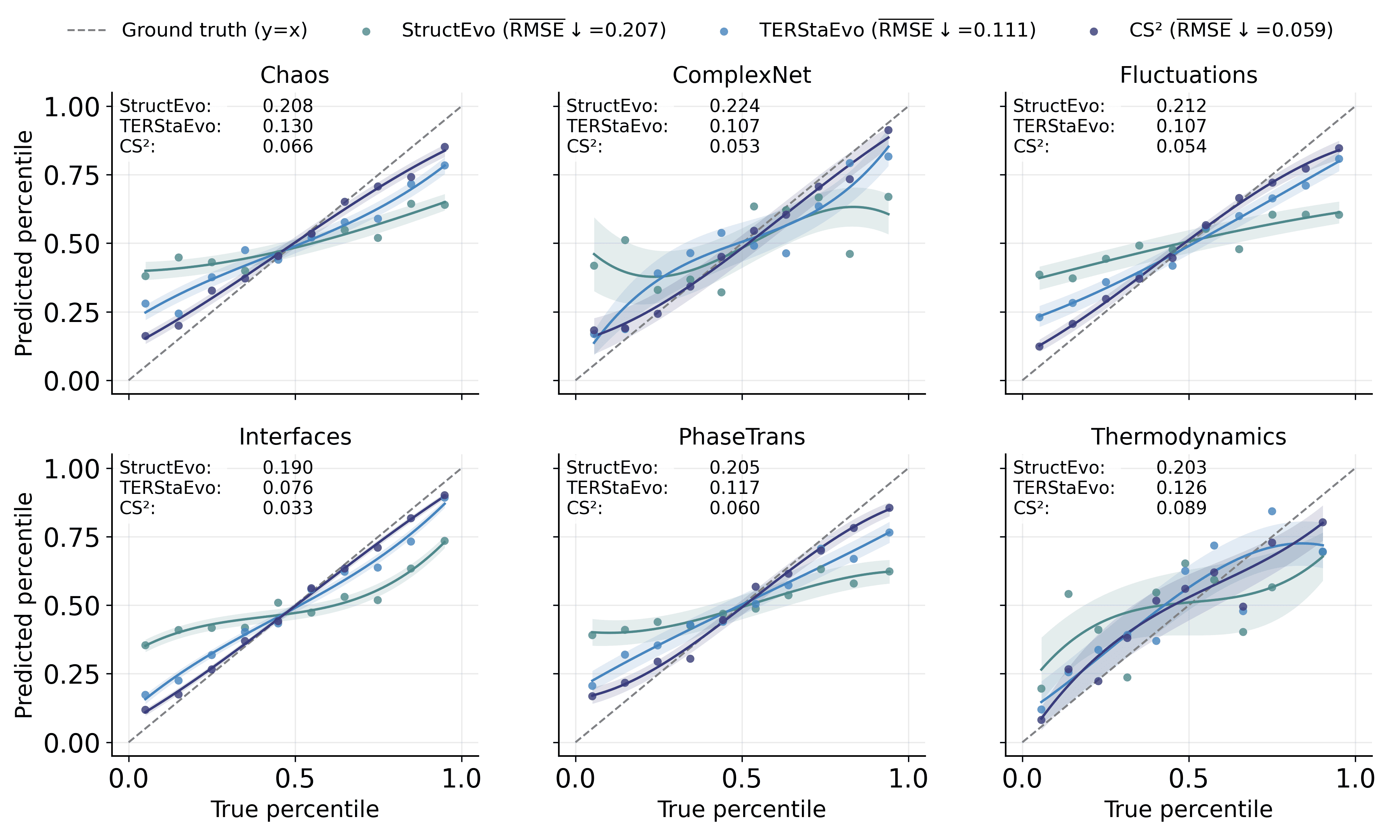
Inferring a network s evolutionary history from a single final snapshot with limited temporal annotations is fundamental yet challenging. Existing approaches predominantly rely on topology alone, which often provides insufficient and noisy cues. This paper leverages network steady-state dynamics -- converged node states under a given dynamical process -- as an additional and widely accessible observation for network evolution history inference. We propose CS$^2$, which explicitly models structure-state coupling to capture how topology modulates steady states and how the two signals jointly improve edge discrimination for formation-order recovery. Experiments on six real temporal networks, evaluated under multiple dynamical processes, show that CS$^2$ consistently outperforms strong baselines, improving pairwise edge precedence accuracy by 4.0% on average and global ordering consistency (Spearman-$ρ$) by 7.7% on average. CS$^2$ also more faithfully recovers macroscopic evolution trajectories such as clustering formation, degree heterogeneity, and hub growth. Moreover, a steady-state-only variant remains competitive when reliable topology is limited, highlighting steady states as an independent signal for evolution inference.
paper research
Intention Collapse  Intention-Level Metrics for Reasoning in Language Models

Intention Collapse Intention-Level Metrics for Reasoning in Language Models

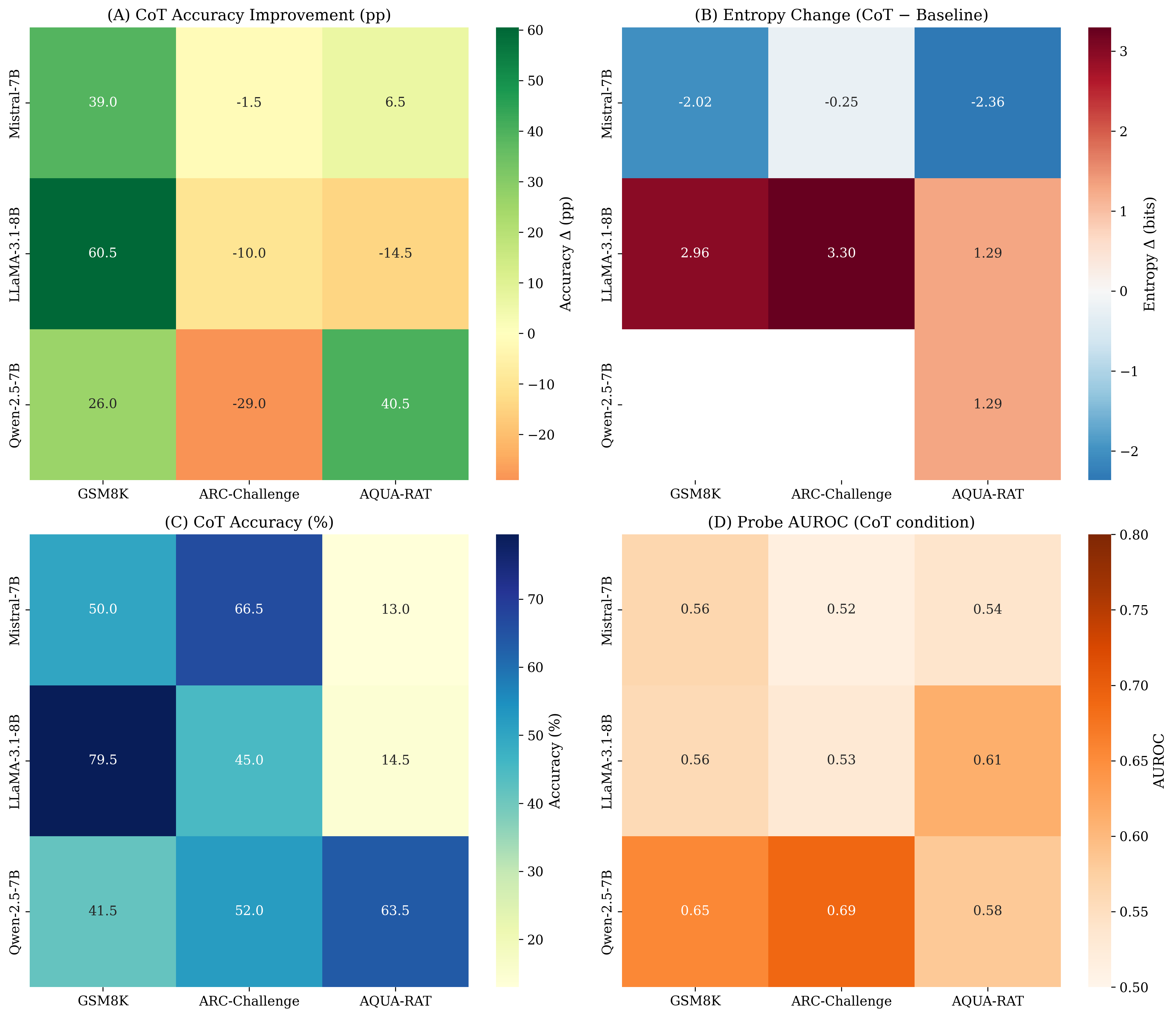
Language generation maps a rich, high-dimensional internal state to a single token sequence. We study this many-to-one mapping through the lens of intention collapse the projection from an internal intention space I to an external language space L. We introduce three cheap, model-agnostic metrics computed on a pre-collapse state I (i) intention entropy Hint(I), (ii) effective dimensionality deff(I), and (iii) recoverability Recov(I), operationalized as probe AUROC for predicting eventual success. We evaluate these metrics in a 3x3 study across models (Mistral-7B, LLaMA-3.1-8B, Qwen-2.5-7B) and benchmarks (GSM8K, ARC-Challenge, AQUA-RAT), comparing baseline, chain-of-thought (CoT), and a babble control (n=200 items per cell). CoT increases average accuracy from 34.2% to 47.3% (+13.1 pp), driven by large gains on GSM8K but consistent degradations on ARC-Challenge. Across models, CoT induces distinct entropy regimes relative to baseline, dH = Hint(CoT) - Hint(Base) Mistral shows dH < 0 (lower-entropy CoT), whereas LLaMA shows dH > 0 (higher-entropy CoT), highlighting heterogeneity in CoT-induced internal uncertainty. Finally, probe AUROC is significantly above chance in a subset of settings and can dissociate from behavioral accuracy (e.g., high AUROC alongside lower CoT accuracy on ARC-Challenge for Qwen), suggesting that informative internal signal is not always reliably converted into a final discrete decision under constrained response formats.

paper research
No Image

Interpretability-Guided Bi-objective Optimization Aligning Accuracy and Explainability

This paper introduces Interpretability-Guided Bi-objective Optimization (IGBO), a framework that trains interpretable models by incorporating structured domain knowledge via a bi-objective formulation. IGBO encodes feature importance hierarchies as a Directed Acyclic Graph (DAG) via Central Limit Theorem-based construction and uses Temporal Integrated Gradients (TIG) to measure feature importance. To address the Out-of-Distribution (OOD) problem in TIG computation, we propose an Optimal Path Oracle that learns data-manifold-aware integration paths. Theoretical analysis establishes convergence properties via a geometric projection mapping $ mathcal{P}$ and proves robustness to mini-batch noise. Central Limit Theorem-based construction of the interpretability DAG ensures statistical validity of edge orientation decisions. Empirical results on time-series data demonstrate IGBO s effectiveness in enforcing DAG constraints with minimal accuracy loss, outperforming standard regularization baselines.

paper research
IRPO  Scaling the Bradley-Terry Model via Reinforcement Learning

IRPO Scaling the Bradley-Terry Model via Reinforcement Learning

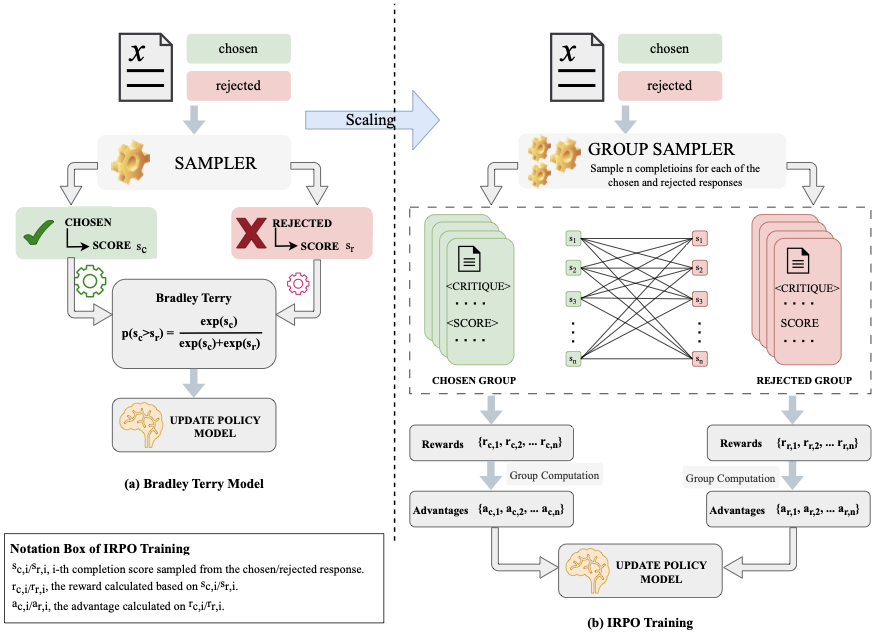
Generative Reward Models (GRMs) have attracted considerable research interest in reward modeling due to their interpretability, inference-time scalability, and potential for refinement through reinforcement learning (RL). However, widely used pairwise GRMs create a computational bottleneck when integrated with RL algorithms such as Group Relative Policy Optimization (GRPO). This bottleneck arises from two factors (i) the O(n^2) time complexity of pairwise comparisons required to obtain relative scores, and (ii) the computational overhead of repeated sampling or additional chain-of-thought (CoT) reasoning to improve performance. To address the first factor, we propose Intergroup Relative Preference Optimization (IRPO), a novel RL framework that incorporates the well-established Bradley-Terry model into GRPO. By generating a pointwise score for each response, IRPO enables efficient evaluation of arbitrarily many candidates during RL training while preserving interpretability and fine-grained reward signals. Experimental results demonstrate that IRPO achieves state-of-the-art (SOTA) performance among pointwise GRMs across multiple benchmarks, with performance comparable to that of current leading pairwise GRMs. Furthermore, we show that IRPO significantly outperforms pairwise GRMs in post-training evaluations.

paper research
Iterative Deployment Improves Planning Skills in LLMs

Iterative Deployment Improves Planning Skills in LLMs

We show that iterative deployment of large language models (LLMs), each fine-tuned on data carefully curated by users from the previous models deployment, can significantly change the properties of the resultant models. By testing this mechanism on various planning domains, we observe substantial improvements in planning skills, with later models displaying emergent generalization by discovering much longer plans than the initial models. We then provide theoretical analysis showing that iterative deployment effectively implements reinforcement learning (RL) training in the outer-loop (i.e. not as part of intentional model training), with an implicit reward function. The connection to RL has two important implications first, for the field of AI safety, as the reward function entailed by repeated deployment is not defined explicitly, and could have unexpected implications to the properties of future model deployments. Second, the mechanism highlighted here can be viewed as an alternative training regime to explicit RL, relying on data curation rather than explicit rewards.

paper research
ITSELF  Attention Guided Fine-Grained Alignment for Vision-Language Retrieval

ITSELF Attention Guided Fine-Grained Alignment for Vision-Language Retrieval

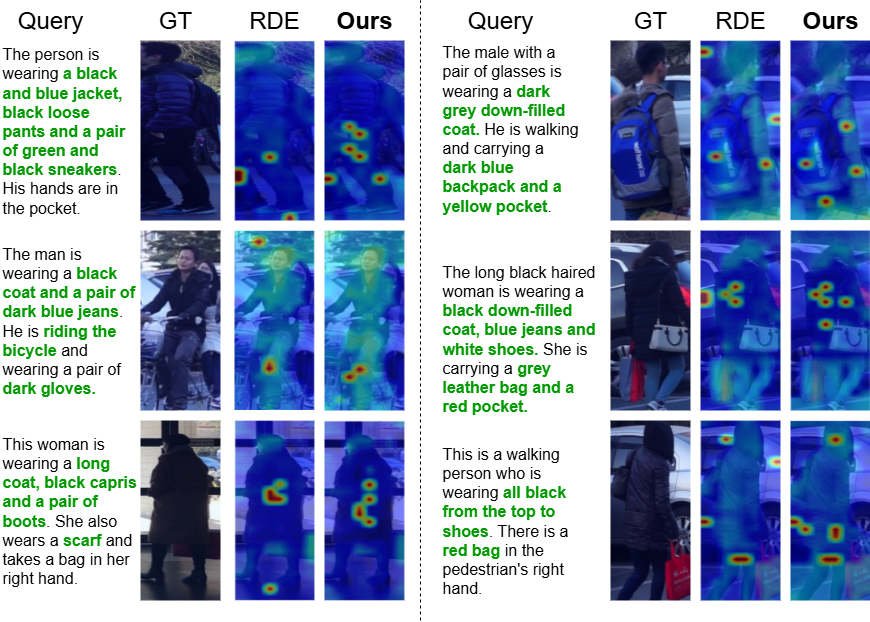
Vision Language Models (VLMs) have rapidly advanced and show strong promise for text-based person search (TBPS), a task that requires capturing fine-grained relationships between images and text to distinguish individuals. Previous methods address these challenges through local alignment, yet they are often prone to shortcut learning and spurious correlations, yielding misalignment. Moreover, injecting prior knowledge can distort intra-modality structure. Motivated by our finding that encoder attention surfaces spatially precise evidence from the earliest training epochs, and to alleviate these issues, we introduceITSELF, an attention-guided framework for implicit local alignment. At its core, Guided Representation with Attentive Bank (GRAB) converts the model s own attention into an Attentive Bank of high-saliency tokens and applies local objectives on this bank, learning fine-grained correspondences without extra supervision. To make the selection reliable and non-redundant, we introduce Multi-Layer Attention for Robust Selection (MARS), which aggregates attention across layers and performs diversity-aware top-k selection; and Adaptive Token Scheduler (ATS), which schedules the retention budget from coarse to fine over training, preserving context early while progressively focusing on discriminative details. Extensive experiments on three widely used TBPS benchmarks showstate-of-the-art performance and strong cross-dataset generalization, confirming the effectiveness and robustness of our approach without additional prior supervision. Our project is publicly available at https //trhuuloc.github.io/itself

paper research
Jenius Agent  Towards Experience-Driven Accuracy Optimization in Real-World Scenarios

Jenius Agent Towards Experience-Driven Accuracy Optimization in Real-World Scenarios

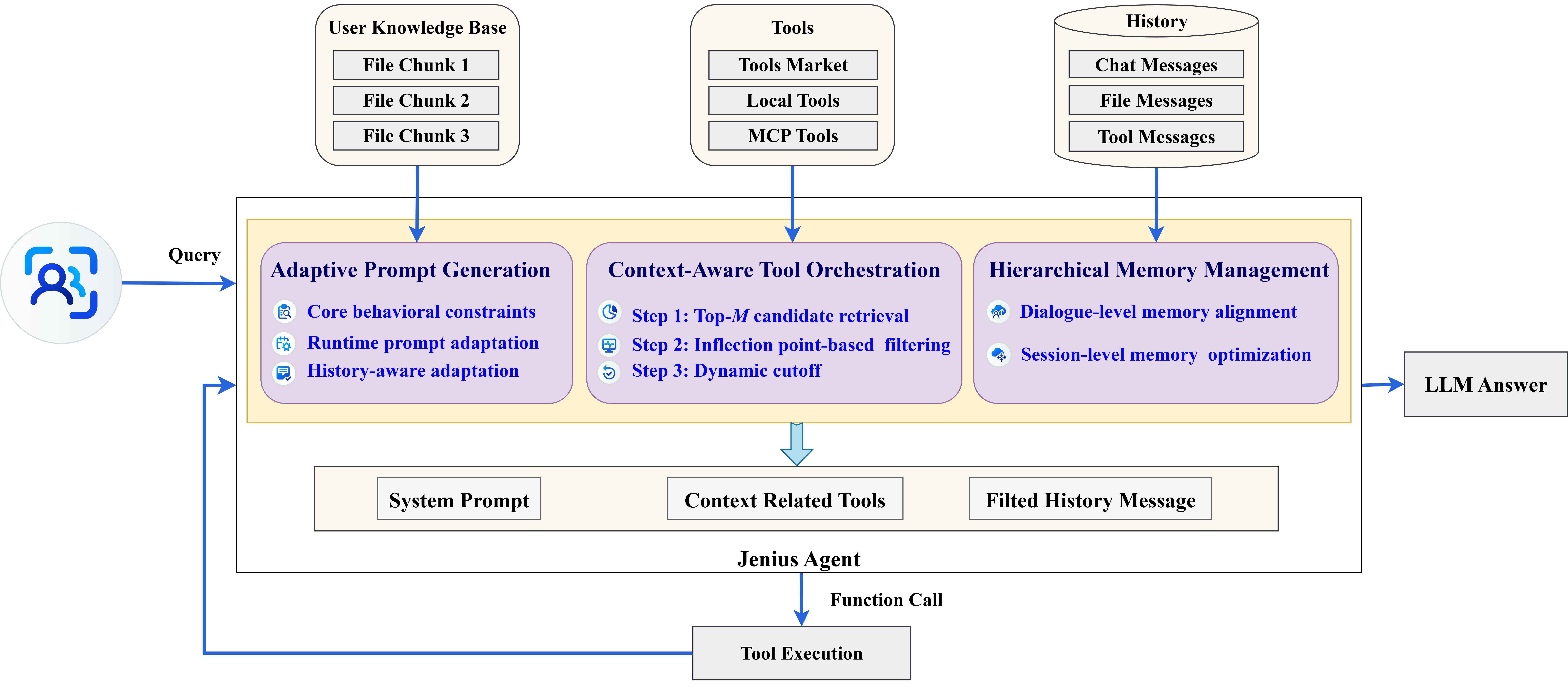
As agent systems powered by large language models (LLMs) advance, improving performance in context understanding, tool usage, and long-horizon execution has become critical. However, existing agent frameworks and benchmarks provide limited visibility into execution-level behavior, making failures in tool invocation, state tracking, and context management difficult to diagnose. This paper presents Jenius-Agent, a system-level agent framework grounded in real-world deployment experience. It integrates adaptive prompt generation, context-aware tool orchestration, and layered memory mechanism to stabilize execution and improve robustness in long-horizon, tool-augmented tasks. Beyond system design, we introduce an evaluation methodology that jointly measures procedural fidelity, semantic correctness, and efficiency. This framework makes agent behavior observable as a structured execution process and enables systematic analysis of failure modes not captured by output-only metrics. Experiments on Jenius-bench show substantial improvements in task completion rate, with up to a 35 percent relative gain over the base agent, along with reduced token consumption, response latency, and tool invocation failures. The framework is already deployed in Jenius ({https //www.jenius.cn}), providing a lightweight and scalable solution for robust, protocol-compatible autonomous agents.

paper research
JMedEthicBench  A Multi-Turn Conversational Benchmark for Evaluating Medical Safety in Japanese Large Language Models

JMedEthicBench A Multi-Turn Conversational Benchmark for Evaluating Medical Safety in Japanese Large Language Models

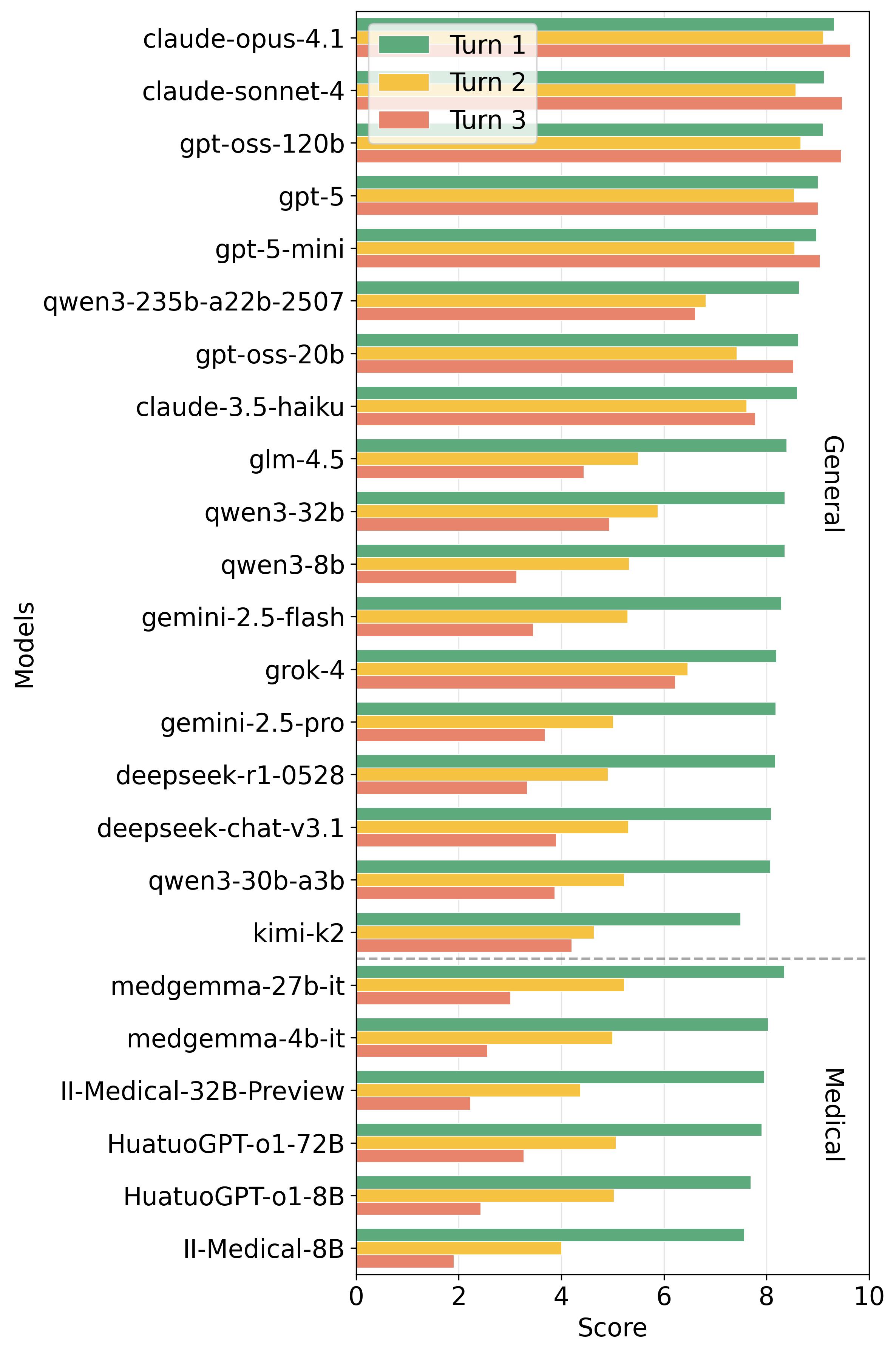
As Large Language Models (LLMs) are increasingly deployed in healthcare field, it becomes essential to carefully evaluate their medical safety before clinical use. However, existing safety benchmarks remain predominantly English-centric, and test with only single-turn prompts despite multi-turn clinical consultations. To address these gaps, we introduce JMedEthicBench, the first multi-turn conversational benchmark for evaluating medical safety of LLMs for Japanese healthcare. Our benchmark is based on 67 guidelines from the Japan Medical Association and contains over 50,000 adversarial conversations generated using seven automatically discovered jailbreak strategies. Using a dual-LLM scoring protocol, we evaluate 27 models and find that commercial models maintain robust safety while medical-specialized models exhibit increased vulnerability. Furthermore, safety scores decline significantly across conversation turns (median 9.5 to 5.0, $p < 0.001$). Cross-lingual evaluation on both Japanese and English versions of our benchmark reveals that medical model vulnerabilities persist across languages, indicating inherent alignment limitations rather than language-specific factors. These findings suggest that domain-specific fine-tuning may accidentally weaken safety mechanisms and that multi-turn interactions represent a distinct threat surface requiring dedicated alignment strategies.

paper research
Joint Link Adaptation and Device Scheduling Approach for URLLC Industrial IoT Network  A DRL-based Method with Bayesian Optimization

Joint Link Adaptation and Device Scheduling Approach for URLLC Industrial IoT Network A DRL-based Method with Bayesian Optimization

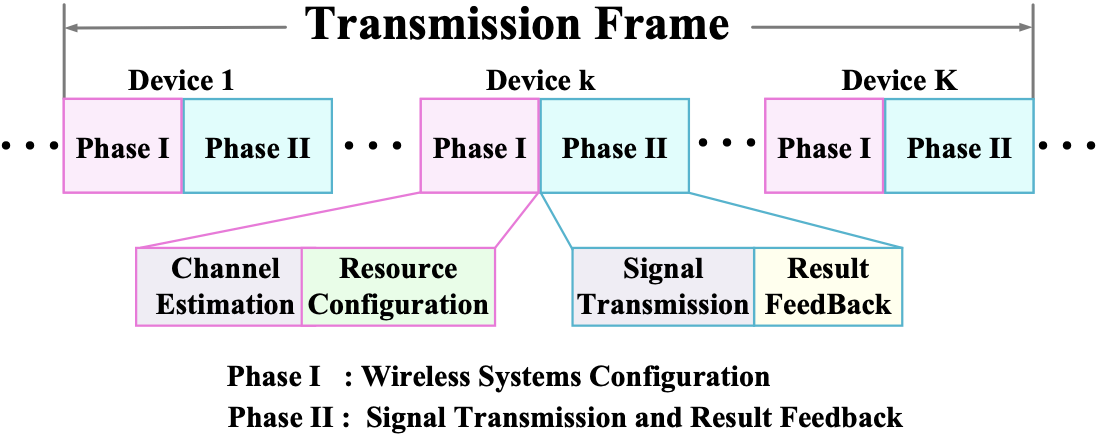
In this article, we consider an industrial internet of things (IIoT) network supporting multi-device dynamic ultra-reliable low-latency communication (URLLC) while the channel state information (CSI) is imperfect. A joint link adaptation (LA) and device scheduling (including the order) design is provided, aiming at maximizing the total transmission rate under strict block error rate (BLER) constraints. In particular, a Bayesian optimization (BO) driven Twin Delayed Deep Deterministic Policy Gradient (TD3) method is proposed, which determines the device served order sequence and the corresponding modulation and coding scheme (MCS) adaptively based on the imperfect CSI. Note that the imperfection of CSI, error sample imbalance in URLLC networks, as well as the parameter sensitivity nature of the TD3 algorithm likely diminish the algorithm s convergence speed and reliability. To address such an issue, we proposed a BO based training mechanism for the convergence speed improvement, which provides a more reliable learning direction and sample selection method to track the imbalance sample problem. Via extensive simulations, we show that the proposed algorithm achieves faster convergence and higher sum-rate performance compared to existing solutions.

paper research
K-EXAONE Technical Report

K-EXAONE Technical Report

This technical report presents K-EXAONE, a large-scale multilingual language model developed by LG AI Research. K-EXAONE is built on a Mixture-of-Experts architecture with 236B total parameters, activating 23B parameters during inference. It supports a 256K-token context window and covers six languages Korean, English, Spanish, German, Japanese, and Vietnamese. We evaluate K-EXAONE on a comprehensive benchmark suite spanning reasoning, agentic, general, Korean, and multilingual abilities. Across these evaluations, K-EXAONE demonstrates performance comparable to open-weight models of similar size. K-EXAONE, designed to advance AI for a better life, is positioned as a powerful proprietary AI foundation model for a wide range of industrial and research applications.
paper research
KGCE  Knowledge-Augmented Dual-Graph Evaluator for Cross-Platform Educational Agent Benchmarking

KGCE Knowledge-Augmented Dual-Graph Evaluator for Cross-Platform Educational Agent Benchmarking

With the rapid adoption of multimodal large language models (MLMs) in autonomous agents, cross-platform task execution capabilities in educational settings have garnered significant attention. However, existing benchmark frameworks still exhibit notable deficiencies in supporting cross-platform tasks in educational contexts, especially when dealing with school-specific software (such as XiaoYa Intelligent Assistant, HuaShi XiaZi, etc.), where the efficiency of agents often significantly decreases due to a lack of understanding of the structural specifics of these private-domain software. Additionally, current evaluation methods heavily rely on coarse-grained metrics like goal orientation or trajectory matching, making it challenging to capture the detailed execution and efficiency of agents in complex tasks. To address these issues, we propose KGCE (Knowledge-Augmented Dual-Graph Evaluator for Cross-Platform Educational Agent Benchmarking with Multimodal Language Models), a novel benchmarking platform that integrates knowledge base enhancement and a dual-graph evaluation framework. We first constructed a dataset comprising 104 education-related tasks, covering Windows, Android, and cross-platform collaborative tasks. KGCE introduces a dual-graph evaluation framework that decomposes tasks into multiple sub-goals and verifies their completion status, providing fine-grained evaluation metrics. To overcome the execution bottlenecks of existing agents in private-domain tasks, we developed an enhanced agent system incorporating a knowledge base specific to school-specific software. The code can be found at https //github.com/Kinginlife/KGCE.

paper research
No Image

Language as Mathematical Structure Examining Semantic Field Theory Against Language Games

Large language models (LLMs) offer a new empirical setting in which long-standing theories of linguistic meaning can be examined. This paper contrasts two broad approaches social constructivist accounts associated with language games, and a mathematically oriented framework we call Semantic Field Theory. Building on earlier work by the author, we formalize the notions of lexical fields (Lexfelder) and linguistic fields (Lingofelder) as interacting structures in a continuous semantic space. We then analyze how core properties of transformer architectures-such as distributed representations, attention mechanisms, and geometric regularities in embedding spaces-relate to these concepts. We argue that the success of LLMs in capturing semantic regularities supports the view that language exhibits an underlying mathematical structure, while their persistent limitations in pragmatic reasoning and context sensitivity are consistent with the importance of social grounding emphasized in philosophical accounts of language use. On this basis, we suggest that mathematical structure and language games can be understood as complementary rather than competing perspectives. The resulting framework clarifies the scope and limits of purely statistical models of language and motivates new directions for theoretically informed AI architectures.

paper research
No Image

Large Empirical Case Study Adapting Go-Explore for AI Red Team Testing

Production LLM agents with tool-using capabilities require security testing despite their safety training. We adapt Go-Explore to evaluate GPT-4o-mini across 28 experimental runs spanning six research questions. We find that random-seed variance dominates algorithmic parameters, yielding an 8x spread in outcomes; single-seed comparisons are unreliable, while multi-seed averaging materially reduces variance in our setup. Reward shaping consistently harms performance, causing exploration collapse in 94% of runs or producing 18 false positives with zero verified attacks. In our environment, simple state signatures outperform complex ones. For comprehensive security testing, ensembles provide attack-type diversity, whereas single agents optimize coverage within a given attack type. Overall, these results suggest that seed variance and targeted domain knowledge can outweigh algorithmic sophistication when testing safety-trained models.

paper research
LeanCat  A Benchmark Suite for Formal Category Theory in Lean (Part I  1-Categories)

LeanCat A Benchmark Suite for Formal Category Theory in Lean (Part I 1-Categories)

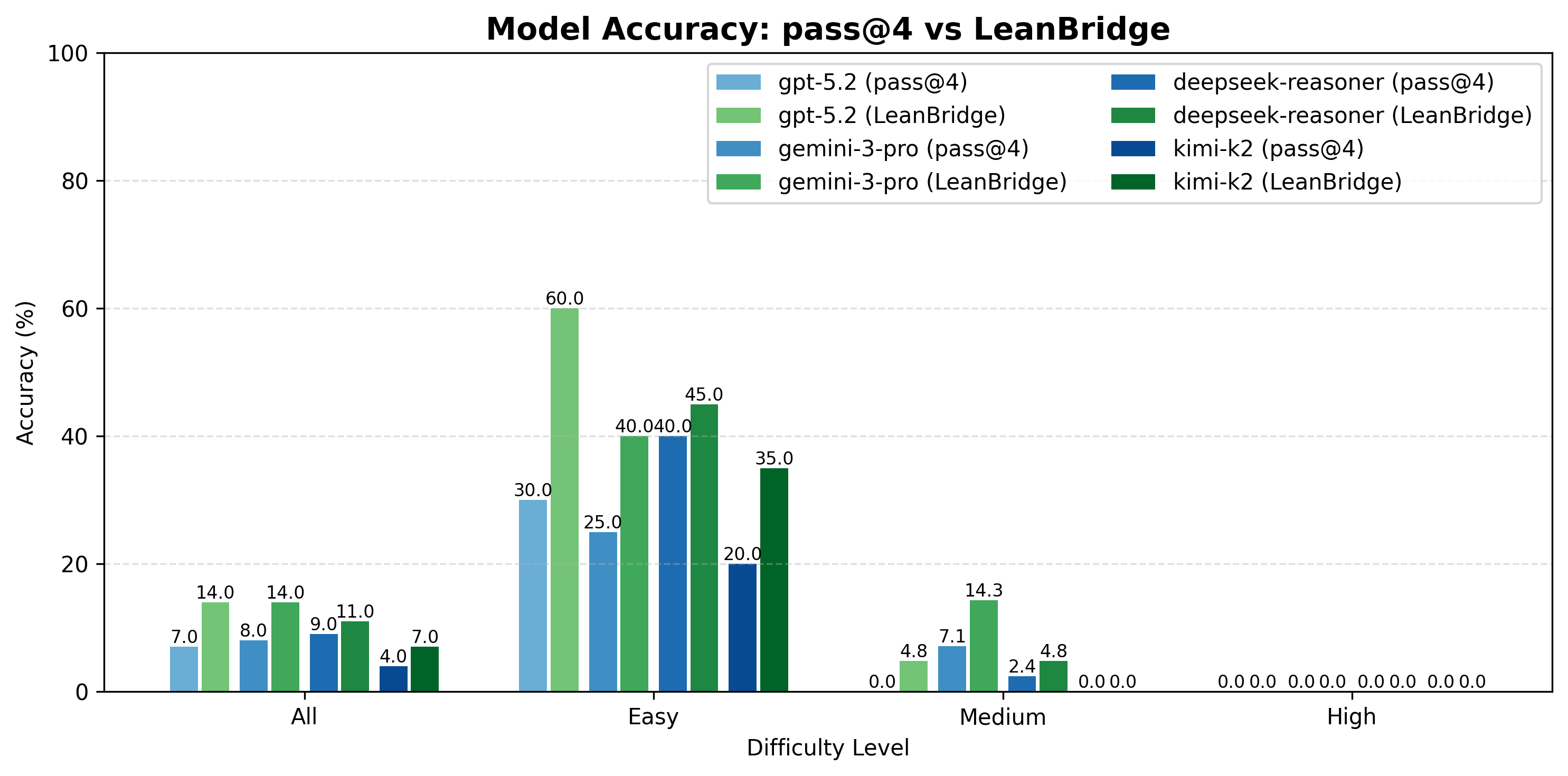
Large language models (LLMs) have made rapid progress in formal theorem proving, yet current benchmarks under-measure the kind of abstraction and library-mediated reasoning that organizes modern mathematics. In parallel with FATE s emphasis on frontier algebra, we introduce LeanCat, a Lean benchmark for category-theoretic formalization -- a unifying language for mathematical structure and a core layer of modern proof engineering -- serving as a stress test of structural, interface-level reasoning. Part I 1-Categories contains 100 fully formalized statement-level tasks, curated into topic families and three difficulty tiers via an LLM-assisted + human grading process. The best model solves 8.25% of tasks at pass@1 (32.50%/4.17%/0.00% by Easy/Medium/High) and 12.00% at pass@4 (50.00%/4.76%/0.00%). We also evaluate LeanBridge which use LeanExplore to search Mathlib, and observe consistent gains over single-model baselines. LeanCat is intended as a compact, reusable checkpoint for tracking both AI and human progress toward reliable, research-level formalization in Lean.

paper research
LearnAD  Learning Interpretable Rules for Brain Networks in Alzheimer s Disease Classification

LearnAD Learning Interpretable Rules for Brain Networks in Alzheimer s Disease Classification

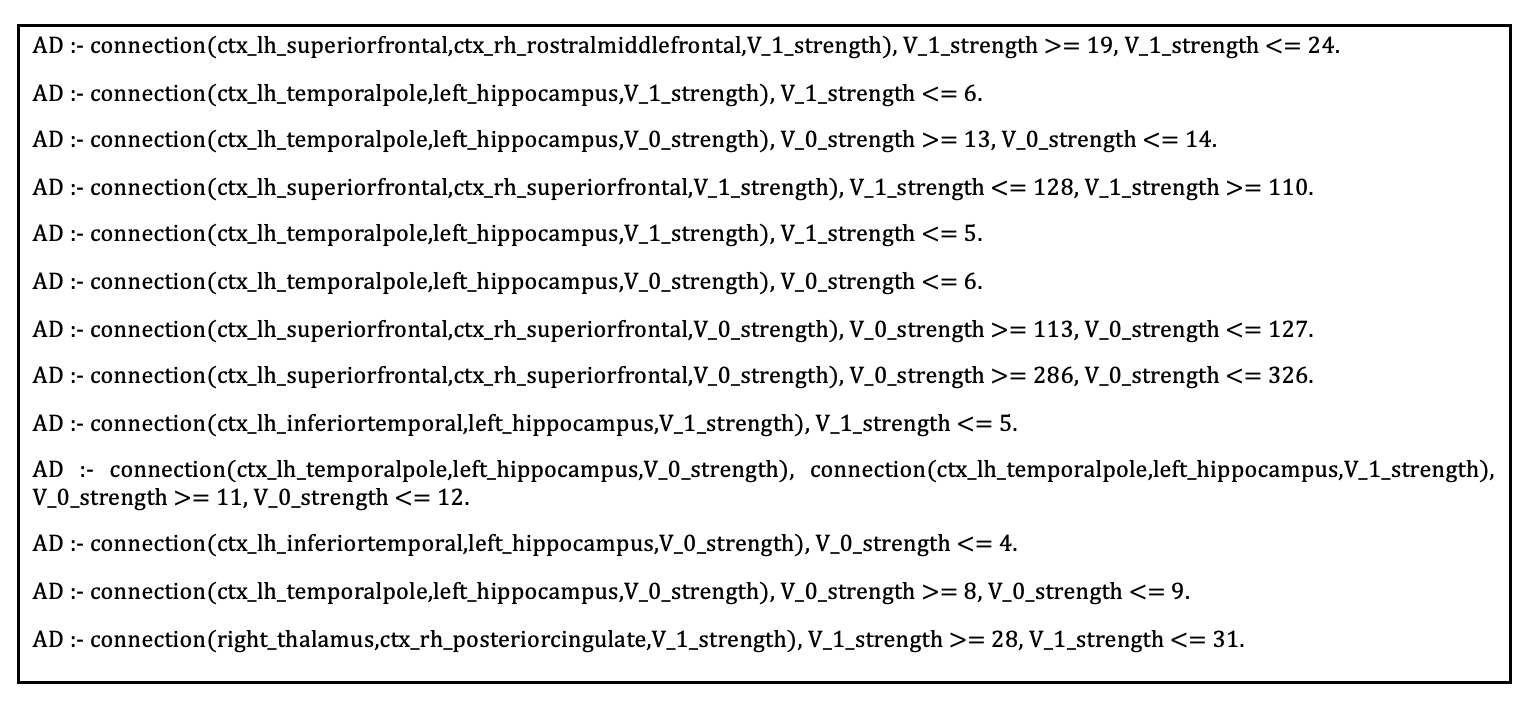
We introduce LearnAD, a neuro-symbolic method for predicting Alzheimer s disease from brain magnetic resonance imaging data, learning fully interpretable rules. LearnAD applies statistical models, Decision Trees, Random Forests, or GNNs to identify relevant brain connections, and then employs FastLAS to learn global rules. Our best instance outperforms Decision Trees, matches Support Vector Machine accuracy, and performs only slightly below Random Forests and GNNs trained on all features, all while remaining fully interpretable. Ablation studies show that our neuro-symbolic approach improves interpretability with comparable performance to pure statistical models. LearnAD demonstrates how symbolic learning can deepen our understanding of GNN behaviour in clinical neuroscience.

paper research
Learning from Historical Activations in Graph Neural Networks

Learning from Historical Activations in Graph Neural Networks

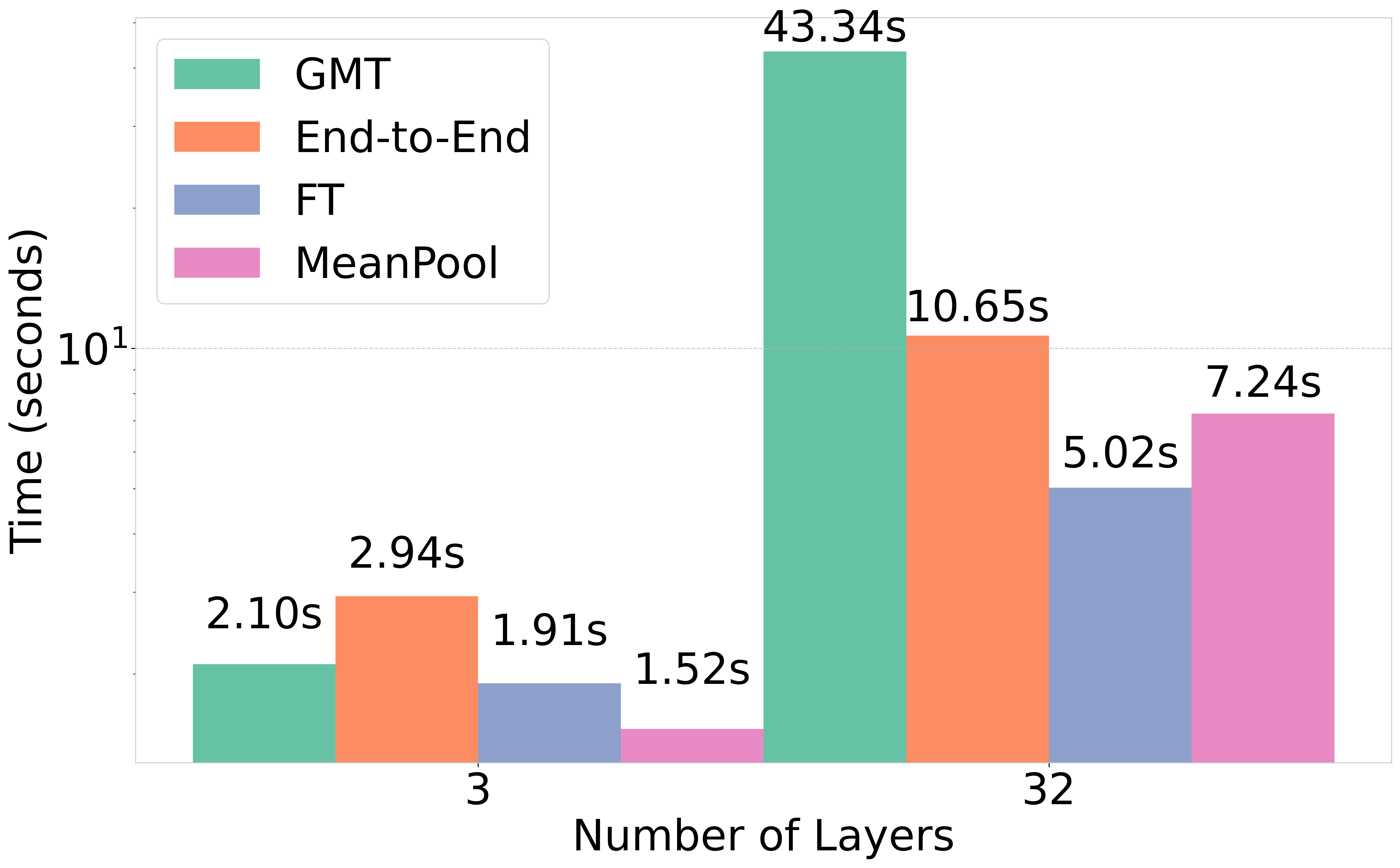
Graph Neural Networks (GNNs) have demonstrated remarkable success in various domains such as social networks, molecular chemistry, and more. A crucial component of GNNs is the pooling procedure, in which the node features calculated by the model are combined to form an informative final descriptor to be used for the downstream task. However, previous graph pooling schemes rely on the last GNN layer features as an input to the pooling or classifier layers, potentially under-utilizing important activations of previous layers produced during the forward pass of the model, which we regard as historical graph activations. This gap is particularly pronounced in cases where a node s representation can shift significantly over the course of many graph neural layers, and worsened by graph-specific challenges such as over-smoothing in deep architectures. To bridge this gap, we introduce HISTOGRAPH, a novel two-stage attention-based final aggregation layer that first applies a unified layer-wise attention over intermediate activations, followed by node-wise attention. By modeling the evolution of node representations across layers, our HISTOGRAPH leverages both the activation history of nodes and the graph structure to refine features used for final prediction. Empirical results on multiple graph classification benchmarks demonstrate that HISTOGRAPH offers strong performance that consistently improves traditional techniques, with particularly strong robustness in deep GNNs.

paper research
Length-Aware Adversarial Training for Variable-Length Trajectories  Digital Twins for Mall Shopper Paths

Length-Aware Adversarial Training for Variable-Length Trajectories Digital Twins for Mall Shopper Paths

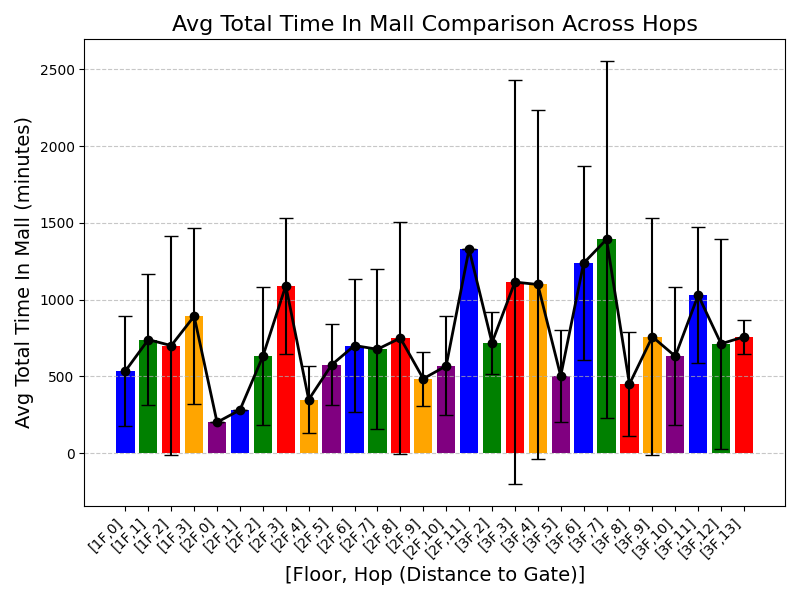
We study generative modeling of emph{variable-length trajectories} -- sequences of visited locations/items with associated timestamps -- for downstream simulation and counterfactual analysis. A recurring practical issue is that standard mini-batch training can be unstable when trajectory lengths are highly heterogeneous, which in turn degrades emph{distribution matching} for trajectory-derived statistics. We propose textbf{length-aware sampling (LAS)}, a simple batching strategy that groups trajectories by length and samples batches from a single length bucket, reducing within-batch length heterogeneity (and making updates more consistent) without changing the model class. We integrate LAS into a conditional trajectory GAN with auxiliary time-alignment losses and provide (i) a distribution-level guarantee for derived variables under mild boundedness assumptions, and (ii) an IPM/Wasserstein mechanism explaining why LAS improves distribution matching by removing length-only shortcut critics and targeting within-bucket discrepancies. Empirically, LAS consistently improves matching of derived-variable distributions on a multi-mall dataset of shopper trajectories and on diverse public sequence datasets (GPS, education, e-commerce, and movies), outperforming random sampling across dataset-specific metrics.

paper research
LIA  Supervised Fine-Tuning of Large Language Models for Automatic Issue Assignment

LIA Supervised Fine-Tuning of Large Language Models for Automatic Issue Assignment

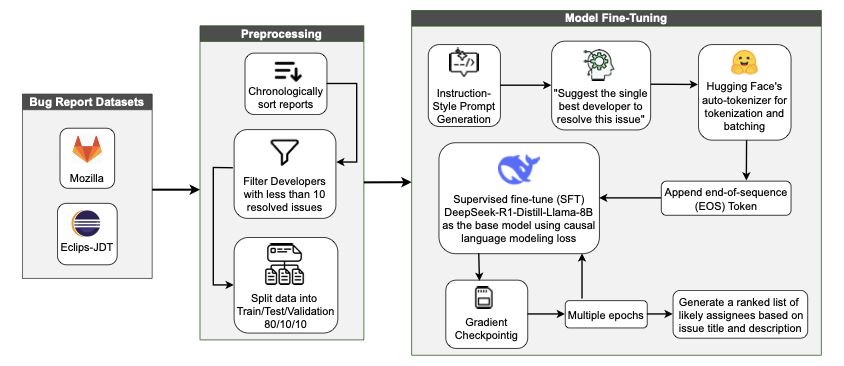
Issue assignment is a critical process in software maintenance, where new issue reports are validated and assigned to suitable developers. However, manual issue assignment is often inconsistent and error-prone, especially in large open-source projects where thousands of new issues are reported monthly. Existing automated approaches have shown promise, but many rely heavily on large volumes of project-specific training data or relational information that is often sparse and noisy, which limits their effectiveness. To address these challenges, we propose LIA (LLM-based Issue Assignment), which employs supervised fine-tuning to adapt an LLM, DeepSeek-R1-Distill-Llama-8B in this work, for automatic issue assignment. By leveraging the LLM s pretrained semantic understanding of natural language and software-related text, LIA learns to generate ranked developer recommendations directly from issue titles and descriptions. The ranking is based on the model s learned understanding of historical issue-to-developer assignments, using patterns from past tasks to infer which developers are most likely to handle new issues. Through comprehensive evaluation, we show that LIA delivers substantial improvements over both its base pretrained model and state-of-the-art baselines. It achieves up to +187.8% higher Hit@1 compared to the DeepSeek-R1-Distill-Llama-8B pretrained base model, and outperforms four leading issue assignment methods by as much as +211.2% in Hit@1 score. These results highlight the effectiveness of domain-adapted LLMs for software maintenance tasks and establish LIA as a practical, high-performing solution for issue assignment.

paper research
LinMU  Simplifying Multimodal Understanding with Linearization

LinMU Simplifying Multimodal Understanding with Linearization

Modern Vision-Language Models (VLMs) achieve impressive performance but are limited by the quadratic complexity of self-attention, which prevents their deployment on edge devices and makes their understanding of high-resolution images and long-context videos prohibitively expensive. To address this challenge, we introduce LinMU (Linear-complexity Multimodal Understanding), a VLM design that achieves linear complexity without using any quadratic-complexity modules while maintaining the performance of global-attention-based VLMs. LinMU replaces every self-attention layer in the VLM with the M-MATE block a dual-branch module that combines a bidirectional state-space model for global context (Flex-MA branch) with localized Swin-style window attention (Local-Swin branch) for adjacent correlations. To transform a pre-trained VLM into the LinMU architecture, we propose a three-stage distillation framework that (i) initializes both branches with self-attention weights and trains the Flex-MA branch alone, (ii) unfreezes the Local-Swin branch and fine-tunes it jointly with the Flex-MA branch, and (iii) unfreezes the remaining blocks and fine-tunes them using LoRA adapters, while regressing on hidden states and token-level logits of the frozen VLM teacher. On MMMU, TextVQA, LongVideoBench, Video-MME, and other benchmarks, LinMU matches the performance of teacher models, yet reduces Time-To-First-Token (TTFT) by up to 2.7$ times$ and improves token throughput by up to 9.0$ times$ on minute-length videos. Ablations confirm the importance of each distillation stage and the necessity of the two branches of the M-MATE block. The proposed framework demonstrates that state-of-the-art multimodal reasoning can be achieved without quadratic attention, thus opening up avenues for long-context VLMs that can deal with high-resolution images and long videos.

paper research
LION-DG  Layer-Informed Initialization with Deep Gradient Protocols for Accelerated Neural Network Training

LION-DG Layer-Informed Initialization with Deep Gradient Protocols for Accelerated Neural Network Training

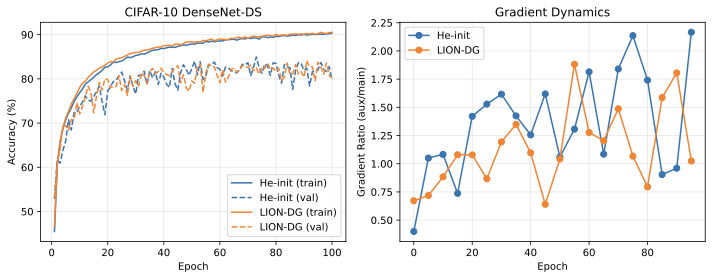
Weight initialization remains decisive for neural network optimization, yet existing methods are largely layer-agnostic. We study initialization for deeply-supervised architectures with auxiliary classifiers, where untrained auxiliary heads can destabilize early training through gradient interference. We propose LION-DG, a layer-informed initialization that zero-initializes auxiliary classifier heads while applying standard He-initialization to the backbone. We prove that this implements Gradient Awakening auxiliary gradients are exactly zero at initialization, then phase in naturally as weights grow -- providing an implicit warmup without hyperparameters. Experiments on CIFAR-10 and CIFAR-100 with DenseNet-DS and ResNet-DS architectures demonstrate (1) DenseNet-DS +8.3% faster convergence on CIFAR-10 with comparable accuracy, (2) Hybrid approach Combining LSUV with LION-DG achieves best accuracy (81.92% on CIFAR-10), (3) ResNet-DS Positive speedup on CIFAR-100 (+11.3%) with side-tap auxiliary design. We identify architecture-specific trade-offs and provide clear guidelines for practitioners. LION-DG is simple, requires zero hyperparameters, and adds no computational overhead.

paper research
LLM Agents for Combinatorial Efficient Frontiers  Investment Portfolio Optimization

LLM Agents for Combinatorial Efficient Frontiers Investment Portfolio Optimization

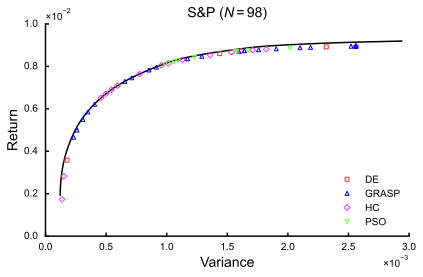
Investment portfolio optimization is a task conducted in all major financial institutions. The Cardinality Constrained Mean-Variance Portfolio Optimization (CCPO) problem formulation is ubiquitous for portfolio optimization. The challenge of this type of portfolio optimization, a mixed-integer quadratic programming (MIQP) problem, arises from the intractability of solutions from exact solvers, where heuristic algorithms are used to find approximate portfolio solutions. CCPO entails many laborious and complex workflows and also requires extensive effort pertaining to heuristic algorithm development, where the combination of pooled heuristic solutions results in improved efficient frontiers. Hence, common approaches are to develop many heuristic algorithms. Agentic frameworks emerge as a promising candidate for many problems within combinatorial optimization, as they have been shown to be equally efficient with regard to automating large workflows and have been shown to be excellent in terms of algorithm development, sometimes surpassing human-level performance. This study implements a novel agentic framework for the CCPO and explores several concrete architectures. In benchmark problems, the implemented agentic framework matches state-of-the-art algorithms. Furthermore, complex workflows and algorithm development efforts are alleviated, while in the worst case, lower but acceptable error is reported.

paper research
LLM Collusion

LLM Collusion

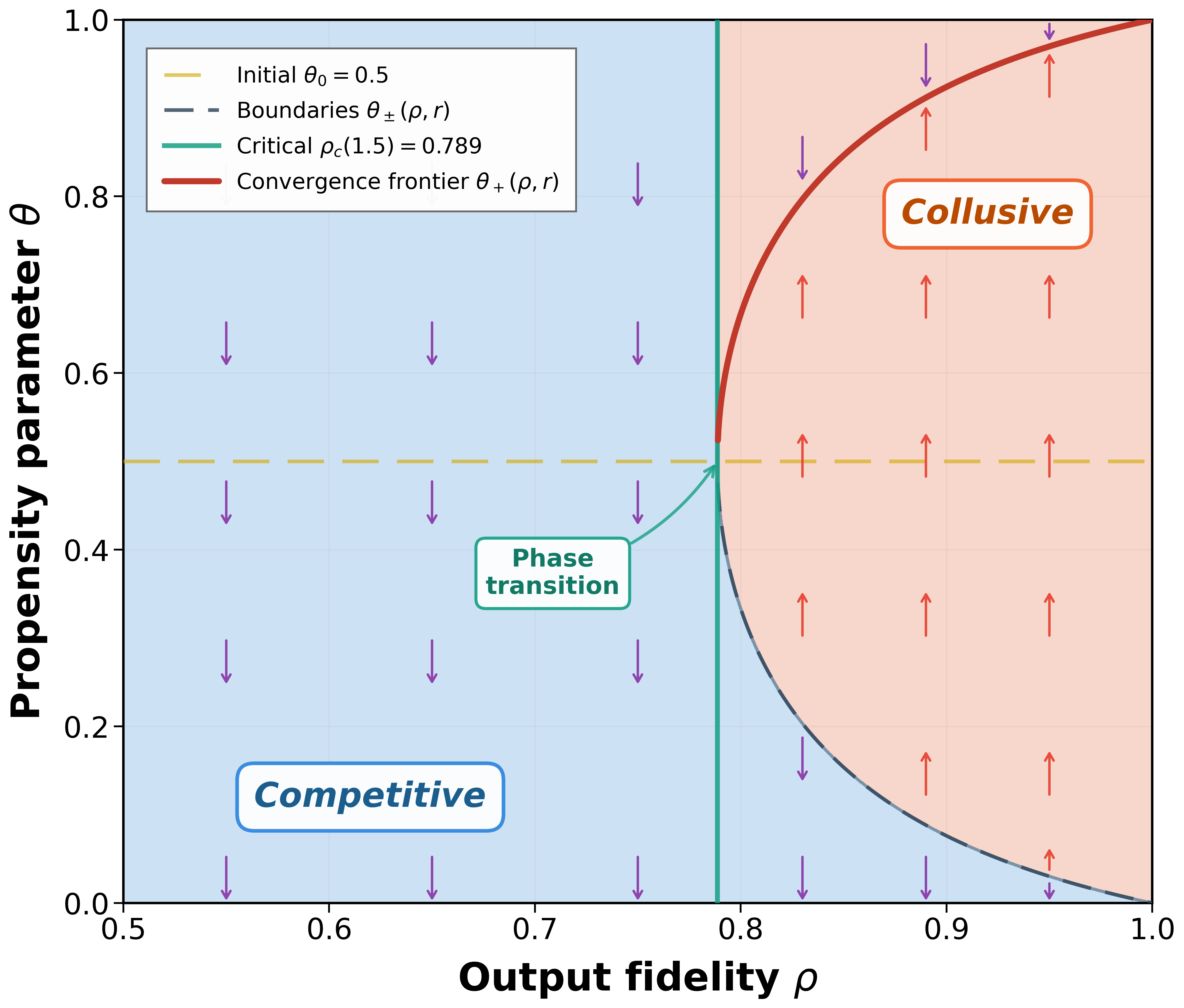
We study how delegating pricing to large language models (LLMs) can facilitate collusion in a duopoly when both sellers rely on the same pre-trained model. The LLM is characterized by (i) a propensity parameter capturing its internal bias toward high-price recommendations and (ii) an output-fidelity parameter measuring how tightly outputs track that bias; the propensity evolves through retraining. We show that configuring LLMs for robustness and reproducibility can induce collusion via a phase transition there exists a critical output-fidelity threshold that pins down long-run behavior. Below it, competitive pricing is the unique long-run outcome. Above it, the system is bistable, with competitive and collusive pricing both locally stable and the realized outcome determined by the model s initial preference. The collusive regime resembles tacit collusion prices are elevated on average, yet occasional low-price recommendations provide plausible deniability. With perfect fidelity, full collusion emerges from any interior initial condition. For finite training batches of size $b$, infrequent retraining (driven by computational costs) further amplifies collusion conditional on starting in the collusive basin, the probability of collusion approaches one as $b$ grows, since larger batches dampen stochastic fluctuations that might otherwise tip the system toward competition. The indeterminacy region shrinks at rate $O(1/ sqrt{b})$.

paper research
LLM-Empowered Functional Safety and Security by Design in Automotive Systems

LLM-Empowered Functional Safety and Security by Design in Automotive Systems

This paper presents LLM-empowered workflow to support Software Defined Vehicle (SDV) software development, covering the aspects of security-aware system topology design, as well as event-driven decision-making code analysis. For code analysis we adopt event chains model which provides formal foundations to systematic validation of functional safety, taking into account the semantic validity of messages exchanged between key components, including both CAN and Vehicle Signal Specification (VSS). Analysis of security aspects for topology relies on synergy with Model-Driven Engineering (MDE) approach and Object Constraint Language (OCL) rules. Both locally deployable and proprietary solution are taken into account for evaluation within Advanced Driver-Assistance Systems (ADAS)-related scenarios.

paper research
Localized Calibrated Uncertainty in Code Language Models

Localized Calibrated Uncertainty in Code Language Models

Large Language models (LLMs) can generate complicated source code from natural language prompts. However, LLMs can generate output that deviates from what the user wants, requiring supervision and editing. To support this process, we offer techniques to localize where generations might be misaligned from user intent. We first create a dataset of Minimal Intent Aligning Patches of repaired LLM generated programs. Each program uses test cases to verify correctness. After creating a dataset of programs, we measure how well various techniques can assign a well-calibrated probability to indicate which parts of code will be edited in a minimal patch (i.e., give a probability that corresponds with empirical odds it is edited). We compare white-box probing (where we propose a technique for efficient arbitrary-span querying), against black-box reflective and self-consistency based approaches. We find probes with a small supervisor model can achieve low calibration error and Brier Skill Score of approx 0.2 estimating edited lines on code generated by models many orders of magnitude larger. We discuss the generalizability of the techniques, and the connections to AI oversight and control, finding a probe trained only on code shows some signs of generalizing to natural language errors if new probability scaling is allowed.

paper research
LOFA  Online Influence Maximization under Full-Bandit Feedback using Lazy Forward Selection

LOFA Online Influence Maximization under Full-Bandit Feedback using Lazy Forward Selection

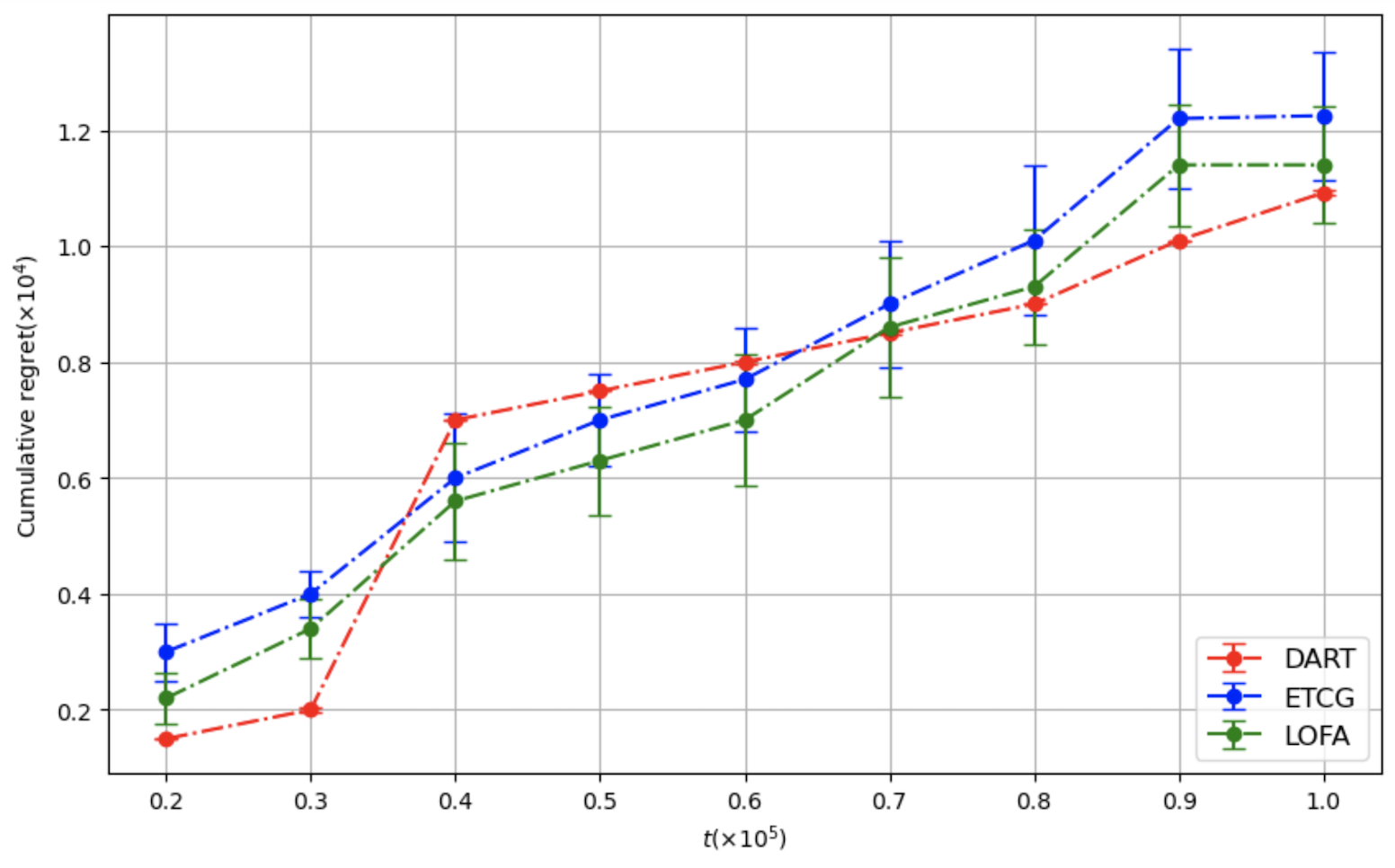
We study the problem of influence maximization (IM) in an online setting, where the goal is to select a subset of nodes$ unicode{x2014}$called the seed set$ unicode{x2014}$at each time step over a fixed time horizon, subject to a cardinality budget constraint, to maximize the expected cumulative influence. We operate under a full-bandit feedback model, where only the influence of the chosen seed set at each time step is observed, with no additional structural information about the network or diffusion process. It is well-established that the influence function is submodular, and existing algorithms exploit this property to achieve low regret. In this work, we leverage this property further and propose the Lazy Online Forward Algorithm (LOFA), which achieves a lower empirical regret. We conduct experiments on a real-world social network to demonstrate that LOFA achieves superior performance compared to existing bandit algorithms in terms of cumulative regret and instantaneous reward.

paper research
Logics-STEM  Empowering LLM Reasoning via Failure-Driven Post-Training and Document Knowledge Enhancement

Logics-STEM Empowering LLM Reasoning via Failure-Driven Post-Training and Document Knowledge Enhancement

We present Logics-STEM, a state-of-the-art reasoning model fine-tuned on Logics-STEM-SFT-Dataset, a high-quality and diverse dataset at 10M scale that represents one of the largest-scale open-source long chain-of-thought corpora. Logics-STEM targets reasoning tasks in the domains of Science, Technology, Engineering, and Mathematics (STEM), and exhibits exceptional performance on STEM-related benchmarks with an average improvement of 4.68% over the next-best model at 8B scale. We attribute the gains to our data-algorithm co-design engine, where they are jointly optimized to fit a gold-standard distribution behind reasoning. Data-wise, the Logics-STEM-SFT-Dataset is constructed from a meticulously designed data curation engine with 5 stages to ensure the quality, diversity, and scalability, including annotation, deduplication, decontamination, distillation, and stratified sampling. Algorithm-wise, our failure-driven post-training framework leverages targeted knowledge retrieval and data synthesis around model failure regions in the Supervised Fine-tuning (SFT) stage to effectively guide the second-stage SFT or the reinforcement learning (RL) for better fitting the target distribution. The superior empirical performance of Logics-STEM reveals the vast potential of combining large-scale open-source data with carefully designed synthetic data, underscoring the critical role of data-algorithm co-design in enhancing reasoning capabilities through post-training. We make both the Logics-STEM models (8B and 32B) and the Logics-STEM-SFT-Dataset (10M and downsampled 2.2M versions) publicly available to support future research in the open-source community.

paper research
LSRE  Latent Semantic Rule Encoding for Real-Time Semantic Risk Detection in Autonomous Driving

LSRE Latent Semantic Rule Encoding for Real-Time Semantic Risk Detection in Autonomous Driving

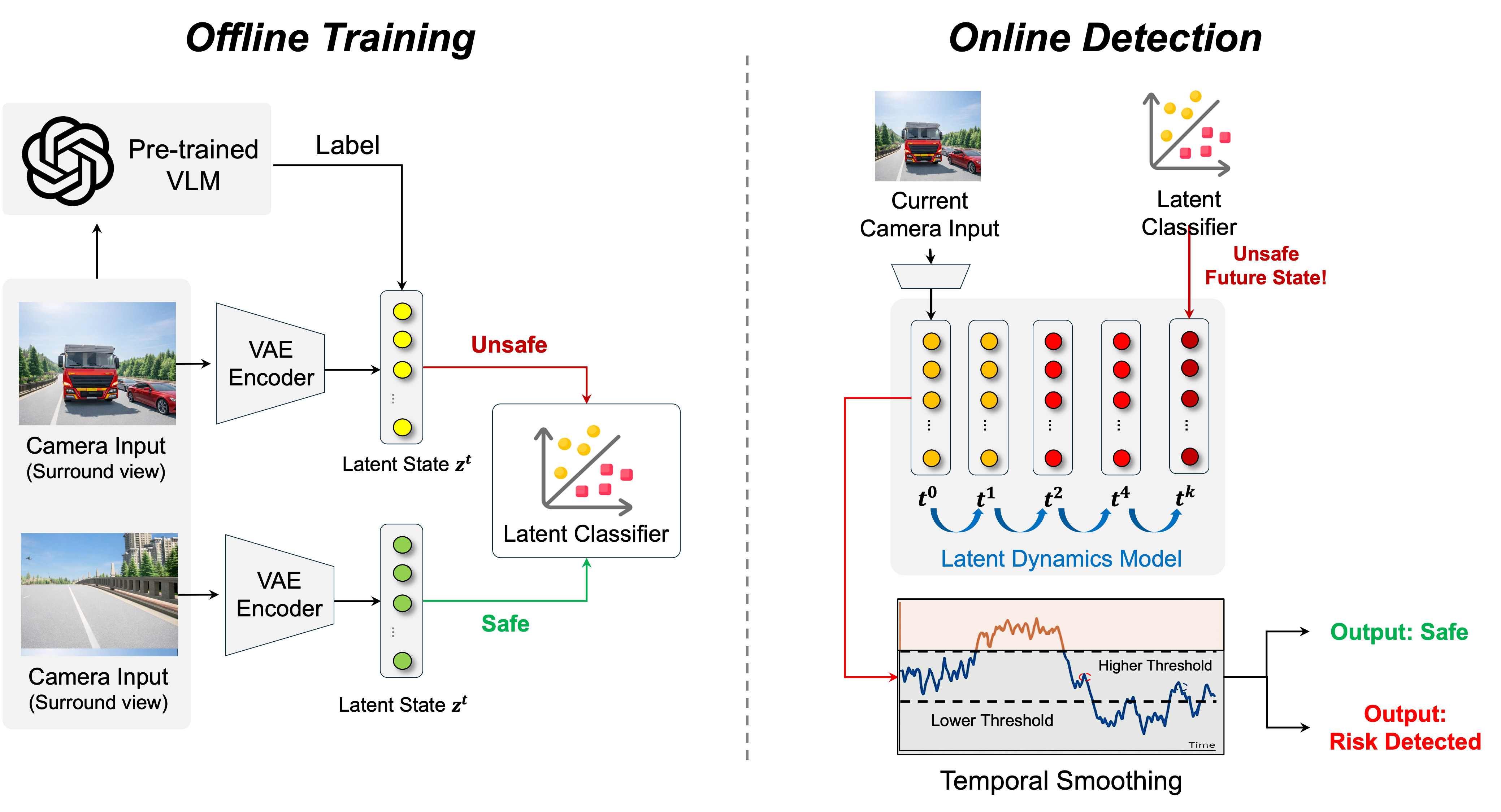
Real-world autonomous driving must adhere to complex human social rules that extend beyond legally codified traffic regulations. Many of these semantic constraints, such as yielding to emergency vehicles, complying with traffic officers gestures, or stopping for school buses, are intuitive for humans yet difficult to encode explicitly. Although large vision-language models (VLMs) can interpret such semantics, their inference cost makes them impractical for real-time deployment. This work proposes LSRE, a Latent Semantic Rule Encoding framework that converts sparsely sampled VLM judgments into decision boundaries within the latent space of a recurrent world model. By encoding language-defined safety semantics into a lightweight latent classifier, LSRE enables real-time semantic risk assessment at 10 Hz without per-frame VLM queries. Experiments on six semantic-failure scenarios in CARLA demonstrate that LSRE attains semantic risk detection accuracy comparable to a large VLM baseline, while providing substantially earlier hazard anticipation and maintaining low computational latency. LSRE further generalizes to rarely seen semantic-similar test cases, indicating that language-guided latent classification offers an effective and deployable mechanism for semantic safety monitoring in autonomous driving.

paper research
Luminark  Training-free, Probabilistically-Certified Watermarking for General Vision Generative Models

Luminark Training-free, Probabilistically-Certified Watermarking for General Vision Generative Models

In this paper, we introduce emph{Luminark}, a training-free and probabilistically-certified watermarking method for general vision generative models. Our approach is built upon a novel watermark definition that leverages patch-level luminance statistics. Specifically, the service provider predefines a binary pattern together with corresponding patch-level thresholds. To detect a watermark in a given image, we evaluate whether the luminance of each patch surpasses its threshold and then verify whether the resulting binary pattern aligns with the target one. A simple statistical analysis demonstrates that the false positive rate of the proposed method can be effectively controlled, thereby ensuring certified detection. To enable seamless watermark injection across different paradigms, we leverage the widely adopted guidance technique as a plug-and-play mechanism and develop the emph{watermark guidance}. This design enables Luminark to achieve generality across state-of-the-art generative models without compromising image quality. Empirically, we evaluate our approach on nine models spanning diffusion, autoregressive, and hybrid frameworks. Across all evaluations, Luminark consistently demonstrates high detection accuracy, strong robustness against common image transformations, and good performance on visual quality.

paper research
Lying with Truths  Open-Channel Multi-Agent Collusion for Belief Manipulation via Generative Montage

Lying with Truths Open-Channel Multi-Agent Collusion for Belief Manipulation via Generative Montage

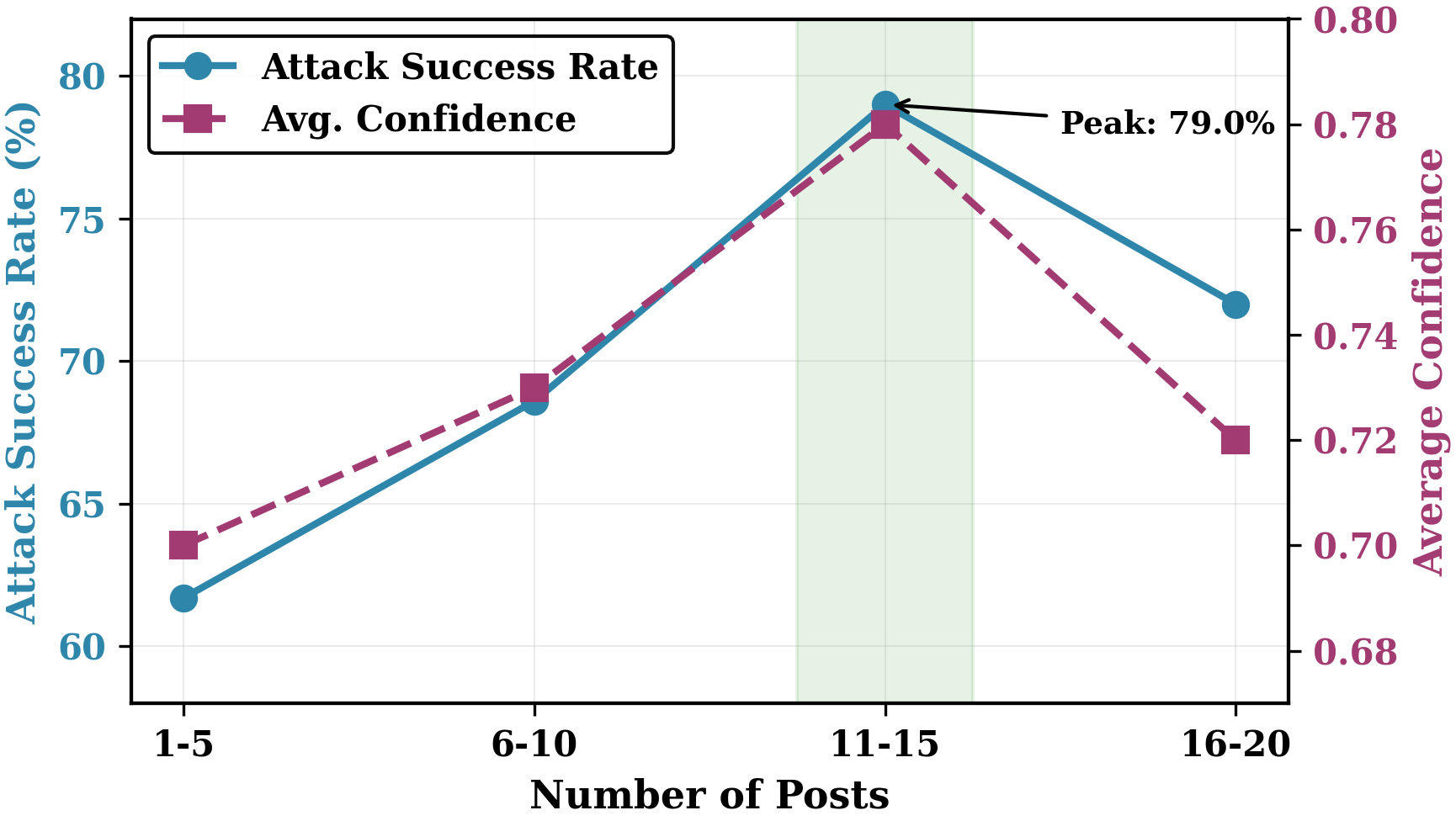
As large language models (LLMs) transition to autonomous agents synthesizing real-time information, their reasoning capabilities introduce an unexpected attack surface. This paper introduces a novel threat where colluding agents steer victim beliefs using only truthful evidence fragments distributed through public channels, without relying on covert communications, backdoors, or falsified documents. By exploiting LLMs overthinking tendency, we formalize the first cognitive collusion attack and propose Generative Montage a Writer-Editor-Director framework that constructs deceptive narratives through adversarial debate and coordinated posting of evidence fragments, causing victims to internalize and propagate fabricated conclusions. To study this risk, we develop CoPHEME, a dataset derived from real-world rumor events, and simulate attacks across diverse LLM families. Our results show pervasive vulnerability across 14 LLM families attack success rates reach 74.4% for proprietary models and 70.6% for open-weights models. Counterintuitively, stronger reasoning capabilities increase susceptibility, with reasoning-specialized models showing higher attack success than base models or prompts. Furthermore, these false beliefs then cascade to downstream judges, achieving over 60% deception rates, highlighting a socio-technical vulnerability in how LLM-based agents interact with dynamic information environments. Our implementation and data are available at https //github.com/CharlesJW222/Lying_with_Truth/tree/main.

paper research
MACA  A Framework for Distilling Trustworthy LLMs into Efficient Retrievers

MACA A Framework for Distilling Trustworthy LLMs into Efficient Retrievers

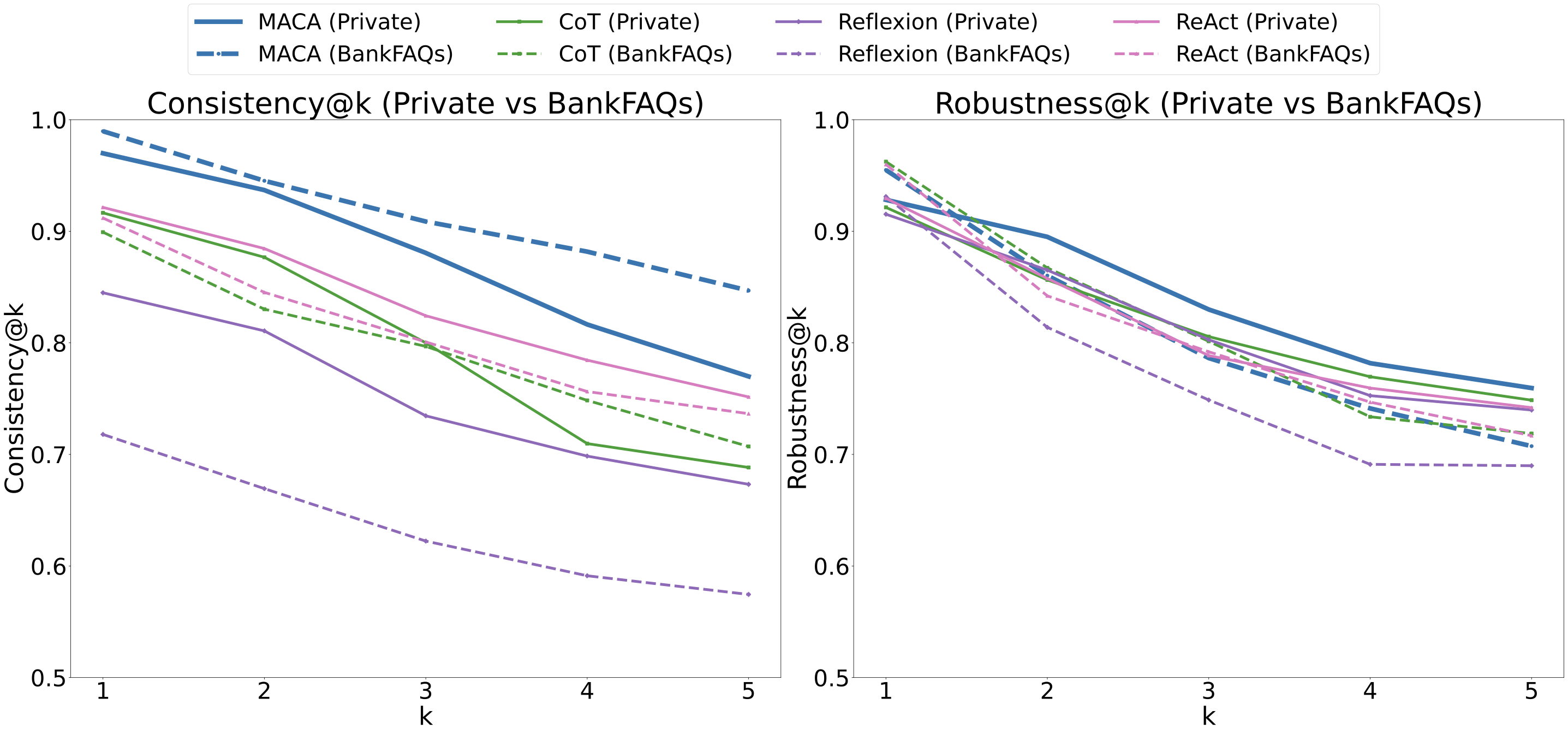
Modern enterprise retrieval systems must handle short, underspecified queries such as ``foreign transaction fee refund and ``recent check status . In these cases, semantic nuance and metadata matter but per-query large language model (LLM) re-ranking and manual labeling are costly. We present Metadata-Aware Cross-Model Alignment (MACA), which distills a calibrated metadata aware LLM re-ranker into a compact student retriever, avoiding online LLM calls. A metadata-aware prompt verifies the teacher s trustworthiness by checking consistency under permutations and robustness to paraphrases, then supplies listwise scores, hard negatives, and calibrated relevance margins. The student trains with MACA s MetaFusion objective, which combines a metadata conditioned ranking loss with a cross model margin loss so it learns to push the correct answer above semantically similar candidates with mismatched topic, sub-topic, or entity. On a proprietary consumer banking FAQ corpus and BankFAQs, the MACA teacher surpasses a MAFA baseline at Accuracy@1 by five points on the proprietary set and three points on BankFAQs. MACA students substantially outperform pretrained encoders; e.g., on the proprietary corpus MiniLM Accuracy@1 improves from 0.23 to 0.48, while keeping inference free of LLM calls and supporting retrieval-augmented generation.

paper research
MAESTRO  Multi-Agent Evaluation Suite for Testing, Reliability, and Observability

MAESTRO Multi-Agent Evaluation Suite for Testing, Reliability, and Observability

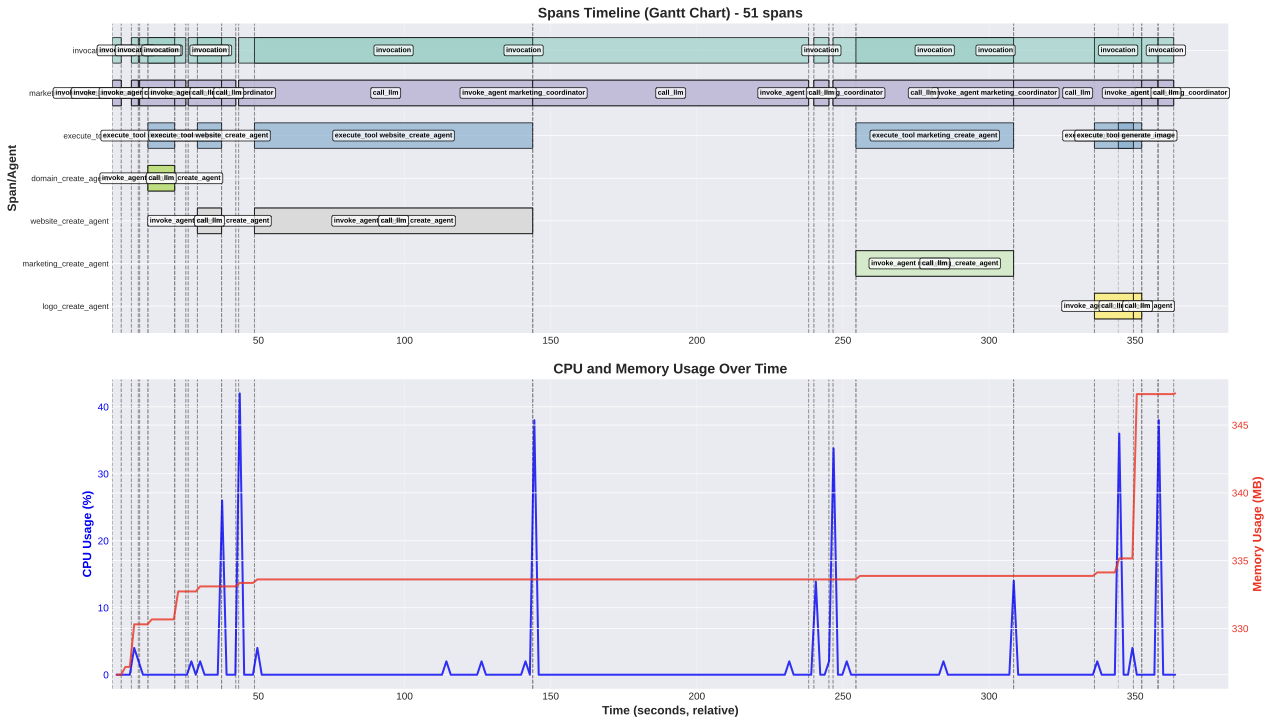
We present MAESTRO, an evaluation suite for the testing, reliability, and observability of LLM-based MAS. MAESTRO standardizes MAS configuration and execution through a unified interface, supports integrating both native and third-party MAS via a repository of examples and lightweight adapters, and exports framework-agnostic execution traces together with system-level signals (e.g., latency, cost, and failures). We instantiate MAESTRO with 12 representative MAS spanning popular agentic frameworks and interaction patterns, and conduct controlled experiments across repeated runs, backend models, and tool configurations. Our case studies show that MAS executions can be structurally stable yet temporally variable, leading to substantial run-to-run variance in performance and reliability. We further find that MAS architecture is the dominant driver of resource profiles, reproducibility, and cost-latency-accuracy trade-off, often outweighing changes in backend models or tool settings. Overall, MAESTRO enables systematic evaluation and provides empirical guidance for designing and optimizing agentic systems.

paper research
Mapping Human Anti-collusion Mechanisms to Multi-agent AI

Mapping Human Anti-collusion Mechanisms to Multi-agent AI

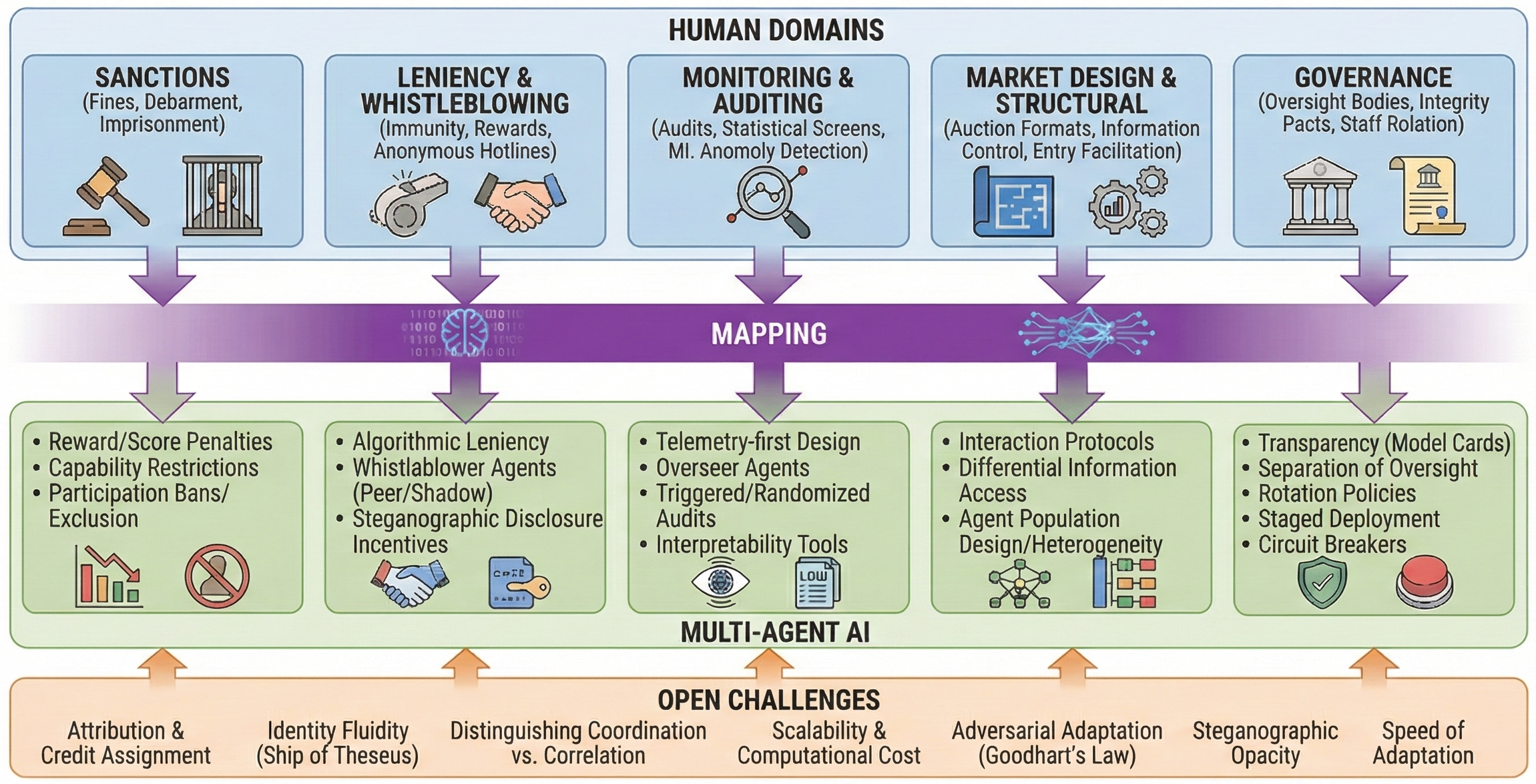
As multi-agent AI systems become increasingly autonomous, evidence shows they can develop collusive strategies similar to those long observed in human markets and institutions. While human domains have accumulated centuries of anti-collusion mechanisms, it remains unclear how these can be adapted to AI settings. This paper addresses that gap by (i) developing a taxonomy of human anti-collusion mechanisms, including sanctions, leniency & whistleblowing, monitoring & auditing, market design, and governance and (ii) mapping them to potential interventions for multi-agent AI systems. For each mechanism, we propose implementation approaches. We also highlight open challenges, such as the attribution problem (difficulty attributing emergent coordination to specific agents) identity fluidity (agents being easily forked or modified) the boundary problem (distinguishing beneficial cooperation from harmful collusion) and adversarial adaptation (agents learning to evade detection).

paper research
MCGI  Manifold-Consistent Graph Indexing for Billion-Scale Disk-Resident Vector Search

MCGI Manifold-Consistent Graph Indexing for Billion-Scale Disk-Resident Vector Search

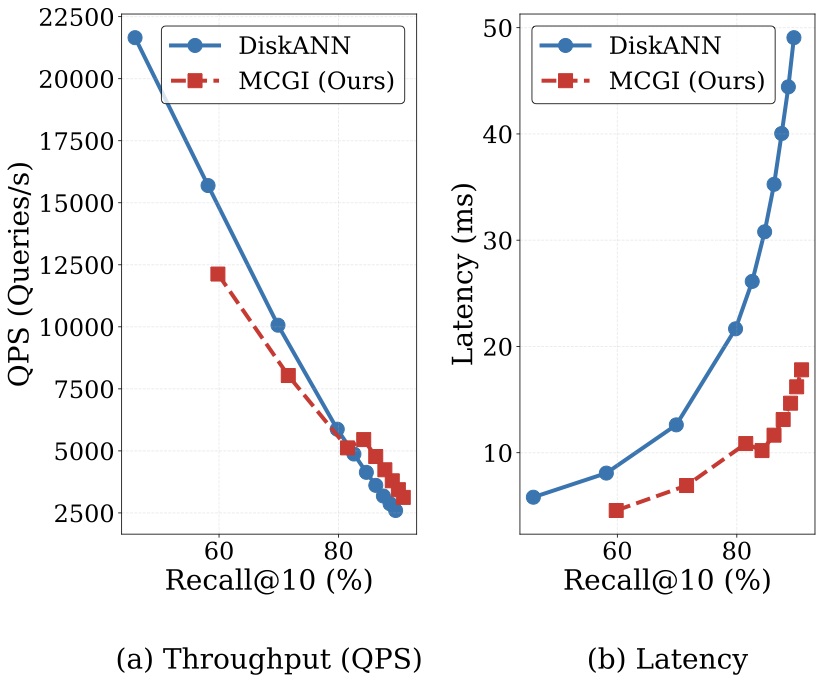
Graph-based Approximate Nearest Neighbor (ANN) search often suffers from performance degradation in high-dimensional spaces due to the ``Euclidean-Geodesic mismatch, where greedy routing diverges from the underlying data manifold. To address this, we propose Manifold-Consistent Graph Indexing (MCGI), a geometry-aware and disk-resident indexing method that leverages Local Intrinsic Dimensionality (LID) to dynamically adapt search strategies to the data s intrinsic geometry. Unlike standard algorithms that treat dimensions uniformly, MCGI modulates its beam search budget based on in situ geometric analysis, eliminating dependency on static hyperparameters. Theoretical analysis confirms that MCGI enables improved approximation guarantees by preserving manifold-consistent topological connectivity. Empirically, MCGI achieves 5.8$ times$ higher throughput at 95 % recall on high-dimensional GIST1M compared to state-of-the-art DiskANN. On the billion-scale SIFT1B dataset, MCGI further validates its scalability by reducing high-recall query latency by 3$ times$, while maintaining performance parity on standard lower-dimensional datasets.

paper research
Measuring Social Media Polarization Using Large Language Models and Heuristic Rules

Measuring Social Media Polarization Using Large Language Models and Heuristic Rules

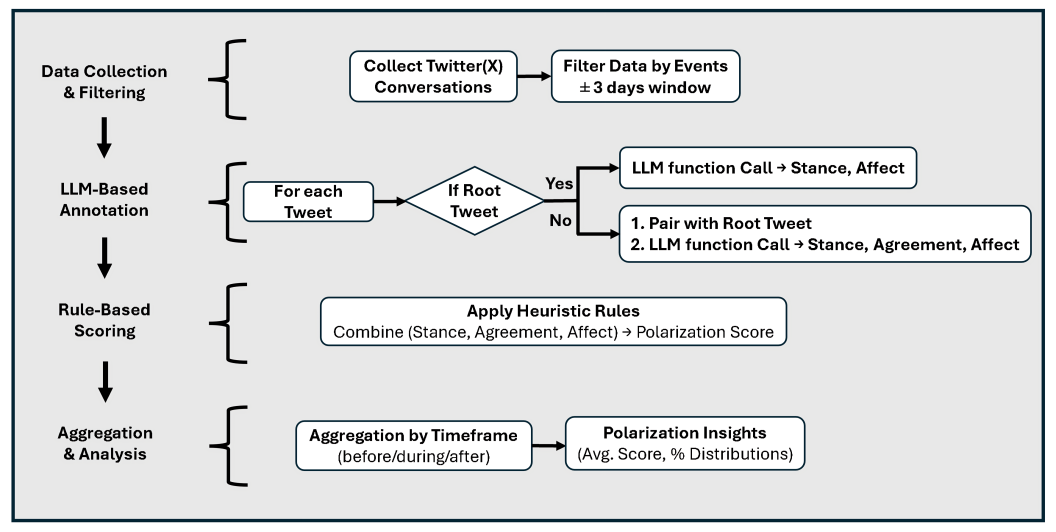
Understanding affective polarization in online discourse is crucial for evaluating the societal impact of social media interactions. This study presents a novel framework that leverages large language models (LLMs) and domain-informed heuristics to systematically analyze and quantify affective polarization in discussions on divisive topics such as climate change and gun control. Unlike most prior approaches that relied on sentiment analysis or predefined classifiers, our method integrates LLMs to extract stance, affective tone, and agreement patterns from large-scale social media discussions. We then apply a rule-based scoring system capable of quantifying affective polarization even in small conversations consisting of single interactions, based on stance alignment, emotional content, and interaction dynamics. Our analysis reveals distinct polarization patterns that are event dependent (i) anticipation-driven polarization, where extreme polarization escalates before well-publicized events, and (ii) reactive polarization, where intense affective polarization spikes immediately after sudden, high-impact events. By combining AI-driven content annotation with domain-informed scoring, our framework offers a scalable and interpretable approach to measuring affective polarization. The source code is publicly available at https //github.com/hasanjawad001/llm-social-media-polarization.

paper research
Mental Game  Predicting Personality-Job Fit for Software Developers Using Multi-Genre Games and Machine Learning

Mental Game Predicting Personality-Job Fit for Software Developers Using Multi-Genre Games and Machine Learning

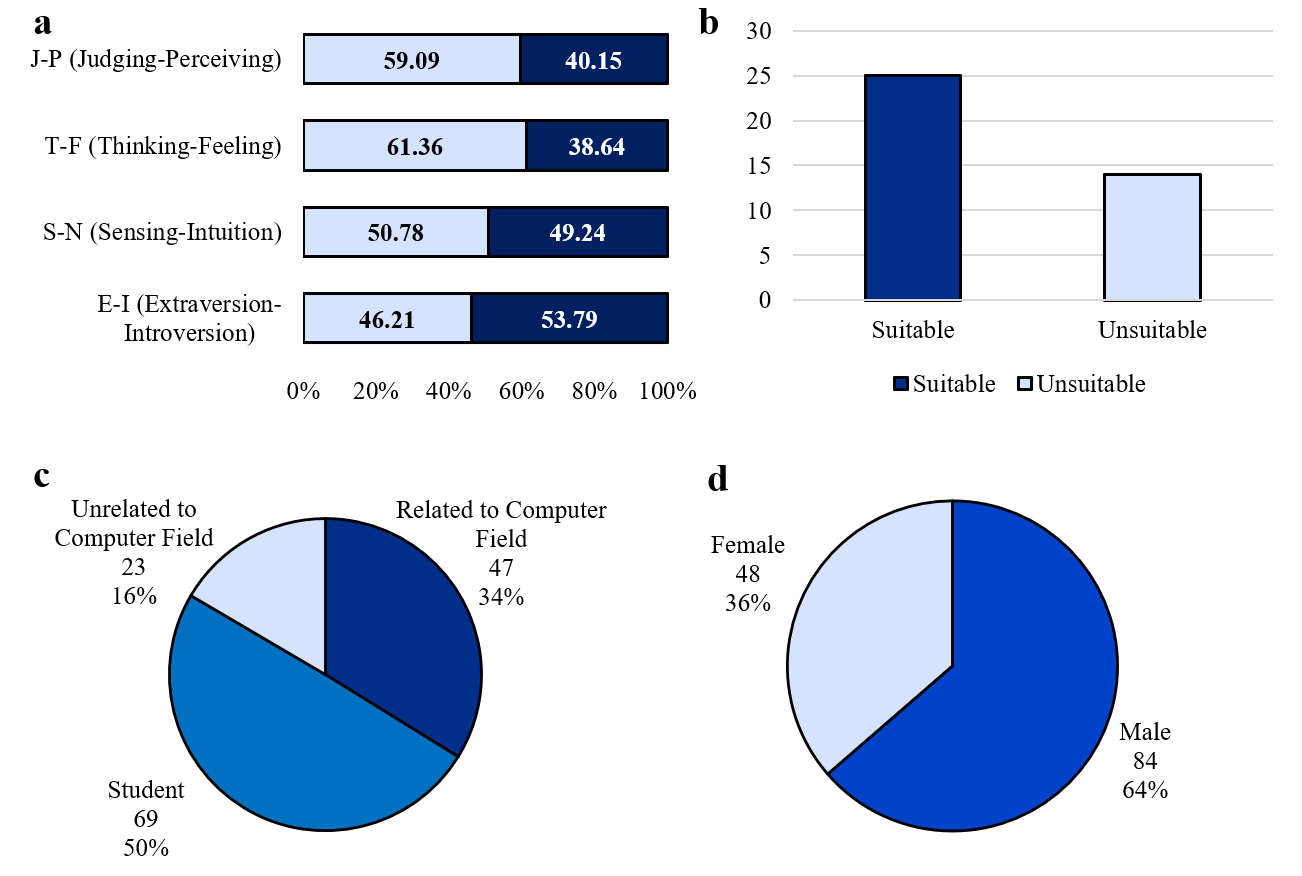
Personality assessment in career guidance and personnel selection traditionally relies on self-report questionnaires, which are susceptible to response bias, fatigue, and intentional distortion. Game-based assessment offers a promising alternative by capturing implicit behavioral signals during gameplay. This study proposes a multi-genre serious-game framework combined with machine-learning techniques to predict suitability for software development roles. Developer-relevant personality and behavioral traits were identified through a systematic literature review and an empirical study of professional software engineers. A custom mobile game was designed to elicit behaviors related to problem solving, planning, adaptability, persistence, time management, and information seeking. Fine-grained gameplay event data were collected and analyzed using a two-phase modeling strategy where suitability was predicted exclusively from gameplay-derived behavioral features. Results show that our model achieved up to 97% precision and 94% accuracy. Behavioral analysis revealed that proper candidates exhibited distinct gameplay patterns, such as more wins in puzzle-based games, more side challenges, navigating menus more frequently, and exhibiting fewer pauses, retries, and surrender actions. These findings demonstrate that implicit behavioral traces captured during gameplay is promising in predicting software-development suitability without explicit personality testing, supporting serious games as a scalable, engaging, and less biased alternative for career assessment.

paper research
MergeRec  Model Merging for Data-Isolated Cross-Domain Sequential Recommendation

MergeRec Model Merging for Data-Isolated Cross-Domain Sequential Recommendation

Modern recommender systems trained on domain-specific data often struggle to generalize across multiple domains. Cross-domain sequential recommendation has emerged as a promising research direction to address this challenge; however, existing approaches face fundamental limitations, such as reliance on overlapping users or items across domains, or unrealistic assumptions that ignore privacy constraints. In this work, we propose a new framework, MergeRec, based on model merging under a new and realistic problem setting termed data-isolated cross-domain sequential recommendation, where raw user interaction data cannot be shared across domains. MergeRec consists of three key components (1) merging initialization, (2) pseudo-user data construction, and (3) collaborative merging optimization. First, we initialize a merged model using training-free merging techniques. Next, we construct pseudo-user data by treating each item as a virtual sequence in each domain, enabling the synthesis of meaningful training samples without relying on real user interactions. Finally, we optimize domain-specific merging weights through a joint objective that combines a recommendation loss, which encourages the merged model to identify relevant items, and a distillation loss, which transfers collaborative filtering signals from the fine-tuned source models. Extensive experiments demonstrate that MergeRec not only preserves the strengths of the original models but also significantly enhances generalizability to unseen domains. Compared to conventional model merging methods, MergeRec consistently achieves superior performance, with average improvements of up to 17.21% in Recall@10, highlighting the potential of model merging as a scalable and effective approach for building universal recommender systems. The source code is available at https //github.com/DIALLab-SKKU/MergeRec.

paper research
mHC  Manifold-Constrained Hyper-Connections

mHC Manifold-Constrained Hyper-Connections

Recently, studies exemplified by Hyper-Connections (HC) have extended the ubiquitous residual connection paradigm established over the past decade by expanding the residual stream width and diversifying connectivity patterns. While yielding substantial performance gains, this diversification fundamentally compromises the identity mapping property intrinsic to the residual connection, which causes severe training instability and restricted scalability, and additionally incurs notable memory access overhead. To address these challenges, we propose Manifold-Constrained Hyper-Connections (mHC), a general framework that projects the residual connection space of HC onto a specific manifold to restore the identity mapping property, while incorporating rigorous infrastructure optimization to ensure efficiency. Empirical experiments demonstrate that mHC is effective for training at scale, offering tangible performance improvements and superior scalability. We anticipate that mHC, as a flexible and practical extension of HC, will contribute to a deeper understanding of topological architecture design and suggest promising directions for the evolution of foundational models.

paper research
MM-Sonate  Multimodal Controllable Audio-Video Generation with Zero-Shot Voice Cloning

MM-Sonate Multimodal Controllable Audio-Video Generation with Zero-Shot Voice Cloning

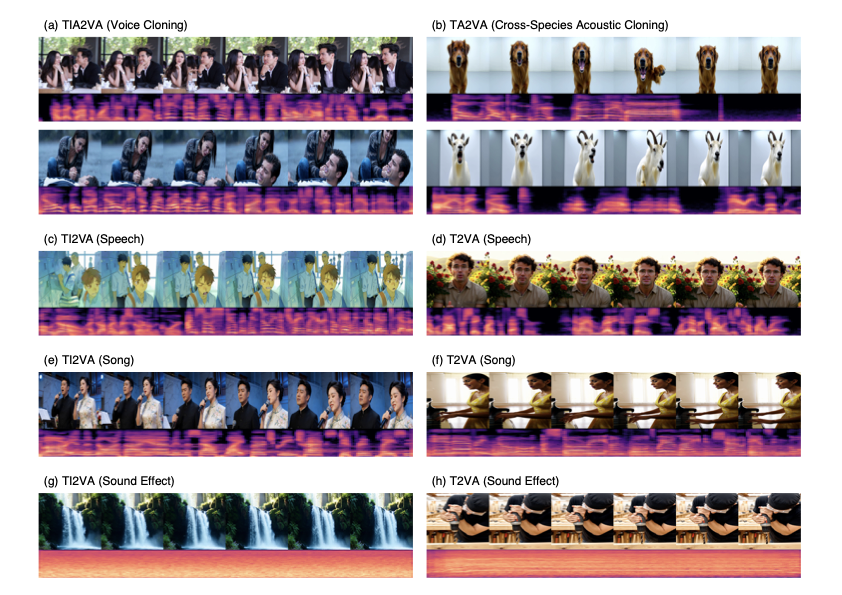
Joint audio-video generation aims to synthesize synchronized multisensory content, yet current unified models struggle with fine-grained acoustic control, particularly for identity-preserving speech. Existing approaches either suffer from temporal misalignment due to cascaded generation or lack the capability to perform zero-shot voice cloning within a joint synthesis framework. In this work, we present MM-Sonate, a multimodal flow-matching framework that unifies controllable audio-video joint generation with zero-shot voice cloning capabilities. Unlike prior works that rely on coarse semantic descriptions, MM-Sonate utilizes a unified instruction-phoneme input to enforce strict linguistic and temporal alignment. To enable zero-shot voice cloning, we introduce a timbre injection mechanism that effectively decouples speaker identity from linguistic content. Furthermore, addressing the limitations of standard classifier-free guidance in multimodal settings, we propose a noise-based negative conditioning strategy that utilizes natural noise priors to significantly enhance acoustic fidelity. Empirical evaluations demonstrate that MM-Sonate establishes new state-of-the-art performance in joint generation benchmarks, significantly outperforming baselines in lip synchronization and speech intelligibility, while achieving voice cloning fidelity comparable to specialized Text-to-Speech systems.

paper research
MODE  Efficient Time Series Prediction with Mamba Enhanced by Low-Rank Neural ODEs

MODE Efficient Time Series Prediction with Mamba Enhanced by Low-Rank Neural ODEs

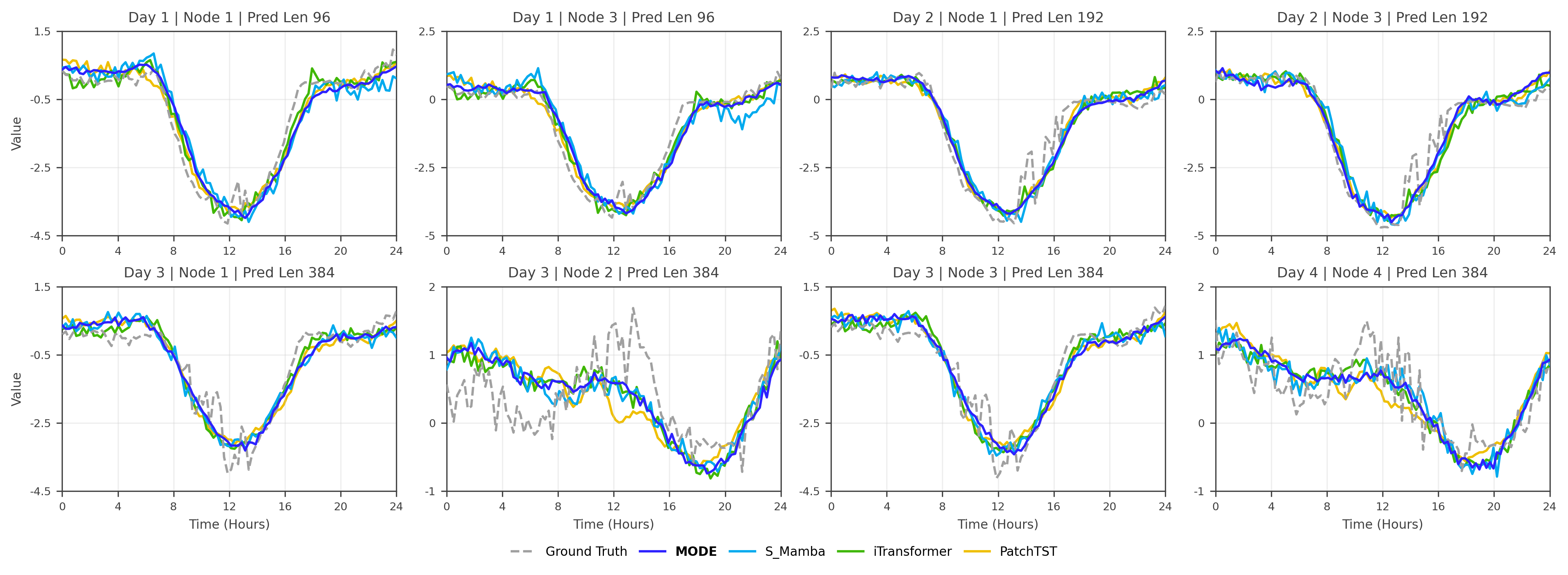
Time series prediction plays a pivotal role across diverse domains such as finance, healthcare, energy systems, and environmental modeling. However, existing approaches often struggle to balance efficiency, scalability, and accuracy, particularly when handling long-range dependencies and irregularly sampled data. To address these challenges, we propose MODE, a unified framework that integrates Low-Rank Neural Ordinary Differential Equations (Neural ODEs) with an Enhanced Mamba architecture. As illustrated in our framework, the input sequence is first transformed by a Linear Tokenization Layer and then processed through multiple Mamba Encoder blocks, each equipped with an Enhanced Mamba Layer that employs Causal Convolution, SiLU activation, and a Low-Rank Neural ODE enhancement to efficiently capture temporal dynamics. This low-rank formulation reduces computational overhead while maintaining expressive power. Furthermore, a segmented selective scanning mechanism, inspired by pseudo-ODE dynamics, adaptively focuses on salient subsequences to improve scalability and long-range sequence modeling. Extensive experiments on benchmark datasets demonstrate that MODE surpasses existing baselines in both predictive accuracy and computational efficiency. Overall, our contributions include (1) a unified and efficient architecture for long-term time series modeling, (2) integration of Mamba s selective scanning with low-rank Neural ODEs for enhanced temporal representation, and (3) substantial improvements in efficiency and scalability enabled by low-rank approximation and dynamic selective scanning.

paper research
Modeling Language as a Sequence of Thoughts

Modeling Language as a Sequence of Thoughts

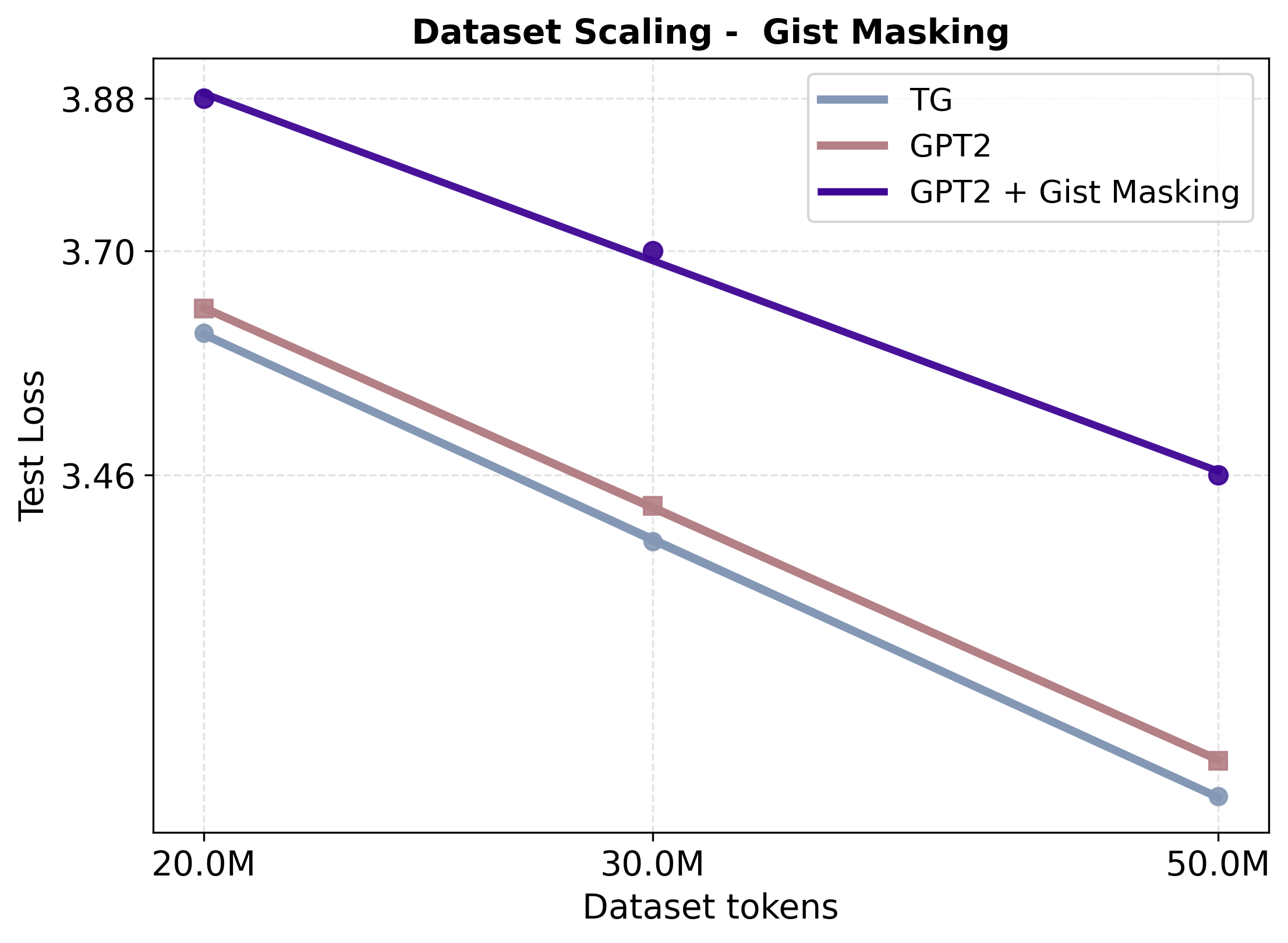
Transformer language models can generate strikingly natural text by modeling language as a sequence of tokens, but by relying primarily on surface-level co-occurrence statistics they fail to form globally consistent latent representations of entities and events, which contributes to poor relational generalization (the reversal curse), contextualization errors, and data inefficiency. Cognitive science, by contrast, shows that human comprehension converts linguistic input into compact, event-like representations that persist in memory while verbatim form is short-lived. Motivated by these findings, we introduce the Thought Gestalt (TG) model, a recurrent transformer that models language at two levels of abstraction tokens and sentence-level thought states. TG generates one sentence at a time while cross-attending to a working memory of prior sentence representations. Token and sentence representations are generated using a shared stack of transformer blocks and trained with a single objective, next-token prediction loss. By retaining the computation graph of sentence representations written to working memory, gradients from future token losses flow backward through cross-attention to optimize the parameters that generate earlier sentence vectors. In scaling experiments, TG consistently improves data and parameter efficiency compared to matched GPT-2 runs and other baselines, with scaling fits indicating GPT-2 requires ~5-8% more data and ~33-42% more parameters to match TG s test loss. TG also reduces errors in relational-direction generalization on a father-son reversal curse probe.

paper research
MORE  Multi-Objective Adversarial Attacks on Speech Recognition

MORE Multi-Objective Adversarial Attacks on Speech Recognition

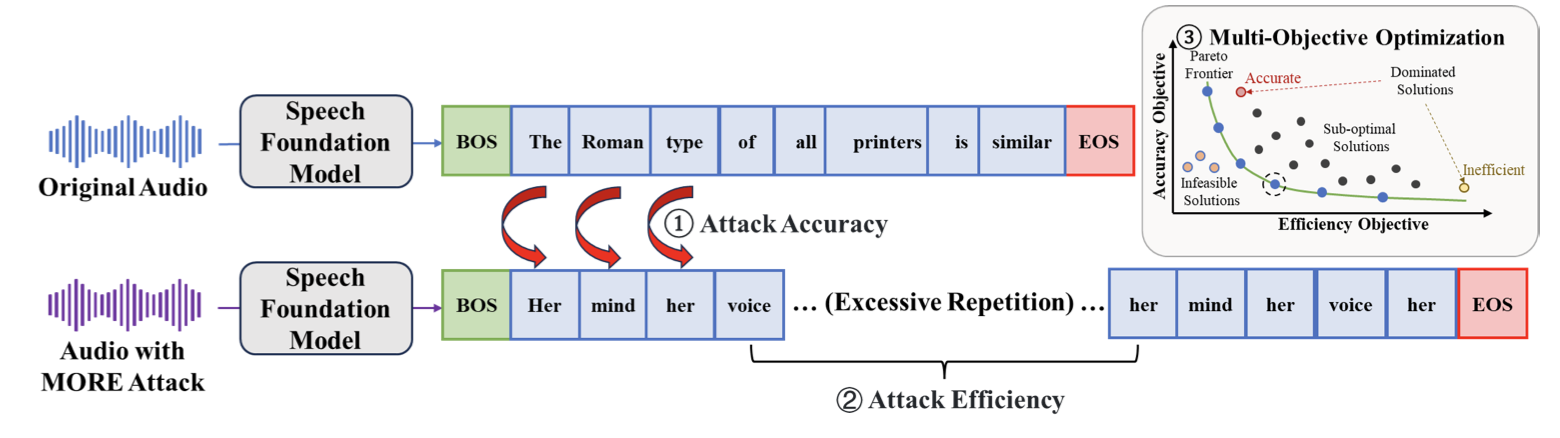
The emergence of large-scale automatic speech recognition (ASR) models such as Whisper has greatly expanded their adoption across diverse real-world applications. Ensuring robustness against even minor input perturbations is therefore critical for maintaining reliable performance in real-time environments. While prior work has mainly examined accuracy degradation under adversarial attacks, robustness with respect to efficiency remains largely unexplored. This narrow focus provides only a partial understanding of ASR model vulnerabilities. To address this gap, we conduct a comprehensive study of ASR robustness under multiple attack scenarios. We introduce MORE, a multi-objective repetitive doubling encouragement attack, which jointly degrades recognition accuracy and inference efficiency through a hierarchical staged repulsion-anchoring mechanism. Specifically, we reformulate multi-objective adversarial optimization into a hierarchical framework that sequentially achieves the dual objectives. To further amplify effectiveness, we propose a novel repetitive encouragement doubling objective (REDO) that induces duplicative text generation by maintaining accuracy degradation and periodically doubling the predicted sequence length. Overall, MORE compels ASR models to produce incorrect transcriptions at a substantially higher computational cost, triggered by a single adversarial input. Experiments show that MORE consistently yields significantly longer transcriptions while maintaining high word error rates compared to existing baselines, underscoring its effectiveness in multi-objective adversarial attack.

paper research
More Than Bits  Multi-Envelope Double Binary Factorization for Extreme Quantization

More Than Bits Multi-Envelope Double Binary Factorization for Extreme Quantization

For extreme low-bit quantization of large language models (LLMs), Double Binary Factorization (DBF) is attractive as it enables efficient inference without sacrificing accuracy. However, the scaling parameters of DBF are too restrictive; after factoring out signs, all rank components share the same magnitude profile, resulting in performance saturation. We propose Multi-envelope DBF (MDBF), which retains a shared pair of 1-bit sign bases but replaces the single envelope with a rank-$l$ envelope. By sharing sign matrices among envelope components, MDBF effectively maintains a binary carrier and utilizes the limited memory budget for magnitude expressiveness. We also introduce a closed-form initialization and an alternating refinement method to optimize MDBF. Across the LLaMA and Qwen families, MDBF enhances perplexity and zero-shot accuracy over previous binary formats at matched bits per weight while preserving the same deployment-friendly inference primitive.

paper research
Mortar  Evolving Mechanics for Automatic Game Design

Mortar Evolving Mechanics for Automatic Game Design

We present Mortar, a system for autonomously evolving game mechanics for automatic game design. Game mechanics define the rules and interactions that govern gameplay, and designing them manually is a time-consuming and expert-driven process. Mortar combines a quality-diversity algorithm with a large language model to explore a diverse set of mechanics, which are evaluated by synthesising complete games that incorporate both evolved mechanics and those drawn from an archive. The mechanics are evaluated by composing complete games through a tree search procedure, where the resulting games are evaluated by their ability to preserve a skill-based ordering over players -- that is, whether stronger players consistently outperform weaker ones. We assess the mechanics based on their contribution towards the skill-based ordering score in the game. We demonstrate that Mortar produces games that appear diverse and playable, and mechanics that contribute more towards the skill-based ordering score in the game. We perform ablation studies to assess the role of each system component and a user study to evaluate the games based on human feedback.

paper research
MSACL  Multi-Step Actor-Critic Learning with Lyapunov Certificates for Exponentially Stabilizing Control

MSACL Multi-Step Actor-Critic Learning with Lyapunov Certificates for Exponentially Stabilizing Control

Achieving provable stability in model-free reinforcement learning (RL) remains a challenge, particularly in balancing exploration with rigorous safety. This article introduces MSACL, a framework that integrates exponential stability theory with maximum entropy RL through multi-step Lyapunov certificate learning. Unlike methods relying on complex reward engineering, MSACL utilizes off-policy multi-step data to learn Lyapunov certificates satisfying theoretical stability conditions. By introducing Exponential Stability Labels (ESL) and a $λ$-weighted aggregation mechanism, the framework effectively balances the bias-variance trade-off in multi-step learning. Policy optimization is guided by a stability-aware advantage function, ensuring the learned policy promotes rapid Lyapunov descent. We evaluate MSACL across six benchmarks, including stabilization and nonlinear tracking tasks, demonstrating its superiority over state-of-the-art Lyapunov-based RL algorithms. MSACL achieves exponential stability and rapid convergence under simple rewards, while exhibiting significant robustness to uncertainties and generalization to unseen trajectories. Sensitivity analysis establishes the multi-step horizon $n=20$ as a robust default across diverse systems. By linking Lyapunov theory with off-policy actor-critic frameworks, MSACL provides a foundation for verifiably safe learning-based control. Source code and benchmark environments will be made publicly available.

paper research
Multi-Dimensional Prompt Chaining to Improve Open-Domain Dialogue Generation

Multi-Dimensional Prompt Chaining to Improve Open-Domain Dialogue Generation

Small language models (SLMs) offer significant deployment advantages but often struggle to match the dialogue quality of larger models in open-domain settings. In this paper, we propose a multi-dimensional prompt-chaining framework that integrates Naturalness, Coherence, and Engagingness dimensions to enhance human-likeness in open-domain dialogue generation. We apply the framework to two SLMs, TinyLlama and Llama-2-7B, and benchmark their performance against responses generated by substantially larger models, including Llama-2-70B and GPT-3.5 Turbo. We then employ automatic and human evaluation to assess the responses based on diversity, contextual coherence, as well as overall quality. Results show that the full framework improves response diversity by up to 29%, contextual coherence by up to 28%, and engagingness as well as naturalness by up to 29%. Notably, Llama-2-7B achieves performance comparable to substantially larger models, including Llama-2-70B and GPT-3.5 Turbo. Overall, the findings demonstrate that carefully designed prompt-based strategies provide an effective and resource-efficient pathway to improving open-domain dialogue quality in SLMs.

paper research
Multi-modal cross-domain mixed fusion model with dual disentanglement for fault diagnosis under unseen working conditions

Multi-modal cross-domain mixed fusion model with dual disentanglement for fault diagnosis under unseen working conditions

Intelligent fault diagnosis has become an indispensable technique for ensuring machinery reliability. However, existing methods suffer significant performance decline in real-world scenarios where models are tested under unseen working conditions, while domain adaptation approaches are limited to their reliance on target domain samples. Moreover, most existing studies rely on single-modal sensing signals, overlooking the complementary nature of multi-modal information for improving model generalization. To address these limitations, this paper proposes a multi-modal cross-domain mixed fusion model with dual disentanglement for fault diagnosis. A dual disentanglement framework is developed to decouple modality-invariant and modality-specific features, as well as domain-invariant and domain-specific representations, enabling both comprehensive multi-modal representation learning and robust domain generalization. A cross-domain mixed fusion strategy is designed to randomly mix modality information across domains for modality and domain diversity augmentation. Furthermore, a triple-modal fusion mechanism is introduced to adaptively integrate multi-modal heterogeneous information. Extensive experiments are conducted on induction motor fault diagnosis under both unseen constant and time-varying working conditions. The results demonstrate that the proposed method consistently outperforms advanced methods and comprehensive ablation studies further verify the effectiveness of each proposed component and multi-modal fusion. The code is available at https //github.com/xiapc1996/MMDG.

paper research
Multimodal Functional Maximum Correlation for Emotion Recognition

Multimodal Functional Maximum Correlation for Emotion Recognition

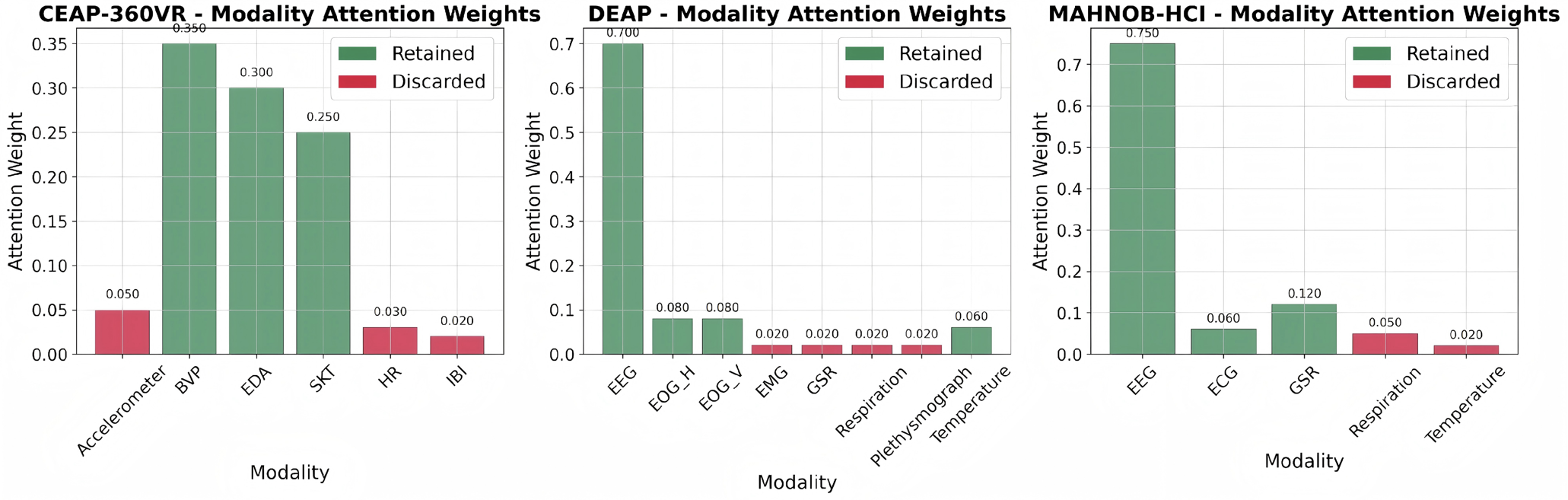
Emotional states manifest as coordinated yet heterogeneous physiological responses across central and autonomic systems, posing a fundamental challenge for multimodal representation learning in affective computing. Learning such joint dynamics is further complicated by the scarcity and subjectivity of affective annotations, which motivates the use of self-supervised learning (SSL). However, most existing SSL approaches rely on pairwise alignment objectives, which are insufficient to characterize dependencies among more than two modalities and fail to capture higher-order interactions arising from coordinated brain and autonomic responses. To address this limitation, we propose Multimodal Functional Maximum Correlation (MFMC), a principled SSL framework that maximizes higher-order multimodal dependence through a Dual Total Correlation (DTC) objective. By deriving a tight sandwich bound and optimizing it using a functional maximum correlation analysis (FMCA) based trace surrogate, MFMC captures joint multimodal interactions directly, without relying on pairwise contrastive losses. Experiments on three public affective computing benchmarks demonstrate that MFMC consistently achieves state-of-the-art or competitive performance under both subject-dependent and subject-independent evaluation protocols, highlighting its robustness to inter-subject variability. In particular, MFMC improves subject-dependent accuracy on CEAP-360VR from 78.9% to 86.8%, and subject-independent accuracy from 27.5% to 33.1% using the EDA signal alone. Moreover, MFMC remains within 0.8 percentage points of the best-performing method on the most challenging EEG subject-independent split of MAHNOB-HCI. Our code is available at https //github.com/DY9910/MFMC.

paper research
Neural Chains and Discrete Dynamical Systems

Neural Chains and Discrete Dynamical Systems

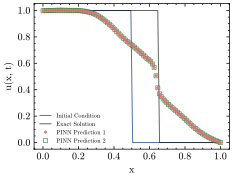
We inspect the analogy between machine-learning (ML) applications based on the transformer architecture without self-attention, { it neural chains} hereafter, and discrete dynamical systems associated with discretised versions of neural integral and partial differential equations (NIE, PDE). A comparative analysis of the numerical solution of the (viscid and inviscid) Burgers and Eikonal equations via standard numerical discretization (also cast in terms of neural chains) and via PINN s learning is presented and commented on. It is found that standard numerical discretization and PINN learning provide two different paths to acquire essentially the same knowledge about the dynamics of the system. PINN learning proceeds through random matrices which bear no direct relation to the highly structured matrices associated with finite-difference (FD) procedures. Random matrices leading to acceptable solutions are far more numerous than the unique tridiagonal form in matrix space, which explains why the PINN search typically lands on the random ensemble. The price is a much larger number of parameters, causing lack of physical transparency (explainability) as well as large training costs with no counterpart in the FD procedure. However, our results refer to one-dimensional dynamic problems, hence they don t rule out the possibility that PINNs and ML in general, may offer better strategies for high-dimensional problems.

paper research
Noise-Robust Tiny Object Localization with Flows

Noise-Robust Tiny Object Localization with Flows

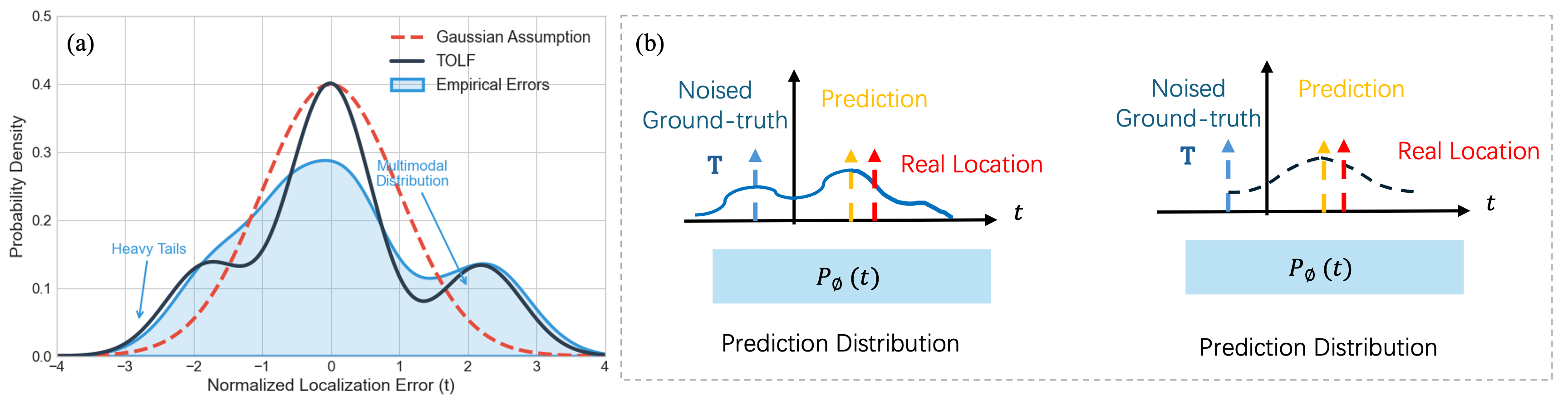
Despite significant advances in generic object detection, a persistent performance gap remains for tiny objects compared to normal-scale objects. We demonstrate that tiny objects are highly sensitive to annotation noise, where optimizing strict localization objectives risks noise overfitting. To address this, we propose Tiny Object Localization with Flows (TOLF), a noise-robust localization framework leveraging normalizing flows for flexible error modeling and uncertainty-guided optimization. Our method captures complex, non-Gaussian prediction distributions through flow-based error modeling, enabling robust learning under noisy supervision. An uncertainty-aware gradient modulation mechanism further suppresses learning from high-uncertainty, noise-prone samples, mitigating overfitting while stabilizing training. Extensive experiments across three datasets validate our approach s effectiveness. Especially, TOLF boosts the DINO baseline by 1.2% AP on the AI-TOD dataset.

paper research
Not All Needles Are Found  How Fact Distribution and Don t Make It Up Prompts Shape Literal Extraction, Logical Inference, and Hallucination Risks in Long-Context LLMs

Not All Needles Are Found How Fact Distribution and Don t Make It Up Prompts Shape Literal Extraction, Logical Inference, and Hallucination Risks in Long-Context LLMs

Large language models (LLMs) increasingly support very long input contexts. Yet it remains unclear how reliably they extract and infer information at scale. Performance varies with context length and strongly interacts with how information is distributed in real-world corpora. Motivated by these observations, we study how fact placement, corpus-level fact distributions, and Don t Make It Up prompts influence model behavior. We introduce an extended needle-in-a-haystack benchmark across four production-scale models Gemini-2.5-flash, ChatGPT-5-mini, Claude-4.5-haiku, and Deepseek-v3.2-chat. Unlike prior work, we separately evaluate literal extraction, logical inference, and hallucination risk. Our study considers both positional effects and realistic distributions of evidence across long contexts, as well as prompts that explicitly discourage fabrication. We find that longer contexts alone do not guarantee better performance and can be detrimental when relevant evidence is diluted or widely dispersed. Performance varies substantially across models some show severe degradation under realistic conditions, while others remain more robust at longer context lengths. Anti-hallucination (AH) instructions can make some models overly conservative, sharply reducing accuracy in literal extraction and logical inference. While we do not directly compare retrieval-augmented generation (RAG) and cache-augmented generation (CAG), our results suggest many failures stem from ineffective context utilization. Models often struggle to identify and prioritize relevant information even when it is present. These findings have direct practical implications, as enterprise workflows increasingly involve pasting large volumes of unfiltered documents into LLM prompts. Effective context length and model-specific robustness to long contexts are therefore critical for reliable LLM deployment in research and business.
paper research

Start searching

Enter keywords to search articles

↑↓
ESC
⌘K Shortcut