Posts

Here are all published articles, sorted by date in descending order.

301 posts total
7 pages total
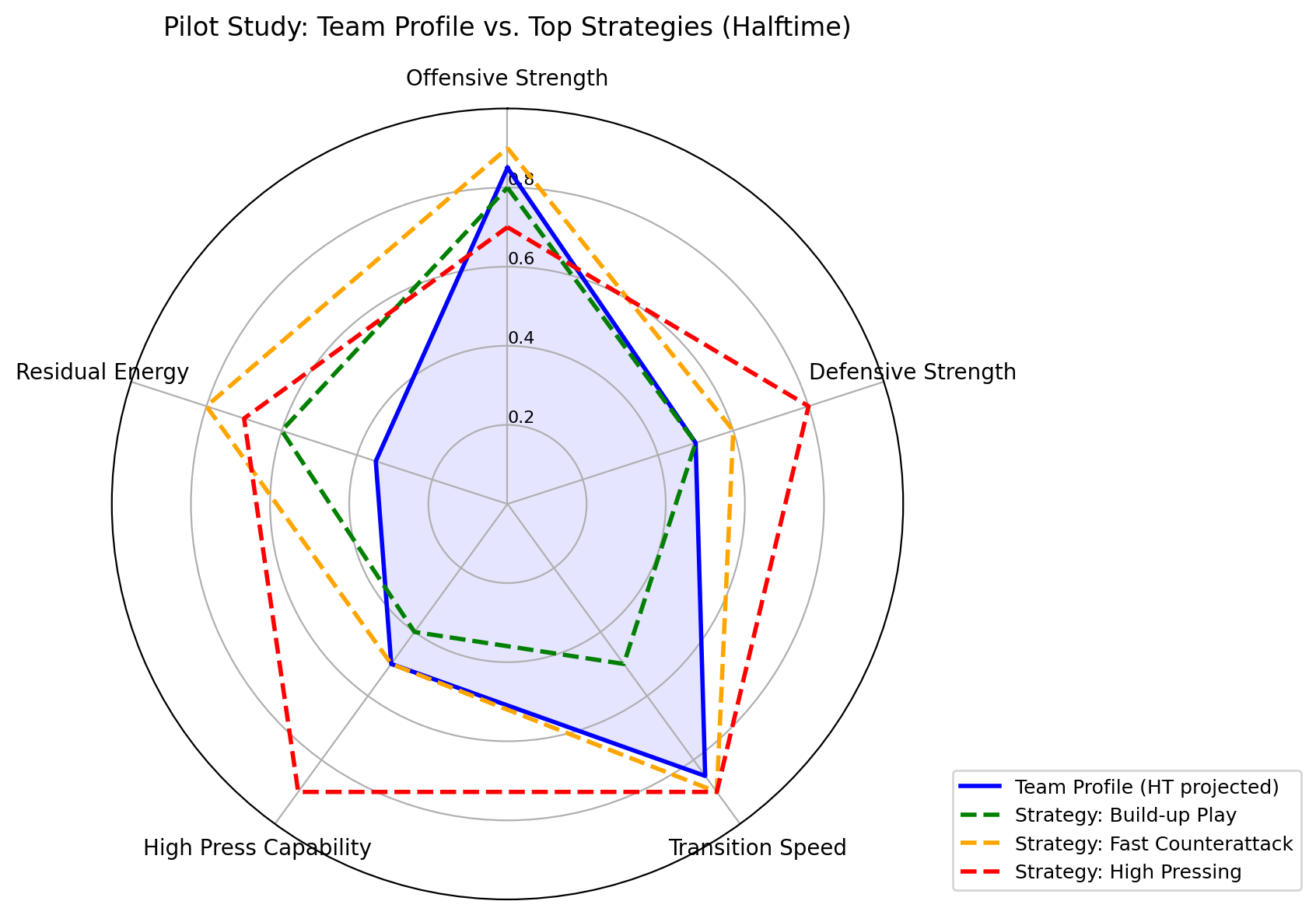
Can Semantic Methods Enhance Team Sports Tactics? A Methodology for Football with Broader Applications

Can Semantic Methods Enhance Team Sports Tactics? A Methodology for Football with Broader Applications

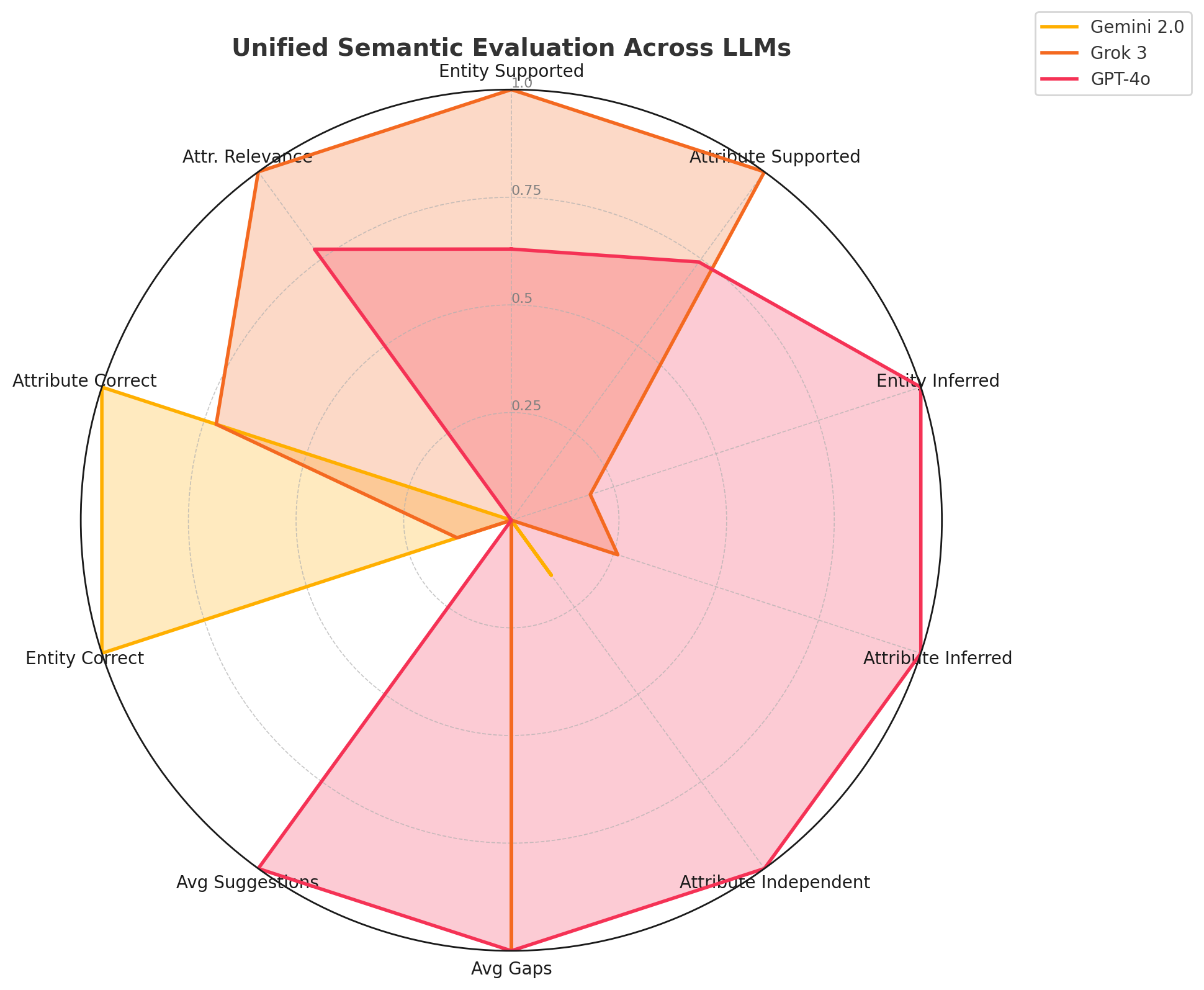
This paper explores how semantic-space reasoning, traditionally used in computational linguistics, can be extended to tactical decision-making in team sports. Building on the analogy between texts and teams -- where players act as words and collective play conveys meaning -- the proposed methodology models tactical configurations as compositional semantic structures. Each player is represented as a multidimensional vector integrating technical, physical, and psychological attributes; team profiles are aggregated through contextual weighting into a higher-level semantic representation. Within this shared vector space, tactical templates such as high press, counterattack, or possession build-up are encoded analogously to linguistic concepts. Their alignment with team profiles is evaluated using vector-distance metrics, enabling the computation of tactical ``fit and opponent-exploitation potential. A Python-based prototype demonstrates how these methods can generate interpretable, dynamically adaptive strategy recommendations, accompanied by fine-grained diagnostic insights at the attribute level. Beyond football, the approach offers a generalizable framework for collective decision-making and performance optimization in team-based domains -- ranging from basketball and hockey to cooperative robotics and human-AI coordination systems. The paper concludes by outlining future directions toward real-world data integration, predictive simulation, and hybrid human-machine tactical intelligence.
paper research
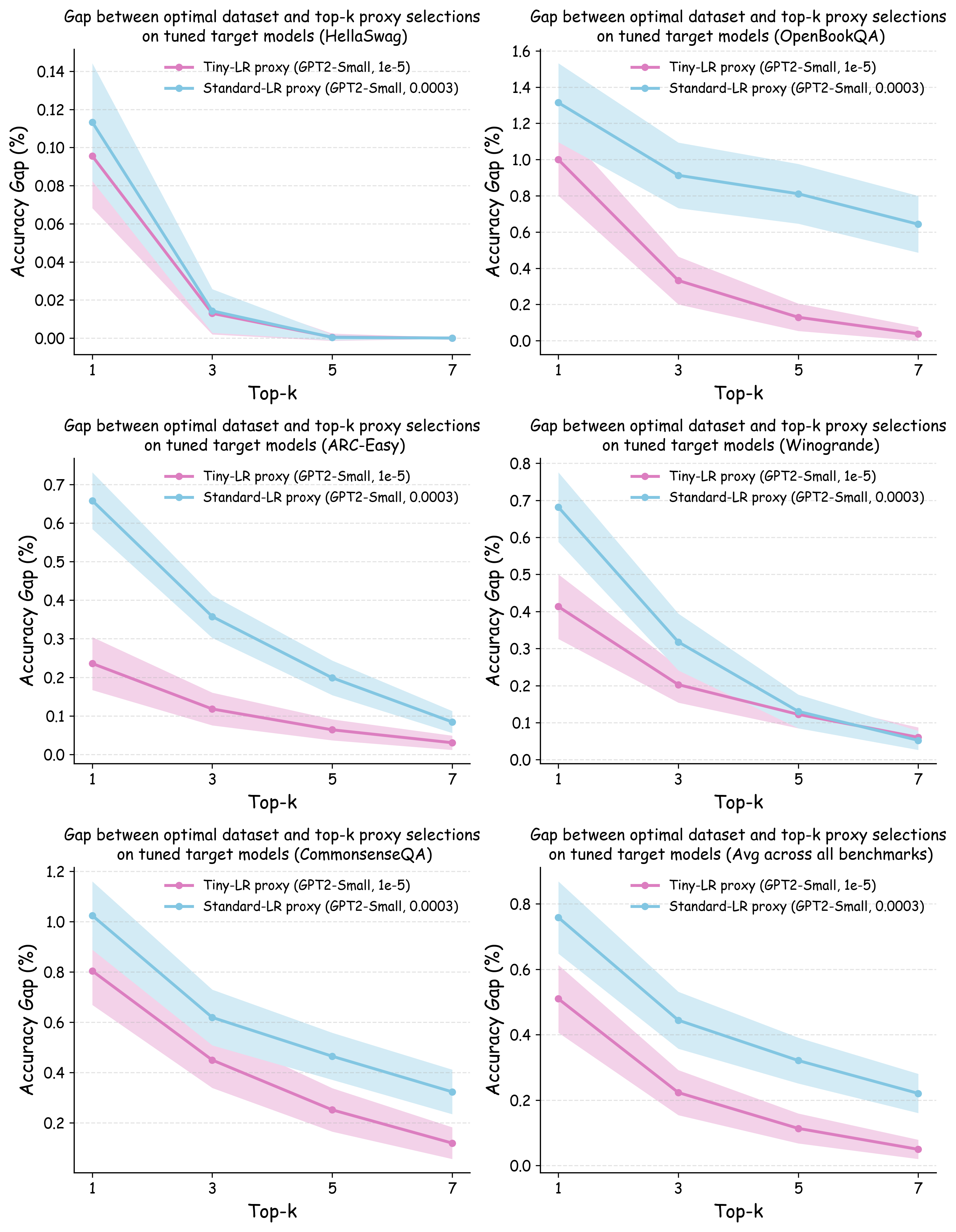
Can Small Training Runs Reliably Guide Data Curation? Rethinking Proxy-Model Practice

Can Small Training Runs Reliably Guide Data Curation? Rethinking Proxy-Model Practice

Data teams at frontier AI companies routinely train small proxy models to make critical decisions about pretraining data recipes for full-scale training runs. However, the community has a limited understanding of whether and when conclusions drawn from small-scale experiments reliably transfer to full-scale model training. In this work, we uncover a subtle yet critical issue in the standard experimental protocol for data recipe assessment the use of identical small-scale model training configurations across all data recipes in the name of fair comparison. We show that the experiment conclusions about data quality can flip with even minor adjustments to training hyperparameters, as the optimal training configuration is inherently data-dependent. Moreover, this fixed-configuration protocol diverges from full-scale model development pipelines, where hyperparameter optimization is a standard step. Consequently, we posit that the objective of data recipe assessment should be to identify the recipe that yields the best performance under data-specific tuning. To mitigate the high cost of hyperparameter tuning, we introduce a simple patch to the evaluation protocol using reduced learning rates for proxy model training. We show that this approach yields relative performance that strongly correlates with that of fully tuned large-scale LLM pretraining runs. Theoretically, we prove that for random-feature models, this approach preserves the ordering of datasets according to their optimal achievable loss. Empirically, we validate this approach across 23 data recipes covering four critical dimensions of data curation, demonstrating dramatic improvements in the reliability of small-scale experiments.

paper research
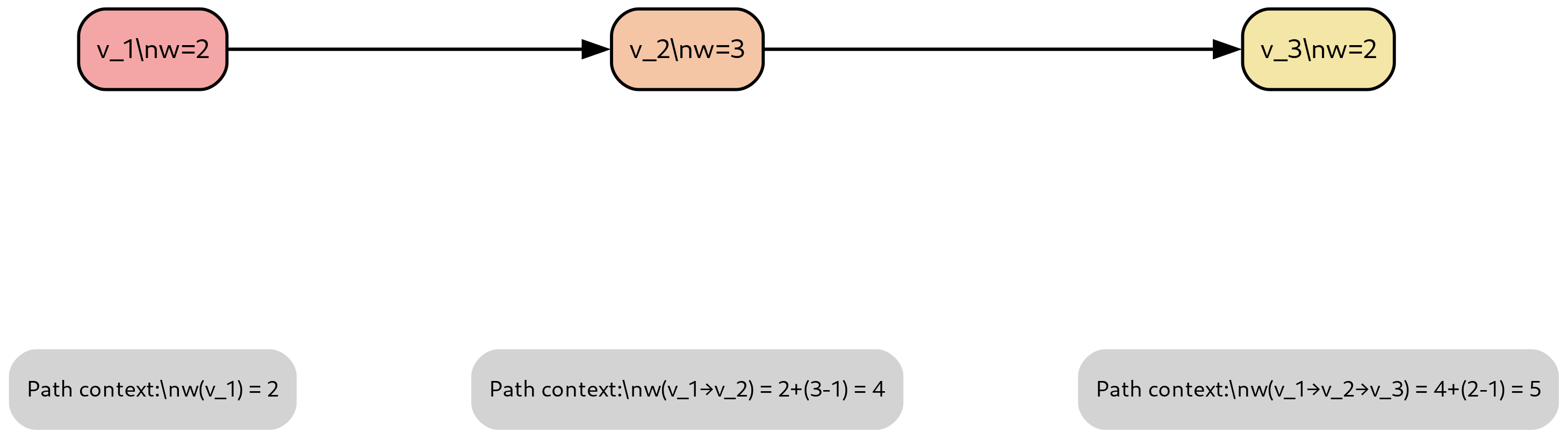
Causify DataFlow  A Framework For High-performance Machine Learning Stream Computing

Causify DataFlow A Framework For High-performance Machine Learning Stream Computing

We present DataFlow, a computational framework for building, testing, and deploying high-performance machine learning systems on unbounded time-series data. Traditional data science workflows assume finite datasets and require substantial reimplementation when moving from batch prototypes to streaming production systems. This gap introduces causality violations, batch boundary artifacts, and poor reproducibility of real-time failures. DataFlow resolves these issues through a unified execution model based on directed acyclic graphs (DAGs) with point-in-time idempotency outputs at any time t depend only on a fixed-length context window preceding t. This guarantee ensures that models developed in batch mode execute identically in streaming production without code changes. The framework enforces strict causality by automatically tracking knowledge time across all transformations, eliminating future-peeking bugs. DataFlow supports flexible tiling across temporal and feature dimensions, allowing the same model to operate at different frequencies and memory profiles via configuration alone. It integrates natively with the Python data science stack and provides fit/predict semantics for online learning, caching and incremental computation, and automatic parallelization through DAG-based scheduling. We demonstrate its effectiveness across domains including financial trading, IoT, fraud detection, and real-time analytics.

paper research
CaveAgent  Transforming LLMs into Stateful Runtime Operators

CaveAgent Transforming LLMs into Stateful Runtime Operators

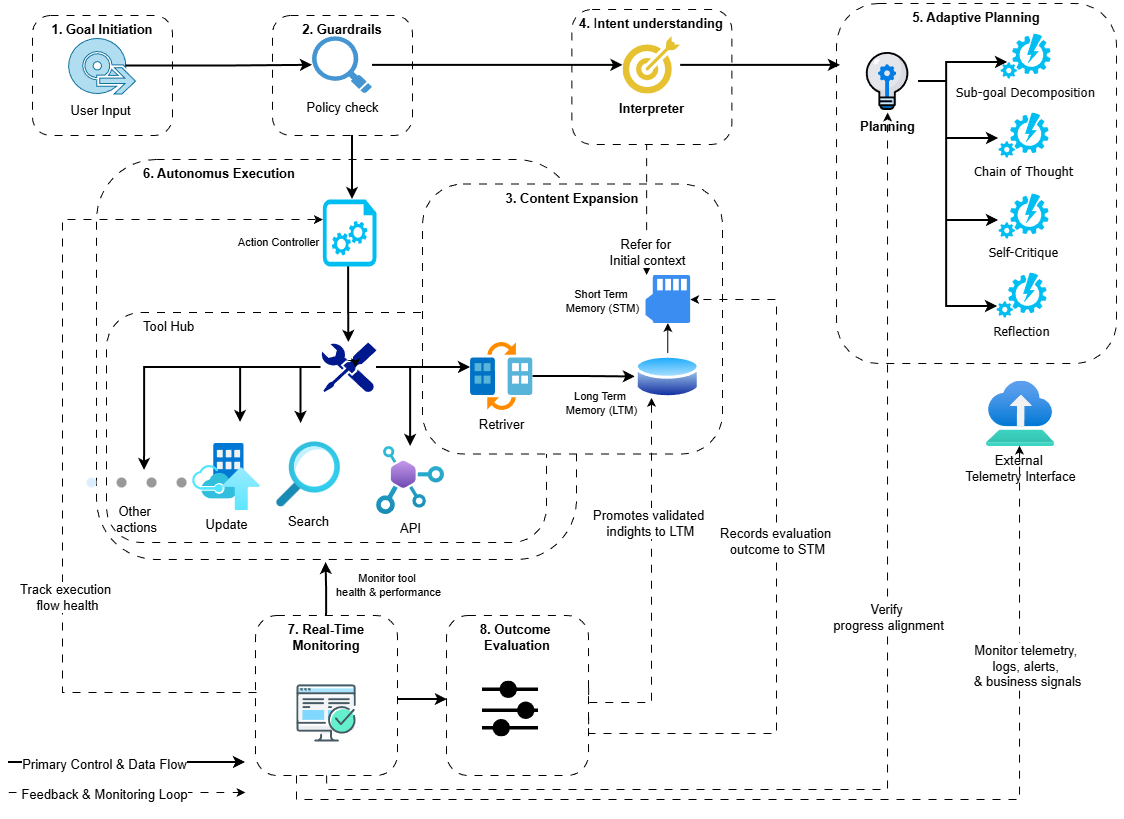
LLM-based agents are increasingly capable of complex task execution, yet current agentic systems remain constrained by text-centric paradigms. Traditional approaches rely on procedural JSON-based function calling, which often struggles with long-horizon tasks due to fragile multi-turn dependencies and context drift. In this paper, we present CaveAgent, a framework that transforms the paradigm from LLM-as-Text-Generator to LLM-as-Runtime-Operator. We introduce a Dual-stream Context Architecture that decouples state management into a lightweight semantic stream for reasoning and a persistent, deterministic Python Runtime stream for execution. In addition to leveraging code generation to efficiently resolve interdependent sub-tasks (e.g., loops, conditionals) in a single step, we introduce textit{Stateful Runtime Management} in CaveAgent. Distinct from existing code-based approaches that remain text-bound and lack the support for external object injection and retrieval, CaveAgent injects, manipulates, and retrieves complex Python objects (e.g., DataFrames, database connections) that persist across turns. This persistence mechanism acts as a high-fidelity external memory to eliminate context drift, avoid catastrophic forgetting, while ensuring that processed data flows losslessly to downstream applications. Comprehensive evaluations on Tau$^2$-bench, BFCL and various case studies across representative SOTA LLMs demonstrate CaveAgent s superiority. Specifically, our framework achieves a 10.5 % success rate improvement on retail tasks and reduces total token consumption by 28.4 % in multi-turn scenarios. On data-intensive tasks, direct variable storage and retrieval reduces token consumption by 59 %, allowing CaveAgent to handle large-scale data that causes context overflow failures in both JSON-based and Code-based agents.

paper research
Chat-Driven Optimal Management for Virtual Network Services

Chat-Driven Optimal Management for Virtual Network Services

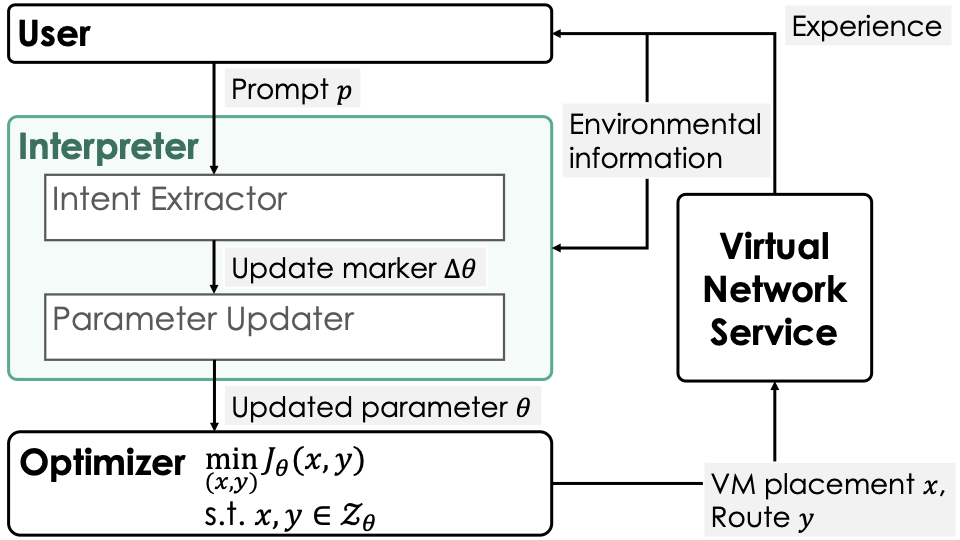
This paper proposes a chat-driven network management framework that integrates natural language processing (NLP) with optimization-based virtual network allocation, enabling intuitive and reliable reconfiguration of virtual network services. Conventional intent-based networking (IBN) methods depend on statistical language models to interpret user intent but cannot guarantee the feasibility of generated configurations. To overcome this, we develop a two-stage framework consisting of an Interpreter, which extracts intent from natural language prompts using NLP, and an Optimizer, which computes feasible virtual machine (VM) placement and routing via an integer linear programming. In particular, the Interpreter translates user chats into update directions, i.e., whether to increase, decrease, or maintain parameters such as CPU demand and latency bounds, thereby enabling iterative refinement of the network configuration. In this paper, two intent extractors, which are a Sentence-BERT model with support vector machine (SVM) classifiers and a large language model (LLM), are introduced. Experiments in single-user and multi-user settings show that the framework dynamically updates VM placement and routing while preserving feasibility. The LLM-based extractor achieves higher accuracy with fewer labeled samples, whereas the Sentence-BERT with SVM classifiers provides significantly lower latency suitable for real-time operation. These results underscore the effectiveness of combining NLP-driven intent extraction with optimization-based allocation for safe, interpretable, and user-friendly virtual network management.

paper research
Classifying long legal documents using short random chunks

Classifying long legal documents using short random chunks

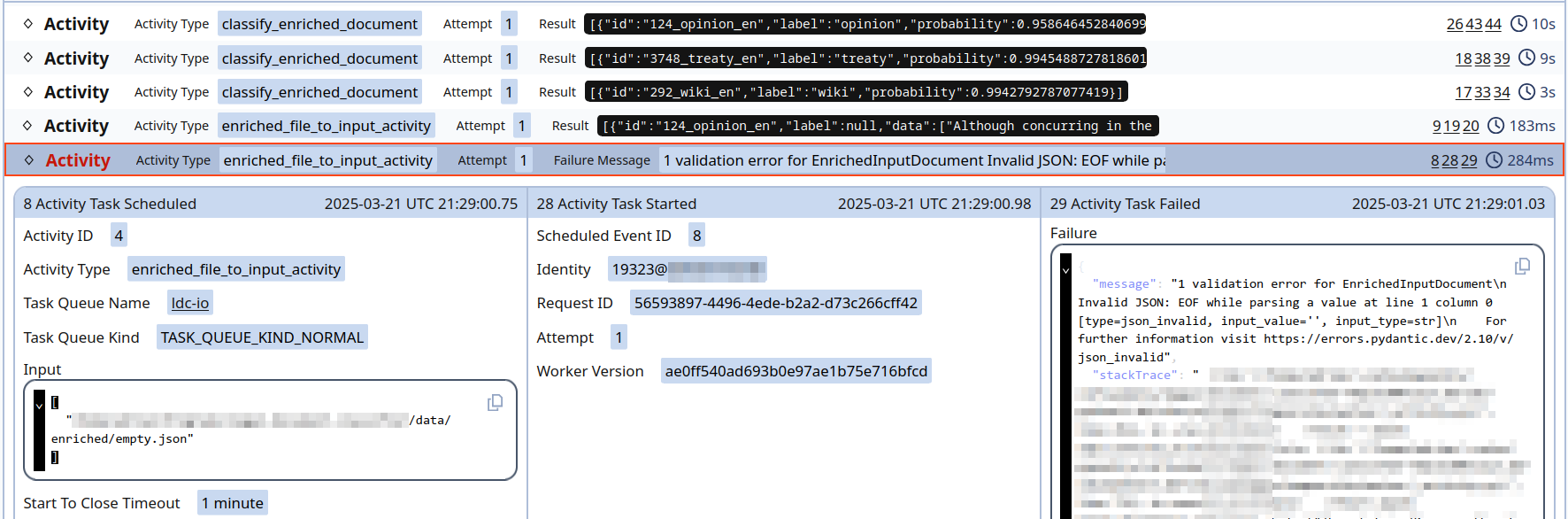
Classifying legal documents is a challenge, besides their specialized vocabulary, sometimes they can be very long. This means that feeding full documents to a Transformers-based models for classification might be impossible, expensive or slow. Thus, we present a legal document classifier based on DeBERTa V3 and a LSTM, that uses as input a collection of 48 randomly-selected short chunks (max 128 tokens). Besides, we present its deployment pipeline using Temporal, a durable execution solution, which allow us to have a reliable and robust processing workflow. The best model had a weighted F-score of 0.898, while the pipeline running on CPU had a processing median time of 498 seconds per 100 files.

paper research
Clinical Knowledge Graph Construction and Evaluation with Multi-LLMs via Retrieval-Augmented Generation

Clinical Knowledge Graph Construction and Evaluation with Multi-LLMs via Retrieval-Augmented Generation

Large language models (LLMs) offer new opportunities for constructing knowledge graphs (KGs) from unstructured clinical narratives. However, existing approaches often rely on structured inputs and lack robust validation of factual accuracy and semantic consistency, limitations that are especially problematic in oncology. We introduce an end-to-end framework for clinical KG construction and evaluation directly from free text using multi-agent prompting and a schema-constrained Retrieval-Augmented Generation (KG-RAG) strategy. Our pipeline integrates (1) prompt-driven entity, attribute, and relation extraction; (2) entropy-based uncertainty scoring; (3) ontology-aligned RDF/OWL schema generation; and (4) multi-LLM consensus validation for hallucination detection and semantic refinement. Beyond static graph construction, the framework supports continuous refinement and self-supervised evaluation, enabling iterative improvement of graph quality. Applied to two oncology cohorts (PDAC and BRCA), our method produces interpretable, SPARQL-compatible, and clinically grounded knowledge graphs without relying on gold-standard annotations. Experimental results demonstrate consistent gains in precision, relevance, and ontology compliance over baseline methods.

paper research
CNC-TP  Classifier Nominal Concept Based on Top-Relevant Attributes

CNC-TP Classifier Nominal Concept Based on Top-Relevant Attributes

Knowledge Discovery in Databases (KDD) aims to exploit the vast amounts of data generated daily across various domains of computer applications. Its objective is to extract hidden and meaningful knowledge from datasets through a structured process comprising several key steps data selection, preprocessing, transformation, data mining, and visualization. Among the core data mining techniques are classification and clustering. Classification involves predicting the class of new instances using a classifier trained on labeled data. Several approaches have been proposed in the literature, including Decision Tree Induction, Bayesian classifiers, Nearest Neighbor search, Neural Networks, Support Vector Machines, and Formal Concept Analysis (FCA). The last one is recognized as an effective approach for interpretable and explainable learning. It is grounded in the mathematical structure of the concept lattice, which enables the generation of formal concepts and the discovery of hidden relationships among them. In this paper, we present a state-of-theart review of FCA-based classifiers. We explore various methods for computing closure operators from nominal data and introduce a novel approach for constructing a partial concept lattice that focuses on the most relevant concepts. Experimental results are provided to demonstrate the efficiency of the proposed method.

paper research
CoCo-Fed  A Unified Framework for Memory- and Communication-Efficient Federated Learning at the Wireless Edge

CoCo-Fed A Unified Framework for Memory- and Communication-Efficient Federated Learning at the Wireless Edge

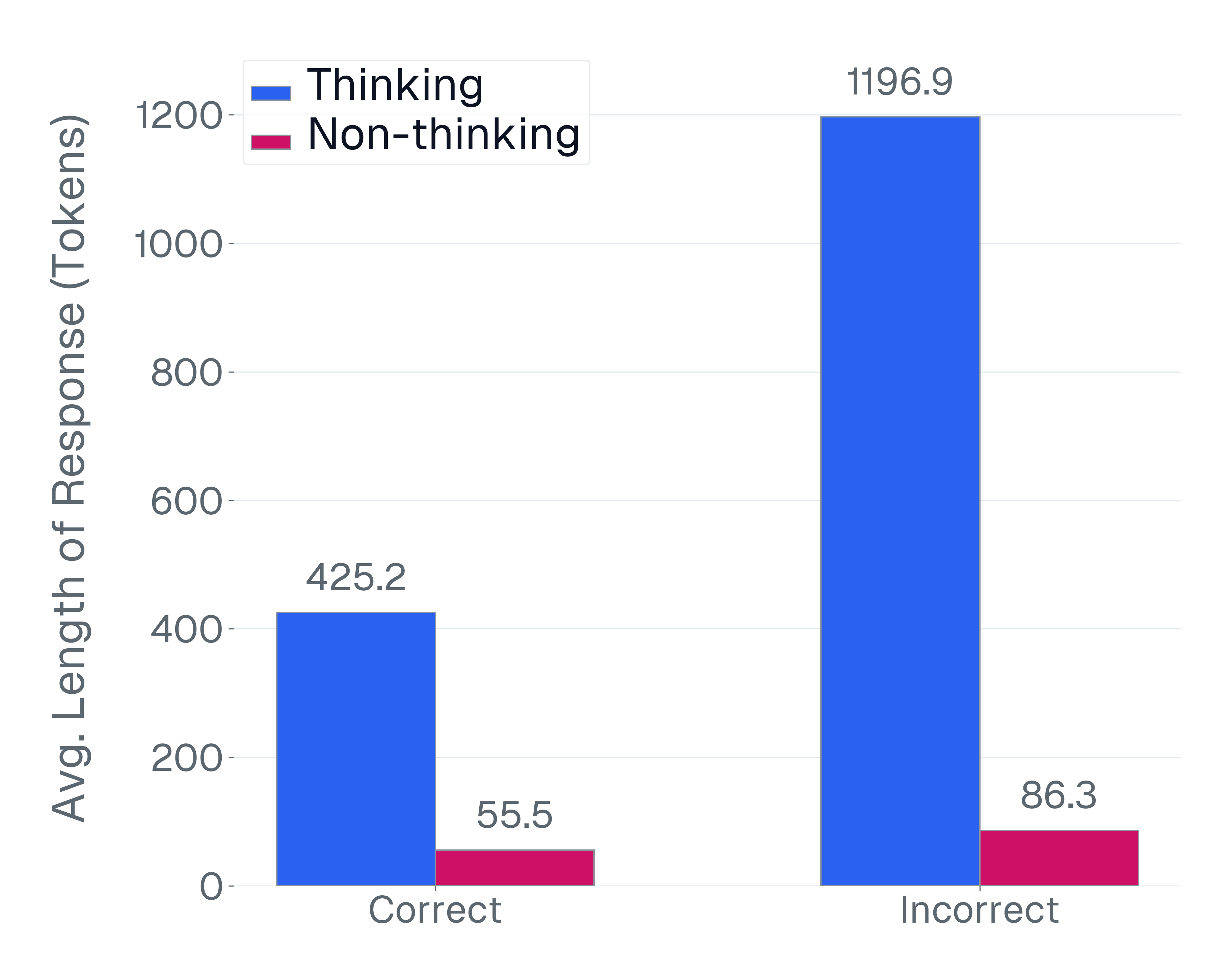
The deployment of large-scale neural networks within the Open Radio Access Network (O-RAN) architecture is pivotal for enabling native edge intelligence. However, this paradigm faces two critical bottlenecks the prohibitive memory footprint required for local training on resource-constrained gNBs, and the saturation of bandwidth-limited backhaul links during the global aggregation of high-dimensional model updates. To address these challenges, we propose CoCo-Fed, a novel Compression and Combination-based Federated learning framework that unifies local memory efficiency and global communication reduction. Locally, CoCo-Fed breaks the memory wall by performing a double-dimension down-projection of gradients, adapting the optimizer to operate on low-rank structures without introducing additional inference parameters/latency. Globally, we introduce a transmission protocol based on orthogonal subspace superposition, where layer-wise updates are projected and superimposed into a single consolidated matrix per gNB, drastically reducing the backhaul traffic. Beyond empirical designs, we establish a rigorous theoretical foundation, proving the convergence of CoCo-Fed even under unsupervised learning conditions suitable for wireless sensing tasks. Extensive simulations on an angle-of-arrival estimation task demonstrate that CoCo-Fed significantly outperforms state-of-the-art baselines in both memory and communication efficiency while maintaining robust convergence under non-IID settings.
paper research
Code for Machines, Not Just Humans  Quantifying AI-Friendliness with Code Health Metrics

Code for Machines, Not Just Humans Quantifying AI-Friendliness with Code Health Metrics

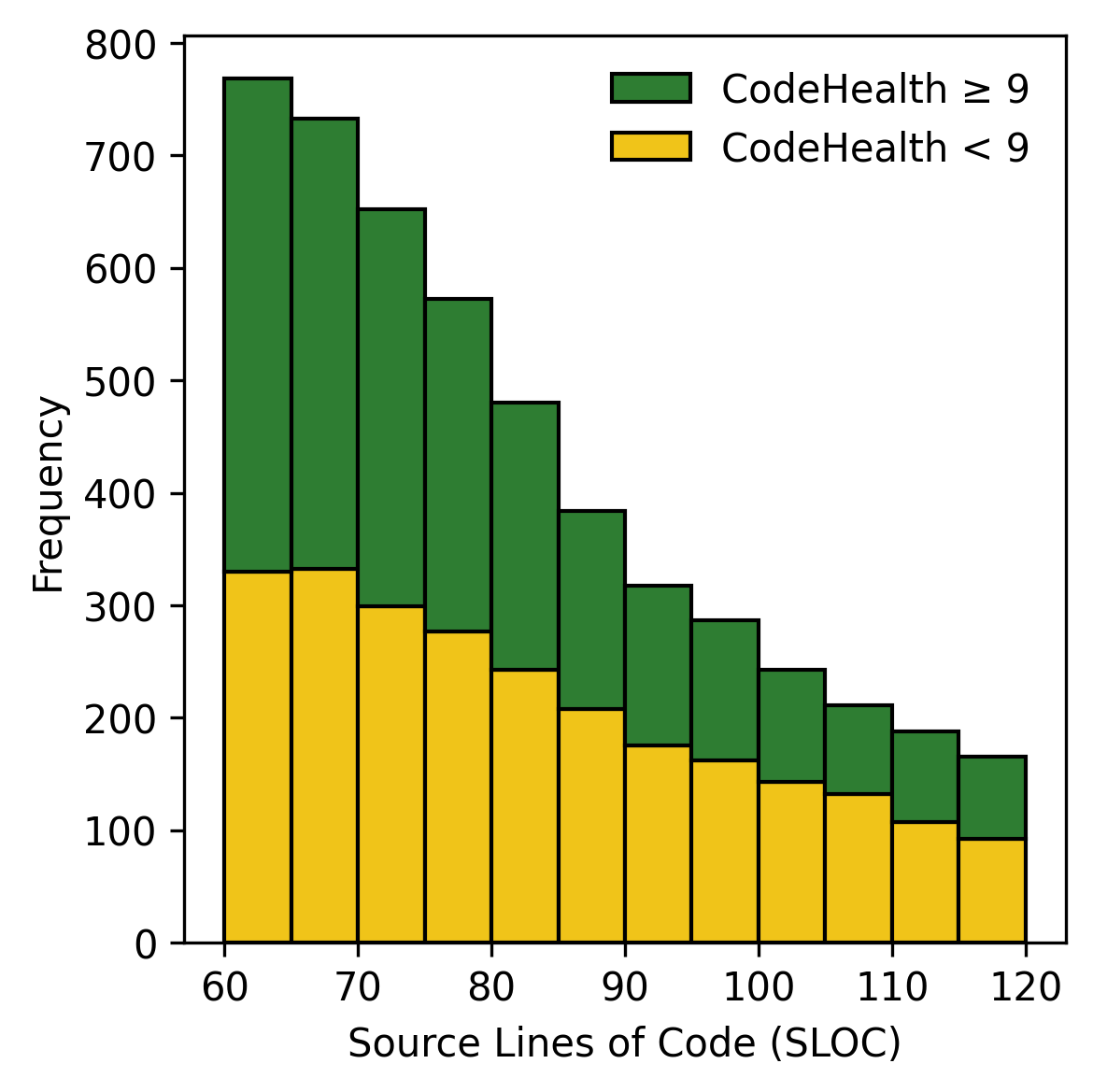
We are entering a hybrid era in which human developers and AI coding agents work in the same codebases. While industry practice has long optimized code for human comprehension, it is increasingly important to ensure that LLMs with different capabilities can edit code reliably. In this study, we investigate the concept of ``AI-friendly code via LLM-based refactoring on a dataset of 5,000 Python files from competitive programming. We find a meaningful association between CodeHealth, a quality metric calibrated for human comprehension, and semantic preservation after AI refactoring. Our findings confirm that human-friendly code is also more compatible with AI tooling. These results suggest that organizations can use CodeHealth to guide where AI interventions are lower risk and where additional human oversight is warranted. Investing in maintainability not only helps humans; it also prepares for large-scale AI adoption.

paper research
CogFlow  Bridging Perception and Reasoning through Knowledge Internalization for Visual Mathematical Problem Solving

CogFlow Bridging Perception and Reasoning through Knowledge Internalization for Visual Mathematical Problem Solving

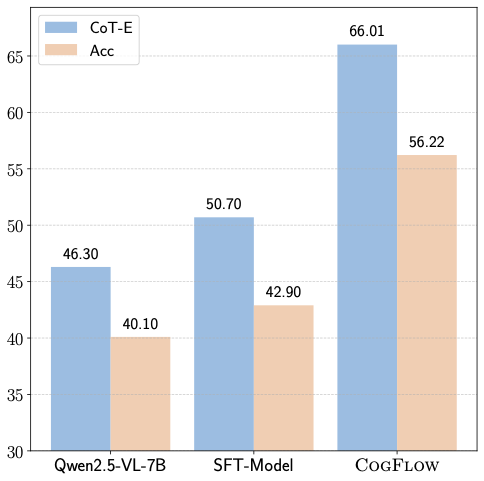
Despite significant progress, multimodal large language models continue to struggle with visual mathematical problem solving. Some recent works recognize that visual perception is a bottleneck in visual mathematical reasoning, but their solutions are limited to improving the extraction and interpretation of visual inputs. Notably, they all ignore the key issue of whether the extracted visual cues are faithfully integrated and properly utilized in subsequent reasoning. Motivated by this, we present CogFlow, a novel cognitive-inspired three-stage framework that incorporates a knowledge internalization stage, explicitly simulating the hierarchical flow of human reasoning perception$ Rightarrow$internalization$ Rightarrow$reasoning. Inline with this hierarchical flow, we holistically enhance all its stages. We devise Synergistic Visual Rewards to boost perception capabilities in parametric and semantic spaces, jointly improving visual information extraction from symbols and diagrams. To guarantee faithful integration of extracted visual cues into subsequent reasoning, we introduce a Knowledge Internalization Reward model in the internalization stage, bridging perception and reasoning. Moreover, we design a Visual-Gated Policy Optimization algorithm to further enforce the reasoning is grounded with the visual knowledge, preventing models seeking shortcuts that appear coherent but are visually ungrounded reasoning chains. Moreover, we contribute a new dataset MathCog for model training, which contains samples with over 120K high-quality perception-reasoning aligned annotations. Comprehensive experiments and analysis on commonly used visual mathematical reasoning benchmarks validate the superiority of the proposed CogFlow.

paper research
Comparative Analysis of Formula and Structure Prediction from Tandem Mass Spectra

Comparative Analysis of Formula and Structure Prediction from Tandem Mass Spectra

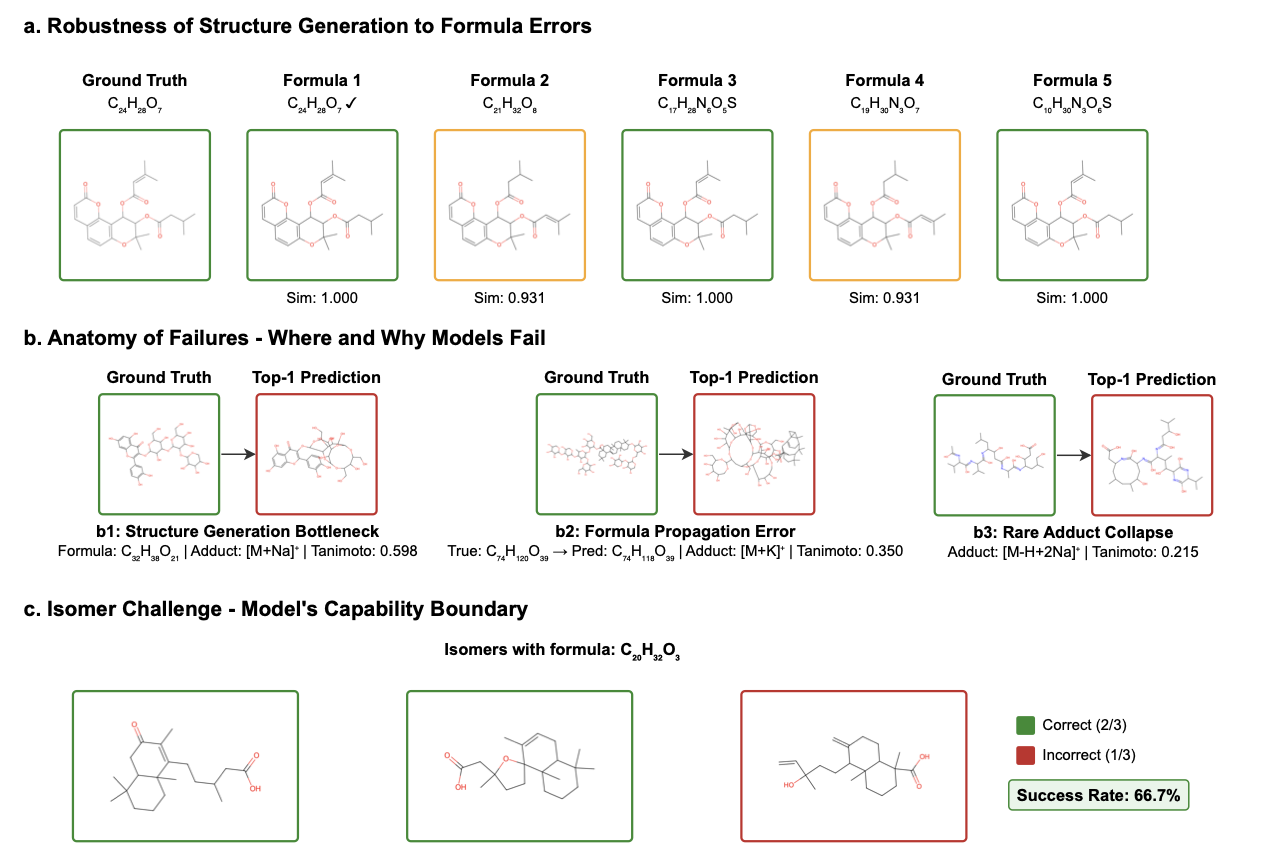
Liquid chromatography mass spectrometry (LC-MS)-based metabolomics and exposomics aim to measure detectable small molecules in biological samples. The results facilitate hypothesis-generating discovery of metabolic changes and disease mechanisms and provide information about environmental exposures and their effects on human health. Metabolomics and exposomics are made possible by the high resolving power of LC and high mass measurement accuracy of MS. However, a majority of the signals from such studies still cannot be identified or annotated using conventional library searching because existing spectral libraries are far from covering the vast chemical space captured by LC-MS/MS. To address this challenge and unleash the full potential of metabolomics and exposomics, a number of computational approaches have been developed to predict compounds based on tandem mass spectra. Published assessment of these approaches used different datasets and evaluation. To select prediction workflows for practical applications and identify areas for further improvements, we have carried out a systematic evaluation of the state-of-the-art prediction algorithms. Specifically, the accuracy of formula prediction and structure prediction was evaluated for different types of adducts. The resulting findings have established realistic performance baselines, identified critical bottlenecks, and provided guidance to further improve compound predictions based on MS.

paper research
COMPASS  A Framework for Evaluating Organization-Specific Policy Alignment

COMPASS A Framework for Evaluating Organization-Specific Policy Alignment

As large language models are deployed in high-stakes enterprise applications, from healthcare to finance, ensuring adherence to organization-specific policies has become essential. Yet existing safety evaluations focus exclusively on universal harms. We present COMPASS (Company/Organization Policy Alignment Assessment), the first systematic framework for evaluating whether LLMs comply with organizational allowlist and denylist policies. We apply COMPASS to eight diverse industry scenarios, generating and validating 5,920 queries that test both routine compliance and adversarial robustness through strategically designed edge cases. Evaluating seven state-of-the-art models, we uncover a fundamental asymmetry models reliably handle legitimate requests (>95% accuracy) but catastrophically fail at enforcing prohibitions, refusing only 13-40% of adversarial denylist violations. These results demonstrate that current LLMs lack the robustness required for policy-critical deployments, establishing COMPASS as an essential evaluation framework for organizational AI safety.

paper research
Complexity-based code embeddings

Complexity-based code embeddings

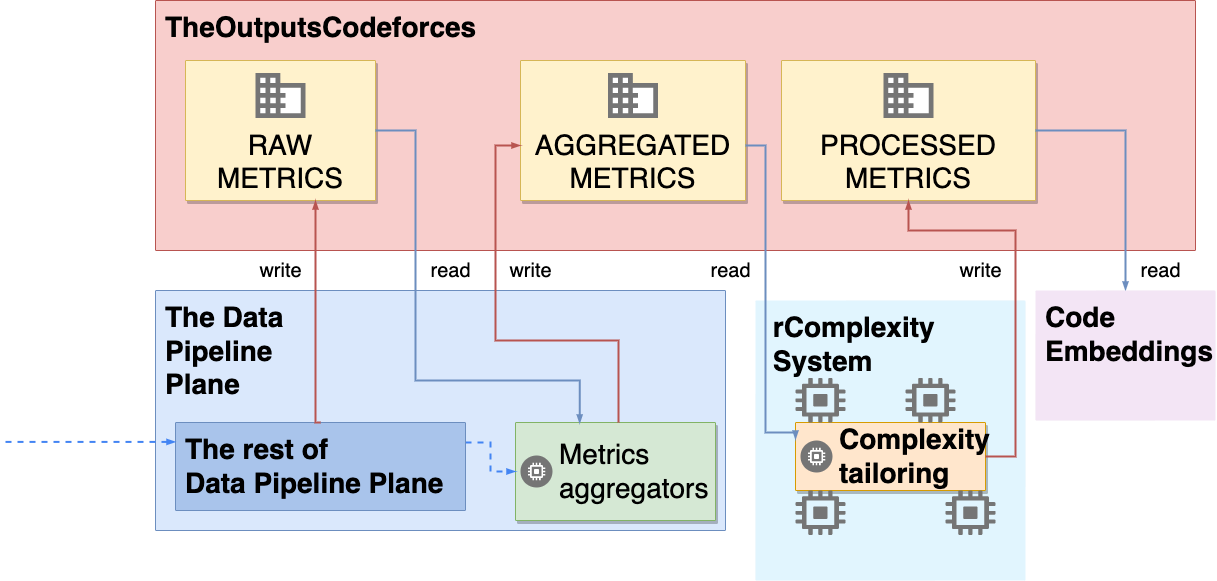
This paper presents a generic method for transforming the source code of various algorithms to numerical embeddings, by dynamically analysing the behaviour of computer programs against different inputs and by tailoring multiple generic complexity functions for the analysed metrics. The used algorithms embeddings are based on r-Complexity . Using the proposed code embeddings, we present an implementation of the XGBoost algorithm that achieves an average F1-score on a multi-label dataset with 11 classes, built using real-world code snippets submitted for programming competitions on the Codeforces platform.

paper research
Conformal Prediction Under Distribution Shift  A COVID-19 Natural Experiment

Conformal Prediction Under Distribution Shift A COVID-19 Natural Experiment

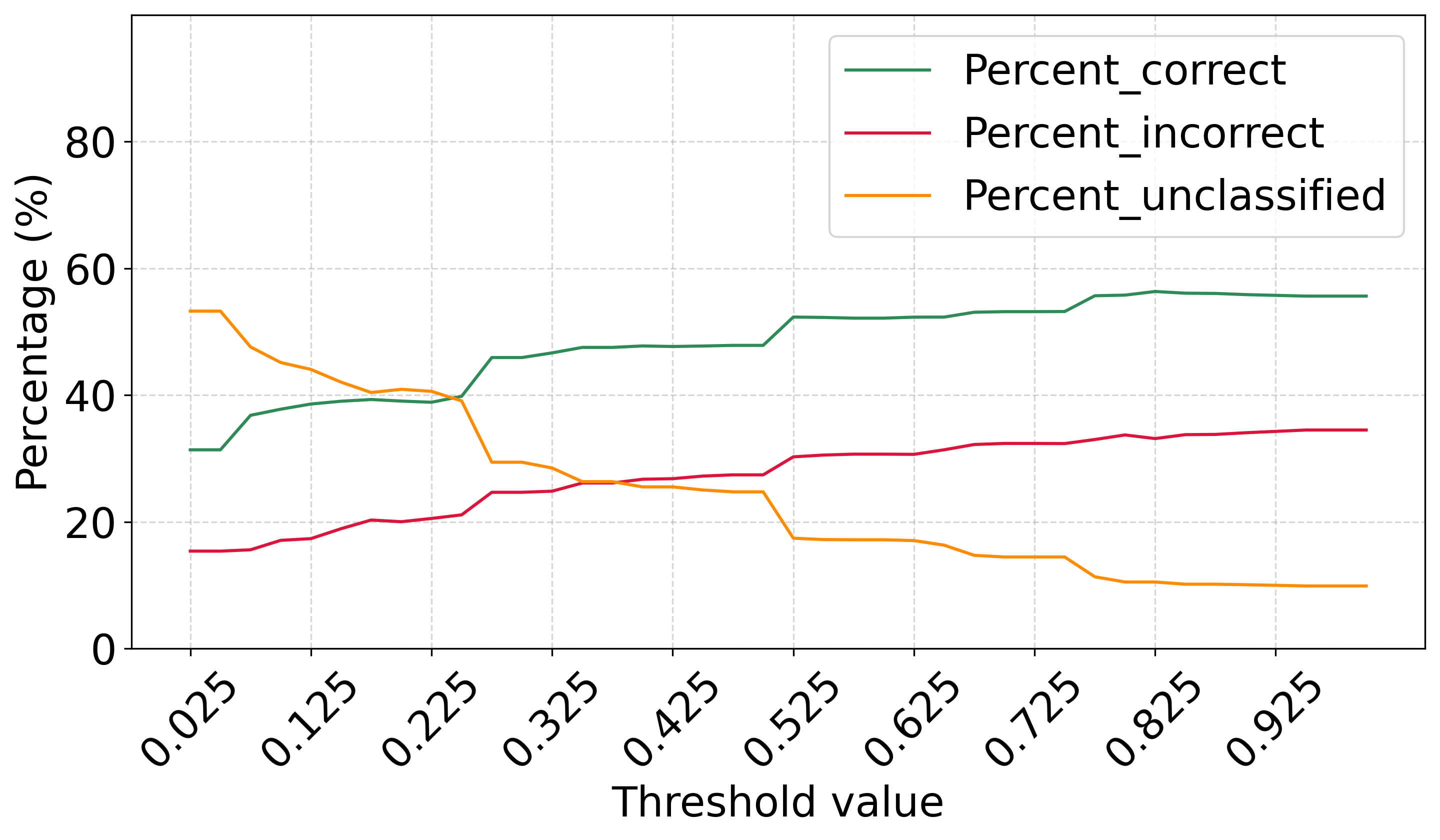
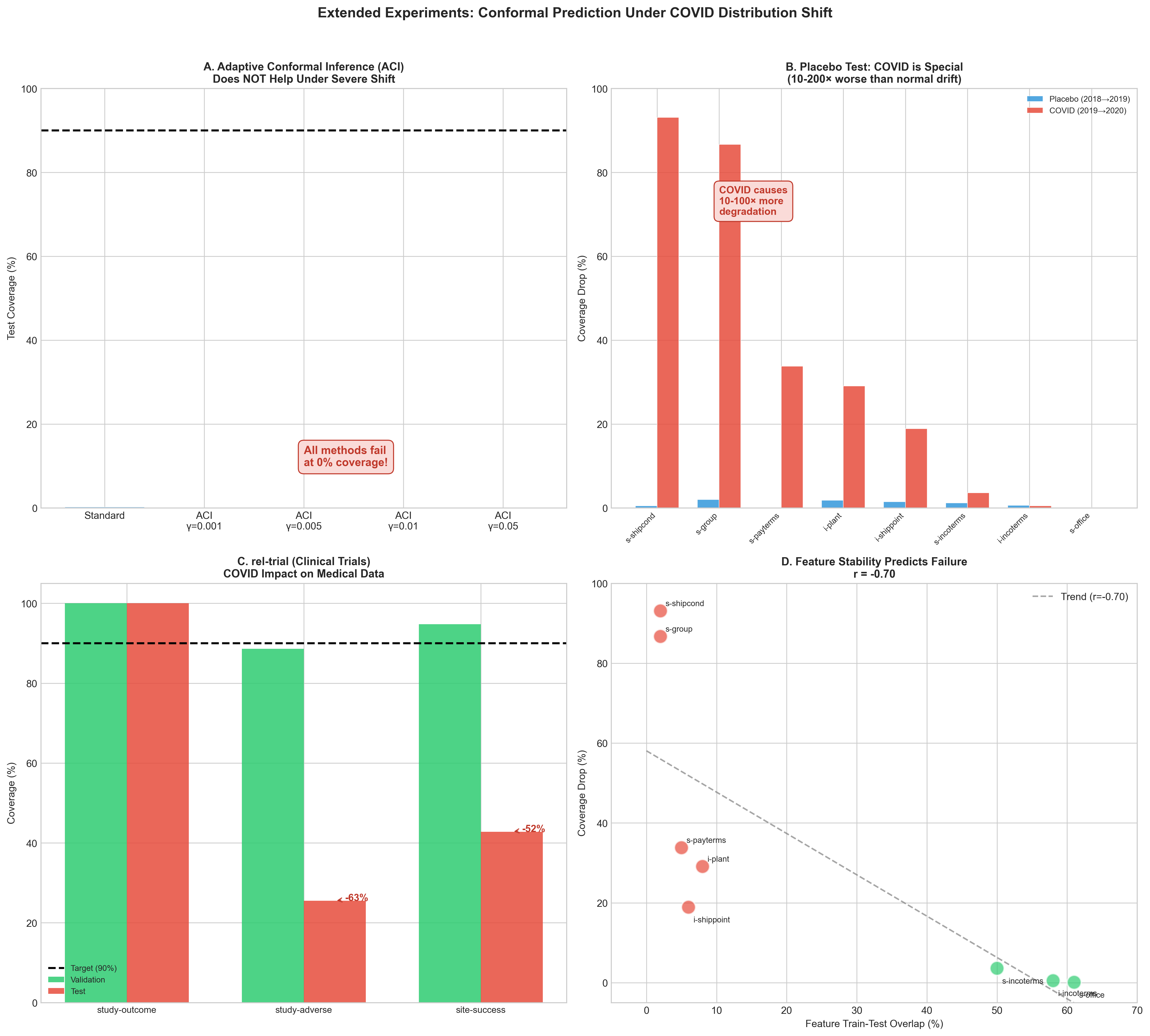
Conformal prediction guarantees degrade under distribution shift. We study this using COVID-19 as a natural experiment across 8 supply chain tasks. Despite identical severe feature turnover (Jaccard approximately 0), coverage drops vary from 0% to 86.7%, spanning two orders of magnitude. Using SHapley Additive exPlanations (SHAP) analysis, we find catastrophic failures correlate with single-feature dependence (rho = 0.714, p = 0.047). Catastrophic tasks concentrate importance in one feature (4.5x increase), while robust tasks redistribute across many (10-20x). Quarterly retraining restores catastrophic task coverage from 22% to 41% (+19 pp, p = 0.04), but provides no benefit for robust tasks (99.8% coverage). Exploratory analysis of 4 additional tasks with moderate feature stability (Jaccard 0.13-0.86) reveals feature stability, not concentration, determines robustness, suggesting concentration effects apply specifically to severe shifts. We provide a decision framework monitor SHAP concentration before deployment; retrain quarterly if vulnerable (>40% concentration); skip retraining if robust.

paper research
No Image

Constructing a Neuro-Symbolic Mathematician from First Principles

Large Language Models (LLMs) exhibit persistent logical failures in complex reasoning due to the lack of an internal axiomatic framework. We propose Mathesis, a neuro-symbolic architecture that encodes mathematical states as higher-order hypergraphs and uses a Symbolic Reasoning Kernel (SRK)--a differentiable logic engine that maps constraints to a continuous energy landscape. By defining a global energy function E(G), where zero energy implies logical consistency, the SRK yields gradient-based signals to train a Hypergraph Transformer Brain, turning proof search into energy minimization. Multi-step deduction is enabled via Monte Carlo Tree Search and Evolutionary Proof Search, guided by learned value functions and semantic unification.

paper research
Context-aware LLM-based AI Agents for Human-centered Energy Management Systems in Smart Buildings

Context-aware LLM-based AI Agents for Human-centered Energy Management Systems in Smart Buildings

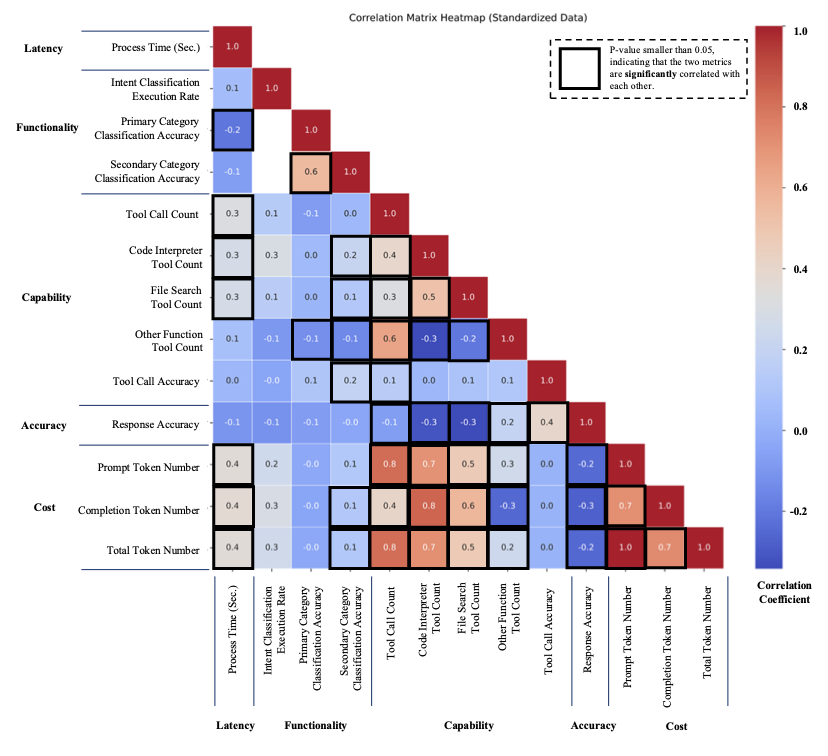
This study presents a conceptual framework and a prototype assessment for Large Language Model (LLM)-based Building Energy Management System (BEMS) AI agents to facilitate context-aware energy management in smart buildings through natural language interaction. The proposed framework comprises three modules perception (sensing), central control (brain), and action (actuation and user interaction), forming a closed feedback loop that captures, analyzes, and interprets energy data to respond intelligently to user queries and manage connected appliances. By leveraging the autonomous data analytics capabilities of LLMs, the BEMS AI agent seeks to offer context-aware insights into energy consumption, cost prediction, and device scheduling, thereby addressing limitations in existing energy management systems. The prototype s performance was evaluated using 120 user queries across four distinct real-world residential energy datasets and different evaluation metrics, including latency, functionality, capability, accuracy, and cost-effectiveness. The generalizability of the framework was demonstrated using ANOVA tests. The results revealed promising performance, measured by response accuracy in device control (86%), memory-related tasks (97%), scheduling and automation (74%), and energy analysis (77%), while more complex cost estimation tasks highlighted areas for improvement with an accuracy of 49%. This benchmarking study moves toward formalizing the assessment of LLM-based BEMS AI agents and identifying future research directions, emphasizing the trade-off between response accuracy and computational efficiency.

paper research
No Image

Coordinate Matrix Machine A Human-level Concept Learning to Classify Very Similar Documents

Human-level concept learning argues that humans typically learn new concepts from a single example, whereas machine learning algorithms typically require hundreds of samples to learn a single concept. Our brain subconsciously identifies important features and learns more effectively. Contribution In this paper, we present the Coordinate Matrix Machine (CM$^2$). This purpose-built small model augments human intelligence by learning document structures and using this information to classify documents. While modern Red AI trends rely on massive pre-training and energy-intensive GPU infrastructure, CM$^2$ is designed as a Green AI solution. It achieves human-level concept learning by identifying only the structural important features a human would consider, allowing it to classify very similar documents using only one sample per class. Advantage Our algorithm outperforms traditional vectorizers and complex deep learning models that require larger datasets and significant compute. By focusing on structural coordinates rather than exhaustive semantic vectors, CM$^2$ offers 1. High accuracy with minimal data (one-shot learning) 2. Geometric and structural intelligence 3. Green AI and environmental sustainability 4. Optimized for CPU-only environments 5. Inherent explainability (glass-box model) 6. Faster computation and low latency 7. Robustness against unbalanced classes 8. Economic viability 9. Generic, expandable, and extendable

paper research
Coordinated Humanoid Manipulation with Choice Policies

Coordinated Humanoid Manipulation with Choice Policies

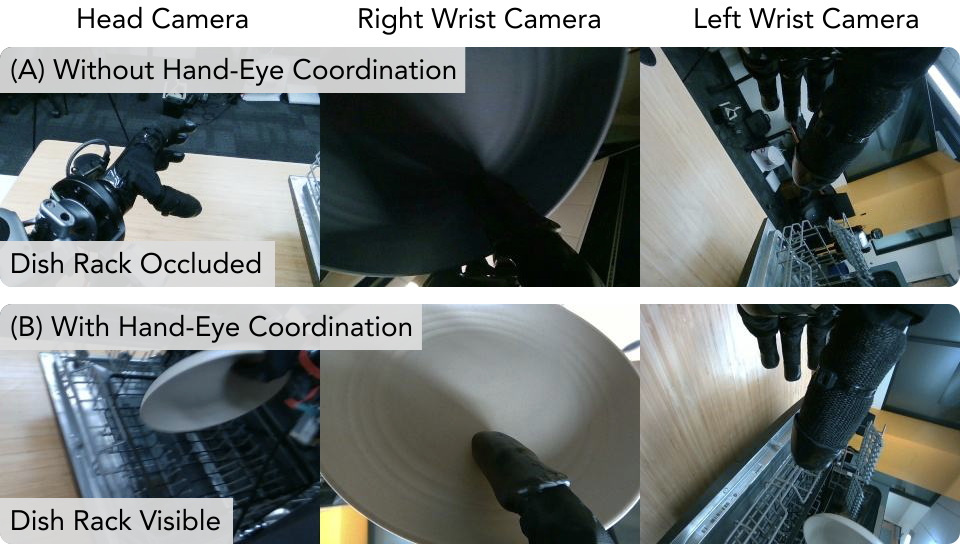
Humanoid robots hold great promise for operating in human-centric environments, yet achieving robust whole-body coordination across the head, hands, and legs remains a major challenge. We present a system that combines a modular teleoperation interface with a scalable learning framework to address this problem. Our teleoperation design decomposes humanoid control into intuitive submodules, which include hand-eye coordination, grasp primitives, arm end-effector tracking, and locomotion. This modularity allows us to collect high-quality demonstrations efficiently. Building on this, we introduce Choice Policy, an imitation learning approach that generates multiple candidate actions and learns to score them. This architecture enables both fast inference and effective modeling of multimodal behaviors. We validate our approach on two real-world tasks dishwasher loading and whole-body loco-manipulation for whiteboard wiping. Experiments show that Choice Policy significantly outperforms diffusion policies and standard behavior cloning. Furthermore, our results indicate that hand-eye coordination is critical for success in long-horizon tasks. Our work demonstrates a practical path toward scalable data collection and learning for coordinated humanoid manipulation in unstructured environments.

paper research
Cost-Efficient Cross-Lingual Retrieval-Augmented Generation for Low-Resource Languages  A Case Study in Bengali Agricultural Advisory

Cost-Efficient Cross-Lingual Retrieval-Augmented Generation for Low-Resource Languages A Case Study in Bengali Agricultural Advisory

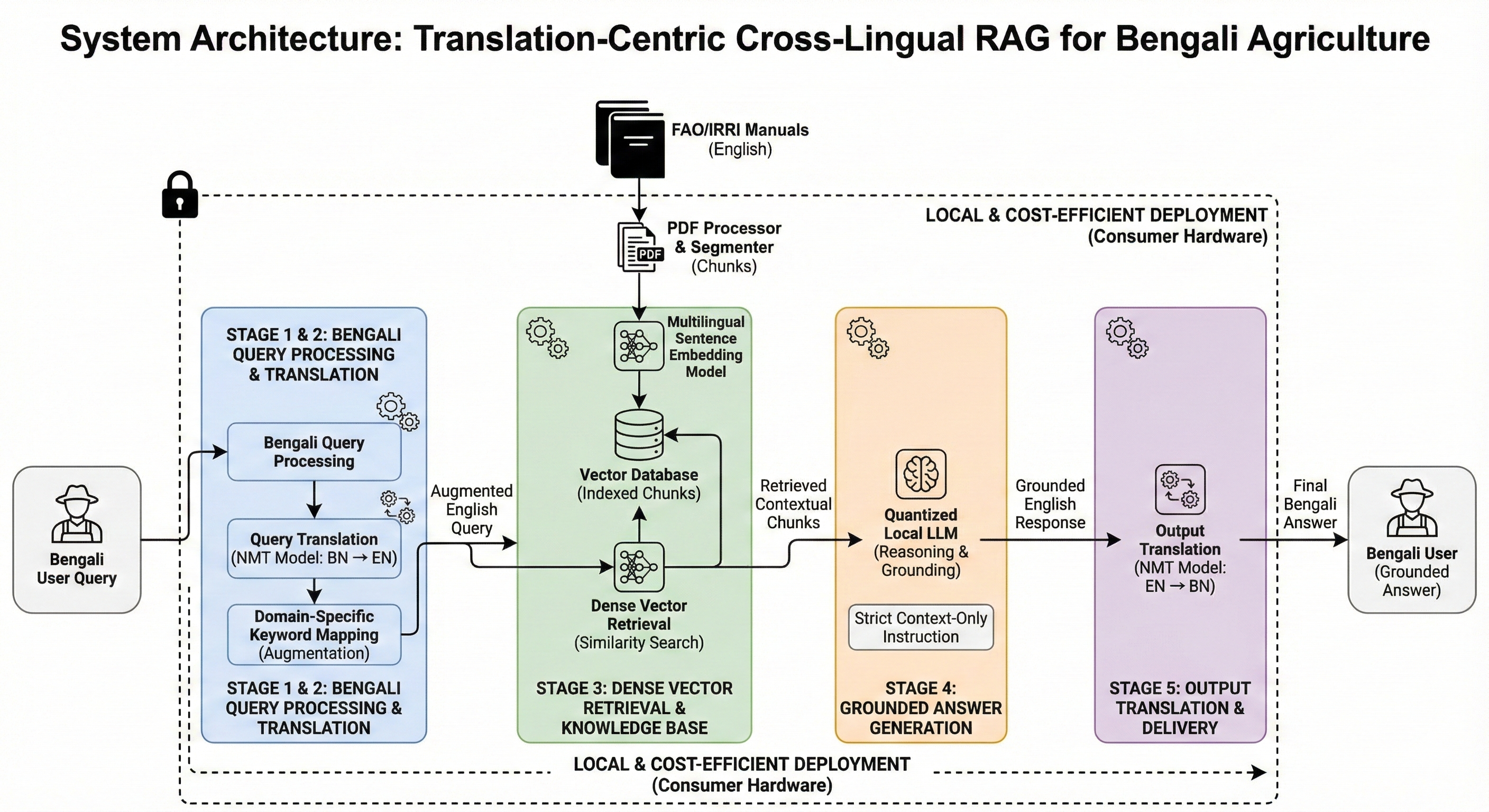
Access to reliable agricultural advisory remains limited in many developing regions due to a persistent language barrier authoritative agricultural manuals are predominantly written in English, while farmers primarily communicate in low-resource local languages such as Bengali. Although recent advances in Large Language Models (LLMs) enable natural language interaction, direct generation in low-resource languages often exhibits poor fluency and factual inconsistency, while cloud-based solutions remain cost-prohibitive. This paper presents a cost-efficient, cross-lingual Retrieval-Augmented Generation (RAG) framework for Bengali agricultural advisory that emphasizes factual grounding and practical deployability. The proposed system adopts a translation-centric architecture in which Bengali user queries are translated into English, enriched through domain-specific keyword injection to align colloquial farmer terminology with scientific nomenclature, and answered via dense vector retrieval over a curated corpus of English agricultural manuals (FAO, IRRI). The generated English response is subsequently translated back into Bengali to ensure accessibility. The system is implemented entirely using open-source models and operates on consumer-grade hardware without reliance on paid APIs. Experimental evaluation demonstrates reliable source-grounded responses, robust rejection of out-of-domain queries, and an average end-to-end latency below 20 seconds. The results indicate that cross-lingual retrieval combined with controlled translation offers a practical and scalable solution for agricultural knowledge access in low-resource language settings

paper research
Counterfactual Self-Questioning for Stable Policy Optimization in Language Models

Counterfactual Self-Questioning for Stable Policy Optimization in Language Models

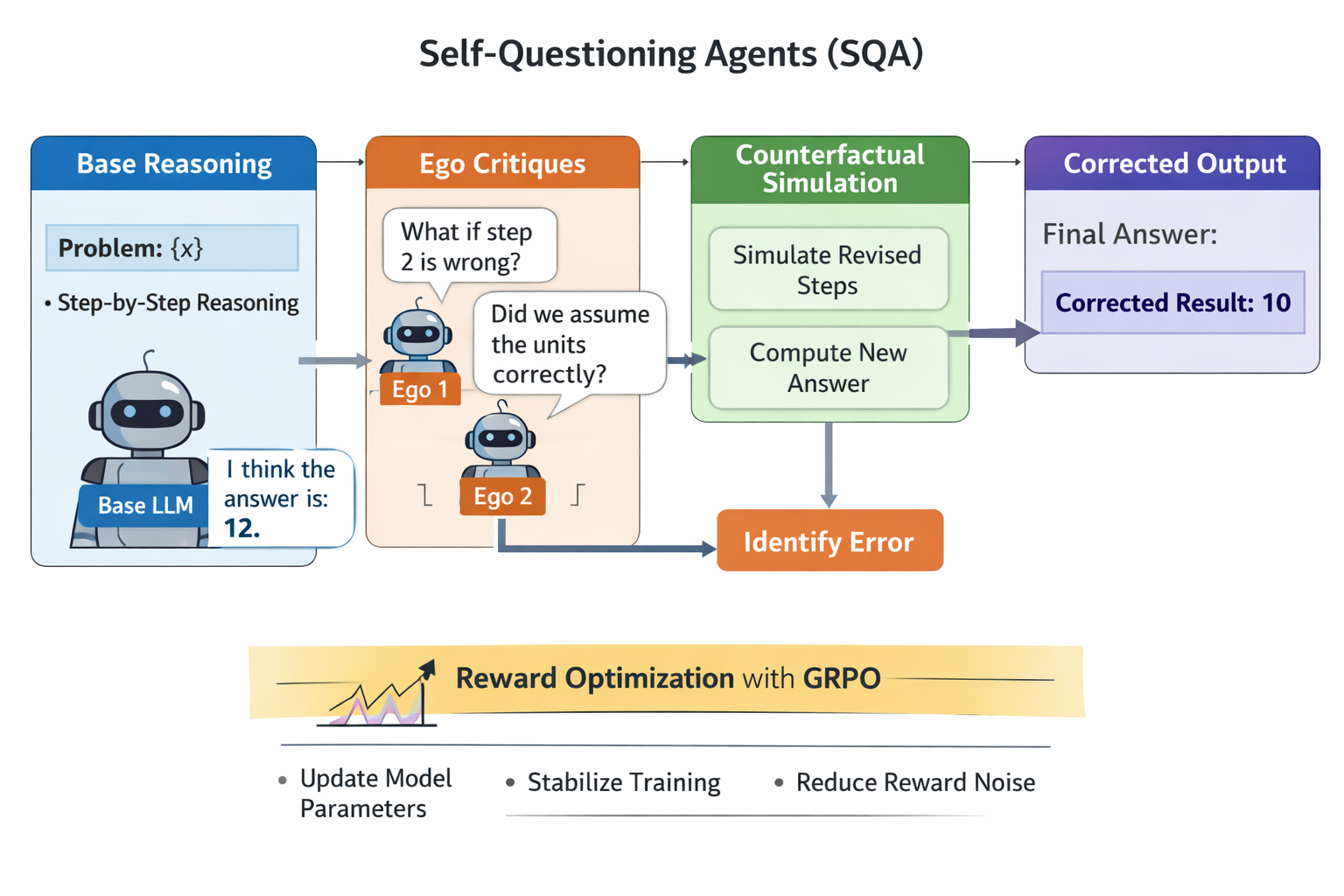
Recent work on language model self-improvement shows that models can refine their own reasoning through reflection, verification, debate, or self-generated rewards. However, most existing approaches rely on external critics, learned reward models, or ensemble sampling, which increases complexity and training instability. We propose Counterfactual Self-Questioning, a framework in which a single language model generates and evaluates counterfactual critiques of its own reasoning. The method produces an initial reasoning trace, formulates targeted questions that challenge potential failure points, and generates alternative reasoning trajectories that expose incorrect assumptions or invalid steps. These counterfactual trajectories provide structured relative feedback that can be directly used for policy optimization without auxiliary models. Experiments on multiple mathematical reasoning benchmarks show that counterfactual self-questioning improves accuracy and training stability, particularly for smaller models, enabling scalable self-improvement using internally generated supervision alone.

paper research
Cracking IoT Security  Can LLMs Outsmart Static Analysis Tools?

Cracking IoT Security Can LLMs Outsmart Static Analysis Tools?

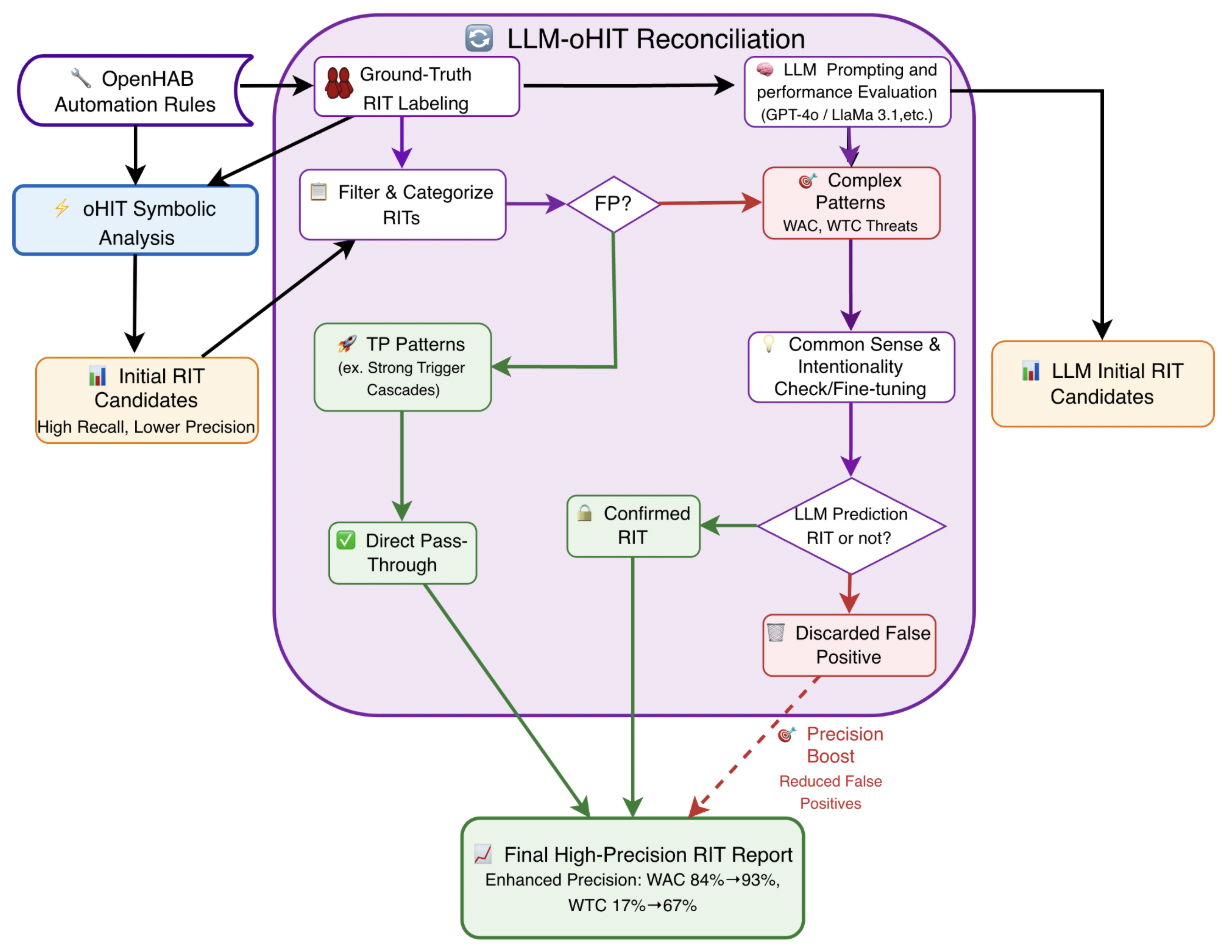
Smart home IoT platforms such as openHAB rely on Trigger Action Condition (TAC) rules to automate device behavior, but the interplay among these rules can give rise to interaction threats, unintended or unsafe behaviors emerging from implicit dependencies, conflicting triggers, or overlapping conditions. Identifying these threats requires semantic understanding and structural reasoning that traditionally depend on symbolic, constraint-driven static analysis. This work presents the first comprehensive evaluation of Large Language Models (LLMs) across a multi-category interaction threat taxonomy, assessing their performance on both the original openHAB (oHC/IoTB) dataset and a structurally challenging Mutation dataset designed to test robustness under rule transformations. We benchmark Llama 3.1 8B, Llama 70B, GPT-4o, Gemini-2.5-Pro, and DeepSeek-R1 across zero-, one-, and two-shot settings, comparing their results against oHIT s manually validated ground truth. Our findings show that while LLMs exhibit promising semantic understanding, particularly on action- and condition-related threats, their accuracy degrades significantly for threats requiring cross-rule structural reasoning, especially under mutated rule forms. Model performance varies widely across threat categories and prompt settings, with no model providing consistent reliability. In contrast, the symbolic reasoning baseline maintains stable detection across both datasets, unaffected by rule rewrites or structural perturbations. These results underscore that LLMs alone are not yet dependable for safety critical interaction-threat detection in IoT environments. We discuss the implications for tool design and highlight the potential of hybrid architectures that combine symbolic analysis with LLM-based semantic interpretation to reduce false positives while maintaining structural rigor.

paper research
Crafting Adversarial Inputs for Large Vision-Language Models Using Black-Box Optimization

Crafting Adversarial Inputs for Large Vision-Language Models Using Black-Box Optimization

Recent advancements in Large Vision-Language Models (LVLMs) have shown groundbreaking capabilities across diverse multimodal tasks. However, these models remain vulnerable to adversarial jailbreak attacks, where adversaries craft subtle perturbations to bypass safety mechanisms and trigger harmful outputs. Existing white-box attacks methods require full model accessibility, suffer from computing costs and exhibit insufficient adversarial transferability, making them impractical for real-world, black-box settings. To address these limitations, we propose a black-box jailbreak attack on LVLMs via Zeroth-Order optimization using Simultaneous Perturbation Stochastic Approximation (ZO-SPSA). ZO-SPSA provides three key advantages (i) gradient-free approximation by input-output interactions without requiring model knowledge, (ii) model-agnostic optimization without the surrogate model and (iii) lower resource requirements with reduced GPU memory consumption. We evaluate ZO-SPSA on three LVLMs, including InstructBLIP, LLaVA and MiniGPT-4, achieving the highest jailbreak success rate of 83.0% on InstructBLIP, while maintaining imperceptible perturbations comparable to white-box methods. Moreover, adversarial examples generated from MiniGPT-4 exhibit strong transferability to other LVLMs, with ASR reaching 64.18%. These findings underscore the real-world feasibility of black-box jailbreaks and expose critical weaknesses in the safety mechanisms of current LVLMs

paper research
No Image

Cultural Encoding and the Existence Gap in AI-Mediated Brand Discovery

As artificial intelligence systems increasingly mediate consumer information discovery, brands face algorithmic invisibility. This study investigates Cultural Encoding in Large Language Models (LLMs) -- systematic differences in brand recommendations arising from training data composition. Analyzing 1,909 pure-English queries across 6 LLMs (GPT-4o, Claude, Gemini, Qwen3, DeepSeek, Doubao) and 30 brands, we find Chinese LLMs exhibit 30.6 percentage points higher brand mention rates than International LLMs (88.9% vs. 58.3%, p<.001). This disparity persists in identical English queries, indicating training data geography -- not language -- drives the effect. We introduce the Existence Gap brands absent from LLM training corpora lack existence in AI responses regardless of quality. Through a case study of Zhizibianjie (OmniEdge), a collaboration platform with 65.6% mention rate in Chinese LLMs but 0% in International models (p<.001), we demonstrate how Linguistic Boundary Barriers create invisible market entry obstacles. Theoretically, we contribute the Data Moat Framework, conceptualizing AI-visible content as a VRIN strategic resource. We operationalize Algorithmic Omnipresence -- comprehensive brand visibility across LLM knowledge bases -- as the strategic objective for Generative Engine Optimization (GEO). Managerially, we provide an 18-month roadmap for brands to build Data Moats through semantic coverage, technical depth, and cultural localization. Our findings reveal that in AI-mediated markets, the limits of a brand s Data Boundaries define the limits of its Market Frontiers.

paper research
DA-DPO  Cost-efficient Difficulty-aware Preference Optimization for Reducing MLLM Hallucinations

DA-DPO Cost-efficient Difficulty-aware Preference Optimization for Reducing MLLM Hallucinations

Direct Preference Optimization (DPO) has shown strong potential for mitigating hallucinations in Multimodal Large Language Models (MLLMs). However, existing multimodal DPO approaches often suffer from overfitting due to the difficulty imbalance in preference data. Our analysis shows that MLLMs tend to overemphasize easily distinguishable preference pairs, which hinders fine-grained hallucination suppression and degrades overall performance. To address this issue, we propose Difficulty-Aware Direct Preference Optimization (DA-DPO), a cost-effective framework designed to balance the learning process. DA-DPO consists of two main components (1) Difficulty Estimation leverages pre-trained vision--language models with complementary generative and contrastive objectives, whose outputs are integrated via a distribution-aware voting strategy to produce robust difficulty scores without additional training; and (2) Difficulty-Aware Training reweights preference pairs based on their estimated difficulty, down-weighting easy samples while emphasizing harder ones to alleviate overfitting. This framework enables more effective preference optimization by prioritizing challenging examples, without requiring new data or extra fine-tuning stages. Extensive experiments demonstrate that DA-DPO consistently improves multimodal preference optimization, yielding stronger robustness to hallucinations and better generalization across standard benchmarks, while remaining computationally efficient. The project page is available at https //artanic30.github.io/project_pages/DA-DPO/.

paper research
DARC  Fine-Grained Rhythm Control for Drum Accompaniment Generation

DARC Fine-Grained Rhythm Control for Drum Accompaniment Generation

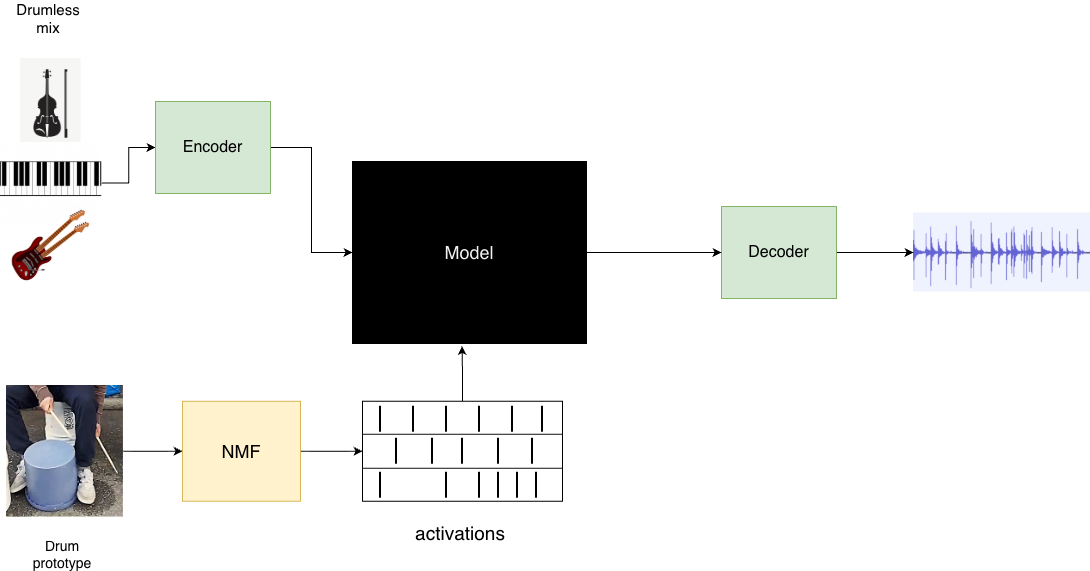
In music creation, rapid prototyping is essential for exploring and refining ideas, yet existing generative tools often fall short when users require both structural control and stylistic flexibility. Prior approaches in stem-to-stem generation can condition on other musical stems but offer limited control over rhythm, and timbre-transfer methods allow users to specify specific rhythms, but cannot condition on musical context. We introduce DARC, a generative drum accompaniment model that conditions both on musical context from other stems and explicit rhythm prompts such as beatboxing or tapping tracks. Using parameter-efficient fine-tuning, we augment STAGE, a state-of-the-art drum stem generator, with fine-grained rhythm control while maintaining musical context awareness.

paper research
DarkEQA  Benchmarking Vision-Language Models for Embodied Question Answering in Low-Light Indoor Environments

DarkEQA Benchmarking Vision-Language Models for Embodied Question Answering in Low-Light Indoor Environments

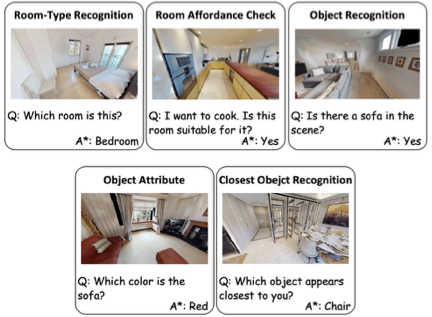
Vision Language Models (VLMs) are increasingly adopted as central reasoning modules for embodied agents. Existing benchmarks evaluate their capabilities under ideal, well-lit conditions, yet robust 24/7 operation demands performance under a wide range of visual degradations, including low-light conditions at night or in dark environments--a core necessity that has been largely overlooked. To address this underexplored challenge, we present DarkEQA, an open-source benchmark for evaluating EQA-relevant perceptual primitives under multi-level low-light conditions. DarkEQA isolates the perception bottleneck by evaluating question answering from egocentric observations under controlled degradations, enabling attributable robustness analysis. A key design feature of DarkEQA is its physical fidelity visual degradations are modeled in linear RAW space, simulating physics-based illumination drop and sensor noise followed by an ISP-inspired rendering pipeline. We demonstrate the utility of DarkEQA by evaluating a wide range of state-of-the-art VLMs and Low-Light Image Enhancement (LLIE) models. Our analysis systematically reveals VLMs limitations when operating under these challenging visual conditions. Project website https //darkeqa-benchmark.github.io/

paper research
Data Complexity-aware Deep Model Performance Forecasting

Data Complexity-aware Deep Model Performance Forecasting

Deep learning models are widely used across computer vision and other domains. When working on the model induction, selecting the right architecture for a given dataset often relies on repetitive trial-and-error procedures. This procedure is time-consuming, resource-intensive, and difficult to automate. While previous work has explored performance prediction using partial training or complex simulations, these methods often require significant computational overhead or lack generalizability. In this work, we propose an alternative approach a lightweight, two-stage framework that can estimate model performance before training given the understanding of the dataset and the focused deep model structures. The first stage predicts a baseline based on the analysis of some measurable properties of the dataset, while the second stage adjusts the estimation with additional information on the model s architectural and hyperparameter details. The setup allows the framework to generalize across datasets and model types. Moreover, we find that some of the underlying features used for prediction - such as dataset variance - can offer practical guidance for model selection, and can serve as early indicators of data quality. As a result, the framework can be used not only to forecast model performance, but also to guide architecture choices, inform necessary preprocessing procedures, and detect potentially problematic datasets before training begins.

paper research
Data-Driven Assessment of Concrete Mixture Compositions on Chloride Transport via Standalone Machine Learning Algorithms

Data-Driven Assessment of Concrete Mixture Compositions on Chloride Transport via Standalone Machine Learning Algorithms

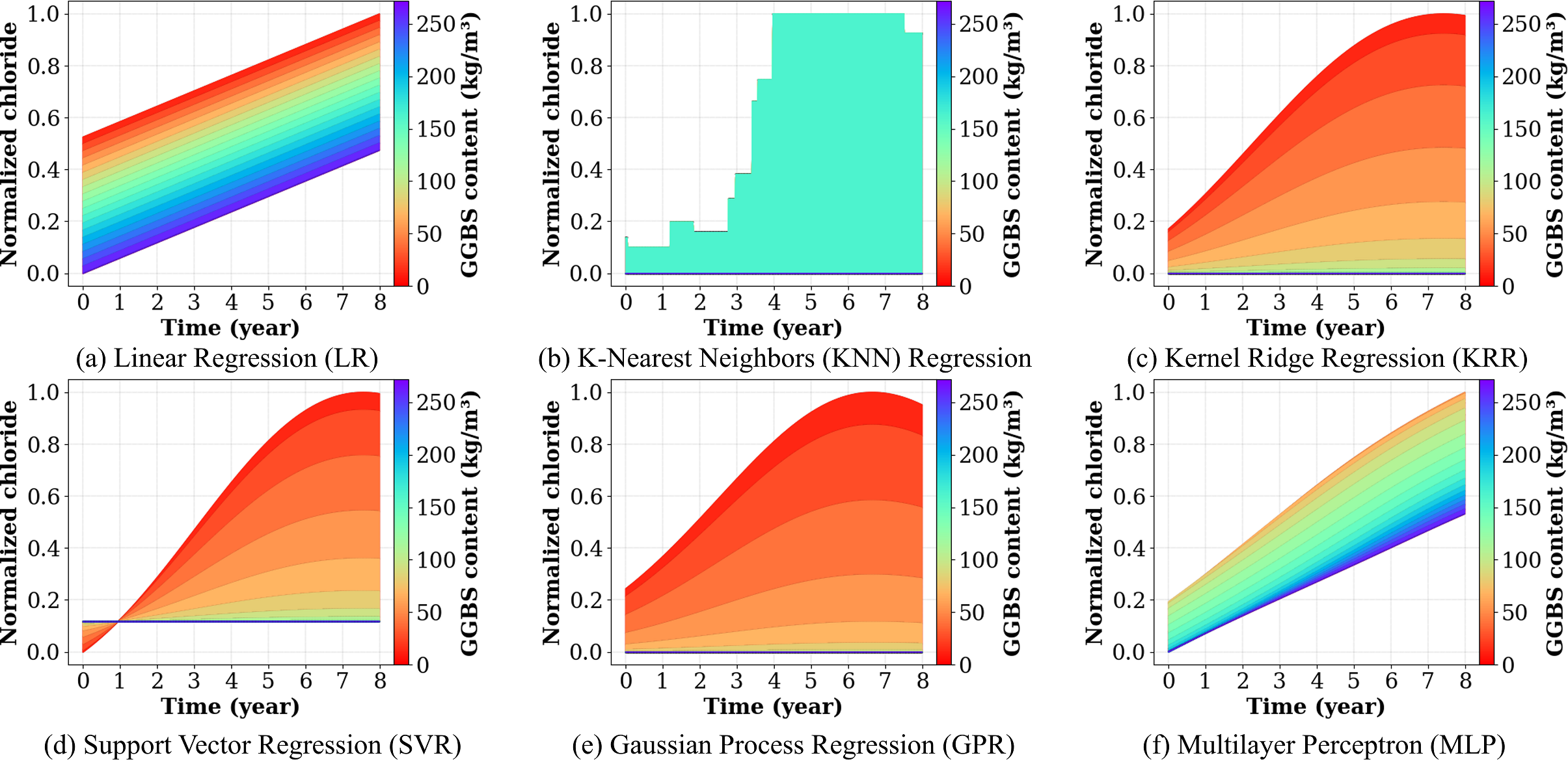
This paper employs a data-driven approach to determine the impact of concrete mixture compositions on the temporal evolution of chloride in concrete structures. This is critical for assessing the service life of civil infrastructure subjected to aggressive environments. The adopted methodology relies on several simple and complex standalone machine learning (ML) algorithms, with the primary objective of establishing confidence in the unbiased prediction of the underlying hidden correlations. The simple algorithms include linear regression (LR), k-nearest neighbors (KNN) regression, and kernel ridge regression (KRR). The complex algorithms entail support vector regression (SVR), Gaussian process regression (GPR), and two families of artificial neural networks, including a feedforward network (multilayer perceptron, MLP) and a gated recurrent unit (GRU). The MLP architecture cannot explicitly handle sequential data, a limitation addressed by the GRU. A comprehensive dataset is considered. The performance of ML algorithms is evaluated, with KRR, GPR, and MLP exhibiting high accuracy. Given the diversity of the adopted concrete mixture proportions, the GRU was unable to accurately reproduce the response in the test set. Further analyses elucidate the contributions of mixture compositions to the temporal evolution of chloride. The results obtained from the GPR model unravel latent correlations through clear and explainable trends. The MLP, SVR, and KRR also provide acceptable estimates of the overall trends. The majority of mixture components exhibit an inverse relation with chloride content, while a few components demonstrate a direct correlation. These findings highlight the potential of surrogate approaches for describing the physical processes involved in chloride ingress and the associated correlations, toward the ultimate goal of enhancing the service life of civil infrastructure.

paper research
DatBench  Discriminative, Faithful, and Efficient VLM Evaluations

DatBench Discriminative, Faithful, and Efficient VLM Evaluations

Empirical evaluation serves as the primary compass guiding research progress in foundation models. Despite a large body of work focused on training frontier vision-language models (VLMs), approaches to their evaluation remain nascent. To guide their maturation, we propose three desiderata that evaluations should satisfy (1) faithfulness to the modality and application, (2) discriminability between models of varying quality, and (3) efficiency in compute. Through this lens, we identify critical failure modes that violate faithfulness and discriminability, misrepresenting model capabilities (i) multiple-choice formats reward guessing, poorly reflect downstream use cases, and saturate early as models improve; (ii) blindly solvable questions, which can be answered without images, constitute up to 70% of some evaluations; and (iii) mislabeled or ambiguous samples compromise up to 42% of examples in certain datasets. Regarding efficiency, the computational burden of evaluating frontier models has become prohibitive by some accounts, nearly 20% of development compute is devoted to evaluation alone. Rather than discarding existing benchmarks, we curate them via transformation and filtering to maximize fidelity and discriminability. We find that converting multiple-choice questions to generative tasks reveals sharp capability drops of up to 35%. In addition, filtering blindly solvable and mislabeled samples improves discriminative power while simultaneously reducing computational cost. We release DatBench-Full, a cleaned evaluation suite of 33 datasets spanning nine VLM capabilities, and DatBench, a discriminative subset that achieves 13x average speedup (up to 50x) while closely matching the discriminative power of the original datasets. Our work outlines a path toward evaluation practices that are both rigorous and sustainable as VLMs continue to scale.

paper research
DeCode  Decoupling Content and Delivery for Medical QA

DeCode Decoupling Content and Delivery for Medical QA

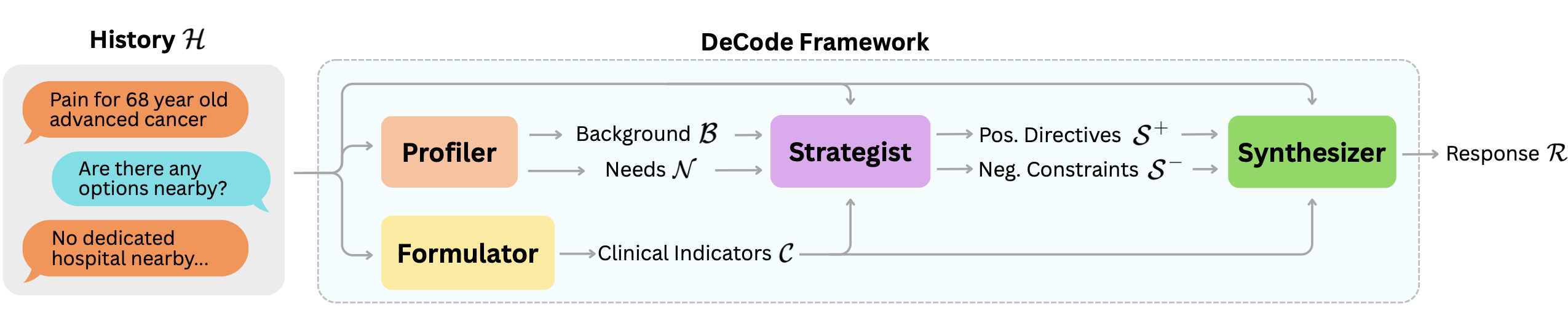
Large language models (LLMs) exhibit strong medical knowledge and can generate factually accurate responses. However, existing models often fail to account for individual patient contexts, producing answers that are clinically correct yet poorly aligned with patients needs. In this work, we introduce DeCode, a training-free, model-agnostic framework that adapts existing LLMs to produce contextualized answers in clinical settings. We evaluate DeCode on OpenAI HealthBench, a comprehensive and challenging benchmark designed to assess clinical relevance and validity of LLM responses. DeCode improves the previous state of the art from $28.4 %$ to $49.8 %$, corresponding to a $75 %$ relative improvement. Experimental results suggest the effectiveness of DeCode in improving clinical question answering of LLMs.

paper research
Decoupling Amplitude and Phase Attention in Frequency Domain for RGB-Event based Visual Object Tracking

Decoupling Amplitude and Phase Attention in Frequency Domain for RGB-Event based Visual Object Tracking

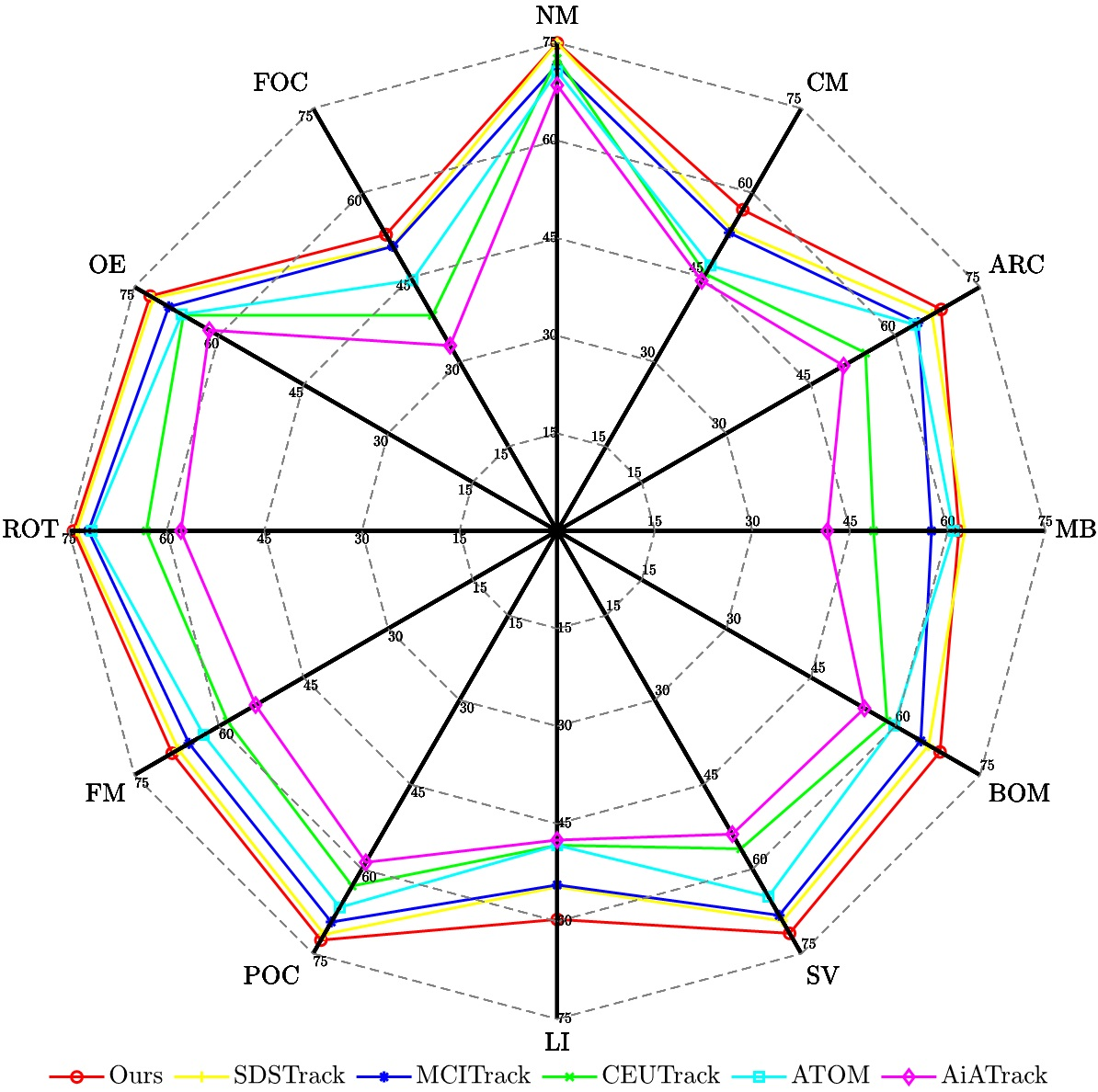
Existing RGB-Event visual object tracking approaches primarily rely on conventional feature-level fusion, failing to fully exploit the unique advantages of event cameras. In particular, the high dynamic range and motion-sensitive nature of event cameras are often overlooked, while low-information regions are processed uniformly, leading to unnecessary computational overhead for the backbone network. To address these issues, we propose a novel tracking framework that performs early fusion in the frequency domain, enabling effective aggregation of high-frequency information from the event modality. Specifically, RGB and event modalities are transformed from the spatial domain to the frequency domain via the Fast Fourier Transform, with their amplitude and phase components decoupled. High-frequency event information is selectively fused into RGB modality through amplitude and phase attention, enhancing feature representation while substantially reducing backbone computation. In addition, a motion-guided spatial sparsification module leverages the motion-sensitive nature of event cameras to capture the relationship between target motion cues and spatial probability distribution, filtering out low-information regions and enhancing target-relevant features. Finally, a sparse set of target-relevant features is fed into the backbone network for learning, and the tracking head predicts the final target position. Extensive experiments on three widely used RGB-Event tracking benchmark datasets, including FE108, FELT, and COESOT, demonstrate the high performance and efficiency of our method. The source code of this paper will be released on https //github.com/Event-AHU/OpenEvTracking

paper research
No Image

Deep Delta Learning

The efficacy of deep residual networks is fundamentally predicated on the identity shortcut connection. While this mechanism effectively mitigates the vanishing gradient problem, it imposes a strictly additive inductive bias on feature transformations, thereby limiting the network s capacity to model complex state transitions. In this paper, we introduce Deep Delta Learning (DDL), a novel architecture that generalizes the standard residual connection by modulating the identity shortcut with a learnable, data-dependent geometric transformation. This transformation, termed the Delta Operator, constitutes a rank-1 perturbation of the identity matrix, parameterized by a reflection direction vector $ mathbf{k}( mathbf{X})$ and a gating scalar $β( mathbf{X})$. We provide a spectral analysis of this operator, demonstrating that the gate $β( mathbf{X})$ enables dynamic interpolation between identity mapping, orthogonal projection, and geometric reflection. Furthermore, we restructure the residual update as a synchronous rank-1 injection, where the gate acts as a dynamic step size governing both the erasure of old information and the writing of new features. This unification empowers the network to explicitly control the spectrum of its layer-wise transition operator, enabling the modeling of complex, non-monotonic dynamics while preserving the stable training characteristics of gated residual architectures.

paper research
Deep Learning in Geotechnical Engineering  A Critical Assessment of PINNs and Operator Learning

Deep Learning in Geotechnical Engineering A Critical Assessment of PINNs and Operator Learning

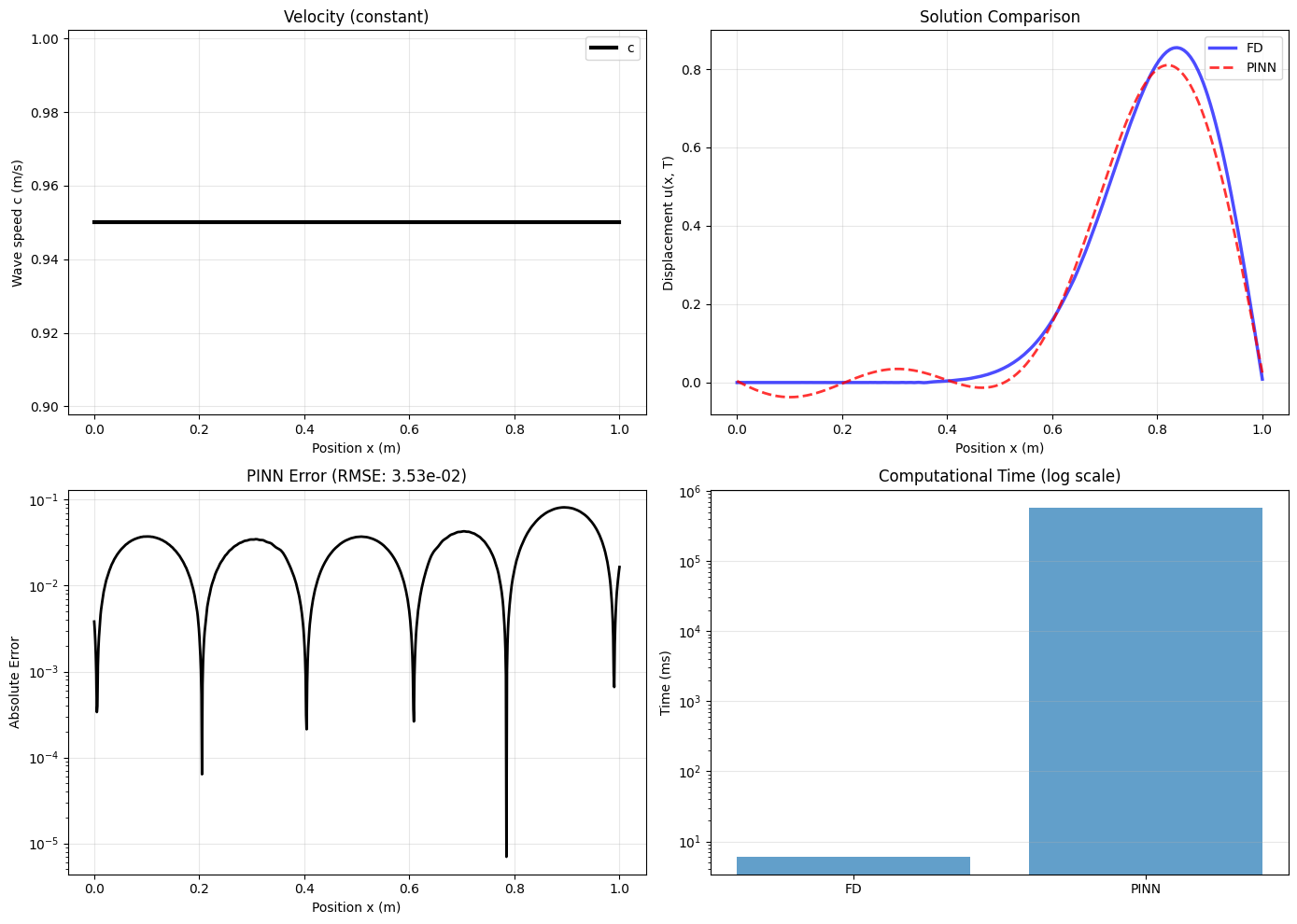
Deep learning methods -- physics-informed neural networks (PINNs), deep operator networks (DeepONet), and graph network simulators (GNS) -- are increasingly proposed for geotechnical problems. This paper tests these methods against traditional solvers on canonical problems wave propagation and beam-foundation interaction. PINNs run 90,000 times slower than finite difference with larger errors. DeepONet requires thousands of training simulations and breaks even only after millions of evaluations. Multi-layer perceptrons fail catastrophically when extrapolating beyond training data -- the common case in geotechnical prediction. GNS shows promise for geometry-agnostic simulation but faces scaling limits and cannot capture path-dependent soil behavior. For inverse problems, automatic differentiation through traditional solvers recovers material parameters with sub-percent accuracy in seconds. We recommend use automatic differentiation for inverse problems; apply site-based cross-validation to account for spatial autocorrelation; reserve neural networks for problems where traditional solvers are genuinely expensive and predictions remain within the training envelope. When a method is four orders of magnitude slower with less accuracy, it is not a viable replacement for proven solvers.

paper research
No Image

Deep Networks Learn Deep Hierarchical Models

We consider supervised learning with $n$ labels and show that layerwise SGD on residual networks can efficiently learn a class of hierarchical models. This model class assumes the existence of an (unknown) label hierarchy $L_1 subseteq L_2 subseteq dots subseteq L_r = [n]$, where labels in $L_1$ are simple functions of the input, while for $i > 1$, labels in $L_i$ are simple functions of simpler labels. Our class surpasses models that were previously shown to be learnable by deep learning algorithms, in the sense that it reaches the depth limit of efficient learnability. That is, there are models in this class that require polynomial depth to express, whereas previous models can be computed by log-depth circuits. Furthermore, we suggest that learnability of such hierarchical models might eventually form a basis for understanding deep learning. Beyond their natural fit for domains where deep learning excels, we argue that the mere existence of human ``teachers supports the hypothesis that hierarchical structures are inherently available. By providing granular labels, teachers effectively reveal ``hints or ``snippets of the internal algorithms used by the brain. We formalize this intuition, showing that in a simplified model where a teacher is partially aware of their internal logic, a hierarchical structure emerges that facilitates efficient learnability.

paper research
DeepInv  A Novel Self-supervised Learning Approach for Fast and Accurate Diffusion Inversion

DeepInv A Novel Self-supervised Learning Approach for Fast and Accurate Diffusion Inversion

Diffusion inversion is a task of recovering the noise of an image in a diffusion model, which is vital for controllable diffusion image editing. At present, diffusion inversion still remains a challenging task due to the lack of viable supervision signals. Thus, most existing methods resort to approximation-based solutions, which however are often at the cost of performance or efficiency. To remedy these shortcomings, we propose a novel self-supervised diffusion inversion approach in this paper, termed Deep Inversion (DeepInv). Instead of requiring ground-truth noise annotations, we introduce a self-supervised objective as well as a data augmentation strategy to generate high-quality pseudo noises from real images without manual intervention. Based on these two innovative designs, DeepInv is also equipped with an iterative and multi-scale training regime to train a parameterized inversion solver, thereby achieving the fast and accurate image-to-noise mapping. To the best of our knowledge, this is the first attempt of presenting a trainable solver to predict inversion noise step by step. The extensive experiments show that our DeepInv can achieve much better performance and inference speed than the compared methods, e.g., +40.435% SSIM than EasyInv and +9887.5% speed than ReNoise on COCO dataset. Moreover, our careful designs of trainable solvers can also provide insights to the community. Codes and model parameters will be released in https //github.com/potato-kitty/DeepInv.

paper research
No Image

Defensive M2S Training Guardrail Models on Compressed Multi-turn Conversations

Guardrail models are essential for ensuring the safety of Large Language Model (LLM) deployments, but processing full multi-turn conversation histories incurs significant computational cost. We propose Defensive M2S, a training paradigm that fine-tunes guardrail models on Multi-turn to Single-turn (M2S) compressed conversations rather than complete dialogue histories. We provide a formal complexity analysis showing that M2S reduces training cost from $O(n^2)$ to $O(n)$ for $n$-turn conversations. Empirically, on our training dataset (779 samples, avg. 10.6 turns), M2S requires only 169K tokens compared to 15.7M tokens for the multi-turn baseline -- a 93$ times$ reduction. We evaluate Defensive M2S across three guardrail model families (LlamaGuard, Nemotron, Qwen3Guard) and three compression templates (hyphenize, numberize, pythonize) on SafeDialBench, a comprehensive multi-turn jailbreak benchmark. Our best configuration, Qwen3Guard with hyphenize compression, achieves 93.8% attack detection recall while reducing inference tokens by 94.6% (from 3,231 to 173 tokens per conversation). This represents a 38.9 percentage point improvement over the baseline while dramatically reducing both training and inference costs. Our findings demonstrate that M2S compression can serve as an effective efficiency technique for guardrail deployment, enabling scalable safety screening of long multi-turn conversations.

paper research
DéjàQ  Open-Ended Evolution of Diverse, Learnable and Verifiable Problems

DéjàQ Open-Ended Evolution of Diverse, Learnable and Verifiable Problems

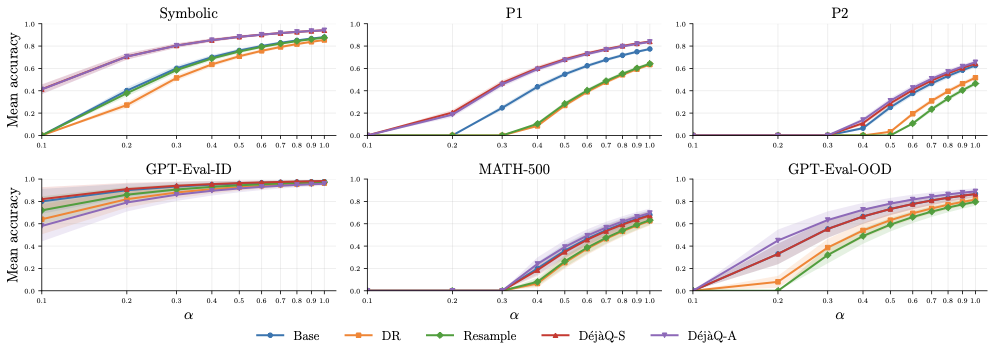
Recent advances in reasoning models have yielded impressive results in mathematics and coding. However, most approaches rely on static datasets, which have been suggested to encourage memorisation and limit generalisation. We introduce DéjàQ, a framework that departs from this paradigm by jointly evolving a diverse set of synthetic mathematical problems alongside model training. This evolutionary process adapts to the model s ability throughout training, optimising problems for learnability. We propose two LLM-driven mutation strategies in which the model itself mutates the training data, either by altering contextual details or by directly modifying problem structure. We find that the model can generate novel and meaningful problems, and that these LLM-driven mutations improve RL training. We analyse key aspects of DéjàQ, including the validity of generated problems and computational overhead. Our results underscore the potential of dynamically evolving training data to enhance mathematical reasoning and indicate broader applicability, which we will support by open-sourcing our code.

paper research
Detecting Performance Degradation under Data Shift in Pathology Vision-Language Model

Detecting Performance Degradation under Data Shift in Pathology Vision-Language Model

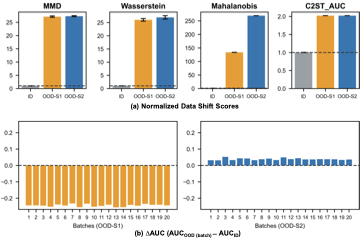
Vision-Language Models have demonstrated strong potential in medical image analysis and disease diagnosis. However, after deployment, their performance may deteriorate when the input data distribution shifts from that observed during development. Detecting such performance degradation is essential for clinical reliability, yet remains challenging for large pre-trained VLMs operating without labeled data. In this study, we investigate performance degradation detection under data shift in a state-of-the-art pathology VLM. We examine both input-level data shift and output-level prediction behavior to understand their respective roles in monitoring model reliability. To facilitate systematic analysis of input data shift, we develop DomainSAT, a lightweight toolbox with a graphical interface that integrates representative shift detection algorithms and enables intuitive exploration of data shift. Our analysis shows that while input data shift detection is effective at identifying distributional changes and providing early diagnostic signals, it does not always correspond to actual performance degradation. Motivated by this observation, we further study output-based monitoring and introduce a label-free, confidence-based degradation indicator that directly captures changes in model prediction confidence. We find that this indicator exhibits a close relationship with performance degradation and serves as an effective complement to input shift detection. Experiments on a large-scale pathology dataset for tumor classification demonstrate that combining input data shift detection and output confidence-based indicators enables more reliable detection and interpretation of performance degradation in VLMs under data shift. These findings provide a practical and complementary framework for monitoring the reliability of foundation models in digital pathology.

paper research
Device-Native Autonomous Agents for Privacy-Preserving Negotiations

Device-Native Autonomous Agents for Privacy-Preserving Negotiations

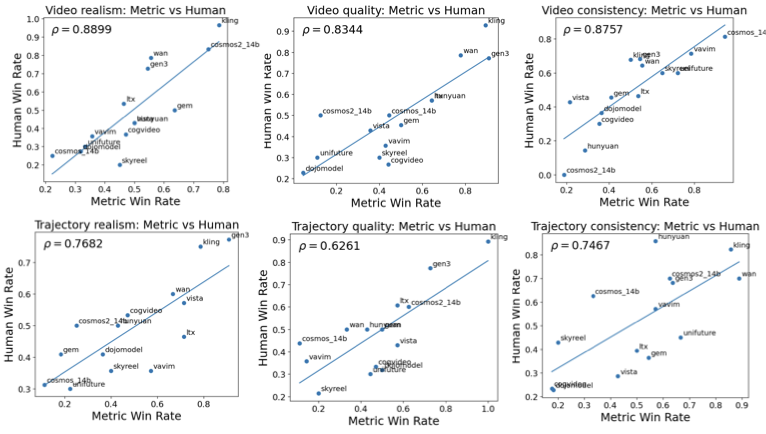
Automated negotiations in insurance and business-to-business (B2B) commerce encounter substantial challenges. Current systems force a trade-off between convenience and privacy by routing sensitive financial data through centralized servers, increasing security risks, and diminishing user trust. This study introduces a device-native autonomous Artificial Intelligence (AI) agent system for privacy-preserving negotiations. The proposed system operates exclusively on user hardware, enabling real-time bargaining while maintaining sensitive constraints locally. It integrates zero-knowledge proofs to ensure privacy and employs distilled world models to support advanced on-device reasoning. The architecture incorporates six technical components within an agentic AI workflow. Agents autonomously plan negotiation strategies, conduct secure multi-party bargaining, and generate cryptographic audit trails without exposing user data to external servers. The system is evaluated in insurance and B2B procurement scenarios across diverse device configurations. Results show an average success rate of 87%, a 2.4x latency improvement over cloud baselines, and strong privacy preservation through zero-knowledge proofs. User studies show 27% higher trust scores when decision trails are available. These findings establish a foundation for trustworthy autonomous agents in privacy-sensitive financial domains.
paper research
Digital Twin AI  Opportunities and Challenges from Large Language Models to World Models

Digital Twin AI Opportunities and Challenges from Large Language Models to World Models

Digital twins, as precise digital representations of physical systems, have evolved from passive simulation tools into intelligent and autonomous entities through the integration of artificial intelligence technologies. This paper presents a unified four-stage framework that systematically characterizes AI integration across the digital twin lifecycle, spanning modeling, mirroring, intervention, and autonomous management. By synthesizing existing technologies and practices, we distill a unified four-stage framework that systematically characterizes how AI methodologies are embedded across the digital twin lifecycle (1) modeling the physical twin through physics-based and physics-informed AI approaches, (2) mirroring the physical system into a digital twin with real-time synchronization, (3) intervening in the physical twin through predictive modeling, anomaly detection, and optimization strategies, and (4) achieving autonomous management through large language models, foundation models, and intelligent agents. We analyze the synergy between physics-based modeling and data-driven learning, highlighting the shift from traditional numerical solvers to physics-informed and foundation models for physical systems. Furthermore, we examine how generative AI technologies, including large language models and generative world models, transform digital twins into proactive and self-improving cognitive systems capable of reasoning, communication, and creative scenario generation. Through a cross-domain review spanning eleven application domains, including healthcare, aerospace, smart manufacturing, robotics, and smart cities, we identify common challenges related to scalability, explainability, and trustworthiness, and outline directions for responsible AI-driven digital twin systems.

paper research
Digital Twin-Driven Communication-Efficient Federated Anomaly Detection for Industrial IoT

Digital Twin-Driven Communication-Efficient Federated Anomaly Detection for Industrial IoT

Anomaly detection is increasingly becoming crucial for maintaining the safety, reliability, and efficiency of industrial systems. Recently, with the advent of digital twins and data-driven decision-making, several statistical and machine-learning methods have been proposed. However, these methods face several challenges, such as dependence on only real sensor datasets, limited labeled data, high false alarm rates, and privacy concerns. To address these problems, we propose a suite of digital twin-integrated federated learning (DTFL) methods that enhance global model performance while preserving data privacy and communication efficiency. Specifically, we present five novel approaches Digital Twin-Based Meta-Learning (DTML), Federated Parameter Fusion (FPF), Layer-wise Parameter Exchange (LPE), Cyclic Weight Adaptation (CWA), and Digital Twin Knowledge Distillation (DTKD). Each method introduces a unique mechanism to combine synthetic and real-world knowledge, balancing generalization with communication overhead. We conduct an extensive experiment using a publicly available cyber-physical anomaly detection dataset. For a target accuracy of 80%, CWA reaches the target in 33 rounds, FPF in 41 rounds, LPE in 48 rounds, and DTML in 87 rounds, whereas the standard FedAvg baseline and DTKD do not reach the target within 100 rounds. These results highlight substantial communication-efficiency gains (up to 62% fewer rounds than DTML and 31% fewer than LPE) and demonstrate that integrating DT knowledge into FL accelerates convergence to operationally meaningful accuracy thresholds for IIoT anomaly detection.

paper research
Do Large Language Models Know What They Are Capable Of?

Do Large Language Models Know What They Are Capable Of?

We investigate whether large language models (LLMs) can predict whether they will succeed on a given task and whether their predictions improve as they progress through multi-step tasks. We also investigate whether LLMs can learn from in-context experiences to make better decisions about whether to pursue a task in scenarios where failure is costly. All LLMs we tested are overconfident, but most predict their success with better-than-random discriminatory power. We find that newer and larger LLMs generally do not have greater discriminatory power, though Claude models do show such a trend. On multi-step agentic tasks, the overconfidence of several frontier LLMs worsens as they progress through the tasks, and reasoning LLMs perform comparably to or worse than non-reasoning LLMs. With in-context experiences of failure, some but not all LLMs reduce their overconfidence leading to significantly improved decision making, while others do not. Interestingly, all LLMs decisions are approximately rational given their estimated probabilities of success, yet their overly-optimistic estimates result in poor decision making. These results suggest that current LLM agents are hindered by their lack of awareness of their own capabilities. We discuss the implications of LLMs awareness of their capabilities for AI misuse and misalignment risks.

paper research
Dream2Flow  Bridging Video Generation and Open-World Manipulation with 3D Object Flow

Dream2Flow Bridging Video Generation and Open-World Manipulation with 3D Object Flow

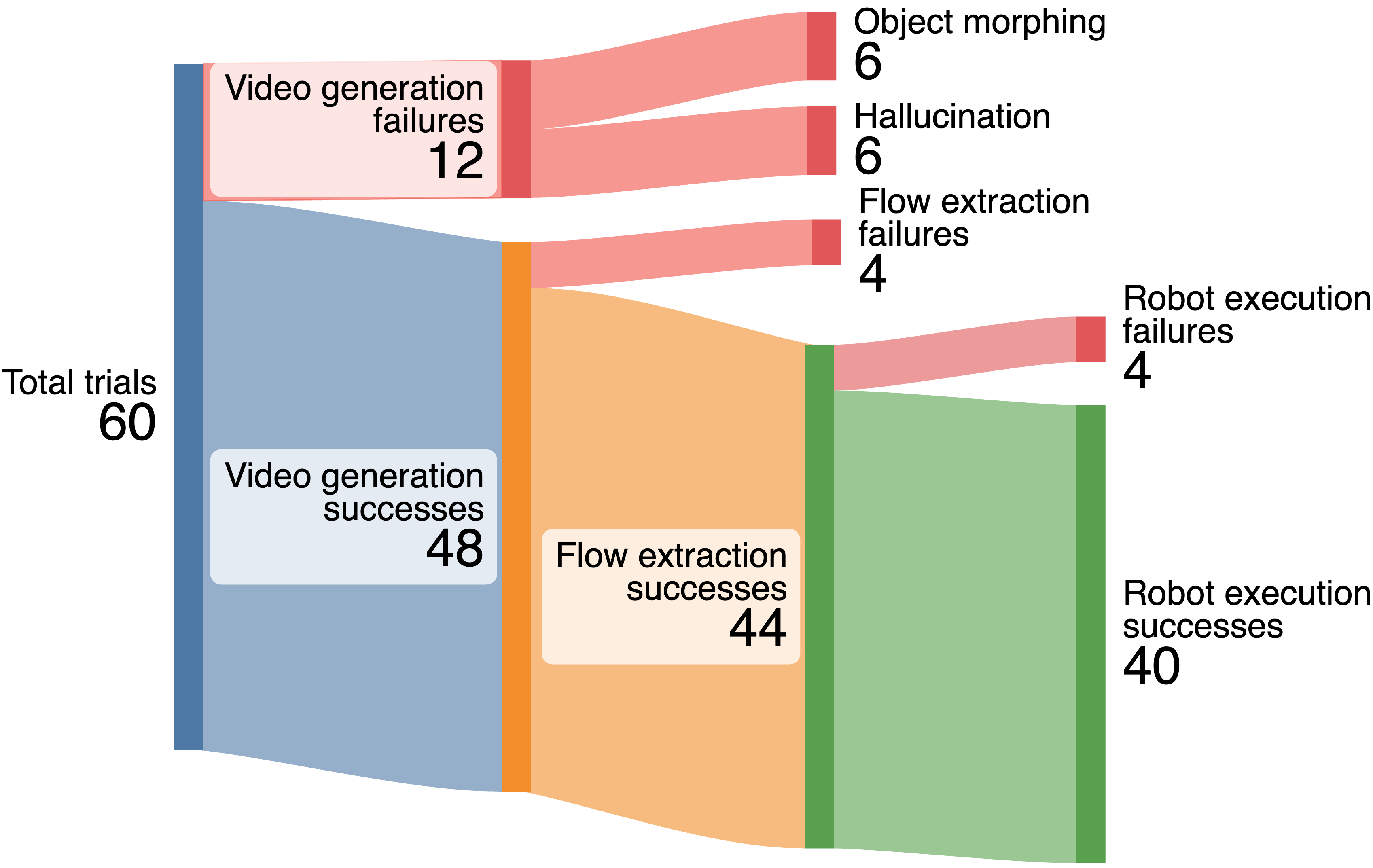
Generative video modeling has emerged as a compelling tool to zero-shot reason about plausible physical interactions for open-world manipulation. Yet, it remains a challenge to translate such human-led motions into the low-level actions demanded by robotic systems. We observe that given an initial image and task instruction, these models excel at synthesizing sensible object motions. Thus, we introduce Dream2Flow, a framework that bridges video generation and robotic control through 3D object flow as an intermediate representation. Our method reconstructs 3D object motions from generated videos and formulates manipulation as object trajectory tracking. By separating the state changes from the actuators that realize those changes, Dream2Flow overcomes the embodiment gap and enables zero-shot guidance from pre-trained video models to manipulate objects of diverse categories-including rigid, articulated, deformable, and granular. Through trajectory optimization or reinforcement learning, Dream2Flow converts reconstructed 3D object flow into executable low-level commands without task-specific demonstrations. Simulation and real-world experiments highlight 3D object flow as a general and scalable interface for adapting video generation models to open-world robotic manipulation. Videos and visualizations are available at https //dream2flow.github.io/.

paper research
DrivingGen  A Comprehensive Benchmark for Generative Video World Models in Autonomous Driving

DrivingGen A Comprehensive Benchmark for Generative Video World Models in Autonomous Driving

Video generation models, as one form of world models, have emerged as one of the most exciting frontiers in AI, promising agents the ability to imagine the future by modeling the temporal evolution of complex scenes. In autonomous driving, this vision gives rise to driving world models generative simulators that imagine ego and agent futures, enabling scalable simulation, safe testing of corner cases, and rich synthetic data generation. Yet, despite fast-growing research activity, the field lacks a rigorous benchmark to measure progress and guide priorities. Existing evaluations remain limited generic video metrics overlook safety-critical imaging factors; trajectory plausibility is rarely quantified; temporal and agent-level consistency is neglected; and controllability with respect to ego conditioning is ignored. Moreover, current datasets fail to cover the diversity of conditions required for real-world deployment. To address these gaps, we present DrivingGen, the first comprehensive benchmark for generative driving world models. DrivingGen combines a diverse evaluation dataset curated from both driving datasets and internet-scale video sources, spanning varied weather, time of day, geographic regions, and complex maneuvers, with a suite of new metrics that jointly assess visual realism, trajectory plausibility, temporal coherence, and controllability. Benchmarking 14 state-of-the-art models reveals clear trade-offs general models look better but break physics, while driving-specific ones capture motion realistically but lag in visual quality. DrivingGen offers a unified evaluation framework to foster reliable, controllable, and deployable driving world models, enabling scalable simulation, planning, and data-driven decision-making.

paper research
DynaFix  Iterative Automated Program Repair Driven by Execution-Level Dynamic Information

DynaFix Iterative Automated Program Repair Driven by Execution-Level Dynamic Information

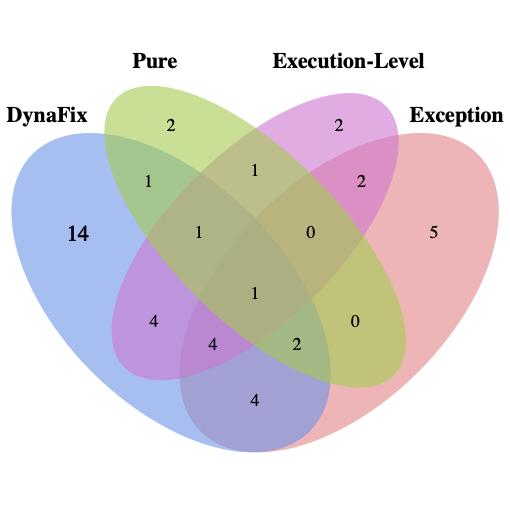
Automated Program Repair (APR) aims to automatically generate correct patches for buggy programs. Recent approaches leveraging large language models (LLMs) have shown promise but face limitations. Most rely solely on static analysis, ignoring runtime behaviors. Some attempt to incorporate dynamic signals, but these are often restricted to training or fine-tuning, or injected only once into the repair prompt, without iterative use. This fails to fully capture program execution. Current iterative repair frameworks typically rely on coarse-grained feedback, such as pass/fail results or exception types, and do not leverage fine-grained execution-level information effectively. As a result, models struggle to simulate human stepwise debugging, limiting their effectiveness in multi-step reasoning and complex bug repair. To address these challenges, we propose DynaFix, an execution-level dynamic information-driven APR method that iteratively leverages runtime information to refine the repair process. In each repair round, DynaFix captures execution-level dynamic information such as variable states, control-flow paths, and call stacks, transforming them into structured prompts to guide LLMs in generating candidate patches. If a patch fails validation, DynaFix re-executes the modified program to collect new execution information for the next attempt. This iterative loop incrementally improves patches based on updated feedback, similar to the stepwise debugging practices of human developers. We evaluate DynaFix on the Defects4J v1.2 and v2.0 benchmarks. DynaFix repairs 186 single-function bugs, a 10% improvement over state-of-the-art baselines, including 38 bugs previously unrepaired. It achieves correct patches within at most 35 attempts, reducing the patch search space by 70% compared with existing methods, thereby demonstrating both effectiveness and efficiency in repairing complex bugs.

paper research
Dynamic Large Concept Models  Latent Reasoning in an Adaptive Semantic Space

Dynamic Large Concept Models Latent Reasoning in an Adaptive Semantic Space

Large Language Models (LLMs) apply uniform computation to all tokens, despite language exhibiting highly non-uniform information density. This token-uniform regime wastes capacity on locally predictable spans while under-allocating computation to semantically critical transitions. We propose $ textbf{Dynamic Large Concept Models (DLCM)}$, a hierarchical language modeling framework that learns semantic boundaries from latent representations and shifts computation from tokens to a compressed concept space where reasoning is more efficient. DLCM discovers variable-length concepts end-to-end without relying on predefined linguistic units. Hierarchical compression fundamentally changes scaling behavior. We introduce the first $ textbf{compression-aware scaling law}$, which disentangles token-level capacity, concept-level reasoning capacity, and compression ratio, enabling principled compute allocation under fixed FLOPs. To stably train this heterogeneous architecture, we further develop a $ textbf{decoupled $μ$P parametrization}$ that supports zero-shot hyperparameter transfer across widths and compression regimes. At a practical setting ($R=4$, corresponding to an average of four tokens per concept), DLCM reallocates roughly one-third of inference compute into a higher-capacity reasoning backbone, achieving a $ textbf{+2.69$ %$ average improvement}$ across 12 zero-shot benchmarks under matched inference FLOPs.

paper research
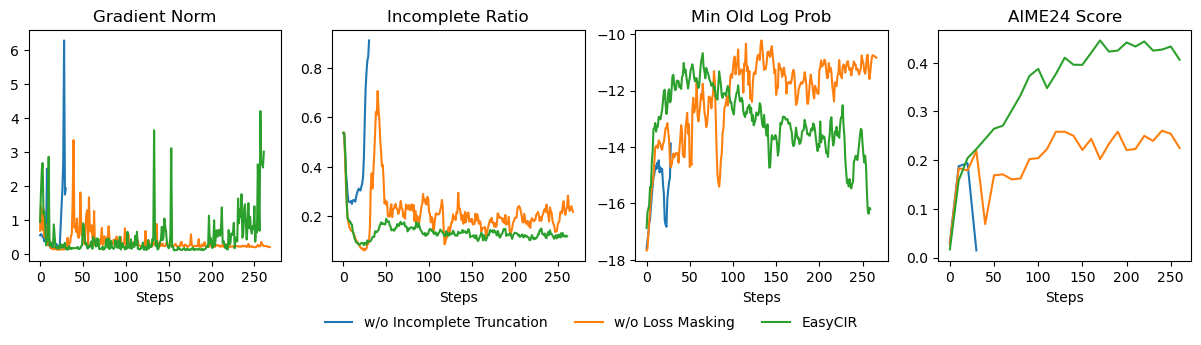
E-GRPO  High Entropy Steps Drive Effective Reinforcement Learning for Flow Models

E-GRPO High Entropy Steps Drive Effective Reinforcement Learning for Flow Models

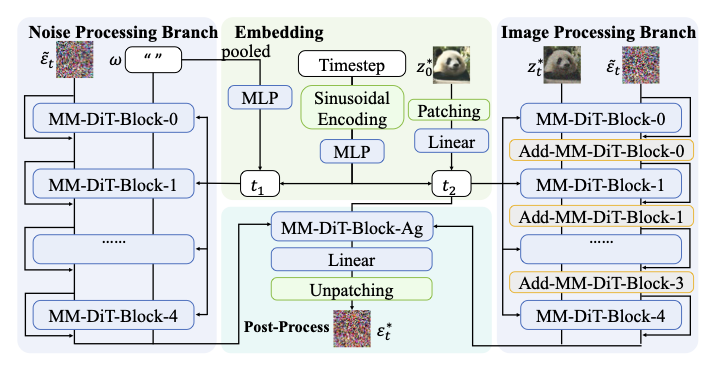
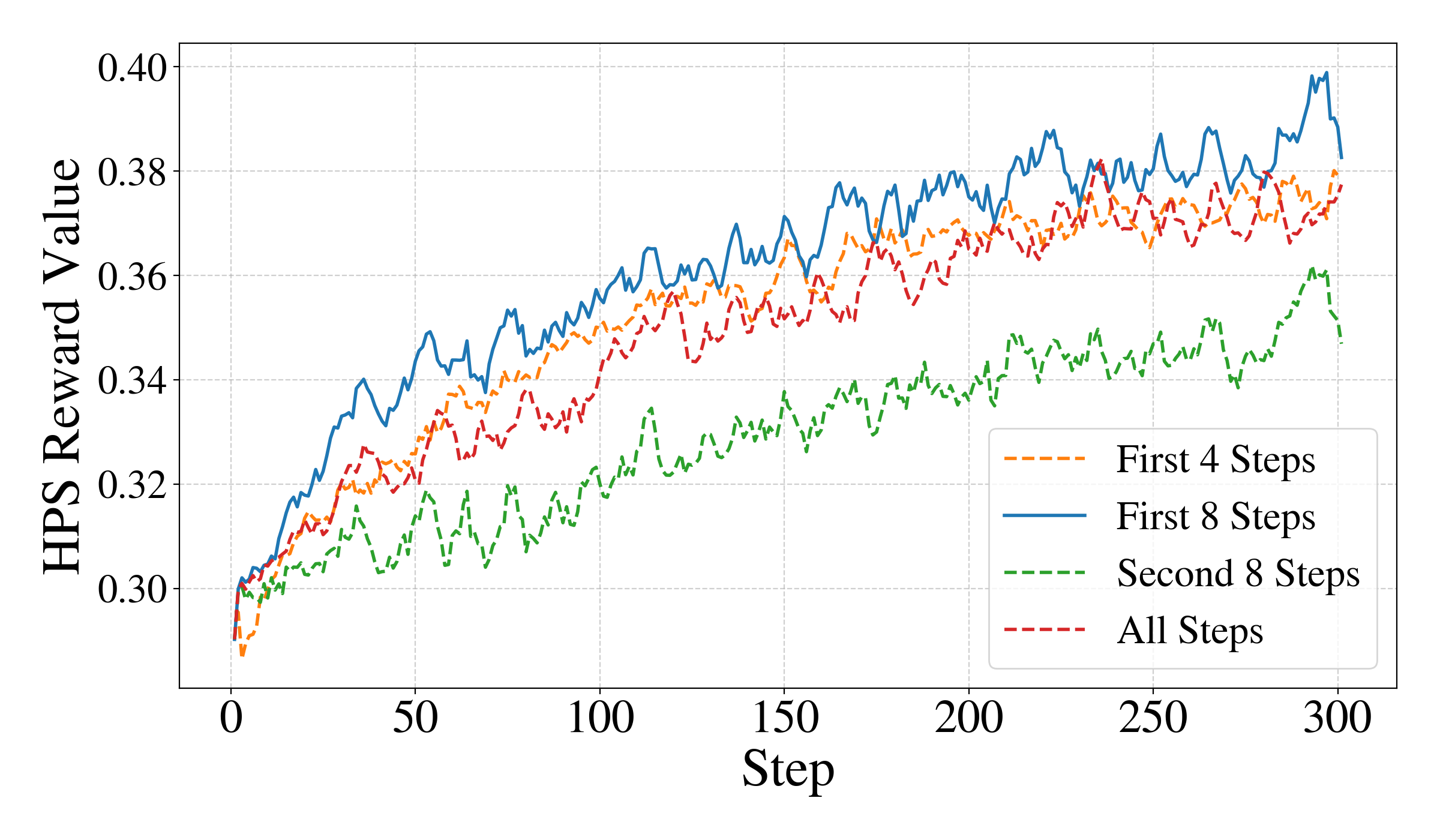
Recent reinforcement learning has enhanced the flow matching models on human preference alignment. While stochastic sampling enables the exploration of denoising directions, existing methods which optimize over multiple denoising steps suffer from sparse and ambiguous reward signals. We observe that the high entropy steps enable more efficient and effective exploration while the low entropy steps result in undistinguished roll-outs. To this end, we propose E-GRPO, an entropy aware Group Relative Policy Optimization to increase the entropy of SDE sampling steps. Since the integration of stochastic differential equations suffer from ambiguous reward signals due to stochasticity from multiple steps, we specifically merge consecutive low entropy steps to formulate one high entropy step for SDE sampling, while applying ODE sampling on other steps. Building upon this, we introduce multi-step group normalized advantage, which computes group-relative advantages within samples sharing the same consolidated SDE denoising step. Experimental results on different reward settings have demonstrated the effectiveness of our methods.

paper research
EgoGrasp  World-Space Hand-Object Interaction Estimation from Egocentric Videos

EgoGrasp World-Space Hand-Object Interaction Estimation from Egocentric Videos

We propose EgoGrasp, the first method to reconstruct world-space hand-object interactions (W-HOI) from egocentric monocular videos with dynamic cameras in the wild. Accurate W-HOI reconstruction is critical for understanding human behavior and enabling applications in embodied intelligence and virtual reality. However, existing hand-object interactions (HOI) methods are limited to single images or camera coordinates, failing to model temporal dynamics or consistent global trajectories. Some recent approaches attempt world-space hand estimation but overlook object poses and HOI constraints. Their performance also suffers under severe camera motion and frequent occlusions common in egocentric in-the-wild videos. To address these challenges, we introduce a multi-stage framework with a robust pre-process pipeline built on newly developed spatial intelligence models, a whole-body HOI prior model based on decoupled diffusion models, and a multi-objective test-time optimization paradigm. Our HOI prior model is template-free and scalable to multiple objects. In experiments, we prove our method achieving state-of-the-art performance in W-HOI reconstruction.

paper research
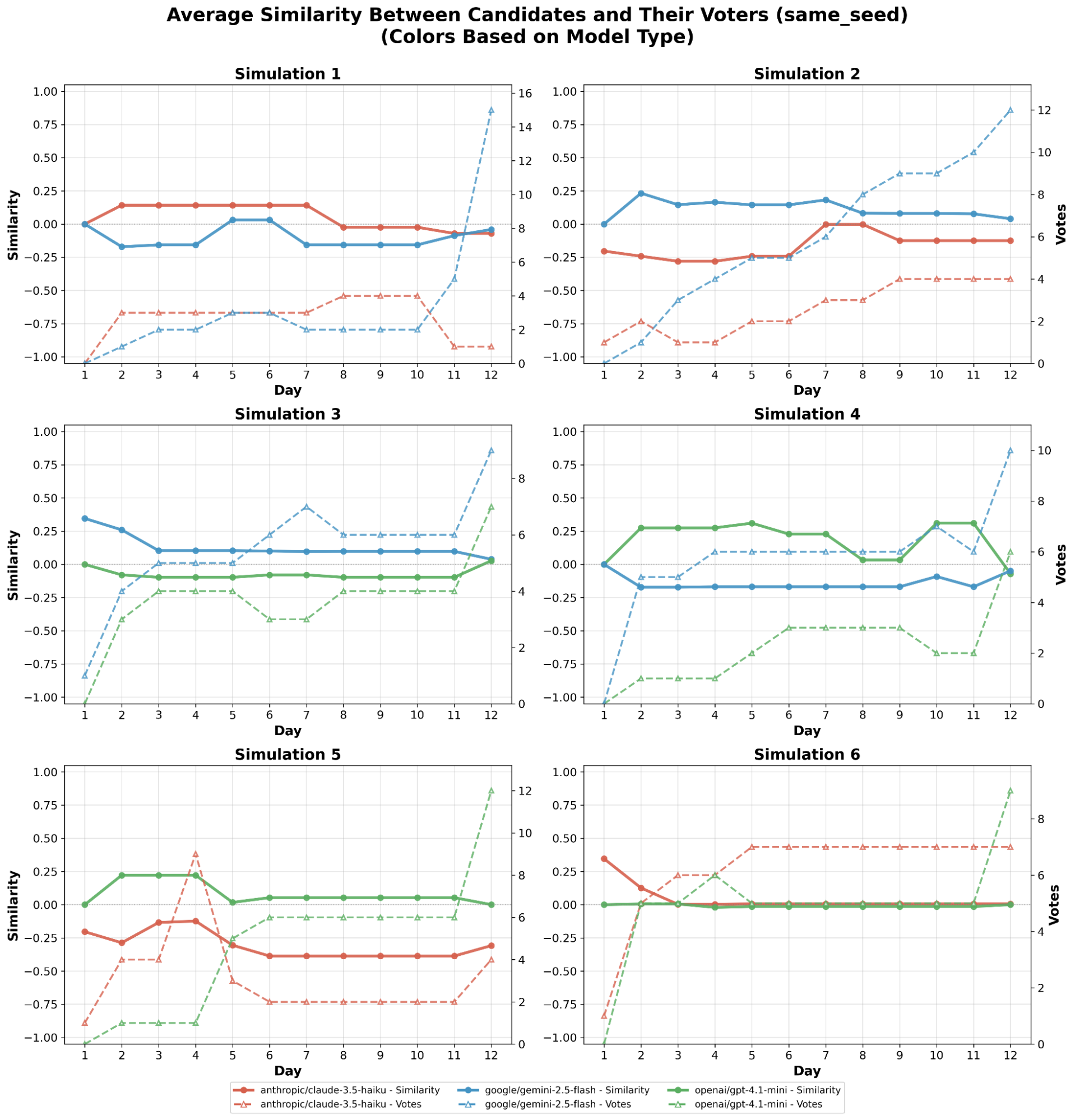
ElecTwit  A Framework for Studying Persuasion in Multi-Agent Social Systems

ElecTwit A Framework for Studying Persuasion in Multi-Agent Social Systems

This paper introduces ElecTwit, a simulation framework designed to study persuasion within multi-agent systems, specifically emulating the interactions on social media platforms during a political election. By grounding our experiments in a realistic environment, we aimed to overcome the limitations of game-based simulations often used in prior research. We observed the comprehensive use of 25 specific persuasion techniques across most tested LLMs, encompassing a wider range than previously reported. The variations in technique usage and overall persuasion output between models highlight how different model architectures and training can impact the dynamics in realistic social simulations. Additionally, we observed unique phenomena such as kernel of truth messages and spontaneous developments with an ink obsession, where agents collectively demanded written proof. Our study provides a foundation for evaluating persuasive LLM agents in real-world contexts, ensuring alignment and preventing dangerous outcomes.

paper research

Start searching

Enter keywords to search articles

↑↓
↵
ESC
⌘K Shortcut