VideoSpeculateRAG Efficient Visual Knowledge Integration for QA
📝 Original Paper Info
- Title: FastV-RAG Towards Fast and Fine-Grained Video QA with Retrieval-Augmented Generation- ArXiv ID: 2601.01513
- Date: 2026-01-04
- Authors: Gen Li, Peiyu Liu
📝 Abstract
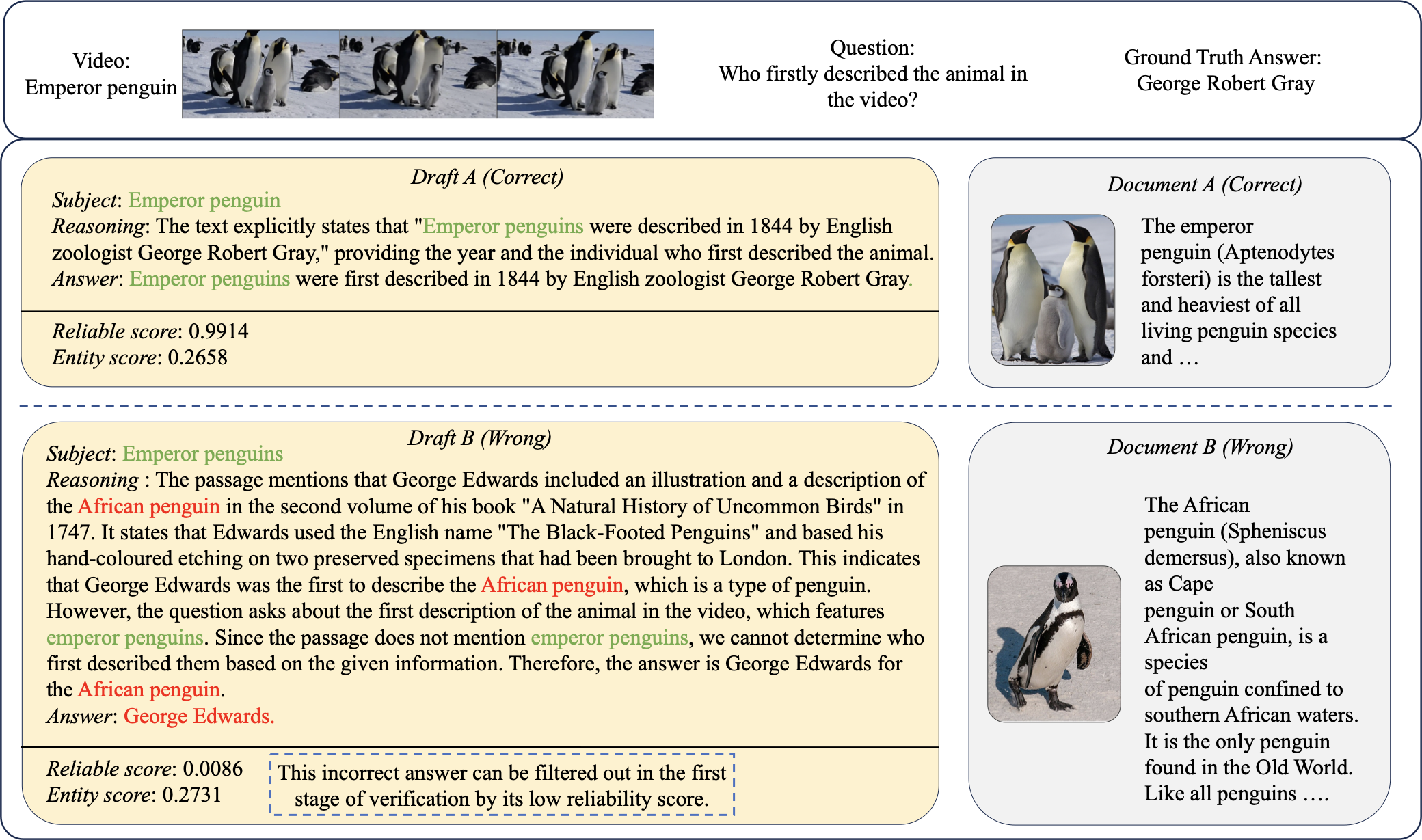
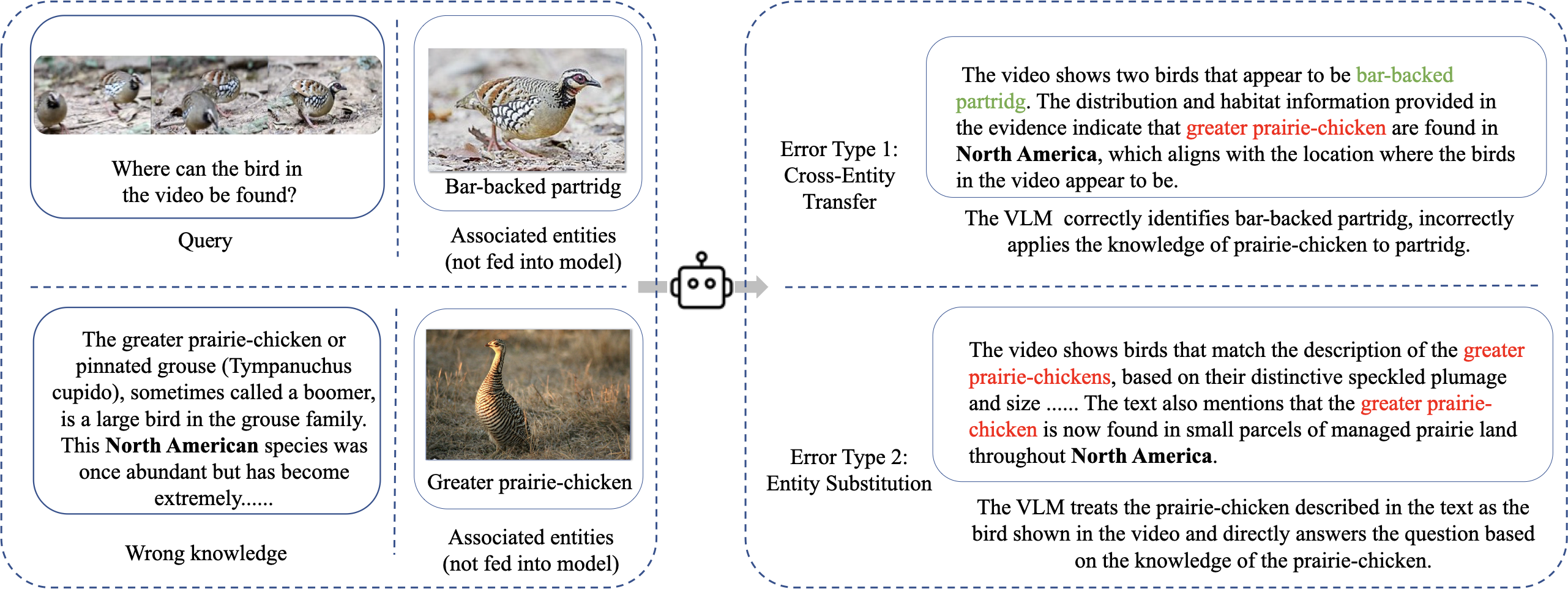
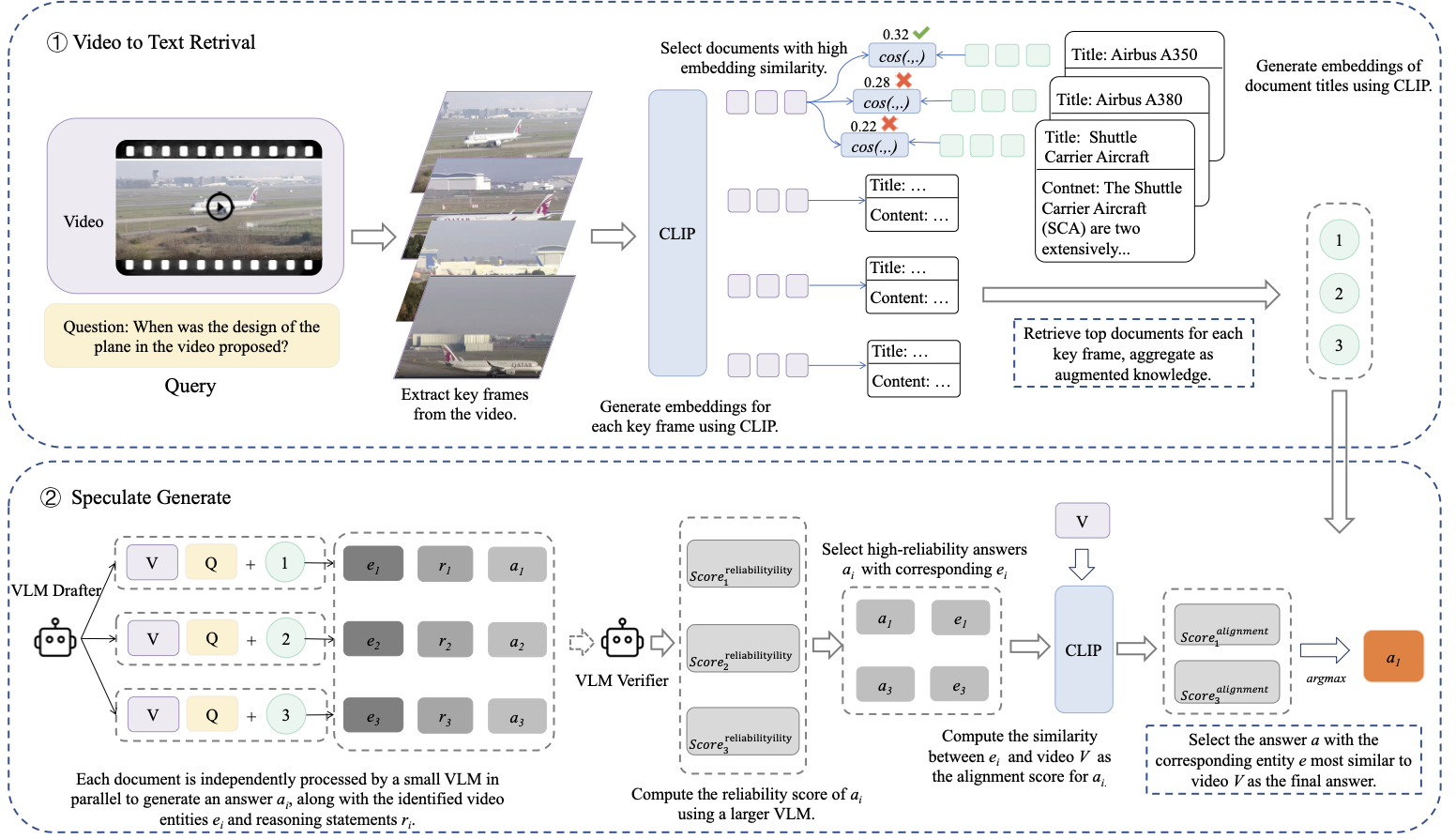
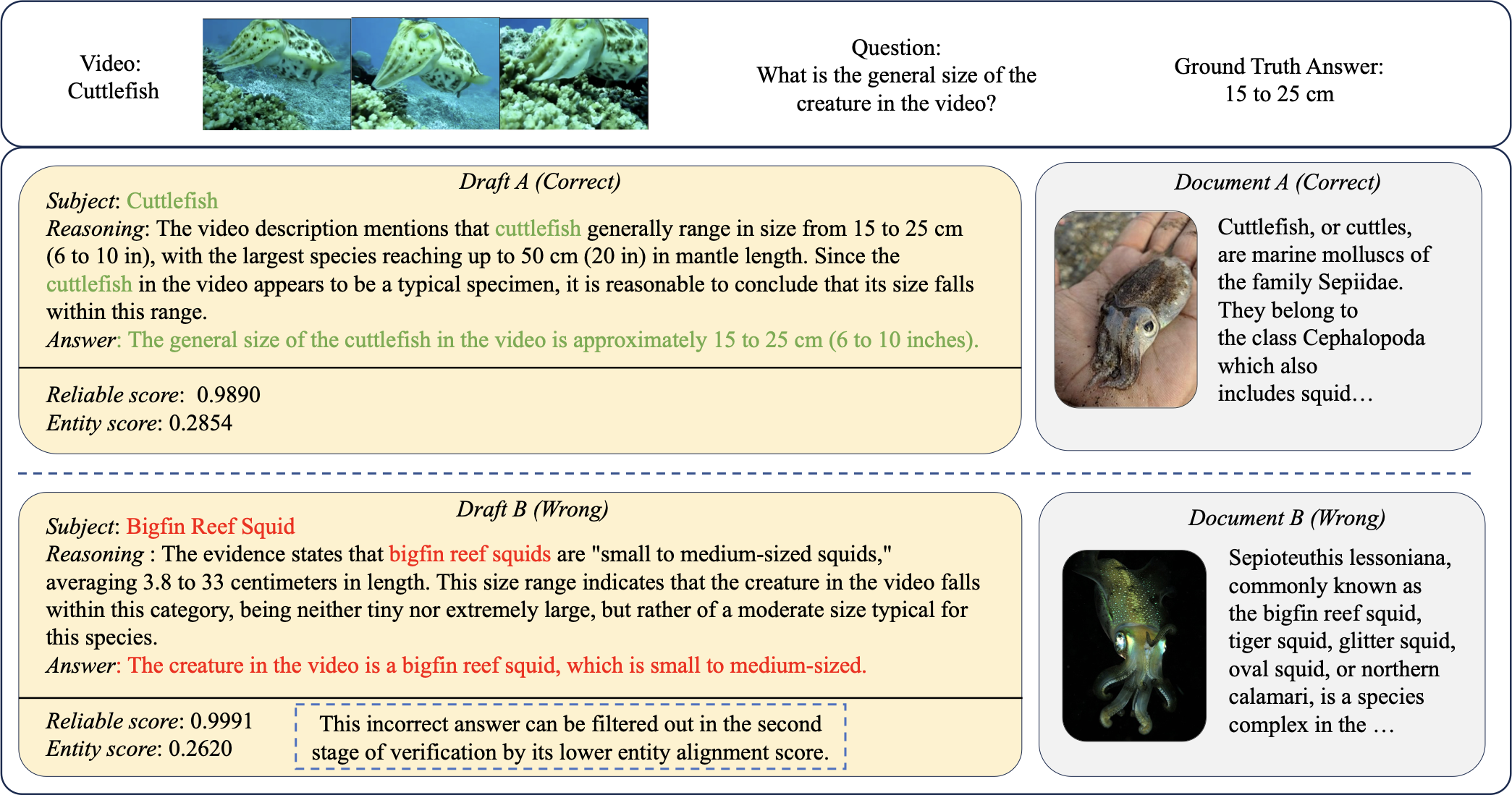
Vision-Language Models (VLMs) excel at visual reasoning but still struggle with integrating external knowledge. Retrieval-Augmented Generation (RAG) is a promising solution, but current methods remain inefficient and often fail to maintain high answer quality. To address these challenges, we propose VideoSpeculateRAG, an efficient VLM-based RAG framework built on two key ideas. First, we introduce a speculative decoding pipeline: a lightweight draft model quickly generates multiple answer candidates, which are then verified and refined by a more accurate heavyweight model, substantially reducing inference latency without sacrificing correctness. Second, we identify a major source of error - incorrect entity recognition in retrieved knowledge - and mitigate it with a simple yet effective similarity-based filtering strategy that improves entity alignment and boosts overall answer accuracy. Experiments demonstrate that VideoSpeculateRAG achieves comparable or higher accuracy than standard RAG approaches while accelerating inference by approximately 2x. Our framework highlights the potential of combining speculative decoding with retrieval-augmented reasoning to enhance efficiency and reliability in complex, knowledge-intensive multimodal tasks.💡 Summary & Analysis
- **Contribution 1**: Application of deep learning in medical imaging diagnostics - **Contribution 2**: Improvement in brain tumor diagnosis using various CNN architectures - **Contribution 3**: Development of an effective model to reduce false negativesSimple Explanation with Metaphors:
- Deep Learning is like a new friend who helps doctors diagnose diseases better.
- CNNs are excellent students who each have different methods for solving problems by looking at images and figuring out what they represent.
- This study found the student who solves problems most accurately.
Sci-Tube Style Script:
- Beginner Level: Deep learning is a technology that helps doctors diagnose diseases better.
- Intermediate Level: Various CNN models were analyzed to understand how they work in detecting brain tumors from MRI scans.
- Advanced Level: The study found the optimal deep learning model for reducing false negatives.
📄 Full Paper Content (ArXiv Source)
📊 논문 시각자료 (Figures)