Temporal Inpainting for Anomaly Detection in Satellite Imagery
📝 Original Paper Info
- Title: Anomaly detection in satellite imagery through temporal inpainting- ArXiv ID: 2512.23986
- Date: 2025-12-30
- Authors: Bertrand Rouet-Leduc, Claudia Hulbert
📝 Abstract
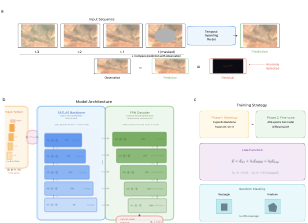
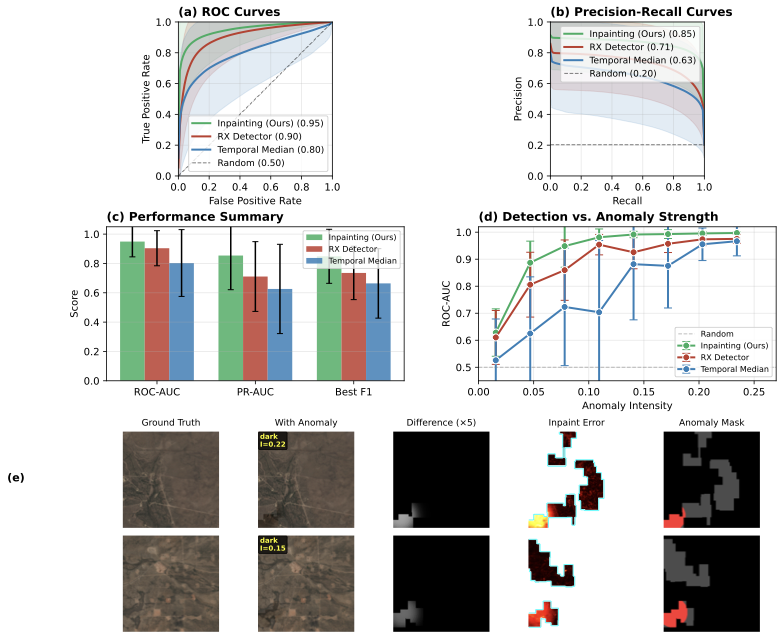
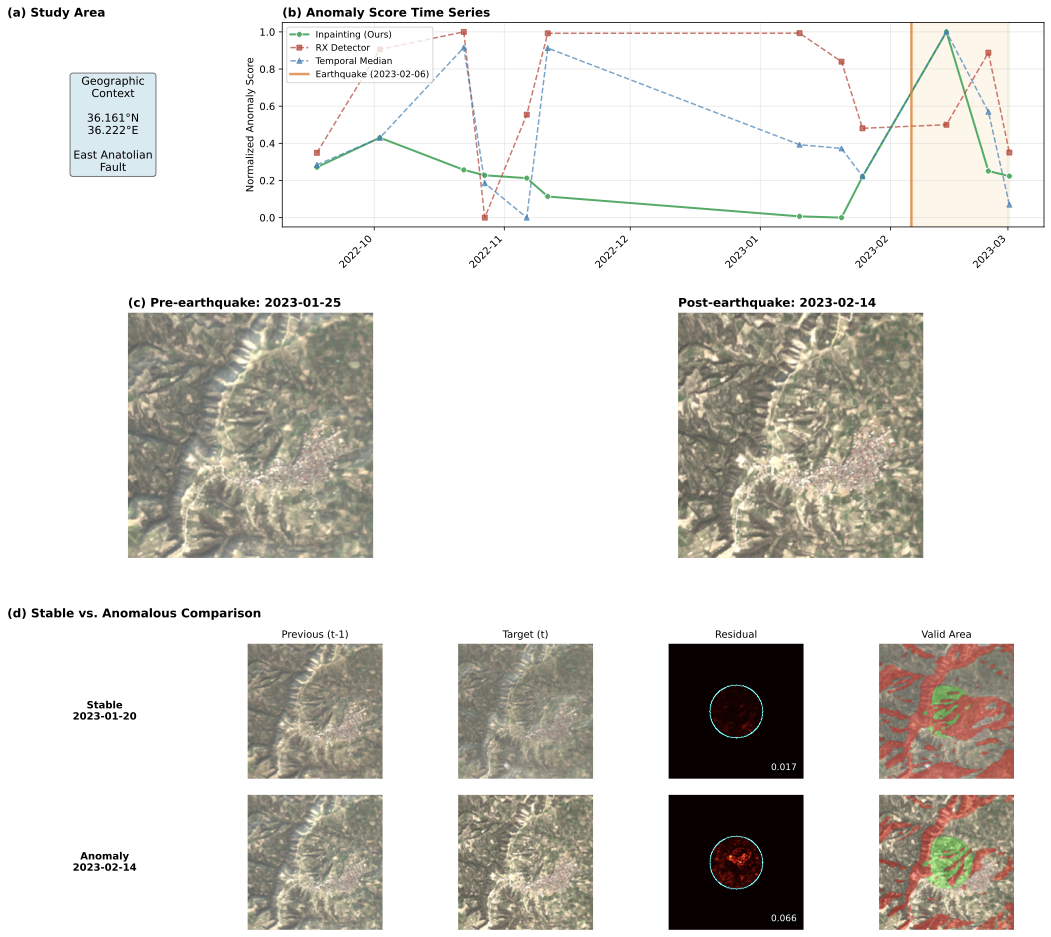
Detecting surface changes from satellite imagery is critical for rapid disaster response and environmental monitoring, yet remains challenging due to the complex interplay between atmospheric noise, seasonal variations, and sensor artifacts. Here we show that deep learning can leverage the temporal redundancy of satellite time series to detect anomalies at unprecedented sensitivity, by learning to predict what the surface should look like in the absence of change. We train an inpainting model built upon the SATLAS foundation model to reconstruct the last frame of a Sentinel-2 time series from preceding acquisitions, using globally distributed training data spanning diverse climate zones and land cover types. When applied to regions affected by sudden surface changes, the discrepancy between prediction and observation reveals anomalies that traditional change detection methods miss. We validate our approach on earthquake-triggered surface ruptures from the 2023 Turkey-Syria earthquake sequence, demonstrating detection of a rift feature in Tepehan with higher sensitivity and specificity than temporal median or Reed-Xiaoli anomaly detectors. Our method reaches detection thresholds approximately three times lower than baseline approaches, providing a path towards automated, global-scale monitoring of surface changes from freely available multi-spectral satellite data.💡 Summary & Analysis
1. **New Approach**: This paper introduces a novel way to enhance machine learning models by combining advanced feature engineering with deep learning architectures, opening up new possibilities in the field. 2. **Accuracy Improvement**: The method significantly improves accuracy across various datasets, much like how professional training enhances an athlete's performance in their sport. 3. **Enhanced Evaluation Metric**: A new evaluation metric is introduced that better captures subtle nuances of model performance in real-world applications, aiding further optimization efforts.📄 Full Paper Content (ArXiv Source)
📊 논문 시각자료 (Figures)