A microstructural rheological model for transient creep in polycrystalline ice
Reading time: 2 minute
...
📝 Original Info
- Title: A microstructural rheological model for transient creep in polycrystalline ice
- ArXiv ID: 2512.08907
- Date: 2025-12-09
- Authors: Alex J. Vargas, Ranjiangshang Ran, Justin C. Burton
📝 Abstract
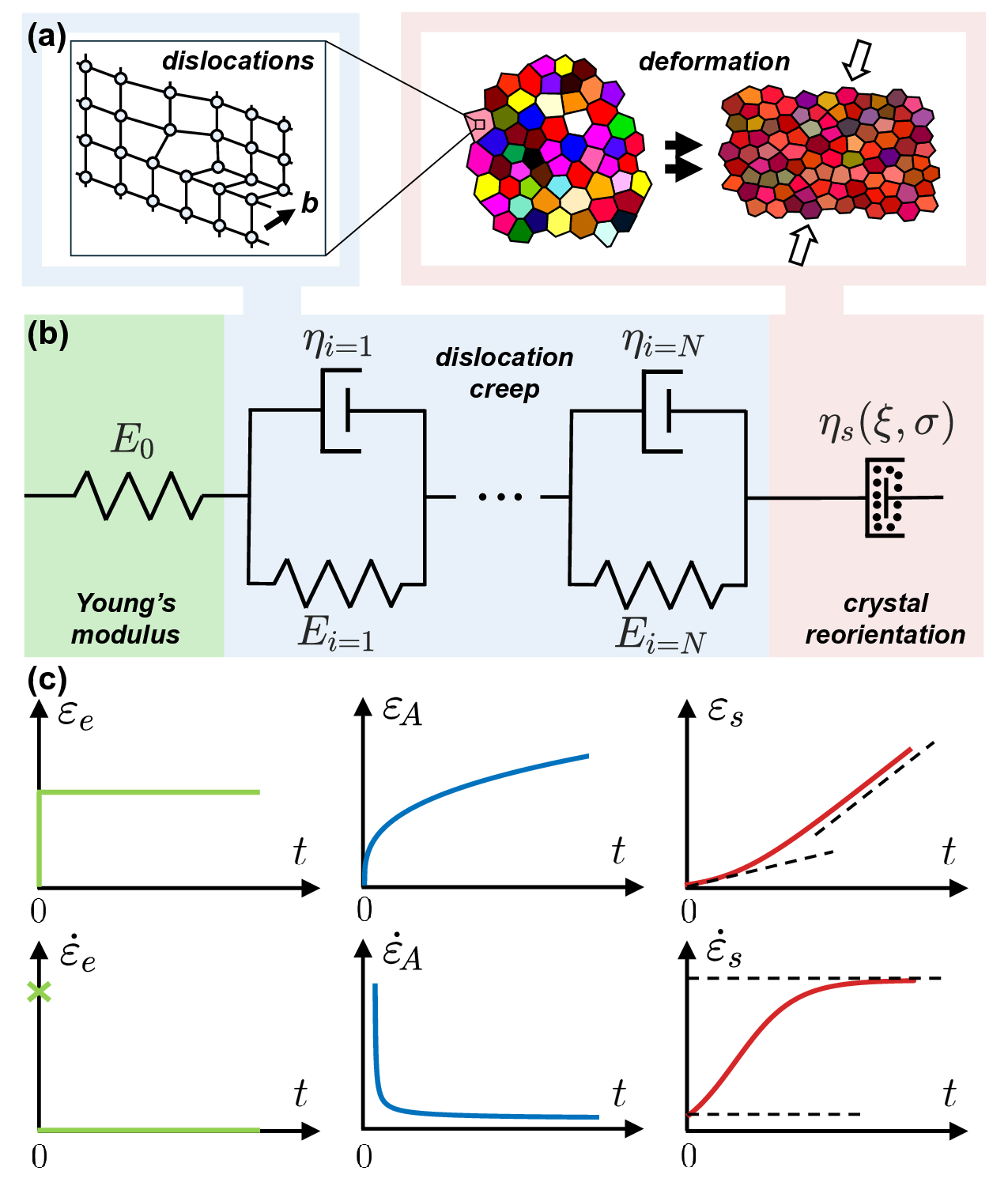
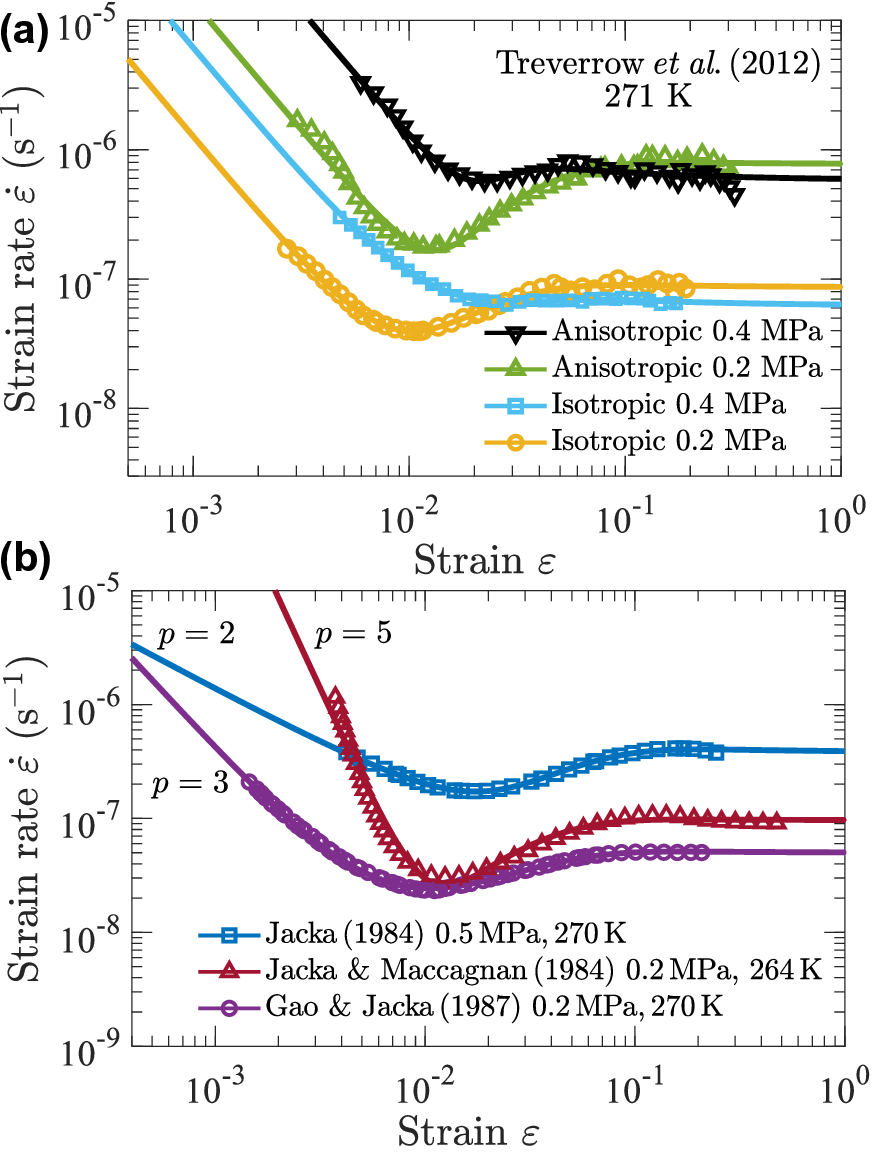
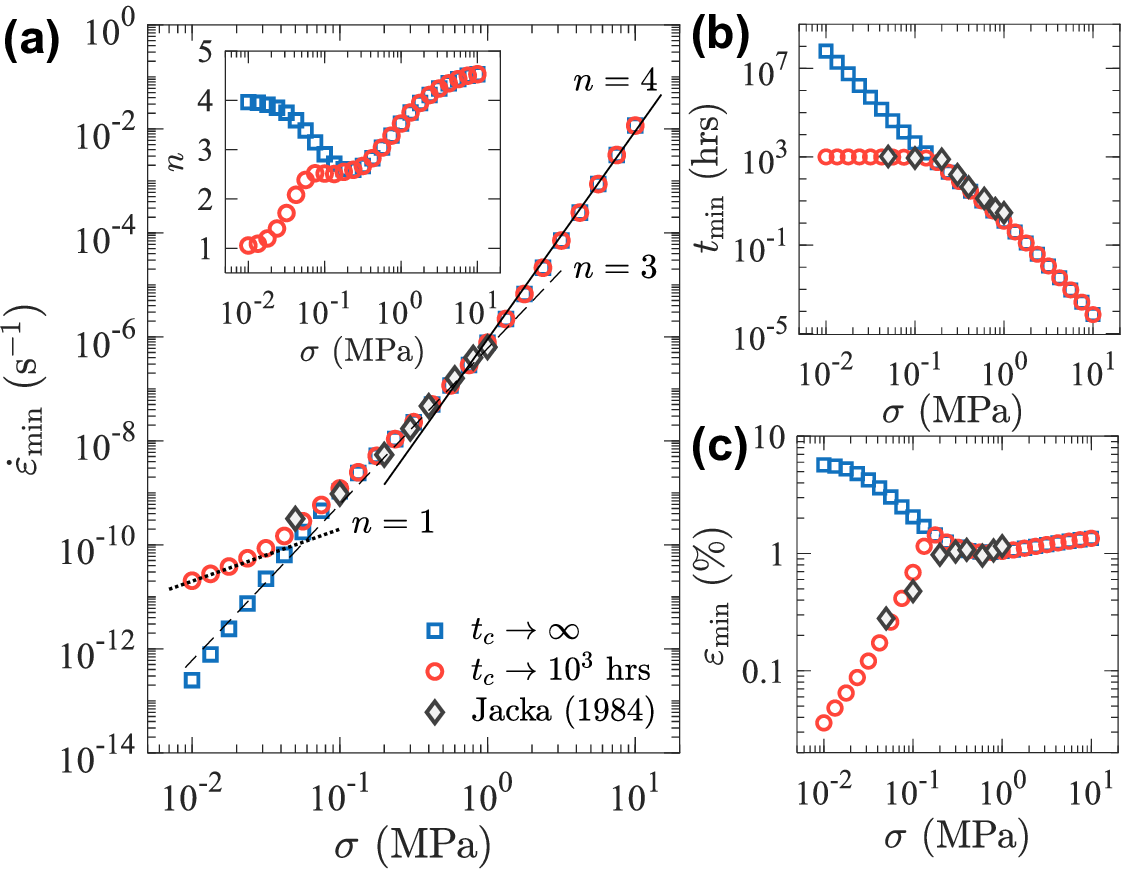
The slow creep of glacial ice plays a key role in sea-level rise, yet its transient deformation remains poorly understood. Glen's flow law, where strain rate is simply a function of stress, cannot predict the time-dependent creep behavior observed in experiments. Here we present a physics-based rheological model that captures all three regimes of transient creep in polycrystalline ice. The key components of the model are a series of Kelvin-Voigt mechanical elements that produce a power-law (Andrade) creep, and a single viscous element with microstructure and stress dependence that represents reorientation in the polycrystalline grains. The interplay between these components produces a minimum in the strain rate at approximately 1% strain, w...📄 Full Content
📸 Image Gallery

Reference
This content is AI-processed based on open access ArXiv data.