Electrical Engineering and Systems Science / Systems and Control
Computer Science / Systems and Control
Resilience of Dynamic Routing Against Recurrent and Random Sensing Faults
📝 Original Paper Info
- Title: Resilience of Dynamic Routing in the Face of Recurrent and Random Sensing Faults- ArXiv ID: 1909.11040
- Date: 2020-03-16
- Authors: Qian Xie and Li Jin
📝 Abstract
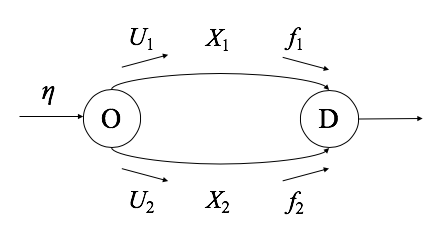
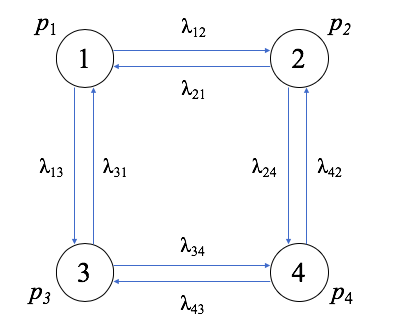
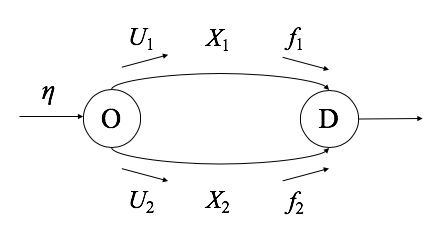
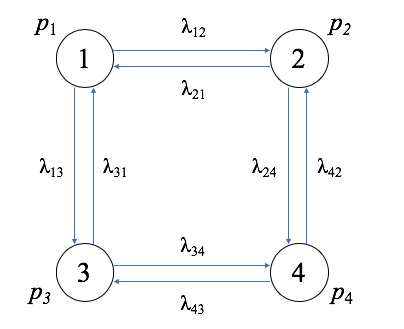
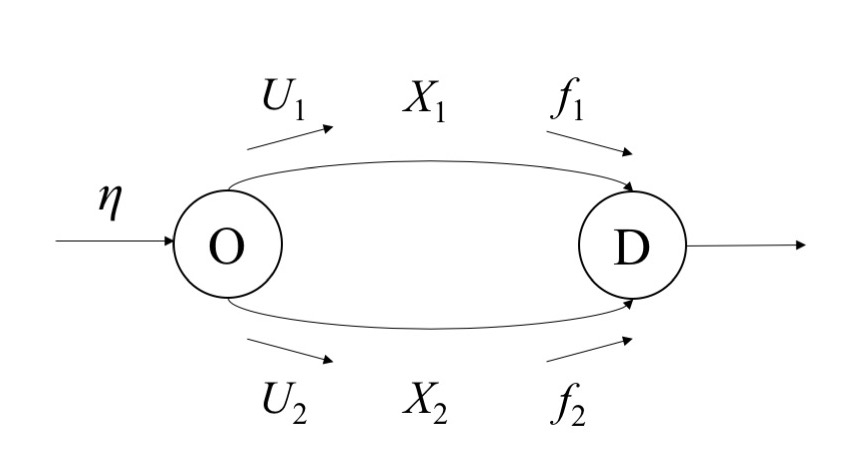
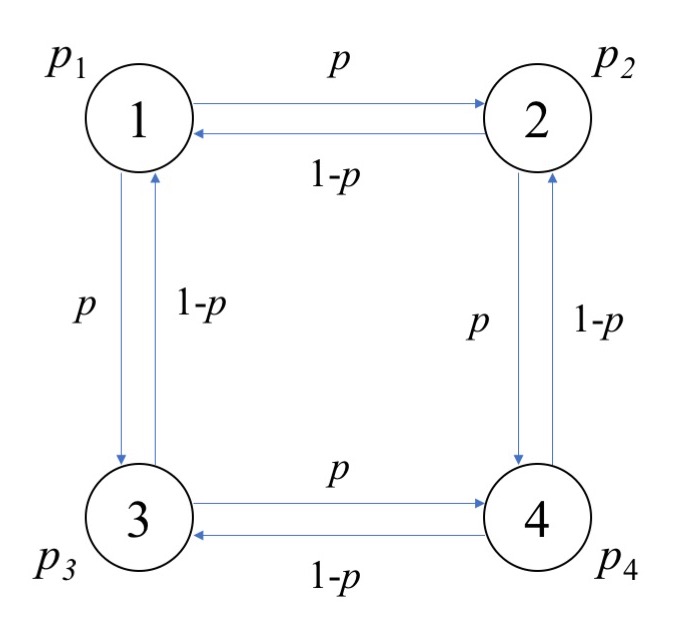
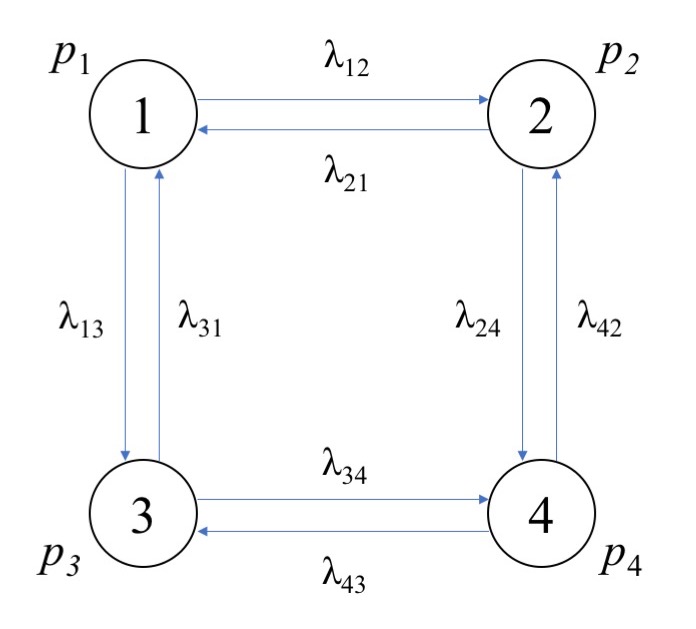
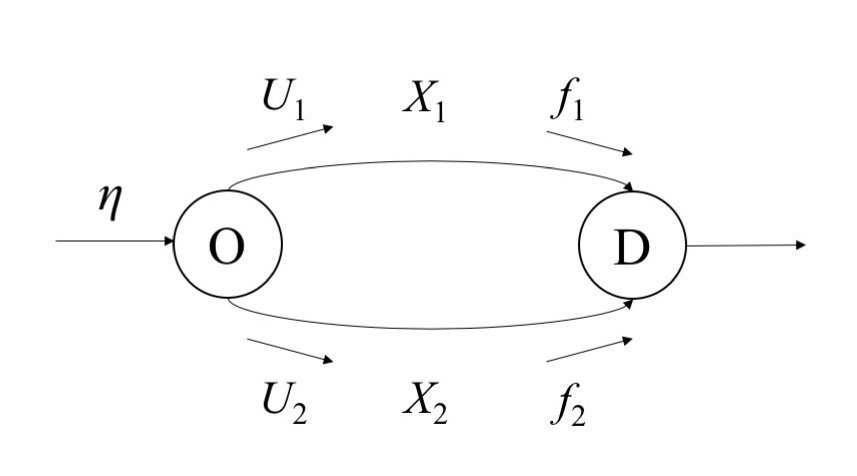
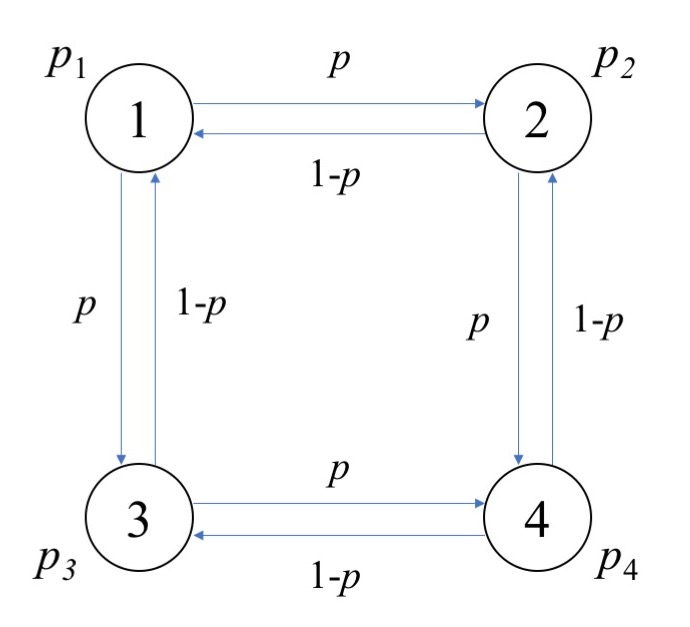
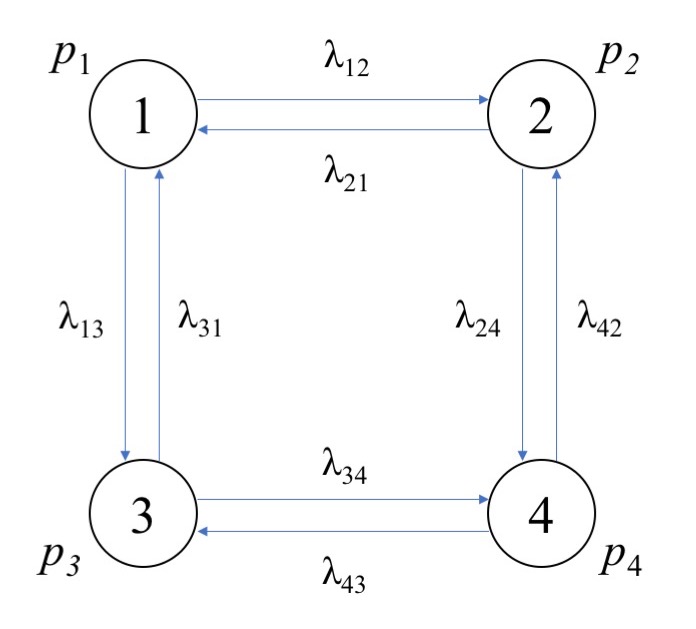
Feedback dynamic routing is a commonly used control strategy in transportation systems. This class of control strategies relies on real-time information about the traffic state in each link. However, such information may not always be observable due to temporary sensing faults. In this article, we consider dynamic routing over two parallel routes, where the sensing on each link is subject to recurrent and random faults. The faults occur and clear according to a finite-state Markov chain. When the sensing is faulty on a link, the traffic state on that link appears to be zero to the controller. Building on the theories of Markov processes and monotone dynamical systems, we derive lower and upper bounds for the resilience score, i.e. the guaranteed throughput of the network, in the face of sensing faults by establishing stability conditions for the network. We use these results to study how a variety of key parameters affect the resilience score of the network. The main conclusions are: (i) Sensing faults can reduce throughput and destabilize a nominally stable network; (ii) A higher failure rate does not necessarily reduce throughput, and there may exist a worst rate that minimizes throughput; (iii) Higher correlation between the failure probabilities of two links leads to greater throughput; (iv) A large difference in capacity between two links can result in a drop in throughput.💡 Summary & Analysis
This paper explores the resilience of dynamic routing in transportation systems, particularly focusing on how recurrent and random sensing faults affect network performance. The authors analyze feedback-based dynamic routing strategies which rely heavily on real-time traffic state information from each link. When sensing errors occur, these can lead to incorrect data being fed back into the system, potentially reducing throughput and destabilizing the network.The researchers model two parallel routes where each link experiences recurrent and random faults according to a finite-state Markov chain. They derive conditions for network stability and establish bounds on resilience scores under different fault scenarios using theories of Markov processes and monotone dynamical systems.
Key findings include:
- Sensing faults can decrease throughput and destabilize an otherwise stable network.
- Higher failure rates do not necessarily lead to lower throughput; there might be a specific rate at which the minimum throughput is achieved.
- Greater correlation between the failure probabilities of two links increases overall throughput.
- A large capacity difference between two links can result in decreased throughput.
These insights are crucial for developing strategies to handle sensing faults and optimizing network stability and throughput, ultimately enhancing traffic management systems.
📄 Full Paper Content (ArXiv Source)
📊 논문 시각자료 (Figures)