Markovian Memory Embedded in Two-State Natural Processes
Markovian memory embedded in a binary system is shaping its evolution on the basis of its current state and introduces either clustering or dispersion of binary states. The consequence is directly observed in the lengthening or shortening of the runs…
Authors: Fotini Pallikari, Nikitas Papasimakis
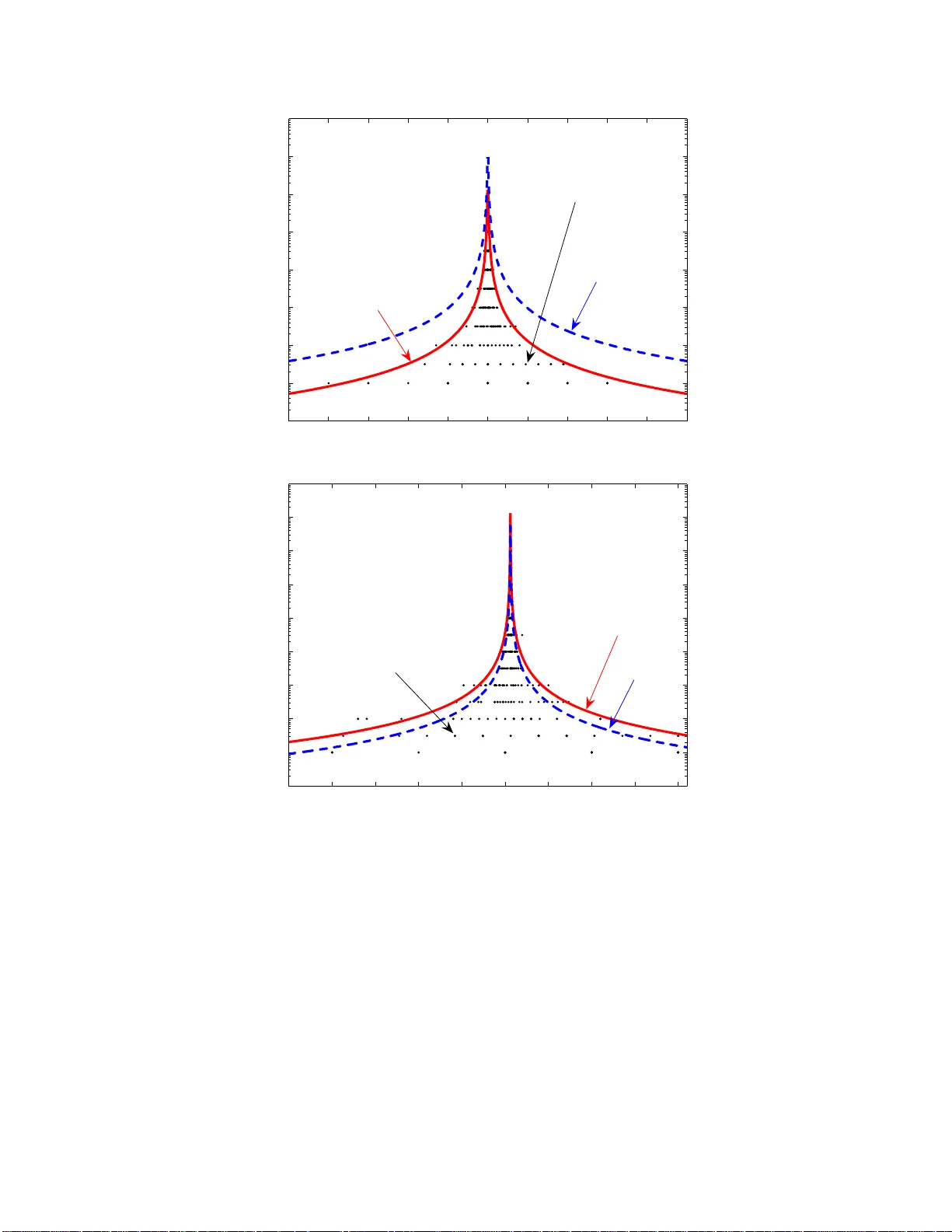
Mark o vian Memory Em b edded in Tw o-State Natural Pro cesses F otini Pallik ar i University of A thens, F aculty of Phy sics, Dep artment of Solid St ate Physics, Panepistimiop olis Zo gr afou, 15784 Athens, Gr e e c e ∗ Nikitas P apasimak is Opto ele ctr onics R ese ar ch Centr e, University of Southampton, Southampton SO17 1BJ, Unite d Kingdom Mark ovian type of memory is considered as an inseparable ingredient in a v ariet y of natural tw o- state pro cesses within a vast range of interdisci plinary fields. The Marko vian memory embedded in a binary system is shaping its ev olution on the basis of its current state. In doing so, this t yp e of memory introd uces either clustering or dispersion of binary states. The consequence is directly observed in t h e length ening or shortening of the run s of the same b inary state and also in th e wa y the prop ortion of a state within a sequence of state measuremen ts scatters ab out its true av erage. In the presence of clustering, this scatter will b ecome broader. Conv ersely , it will b ecome narro wer when disp ersion of states is present. Both tren ds are directly quantifiable t hrough the Marko vian self-transition probabilities. It is show n that the Mark ovian memory ca n even imitate the evolution of a random pro cess, regarding the long-term beh a vior of the frequencies of its binary states. This situation occurs when t h e associated binary state self-transition p robabilities are balanced. T o ex- emplify the b eh a vior of Marko vian memory , tw o natural pro cesses are selected from diverse scien tific disciplines, b elonging t o a wide range of systems classified as tw o-state systems. The first example is studying t he preferences of nonhuman troglody tes regarding handedness. The Mark ovian mo del in this case assesses the extent of influ en ce tw o contiguous ind ividuals may have on each other. The other example studies the hindering of the quantum state transitions that rapid state measurements introduce, known as the Quantum Zeno effect (QZE). Based on th e current mathematical metho d- ology , simulations of the exp erimentally observed clustering of states allo we d for th e estimation of the tw o self-transition probabilities in t h is quantum system. Through these, one can appreciate ho w the particular h in d ering of th e evolution of a qu antum state may have originated. Namely , through a qu antifiable degree of preference for the same binary state com bined with a quantifiable degree of a voidance of the riv al state. The aim of this w ork is to illustrate as merits of the current mathe- matical approac h, its wide range applicability and its p otential to provide a v ariet y of information regarding the dynamics of the stu d ied pro cess. INTRO DUCT ION Marko v so urces pr ovide phenomenologic a l repres entations of a wide r ange o f na tural pro cesses . In a Ma rko v chain inv olving state measur ements, the s y stem under obser v ation exp eriences s tate transitio ns acc o rding to sp ecified probabilities. A sp ecific class of Marko v so urces are the tw o- state s ystems, frequently employed in ph ysics on a m ultitude of o ccasio ns such as to r e pr esent spins in the Ising mo del, or the outco me of particle co llisions in the Galto n bo ard bino mial exp er iment[1]. Binary sy s tems can also re pr esent sequences of qua nt um mea surements, a s in the ca se of the quant um Zeno effect (QZE ), where the natural evolution of the two-lev el a to mic system is hindered b y ra pid observ ations [2, 3]. Moreov er, bina r y sys tems are often encountered in electro nic solid-s tate diffusion [4], turbulent flow dyna mics [5, 6, 7], bistable liquid cry stal displays [8 , 9, 10], Josephson junctions [11], or flip-flop electr ical cir cuits in computing ma chines, whic h fit w ell as t yp es of tw o-s tate s ystems [12]. Binary Mar ko v pr o cesses can, therefore, describ e adequately a whole host of physical micro- as well as macro -systems [13]. Y et, t wo-state sys tems are no t o nly p ertinent in ph ysics and computing, but also highly relev ant to probabilis tic systems commonly studied within the medical and so cial sciences. It is custo mary , for instance, in medicine [14], psychiatry [15], or an throp olo gy [16], to test a hypothesis agains t tw o alter natives. In medicine, the effect of a drug treatment is decided fro m the prop or tion of successes (a gainst failures) ac ross many indep endent studies. While the degree o f reliability of the results depe nds on the trustw orthiness of the da tabase, s pe cific tests a re designed to determine whether the database is free from biases. One s uch mainly v is ual test is the constr uction of a scatter plot of independent re s ults that constitute the database [17]. If the distr ibution of a large num b er of data on the scatter plot app ears as ymmetric, it implies that the data base is biased b y , as an exa mple, publication biases and thus rendered inappropria te source fo r reliable s ta tistical inferences r e g arding the studied effect. Less emphasis has b e e n sited so far on the scatter plot’s br e adth a nd the information that it can provide concerning the dynamics of the underlying mechanism. The relatio nship b etw een them, howev er, ca n be ex e mplified on the basis of tw o-sta te Marko v pro ce sses, as will b e shown in this work. 2 Marko vian memory is in tro duce d b y the req uir ement tha t each new state dep ends on previous states some n steps back, so that past pro babilities determine the future ones [18, 1 9]. As it is discussed her e , the dynamics of t wo-state systems fall under tw o spe c ific catego ries of Marko vian memory , which either intro duce a cluster ing or a disp ers ion of binary states. The purp ose for the a pplication o f the Marko v memo r y approa ch is to study the first-o rder interaction dynamics in a v ariety of t wo-state systems. In doing so, it can estimate the conditional lik eliho o d for the s ystem to change state or r emain a t the same state. It also estimates the cons equent le ng thening or shortening of runs of the same state in a sequence of state measurements. A br ief descr iption o f the tw o-state Mar ko v pro cess is offered in section 2. The s tatistics o f Mar ko v chains in rela tion to the clustering of states (lengthening o f r uns ) and disp ersio n of states (shortening of runs) is dis c ussed in section 3. Two applica tions of the mathematica l approach implicating Marko vian memor y , in physics (Q ZE) and a nth ro p ology (Handedness) a re pr esented in section 4. A mo re detaile d analys is of the pr esent mathematica l tr eatment is provided in the app endix. FIRST-ORDER, TWO -ST A T E MARKO V PROCESS A first-order , tw o-state Marko v pro c ess is driven by four tr a nsition pr obabilities, p ij , i, j = 1 , 2. The s e quence of meas urements of the binar y state, x n , represents the o ccurrence of an even t (state A), o therwise exemplified by x n = 1, or the failure o f its o c c urrence (state B) corresp onding to x n = 0. The initial a bsolute proba bilities of finding the s ystem at either s tate A or B are p 1 and 1 − p 1 , resp ectively . Once the system is a t state A, the conditional probability that it remains a t the same state after a single measurement is p 11 = p , wher eas the conditiona l probability , p 21 to ma ke a transition to B will be 1 − p . In a similar fashion, proba bilities p 22 = q and p 12 = 1 − q a re assigned to tra nsitions from state B. In bo th ca ses, the self-tr ansition pr obabilities s atisfy the inequality 0 < p, q < 1 . Whereas p, q = 0 . 5 underlines random v ariability of sta te mea s urements, the range of pr o babilities 0 . 5 < p, q < 1 and 0 < p, q < 0 . 5 introduce p ers istence of the same s ta te and a nti-persistence, resp ectively . The latter case implies an increased probability to avoid transitions to the same state over a sequence of measurements. W e shall next discuss how the exp ected fr equency of the one state of the Marko v pro cess (A), in a sequence o f n consecutive mea surements, depe nds on the self-tra nsition probabilities p a nd q . The av era ge frequency , ¯ p n , of o ccurr ence of state A in a Marko v chain of n steps is [20] ¯ p n = ℘ + p 1 − ℘ n · 1 − a n 1 − a (1) The para meter a 6 = 1 is a = p + q − 1 (2) After a la rge enough num b er of state measurements, n , (Markov transitions) the frequencie s of obser ved states A and B b ecome ℘ and 1 − ℘ , resp ectively , a t any v alue of par ameter a , a 6 = 1. ℘ = lim n →∞ p n = 1 − q 2 − ( p + q ) 1 − ℘ = 1 − p 2 − ( p + q ) (3) If p = q , the frequencies of obs e rved states A and B b ecome ℘ = 0 . 5 and 1 − ℘ = 0 . 5 . This result holds true not only in the a bsence o f memory when p = q = 0 . 5, but most impo rtantly , when p = q 6 = 0 . 5 . This is a cur ious condition which tur ns a Markov pro cess with memory into a ra ndo m pr o cess, as far as the lo ng-term state frequenc ie s ℘ and 1 − ℘ a r e concerned. Even in such a n o dd s ituation, the non-r a ndomness of the Mar ko v pro ces s is directly obser ved thro ugh the v ariance of the binary s ta te in the sequences. The standard deviation of the exp ected prop o rtion of binary state A, ¯ p n , is estimated to b e [20] 3 σ = r ℘ (1 − ℘ ) n · r p + q 2 − ( p + q ) (4) Relation (4 ) is a lso written σ = σ 0 · ν , where σ 0 = p ℘ (1 − ℘ ) /n , is the standard devia tion of outco mes of a memory-free Ma r ko v pr o cess and it indica tes that the v ariance o f ¯ p n can b e mo dulated b y a factor ν 2 6 = 1 intro duced by the Markov self-transitio n pr obabilities p and q . Assuming p and q 6 = 0 . 5 the factor which mo dulates the v aria nce is ν 2 = p + q 2 − ( p + q ) (5) A larg e v ariet y of natura l pro cess e s can b e repres ented as Mar ko v pro c esses. In such ca ses the characteristic parameters ℘ a nd ν 2 can be as s igned accordingly . These provide insights into the pro c e ss dynamics on first neighbor level. Often a pro cess is studied through its statistica l b ehavior with the help of meta-analyse s. In such approaches, the t wo characteristic parameters, ℘ and ν 2 , can b e easily estimated through the so- called sca tter plots. The applica tion of the Marko v pr o cess on such sta tistical ensembles can provide useful information on the inv estigated pro cess as will be shown next. SCA TTER PLOT OF MARKO VIAN BINAR Y ST A TES The combination o f r esults from indep endent s tudies of a phenomenon co nstitutes the so -called meta-analys is . The accuracy o f the r esult of each individua l study dep ends prop o rtionally on the size, n , of the study , since the asso cia ted error is inv erse ly pro p o rtional to the squa r e ro ot of the standard deviation. The sca tter plot, n = f ( ¯ p n ), whe r e the size of s tudies, n , is plotted a gainst the asso ciated prop or tion of binary state, ¯ p n , will b e shape d like an inv erted funnel [21] ce ntered at ℘ , the sing le true av erag e , or in other words the v alue to whic h the av era ges ¯ p n conv erge. This is due to the fact, as mentioned a b ov e, that the e s timate of the underlying effect b eco mes mo re a c c urate a s the s a mple size of comp onent s tudies increases. Scatter plo ts can thus pr ovide useful information not only on the magnitude, ℘ , of an inv estigated effect, but also ab out the dynamics of the mechanism inv olved [22]. The fr e q uency of state A, ¯ p n , in a sequence of n individual measurements o f a Markov pro cess will rang e within a confidence interv a l. The 95% o f them o n the scatter plot are exp ected to b e enclosed by the confidence interv al, represented by the tw o funnel-shap ed red curves in Fig. 1, ¯ p n = f ( n ) or n = f ( ¯ p n ) ¯ p n = ℘ ± 1 . 96 · r ℘ (1 − ℘ ) n · ν (6) and n = 3 . 8 4 · ℘ (1 − ℘ ) · ν 2 ( ¯ p n − ℘ ) 2 (7) Computer-simulated Ma r ko vian data sequence s of size n were genera ted and plotted against the frequency of binary state A, p n , in each sequence. Fig. 1 illustrates t wo such examples; (a) one of a symmetric ( p = q ) Marko v pro cess exhibiting ant i-p er sistence, p, q < 0 . 5, and (b) of an as ymmetric ( p 6 = q ) Ma rko vian pro cess with p = 0 . 88, q = 0 . 5 exhibiting one-sided p ers is tence. In the symmetrica l case, p = q , the c orrela tion factor C m betw een the t wo states in the Markov chain C m = lim N →∞ 1 N N X n =1 s n s n + m (8) bec omes the as semble exp ectatio n v alue of the corr elation b e tw een firs t-order neighbor s [23] 4 0.45 0.46 0.47 0.48 0.49 0.5 0.51 0.52 0.53 0.54 0.55 10 1 10 2 10 3 10 4 10 5 10 6 10 7 10 8 10 9 Frequency of binary states A, p n Number of measurements in a study, n (a) 0.55 0.6 0.65 0.7 0.75 0.8 0.85 0.9 0.95 1 10 0 10 1 10 2 10 3 10 4 10 5 10 6 10 7 10 8 10 9 Frequency of binary states A, p n Number of measurements in a study, n (b) simulated Markovian data p=q=0.12 ν =1 ν =0.37 ν =1 simulated Markovian data p=0.88, q=0.50 ν =1.49 FIG. 1: Scatter p lot of Marko vian d ata. Dots: computer sim ulated data, Lines: 95% confidence interv al. (a) Solid lines: Symmetric Marko vian pro cess, p = q = 0 . 12, ν = 0 . 37 and ℘ = 0 . 5. Probabilities p, q , < 0 . 5 introduce anti-persistence and ν < 1 introdu ces d isp ersion of states and narro wing of va riance. Dotted lines: memory-free binary p ro cess, ν = 1. (b) Solid lines: Asymmetric Mark ovian pro cess, p = 0 . 88 and q = 0 . 5, ν = 1 . 49, ℘ = 0 . 81. The persistence introdu ced by th e self- transition probabilit y , p , of state-A, in tro duces broadening of the v ariance ( ν > 1), according to relation (4) and as compared to a Marko v pro cess with ℘ = 0 . 81 and ν = 1. C 1 = < s n s n +1 > = 2 p − 1 (9) When p = q = 0 . 8 8 the stro ng, p ositive co rrelatio n o f neig hbors ( C 1 = +7 6%) introduces p ersis tence a nd ther efore clustering of states, while the condition p = q = 0 . 1 2 in tro duces strong negative cor relation, a nt i-p er sistence a nd disp e rsion of s tates ( C 1 = − 7 6%). The gr aphical representation of Fig. 1 co nfirms that the sim ulated Mar ko vian 5 data ob ey well the statistica l estimations: the 95% of them were found enclosed under the tw o 9 5% confidence int erv al curves, Eq. (7), sugg esting that this statistica l to ol applied o n scatter plots o f meta-analyses is rela tively reliable. The mo dulated v aria nce, as descr ib ed ab ove, indicates abs ence of r andom v ariability in indep endent measur ement s of an effect [2 4]. This type of o bserved ir regular it y within a meta-analy sis ha s b een refer red to by the term ”statistica l heterogeneity” [25]. There are n umero us rea sons p o s sible b ehind statistical heterog eneity in a database. W e consider here the tw o types that generate either disp ersio n or clustering of Ma rko vian states. Lo oking closer a t the shap e of the plot we notice that, ac cording to Eq s . (4) and (5), when ν > 1 its scatter bec omes bro ader at all sample sizes n , a s compared that of a memor y-free pro ces s ( ν = 1 ). Similarly , the v ariance will be narrow ed in the ca se where p + q < 1, (i.e. ν < 1). The broadening of a scatter plot is the direct consequence of the p ersistence of a binary state and the o ccur rence of longer-tha n- usual runs in the data s e quences due to state clustering, as Fig . 2 clearly illustra tes. 0 10 20 30 40 50 60 70 80 90 100 10 −6 10 −5 10 −4 10 −3 10 −2 10 −1 10 0 Normalized number of runs, α m / α (m=1) Length of runs, m FIG. 2: Normalized length of run (av eraged o ver 10 sequen ces) in a 10,000-unit long computer generated Marko vian sequence. (a) Cir cles , p = q = 0 . 50, memory-free Marko vian pro cess; (b ) triangles , p = q = 0 . 88, clustering of states; (c) squar es , p = q = 0 . 12, disp ersion of states; (d) dotte d l ine : theoretical exp ectation for memory-free pro cesses, Eq. (10 ). It is expe cted tha t, when p = q = 0 . 5, the num ber of r uns having length m , a m , i.e. sequences of the same binar y state o ccurring at frequency ¯ p n in a sequence o f total length n , will b e [20] a m = ( n − m − 1) · [ ¯ p n 2 (1 − ¯ p n ) m + (1 − ¯ p n ) 2 ¯ p n m ] (10) The v ariance σ o f a m for long e no ugh sequences is: σ = a m . In Fig. 2 the normalized av era ge num b er of runs (ov er 10 computer-simulated symmetric Markov sequences , each of length n = 10 . 000 ), is plo tted against the length of run, m . When the Marko vian memor y ( p = q = 0 . 88) intro duces p ersistence and clus tering of the same binary state, the av era ge length o f the computer- simulated runs is considerably longer tha n that of the memo r y-free case ( p = q = 0 . 5). On the con trar y , in the anti-per s istent ca se ( p = q = 0 . 12 ), the av erage length o f runs is shor ter than that of the memory -free s equences. This result supp orts that, in the latter condition, the states tend to disp erse . The simulated Mar ko vian memo ry-free sequences, on the other hand, b ehav e according to E q. (10), as exp ected [2 6] b y theory . Estimating the self-tra nsition probabilities ( p, q ) and the v aria nc e fa ctor ν 2 provides a quantifiable description of the Ma rko vian dynamics in natura l pro ces ses within a diversity of sc ient ific disciplines. In the first example that follows, the ab ov e analysis will b e dir ectly applied o n s catter plots refer ring to anthropo- logical data . In the second example the analysis is applied on data reco rding t wo-state quantum transitions (Q ZE), to directly estimate the lengthening and shortening of runs o f the same binary s tate. Then through simulations, based on the mathematical formulation developed her e , it go es on to estimate the Mar ko vian self-transition pro babilities. F rom these, infor mation rega rding the transitions dynamics will be drawn. 6 EXAMPLES OF THE MARKO V MEMOR Y MODEL IN NA T URAL PROCESSES Handedness as a Marko v process Often in s cientific disciplines such a s medicine, anthropolo g y , so ciology , or psychology the e v aluation of evidence regar ding an effect makes use of scatter plo ts . On o ne such o ccasion within anthropo logy , a meta-a nalysis, that merged the r e s ults of 32 studies, was p er formed to inv estigate the strength and consistency o f rig ht-handedness in nonhuman primates [16], Fig. 3. This application refers to a n even blend of primates raised in the wild a s w ell as in captivit y . The construc ted scatter plo t in this study was intended to shed light on questions reg arding the c o nsistency o f the data v ariability with normal s ampling v ariation and the nature of biases in the rep or ts of statistically significant handedness. One could, how ever, get additional information from these scatter plots, with regar d to the internal dynamics of the pro cesses inv olved that lea d to handedness preference. An throp o logists discovered that chimpanzees develop cultures in the same way as hum ans do. According to Whiten et a l. [28], handedness in nonhuman primates tends to b e lateralized. Y et, unlike humans where there is only 10% use of left hand, this pro p ortion in nonhuman primates in the wild r e aches 50%. Chimps in captivit y , howev er, exhibit a weak preference for the us e of righ t hand, which is belie ved to result fro m the human influence. Thes e obser v ations are in agr eement with r e sults of the present Marko v analysis. W e assume that the interactions among t he nonhuman primates that influence handedness are driven by a Mar ko vian binary pr o cess, where preference for the right a nd left hand is represe nted by the self-transition pr obabilities, p 11 = p and p 22 = q , r esp ectively . Surely ther e exist mult iple interactions among the individuals in a gro up. Y et, as it is a common practice in many scientific disciplines , interactions are often reduced to first neighbors, a s long as this simplification do e s not distor t their tr ue repr esentation. In Fig. 3 the num be r, n, of significantly-handed individuals (pan tr oglo dytes) was plotted aga ins t the prop or tion, ¯ p n , of them who were right-handed. The confidence interv a l curves acco rding to Eq. (7 ) that best envelope the 95% o f the exper imental data are drawn by adjusting the Markov memory para meters and are given by n = 1 . 24 ( ¯ p n − 0 . 58) 2 (11) The confidence in terv al repr esenting data of random v ariability ( ν = 1), whic h implies an equal preference for right and left hand use, is a ls o mar ked on the graph for comparison. It is clear ly not fitting a dequately the totality o f these data, apart fro m these refer ring to individuals living in the wild. The Marko v analys is rendered the parameter s, p = 0 . 6 4 , q = 0 . 50, ν = 1 . 15 , ℘ = 5 8% for the individuals in captivity and p = q = 0 . 5 0, ν = 1, ℘ = 50 % for those in the wild (dark cir c le s). The accuracy of the thre e para meters ab ov e is limited to 1 % and so the pa rameters are rounded up to the second decimal digit [2 7]. It is a known fact that the mem b ers o f a g roup po sitively influence each other with re g ard to ha ndedness. Therefore, the estimated self-tr ansition probabilities for either the use of the rig ht or the left hand should b e ≥ 0 . 5. That fact to g ether with the co ndition that the 95 % of the data p oints should b e enveloped by the confidence int erv al curves enables a relatively accurate adjustment of the tw o pa r ameters, p a nd q , within the limitations of the s ize of this database. The cur rent results can b e understo o d a s follows. They first imply tha t the studied individuals hav e a tendency to use both left and right hands equally , unless they are in captivity (op en circles ). In that la tter case, the human influence mo difies their handedness habits: Therefore, the initial 50% preference for the use of the right ha nd rises to a 58% ( ℘ = 0 . 58 ). This conclus ion represe nts only pa rt o f the informa tion av ailable b y the Marko v memo r y a nalysis. As it confirms the indep endent observ ations in the reference study , one can b e r elatively confident ab out the effectiveness, reliability a nd applicability of the Markov appro ach used. Apart from the static av erag e v alue above, the current Markov analysis provides extra information tow ar ds the understanding o f the chimpanzees interactions. The collective ev aluation of indep endent studies in a meta-analysis presupp oses that they are all meas ur es of one the sa me phenomenon within samples of different size. W e ca n, therefo re, assume that the size o f a group o f the individuals in captivity can increase for a num b er of re a sons (that do no t conce r n the sco p e of this pap er). E very newly added member would take after the handedness habit of the one close to them, whether this is a mother, a partner etc, in the fo llowing likely scheme. In this re presentation of handedness ha bits of individuals in captivity b y the firs t- order Markov memory mo del, there will b e a 64% probability that an a dded mem b er o f the gr oup will prefer to use their right hand, as the individual close to them do es. Also that 36% of them will prefer to us e their left hand instead, if they are close to a rig ht-handed individual. The use of the left hand app ears not predisp osed by h uman presence , howev er. There will b e a bala nced 50% probability to use either their left or rig ht hand if the individual close to them is a left-handed individua l. 7 0 0.2 0.4 0.6 0.8 1 1.2 10 0 10 1 10 2 10 3 Number of significantly handed individuals, n % of right−handed individuals, p n ν =1.15 p=0.64 q=0.50 ν =1, p=q=0.50 FIG. 3: Scatter plot of a meta-analysis inv estigating preference in handedness among nonhuman primates [16]. Op en circles: captive, closed circles: individ u als in the wild. The 95% confidence interv al cu rves are also plotted (solid curves), Eq. (7), suggesting that ℘ = 0 . 58, p = 0 . 64 and q = 0 . 50, ν = 1 . 15 for th e totality of the d ata. Dotted lines: memory-free and symmetric Mark ov pro cess ( p = q = 0 . 50, ℘ = 0 . 5, ν = 1) b est representing indiv id u als in t he wild. See text for d etails. The mer it of the curr ent Marko v analy sis, when a pplied o n sc atter plots, lies on the fact tha t it provides in one graph more infor mation than just the static pa rameters directly a v ailable from other qua lified statis tica l metho ds. Additionally , it o ffers a quantitativ e description of the in tera c tions b etw een the studied system units. In that sense, the c urrent analysis s heds additional lig ht on the dynamics of the sy s tem under study which otherwise constitute complicated pro cesses. W e showed here that the Markov analysis widens the scop e of applicability o f scatter plots, from mere g raphic ex aminations of the presence of biases in da ta base s to effective to ols for the understanding of the int era ctions among the g r oup units. The q uan tum Zeno effect The second example treats a quantum tw o-s tate s ystem exhibiting the so-called quantum Zeno effect (QZE) [2, 3], that has taken its name fro m the famous Zeno paradox. In the QZE the natural sta te tr ansitions can b e imp eded by fast rep etitive sta te-monitoring measurements. Therefore, a ser ies o f state measurements will also observe the per sistence of this prefer a ble state from which transitions have b een hindered. Lo nger r uns of tha t state will b e recorded in a series o f mea s urements, a s Fig. 2 illustrates. Ther efore, the p ersisting state w ill a pp e ar to cluster while the state that is av oided will app ear to disp er se in the seq uenc e of state meas urements. The clustering is mar ked by an increased frequency of runs of the s ame state (triangles in Fig. 2) as compare d to the memory- free unhindered situation (circles a nd do tted line in Fig. 2). As the cur rent Ma r ko v memo r y model mathematically handles this cluster ing and disp e rsing b ehavior of the tw o-sta te s y stem, the QZE r epresents an a ttr a ctive ca ndida te for its applica tion. Spec ific deta ils about the exp erimental settings and the generation o f quantum states b y Balzer et a l that ca n be found directly in the sour ce pa p er ar e no t p er tinen t to the c ur rent analysis. It suffices to mention that in this quantum system the tra nsitions b etw een the tw o-states are driven by the application o f a n appro priate field. As the s y stem evolv es in time driven be tw een the t wo states, it is p o ssible to o bserve at whic h sta te the system is at a ce r tain time by the application of a second field, the prob e field. The prob e field monitors the state of the system. E mission of scattered light indicates that the system is a t the low er state-1 , ca lled ’on’ state. Absence of scattered light indica tes that the system is at the upper state-2 ca lled ’off ’ sta te. It was observed that under ce rtain exp er imental settings int ro ducing fast rep eated state measurements, the evolution of the quantum system was hindered. The suppression of transitions is o bs erved by a clustering o f the sta te tha t p er s ists, or by the disp ersion of the seco nd state, in a long 8 sequence of state measurements. It w as do cumented in the so ur ce pa p e r b y a graph of the normalized frequency of ”unin terr upted sequences ” of state ’o n’ and state ’off ’, against the length of the corr esp onding seque nc e s . The degree to which the probing pro cess interacted with the drive field to imp ede the sys tem’s q ua ntum evolution was th us established. The Markov memo ry a pproach developed in this pap er go es a step further to estimate the co nditional pro babilities that determine the r eadiness of the tw o-state system to make a trans itio n, or remain a t the same state with each probing measurement. The frequency of uninterrupted sequences (runs) of states ’on’ a nd ’o ff ’ were simulated, by the selection of appr opriate self-transitio n pr obabilities, a nd fitted on the exper imental data . The asso ciated first-or der Marko v self-transitio n pr obabilities, p 11 and p 22 th us estimated at each o f the thre e exp erimental se ttings employ ed, provide an insigh t into the state transitio n dyna mics. 5 10 15 20 25 30 35 40 10 −5 10 −4 10 −3 10 −2 10 −1 10 0 a p 11 =0.25 p 22 =0.65 10 −5 10 −4 10 −3 10 −2 10 −1 10 0 Normalized number of runs, N m /N (m=1) b p 11 =0.60 p 22 =0.65 5 10 15 20 25 30 35 40 10 −6 10 −5 10 −4 10 −3 10 −2 10 −1 10 0 Length of run, m c p 11 =0.80 p 22 =0.55 FIG. 4: Cl ustering and disp ersion of Marko vian states in th e quantum Zeno effect. Experimental data for three different detuning settings [3, 30 ]. Op en squares: ’on’ even ts, state- 1. Dark squares: ’off ’ eve nts, state-2. Lines: computer simula ted runs of a tw o-state Mark ov memory pro cess, mo d ulated b y the self-transition probabilities, p 11 and p 22 . See text for details. In the fir st exp erimental setting, the sy stem starts from s tate-2 at conditions fav oring its p er s istence. The es timated self-transition Mar ko v pr o babilities were p 22 = 0 . 65 and p 11 = 0 . 2 5, or equiv alently p 21 = 0 . 7 5. The latter pro bability implies that o nce the system is a t state-1 it is very eag er to make a transition back to s tate-2. On the o ther hand, once the s ystem is at state-2 it prefers to remain at it by a 65% pr obability with every consequative mea s urement. The system therefore, w as lead to p er sistence of the ’off ’ state-2 due to a c ombination of t wo factor s: its preference to r emain at this state combined with the most effectiv e 75% preference to av oid the comp eting ’on’ state-1. This analysis shows ther e fore that a q uantum transition is impeded not only b ecause the e x pe rimental co nditions fav or that state, but mainly beca use they obstruct the r iv al s tate. Longer runs of state-2 will b e obser ved in that c a se, Fig. 4a. 9 There w ere further t wo more exper imental settings employ ed in this exper iment. The first one, fig . 4c, fav ors the per sistence of state-1 . The applica tio n o f the Marko v memory analys is on these data ha s turned the v alues p 11 = 0 . 8 0 and p 22 = 0 . 55. These imply that once the system is at state-1 transitions from it are hindered, b ecause it exhibits a stro ng 80% prefer ence to remain at this state co mb ined with a small 45% tendency to av oid state-2 . Unlike in the previous exp erimental setting, here it is mainly the stro ng preference for state-1 that hinders transitio ns from it. Finally , the thir d exp erimental se tting brings the quant um sys tem somewher e in betw een the previous t wo behaviors, fig. 4b. The Markov memor y ana lysis ha s rendered the v alues p 11 = 0 . 60 and p 22 = 0 . 6 5. In this case there is an equal, yet r e latively weak, 60 − 65% preference for the system to r e main a t either state. The ev olution of the system from b oth states is mo derately hinder ed, but the exp er imental conditions level the co mpe tition b etw een the tw o riv al states. Thus, the sy stem s hows evidence of similar ly administered preference , whe r e state-2 is temp ora rily and mildly winning. This example shows ho w the QZE can alterna tively b e acco unted for as a pro cess driven by a Marko vian t yp e of memory . In that pro c edure, an insight regar ding the inner dynamics of the obs erved effect is obtained. The agreement betw een sim ulated and exp er iment ally o bserved QZE data is very g o o d, esp ecially fo r frequencies up to abo ut 10 − 4 . SUMMAR Y In this work it is shown how the natural evolution of t wo-state pr o cesses is shap ed by the pre sence of Markovian memory in them. The pr esented mathematical formulation pr ovides an alterna tive, quantitativ e as well a s qualitative, description of a wide interdisciplinary range o f pro ces ses, classified a s t wo-state systems. The presence of Marko v memory , [31] will enhance either the clustering or the disp ers io n of these binar y sta tes. When indep endent studies of a phenomenon a re combined and gr aphically presented in scatter plots, for instance, the clus tering of states is re c ognized by a broadening of the asso ciated scatter plot. Con versely , the disper sion of states is marked by a narrowing of the scatter plo t’s breadth. These changes o ccur for the reas o n that the Ma r ko vian memory has a ffected the length of runs of the same state in the tw o-state s y stem. Two examples are inv oked to ex emplify the applicability of the Mar ko v memory a pproach and the kind of prosp ective information tha t can be gaine d from it. The first one is a tw o-state system taken fro m anthrop ology , while the sec o nd one is taken fr om quantum theory . In the first exa mple, indep endent studies testing ha ndedness in a mixture of cultur e s of chimpanzees were shown to exhibit Marko v memory with rega rd to how s trongly-r elated individuals may influence each other. Indiv iduals raised in the wild exhibit equal pr e ference for the us e of b oth hands, rega rdless of what is the preference of their closest relatives. The pr e sence of humans influences this attitude as far as the use of the r ight hand is concerned. There was, therefore, a mildly increa sed preference for the use of the rig ht hand a s sessed to a 64% probability , that the closely related individuals exhibit the same preference. There w as no similar effect obse rved in the use of the left hand, how ever. It app ear s that a new member of the g roup, clo sely asso ciating with a left-handed individual will exhibit an independent handednes s pr eference. Overall, a prop or tio n o f 5 8% of individuals across the mixture of s tudied gro ups , bo th in captivity and in the wild, prefer to use their right hand. These estimated tendencies in handedness, influenced by presence o f humans, a gree with indep endent anth ro p ologica l studies, c onv eying a degree of co nfidence to them. The curr e nt Marko vian mathematical formulation was also a pplied on the exp erimental obser v ation o f the qua ntum Zeno effect (QZE ) in a tw o-sta te system. The exp erimental evidence in this example ex hibits a combination of characteristic clustering and disp er sion o f the binary states, acr oss the three exp er imental conditions employ ed by the source pap er of B a lzer et a l. Thr o ugh sim ulations o f the leng th of runs in eac h of the three exp erimental conditions, it was p ossible to observe that a synchronous clustering of the one state and disp ersion of the other can be r esp onsible for the c hara cteristic hinder ing of state transitions. The pr o babilities that determine the likelihoo d for the system to make one transition to the other state, o r remain at the same bina r y state, were thus estimated. These probabilities should not be confused with tho se estimating the frequency of each state in a long seq uence of mea surements. It was, th us, concluded that the hindering o f a binary state in the quantum Zeno effect may b e effected not s o muc h by the 65% preference for state- 2 through tw o consec utive mea surements, a s through the synchronous avoidance o f the riv al binary state-1, b y a 75% probability that the r iv al state will precede the pr eferred state. Similar ly , the hindering o f the evolution of state-1 can b e effected by a strong 8 0% preference for that state, winning ov er a weak preference 5 5 % for the riv al state. The Marko v memory analy sis of tw o-state pro cesses presented here treats co mplicated pro cess e s in ter ms of their first-order , first-neig hbor int er a ctions. This simplification is an initial step to wards the understa nding of r ather com- plex pro cesses that can describ e the system and where comparisons are po ssible, are in agreement with exper imental evidence. Our understanding of nature builds in steps of gr adual complicatio n. Occa sionally , simplified versions of reality , ra ther than the more complicated or unattainable ones are tried, as lo ng as their exerc is e do es not conflict 10 with established exp er iment al ev ide nc e . APPENDIX A F ollowing the tr e atment of von Mises [20] we assume tha t | p + q − 1 | 6 = 1 excluding the c a ses p = q = 1 and p = q = 0, as they pr e s ent no interest but 0 < p, q < 1. The following re c ursion formula holds for the state proba bilities p ( n ) i = 2 X j =1 p ij p ( n − 1) j , i = 1 , 2 ; n = 1 , 2 , ... (12) Equations (12) a re equiv alen t to the iteration set up of the following ho mogeneous equations − x i + 2 X j =1 p ij x j = 0 , i = 1 , 2 (13) The s um of transitio n proba bilities of ea ch column is equal to 1. Also the absolute probabilities at every step of the system’s evolution sum up to unit y 2 X j =1 p ij = 1 (14) 2 X j =1 p ( n ) i = 2 X j =1 p (0) i = 1 (15) Since the 2x2 transitio n matrix having ele ments p ij i, j = 1 , 2 is regular, p ( n ) tends to a unique fixed proba bilit y vector p ( ∞ ) that ca n b e estimated by solv ing the s y stem of Eqs. (13). These lead to tw o no n- zero solutions u and 1 − u , to which the pr obabilities p n and 1 − p n conv erge after a large num ber of trials, n . The tw o ro o ts of s ystem (17) are the v alues λ for which its determinant | P ( λ ) | v anishes | P ( λ ) | = p − λ 1 − q 1 − p q − λ = 0 (16) where λ canno t b e greater than 1 in absolute v alue. In this ca se the tw o ro o ts a re λ 1 = p + q − 1 λ 2 = 1 (17) The equations (12), and (17), can then be w r itten as u 1 = p · u 1 + (1 − q ) · u 2 u 2 = (1 − p ) · u 1 + q · u 2 (18) yielding the tw o not uniquely determined solutions u a nd 1 − u u ≡ ℘ = lim n →∞ p n = 1 − q 2 − ( p + q ) 11 1 − u ≡ 1 − ℘ = 1 − p 2 − ( p + q ) (19) Equations (19) have an imp ortant conse quence. The pr o babilities of finding the system at e ither binary state after n tria ls converge to ℘ = 50%, pr ovided the tw o self-tra nsition probabilities are equal, p = q , a nd r egar dles s if they are different from 5 0%. In other words, in the long run binar y states (A and B) will o ccur in the Markov chain at the same frequency as if no memory was inv olved. F r om the p oint of view of long -run sta te probabilities the Marko v pro cess will re semble a memor yless Bernoulli cas e . W e shall nex t estimate the freq uency of state A. As stated in the text, the num b er x ν = 1 is asso cia ted with the o ccur r ence of s tate A a fter a measurement and x ν = 0 is a sso ciated with the o c currence of state B. The exp ec ta tion v alue of x ν , i.e. p ν , will b e the pro bability that the o utco me of the ν th measurement will b e the n umber 1. The e x p e c tation v alue of a ll the ’1’ states pres e nt in a Marko v sequence of n tr ials will b e then E [ x 1 + x 2 + ... + x n ] = p 1 + p 2 + ... + p n (20) and the exp ected v alue of prop ortion o f o nes in the chain in will b e E [ x n ] = p 1 + p 2 + ... + p n n = ¯ p n (21) The recur sion formula (16) ca n b e written p n = 2 X j =1 p 1 j p ( n − 1) j = p 11 p ( n − 1) 1 + p 12 p ( n − 1) 2 = a · p n +1 + b (22) where a = p + q − 1 6 = 1, a nd b = 1 − q since 0 < p < 1 and 0 < q < 1. Given that the initia l v alue of p n is p (0) 1 = p 1 , the r e cursion formula (26) yields [32] p n = a ( n − 1) p 1 + a n − 2 + a n − 3 + ... + a + 1 | {z } ( n − 1) terms · b = a n − 1 p 1 + 1 − a n − 1 1 − a · b (23) or p n = a n − 1 [ p 1 − 1 − q 2 − ( p + q ) + 1 − q 2 − ( p + q ) = a n − 1 [ p 1 − ℘ ] + ℘ (24) where ℘ is defined in (23). The av erag e exp ected pr op ortion of state A, p n , in the chain o f n tria ls would b e written as [33] ¯ p n = 1 n n X i =1 p i = 1 n ( p 1 + p 2 + .. + p n ) = ℘ + p 1 − ℘ n · 1 − a n 1 − a (25) and ¯ p n → n →∞ ℘ (26) The absolute pro bability of finding the s ystem at state A after n meas ur ements o f its state is wr itten p ( n ) 1 = p n and the pro bability o f finding it at state B is p ( n ) 2 = 1 − p n . This is equiv alent to saying that the n - th meas urement of the system’s sta te has a pro bability p n of finding it at state A. Since p ( n ) = p ( n ) 11 and q ( n ) = p ( n ) 12 the r e cursion formula (16) applies to the transition proba bilities b e t ween states to o 12 p ( n ) = a · p ( n − 1) + b q ( n ) = a · q ( n − 1) + b (27) The recur sion formula then yields, since p (0) 11 = 1 an d p (0) 12 = 0 p ( n ) = a n p (0) + [ a n − 1 + a n − 2 + ... + a + 1 ] | {z } n ter ms · b = a n + 1 − a n 1 − a · b = a n · [1 − ℘ ] + ℘ (28) and q ( n ) = a n q (0) + [ a n − 1 + a n − 2 + ... + a + 1 ] | {z } n ter ms · b = a n · [1 − ℘ ] (29) If the s ystem is at state A the probability that after n steps, where n is very la rge, the measurement will yield again state A is ℘ : p ( n ) → n →∞ ℘ and to yield state B is zero q ( n ) → n →∞ 0. V on Mises has estimated the standar d deviatio n of the mean v alue ℘ , in other words, the asymptotic v a lue of the standard deviatio n of the prop or tion of state A, ¯ p n , in the sequence of n trials as σ = r ℘ (1 − ℘ ) n · r 1 + a 1 − a = σ o · ν (30) The prop ortion of state A in sequences of trials of length n of a Marko v proce ss with memory scatters ab out the asymptotic v alue ℘ , w hile their scatter has b een modula ted with re s p e ct to the memo r y-less case σ o = r ℘ (1 − ℘ ) n (31) The mo dulating v ariance fa c tor in (34) ν = r 1 + a 1 − a (32) takes v alues either ab ove or b elow 1 dep ending on the self trans ition probabilities accor ding to ν > 1 ⇒ p + q > 0 . 5 ν < 1 ⇒ p + q < 0 . 5 (33) ∗ Electronic add ress: Electronic Mail: fpallik@phys.uoa.gr [1] F. Galton, N atu ral Inheritance, MacMill an, Lond on, 1889. [2] W.M. Itano, D.J. Heinzen, J.J. Bollinger and D.J. Wineland, Phys. R ev. A 41 (1990) 2295. [3] C. Balzer, R. Huesmann, W. Neuhauser and P .E. T osc hek, Opt. Commun. 180 (2000) 115. [4] W.G. Hoov er, B. Moran, C.G. Ho ov er and W.J. Ev ans, Phys. Lett. A 133 (1988) 114. [5] A.D. Chepelianskii and D.L. Shep elyansky , Phys. Rev. Lett . 87 (2001) 034101. [6] A. Lue and H. Brenner, Ph ys. Rev. E 47 (1993) 3128. 13 [7] N. P apasimakis and F. P allik ari, in: Complexus Mundi: Emergent Patterns in Nature (ed. M.N. Nov ak), W orld Scientific Publishing Co., Singap ore, 2006. [8] P . Martinot-Lagarde, H. D reyfus-Lambez and I. Dozo v, Ph ys. R ev. E 67 ( 2003) 051710. [9] Z.-L. X ie and H. K w ok, Jpn. J. Appl. Phys. 37 (1998) 2572. [10] S. Lamarque- F orget, O. P elletier, I. Dozov, P . Da vidson, P . Martinot-Lagarde and J. Liv age, Ad v. Mater. 70 (2000) 1267. [11] A. Barone, G. K urizki and A.G. Kofman, Phys. R ev. Lett. 92 ( 2004) 200403. [12] J.K. Moser, IBM J. Res. Dev. 5 (1961) 226. [13] F. Ritort, J. Stat. Mech. Theory Exp. (2004) P1001 6. [14] A.J. de Craen, J. Gussekloo, B. V rijsen and R.G. W estendorp, Am. J. Epid emiol. 161 (2005) 114. [15] A. A leman, R. Hijman, E.H.F. de H aan and R.S. Kahn, Am. J. Psychiatry 156 (1999) 1358. [16] A.R. Palmer, Am. J. Phys. Anthropol. 118 (2002) 191. [17] P . Alderson, S . Green and J.P .T . Higgins (eds.), Cochrane Reviewers’ Handb o ok 4.2.2, in: The Co chrane Library , Issue 1, John Wiley and S on s, Chichester, UK , 2004. [18] S. W aner and S. Costenoble, Finite Mathematics and Ap plied Calculus, Thomson-Brook s/Cole, 2004. [19] A.T. Bharucha-Reid, Elements of th e Theory of Marko v Pro cesses and Their Ap plications, McGraw-Hill, New Y ork, 1960. [20] R.V. Mises, Mathematical Theory of Probabilit y and S tatistics, A cademic Press, New Y ork, 1964. [21] Also termed the funnel plot due to its shap e. [22] T rustw orthiness of statistical results is, how ev er, limited by insufficiently small databases and the presences of biases. [23] M. Schroeder, F racta ls, Chaos and P ow er La ws: minutes from an infinite paradise, W. H. F reeman and Compan y , New Y ork, 1991. [24] J.K. Breslin and G.J. Milburn, Ph ys. Rev. A 55 (1997) 1430. [25] A.M. W alker, J.M. Martin-Moreno and F.R. Artalejo, Am. J. Public Health 78 (1988) 961. [26] for lengths ab ov e m ≃ 3 [27] Their reliabili ty dep ends on the size of meta-analysis and the presence of biases. [28] A. Whiten, J. Go o dall, W.C. McGrew, T. Nishida, V. Reynolds, Y. Sugiyama, C.E.G. T utin, R.W. W rangham and C. Boesch, N ature 399 (1999) 682. [29] in other words t he ru ns of binary states [30] Data from figure 4 in reference [3]. [31] Determined b y the fact t hat t he outcome of a measurement dep ends on the p revious measurement. [32] The sum of the conv erging geometric series ( a < 1) h as n − 1 terms. [33] The sum of the conv erging geometric series has now n terms.
Original Paper
Loading high-quality paper...
Comments & Academic Discussion
Loading comments...
Leave a Comment