Neural and Evolutionary Computing

All posts under category "Neural and Evolutionary Computing"

3 posts total
Sorted by date
QSLM  A Performance- and Memory-aware Quantization Framework with Tiered Search Strategy for Spike-driven Language Models

QSLM A Performance- and Memory-aware Quantization Framework with Tiered Search Strategy for Spike-driven Language Models

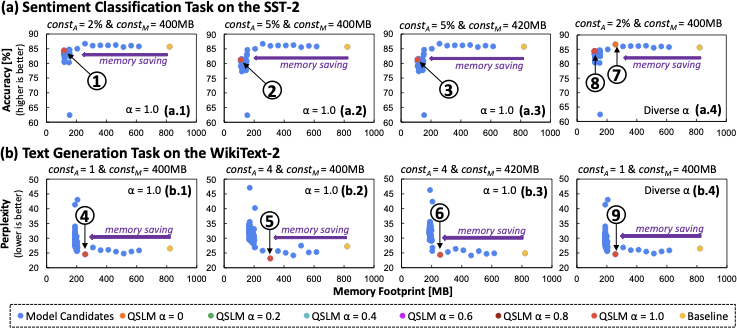
Large Language Models (LLMs) have been emerging as prominent AI models for solving many natural language tasks due to their high performance (e.g., accuracy) and capabilities in generating high-quality responses to the given inputs. However, their large computational cost, huge memory footprints, and high processing power/energy make it challenging for their embedded deployments. Amid several tinyLLMs, recent works have proposed spike-driven language models (SLMs) for significantly reducing the processing power/energy of LLMs. However, their memory footprints still remain too large for low-cost and resource-constrained embedded devices. Manual quantization approach may effectively compress SLM memory footprints, but it requires a huge design time and compute power to find the quantization setting for each network, hence making this approach not-scalable for handling different networks, performance requirements, and memory budgets. To bridge this gap, we propose QSLM, a novel framework that performs automated quantization for compressing pre-trained SLMs, while meeting the performance and memory constraints. To achieve this, QSLM first identifies the hierarchy of the given network architecture and the sensitivity of network layers under quantization, then employs a tiered quantization strategy (e.g., global-, block-, and module-level quantization) while leveraging a multi-objective performance-and-memory trade-off function to select the final quantization setting. Experimental results indicate that our QSLM reduces memory footprint by up to 86.5%, reduces power consumption by up to 20%, maintains high performance across different tasks (i.e., by up to 84.4% accuracy of sentiment classification on the SST-2 dataset and perplexity score of 23.2 for text generation on the WikiText-2 dataset) close to the original non-quantized model while meeting the performance and memory constraints.
paper research
RMAAT  Astrocyte-Inspired Memory Compression and Replay for Efficient Long-Context Transformers

RMAAT Astrocyte-Inspired Memory Compression and Replay for Efficient Long-Context Transformers

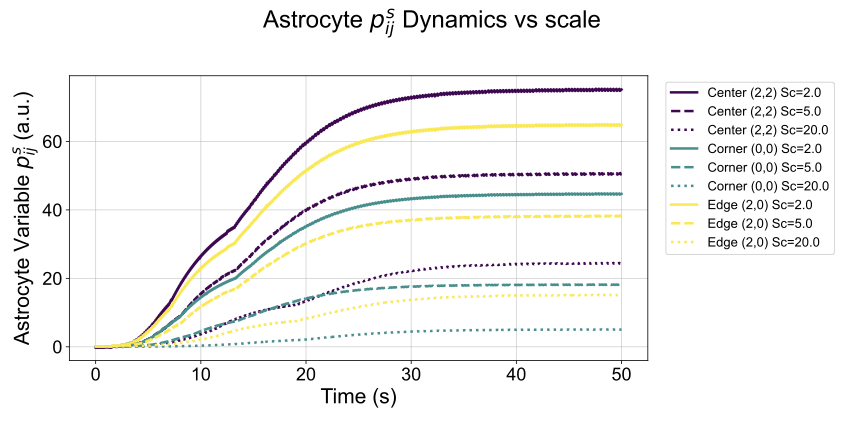
The quadratic complexity of self-attention mechanism presents a significant impediment to applying Transformer models to long sequences. This work explores computational principles derived from astrocytes-glial cells critical for biological memory and synaptic modulation-as a complementary approach to conventional architectural modifications for efficient self-attention. We introduce the Recurrent Memory Augmented Astromorphic Transformer (RMAAT), an architecture integrating abstracted astrocyte functionalities. RMAAT employs a recurrent, segment-based processing strategy where persistent memory tokens propagate contextual information. An adaptive compression mechanism, governed by a novel retention factor derived from simulated astrocyte long-term plasticity (LTP), modulates these tokens. Attention within segments utilizes an efficient, linear-complexity mechanism inspired by astrocyte short-term plasticity (STP). Training is performed using Astrocytic Memory Replay Backpropagation (AMRB), a novel algorithm designed for memory efficiency in recurrent networks. Evaluations on the Long Range Arena (LRA) benchmark demonstrate RMAAT s competitive accuracy and substantial improvements in computational and memory efficiency, indicating the potential of incorporating astrocyte-inspired dynamics into scalable sequence models.

paper research
Yukthi Opus  A Multi-Chain Hybrid Metaheuristic for Large-Scale NP-Hard Optimization

Yukthi Opus A Multi-Chain Hybrid Metaheuristic for Large-Scale NP-Hard Optimization

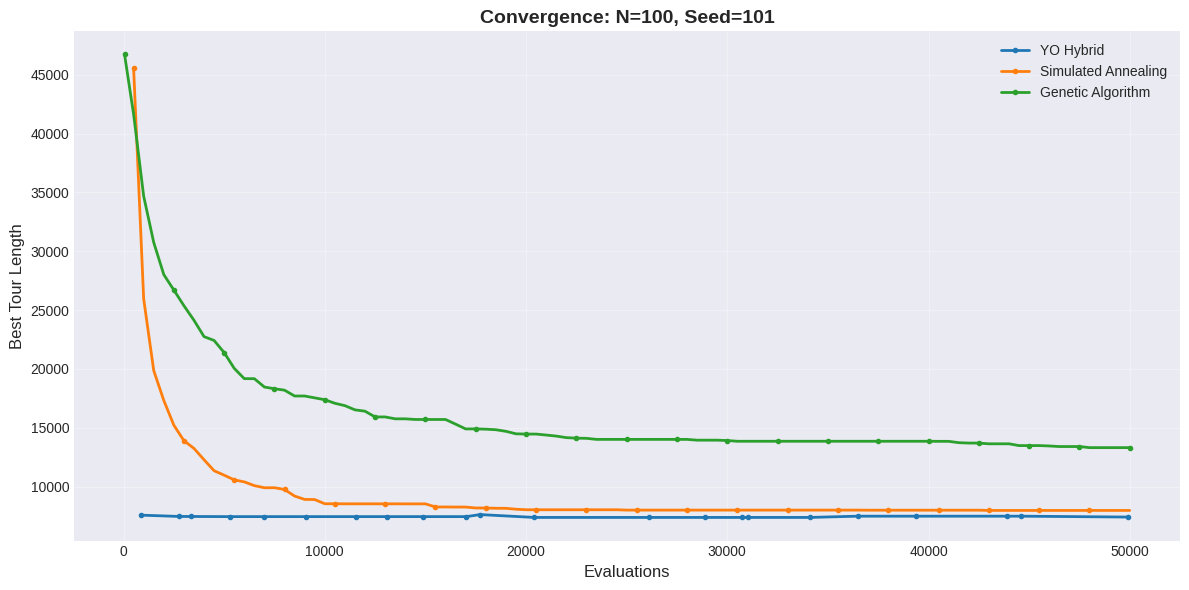
We present Yukthi Opus (YO), a multi-chain hybrid metaheuristic designed for NP-hard optimization under explicit evaluation budget constraints. YO integrates three complementary mechanisms in a structured two-phase architecture Markov Chain Monte Carlo (MCMC) for global exploration, greedy local search for exploitation, and simulated annealing with adaptive reheating to enable controlled escape from local minima. A dedicated burn-in phase allocates evaluations to probabilistic exploration, after which a hybrid optimization loop refines promising candidates. YO further incorporates a spatial blacklist mechanism to avoid repeated evaluation of poor regions and a multi-chain execution strategy to improve robustness and reduce sensitivity to initialization. We evaluate YO on three benchmarks the Rastrigin function (5D) with ablation studies, the Traveling Salesman Problem with 50 to 200 cities, and the Rosenbrock function (5D) with comparisons against established optimizers including CMA-ES, Bayesian optimization, and accelerated particle swarm optimization. Results show that MCMC exploration and greedy refinement are critical for solution quality, while simulated annealing and multi-chain execution primarily improve stability and variance reduction. Overall, YO achieves competitive performance on large and multimodal problems while maintaining predictable evaluation budgets, making it suitable for expensive black-box optimization settings.

paper research

Start searching

Enter keywords to search articles

↑↓
↵
ESC
⌘K Shortcut