Mathematics

All posts under category "Mathematics"

18 posts total
Sorted by date
No Image

Event-Triggered Stabilization Using Lyapunov Functions with Guaranteed Convergence Rate

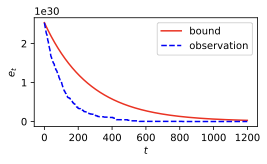
A constructive tool of nonlinear control systems design, the method of Control Lyapunov Functions (CLF) has found numerous applications in stabilization problems for continuous time, discrete-time and hybrid systems. In this paper, we address the fundamental question given a CLF, corresponding to the continuous-time controller with some predefined (e.g. exponential) convergence rate, can the same convergence rate be provided by an event-triggered controller? Under certain assumptions, we give an affirmative answer to this question and show that the corresponding event-based controllers provide positive dwelltimes between the consecutive events. Furthermore, we prove the existence of self-triggered and periodic event-triggered controllers, providing stabilization with a known convergence rate.

paper research
A Mixed-Logical-Dynamical Model for Autonomous Highway Driving

A Mixed-Logical-Dynamical Model for Autonomous Highway Driving

We propose a hybrid decision-making framework for safe and efficient autonomous driving of selfish vehicles on highways. Specifically, we model the dynamics of each vehicle as a Mixed-Logical-Dynamical system and propose simple driving rules to prevent potential sources of conflict among neighboring vehicles. We formalize the coordination problem as a generalized mixed-integer potential game, where an equilibrium solution generates a sequence of mixed-integer decisions for the vehicles that trade off individual optimality and overall safety.

paper research
Clock Synchronization Over Networks  Identifiability of the Sawtooth Model

Clock Synchronization Over Networks Identifiability of the Sawtooth Model

In this paper, we analyze the two-node joint clock synchronization and ranging problem. We focus on the case of nodes that employ time-to-digital converters to determine the range between them precisely. This specific design choice leads to a sawtooth model for the captured signal, which has not been studied before from an estimation theoretic standpoint. In the study of this model, we recover the basic conclusion of a well-known article by Freris, Graham, and Kumar in clock synchronization. More importantly, we discover a surprising identifiability result on the sawtooth signal model noise improves the theoretical condition of the estimation of the phase and offset parameters. To complete our study, we provide performance references for joint clock synchronization and ranging using the sawtooth signal model by presenting an exhaustive simulation study on basic estimation strategies under different realistic conditions. With our contributions in this paper, we enable further research in the estimation of sawtooth signal models and pave the path towards their industrial use for clock synchronization and ranging.

paper research
EXPSPACE-Completeness of Logics K4xS5, S4xS5, and the Logic of Subset Spaces, Part 2  EXPSPACE-Hardness

EXPSPACE-Completeness of Logics K4xS5, S4xS5, and the Logic of Subset Spaces, Part 2 EXPSPACE-Hardness

It is known that the satisfiability problems of the product logics K4xS5 and S4xS5 are NEXPTIME-hard and that the satisfiability problem of the logic SSL of subset spaces is PSPACE-hard. We improve these lower bounds for the complexity of these problems by showing that all three problems are EXPSPACE-hard under logspace reduction. In another paper we show that these problems are in ESPACE. This shows that all three problems are EXPSPACE-complete.

paper research
Optimal Investment under Correlated Random Volatility Factors

Optimal Investment under Correlated Random Volatility Factors

The problem of portfolio allocation in the context of stocks evolving in random environments, that is with volatility and returns depending on random factors, has attracted a lot of attention. The problem of maximizing a power utility at a terminal time with only one random factor can be linearized thanks to a classical distortion transformation. In the present paper, we address the situation with several factors using a perturbation technique around the case where these factors are perfectly correlated reducing the problem to the case with a single factor. Our proposed approximation requires to solve numerically two linear equations in lower dimension instead of a fully non-linear HJB equation. A rigorous accuracy result is derived by constructing sub- and super- solutions so that their difference is at the desired order of accuracy. We illustrate our result with a particular model for which we have explicit formulas for the approximation. In order to keep the notations as explicit as possible, we treat the case with one stock and two factors and we describe an extension to the case with two stocks and two factors.

paper research
Rank Estimators in High-Dimensional Spaces

Rank Estimators in High-Dimensional Spaces

The family of rank estimators, including Han s maximum rank correlation (Han, 1987) as a notable example, has been widely exploited in studying regression problems. For these estimators, although the linear index is introduced for alleviating the impact of dimensionality, the effect of large dimension on inference is rarely studied. This paper fills this gap via studying the statistical properties of a larger family of M-estimators, whose objective functions are formulated as U-processes and may be discontinuous in increasing dimension set-up where the number of parameters, $p_{n}$, in the model is allowed to increase with the sample size, $n$. First, we find that often in estimation, as $p_{n}/n rightarrow 0$, $(p_{n}/n)^{1/2}$ rate of convergence is obtainable. Second, we establish Bahadur-type bounds and study the validity of normal approximation, which we find often requires a much stronger scaling requirement than $p_{n}^{2}/n rightarrow 0.$ Third, we state conditions under which the numerical derivative estimator of asymptotic covariance matrix is consistent, and show that the step size in implementing the covariance estimator has to be adjusted with respect to $p_{n}$. All theoretical results are further backed up by simulation studies.

paper research
A Novel Approach to Distributed Hypothesis Testing and Non-Bayesian Learning  Enhancing Learning Speed and Byzantine Resilience

A Novel Approach to Distributed Hypothesis Testing and Non-Bayesian Learning Enhancing Learning Speed and Byzantine Resilience

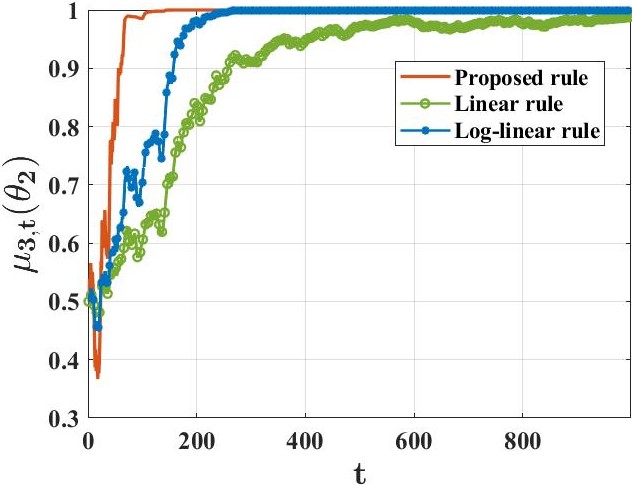
We study a setting where a group of agents, each receiving partially informative private signals, seek to collaboratively learn the true underlying state of the world (from a finite set of hypotheses) that generates their joint observation profiles. To solve this problem, we propose a distributed learning rule that differs fundamentally from existing approaches, in that it does not employ any form of belief-averaging . Instead, agents update their beliefs based on a min-rule. Under standard assumptions on the observation model and the network structure, we establish that each agent learns the truth asymptotically almost surely. As our main contribution, we prove that with probability 1, each false hypothesis is ruled out by every agent exponentially fast at a network-independent rate that is strictly larger than existing rates. We then develop a computationally-efficient variant of our learning rule that is provably resilient to agents who do not behave as expected (as represented by a Byzantine adversary model) and deliberately try to spread misinformation.

paper research
An Introduction to Decentralized Stochastic Optimization with Gradient Tracking

An Introduction to Decentralized Stochastic Optimization with Gradient Tracking

Decentralized solutions to finite-sum minimization are of significant importance in many signal processing, control, and machine learning applications. In such settings, the data is distributed over a network of arbitrarily-connected nodes and raw data sharing is prohibitive often due to communication or privacy constraints. In this article, we review decentralized stochastic first-order optimization methods and illustrate some recent improvements based on gradient tracking and variance reduction, focusing particularly on smooth and strongly-convex objective functions. We provide intuitive illustrations of the main technical ideas as well as applications of the algorithms in the context of decentralized training of machine learning models.

paper research
Stability of User Equilibria in Heterogeneous Routing Games

Stability of User Equilibria in Heterogeneous Routing Games

The asymptotic behaviour of deterministic logit dynamics in heterogeneous routing games is analyzed. It is proved that in directed multigraphs with parallel routes, and in series composition of such multigraphs, the dynamics admits a globally asymptotically stable fixed point. Moreover, the unique fixed point of the dynamics approaches the set of Wardrop equilibria, as the noise vanishes. The result relies on the fact that the dynamics of aggregate flows is monotone, and its Jacobian is strictly diagonally dominant by columns.

paper research
Dynamic Radar Network of UAVs  A Joint Navigation and Tracking Approach

Dynamic Radar Network of UAVs A Joint Navigation and Tracking Approach

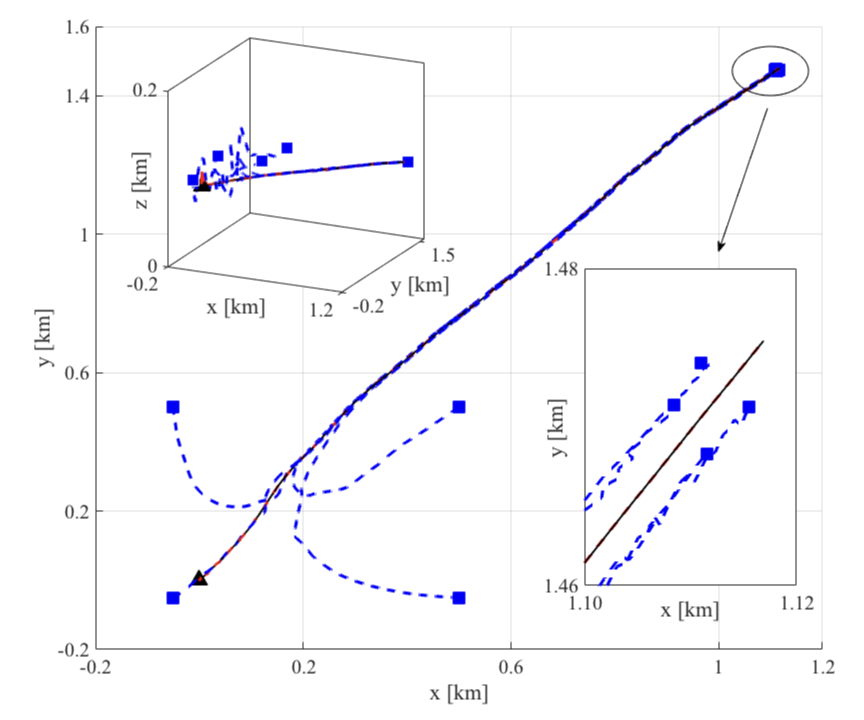
Nowadays there is a growing research interest on the possibility of enriching small flying robots with autonomous sensing and online navigation capabilities. This will enable a large number of applications spanning from remote surveillance to logistics, smarter cities and emergency aid in hazardous environments. In this context, an emerging problem is to track unauthorized small unmanned aerial vehicles (UAVs) hiding behind buildings or concealing in large UAV networks. In contrast with current solutions mainly based on static and on-ground radars, this paper proposes the idea of a dynamic radar network of UAVs for real-time and high-accuracy tracking of malicious targets. To this end, we describe a solution for real-time navigation of UAVs to track a dynamic target using heterogeneously sensed information. Such information is shared by the UAVs with their neighbors via multi-hops, allowing tracking the target by a local Bayesian estimator running at each agent. Since not all the paths are equal in terms of information gathering point-of-view, the UAVs plan their own trajectory by minimizing the posterior covariance matrix of the target state under UAV kinematic and anti-collision constraints. Our results show how a dynamic network of radars attains better localization results compared to a fixed configuration and how the on-board sensor technology impacts the accuracy in tracking a target with different radar cross sections, especially in non line-of-sight (NLOS) situations.

paper research
Unlimited Budget Analysis of Randomized Search Heuristics

Unlimited Budget Analysis of Randomized Search Heuristics

Performance analysis of all kinds of randomised search heuristics is a rapidly growing and developing field. Run time and solution quality are two popular measures of the performance of these algorithms. The focus of this paper is on the solution quality an optimisation heuristic achieves, not on the time it takes to reach this goal, setting it far apart from runtime analysis. We contribute to its further development by introducing a novel analytical framework, called unlimited budget analysis, to derive the expected fitness value after arbitrary computational steps. It has its roots in the very recently introduced approximation error analysis and bears some similarity to fixed budget analysis. We present the framework, apply it to simple mutation-based algorithms, covering both, local and global search. We provide analytical results for a number of pseudo-Boolean functions for unlimited budget analysis and compare them to results derived within the fixed budget framework for the same algorithms and functions. There are also results of experiments to compare bounds obtained in the two different frameworks with the actual observed performance. The study show that unlimited budget analysis may lead to the same or more general estimation beyond fixed budget.

paper research
Statistical Robustness in Chinese Remainder Theorem for Multiple Numbers

Statistical Robustness in Chinese Remainder Theorem for Multiple Numbers

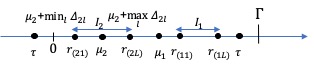
Generalized Chinese Remainder Theorem (CRT) is a well-known approach to solve ambiguity resolution related problems. In this paper, we study the robust CRT reconstruction for multiple numbers from a view of statistics. To the best of our knowledge, it is the first rigorous analysis on the underlying statistical model of CRT-based multiple parameter estimation. To address the problem, two novel approaches are established. One is to directly calculate a conditional maximum a posteriori probability (MAP) estimation of the residue clustering, and the other is based on a generalized wrapped Gaussian mixture model to iteratively search for MAP of both estimands and clustering. Residue error correcting codes are introduced to improve the robustness further. Experimental results show that the statistical schemes achieve much stronger robustness compared to state-of-the-art deterministic schemes, especially in heavy-noise scenarios.

paper research
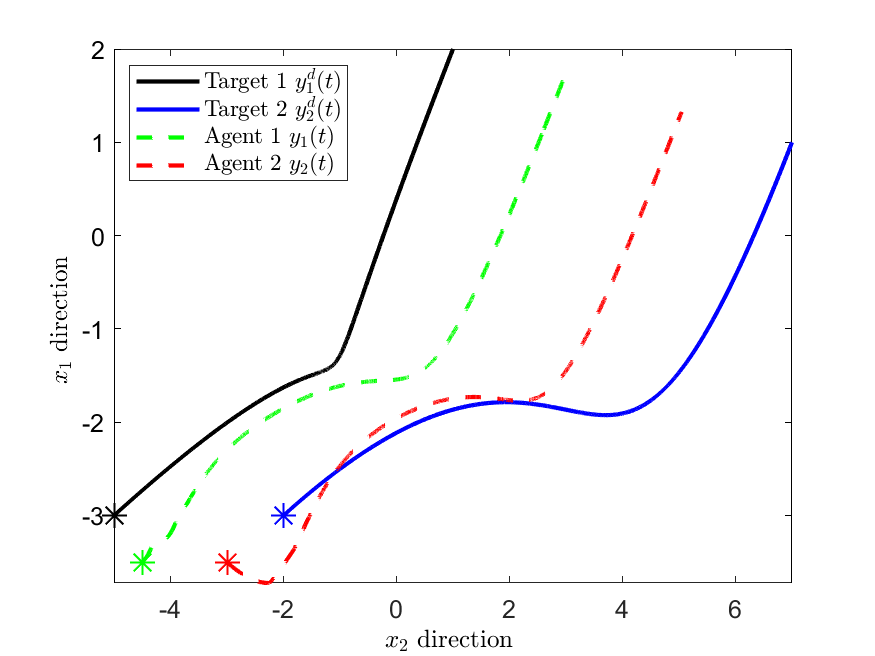
Real-Time Trajectory Planning for Feedback Linearizable Systems Using Time-Varying Optimization

Real-Time Trajectory Planning for Feedback Linearizable Systems Using Time-Varying Optimization

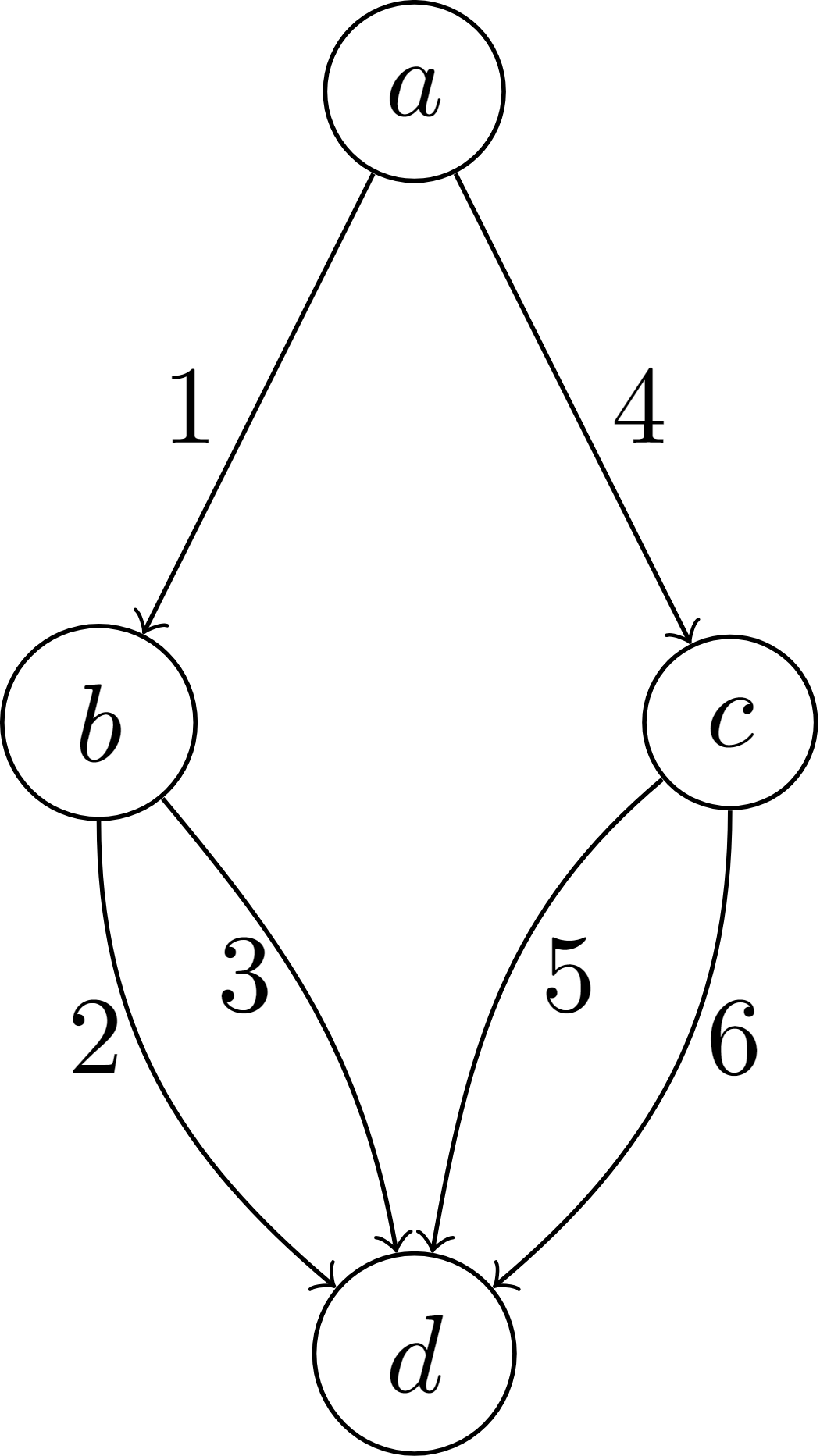
We develop an optimization-based framework for joint real-time trajectory planning and feedback control of feedback-linearizable systems. To achieve this goal, we define a target trajectory as the optimal solution of a time-varying optimization problem. In general, however, such trajectory may not be feasible due to , e.g., nonholonomic constraints. To solve this problem, we design a control law that generates feasible trajectories that asymptotically converge to the target trajectory. More precisely, for systems that are (dynamic) full-state linearizable, the proposed control law implicitly transforms the nonlinear system into an optimization algorithm of sufficiently high order. We prove global exponential convergence to the target trajectory for both the optimization algorithm and the original system. We illustrate the effectiveness of our proposed method on multi-target or multi-agent tracking problems with constraints.

paper research
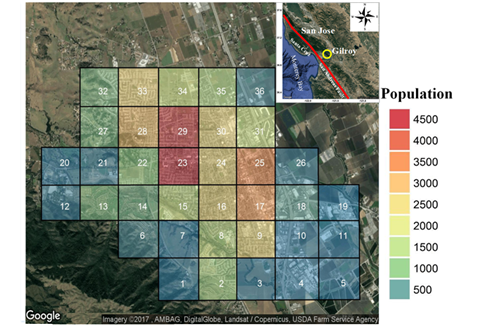
Automated Decision-Making for Electric Power Network Recovery

Automated Decision-Making for Electric Power Network Recovery

Critical infrastructure systems such as electric power networks, water networks, and transportation systems play a major role in the welfare of any community. In the aftermath of disasters, their recovery is of paramount importance; orderly and efficient recovery involves the assignment of limited resources (a combination of human repair workers and machines) to repair damaged infrastructure components. The decision maker must also deal with uncertainty in the outcome of the resource-allocation actions during recovery. The manual assignment of resources seldom is optimal despite the expertise of the decision maker because of the large number of choices and uncertainties in consequences of sequential decisions. This combinatorial assignment problem under uncertainty is known to be mbox{NP-hard}. We propose a novel decision technique that addresses the massive number of decision choices for large-scale real-world problems; in addition, our method also features an experiential learning component that adaptively determines the utilization of the computational resources based on the performance of a small number of choices. Our framework is closed-loop, and naturally incorporates all the attractive features of such a decision-making system. In contrast to myopic approaches, which do not account for the future effects of the current choices, our methodology has an anticipatory learning component that effectively incorporates emph{lookahead} into the solutions. To this end, we leverage the theory of regression analysis, Markov decision processes (MDPs), multi-armed bandits, and stochastic models of community damage from natural disasters to develop a method for near-optimal recovery of communities. Our method contributes to the general problem of MDPs with massive action spaces with application to recovery of communities affected by hazards.

paper research
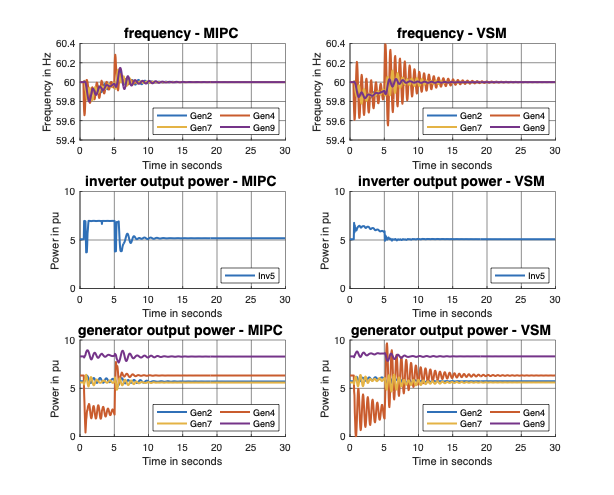
Frequency Stability with MPC-based Inverter Power Control in Low-Inertia Power Systems

Frequency Stability with MPC-based Inverter Power Control in Low-Inertia Power Systems

The electrical grid is evolving from a network consisting of mostly synchronous machines to a mixture of synchronous machines and inverter-based resources such as wind, solar, and energy storage. This transformation has led to a decrease in mechanical inertia, which necessitate a need for the new resources to provide frequency responses through their inverter interfaces. In this paper we proposed a new strategy based on model predictive control to determine the optimal active-power set-point for inverters in the event of a disturbance in the system. Our framework explicitly takes the hard constraints in power and energy into account, and we show that it is robust to measurement noise, limited communications and delay by using an observer to estimate the model mismatches in real-time. We demonstrate the proposed controller significantly outperforms an optimally tuned virtual synchronous machine on a standard 39-bus system under a number of scenarios. In turn, this implies optimized inverter-based resources can provide better frequency responses compared to conventional synchronous machines.

paper research
Algebraic k-Sets and Generally Neighborly Embeddings

Algebraic k-Sets and Generally Neighborly Embeddings

Given a set $S$ of $n$ points in $ mathbb{R}^d$, a $k$-set is a subset of $k$ points of $S$ that can be strictly separated by a hyperplane from the remaining $n-k$ points. Similarly, one may consider $k$-facets, which are hyperplanes that pass through $d$ points of $S$ and have $k$ points on one side. A notorious open problem is to determine the asymptotics of the maximum number of $k$-sets. In this paper we study a variation on the $k$-set/$k$-facet problem with hyperplanes replaced by algebraic surfaces. In stark contrast to the original $k$-set/$k$-facet problem, there are some natural families of algebraic curves for which the number of $k$-facets can be counted exactly. For example, we show that the number of halving conic sections for any set of $2n+5$ points in general position in the plane is $2 binom{n+2}{2}^2$. To understand the limits of our argument we study a class of maps we call emph{generally neighborly embeddings}, which map generic point sets into neighborly position. Additionally, we give a simple argument which improves the best known bound on the number of $k$-sets/$k$-facets for point sets in convex position.

paper research
Saddlepoint Approximations for Spatial Panel Data Models with Fixed Effects and Time-Varying Covariates

Saddlepoint Approximations for Spatial Panel Data Models with Fixed Effects and Time-Varying Covariates

We develop new higher-order asymptotic techniques for the Gaussian maximum likelihood estimator in a spatial panel data model, with fixed effects, time-varying covariates, and spatially correlated errors. Our saddlepoint density and tail area approximation feature relative error of order $O(1/(n(T-1)))$ with $n$ being the cross-sectional dimension and $T$ the time-series dimension. The main theoretical tool is the tilted-Edgeworth technique in a non-identically distributed setting. The density approximation is always non-negative, does not need resampling, and is accurate in the tails. Monte Carlo experiments on density approximation and testing in the presence of nuisance parameters illustrate the good performance of our approximation over first-order asymptotics and Edgeworth expansions. An empirical application to the investment-saving relationship in OECD (Organisation for Economic Co-operation and Development) countries shows disagreement between testing results based on first-order asymptotics and saddlepoint techniques.

paper research
Minimizing Makespan with CP and BRKGA for Coupled Task Scheduling

Minimizing Makespan with CP and BRKGA for Coupled Task Scheduling

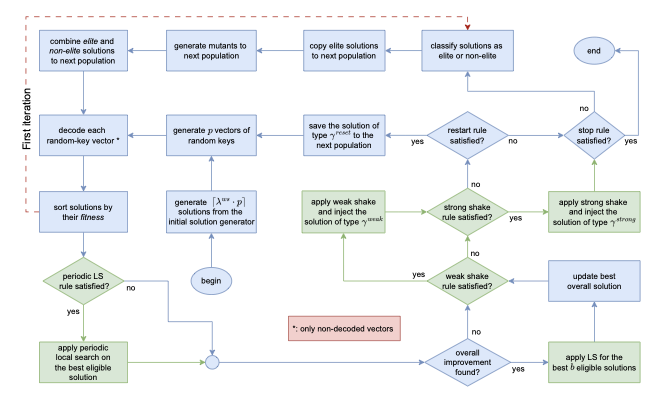
We consider the strongly NP-hard single-machine coupled task scheduling problem with exact delays to minimize the makespan. In this problem, a set of jobs has to be scheduled, each composed of two tasks interspersed by an exact delay. Given that no preemption is allowed, the goal consists of minimizing the completion time of the last scheduled task. We model the problem using constraint programming (CP) and propose a biased random-key genetic algorithm (BRKGA). Our CP model applies well-established global constraints. Our BRKGA combines some successful components in the literature an initial solution generator, periodical restarts and shakes, and a local search algorithm. Furthermore, the BRKGA s decoder is focused on efficiency rather than optimality, which accelerates the solution space exploration. Computational experiments on a benchmark set containing instances with up to 100 jobs (200 tasks) indicate that the proposed BRKGA can efficiently explore the problem solution space, providing high-quality approximate solutions within low computational times. It can also provide better solutions than the CP model under the same computational settings, i.e., three minutes of time limit and a single thread. The CP model, when offered a longer running time of 3600 seconds and multiple threads, significantly improved the results, reaching the current best-known solution for 90.56% of these instances. Finally, our experiments highlight the importance of the shake and local search components in the BRKGA, whose combination significantly improves the results of a standard BRKGA.

paper research

< Category Statistics (Total: 566) >

Computer Science (514) Machine Learning (117) Artificial Intelligence (89) Computer Vision (71) Computation and Language (NLP) (62) Electrical Engineering and Systems Science (36) Cryptography and Security (24) Robotics (22) Systems and Control (22) Software Engineering (20) Mathematics (18) Statistics (17) Economics (16) Information Retrieval (15) Distributed, Parallel, and Cluster Computing (14) Human-Computer Interaction (14) Neural and Evolutionary Computing (13) Computer Science and Game Theory (11) Econometrics (11) Image and Video Processing (10) Physics (10) Sound (10) Multiagent Systems (9) Optimization and Control (8) Computational Geometry (7) Databases (7) Graphics (6) Networking and Internet Architecture (6) Quantitative Biology (6) Quantum Physics (5) Theoretical Economics (5) Computational Complexity (4) Computational Engineering, Finance, and Science (4) Computers and Society (4) Emerging Technologies (4) Information Theory (4) Methodology (4) Multimedia (4) Programming Languages (4) Quantitative Finance (4) Signal Processing (4) Audio and Speech Processing (3) Data Structures and Algorithms (3) Hardware Architecture (3) History and Philosophy of Physics (3) Logic in Computer Science (3) Neurons and Cognition (3) Social and Information Networks (3) Statistics Theory (3) Computation (2) Condensed Matter (2) Dynamical Systems (2) Formal Languages and Automata Theory (2) General Finance (2) Operating Systems (2) Optics (2) Quantitative Methods (2) Applications (1) Astrophysics (1) Combinatorics (1) Computational Physics (1) Digital Libraries (1) Disordered Systems and Neural Networks (1) General Economics (1) Genomics (1) Geophysics (1) Instrumentation and Methods for Astrophysics (1) Logic (1) Mathematical Finance (1) Mathematical Software (1) Medical Physics (1) Mesoscale and Nanoscale Physics (1) Metric Geometry (1) Other Statistics (1) Performance (1) Physics and Society (1) Plasma Physics (1) Probability (1) Trading and Market Microstructure (1)

Start searching

Enter keywords to search articles

↑↓
ESC
⌘K Shortcut