Information Theory

All posts under category "Information Theory"

2 posts total
Sorted by date
CoCo-Fed  A Unified Framework for Memory- and Communication-Efficient Federated Learning at the Wireless Edge

CoCo-Fed A Unified Framework for Memory- and Communication-Efficient Federated Learning at the Wireless Edge

The deployment of large-scale neural networks within the Open Radio Access Network (O-RAN) architecture is pivotal for enabling native edge intelligence. However, this paradigm faces two critical bottlenecks the prohibitive memory footprint required for local training on resource-constrained gNBs, and the saturation of bandwidth-limited backhaul links during the global aggregation of high-dimensional model updates. To address these challenges, we propose CoCo-Fed, a novel Compression and Combination-based Federated learning framework that unifies local memory efficiency and global communication reduction. Locally, CoCo-Fed breaks the memory wall by performing a double-dimension down-projection of gradients, adapting the optimizer to operate on low-rank structures without introducing additional inference parameters/latency. Globally, we introduce a transmission protocol based on orthogonal subspace superposition, where layer-wise updates are projected and superimposed into a single consolidated matrix per gNB, drastically reducing the backhaul traffic. Beyond empirical designs, we establish a rigorous theoretical foundation, proving the convergence of CoCo-Fed even under unsupervised learning conditions suitable for wireless sensing tasks. Extensive simulations on an angle-of-arrival estimation task demonstrate that CoCo-Fed significantly outperforms state-of-the-art baselines in both memory and communication efficiency while maintaining robust convergence under non-IID settings.
paper research
Random Multiplexing

Random Multiplexing

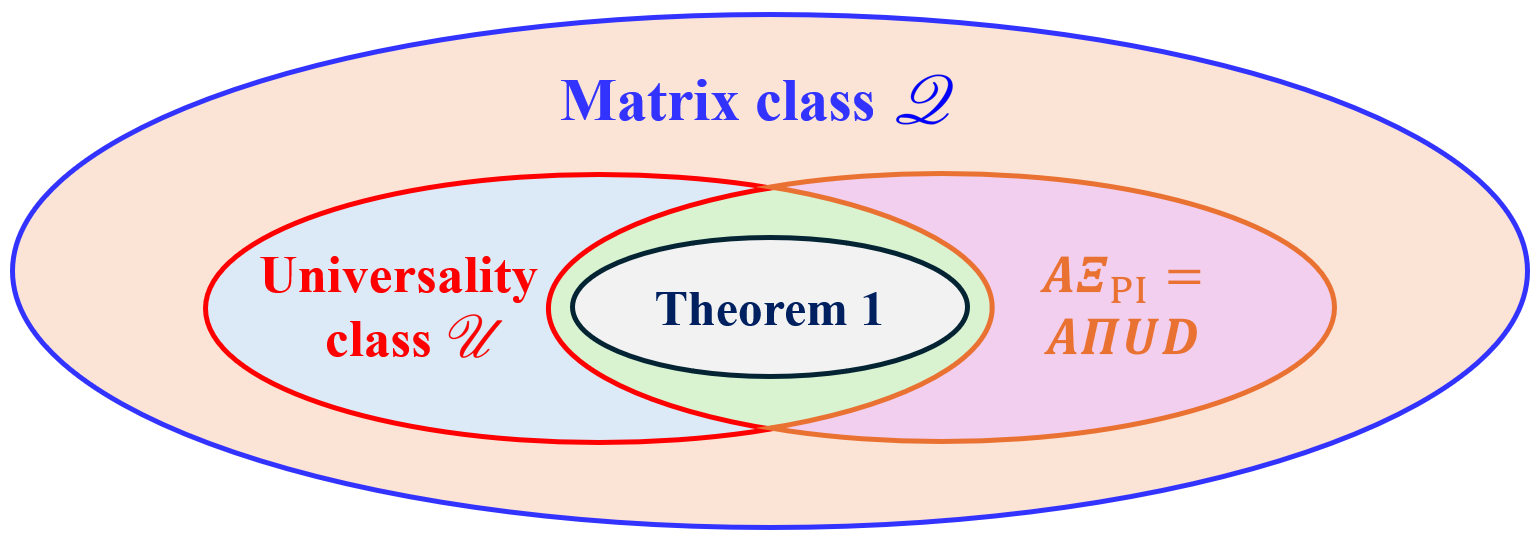
As wireless communication applications evolve from traditional multipath environments to high-mobility scenarios like unmanned aerial vehicles, multiplexing techniques have advanced accordingly. Traditional single-carrier frequency-domain equalization (SC-FDE) and orthogonal frequency-division multiplexing (OFDM) have given way to emerging orthogonal time-frequency space (OTFS) and affine frequency-division multiplexing (AFDM). These approaches exploit specific channel structures to diagonalize or sparsify the effective channel, thereby enabling low-complexity detection. However, their reliance on these structures significantly limits their robustness in dynamic, real-world environments. To address these challenges, this paper studies a random multiplexing technique that is decoupled from the physical channels, enabling its application to arbitrary norm-bounded and spectrally convergent channel matrices. Random multiplexing achieves statistical fading-channel ergodicity for transmitted signals by constructing an equivalent input-isotropic channel matrix in the random transform domain. It guarantees the asymptotic replica MAP bit-error rate (BER) optimality of AMP-type detectors for linear systems with arbitrary norm-bounded, spectrally convergent channel matrices and signaling configurations, under the unique fixed point assumption. A low-complexity cross-domain memory AMP (CD-MAMP) detector is considered, leveraging the sparsity of the time-domain channel and the randomness of the equivalent channel. Optimal power allocations are derived to minimize the replica MAP BER and maximize the replica constrained capacity of random multiplexing systems. The optimal coding principle and replica constrained-capacity optimality of CD-MAMP detector are investigated for random multiplexing systems. Additionally, the versatility of random multiplexing in diverse wireless applications is explored.

paper research

Start searching

Enter keywords to search articles

↑↓
↵
ESC
⌘K Shortcut