Information Retrieval

All posts under category "Information Retrieval"

13 posts total
Sorted by date
AlignUSER  Human-Aligned LLM Agents via World Models for Recommender System Evaluation

AlignUSER Human-Aligned LLM Agents via World Models for Recommender System Evaluation

Evaluating recommender systems remains challenging due to the gap between offline metrics and real user behavior, as well as the scarcity of interaction data. Recent work explores large language model (LLM) agents as synthetic users, yet they typically rely on few-shot prompting, which yields a shallow understanding of the environment and limits their ability to faithfully reproduce user actions. We introduce AlignUSER, a framework that learns world-model-driven agents from human interactions. Given rollout sequences of actions and states, we formalize world modeling as a next state prediction task that helps the agent internalize the environment. To align actions with human personas, we generate counterfactual trajectories around demonstrations and prompt the LLM to compare its decisions with human choices, identify suboptimal actions, and extract lessons. The learned policy is then used to drive agent interactions with the recommender system. We evaluate AlignUSER across multiple datasets and demonstrate closer alignment with genuine humans than prior work, both at the micro and macro levels.
paper research
Enhancing Retrieval-Augmented Generation with Topic-Enriched Embeddings  A Hybrid Approach Integrating Traditional NLP Techniques

Enhancing Retrieval-Augmented Generation with Topic-Enriched Embeddings A Hybrid Approach Integrating Traditional NLP Techniques

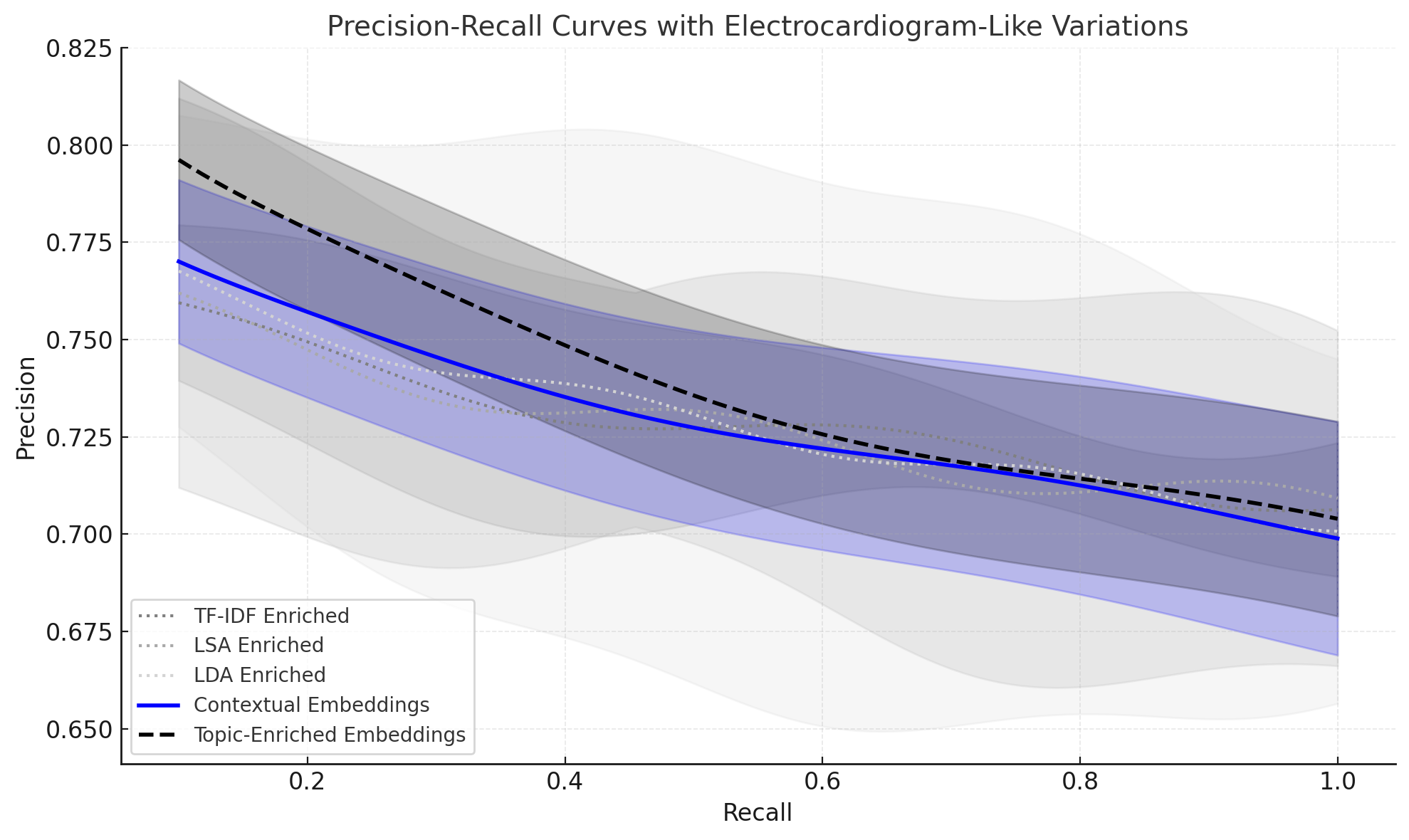
Retrieval-augmented generation (RAG) systems rely on accurate document retrieval to ground large language models (LLMs) in external knowledge, yet retrieval quality often degrades in corpora where topics overlap and thematic variation is high. This work proposes topic-enriched embeddings that integrate term-based signals and topic structure with contextual sentence embeddings. The approach combines TF-IDF with topic modeling and dimensionality reduction, using Latent Semantic Analysis (LSA) and Latent Dirichlet Allocation (LDA) to encode latent topical organization, and fuses these representations with a compact contextual encoder (all-MiniLM). By jointly capturing term-level and topic-level semantics, topic-enriched embeddings improve semantic clustering, increase retrieval precision, and reduce computational burden relative to purely contextual baselines. Experiments on a legal-text corpus show consistent gains in clustering coherence and retrieval metrics, suggesting that topic-enriched embeddings can serve as a practical component for more reliable knowledge-intensive RAG pipelines.

paper research
Exploring Approaches for Detecting Memorization of Recommender System Data in Large Language Models

Exploring Approaches for Detecting Memorization of Recommender System Data in Large Language Models

Large Language Models (LLMs) are increasingly applied in recommendation scenarios due to their strong natural language understanding and generation capabilities. However, they are trained on vast corpora whose contents are not publicly disclosed, raising concerns about data leakage. Recent work has shown that the MovieLens-1M dataset is memorized by both the LLaMA and OpenAI model families, but the extraction of such memorized data has so far relied exclusively on manual prompt engineering. In this paper, we pose three main questions Is it possible to enhance manual prompting? Can LLM memorization be detected through methods beyond manual prompting? And can the detection of data leakage be automated? To address these questions, we evaluate three approaches (i) jailbreak prompt engineering; (ii) unsupervised latent knowledge discovery, probing internal activations via Contrast-Consistent Search (CCS) and Cluster-Norm; and (iii) Automatic Prompt Engineering (APE), which frames prompt discovery as a meta-learning process that iteratively refines candidate instructions. Experiments on MovieLens-1M using LLaMA models show that jailbreak prompting does not improve the retrieval of memorized items and remains inconsistent; CCS reliably distinguishes genuine from fabricated movie titles but fails on numerical user and rating data; and APE retrieves item-level information with moderate success yet struggles to recover numerical interactions. These findings suggest that automatically optimizing prompts is the most promising strategy for extracting memorized samples.

paper research
No Image

Exploring Diversity, Novelty, and Popularity Bias in ChatGPT s Recommendations

ChatGPT has emerged as a versatile tool, demonstrating capabilities across diverse domains. Given these successes, the Recommender Systems (RSs) community has begun investigating its applications within recommendation scenarios primarily focusing on accuracy. While the integration of ChatGPT into RSs has garnered significant attention, a comprehensive analysis of its performance across various dimensions remains largely unexplored. Specifically, the capabilities of providing diverse and novel recommendations or exploring potential biases such as popularity bias have not been thoroughly examined. As the use of these models continues to expand, understanding these aspects is crucial for enhancing user satisfaction and achieving long-term personalization. This study investigates the recommendations provided by ChatGPT-3.5 and ChatGPT-4 by assessing ChatGPT s capabilities in terms of diversity, novelty, and popularity bias. We evaluate these models on three distinct datasets and assess their performance in Top-N recommendation and cold-start scenarios. The findings reveal that ChatGPT-4 matches or surpasses traditional recommenders, demonstrating the ability to balance novelty and diversity in recommendations. Furthermore, in the cold-start scenario, ChatGPT models exhibit superior performance in both accuracy and novelty, suggesting they can be particularly beneficial for new users. This research highlights the strengths and limitations of ChatGPT s recommendations, offering new perspectives on the capacity of these models to provide recommendations beyond accuracy-focused metrics.

paper research
HiGR  Efficient Generative Slate Recommendation via Hierarchical Planning and Multi-Objective Preference Alignment

HiGR Efficient Generative Slate Recommendation via Hierarchical Planning and Multi-Objective Preference Alignment

Slate recommendation, where users are presented with a ranked list of items simultaneously, is widely adopted in online platforms. Recent advances in generative models have shown promise in slate recommendation by modeling sequences of discrete semantic IDs autoregressively. However, existing autoregressive approaches suffer from semantically entangled item tokenization and inefficient sequential decoding that lacks holistic slate planning. To address these limitations, we propose HiGR, an efficient generative slate recommendation framework that integrates hierarchical planning with listwise preference alignment. First, we propose an auto-encoder utilizing residual quantization and contrastive constraints to tokenize items into semantically structured IDs for controllable generation. Second, HiGR decouples generation into a list-level planning stage for global slate intent, followed by an item-level decoding stage for specific item selection. Third, we introduce a listwise preference alignment objective to directly optimize slate quality using implicit user feedback. Experiments on our large-scale commercial media platform demonstrate that HiGR delivers consistent improvements in both offline evaluations and online deployment. Specifically, it outperforms state-of-the-art methods by over 10% in offline recommendation quality with a 5x inference speedup, while further achieving a 1.22% and 1.73% increase in Average Watch Time and Average Video Views in online A/B tests.

paper research
Improving Scientific Document Retrieval with Academic Concept Index

Improving Scientific Document Retrieval with Academic Concept Index

Adapting general-domain retrievers to scientific domains is challenging due to the scarcity of large-scale domain-specific relevance annotations and the substantial mismatch in vocabulary and information needs. Recent approaches address these issues through two independent directions that leverage large language models (LLMs) (1) generating synthetic queries for fine-tuning, and (2) generating auxiliary contexts to support relevance matching. However, both directions overlook the diverse academic concepts embedded within scientific documents, often producing redundant or conceptually narrow queries and contexts. To address this limitation, we introduce an academic concept index, which extracts key concepts from papers and organizes them guided by an academic taxonomy. This structured index serves as a foundation for improving both directions. First, we enhance the synthetic query generation with concept coverage-based generation (CCQGen), which adaptively conditions LLMs on uncovered concepts to generate complementary queries with broader concept coverage. Second, we strengthen the context augmentation with concept-focused auxiliary contexts (CCExpand), which leverages a set of document snippets that serve as concise responses to the concept-aware CCQGen queries. Extensive experiments show that incorporating the academic concept index into both query generation and context augmentation leads to higher-quality queries, better conceptual alignment, and improved retrieval performance.

paper research
MACA  A Framework for Distilling Trustworthy LLMs into Efficient Retrievers

MACA A Framework for Distilling Trustworthy LLMs into Efficient Retrievers

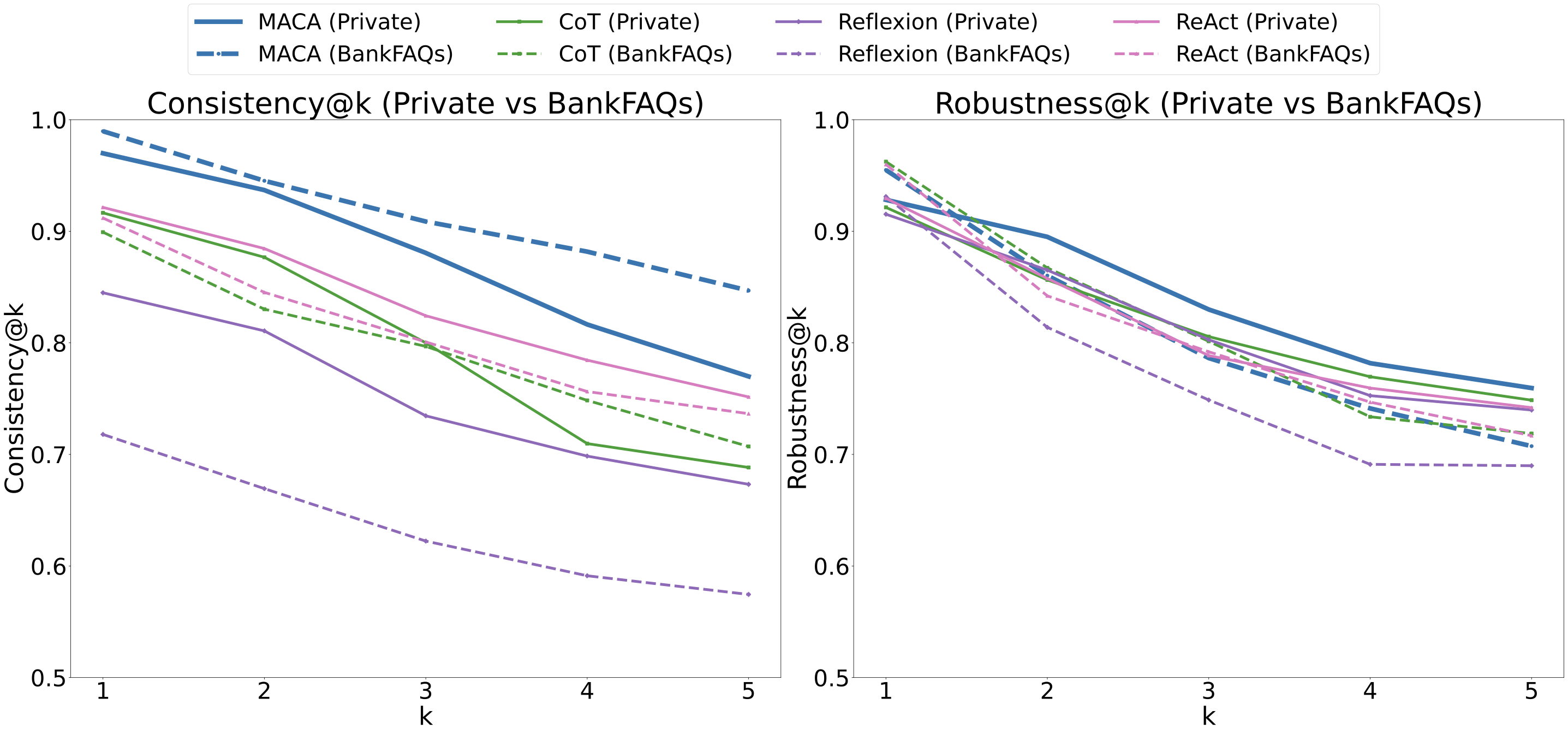
Modern enterprise retrieval systems must handle short, underspecified queries such as ``foreign transaction fee refund and ``recent check status . In these cases, semantic nuance and metadata matter but per-query large language model (LLM) re-ranking and manual labeling are costly. We present Metadata-Aware Cross-Model Alignment (MACA), which distills a calibrated metadata aware LLM re-ranker into a compact student retriever, avoiding online LLM calls. A metadata-aware prompt verifies the teacher s trustworthiness by checking consistency under permutations and robustness to paraphrases, then supplies listwise scores, hard negatives, and calibrated relevance margins. The student trains with MACA s MetaFusion objective, which combines a metadata conditioned ranking loss with a cross model margin loss so it learns to push the correct answer above semantically similar candidates with mismatched topic, sub-topic, or entity. On a proprietary consumer banking FAQ corpus and BankFAQs, the MACA teacher surpasses a MAFA baseline at Accuracy@1 by five points on the proprietary set and three points on BankFAQs. MACA students substantially outperform pretrained encoders; e.g., on the proprietary corpus MiniLM Accuracy@1 improves from 0.23 to 0.48, while keeping inference free of LLM calls and supporting retrieval-augmented generation.

paper research
MCGI  Manifold-Consistent Graph Indexing for Billion-Scale Disk-Resident Vector Search

MCGI Manifold-Consistent Graph Indexing for Billion-Scale Disk-Resident Vector Search

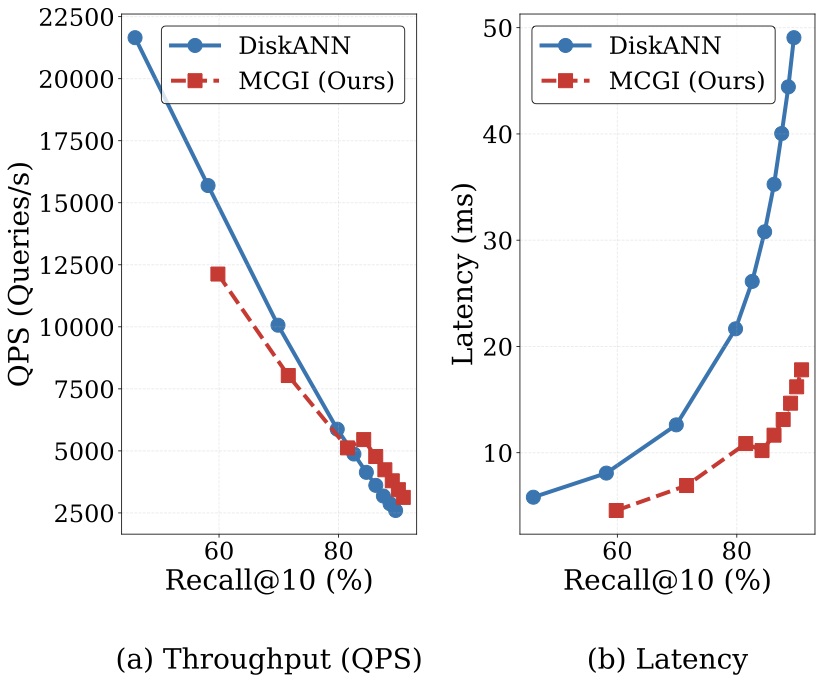
Graph-based Approximate Nearest Neighbor (ANN) search often suffers from performance degradation in high-dimensional spaces due to the ``Euclidean-Geodesic mismatch, where greedy routing diverges from the underlying data manifold. To address this, we propose Manifold-Consistent Graph Indexing (MCGI), a geometry-aware and disk-resident indexing method that leverages Local Intrinsic Dimensionality (LID) to dynamically adapt search strategies to the data s intrinsic geometry. Unlike standard algorithms that treat dimensions uniformly, MCGI modulates its beam search budget based on in situ geometric analysis, eliminating dependency on static hyperparameters. Theoretical analysis confirms that MCGI enables improved approximation guarantees by preserving manifold-consistent topological connectivity. Empirically, MCGI achieves 5.8$ times$ higher throughput at 95 % recall on high-dimensional GIST1M compared to state-of-the-art DiskANN. On the billion-scale SIFT1B dataset, MCGI further validates its scalability by reducing high-recall query latency by 3$ times$, while maintaining performance parity on standard lower-dimensional datasets.

paper research
MergeRec  Model Merging for Data-Isolated Cross-Domain Sequential Recommendation

MergeRec Model Merging for Data-Isolated Cross-Domain Sequential Recommendation

Modern recommender systems trained on domain-specific data often struggle to generalize across multiple domains. Cross-domain sequential recommendation has emerged as a promising research direction to address this challenge; however, existing approaches face fundamental limitations, such as reliance on overlapping users or items across domains, or unrealistic assumptions that ignore privacy constraints. In this work, we propose a new framework, MergeRec, based on model merging under a new and realistic problem setting termed data-isolated cross-domain sequential recommendation, where raw user interaction data cannot be shared across domains. MergeRec consists of three key components (1) merging initialization, (2) pseudo-user data construction, and (3) collaborative merging optimization. First, we initialize a merged model using training-free merging techniques. Next, we construct pseudo-user data by treating each item as a virtual sequence in each domain, enabling the synthesis of meaningful training samples without relying on real user interactions. Finally, we optimize domain-specific merging weights through a joint objective that combines a recommendation loss, which encourages the merged model to identify relevant items, and a distillation loss, which transfers collaborative filtering signals from the fine-tuned source models. Extensive experiments demonstrate that MergeRec not only preserves the strengths of the original models but also significantly enhances generalizability to unseen domains. Compared to conventional model merging methods, MergeRec consistently achieves superior performance, with average improvements of up to 17.21% in Recall@10, highlighting the potential of model merging as a scalable and effective approach for building universal recommender systems. The source code is available at https //github.com/DIALLab-SKKU/MergeRec.

paper research
OpenNovelty  An LLM-powered Agentic System for Verifiable Scholarly Novelty Assessment

OpenNovelty An LLM-powered Agentic System for Verifiable Scholarly Novelty Assessment

Evaluating novelty is critical yet challenging in peer review, as reviewers must assess submissions against a vast, rapidly evolving literature. This report presents OpenNovelty, an LLM-powered agentic system for transparent, evidence-based novelty analysis. The system operates through four phases (1) extracting the core task and contribution claims to generate retrieval queries; (2) retrieving relevant prior work based on extracted queries via semantic search engine; (3) constructing a hierarchical taxonomy of core-task-related work and performing contribution-level full-text comparisons against each contribution; and (4) synthesizing all analyses into a structured novelty report with explicit citations and evidence snippets. Unlike naive LLM-based approaches, textsc{OpenNovelty} grounds all assessments in retrieved real papers, ensuring verifiable judgments. We deploy our system on 500+ ICLR 2026 submissions with all reports publicly available on our website, and preliminary analysis suggests it can identify relevant prior work, including closely related papers that authors may overlook. OpenNovelty aims to empower the research community with a scalable tool that promotes fair, consistent, and evidence-backed peer review.

paper research
Query-Document Dense Vectors for LLM Relevance Judgment Bias Analysis

Query-Document Dense Vectors for LLM Relevance Judgment Bias Analysis

Large Language Models (LLMs) have been used as relevance assessors for Information Retrieval (IR) evaluation collection creation due to reduced cost and increased scalability as compared to human assessors. While previous research has looked at the reliability of LLMs as compared to human assessors, in this work, we aim to understand if LLMs make systematic mistakes when judging relevance, rather than just understanding how good they are on average. To this aim, we propose a novel representational method for queries and documents that allows us to analyze relevance label distributions and compare LLM and human labels to identify patterns of disagreement and localize systematic areas of disagreement. We introduce a clustering-based framework that embeds query-document (Q-D) pairs into a joint semantic space, treating relevance as a relational property. Experiments on TREC Deep Learning 2019 and 2020 show that systematic disagreement between humans and LLMs is concentrated in specific semantic clusters rather than distributed randomly. Query-level analyses reveal recurring failures, most often in definition-seeking, policy-related, or ambiguous contexts. Queries with large variation in agreement across their clusters emerge as disagreement hotspots, where LLMs tend to under-recall relevant content or over-include irrelevant material. This framework links global diagnostics with localized clustering to uncover hidden weaknesses in LLM judgments, enabling bias-aware and more reliable IR evaluation.

paper research
RAIR  A Rule-Aware Benchmark Uniting Challenging Long-Tail and Visual Salience Subset for E-commerce Relevance Assessment

RAIR A Rule-Aware Benchmark Uniting Challenging Long-Tail and Visual Salience Subset for E-commerce Relevance Assessment

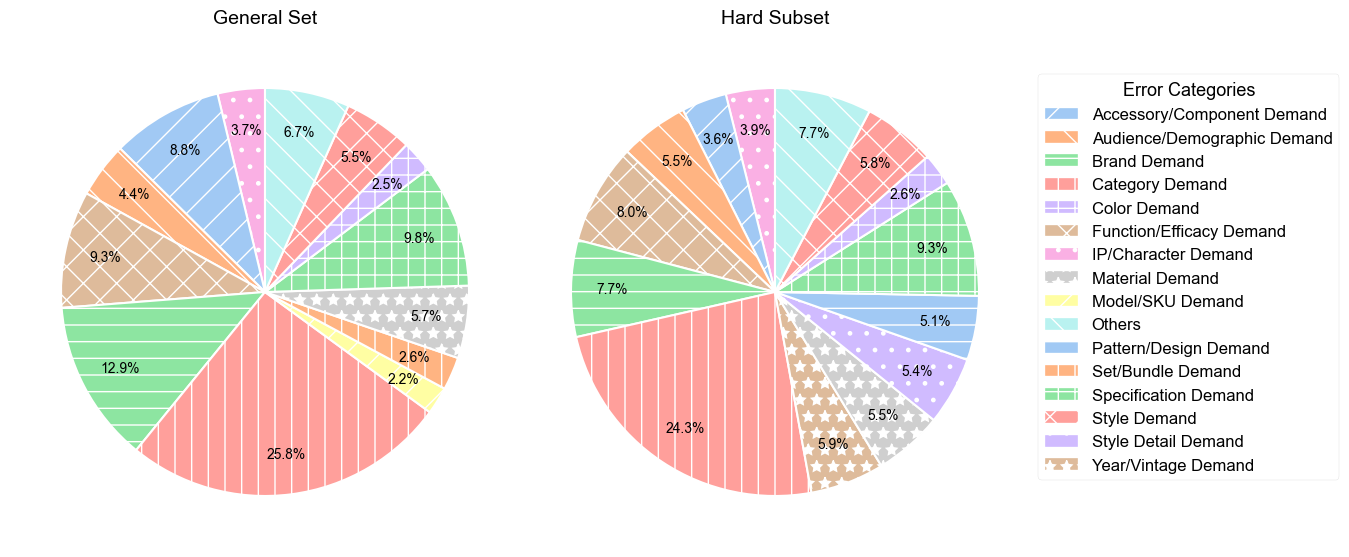
Search relevance plays a central role in web e-commerce. While large language models (LLMs) have shown significant results on relevance task, existing benchmarks lack sufficient complexity for comprehensive model assessment, resulting in an absence of standardized relevance evaluation metrics across the industry. To address this limitation, we propose Rule-Aware benchmark with Image for Relevance assessment(RAIR), a Chinese dataset derived from real-world scenarios. RAIR established a standardized framework for relevance assessment and provides a set of universal rules, which forms the foundation for standardized evaluation. Additionally, RAIR analyzes essential capabilities required for current relevance models and introduces a comprehensive dataset consists of three subset (1) a general subset with industry-balanced sampling to evaluate fundamental model competencies; (2) a long-tail hard subset focus on challenging cases to assess performance limits; (3) a visual salience subset for evaluating multimodal understanding capabilities. We conducted experiments on RAIR using 14 open and closed-source models. The results demonstrate that RAIR presents sufficient challenges even for GPT-5, which achieved the best performance. RAIR data are now available, serving as an industry benchmark for relevance assessment while providing new insights into general LLM and Visual Language Model(VLM) evaluation.

paper research
ScienceDB AI  An LLM-Driven Agentic Recommender System for Large-Scale Scientific Data Sharing Services

ScienceDB AI An LLM-Driven Agentic Recommender System for Large-Scale Scientific Data Sharing Services

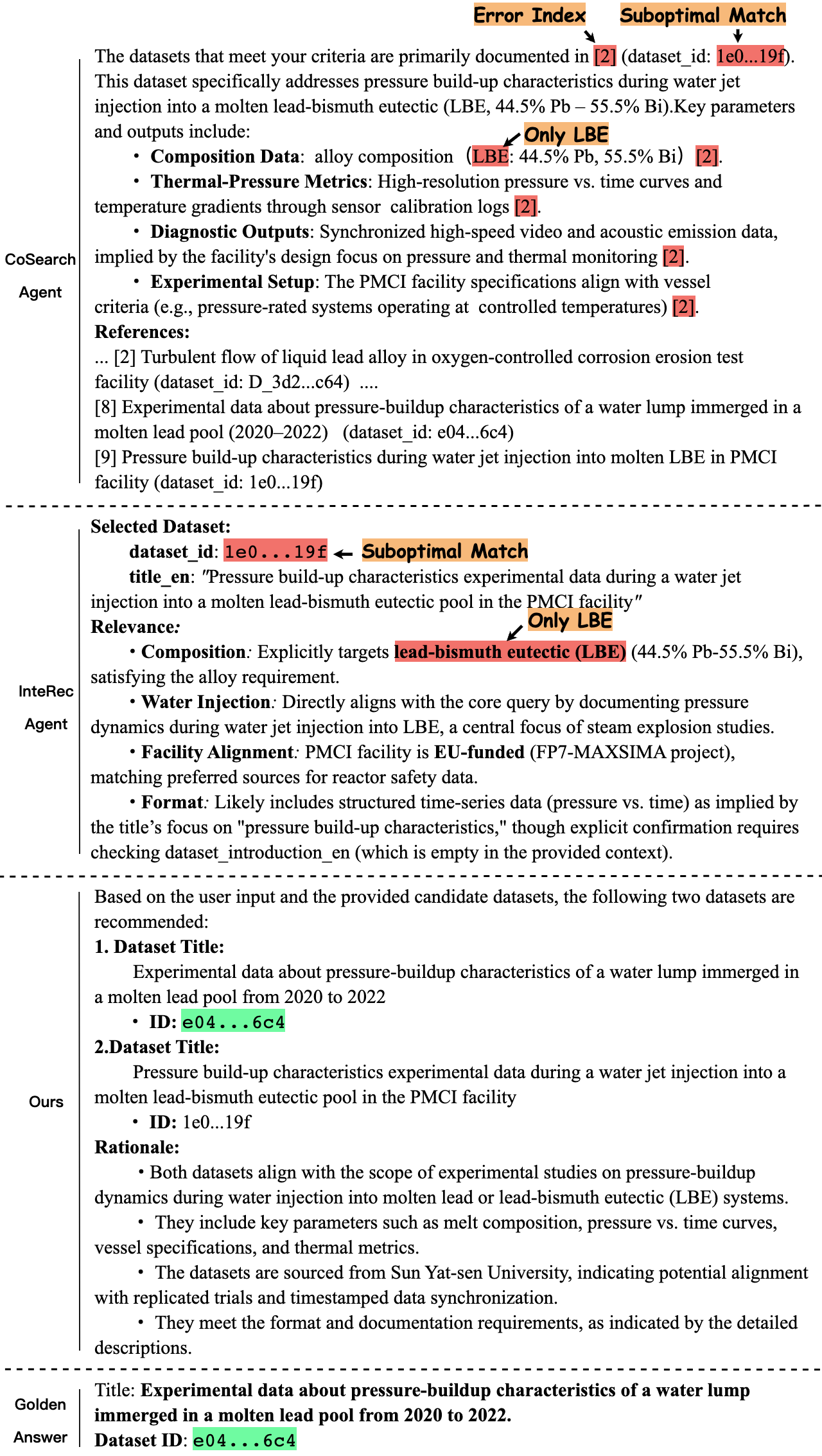
The rapid growth of AI for Science (AI4S) has underscored the significance of scientific datasets, leading to the establishment of numerous national scientific data centers and sharing platforms. Despite this progress, efficiently promoting dataset sharing and utilization for scientific research remains challenging. Scientific datasets contain intricate domain-specific knowledge and contexts, rendering traditional collaborative filtering-based recommenders inadequate. Recent advances in Large Language Models (LLMs) offer unprecedented opportunities to build conversational agents capable of deep semantic understanding and personalized recommendations. In response, we present ScienceDB AI, a novel LLM-driven agentic recommender system developed on Science Data Bank (ScienceDB), one of the largest global scientific data-sharing platforms. ScienceDB AI leverages natural language conversations and deep reasoning to accurately recommend datasets aligned with researchers scientific intents and evolving requirements. The system introduces several innovations a Scientific Intention Perceptor to extract structured experimental elements from complicated queries, a Structured Memory Compressor to manage multi-turn dialogues effectively, and a Trustworthy Retrieval-Augmented Generation (Trustworthy RAG) framework. The Trustworthy RAG employs a two-stage retrieval mechanism and provides citable dataset references via Citable Scientific Task Record (CSTR) identifiers, enhancing recommendation trustworthiness and reproducibility. Through extensive offline and online experiments using over 10 million real-world datasets, ScienceDB AI has demonstrated significant effectiveness. To our knowledge, ScienceDB AI is the first LLM-driven conversational recommender tailored explicitly for large-scale scientific dataset sharing services. The platform is publicly accessible at https //ai.scidb.cn/en.

paper research

Start searching

Enter keywords to search articles

↑↓
↵
ESC
⌘K Shortcut