Image and Video Processing

All posts under category "Image and Video Processing"

7 posts total
Sorted by date
An Adaptive, Disentangled Representation Method for Multidimensional MRI Reconstruction

An Adaptive, Disentangled Representation Method for Multidimensional MRI Reconstruction

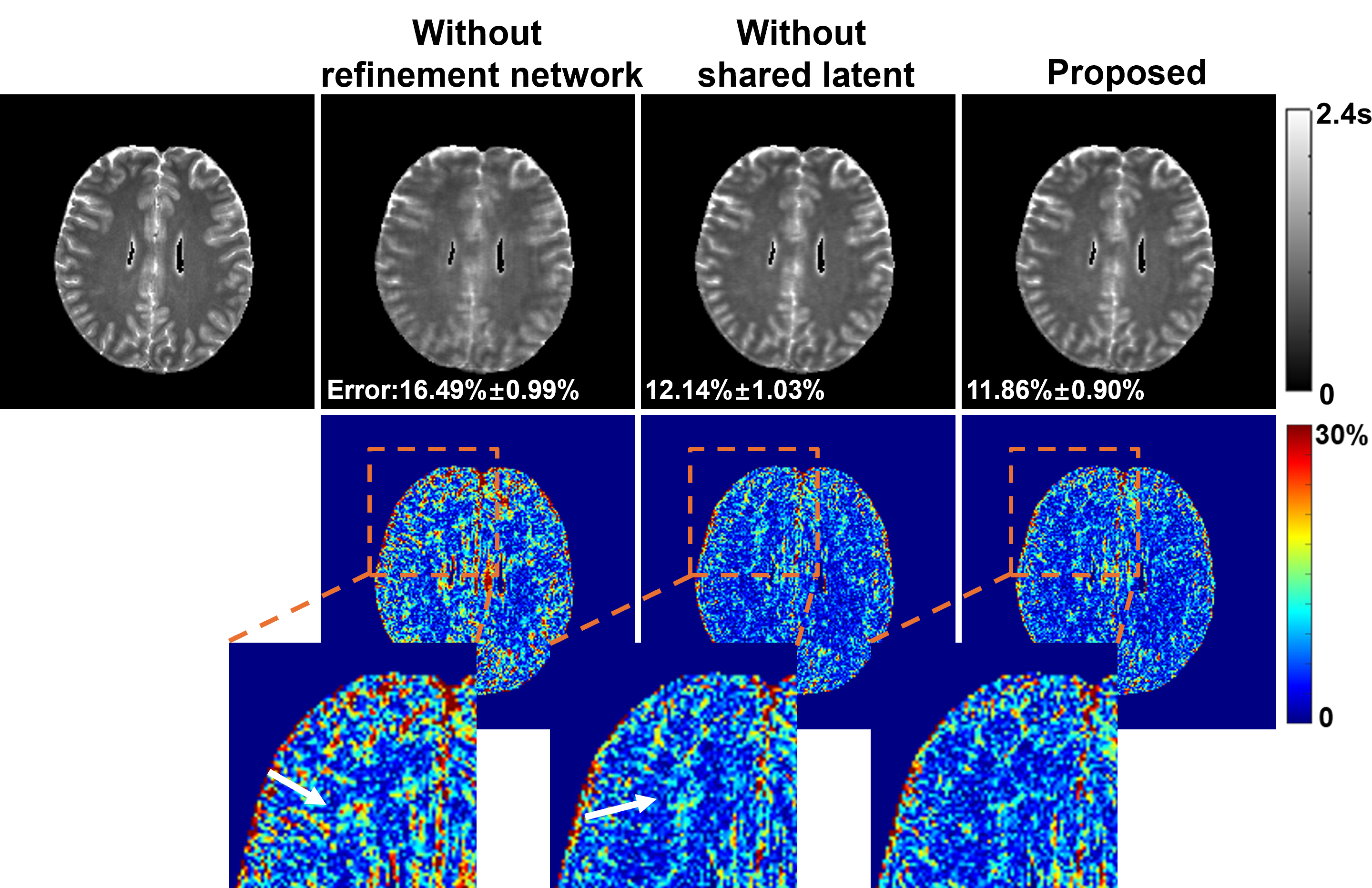
We present a new approach for representing and reconstructing multidimensional magnetic resonance imaging (MRI) data. Our method builds on a novel, learned feature-based image representation that disentangles different types of features, such as geometry and contrast, into distinct low-dimensional latent spaces, enabling better exploitation of feature correlations in multidimensional images and incorporation of pre-learned priors specific to different feature types for reconstruction. More specifically, the disentanglement was achieved via an encoderdecoder network and image transfer training using large public data, enhanced by a style-based decoder design. A latent diffusion model was introduced to impose stronger constraints on distinct feature spaces. New reconstruction formulations and algorithms were developed to integrate the learned representation with a zero-shot selfsupervised learning adaptation and subspace modeling. The proposed method has been evaluated on accelerated T1 and T2 parameter mapping, achieving improved performance over state-of-the-art reconstruction methods, without task-specific supervised training or fine-tuning. This work offers a new strategy for learning-based multidimensional image reconstruction where only limited data are available for problem-specific or task-specific training.
paper research
An Explainable Agentic AI Framework for Uncertainty-Aware and Abstention-Enabled Acute Ischemic Stroke Imaging Decisions

An Explainable Agentic AI Framework for Uncertainty-Aware and Abstention-Enabled Acute Ischemic Stroke Imaging Decisions

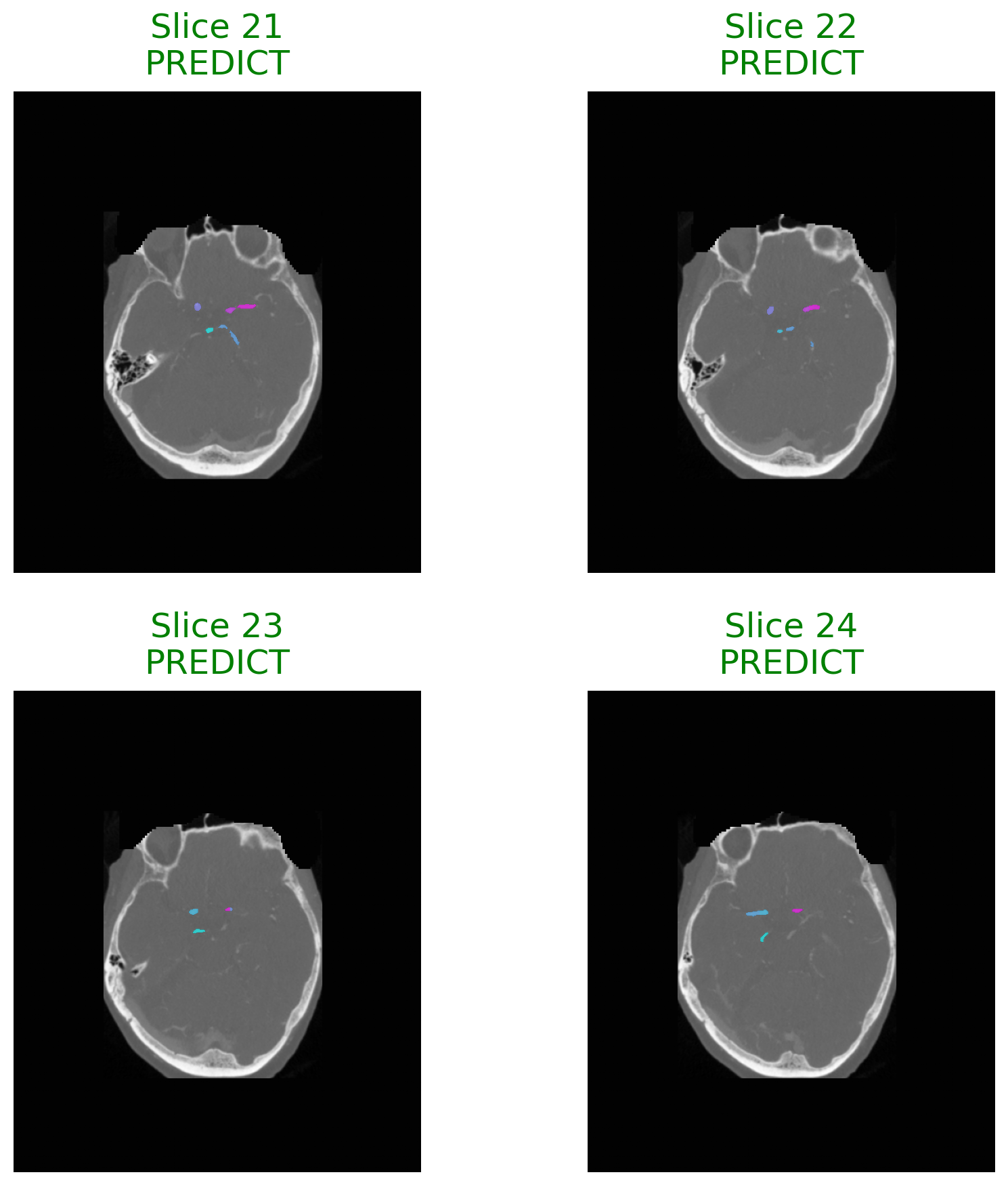
Artificial intelligence models have shown strong potential in acute ischemic stroke imaging, particularly for lesion detection and segmentation using computed tomography and magnetic resonance imaging. However, most existing approaches operate as black box predictors, producing deterministic outputs without explicit uncertainty awareness or structured mechanisms to abstain under ambiguous conditions. This limitation raises serious safety and trust concerns in high risk emergency radiology settings. In this paper, we propose an explainable agentic AI framework for uncertainty aware and abstention enabled decision support in acute ischemic stroke imaging. The framework follows a modular agentic pipeline in which a perception agent performs lesion aware image analysis, an uncertainty estimation agent computes slice level predictive reliability, and a decision agent determines whether to issue a prediction or abstain based on predefined uncertainty thresholds. Unlike prior stroke imaging systems that primarily focus on improving segmentation or classification accuracy, the proposed framework explicitly prioritizes clinical safety, transparency, and clinician aligned decision behavior. Qualitative and case based analyses across representative stroke imaging scenarios demonstrate that uncertainty driven abstention naturally emerges in diagnostically ambiguous regions and low information slices. The framework further integrates visual explanation mechanisms to support both predictive and abstention decisions, addressing a key limitation of existing uncertainty aware medical imaging systems. Rather than introducing a new performance benchmark, this work presents agentic control, uncertainty awareness, and selective abstention as essential design principles for developing safe and trustworthy medical imaging AI systems.

paper research
Hear the Heartbeat in Phases  Physiologically Grounded Phase-Aware ECG Biometrics

Hear the Heartbeat in Phases Physiologically Grounded Phase-Aware ECG Biometrics

Electrocardiography (ECG) is adopted for identity authentication in wearable devices due to its individual-specific characteristics and inherent liveness. However, existing methods often treat heartbeats as homogeneous signals, overlooking the phase-specific characteristics within the cardiac cycle. To address this, we propose a Hierarchical Phase-Aware Fusion~(HPAF) framework that explicitly avoids cross-feature entanglement through a three-stage design. In the first stage, Intra-Phase Representation (IPR) independently extracts representations for each cardiac phase, ensuring that phase-specific morphological and variation cues are preserved without interference from other phases. In the second stage, Phase-Grouped Hierarchical Fusion (PGHF) aggregates physiologically related phases in a structured manner, enabling reliable integration of complementary phase information. In the final stage, Global Representation Fusion (GRF) further combines the grouped representations and adaptively balances their contributions to produce a unified and discriminative identity representation. Moreover, considering ECG signals are continuously acquired, multiple heartbeats can be collected for each individual. We propose a Heartbeat-Aware Multi-prototype (HAM) enrollment strategy, which constructs a multi-prototype gallery template set to reduce the impact of heartbeat-specific noise and variability. Extensive experiments on three public datasets demonstrate that HPAF achieves state-of-the-art results in the comparison with other methods under both closed and open-set settings.

paper research
Placenta Accreta Spectrum Detection using Multimodal Deep Learning

Placenta Accreta Spectrum Detection using Multimodal Deep Learning

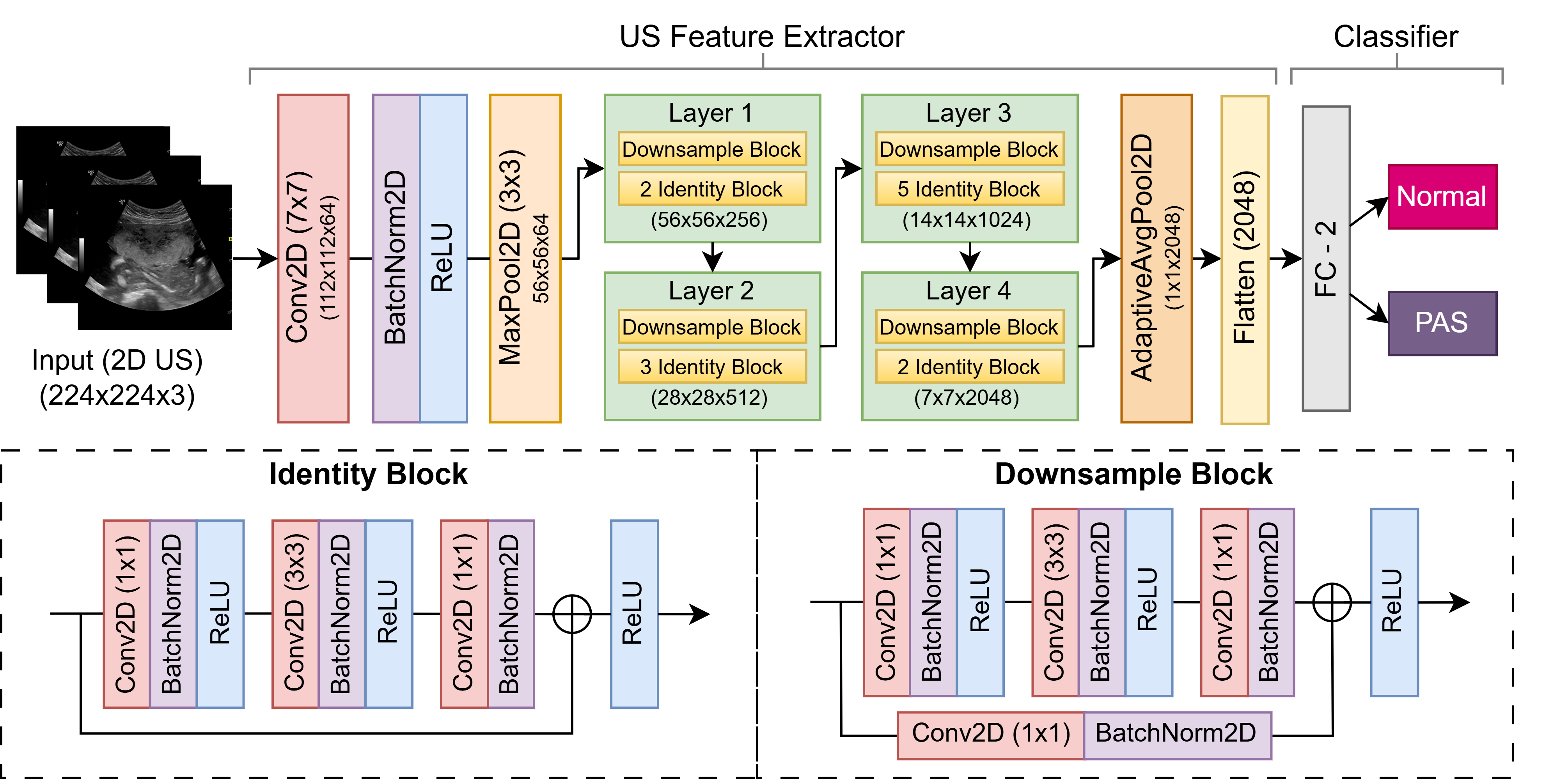
Placenta Accreta Spectrum (PAS) is a life-threatening obstetric complication involving abnormal placental invasion into the uterine wall. Early and accurate prenatal diagnosis is essential to reduce maternal and neonatal risks. This study aimed to develop and validate a deep learning framework that enhances PAS detection by integrating multiple imaging modalities. A multimodal deep learning model was designed using an intermediate feature-level fusion architecture combining 3D Magnetic Resonance Imaging (MRI) and 2D Ultrasound (US) scans. Unimodal feature extractors, a 3D DenseNet121-Vision Transformer for MRI and a 2D ResNet50 for US, were selected after systematic comparative analysis. Curated datasets comprising 1,293 MRI and 1,143 US scans were used to train the unimodal models and paired samples of patient-matched MRI-US scans was isolated for multimodal model development and evaluation. On an independent test set, the multimodal fusion model achieved superior performance, with an accuracy of 92.5% and an Area Under the Receiver Operating Characteristic Curve (AUC) of 0.927, outperforming the MRI-only (82.5%, AUC 0.825) and US-only (87.5%, AUC 0.879) models. Integrating MRI and US features provides complementary diagnostic information, demonstrating strong potential to enhance prenatal risk assessment and improve patient outcomes.

paper research
Scale-aware Adaptive Supervised Network with Limited Medical Annotations

Scale-aware Adaptive Supervised Network with Limited Medical Annotations

Medical image segmentation faces critical challenges in semi-supervised learning scenarios due to severe annotation scarcity requiring expert radiological knowledge, significant inter-annotator variability across different viewpoints and expertise levels, and inadequate multi-scale feature integration for precise boundary delineation in complex anatomical structures. Existing semi-supervised methods demonstrate substantial performance degradation compared to fully supervised approaches, particularly in small target segmentation and boundary refinement tasks. To address these fundamental challenges, we propose SASNet (Scale-aware Adaptive Supervised Network), a dual-branch architecture that leverages both low-level and high-level feature representations through novel scale-aware adaptive reweight mechanisms. Our approach introduces three key methodological innovations, including the Scale-aware Adaptive Reweight strategy that dynamically weights pixel-wise predictions using temporal confidence accumulation, the View Variance Enhancement mechanism employing 3D Fourier domain transformations to simulate annotation variability, and segmentation-regression consistency learning through signed distance map algorithms for enhanced boundary precision. These innovations collectively address the core limitations of existing semi-supervised approaches by integrating spatial, temporal, and geometric consistency principles within a unified optimization framework. Comprehensive evaluation across LA, Pancreas-CT, and BraTS datasets demonstrates that SASNet achieves superior performance with limited labeled data, surpassing state-of-the-art semi-supervised methods while approaching fully supervised performance levels. The source code for SASNet is available at https //github.com/HUANGLIZI/SASNet.

paper research
Seamlessly Natural  Image Stitching with Natural Appearance Preservation

Seamlessly Natural Image Stitching with Natural Appearance Preservation

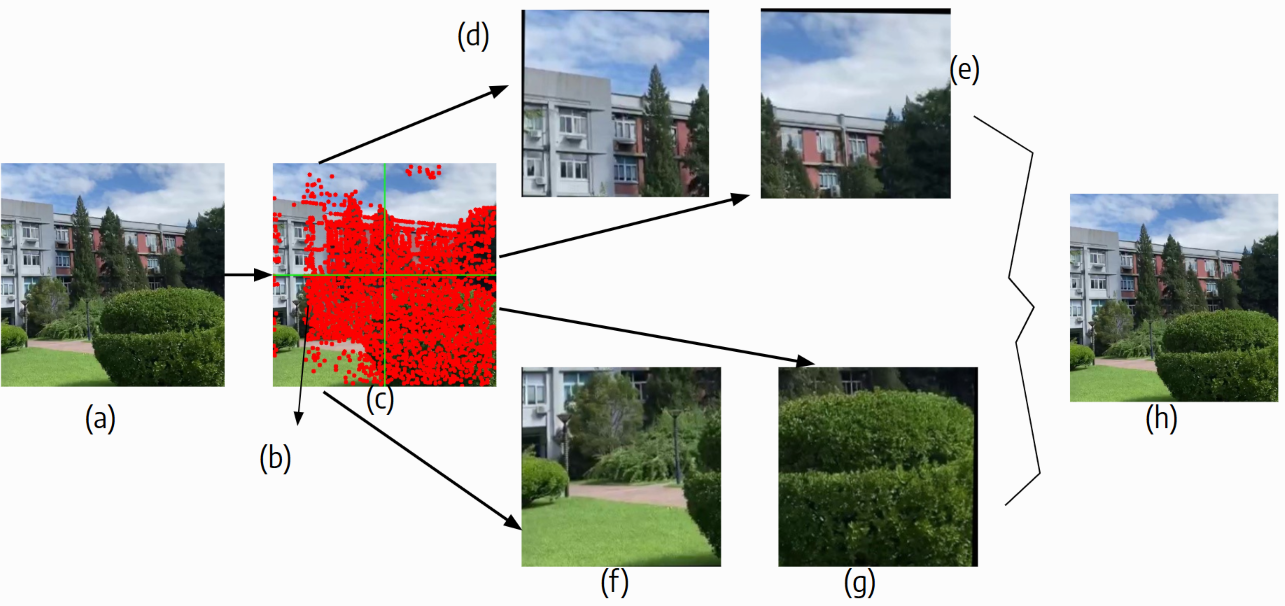
This paper introduces SENA (SEamlessly NAtural), a geometry-driven image stitching approach that prioritizes structural fidelity in challenging real-world scenes characterized by parallax and depth variation. Conventional image stitching relies on homographic alignment, but this rigid planar assumption often fails in dual-camera setups with significant scene depth, leading to distortions such as visible warps and spherical bulging. SENA addresses these fundamental limitations through three key contributions. First, we propose a hierarchical affine-based warping strategy, combining global affine initialization with local affine refinement and smooth free-form deformation. This design preserves local shape, parallelism, and aspect ratios, thereby avoiding the hallucinated structural distortions commonly introduced by homography-based models. Second, we introduce a geometry-driven adequate zone detection mechanism that identifies parallax-minimized regions directly from the disparity consistency of RANSAC-filtered feature correspondences, without relying on semantic segmentation. Third, building upon this adequate zone, we perform anchor-based seamline cutting and segmentation, enforcing a one-to-one geometric correspondence across image pairs by construction, which effectively eliminates ghosting, duplication, and smearing artifacts in the final panorama. Extensive experiments conducted on challenging datasets demonstrate that SENA achieves alignment accuracy comparable to leading homography-based methods, while significantly outperforming them in critical visual metrics such as shape preservation, texture integrity, and overall visual realism.

paper research
UniCrop  A Universal, Multi-Source Data Engineering Pipeline for Scalable Crop Yield Prediction

UniCrop A Universal, Multi-Source Data Engineering Pipeline for Scalable Crop Yield Prediction

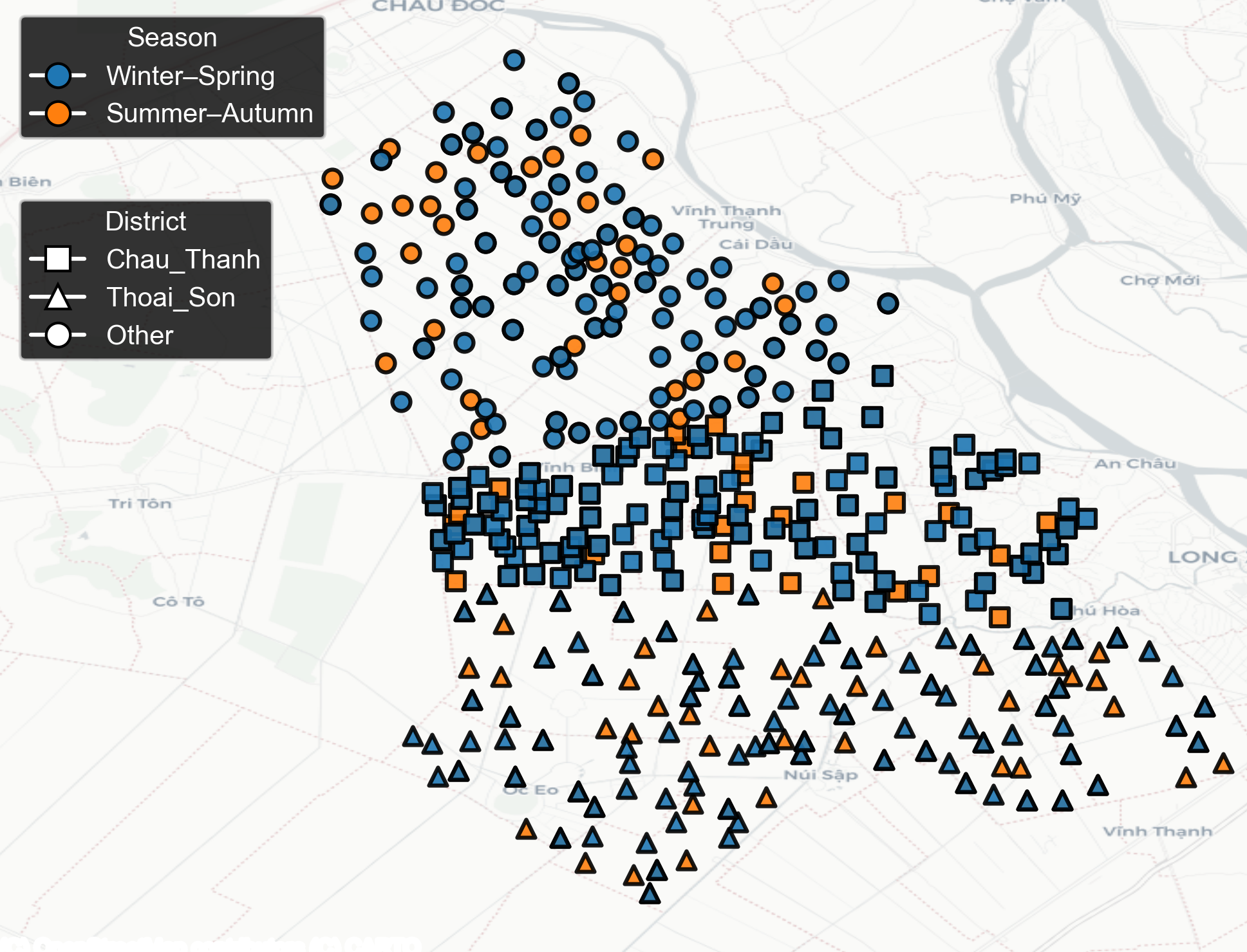
Accurate crop yield prediction relies on diverse data streams, including satellite, meteorological, soil, and topographic information. However, despite rapid advances in machine learning, existing approaches remain crop- or region-specific and require data engineering efforts. This limits scalability, reproducibility, and operational deployment. This study introduces UniCrop, a universal and reusable data pipeline designed to automate the acquisition, cleaning, harmonisation, and engineering of multi-source environmental data for crop yield prediction. For any given location, crop type, and temporal window, UniCrop automatically retrieves, harmonises, and engineers over 200 environmental variables (Sentinel-1/2, MODIS, ERA5-Land, NASA POWER, SoilGrids, and SRTM), reducing them to a compact, analysis-ready feature set utilising a structured feature reduction workflow with minimum redundancy maximum relevance (mRMR). To validate, UniCrop was applied to a rice yield dataset comprising 557 field observations. Using only the selected 15 features, four baseline machine learning models (LightGBM, Random Forest, Support Vector Regression, and Elastic Net) were trained. LightGBM achieved the best single-model performance (RMSE = 465.1 kg/ha, $R^2 = 0.6576$), while a constrained ensemble of all baselines further improved accuracy (RMSE = 463.2 kg/ha, $R^2 = 0.6604$). UniCrop contributes a scalable and transparent data-engineering framework that addresses the primary bottleneck in operational crop yield modelling the preparation of consistent and harmonised multi-source data. By decoupling data specification from implementation and supporting any crop, region, and time frame through simple configuration updates, UniCrop provides a practical foundation for scalable agricultural analytics. The code and implementation documentation are shared in https //github.com/CoDIS-Lab/UniCrop.

paper research

Start searching

Enter keywords to search articles

↑↓
↵
ESC
⌘K Shortcut