
Electrical Engineering and Systems Science / Signal Processing

All posts under category "Electrical Engineering and Systems Science / Signal Processing"

4 posts total
Sorted by date
Clock Synchronization Over Networks  Identifiability of the Sawtooth Model

Clock Synchronization Over Networks Identifiability of the Sawtooth Model

In this paper, we analyze the two-node joint clock synchronization and ranging problem. We focus on the case of nodes that employ time-to-digital converters to determine the range between them precisely. This specific design choice leads to a sawtooth model for the captured signal, which has not been studied before from an estimation theoretic standpoint. In the study of this model, we recover the basic conclusion of a well-known article by Freris, Graham, and Kumar in clock synchronization. More importantly, we discover a surprising identifiability result on the sawtooth signal model noise improves the theoretical condition of the estimation of the phase and offset parameters. To complete our study, we provide performance references for joint clock synchronization and ranging using the sawtooth signal model by presenting an exhaustive simulation study on basic estimation strategies under different realistic conditions. With our contributions in this paper, we enable further research in the estimation of sawtooth signal models and pave the path towards their industrial use for clock synchronization and ranging.
paper research
State Synchronization in Homogeneous Networks of Non-Introspective Agents with Input Saturation  A Scale-Free Protocol Design

State Synchronization in Homogeneous Networks of Non-Introspective Agents with Input Saturation A Scale-Free Protocol Design

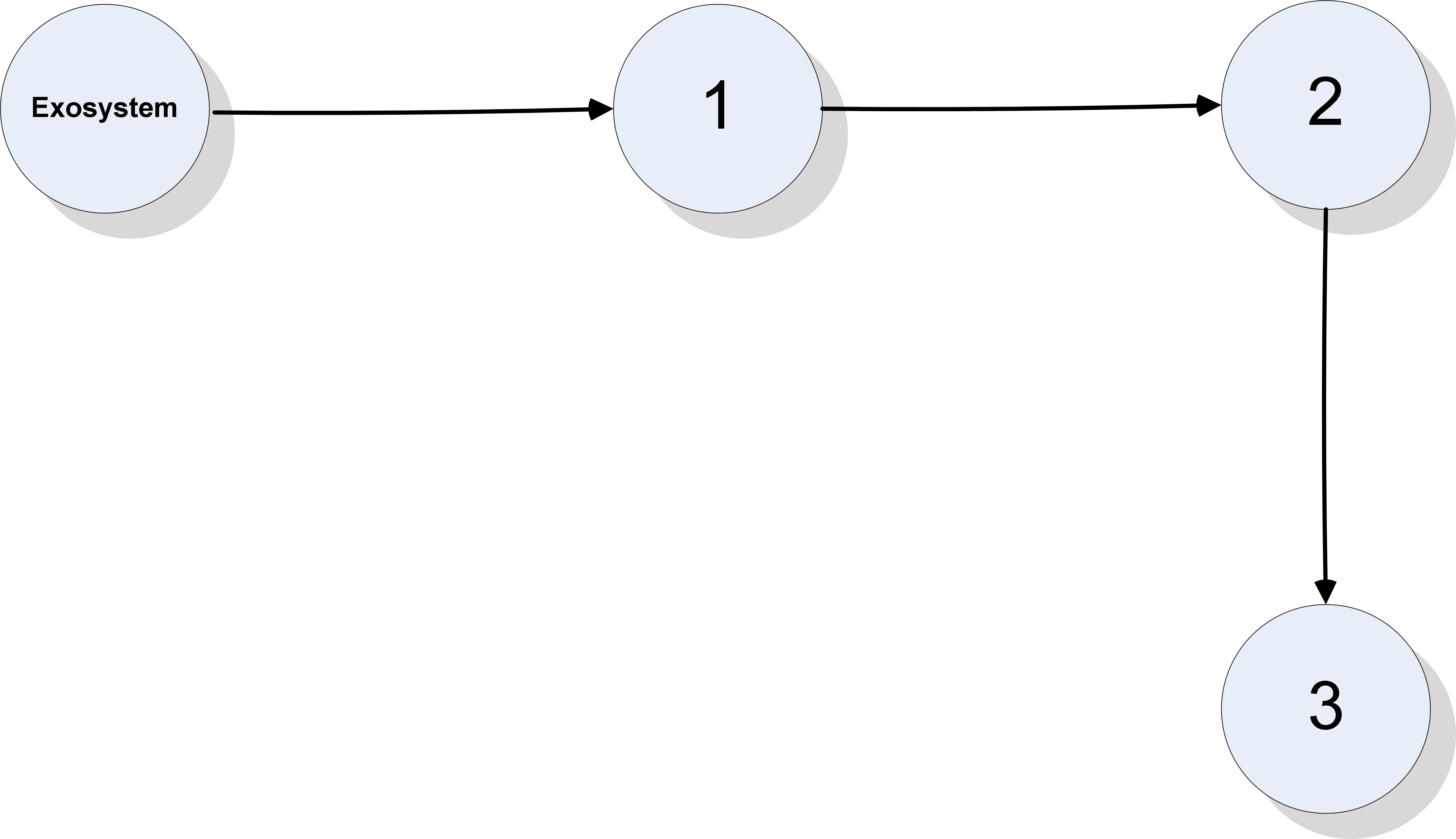
This paper studies global and semi-global regulated state synchronization of homogeneous networks of non-introspective agents in presence of input saturation based on additional information exchange where the reference trajectory is given by a so-called exosystem which is assumed to be globally reachable. Our protocol design methodology does not need any knowledge of the directed network topology and the spectrum of the associated Laplacian matrix. Moreover, the proposed protocol is scalable and achieves synchronization for any arbitrary number of agents.

paper research
No Image

Parametrized Sharing for Multi-Agent Hybrid DRL for Multiple Multi-Functional RISs-Aided Downlink NOMA Networks

Multi-functional reconfigurable intelligent surface (MF-RIS) is conceived to address the communication efficiency thanks to its extended signal coverage from its active RIS capability and self-sustainability from energy harvesting (EH). We investigate the architecture of multi-MF-RISs to assist non-orthogonal multiple access (NOMA) downlink networks. We formulate an energy efficiency (EE) maximization problem by optimizing power allocation, transmit beamforming and MF-RIS configurations of amplitudes, phase-shifts and EH ratios, as well as the position of MF-RISs, while satisfying constraints of available power, user rate requirements, and self-sustainability property. We design a parametrized sharing scheme for multi-agent hybrid deep reinforcement learning (PMHRL), where the multi-agent proximal policy optimization (PPO) and deep-Q network (DQN) handle continuous and discrete variables, respectively. The simulation results have demonstrated that proposed PMHRL has the highest EE compared to other benchmarks, including cases without parametrized sharing, pure PPO and DQN. Moreover, the proposed multi-MF-RISs-aided downlink NOMA achieves the highest EE compared to scenarios of no-EH/amplification, traditional RISs, and deployment without RISs/MF-RISs under different multiple access.

paper research
Predicting Ground Shifts  A Multimodal Approach Across Europe

Predicting Ground Shifts A Multimodal Approach Across Europe

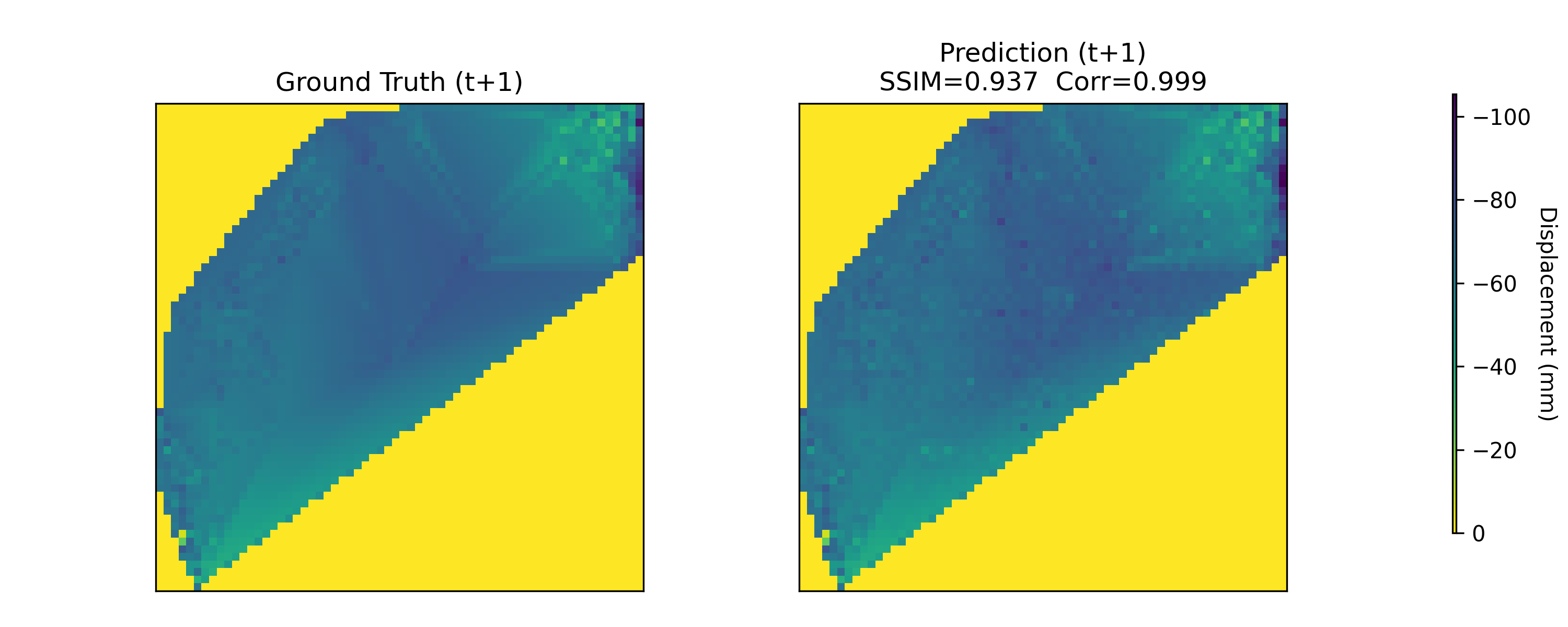
Near-real-time regional-scale monitoring of ground deformation is increasingly required to support urban planning, critical infrastructure management, and natural hazard mitigation. While Interferometric Synthetic Aperture Radar (InSAR) and continental-scale services such as the European Ground Motion Service (EGMS) provide dense observations of past motion, predicting the next observation remains challenging due to the superposition of long-term trends, seasonal cycles, and occasional abrupt discontinuities (e.g., co-seismic steps), together with strong spatial heterogeneity. In this study we propose a multimodal patch-based Transformer for single-step, fixed-interval next-epoch nowcasting of displacement maps from EGMS time series (resampled to a 64x64 grid over 100 km x 100 km tiles). The model ingests recent displacement snapshots together with (i) static kinematic indicators (mean velocity, acceleration, seasonal amplitude) computed in a leakage-safe manner from the training window only, and (ii) harmonic day-of-year encodings. On the eastern Ireland tile (E32N34), the STGCN is strongest in the displacement-only setting, whereas the multimodal Transformer clearly outperforms CNN-LSTM, CNN-LSTM+Attn, and multimodal STGCN when all models receive the same multimodal inputs, achieving RMSE = 0.90 mm and $R^2$ = 0.97 on the test set with the best threshold accuracies.

paper research

< Category Statistics (Total: 566) >

Quantum Physics
5

Start searching

Enter keywords to search articles

↑↓
ESC
⌘K Shortcut