Econometrics

All posts under category "Econometrics"

11 posts total
Sorted by date
Mapping the Macroeconomy Topologically

Mapping the Macroeconomy Topologically

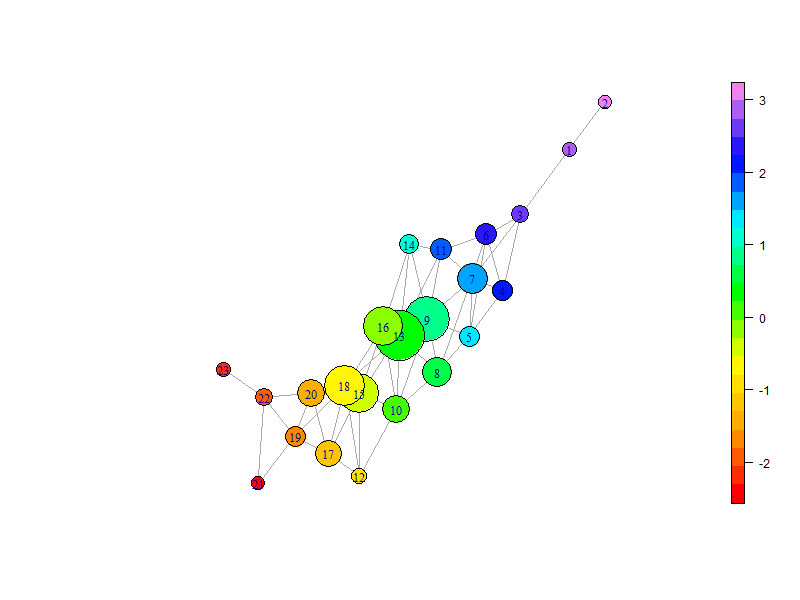
An understanding of the economic landscape in a world of ever increasing data necessitates representations of data that can inform policy, deepen understanding and guide future research. Topological Data Analysis offers a set of tools which deliver on all three calls. Abstract two-dimensional snapshots of multi-dimensional space readily capture non-monotonic relationships, inform of similarity between points of interest in parameter space, mapping such to outcomes. Specific examples show how some, but not all, countries have returned to Great Depression levels, and reappraise the links between real private capital growth and the performance of the economy. Theoretical and empirical expositions alike remind on the dangers of assuming monotonic relationships and discounting combinations of factors as determinants of outcomes; both dangers Topological Data Analysis addresses. Policy-makers can look at outcomes and target areas of the input space where such are not satisfactory, academics may additionally find evidence to motivate theoretical development, and practitioners can gain a rapid and robust base for decision making.
paper research
Rank Estimators in High-Dimensional Spaces

Rank Estimators in High-Dimensional Spaces

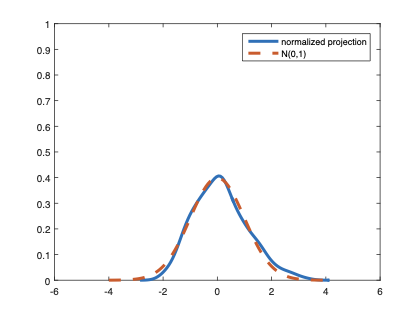
The family of rank estimators, including Han s maximum rank correlation (Han, 1987) as a notable example, has been widely exploited in studying regression problems. For these estimators, although the linear index is introduced for alleviating the impact of dimensionality, the effect of large dimension on inference is rarely studied. This paper fills this gap via studying the statistical properties of a larger family of M-estimators, whose objective functions are formulated as U-processes and may be discontinuous in increasing dimension set-up where the number of parameters, $p_{n}$, in the model is allowed to increase with the sample size, $n$. First, we find that often in estimation, as $p_{n}/n rightarrow 0$, $(p_{n}/n)^{1/2}$ rate of convergence is obtainable. Second, we establish Bahadur-type bounds and study the validity of normal approximation, which we find often requires a much stronger scaling requirement than $p_{n}^{2}/n rightarrow 0.$ Third, we state conditions under which the numerical derivative estimator of asymptotic covariance matrix is consistent, and show that the step size in implementing the covariance estimator has to be adjusted with respect to $p_{n}$. All theoretical results are further backed up by simulation studies.

paper research
Inducing Sparsity and Shrinkage in Models with Time-Varying Parameters

Inducing Sparsity and Shrinkage in Models with Time-Varying Parameters

Time-varying parameter (TVP) models have the potential to be over-parameterized, particularly when the number of variables in the model is large. Global-local priors are increasingly used to induce shrinkage in such models. But the estimates produced by these priors can still have appreciable uncertainty. Sparsification has the potential to reduce this uncertainty and improve forecasts. In this paper, we develop computationally simple methods which both shrink and sparsify TVP models. In a simulated data exercise we show the benefits of our shrink-then-sparsify approach in a variety of sparse and dense TVP regressions. In a macroeconomic forecasting exercise, we find our approach to substantially improve forecast performance relative to shrinkage alone.

paper research
From Interpretability to Inference  An Estimation Framework for Universal Approximators

From Interpretability to Inference An Estimation Framework for Universal Approximators

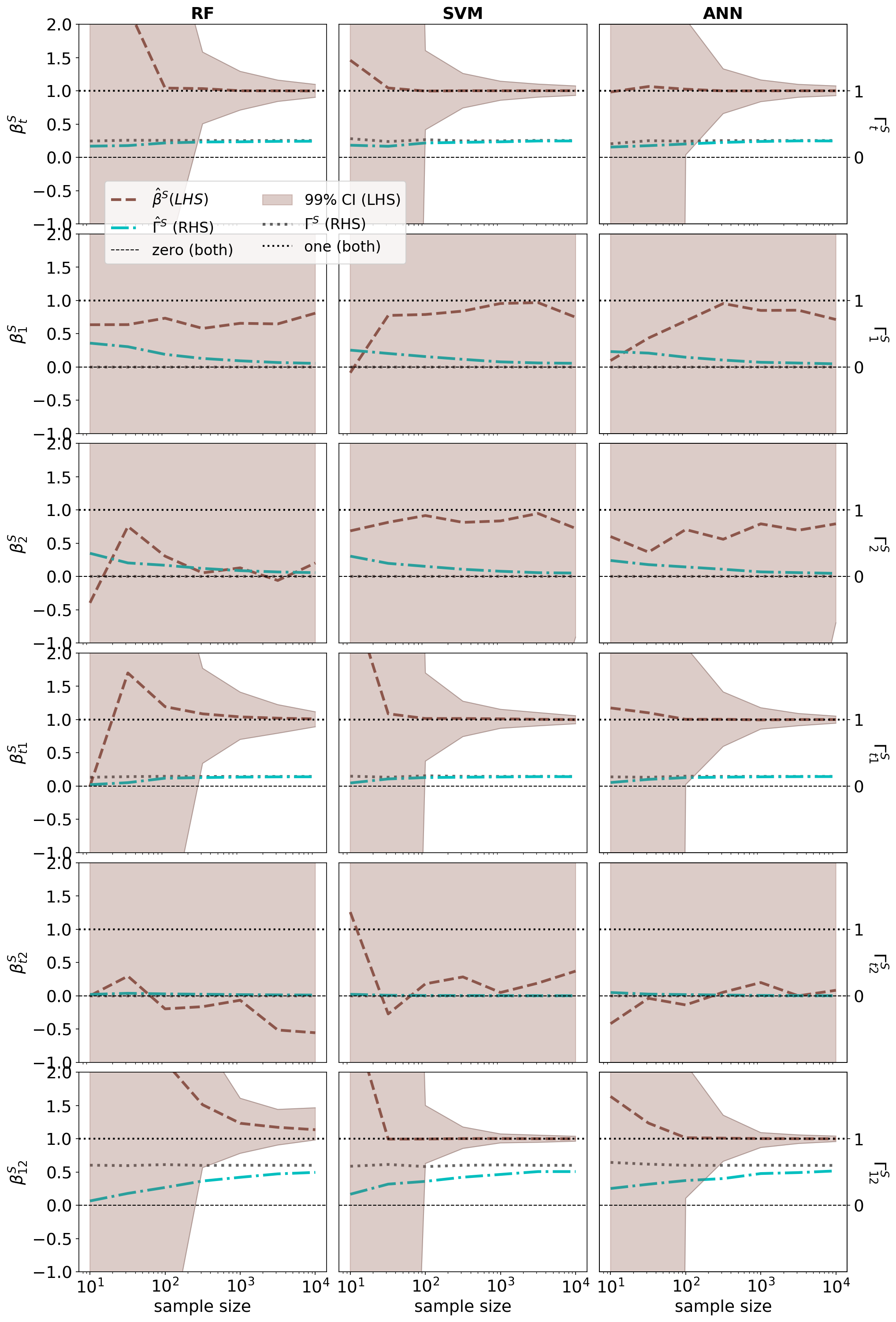
We present a novel framework for estimation and inference with the broad class of universal approximators. Estimation is based on the decomposition of model predictions into Shapley values. Inference relies on analyzing the bias and variance properties of individual Shapley components. We show that Shapley value estimation is asymptotically unbiased, and we introduce Shapley regressions as a tool to uncover the true data generating process from noisy data alone. The well-known case of the linear regression is the special case in our framework if the model is linear in parameters. We present theoretical, numerical, and empirical results for the estimation of heterogeneous treatment effects as our guiding example.

paper research
No Image

Testing the Drift-Diffusion Model

The drift diffusion model (DDM) is a model of sequential sampling with diffusion (Brownian) signals, where the decision maker accumulates evidence until the process hits a stopping boundary, and then stops and chooses the alternative that corresponds to that boundary. This model has been widely used in psychology, neuroeconomics, and neuroscience to explain the observed patterns of choice and response times in a range of binary choice decision problems. This paper provides a statistical test for DDM s with general boundaries. We first prove a characterization theorem we find a condition on choice probabilities that is satisfied if and only if the choice probabilities are generated by some DDM. Moreover, we show that the drift and the boundary are uniquely identified. We then use our condition to nonparametrically estimate the drift and the boundary and construct a test statistic.

paper research
Prediction Intervals for Synthetic Control Methods

Prediction Intervals for Synthetic Control Methods

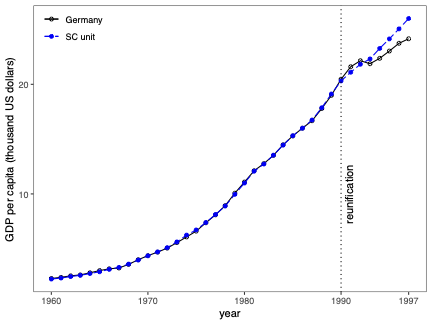
Uncertainty quantification is a fundamental problem in the analysis and interpretation of synthetic control (SC) methods. We develop conditional prediction intervals in the SC framework, and provide conditions under which these intervals offer finite-sample probability guarantees. Our method allows for covariate adjustment and non-stationary data. The construction begins by noting that the statistical uncertainty of the SC prediction is governed by two distinct sources of randomness one coming from the construction of the (likely misspecified) SC weights in the pre-treatment period, and the other coming from the unobservable stochastic error in the post-treatment period when the treatment effect is analyzed. Accordingly, our proposed prediction intervals are constructed taking into account both sources of randomness. For implementation, we propose a simulation-based approach along with finite-sample-based probability bound arguments, naturally leading to principled sensitivity analysis methods. We illustrate the numerical performance of our methods using empirical applications and a small simulation study. texttt{Python}, texttt{R} and texttt{Stata} software packages implementing our methodology are available.

paper research
Econometric Models for Network Formation

Econometric Models for Network Formation

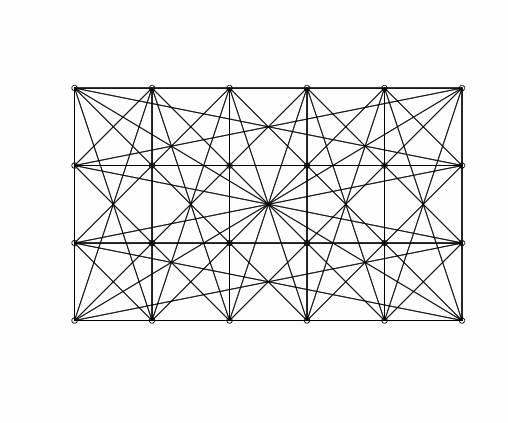
This article provides a selective review on the recent literature on econometric models of network formation. The survey starts with a brief exposition on basic concepts and tools for the statistical description of networks. I then offer a review of dyadic models, focussing on statistical models on pairs of nodes and describe several developments of interest to the econometrics literature. The article also presents a discussion of non-dyadic models where link formation might be influenced by the presence or absence of additional links, which themselves are subject to similar influences. This is related to the statistical literature on conditionally specified models and the econometrics of game theoretical models. I close with a (non-exhaustive) discussion of potential areas for further development.

paper research
No Image

Resampled Statistics for Dependence-Robust Inference

We develop inference procedures robust to general forms of weak dependence. The procedures utilize test statistics constructed by resampling in a manner that does not depend on the unknown correlation structure of the data. We prove that the statistics are asymptotically normal under the weak requirement that the target parameter can be consistently estimated at the parametric rate. This holds for regular estimators under many well-known forms of weak dependence and justifies the claim of dependence-robustness. We consider applications to settings with unknown or complicated forms of dependence, with various forms of network dependence as leading examples. We develop tests for both moment equalities and inequalities.

paper research
Fast and Flexible Bayesian Inference in Time-Varying Parameter Regression Models

Fast and Flexible Bayesian Inference in Time-Varying Parameter Regression Models

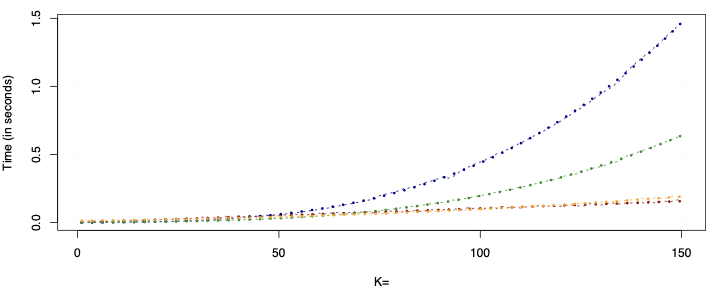
In this paper, we write the time-varying parameter (TVP) regression model involving K explanatory variables and T observations as a constant coefficient regression model with KT explanatory variables. In contrast with much of the existing literature which assumes coefficients to evolve according to a random walk, a hierarchical mixture model on the TVPs is introduced. The resulting model closely mimics a random coefficients specification which groups the TVPs into several regimes. These flexible mixtures allow for TVPs that feature a small, moderate or large number of structural breaks. We develop computationally efficient Bayesian econometric methods based on the singular value decomposition of the KT regressors. In artificial data, we find our methods to be accurate and much faster than standard approaches in terms of computation time. In an empirical exercise involving inflation forecasting using a large number of predictors, we find our models to forecast better than alternative approaches and document different patterns of parameter change than are found with approaches which assume random walk evolution of parameters.

paper research
Saddlepoint Approximations for Spatial Panel Data Models with Fixed Effects and Time-Varying Covariates

Saddlepoint Approximations for Spatial Panel Data Models with Fixed Effects and Time-Varying Covariates

We develop new higher-order asymptotic techniques for the Gaussian maximum likelihood estimator in a spatial panel data model, with fixed effects, time-varying covariates, and spatially correlated errors. Our saddlepoint density and tail area approximation feature relative error of order $O(1/(n(T-1)))$ with $n$ being the cross-sectional dimension and $T$ the time-series dimension. The main theoretical tool is the tilted-Edgeworth technique in a non-identically distributed setting. The density approximation is always non-negative, does not need resampling, and is accurate in the tails. Monte Carlo experiments on density approximation and testing in the presence of nuisance parameters illustrate the good performance of our approximation over first-order asymptotics and Edgeworth expansions. An empirical application to the investment-saving relationship in OECD (Organisation for Economic Co-operation and Development) countries shows disagreement between testing results based on first-order asymptotics and saddlepoint techniques.

paper research
No Image

Recovering Latent Variables Through Matching Techniques

We propose an optimal-transport-based matching method to nonparametrically estimate linear models with independent latent variables. The method consists in generating pseudo-observations from the latent variables, so that the Euclidean distance between the model s predictions and their matched counterparts in the data is minimized. We show that our nonparametric estimator is consistent, and we document that it performs well in simulated data. We apply this method to study the cyclicality of permanent and transitory income shocks in the Panel Study of Income Dynamics. We find that the dispersion of income shocks is approximately acyclical, whereas the skewness of permanent shocks is procyclical. By comparison, we find that the dispersion and skewness of shocks to hourly wages vary little with the business cycle.

paper research

< Category Statistics (Total: 566) >

Computer Science (514) Machine Learning (117) Artificial Intelligence (89) Computer Vision (71) Computation and Language (NLP) (62) Electrical Engineering and Systems Science (36) Cryptography and Security (24) Robotics (22) Systems and Control (22) Software Engineering (20) Mathematics (18) Statistics (17) Economics (16) Information Retrieval (15) Distributed, Parallel, and Cluster Computing (14) Human-Computer Interaction (14) Neural and Evolutionary Computing (13) Computer Science and Game Theory (11) Econometrics (11) Image and Video Processing (10) Physics (10) Sound (10) Multiagent Systems (9) Optimization and Control (8) Computational Geometry (7) Databases (7) Graphics (6) Networking and Internet Architecture (6) Quantitative Biology (6) Quantum Physics (5) Theoretical Economics (5) Computational Complexity (4) Computational Engineering, Finance, and Science (4) Computers and Society (4) Emerging Technologies (4) Information Theory (4) Methodology (4) Multimedia (4) Programming Languages (4) Quantitative Finance (4) Signal Processing (4) Audio and Speech Processing (3) Data Structures and Algorithms (3) Hardware Architecture (3) History and Philosophy of Physics (3) Logic in Computer Science (3) Neurons and Cognition (3) Social and Information Networks (3) Statistics Theory (3) Computation (2) Condensed Matter (2) Dynamical Systems (2) Formal Languages and Automata Theory (2) General Finance (2) Operating Systems (2) Optics (2) Quantitative Methods (2) Applications (1) Astrophysics (1) Combinatorics (1) Computational Physics (1) Digital Libraries (1) Disordered Systems and Neural Networks (1) General Economics (1) Genomics (1) Geophysics (1) Instrumentation and Methods for Astrophysics (1) Logic (1) Mathematical Finance (1) Mathematical Software (1) Medical Physics (1) Mesoscale and Nanoscale Physics (1) Metric Geometry (1) Other Statistics (1) Performance (1) Physics and Society (1) Plasma Physics (1) Probability (1) Trading and Market Microstructure (1)

Start searching

Enter keywords to search articles

↑↓
ESC
⌘K Shortcut