Econ.EM

All posts under category "Econ.EM"

4 posts total
Sorted by date
Mapping the Macroeconomy Topologically

Mapping the Macroeconomy Topologically

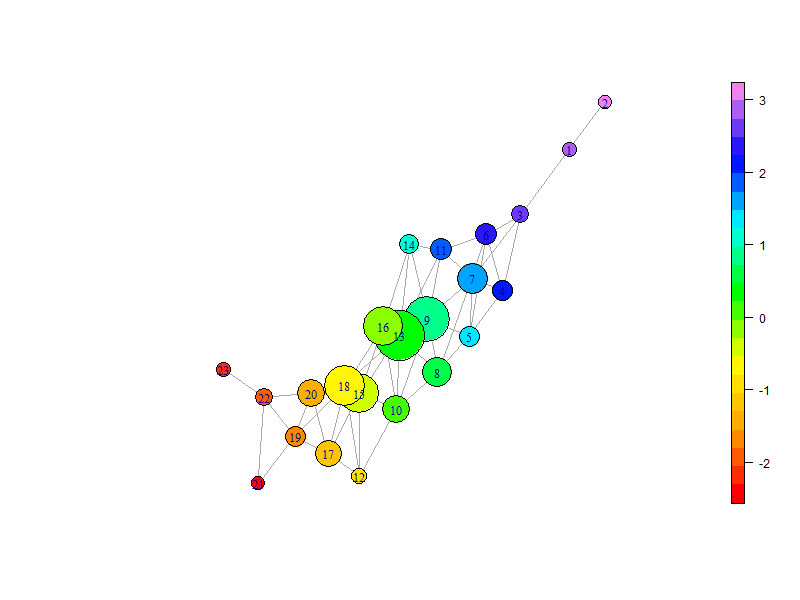
An understanding of the economic landscape in a world of ever increasing data necessitates representations of data that can inform policy, deepen understanding and guide future research. Topological Data Analysis offers a set of tools which deliver on all three calls. Abstract two-dimensional snapshots of multi-dimensional space readily capture non-monotonic relationships, inform of similarity between points of interest in parameter space, mapping such to outcomes. Specific examples show how some, but not all, countries have returned to Great Depression levels, and reappraise the links between real private capital growth and the performance of the economy. Theoretical and empirical expositions alike remind on the dangers of assuming monotonic relationships and discounting combinations of factors as determinants of outcomes; both dangers Topological Data Analysis addresses. Policy-makers can look at outcomes and target areas of the input space where such are not satisfactory, academics may additionally find evidence to motivate theoretical development, and practitioners can gain a rapid and robust base for decision making.

paper research
Prediction Intervals for Synthetic Control Methods

Prediction Intervals for Synthetic Control Methods

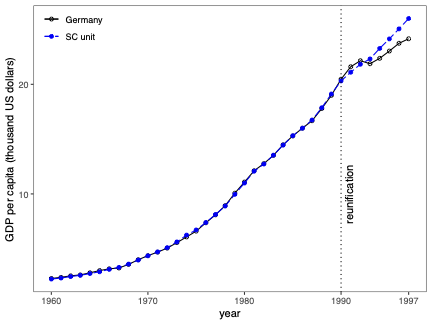
Uncertainty quantification is a fundamental problem in the analysis and interpretation of synthetic control (SC) methods. We develop conditional prediction intervals in the SC framework, and provide conditions under which these intervals offer finite-sample probability guarantees. Our method allows for covariate adjustment and non-stationary data. The construction begins by noting that the statistical uncertainty of the SC prediction is governed by two distinct sources of randomness one coming from the construction of the (likely misspecified) SC weights in the pre-treatment period, and the other coming from the unobservable stochastic error in the post-treatment period when the treatment effect is analyzed. Accordingly, our proposed prediction intervals are constructed taking into account both sources of randomness. For implementation, we propose a simulation-based approach along with finite-sample-based probability bound arguments, naturally leading to principled sensitivity analysis methods. We illustrate the numerical performance of our methods using empirical applications and a small simulation study. texttt{Python}, texttt{R} and texttt{Stata} software packages implementing our methodology are available.

paper research
Econometric Models of Network Formation

Econometric Models of Network Formation

This article provides a selective review on the recent literature on econometric models of network formation. The survey starts with a brief exposition on basic concepts and tools for the statistical description of networks. I then offer a review of dyadic models, focussing on statistical models on pairs of nodes and describe several developments of interest to the econometrics literature. The article also presents a discussion of non-dyadic models where link formation might be influenced by the presence or absence of additional links, which themselves are subject to similar influences. This is related to the statistical literature on conditionally specified models and the econometrics of game theoretical models. I close with a (non-exhaustive) discussion of potential areas for further development.

paper research
On rank estimators in increasing dimensions

On rank estimators in increasing dimensions

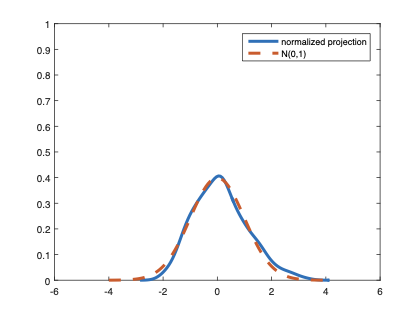
The family of rank estimators, including Han s maximum rank correlation (Han, 1987) as a notable example, has been widely exploited in studying regression problems. For these estimators, although the linear index is introduced for alleviating the impact of dimensionality, the effect of large dimension on inference is rarely studied. This paper fills this gap via studying the statistical properties of a larger family of M-estimators, whose objective functions are formulated as U-processes and may be discontinuous in increasing dimension set-up where the number of parameters, $p_{n}$, in the model is allowed to increase with the sample size, $n$. First, we find that often in estimation, as $p_{n}/n rightarrow 0$, $(p_{n}/n)^{1/2}$ rate of convergence is obtainable. Second, we establish Bahadur-type bounds and study the validity of normal approximation, which we find often requires a much stronger scaling requirement than $p_{n}^{2}/n rightarrow 0.$ Third, we state conditions under which the numerical derivative estimator of asymptotic covariance matrix is consistent, and show that the step size in implementing the covariance estimator has to be adjusted with respect to $p_{n}$. All theoretical results are further backed up by simulation studies.

paper research

< Category Statistics (Total: 347) >

Start searching

Enter keywords to search articles

↑↓
ESC
⌘K Shortcut