Cs.SY

All posts under category "Cs.SY"

3 posts total
Sorted by date
No Image

Game-Based Coalescence in Multi-Agent Systems

Coalescence, as a kind of ubiquitous group behavior in the nature and society, means that agents, companies or other substances keep consensus in states and act as a whole. This paper considers coalescence for n rational agents with distinct initial states. Considering the rationality and intellectuality of the population, the coalescing process is described by a bimatrix game which has the unique mixed strategy Nash equilibrium solution. Since the process is not an independent stochastic process, it is difficult to analyze the coalescing process. By using the first Borel-Cantelli Lemma, we prove that all agents will coalesce into one group with probability one. Moreover, the expected coalescence time is also evaluated. For the scenario where payoff functions are power functions, we obtain the distribution and expected value of coalescence time. Finally, simulation examples are provided to validate the effectiveness of the theoretical results.
paper research
An Introduction to Decentralized Stochastic Optimization with Gradient Tracking

An Introduction to Decentralized Stochastic Optimization with Gradient Tracking

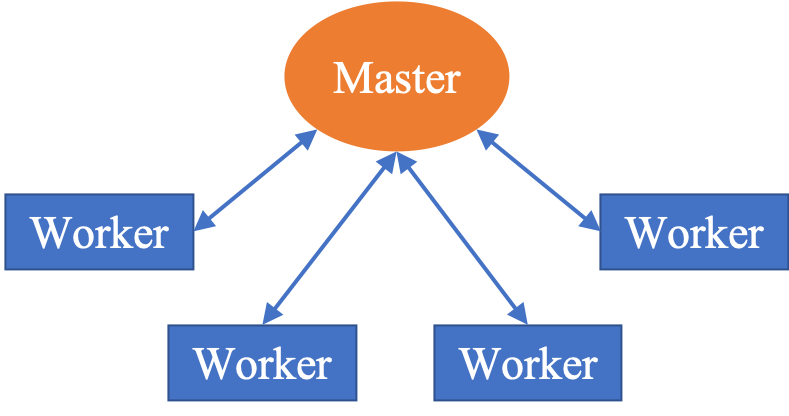
Decentralized solutions to finite-sum minimization are of significant importance in many signal processing, control, and machine learning applications. In such settings, the data is distributed over a network of arbitrarily-connected nodes and raw data sharing is prohibitive often due to communication or privacy constraints. In this article, we review decentralized stochastic first-order optimization methods and illustrate some recent improvements based on gradient tracking and variance reduction, focusing particularly on smooth and strongly-convex objective functions. We provide intuitive illustrations of the main technical ideas as well as applications of the algorithms in the context of decentralized training of machine learning models.

paper research
Multi-Task Regression-Based Learning for Autonomous Drone Flight Control in Unstructured Outdoor Environments

Multi-Task Regression-Based Learning for Autonomous Drone Flight Control in Unstructured Outdoor Environments

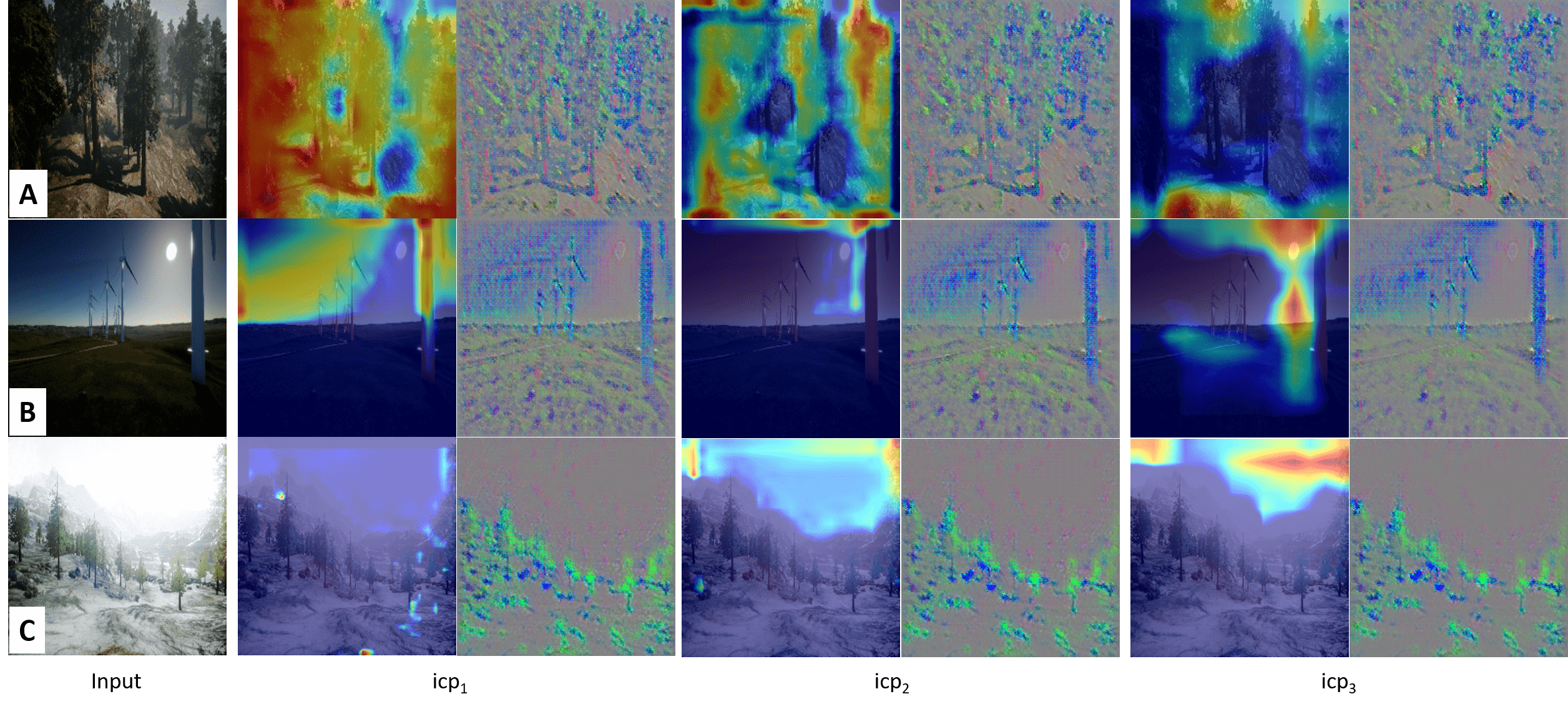
Increased growth in the global Unmanned Aerial Vehicles (UAV) (drone) industry has expanded possibilities for fully autonomous UAV applications. A particular application which has in part motivated this research is the use of UAV in wide area search and surveillance operations in unstructured outdoor environments. The critical issue with such environments is the lack of structured features that could aid in autonomous flight, such as road lines or paths. In this paper, we propose an End-to-End Multi-Task Regression-based Learning approach capable of defining flight commands for navigation and exploration under the forest canopy, regardless of the presence of trails or additional sensors (i.e. GPS). Training and testing are performed using a software in the loop pipeline which allows for a detailed evaluation against state-of-the-art pose estimation techniques. Our extensive experiments demonstrate that our approach excels in performing dense exploration within the required search perimeter, is capable of covering wider search regions, generalises to previously unseen and unexplored environments and outperforms contemporary state-of-the-art techniques.

paper research

< Category Statistics (Total: 347) >

Start searching

Enter keywords to search articles

↑↓
ESC
⌘K Shortcut