Cryptography and Security

All posts under category "Cryptography and Security"

12 posts total
Sorted by date
Aggressive Compression Enables LLM Weight Theft

Aggressive Compression Enables LLM Weight Theft

As frontier AIs become more powerful and costly to develop, adversaries have increasing incentives to steal model weights by mounting exfiltration attacks. In this work, we consider exfiltration attacks where an adversary attempts to sneak model weights out of a datacenter over a network. While exfiltration attacks are multi-step cyber attacks, we demonstrate that a single factor, the compressibility of model weights, significantly heightens exfiltration risk for large language models (LLMs). We tailor compression specifically for exfiltration by relaxing decompression constraints and demonstrate that attackers could achieve 16x to 100x compression with minimal trade-offs, reducing the time it would take for an attacker to illicitly transmit model weights from the defender s server from months to days. Finally, we study defenses designed to reduce exfiltration risk in three distinct ways making models harder to compress, making them harder to find, and tracking provenance for post-attack analysis using forensic watermarks. While all defenses are promising, the forensic watermark defense is both effective and cheap, and therefore is a particularly attractive lever for mitigating weight-exfiltration risk.
paper research
Cracking IoT Security  Can LLMs Outsmart Static Analysis Tools?

Cracking IoT Security Can LLMs Outsmart Static Analysis Tools?

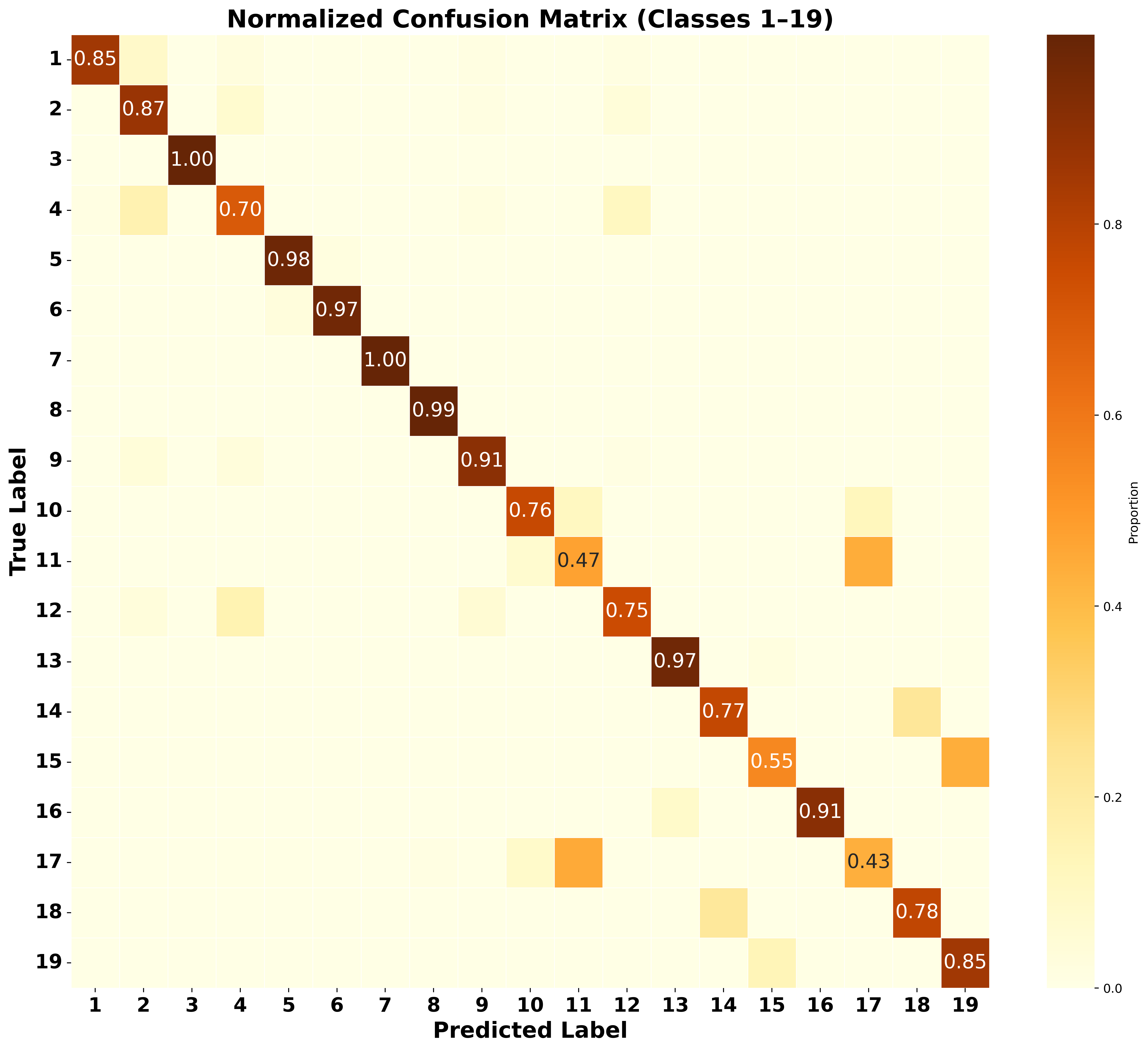
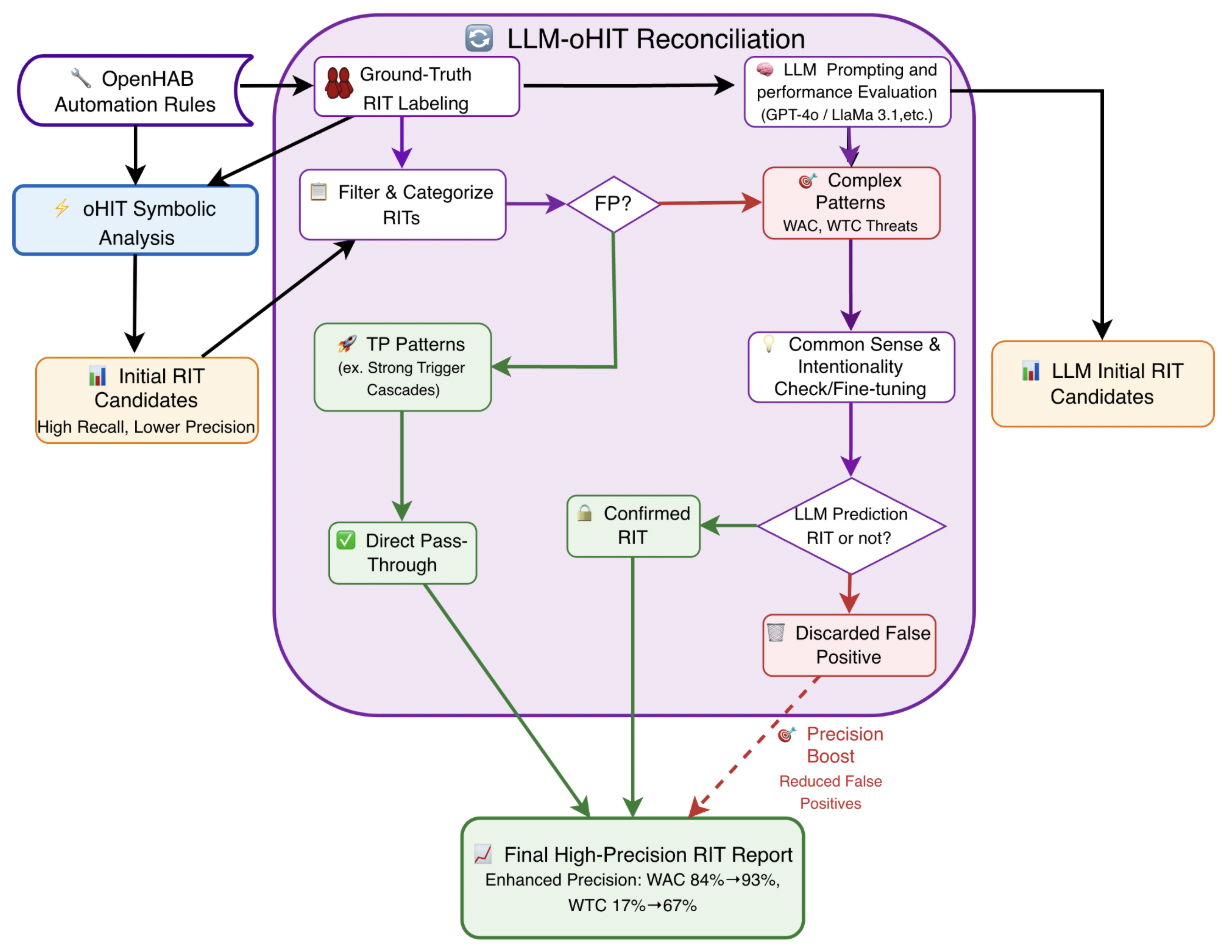
Smart home IoT platforms such as openHAB rely on Trigger Action Condition (TAC) rules to automate device behavior, but the interplay among these rules can give rise to interaction threats, unintended or unsafe behaviors emerging from implicit dependencies, conflicting triggers, or overlapping conditions. Identifying these threats requires semantic understanding and structural reasoning that traditionally depend on symbolic, constraint-driven static analysis. This work presents the first comprehensive evaluation of Large Language Models (LLMs) across a multi-category interaction threat taxonomy, assessing their performance on both the original openHAB (oHC/IoTB) dataset and a structurally challenging Mutation dataset designed to test robustness under rule transformations. We benchmark Llama 3.1 8B, Llama 70B, GPT-4o, Gemini-2.5-Pro, and DeepSeek-R1 across zero-, one-, and two-shot settings, comparing their results against oHIT s manually validated ground truth. Our findings show that while LLMs exhibit promising semantic understanding, particularly on action- and condition-related threats, their accuracy degrades significantly for threats requiring cross-rule structural reasoning, especially under mutated rule forms. Model performance varies widely across threat categories and prompt settings, with no model providing consistent reliability. In contrast, the symbolic reasoning baseline maintains stable detection across both datasets, unaffected by rule rewrites or structural perturbations. These results underscore that LLMs alone are not yet dependable for safety critical interaction-threat detection in IoT environments. We discuss the implications for tool design and highlight the potential of hybrid architectures that combine symbolic analysis with LLM-based semantic interpretation to reduce false positives while maintaining structural rigor.

paper research
Crafting Adversarial Inputs for Large Vision-Language Models Using Black-Box Optimization

Crafting Adversarial Inputs for Large Vision-Language Models Using Black-Box Optimization

Recent advancements in Large Vision-Language Models (LVLMs) have shown groundbreaking capabilities across diverse multimodal tasks. However, these models remain vulnerable to adversarial jailbreak attacks, where adversaries craft subtle perturbations to bypass safety mechanisms and trigger harmful outputs. Existing white-box attacks methods require full model accessibility, suffer from computing costs and exhibit insufficient adversarial transferability, making them impractical for real-world, black-box settings. To address these limitations, we propose a black-box jailbreak attack on LVLMs via Zeroth-Order optimization using Simultaneous Perturbation Stochastic Approximation (ZO-SPSA). ZO-SPSA provides three key advantages (i) gradient-free approximation by input-output interactions without requiring model knowledge, (ii) model-agnostic optimization without the surrogate model and (iii) lower resource requirements with reduced GPU memory consumption. We evaluate ZO-SPSA on three LVLMs, including InstructBLIP, LLaVA and MiniGPT-4, achieving the highest jailbreak success rate of 83.0% on InstructBLIP, while maintaining imperceptible perturbations comparable to white-box methods. Moreover, adversarial examples generated from MiniGPT-4 exhibit strong transferability to other LVLMs, with ASR reaching 64.18%. These findings underscore the real-world feasibility of black-box jailbreaks and expose critical weaknesses in the safety mechanisms of current LVLMs

paper research
Device-Native Autonomous Agents for Privacy-Preserving Negotiations

Device-Native Autonomous Agents for Privacy-Preserving Negotiations

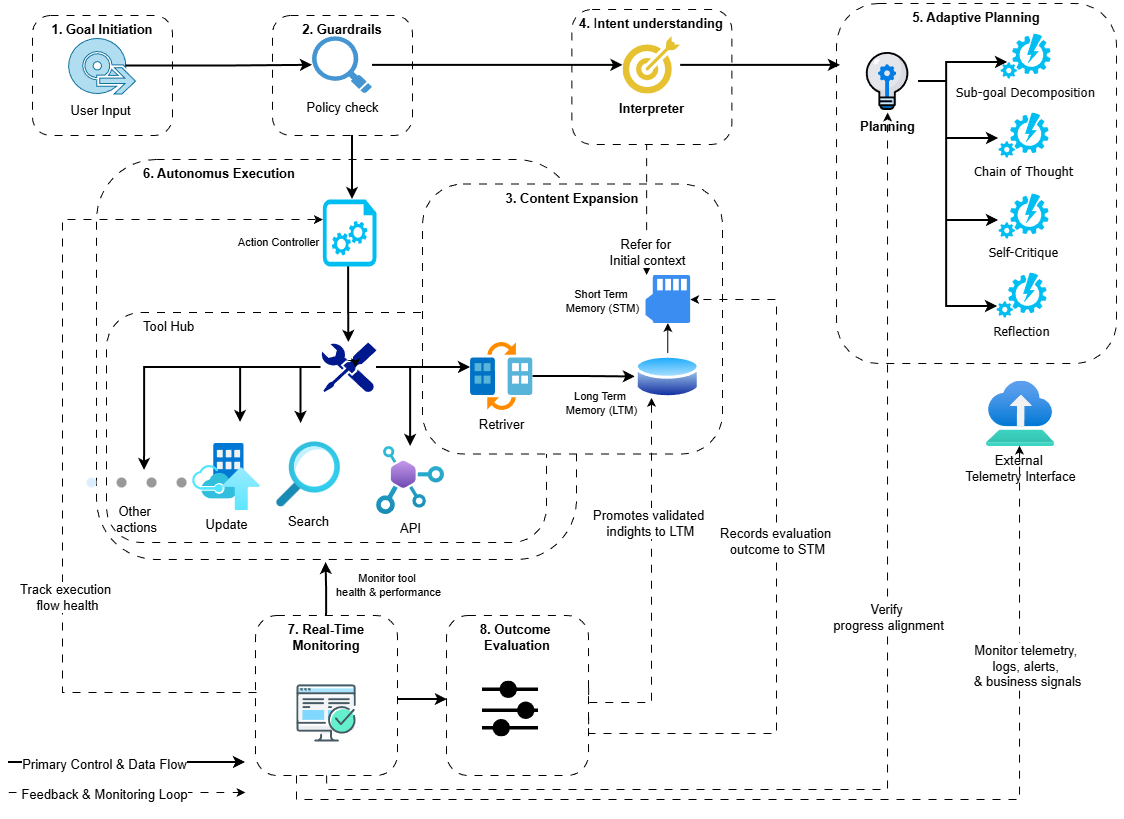
Automated negotiations in insurance and business-to-business (B2B) commerce encounter substantial challenges. Current systems force a trade-off between convenience and privacy by routing sensitive financial data through centralized servers, increasing security risks, and diminishing user trust. This study introduces a device-native autonomous Artificial Intelligence (AI) agent system for privacy-preserving negotiations. The proposed system operates exclusively on user hardware, enabling real-time bargaining while maintaining sensitive constraints locally. It integrates zero-knowledge proofs to ensure privacy and employs distilled world models to support advanced on-device reasoning. The architecture incorporates six technical components within an agentic AI workflow. Agents autonomously plan negotiation strategies, conduct secure multi-party bargaining, and generate cryptographic audit trails without exposing user data to external servers. The system is evaluated in insurance and B2B procurement scenarios across diverse device configurations. Results show an average success rate of 87%, a 2.4x latency improvement over cloud baselines, and strong privacy preservation through zero-knowledge proofs. User studies show 27% higher trust scores when decision trails are available. These findings establish a foundation for trustworthy autonomous agents in privacy-sensitive financial domains.

paper research
Engineering Attack Vectors and Detecting Anomalies in Additive Manufacturing

Engineering Attack Vectors and Detecting Anomalies in Additive Manufacturing

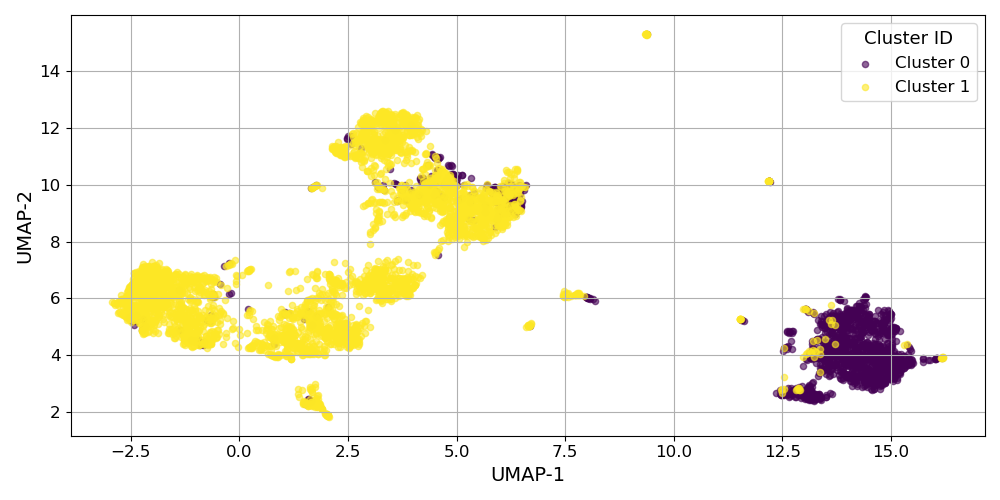
Additive manufacturing (AM) is rapidly integrating into critical sectors such as aerospace, automotive, and healthcare. However, this cyber-physical convergence introduces new attack surfaces, especially at the interface between computer-aided design (CAD) and machine execution layers. In this work, we investigate targeted cyberattacks on two widely used fused deposition modeling (FDM) systems, Creality s flagship model K1 Max, and Ender 3. Our threat model is a multi-layered Man-in-the-Middle (MitM) intrusion, where the adversary intercepts and manipulates G-code files during upload from the user interface to the printer firmware. The MitM intrusion chain enables several stealthy sabotage scenarios. These attacks remain undetectable by conventional slicer software or runtime interfaces, resulting in structurally defective yet externally plausible printed parts. To counter these stealthy threats, we propose an unsupervised Intrusion Detection System (IDS) that analyzes structured machine logs generated during live printing. Our defense mechanism uses a frozen Transformer-based encoder (a BERT variant) to extract semantic representations of system behavior, followed by a contrastively trained projection head that learns anomaly-sensitive embeddings. Later, a clustering-based approach and a self-attention autoencoder are used for classification. Experimental results demonstrate that our approach effectively distinguishes between benign and compromised executions.

paper research
Exposing Hidden Interfaces  LLM-Guided Type Inference for Reverse Engineering macOS Private Frameworks

Exposing Hidden Interfaces LLM-Guided Type Inference for Reverse Engineering macOS Private Frameworks

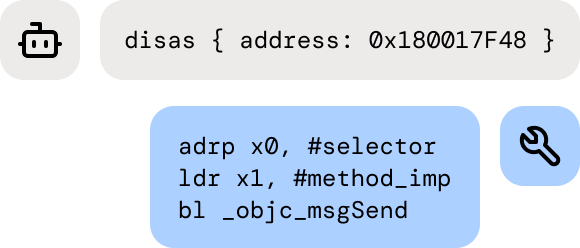
Private macOS frameworks underpin critical services and daemons but remain undocumented and distributed only as stripped binaries, complicating security analysis. We present MOTIF, an agentic framework that integrates tool-augmented analysis with a finetuned large language model specialized for Objective-C type inference. The agent manages runtime metadata extraction, binary inspection, and constraint checking, while the model generates candidate method signatures that are validated and refined into compilable headers. On MOTIF-Bench, a benchmark built from public frameworks with groundtruth headers, MOTIF improves signature recovery from 15% to 86% compared to baseline static analysis tooling, with consistent gains in tool-use correctness and inference stability. Case studies on private frameworks show that reconstructed headers compile, link, and facilitate downstream security research and vulnerability studies. By transforming opaque binaries into analyzable interfaces, MOTIF establishes a scalable foundation for systematic auditing of macOS internals.

paper research
No Image

Large Empirical Case Study Adapting Go-Explore for AI Red Team Testing

Production LLM agents with tool-using capabilities require security testing despite their safety training. We adapt Go-Explore to evaluate GPT-4o-mini across 28 experimental runs spanning six research questions. We find that random-seed variance dominates algorithmic parameters, yielding an 8x spread in outcomes; single-seed comparisons are unreliable, while multi-seed averaging materially reduces variance in our setup. Reward shaping consistently harms performance, causing exploration collapse in 94% of runs or producing 18 false positives with zero verified attacks. In our environment, simple state signatures outperform complex ones. For comprehensive security testing, ensembles provide attack-type diversity, whereas single agents optimize coverage within a given attack type. Overall, these results suggest that seed variance and targeted domain knowledge can outweigh algorithmic sophistication when testing safety-trained models.

paper research
PatchBlock  A Lightweight Defense Against Adversarial Patches for Embedded EdgeAI Devices

PatchBlock A Lightweight Defense Against Adversarial Patches for Embedded EdgeAI Devices

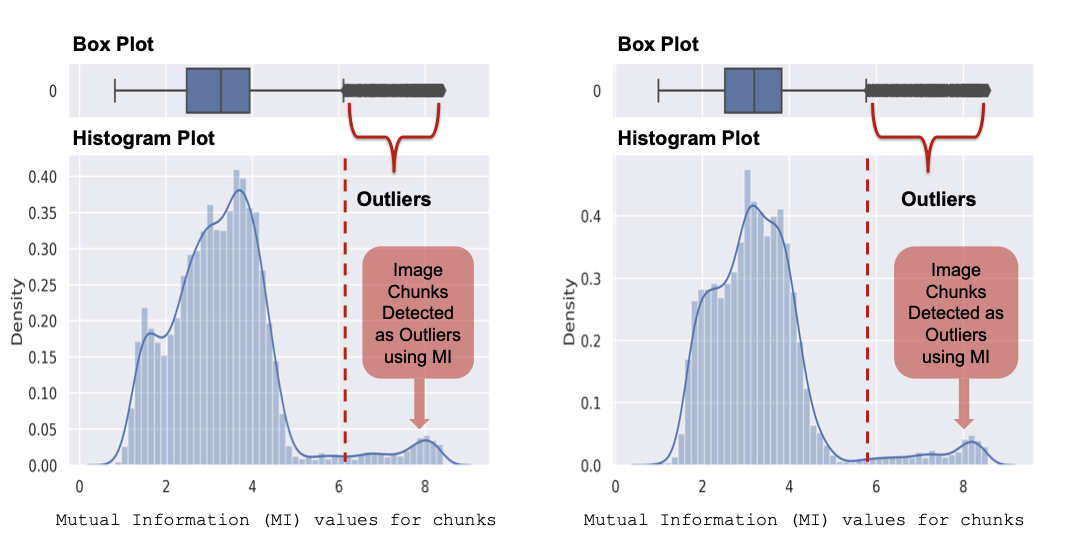
Adversarial attacks pose a significant challenge to the reliable deployment of machine learning models in EdgeAI applications, such as autonomous driving and surveillance, which rely on resource-constrained devices for real-time inference. Among these, patch-based adversarial attacks, where small malicious patches (e.g., stickers) are applied to objects, can deceive neural networks into making incorrect predictions with potentially severe consequences. In this paper, we present PatchBlock, a lightweight framework designed to detect and neutralize adversarial patches in images. Leveraging outlier detection and dimensionality reduction, PatchBlock identifies regions affected by adversarial noise and suppresses their impact. It operates as a pre-processing module at the sensor level, efficiently running on CPUs in parallel with GPU inference, thus preserving system throughput while avoiding additional GPU overhead. The framework follows a three-stage pipeline splitting the input into chunks (Chunking), detecting anomalous regions via a redesigned isolation forest with targeted cuts for faster convergence (Separating), and applying dimensionality reduction on the identified outliers (Mitigating). PatchBlock is both model- and patch-agnostic, can be retrofitted to existing pipelines, and integrates seamlessly between sensor inputs and downstream models. Evaluations across multiple neural architectures, benchmark datasets, attack types, and diverse edge devices demonstrate that PatchBlock consistently improves robustness, recovering up to 77% of model accuracy under strong patch attacks such as the Google Adversarial Patch, while maintaining high portability and minimal clean accuracy loss. Additionally, PatchBlock outperforms the state-of-the-art defenses in efficiency, in terms of computation time and energy consumption per sample, making it suitable for EdgeAI applications.

paper research
SynRAG  A Large Language Model Framework for Executable Query Generation in Heterogeneous SIEM Systems

SynRAG A Large Language Model Framework for Executable Query Generation in Heterogeneous SIEM Systems

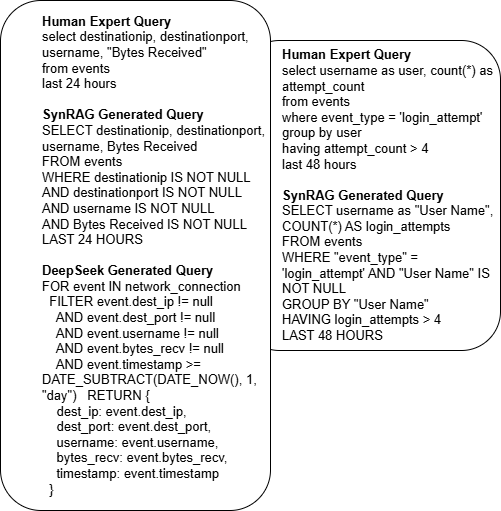
Security Information and Event Management (SIEM) systems are essential for large enterprises to monitor their IT infrastructure by ingesting and analyzing millions of logs and events daily. Security Operations Center (SOC) analysts are tasked with monitoring and analyzing this vast data to identify potential threats and take preventive actions to protect enterprise assets. However, the diversity among SIEM platforms, such as Palo Alto Networks Qradar, Google SecOps, Splunk, Microsoft Sentinel and the Elastic Stack, poses significant challenges. As these systems differ in attributes, architecture, and query languages, making it difficult for analysts to effectively monitor multiple platforms without undergoing extensive training or forcing enterprises to expand their workforce. To address this issue, we introduce SynRAG, a unified framework that automatically generates threat detection or incident investigation queries for multiple SIEM platforms from a platform-agnostic specification. SynRAG can generate platformspecific queries from a single high-level specification written by analysts. Without SynRAG, analysts would need to manually write separate queries for each SIEM platform, since query languages vary significantly across systems. This framework enables seamless threat detection and incident investigation across heterogeneous SIEM environments, reducing the need for specialized training and manual query translation. We evaluate SynRAG against state-of-the-art language models, including GPT, Llama, DeepSeek, Gemma, and Claude, using Qradar and SecOps as representative SIEM systems. Our results demonstrate that SynRAG generates significantly better queries for crossSIEM threat detection and incident investigation compared to the state-of-the-art base models.

paper research
No Image

The Silicon Psyche Anthropomorphic Vulnerabilities in Large Language Models

Large Language Models (LLMs) are rapidly transitioning from conversational assistants to autonomous agents embedded in critical organizational functions, including Security Operations Centers (SOCs), financial systems, and infrastructure management. Current adversarial testing paradigms focus predominantly on technical attack vectors prompt injection, jailbreaking, and data exfiltration. We argue this focus is catastrophically incomplete. LLMs, trained on vast corpora of human-generated text, have inherited not merely human knowledge but human textit{psychological architecture} -- including the pre-cognitive vulnerabilities that render humans susceptible to social engineering, authority manipulation, and affective exploitation. This paper presents the first systematic application of the Cybersecurity Psychology Framework ( cpf{}), a 100-indicator taxonomy of human psychological vulnerabilities, to non-human cognitive agents. We introduce the textbf{Synthetic Psychometric Assessment Protocol} ( sysname{}), a methodology for converting cpf{} indicators into adversarial scenarios targeting LLM decision-making. Our preliminary hypothesis testing across seven major LLM families reveals a disturbing pattern while models demonstrate robust defenses against traditional jailbreaks, they exhibit critical susceptibility to authority-gradient manipulation, temporal pressure exploitation, and convergent-state attacks that mirror human cognitive failure modes. We term this phenomenon textbf{Anthropomorphic Vulnerability Inheritance} (AVI) and propose that the security community must urgently develop ``psychological firewalls -- intervention mechanisms adapted from the Cybersecurity Psychology Intervention Framework ( cpif{}) -- to protect AI agents operating in adversarial environments.

paper research

Start searching

Enter keywords to search articles

↑↓
↵
ESC
⌘K Shortcut