Computer Science / Software Engineering

All posts under category "Computer Science / Software Engineering"

20 posts total
Sorted by date
No Image

Hierarchical Adaptive Evaluation of LLMs and SAST Tools for CWE Prediction in Python

Large Language Models have become integral to software development, yet they frequently generate vulnerable code. Existing code vulnerability detection benchmarks employ binary classification, lacking the CWE-level specificity required for actionable feedback in iterative correction systems. We present ALPHA (Adaptive Learning via Penalty in Hierarchical Assessment), the first function-level Python benchmark that evaluates both LLMs and SAST tools using hierarchically aware, CWE-specific penalties. ALPHA distinguishes between over-generalisation, over-specification, and lateral errors, reflecting practical differences in diagnostic utility. Evaluating seven LLMs and two SAST tools, we find LLMs substantially outperform SAST, though SAST demonstrates higher precision when detections occur. Critically, prediction consistency varies dramatically across models (8.26%-81.87% agreement), with significant implications for feedback-driven systems. We further outline a pathway for future work incorporating ALPHA penalties into supervised fine-tuning, which could provide principled hierarchy-aware vulnerability detection pending empirical validation.
paper research
Slither  A Static Analysis Framework for Smart Contracts

Slither A Static Analysis Framework for Smart Contracts

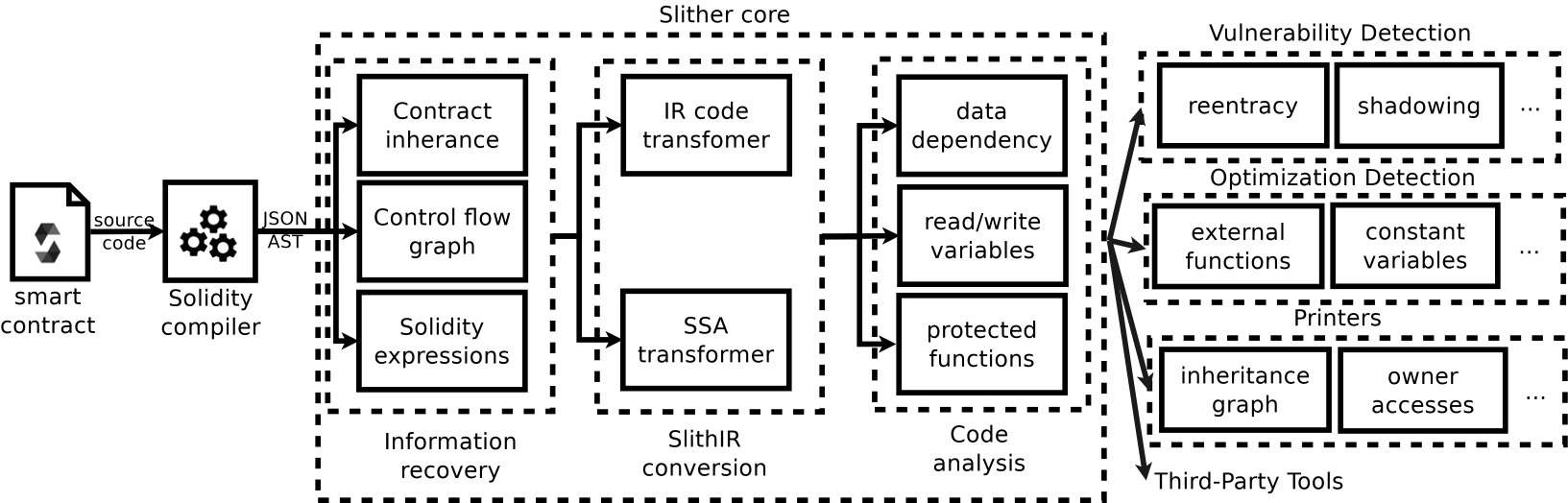
This paper describes Slither, a static analysis framework designed to provide rich information about Ethereum smart contracts. It works by converting Solidity smart contracts into an intermediate representation called SlithIR. SlithIR uses Static Single Assignment (SSA) form and a reduced instruction set to ease implementation of analyses while preserving semantic information that would be lost in transforming Solidity to bytecode. Slither allows for the application of commonly used program analysis techniques like dataflow and taint tracking. Our framework has four main use cases (1) automated detection of vulnerabilities, (2) automated detection of code optimization opportunities, (3) improvement of the user s understanding of the contracts, and (4) assistance with code review. In this paper, we present an overview of Slither, detail the design of its intermediate representation, and evaluate its capabilities on real-world contracts. We show that Slither s bug detection is fast, accurate, and outperforms other static analysis tools at finding issues in Ethereum smart contracts in terms of speed, robustness, and balance of detection and false positives. We compared tools using a large dataset of smart contracts and manually reviewed results for 1000 of the most used contracts.

paper research
Evolution Analysis of Use Cases Using Graph Transformation with Negative Application Conditions

Evolution Analysis of Use Cases Using Graph Transformation with Negative Application Conditions

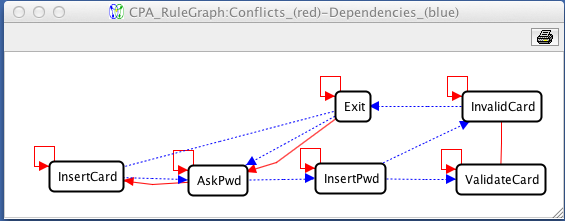
Use Case (UC) quality impacts the overall quality and defect rate of a system, as they specify the expected behavior of an implementation. In a previous work, we have defined an approach for a step-by-step translation from UCs written in natural language to a formal description in terms of Graph Transformation (GT), where each step of the UC was translated to a transformation rule. This UC formalisation enables the detection of several specification problems even before an actual implementation is produced, thus reducing development costs. In this paper, we extend our approach to handle UC evolution by defining emph{evolution rules}, which are described as higher-order rules, simultaneously changing the behaviour of a set of transformation rules. We also support the use of emph{negative application conditions (NAC)} associated both to the transformation and evolution rules. Analysis of the interplay between the evolution rules and the rules describing UC steps shows the effects of an evolution and serves to identify potential impacts, even before the changes are actually carried out. Besides defining the theoretical foundations of UC evolution with NACs, we have implemented the evolution analysis technique in the Verigraph tool and used it to verify impacts in 3 different case studies. The results demonstrate the applicability and usefulness of our approach to help developers in the evolution process based on UCs.

paper research
Obsidian  Typestate and Assets for Safer Blockchain Programming

Obsidian Typestate and Assets for Safer Blockchain Programming

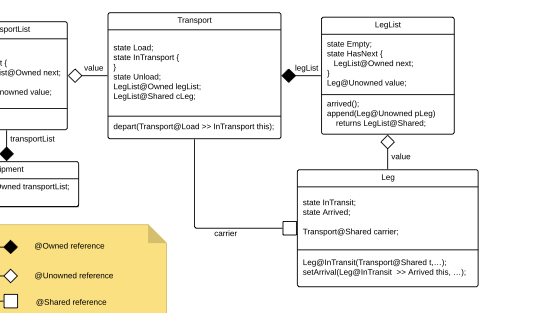
Blockchain platforms are coming into broad use for processing critical transactions among participants who have not established mutual trust. Many blockchains are programmable, supporting smart contracts, which maintain persistent state and support transactions that transform the state. Unfortunately, bugs in many smart contracts have been exploited by hackers. Obsidian is a novel programming language with a type system that enables static detection of bugs that are common in smart contracts today. Obsidian is based on a core calculus, Silica, for which we proved type soundness. Obsidian uses typestate to detect improper state manipulation and uses linear types to detect abuse of assets. We describe two case studies that evaluate Obsidian s applicability to the domains of parametric insurance and supply chain management, finding that Obsidian s type system facilitates reasoning about high-level states and ownership of resources. We compared our Obsidian implementation to a Solidity implementation, observing that the Solidity implementation requires much boilerplate checking and tracking of state, whereas Obsidian does this work statically.

paper research
sql4ml  A Declarative End-to-End Workflow for Machine Learning

sql4ml A Declarative End-to-End Workflow for Machine Learning

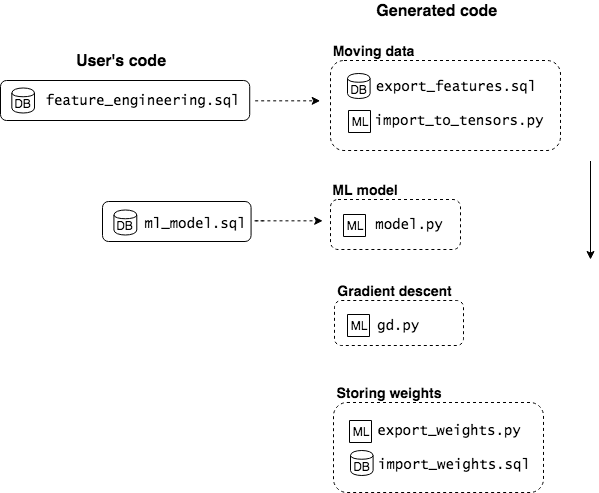
We present sql4ml, a system for expressing supervised machine learning (ML) models in SQL and automatically training them in TensorFlow. The primary motivation for this work stems from the observation that in many data science tasks there is a back-and-forth between a relational database that stores the data and a machine learning framework. Data preprocessing and feature engineering typically happen in a database, whereas learning is usually executed in separate ML libraries. This fragmented workflow requires from the users to juggle between different programming paradigms and software systems. With sql4ml the user can express both feature engineering and ML algorithms in SQL, while the system translates this code to an appropriate representation for training inside a machine learning framework. We describe our translation method, present experimental results from applying it on three well-known ML algorithms and discuss the usability benefits from concentrating the entire workflow on the database side.

paper research
No Image

Toward an Ontology for Defining Scenarios to Assess Automated Vehicles An Object-Oriented Framework

The development of new assessment methods for the performance of automated vehicles is essential to enable the deployment of automated driving technologies, due to the complex operational domain of automated vehicles. One contributing method is scenario-based assessment in which test cases are derived from real-world road traffic scenarios obtained from driving data. Given the complexity of the reality that is being modeled in these scenarios, it is a challenge to define a structure for capturing these scenarios. An intensional definition that provides a set of characteristics that are deemed to be both necessary and sufficient to qualify as a scenario assures that the scenarios constructed are both complete and intercomparable. In this article, we develop a comprehensive and operable definition of the notion of scenario while considering existing definitions in the literature. This is achieved by proposing an object-oriented framework in which scenarios and their building blocks are defined as classes of objects having attributes, methods, and relationships with other objects. The object-oriented approach promotes clarity, modularity, reusability, and encapsulation of the objects. We provide definitions and justifications of each of the terms. Furthermore, the framework is used to translate the terms in a coding language that is publicly available.

paper research
AI Security Insights  Lessons from Developer Challenges and Fixes

AI Security Insights Lessons from Developer Challenges and Fixes

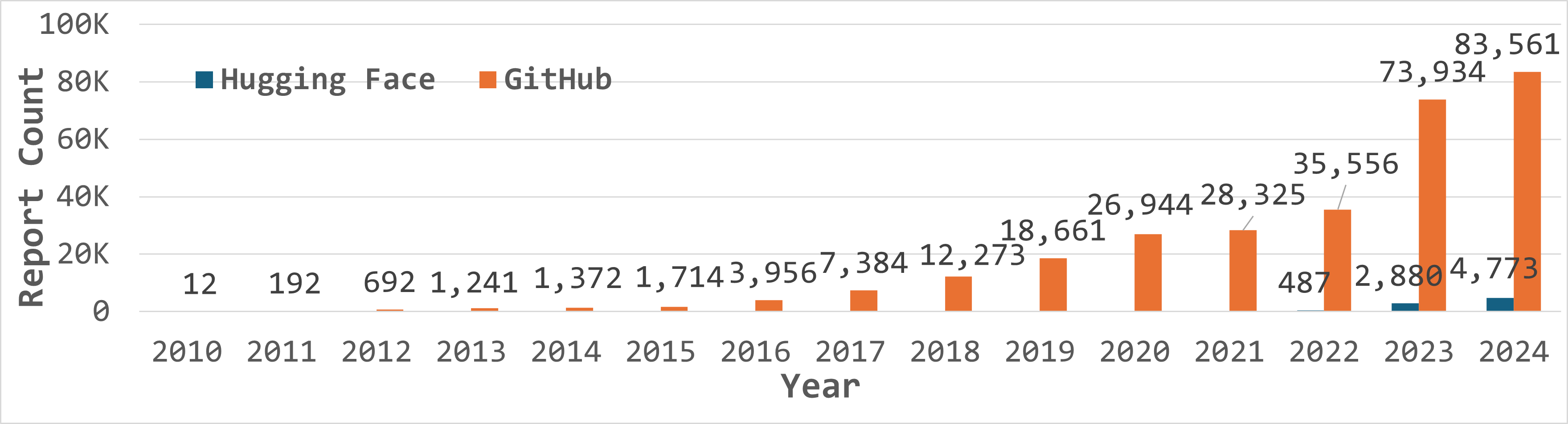
The rapid growth of Artificial Intelligence (AI) models and applications has led to an increasingly complex security landscape. Developers of AI projects must contend not only with traditional software supply chain issues but also with novel, AI-specific security threats. However, little is known about what security issues are commonly encountered and how they are resolved in practice. This gap hinders the development of effective security measures for each component of the AI supply chain. We bridge this gap by conducting an empirical investigation of developer-reported issues and solutions, based on discussions from Hugging Face and GitHub. To identify security-related discussions, we develop a pipeline that combines keyword matching with an optimal fine-tuned distilBERT classifier, which achieved the best performance in our extensive comparison of various deep learning and large language models. This pipeline produces a dataset of 312,868 security discussions, providing insights into the security reporting practices of AI applications and projects. We conduct a thematic analysis of 753 posts sampled from our dataset and uncover a fine-grained taxonomy of 32 security issues and 24 solutions across four themes (1) System and Software, (2) External Tools and Ecosystem, (3) Model, and (4) Data. We reveal that many security issues arise from the complex dependencies and black-box nature of AI components. Notably, challenges related to Models and Data often lack concrete solutions. Our insights can offer evidence-based guidance for developers and researchers to address real-world security threats across the AI supply chain.

paper research
Code for Machines, Not Just Humans  Quantifying AI-Friendliness with Code Health Metrics

Code for Machines, Not Just Humans Quantifying AI-Friendliness with Code Health Metrics

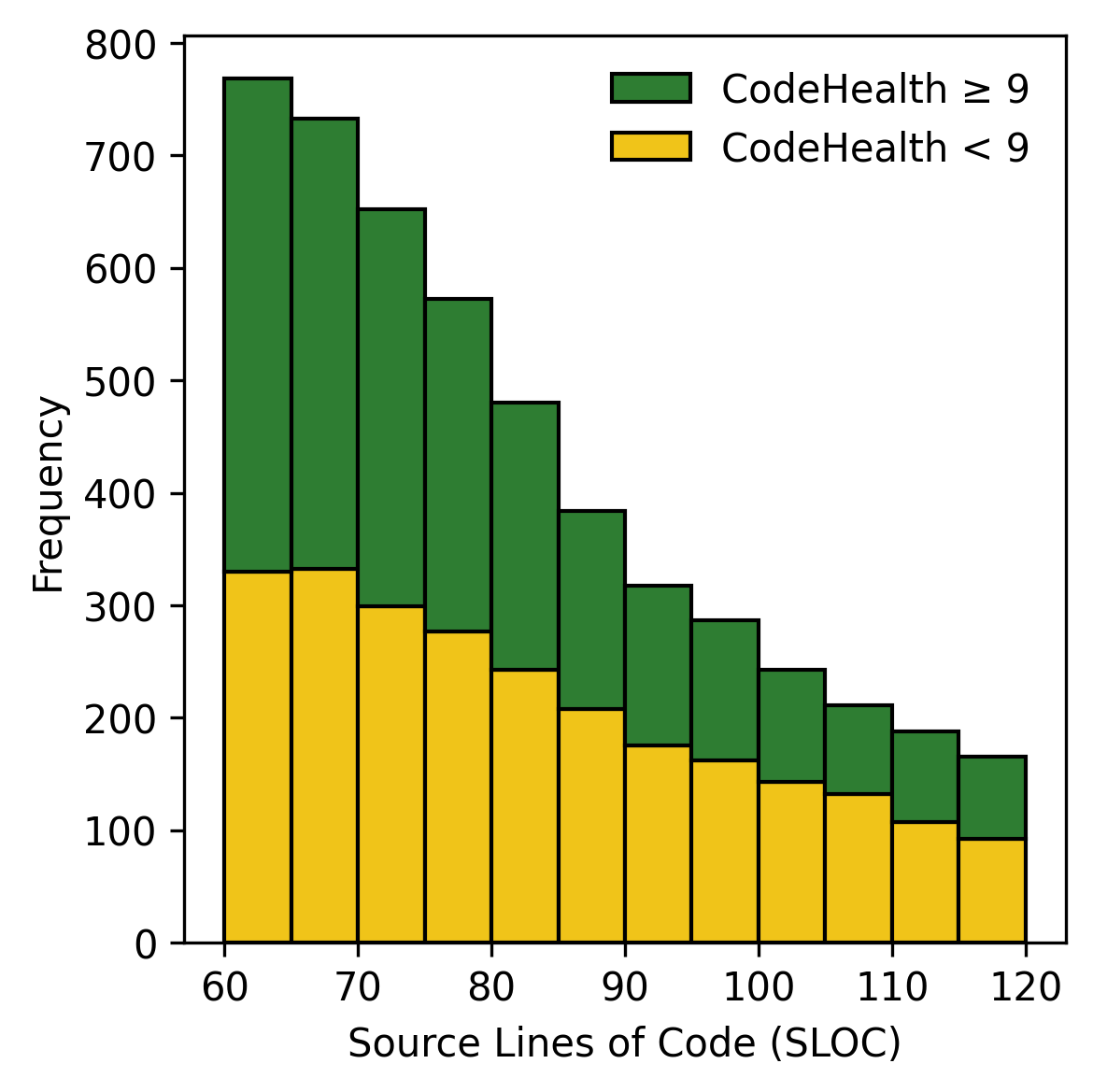
We are entering a hybrid era in which human developers and AI coding agents work in the same codebases. While industry practice has long optimized code for human comprehension, it is increasingly important to ensure that LLMs with different capabilities can edit code reliably. In this study, we investigate the concept of ``AI-friendly code via LLM-based refactoring on a dataset of 5,000 Python files from competitive programming. We find a meaningful association between CodeHealth, a quality metric calibrated for human comprehension, and semantic preservation after AI refactoring. Our findings confirm that human-friendly code is also more compatible with AI tooling. These results suggest that organizations can use CodeHealth to guide where AI interventions are lower risk and where additional human oversight is warranted. Investing in maintainability not only helps humans; it also prepares for large-scale AI adoption.

paper research
DynaFix  Iterative Automated Program Repair Driven by Execution-Level Dynamic Information

DynaFix Iterative Automated Program Repair Driven by Execution-Level Dynamic Information

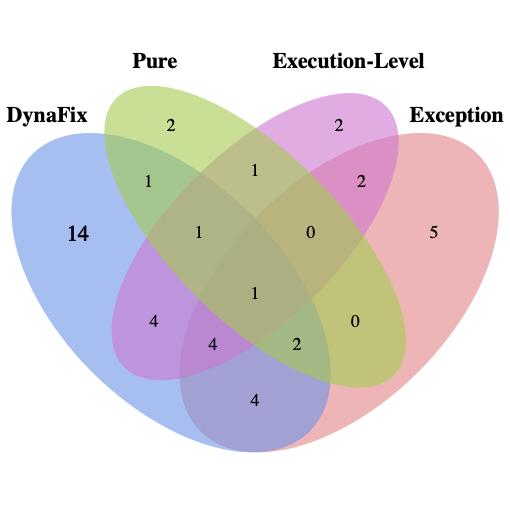
Automated Program Repair (APR) aims to automatically generate correct patches for buggy programs. Recent approaches leveraging large language models (LLMs) have shown promise but face limitations. Most rely solely on static analysis, ignoring runtime behaviors. Some attempt to incorporate dynamic signals, but these are often restricted to training or fine-tuning, or injected only once into the repair prompt, without iterative use. This fails to fully capture program execution. Current iterative repair frameworks typically rely on coarse-grained feedback, such as pass/fail results or exception types, and do not leverage fine-grained execution-level information effectively. As a result, models struggle to simulate human stepwise debugging, limiting their effectiveness in multi-step reasoning and complex bug repair. To address these challenges, we propose DynaFix, an execution-level dynamic information-driven APR method that iteratively leverages runtime information to refine the repair process. In each repair round, DynaFix captures execution-level dynamic information such as variable states, control-flow paths, and call stacks, transforming them into structured prompts to guide LLMs in generating candidate patches. If a patch fails validation, DynaFix re-executes the modified program to collect new execution information for the next attempt. This iterative loop incrementally improves patches based on updated feedback, similar to the stepwise debugging practices of human developers. We evaluate DynaFix on the Defects4J v1.2 and v2.0 benchmarks. DynaFix repairs 186 single-function bugs, a 10% improvement over state-of-the-art baselines, including 38 bugs previously unrepaired. It achieves correct patches within at most 35 attempts, reducing the patch search space by 70% compared with existing methods, thereby demonstrating both effectiveness and efficiency in repairing complex bugs.

paper research
Forecasting Defects  A Time-Sensitive Approach

Forecasting Defects A Time-Sensitive Approach

Background. Defect prediction has been a highly active topic among researchers in the Empirical Software Engineering field. Previous literature has successfully achieved the most accurate prediction of an incoming fault and identified the features and anomalies that precede it through just-in-time prediction. As software systems evolve continuously, there is a growing need for time-sensitive methods capable of forecasting defects before they manifest. Aim. Our study seeks to explore the effectiveness of time-sensitive techniques for defect forecasting. Moreover, we aim to investigate the early indicators that precede the occurrence of a defect. Method. We will train multiple time-sensitive forecasting techniques to forecast the future bug density of a software project, as well as identify the early symptoms preceding the occurrence of a defect. Expected results. Our expected results are translated into empirical evidence on the effectiveness of our approach for early estimation of bug proneness.

paper research
Humanizing AI Partners in Code Collaboration

Humanizing AI Partners in Code Collaboration

As Large Language Models (LLMs) evolve from code generators into collaborative partners for software engineers, our methods for evaluation are lagging. Current benchmarks, focused on code correctness, fail to capture the nuanced, interactive behaviors essential for successful human-AI partnership. To bridge this evaluation gap, this paper makes two core contributions. First, we present a foundational taxonomy of desirable agent behaviors for enterprise software engineering, derived from an analysis of 91 sets of user-defined agent rules. This taxonomy defines four key expectations of agent behavior Adhere to Standards and Processes, Ensure Code Quality and Reliability, Solving Problems Effectively, and Collaborating with the User. Second, recognizing that these expectations are not static, we introduce the Context-Adaptive Behavior (CAB) Framework. This emerging framework reveals how behavioral expectations shift along two empirically-derived axes the Time Horizon (from immediate needs to future ideals), established through interviews with 15 expert engineers, and the Type of Work (from enterprise production to rapid prototyping, for example), identified through a prompt analysis of a prototyping agent. Together, these contributions offer a human-centered foundation for designing and evaluating the next generation of AI agents, moving the field s focus from the correctness of generated code toward the dynamics of true collaborative intelligence.

paper research
Hybrid-Code  Secure Local Clinical Coding with Redundant Agents

Hybrid-Code Secure Local Clinical Coding with Redundant Agents

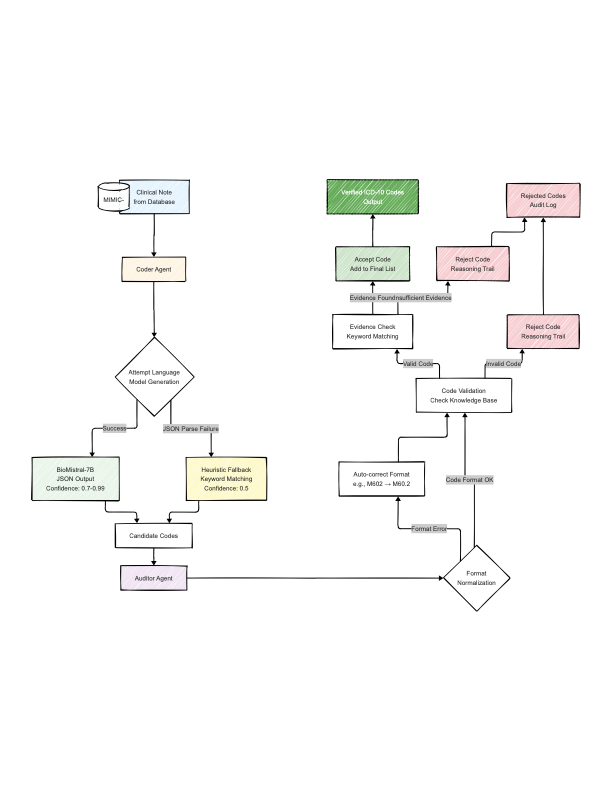
Clinical coding automation using cloud-based Large Language Models (LLMs) poses privacy risks and latency bottlenecks, rendering them unsuitable for on-premise healthcare deployment. We introduce Hybrid-Code, a hybrid neuro-symbolic multi-agent framework for local clinical coding that ensures production reliability through redundancy and verification. Our system comprises two agents a Coder that attempts language model-based semantic reasoning using BioMistral-7B but falls back to deterministic keyword matching when model output is unreliable, ensuring pipeline completion; and an Auditor that verifies codes against a 257-code knowledge base and clinical evidence. Evaluating on 1,000 MIMIC-III discharge summaries, we demonstrate no hallucinated codes among accepted outputs within the knowledge base, 24.47% verification rate, and 34.11% coverage (95% CI 31.2%--37.0%) with 86%+ language model utilization. The Auditor filtered invalid format codes and provided evidence-based quality control (75.53% rejection rate) while ensuring no patient data leaves the hospital firewall. The hybrid architecture -- combining language model semantic understanding (when successful), deterministic fallback (when the model fails), and symbolic verification (always active) -- ensures both reliability and privacy preservation, addressing critical barriers to AI adoption in healthcare. Our key finding is that reliability through redundancy is more valuable than pure model performance in production healthcare systems, where system failures are unacceptable.

paper research
In Line with Context  Repository-Level Code Generation via Context Inlining

In Line with Context Repository-Level Code Generation via Context Inlining

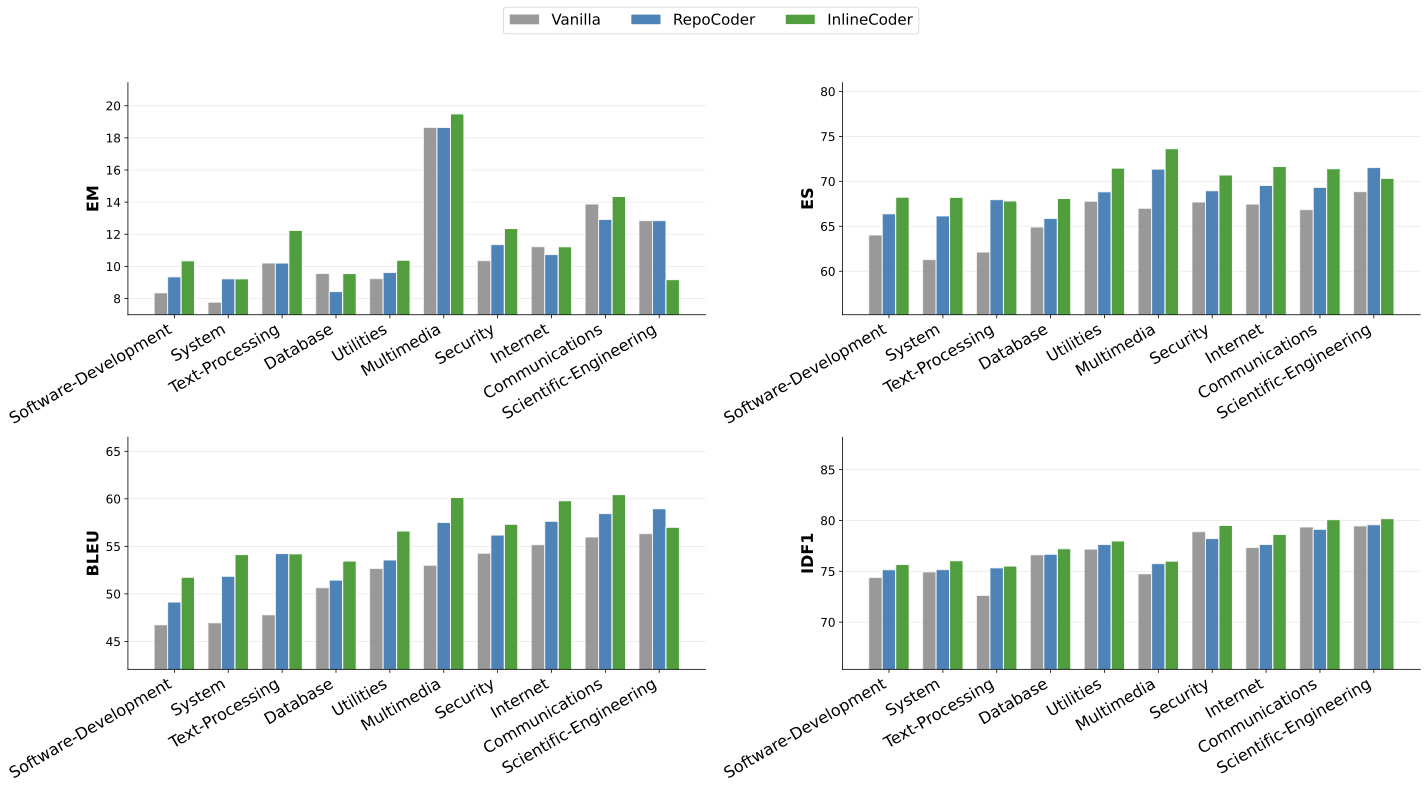
Repository-level code generation has attracted growing attention in recent years. Unlike function-level code generation, it requires the model to understand the entire repository, reasoning over complex dependencies across functions, classes, and modules. However, existing approaches such as retrieval-augmented generation (RAG) or context-based function selection often fall short they primarily rely on surface-level similarity and struggle to capture the rich dependencies that govern repository-level semantics. In this paper, we introduce InlineCoder, a novel framework for repository-level code generation. InlineCoder enhances the understanding of repository context by inlining the unfinished function into its call graph, thereby reframing the challenging repository understanding as an easier function-level coding task. Given a function signature, InlineCoder first generates a draft completion, termed an anchor, which approximates downstream dependencies and enables perplexity-based confidence estimation. This anchor drives a bidirectional inlining process (i) Upstream Inlining, which embeds the anchor into its callers to capture diverse usage scenarios; and (ii) Downstream Retrieval, which integrates the anchor s callees into the prompt to provide precise dependency context. The enriched context, combining draft completion with upstream and downstream perspectives, equips the LLM with a comprehensive repository view.

paper research
LIA  Supervised Fine-Tuning of Large Language Models for Automatic Issue Assignment

LIA Supervised Fine-Tuning of Large Language Models for Automatic Issue Assignment

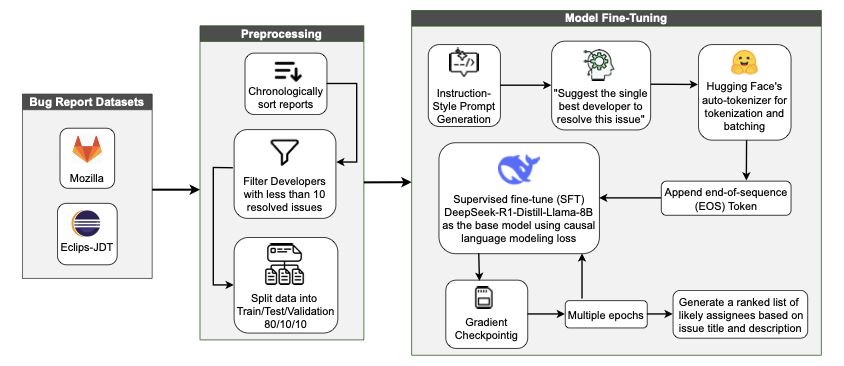
Issue assignment is a critical process in software maintenance, where new issue reports are validated and assigned to suitable developers. However, manual issue assignment is often inconsistent and error-prone, especially in large open-source projects where thousands of new issues are reported monthly. Existing automated approaches have shown promise, but many rely heavily on large volumes of project-specific training data or relational information that is often sparse and noisy, which limits their effectiveness. To address these challenges, we propose LIA (LLM-based Issue Assignment), which employs supervised fine-tuning to adapt an LLM, DeepSeek-R1-Distill-Llama-8B in this work, for automatic issue assignment. By leveraging the LLM s pretrained semantic understanding of natural language and software-related text, LIA learns to generate ranked developer recommendations directly from issue titles and descriptions. The ranking is based on the model s learned understanding of historical issue-to-developer assignments, using patterns from past tasks to infer which developers are most likely to handle new issues. Through comprehensive evaluation, we show that LIA delivers substantial improvements over both its base pretrained model and state-of-the-art baselines. It achieves up to +187.8% higher Hit@1 compared to the DeepSeek-R1-Distill-Llama-8B pretrained base model, and outperforms four leading issue assignment methods by as much as +211.2% in Hit@1 score. These results highlight the effectiveness of domain-adapted LLMs for software maintenance tasks and establish LIA as a practical, high-performing solution for issue assignment.

paper research
LLM Showdown  RAG vs SFT vs Dual-Agent in Code Security

LLM Showdown RAG vs SFT vs Dual-Agent in Code Security

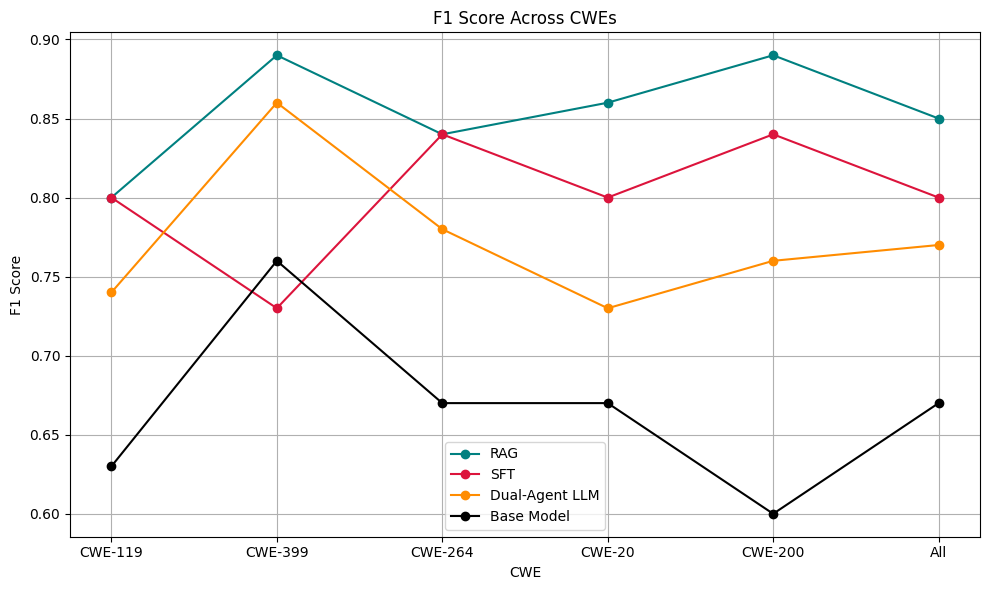
The rapid advancement of Large Language Models (LLMs) presents new opportunities for automated software vulnerability detection, a crucial task in securing modern codebases. This paper presents a comparative study on the effectiveness of LLM-based techniques for detecting software vulnerabilities. The study evaluates three approaches, Retrieval-Augmented Generation (RAG), Supervised Fine-Tuning (SFT), and a Dual-Agent LLM framework, against a baseline LLM model. A curated dataset was compiled from Big-Vul and real-world code repositories from GitHub, focusing on five critical Common Weakness Enumeration (CWE) categories CWE-119, CWE-399, CWE-264, CWE-20, and CWE-200. Our RAG approach, which integrated external domain knowledge from the internet and the MITRE CWE database, achieved the highest overall accuracy (0.86) and F1 score (0.85), highlighting the value of contextual augmentation. Our SFT approach, implemented using parameter-efficient QLoRA adapters, also demonstrated strong performance. Our Dual-Agent system, an architecture in which a secondary agent audits and refines the output of the first, showed promise in improving reasoning transparency and error mitigation, with reduced resource overhead. These results emphasize that incorporating a domain expertise mechanism significantly strengthens the practical applicability of LLMs in real-world vulnerability detection tasks.

paper research
LLM-Empowered Functional Safety and Security by Design in Automotive Systems

LLM-Empowered Functional Safety and Security by Design in Automotive Systems

This paper presents LLM-empowered workflow to support Software Defined Vehicle (SDV) software development, covering the aspects of security-aware system topology design, as well as event-driven decision-making code analysis. For code analysis we adopt event chains model which provides formal foundations to systematic validation of functional safety, taking into account the semantic validity of messages exchanged between key components, including both CAN and Vehicle Signal Specification (VSS). Analysis of security aspects for topology relies on synergy with Model-Driven Engineering (MDE) approach and Object Constraint Language (OCL) rules. Both locally deployable and proprietary solution are taken into account for evaluation within Advanced Driver-Assistance Systems (ADAS)-related scenarios.

paper research
Localized Calibrated Uncertainty in Code Language Models

Localized Calibrated Uncertainty in Code Language Models

Large Language models (LLMs) can generate complicated source code from natural language prompts. However, LLMs can generate output that deviates from what the user wants, requiring supervision and editing. To support this process, we offer techniques to localize where generations might be misaligned from user intent. We first create a dataset of Minimal Intent Aligning Patches of repaired LLM generated programs. Each program uses test cases to verify correctness. After creating a dataset of programs, we measure how well various techniques can assign a well-calibrated probability to indicate which parts of code will be edited in a minimal patch (i.e., give a probability that corresponds with empirical odds it is edited). We compare white-box probing (where we propose a technique for efficient arbitrary-span querying), against black-box reflective and self-consistency based approaches. We find probes with a small supervisor model can achieve low calibration error and Brier Skill Score of approx 0.2 estimating edited lines on code generated by models many orders of magnitude larger. We discuss the generalizability of the techniques, and the connections to AI oversight and control, finding a probe trained only on code shows some signs of generalizing to natural language errors if new probability scaling is allowed.

paper research
RovoDev Code Reviewer  Large-Scale Online Evaluation of LLM-based Code Review Automation at Atlassian

RovoDev Code Reviewer Large-Scale Online Evaluation of LLM-based Code Review Automation at Atlassian

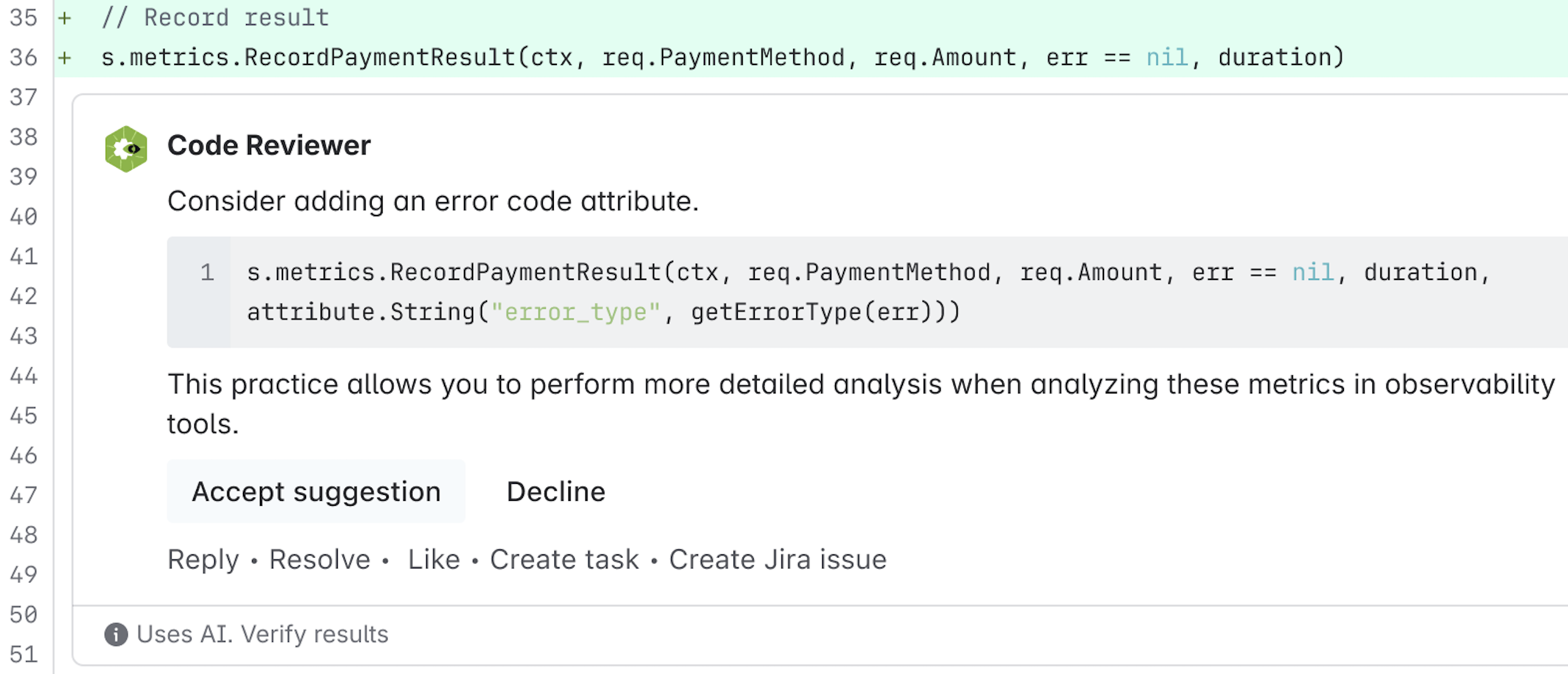
Large Language Models (LLMs)-powered code review automation has the potential to transform code review workflows. Despite the advances of LLM-powered code review comment generation approaches, several practical challenges remain for designing enterprise-grade code review automation tools. In particular, this paper aims at answering the practical question how can we design a review-guided, context-aware, quality-checked code review comment generation without fine-tuning? In this paper, we present RovoDev Code Reviewer, an enterprise-grade LLM-based code review automation tool designed and deployed at scale within Atlassian s development ecosystem with seamless integration into Atlassian s Bitbucket. Through the offline, online, user feedback evaluations over a one-year period, we conclude that RovoDev Code Reviewer is effective in generating code review comments that could lead to code resolution for 38.70% (i.e., comments that triggered code changes in the subsequent commits); and offers the promise of accelerating feedback cycles (i.e., decreasing the PR cycle time by 30.8%), alleviating reviewer workload (i.e., reducing the number of human-written comments by 35.6%), and improving overall software quality (i.e., finding errors with actionable suggestions).

paper research
Spotlight on Bias  Unveiling Patterns of Algorithmic Unfairness

Spotlight on Bias Unveiling Patterns of Algorithmic Unfairness

Fairness in algorithmic decision-making is often framed in terms of individual fairness, which requires that similar individuals receive similar outcomes. A system violates individual fairness if there exists a pair of inputs differing only in protected attributes (such as race or gender) that lead to significantly different outcomes-for example, one favorable and the other unfavorable. While this notion highlights isolated instances of unfairness, it fails to capture broader patterns of systematic or clustered discrimination that may affect entire subgroups. We introduce and motivate the concept of discrimination clustering, a generalization of individual fairness violations. Rather than detecting single counterfactual disparities, we seek to uncover regions of the input space where small perturbations in protected features lead to k-significantly distinct clusters of outcomes. That is, for a given input, we identify a local neighborhood-differing only in protected attributes-whose members outputs separate into many distinct clusters. These clusters reveal significant arbitrariness in treatment solely based on protected attributes that help expose patterns of algorithmic bias that elude pairwise fairness checks. We present HyFair, a hybrid technique that combines formal symbolic analysis (via SMT and MILP solvers) to certify individual fairness with randomized search to discover discriminatory clusters. This combination enables both formal guarantees-when no counterexamples exist-and the detection of severe violations that are computationally challenging for symbolic methods alone. Given a set of inputs exhibiting high k-unfairness, we introduce a novel explanation method to generate interpretable, decision-tree-style artifacts. Our experiments demonstrate that HyFair outperforms state-of-the-art fairness verification and local explanation methods.

paper research
The Invisible Hand of AI Libraries Shaping Open Source Projects and Communities

The Invisible Hand of AI Libraries Shaping Open Source Projects and Communities

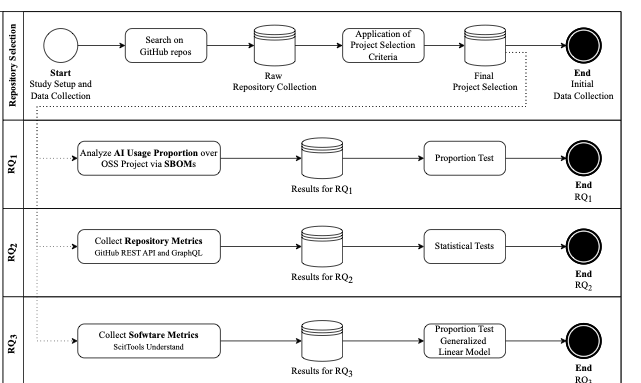
In the early 1980s, Open Source Software emerged as a revolutionary concept amidst the dominance of proprietary software. What began as a revolutionary idea has now become the cornerstone of computer science. Amidst OSS projects, AI is increasing its presence and relevance. However, despite the growing popularity of AI, its adoption and impacts on OSS projects remain underexplored. We aim to assess the adoption of AI libraries in Python and Java OSS projects and examine how they shape development, including the technical ecosystem and community engagement. To this end, we will perform a large-scale analysis on 157.7k potential OSS repositories, employing repository metrics and software metrics to compare projects adopting AI libraries against those that do not. We expect to identify measurable differences in development activity, community engagement, and code complexity between OSS projects that adopt AI libraries and those that do not, offering evidence-based insights into how AI integration reshapes software development practices.

paper research

< Category Statistics (Total: 566) >

Quantum Physics
5

Start searching

Enter keywords to search articles

↑↓
ESC
⌘K Shortcut