Computer Science / Programming Languages

All posts under category "Computer Science / Programming Languages"

4 posts total
Sorted by date
Obsidian  Typestate and Assets for Safer Blockchain Programming

Obsidian Typestate and Assets for Safer Blockchain Programming

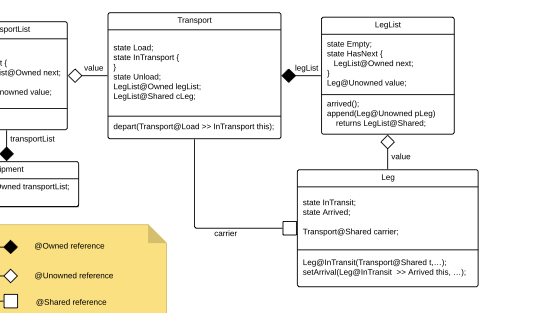
Blockchain platforms are coming into broad use for processing critical transactions among participants who have not established mutual trust. Many blockchains are programmable, supporting smart contracts, which maintain persistent state and support transactions that transform the state. Unfortunately, bugs in many smart contracts have been exploited by hackers. Obsidian is a novel programming language with a type system that enables static detection of bugs that are common in smart contracts today. Obsidian is based on a core calculus, Silica, for which we proved type soundness. Obsidian uses typestate to detect improper state manipulation and uses linear types to detect abuse of assets. We describe two case studies that evaluate Obsidian s applicability to the domains of parametric insurance and supply chain management, finding that Obsidian s type system facilitates reasoning about high-level states and ownership of resources. We compared our Obsidian implementation to a Solidity implementation, observing that the Solidity implementation requires much boilerplate checking and tracking of state, whereas Obsidian does this work statically.
paper research
Perish or Flourish? A Holistic Evaluation of Large Language Models for Code Generation in Functional Programming

Perish or Flourish? A Holistic Evaluation of Large Language Models for Code Generation in Functional Programming

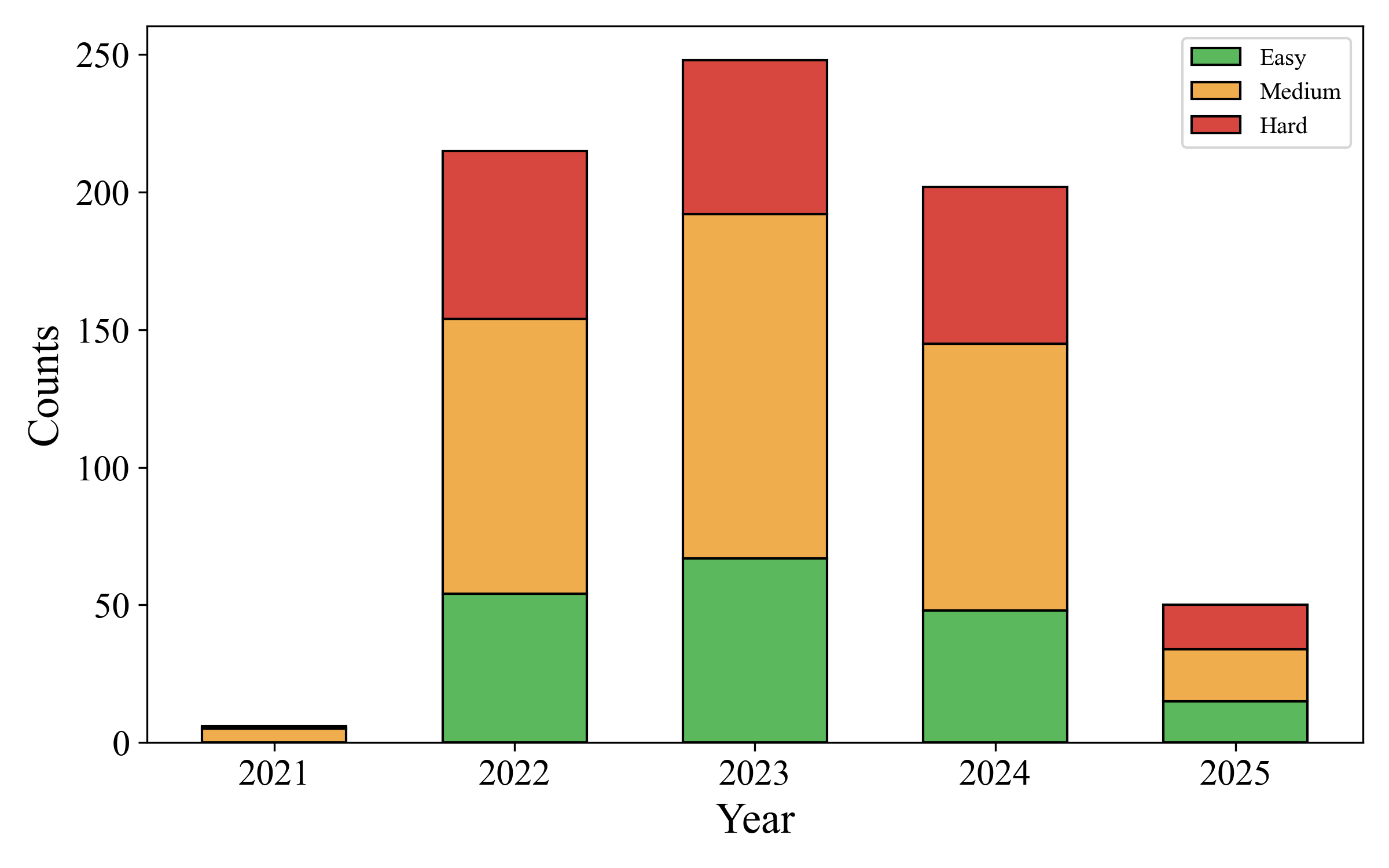
Functional programming provides strong foundations for developing reliable and secure software systems, yet its adoption remains not widespread due to the steep learning curve. Recent advances in Large Language Models (LLMs) for code generation present new opportunities to lower these barriers. However, extensive evaluations of LLMs largely focus on imperative programming languages, and their capabilities in functional programming languages (FP) remain underexplored. To address this gap, we introduce FPEval, a holistic evaluation framework built on FPBench, a new benchmark of 721 programming tasks across three difficulty levels on three mainstream FP languages Haskell, Ocaml and Scala. FPEval provides compehensive evaluation infrastructures with both test validations with comprehensive test suites and static analysis tools to assess both functional correctness and code style and maintainability. Using this framework, we evaluate state-of-the-art LLMs, including GPT-3.5, GPT-4o, and GPT-5, for code generation in functional programming languages and Java as an imperative baseline. Our results demonstrate that LLM performance in functional programming improves substantially with model advancement; however, error rates remain significantly higher in purely functional languages (Haskell and OCaml) than in hybrid (Scala) or imperative (Java) languages. Moreover, LLMs frequently generate non-idiomatic functional code that follows imperative patterns, raising concerns about code style and long-term maintainability. Finally, we show that LLMs can partially self-repair both correctness and quality issues when provided with static analysis feedback and hand-crafted instructions for common types of issues.

paper research
The New Compiler Stack  A Survey on the Synergy of LLMs and Compilers

The New Compiler Stack A Survey on the Synergy of LLMs and Compilers

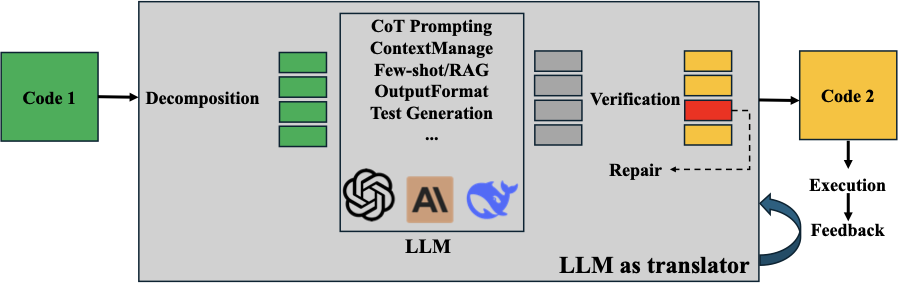
This survey has provided a systematic overview of the emerging field of LLM-enabled compilation by addressing several key research questions. We first answered how LLMs are being integrated by proposing a comprehensive, multi-dimensional taxonomy that categorizes works based on their Design Philosophy (Selector, Translator, Generator), LLM Methodology, their operational Level of Code Abstraction, and the specific Task Type they address. In answering what advancements these approaches offer, we identified three primary benefits the democratization of compiler development, the discovery of novel optimization strategies, and the broadening of the compiler s traditional scope. Finally, in addressing the field s challenges and opportunities, we highlighted the critical hurdles of ensuring correctness and achieving scalability, while identifying the development of hybrid systems as the most promising path forward. By providing these answers, this survey serves as a foundational roadmap for researchers and practitioners, charting the course for a new generation of LLM-powered, intelligent, adaptive and synergistic compilation tools.

paper research
Universal Factor Abstraction in Probabilistic Programming

Universal Factor Abstraction in Probabilistic Programming

Current probabilistic programming languages and tools tightly couple model representations with specific inference algorithms, preventing experimentation with novel representations or mixed discrete-continuous models. We introduce a factor abstraction with five fundamental operations that serve as a universal interface for manipulating factors regardless of their underlying representation. This enables representation-agnostic probabilistic programming where users can freely mix different representations (e.g. discrete tables, Gaussians distributions, sample-based approaches) within a single unified framework, allowing practical inference in complex hybrid models that current toolkits cannot adequately express.

paper research

< Category Statistics (Total: 566) >

Quantum Physics
5

Start searching

Enter keywords to search articles

↑↓
ESC
⌘K Shortcut