Computer Science / Operating Systems

All posts under category "Computer Science / Operating Systems"

2 posts total
Sorted by date
PAStime  Progress-Aware Scheduling for Time-Critical Computing

PAStime Progress-Aware Scheduling for Time-Critical Computing

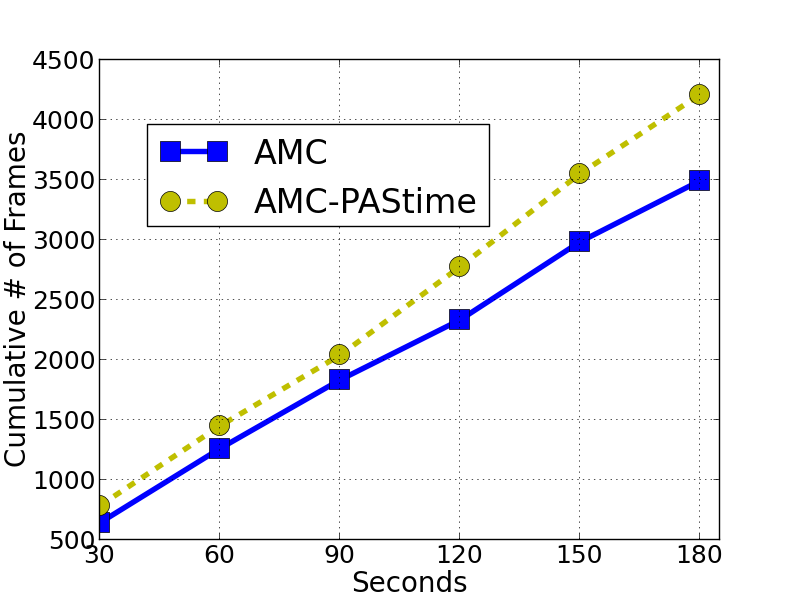
Over-estimation of worst-case execution times (WCETs) of real-time tasks leads to poor resource utilization. In a mixed-criticality system (MCS), the over-provisioning of CPU time to accommodate the WCETs of highly critical tasks may lead to degraded service for less critical tasks. In this paper, we present PAStime, a novel approach to monitor and adapt the runtime progress of highly time-critical applications, to allow for improved service to lower criticality tasks. In PAStime, CPU time is allocated to time-critical tasks according to the delays they experience as they progress through their control flow graphs. This ensures that as much time as possible is made available to improve the Quality-of-Service of less critical tasks, while high-criticality tasks are compensated after their delays. In this paper, we integrate PAStime with Adaptive Mixed-criticality (AMC) scheduling. The LO-mode budget of a high-criticality task is adjusted according to the delay observed at execution checkpoints. This is the first implementation of AMC in the scheduling framework Using LITMUS-RT, which is extended with our PAStime runtime policy and tested with real-time Linux applications such as object classification and detection. We observe in our experimental evaluation that AMC-PAStime significantly improves the utilization of the low-criticality tasks while guaranteeing service to high-criticality tasks.
paper research
Vulcan  Instance-Optimal Systems Heuristics Through LLM-Driven Search

Vulcan Instance-Optimal Systems Heuristics Through LLM-Driven Search

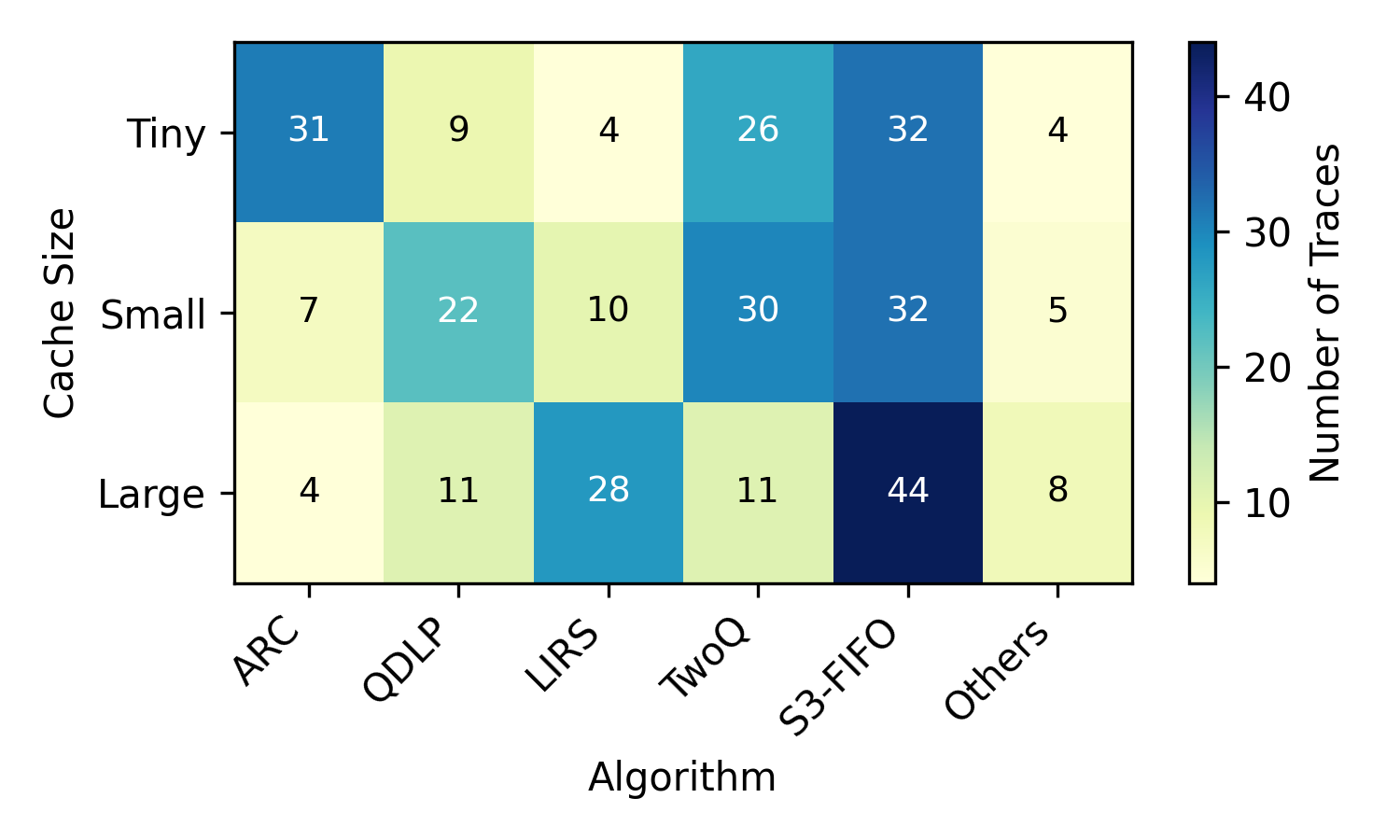
Resource-management tasks in modern operating and distributed systems continue to rely primarily on hand-designed heuristics for tasks such as scheduling, caching, or active queue management. Designing performant heuristics is an expensive, time-consuming process that we are forced to continuously go through due to the constant flux of hardware, workloads and environments. We propose a new alternative synthesizing instance-optimal heuristics -- specialized for the exact workloads and hardware where they will be deployed -- using code-generating large language models (LLMs). To make this synthesis tractable, Vulcan separates policy and mechanism through LLM-friendly, task-agnostic interfaces. With these interfaces, users specify the inputs and objectives of their desired policy, while Vulcan searches for performant policies via evolutionary search over LLM-generated code. This interface is expressive enough to capture a wide range of system policies, yet sufficiently constrained to allow even small, inexpensive LLMs to generate correct and executable code. We use Vulcan to synthesize performant heuristics for cache eviction and memory tiering, and find that these heuristics outperform all human-designed state-of-the-art algorithms by upto 69% and 7.9% in performance for each of these tasks respectively.

paper research

< Category Statistics (Total: 566) >

Quantum Physics
5

Start searching

Enter keywords to search articles

↑↓
ESC
⌘K Shortcut