Computer Science / Neural and Evolutionary Computing

All posts under category "Computer Science / Neural and Evolutionary Computing"

13 posts total
Sorted by date
Exact Computation with Infinitely Wide Neural Networks

Exact Computation with Infinitely Wide Neural Networks

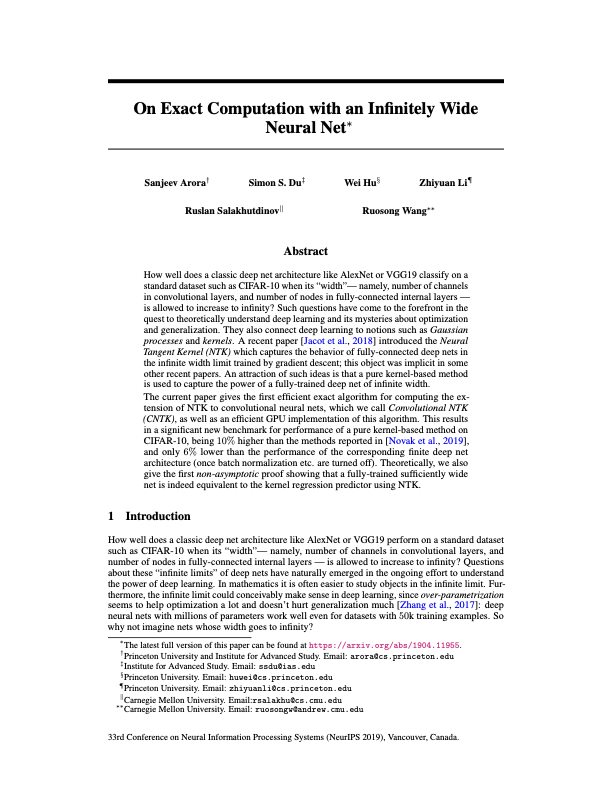
How well does a classic deep net architecture like AlexNet or VGG19 classify on a standard dataset such as CIFAR-10 when its width --- namely, number of channels in convolutional layers, and number of nodes in fully-connected internal layers --- is allowed to increase to infinity? Such questions have come to the forefront in the quest to theoretically understand deep learning and its mysteries about optimization and generalization. They also connect deep learning to notions such as Gaussian processes and kernels. A recent paper [Jacot et al., 2018] introduced the Neural Tangent Kernel (NTK) which captures the behavior of fully-connected deep nets in the infinite width limit trained by gradient descent; this object was implicit in some other recent papers. An attraction of such ideas is that a pure kernel-based method is used to capture the power of a fully-trained deep net of infinite width. The current paper gives the first efficient exact algorithm for computing the extension of NTK to convolutional neural nets, which we call Convolutional NTK (CNTK), as well as an efficient GPU implementation of this algorithm. This results in a significant new benchmark for the performance of a pure kernel-based method on CIFAR-10, being $10 %$ higher than the methods reported in [Novak et al., 2019], and only $6 %$ lower than the performance of the corresponding finite deep net architecture (once batch normalization, etc. are turned off). Theoretically, we also give the first non-asymptotic proof showing that a fully-trained sufficiently wide net is indeed equivalent to the kernel regression predictor using NTK.
paper research
Shenjing  A Low-Power Reconfigurable Neuromorphic Accelerator with Partial-Sum and Spike Networks-on-Chip

Shenjing A Low-Power Reconfigurable Neuromorphic Accelerator with Partial-Sum and Spike Networks-on-Chip

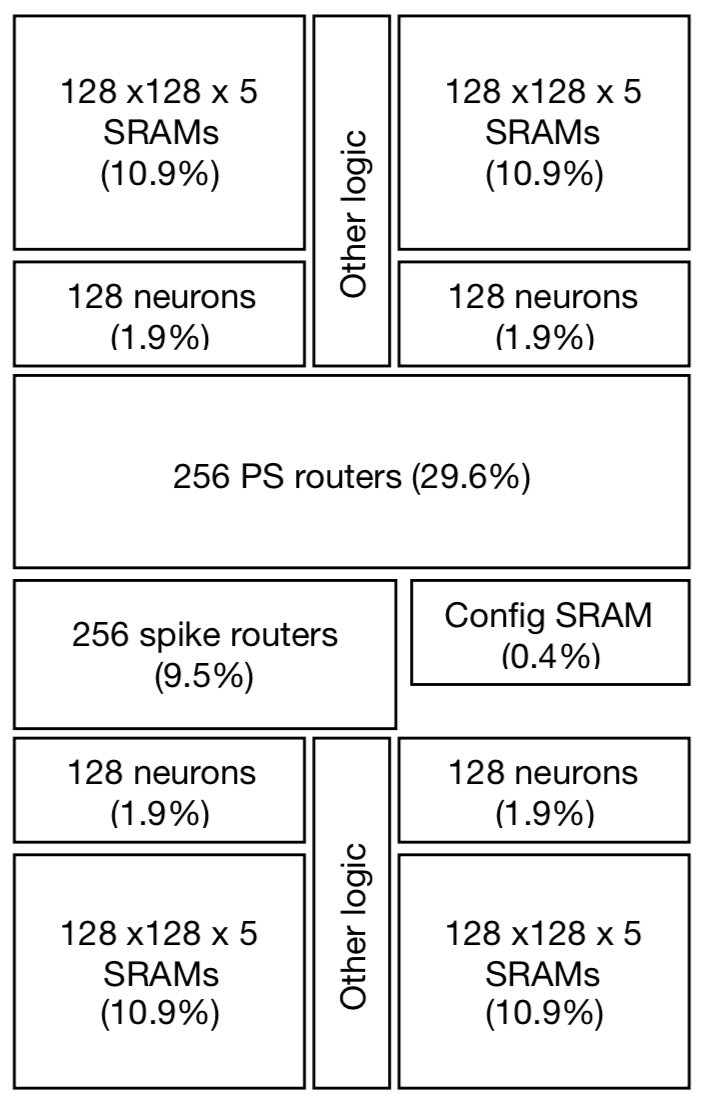
The next wave of on-device AI will likely require energy-efficient deep neural networks. Brain-inspired spiking neural networks (SNN) has been identified to be a promising candidate. Doing away with the need for multipliers significantly reduces energy. For on-device applications, besides computation, communication also incurs a significant amount of energy and time. In this paper, we propose Shenjing, a configurable SNN architecture which fully exposes all on-chip communications to software, enabling software mapping of SNN models with high accuracy at low power. Unlike prior SNN architectures like TrueNorth, Shenjing does not require any model modification and retraining for the mapping. We show that conventional artificial neural networks (ANN) such as multilayer perceptron, convolutional neural networks, as well as the latest residual neural networks can be mapped successfully onto Shenjing, realizing ANNs with SNN s energy efficiency. For the MNIST inference problem using a multilayer perceptron, we were able to achieve an accuracy of 96% while consuming just 1.26mW using 10 Shenjing cores.

paper research
Biologically Inspired LGN-CNN Architecture Mimics Lateral Geniculate Nucleus Functionality

Biologically Inspired LGN-CNN Architecture Mimics Lateral Geniculate Nucleus Functionality

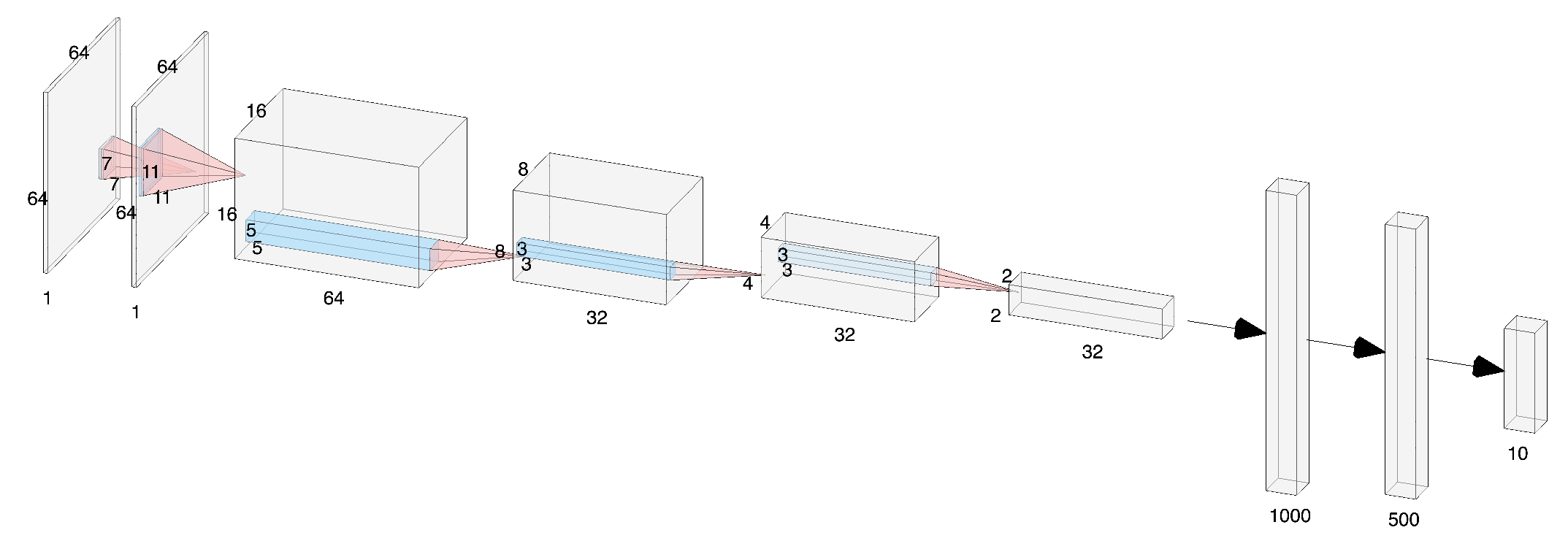
In this paper we introduce a biologically inspired Convolutional Neural Network (CNN) architecture called LGN-CNN that has a first convolutional layer composed by a single filter that mimics the role of the Lateral Geniculate Nucleus (LGN). The first layer of the neural network shows a rotational symmetric pattern justified by the structure of the net itself that turns up to be an approximation of a Laplacian of Gaussian (LoG). The latter function is in turn a good approximation of the receptive field profiles (RFPs) of the cells in the LGN. The analogy with the visual system is established, emerging directly from the architecture of the neural network. A proof of rotation invariance of the first layer is given on a fixed LGN-CNN architecture and the computational results are shown. Thus, contrast invariance capability of the LGN-CNN is investigated and a comparison between the Retinex effects of the first layer of LGN-CNN and the Retinex effects of a LoG is provided on different images. A statistical study is done on the filters of the second convolutional layer with respect to biological data. In conclusion, the model we have introduced approximates well the RFPs of both LGN and V1 attaining similar behavior as regards long range connections of LGN cells that show Retinex effects.

paper research
AI-Based Detection of Pilgrims Using Convolutional Neural Networks

AI-Based Detection of Pilgrims Using Convolutional Neural Networks

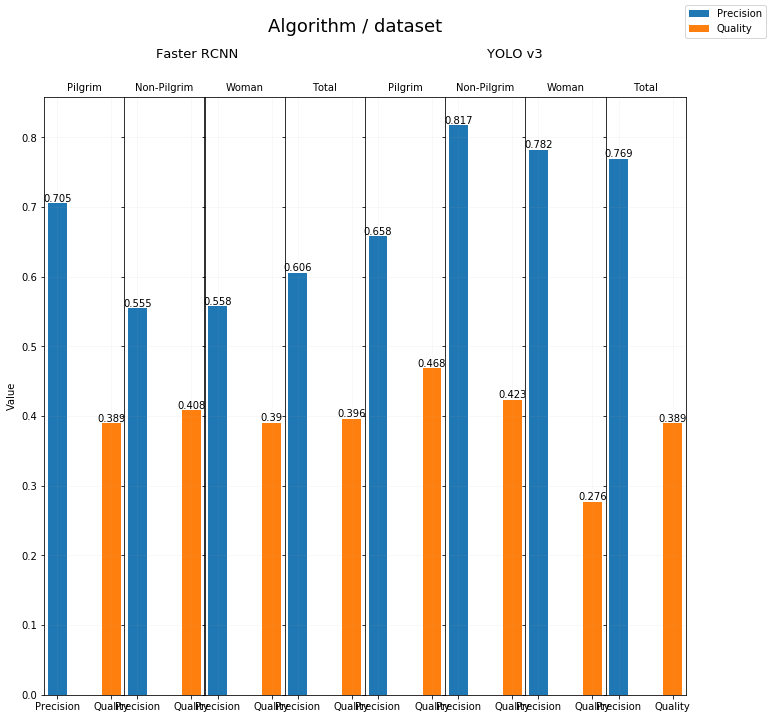
Pilgrimage represents the most important Islamic religious gathering in the world where millions of pilgrims visit the holy places of Makkah and Madinah to perform their rituals. The safety and security of pilgrims is the highest priority for the authorities. In Makkah, 5000 cameras are spread around the holy for monitoring pilgrims, but it is almost impossible to track all events by humans considering the huge number of images collected every second. To address this issue, we propose to use artificial intelligence technique based on deep learning and convolution neural networks to detect and identify Pilgrims and their features. For this purpose, we built a comprehensive dataset for the detection of pilgrims and their genders. Then, we develop two convolutional neural networks based on YOLOv3 and Faster-RCNN for the detection of Pilgrims. Experiments results show that Faster RCNN with Inception v2 feature extractor provides the best mean average precision over all classes of 51%.

paper research
Analysis of the $( mu/ mu_I, lambda)$-CSA-ES with Repair by Projection   Applied to a Conically Constrained Problem

Analysis of the $( mu/ mu_I, lambda)$-CSA-ES with Repair by Projection Applied to a Conically Constrained Problem

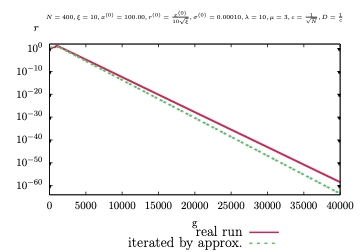
Theoretical analyses of evolution strategies are indispensable for gaining a deep understanding of their inner workings. For constrained problems, rather simple problems are of interest in the current research. This work presents a theoretical analysis of a multi-recombinative evolution strategy with cumulative step size adaptation applied to a conically constrained linear optimization problem. The state of the strategy is modeled by random variables and a stochastic iterative mapping is introduced. For the analytical treatment, fluctuations are neglected and the mean value iterative system is considered. Non-linear difference equations are derived based on one-generation progress rates. Based on that, expressions for the steady state of the mean value iterative system are derived. By comparison with real algorithm runs, it is shown that for the considered assumptions, the theoretical derivations are able to predict the dynamics and the steady state values of the real runs.

paper research
Genetic Programming for Evolving an Interpretable Model Front for Data Visualization

Genetic Programming for Evolving an Interpretable Model Front for Data Visualization

Data visualisation is a key tool in data mining for understanding big datasets. Many visualisation methods have been proposed, including the well-regarded state-of-the-art method t-Distributed Stochastic Neighbour Embedding. However, the most powerful visualisation methods have a significant limitation the manner in which they create their visualisation from the original features of the dataset is completely opaque. Many domains require an understanding of the data in terms of the original features; there is hence a need for powerful visualisation methods which use understandable models. In this work, we propose a genetic programming approach named GPtSNE for evolving interpretable mappings from a dataset to highquality visualisations. A multi-objective approach is designed that produces a variety of visualisations in a single run which give different trade-offs between visual quality and model complexity. Testing against baseline methods on a variety of datasets shows the clear potential of GP-tSNE to allow deeper insight into data than that provided by existing visualisation methods. We further highlight the benefits of a multi-objective approach through an in-depth analysis of a candidate front, which shows how multiple models can

paper research
A Multi-Objective Evolutionary Approach for Grey-Box Modeling of a Buck Converter

A Multi-Objective Evolutionary Approach for Grey-Box Modeling of a Buck Converter

The present study proposes a simple grey-box identification approach to model a real DC-DC buck converter operating in continuous conduction mode. The problem associated with the information void in the observed dynamical data, which is often obtained over a relatively narrow input range, is alleviated by exploiting the known static behavior of buck converter as a priori knowledge. A simple method is developed based on the concept of term clusters to determine the static response of the candidate models. The error in the static behavior is then directly embedded into the multi-objective framework for structure selection. In essence, the proposed approach casts grey-box identification problem into a multi-objective framework to balance bias-variance dilemma of model building while explicitly integrating a priori knowledge into the structure selection process. The results of the investigation, considering the case of practical buck converter, demonstrate that it is possible to identify parsimonious models which can capture both the dynamic and static behavior of the system over a wide input range.

paper research
Unlimited Budget Analysis of Randomized Search Heuristics

Unlimited Budget Analysis of Randomized Search Heuristics

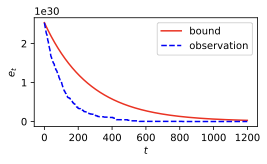
Performance analysis of all kinds of randomised search heuristics is a rapidly growing and developing field. Run time and solution quality are two popular measures of the performance of these algorithms. The focus of this paper is on the solution quality an optimisation heuristic achieves, not on the time it takes to reach this goal, setting it far apart from runtime analysis. We contribute to its further development by introducing a novel analytical framework, called unlimited budget analysis, to derive the expected fitness value after arbitrary computational steps. It has its roots in the very recently introduced approximation error analysis and bears some similarity to fixed budget analysis. We present the framework, apply it to simple mutation-based algorithms, covering both, local and global search. We provide analytical results for a number of pseudo-Boolean functions for unlimited budget analysis and compare them to results derived within the fixed budget framework for the same algorithms and functions. There are also results of experiments to compare bounds obtained in the two different frameworks with the actual observed performance. The study show that unlimited budget analysis may lead to the same or more general estimation beyond fixed budget.

paper research
Few-Shot Learning with Surrogate Gradient Descent on a Neuromorphic Processor

Few-Shot Learning with Surrogate Gradient Descent on a Neuromorphic Processor

Recent work suggests that synaptic plasticity dynamics in biological models of neurons and neuromorphic hardware are compatible with gradient-based learning (Neftci et al., 2019). Gradient-based learning requires iterating several times over a dataset, which is both time-consuming and constrains the training samples to be independently and identically distributed. This is incompatible with learning systems that do not have boundaries between training and inference, such as in neuromorphic hardware. One approach to overcome these constraints is transfer learning, where a portion of the network is pre-trained and mapped into hardware and the remaining portion is trained online. Transfer learning has the advantage that pre-training can be accelerated offline if the task domain is known, and few samples of each class are sufficient for learning the target task at reasonable accuracies. Here, we demonstrate on-line surrogate gradient few-shot learning on Intel s Loihi neuromorphic research processor using features pre-trained with spike-based gradient backpropagation-through-time. Our experimental results show that the Loihi chip can learn gestures online using a small number of shots and achieve results that are comparable to the models simulated on a conventional processor.

paper research
QSLM  A Performance- and Memory-aware Quantization Framework with Tiered Search Strategy for Spike-driven Language Models

QSLM A Performance- and Memory-aware Quantization Framework with Tiered Search Strategy for Spike-driven Language Models

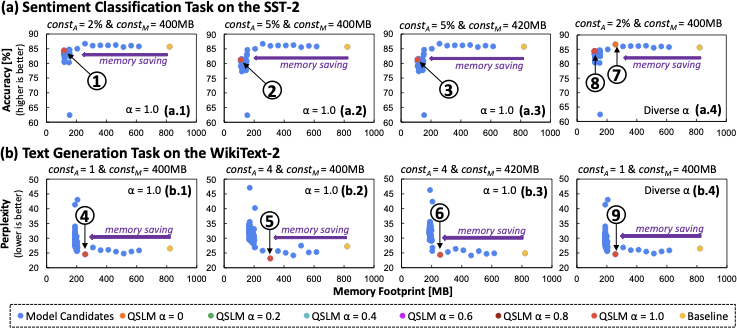
Large Language Models (LLMs) have been emerging as prominent AI models for solving many natural language tasks due to their high performance (e.g., accuracy) and capabilities in generating high-quality responses to the given inputs. However, their large computational cost, huge memory footprints, and high processing power/energy make it challenging for their embedded deployments. Amid several tinyLLMs, recent works have proposed spike-driven language models (SLMs) for significantly reducing the processing power/energy of LLMs. However, their memory footprints still remain too large for low-cost and resource-constrained embedded devices. Manual quantization approach may effectively compress SLM memory footprints, but it requires a huge design time and compute power to find the quantization setting for each network, hence making this approach not-scalable for handling different networks, performance requirements, and memory budgets. To bridge this gap, we propose QSLM, a novel framework that performs automated quantization for compressing pre-trained SLMs, while meeting the performance and memory constraints. To achieve this, QSLM first identifies the hierarchy of the given network architecture and the sensitivity of network layers under quantization, then employs a tiered quantization strategy (e.g., global-, block-, and module-level quantization) while leveraging a multi-objective performance-and-memory trade-off function to select the final quantization setting. Experimental results indicate that our QSLM reduces memory footprint by up to 86.5%, reduces power consumption by up to 20%, maintains high performance across different tasks (i.e., by up to 84.4% accuracy of sentiment classification on the SST-2 dataset and perplexity score of 23.2 for text generation on the WikiText-2 dataset) close to the original non-quantized model while meeting the performance and memory constraints.

paper research
RMAAT  Astrocyte-Inspired Memory Compression and Replay for Efficient Long-Context Transformers

RMAAT Astrocyte-Inspired Memory Compression and Replay for Efficient Long-Context Transformers

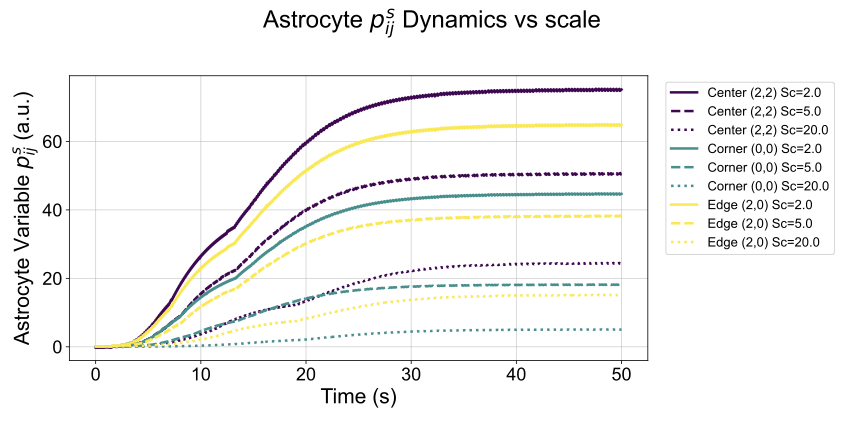
The quadratic complexity of self-attention mechanism presents a significant impediment to applying Transformer models to long sequences. This work explores computational principles derived from astrocytes-glial cells critical for biological memory and synaptic modulation-as a complementary approach to conventional architectural modifications for efficient self-attention. We introduce the Recurrent Memory Augmented Astromorphic Transformer (RMAAT), an architecture integrating abstracted astrocyte functionalities. RMAAT employs a recurrent, segment-based processing strategy where persistent memory tokens propagate contextual information. An adaptive compression mechanism, governed by a novel retention factor derived from simulated astrocyte long-term plasticity (LTP), modulates these tokens. Attention within segments utilizes an efficient, linear-complexity mechanism inspired by astrocyte short-term plasticity (STP). Training is performed using Astrocytic Memory Replay Backpropagation (AMRB), a novel algorithm designed for memory efficiency in recurrent networks. Evaluations on the Long Range Arena (LRA) benchmark demonstrate RMAAT s competitive accuracy and substantial improvements in computational and memory efficiency, indicating the potential of incorporating astrocyte-inspired dynamics into scalable sequence models.

paper research
Yukthi Opus  A Multi-Chain Hybrid Metaheuristic for Large-Scale NP-Hard Optimization

Yukthi Opus A Multi-Chain Hybrid Metaheuristic for Large-Scale NP-Hard Optimization

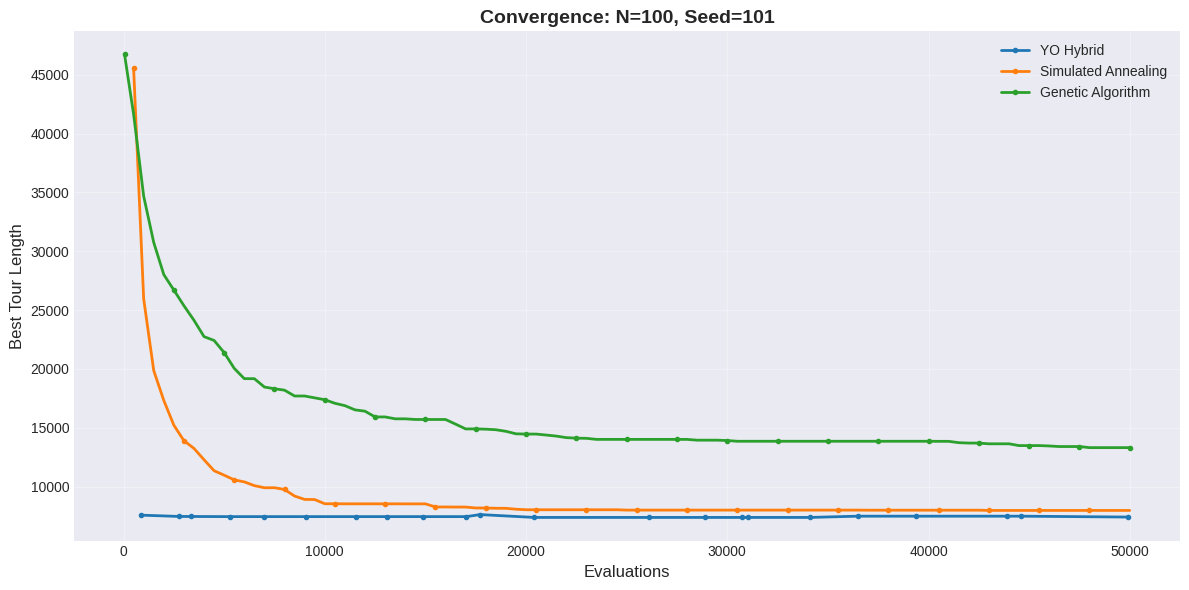
We present Yukthi Opus (YO), a multi-chain hybrid metaheuristic designed for NP-hard optimization under explicit evaluation budget constraints. YO integrates three complementary mechanisms in a structured two-phase architecture Markov Chain Monte Carlo (MCMC) for global exploration, greedy local search for exploitation, and simulated annealing with adaptive reheating to enable controlled escape from local minima. A dedicated burn-in phase allocates evaluations to probabilistic exploration, after which a hybrid optimization loop refines promising candidates. YO further incorporates a spatial blacklist mechanism to avoid repeated evaluation of poor regions and a multi-chain execution strategy to improve robustness and reduce sensitivity to initialization. We evaluate YO on three benchmarks the Rastrigin function (5D) with ablation studies, the Traveling Salesman Problem with 50 to 200 cities, and the Rosenbrock function (5D) with comparisons against established optimizers including CMA-ES, Bayesian optimization, and accelerated particle swarm optimization. Results show that MCMC exploration and greedy refinement are critical for solution quality, while simulated annealing and multi-chain execution primarily improve stability and variance reduction. Overall, YO achieves competitive performance on large and multimodal problems while maintaining predictable evaluation budgets, making it suitable for expensive black-box optimization settings.

paper research

< Category Statistics (Total: 566) >

Quantum Physics
5

Start searching

Enter keywords to search articles

↑↓
ESC
⌘K Shortcut