Computer Science / Computational Engineering, Finance, and Science

All posts under category "Computer Science / Computational Engineering, Finance, and Science"

4 posts total
Sorted by date
Generating Topologically Robust CAD Models for Structural Optimization

Generating Topologically Robust CAD Models for Structural Optimization

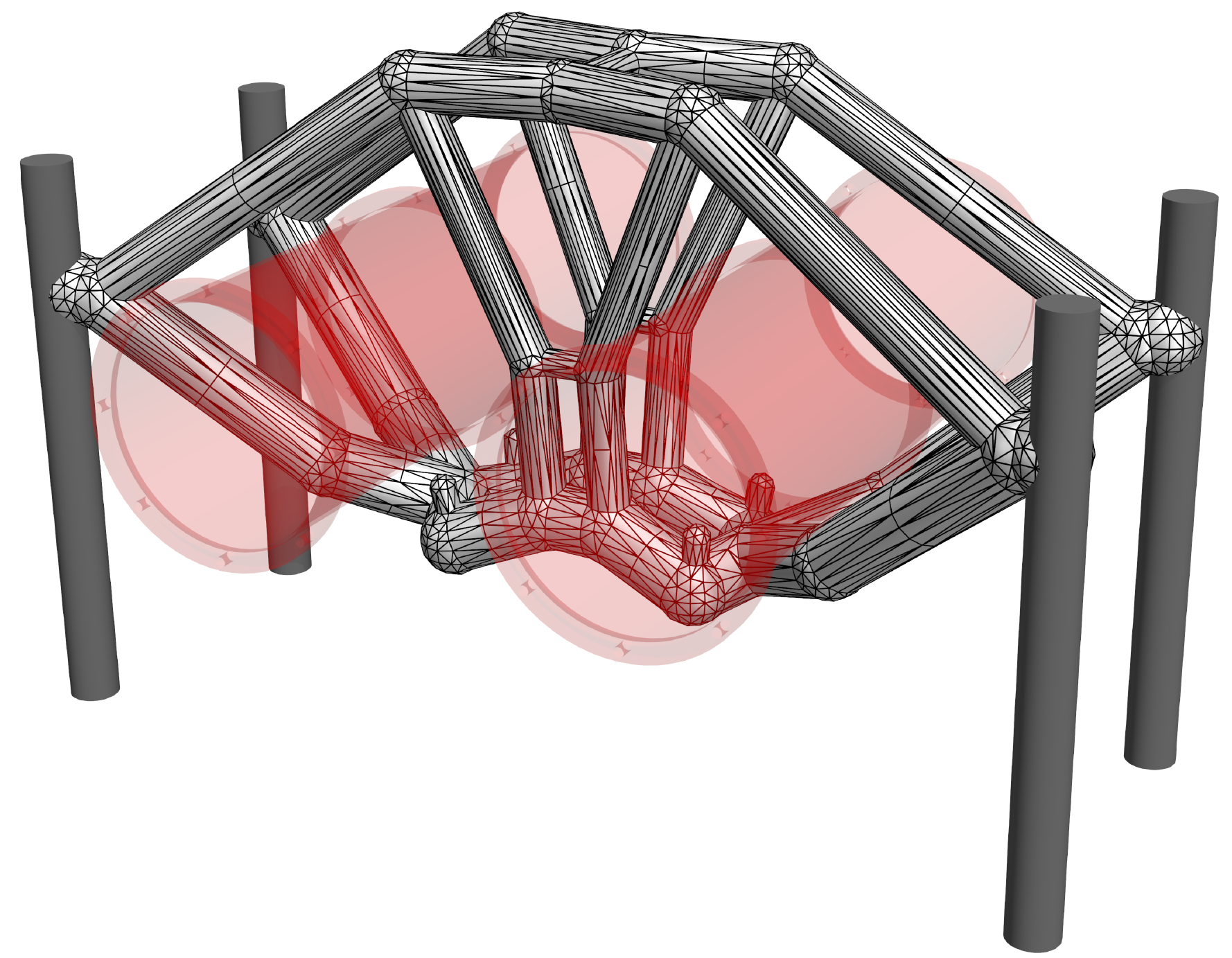
Computer-aided design (CAD) models play a crucial role in the design, manufacturing and maintenance of products. Therefore, the mesh-based finite element descriptions common in structural optimisation must be first translated into CAD models. Currently, this can at best be performed semi-manually. We propose a fully automated and topologically accurate approach to synthesise a structurally-sound parametric CAD model from topology optimised finite element models. Our solution is to first convert the topology optimised structure into a spatial frame structure and then to regenerate it in a CAD system using standard constructive solid geometry (CSG) operations. The obtained parametric CAD models are compact, that is, have as few as possible geometric parameters, which makes them ideal for editing and further processing within a CAD system. The critical task of converting the topology optimised structure into an optimal spatial frame structure is accomplished in several steps. We first generate from the topology optimised voxel model a one-voxel-wide voxel chain model using a topology-preserving skeletonisation algorithm from digital topology. The weighted undirected graph defined by the voxel chain model yields a spatial frame structure after processing it with standard graph algorithms. Subsequently, we optimise the cross-sections and layout of the frame members to recover its optimality, which may have been compromised during the conversion process. At last, we generate the obtained frame structure in a CAD system by repeatedly combining primitive solids, like cylinders and spheres, using boolean operations. The resulting solid model is a boundary representation (B-Rep) consisting of trimmed non-uniform rational B-spline (NURBS) curves and surfaces.
paper research
An Accurate Edge-Based Finite Element Method for Electromagnetic Analysis and Its Applications to Multiscale Structures

An Accurate Edge-Based Finite Element Method for Electromagnetic Analysis and Its Applications to Multiscale Structures

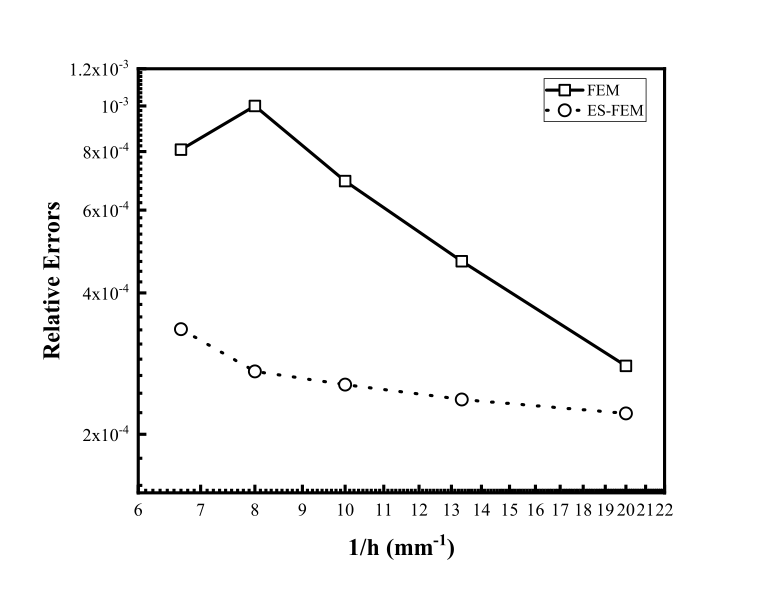
This paper introduces an accurate edge-based smoothed finite element method (ES-FEM) for electromagnetic analysis for both two dimensional cylindrical and three dimensional cartesian systems, which shows much better performance in terms of accuracy and numerical stability for mesh distortion compared with the traditional FEM. Unlike the traditional FEM, the computational domain in ES-FEM is divided into nonoverlapping smoothing domains associated with each edge of elements, triangles in two dimensional domain and tetrahedrons in three dimensional domain. Then, the gradient smoothing technique (GST) is used to smooth the gradient components in the stiff matrix of the FEM. Several numerical experiments are carried out to validate its accuracy and numerical stability. Numerical results show that the ES-FEM can obtain much more accurate results and is almost independent of mesh distortion.

paper research
No Image

AI Accelerates CAD-to-Mesh Pipeline in Engineering Simulation

Artificial intelligence is beginning to ease long-standing bottlenecks in the CAD-to-mesh pipeline. This survey reviews recent advances where machine learning aids part classification, mesh quality prediction, and defeaturing. We explore methods that improve unstructured and block-structured meshing, support volumetric parameterizations, and accelerate parallel mesh generation. We also examine emerging tools for scripting automation, including reinforcement learning and large language models. Across these efforts, AI acts as an assistive technology, extending the capabilities of traditional geometry and meshing tools. The survey highlights representative methods, practical deployments, and key research challenges that will shape the next generation of data-driven meshing workflows.

paper research
LLM Agents for Combinatorial Efficient Frontiers  Investment Portfolio Optimization

LLM Agents for Combinatorial Efficient Frontiers Investment Portfolio Optimization

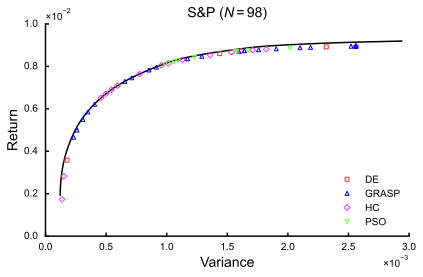
Investment portfolio optimization is a task conducted in all major financial institutions. The Cardinality Constrained Mean-Variance Portfolio Optimization (CCPO) problem formulation is ubiquitous for portfolio optimization. The challenge of this type of portfolio optimization, a mixed-integer quadratic programming (MIQP) problem, arises from the intractability of solutions from exact solvers, where heuristic algorithms are used to find approximate portfolio solutions. CCPO entails many laborious and complex workflows and also requires extensive effort pertaining to heuristic algorithm development, where the combination of pooled heuristic solutions results in improved efficient frontiers. Hence, common approaches are to develop many heuristic algorithms. Agentic frameworks emerge as a promising candidate for many problems within combinatorial optimization, as they have been shown to be equally efficient with regard to automating large workflows and have been shown to be excellent in terms of algorithm development, sometimes surpassing human-level performance. This study implements a novel agentic framework for the CCPO and explores several concrete architectures. In benchmark problems, the implemented agentic framework matches state-of-the-art algorithms. Furthermore, complex workflows and algorithm development efforts are alleviated, while in the worst case, lower but acceptable error is reported.

paper research

< Category Statistics (Total: 566) >

Quantum Physics
5

Start searching

Enter keywords to search articles

↑↓
ESC
⌘K Shortcut