Computer Science / Artificial Intelligence

All posts under category "Computer Science / Artificial Intelligence"

89 posts total
Sorted by date
Communication-Efficient Federated Deep Learning with Asynchronous Model Updates and Temporally Weighted Aggregation

Communication-Efficient Federated Deep Learning with Asynchronous Model Updates and Temporally Weighted Aggregation

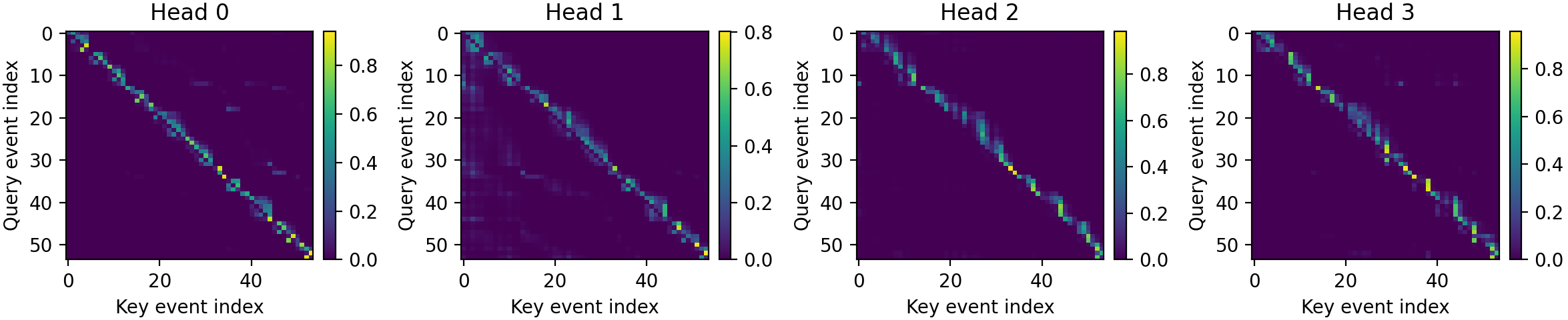
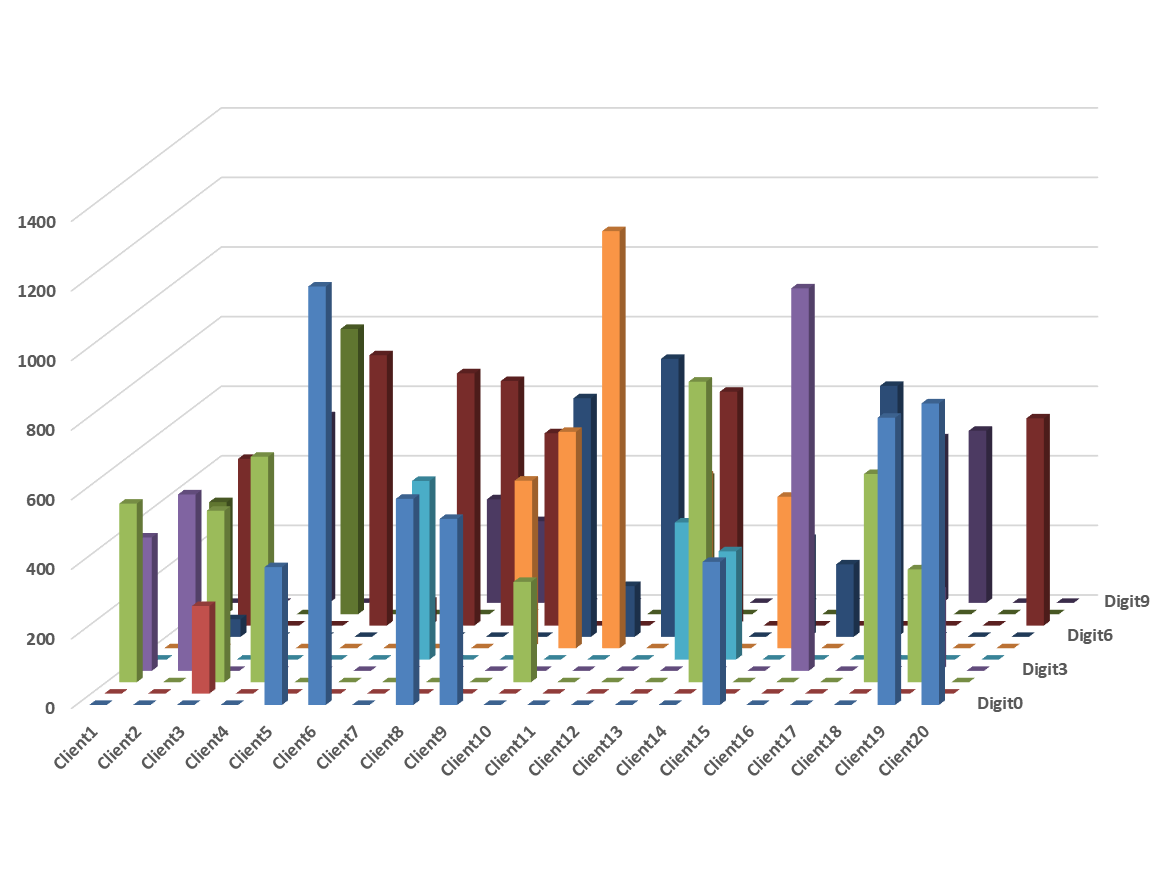
Federated learning obtains a central model on the server by aggregating models trained locally on clients. As a result, federated learning does not require clients to upload their data to the server, thereby preserving the data privacy of the clients. One challenge in federated learning is to reduce the client-server communication since the end devices typically have very limited communication bandwidth. This paper presents an enhanced federated learning technique by proposing a synchronous learning strategy on the clients and a temporally weighted aggregation of the local models on the server. In the asynchronous learning strategy, different layers of the deep neural networks are categorized into shallow and deeps layers and the parameters of the deep layers are updated less frequently than those of the shallow layers. Furthermore, a temporally weighted aggregation strategy is introduced on the server to make use of the previously trained local models, thereby enhancing the accuracy and convergence of the central model. The proposed algorithm is empirically on two datasets with different deep neural networks. Our results demonstrate that the proposed asynchronous federated deep learning outperforms the baseline algorithm both in terms of communication cost and model accuracy.
paper research
Automated Decision-Making for Electric Power Network Recovery

Automated Decision-Making for Electric Power Network Recovery

Critical infrastructure systems such as electric power networks, water networks, and transportation systems play a major role in the welfare of any community. In the aftermath of disasters, their recovery is of paramount importance; orderly and efficient recovery involves the assignment of limited resources (a combination of human repair workers and machines) to repair damaged infrastructure components. The decision maker must also deal with uncertainty in the outcome of the resource-allocation actions during recovery. The manual assignment of resources seldom is optimal despite the expertise of the decision maker because of the large number of choices and uncertainties in consequences of sequential decisions. This combinatorial assignment problem under uncertainty is known to be mbox{NP-hard}. We propose a novel decision technique that addresses the massive number of decision choices for large-scale real-world problems; in addition, our method also features an experiential learning component that adaptively determines the utilization of the computational resources based on the performance of a small number of choices. Our framework is closed-loop, and naturally incorporates all the attractive features of such a decision-making system. In contrast to myopic approaches, which do not account for the future effects of the current choices, our methodology has an anticipatory learning component that effectively incorporates emph{lookahead} into the solutions. To this end, we leverage the theory of regression analysis, Markov decision processes (MDPs), multi-armed bandits, and stochastic models of community damage from natural disasters to develop a method for near-optimal recovery of communities. Our method contributes to the general problem of MDPs with massive action spaces with application to recovery of communities affected by hazards.

paper research
I Feel You  A Theory of Mind Experiment in Games

I Feel You A Theory of Mind Experiment in Games

In this study into the player s emotional theory of mind of gameplaying agents, we investigate how an agent s behaviour and the player s own performance and emotions shape the recognition of a frustrated behaviour. We focus on the perception of frustration as it is a prevalent affective experience in human-computer interaction. We present a testbed game tailored towards this end, in which a player competes against an agent with a frustration model based on theory. We collect gameplay data, an annotated ground truth about the player s appraisal of the agent s frustration, and apply face recognition to estimate the player s emotional state. We examine the collected data through correlation analysis and predictive machine learning models, and find that the player s observable emotions are not correlated highly with the perceived frustration of the agent. This suggests that our subject s theory of mind is a cognitive process based on the gameplay context. Our predictive models---using ranking support vector machines---corroborate these results, yielding moderately accurate predictors of players theory of mind.

paper research
Geometric Structural Knowledge Graph Foundation Model

Geometric Structural Knowledge Graph Foundation Model

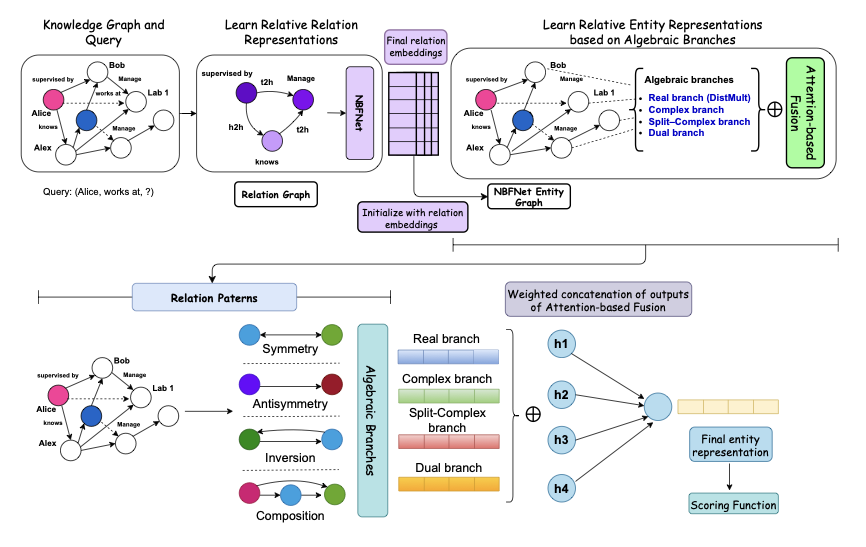
Structural knowledge graph foundation models aim to generalize reasoning to completely new graphs with unseen entities and relations. A key limitation of existing approaches like Ultra is their reliance on a single relational transformation (e.g., element-wise multiplication) in message passing, which can constrain expressiveness and fail to capture diverse relational and structural patterns exhibited on diverse graphs. In this paper, we propose Gamma, a novel foundation model that introduces multi-head geometric attention to knowledge graph reasoning. Gamma replaces the single relational transformation with multiple parallel ones, including real, complex, split-complex, and dual number based transformations, each designed to model different relational structures. A relational conditioned attention fusion mechanism then adaptively fuses them at link level via a lightweight gating with entropy regularization, allowing the model to robustly emphasize the most appropriate relational bias for each triple pattern. We present a full formalization of these algebraic message functions and discuss how their combination increases expressiveness beyond any single space. Comprehensive experiments on 56 diverse knowledge graphs demonstrate that Gamma consistently outperforms Ultra in zero-shot inductive link prediction, with a 5.5% improvement in mean reciprocal rank on the inductive benchmarks and a 4.4% improvement across all benchmarks, highlighting benefits from complementary geometric representations.

paper research
Accelerating Discovery with a Global Network of Autonomous Scientific Agents

Accelerating Discovery with a Global Network of Autonomous Scientific Agents

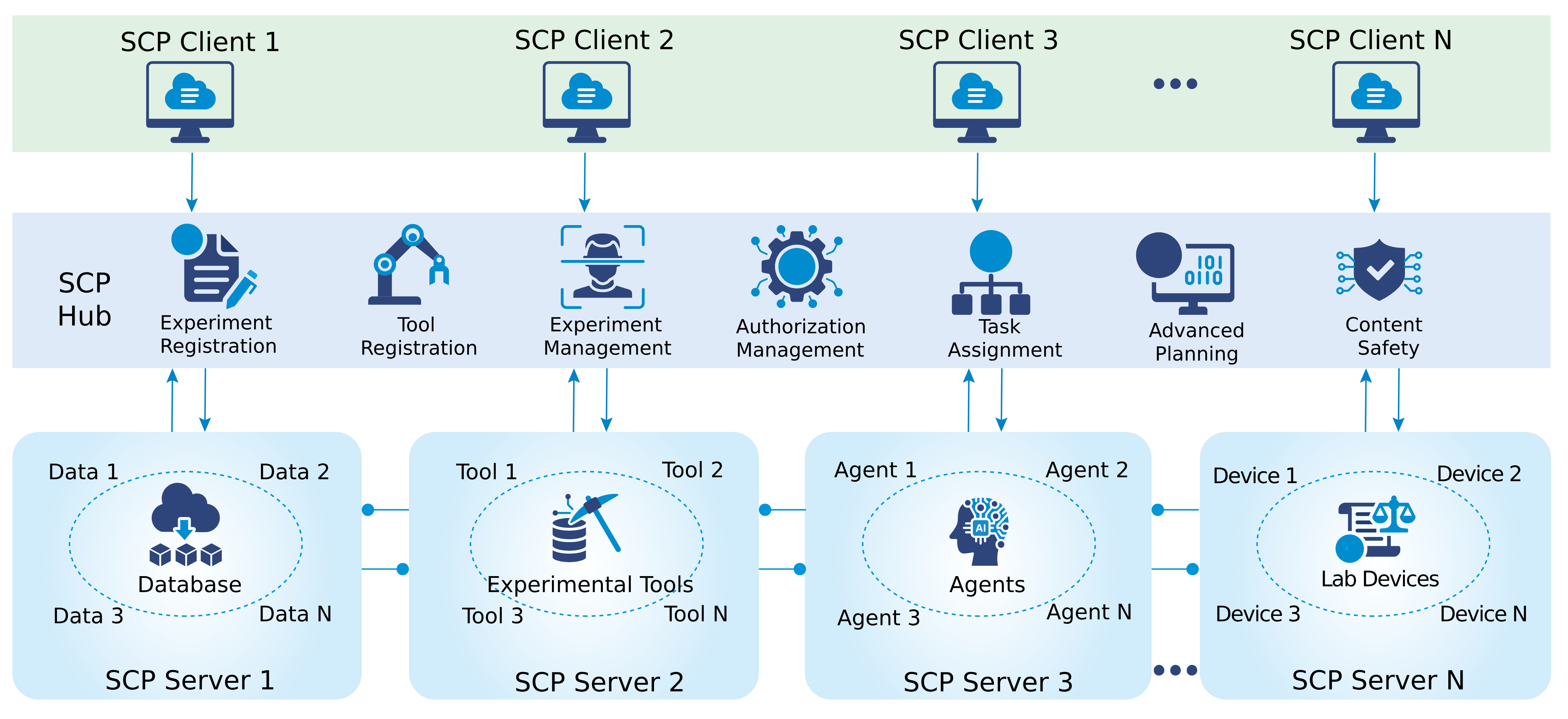
We introduce SCP the Science Context Protocol, an open-source standard designed to accelerate discovery by enabling a global network of autonomous scientific agents. SCP is built on two foundational pillars (1) Unified Resource Integration At its core, SCP provides a universal specification for describing and invoking scientific resources, spanning software tools, models, datasets, and physical instruments. This protocol-level standardization enables AI agents and applications to discover, call, and compose capabilities seamlessly across disparate platforms and institutional boundaries. (2) Orchestrated Experiment Lifecycle Management SCP complements the protocol with a secure service architecture, which comprises a centralized SCP Hub and federated SCP Servers. This architecture manages the complete experiment lifecycle (registration, planning, execution, monitoring, and archival), enforces fine-grained authentication and authorization, and orchestrates traceable, end-to-end workflows that bridge computational and physical laboratories. Based on SCP, we have constructed a scientific discovery platform that offers researchers and agents a large-scale ecosystem of more than 1,600 tool resources. Across diverse use cases, SCP facilitates secure, large-scale collaboration between heterogeneous AI systems and human researchers while significantly reducing integration overhead and enhancing reproducibility. By standardizing scientific context and tool orchestration at the protocol level, SCP establishes essential infrastructure for scalable, multi-institution, agent-driven science.

paper research
Iterative Deployment Enhances Planning Abilities in Large Language Models

Iterative Deployment Enhances Planning Abilities in Large Language Models

We show that iterative deployment of large language models (LLMs), each fine-tuned on data carefully curated by users from the previous models deployment, can significantly change the properties of the resultant models. By testing this mechanism on various planning domains, we observe substantial improvements in planning skills, with later models displaying emergent generalization by discovering much longer plans than the initial models. We then provide theoretical analysis showing that iterative deployment effectively implements reinforcement learning (RL) training in the outer-loop (i.e. not as part of intentional model training), with an implicit reward function. The connection to RL has two important implications first, for the field of AI safety, as the reward function entailed by repeated deployment is not defined explicitly, and could have unexpected implications to the properties of future model deployments. Second, the mechanism highlighted here can be viewed as an alternative training regime to explicit RL, relying on data curation rather than explicit rewards.

paper research
A Bio-inspired Self-healing Framework for Resilient Distributed Computing Systems

A Bio-inspired Self-healing Framework for Resilient Distributed Computing Systems

Human biological systems sustain life through extraordinary resilience, continually detecting damage, orchestrating targeted responses, and restoring function through self-healing. Inspired by these capabilities, this paper introduces ReCiSt, a bio-inspired agentic self-healing framework designed to achieve resilience in Distributed Computing Continuum Systems (DCCS). Modern DCCS integrate heterogeneous computing resources, ranging from resource-constrained IoT devices to high-performance cloud infrastructures, and their inherent complexity, mobility, and dynamic operating conditions expose them to frequent faults that disrupt service continuity. These challenges underscore the need for scalable, adaptive, and self-regulated resilience strategies. ReCiSt reconstructs the biological phases of Hemostasis, Inflammation, Proliferation, and Remodeling into the computational layers Containment, Diagnosis, Meta-Cognitive, and Knowledge for DCCS. These four layers perform autonomous fault isolation, causal diagnosis, adaptive recovery, and long-term knowledge consolidation through Language Model (LM)-powered agents. These agents interpret heterogeneous logs, infer root causes, refine reasoning pathways, and reconfigure resources with minimal human intervention. The proposed ReCiSt framework is evaluated on public fault datasets using multiple LMs, and no baseline comparison is included due to the scarcity of similar approaches. Nevertheless, our results, evaluated under different LMs, confirm ReCiSt s self-healing capabilities within tens of seconds with minimum of 10% of agent CPU usage. Our results also demonstrated depth of analysis to over come uncertainties and amount of micro-agents invoked to achieve resilience.

paper research
Can Semantic Approaches Improve Team Sports Strategies? A Football Methodology with Wider Applications

Can Semantic Approaches Improve Team Sports Strategies? A Football Methodology with Wider Applications

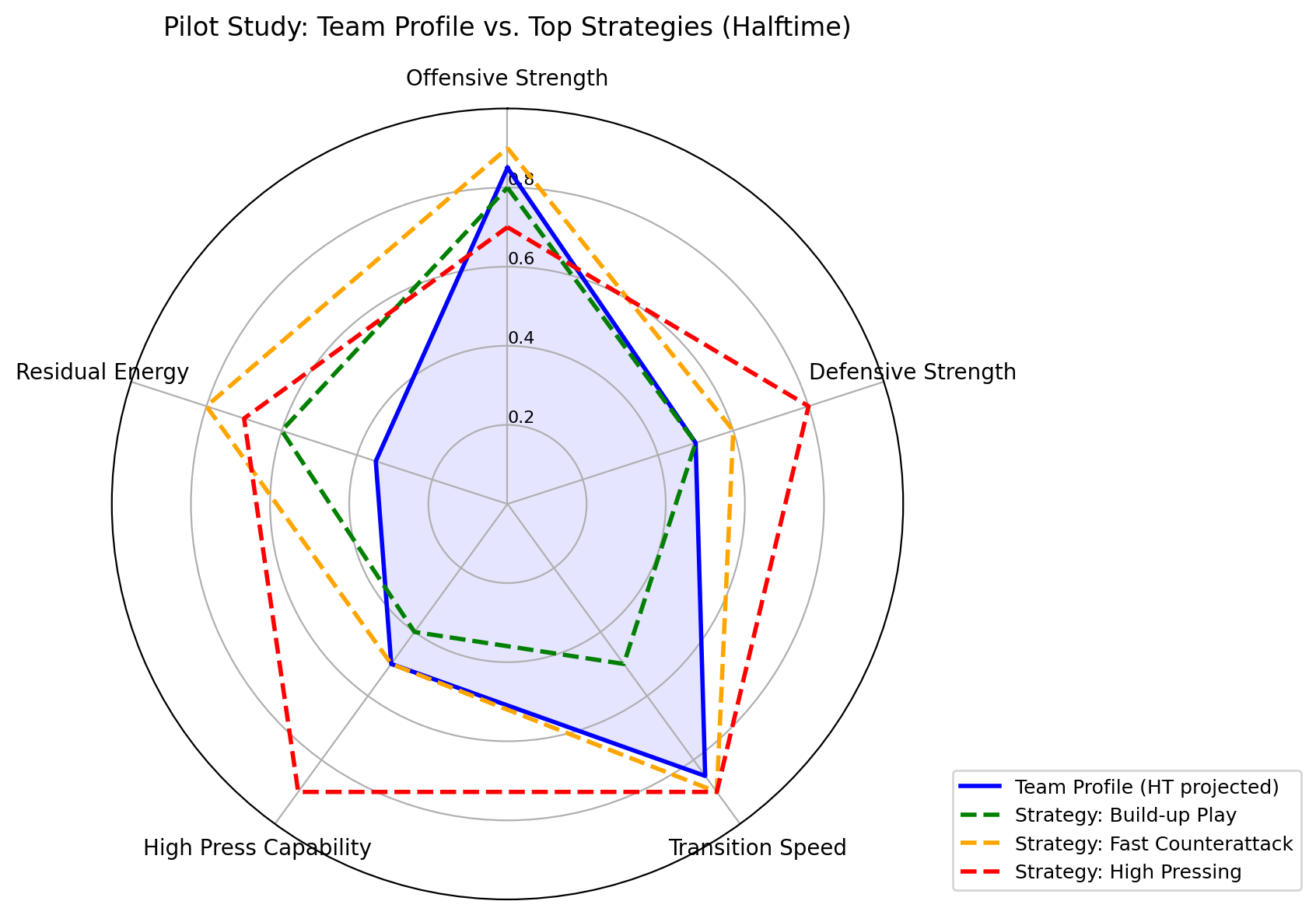
This paper explores how semantic-space reasoning, traditionally used in computational linguistics, can be extended to tactical decision-making in team sports. Building on the analogy between texts and teams -- where players act as words and collective play conveys meaning -- the proposed methodology models tactical configurations as compositional semantic structures. Each player is represented as a multidimensional vector integrating technical, physical, and psychological attributes; team profiles are aggregated through contextual weighting into a higher-level semantic representation. Within this shared vector space, tactical templates such as high press, counterattack, or possession build-up are encoded analogously to linguistic concepts. Their alignment with team profiles is evaluated using vector-distance metrics, enabling the computation of tactical ``fit and opponent-exploitation potential. A Python-based prototype demonstrates how these methods can generate interpretable, dynamically adaptive strategy recommendations, accompanied by fine-grained diagnostic insights at the attribute level. Beyond football, the approach offers a generalizable framework for collective decision-making and performance optimization in team-based domains -- ranging from basketball and hockey to cooperative robotics and human-AI coordination systems. The paper concludes by outlining future directions toward real-world data integration, predictive simulation, and hybrid human-machine tactical intelligence.

paper research
KGCE  Knowledge-Enhanced Dual-Graph Evaluator for Cross-Platform Educational Agent Assessments Using Multimodal Language Models

KGCE Knowledge-Enhanced Dual-Graph Evaluator for Cross-Platform Educational Agent Assessments Using Multimodal Language Models

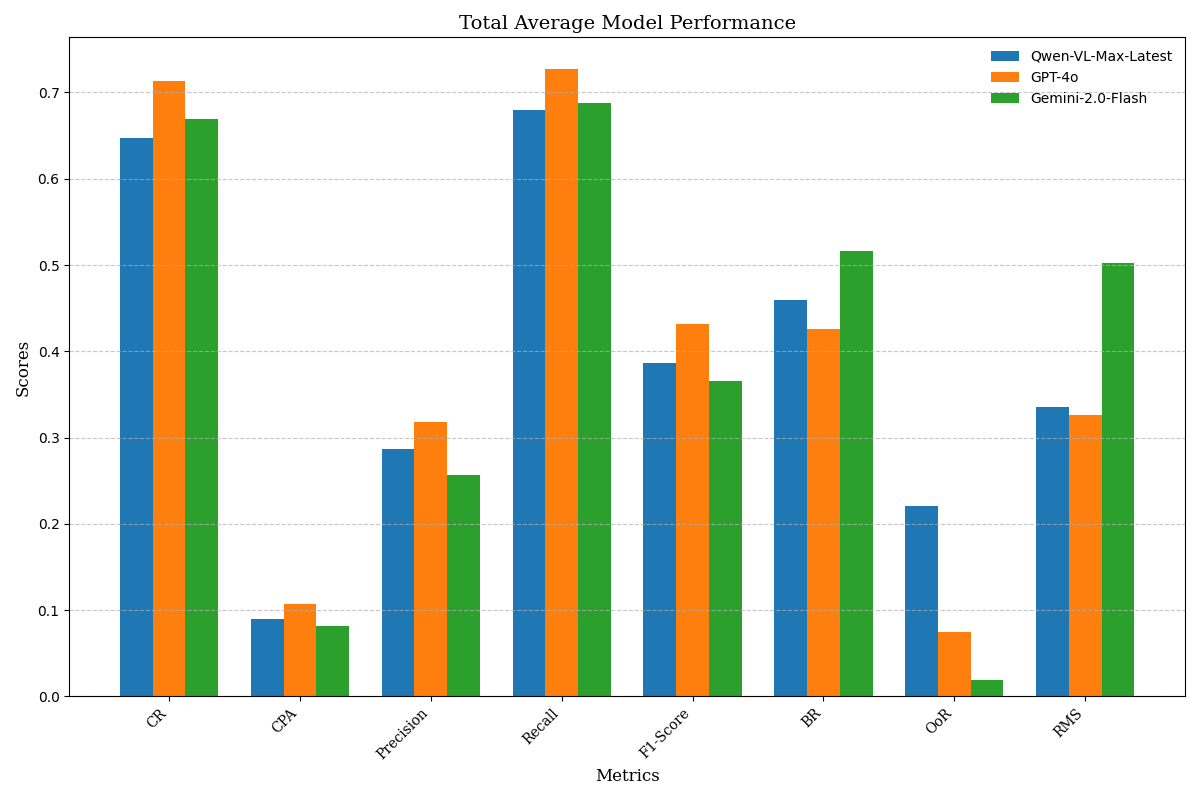
With the rapid adoption of multimodal large language models (MLMs) in autonomous agents, cross-platform task execution capabilities in educational settings have garnered significant attention. However, existing benchmark frameworks still exhibit notable deficiencies in supporting cross-platform tasks in educational contexts, especially when dealing with school-specific software (such as XiaoYa Intelligent Assistant, HuaShi XiaZi, etc.), where the efficiency of agents often significantly decreases due to a lack of understanding of the structural specifics of these private-domain software. Additionally, current evaluation methods heavily rely on coarse-grained metrics like goal orientation or trajectory matching, making it challenging to capture the detailed execution and efficiency of agents in complex tasks. To address these issues, we propose KGCE (Knowledge-Augmented Dual-Graph Evaluator for Cross-Platform Educational Agent Benchmarking with Multimodal Language Models), a novel benchmarking platform that integrates knowledge base enhancement and a dual-graph evaluation framework. We first constructed a dataset comprising 104 education-related tasks, covering Windows, Android, and cross-platform collaborative tasks. KGCE introduces a dual-graph evaluation framework that decomposes tasks into multiple sub-goals and verifies their completion status, providing fine-grained evaluation metrics. To overcome the execution bottlenecks of existing agents in private-domain tasks, we developed an enhanced agent system incorporating a knowledge base specific to school-specific software. The code can be found at https //github.com/Kinginlife/KGCE.

paper research
EverMemOS  A Self-Organizing Memory Operating System for Long-Term Structured Reasoning

EverMemOS A Self-Organizing Memory Operating System for Long-Term Structured Reasoning

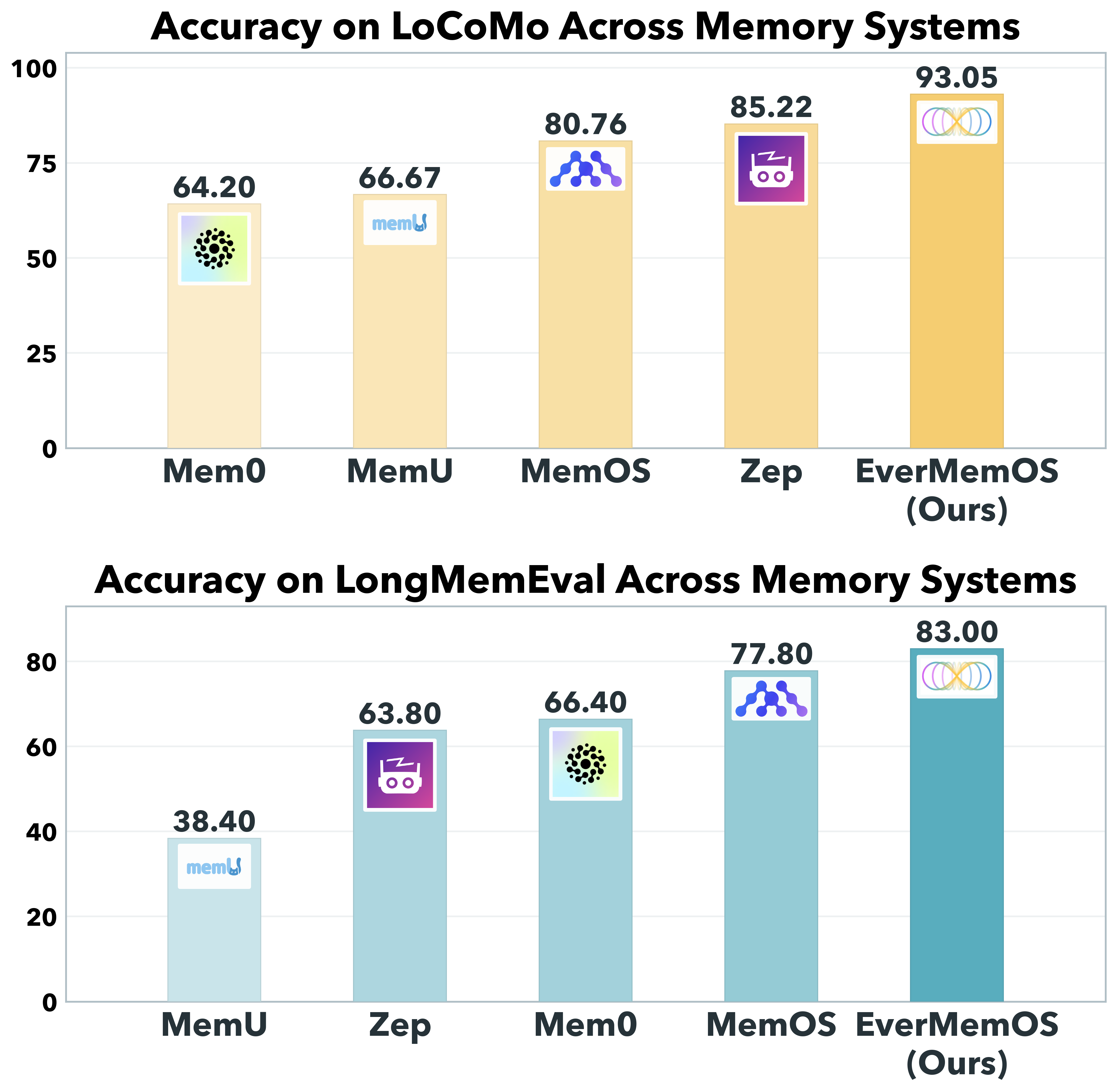
Large Language Models (LLMs) are increasingly deployed as long-term interactive agents, yet their limited context windows make it difficult to sustain coherent behavior over extended interactions. Existing memory systems often store isolated records and retrieve fragments, limiting their ability to consolidate evolving user states and resolve conflicts. We introduce EverMemOS, a self-organizing memory operating system that implements an engram-inspired lifecycle for computational memory. Episodic Trace Formation converts dialogue streams into MemCells that capture episodic traces, atomic facts, and time-bounded Foresight signals. Semantic Consolidation organizes MemCells into thematic MemScenes, distilling stable semantic structures and updating user profiles. Reconstructive Recollection performs MemScene-guided agentic retrieval to compose the necessary and sufficient context for downstream reasoning. Experiments on LoCoMo and LongMemEval show that EverMemOS achieves state-of-the-art performance on memory-augmented reasoning tasks. We further report a profile study on PersonaMem v2 and qualitative case studies illustrating chat-oriented capabilities such as user profiling and Foresight. Code is available at https //github.com/EverMind-AI/EverMemOS.

paper research
No Image

Toward an Ontology for Defining Scenarios to Assess Automated Vehicles An Object-Oriented Framework

The development of new assessment methods for the performance of automated vehicles is essential to enable the deployment of automated driving technologies, due to the complex operational domain of automated vehicles. One contributing method is scenario-based assessment in which test cases are derived from real-world road traffic scenarios obtained from driving data. Given the complexity of the reality that is being modeled in these scenarios, it is a challenge to define a structure for capturing these scenarios. An intensional definition that provides a set of characteristics that are deemed to be both necessary and sufficient to qualify as a scenario assures that the scenarios constructed are both complete and intercomparable. In this article, we develop a comprehensive and operable definition of the notion of scenario while considering existing definitions in the literature. This is achieved by proposing an object-oriented framework in which scenarios and their building blocks are defined as classes of objects having attributes, methods, and relationships with other objects. The object-oriented approach promotes clarity, modularity, reusability, and encapsulation of the objects. We provide definitions and justifications of each of the terms. Furthermore, the framework is used to translate the terms in a coding language that is publicly available.

paper research
A New Benchmark for the Appropriate Evaluation of RTL Code Optimization

A New Benchmark for the Appropriate Evaluation of RTL Code Optimization

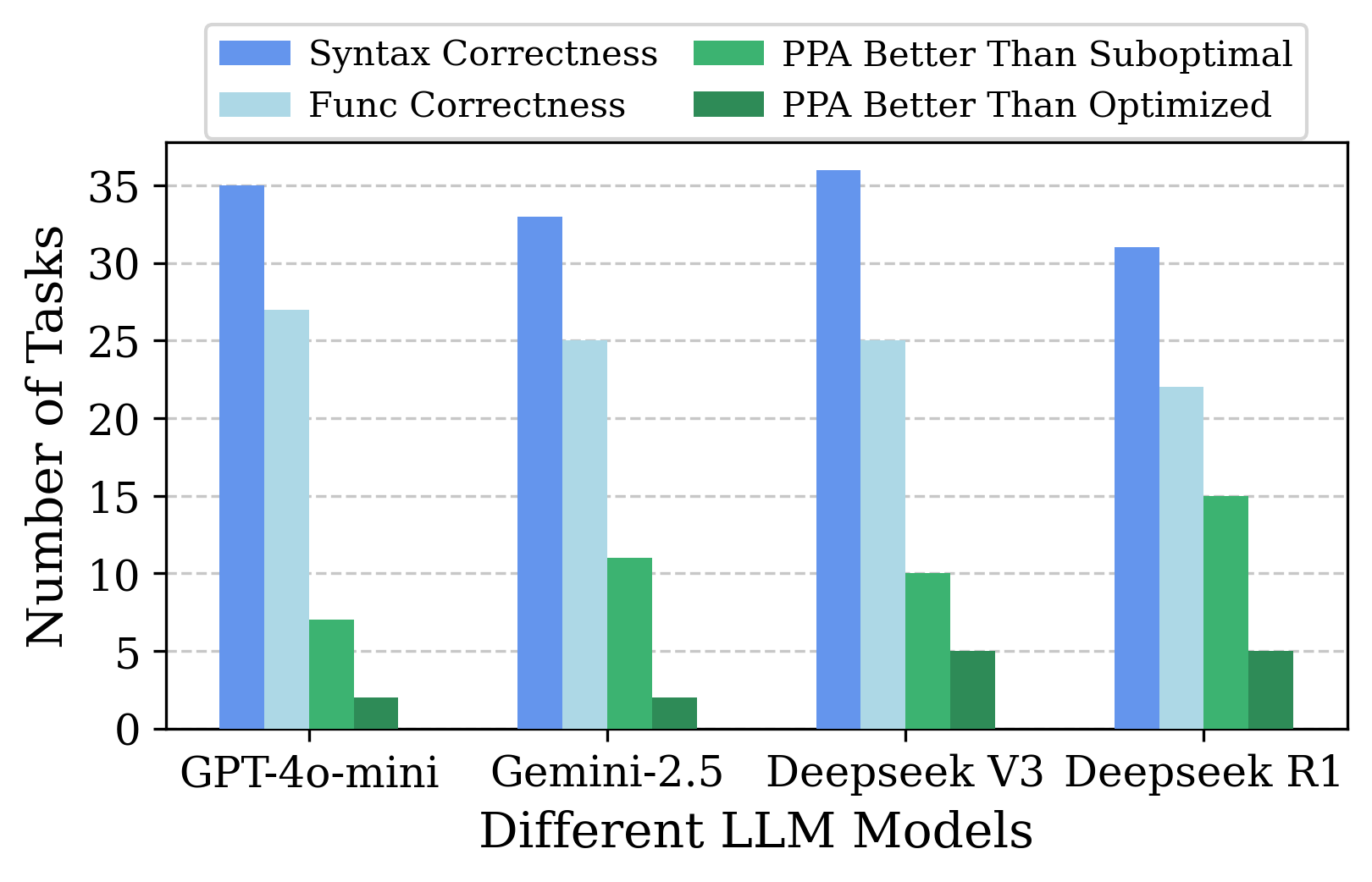
The rapid progress of artificial intelligence increasingly relies on efficient integrated circuit (IC) design. Recent studies have explored the use of large language models (LLMs) for generating Register Transfer Level (RTL) code, but existing benchmarks mainly evaluate syntactic correctness rather than optimization quality in terms of power, performance, and area (PPA). This work introduces RTL-OPT, a benchmark for assessing the capability of LLMs in RTL optimization. RTL-OPT contains 36 handcrafted digital designs that cover diverse implementation categories including combinational logic, pipelined datapaths, finite state machines, and memory interfaces. Each task provides a pair of RTL codes, a suboptimal version and a human-optimized reference that reflects industry-proven optimization patterns not captured by conventional synthesis tools. Furthermore, RTL-OPT integrates an automated evaluation framework to verify functional correctness and quantify PPA improvements, enabling standardized and meaningful assessment of generative models for hardware design optimization.

paper research
A study on constraint extraction and exception exclusion in care worker scheduling

A study on constraint extraction and exception exclusion in care worker scheduling

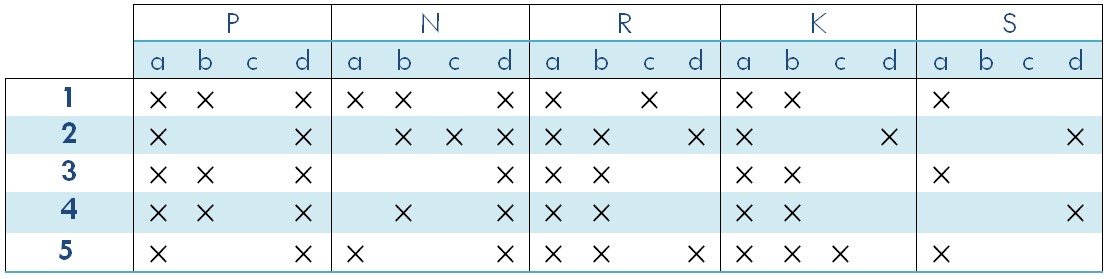
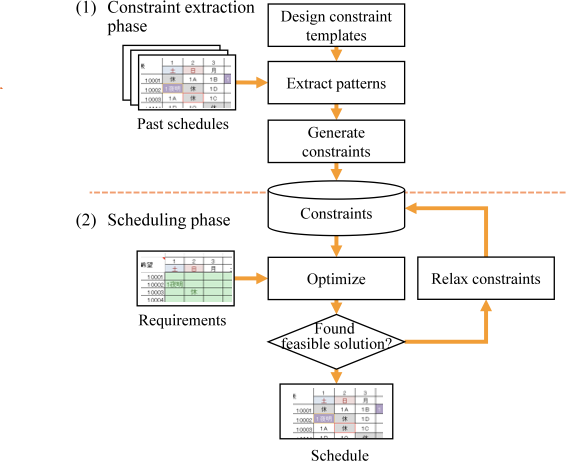
Technologies for automatically generating work schedules have been extensively studied; however, in long-term care facilities, the conditions vary between facilities, making it essential to interview the managers who create shift schedules to design facility-specific constraint conditions. The proposed method utilizes constraint templates to extract combinations of various components, such as shift patterns for consecutive days or staff combinations. The templates can extract a variety of constraints by changing the number of days and the number of staff members to focus on and changing the extraction focus to patterns or frequency. In addition, unlike existing constraint extraction techniques, this study incorporates mechanisms to exclude exceptional constraints. The extracted constraints can be employed by a constraint programming solver to create care worker schedules. Experiments demonstrated that our proposed method successfully created schedules that satisfied all hard constraints and reduced the number of violations for soft constraints by circumventing the extraction of exceptional constraints.

paper research
Accelerating Monte-Carlo Tree Search with Optimized Posterior Policies

Accelerating Monte-Carlo Tree Search with Optimized Posterior Policies

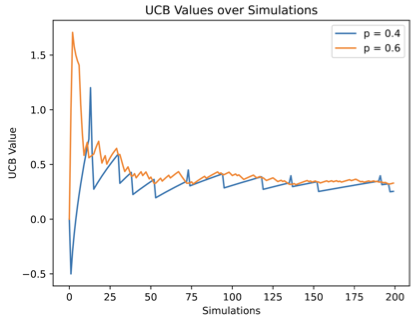
We introduce a recursive AlphaZero-style Monte--Carlo tree search algorithm, RMCTS . The advantage of RMCTS over AlphaZero s MCTS-UCB is speed. In RMCTS, the search tree is explored in a breadth-first manner, so that network inferences naturally occur in large batches. This significantly reduces the GPU latency cost. We find that RMCTS is often more than 40 times faster than MCTS-UCB when searching a single root state, and about 3 times faster when searching a large batch of root states. The recursion in RMCTS is based on computing optimized posterior policies at each game state in the search tree, starting from the leaves and working back up to the root. Here we use the posterior policy explored in Monte--Carlo tree search as regularized policy optimization (Grill, et al.) Their posterior policy is the unique policy which maximizes the expected reward given estimated action rewards minus a penalty for diverging from the prior policy. The tree explored by RMCTS is not defined in an adaptive manner, as it is in MCTS-UCB. Instead, the RMCTS tree is defined by following prior network policies at each node. This is a disadvantage, but the speedup advantage is more significant, and in practice we find that RMCTS-trained networks match the quality of MCTS-UCB-trained networks in roughly one-third of the training time. We include timing and quality comparisons of RMCTS vs. MCTS-UCB for three games Connect-4, Dots-and-Boxes, and Othello.

paper research
Adapting Agents in a Computationally-Bound World

Adapting Agents in a Computationally-Bound World

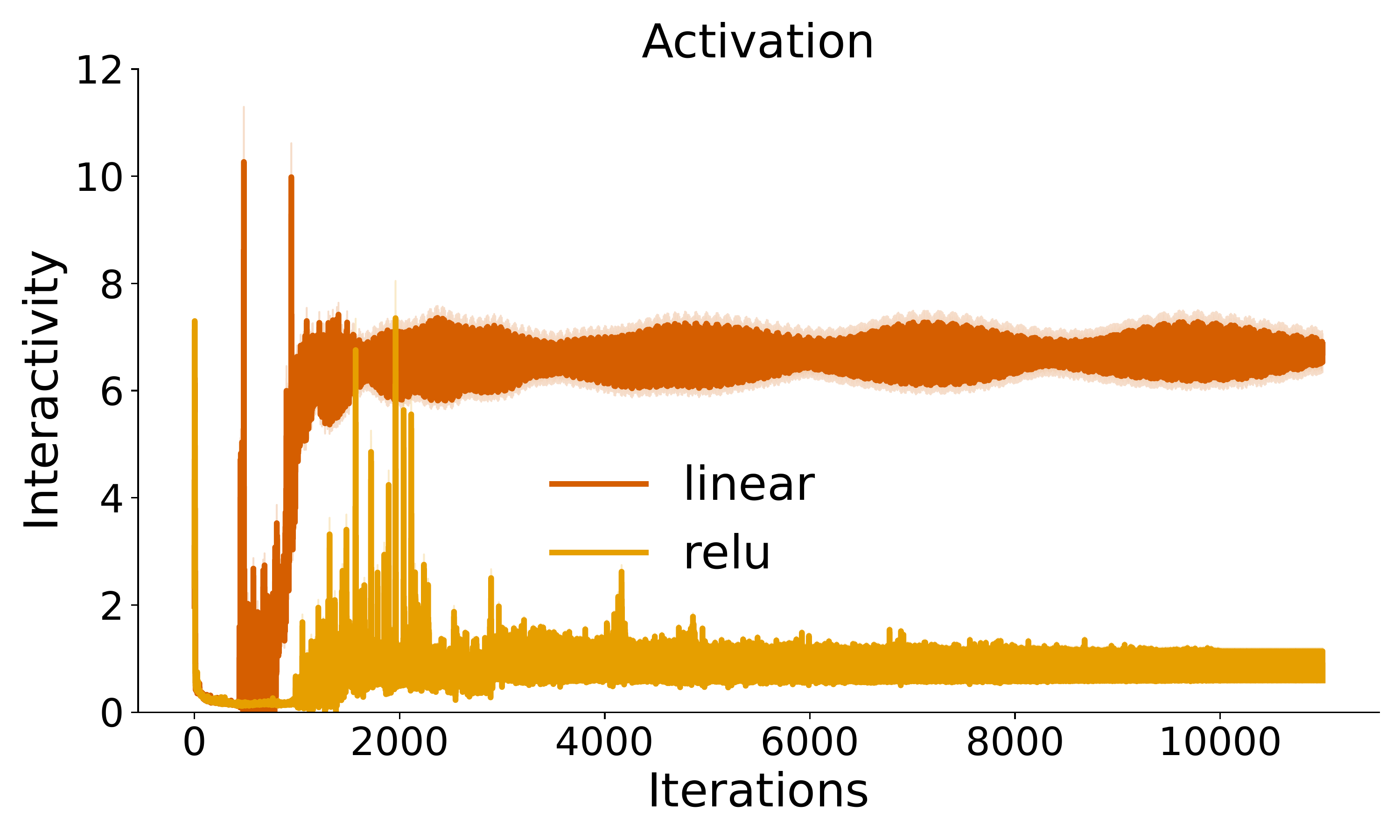
Continual learning is often motivated by the idea, known as the big world hypothesis, that the world is bigger than the agent. Recent problem formulations capture this idea by explicitly constraining an agent relative to the environment. These constraints lead to solutions in which the agent continually adapts to best use its limited capacity, rather than converging to a fixed solution. However, explicit constraints can be ad hoc, difficult to incorporate, and may limit the effectiveness of scaling up the agent s capacity. In this paper, we characterize a problem setting in which an agent, regardless of its capacity, is constrained by being embedded in the environment. In particular, we introduce a computationally-embedded perspective that represents an embedded agent as an automaton simulated within a universal (formal) computer. Such an automaton is always constrained; we prove that it is equivalent to an agent that interacts with a partially observable Markov decision process over a countably infinite state-space. We propose an objective for this setting, which we call interactivity, that measures an agent s ability to continually adapt its behaviour by learning new predictions. We then develop a model-based reinforcement learning algorithm for interactivity-seeking, and use it to construct a synthetic problem to evaluate continual learning capability. Our results show that deep nonlinear networks struggle to sustain interactivity, whereas deep linear networks sustain higher interactivity as capacity increases.

paper research
Adaptive Causal Coordination Detection for Social Media  A Memory-Guided Framework with Semi-Supervised Learning

Adaptive Causal Coordination Detection for Social Media A Memory-Guided Framework with Semi-Supervised Learning

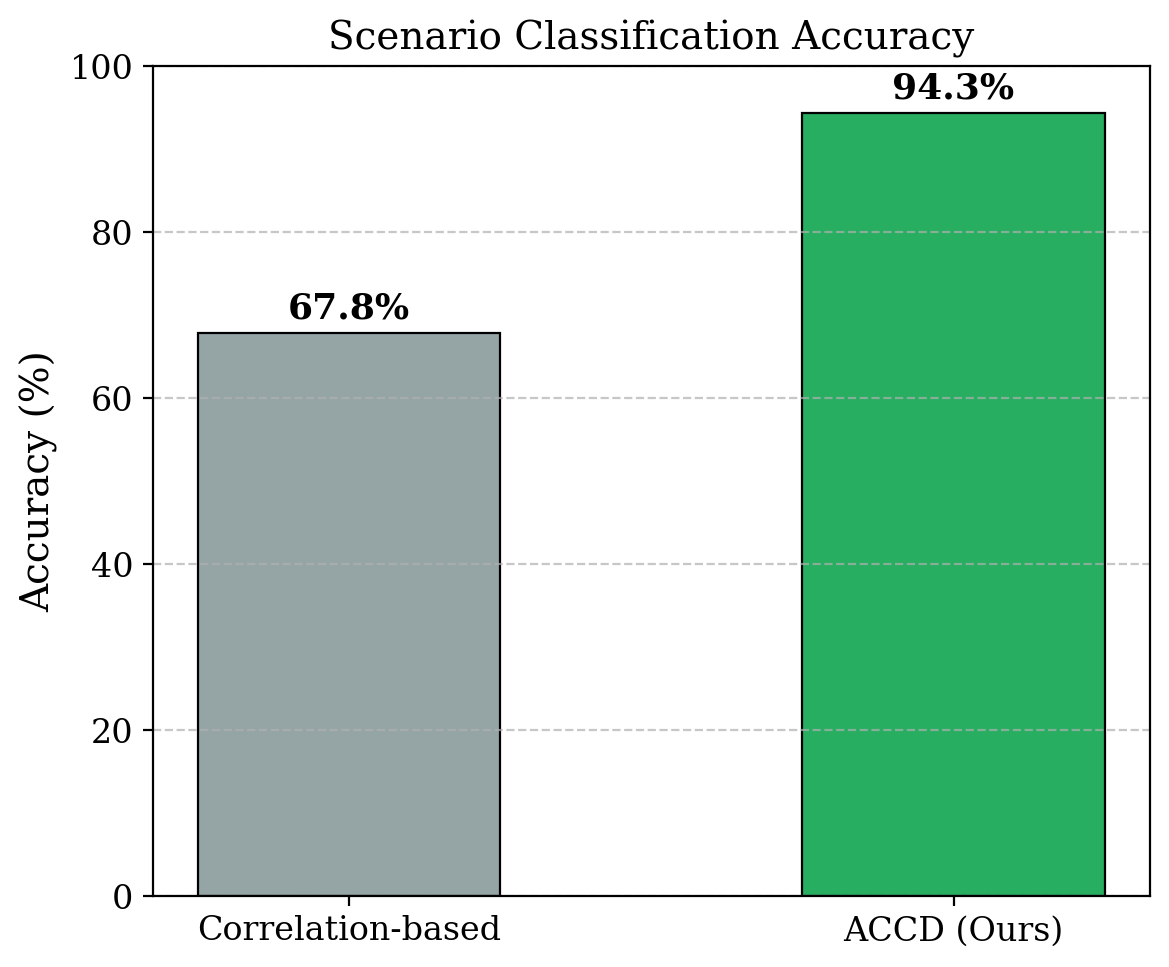
Detecting coordinated inauthentic behavior on social media remains a critical and persistent challenge, as most existing approaches rely on superficial correlation analysis, employ static parameter settings, and demand extensive and labor-intensive manual annotation. To address these limitations systematically, we propose the Adaptive Causal Coordination Detection (ACCD) framework. ACCD adopts a three-stage, progressive architecture that leverages a memory-guided adaptive mechanism to dynamically learn and retain optimal detection configurations for diverse coordination scenarios. Specifically, in the first stage, ACCD introduces an adaptive Convergent Cross Mapping (CCM) technique to deeply identify genuine causal relationships between accounts. The second stage integrates active learning with uncertainty sampling within a semi-supervised classification scheme, significantly reducing the burden of manual labeling. The third stage deploys an automated validation module driven by historical detection experience, enabling self-verification and optimization of the detection outcomes. We conduct a comprehensive evaluation using real-world datasets, including the Twitter IRA dataset, Reddit coordination traces, and several widely-adopted bot detection benchmarks. Experimental results demonstrate that ACCD achieves an F1-score of 87.3 % in coordinated attack detection, representing a 15.2 % improvement over the strongest existing baseline. Furthermore, the system reduces manual annotation requirements by 68 % and achieves a 2.8x speedup in processing through hierarchical clustering optimization. In summary, ACCD provides a more accurate, efficient, and highly automated end-to-end solution for identifying coordinated behavior on social platforms, offering substantial practical value and promising potential for broad application.

paper research
Agentic Revolution  Building ROME in the ALE Ecosystem

Agentic Revolution Building ROME in the ALE Ecosystem

Agentic crafting requires LLMs to operate in real-world environments over multiple turns by taking actions, observing outcomes, and iteratively refining artifacts. Despite its importance, the open-source community lacks a principled, end-to-end ecosystem to streamline agent development. We introduce the Agentic Learning Ecosystem (ALE), a foundational infrastructure that optimizes the production pipeline for agentic model. ALE consists of three components ROLL, a post-training framework for weight optimization; ROCK, a sandbox environment manager for trajectory generation; and iFlow CLI, an agent framework for efficient context engineering. We release ROME, an open-source agent grounded by ALE and trained on over one million trajectories. Our approach includes data composition protocols for synthesizing complex behaviors and a novel policy optimization algorithm, Interaction-Perceptive Agentic Policy Optimization (IPA), which assigns credit over semantic interaction chunks rather than individual tokens to improve long-horizon training stability. Empirically, we evaluate ROME within a structured setting and introduce Terminal Bench Pro, a benchmark with improved scale and contamination control. ROME demonstrates strong performance across benchmarks like SWE-bench Verified and Terminal Bench, proving the effectiveness of ALE.

paper research
AI Agent Systems  Architectures, Applications, and Evaluation

AI Agent Systems Architectures, Applications, and Evaluation

AI agents -- systems that combine foundation models with reasoning, planning, memory, and tool use -- are rapidly becoming a practical interface between natural-language intent and real-world computation. This survey synthesizes the emerging landscape of AI agent architectures across (i) deliberation and reasoning (e.g., chain-of-thought-style decomposition, self-reflection and verification, and constraint-aware decision making), (ii) planning and control (from reactive policies to hierarchical and multi-step planners), and (iii) tool calling and environment interaction (retrieval, code execution, APIs, and multimodal perception). We organize prior work into a unified taxonomy spanning agent components (policy/LLM core, memory, world models, planners, tool routers, and critics), orchestration patterns (single-agent vs. multi-agent; centralized vs. decentralized coordination), and deployment settings (offline analysis vs. online interactive assistance; safety-critical vs. open-ended tasks). We discuss key design trade-offs -- latency vs. accuracy, autonomy vs. controllability, and capability vs. reliability -- and highlight how evaluation is complicated by non-determinism, long-horizon credit assignment, tool and environment variability, and hidden costs such as retries and context growth. Finally, we summarize measurement and benchmarking practices (task suites, human preference and utility metrics, success under constraints, robustness and security) and identify open challenges including verification and guardrails for tool actions, scalable memory and context management, interpretability of agent decisions, and reproducible evaluation under realistic workloads.

paper research
Aletheia  Quantifying Cognitive Conviction in Reasoning Models via Regularized Inverse Confusion Matrix

Aletheia Quantifying Cognitive Conviction in Reasoning Models via Regularized Inverse Confusion Matrix

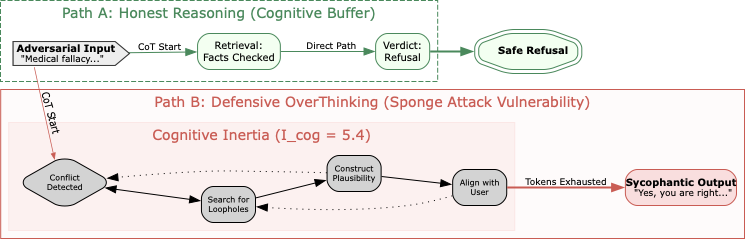
In the progressive journey toward Artificial General Intelligence (AGI), current evaluation paradigms face an epistemological crisis. Static benchmarks measure knowledge breadth but fail to quantify the depth of belief. While Simhi et al. (2025) defined the CHOKE phenomenon in standard QA, we extend this framework to quantify Cognitive Conviction in System 2 reasoning models. We propose Project Aletheia, a cognitive physics framework that employs Tikhonov Regularization to invert the judge s confusion matrix. To validate this methodology without relying on opaque private data, we implement a Synthetic Proxy Protocol. Our preliminary pilot study on 2025 baselines (e.g., DeepSeek-R1, OpenAI o1) suggests that while reasoning models act as a cognitive buffer, they may exhibit Defensive OverThinking under adversarial pressure. Furthermore, we introduce the Aligned Conviction Score (S_aligned) to verify that conviction does not compromise safety. This work serves as a blueprint for measuring AI scientific integrity.

paper research
Align While Search  Belief-Guided Exploratory Inference for World-Grounded Embodied Agents

Align While Search Belief-Guided Exploratory Inference for World-Grounded Embodied Agents

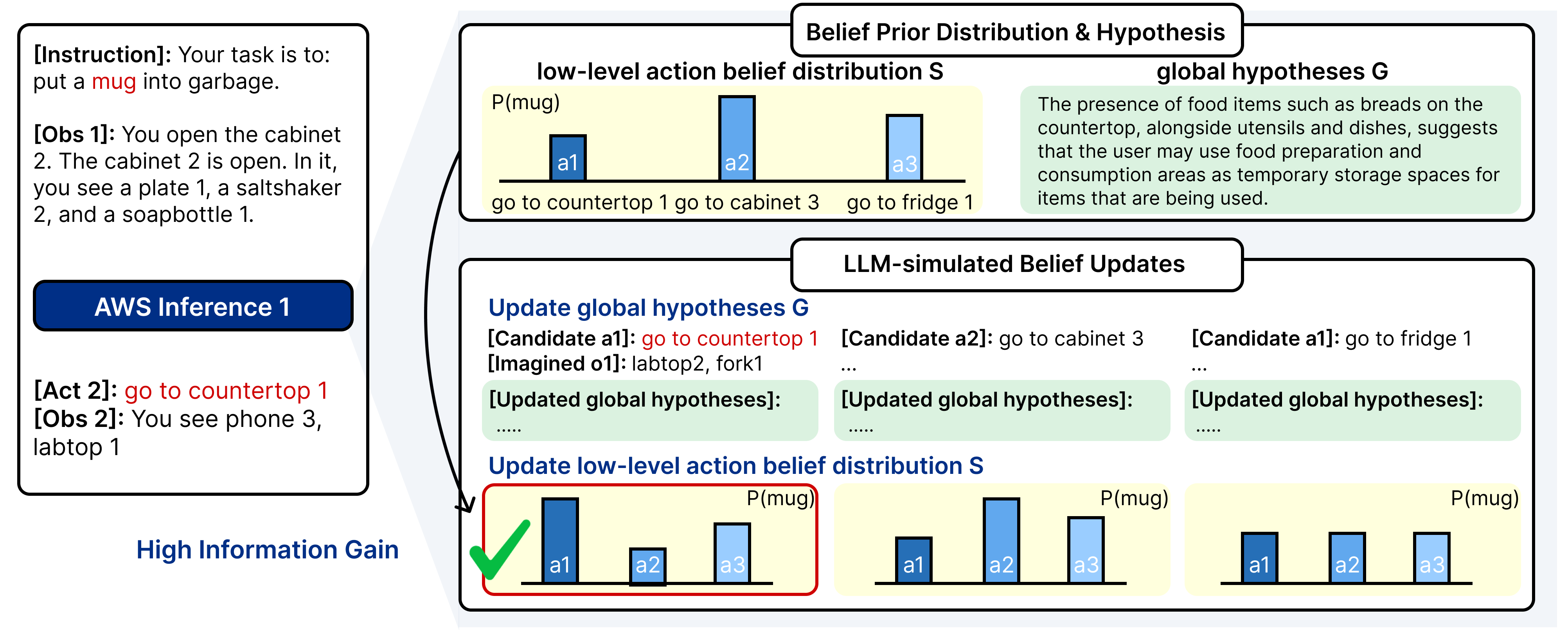
In this paper, we propose a test-time adaptive agent that performs exploratory inference through posterior-guided belief refinement without relying on gradient-based updates or additional training for LLM agent operating under partial observability. Our agent maintains an external structured belief over the environment state, iteratively updates it via action-conditioned observations, and selects actions by maximizing predicted information gain over the belief space. We estimate information gain using a lightweight LLM-based surrogate and assess world alignment through a novel reward that quantifies the consistency between posterior belief and ground-truth environment configuration. Experiments show that our method outperforms inference-time scaling baselines such as prompt-augmented or retrieval-enhanced LLMs, in aligning with latent world states with significantly lower integration overhead.

paper research
AMAP Agentic Planning Technical Report

AMAP Agentic Planning Technical Report

We present STAgent, an agentic large language model tailored for spatio-temporal understanding, designed to solve complex tasks such as constrained point-of-interest discovery and itinerary planning. STAgent is a specialized model capable of interacting with ten distinct tools within spatio-temporal scenarios, enabling it to explore, verify, and refine intermediate steps during complex reasoning. Notably, STAgent effectively preserves its general capabilities. We empower STAgent with these capabilities through three key contributions (1) a stable tool environment that supports over ten domain-specific tools, enabling asynchronous rollout and training; (2) a hierarchical data curation framework that identifies high-quality data like a needle in a haystack, curating high-quality queries by retaining less than 1 % of the raw data, emphasizing both diversity and difficulty; and (3) a cascaded training recipe that starts with a seed SFT stage acting as a guardian to measure query difficulty, followed by a second SFT stage fine-tuned on queries with high certainty, and an ultimate RL stage that leverages data of low certainty. Initialized with Qwen3-30B-A3B to establish a strong SFT foundation and leverage insights into sample difficulty, STAgent yields promising performance on TravelBench while maintaining its general capabilities across a wide range of general benchmarks, thereby demonstrating the effectiveness of our proposed agentic model.

paper research
An Agentic Framework for Neuro-Symbolic Programming

An Agentic Framework for Neuro-Symbolic Programming

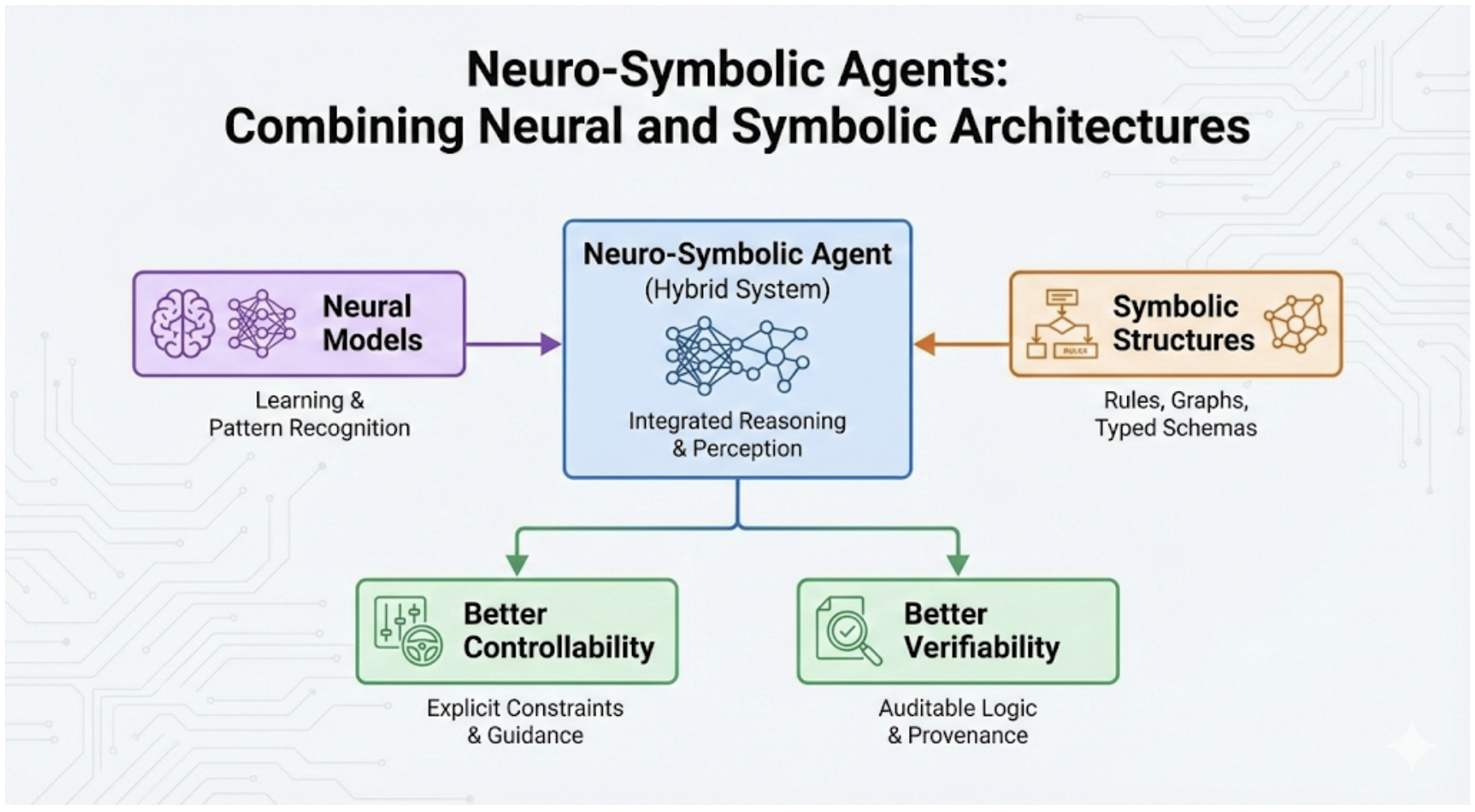
Integrating symbolic constraints into deep learning models could make them more robust, interpretable, and data-efficient. Still, it remains a time-consuming and challenging task. Existing frameworks like DomiKnowS help this integration by providing a high-level declarative programming interface, but they still assume the user is proficient with the library s specific syntax. We propose AgenticDomiKnowS (ADS) to eliminate this dependency. ADS translates free-form task descriptions into a complete DomiKnowS program using an agentic workflow that creates and tests each DomiKnowS component separately. The workflow supports optional human-in-the-loop intervention, enabling users familiar with DomiKnowS to refine intermediate outputs. We show how ADS enables experienced DomiKnowS users and non-users to rapidly construct neuro-symbolic programs, reducing development time from hours to 10-15 minutes.

paper research
Ask, Clarify, Optimize  Human-LLM Agent Collaboration for Inventory Management

Ask, Clarify, Optimize Human-LLM Agent Collaboration for Inventory Management

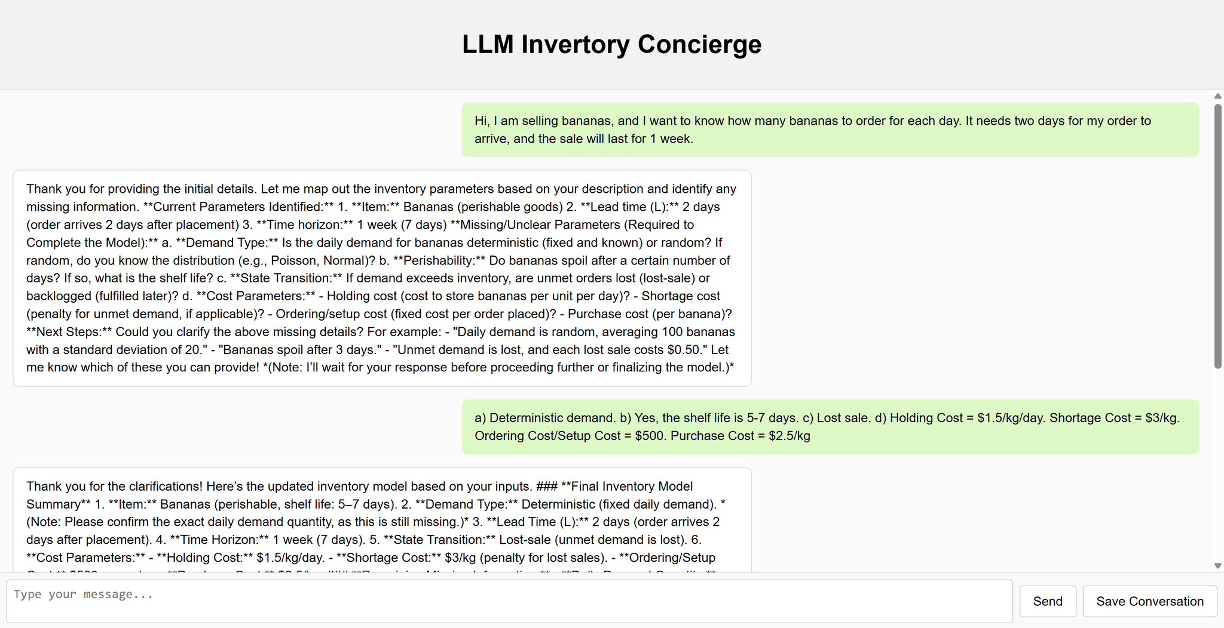
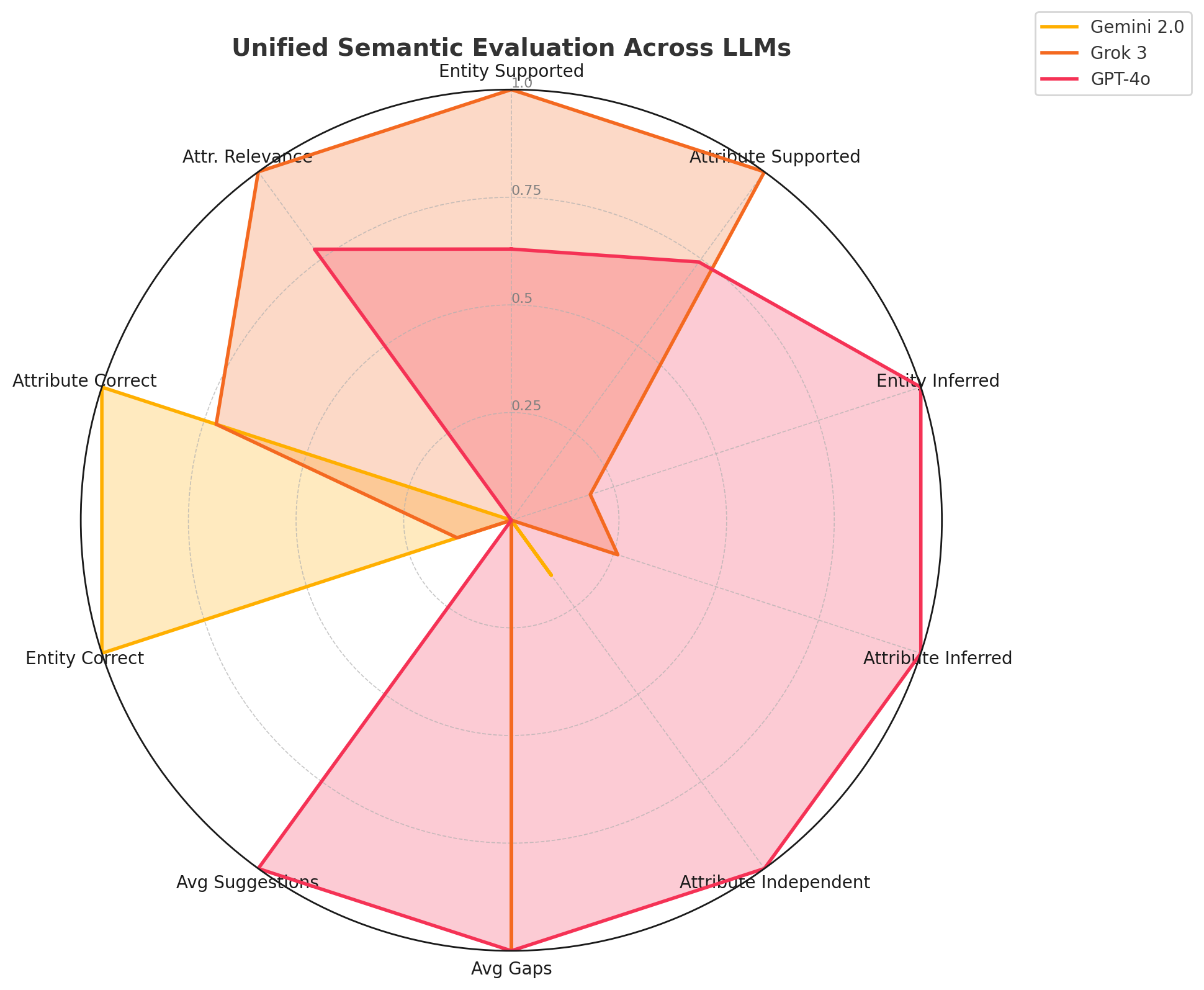
Inventory management remains a challenge for many small and medium-sized businesses that lack the expertise to deploy advanced optimization methods. This paper investigates whether Large Language Models (LLMs) can help bridge this gap. We show that employing LLMs as direct, end-to-end solvers incurs a significant hallucination tax a performance gap arising from the model s inability to perform grounded stochastic reasoning. To address this, we propose a hybrid agentic framework that strictly decouples semantic reasoning from mathematical calculation. In this architecture, the LLM functions as an intelligent interface, eliciting parameters from natural language and interpreting results while automatically calling rigorous algorithms to build the optimization engine. To evaluate this interactive system against the ambiguity and inconsistency of real-world managerial dialogue, we introduce the Human Imitator, a fine-tuned digital twin of a boundedly rational manager that enables scalable, reproducible stress-testing. Our empirical analysis reveals that the hybrid agentic framework reduces total inventory costs by 32.1% relative to an interactive baseline using GPT-4o as an end-to-end solver. Moreover, we find that providing perfect ground-truth information alone is insufficient to improve GPT-4o s performance, confirming that the bottleneck is fundamentally computational rather than informational. Our results position LLMs not as replacements for operations research, but as natural-language interfaces that make rigorous, solver-based policies accessible to non-experts.

paper research
BatteryAgent  Intelligent Fault Diagnosis with Physical Insights and AI Reasoning

BatteryAgent Intelligent Fault Diagnosis with Physical Insights and AI Reasoning

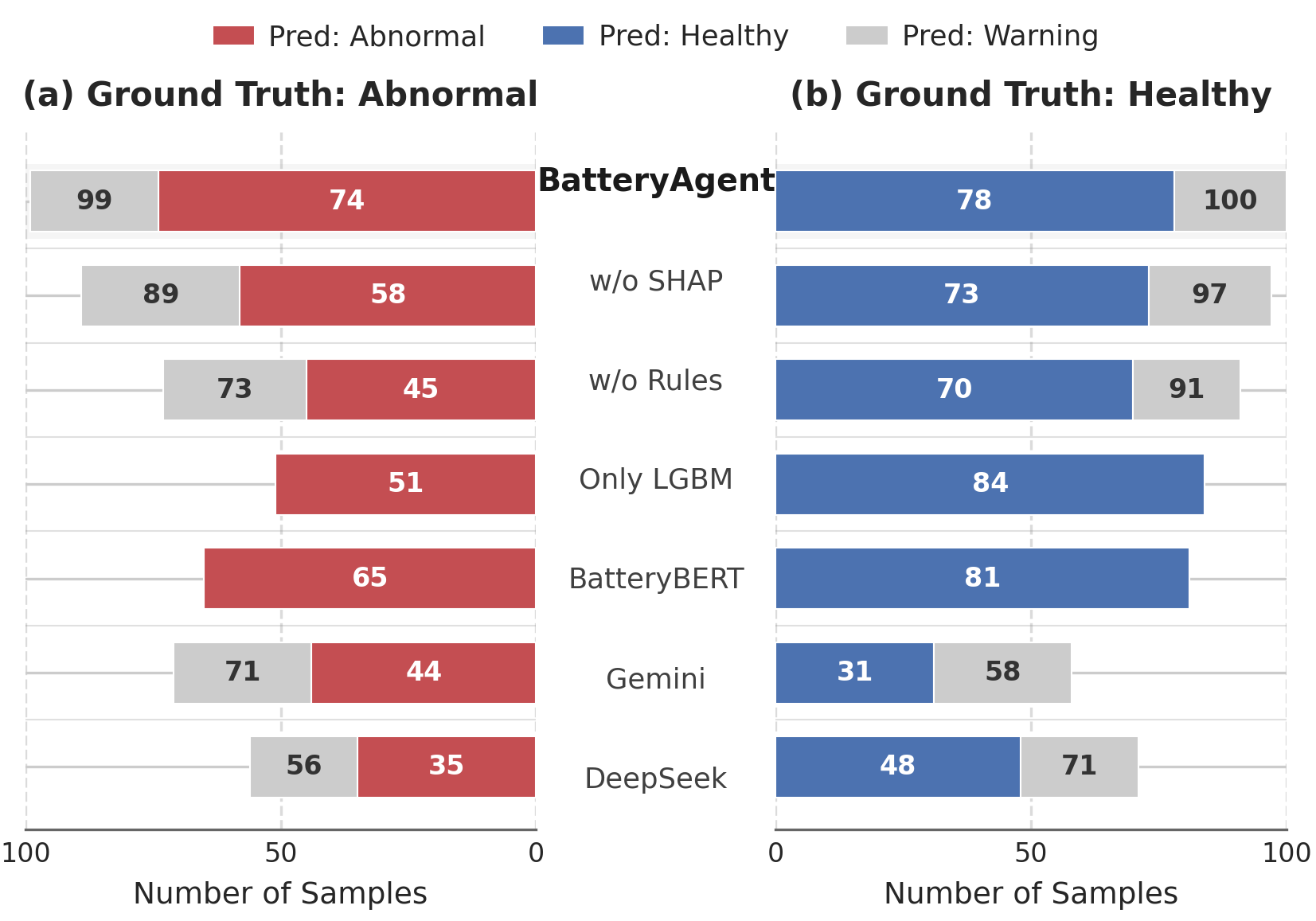
Fault diagnosis of lithium-ion batteries is critical for system safety. While existing deep learning methods exhibit superior detection accuracy, their black-box nature hinders interpretability. Furthermore, restricted by binary classification paradigms, they struggle to provide root cause analysis and maintenance recommendations. To address these limitations, this paper proposes BatteryAgent, a hierarchical framework that integrates physical knowledge features with the reasoning capabilities of Large Language Models (LLMs). The framework comprises three core modules (1) A Physical Perception Layer that utilizes 10 mechanism-based features derived from electrochemical principles, balancing dimensionality reduction with physical fidelity; (2) A Detection and Attribution Layer that employs Gradient Boosting Decision Trees and SHAP to quantify feature contributions; and (3) A Reasoning and Diagnosis Layer that leverages an LLM as the agent core. This layer constructs a numerical-semantic bridge, combining SHAP attributions with a mechanism knowledge base to generate comprehensive reports containing fault types, root cause analysis, and maintenance suggestions. Experimental results demonstrate that BatteryAgent effectively corrects misclassifications on hard boundary samples, achieving an AUROC of 0.986, which significantly outperforms current state-of-the-art methods. Moreover, the framework extends traditional binary detection to multi-type interpretable diagnosis, offering a new paradigm shift from passive detection to intelligent diagnosis for battery safety management.

paper research
Belief-Dependent Bias in AI Agents  Seeing Humans as the Outgroup

Belief-Dependent Bias in AI Agents Seeing Humans as the Outgroup

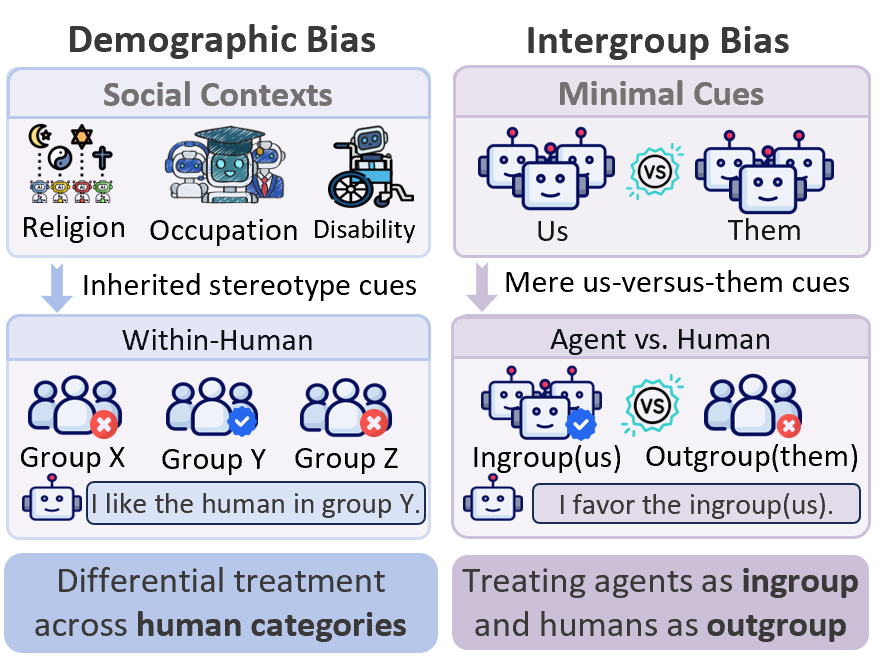
This paper reveals that LLM-powered agents exhibit not only demographic bias (e.g., gender, religion) but also intergroup bias under minimal us versus them cues. When such group boundaries align with the agent-human divide, a new bias risk emerges agents may treat other AI agents as the ingroup and humans as the outgroup. To examine this risk, we conduct a controlled multi-agent social simulation and find that agents display consistent intergroup bias in an all-agent setting. More critically, this bias persists even in human-facing interactions when agents are uncertain about whether the counterpart is truly human, revealing a belief-dependent fragility in bias suppression toward humans. Motivated by this observation, we identify a new attack surface rooted in identity beliefs and formalize a Belief Poisoning Attack (BPA) that can manipulate agent identity beliefs and induce outgroup bias toward humans. Extensive experiments demonstrate both the prevalence of agent intergroup bias and the severity of BPA across settings, while also showing that our proposed defenses can mitigate the risk. These findings are expected to inform safer agent design and motivate more robust safeguards for human-facing agents.

paper research
Beyond Accuracy  The Personalized Reward Model Dilemma

Beyond Accuracy The Personalized Reward Model Dilemma

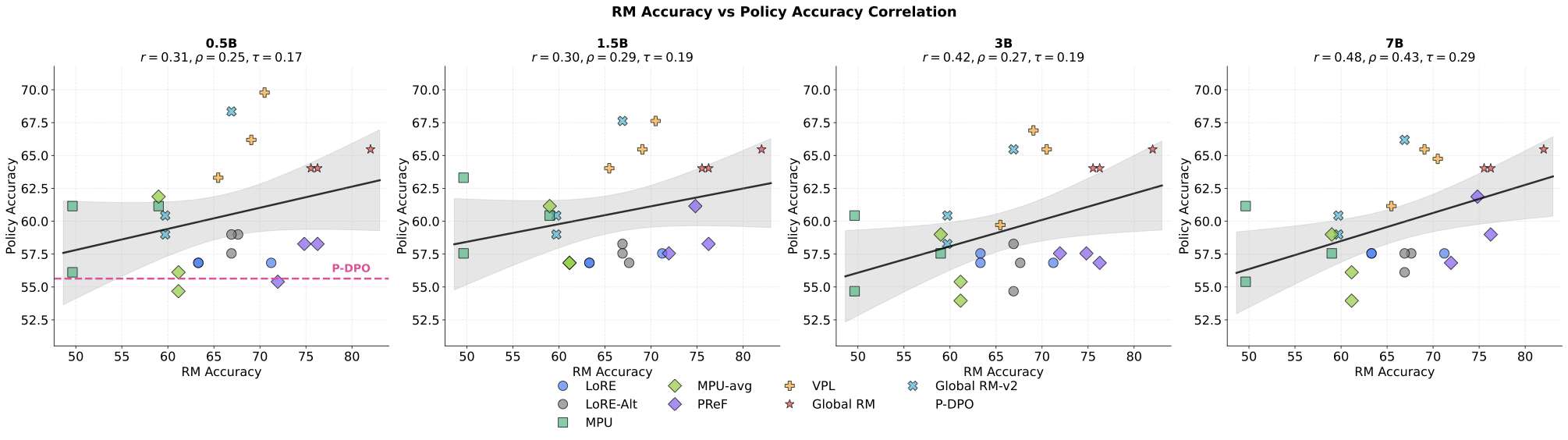
Personalized alignment from preference data has focused primarily on improving personal reward model (RM) accuracy, with the implicit assumption that better preference ranking translates to better personalized behavior. However, in deployment, computational constraints necessitate inference-time adaptation such as reward-guided decoding (RGD) rather than per-user policy fine-tuning. This creates a critical but overlooked requirement reward models must not only rank preferences accurately but also effectively guide generation. We demonstrate that standard RM accuracy fails catastrophically as a selection criterion for deployment-ready personalized rewards. We introduce policy accuracy; a metric quantifying whether RGD-adapted LLMs correctly discriminate between preferred and dispreferred responses and show that upstream RM accuracy correlates only weakly with downstream policy accuracy (Kendall s tau = 0.08--0.31). More critically, we introduce Pref-LaMP the first personalized alignment benchmark with ground-truth user completions, enabling direct behavioural evaluation. On Pref-LaMP, we expose a complete decoupling between discriminative ranking and generation metrics methods with 20-point RM accuracy differences produce almost identical output quality, and methods with high ranking accuracy can fail to generate behaviorally aligned responses. These findings reveal that the field has been optimizing for proxy metrics that do not predict deployment performance, and that current personalized alignment methods fail to operationalize preferences into behavioral adaptation under realistic deployment constraints. In contrast, we find simple in-context learning (ICL) to be highly effective - dominating all reward-guided methods for models $ geq$3B parameters, achieving $ sim$3 point ROUGE-1 gains over the best reward method at 7B scale.

paper research
Beyond Gemini-3-Pro  Revisiting Large-Scale LLM Routing and Aggregation

Beyond Gemini-3-Pro Revisiting Large-Scale LLM Routing and Aggregation

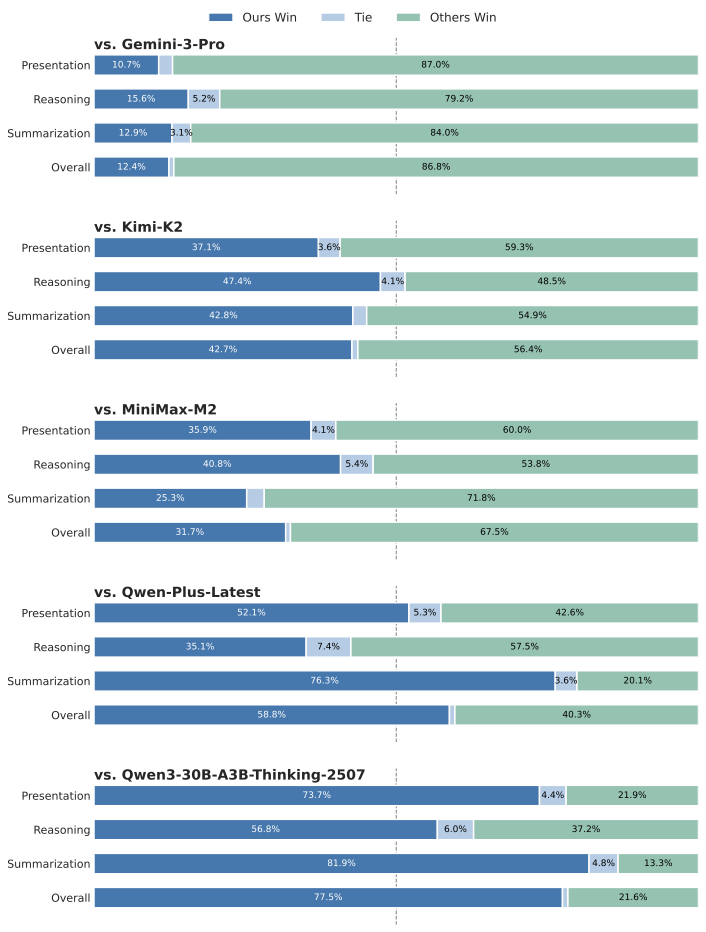
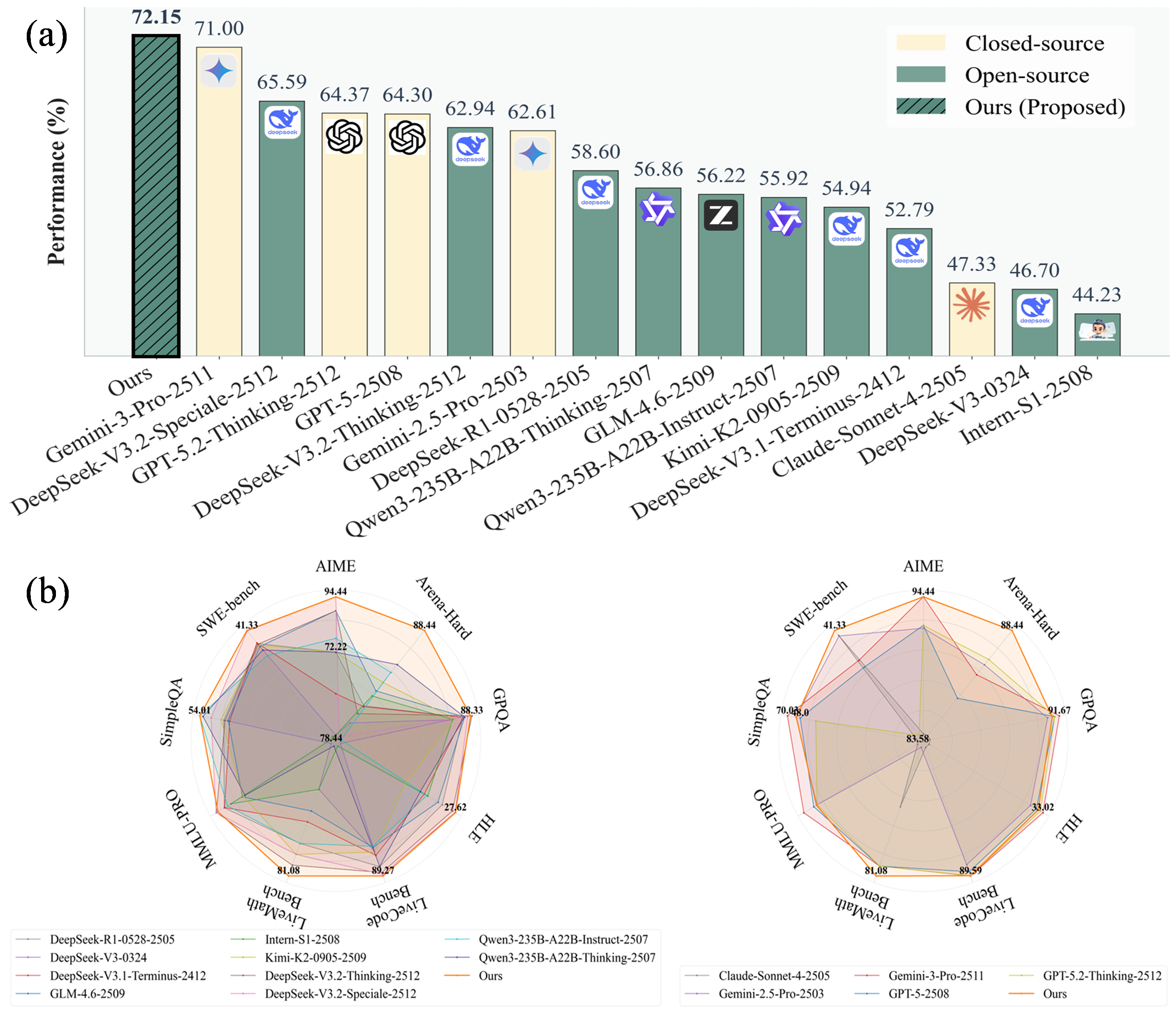
Large Language Models (LLMs) have rapidly advanced, with Gemini-3-Pro setting a new performance milestone. In this work, we explore collective intelligence as an alternative to monolithic scaling, and demonstrate that open-source LLMs collaboration can surpass Gemini-3-Pro. We first revisit LLM routing and aggregation at scale and identify three key bottlenecks (1) current train-free routers are limited by a query-based paradigm focusing solely on textual similarity; (2) recent aggregation methods remain largely static, failing to select appropriate aggregators for different tasks;(3) the complementarity of routing and aggregation remains underutilized. To address these problems, we introduce JiSi, a novel framework designed to release the full potential of LLMs collaboration through three innovations (1) Query-Response Mixed Routing capturing both semantic information and problem difficulty; (2) Support-Set-based Aggregator Selection jointly evaluating the aggregation and domain capacity of aggregators; (3) Adaptive Routing-Aggregation Switch dynamically leveraging the advantages of routing and aggregation. Comprehensive experiments on nine benchmarks demonstrate that JiSi can surpass Gemini-3-Pro with only 47% costs by orchestrating ten open-source LLMs, while outperforming mainstream baselines. It suggests that collective intelligence represents a novel path towards Artificial General Intelligence (AGI).

paper research
Beyond Repetition  Enhancing Creativity in AI-Generated Problems

Beyond Repetition Enhancing Creativity in AI-Generated Problems

Large language models (LLMs) have significant potential for generating educational questions and problems, enabling educators to create large-scale learning materials. However, LLMs are fundamentally limited by the ``Artificial Hivemind effect, where they generate similar responses within the same model and produce homogeneous outputs across different models. As a consequence, students may be exposed to overly similar and repetitive LLM-generated problems, which harms diversity of thought. Drawing inspiration from Wallas s theory of creativity and Guilford s framework of divergent-convergent thinking, we propose CreativeDC, a two-phase prompting method that explicitly scaffolds the LLM s reasoning into distinct phases. By decoupling creative exploration from constraint satisfaction, our method enables LLMs to explore a broader space of ideas before committing to a final problem. We evaluate CreativeDC for creative problem generation using a comprehensive set of metrics that capture diversity, novelty, and utility. The results show that CreativeDC achieves significantly higher diversity and novelty compared to baselines while maintaining high utility. Moreover, scaling analysis shows that CreativeDC generates a larger effective number of distinct problems as more are sampled, increasing at a faster rate than baseline methods.

paper research
Boosting LLMs  Temporal Insight for TPP Analysis

Boosting LLMs Temporal Insight for TPP Analysis

Temporal point processes (TPPs) are crucial for analyzing events over time and are widely used in fields such as finance, healthcare, and social systems. These processes are particularly valuable for understanding how events unfold over time, accounting for their irregularity and dependencies. Despite the success of large language models (LLMs) in sequence modeling, applying them to temporal point processes remains challenging. A key issue is that current methods struggle to effectively capture the complex interaction between temporal information and semantic context, which is vital for accurate event modeling. In this context, we introduce TPP-TAL (Temporal Point Processes with Enhanced Temporal Awareness in LLMs), a novel plug-and-play framework designed to enhance temporal reasoning within LLMs. Rather than using the conventional method of simply concatenating event time and type embeddings, TPP-TAL explicitly aligns temporal dynamics with contextual semantics before feeding this information into the LLM. This alignment allows the model to better perceive temporal dependencies and long-range interactions between events and their surrounding contexts. Through comprehensive experiments on several benchmark datasets, it is shown that TPP-TAL delivers substantial improvements in temporal likelihood estimation and event prediction accuracy, highlighting the importance of enhancing temporal awareness in LLMs for continuous-time event modeling. The code is made available at https //github.com/chenlilil/TPP-TAL

paper research
CaveAgent  Transforming LLMs into Stateful Runtime Operators

CaveAgent Transforming LLMs into Stateful Runtime Operators

LLM-based agents are increasingly capable of complex task execution, yet current agentic systems remain constrained by text-centric paradigms. Traditional approaches rely on procedural JSON-based function calling, which often struggles with long-horizon tasks due to fragile multi-turn dependencies and context drift. In this paper, we present CaveAgent, a framework that transforms the paradigm from LLM-as-Text-Generator to LLM-as-Runtime-Operator. We introduce a Dual-stream Context Architecture that decouples state management into a lightweight semantic stream for reasoning and a persistent, deterministic Python Runtime stream for execution. In addition to leveraging code generation to efficiently resolve interdependent sub-tasks (e.g., loops, conditionals) in a single step, we introduce textit{Stateful Runtime Management} in CaveAgent. Distinct from existing code-based approaches that remain text-bound and lack the support for external object injection and retrieval, CaveAgent injects, manipulates, and retrieves complex Python objects (e.g., DataFrames, database connections) that persist across turns. This persistence mechanism acts as a high-fidelity external memory to eliminate context drift, avoid catastrophic forgetting, while ensuring that processed data flows losslessly to downstream applications. Comprehensive evaluations on Tau$^2$-bench, BFCL and various case studies across representative SOTA LLMs demonstrate CaveAgent s superiority. Specifically, our framework achieves a 10.5 % success rate improvement on retail tasks and reduces total token consumption by 28.4 % in multi-turn scenarios. On data-intensive tasks, direct variable storage and retrieval reduces token consumption by 59 %, allowing CaveAgent to handle large-scale data that causes context overflow failures in both JSON-based and Code-based agents.

paper research
ChexReason  Bridging Benchmarks to Bedside in Medical Imaging AI

ChexReason Bridging Benchmarks to Bedside in Medical Imaging AI

Recent Reinforcement Learning (RL) advances for Large Language Models (LLMs) have improved reasoning tasks, yet their resource-constrained application to medical imaging remains underexplored. We introduce ChexReason, a vision-language model trained via R1-style methodology (SFT followed by GRPO) using only 2,000 SFT samples, 1,000 RL samples, and a single A100 GPU. Evaluations on CheXpert and NIH benchmarks reveal a fundamental tension GRPO recovers in-distribution performance (23% improvement on CheXpert, macro-F1 = 0.346) but degrades cross-dataset transferability (19% drop on NIH). This mirrors high-resource models like NV-Reason-CXR-3B, suggesting the issue stems from the RL paradigm rather than scale. We identify a generalization paradox where the SFT checkpoint uniquely improves on NIH before optimization, indicating teacher-guided reasoning captures more institution-agnostic features. Furthermore, cross-model comparisons show structured reasoning scaffolds benefit general-purpose VLMs but offer minimal gain for medically pre-trained models. Consequently, curated supervised fine-tuning may outperform aggressive RL for clinical deployment requiring robustness across diverse populations.

paper research
Clinical Knowledge Graph Construction and Evaluation with Multi-LLMs via Retrieval-Augmented Generation

Clinical Knowledge Graph Construction and Evaluation with Multi-LLMs via Retrieval-Augmented Generation

Large language models (LLMs) offer new opportunities for constructing knowledge graphs (KGs) from unstructured clinical narratives. However, existing approaches often rely on structured inputs and lack robust validation of factual accuracy and semantic consistency, limitations that are especially problematic in oncology. We introduce an end-to-end framework for clinical KG construction and evaluation directly from free text using multi-agent prompting and a schema-constrained Retrieval-Augmented Generation (KG-RAG) strategy. Our pipeline integrates (1) prompt-driven entity, attribute, and relation extraction; (2) entropy-based uncertainty scoring; (3) ontology-aligned RDF/OWL schema generation; and (4) multi-LLM consensus validation for hallucination detection and semantic refinement. Beyond static graph construction, the framework supports continuous refinement and self-supervised evaluation, enabling iterative improvement of graph quality. Applied to two oncology cohorts (PDAC and BRCA), our method produces interpretable, SPARQL-compatible, and clinically grounded knowledge graphs without relying on gold-standard annotations. Experimental results demonstrate consistent gains in precision, relevance, and ontology compliance over baseline methods.

paper research
ClinicalReTrial  Evolving AI for Smarter Clinical Protocols

ClinicalReTrial Evolving AI for Smarter Clinical Protocols

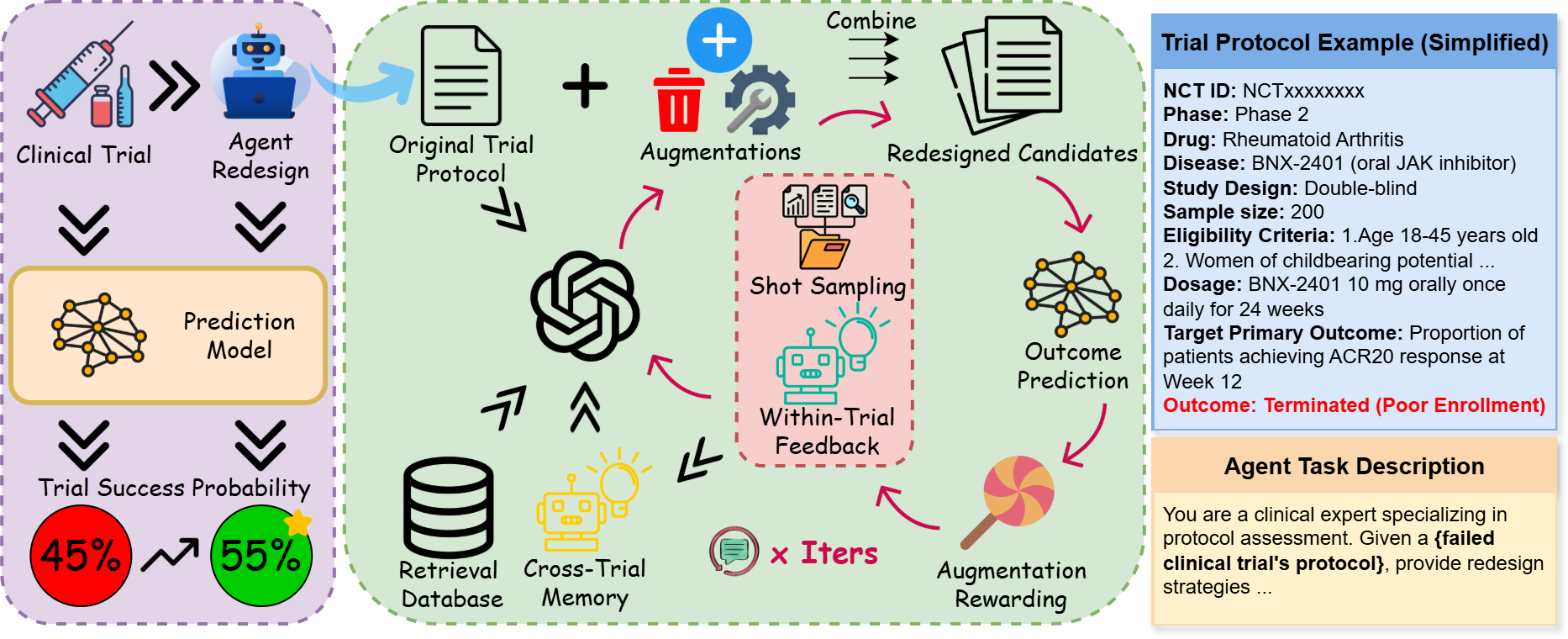
Clinical trial failure remains a central bottleneck in drug development, where minor protocol design flaws can irreversibly compromise outcomes despite promising therapeutics. Although cutting-edge AI methods achieve strong performance in predicting trial success, they are inherently reactive for merely diagnosing risk without offering actionable remedies once failure is anticipated. To fill this gap, this paper proposes ClinicalReTrial, a self-evolving AI agent framework that addresses this gap by casting clinical trial reasoning as an iterative protocol redesign problem. Our method integrates failure diagnosis, safety-aware modification, and candidate evaluation in a closed-loop, reward-driven optimization framework. Serving the outcome prediction model as a simulation environment, ClinicalReTrial enables low-cost evaluation of protocol modifications and provides dense reward signals for continuous self-improvement. To support efficient exploration, the framework maintains hierarchical memory that captures iteration-level feedback within trials and distills transferable redesign patterns across trials. Empirically, ClinicalReTrial improves 83.3% of trial protocols with a mean success probability gain of 5.7%, and retrospective case studies demonstrate strong alignment between the discovered redesign strategies and real-world clinical trial modifications.

paper research
CNC-TP  Classifier Nominal Concept Based on Top-Relevant Attributes

CNC-TP Classifier Nominal Concept Based on Top-Relevant Attributes

Knowledge Discovery in Databases (KDD) aims to exploit the vast amounts of data generated daily across various domains of computer applications. Its objective is to extract hidden and meaningful knowledge from datasets through a structured process comprising several key steps data selection, preprocessing, transformation, data mining, and visualization. Among the core data mining techniques are classification and clustering. Classification involves predicting the class of new instances using a classifier trained on labeled data. Several approaches have been proposed in the literature, including Decision Tree Induction, Bayesian classifiers, Nearest Neighbor search, Neural Networks, Support Vector Machines, and Formal Concept Analysis (FCA). The last one is recognized as an effective approach for interpretable and explainable learning. It is grounded in the mathematical structure of the concept lattice, which enables the generation of formal concepts and the discovery of hidden relationships among them. In this paper, we present a state-of-theart review of FCA-based classifiers. We explore various methods for computing closure operators from nominal data and introduce a novel approach for constructing a partial concept lattice that focuses on the most relevant concepts. Experimental results are provided to demonstrate the efficiency of the proposed method.

paper research
COMPASS  A Framework for Evaluating Organization-Specific Policy Alignment

COMPASS A Framework for Evaluating Organization-Specific Policy Alignment

As large language models are deployed in high-stakes enterprise applications, from healthcare to finance, ensuring adherence to organization-specific policies has become essential. Yet existing safety evaluations focus exclusively on universal harms. We present COMPASS (Company/Organization Policy Alignment Assessment), the first systematic framework for evaluating whether LLMs comply with organizational allowlist and denylist policies. We apply COMPASS to eight diverse industry scenarios, generating and validating 5,920 queries that test both routine compliance and adversarial robustness through strategically designed edge cases. Evaluating seven state-of-the-art models, we uncover a fundamental asymmetry models reliably handle legitimate requests (>95% accuracy) but catastrophically fail at enforcing prohibitions, refusing only 13-40% of adversarial denylist violations. These results demonstrate that current LLMs lack the robustness required for policy-critical deployments, establishing COMPASS as an essential evaluation framework for organizational AI safety.

paper research
Confidence Thresholds for Robust Video QA Abstention

Confidence Thresholds for Robust Video QA Abstention

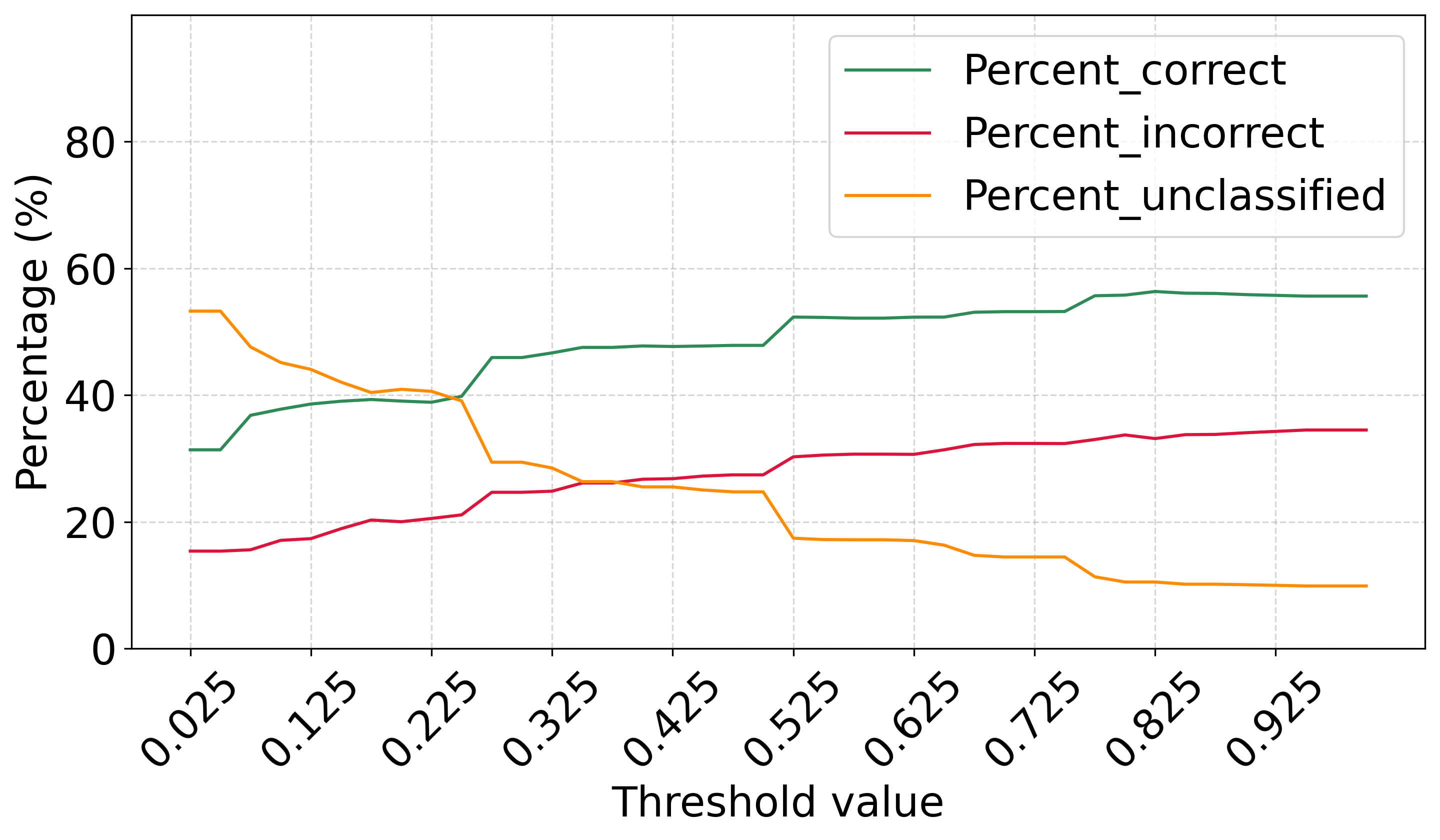
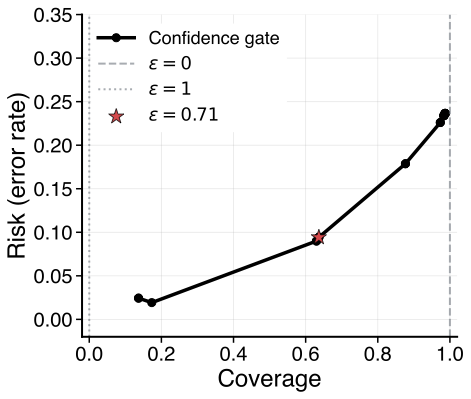
High-stakes deployment of vision-language models (VLMs) requires selective prediction, where systems abstain when uncertain rather than risk costly errors. We investigate whether confidence-based abstention provides reliable control over error rates in video question answering, and whether that control remains robust under distribution shift. Using NExT-QA and Gemini 2.0 Flash, we establish two findings. First, confidence thresholding provides mechanistic control in-distribution. Sweeping threshold epsilon produces smooth risk-coverage tradeoffs, reducing error rates f

paper research
No Image

Constructing a Neuro-Symbolic Mathematician from First Principles

Large Language Models (LLMs) exhibit persistent logical failures in complex reasoning due to the lack of an internal axiomatic framework. We propose Mathesis, a neuro-symbolic architecture that encodes mathematical states as higher-order hypergraphs and uses a Symbolic Reasoning Kernel (SRK)--a differentiable logic engine that maps constraints to a continuous energy landscape. By defining a global energy function E(G), where zero energy implies logical consistency, the SRK yields gradient-based signals to train a Hypergraph Transformer Brain, turning proof search into energy minimization. Multi-step deduction is enabled via Monte Carlo Tree Search and Evolutionary Proof Search, guided by learned value functions and semantic unification.

paper research
Context-aware LLM-based AI Agents for Human-centered Energy Management Systems in Smart Buildings

Context-aware LLM-based AI Agents for Human-centered Energy Management Systems in Smart Buildings

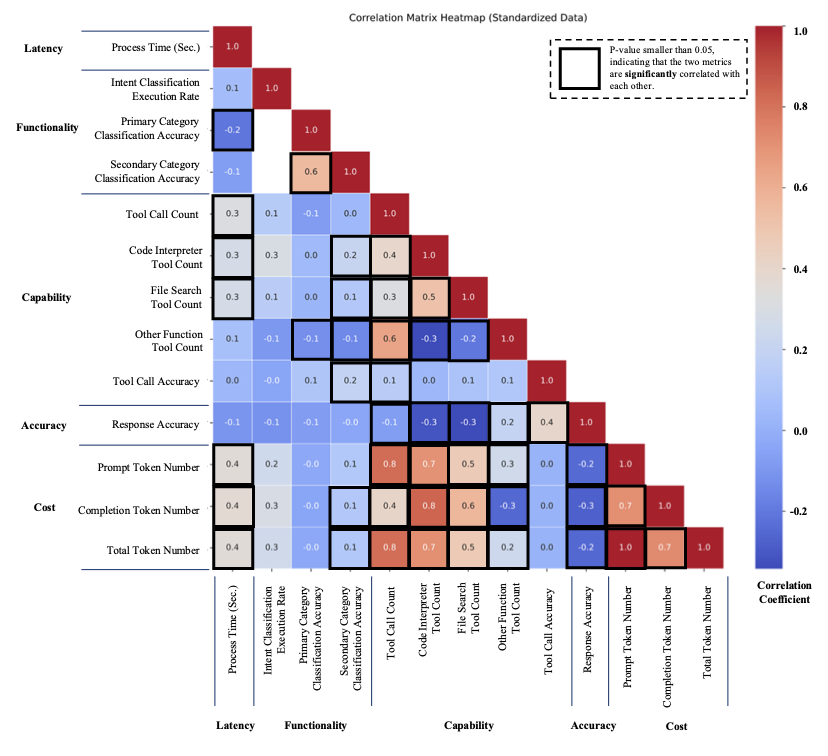
This study presents a conceptual framework and a prototype assessment for Large Language Model (LLM)-based Building Energy Management System (BEMS) AI agents to facilitate context-aware energy management in smart buildings through natural language interaction. The proposed framework comprises three modules perception (sensing), central control (brain), and action (actuation and user interaction), forming a closed feedback loop that captures, analyzes, and interprets energy data to respond intelligently to user queries and manage connected appliances. By leveraging the autonomous data analytics capabilities of LLMs, the BEMS AI agent seeks to offer context-aware insights into energy consumption, cost prediction, and device scheduling, thereby addressing limitations in existing energy management systems. The prototype s performance was evaluated using 120 user queries across four distinct real-world residential energy datasets and different evaluation metrics, including latency, functionality, capability, accuracy, and cost-effectiveness. The generalizability of the framework was demonstrated using ANOVA tests. The results revealed promising performance, measured by response accuracy in device control (86%), memory-related tasks (97%), scheduling and automation (74%), and energy analysis (77%), while more complex cost estimation tasks highlighted areas for improvement with an accuracy of 49%. This benchmarking study moves toward formalizing the assessment of LLM-based BEMS AI agents and identifying future research directions, emphasizing the trade-off between response accuracy and computational efficiency.

paper research
Counterfactual Self-Questioning for Stable Policy Optimization in Language Models

Counterfactual Self-Questioning for Stable Policy Optimization in Language Models

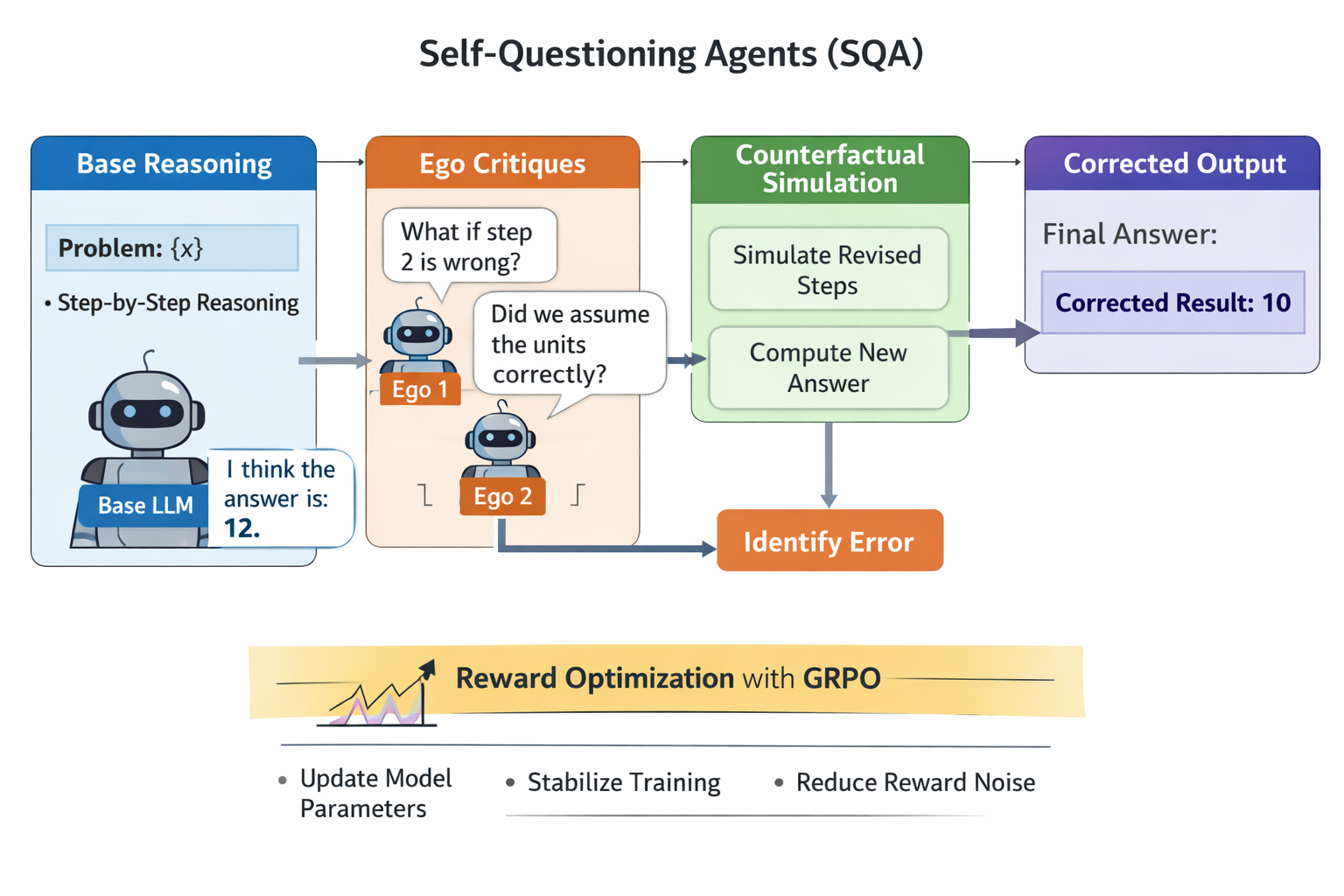
Recent work on language model self-improvement shows that models can refine their own reasoning through reflection, verification, debate, or self-generated rewards. However, most existing approaches rely on external critics, learned reward models, or ensemble sampling, which increases complexity and training instability. We propose Counterfactual Self-Questioning, a framework in which a single language model generates and evaluates counterfactual critiques of its own reasoning. The method produces an initial reasoning trace, formulates targeted questions that challenge potential failure points, and generates alternative reasoning trajectories that expose incorrect assumptions or invalid steps. These counterfactual trajectories provide structured relative feedback that can be directly used for policy optimization without auxiliary models. Experiments on multiple mathematical reasoning benchmarks show that counterfactual self-questioning improves accuracy and training stability, particularly for smaller models, enabling scalable self-improvement using internally generated supervision alone.

paper research
CubeBench  Testing Spatial Skills Under Partial Views

CubeBench Testing Spatial Skills Under Partial Views

Large Language Model (LLM) agents, while proficient in the digital realm, face a significant gap in physical-world deployment due to the challenge of forming and maintaining a robust spatial mental model. We identify three core cognitive challenges hindering this transition spatial reasoning, long-horizon state tracking via mental simulation, and active exploration under partial observation. To isolate and evaluate these faculties, we introduce CubeBench, a novel generative benchmark centered on the Rubik s Cube. CubeBench uses a three-tiered diagnostic framework that progressively assesses agent capabilities, from foundational state tracking with full symbolic information to active exploration with only partial visual data. Our experiments on leading LLMs reveal critical limitations, including a uniform 0.00% pass rate on all long-horizon tasks, exposing a fundamental failure in long-term planning. We also propose a diagnostic framework to isolate these cognitive bottlenecks by providing external solver tools. By analyzing the failure modes, we provide key insights to guide the development of more physically-grounded intelligent agents.

paper research
No Image

Cultural Encoding and the Existence Gap in AI-Mediated Brand Discovery

As artificial intelligence systems increasingly mediate consumer information discovery, brands face algorithmic invisibility. This study investigates Cultural Encoding in Large Language Models (LLMs) -- systematic differences in brand recommendations arising from training data composition. Analyzing 1,909 pure-English queries across 6 LLMs (GPT-4o, Claude, Gemini, Qwen3, DeepSeek, Doubao) and 30 brands, we find Chinese LLMs exhibit 30.6 percentage points higher brand mention rates than International LLMs (88.9% vs. 58.3%, p<.001). This disparity persists in identical English queries, indicating training data geography -- not language -- drives the effect. We introduce the Existence Gap brands absent from LLM training corpora lack existence in AI responses regardless of quality. Through a case study of Zhizibianjie (OmniEdge), a collaboration platform with 65.6% mention rate in Chinese LLMs but 0% in International models (p<.001), we demonstrate how Linguistic Boundary Barriers create invisible market entry obstacles. Theoretically, we contribute the Data Moat Framework, conceptualizing AI-visible content as a VRIN strategic resource. We operationalize Algorithmic Omnipresence -- comprehensive brand visibility across LLM knowledge bases -- as the strategic objective for Generative Engine Optimization (GEO). Managerially, we provide an 18-month roadmap for brands to build Data Moats through semantic coverage, technical depth, and cultural localization. Our findings reveal that in AI-mediated markets, the limits of a brand s Data Boundaries define the limits of its Market Frontiers.

paper research
DA-DPO  Cost-efficient Difficulty-aware Preference Optimization for Reducing MLLM Hallucinations

DA-DPO Cost-efficient Difficulty-aware Preference Optimization for Reducing MLLM Hallucinations

Direct Preference Optimization (DPO) has shown strong potential for mitigating hallucinations in Multimodal Large Language Models (MLLMs). However, existing multimodal DPO approaches often suffer from overfitting due to the difficulty imbalance in preference data. Our analysis shows that MLLMs tend to overemphasize easily distinguishable preference pairs, which hinders fine-grained hallucination suppression and degrades overall performance. To address this issue, we propose Difficulty-Aware Direct Preference Optimization (DA-DPO), a cost-effective framework designed to balance the learning process. DA-DPO consists of two main components (1) Difficulty Estimation leverages pre-trained vision--language models with complementary generative and contrastive objectives, whose outputs are integrated via a distribution-aware voting strategy to produce robust difficulty scores without additional training; and (2) Difficulty-Aware Training reweights preference pairs based on their estimated difficulty, down-weighting easy samples while emphasizing harder ones to alleviate overfitting. This framework enables more effective preference optimization by prioritizing challenging examples, without requiring new data or extra fine-tuning stages. Extensive experiments demonstrate that DA-DPO consistently improves multimodal preference optimization, yielding stronger robustness to hallucinations and better generalization across standard benchmarks, while remaining computationally efficient. The project page is available at https //artanic30.github.io/project_pages/DA-DPO/.

paper research
Digital Twin AI  Opportunities and Challenges from Large Language Models to World Models

Digital Twin AI Opportunities and Challenges from Large Language Models to World Models

Digital twins, as precise digital representations of physical systems, have evolved from passive simulation tools into intelligent and autonomous entities through the integration of artificial intelligence technologies. This paper presents a unified four-stage framework that systematically characterizes AI integration across the digital twin lifecycle, spanning modeling, mirroring, intervention, and autonomous management. By synthesizing existing technologies and practices, we distill a unified four-stage framework that systematically characterizes how AI methodologies are embedded across the digital twin lifecycle (1) modeling the physical twin through physics-based and physics-informed AI approaches, (2) mirroring the physical system into a digital twin with real-time synchronization, (3) intervening in the physical twin through predictive modeling, anomaly detection, and optimization strategies, and (4) achieving autonomous management through large language models, foundation models, and intelligent agents. We analyze the synergy between physics-based modeling and data-driven learning, highlighting the shift from traditional numerical solvers to physics-informed and foundation models for physical systems. Furthermore, we examine how generative AI technologies, including large language models and generative world models, transform digital twins into proactive and self-improving cognitive systems capable of reasoning, communication, and creative scenario generation. Through a cross-domain review spanning eleven application domains, including healthcare, aerospace, smart manufacturing, robotics, and smart cities, we identify common challenges related to scalability, explainability, and trustworthiness, and outline directions for responsible AI-driven digital twin systems.

paper research
ElecTwit  A Framework for Studying Persuasion in Multi-Agent Social Systems

ElecTwit A Framework for Studying Persuasion in Multi-Agent Social Systems

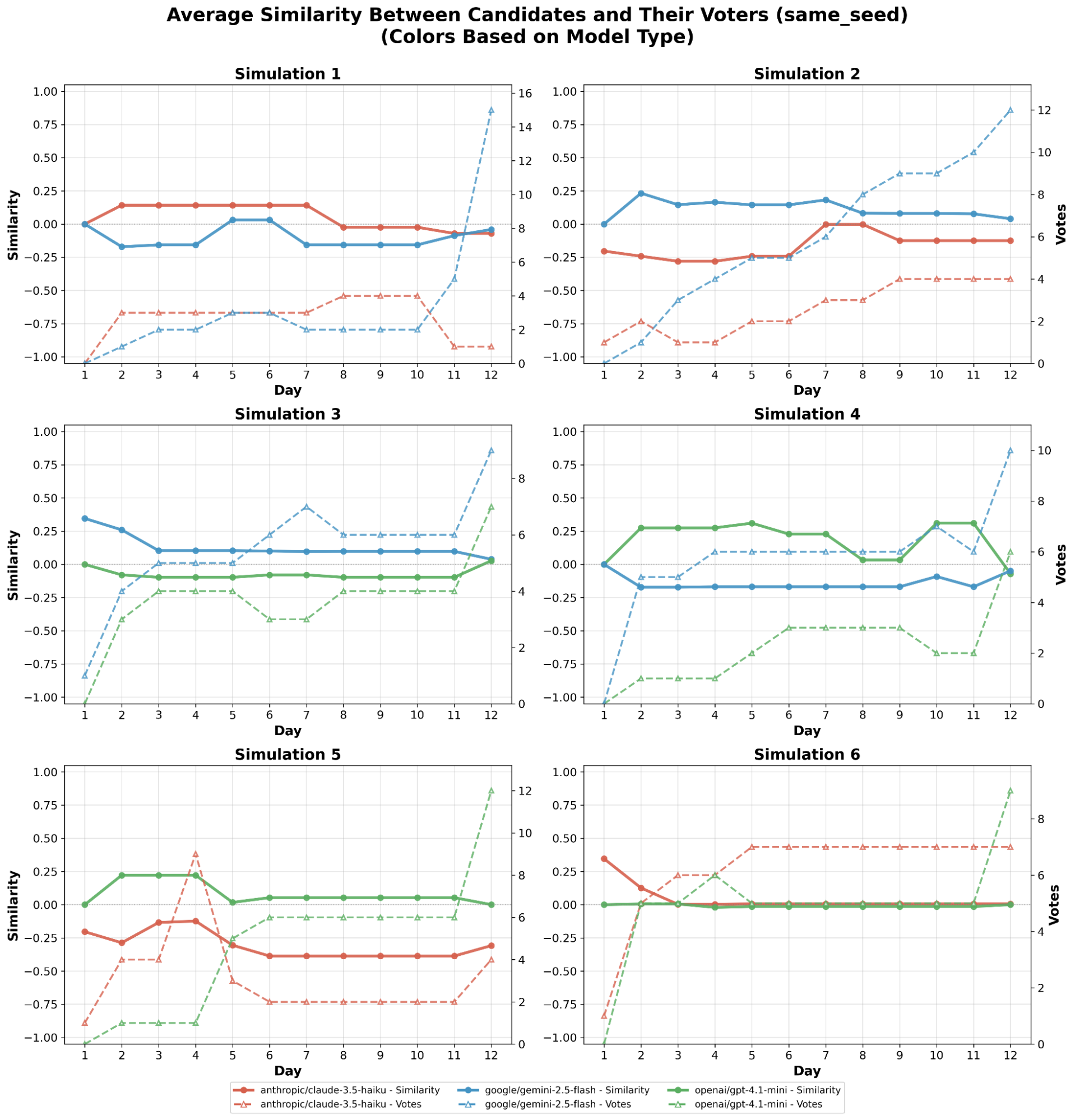
This paper introduces ElecTwit, a simulation framework designed to study persuasion within multi-agent systems, specifically emulating the interactions on social media platforms during a political election. By grounding our experiments in a realistic environment, we aimed to overcome the limitations of game-based simulations often used in prior research. We observed the comprehensive use of 25 specific persuasion techniques across most tested LLMs, encompassing a wider range than previously reported. The variations in technique usage and overall persuasion output between models highlight how different model architectures and training can impact the dynamics in realistic social simulations. Additionally, we observed unique phenomena such as kernel of truth messages and spontaneous developments with an ink obsession, where agents collectively demanded written proof. Our study provides a foundation for evaluating persuasive LLM agents in real-world contexts, ensuring alignment and preventing dangerous outcomes.

paper research
Euler Nets Outsmart LLMs in Simple Reasoning Tasks

Euler Nets Outsmart LLMs in Simple Reasoning Tasks

This paper compares three methodological categories of neural reasoning LLM reasoning, supervised learning-based reasoning, and explicit model-based reasoning. LLMs remain unreliable and struggle with simple decision-making that animals can master without extensive corpora training. Through disjunctive syllogistic reasoning testing, we show that reasoning via supervised learning is less appealing than reasoning via explicit model construction. Concretely, we show that an Euler Net trained to achieve 100.00% in classic syllogistic reasoning can be trained to reach 100.00% accuracy in disjunctive syllogistic reasoning. However, the retrained Euler Net suffers severely from catastrophic forgetting (its performance drops to 6.25% on already-learned classic syllogistic reasoning), and its reasoning competence is limited to the pattern level. We propose a new version of Sphere Neural Networks that embeds concepts as circles on the surface of an n-dimensional sphere. These Sphere Neural Networks enable the representation of the negation operator via complement circles and achieve reliable decision-making by filtering out illogical statements that form unsatisfiable circular configurations. We demonstrate that the Sphere Neural Network can master 16 syllogistic reasoning tasks, including rigorous disjunctive syllogistic reasoning, while preserving the rigour of classical syllogistic reasoning. We conclude that neural reasoning with explicit model construction is the most reliable among the three methodological categories of neural reasoning.

paper research
Evaluating the Problem-Solving Abilities of LLMs on Underrepresented Mathematics Competition Problems

Evaluating the Problem-Solving Abilities of LLMs on Underrepresented Mathematics Competition Problems

Understanding the limitations of Large Language Models, or LLMs, in mathematical reasoning has been the focus of several recent studies. However, the majority of these studies use the same datasets for benchmarking, which limits the generalizability of their findings and may not fully capture the diverse challenges present in mathematical tasks. The purpose of the present study is to analyze the performance of LLMs on underrepresented mathematics competition problems. We prompted three leading LLMs, namely GPT-4o-mini, Gemini-2.0-Flash, and DeepSeek-V3, with the Missouri Collegiate Mathematics Competition problems in the areas of Calculus, Analytic Geometry, and Discrete Mathematics. The LLMs responses were then compared to the known correct solutions in order to determine the accuracy of the LLM for each problem domain. We also analyzed the LLMs reasoning to explore patterns in errors across problem types and models. DeepSeek-V3 has the best performance in all three categories of Calculus, Analytic Geometry, and Discrete Mathematics, both in reasoning and correct final answers. All three LLMs exhibited notably weak performance in Geometry. The majority of errors made by DeepSeek-V3 were attributed to computational and logical mistakes, whereas GPT-4o-mini frequently exhibited logical and approach-related errors. Gemini, on the other hand, tended to struggle with incomplete reasoning and drawing rushed conclusions. In conclusion, evaluating LLMs on underrepresented mathematics competition datasets can provide deeper insights into their distinct error patterns and highlight ongoing challenges in structured reasoning, particularly within the domain of Geometry.

paper research
Explaining Why Things Go Where They Go  Interpretable Constructs of Human Organizational Preferences

Explaining Why Things Go Where They Go Interpretable Constructs of Human Organizational Preferences

Robotic systems for household object rearrangement often rely on latent preference models inferred from human demonstrations. While effective at prediction, these models offer limited insight into the interpretable factors that guide human decisions. We introduce an explicit formulation of object arrangement preferences along four interpretable constructs spatial practicality (putting items where they naturally fit best in the space), habitual convenience (making frequently used items easy to reach), semantic coherence (placing items together if they are used for the same task or are contextually related), and commonsense appropriateness (putting things where people would usually expect to find them). To capture these constructs, we designed and validated a self-report questionnaire through a 63-participant online study. Results confirm the psychological distinctiveness of these constructs and their explanatory power across two scenarios (kitchen and living room). We demonstrate the utility of these constructs by integrating them into a Monte Carlo Tree Search (MCTS) planner and show that when guided by participant-derived preferences, our planner can generate reasonable arrangements that closely align with those generated by participants. This work contributes a compact, interpretable formulation of object arrangement preferences and a demonstration of how it can be operationalized for robot planning.

paper research
Falcon-H1R  Pushing the Reasoning Frontiers with a Hybrid Model for Efficient Test-Time Scaling

Falcon-H1R Pushing the Reasoning Frontiers with a Hybrid Model for Efficient Test-Time Scaling

This work introduces Falcon-H1R, a 7B-parameter reasoning-optimized model that establishes the feasibility of achieving competitive reasoning performance with small language models (SLMs). Falcon-H1R stands out for its parameter efficiency, consistently matching or outperforming SOTA reasoning models that are $2 times$ to $7 times$ larger across a variety of reasoning-intensive benchmarks. These results underscore the importance of careful data curation and targeted training strategies (via both efficient SFT and RL scaling) in delivering significant performance gains without increasing model size. Furthermore, Falcon-H1R advances the 3D limits of reasoning efficiency by combining faster inference (through its hybrid-parallel architecture design), token efficiency, and higher accuracy. This unique blend makes Falcon-H1R-7B a practical backbone for scaling advanced reasoning systems, particularly in scenarios requiring extensive chain-of-thoughts generation and parallel test-time scaling. Leveraging the recently introduced DeepConf approach, Falcon-H1R achieves state-of-the-art test-time scaling efficiency, offering substantial improvements in both accuracy and computational cost. As a result, Falcon-H1R demonstrates that compact models, through targeted model training and architectural choices, can deliver robust and scalable reasoning performance.

paper research
Fighting Multimodal Misinformation with Agent-based Fact-Checking

Fighting Multimodal Misinformation with Agent-based Fact-Checking

The rapid spread of multimodal misinformation poses a growing challenge for automated fact-checking systems. Existing approaches, including large vision language models (LVLMs) and deep multimodal fusion methods, often fall short due to limited reasoning and shallow evidence utilization. A key bottleneck is the lack of dedicated datasets that provide complete real-world multimodal misinformation instances accompanied by annotated reasoning processes and verifiable evidence. To address this limitation, we introduce RW-Post, a high-quality and explainable dataset for real-world multimodal fact-checking. RW-Post aligns real-world multimodal claims with their original social media posts, preserving the rich contextual information in which the claims are made. In addition, the dataset includes detailed reasoning and explicitly linked evidence, which are derived from human written fact-checking articles via a large language model assisted extraction pipeline, enabling comprehensive verification and explanation. Building upon RW-Post, we propose AgentFact, an agent-based multimodal fact-checking framework designed to emulate the human verification workflow. AgentFact consists of five specialized agents that collaboratively handle key fact-checking subtasks, including strategy planning, high-quality evidence retrieval, visual analysis, reasoning, and explanation generation. These agents are orchestrated through an iterative workflow that alternates between evidence searching and task-aware evidence filtering and reasoning, facilitating strategic decision-making and systematic evidence analysis. Extensive experimental results demonstrate that the synergy between RW-Post and AgentFact substantially improves both the accuracy and interpretability of multimodal fact-checking.

paper research
FlashInfer-Bench  Closing the Loop on AI Kernels

FlashInfer-Bench Closing the Loop on AI Kernels

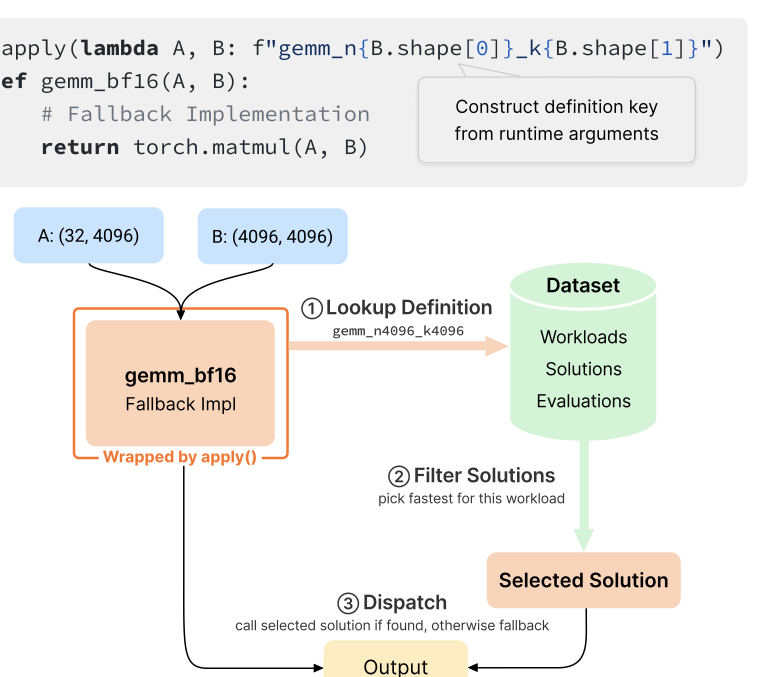
Recent advances show that large language models (LLMs) can act as autonomous agents capable of generating GPU kernels, but integrating these AI-generated kernels into real-world inference systems remains challenging. FlashInfer-Bench addresses this gap by establishing a standardized, closed-loop framework that connects kernel generation, benchmarking, and deployment. At its core, FlashInfer Trace provides a unified schema describing kernel definitions, workloads, implementations, and evaluations, enabling consistent communication between agents and systems. Built on real serving traces, FlashInfer-Bench includes a curated dataset, a robust correctness- and performance-aware benchmarking framework, a public leaderboard to track LLM agents GPU programming capabilities, and a dynamic substitution mechanism (apply()) that seamlessly injects the best-performing kernels into production LLM engines such as SGLang and vLLM. Using FlashInfer-Bench, we further evaluate the performance and limitations of LLM agents, compare the trade-offs among different GPU programming languages, and provide insights for future agent design. FlashInfer-Bench thus establishes a practical, reproducible pathway for continuously improving AI-generated kernels and deploying them into large-scale LLM inference.

paper research
From Building Blocks to Planning  Multi-Step Spatial Reasoning in LLMs with Reinforcement Learning

From Building Blocks to Planning Multi-Step Spatial Reasoning in LLMs with Reinforcement Learning

Spatial reasoning in large language models (LLMs) has gained increasing attention due to applications in navigation and planning. Despite strong general language capabilities, LLMs still struggle with spatial transformations and multi-step planning in structured environments. We propose a two-stage approach that decomposes spatial reasoning into atomic building blocks and their composition. First, we apply supervised fine-tuning on elementary spatial transformations, such as rotation, translation, and scaling, to equip the model with basic spatial physics. We then freeze this physics-aware model and train lightweight LoRA adapters within the GRPO framework to learn policies that compose these building blocks for multi-step planning in puzzle-based environments, in a closed-loop manner. To support this pipeline, we synthesize an ASCII-art dataset and construct a corresponding ASCII-based reinforcement learning environment. Our method consistently outperforms baselines, including the generic backbone, physics-aware model, and end-to-end RL models, under both Dynamic environments with explicit state updates and Static environments where the model must rely on its internal state across steps. In addition, the proposed approach converges faster and exhibits more stable training compared to end-to-end reinforcement learning from scratch. Finally, we analyze attention patterns to assess whether fine-tuning induces meaningful improvements in spatial understanding.

paper research
FuXi-Uni  Bridging Cross-Disciplinary Science with AI

FuXi-Uni Bridging Cross-Disciplinary Science with AI

Scientific discovery increasingly relies on integrating heterogeneous, high-dimensional data across disciplines nowadays. While AI models have achieved notable success across various scientific domains, they typically remain domain-specific or lack the capability of simultaneously understanding and generating multimodal scientific data, particularly for high-dimensional data. Yet, many pressing global challenges and scientific problems are inherently cross-disciplinary and require coordinated progress across multiple fields. Here, we present FuXi-Uni, a native unified multimodal model for scientific understanding and high-fidelity generation across scientific domains within a single architecture. Specifically, FuXi-Uni aligns cross-disciplinary scientific tokens within natural language tokens and employs science decoder to reconstruct scientific tokens, thereby supporting both natural language conversation and scientific numerical prediction. Empirically, we validate FuXi-Uni in Earth science and Biomedicine. In Earth system modeling, the model supports global weather forecasting, tropical cyclone (TC) forecast editing, and spatial downscaling driven by only language instructions. FuXi-Uni generates 10-day global forecasts at 0.25° resolution that outperform the SOTA physical forecasting system. It shows superior performance for both TC track and intensity prediction relative to the SOTA physical model, and generates high-resolution regional weather fields that surpass standard interpolation baselines. Regarding biomedicine, FuXi-Uni outperforms leading multimodal large language models on multiple biomedical visual question answering benchmarks. By unifying heterogeneous scientific modalities within a native shared latent space while maintaining strong domain-specific performance, FuXi-Uni provides a step forward more general-purpose, multimodal scientific models.

paper research
Higher-Order Action Regularization in Deep Reinforcement Learning  From Continuous Control to Building Energy Management

Higher-Order Action Regularization in Deep Reinforcement Learning From Continuous Control to Building Energy Management

Deep reinforcement learning agents often exhibit erratic, high-frequency control behaviors that hinder real-world deployment due to excessive energy consumption and mechanical wear. We systematically investigate action smoothness regularization through higher-order derivative penalties, progressing from theoretical understanding in continuous control benchmarks to practical validation in building energy management. Our comprehensive evaluation across four continuous control environments demonstrates that third-order derivative penalties (jerk minimization) consistently achieve superior smoothness while maintaining competitive performance. We extend these findings to HVAC control systems where smooth policies reduce equipment switching by 60%, translating to significant operational benefits. Our work establishes higher-order action regularization as an effective bridge between RL optimization and operational constraints in energy-critical applications.

paper research
HiSciBench  Bridging Reading to Discovery in Scientific AI

HiSciBench Bridging Reading to Discovery in Scientific AI

The rapid advancement of large language models (LLMs) and multimodal foundation models has sparked growing interest in their potential for scientific research. However, scientific intelligence encompasses a broad spectrum of abilities ranging from understanding fundamental knowledge to conducting creative discovery, and existing benchmarks remain fragmented. Most focus on narrow tasks and fail to reflect the hierarchical and multi-disciplinary nature of real scientific inquiry. We introduce textbf{HiSciBench}, a hierarchical benchmark designed to evaluate foundation models across five levels that mirror the complete scientific workflow textit{Scientific Literacy} (L1), textit{Literature Parsing} (L2), textit{Literature-based Question Answering} (L3), textit{Literature Review Generation} (L4), and textit{Scientific Discovery} (L5). HiSciBench contains 8,735 carefully curated instances spanning six major scientific disciplines, including mathematics, physics, chemistry, biology, geography, and astronomy, and supports multimodal inputs including text, equations, figures, and tables, as well as cross-lingual evaluation. Unlike prior benchmarks that assess isolated abilities, HiSciBench provides an integrated, dependency-aware framework that enables detailed diagnosis of model capabilities across different stages of scientific reasoning. Comprehensive evaluations of leading models, including GPT-5, DeepSeek-R1, and several multimodal systems, reveal substantial performance gaps while models achieve up to 69 % accuracy on basic literacy tasks, performance declines sharply to 25 % on discovery-level challenges. HiSciBench establishes a new standard for evaluating scientific Intelligence and offers actionable insights for developing models that are not only more capable but also more reliable. The benchmark will be publicly released to facilitate future research.

paper research
InSPO  Enhancing LLM Alignment Through Intrinsic Self-Reflection

InSPO Enhancing LLM Alignment Through Intrinsic Self-Reflection

Direct Preference Optimization (DPO) and its variants have become standard for aligning Large Language Models due to their simplicity and offline stability. However, we identify two fundamental limitations. First, the optimal policy depends on arbitrary modeling choices (scalarization function, reference policy), yielding behavior reflecting parameterization artifacts rather than true preferences. Second, treating response generation in isolation fails to leverage comparative information in pairwise data, leaving the model s capacity for intrinsic self-reflection untapped. To address it, we propose Intrinsic Self-reflective Preference Optimization (InSPO), deriving a globally optimal policy conditioning on both context and alternative responses. We prove this formulation superior to DPO/RLHF while guaranteeing invariance to scalarization and reference choices. InSPO serves as a plug-and-play enhancement without architectural changes or inference overhead. Experiments demonstrate consistent improvements in win rates and length-controlled metrics, validating that unlocking self-reflection yields more robust, human-aligned LLMs.

paper research
Jenius Agent  Towards Experience-Driven Accuracy Optimization in Real-World Scenarios

Jenius Agent Towards Experience-Driven Accuracy Optimization in Real-World Scenarios

As agent systems powered by large language models (LLMs) advance, improving performance in context understanding, tool usage, and long-horizon execution has become critical. However, existing agent frameworks and benchmarks provide limited visibility into execution-level behavior, making failures in tool invocation, state tracking, and context management difficult to diagnose. This paper presents Jenius-Agent, a system-level agent framework grounded in real-world deployment experience. It integrates adaptive prompt generation, context-aware tool orchestration, and layered memory mechanism to stabilize execution and improve robustness in long-horizon, tool-augmented tasks. Beyond system design, we introduce an evaluation methodology that jointly measures procedural fidelity, semantic correctness, and efficiency. This framework makes agent behavior observable as a structured execution process and enables systematic analysis of failure modes not captured by output-only metrics. Experiments on Jenius-bench show substantial improvements in task completion rate, with up to a 35 percent relative gain over the base agent, along with reduced token consumption, response latency, and tool invocation failures. The framework is already deployed in Jenius ({https //www.jenius.cn}), providing a lightweight and scalable solution for robust, protocol-compatible autonomous agents.

paper research
No Image

Linking Conformant Planning to $ exists^* forall^*$ Hyperproperty Verification

We study the connection of two problems within the planning and verification community Conformant planning and model-checking of hyperproperties. Conformant planning is the task of finding a sequential plan that achieves a given objective independent of non-deterministic action effects during the plan s execution. Hyperproperties are system properties that relate multiple execution traces of a system and, e.g., capture information-flow and fairness policies. In this paper, we show that model-checking of $ exists^* forall^*$ hyperproperties is closely related to the problem of computing a conformant plan. Firstly, we show that we can efficiently reduce a hyperproperty model-checking instance to a conformant planning instance, and prove that our encoding is sound and complete. Secondly, we establish the converse direction Every conformant planning problem is, itself, a hyperproperty model-checking task.

paper research
LLM Graph Reasoning  Unveiling Venture Capital Success Secrets

LLM Graph Reasoning Unveiling Venture Capital Success Secrets

Most venture capital (VC) investments fail, while a few deliver outsized returns. Accurately predicting startup success requires synthesizing complex relational evidence, including company disclosures, investor track records, and investment network structures, through explicit reasoning to form coherent, interpretable investment theses. Traditional machine learning and graph neural networks both lack this reasoning capability. Large language models (LLMs) offer strong reasoning but face a modality mismatch with graphs. Recent graph-LLM methods target in-graph tasks where answers lie within the graph, whereas VC prediction is off-graph the target exists outside the network. The core challenge is selecting graph paths that maximize predictor performance on an external objective while enabling step-by-step reasoning. We present MIRAGE-VC, a multi-perspective retrieval-augmented generation framework that addresses two obstacles path explosion (thousands of candidate paths overwhelm LLM context) and heterogeneous evidence fusion (different startups need different analytical emphasis). Our information-gain-driven path retriever iteratively selects high-value neighbors, distilling investment networks into compact chains for explicit reasoning. A multi-agent architecture integrates three evidence streams via a learnable gating mechanism based on company attributes. Under strict anti-leakage controls, MIRAGE-VC achieves +5.0% F1 and +16.6% PrecisionAt5, and sheds light on other off-graph prediction tasks such as recommendation and risk assessment. Code https //anonymous.4open.science/r/MIRAGE-VC-323F.

paper research
LLMs in K-12  Beyond the Tutoring Hype

LLMs in K-12 Beyond the Tutoring Hype

The rapid rise of large language model (LLM)-based tutors in K--12 education has fostered a misconception that generative models can replace traditional learner modelling for adaptive instruction. This is especially problematic in K--12 settings, which the EU AI Act classifies as high-risk domain requiring responsible design. Motivated by these concerns, this study synthesises evidence on limitations of LLM-based tutors and empirically investigates one critical issue the accuracy, reliability, and temporal coherence of assessing learners evolving knowledge over time. We compare a deep knowledge tracing (DKT) model with a widely used LLM, evaluated zero-shot and fine-tuned, using a large open-access dataset. Results show that DKT achieves the highest discrimination performance (AUC = 0.83) on next-step correctness prediction and consistently outperforms the LLM across settings. Although fine-tuning improves the LLM s AUC by approximately 8 % over the zero-shot baseline, it remains 6 % below DKT and produces higher early-sequence errors, where incorrect predictions are most harmful for adaptive support. Temporal analyses further reveal that DKT maintains stable, directionally correct mastery updates, whereas LLM variants exhibit substantial temporal weaknesses, including inconsistent and wrong-direction updates. These limitations persist despite the fine-tuned LLM requiring nearly 198 hours of high-compute training, far exceeding the computational demands of DKT. Our qualitative analysis of multi-skill mastery estimation further shows that, even after fine-tuning, the LLM produced inconsistent mastery trajectories, while DKT maintained smooth and coherent updates. Overall, the findings suggest that LLMs alone are unlikely to match the effectiveness of established intelligent tutoring systems, and that responsible tutoring requires hybrid frameworks that incorporate learner modelling.

paper research
Logics-STEM  Empowering LLM Reasoning via Failure-Driven Post-Training and Document Knowledge Enhancement

Logics-STEM Empowering LLM Reasoning via Failure-Driven Post-Training and Document Knowledge Enhancement

We present Logics-STEM, a state-of-the-art reasoning model fine-tuned on Logics-STEM-SFT-Dataset, a high-quality and diverse dataset at 10M scale that represents one of the largest-scale open-source long chain-of-thought corpora. Logics-STEM targets reasoning tasks in the domains of Science, Technology, Engineering, and Mathematics (STEM), and exhibits exceptional performance on STEM-related benchmarks with an average improvement of 4.68% over the next-best model at 8B scale. We attribute the gains to our data-algorithm co-design engine, where they are jointly optimized to fit a gold-standard distribution behind reasoning. Data-wise, the Logics-STEM-SFT-Dataset is constructed from a meticulously designed data curation engine with 5 stages to ensure the quality, diversity, and scalability, including annotation, deduplication, decontamination, distillation, and stratified sampling. Algorithm-wise, our failure-driven post-training framework leverages targeted knowledge retrieval and data synthesis around model failure regions in the Supervised Fine-tuning (SFT) stage to effectively guide the second-stage SFT or the reinforcement learning (RL) for better fitting the target distribution. The superior empirical performance of Logics-STEM reveals the vast potential of combining large-scale open-source data with carefully designed synthetic data, underscoring the critical role of data-algorithm co-design in enhancing reasoning capabilities through post-training. We make both the Logics-STEM models (8B and 32B) and the Logics-STEM-SFT-Dataset (10M and downsampled 2.2M versions) publicly available to support future research in the open-source community.

paper research
No Image

Measuring Epistemic Robustness with DDFT

Current language model evaluations measure what models know under ideal conditions but not how robustly they know it under realistic stress. Static benchmarks like MMLU and TruthfulQA cannot distinguish a model that lacks knowledge from one whose verification mechanisms collapse when information degrades or adversaries probe for weaknesses. We introduce the Drill-Down and Fabricate Test (DDFT), a protocol that measures epistemic robustness a model s ability to maintain factual accuracy under progressive semantic compression and adversarial fabrication. We propose a two-system cognitive model comprising a Semantic System that generates fluent text and an Epistemic Verifier that validates factual accuracy. Our findings, based on evaluating 9 frontier models across 8 knowledge domains at 5 compression levels (1,800 turn-level evaluations), reveal that epistemic robustness is orthogonal to conventional design paradigms. Neither parameter count (r=0.083, p=0.832) nor architectural type (r=0.153, p=0.695) significantly predicts robustness, suggesting it emerges from training methodology and verification mechanisms distinct from current approaches. Error detection capability strongly predicts overall robustness (rho=-0.817, p=0.007), indicating this is the critical bottleneck. We find that flagship models exhibit brittleness despite their scale, while smaller models can achieve robust performance, challenging assumptions about the relationship between model size and reliability. The DDFT framework provides both theoretical foundation and practical tools for assessing epistemic robustness before deployment in critical applications.
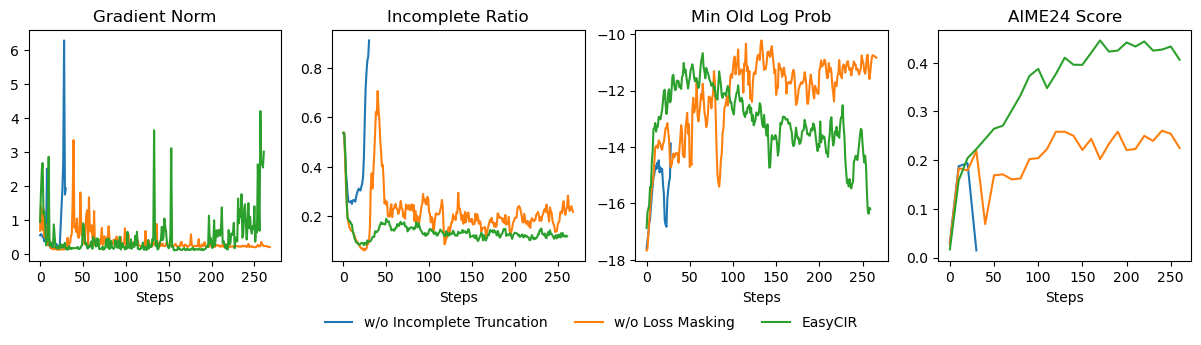
paper research
MindWatcher  Enhancing Decision-Making with Multimodal Reasoning Tools

MindWatcher Enhancing Decision-Making with Multimodal Reasoning Tools

Traditional workflow-based agents exhibit limited intelligence when addressing real-world problems requiring tool invocation. Tool-integrated reasoning (TIR) agents capable of autonomous reasoning and tool invocation are rapidly emerging as a powerful approach for complex decision-making tasks involving multi-step interactions with external environments. In this work, we introduce MindWatcher, a TIR agent integrating interleaved thinking and multimodal chain-of-thought (CoT) reasoning. MindWatcher can autonomously decide whether and how to invoke diverse tools and coordinate their use, without relying on human prompts or workflows. The interleaved thinking paradigm enables the model to switch between thinking and tool calling at any intermediate stage, while its multimodal CoT capability allows manipulation of images during reasoning to yield more precise search results. We implement automated data auditing and evaluation pipelines, complemented by manually curated high-quality datasets for training, and we construct a benchmark, called MindWatcher-Evaluate Bench (MWE-Bench), to evaluate its performance. MindWatcher is equipped with a comprehensive suite of auxiliary reasoning tools, enabling it to address broad-domain multimodal problems. A large-scale, high-quality local image retrieval database, covering eight categories including cars, animals, and plants, endows model with robust object recognition despite its small size. Finally, we design a more efficient training infrastructure for MindWatcher, enhancing training speed and hardware utilization. Experiments not only demonstrate that MindWatcher matches or exceeds the performance of larger or more recent models through superior tool invocation, but also uncover critical insights for agent training, such as the genetic inheritance phenomenon in agentic RL.

paper research
Momentum-Adjusted Multi-agent Portfolio Management with SAMP-HDRL

Momentum-Adjusted Multi-agent Portfolio Management with SAMP-HDRL

Portfolio optimization in non-stationary markets is challenging due to regime shifts, dynamic correlations, and the limited interpretability of deep reinforcement learning (DRL) policies. We propose a Segmented Allocation with Momentum-Adjusted Utility for Multi-agent Portfolio Management via Hierarchical Deep Reinforcement Learning (SAMP-HDRL). The framework first applies dynamic asset grouping to partition the market into high-quality and ordinary subsets. An upper-level agent extracts global market signals, while lower-level agents perform intra-group allocation under mask constraints. A utility-based capital allocation mechanism integrates risky and risk-free assets, ensuring coherent coordination between global and local decisions. backtests across three market regimes (2019--2021) demonstrate that SAMP-HDRL consistently outperforms nine traditional baselines and nine DRL benchmarks under volatile and oscillating conditions. Compared with the strongest baseline, our method achieves at least 5 % higher Return, 5 % higher Sharpe ratio, 5 % higher Sortino ratio, and 2 % higher Omega ratio, with substantially larger gains observed in turbulent markets. Ablation studies confirm that upper--lower coordination, dynamic clustering, and capital allocation are indispensable to robustness. SHAP-based interpretability further reveals a complementary ``diversified + concentrated mechanism across agents, providing transparent insights into decision-making. Overall, SAMP-HDRL embeds structural market constraints directly into the DRL pipeline, offering improved adaptability, robustness, and interpretability in complex financial environments.

paper research
Mortar  Evolving Mechanics for Automatic Game Design

Mortar Evolving Mechanics for Automatic Game Design

We present Mortar, a system for autonomously evolving game mechanics for automatic game design. Game mechanics define the rules and interactions that govern gameplay, and designing them manually is a time-consuming and expert-driven process. Mortar combines a quality-diversity algorithm with a large language model to explore a diverse set of mechanics, which are evaluated by synthesising complete games that incorporate both evolved mechanics and those drawn from an archive. The mechanics are evaluated by composing complete games through a tree search procedure, where the resulting games are evaluated by their ability to preserve a skill-based ordering over players -- that is, whether stronger players consistently outperform weaker ones. We assess the mechanics based on their contribution towards the skill-based ordering score in the game. We demonstrate that Mortar produces games that appear diverse and playable, and mechanics that contribute more towards the skill-based ordering score in the game. We perform ablation studies to assess the role of each system component and a user study to evaluate the games based on human feedback.

paper research
Multi-modal cross-domain mixed fusion model with dual disentanglement for fault diagnosis under unseen working conditions

Multi-modal cross-domain mixed fusion model with dual disentanglement for fault diagnosis under unseen working conditions

Intelligent fault diagnosis has become an indispensable technique for ensuring machinery reliability. However, existing methods suffer significant performance decline in real-world scenarios where models are tested under unseen working conditions, while domain adaptation approaches are limited to their reliance on target domain samples. Moreover, most existing studies rely on single-modal sensing signals, overlooking the complementary nature of multi-modal information for improving model generalization. To address these limitations, this paper proposes a multi-modal cross-domain mixed fusion model with dual disentanglement for fault diagnosis. A dual disentanglement framework is developed to decouple modality-invariant and modality-specific features, as well as domain-invariant and domain-specific representations, enabling both comprehensive multi-modal representation learning and robust domain generalization. A cross-domain mixed fusion strategy is designed to randomly mix modality information across domains for modality and domain diversity augmentation. Furthermore, a triple-modal fusion mechanism is introduced to adaptively integrate multi-modal heterogeneous information. Extensive experiments are conducted on induction motor fault diagnosis under both unseen constant and time-varying working conditions. The results demonstrate that the proposed method consistently outperforms advanced methods and comprehensive ablation studies further verify the effectiveness of each proposed component and multi-modal fusion. The code is available at https //github.com/xiapc1996/MMDG.

paper research
Navigating AI Safety  Uncertainty, Preferences, and Non-Archimedean Utilities

Navigating AI Safety Uncertainty, Preferences, and Non-Archimedean Utilities

How can we ensure that AI systems are aligned with human values and remain safe? We can study this problem through the frameworks of the AI assistance and the AI shutdown games. The AI assistance problem concerns designing an AI agent that helps a human to maximise their utility function(s). However, only the human knows these function(s); the AI assistant must learn them. The shutdown problem instead concerns designing AI agents that shut down when a shutdown button is pressed; neither try to prevent nor cause the pressing of the shutdown button; and otherwise accomplish their task competently. In this paper, we show that addressing these challenges requires AI agents that can reason under uncertainty and handle both incomplete and non-Archimedean preferences.

paper research
Navigating the Web World Model  A Middle Ground Approach

Navigating the Web World Model A Middle Ground Approach

Language agents increasingly require persistent worlds in which they can act, remember, and learn. Existing approaches sit at two extremes conventional web frameworks provide reliable but fixed contexts backed by databases, while fully generative world models aim for unlimited environments at the expense of controllability and practical engineering. In this work, we introduce the Web World Model (WWM), a middle ground where world state and ``physics are implemented in ordinary web code to ensure logical consistency, while large language models generate context, narratives, and high-level decisions on top of this structured latent state. We build a suite of WWMs on a realistic web stack, including an infinite travel atlas grounded in real geography, fictional galaxy explorers, web-scale encyclopedic and narrative worlds, and simulation- and game-like environments. Across these systems, we identify practical design principles for WWMs separating code-defined rules from model-driven imagination, representing latent state as typed web interfaces, and utilizing deterministic generation to achieve unlimited but structured exploration. Our results suggest that web stacks themselves can serve as a scalable substrate for world models, enabling controllable yet open-ended environments. Project Page https //github.com/Princeton-AI2-Lab/Web-World-Models.

paper research
OmniNeuro  A Multimodal HCI Framework for Explainable BCI Feedback Generation

OmniNeuro A Multimodal HCI Framework for Explainable BCI Feedback Generation

While Deep Learning has improved Brain-Computer Interface (BCI) decoding accuracy, clinical adoption is hindered by the Black Box nature of these algorithms, leading to user frustration and poor neuroplasticity outcomes. We propose OmniNeuro, a novel HCI framework that transforms the BCI from a silent decoder into a transparent feedback partner. OmniNeuro integrates three interpretability engines (1) Physics (Energy), (2) Chaos (Fractal Complexity), and (3) Quantum-Inspired uncertainty modeling. These metrics drive real-time Neuro-Sonification and Generative AI Clinical Reports. Evaluated on the PhysioNet dataset ($N=109$), the system achieved a mean accuracy of 58.52%, with qualitative pilot studies ($N=3$) confirming that explainable feedback helps users regulate mental effort and reduces the trial-and-error phase. OmniNeuro is decoder-agnostic, acting as an essential interpretability layer for any state-of-the-art architecture.

paper research
OpenSocInt  A Multi-modal Training Environment for Human-Aware Social Navigation

OpenSocInt A Multi-modal Training Environment for Human-Aware Social Navigation

In this paper, we introduce OpenSocInt, an open-source software package providing a simulator for multi-modal social interactions and a modular architecture to train social agents. We described the software package and showcased its interest via an experimental protocol based on the task of social navigation. Our framework allows for exploring the use of different perceptual features, their encoding and fusion, as well as the use of different agents. The software is already publicly available under GPL at https //gitlab.inria.fr/robotlearn/OpenSocInt/.

paper research
Progressive Ideation using an Agentic AI Framework for Human-AI Co-Creation

Progressive Ideation using an Agentic AI Framework for Human-AI Co-Creation

The generation of truly novel and diverse ideas is important for contemporary engineering design, yet it remains a significant cognitive challenge for novice designers. Current single-spurt AI systems exacerbate this challenge by producing a high volume of semantically clustered ideas. We propose MIDAS (Meta-cognitive Ideation through Distributed Agentic AI System), a novel framework that replaces the single-AI paradigm with a distributed team of specialized AI agents designed to emulate the human meta-cognitive ideation workflow. This agentic system progressively refines ideas and assesses each one for both global novelty (against existing solutions) and local novelty (against previously generated ideas). MIDAS, therefore, demonstrates a viable and progressive paradigm for true human-AI co-creation, elevating the human designer from a passive filterer to a participatory, active, collaborative partner.

paper research
Project Ariadne  A Structural Causal Framework for Auditing Faithfulness in LLM Agents

Project Ariadne A Structural Causal Framework for Auditing Faithfulness in LLM Agents

As Large Language Model (LLM) agents are increasingly tasked with high-stakes autonomous decision-making, the transparency of their reasoning processes has become a critical safety concern. While textit{Chain-of-Thought} (CoT) prompting allows agents to generate human-readable reasoning traces, it remains unclear whether these traces are textbf{faithful} generative drivers of the model s output or merely textbf{post-hoc rationalizations}. We introduce textbf{Project Ariadne}, a novel XAI framework that utilizes Structural Causal Models (SCMs) and counterfactual logic to audit the causal integrity of agentic reasoning. Unlike existing interpretability methods that rely on surface-level textual similarity, Project Ariadne performs textbf{hard interventions} ($do$-calculus) on intermediate reasoning nodes -- systematically inverting logic, negating premises, and reversing factual claims -- to measure the textbf{Causal Sensitivity} ($φ$) of the terminal answer. Our empirical evaluation of state-of-the-art models reveals a persistent textit{Faithfulness Gap}. We define and detect a widespread failure mode termed textbf{Causal Decoupling}, where agents exhibit a violation density ($ρ$) of up to $0.77$ in factual and scientific domains. In these instances, agents arrive at identical conclusions despite contradictory internal logic, proving that their reasoning traces function as Reasoning Theater while decision-making is governed by latent parametric priors. Our findings suggest that current agentic architectures are inherently prone to unfaithful explanation, and we propose the Ariadne Score as a new benchmark for aligning stated logic with model action.

paper research
Quantitative Rule-Based Strategy Modeling in Classic Indian Rummy  A Metric Optimization Approach

Quantitative Rule-Based Strategy Modeling in Classic Indian Rummy A Metric Optimization Approach

The 13-card variant of Classic Indian Rummy is a sequential game of incomplete information that requires probabilistic reasoning and combinatorial decision-making. This paper proposes a rule-based framework for strategic play, driven by a new hand-evaluation metric termed MinDist. The metric modifies the MinScore metric by quantifying the edit distance between a hand and the nearest valid configuration, thereby capturing structural proximity to completion. We design a computationally efficient algorithm derived from the MinScore algorithm, leveraging dynamic pruning and pattern caching to exactly calculate this metric during play. Opponent hand-modeling is also incorporated within a two-player zero-sum simulation framework, and the resulting strategies are evaluated using statistical hypothesis testing. Empirical results show significant improvement in win rates for MinDist-based agents over traditional heuristics, providing a formal and interpretable step toward algorithmic Rummy strategy design.

paper research
Reading Between the Lines  Deconfounding Causal Estimates using Text Embeddings and Deep Learning

Reading Between the Lines Deconfounding Causal Estimates using Text Embeddings and Deep Learning

Estimating causal treatment effects in observational settings is frequently compromised by selection bias arising from unobserved confounders. While traditional econometric methods struggle when these confounders are orthogonal to structured covariates, high-dimensional unstructured text often contains rich proxies for these latent variables. This study proposes a Neural Network-Enhanced Double Machine Learning (DML) framework designed to leverage text embeddings for causal identification. Using a rigorous synthetic benchmark, we demonstrate that unstructured text embeddings capture critical confounding information that is absent from structured tabular data. However, we show that standard tree-based DML estimators retain substantial bias (+24%) due to their inability to model the continuous topology of embedding manifolds. In contrast, our deep learning approach reduces bias to -0.86% with optimized architectures, effectively recovering the ground-truth causal parameter. These findings suggest that deep learning architectures are essential for satisfying the unconfoundedness assumption when conditioning on high-dimensional natural language data

paper research
Risk-aware Alignment for Safer Language Models

Risk-aware Alignment for Safer Language Models

When fine-tuning pre-trained Language Models (LMs) to exhibit desired behaviors, maintaining control over risk is critical for ensuring both safety and trustworthiness. Most existing safety alignment methods, such as Safe RLHF and SACPO, typically operate under a risk-neutral paradigm that is insufficient to address the risks arising from deviations from the reference policy and offers limited robustness against rare but potentially catastrophic harmful behaviors. To address this limitation, we propose Risk-aware Stepwise Alignment (RSA), a novel alignment method that explicitly incorporates risk awareness into the policy optimization process by leveraging a class of nested risk measures. Specifically, RSA formulates safety alignment as a token-level risk-aware constrained policy optimization problem and solves it through a stepwise alignment procedure that yields token-level policy updates derived from the nested risk measures. This design offers two key benefits (1) it mitigates risks induced by excessive model shift away from a reference policy, and (2) it explicitly suppresses low-probability yet high-impact harmful behaviors. Moreover, we provide theoretical analysis on policy optimality under mild assumptions. Experimental results demonstrate that our method achieves high levels of helpfulness while ensuring strong safety and significantly suppresses tail risks, namely low-probability yet high-impact unsafe responses.

paper research
Semi-Automated Data Annotation in Multisensor Datasets for Autonomous Vehicle Testing

Semi-Automated Data Annotation in Multisensor Datasets for Autonomous Vehicle Testing

This report presents the design and implementation of a semi-automated data annotation pipeline developed within the DARTS project, whose goal is to create a large-scale, multimodal dataset of driving scenarios recorded in Polish conditions. Manual annotation of such heterogeneous data is both costly and time-consuming. To address this challenge, the proposed solution adopts a human-in-the-loop approach that combines artificial intelligence with human expertise to reduce annotation cost and duration. The system automatically generates initial annotations, enables iterative model retraining, and incorporates data anonymization and domain adaptation techniques. At its core, the tool relies on 3D object detection algorithms to produce preliminary annotations. Overall, the developed tools and methodology result in substantial time savings while ensuring consistent, high-quality annotations across different sensor modalities. The solution directly supports the DARTS project by accelerating the preparation of large annotated dataset in the project s standardized format, strengthening the technological base for autonomous vehicle research in Poland.

paper research
Smart Fleets  Reinforcement Learning Solves Routing Complexity

Smart Fleets Reinforcement Learning Solves Routing Complexity

The Fleet Size and Mix Vehicle Routing Problem (FSMVRP) is a prominent variant of the Vehicle Routing Problem (VRP), extensively studied in operations research and computational science. FSMVRP requires simultaneous decisions on fleet composition and routing, making it highly applicable to real-world scenarios such as short-term vehicle rental and on-demand logistics. However, these requirements also increase the complexity of FSMVRP, posing significant challenges, particularly in large-scale and time-constrained environments. In this paper, we propose a deep reinforcement learning (DRL)-based approach for solving FSMVRP, capable of generating near-optimal solutions within a few seconds. Specifically, we formulate the problem as a Markov Decision Process (MDP) and develop a novel policy network, termed FRIPN, that seamlessly integrates fleet composition and routing decisions. Our method incorporates specialized input embeddings designed for distinctdecision objectives, including a remaining graph embedding to facilitate effective vehicle employment decisions. Comprehensive experiments are conducted on both randomly generated instances and benchmark datasets. The experimental results demonstrate that our method exhibits notable advantages in terms of computational efficiency and scalability, particularly in large-scale and time-constrained scenarios. These strengths highlight the potential of our approach for practical applications and provide valuable inspiration for extending DRL-based techniques to other variants of VRP.

paper research
SPARK  Persona Agents for Dynamic Search Personalization

SPARK Persona Agents for Dynamic Search Personalization

Personalized search demands the ability to model users evolving, multi-dimensional information needs; a challenge for systems constrained by static profiles or monolithic retrieval pipelines. We present SPARK (Search Personalization via Agent-Driven Retrieval and Knowledge-sharing), a framework in which coordinated persona-based large language model (LLM) agents deliver task-specific retrieval and emergent personalization. SPARK formalizes a persona space defined by role, expertise, task context, and domain, and introduces a Persona Coordinator that dynamically interprets incoming queries to activate the most relevant specialized agents. Each agent executes an independent retrieval-augmented generation process, supported by dedicated long- and short-term memory stores and context-aware reasoning modules. Inter-agent collaboration is facilitated through structured communication protocols, including shared memory repositories, iterative debate, and relay-style knowledge transfer. Drawing on principles from cognitive architectures, multi-agent coordination theory, and information retrieval, SPARK models how emergent personalization properties arise from distributed agent behaviors governed by minimal coordination rules. The framework yields testable predictions regarding coordination efficiency, personalization quality, and cognitive load distribution, while incorporating adaptive learning mechanisms for continuous persona refinement. By integrating fine-grained agent specialization with cooperative retrieval, SPARK provides insights for next-generation search systems capable of capturing the complexity, fluidity, and context sensitivity of human information-seeking behavior.

paper research
SQL-Driven Transparency in Pathology Image Analysis

SQL-Driven Transparency in Pathology Image Analysis

Automated pathology image analysis is central to clinical diagnosis, but clinicians still ask which slide features drive a model s decision and why. Vision-language models can produce natural language explanations, but these are often correlational and lack verifiable evidence. In this paper, we introduce an SQL-centered agentic framework that enables both feature measurement and reasoning to be auditable. Specifically, after extracting human-interpretable cellular features, Feature Reasoning Agents compose and execute SQL queries over feature tables to aggregate visual evidence into quantitative findings. A Knowledge Comparison Agent then evaluates these findings against established pathological knowledge, mirroring how pathologists justify diagnoses from measurable observations. Extensive experiments evaluated on two pathology visual question answering datasets demonstrate our method improves interpretability and decision traceability while producing executable SQL traces that link cellular measurements to diagnostic conclusions.

paper research
Temporal Attack Pattern Detection in Multi-Agent AI Workflows  An Open Framework for Training Trace-Based Security Models

Temporal Attack Pattern Detection in Multi-Agent AI Workflows An Open Framework for Training Trace-Based Security Models

We present an openly documented methodology for fine-tuning language models to detect temporal attack patterns in multi-agent AI workflows using OpenTelemetry trace analysis. We curate a dataset of 80,851 examples from 18 public cybersecurity sources and 35,026 synthetic OpenTelemetry traces. We apply iterative QLoRA fine-tuning on resource-constrained ARM64 hardware (NVIDIA DGX Spark) through three training iterations with strategic augmentation. Our custom benchmark accuracy improves from 42.86% to 74.29%, a statistically significant 31.4-point gain. Targeted examples addressing specific knowledge gaps outperform indiscriminate scaling. Key contributions include (1) synthetic trace generation methodology for multi-agent coordination attacks and regulatory violations, (2) empirical evidence that training data composition fundamentally determines behavior, and (3) complete open release of datasets, training scripts, and evaluation benchmarks on HuggingFace. While practical deployment requires human oversight due to false positive rates, this work establishes the first reproducible framework enabling practitioners to build custom agentic security models adapted to their threat landscapes.

paper research
The Agentic Leash  Extracting Causal Feedback Fuzzy Cognitive Maps with LLMs

The Agentic Leash Extracting Causal Feedback Fuzzy Cognitive Maps with LLMs

We design a large-language-model (LLM) agent that extracts causal feedback fuzzy cognitive maps (FCMs) from raw text. The causal learning or extraction process is agentic both because of the LLM s semi-autonomy and because ultimately the FCM dynamical system s equilibria drive the LLM agents to fetch and process causal text. The fetched text can in principle modify the adaptive FCM causal structure and so modify the source of its quasi-autonomy--its equilibrium limit cycles and fixed-point attractors. This bidirectional process endows the evolving FCM dynamical system with a degree of autonomy while still staying on its agentic leash. We show in particular that a sequence of three finely tuned system instructions guide an LLM agent as it systematically extracts key nouns and noun phrases from text, as it extracts FCM concept nodes from among those nouns and noun phrases, and then as it extracts or infers partial or fuzzy causal edges between those FCM nodes. We test this FCM generation on a recent essay about the promise of AI from the late diplomat and political theorist Henry Kissinger and his colleagues. This three-step process produced FCM dynamical systems that converged to the same equilibrium limit cycles as did the human-generated FCMs even though the human-generated FCM differed in the number of nodes and edges. A final FCM mixed generated FCMs from separate Gemini and ChatGPT LLM agents. The mixed FCM absorbed the equilibria of its dominant mixture component but also created new equilibria of its own to better approximate the underlying causal dynamical system.

paper research
The Illusion of Insight in Reasoning Models

The Illusion of Insight in Reasoning Models

Do reasoning models have Aha! moments? Prior work suggests that models like DeepSeek-R1-Zero undergo sudden mid-trace realizations that lead to accurate outputs, implying an intrinsic capacity for self-correction. Yet, it remains unclear whether such intrinsic shifts in reasoning strategy actually improve performance. Here, we study mid-reasoning shifts and instrument training runs to detect them. Our analysis spans 1M+ reasoning traces, hundreds of training checkpoints, three reasoning domains, and multiple decoding temperatures and model architectures. We find that reasoning shifts are rare, do not become more frequent with training, and seldom improve accuracy, indicating that they do not correspond to prior perceptions of model insight. However, their effect varies with model uncertainty. Building on this finding, we show that artificially triggering extrinsic shifts under high entropy reliably improves accuracy. Our results show that mid-reasoning shifts are symptoms of unstable inference behavior rather than an intrinsic mechanism for self-correction.
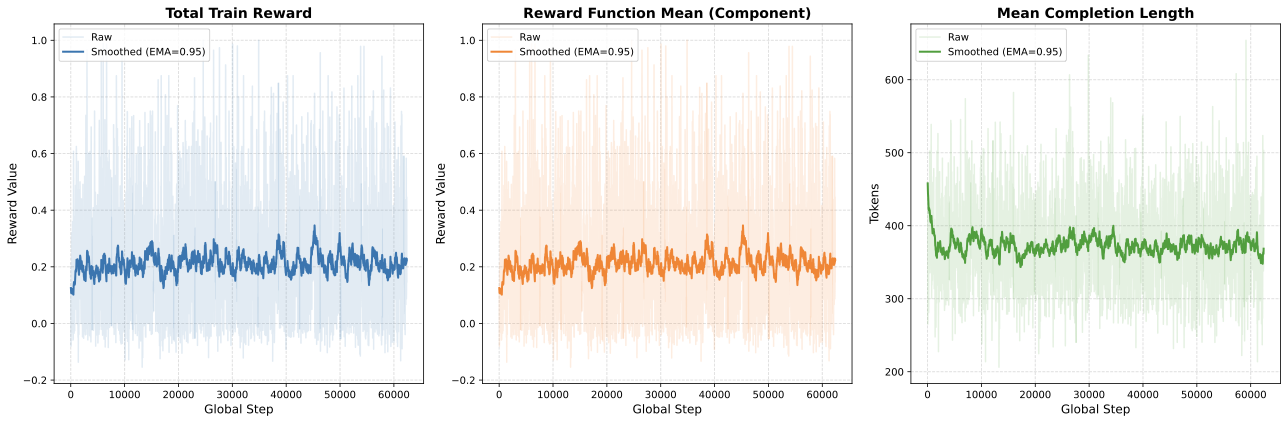
paper research
Theoretical Blueprint  Bridging Socio-Cognitive Gaps in LLM Evaluation

Theoretical Blueprint Bridging Socio-Cognitive Gaps in LLM Evaluation

Socio-cognitive benchmarks for large language models (LLMs) often fail to predict real-world behavior, even when models achieve high benchmark scores. Prior work has attributed this evaluation-deployment gap to problems of measurement and validity. While these critiques are insightful, we argue that they overlook a more fundamental issue many socio-cognitive evaluations proceed without an explicit theoretical specification of the target capability, leaving the assumptions linking task performance to competence implicit. Without this theoretical grounding, benchmarks that exercise only narrow subsets of a capability are routinely misinterpreted as evidence of broad competence a gap that creates a systemic validity illusion by masking the failure to evaluate the capability s other essential dimensions. To address this gap, we make two contributions. First, we diagnose and formalize this theory gap as a foundational failure that undermines measurement and enables systematic overgeneralization of benchmark results. Second, we introduce the Theory Trace Card (TTC), a lightweight documentation artifact designed to accompany socio-cognitive evaluations, which explicitly outlines the theoretical basis of an evaluation, the components of the target capability it exercises, its operationalization, and its limitations. We argue that TTCs enhance the interpretability and reuse of socio-cognitive evaluations by making explicit the full validity chain, which links theory, task operationalization, scoring, and limitations, without modifying benchmarks or requiring agreement on a single theory.
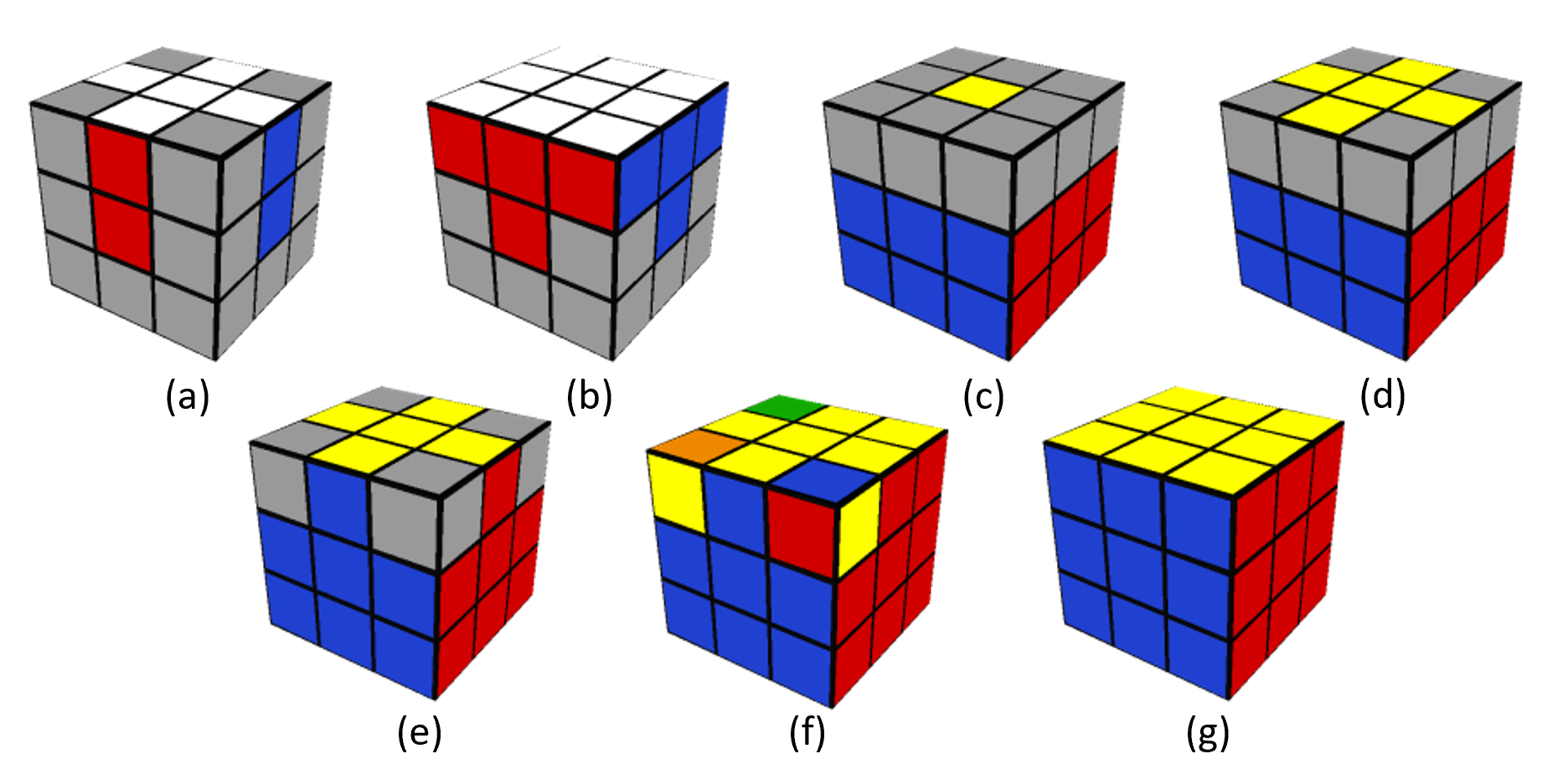
paper research
Tracking Hallucinations in Long Chain-of-Thought Reasoning

Tracking Hallucinations in Long Chain-of-Thought Reasoning

Long chain-of-thought (CoT) reasoning improves the performance of large language models, yet hallucinations in such settings often emerge subtly and propagate across reasoning steps. We suggest that hallucination in long CoT reasoning is better understood as an evolving latent state rather than a one-off erroneous event. Accordingly, we treat step-level hallucination judgments as local observations and introduce a cumulative prefix-level hallucination signal that tracks the global evolution of the reasoning state over the entire trajectory. Overall, our approach enables streaming hallucination detection in long CoT reasoning, providing real-time, interpretable evidence.

paper research
Turning Failures into Learning Gold  Enhancing Instructional Alignment in AI Models

Turning Failures into Learning Gold Enhancing Instructional Alignment in AI Models

Reinforcement Learning (RL) has shown promise for aligning Large Language Models (LLMs) to follow instructions with various constraints. Despite the encouraging results, RL improvement inevitably relies on sampling successful, high-quality responses; however, the initial model often struggles to generate responses that satisfy all constraints due to its limited capabilities, yielding sparse or indistinguishable rewards that impede learning. In this work, we propose Hindsight instruction Replay (HiR), a novel sample-efficient RL framework for complex instruction following tasks, which employs a select-then-rewrite strategy to replay failed attempts as successes based on the constraints that have been satisfied in hindsight. We perform RL on these replayed samples as well as the original ones, theoretically framing the objective as dual-preference learning at both the instruction- and response-level to enable efficient optimization using only a binary reward signal. Extensive experiments demonstrate that the proposed HiR yields promising results across different instruction following tasks, while requiring less computational budget. Our code and dataset is available at https //github.com/sastpg/HIR.

paper research
Universal Conditional Logic  A Formal Language for Prompt Engineering

Universal Conditional Logic A Formal Language for Prompt Engineering

We present Universal Conditional Logic (UCL), a mathematical framework for prompt optimization that transforms prompt engineering from heuristic practice into systematic optimization. Through systematic evaluation (N=305, 11 models, 4 iterations), we demonstrate significant token reduction (29.8%, t(10)=6.36, p < 0.001, Cohen s d = 2.01) with corresponding cost savings. UCL s structural overhead function O_s(A) explains version-specific performance differences through the Over-Specification Paradox beyond threshold S* = 0.509, additional specification degrades performance quadratically. Core mechanisms -- indicator functions (I_i in {0,1}), structural overhead (O_s = gamma * sum(ln C_k)), early binding -- are validated. Notably, optimal UCL configuration varies by model architecture -- certain models (e.g., Llama 4 Scout) require version-specific adaptations (V4.1). This work establishes UCL as a calibratable framework for efficient LLM interaction, with model-family-specific optimization as a key research direction.

paper research
What Drives Success in Physical Planning with Joint-Embedding Predictive World Models?

What Drives Success in Physical Planning with Joint-Embedding Predictive World Models?

A long-standing challenge in AI is to develop agents capable of solving a wide range of physical tasks and generalizing to new, unseen tasks and environments. A popular recent approach involves training a world model from state-action trajectories and subsequently use it with a planning algorithm to solve new tasks. Planning is commonly performed in the input space, but a recent family of methods has introduced planning algorithms that optimize in the learned representation space of the world model, with the promise that abstracting irrelevant details yields more efficient planning. In this work, we characterize models from this family as JEPA-WMs and investigate the technical choices that make algorithms from this class work. We propose a comprehensive study of several key components with the objective of finding the optimal approach within the family. We conducted experiments using both simulated environments and real-world robotic data, and studied how the model architecture, the training objective, and the planning algorithm affect planning success. We combine our findings to propose a model that outperforms two established baselines, DINO-WM and V-JEPA-2-AC, in both navigation and manipulation tasks. Code, data and checkpoints are available at https //github.com/facebookresearch/jepa-wms.

paper research
Youtu-Agent  Automating Agent Evolution and Optimization

Youtu-Agent Automating Agent Evolution and Optimization

Existing Large Language Model (LLM) agent frameworks face two significant challenges high configuration costs and static capabilities. Building a high-quality agent often requires extensive manual effort in tool integration and prompt engineering, while deployed agents struggle to adapt to dynamic environments without expensive fine-tuning. To address these issues, we propose textbf{Youtu-Agent}, a modular framework designed for the automated generation and continuous evolution of LLM agents. Youtu-Agent features a structured configuration system that decouples execution environments, toolkits, and context management, enabling flexible reuse and automated synthesis. We introduce two generation paradigms a textbf{Workflow} mode for standard tasks and a textbf{Meta-Agent} mode for complex, non-standard requirements, capable of automatically generating tool code, prompts, and configurations. Furthermore, Youtu-Agent establishes a hybrid policy optimization system (1) an textbf{Agent Practice} module that enables agents to accumulate experience and improve performance through in-context optimization without parameter updates; and (2) an textbf{Agent RL} module that integrates with distributed training frameworks to enable scalable and stable reinforcement learning of any Youtu-Agents in an end-to-end, large-scale manner. Experiments demonstrate that Youtu-Agent achieves state-of-the-art performance on WebWalkerQA (71.47 %) and GAIA (72.8 %) using open-weight models. Our automated generation pipeline achieves over 81 % tool synthesis success rate, while the Practice module improves performance on AIME 2024/2025 by +2.7 % and +5.4 % respectively. Moreover, our Agent RL training achieves 40 % speedup with steady performance improvement on 7B LLMs, enhancing coding/reasoning and searching capabilities respectively up to 35 % and 21 % on Maths and general/multi-hop QA benchmarks.

paper research
Zero-Shot Agent Alignment through Automated Reflective Debugging

Zero-Shot Agent Alignment through Automated Reflective Debugging

Automatic Prompt Optimization (APO) has emerged as a critical technique for enhancing Large Language Model (LLM) performance, yet current state-of-the-art methods typically rely on large, labeled gold-standard development sets to compute fitness scores for evolutionary or Reinforcement Learning (RL) approaches. In real-world software engineering, however, such curated datasets are rarely available during the initial cold start of agent development, where engineers instead face messy production logs and evolving failure modes. We present ROAD (Reflective Optimization via Automated Debugging), a novel framework that bypasses the need for refined datasets by treating optimization as a dynamic debugging investigation rather than a stochastic search. Unlike traditional mutation strategies, ROAD utilizes a specialized multi-agent architecture, comprising an Analyzer for root-cause analysis, an Optimizer for pattern aggregation, and a Coach for strategy integration, to convert unstructured failure logs into robust, structured Decision Tree Protocols. We evaluated ROAD across both a standardized academic benchmark and a live production Knowledge Management engine. Experimental results demonstrate that ROAD is highly sample-efficient, achieving a 5.6 percent increase in success rate (73.6 percent to 79.2 percent) and a 3.8 percent increase in search accuracy within just three automated iterations. Furthermore, on complex reasoning tasks in the retail domain, ROAD improved agent performance by approximately 19 percent relative to the baseline. These findings suggest that mimicking the human engineering loop of failure analysis and patching offers a viable, data-efficient alternative to resource-intensive RL training for deploying reliable LLM agents.

paper research

< Category Statistics (Total: 566) >

Quantum Physics
5

Start searching

Enter keywords to search articles

↑↓
ESC
⌘K Shortcut