Computer Science

All posts under category "Computer Science"

514 posts total
Sorted by date
No Image

Lower Bounds for Function Inversion with Quantum Advice

Function inversion is the problem that given a random function $f [M] to [N]$, we want to find pre-image of any image $f^{-1}(y)$ in time $T$. In this work, we revisit this problem under the preprocessing model where we can compute some auxiliary information or advice of size $S$ that only depends on $f$ but not on $y$. It is a well-studied problem in the classical settings, however, it is not clear how quantum algorithms can solve this task any better besides invoking Grover s algorithm, which does not leverage the power of preprocessing. Nayebi et al. proved a lower bound $ST^2 ge tilde Omega(N)$ for quantum algorithms inverting permutations, however, they only consider algorithms with classical advice. Hhan et al. subsequently extended this lower bound to fully quantum algorithms for inverting permutations. In this work, we give the same asymptotic lower bound to fully quantum algorithms for inverting functions for fully quantum algorithms under the regime where $M = O(N)$. In order to prove these bounds, we generalize the notion of quantum random access code, originally introduced by Ambainis et al., to the setting where we are given a list of (not necessarily independent) random variables, and we wish to compress them into a variable-length encoding such that we can retrieve a random element just using the encoding with high probability. As our main technical contribution, we give a nearly tight lower bound (for a wide parameter range) for this generalized notion of quantum random access codes, which may be of independent interest.
paper research
EntropyDB  A Probabilistic Method for Approximate Query Processing

EntropyDB A Probabilistic Method for Approximate Query Processing

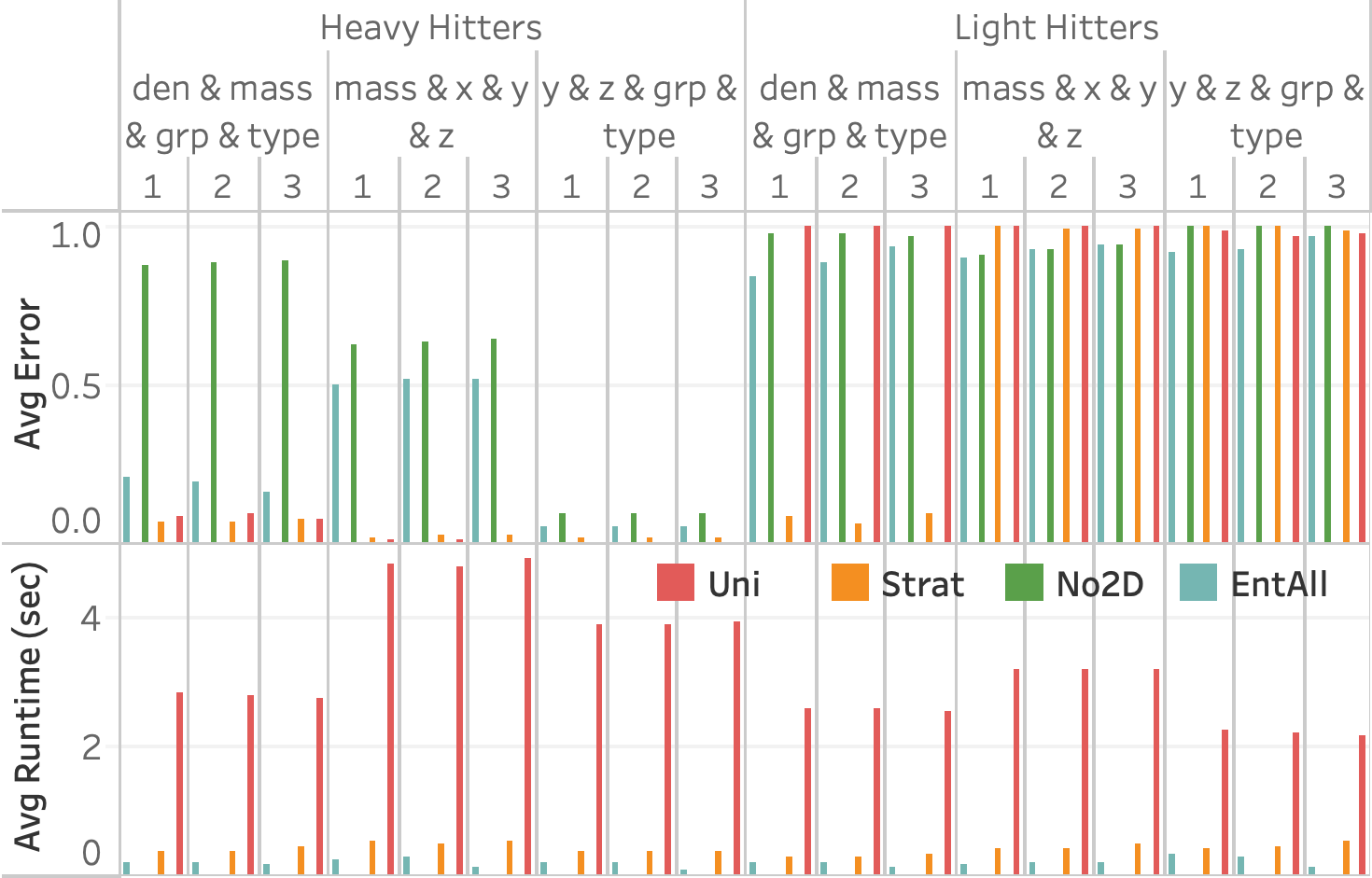
We present EntropyDB, an interactive data exploration system that uses a probabilistic approach to generate a small, query-able summary of a dataset. Departing from traditional summarization techniques, we use the Principle of Maximum Entropy to generate a probabilistic representation of the data that can be used to give approximate query answers. We develop the theoretical framework and formulation of our probabilistic representation and show how to use it to answer queries. We then present solving techniques, give two critical optimizations to improve preprocessing time and query execution time, and explore methods to reduce query error. Lastly, we experimentally evaluate our work using a 5 GB dataset of flights within the United States and a 210 GB dataset from an astronomy particle simulation. While our current work only supports linear queries, we show that our technique can successfully answer queries faster than sampling while introducing, on average, no more error than sampling and can better distinguish between rare and nonexistent values. We also discuss extensions that can allow for data updates and linear queries over joins.

paper research
No Image

A Quadratic Lower Bound for Algebraic Branching Programs and Formulas

We show that any Algebraic Branching Program (ABP) computing the polynomial $ sum_{i = 1}^n x_i^n$ has at least $ Omega(n^2)$ vertices. This improves upon the lower bound of $ Omega(n log n)$, which follows from the classical result of Baur and Strassen [Str73, BS83], and extends the results in [K19], which showed a quadratic lower bound for emph{homogeneous} ABPs computing the same polynomial. Our proof relies on a notion of depth reduction which is reminiscent of similar statements in the context of matrix rigidity, and shows that any small enough ABP computing the polynomial $ sum_{i=1}^n x_i^n$ can be depth reduced to essentially a homogeneous ABP of the same size which computes the polynomial $ sum_{i = 1}^n x_i^n + epsilon(x_1, ldots, x_n)$, for a structured error polynomial $ epsilon(x_1, ldots, x_n)$. To complete the proof, we then observe that the lower bound in [K19] is robust enough and continues to hold for all polynomials $ sum_{i = 1}^n x_i^n + epsilon(x_1, ldots, x_n)$, where $ epsilon(x_1, ldots, x_n)$ has the appropriate structure. We also use our ideas to show an $ Omega(n^2)$ lower bound of the size of algebraic formulas computing the elementary symmetric polynomial of degree $0.1n$ on $n$ variables. This is a slight improvement upon the prior best known formula lower bound (proved for a different polynomial) of $ Omega(n^2/ log n)$ [Nec66, K85, SY10]. Interestingly, this lower bound is asymptotically better than $n^2/ log n$, the strongest lower bound that can be proved using previous methods. This lower bound also matches the upper bound, due to Ben-Or, who showed that elementary symmetric polynomials can be computed by algebraic formula (in fact depth-$3$ formula) of size $O(n^2)$. Prior to this work, Ben-Or s construction was known to be optimal only for algebraic formulas of depth-$3$ [SW01].

paper research
Optimizing a Supply-Side Platforms Header Bidding Strategy with Thompson Sampling

Optimizing a Supply-Side Platforms Header Bidding Strategy with Thompson Sampling

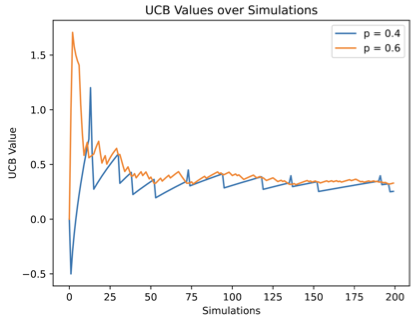
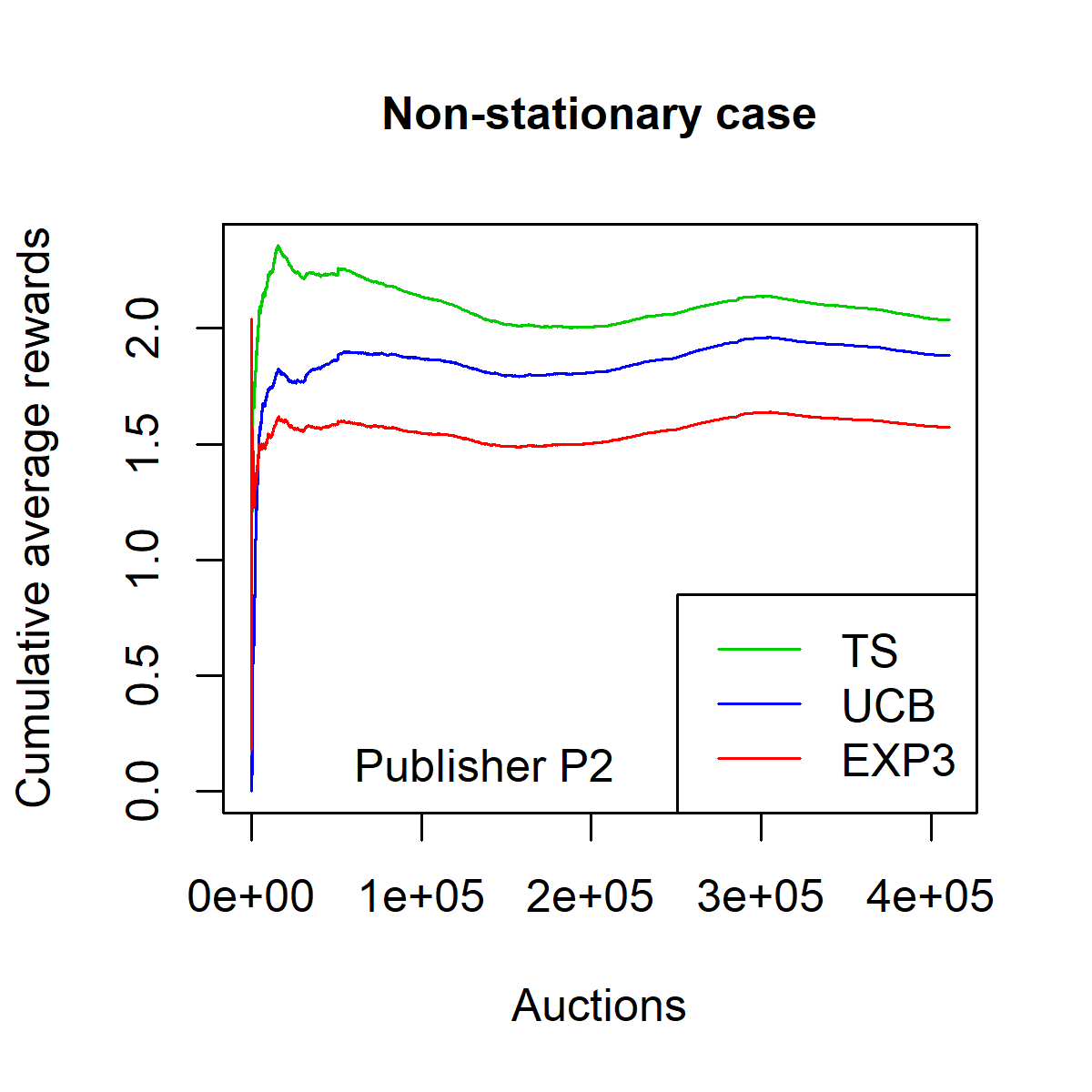
Over the last decade, digital media (web or app publishers) generalized the use of real time ad auctions to sell their ad spaces. Multiple auction platforms, also called Supply-Side Platforms (SSP), were created. Because of this multiplicity, publishers started to create competition between SSPs. In this setting, there are two successive auctions a second price auction in each SSP and a secondary, first price auction, called header bidding auction, between SSPs.In this paper, we consider an SSP competing with other SSPs for ad spaces. The SSP acts as an intermediary between an advertiser wanting to buy ad spaces and a web publisher wanting to sell its ad spaces, and needs to define a bidding strategy to be able to deliver to the advertisers as many ads as possible while spending as little as possible. The revenue optimization of this SSP can be written as a contextual bandit problem, where the context consists of the information available about the ad opportunity, such as properties of the internet user or of the ad placement.Using classical multi-armed bandit strategies (such as the original versions of UCB and EXP3) is inefficient in this setting and yields a low convergence speed, as the arms are very correlated. In this paper we design and experiment a version of the Thompson Sampling algorithm that easily takes this correlation into account. We combine this bayesian algorithm with a particle filter, which permits to handle non-stationarity by sequentially estimating the distribution of the highest bid to beat in order to win an auction. We apply this methodology on two real auction datasets, and show that it significantly outperforms more classical approaches.The strategy defined in this paper is being developed to be deployed on thousands of publishers worldwide.

paper research
Learning Multilingual Embeddings for Cross-Lingual Information Retrieval Using Topically Aligned Corpora

Learning Multilingual Embeddings for Cross-Lingual Information Retrieval Using Topically Aligned Corpora

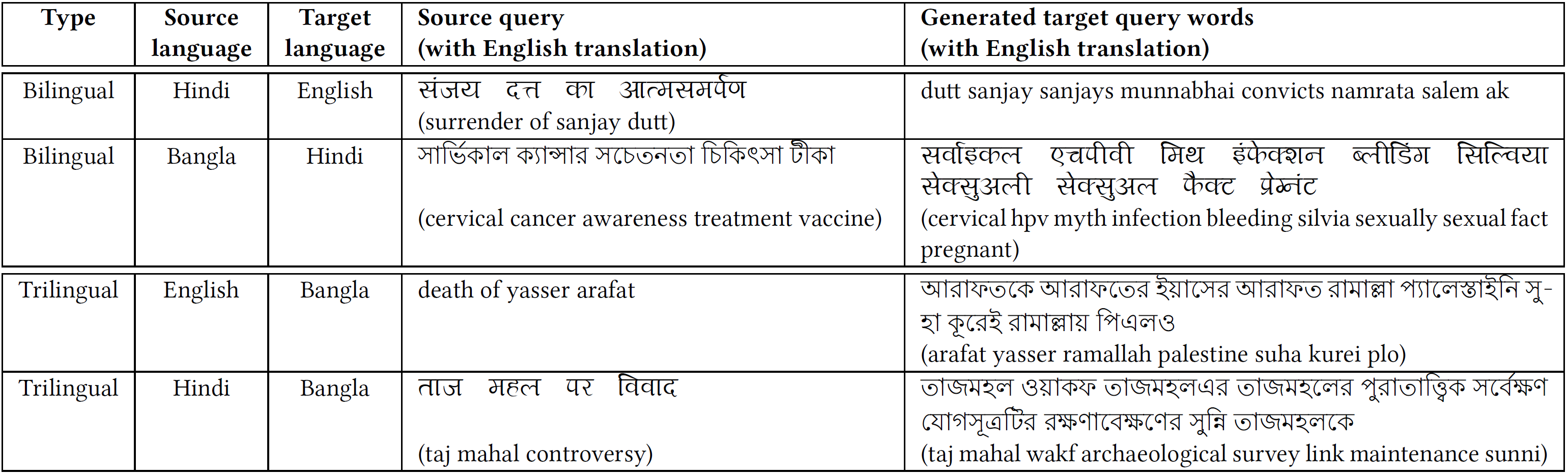
Cross-lingual information retrieval is a challenging task in the absence of aligned parallel corpora. In this paper, we address this problem by considering topically aligned corpora designed for evaluating an IR setup. To emphasize, we neither use any sentence-aligned corpora or document-aligned corpora, nor do we use any language specific resources such as dictionary, thesaurus, or grammar rules. Instead, we use an embedding into a common space and learn word correspondences directly from there. We test our proposed approach for bilingual IR on standard FIRE datasets for Bangla, Hindi and English. The proposed method is superior to the state-of-the-art method not only for IR evaluation measures but also in terms of time requirements. We extend our method successfully to the trilingual setting.

paper research
No Image

Event-Triggered Stabilization Using Lyapunov Functions with Guaranteed Convergence Rate

A constructive tool of nonlinear control systems design, the method of Control Lyapunov Functions (CLF) has found numerous applications in stabilization problems for continuous time, discrete-time and hybrid systems. In this paper, we address the fundamental question given a CLF, corresponding to the continuous-time controller with some predefined (e.g. exponential) convergence rate, can the same convergence rate be provided by an event-triggered controller? Under certain assumptions, we give an affirmative answer to this question and show that the corresponding event-based controllers provide positive dwelltimes between the consecutive events. Furthermore, we prove the existence of self-triggered and periodic event-triggered controllers, providing stabilization with a known convergence rate.

paper research
A Mixed-Logical-Dynamical Model for Autonomous Highway Driving

A Mixed-Logical-Dynamical Model for Autonomous Highway Driving

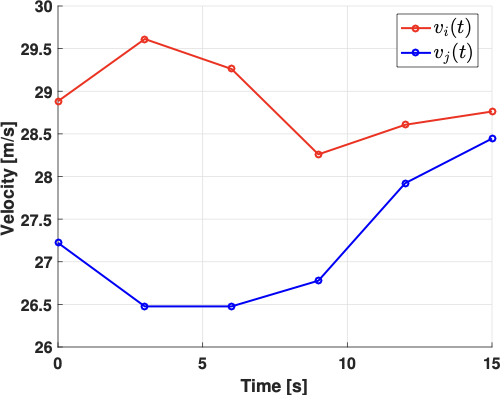
We propose a hybrid decision-making framework for safe and efficient autonomous driving of selfish vehicles on highways. Specifically, we model the dynamics of each vehicle as a Mixed-Logical-Dynamical system and propose simple driving rules to prevent potential sources of conflict among neighboring vehicles. We formalize the coordination problem as a generalized mixed-integer potential game, where an equilibrium solution generates a sequence of mixed-integer decisions for the vehicles that trade off individual optimality and overall safety.

paper research
Tag-Enhanced Tree-Structured Neural Networks for Implicit Discourse Relation Classification

Tag-Enhanced Tree-Structured Neural Networks for Implicit Discourse Relation Classification

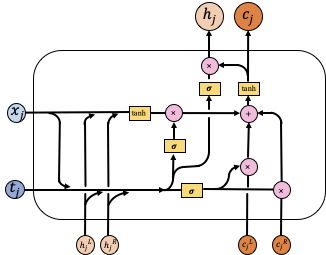
Identifying implicit discourse relations between text spans is a challenging task because it requires understanding the meaning of the text. To tackle this task, recent studies have tried several deep learning methods but few of them exploited the syntactic information. In this work, we explore the idea of incorporating syntactic parse tree into neural networks. Specifically, we employ the Tree-LSTM model and Tree-GRU model, which are based on the tree structure, to encode the arguments in a relation. Moreover, we further leverage the constituent tags to control the semantic composition process in these tree-structured neural networks. Experimental results show that our method achieves state-of-the-art performance on PDTB corpus.

paper research
Clock Synchronization Over Networks  Identifiability of the Sawtooth Model

Clock Synchronization Over Networks Identifiability of the Sawtooth Model

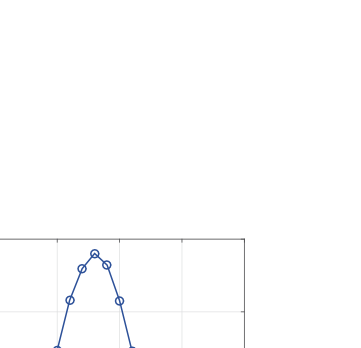
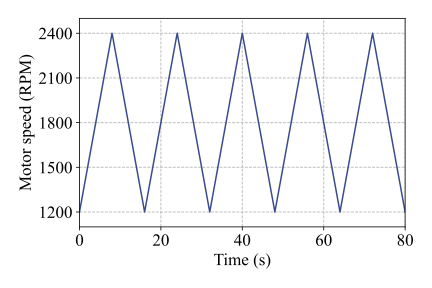
In this paper, we analyze the two-node joint clock synchronization and ranging problem. We focus on the case of nodes that employ time-to-digital converters to determine the range between them precisely. This specific design choice leads to a sawtooth model for the captured signal, which has not been studied before from an estimation theoretic standpoint. In the study of this model, we recover the basic conclusion of a well-known article by Freris, Graham, and Kumar in clock synchronization. More importantly, we discover a surprising identifiability result on the sawtooth signal model noise improves the theoretical condition of the estimation of the phase and offset parameters. To complete our study, we provide performance references for joint clock synchronization and ranging using the sawtooth signal model by presenting an exhaustive simulation study on basic estimation strategies under different realistic conditions. With our contributions in this paper, we enable further research in the estimation of sawtooth signal models and pave the path towards their industrial use for clock synchronization and ranging.

paper research
A Review of Autonomous Driving  Current Practices and Emerging Technologies

A Review of Autonomous Driving Current Practices and Emerging Technologies

Automated driving systems (ADSs) promise a safe, comfortable and efficient driving experience. However, fatalities involving vehicles equipped with ADSs are on the rise. The full potential of ADSs cannot be realized unless the robustness of state-of-the-art improved further. This paper discusses unsolved problems and surveys the technical aspect of automated driving. Studies regarding present challenges, high-level system architectures, emerging methodologies and core functions localization, mapping, perception, planning, and human machine interface, were thoroughly reviewed. Furthermore, the state-of-the-art was implemented on our own platform and various algorithms were compared in a real-world driving setting. The paper concludes with an overview of available datasets and tools for ADS development.

paper research
Automated Generation of Topologically Robust CAD Models for Structural Optimization

Automated Generation of Topologically Robust CAD Models for Structural Optimization

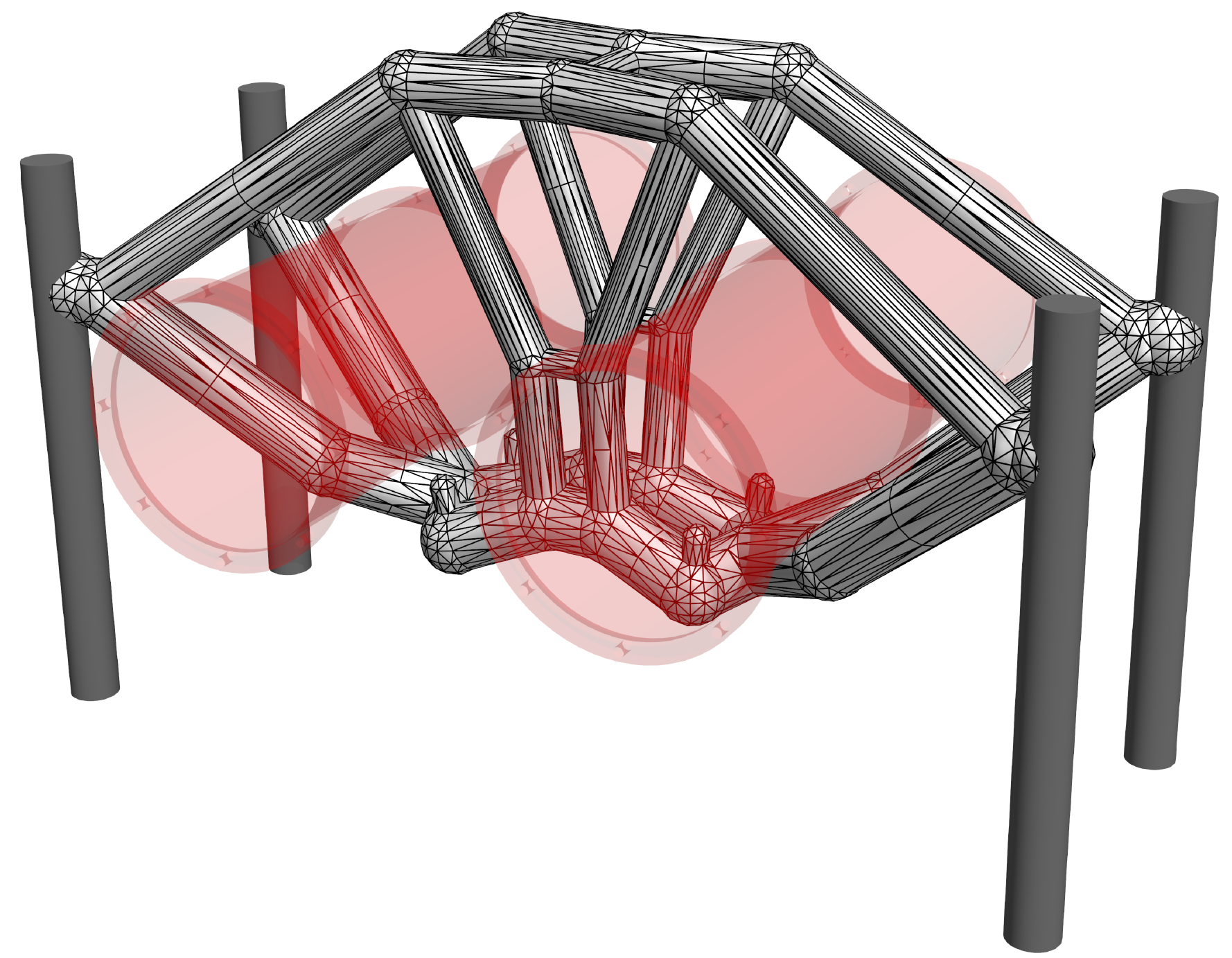
Computer-aided design (CAD) models play a crucial role in the design, manufacturing and maintenance of products. Therefore, the mesh-based finite element descriptions common in structural optimisation must be first translated into CAD models. Currently, this can at best be performed semi-manually. We propose a fully automated and topologically accurate approach to synthesise a structurally-sound parametric CAD model from topology optimised finite element models. Our solution is to first convert the topology optimised structure into a spatial frame structure and then to regenerate it in a CAD system using standard constructive solid geometry (CSG) operations. The obtained parametric CAD models are compact, that is, have as few as possible geometric parameters, which makes them ideal for editing and further processing within a CAD system. The critical task of converting the topology optimised structure into an optimal spatial frame structure is accomplished in several steps. We first generate from the topology optimised voxel model a one-voxel-wide voxel chain model using a topology-preserving skeletonisation algorithm from digital topology. The weighted undirected graph defined by the voxel chain model yields a spatial frame structure after processing it with standard graph algorithms. Subsequently, we optimise the cross-sections and layout of the frame members to recover its optimality, which may have been compromised during the conversion process. At last, we generate the obtained frame structure in a CAD system by repeatedly combining primitive solids, like cylinders and spheres, using boolean operations. The resulting solid model is a boundary representation (B-Rep) consisting of trimmed non-uniform rational B-spline (NURBS) curves and surfaces.

paper research
Multi-Level Buffer Management and Storage System Design for Non-Volatile Memory

Multi-Level Buffer Management and Storage System Design for Non-Volatile Memory

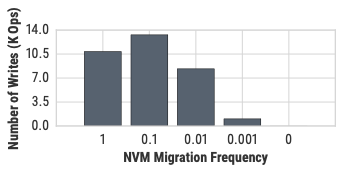
The design of the buffer manager in database management systems (DBMSs) is influenced by the performance characteristics of volatile memory (DRAM) and non-volatile storage (e.g., SSD). The key design assumptions have been that the data must be migrated to DRAM for the DBMS to operate on it and that storage is orders of magnitude slower than DRAM. But the arrival of new non-volatile memory (NVM) technologies that are nearly as fast as DRAM invalidates these previous assumptions. This paper presents techniques for managing and designing a multi-tier storage hierarchy comprising of DRAM, NVM, and SSD. Our main technical contributions are a multi-tier buffer manager and a storage system designer that leverage the characteristics of NVM. We propose a set of optimizations for maximizing the utility of data migration between different devices in the storage hierarchy. We demonstrate that these optimizations have to be tailored based on device and workload characteristics. Given this, we present a technique for adapting these optimizations to achieve a near-optimal buffer management policy for an arbitrary workload and storage hierarchy without requiring any manual tuning. We finally present a recommendation system for designing a multi-tier storage hierarchy for a target workload and system cost budget. Our results show that the NVM-aware buffer manager and storage system designer improve throughput and reduce system cost across different transaction and analytical processing workloads.

paper research
A Parallel Projection Technique for Optimization Under Metric Constraints

A Parallel Projection Technique for Optimization Under Metric Constraints

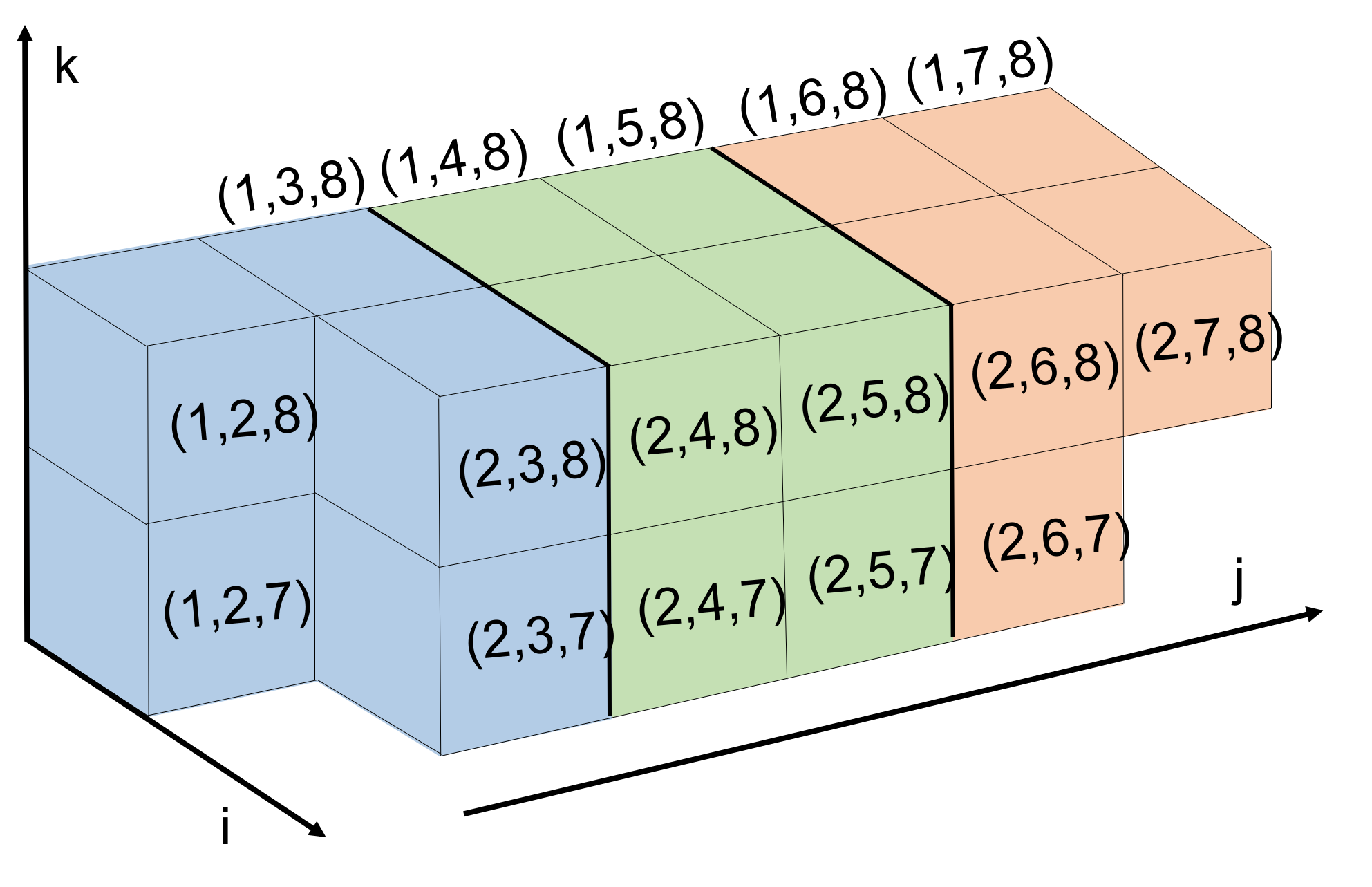
Many clustering applications in machine learning and data mining rely on solving metric-constrained optimization problems. These problems are characterized by $O(n^3)$ constraints that enforce triangle inequalities on distance variables associated with $n$ objects in a large dataset. Despite its usefulness, metric-constrained optimization is challenging in practice due to the cubic number of constraints and the high-memory requirements of standard optimization software. Recent work has shown that iterative projection methods are able to solve metric-constrained optimization problems on a much larger scale than was previously possible, thanks to their comparatively low memory requirement. However, the major limitation of projection methods is their slow convergence rate. In this paper we present a parallel projection method for metric-constrained optimization which allows us to speed up the convergence rate in practice. The key to our approach is a new parallel execution schedule that allows us to perform projections at multiple metric constraints simultaneously without any conflicts or locking of variables. We illustrate the effectiveness of this execution schedule by implementing and testing a parallel projection method for solving the metric-constrained linear programming relaxation of correlation clustering. We show numerous experimental results on problems involving up to 2.9 trillion constraints.

paper research
Pipelined Repair Techniques for Erasure-Coded Storage  Algorithms and Analysis

Pipelined Repair Techniques for Erasure-Coded Storage Algorithms and Analysis

We propose repair pipelining, a technique that speeds up the repair performance in general erasure-coded storage. By carefully scheduling the repair of failed data in small-size units across storage nodes in a pipelined manner, repair pipelining reduces the single-block repair time to approximately the same as the normal read time for a single block in homogeneous environments. We further design different extensions of repair pipelining algorithms for heterogeneous environments and multi-block repair operations. We implement a repair pipelining prototype, called ECPipe, and integrate it as a middleware system into two versions of Hadoop Distributed File System (HDFS) (namely HDFS-RAID and HDFS-3) as well as Quantcast File System (QFS). Experiments on a local testbed and Amazon EC2 show that repair pipelining significantly improves the performance of degraded reads and full-node recovery over existing repair techniques.

paper research
Sabrina  Modeling and Visualizing Economic Data with Incremental Domain Knowledge

Sabrina Modeling and Visualizing Economic Data with Incremental Domain Knowledge

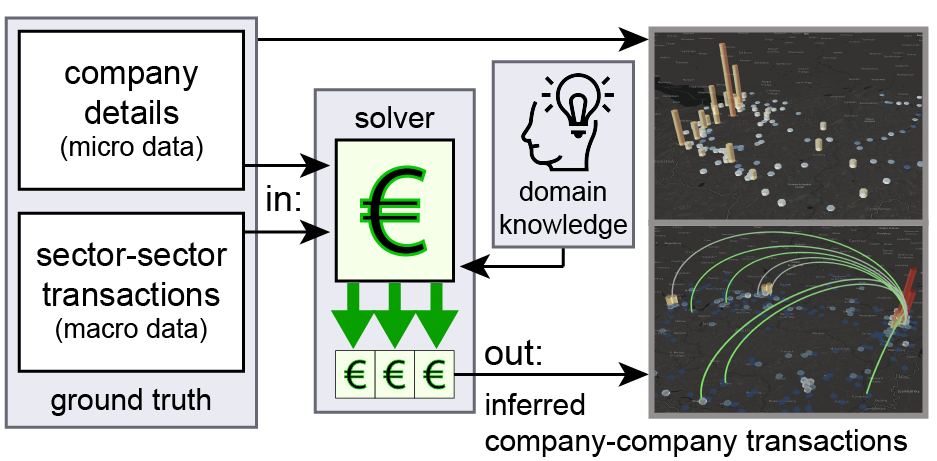
Investment planning requires knowledge of the financial landscape on a large scale, both in terms of geo-spatial and industry sector distribution. There is plenty of data available, but it is scattered across heterogeneous sources (newspapers, open data, etc.), which makes it difficult for financial analysts to understand the big picture. In this paper, we present Sabrina, a financial data analysis and visualization approach that incorporates a pipeline for the generation of firm-to-firm financial transaction networks. The pipeline is capable of fusing the ground truth on individual firms in a region with (incremental) domain knowledge on general macroscopic aspects of the economy. Sabrina unites these heterogeneous data sources within a uniform visual interface that enables the visual analysis process. In a user study with three domain experts, we illustrate the usefulness of Sabrina, which eases their analysis process.

paper research
EXPSPACE-Completeness of Logics K4xS5, S4xS5, and the Logic of Subset Spaces, Part 2  EXPSPACE-Hardness

EXPSPACE-Completeness of Logics K4xS5, S4xS5, and the Logic of Subset Spaces, Part 2 EXPSPACE-Hardness

It is known that the satisfiability problems of the product logics K4xS5 and S4xS5 are NEXPTIME-hard and that the satisfiability problem of the logic SSL of subset spaces is PSPACE-hard. We improve these lower bounds for the complexity of these problems by showing that all three problems are EXPSPACE-hard under logspace reduction. In another paper we show that these problems are in ESPACE. This shows that all three problems are EXPSPACE-complete.

paper research
PAStime  Progress-Aware Scheduling for Time-Critical Computing

PAStime Progress-Aware Scheduling for Time-Critical Computing

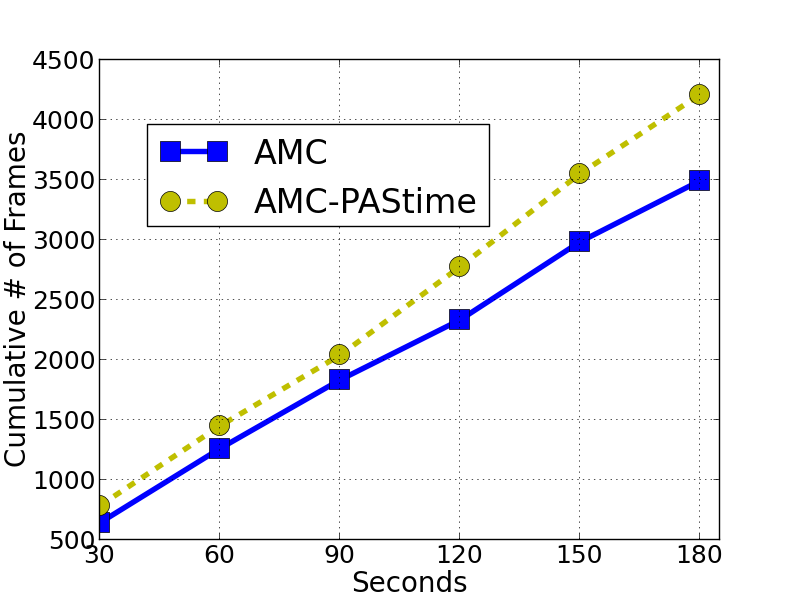
Over-estimation of worst-case execution times (WCETs) of real-time tasks leads to poor resource utilization. In a mixed-criticality system (MCS), the over-provisioning of CPU time to accommodate the WCETs of highly critical tasks may lead to degraded service for less critical tasks. In this paper, we present PAStime, a novel approach to monitor and adapt the runtime progress of highly time-critical applications, to allow for improved service to lower criticality tasks. In PAStime, CPU time is allocated to time-critical tasks according to the delays they experience as they progress through their control flow graphs. This ensures that as much time as possible is made available to improve the Quality-of-Service of less critical tasks, while high-criticality tasks are compensated after their delays. In this paper, we integrate PAStime with Adaptive Mixed-criticality (AMC) scheduling. The LO-mode budget of a high-criticality task is adjusted according to the delay observed at execution checkpoints. This is the first implementation of AMC in the scheduling framework Using LITMUS-RT, which is extended with our PAStime runtime policy and tested with real-time Linux applications such as object classification and detection. We observe in our experimental evaluation that AMC-PAStime significantly improves the utilization of the low-criticality tasks while guaranteeing service to high-criticality tasks.

paper research
A Local Direct Method for Identifying Modules in Dynamic Networks with Correlated Noise

A Local Direct Method for Identifying Modules in Dynamic Networks with Correlated Noise

The identification of local modules in dynamic networks with known topology has recently been addressed by formulating conditions for arriving at consistent estimates of the module dynamics, under the assumption of having disturbances that are uncorrelated over the different nodes. The conditions typically reflect the selection of a set of node signals that are taken as predictor inputs in a MISO identification setup. In this paper an extension is made to arrive at an identification setup for the situation that process noises on the different node signals can be correlated with each other. In this situation the local module may need to be embedded in a MIMO identification setup for arriving at a consistent estimate with maximum likelihood properties. This requires the proper treatment of confounding variables. The result is a set of algorithms that, based on the given network topology and disturbance correlation structure, selects an appropriate set of node signals as predictor inputs and outputs in a MISO or MIMO identification setup. Three algorithms are presented that differ in their approach of selecting measured node signals. Either a maximum or a minimum number of measured node signals can be considered, as well as a preselected set of measured nodes.

paper research
Large-Scale Traffic Signal Control with a New Multi-Agent Reinforcement Learning Approach

Large-Scale Traffic Signal Control with a New Multi-Agent Reinforcement Learning Approach

Finding the optimal signal timing strategy is a difficult task for the problem of large-scale traffic signal control (TSC). Multi-Agent Reinforcement Learning (MARL) is a promising method to solve this problem. However, there is still room for improvement in extending to large-scale problems and modeling the behaviors of other agents for each individual agent. In this paper, a new MARL, called Cooperative double Q-learning (Co-DQL), is proposed, which has several prominent features. It uses a highly scalable independent double Q-learning method based on double estimators and the UCB policy, which can eliminate the over-estimation problem existing in traditional independent Q-learning while ensuring exploration. It uses mean field approximation to model the interaction among agents, thereby making agents learn a better cooperative strategy. In order to improve the stability and robustness of the learning process, we introduce a new reward allocation mechanism and a local state sharing method. In addition, we analyze the convergence properties of the proposed algorithm. Co-DQL is applied on TSC and tested on a multi-traffic signal simulator. According to the results obtained on several traffic scenarios, Co- DQL outperforms several state-of-the-art decentralized MARL algorithms. It can effectively shorten the average waiting time of the vehicles in the whole road system.

paper research
No Image

Distributed Deep Convolutional Neural Networks for the Internet-of-Things

Severe constraints on memory and computation characterizing the Internet-of-Things (IoT) units may prevent the execution of Deep Learning (DL)-based solutions, which typically demand large memory and high processing load. In order to support a real-time execution of the considered DL model at the IoT unit level, DL solutions must be designed having in mind constraints on memory and processing capability exposed by the chosen IoT technology. In this paper, we introduce a design methodology aiming at allocating the execution of Convolutional Neural Networks (CNNs) on a distributed IoT application. Such a methodology is formalized as an optimization problem where the latency between the data-gathering phase and the subsequent decision-making one is minimized, within the given constraints on memory and processing load at the units level. The methodology supports multiple sources of data as well as multiple CNNs in execution on the same IoT system allowing the design of CNN-based applications demanding autonomy, low decision-latency, and high Quality-of-Service.

paper research
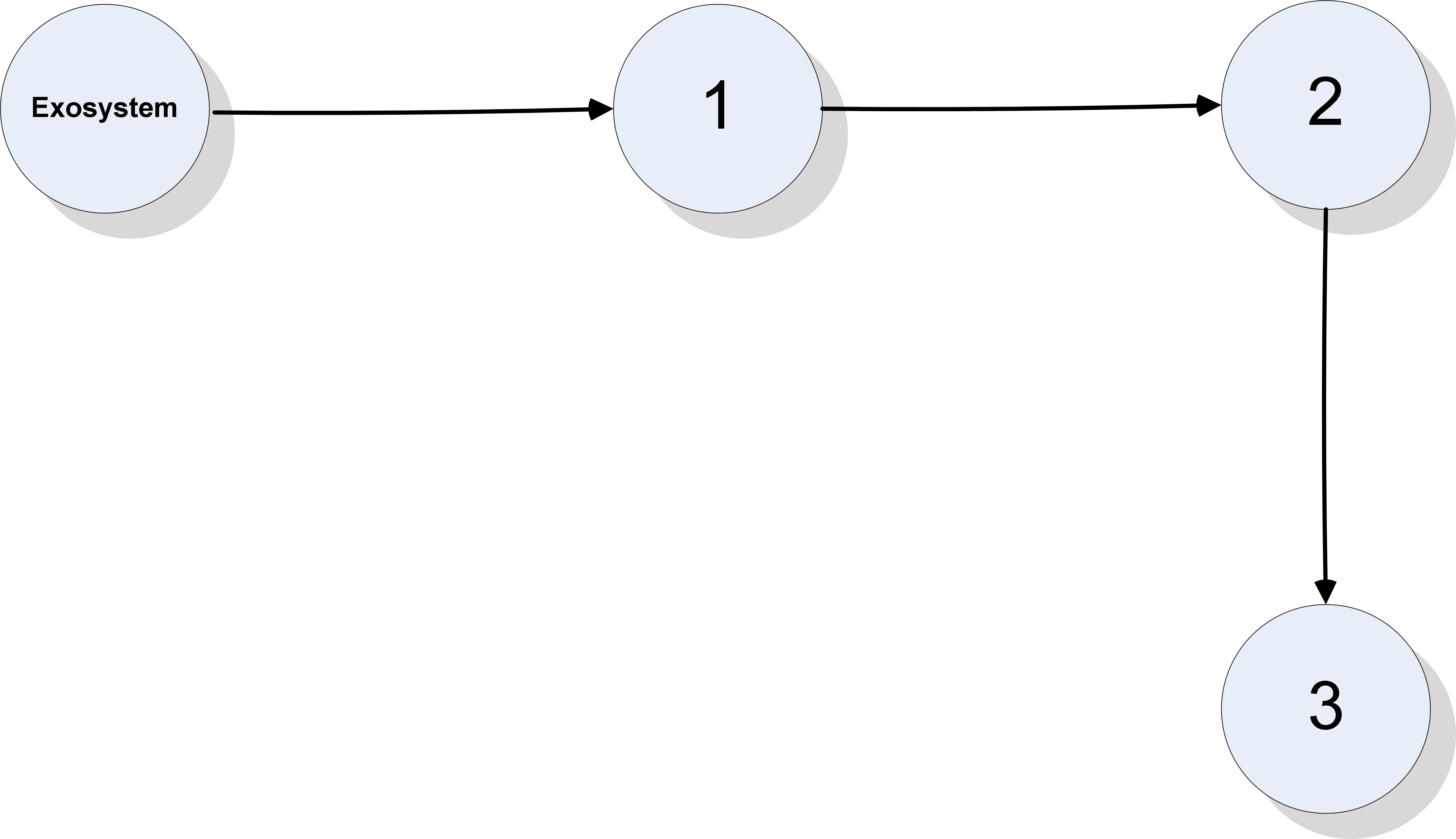
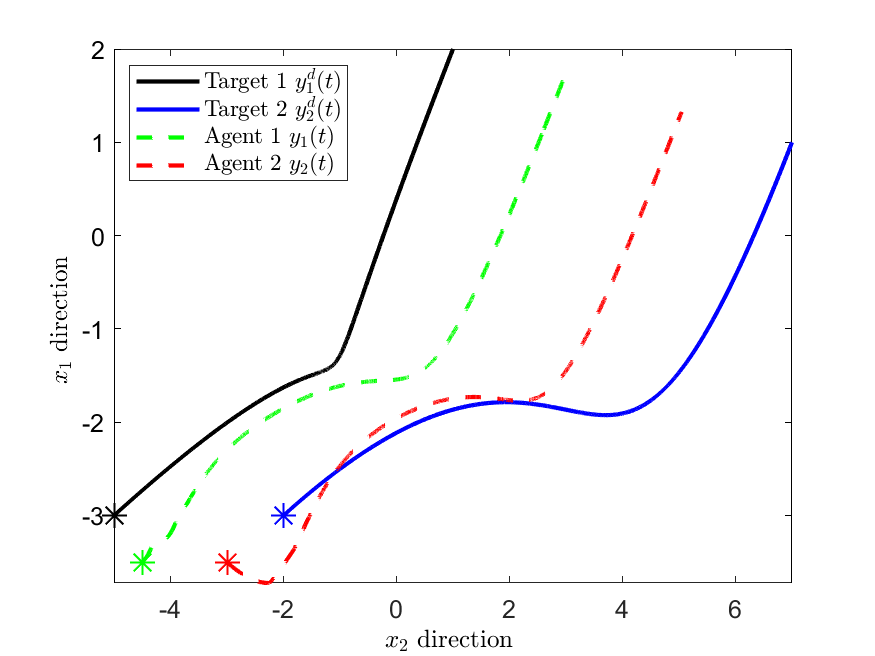
Achieving State Synchronization in Homogeneous Networks of Non-Introspective Agents with Input Saturation  A Scale-Free Protocol Design Approach

Achieving State Synchronization in Homogeneous Networks of Non-Introspective Agents with Input Saturation A Scale-Free Protocol Design Approach

This paper studies global and semi-global regulated state synchronization of homogeneous networks of non-introspective agents in presence of input saturation based on additional information exchange where the reference trajectory is given by a so-called exosystem which is assumed to be globally reachable. Our protocol design methodology does not need any knowledge of the directed network topology and the spectrum of the associated Laplacian matrix. Moreover, the proposed protocol is scalable and achieves synchronization for any arbitrary number of agents.

paper research
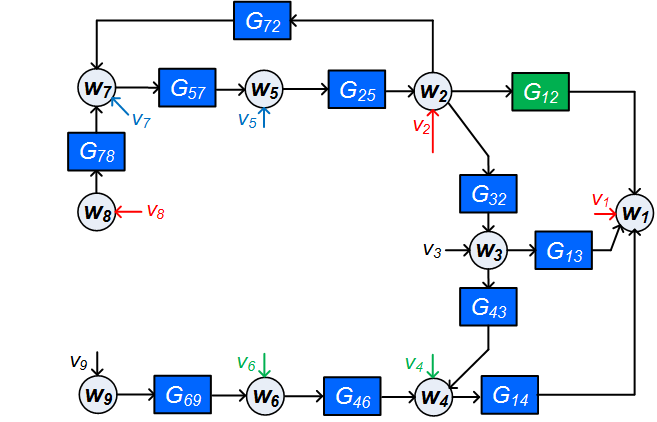
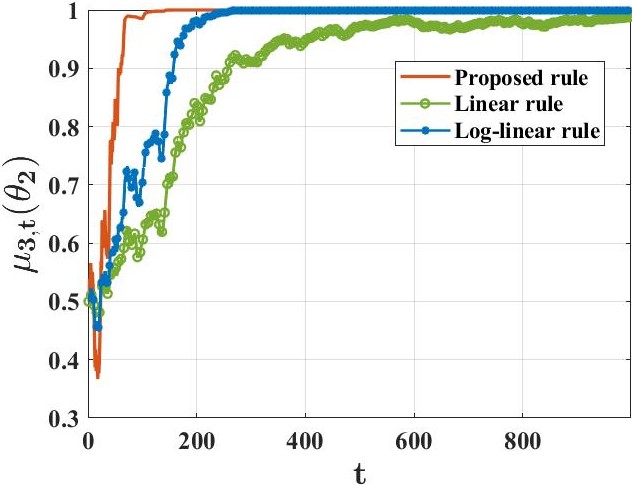
A Novel Approach to Distributed Hypothesis Testing and Non-Bayesian Learning  Enhancing Learning Speed and Byzantine Resilience

A Novel Approach to Distributed Hypothesis Testing and Non-Bayesian Learning Enhancing Learning Speed and Byzantine Resilience

We study a setting where a group of agents, each receiving partially informative private signals, seek to collaboratively learn the true underlying state of the world (from a finite set of hypotheses) that generates their joint observation profiles. To solve this problem, we propose a distributed learning rule that differs fundamentally from existing approaches, in that it does not employ any form of belief-averaging . Instead, agents update their beliefs based on a min-rule. Under standard assumptions on the observation model and the network structure, we establish that each agent learns the truth asymptotically almost surely. As our main contribution, we prove that with probability 1, each false hypothesis is ruled out by every agent exponentially fast at a network-independent rate that is strictly larger than existing rates. We then develop a computationally-efficient variant of our learning rule that is provably resilient to agents who do not behave as expected (as represented by a Byzantine adversary model) and deliberately try to spread misinformation.

paper research
S&CNet  Monocular Depth Completion for Autonomous Systems and 3D Reconstruction

S&CNet Monocular Depth Completion for Autonomous Systems and 3D Reconstruction

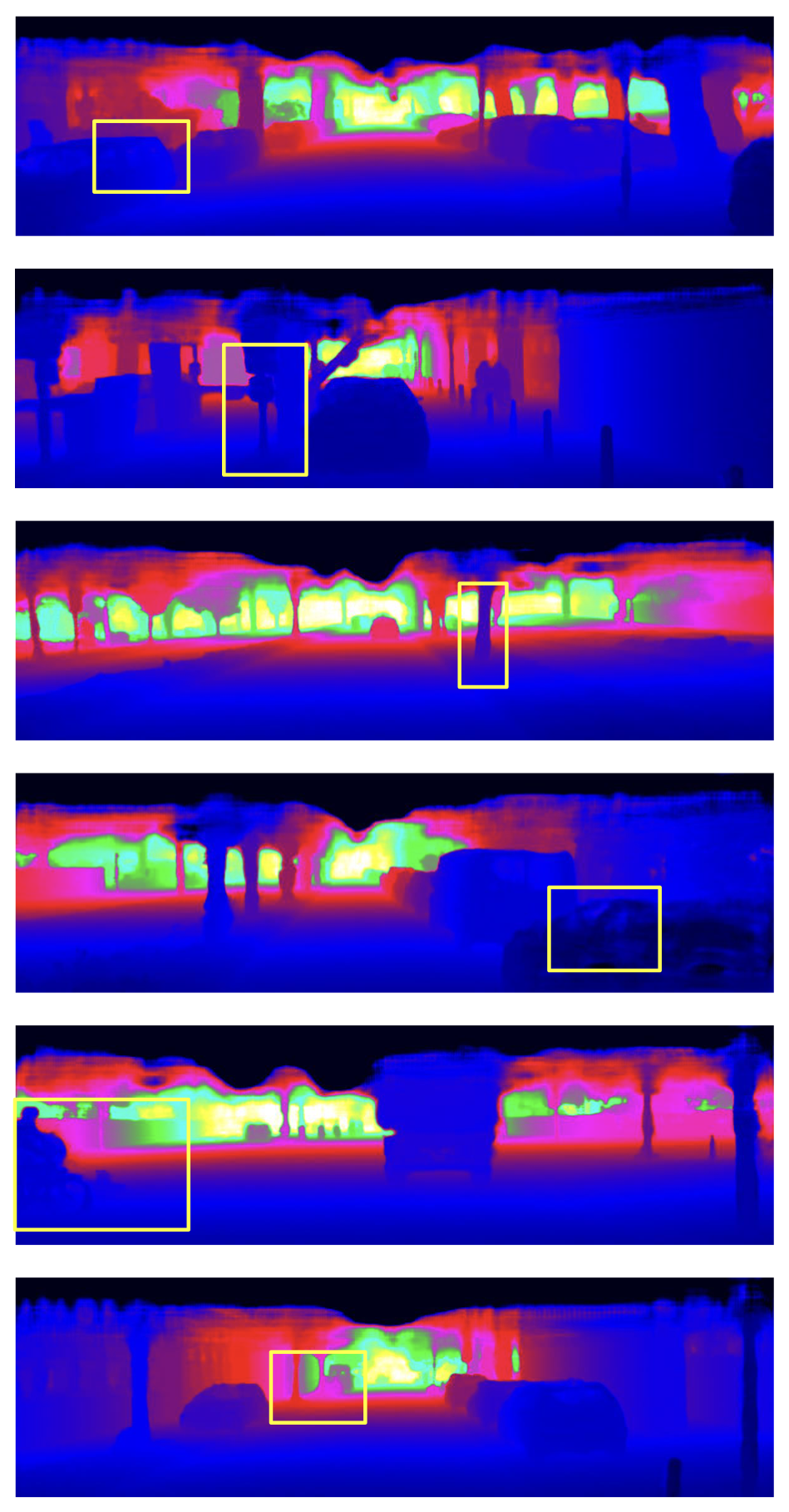
Dense depth completion is essential for autonomous systems and 3D reconstruction. In this paper, a lightweight yet efficient network (S &CNet) is proposed to obtain a good trade-off between efficiency and accuracy for the dense depth completion. A dual-stream attention module (S &C enhancer) is introduced to measure both spatial-wise and the channel-wise global-range relationship of extracted features so as to improve the performance. A coarse-to-fine network is designed and the proposed S &C enhancer is plugged into the coarse estimation network between its encoder and decoder network. Experimental results demonstrate that our approach achieves competitive performance with existing works on KITTI dataset but almost four times faster. The proposed S &C enhancer can be plugged into other existing works and boost their performance significantly with a negligible additional computational cost.

paper research
Multi-Task Regression-Based Learning for Autonomous Drone Flight Control in Unstructured Outdoor Environments

Multi-Task Regression-Based Learning for Autonomous Drone Flight Control in Unstructured Outdoor Environments

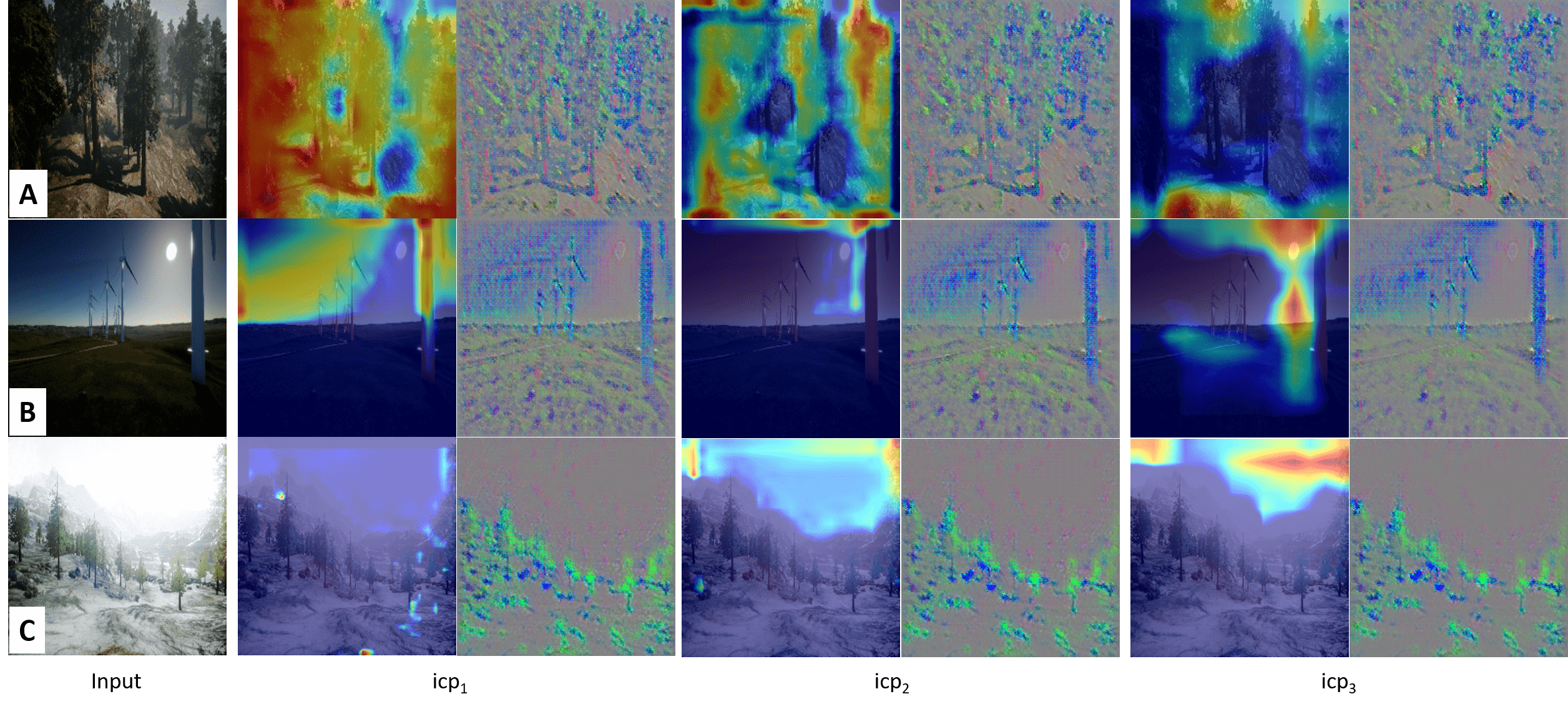
Increased growth in the global Unmanned Aerial Vehicles (UAV) (drone) industry has expanded possibilities for fully autonomous UAV applications. A particular application which has in part motivated this research is the use of UAV in wide area search and surveillance operations in unstructured outdoor environments. The critical issue with such environments is the lack of structured features that could aid in autonomous flight, such as road lines or paths. In this paper, we propose an End-to-End Multi-Task Regression-based Learning approach capable of defining flight commands for navigation and exploration under the forest canopy, regardless of the presence of trails or additional sensors (i.e. GPS). Training and testing are performed using a software in the loop pipeline which allows for a detailed evaluation against state-of-the-art pose estimation techniques. Our extensive experiments demonstrate that our approach excels in performing dense exploration within the required search perimeter, is capable of covering wider search regions, generalises to previously unseen and unexplored environments and outperforms contemporary state-of-the-art techniques.

paper research
An Introduction to Decentralized Stochastic Optimization with Gradient Tracking

An Introduction to Decentralized Stochastic Optimization with Gradient Tracking

Decentralized solutions to finite-sum minimization are of significant importance in many signal processing, control, and machine learning applications. In such settings, the data is distributed over a network of arbitrarily-connected nodes and raw data sharing is prohibitive often due to communication or privacy constraints. In this article, we review decentralized stochastic first-order optimization methods and illustrate some recent improvements based on gradient tracking and variance reduction, focusing particularly on smooth and strongly-convex objective functions. We provide intuitive illustrations of the main technical ideas as well as applications of the algorithms in the context of decentralized training of machine learning models.

paper research
Efficient Evaluation of Knowledge Graph Accuracy

Efficient Evaluation of Knowledge Graph Accuracy

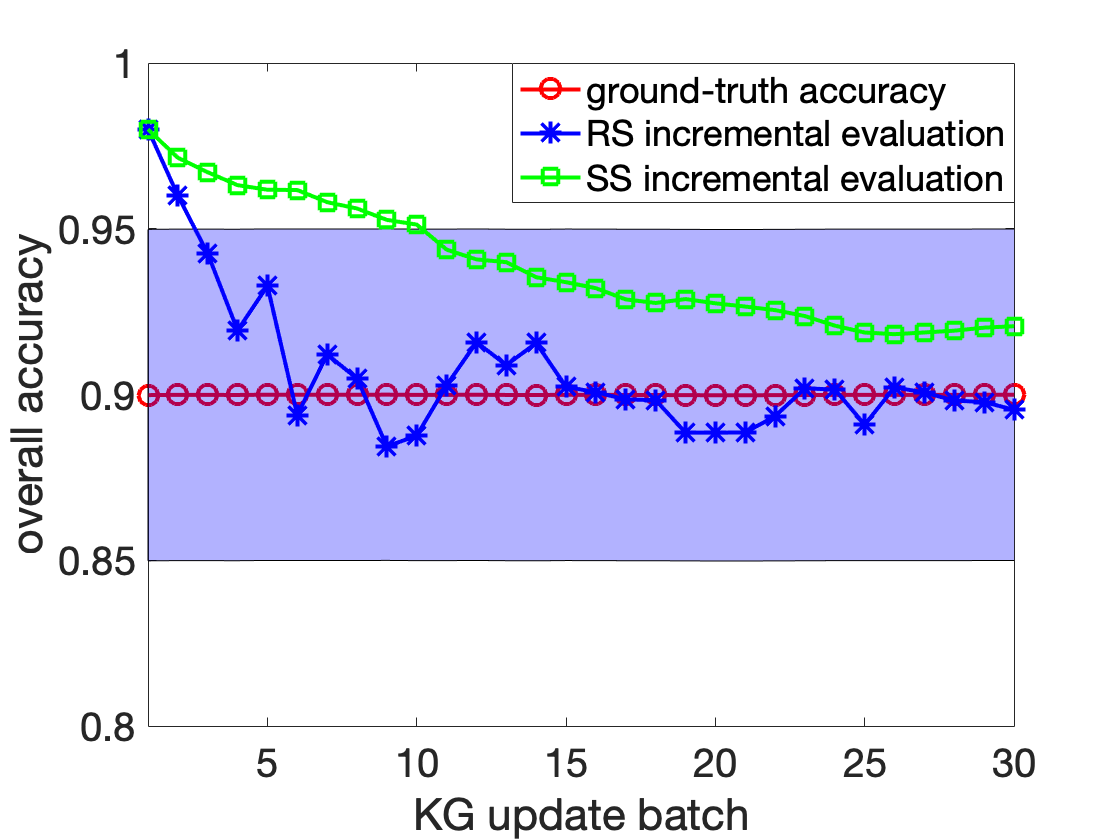
Estimation of the accuracy of a large-scale knowledge graph (KG) often requires humans to annotate samples from the graph. How to obtain statistically meaningful estimates for accuracy evaluation while keeping human annotation costs low is a problem critical to the development cycle of a KG and its practical applications. Surprisingly, this challenging problem has largely been ignored in prior research. To address the problem, this paper proposes an efficient sampling and evaluation framework, which aims to provide quality accuracy evaluation with strong statistical guarantee while minimizing human efforts. Motivated by the properties of the annotation cost function observed in practice, we propose the use of cluster sampling to reduce the overall cost. We further apply weighted and two-stage sampling as well as stratification for better sampling designs. We also extend our framework to enable efficient incremental evaluation on evolving KG, introducing two solutions based on stratified sampling and a weighted variant of reservoir sampling. Extensive experiments on real-world datasets demonstrate the effectiveness and efficiency of our proposed solution. Compared to baseline approaches, our best solutions can provide up to 60% cost reduction on static KG evaluation and up to 80% cost reduction on evolving KG evaluation, without loss of evaluation quality.

paper research
No Image

Maximizing Revenue Robustly with Minimal Statistical Information

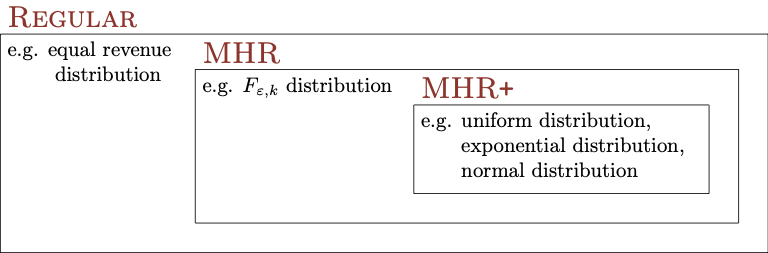
We study the problem of multi-dimensional revenue maximization when selling $m$ items to a buyer that has additive valuations for them, drawn from a (possibly correlated) prior distribution. Unlike traditional Bayesian auction design, we assume that the seller has a very restricted knowledge of this prior they only know the mean $ mu_j$ and an upper bound $ sigma_j$ on the standard deviation of each item s marginal distribution. Our goal is to design mechanisms that achieve good revenue against an ideal optimal auction that has full knowledge of the distribution in advance. Informally, our main contribution is a tight quantification of the interplay between the dispersity of the priors and the aforementioned robust approximation ratio. Furthermore, this can be achieved by very simple selling mechanisms. More precisely, we show that selling the items via separate price lotteries achieves an $O( log r)$ approximation ratio where $r= max_j( sigma_j/ mu_j)$ is the maximum coefficient of variation across the items. To prove the result, we leverage a price lottery for the single-item case. If forced to restrict ourselves to deterministic mechanisms, this guarantee degrades to $O(r^2)$. Assuming independence of the item valuations, these ratios can be further improved by pricing the full bundle. For the case of identical means and variances, in particular, we get a guarantee of $O( log(r/m))$ which converges to optimality as the number of items grows large. We demonstrate the optimality of the above mechanisms by providing matching lower bounds. Our tight analysis for the single-item deterministic case resolves an open gap from the work of Azar and Micali [ITCS 13]. As a by-product, we also show how one can directly use our upper bounds to improve and extend previous results related to the parametric auctions of Azar et al. [SODA 13].

paper research
No Image

Open Shop Scheduling Games

This paper takes a game theoretical approach to open shop scheduling problems with unit execution times to minimize the sum of completion times. By supposing an initial schedule and associating each job (consisting in a number of operations) to a different player, we can construct a cooperative TU-game associated with any open shop scheduling problem. We assign to each coalition the maximal cost savings it can obtain through admissible rearrangements of jobs operations. By providing a core allocation, we show that the associated games are balanced. Finally, we relax the definition of admissible rearrangements for a coalition to study to what extend balancedness still holds.

paper research
Properties of Decentralized Consensus Technology -- Why Not Every Blockchain Is a True Blockchain

Properties of Decentralized Consensus Technology -- Why Not Every Blockchain Is a True Blockchain

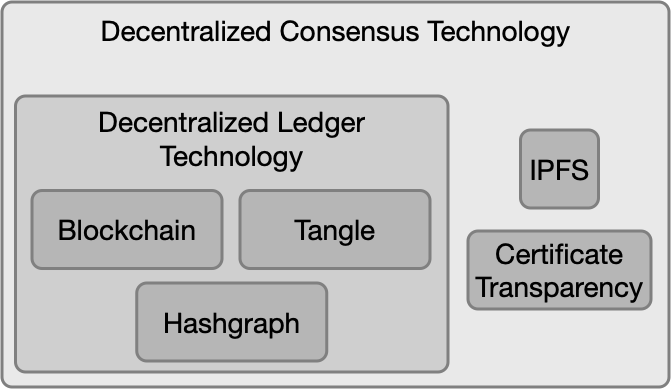
Research in the field of blockchain technology and applications is increasing at a fast pace. Although the Bitcoin whitepaper by Nakamoto is already ten years old, the field can still be seen as immature and at an early stage. Current research in this area is lacking a commonly shared knowledge and consensus about terms used to describe the technology and its properties. At the same time this research is challenging fundamental aspects of the Bitcoin core concept. It has to be questioned whether all of these new approaches still adequately could be described as blockchain technology. We propose to use the term Decentralized Consensus Technology as a general category instead. Decentralized Consensus Technology consists of decentralized ledger and non-ledger technologies. Blockchain technology in turn is only one of multiple implementations of the Decentralized Ledger Technology. Furthermore, we identified three main characteristics of Decentralized Consensus Technology decentralization, trustlessness and ability to eventually reach consensus. Depending on the use case of the specific implementation the following additional properties have to be considered privacy, participation incentive, irreversibility and immutability, operation purpose, confirmation time, transaction costs, ability to externalize transactions and computations and scalability possibilities.

paper research
A Study of Network Congestion in Two Supercomputing High-Speed Interconnects

A Study of Network Congestion in Two Supercomputing High-Speed Interconnects

Network congestion in high-speed interconnects is a major source of application run time performance variation. Recent years have witnessed a surge of interest from both academia and industry in the development of novel approaches for congestion control at the network level and in application placement, mapping, and scheduling at the system-level. However, these studies are based on proxy applications and benchmarks that are not representative of field-congestion characteristics of high-speed interconnects. To address this gap, we present (a) an end-to-end framework for monitoring and analysis to support long-term field-congestion characterization studies, and (b) an empirical study of network congestion in petascale systems across two different interconnect technologies (i) Cray Gemini, which uses a 3-D torus topology, and (ii) Cray Aries, which uses the DragonFly topology.

paper research
Controlling the Painlevé Paradox in a Robotic System

Controlling the Painlevé Paradox in a Robotic System

The Painlev e paradox is a phenomenon that causes instability in mechanical systems subjects to unilateral constraints. While earlier studies were mostly focused on abstract theoretical settings, recent work confirmed the occurrence of the paradox in realistic set-ups. In this paper, we investigate the dynamics and presence of the Painlev e phenomenon in a twolinks robot in contact with a moving belt, through a bifurcation study. Then, we use the results of this analysis to inform the design of control strategies able to keep the robot sliding on the belt and avoid the onset of undesired lift-off. To this aim, through numerical simulations, we synthesise and compare a PID strategy and a hybrid force/motion control scheme, finding that the latter is able to guarantee better performance and avoid the onset of bouncing motion due to the Painlev e phenomenon.

paper research
Exact Computation with Infinitely Wide Neural Networks

Exact Computation with Infinitely Wide Neural Networks

How well does a classic deep net architecture like AlexNet or VGG19 classify on a standard dataset such as CIFAR-10 when its width --- namely, number of channels in convolutional layers, and number of nodes in fully-connected internal layers --- is allowed to increase to infinity? Such questions have come to the forefront in the quest to theoretically understand deep learning and its mysteries about optimization and generalization. They also connect deep learning to notions such as Gaussian processes and kernels. A recent paper [Jacot et al., 2018] introduced the Neural Tangent Kernel (NTK) which captures the behavior of fully-connected deep nets in the infinite width limit trained by gradient descent; this object was implicit in some other recent papers. An attraction of such ideas is that a pure kernel-based method is used to capture the power of a fully-trained deep net of infinite width. The current paper gives the first efficient exact algorithm for computing the extension of NTK to convolutional neural nets, which we call Convolutional NTK (CNTK), as well as an efficient GPU implementation of this algorithm. This results in a significant new benchmark for the performance of a pure kernel-based method on CIFAR-10, being $10 %$ higher than the methods reported in [Novak et al., 2019], and only $6 %$ lower than the performance of the corresponding finite deep net architecture (once batch normalization, etc. are turned off). Theoretically, we also give the first non-asymptotic proof showing that a fully-trained sufficiently wide net is indeed equivalent to the kernel regression predictor using NTK.

paper research
Automatic Support Structure Removal in Additive Manufacturing Post-Processing

Automatic Support Structure Removal in Additive Manufacturing Post-Processing

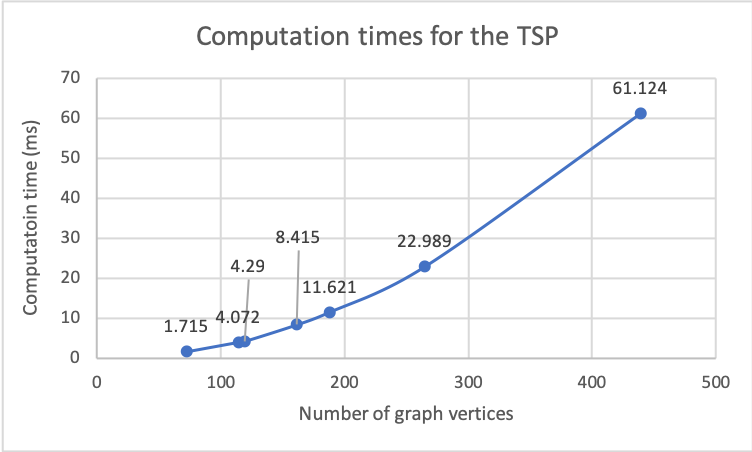
An additive manufacturing (AM) process often produces a { it near-net} shape that closely conforms to the intended design to be manufactured. It sometimes contains additional support structure (also called scaffolding), which has to be removed in post-processing. We describe an approach to automatically generate process plans for support removal using a multi-axis machining instrument. The goal is to fracture the contact regions between each support component and the part, and to do it in the most cost-effective order while avoiding collisions with evolving near-net shape, including the remaining support components. A recursive algorithm identifies a maximal collection of support components whose connection regions to the part are accessible as well as the orientations at which they can be removed at a given round. For every such region, the accessible orientations appear as a fiber in the collision-free space of the evolving near-net shape and the tool assembly. To order the removal of accessible supports, the algorithm constructs a search graph whose edges are weighted by the Riemannian distance between the fibers. The least expensive process plan is obtained by solving a traveling salesman problem (TSP) over the search graph. The sequence of configurations obtained by solving TSP is used as the input to a motion planner that finds collision free paths to visit all accessible features. The resulting part without the support structure can then be finished using traditional machining to produce the intended design. The effectiveness of the method is demonstrated through benchmark examples in 3D.

paper research
Approximate Query Processing Using Deep Generative Models

Approximate Query Processing Using Deep Generative Models

Data is generated at an unprecedented rate surpassing our ability to analyze them. The database community has pioneered many novel techniques for Approximate Query Processing (AQP) that could give approximate results in a fraction of time needed for computing exact results. In this work, we explore the usage of deep learning (DL) for answering aggregate queries specifically for interactive applications such as data exploration and visualization. We use deep generative models, an unsupervised learning based approach, to learn the data distribution faithfully such that aggregate queries could be answered approximately by generating samples from the learned model. The model is often compact - few hundred KBs - so that arbitrary AQP queries could be answered on the client side without contacting the database server. Our other contributions include identifying model bias and minimizing it through a rejection sampling based approach and an algorithm to build model ensembles for AQP for improved accuracy. Our extensive experiments show that our proposed approach can provide answers with high accuracy and low latency.

paper research
From Interpretability to Inference  An Estimation Framework for Universal Approximators

From Interpretability to Inference An Estimation Framework for Universal Approximators

We present a novel framework for estimation and inference with the broad class of universal approximators. Estimation is based on the decomposition of model predictions into Shapley values. Inference relies on analyzing the bias and variance properties of individual Shapley components. We show that Shapley value estimation is asymptotically unbiased, and we introduce Shapley regressions as a tool to uncover the true data generating process from noisy data alone. The well-known case of the linear regression is the special case in our framework if the model is linear in parameters. We present theoretical, numerical, and empirical results for the estimation of heterogeneous treatment effects as our guiding example.

paper research
Intelligent Knowledge Distribution  Constrained-Action POMDPs for Resource-Aware Multi-Agent Communication

Intelligent Knowledge Distribution Constrained-Action POMDPs for Resource-Aware Multi-Agent Communication

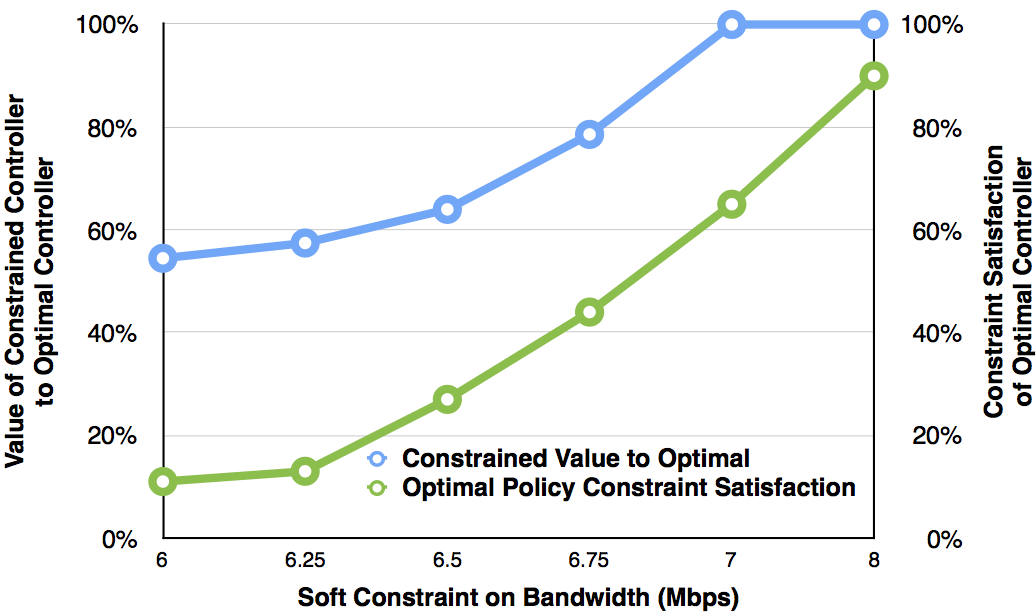
This paper addresses a fundamental question of multi-agent knowledge distribution what information should be sent to whom and when, with the limited resources available to each agent? Communication requirements for multi-agent systems can be rather high when an accurate picture of the environment and the state of other agents must be maintained. To reduce the impact of multi-agent coordination on networked systems, e.g., power and bandwidth, this paper introduces two concepts for partially observable Markov decision processes (POMDPs) 1) action-based constraints which yield constrained-action POMDPs (CA-POMDPs); and 2) soft probabilistic constraint satisfaction for the resulting infinite-horizon controllers. To enable constraint analysis over an infinite horizon, an unconstrained policy is first represented as a Finite State Controller (FSC) and optimized with policy iteration. The FSC representation then allows for a combination of Markov chain Monte Carlo and discrete optimization to improve the probabilistic constraint satisfaction of the controller while minimizing the impact to the value function. Within the CA-POMDP framework we then propose Intelligent Knowledge Distribution (IKD) which yields per-agent policies for distributing knowledge between agents subject to interaction constraints. Finally, the CA-POMDP and IKD concepts are validated using an asset tracking problem where multiple unmanned aerial vehicles (UAVs) with heterogeneous sensors collaborate to localize a ground asset to assist in avoiding unseen obstacles in a disaster area. The IKD model was able to maintain asset tracking through multi-agent communications while only violating soft power and bandwidth constraints 3% of the time, while greedy and naive approaches violated constraints more than 60% of the time.

paper research
Communication-Efficient Federated Deep Learning with Asynchronous Model Updates and Temporally Weighted Aggregation

Communication-Efficient Federated Deep Learning with Asynchronous Model Updates and Temporally Weighted Aggregation

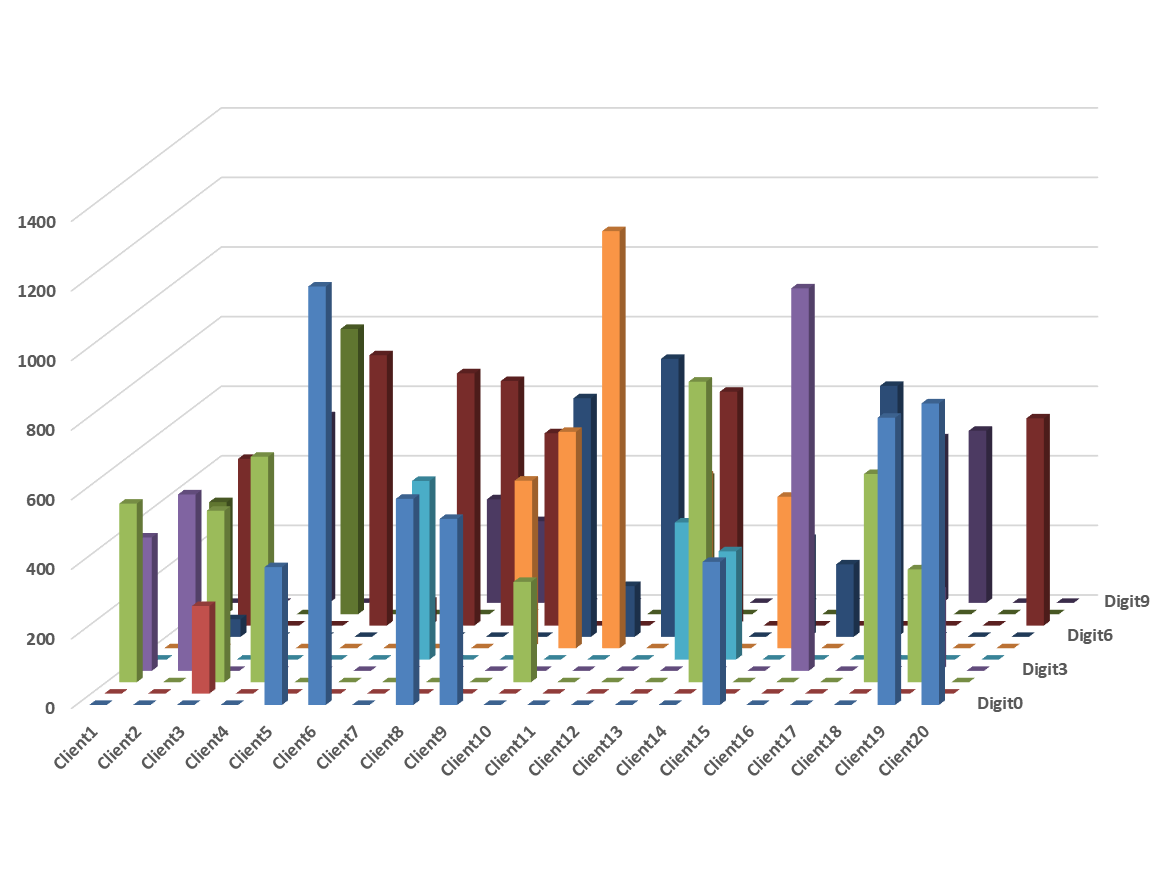
Federated learning obtains a central model on the server by aggregating models trained locally on clients. As a result, federated learning does not require clients to upload their data to the server, thereby preserving the data privacy of the clients. One challenge in federated learning is to reduce the client-server communication since the end devices typically have very limited communication bandwidth. This paper presents an enhanced federated learning technique by proposing a synchronous learning strategy on the clients and a temporally weighted aggregation of the local models on the server. In the asynchronous learning strategy, different layers of the deep neural networks are categorized into shallow and deeps layers and the parameters of the deep layers are updated less frequently than those of the shallow layers. Furthermore, a temporally weighted aggregation strategy is introduced on the server to make use of the previously trained local models, thereby enhancing the accuracy and convergence of the central model. The proposed algorithm is empirically on two datasets with different deep neural networks. Our results demonstrate that the proposed asynchronous federated deep learning outperforms the baseline algorithm both in terms of communication cost and model accuracy.

paper research
Analysis of the $( mu/ mu_I, lambda)$-CSA-ES with Repair by Projection   Applied to a Conically Constrained Problem

Analysis of the $( mu/ mu_I, lambda)$-CSA-ES with Repair by Projection Applied to a Conically Constrained Problem

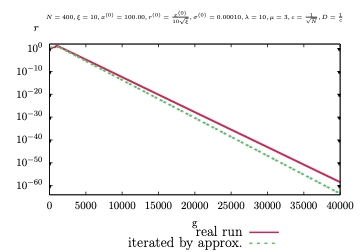
Theoretical analyses of evolution strategies are indispensable for gaining a deep understanding of their inner workings. For constrained problems, rather simple problems are of interest in the current research. This work presents a theoretical analysis of a multi-recombinative evolution strategy with cumulative step size adaptation applied to a conically constrained linear optimization problem. The state of the strategy is modeled by random variables and a stochastic iterative mapping is introduced. For the analytical treatment, fluctuations are neglected and the mean value iterative system is considered. Non-linear difference equations are derived based on one-generation progress rates. Based on that, expressions for the steady state of the mean value iterative system are derived. By comparison with real algorithm runs, it is shown that for the considered assumptions, the theoretical derivations are able to predict the dynamics and the steady state values of the real runs.

paper research
Genetic Programming for Evolving an Interpretable Model Front for Data Visualization

Genetic Programming for Evolving an Interpretable Model Front for Data Visualization

Data visualisation is a key tool in data mining for understanding big datasets. Many visualisation methods have been proposed, including the well-regarded state-of-the-art method t-Distributed Stochastic Neighbour Embedding. However, the most powerful visualisation methods have a significant limitation the manner in which they create their visualisation from the original features of the dataset is completely opaque. Many domains require an understanding of the data in terms of the original features; there is hence a need for powerful visualisation methods which use understandable models. In this work, we propose a genetic programming approach named GPtSNE for evolving interpretable mappings from a dataset to highquality visualisations. A multi-objective approach is designed that produces a variety of visualisations in a single run which give different trade-offs between visual quality and model complexity. Testing against baseline methods on a variety of datasets shows the clear potential of GP-tSNE to allow deeper insight into data than that provided by existing visualisation methods. We further highlight the benefits of a multi-objective approach through an in-depth analysis of a candidate front, which shows how multiple models can

paper research
Stability of User Equilibria in Heterogeneous Routing Games

Stability of User Equilibria in Heterogeneous Routing Games

The asymptotic behaviour of deterministic logit dynamics in heterogeneous routing games is analyzed. It is proved that in directed multigraphs with parallel routes, and in series composition of such multigraphs, the dynamics admits a globally asymptotically stable fixed point. Moreover, the unique fixed point of the dynamics approaches the set of Wardrop equilibria, as the noise vanishes. The result relies on the fact that the dynamics of aggregate flows is monotone, and its Jacobian is strictly diagonally dominant by columns.

paper research
Training DNN IoT Applications for Deployment on Analog NVM Crossbars

Training DNN IoT Applications for Deployment on Analog NVM Crossbars

A trend towards energy-efficiency, security and privacy has led to a recent focus on deploying DNNs on microcontrollers. However, limits on compute and memory resources restrict the size and the complexity of the ML models deployable in these systems. Computation-In-Memory architectures based on resistive nonvolatile memory (NVM) technologies hold great promise of satisfying the compute and memory demands of high-performance and low-power, inherent in modern DNNs. Nevertheless, these technologies are still immature and suffer from both the intrinsic analog-domain noise problems and the inability of representing negative weights in the NVM structures, incurring in larger crossbar sizes with concomitant impact on ADCs and DACs. In this paper, we provide a training framework for addressing these challenges and quantitatively evaluate the circuit-level efficiency gains thus accrued. We make two contributions Firstly, we propose a training algorithm that eliminates the need for tuning individual layers of a DNN ensuring uniformity across layer weights and activations. This ensures analog-blocks that can be reused and peripheral hardware substantially reduced. Secondly, using NAS methods, we propose the use of unipolar-weighted (either all-positive or all-negative weights) matrices/sub-matrices. Weight unipolarity obviates the need for doubling crossbar area leading to simplified analog periphery. We validate our methodology with CIFAR10 and HAR applications by mapping to crossbars using 4-bit and 2-bit devices. We achieve up to 92 91% accuracy (95% floating-point) using 2-bit only-positive weights for HAR. A combination of the proposed techniques leads to 80% area improvement and up to 45% energy reduction.

paper research
Exploring World Maps in Virtual Reality  Comparing 3D Exocentric Globes, Flat Maps, Egocentric 3D Globes, and Curved Maps

Exploring World Maps in Virtual Reality Comparing 3D Exocentric Globes, Flat Maps, Egocentric 3D Globes, and Curved Maps

This paper explores different ways to render world-wide geographic maps in virtual reality (VR). We compare (a) a 3D exocentric globe, where the user s viewpoint is outside the globe; (b) a flat map (rendered to a plane in VR); (c) an egocentric 3D globe, with the viewpoint inside the globe; and (d) a curved map, created by projecting the map onto a section of a sphere which curves around the user. In all four visualisations the geographic centre can be smoothly adjusted with a standard handheld VR controller and the user, through a head-tracked headset, can physically move around the visualisation. For distance comparison, exocentric globe is more accurate than egocentric globe and flat map. For area comparison, more time is required with exocentric and egocentric globes than with flat and curved maps. For direction estimation, the exocentric globe is more accurate and faster than the other visual presentations. Our study participants had a weak preference for the exocentric globe. Generally, the curved map had benefits over the flat map. In almost all cases the egocentric globe was found to be the least effective visualisation. Overall, our results provide support for the use of exocentric globes for geographic visualisation in mixed-reality.

paper research
Can I Trust You? A User Study on Robot-Mediated Support Groups

Can I Trust You? A User Study on Robot-Mediated Support Groups

Socially assistive robots have the potential to improve group dynamics when interacting with groups of people in social settings. This work contributes to the understanding of those dynamics through a user study of trust dynamics in the novel context of a robot mediated support group. For this study, a novel framework for robot mediation of a support group was developed and validated. To evaluate interpersonal trust in the multi-party setting, a dyadic trust scale was implemented and found to be uni-factorial, validating it as an appropriate measure of general trust. The results of this study demonstrate a significant increase in average interpersonal trust after the group interaction session, and qualitative post-session interview data report that participants found the interaction helpful and successfully supported and learned from one other. The results of the study validate that a robot-mediated support group can improve trust among strangers and allow them to share and receive support for their academic stress.

paper research
A Multi-Objective Evolutionary Approach for Grey-Box Modeling of a Buck Converter

A Multi-Objective Evolutionary Approach for Grey-Box Modeling of a Buck Converter

The present study proposes a simple grey-box identification approach to model a real DC-DC buck converter operating in continuous conduction mode. The problem associated with the information void in the observed dynamical data, which is often obtained over a relatively narrow input range, is alleviated by exploiting the known static behavior of buck converter as a priori knowledge. A simple method is developed based on the concept of term clusters to determine the static response of the candidate models. The error in the static behavior is then directly embedded into the multi-objective framework for structure selection. In essence, the proposed approach casts grey-box identification problem into a multi-objective framework to balance bias-variance dilemma of model building while explicitly integrating a priori knowledge into the structure selection process. The results of the investigation, considering the case of practical buck converter, demonstrate that it is possible to identify parsimonious models which can capture both the dynamic and static behavior of the system over a wide input range.

paper research
Storage or No Storage  Duopoly Competition Among Renewable Energy Suppliers in a Local Market

Storage or No Storage Duopoly Competition Among Renewable Energy Suppliers in a Local Market

This paper studies the duopoly competition between renewable energy suppliers with or without energy storage in a local energy market. The storage investment brings the benefits of stabilizing renewable energy suppliers outputs, but it also leads to substantial investment costs as well as some surprising changes in the market outcome. To study the equilibrium decisions of storage investment in the renewable energy suppliers competition, we model the interactions between suppliers and consumers using a three-stage game-theoretic model. In Stage I, at the beginning of the investment horizon, suppliers decide whether to invest in storage. Once such decisions have been made, in the day-ahead market of each day, suppliers decide on their bidding prices and quantities in Stage II, based on which consumers decide the electricity quantity purchased from each supplier in Stage III. In the real-time market, a supplier is penalized if his actual generation falls short of his commitment. We characterize a price-quantity competition equilibrium of Stage II, and we further characterize a storage-investment equilibrium in Stage I incorporating electricity-selling revenue and storage cost. Counter-intuitively, we show that the uncertainty of renewable energy without storage investment can lead to higher supplier profits compared with the stable generations with storage investment due to the reduced market competition under random energy generation. Simulations further illustrate results due to the market competition. For example, a higher penalty for not meeting the commitment, a higher storage cost, or a lower consumer demand can sometimes increase a supplier s profit. We also show that although storage investment can increase a supplier s profit, the first-mover supplier who invests in storage may benefit less than the free-rider competitor who chooses not to invest.

paper research
Bridging Information Security and Environmental Criminology to Better Mitigate Cybercrime

Bridging Information Security and Environmental Criminology to Better Mitigate Cybercrime

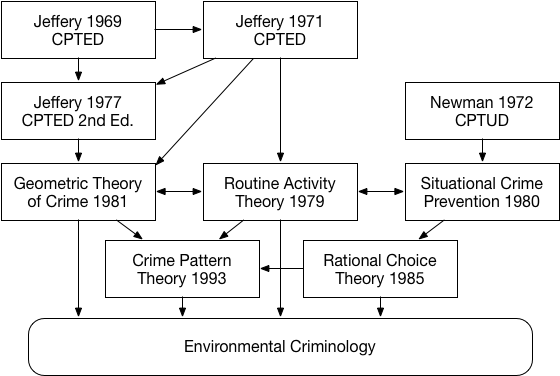
Cybercrime is a complex phenomenon that spans both technical and human aspects. As such, two disjoint areas have been studying the problem from separate angles the information security community and the environmental criminology one. Despite the large body of work produced by these communities in the past years, the two research efforts have largely remained disjoint, with researchers on one side not benefitting from the advancements proposed by the other. In this paper, we argue that it would be beneficial for the information security community to look at the theories and systematic frameworks developed in environmental criminology to develop better mitigations against cybercrime. To this end, we provide an overview of the research from environmental criminology and how it has been applied to cybercrime. We then survey some of the research proposed in the information security domain, drawing explicit parallels between the proposed mitigations and environmental criminology theories, and presenting some examples of new mitigations against cybercrime. Finally, we discuss the concept of cyberplaces and propose a framework in order to define them. We discuss this as a potential research direction, taking into account both fields of research, in the hope of broadening interdisciplinary efforts in cybercrime research.

paper research
I Feel You  A Theory of Mind Experiment in Games

I Feel You A Theory of Mind Experiment in Games

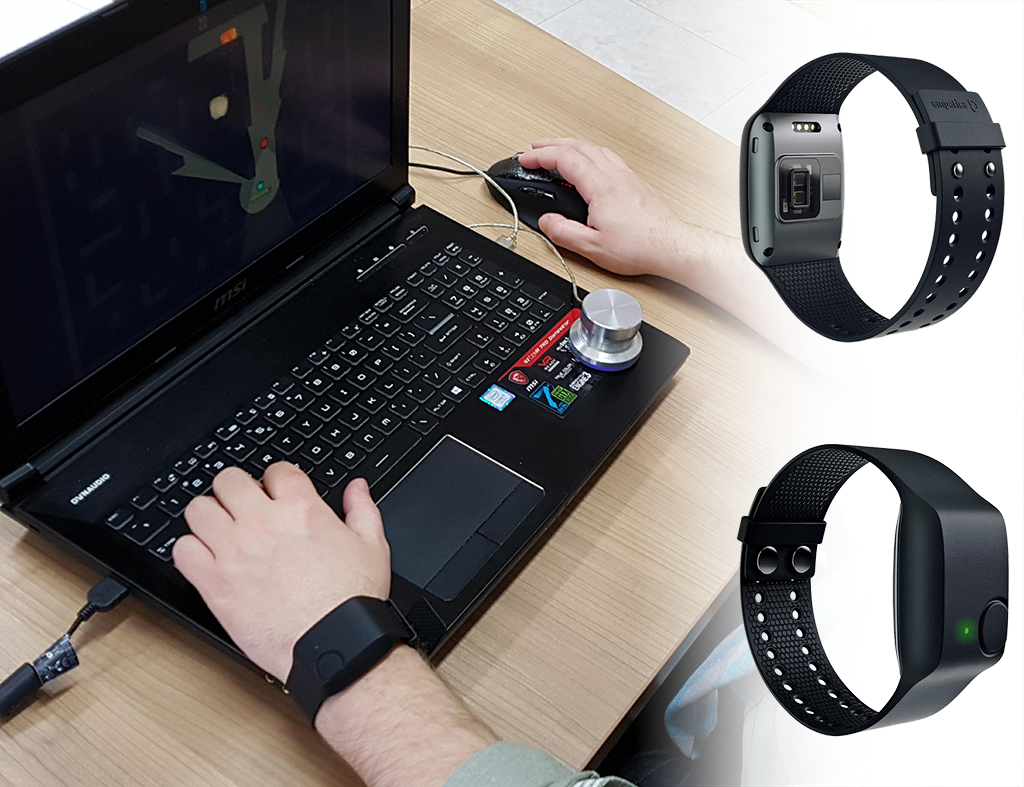
In this study into the player s emotional theory of mind of gameplaying agents, we investigate how an agent s behaviour and the player s own performance and emotions shape the recognition of a frustrated behaviour. We focus on the perception of frustration as it is a prevalent affective experience in human-computer interaction. We present a testbed game tailored towards this end, in which a player competes against an agent with a frustration model based on theory. We collect gameplay data, an annotated ground truth about the player s appraisal of the agent s frustration, and apply face recognition to estimate the player s emotional state. We examine the collected data through correlation analysis and predictive machine learning models, and find that the player s observable emotions are not correlated highly with the perceived frustration of the agent. This suggests that our subject s theory of mind is a cognitive process based on the gameplay context. Our predictive models---using ranking support vector machines---corroborate these results, yielding moderately accurate predictors of players theory of mind.

paper research
No Delay  Latency-Driven and Application Performance-Aware Cluster Scheduling

No Delay Latency-Driven and Application Performance-Aware Cluster Scheduling

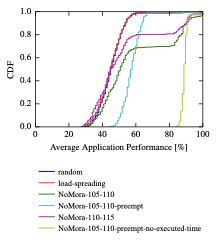
Given the network latency variability observed in data centers, applications performance is also determined by their placement within the data centre. We present NoMora, a cluster scheduling architecture whose core is represented by a latency-driven, application performance-aware, cluster scheduling policy. The policy places the tasks of an application taking into account the expected performance based on the measured network latency between pairs of hosts in the data center. Furthermore, if a tenant s application experiences increased network latency, and thus lower application performance, their application may be migrated to a better placement. Preliminary results show that our policy improves the overall average application performance by up to 13.4% and by up to 42% if preemption is enabled, and improves the task placement latency by a factor of 1.79x and the median algorithm runtime by 1.16x compared to a random policy on the Google cluster workload. This demonstrates that application performance can be improved by exploiting the relationship between network latency and application performance, and the current network conditions in a data center, while preserving the demands of low-latency cluster scheduling.

paper research
Geometric Structural Knowledge Graph Foundation Model

Geometric Structural Knowledge Graph Foundation Model

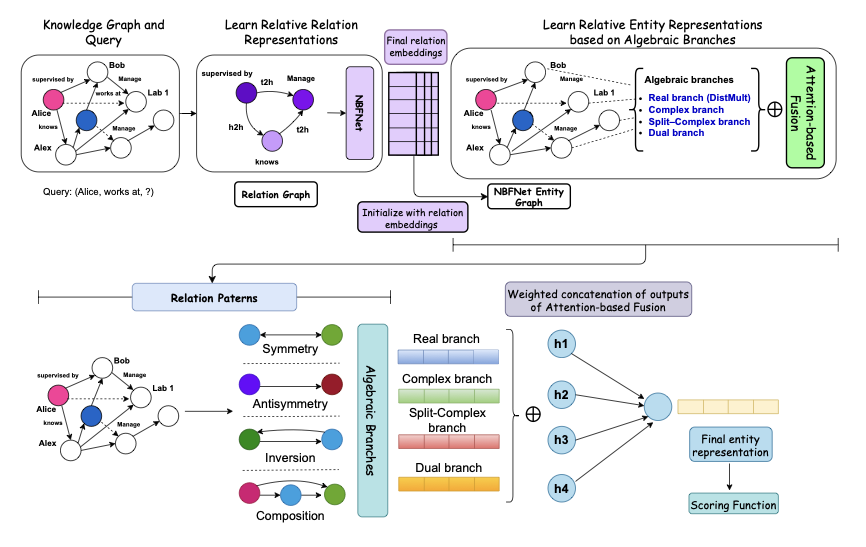
Structural knowledge graph foundation models aim to generalize reasoning to completely new graphs with unseen entities and relations. A key limitation of existing approaches like Ultra is their reliance on a single relational transformation (e.g., element-wise multiplication) in message passing, which can constrain expressiveness and fail to capture diverse relational and structural patterns exhibited on diverse graphs. In this paper, we propose Gamma, a novel foundation model that introduces multi-head geometric attention to knowledge graph reasoning. Gamma replaces the single relational transformation with multiple parallel ones, including real, complex, split-complex, and dual number based transformations, each designed to model different relational structures. A relational conditioned attention fusion mechanism then adaptively fuses them at link level via a lightweight gating with entropy regularization, allowing the model to robustly emphasize the most appropriate relational bias for each triple pattern. We present a full formalization of these algebraic message functions and discuss how their combination increases expressiveness beyond any single space. Comprehensive experiments on 56 diverse knowledge graphs demonstrate that Gamma consistently outperforms Ultra in zero-shot inductive link prediction, with a 5.5% improvement in mean reciprocal rank on the inductive benchmarks and a 4.4% improvement across all benchmarks, highlighting benefits from complementary geometric representations.

paper research
Feasibility and Performance of a Private LLM Server for SMBs  A Benchmark Analysis of Qwen3-30B on Consumer Hardware

Feasibility and Performance of a Private LLM Server for SMBs A Benchmark Analysis of Qwen3-30B on Consumer Hardware

The proliferation of Large Language Models (LLMs) has been accompanied by a reliance on cloud-based, proprietary systems, raising significant concerns regarding data privacy, operational sovereignty, and escalating costs. This paper investigates the feasibility of deploying a high-performance, private LLM inference server at a cost accessible to Small and Medium Businesses (SMBs). We present a comprehensive benchmarking analysis of a locally hosted, quantized 30-billion parameter Mixture-of-Experts (MoE) model based on Qwen3, running on a consumer-grade server equipped with a next-generation NVIDIA GPU. Unlike cloud-based offerings, which are expensive and complex to integrate, our approach provides an affordable and private solution for SMBs. We evaluate two dimensions the model s intrinsic capabilities and the server s performance under load. Model performance is benchmarked against academic and industry standards to quantify reasoning and knowledge relative to cloud services. Concurrently, we measure server efficiency through latency, tokens per second, and time to first token, analyzing scalability under increasing concurrent users. Our findings demonstrate that a carefully configured on-premises setup with emerging consumer hardware and a quantized open-source model can achieve performance comparable to cloud-based services, offering SMBs a viable pathway to deploy powerful LLMs without prohibitive costs or privacy compromises.

paper research
Multimodal Functional Maximum Correlation for Emotion Recognition

Multimodal Functional Maximum Correlation for Emotion Recognition

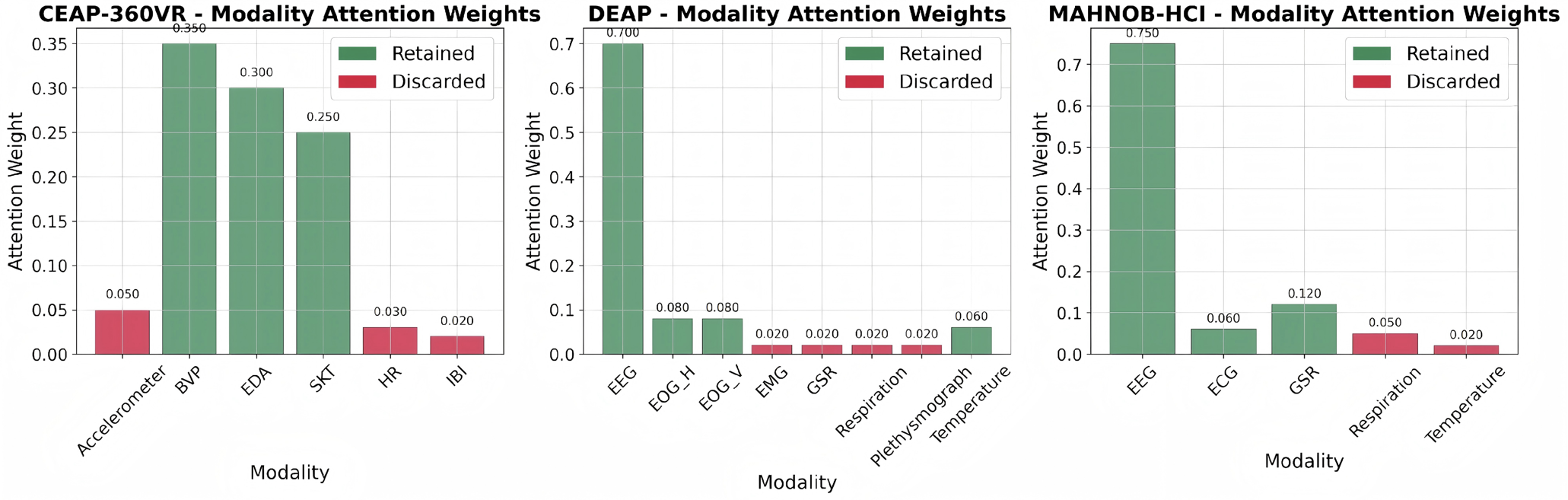
Emotional states manifest as coordinated yet heterogeneous physiological responses across central and autonomic systems, posing a fundamental challenge for multimodal representation learning in affective computing. Learning such joint dynamics is further complicated by the scarcity and subjectivity of affective annotations, which motivates the use of self-supervised learning (SSL). However, most existing SSL approaches rely on pairwise alignment objectives, which are insufficient to characterize dependencies among more than two modalities and fail to capture higher-order interactions arising from coordinated brain and autonomic responses. To address this limitation, we propose Multimodal Functional Maximum Correlation (MFMC), a principled SSL framework that maximizes higher-order multimodal dependence through a Dual Total Correlation (DTC) objective. By deriving a tight sandwich bound and optimizing it using a functional maximum correlation analysis (FMCA) based trace surrogate, MFMC captures joint multimodal interactions directly, without relying on pairwise contrastive losses. Experiments on three public affective computing benchmarks demonstrate that MFMC consistently achieves state-of-the-art or competitive performance under both subject-dependent and subject-independent evaluation protocols, highlighting its robustness to inter-subject variability. In particular, MFMC improves subject-dependent accuracy on CEAP-360VR from 78.9% to 86.8%, and subject-independent accuracy from 27.5% to 33.1% using the EDA signal alone. Moreover, MFMC remains within 0.8 percentage points of the best-performing method on the most challenging EEG subject-independent split of MAHNOB-HCI. Our code is available at https //github.com/DY9910/MFMC.

paper research
PathoSyn  MRI Synthesis of Imaging-Pathology through Disentangled Deviation Diffusion

PathoSyn MRI Synthesis of Imaging-Pathology through Disentangled Deviation Diffusion

We present PathoSyn, a unified generative framework for Magnetic Resonance Imaging (MRI) image synthesis that reformulates imaging-pathology as a disentangled additive deviation on a stable anatomical manifold. Current generative models typically operate in the global pixel domain or rely on binary masks, these paradigms often suffer from feature entanglement, leading to corrupted anatomical substrates or structural discontinuities. PathoSyn addresses these limitations by decomposing the synthesis task into deterministic anatomical reconstruction and stochastic deviation modeling. Central to our framework is a Deviation-Space Diffusion Model designed to learn the conditional distribution of pathological residuals, thereby capturing localized intensity variations while preserving global structural integrity by construction. To ensure spatial coherence, the diffusion process is coupled with a seam-aware fusion strategy and an inference-time stabilization module, which collectively suppress boundary artifacts and produce high-fidelity internal lesion heterogeneity. PathoSyn provides a mathematically principled pipeline for generating high-fidelity patient-specific synthetic datasets, facilitating the development of robust diagnostic algorithms in low-data regimes. By allowing interpretable counterfactual disease progression modeling, the framework supports precision intervention planning and provides a controlled environment for benchmarking clinical decision-support systems. Quantitative and qualitative evaluations on tumor imaging benchmarks demonstrate that PathoSyn significantly outperforms holistic diffusion and mask-conditioned baselines in both perceptual realism and anatomical fidelity. The source code of this work will be made publicly available.

paper research
A DRL-Based Method with Bayesian Optimization for Joint Link Adaptation and Device Scheduling in URLLC Industrial IoT Networks

A DRL-Based Method with Bayesian Optimization for Joint Link Adaptation and Device Scheduling in URLLC Industrial IoT Networks

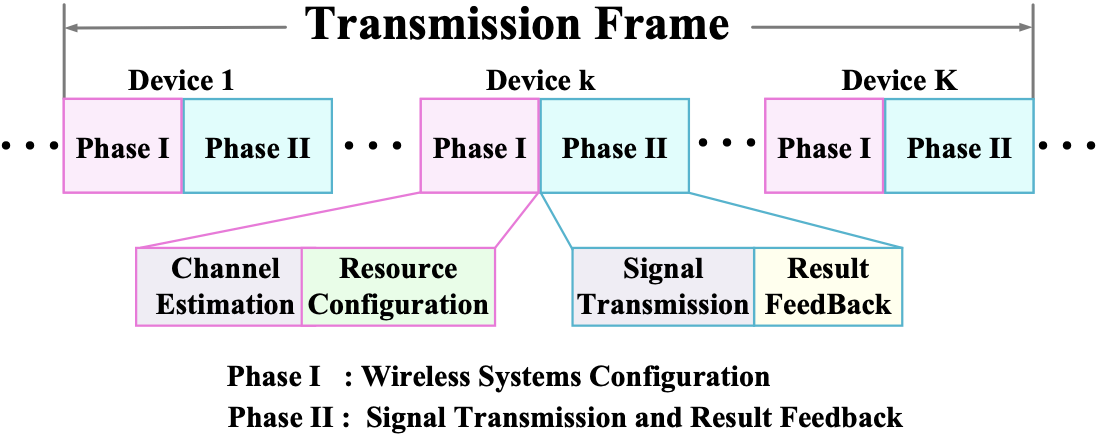
In this article, we consider an industrial internet of things (IIoT) network supporting multi-device dynamic ultra-reliable low-latency communication (URLLC) while the channel state information (CSI) is imperfect. A joint link adaptation (LA) and device scheduling (including the order) design is provided, aiming at maximizing the total transmission rate under strict block error rate (BLER) constraints. In particular, a Bayesian optimization (BO) driven Twin Delayed Deep Deterministic Policy Gradient (TD3) method is proposed, which determines the device served order sequence and the corresponding modulation and coding scheme (MCS) adaptively based on the imperfect CSI. Note that the imperfection of CSI, error sample imbalance in URLLC networks, as well as the parameter sensitivity nature of the TD3 algorithm likely diminish the algorithm s convergence speed and reliability. To address such an issue, we proposed a BO based training mechanism for the convergence speed improvement, which provides a more reliable learning direction and sample selection method to track the imbalance sample problem. Via extensive simulations, we show that the proposed algorithm achieves faster convergence and higher sum-rate performance compared to existing solutions.

paper research
PyBangla at BLP-2025 Task 2  Improving Bangla-to-Python Code Generation with Iterative Self-Correction and Multilingual Agents

PyBangla at BLP-2025 Task 2 Improving Bangla-to-Python Code Generation with Iterative Self-Correction and Multilingual Agents

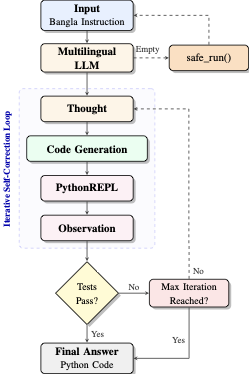
LLMs excel at code generation from English prompts, but this progress has not extended to low-resource languages. We address Bangla-to-Python code generation by introducing BanglaCodeAct, an agent-based framework that leverages multi-agent prompting and iterative self-correction. Unlike prior approaches relying on task-specific fine-tuning, BanglaCodeAct employs an open-source multilingual LLM within a Thought-Code-Observation loop, enabling dynamic generation, testing, and refinement of code from Bangla instructions. We benchmark several small-parameter open-source LLMs and evaluate their effectiveness on the mHumanEval dataset for Bangla NL2Code. Our results show that Qwen3-8B, when deployed with BanglaCodeAct, achieves the best performance, with pass@1 accuracy of 94.0 % on the development set and 71.6 % on the blind test set. These results establish a new benchmark for Bangla-to-Python translation and highlight the potential of agent-based reasoning for reliable code generation in low-resource languages. Experimental scripts are publicly available at github.com/jahidulzaid/PyBanglaCodeActAgent.

paper research
Causify DataFlow  A Framework for High-Performance Machine Learning Stream Processing

Causify DataFlow A Framework for High-Performance Machine Learning Stream Processing

We present DataFlow, a computational framework for building, testing, and deploying high-performance machine learning systems on unbounded time-series data. Traditional data science workflows assume finite datasets and require substantial reimplementation when moving from batch prototypes to streaming production systems. This gap introduces causality violations, batch boundary artifacts, and poor reproducibility of real-time failures. DataFlow resolves these issues through a unified execution model based on directed acyclic graphs (DAGs) with point-in-time idempotency outputs at any time t depend only on a fixed-length context window preceding t. This guarantee ensures that models developed in batch mode execute identically in streaming production without code changes. The framework enforces strict causality by automatically tracking knowledge time across all transformations, eliminating future-peeking bugs. DataFlow supports flexible tiling across temporal and feature dimensions, allowing the same model to operate at different frequencies and memory profiles via configuration alone. It integrates natively with the Python data science stack and provides fit/predict semantics for online learning, caching and incremental computation, and automatic parallelization through DAG-based scheduling. We demonstrate its effectiveness across domains including financial trading, IoT, fraud detection, and real-time analytics.

paper research
Advanced Multiplexing Techniques for High-Mobility Wireless Communications

Advanced Multiplexing Techniques for High-Mobility Wireless Communications

As wireless communication applications evolve from traditional multipath environments to high-mobility scenarios like unmanned aerial vehicles, multiplexing techniques have advanced accordingly. Traditional single-carrier frequency-domain equalization (SC-FDE) and orthogonal frequency-division multiplexing (OFDM) have given way to emerging orthogonal time-frequency space (OTFS) and affine frequency-division multiplexing (AFDM). These approaches exploit specific channel structures to diagonalize or sparsify the effective channel, thereby enabling low-complexity detection. However, their reliance on these structures significantly limits their robustness in dynamic, real-world environments. To address these challenges, this paper studies a random multiplexing technique that is decoupled from the physical channels, enabling its application to arbitrary norm-bounded and spectrally convergent channel matrices. Random multiplexing achieves statistical fading-channel ergodicity for transmitted signals by constructing an equivalent input-isotropic channel matrix in the random transform domain. It guarantees the asymptotic replica MAP bit-error rate (BER) optimality of AMP-type detectors for linear systems with arbitrary norm-bounded, spectrally convergent channel matrices and signaling configurations, under the unique fixed point assumption. A low-complexity cross-domain memory AMP (CD-MAMP) detector is considered, leveraging the sparsity of the time-domain channel and the randomness of the equivalent channel. Optimal power allocations are derived to minimize the replica MAP BER and maximize the replica constrained capacity of random multiplexing systems. The optimal coding principle and replica constrained-capacity optimality of CD-MAMP detector are investigated for random multiplexing systems. Additionally, the versatility of random multiplexing in diverse wireless applications is explored.

paper research
Accelerating Discovery with a Global Network of Autonomous Scientific Agents

Accelerating Discovery with a Global Network of Autonomous Scientific Agents

We introduce SCP the Science Context Protocol, an open-source standard designed to accelerate discovery by enabling a global network of autonomous scientific agents. SCP is built on two foundational pillars (1) Unified Resource Integration At its core, SCP provides a universal specification for describing and invoking scientific resources, spanning software tools, models, datasets, and physical instruments. This protocol-level standardization enables AI agents and applications to discover, call, and compose capabilities seamlessly across disparate platforms and institutional boundaries. (2) Orchestrated Experiment Lifecycle Management SCP complements the protocol with a secure service architecture, which comprises a centralized SCP Hub and federated SCP Servers. This architecture manages the complete experiment lifecycle (registration, planning, execution, monitoring, and archival), enforces fine-grained authentication and authorization, and orchestrates traceable, end-to-end workflows that bridge computational and physical laboratories. Based on SCP, we have constructed a scientific discovery platform that offers researchers and agents a large-scale ecosystem of more than 1,600 tool resources. Across diverse use cases, SCP facilitates secure, large-scale collaboration between heterogeneous AI systems and human researchers while significantly reducing integration overhead and enhancing reproducibility. By standardizing scientific context and tool orchestration at the protocol level, SCP establishes essential infrastructure for scalable, multi-institution, agent-driven science.

paper research
Boosting the Low-Altitude Economy  A Reliability-Aware Dynamic Weight Allocation for Multi-modal UAV Beam Prediction

Boosting the Low-Altitude Economy A Reliability-Aware Dynamic Weight Allocation for Multi-modal UAV Beam Prediction

The low-altitude economy (LAE) is rapidly expanding driven by urban air mobility, logistics drones, and aerial sensing, while fast and accurate beam prediction in uncrewed aerial vehicles (UAVs) communications is crucial for achieving reliable connectivity. Current research is shifting from single-signal to multi-modal collaborative approaches. However, existing multi-modal methods mostly employ fixed or empirical weights, assuming equal reliability across modalities at any given moment. Indeed, the importance of different modalities fluctuates dramatically with UAV motion scenarios, and static weighting amplifies the negative impact of degraded modalities. Furthermore, modal mismatch and weak alignment further undermine cross-scenario generalization. To this end, we propose a reliability-aware dynamic weighting scheme applied to a semantic-aware multi-modal beam prediction framework, named SaM2B. Specifically, SaM2B leverages lightweight cues such as environmental visual, flight posture, and geospatial data to adaptively allocate contributions across modalities at different time points through reliability-aware dynamic weight updates. Moreover, by utilizing cross-modal contrastive learning, we align the multi-source representation beam semantics associated with specific beam information to a shared semantic space, thereby enhancing discriminative power and robustness under modal noise and distribution shifts. Experiments on real-world low-altitude UAV datasets show that SaM2B achieves more satisfactory results than baseline methods.

paper research
Fast and Realistic Automated Scenario Simulations and Reporting for an Autonomous Racing System

Fast and Realistic Automated Scenario Simulations and Reporting for an Autonomous Racing System

In this paper, we describe the automated simulation and reporting pipeline implemented for our autonomous racing stack, ur.autopilot. The backbone of the simulation is based on a high-fidelity model of the vehicle interfaced as a Functional Mockup Unit (FMU). The pipeline can execute the software stack and the simulation up to three times faster than real-time, locally or on GitHub for Continuous Integration/- Continuous Delivery (CI/CD). As the most important input of the pipeline, there is a set of running scenarios. Each scenario allows the initialization of the ego vehicle in different initial conditions (position and speed), as well as the initialization of any other configuration of the stack. This functionality is essential to validate efficiently critical modules, like the one responsible for high-speed overtaking maneuvers or localization, which are among the most challenging aspects of autonomous racing. Moreover, we describe how we implemented a fault injection module, capable of introducing sensor delays and perturbations as well as modifying outputs of any node of the stack. Finally, we describe the design of our automated reporting process, aimed at maximizing the effectiveness of the simulation analysis.

paper research
Can Small Training Runs Reliably Guide Data Curation? Rethinking the Use of Proxy Models

Can Small Training Runs Reliably Guide Data Curation? Rethinking the Use of Proxy Models

Data teams at frontier AI companies routinely train small proxy models to make critical decisions about pretraining data recipes for full-scale training runs. However, the community has a limited understanding of whether and when conclusions drawn from small-scale experiments reliably transfer to full-scale model training. In this work, we uncover a subtle yet critical issue in the standard experimental protocol for data recipe assessment the use of identical small-scale model training configurations across all data recipes in the name of fair comparison. We show that the experiment conclusions about data quality can flip with even minor adjustments to training hyperparameters, as the optimal training configuration is inherently data-dependent. Moreover, this fixed-configuration protocol diverges from full-scale model development pipelines, where hyperparameter optimization is a standard step. Consequently, we posit that the objective of data recipe assessment should be to identify the recipe that yields the best performance under data-specific tuning. To mitigate the high cost of hyperparameter tuning, we introduce a simple patch to the evaluation protocol using reduced learning rates for proxy model training. We show that this approach yields relative performance that strongly correlates with that of fully tuned large-scale LLM pretraining runs. Theoretically, we prove that for random-feature models, this approach preserves the ordering of datasets according to their optimal achievable loss. Empirically, we validate this approach across 23 data recipes covering four critical dimensions of data curation, demonstrating dramatic improvements in the reliability of small-scale experiments.

paper research
Evolving, Not Training  Zero-Shot Reasoning Segmentation through Evolutionary Prompting

Evolving, Not Training Zero-Shot Reasoning Segmentation through Evolutionary Prompting

Reasoning Segmentation requires models to interpret complex, context-dependent linguistic queries to achieve pixel-level localization. Current dominant approaches rely heavily on Supervised Fine-Tuning (SFT) or Reinforcement Learning (RL). However, SFT suffers from catastrophic forgetting and domain dependency, while RL is often hindered by training instability and rigid reliance on predefined reward functions. Although recent training-free methods circumvent these training burdens, they are fundamentally limited by a static inference paradigm. These methods typically rely on a single-pass generate-then-segment chain, which suffers from insufficient reasoning depth and lacks the capability to self-correct linguistic hallucinations or spatial misinterpretations. In this paper, we challenge these limitations and propose EVOL-SAM3, a novel zero-shot framework that reformulates reasoning segmentation as an inference-time evolutionary search process. Instead of relying on a fixed prompt, EVOL-SAM3 maintains a population of prompt hypotheses and iteratively refines them through a Generate-Evaluate-Evolve loop. We introduce a Visual Arena to assess prompt fitness via reference-free pairwise tournaments, and a Semantic Mutation operator to inject diversity and correct semantic errors. Furthermore, a Heterogeneous Arena module integrates geometric priors with semantic reasoning to ensure robust final selection. Extensive experiments demonstrate that EVOL-SAM3 not only substantially outperforms static baselines but also significantly surpasses fully supervised state-of-the-art methods on the challenging ReasonSeg benchmark in a zero-shot setting. The code is available at https //github.com/AHideoKuzeA/Evol-SAM3.

paper research
Iterative Deployment Enhances Planning Abilities in Large Language Models

Iterative Deployment Enhances Planning Abilities in Large Language Models

We show that iterative deployment of large language models (LLMs), each fine-tuned on data carefully curated by users from the previous models deployment, can significantly change the properties of the resultant models. By testing this mechanism on various planning domains, we observe substantial improvements in planning skills, with later models displaying emergent generalization by discovering much longer plans than the initial models. We then provide theoretical analysis showing that iterative deployment effectively implements reinforcement learning (RL) training in the outer-loop (i.e. not as part of intentional model training), with an implicit reward function. The connection to RL has two important implications first, for the field of AI safety, as the reward function entailed by repeated deployment is not defined explicitly, and could have unexpected implications to the properties of future model deployments. Second, the mechanism highlighted here can be viewed as an alternative training regime to explicit RL, relying on data curation rather than explicit rewards.

paper research
MSACL  Multi-Step Actor-Critic Learning with Lyapunov Certificates for Exponential Stabilization

MSACL Multi-Step Actor-Critic Learning with Lyapunov Certificates for Exponential Stabilization

Achieving provable stability in model-free reinforcement learning (RL) remains a challenge, particularly in balancing exploration with rigorous safety. This article introduces MSACL, a framework that integrates exponential stability theory with maximum entropy RL through multi-step Lyapunov certificate learning. Unlike methods relying on complex reward engineering, MSACL utilizes off-policy multi-step data to learn Lyapunov certificates satisfying theoretical stability conditions. By introducing Exponential Stability Labels (ESL) and a $λ$-weighted aggregation mechanism, the framework effectively balances the bias-variance trade-off in multi-step learning. Policy optimization is guided by a stability-aware advantage function, ensuring the learned policy promotes rapid Lyapunov descent. We evaluate MSACL across six benchmarks, including stabilization and nonlinear tracking tasks, demonstrating its superiority over state-of-the-art Lyapunov-based RL algorithms. MSACL achieves exponential stability and rapid convergence under simple rewards, while exhibiting significant robustness to uncertainties and generalization to unseen trajectories. Sensitivity analysis establishes the multi-step horizon $n=20$ as a robust default across diverse systems. By linking Lyapunov theory with off-policy actor-critic frameworks, MSACL provides a foundation for verifiably safe learning-based control. Source code and benchmark environments will be made publicly available.

paper research
DarkEQA  Assessing Vision-Language Models for Embodied Question Answering in Dimly Lit Indoor Settings

DarkEQA Assessing Vision-Language Models for Embodied Question Answering in Dimly Lit Indoor Settings

Vision Language Models (VLMs) are increasingly adopted as central reasoning modules for embodied agents. Existing benchmarks evaluate their capabilities under ideal, well-lit conditions, yet robust 24/7 operation demands performance under a wide range of visual degradations, including low-light conditions at night or in dark environments--a core necessity that has been largely overlooked. To address this underexplored challenge, we present DarkEQA, an open-source benchmark for evaluating EQA-relevant perceptual primitives under multi-level low-light conditions. DarkEQA isolates the perception bottleneck by evaluating question answering from egocentric observations under controlled degradations, enabling attributable robustness analysis. A key design feature of DarkEQA is its physical fidelity visual degradations are modeled in linear RAW space, simulating physics-based illumination drop and sensor noise followed by an ISP-inspired rendering pipeline. We demonstrate the utility of DarkEQA by evaluating a wide range of state-of-the-art VLMs and Low-Light Image Enhancement (LLIE) models. Our analysis systematically reveals VLMs limitations when operating under these challenging visual conditions. Project website https //darkeqa-benchmark.github.io/

paper research
Parallel Universes, Parallel Languages  A Comprehensive Study on Multilingual Counterfactual Example Generation Using Large Language Models

Parallel Universes, Parallel Languages A Comprehensive Study on Multilingual Counterfactual Example Generation Using Large Language Models

Counterfactuals refer to minimally edited inputs that cause a model s prediction to change, serving as a promising approach to explaining the model s behavior. Large language models (LLMs) excel at generating English counterfactuals and demonstrate multilingual proficiency. However, their effectiveness in generating multilingual counterfactuals remains unclear. To this end, we conduct a comprehensive study on multilingual counterfactuals. We first conduct automatic evaluations on both directly generated counterfactuals in the target languages and those derived via English translation across six languages. Although translation-based counterfactuals offer higher validity than their directly generated counterparts, they demand substantially more modifications and still fall short of matching the quality of the original English counterfactuals. Second, we find the patterns of edits applied to high-resource European-language counterfactuals to be remarkably similar, suggesting that cross-lingual perturbations follow common strategic principles. Third, we identify and categorize four main types of errors that consistently appear in the generated counterfactuals across languages. Finally, we reveal that multilingual counterfactual data augmentation (CDA) yields larger model performance improvements than cross-lingual CDA, especially for lower-resource languages. Yet, the imperfections of the generated counterfactuals limit gains in model performance and robustness.

paper research
A Bio-inspired Self-healing Framework for Resilient Distributed Computing Systems

A Bio-inspired Self-healing Framework for Resilient Distributed Computing Systems

Human biological systems sustain life through extraordinary resilience, continually detecting damage, orchestrating targeted responses, and restoring function through self-healing. Inspired by these capabilities, this paper introduces ReCiSt, a bio-inspired agentic self-healing framework designed to achieve resilience in Distributed Computing Continuum Systems (DCCS). Modern DCCS integrate heterogeneous computing resources, ranging from resource-constrained IoT devices to high-performance cloud infrastructures, and their inherent complexity, mobility, and dynamic operating conditions expose them to frequent faults that disrupt service continuity. These challenges underscore the need for scalable, adaptive, and self-regulated resilience strategies. ReCiSt reconstructs the biological phases of Hemostasis, Inflammation, Proliferation, and Remodeling into the computational layers Containment, Diagnosis, Meta-Cognitive, and Knowledge for DCCS. These four layers perform autonomous fault isolation, causal diagnosis, adaptive recovery, and long-term knowledge consolidation through Language Model (LM)-powered agents. These agents interpret heterogeneous logs, infer root causes, refine reasoning pathways, and reconfigure resources with minimal human intervention. The proposed ReCiSt framework is evaluated on public fault datasets using multiple LMs, and no baseline comparison is included due to the scarcity of similar approaches. Nevertheless, our results, evaluated under different LMs, confirm ReCiSt s self-healing capabilities within tens of seconds with minimum of 10% of agent CPU usage. Our results also demonstrated depth of analysis to over come uncertainties and amount of micro-agents invoked to achieve resilience.

paper research
Can Semantic Approaches Improve Team Sports Strategies? A Football Methodology with Wider Applications

Can Semantic Approaches Improve Team Sports Strategies? A Football Methodology with Wider Applications

This paper explores how semantic-space reasoning, traditionally used in computational linguistics, can be extended to tactical decision-making in team sports. Building on the analogy between texts and teams -- where players act as words and collective play conveys meaning -- the proposed methodology models tactical configurations as compositional semantic structures. Each player is represented as a multidimensional vector integrating technical, physical, and psychological attributes; team profiles are aggregated through contextual weighting into a higher-level semantic representation. Within this shared vector space, tactical templates such as high press, counterattack, or possession build-up are encoded analogously to linguistic concepts. Their alignment with team profiles is evaluated using vector-distance metrics, enabling the computation of tactical ``fit and opponent-exploitation potential. A Python-based prototype demonstrates how these methods can generate interpretable, dynamically adaptive strategy recommendations, accompanied by fine-grained diagnostic insights at the attribute level. Beyond football, the approach offers a generalizable framework for collective decision-making and performance optimization in team-based domains -- ranging from basketball and hockey to cooperative robotics and human-AI coordination systems. The paper concludes by outlining future directions toward real-world data integration, predictive simulation, and hybrid human-machine tactical intelligence.

paper research
CoCo-Fed  A Unified Framework for Memory and Communication Efficient Federated Learning at the Wireless Edge

CoCo-Fed A Unified Framework for Memory and Communication Efficient Federated Learning at the Wireless Edge

The deployment of large-scale neural networks within the Open Radio Access Network (O-RAN) architecture is pivotal for enabling native edge intelligence. However, this paradigm faces two critical bottlenecks the prohibitive memory footprint required for local training on resource-constrained gNBs, and the saturation of bandwidth-limited backhaul links during the global aggregation of high-dimensional model updates. To address these challenges, we propose CoCo-Fed, a novel Compression and Combination-based Federated learning framework that unifies local memory efficiency and global communication reduction. Locally, CoCo-Fed breaks the memory wall by performing a double-dimension down-projection of gradients, adapting the optimizer to operate on low-rank structures without introducing additional inference parameters/latency. Globally, we introduce a transmission protocol based on orthogonal subspace superposition, where layer-wise updates are projected and superimposed into a single consolidated matrix per gNB, drastically reducing the backhaul traffic. Beyond empirical designs, we establish a rigorous theoretical foundation, proving the convergence of CoCo-Fed even under unsupervised learning conditions suitable for wireless sensing tasks. Extensive simulations on an angle-of-arrival estimation task demonstrate that CoCo-Fed significantly outperforms state-of-the-art baselines in both memory and communication efficiency while maintaining robust convergence under non-IID settings.

paper research
HFedMoE  Resource-Aware Heterogeneous Federated Learning with Mixture-of-Experts

HFedMoE Resource-Aware Heterogeneous Federated Learning with Mixture-of-Experts

While federated learning (FL) enables fine-tuning of large language models (LLMs) without compromising data privacy, the substantial size of an LLM renders on-device training impractical for resource-constrained clients, such as mobile devices. Thus, Mixture-of-Experts (MoE) models have emerged as a computation-efficient solution, which activates only a sparse subset of experts during model training to reduce computing burden without sacrificing performance. Though integrating MoE into FL fine-tuning holds significant potential, it still encounters three key challenges i) selecting appropriate experts for clients remains challenging due to the lack of a reliable metric to measure each expert s impact on local fine-tuning performance, ii) the heterogeneous computing resources across clients severely hinder MoE-based LLM fine-tuning, as dynamic expert activations across diverse input samples can overwhelm resource-constrained devices, and iii) client-specific expert subsets and routing preference undermine global aggregation, where misaligned expert updates and inconsistent gating networks in troduce destructive interference. To address these challenges, we propose HFedMoE, a heterogeneous MoE-based FL fine-tuning framework that customizes a subset of experts to each client for computation-efficient LLM fine-tuning. Specifically, HFedMoE identifies the expert importance based on its contributions to fine-tuning performance, and then adaptively selects a subset of experts from an information bottleneck perspective to align with each client s computing budget. A sparsity-aware model aggregation strategy is also designed to aggregate the actively fine-tuned experts and gating parameters with importance weighted contributions. Extensive experiments demonstrate that HFedMoE outperforms state-of-the-art benchmarks in training accuracy and convergence speed.

paper research
Decoupling Amplitude and Phase Attention in the Frequency Domain for RGB-Event-Based Visual Object Tracking

Decoupling Amplitude and Phase Attention in the Frequency Domain for RGB-Event-Based Visual Object Tracking

Existing RGB-Event visual object tracking approaches primarily rely on conventional feature-level fusion, failing to fully exploit the unique advantages of event cameras. In particular, the high dynamic range and motion-sensitive nature of event cameras are often overlooked, while low-information regions are processed uniformly, leading to unnecessary computational overhead for the backbone network. To address these issues, we propose a novel tracking framework that performs early fusion in the frequency domain, enabling effective aggregation of high-frequency information from the event modality. Specifically, RGB and event modalities are transformed from the spatial domain to the frequency domain via the Fast Fourier Transform, with their amplitude and phase components decoupled. High-frequency event information is selectively fused into RGB modality through amplitude and phase attention, enhancing feature representation while substantially reducing backbone computation. In addition, a motion-guided spatial sparsification module leverages the motion-sensitive nature of event cameras to capture the relationship between target motion cues and spatial probability distribution, filtering out low-information regions and enhancing target-relevant features. Finally, a sparse set of target-relevant features is fed into the backbone network for learning, and the tracking head predicts the final target position. Extensive experiments on three widely used RGB-Event tracking benchmark datasets, including FE108, FELT, and COESOT, demonstrate the high performance and efficiency of our method. The source code of this paper will be released on https //github.com/Event-AHU/OpenEvTracking

paper research
No Image

Hierarchical Adaptive Evaluation of LLMs and SAST Tools for CWE Prediction in Python

Large Language Models have become integral to software development, yet they frequently generate vulnerable code. Existing code vulnerability detection benchmarks employ binary classification, lacking the CWE-level specificity required for actionable feedback in iterative correction systems. We present ALPHA (Adaptive Learning via Penalty in Hierarchical Assessment), the first function-level Python benchmark that evaluates both LLMs and SAST tools using hierarchically aware, CWE-specific penalties. ALPHA distinguishes between over-generalisation, over-specification, and lateral errors, reflecting practical differences in diagnostic utility. Evaluating seven LLMs and two SAST tools, we find LLMs substantially outperform SAST, though SAST demonstrates higher precision when detections occur. Critically, prediction consistency varies dramatically across models (8.26%-81.87% agreement), with significant implications for feedback-driven systems. We further outline a pathway for future work incorporating ALPHA penalties into supervised fine-tuning, which could provide principled hierarchy-aware vulnerability detection pending empirical validation.

paper research
KGCE  Knowledge-Enhanced Dual-Graph Evaluator for Cross-Platform Educational Agent Assessments Using Multimodal Language Models

KGCE Knowledge-Enhanced Dual-Graph Evaluator for Cross-Platform Educational Agent Assessments Using Multimodal Language Models

With the rapid adoption of multimodal large language models (MLMs) in autonomous agents, cross-platform task execution capabilities in educational settings have garnered significant attention. However, existing benchmark frameworks still exhibit notable deficiencies in supporting cross-platform tasks in educational contexts, especially when dealing with school-specific software (such as XiaoYa Intelligent Assistant, HuaShi XiaZi, etc.), where the efficiency of agents often significantly decreases due to a lack of understanding of the structural specifics of these private-domain software. Additionally, current evaluation methods heavily rely on coarse-grained metrics like goal orientation or trajectory matching, making it challenging to capture the detailed execution and efficiency of agents in complex tasks. To address these issues, we propose KGCE (Knowledge-Augmented Dual-Graph Evaluator for Cross-Platform Educational Agent Benchmarking with Multimodal Language Models), a novel benchmarking platform that integrates knowledge base enhancement and a dual-graph evaluation framework. We first constructed a dataset comprising 104 education-related tasks, covering Windows, Android, and cross-platform collaborative tasks. KGCE introduces a dual-graph evaluation framework that decomposes tasks into multiple sub-goals and verifies their completion status, providing fine-grained evaluation metrics. To overcome the execution bottlenecks of existing agents in private-domain tasks, we developed an enhanced agent system incorporating a knowledge base specific to school-specific software. The code can be found at https //github.com/Kinginlife/KGCE.

paper research
Scale-Adaptive Power Flow Analysis with Local Topology Slicing and Multi-Task Graph Learning

Scale-Adaptive Power Flow Analysis with Local Topology Slicing and Multi-Task Graph Learning

Developing deep learning models with strong adaptability to topological variations is of great practical significance for power flow analysis. To enhance model performance under variable system scales and improve robustness in branch power prediction, this paper proposes a Scale-adaptive Multi-task Power Flow Analysis (SaMPFA) framework. SaMPFA introduces a Local Topology Slicing (LTS) sampling technique that extracts subgraphs of different scales from the complete power network to strengthen the model s cross-scale learning capability. Furthermore, a Reference-free Multi-task Graph Learning (RMGL) model is designed for robust power flow prediction. Unlike existing approaches, RMGL predicts bus voltages and branch powers instead of phase angles. This design not only avoids the risk of error amplification in branch power calculation but also guides the model to learn the physical relationships of phase angle differences. In addition, the loss function incorporates extra terms that encourage the model to capture the physical patterns of angle differences and power transmission, further improving consistency between predictions and physical laws. Simulations on the IEEE 39-bus system and a real provincial grid in China demonstrate that the proposed model achieves superior adaptability and generalization under variable system scales, with accuracy improvements of 4.47% and 36.82%, respectively.

paper research
REE-TTT  Adaptive Radar Echo Extrapolation Through Test-Time Training

REE-TTT Adaptive Radar Echo Extrapolation Through Test-Time Training

Precipitation nowcasting is critically important for meteorological forecasting. Deep learning-based Radar Echo Extrapolation (REE) has become a predominant nowcasting approach, yet it suffers from poor generalization due to its reliance on high-quality local training data and static model parameters, limiting its applicability across diverse regions and extreme events. To overcome this, we propose REE-TTT, a novel model that incorporates an adaptive Test-Time Training (TTT) mechanism. The core of our model lies in the newly designed Spatio-temporal Test-Time Training (ST-TTT) block, which replaces the standard linear projections in TTT layers with task-specific attention mechanisms, enabling robust adaptation to non-stationary meteorological distributions and thereby significantly enhancing the feature representation of precipitation. Experiments under cross-regional extreme precipitation scenarios demonstrate that REE-TTT substantially outperforms state-of-the-art baseline models in prediction accuracy and generalization, exhibiting remarkable adaptability to data distribution shifts.

paper research
Digital Twin-Driven Communication-Efficient Federated Anomaly Detection for Industrial IoT

Digital Twin-Driven Communication-Efficient Federated Anomaly Detection for Industrial IoT

Anomaly detection is increasingly becoming crucial for maintaining the safety, reliability, and efficiency of industrial systems. Recently, with the advent of digital twins and data-driven decision-making, several statistical and machine-learning methods have been proposed. However, these methods face several challenges, such as dependence on only real sensor datasets, limited labeled data, high false alarm rates, and privacy concerns. To address these problems, we propose a suite of digital twin-integrated federated learning (DTFL) methods that enhance global model performance while preserving data privacy and communication efficiency. Specifically, we present five novel approaches Digital Twin-Based Meta-Learning (DTML), Federated Parameter Fusion (FPF), Layer-wise Parameter Exchange (LPE), Cyclic Weight Adaptation (CWA), and Digital Twin Knowledge Distillation (DTKD). Each method introduces a unique mechanism to combine synthetic and real-world knowledge, balancing generalization with communication overhead. We conduct an extensive experiment using a publicly available cyber-physical anomaly detection dataset. For a target accuracy of 80%, CWA reaches the target in 33 rounds, FPF in 41 rounds, LPE in 48 rounds, and DTML in 87 rounds, whereas the standard FedAvg baseline and DTKD do not reach the target within 100 rounds. These results highlight substantial communication-efficiency gains (up to 62% fewer rounds than DTML and 31% fewer than LPE) and demonstrate that integrating DT knowledge into FL accelerates convergence to operationally meaningful accuracy thresholds for IIoT anomaly detection.

paper research
Technical Report on K-EXAONE

Technical Report on K-EXAONE

This technical report presents K-EXAONE, a large-scale multilingual language model developed by LG AI Research. K-EXAONE is built on a Mixture-of-Experts architecture with 236B total parameters, activating 23B parameters during inference. It supports a 256K-token context window and covers six languages Korean, English, Spanish, German, Japanese, and Vietnamese. We evaluate K-EXAONE on a comprehensive benchmark suite spanning reasoning, agentic, general, Korean, and multilingual abilities. Across these evaluations, K-EXAONE demonstrates performance comparable to open-weight models of similar size. K-EXAONE, designed to advance AI for a better life, is positioned as a powerful proprietary AI foundation model for a wide range of industrial and research applications.

paper research
Sparse Threats, Focused Defense  Robust Reinforcement Learning Aware of Criticality for Safe Autonomous Driving

Sparse Threats, Focused Defense Robust Reinforcement Learning Aware of Criticality for Safe Autonomous Driving

Reinforcement learning (RL) has shown considerable potential in autonomous driving (AD), yet its vulnerability to perturbations remains a critical barrier to real-world deployment. As a primary countermeasure, adversarial training improves policy robustness by training the AD agent in the presence of an adversary that deliberately introduces perturbations. Existing approaches typically model the interaction as a zero-sum game with continuous attacks. However, such designs overlook the inherent asymmetry between the agent and the adversary and then fail to reflect the sparsity of safety-critical risks, rendering the achieved robustness inadequate for practical AD scenarios. To address these limitations, we introduce criticality-aware robust RL (CARRL), a novel adversarial training approach for handling sparse, safety-critical risks in autonomous driving. CARRL consists of two interacting components a risk exposure adversary (REA) and a risk-targeted robust agent (RTRA). We model the interaction between the REA and RTRA as a general-sum game, allowing the REA to focus on exposing safety-critical failures (e.g., collisions) while the RTRA learns to balance safety with driving efficiency. The REA employs a decoupled optimization mechanism to better identify and exploit sparse safety-critical moments under a constrained budget. However, such focused attacks inevitably result in a scarcity of adversarial data. The RTRA copes with this scarcity by jointly leveraging benign and adversarial experiences via a dual replay buffer and enforces policy consistency under perturbations to stabilize behavior. Experimental results demonstrate that our approach reduces the collision rate by at least 22.66 % across all cases compared to state-of-the-art baseline methods.

paper research
EverMemOS  A Self-Organizing Memory Operating System for Long-Term Structured Reasoning

EverMemOS A Self-Organizing Memory Operating System for Long-Term Structured Reasoning

Large Language Models (LLMs) are increasingly deployed as long-term interactive agents, yet their limited context windows make it difficult to sustain coherent behavior over extended interactions. Existing memory systems often store isolated records and retrieve fragments, limiting their ability to consolidate evolving user states and resolve conflicts. We introduce EverMemOS, a self-organizing memory operating system that implements an engram-inspired lifecycle for computational memory. Episodic Trace Formation converts dialogue streams into MemCells that capture episodic traces, atomic facts, and time-bounded Foresight signals. Semantic Consolidation organizes MemCells into thematic MemScenes, distilling stable semantic structures and updating user profiles. Reconstructive Recollection performs MemScene-guided agentic retrieval to compose the necessary and sufficient context for downstream reasoning. Experiments on LoCoMo and LongMemEval show that EverMemOS achieves state-of-the-art performance on memory-augmented reasoning tasks. We further report a profile study on PersonaMem v2 and qualitative case studies illustrating chat-oriented capabilities such as user profiling and Foresight. Code is available at https //github.com/EverMind-AI/EverMemOS.

paper research
Quality-of-Experience Driven Coupled Uplink and Downlink Rate Adaptation for 360-Degree Video Live Streaming

Quality-of-Experience Driven Coupled Uplink and Downlink Rate Adaptation for 360-Degree Video Live Streaming

360-degree video provides an immersive 360-degree viewing experience and has been widely used in many areas. The 360-degree video live streaming systems involve capturing, compression, uplink (camera to video server) and downlink (video server to user) transmissions. However, few studies have jointly investigated such complex systems, especially the rate adaptation for the coupled uplink and downlink in the 360-degree video streaming under limited bandwidth constraints. In this letter, we propose a quality of experience (QoE)-driven 360-degree video live streaming system, in which a video server performs rate adaptation based on the uplink and downlink bandwidths and information concerning each user s real-time field-of-view (FOV). We formulate it as a nonlinear integer programming problem and propose an algorithm, which combines the Karush-Kuhn-Tucker (KKT) condition and branch and bound method, to solve it. The numerical results show that the proposed optimization model can improve users QoE significantly in comparison with other baseline schemes.

paper research
Let s Share  A Game-Theoretic Approach to Resource Allocation in Mobile Edge Clouds

Let s Share A Game-Theoretic Approach to Resource Allocation in Mobile Edge Clouds

Mobile edge computing seeks to provide resources to different delay-sensitive applications. This is a challenging problem as an edge cloud-service provider may not have sufficient resources to satisfy all resource requests. Furthermore, allocating available resources optimally to different applications is also challenging. Resource sharing among different edge cloud-service providers can address the aforementioned limitation as certain service providers may have resources available that can be ``rented by other service providers. However, edge cloud service providers can have different objectives or emph{utilities}. Therefore, there is a need for an efficient and effective mechanism to share resources among service providers, while considering the different objectives of various providers. We model resource sharing as a multi-objective optimization problem and present a solution framework based on emph{Cooperative Game Theory} (CGT). We consider the strategy where each service provider allocates resources to its native applications first and shares the remaining resources with applications from other service providers. We prove that for a monotonic, non-decreasing utility function, the game is canonical and convex. Hence, the emph{core} is not empty and the grand coalition is stable. We propose two algorithms emph{Game-theoretic Pareto optimal allocation} (GPOA) and emph{Polyandrous-Polygamous Matching based Pareto Optimal Allocation} (PPMPOA) that provide allocations from the core. Hence the obtained allocations are emph{Pareto} optimal and the grand coalition of all the service providers is stable. Experimental results confirm that our proposed resource sharing framework improves utilities of edge cloud-service providers and application request satisfaction.

paper research
Button Simulation and Design Using FDVV Models

Button Simulation and Design Using FDVV Models

Designing a push-button with desired sensation and performance is challenging because the mechanical construction must have the right response characteristics. Physical simulation of a button s force-displacement (FD) response has been studied to facilitate prototyping; however, the simulations scope and realism have been limited. In this paper, we extend FD modeling to include vibration (V) and velocity-dependence characteristics (V). The resulting FDVV models better capture tactility characteristics of buttons, including snap. They increase the range of simulated buttons and the perceived realism relative to FD models. The paper also demonstrates methods for obtaining these models, editing them, and simulating accordingly. This end-to-end approach enables the analysis, prototyping, and optimization of buttons, and supports exploring designs that would be hard to implement mechanically.

paper research
Optimizing Gait Graphs  Generating Adaptive Gaits from a Base Gait for Lower-Limb Rehabilitation Exoskeletons

Optimizing Gait Graphs Generating Adaptive Gaits from a Base Gait for Lower-Limb Rehabilitation Exoskeletons

The most concentrated application of lower-limb rehabilitation exoskeleton (LLE) robot is that it can help paraplegics re-walk . However, walking in daily life is more than just walking on flat ground with fixed gait. This paper focuses on variable gaits generation for LLE robot to adapt complex walking environment. Different from traditional gaits generator for biped robot, the generated gaits for LLEs should be comfortable to patients. Inspired by the pose graph optimization algorithm in SLAM, we propose a graph-based gait generation algorithm called gait graph optimization (GGO) to generate variable, functional and comfortable gaits from one base gait collected from healthy individuals to adapt the walking environment. Variants of walking problem, e.g., stride adjustment, obstacle avoidance, and stair ascent and descent, help verify the proposed approach in simulation and experimentation. We open source our implementation.

paper research
Dynamic Radar Network of UAVs  A Joint Navigation and Tracking Approach

Dynamic Radar Network of UAVs A Joint Navigation and Tracking Approach

Nowadays there is a growing research interest on the possibility of enriching small flying robots with autonomous sensing and online navigation capabilities. This will enable a large number of applications spanning from remote surveillance to logistics, smarter cities and emergency aid in hazardous environments. In this context, an emerging problem is to track unauthorized small unmanned aerial vehicles (UAVs) hiding behind buildings or concealing in large UAV networks. In contrast with current solutions mainly based on static and on-ground radars, this paper proposes the idea of a dynamic radar network of UAVs for real-time and high-accuracy tracking of malicious targets. To this end, we describe a solution for real-time navigation of UAVs to track a dynamic target using heterogeneously sensed information. Such information is shared by the UAVs with their neighbors via multi-hops, allowing tracking the target by a local Bayesian estimator running at each agent. Since not all the paths are equal in terms of information gathering point-of-view, the UAVs plan their own trajectory by minimizing the posterior covariance matrix of the target state under UAV kinematic and anti-collision constraints. Our results show how a dynamic network of radars attains better localization results compared to a fixed configuration and how the on-board sensor technology impacts the accuracy in tracking a target with different radar cross sections, especially in non line-of-sight (NLOS) situations.

paper research
Edge Matching with Inequalities, Triangular Pieces, Unknown Shape, and Two Players

Edge Matching with Inequalities, Triangular Pieces, Unknown Shape, and Two Players

We analyze the computational complexity of several new variants of edge-matching puzzles. First we analyze inequality (instead of equality) constraints between adjacent tiles, proving the problem NP-complete for strict inequalities but polynomial for nonstrict inequalities. Second we analyze three types of triangular edge matching, of which one is polynomial and the other two are NP-complete; all three are #P-complete. Third we analyze the case where no target shape is specified, and we merely want to place the (square) tiles so that edges match (exactly); this problem is NP-complete. Fourth we consider four 2-player games based on $1 times n$ edge matching, all four of which are PSPACE-complete. Most of our NP-hardness reductions are parsimonious, newly proving #P and ASP-completeness for, e.g., $1 times n$ edge matching.

paper research
Unlimited Budget Analysis of Randomized Search Heuristics

Unlimited Budget Analysis of Randomized Search Heuristics

Performance analysis of all kinds of randomised search heuristics is a rapidly growing and developing field. Run time and solution quality are two popular measures of the performance of these algorithms. The focus of this paper is on the solution quality an optimisation heuristic achieves, not on the time it takes to reach this goal, setting it far apart from runtime analysis. We contribute to its further development by introducing a novel analytical framework, called unlimited budget analysis, to derive the expected fitness value after arbitrary computational steps. It has its roots in the very recently introduced approximation error analysis and bears some similarity to fixed budget analysis. We present the framework, apply it to simple mutation-based algorithms, covering both, local and global search. We provide analytical results for a number of pseudo-Boolean functions for unlimited budget analysis and compare them to results derived within the fixed budget framework for the same algorithms and functions. There are also results of experiments to compare bounds obtained in the two different frameworks with the actual observed performance. The study show that unlimited budget analysis may lead to the same or more general estimation beyond fixed budget.

paper research
Neural Turtle Graphics for Modeling City Road Layouts

Neural Turtle Graphics for Modeling City Road Layouts

We propose Neural Turtle Graphics (NTG), a novel generative model for spatial graphs, and demonstrate its applications in modeling city road layouts. Specifically, we represent the road layout using a graph where nodes in the graph represent control points and edges in the graph represent road segments. NTG is a sequential generative model parameterized by a neural network. It iteratively generates a new node and an edge connecting to an existing node conditioned on the current graph. We train NTG on Open Street Map data and show that it outperforms existing approaches using a set of diverse performance metrics. Moreover, our method allows users to control styles of generated road layouts mimicking existing cities as well as to sketch parts of the city road layout to be synthesized. In addition to synthesis, the proposed NTG finds uses in an analytical task of aerial road parsing. Experimental results show that it achieves state-of-the-art performance on the SpaceNet dataset.

paper research
Hash-Based Ray Path Prediction  Avoiding BVH Traversal by Utilizing Ray Locality

Hash-Based Ray Path Prediction Avoiding BVH Traversal by Utilizing Ray Locality

State-of-the-art ray tracing techniques operate on hierarchical acceleration structures such as BVH trees which wrap objects in a scene into bounding volumes of decreasing sizes. Acceleration structures reduce the amount of ray-scene intersections that a ray has to perform to find the intersecting object. However, we observe a large amount of redundancy when rays are traversing these acceleration structures. While modern acceleration structures explore the spatial organization of the scene, they neglect similarities between rays that traverse the structures and thereby cause redundant traversals. This paper provides a limit study of a new promising technique, Hash-Based Ray Path Prediction (HRPP), which exploits the similarity between rays to predict leaf nodes to avoid redundant acceleration structure traversals. Our data shows that acceleration structure traversal consumes a significant proportion of the ray tracing rendering time regardless of the platform or the target image quality. Our study quantifies unused ray locality and evaluates the theoretical potential for improved ray traversal performance for both coherent and seemingly incoherent rays. We show that HRPP is able to skip, on average, 40% of all hit-all traversal computations.

paper research
Minimum Cuts in Graphs Embedded on Surfaces

Minimum Cuts in Graphs Embedded on Surfaces

We describe algorithms to efficiently compute minimum $(s,t)$-cuts and global minimum cuts of undirected surface-embedded graphs. Given an edge-weighted undirected graph $G$ with $n$ vertices embedded on an orientable surface of genus $g$, our algorithms can solve either problem in $g^{O(g)} n log log n$ or $2^{O(g)} n log n$ time, whichever is better. When $g$ is a constant, our $g^{O(g)} n log log n$ time algorithms match the best running times known for computing minimum cuts in planar graphs. Our algorithms for minimum cuts rely on reductions to the problem of finding a minimum-weight subgraph in a given $ mathbb{Z}_2$-homology class, and we give efficient algorithms for this latter problem as well. If $G$ is embedded on a surface with $b$ boundary components, these algorithms run in $(g + b)^{O(g + b)} n log log n$ and $2^{O(g + b)} n log n$ time. We also prove that finding a minimum-weight subgraph homologous to a single input cycle is NP-hard, showing it is likely impossible to improve upon the exponential dependencies on $g$ for this latter problem.

paper research
No Image

Indian EmoSpeech Command Dataset A Dataset for Emotion-Based Speech Recognition in Real-World Scenarios

Speech emotion analysis is an important task which further enables several application use cases. The non-verbal sounds within speech utterances also play a pivotal role in emotion analysis in speech. Due to the widespread use of smartphones, it becomes viable to analyze speech commands captured using microphones for emotion understanding by utilizing on-device machine learning models. The non-verbal information includes the environment background sounds describing the type of surroundings, current situation and activities being performed. In this work, we consider both verbal (speech commands) and non-verbal sounds (background noises) within an utterance for emotion analysis in real-life scenarios. We create an indigenous dataset for this task namely Indian EmoSpeech Command Dataset . It contains keywords with diverse emotions and background sounds, presented to explore new challenges in audio analysis. We exhaustively compare with various baseline models for emotion analysis on speech commands on several performance metrics. We demonstrate that we achieve a significant average gain of 3.3% in top-one score over a subset of speech command dataset for keyword spotting.

paper research
No Image

Game-Based Coalescence in Multi-Agent Systems

Coalescence, as a kind of ubiquitous group behavior in the nature and society, means that agents, companies or other substances keep consensus in states and act as a whole. This paper considers coalescence for n rational agents with distinct initial states. Considering the rationality and intellectuality of the population, the coalescing process is described by a bimatrix game which has the unique mixed strategy Nash equilibrium solution. Since the process is not an independent stochastic process, it is difficult to analyze the coalescing process. By using the first Borel-Cantelli Lemma, we prove that all agents will coalesce into one group with probability one. Moreover, the expected coalescence time is also evaluated. For the scenario where payoff functions are power functions, we obtain the distribution and expected value of coalescence time. Finally, simulation examples are provided to validate the effectiveness of the theoretical results.

paper research
Shenjing  A Low-Power Reconfigurable Neuromorphic Accelerator with Partial-Sum and Spike Networks-on-Chip

Shenjing A Low-Power Reconfigurable Neuromorphic Accelerator with Partial-Sum and Spike Networks-on-Chip

The next wave of on-device AI will likely require energy-efficient deep neural networks. Brain-inspired spiking neural networks (SNN) has been identified to be a promising candidate. Doing away with the need for multipliers significantly reduces energy. For on-device applications, besides computation, communication also incurs a significant amount of energy and time. In this paper, we propose Shenjing, a configurable SNN architecture which fully exposes all on-chip communications to software, enabling software mapping of SNN models with high accuracy at low power. Unlike prior SNN architectures like TrueNorth, Shenjing does not require any model modification and retraining for the mapping. We show that conventional artificial neural networks (ANN) such as multilayer perceptron, convolutional neural networks, as well as the latest residual neural networks can be mapped successfully onto Shenjing, realizing ANNs with SNN s energy efficiency. For the MNIST inference problem using a multilayer perceptron, we were able to achieve an accuracy of 96% while consuming just 1.26mW using 10 Shenjing cores.

paper research
Biologically Inspired LGN-CNN Architecture Mimics Lateral Geniculate Nucleus Functionality

Biologically Inspired LGN-CNN Architecture Mimics Lateral Geniculate Nucleus Functionality

In this paper we introduce a biologically inspired Convolutional Neural Network (CNN) architecture called LGN-CNN that has a first convolutional layer composed by a single filter that mimics the role of the Lateral Geniculate Nucleus (LGN). The first layer of the neural network shows a rotational symmetric pattern justified by the structure of the net itself that turns up to be an approximation of a Laplacian of Gaussian (LoG). The latter function is in turn a good approximation of the receptive field profiles (RFPs) of the cells in the LGN. The analogy with the visual system is established, emerging directly from the architecture of the neural network. A proof of rotation invariance of the first layer is given on a fixed LGN-CNN architecture and the computational results are shown. Thus, contrast invariance capability of the LGN-CNN is investigated and a comparison between the Retinex effects of the first layer of LGN-CNN and the Retinex effects of a LoG is provided on different images. A statistical study is done on the filters of the second convolutional layer with respect to biological data. In conclusion, the model we have introduced approximates well the RFPs of both LGN and V1 attaining similar behavior as regards long range connections of LGN cells that show Retinex effects.

paper research
AI-Based Pilgrim Detection Using Convolutional Neural Networks

AI-Based Pilgrim Detection Using Convolutional Neural Networks

Pilgrimage represents the most important Islamic religious gathering in the world where millions of pilgrims visit the holy places of Makkah and Madinah to perform their rituals. The safety and security of pilgrims is the highest priority for the authorities. In Makkah, 5000 cameras are spread around the holy for monitoring pilgrims, but it is almost impossible to track all events by humans considering the huge number of images collected every second. To address this issue, we propose to use artificial intelligence technique based on deep learning and convolution neural networks to detect and identify Pilgrims and their features. For this purpose, we built a comprehensive dataset for the detection of pilgrims and their genders. Then, we develop two convolutional neural networks based on YOLOv3 and Faster-RCNN for the detection of Pilgrims. Experiments results show that Faster RCNN with Inception v2 feature extractor provides the best mean average precision over all classes of 51%.

paper research
No Image

Channel Characterization for One-Dimensional Molecular Communication with Two Absorbing Receivers

This letter develops a one-dimensional (1D) diffusion-based molecular communication system to analyze channel responses between a single transmitter (TX) and two fully-absorbing receivers (RXs). Incorporating molecular degradation in the environment, rigorous analytical formulas for i) the fraction of molecules absorbed, ii) the corresponding hitting rate, and iii) the asymptotic fraction of absorbed molecules as time approaches infinity at each RX are derived when an impulse of molecules are released at the TX. By using particle-based simulations, the derived analytical expressions are validated. Simulations also present the distance ranges of two RXs that do not impact molecular absorption of each other, and demonstrate that the mutual imfluence of two active RXs reduces with the increase in the degradation rate.

paper research
Slither  A Static Analysis Framework for Smart Contracts

Slither A Static Analysis Framework for Smart Contracts

This paper describes Slither, a static analysis framework designed to provide rich information about Ethereum smart contracts. It works by converting Solidity smart contracts into an intermediate representation called SlithIR. SlithIR uses Static Single Assignment (SSA) form and a reduced instruction set to ease implementation of analyses while preserving semantic information that would be lost in transforming Solidity to bytecode. Slither allows for the application of commonly used program analysis techniques like dataflow and taint tracking. Our framework has four main use cases (1) automated detection of vulnerabilities, (2) automated detection of code optimization opportunities, (3) improvement of the user s understanding of the contracts, and (4) assistance with code review. In this paper, we present an overview of Slither, detail the design of its intermediate representation, and evaluate its capabilities on real-world contracts. We show that Slither s bug detection is fast, accurate, and outperforms other static analysis tools at finding issues in Ethereum smart contracts in terms of speed, robustness, and balance of detection and false positives. We compared tools using a large dataset of smart contracts and manually reviewed results for 1000 of the most used contracts.

paper research
A Comprehensive Study on Temporal Modeling for Online Action Detection

A Comprehensive Study on Temporal Modeling for Online Action Detection

Online action detection (OAD) is a practical yet challenging task, which has attracted increasing attention in recent years. A typical OAD system mainly consists of three modules a frame-level feature extractor which is usually based on pre-trained deep Convolutional Neural Networks (CNNs), a temporal modeling module, and an action classifier. Among them, the temporal modeling module is crucial which aggregates discriminative information from historical and current features. Though many temporal modeling methods have been developed for OAD and other topics, their effects are lack of investigation on OAD fairly. This paper aims to provide a comprehensive study on temporal modeling for OAD including four meta types of temporal modeling methods, ie temporal pooling, temporal convolution, recurrent neural networks, and temporal attention, and uncover some good practices to produce a state-of-the-art OAD system. Many of them are explored in OAD for the first time, and extensively evaluated with various hyper parameters. Furthermore, based on our comprehensive study, we present several hybrid temporal modeling methods, which outperform the recent state-of-the-art methods with sizable margins on THUMOS-14 and TVSeries.

paper research
Evolution Analysis of Use Cases Using Graph Transformation with Negative Application Conditions

Evolution Analysis of Use Cases Using Graph Transformation with Negative Application Conditions

Use Case (UC) quality impacts the overall quality and defect rate of a system, as they specify the expected behavior of an implementation. In a previous work, we have defined an approach for a step-by-step translation from UCs written in natural language to a formal description in terms of Graph Transformation (GT), where each step of the UC was translated to a transformation rule. This UC formalisation enables the detection of several specification problems even before an actual implementation is produced, thus reducing development costs. In this paper, we extend our approach to handle UC evolution by defining emph{evolution rules}, which are described as higher-order rules, simultaneously changing the behaviour of a set of transformation rules. We also support the use of emph{negative application conditions (NAC)} associated both to the transformation and evolution rules. Analysis of the interplay between the evolution rules and the rules describing UC steps shows the effects of an evolution and serves to identify potential impacts, even before the changes are actually carried out. Besides defining the theoretical foundations of UC evolution with NACs, we have implemented the evolution analysis technique in the Verigraph tool and used it to verify impacts in 3 different case studies. The results demonstrate the applicability and usefulness of our approach to help developers in the evolution process based on UCs.

paper research
When to Restrict Provider Entry in Regulated Markets with Mandatory Purchase Requirements

When to Restrict Provider Entry in Regulated Markets with Mandatory Purchase Requirements

We study a problem inspired by regulated health insurance markets, such as those created by the government in the Affordable Care Act Exchanges or by employers when they contract with private insurers to provide plans for their employees. The market regulator can choose to do nothing, running a Free Market, or can exercise her regulatory power by limiting the entry of providers (decreasing consumer welfare by limiting options, but also decreasing revenue via enhanced competition). We investigate whether limiting entry increases or decreases the utility (welfare minus revenue) of the consumers who purchase from the providers, specifically in settings where the outside option of purchasing nothing is prohibitively undesirable. We focus primarily on the case where providers are symmetric. We propose a sufficient condition on the distribution of consumer values for (a) a unique symmetric equilibrium to exist in both markets and (b) utility to be higher with limited entry. (We also establish that these conclusions do not necessarily hold for all distributions, and therefore some condition is necessary.) Our techniques are primarily based on tools from revenue maximization, and in particular Myerson s virtual value theory. We also consider extensions to settings where providers have identical costs for providing plans, and to two providers with an asymmetric distribution.

paper research
Real-Time Trajectory Planning for Feedback Linearizable Systems Using Time-Varying Optimization

Real-Time Trajectory Planning for Feedback Linearizable Systems Using Time-Varying Optimization

We develop an optimization-based framework for joint real-time trajectory planning and feedback control of feedback-linearizable systems. To achieve this goal, we define a target trajectory as the optimal solution of a time-varying optimization problem. In general, however, such trajectory may not be feasible due to , e.g., nonholonomic constraints. To solve this problem, we design a control law that generates feasible trajectories that asymptotically converge to the target trajectory. More precisely, for systems that are (dynamic) full-state linearizable, the proposed control law implicitly transforms the nonlinear system into an optimization algorithm of sufficiently high order. We prove global exponential convergence to the target trajectory for both the optimization algorithm and the original system. We illustrate the effectiveness of our proposed method on multi-target or multi-agent tracking problems with constraints.

paper research
GUIComp  A Real-Time, Multi-Faceted GUI Design Assistant

GUIComp A Real-Time, Multi-Faceted GUI Design Assistant

Users may face challenges while designing graphical user interfaces, due to a lack of relevant experience and guidance. This paper aims to investigate the issues that users with no experience face during the design process, and how to resolve them. To this end, we conducted semi-structured interviews, based on which we built a GUI prototyping assistance tool called GUIComp. This tool can be connected to GUI design software as an extension, and it provides real-time, multi-faceted feedback on a user s current design. Additionally, we conducted two user studies, in which we asked participants to create mobile GUIs with or without GUIComp, and requested online workers to assess the created GUIs. The experimental results show that GUIComp facilitated iterative design and the participants with GUIComp had better a user experience and produced more acceptable designs than those who did not.

paper research
Average-Based Robustness for Continuous-Time Signal Temporal Logic

Average-Based Robustness for Continuous-Time Signal Temporal Logic

We propose a new robustness score for continuous-time Signal Temporal Logic (STL) specifications. Instead of considering only the most severe point along the evolution of the signal, we use average scores to extract more information from the signal, emphasizing robust satisfaction of all the specifications subformulae over their entire time interval domains. We demonstrate the advantages of this new score in falsification and control synthesis problems in systems with complex dynamics and multi-agent systems.

paper research
Obsidian  Typestate and Assets for Safer Blockchain Programming

Obsidian Typestate and Assets for Safer Blockchain Programming

Blockchain platforms are coming into broad use for processing critical transactions among participants who have not established mutual trust. Many blockchains are programmable, supporting smart contracts, which maintain persistent state and support transactions that transform the state. Unfortunately, bugs in many smart contracts have been exploited by hackers. Obsidian is a novel programming language with a type system that enables static detection of bugs that are common in smart contracts today. Obsidian is based on a core calculus, Silica, for which we proved type soundness. Obsidian uses typestate to detect improper state manipulation and uses linear types to detect abuse of assets. We describe two case studies that evaluate Obsidian s applicability to the domains of parametric insurance and supply chain management, finding that Obsidian s type system facilitates reasoning about high-level states and ownership of resources. We compared our Obsidian implementation to a Solidity implementation, observing that the Solidity implementation requires much boilerplate checking and tracking of state, whereas Obsidian does this work statically.

paper research
Optimal Algorithms for Geometric Centers and Depth

Optimal Algorithms for Geometric Centers and Depth

$ renewcommand{ Re}{ mathbb{R}}$ We develop a general randomized technique for solving implic it linear programming problems, where the collection of constraints are defined implicitly by an underlying ground set of elements. In many cases, the structure of the implicitly defined constraints can be exploited in order to obtain efficient linear program solvers. We apply this technique to obtain near-optimal algorithms for a variety of fundamental problems in geometry. For a given point set $P$ of size $n$ in $ Re^d$, we develop algorithms for computing geometric centers of a point set, including the centerpoint and the Tukey median, and several other more involved measures of centrality. For $d=2$, the new algorithms run in $O(n log n)$ expected time, which is optimal, and for higher constant $d>2$, the expected time bound is within one logarithmic factor of $O(n^{d-1})$, which is also likely near optimal for some of the problems.

paper research
Automated Decision-Making for Electric Power Network Recovery

Automated Decision-Making for Electric Power Network Recovery

Critical infrastructure systems such as electric power networks, water networks, and transportation systems play a major role in the welfare of any community. In the aftermath of disasters, their recovery is of paramount importance; orderly and efficient recovery involves the assignment of limited resources (a combination of human repair workers and machines) to repair damaged infrastructure components. The decision maker must also deal with uncertainty in the outcome of the resource-allocation actions during recovery. The manual assignment of resources seldom is optimal despite the expertise of the decision maker because of the large number of choices and uncertainties in consequences of sequential decisions. This combinatorial assignment problem under uncertainty is known to be mbox{NP-hard}. We propose a novel decision technique that addresses the massive number of decision choices for large-scale real-world problems; in addition, our method also features an experiential learning component that adaptively determines the utilization of the computational resources based on the performance of a small number of choices. Our framework is closed-loop, and naturally incorporates all the attractive features of such a decision-making system. In contrast to myopic approaches, which do not account for the future effects of the current choices, our methodology has an anticipatory learning component that effectively incorporates emph{lookahead} into the solutions. To this end, we leverage the theory of regression analysis, Markov decision processes (MDPs), multi-armed bandits, and stochastic models of community damage from natural disasters to develop a method for near-optimal recovery of communities. Our method contributes to the general problem of MDPs with massive action spaces with application to recovery of communities affected by hazards.

paper research
sql4ml  A Declarative End-to-End Workflow for Machine Learning

sql4ml A Declarative End-to-End Workflow for Machine Learning

We present sql4ml, a system for expressing supervised machine learning (ML) models in SQL and automatically training them in TensorFlow. The primary motivation for this work stems from the observation that in many data science tasks there is a back-and-forth between a relational database that stores the data and a machine learning framework. Data preprocessing and feature engineering typically happen in a database, whereas learning is usually executed in separate ML libraries. This fragmented workflow requires from the users to juggle between different programming paradigms and software systems. With sql4ml the user can express both feature engineering and ML algorithms in SQL, while the system translates this code to an appropriate representation for training inside a machine learning framework. We describe our translation method, present experimental results from applying it on three well-known ML algorithms and discuss the usability benefits from concentrating the entire workflow on the database side.

paper research
No Image

Toward an Ontology for Defining Scenarios to Assess Automated Vehicles An Object-Oriented Framework

The development of new assessment methods for the performance of automated vehicles is essential to enable the deployment of automated driving technologies, due to the complex operational domain of automated vehicles. One contributing method is scenario-based assessment in which test cases are derived from real-world road traffic scenarios obtained from driving data. Given the complexity of the reality that is being modeled in these scenarios, it is a challenge to define a structure for capturing these scenarios. An intensional definition that provides a set of characteristics that are deemed to be both necessary and sufficient to qualify as a scenario assures that the scenarios constructed are both complete and intercomparable. In this article, we develop a comprehensive and operable definition of the notion of scenario while considering existing definitions in the literature. This is achieved by proposing an object-oriented framework in which scenarios and their building blocks are defined as classes of objects having attributes, methods, and relationships with other objects. The object-oriented approach promotes clarity, modularity, reusability, and encapsulation of the objects. We provide definitions and justifications of each of the terms. Furthermore, the framework is used to translate the terms in a coding language that is publicly available.

paper research
Frequency Stability with MPC-based Inverter Power Control in Low-Inertia Power Systems

Frequency Stability with MPC-based Inverter Power Control in Low-Inertia Power Systems

The electrical grid is evolving from a network consisting of mostly synchronous machines to a mixture of synchronous machines and inverter-based resources such as wind, solar, and energy storage. This transformation has led to a decrease in mechanical inertia, which necessitate a need for the new resources to provide frequency responses through their inverter interfaces. In this paper we proposed a new strategy based on model predictive control to determine the optimal active-power set-point for inverters in the event of a disturbance in the system. Our framework explicitly takes the hard constraints in power and energy into account, and we show that it is robust to measurement noise, limited communications and delay by using an observer to estimate the model mismatches in real-time. We demonstrate the proposed controller significantly outperforms an optimally tuned virtual synchronous machine on a standard 39-bus system under a number of scenarios. In turn, this implies optimized inverter-based resources can provide better frequency responses compared to conventional synchronous machines.

paper research
No Image

Peer-to-Peer Trading in Electricity Networks An Overview

Peer-to-peer trading is a next-generation energy management technique that economically benefits proactive consumers (prosumers) transacting their energy as goods and services. At the same time, peer-to-peer energy trading is also expected to help the grid by reducing peak demand, lowering reserve requirements, and curtailing network loss. However, large-scale deployment of peer-to-peer trading in electricity networks poses a number of challenges in modeling transactions in both the virtual and physical layers of the network. As such, this article provides a comprehensive review of the state-of-the-art in research on peer-to-peer energy trading techniques. By doing so, we provide an overview of the key features of peer-to-peer trading and its benefits of relevance to the grid and prosumers. Then, we systematically classify the existing research in terms of the challenges that the studies address in the virtual and the physical layers. We then further identify and discuss those technical approaches that have been extensively used to address the challenges in peer-to-peer transactions. Finally, the paper is concluded with potential future research directions.

paper research
Algebraic k-Sets and Generally Neighborly Embeddings

Algebraic k-Sets and Generally Neighborly Embeddings

Given a set $S$ of $n$ points in $ mathbb{R}^d$, a $k$-set is a subset of $k$ points of $S$ that can be strictly separated by a hyperplane from the remaining $n-k$ points. Similarly, one may consider $k$-facets, which are hyperplanes that pass through $d$ points of $S$ and have $k$ points on one side. A notorious open problem is to determine the asymptotics of the maximum number of $k$-sets. In this paper we study a variation on the $k$-set/$k$-facet problem with hyperplanes replaced by algebraic surfaces. In stark contrast to the original $k$-set/$k$-facet problem, there are some natural families of algebraic curves for which the number of $k$-facets can be counted exactly. For example, we show that the number of halving conic sections for any set of $2n+5$ points in general position in the plane is $2 binom{n+2}{2}^2$. To understand the limits of our argument we study a class of maps we call emph{generally neighborly embeddings}, which map generic point sets into neighborly position. Additionally, we give a simple argument which improves the best known bound on the number of $k$-sets/$k$-facets for point sets in convex position.

paper research
Resilience of Dynamic Routing Against Recurrent and Random Sensing Faults

Resilience of Dynamic Routing Against Recurrent and Random Sensing Faults

Feedback dynamic routing is a commonly used control strategy in transportation systems. This class of control strategies relies on real-time information about the traffic state in each link. However, such information may not always be observable due to temporary sensing faults. In this article, we consider dynamic routing over two parallel routes, where the sensing on each link is subject to recurrent and random faults. The faults occur and clear according to a finite-state Markov chain. When the sensing is faulty on a link, the traffic state on that link appears to be zero to the controller. Building on the theories of Markov processes and monotone dynamical systems, we derive lower and upper bounds for the resilience score, i.e. the guaranteed throughput of the network, in the face of sensing faults by establishing stability conditions for the network. We use these results to study how a variety of key parameters affect the resilience score of the network. The main conclusions are (i) Sensing faults can reduce throughput and destabilize a nominally stable network; (ii) A higher failure rate does not necessarily reduce throughput, and there may exist a worst rate that minimizes throughput; (iii) Higher correlation between the failure probabilities of two links leads to greater throughput; (iv) A large difference in capacity between two links can result in a drop in throughput.

paper research
The DUNE Framework  Core Principles and Recent Advances

The DUNE Framework Core Principles and Recent Advances

This paper presents the basic concepts and the module structure of the Distributed and Unified Numerics Environment and reflects on recent developments and general changes that happened since the release of the first Dune version in 2007 and the main papers describing that state [1, 2]. This discussion is accompanied with a description of various advanced features, such as coupling of domains and cut cells, grid modifications such as adaptation and moving domains, high order discretizations and node level performance, non-smooth multigrid methods, and multiscale methods. A brief discussion on current and future development directions of the framework concludes the paper.

paper research
VC Dimensions of Nondeterministic Finite Automata for Words of Equal Length

VC Dimensions of Nondeterministic Finite Automata for Words of Equal Length

Let $NFA_b(q)$ denote the set of languages accepted by nondeterministic finite automata with $q$ states over an alphabet with $b$ letters. Let $B_n$ denote the set of words of length $n$. We give a quadratic lower bound on the VC dimension of [ NFA_2(q) cap B_n = {L cap B_n mid L in NFA_2(q) } ] as a function of $q$. Next, the work of Gruber and Holzer (2007) gives an upper bound for the nondeterministic state complexity of finite languages contained in $B_n$, which we strengthen using our methods. Finally, we give some theoretical and experimental results on the dependence on $n$ of the VC dimension and testing dimension of $NFA_2(q) cap B_n$.

paper research
An Accurate Edge-based Finite Element Method for Electromagnetic Analysis and Its Applications to Multiscale Structures

An Accurate Edge-based Finite Element Method for Electromagnetic Analysis and Its Applications to Multiscale Structures

This paper introduces an accurate edge-based smoothed finite element method (ES-FEM) for electromagnetic analysis for both two dimensional cylindrical and three dimensional cartesian systems, which shows much better performance in terms of accuracy and numerical stability for mesh distortion compared with the traditional FEM. Unlike the traditional FEM, the computational domain in ES-FEM is divided into nonoverlapping smoothing domains associated with each edge of elements, triangles in two dimensional domain and tetrahedrons in three dimensional domain. Then, the gradient smoothing technique (GST) is used to smooth the gradient components in the stiff matrix of the FEM. Several numerical experiments are carried out to validate its accuracy and numerical stability. Numerical results show that the ES-FEM can obtain much more accurate results and is almost independent of mesh distortion.

paper research
Using Engineered Neurons in Digital Logic Circuits  A Molecular Communications Analysis

Using Engineered Neurons in Digital Logic Circuits A Molecular Communications Analysis

With the advancement of synthetic biology, several new tools have been conceptualized over the years as alternative treatments for current medical procedures. Most of those applications are applied to various chronic diseases. This work investigates how synthetically engineered neurons can operate as digital logic gates that can be used towards bio-computing for the brain. We quantify the accuracy of logic gates under high firing rates amid a network of neurons and by how much it can smooth out uncontrolled neuronal firings. To test the efficacy of our method, simulations composed of computational models of neurons connected in a structure that represents a logic gate are performed. The simulations demonstrated the accuracy of performing the correct logic operation, and how specific properties such as the firing rate can play an important role in the accuracy. As part of the analysis, the Mean squared error is used to quantify the quality of our proposed model and predicting the accurate operation of a gate based on different sampling frequencies. As an application, the logic gates were used to trap epileptic seizures in a neuronal network, where the results demonstrated the effectiveness of reducing the firing rate. Our proposed system has the potential for computing numerous neurological conditions of the brain.

paper research
No Image

Building Social Networks with Consent A Survey

This survey explores the literature on game-theoretic models of network formation under the hypothesis of mutual consent in link formation. The introduction of consent in link formation imposes a coordination problem in the network formation process. This survey explores the conclusions from this theory and the various methodologies to avoid the main pitfalls. The main insight originates from Myerson s work on mutual consent in link formation and his main conclusion that the empty network (the network without any links) always emerges as a strong Nash equilibrium in any game-theoretic model of network formation under mutual consent and positive link formation costs. Jackson and Wolinsky introduced a cooperative framework to avoid this main pitfall. They devised the notion of a pairwise stable network to arrive at equilibrium networks that are mainly non-trivial. Unfortunately, this notion of pairwise stability requires coordinated action by pairs of decision makers in link formation. I survey the possible solutions in a purely non-cooperative framework of network formation under mutual consent by exploring potential refinements of the standard Nash equilibrium concept to explain the emergence of non-trivial networks. This includes the notions of unilateral and monadic stability. The first one is founded on advanced rational reasoning of individuals about how others would respond to one s efforts to modify the network. The latter incorporates trusting, boundedly rational behaviour into the network formation process. The survey is concluded with an initial exploration of external correlation devices as an alternative framework to address mutual consent in network formation.

paper research
Enhancing Single-Port Memory Performance to Match Multi-Port Capabilities Using Coding Techniques

Enhancing Single-Port Memory Performance to Match Multi-Port Capabilities Using Coding Techniques

Many performance critical systems today must rely on performance enhancements, such as multi-port memories, to keep up with the increasing demand of memory-access capacity. However, the large area footprints and complexity of existing multi-port memory designs limit their applicability. This paper explores a coding theoretic framework to address this problem. In particular, this paper introduces a framework to encode data across multiple single-port memory banks in order to { em algorithmically} realize the functionality of multi-port memory. This paper proposes three code designs with significantly less storage overhead compared to the existing replication based emulations of multi-port memories. To further improve performance, we also demonstrate a memory controller design that utilizes redundancy across coded memory banks to more efficiently schedule read and write requests sent across multiple cores. Furthermore, guided by DRAM traces, the paper explores { em dynamic coding} techniques to improve the efficiency of the coding based memory design. We then show significant performance improvements in critical word read and write latency in the proposed coded-memory design when compared to a traditional uncoded-memory design.

paper research
Few-Shot Learning with Surrogate Gradient Descent on a Neuromorphic Processor

Few-Shot Learning with Surrogate Gradient Descent on a Neuromorphic Processor

Recent work suggests that synaptic plasticity dynamics in biological models of neurons and neuromorphic hardware are compatible with gradient-based learning (Neftci et al., 2019). Gradient-based learning requires iterating several times over a dataset, which is both time-consuming and constrains the training samples to be independently and identically distributed. This is incompatible with learning systems that do not have boundaries between training and inference, such as in neuromorphic hardware. One approach to overcome these constraints is transfer learning, where a portion of the network is pre-trained and mapped into hardware and the remaining portion is trained online. Transfer learning has the advantage that pre-training can be accelerated offline if the task domain is known, and few samples of each class are sufficient for learning the target task at reasonable accuracies. Here, we demonstrate on-line surrogate gradient few-shot learning on Intel s Loihi neuromorphic research processor using features pre-trained with spike-based gradient backpropagation-through-time. Our experimental results show that the Loihi chip can learn gestures online using a small number of shots and achieve results that are comparable to the models simulated on a conventional processor.

paper research
CALPA-NET  A Channel Pruning Assisted Deep Residual Network for Digital Image Steganalysis

CALPA-NET A Channel Pruning Assisted Deep Residual Network for Digital Image Steganalysis

Over the past few years, detection performance improvements of deep-learning based steganalyzers have been usually achieved through structure expansion. However, excessive expanded structure results in huge computational cost, storage overheads, and consequently difficulty in training and deployment. In this paper we propose CALPA-NET, a ChAnneL-Pruning-Assisted deep residual network architecture search approach to shrink the network structure of existing vast, over-parameterized deep-learning based steganalyzers. We observe that the broad inverted-pyramid structure of existing deep-learning based steganalyzers might contradict the well-established model diversity oriented philosophy, and therefore is not suitable for steganalysis. Then a hybrid criterion combined with two network pruning schemes is introduced to adaptively shrink every involved convolutional layer in a data-driven manner. The resulting network architecture presents a slender bottleneck-like structure. We have conducted extensive experiments on BOSSBase+BOWS2 dataset, more diverse ALASKA dataset and even a large-scale subset extracted from ImageNet CLS-LOC dataset. The experimental results show that the model structure generated by our proposed CALPA-NET can achieve comparative performance with less than two percent of parameters and about one third FLOPs compared to the original steganalytic model. The new model possesses even better adaptivity, transferability, and scalability.

paper research
BRISC-V  An Open-Source Toolbox for Exploring RISC-V Architecture Design Spaces

BRISC-V An Open-Source Toolbox for Exploring RISC-V Architecture Design Spaces

In this work, we introduce a platform for register-transfer level (RTL) architecture design space exploration. The platform is an open-source, parameterized, synthesizable set of RTL modules for designing RISC-V based single and multi-core architecture systems. The platform is designed with a high degree of modularity. It provides highly-parameterized, composable RTL modules for fast and accurate exploration of different RISC-V based core complexities, multi-level caching and memory organizations, system topologies, router architectures, and routing schemes. The platform can be used for both RTL simulation and FPGA based emulation. The hardware modules are implemented in synthesizable Verilog using no vendor-specific blocks. The platform includes a RISC-V compiler toolchain to assist in developing software for the cores, a web-based system configuration graphical user interface (GUI) and a web-based RISC-V assembly simulator. The platform supports a myriad of RISC-V architectures, ranging from a simple single cycle processor to a multi-core SoC with a complex memory hierarchy and a network-on-chip. The modules are designed to support incremental additions and modifications. The interfaces between components are particularly designed to allow parts of the processor such as whole cache modules, cores or individual pipeline stages, to be modified or replaced without impacting the rest of the system. The platform allows researchers to quickly instantiate complete working RISC-V multi-core systems with synthesizable RTL and make targeted modifications to fit their needs. The complete platform (including Verilog source code) can be downloaded at https //ascslab.org/research/briscv/explorer/explorer.html.

paper research
Towards Automated Infographic Design  Deep Learning-Based Auto-Extraction of Extensible Timelines

Towards Automated Infographic Design Deep Learning-Based Auto-Extraction of Extensible Timelines

Designers need to consider not only perceptual effectiveness but also visual styles when creating an infographic. This process can be difficult and time consuming for professional designers, not to mention non-expert users, leading to the demand for automated infographics design. As a first step, we focus on timeline infographics, which have been widely used for centuries. We contribute an end-to-end approach that automatically extracts an extensible timeline template from a bitmap image. Our approach adopts a deconstruction and reconstruction paradigm. At the deconstruction stage, we propose a multi-task deep neural network that simultaneously parses two kinds of information from a bitmap timeline 1) the global information, i.e., the representation, scale, layout, and orientation of the timeline, and 2) the local information, i.e., the location, category, and pixels of each visual element on the timeline. At the reconstruction stage, we propose a pipeline with three techniques, i.e., Non-Maximum Merging, Redundancy Recover, and DL GrabCut, to extract an extensible template from the infographic, by utilizing the deconstruction results. To evaluate the effectiveness of our approach, we synthesize a timeline dataset (4296 images) and collect a real-world timeline dataset (393 images) from the Internet. We first report quantitative evaluation results of our approach over the two datasets. Then, we present examples of automatically extracted templates and timelines automatically generated based on these templates to qualitatively demonstrate the performance. The results confirm that our approach can effectively extract extensible templates from real-world timeline infographics.

paper research
Heterogeneity in Multi-Agent Reinforcement Learning

Heterogeneity in Multi-Agent Reinforcement Learning

Heterogeneity is a fundamental property in multi-agent reinforcement learning (MARL), which is closely related not only to the functional differences of agents, but also to policy diversity and environmental interactions. However, the MARL field currently lacks a rigorous definition and deeper understanding of heterogeneity. This paper systematically discusses heterogeneity in MARL from the perspectives of definition, quantification, and utilization. First, based on an agent-level modeling of MARL, we categorize heterogeneity into five types and provide mathematical definitions. Second, we define the concept of heterogeneity distance and propose a practical quantification method. Third, we design a heterogeneity-based multi-agent dynamic parameter sharing algorithm as an example of the application of our methodology. Case studies demonstrate that our method can effectively identify and quantify various types of agent heterogeneity. Experimental results show that the proposed algorithm, compared to other parameter sharing baselines, has better interpretability and stronger adaptability. The proposed methodology will help the MARL community gain a more comprehensive and profound understanding of heterogeneity, and further promote the development of practical algorithms.

paper research
No Image

Coordinate Matrix Machine A Human-Level Approach to Classifying Very Similar Documents

Human-level concept learning argues that humans typically learn new concepts from a single example, whereas machine learning algorithms typically require hundreds of samples to learn a single concept. Our brain subconsciously identifies important features and learns more effectively. Contribution In this paper, we present the Coordinate Matrix Machine (CM$^2$). This purpose-built small model augments human intelligence by learning document structures and using this information to classify documents. While modern Red AI trends rely on massive pre-training and energy-intensive GPU infrastructure, CM$^2$ is designed as a Green AI solution. It achieves human-level concept learning by identifying only the structural important features a human would consider, allowing it to classify very similar documents using only one sample per class. Advantage Our algorithm outperforms traditional vectorizers and complex deep learning models that require larger datasets and significant compute. By focusing on structural coordinates rather than exhaustive semantic vectors, CM$^2$ offers 1. High accuracy with minimal data (one-shot learning) 2. Geometric and structural intelligence 3. Green AI and environmental sustainability 4. Optimized for CPU-only environments 5. Inherent explainability (glass-box model) 6. Faster computation and low latency 7. Robustness against unbalanced classes 8. Economic viability 9. Generic, expandable, and extendable

paper research
Attention Demands Focus  A Unified View on Attention Allocation

Attention Demands Focus A Unified View on Attention Allocation

The Transformer architecture, a cornerstone of modern Large Language Models (LLMs), has achieved extraordinary success in sequence modeling, primarily due to its attention mechanism. However, despite its power, the standard attention mechanism is plagued by well-documented issues representational collapse and attention sink. Although prior work has proposed approaches for these issues, they are often studied in isolation, obscuring their deeper connection. In this paper, we present a unified perspective, arguing that both can be traced to a common root -- improper attention allocation. We identify two failure modes 1) Attention Overload, where tokens receive comparable high weights, blurring semantic features that lead to representational collapse; 2) Attention Underload, where no token is semantically relevant, yet attention is still forced to distribute, resulting in spurious focus such as attention sink. Building on this insight, we introduce Lazy Attention, a novel mechanism designed for a more focused attention distribution. To mitigate overload, it employs positional discrimination across both heads and dimensions to sharpen token distinctions. To counteract underload, it incorporates Elastic-Softmax, a modified normalization function that relaxes the standard softmax constraint to suppress attention on irrelevant tokens. Experiments on the FineWeb-Edu corpus, evaluated across nine diverse benchmarks, demonstrate that Lazy Attention successfully mitigates attention sink and achieves competitive performance compared to both standard attention and modern architectures, while reaching up to 59.58% attention sparsity.

paper research
The Demise of the Filesystem and Multi-Level Service Architecture

The Demise of the Filesystem and Multi-Level Service Architecture

Many astronomy data centres still work on filesystems. Industry has moved on; current practice in computing infrastructure is to achieve Big Data scalability using object stores rather than POSIX file systems. This presents us with opportunities for portability and reuse of software underlying processing and archive systems but it also causes problems for legacy implementations in current data centers.

paper research
A Comparative Study of Custom CNNs, Pre-trained Models, and Transfer Learning Across Multiple Visual Datasets

A Comparative Study of Custom CNNs, Pre-trained Models, and Transfer Learning Across Multiple Visual Datasets

Convolutional Neural Networks (CNNs) are a standard approach for visual recognition due to their capacity to learn hierarchical representations from raw pixels. In practice, practitioners often choose among (i) training a compact custom CNN from scratch, (ii) using a large pre-trained CNN as a fixed feature extractor, and (iii) performing transfer learning via partial or full fine-tuning of a pre-trained backbone. This report presents a controlled comparison of these three paradigms across five real-world image classification datasets spanning road-surface defect recognition, agricultural variety identification, fruit/leaf disease recognition, pedestrian walkway encroachment recognition, and unauthorized vehicle recognition. Models are evaluated using accuracy and macro F1-score, complemented by efficiency metrics including training time per epoch and parameter counts. The results show that transfer learning consistently yields the strongest predictive performance, while the custom CNN provides an attractive efficiency--accuracy trade-off, especially when compute and memory budgets are constrained.

paper research
A Comprehensive Dataset for Human vs. AI Generated Image Detection

A Comprehensive Dataset for Human vs. AI Generated Image Detection

Multimodal generative AI systems like Stable Diffusion, DALL-E, and MidJourney have fundamentally changed how synthetic images are created. These tools drive innovation but also enable the spread of misleading content, false information, and manipulated media. As generated images become harder to distinguish from photographs, detecting them has become an urgent priority. To combat this challenge, We release MS COCOAI, a novel dataset for AI generated image detection consisting of 96000 real and synthetic datapoints, built using the MS COCO dataset. To generate synthetic images, we use five generators Stable Diffusion 3, Stable Diffusion 2.1, SDXL, DALL-E 3, and MidJourney v6. Based on the dataset, we propose two tasks (1) classifying images as real or generated, and (2) identifying which model produced a given synthetic image. The dataset is available at https //huggingface.co/datasets/Rajarshi-Roy-research/Defactify_Image_Dataset.

paper research
A Generalized UCB Bandit Algorithm for ML-Based Estimators

A Generalized UCB Bandit Algorithm for ML-Based Estimators

We present ML-UCB, a generalized upper confidence bound algorithm that integrates arbitrary machine learning models into multi-armed bandit frameworks. A fundamental challenge in deploying sophisticated ML models for sequential decision-making is the lack of tractable concentration inequalities required for principled exploration. We overcome this limitation by directly modeling the learning curve behavior of the underlying estimator. Specifically, assuming the Mean Squared Error decreases as a power law in the number of training samples, we derive a generalized concentration inequality and prove that ML-UCB achieves sublinear regret. This framework enables the principled integration of any ML model whose learning curve can be empirically characterized, eliminating the need for model-specific theoretical analysis. We validate our approach through experiments on a collaborative filtering recommendation system using online matrix factorization with synthetic data designed to simulate a simplified two-tower model, demonstrating substantial improvements over LinUCB

paper research
A Global Atlas of Digital Dermatology to Map Innovation and Disparities

A Global Atlas of Digital Dermatology to Map Innovation and Disparities

The adoption of artificial intelligence in dermatology promises democratized access to healthcare, but model reliability depends on the quality and comprehensiveness of the data fueling these models. Despite rapid growth in publicly available dermatology images, the field lacks quantitative key performance indicators to measure whether new datasets expand clinical coverage or merely replicate what is already known. Here we present SkinMap, a multi-modal framework for the first comprehensive audit of the field s entire data basis. We unify the publicly available dermatology datasets into a single, queryable semantic atlas comprising more than 1.1 million images of skin conditions and quantify (i) informational novelty over time, (ii) dataset redundancy, and (iii) representation gaps across demographics and diagnoses. Despite exponential growth in dataset sizes, informational novelty across time has somewhat plateaued Some clusters, such as common neoplasms on fair skin, are densely populated, while underrepresented skin types and many rare diseases remain unaddressed. We further identify structural gaps in coverage Darker skin tones (Fitzpatrick V-VI) constitute only 5.8% of images and pediatric patients only 3.0%, while many rare diseases and phenotype combinations remain sparsely represented. SkinMap provides infrastructure to measure blind spots and steer strategic data acquisition toward undercovered regions of clinical space.

paper research
A Graph-based Framework for Online Time Series Anomaly Detection Using Model Ensemble

A Graph-based Framework for Online Time Series Anomaly Detection Using Model Ensemble

With the increasing volume of streaming data in industrial systems, online anomaly detection has become a critical task. The diverse and rapidly evolving data patterns pose significant challenges for online anomaly detection. Many existing anomaly detection methods are designed for offline settings or have difficulty in handling heterogeneous streaming data effectively. This paper proposes GDME, an unsupervised graph-based framework for online time series anomaly detection using model ensemble. GDME maintains a dynamic model pool that is continuously updated by pruning underperforming models and introducing new ones. It utilizes a dynamic graph structure to represent relationships among models and employs community detection on the graph to select an appropriate subset for ensemble. The graph structure is also used to detect concept drift by monitoring structural changes, allowing the framework to adapt to evolving streaming data. Experiments on seven heterogeneous time series demonstrate that GDME outperforms existing online anomaly detection methods, achieving improvements of up to 24%. In addition, its ensemble strategy provides superior detection performance compared with both individual models and average ensembles, with competitive computational efficiency.

paper research
No Image

A Modal Logic for Possibilistic Reasoning with Fuzzy Formal Contexts

We introduce a two-sort weighted modal logic for possibilistic reasoning with fuzzy formal contexts. The syntax of the logic includes two types of weighted modal operators corresponding to classical necessity ($ Box$) and sufficiency ($ boxminus$) modalities and its formulas are interpreted in fuzzy formal contexts based on possibility theory. We present its axiomatization that is emph{sound} with respect to the class of all fuzzy context models. In addition, both the necessity and sufficiency fragments of the logic are also individually complete with respect to the class of all fuzzy context models. We highlight the expressive power of the logic with some illustrative examples. As a formal context is the basic construct of formal concept analysis (FCA), we generalize three main notions in FCA, i.e., formal concepts, object oriented concepts, and property oriented concepts, to their corresponding $c$-cut concepts in fuzzy formal contexts. Then, we show that our logical language can represent all three of these generalized notions. Finally, we demonstrate the possibility of extending our logic to reasoning with multi-relational fuzzy contexts, in which the Boolean combinations of different fuzzy relations are allowed.

paper research
A New Benchmark for the Appropriate Evaluation of RTL Code Optimization

A New Benchmark for the Appropriate Evaluation of RTL Code Optimization

The rapid progress of artificial intelligence increasingly relies on efficient integrated circuit (IC) design. Recent studies have explored the use of large language models (LLMs) for generating Register Transfer Level (RTL) code, but existing benchmarks mainly evaluate syntactic correctness rather than optimization quality in terms of power, performance, and area (PPA). This work introduces RTL-OPT, a benchmark for assessing the capability of LLMs in RTL optimization. RTL-OPT contains 36 handcrafted digital designs that cover diverse implementation categories including combinational logic, pipelined datapaths, finite state machines, and memory interfaces. Each task provides a pair of RTL codes, a suboptimal version and a human-optimized reference that reflects industry-proven optimization patterns not captured by conventional synthesis tools. Furthermore, RTL-OPT integrates an automated evaluation framework to verify functional correctness and quantify PPA improvements, enabling standardized and meaningful assessment of generative models for hardware design optimization.

paper research
A Platform for Interactive AI Character Experiences

A Platform for Interactive AI Character Experiences

From movie characters to modern science fiction - bringing characters into interactive, story-driven conversations has captured imaginations across generations. Achieving this vision is highly challenging and requires much more than just language modeling. It involves numerous complex AI challenges, such as conversational AI, maintaining character integrity, managing personality and emotions, handling knowledge and memory, synthesizing voice, generating animations, enabling real-world interactions, and integration with physical environments. Recent advancements in the development of foundation models, prompt engineering, and fine-tuning for downstream tasks have enabled researchers to address these individual challenges. However, combining these technologies for interactive characters remains an open problem. We present a system and platform for conveniently designing believable digital characters, enabling a conversational and story-driven experience while providing solutions to all of the technical challenges. As a proof-of-concept, we introduce Digital Einstein, which allows users to engage in conversations with a digital representation of Albert Einstein about his life, research, and persona. While Digital Einstein exemplifies our methods for a specific character, our system is flexible and generalizes to any story-driven or conversational character. By unifying these diverse AI components into a single, easy-to-adapt platform, our work paves the way for immersive character experiences, turning the dream of lifelike, story-based interactions into a reality.

paper research
A study on constraint extraction and exception exclusion in care worker scheduling

A study on constraint extraction and exception exclusion in care worker scheduling

Technologies for automatically generating work schedules have been extensively studied; however, in long-term care facilities, the conditions vary between facilities, making it essential to interview the managers who create shift schedules to design facility-specific constraint conditions. The proposed method utilizes constraint templates to extract combinations of various components, such as shift patterns for consecutive days or staff combinations. The templates can extract a variety of constraints by changing the number of days and the number of staff members to focus on and changing the extraction focus to patterns or frequency. In addition, unlike existing constraint extraction techniques, this study incorporates mechanisms to exclude exceptional constraints. The extracted constraints can be employed by a constraint programming solver to create care worker schedules. Experiments demonstrated that our proposed method successfully created schedules that satisfied all hard constraints and reduced the number of violations for soft constraints by circumventing the extraction of exceptional constraints.

paper research
Accelerating Monte-Carlo Tree Search with Optimized Posterior Policies

Accelerating Monte-Carlo Tree Search with Optimized Posterior Policies

We introduce a recursive AlphaZero-style Monte--Carlo tree search algorithm, RMCTS . The advantage of RMCTS over AlphaZero s MCTS-UCB is speed. In RMCTS, the search tree is explored in a breadth-first manner, so that network inferences naturally occur in large batches. This significantly reduces the GPU latency cost. We find that RMCTS is often more than 40 times faster than MCTS-UCB when searching a single root state, and about 3 times faster when searching a large batch of root states. The recursion in RMCTS is based on computing optimized posterior policies at each game state in the search tree, starting from the leaves and working back up to the root. Here we use the posterior policy explored in Monte--Carlo tree search as regularized policy optimization (Grill, et al.) Their posterior policy is the unique policy which maximizes the expected reward given estimated action rewards minus a penalty for diverging from the prior policy. The tree explored by RMCTS is not defined in an adaptive manner, as it is in MCTS-UCB. Instead, the RMCTS tree is defined by following prior network policies at each node. This is a disadvantage, but the speedup advantage is more significant, and in practice we find that RMCTS-trained networks match the quality of MCTS-UCB-trained networks in roughly one-third of the training time. We include timing and quality comparisons of RMCTS vs. MCTS-UCB for three games Connect-4, Dots-and-Boxes, and Othello.

paper research
Accelerating Storage-Based Training for Graph Neural Networks

Accelerating Storage-Based Training for Graph Neural Networks

Graph neural networks (GNNs) have achieved breakthroughs in various real-world downstream tasks due to their powerful expressiveness. As the scale of real-world graphs has been continuously growing, a storage-based approach to GNN training has been studied, which leverages external storage (e.g., NVMe SSDs) to handle such web-scale graphs on a single machine. Although such storage-based GNN training methods have shown promising potential in large-scale GNN training, we observed that they suffer from a severe bottleneck in data preparation since they overlook a critical challenge how to handle a large number of small storage I/Os. To address the challenge, in this paper, we propose a novel storage-based GNN training framework, named AGNES, that employs a method of block-wise storage I/O processing to fully utilize the I/O bandwidth of high-performance storage devices. Moreover, to further enhance the efficiency of each storage I/O, AGNES employs a simple yet effective strategy, hyperbatch-based processing based on the characteristics of real-world graphs. Comprehensive experiments on five real-world graphs reveal that AGNES consistently outperforms four state-of-the-art methods, by up to 4.1X faster than the best competitor. Our code is available at https //github.com/Bigdasgit/agnes-kdd26.

paper research
Act2Goal  Bridging World Models to Long-Horizon Tasks

Act2Goal Bridging World Models to Long-Horizon Tasks

Specifying robotic manipulation tasks in a manner that is both expressive and precise remains a central challenge. While visual goals provide a compact and unambiguous task specification, existing goal-conditioned policies often struggle with long-horizon manipulation due to their reliance on single-step action prediction without explicit modeling of task progress. We propose Act2Goal, a general goal-conditioned manipulation policy that integrates a goal-conditioned visual world model with multi-scale temporal control. Given a current observation and a target visual goal, the world model generates a plausible sequence of intermediate visual states that captures long-horizon structure. To translate this visual plan into robust execution, we introduce Multi-Scale Temporal Hashing (MSTH), which decomposes the imagined trajectory into dense proximal frames for fine-grained closed-loop control and sparse distal frames that anchor global task consistency. The policy couples these representations with motor control through end-to-end cross-attention, enabling coherent long-horizon behavior while remaining reactive to local disturbances. Act2Goal achieves strong zero-shot generalization to novel objects, spatial layouts, and environments. We further enable reward-free online adaptation through hindsight goal relabeling with LoRA-based finetuning, allowing rapid autonomous improvement without external supervision. Real-robot experiments demonstrate that Act2Goal improves success rates from 30% to 90% on challenging out-of-distribution tasks within minutes of autonomous interaction, validating that goal-conditioned world models with multi-scale temporal control provide structured guidance necessary for robust long-horizon manipulation. Project page https //act2goal.github.io/

paper research
AdaGReS Adaptive Greedy Context Selection via Redundancy-Aware Scoring for Token-Budgeted RAG

AdaGReS Adaptive Greedy Context Selection via Redundancy-Aware Scoring for Token-Budgeted RAG

Retrieval-augmented generation (RAG) is highly sensitive to the quality of selected context, yet standard top-k retrieval often returns redundant or near-duplicate chunks that waste token budget and degrade downstream generation. We present AdaGReS, a redundancy-aware context selection framework for token-budgeted RAG that optimizes a set-level objective combining query-chunk relevance and intra-set redundancy penalties. AdaGReS performs greedy selection under a token-budget constraint using marginal gains derived from the objective, and introduces a closed-form, instance-adaptive calibration of the relevance-redundancy trade-off parameter to eliminate manual tuning and adapt to candidate-pool statistics and budget limits. We further provide a theoretical analysis showing that the proposed objective exhibits epsilon-approximate submodularity under practical embedding similarity conditions, yielding near-optimality guarantees for greedy selection. Experiments on open-domain question answering (Natural Questions) and a high-redundancy biomedical (drug) corpus demonstrate consistent improvements in redundancy control and context quality, translating to better end-to-end answer quality and robustness across settings.

paper research
Adapting Agents in a Computationally-Bound World

Adapting Agents in a Computationally-Bound World

Continual learning is often motivated by the idea, known as the big world hypothesis, that the world is bigger than the agent. Recent problem formulations capture this idea by explicitly constraining an agent relative to the environment. These constraints lead to solutions in which the agent continually adapts to best use its limited capacity, rather than converging to a fixed solution. However, explicit constraints can be ad hoc, difficult to incorporate, and may limit the effectiveness of scaling up the agent s capacity. In this paper, we characterize a problem setting in which an agent, regardless of its capacity, is constrained by being embedded in the environment. In particular, we introduce a computationally-embedded perspective that represents an embedded agent as an automaton simulated within a universal (formal) computer. Such an automaton is always constrained; we prove that it is equivalent to an agent that interacts with a partially observable Markov decision process over a countably infinite state-space. We propose an objective for this setting, which we call interactivity, that measures an agent s ability to continually adapt its behaviour by learning new predictions. We then develop a model-based reinforcement learning algorithm for interactivity-seeking, and use it to construct a synthetic problem to evaluate continual learning capability. Our results show that deep nonlinear networks struggle to sustain interactivity, whereas deep linear networks sustain higher interactivity as capacity increases.

paper research
Adaptive Causal Coordination Detection for Social Media  A Memory-Guided Framework with Semi-Supervised Learning

Adaptive Causal Coordination Detection for Social Media A Memory-Guided Framework with Semi-Supervised Learning

Detecting coordinated inauthentic behavior on social media remains a critical and persistent challenge, as most existing approaches rely on superficial correlation analysis, employ static parameter settings, and demand extensive and labor-intensive manual annotation. To address these limitations systematically, we propose the Adaptive Causal Coordination Detection (ACCD) framework. ACCD adopts a three-stage, progressive architecture that leverages a memory-guided adaptive mechanism to dynamically learn and retain optimal detection configurations for diverse coordination scenarios. Specifically, in the first stage, ACCD introduces an adaptive Convergent Cross Mapping (CCM) technique to deeply identify genuine causal relationships between accounts. The second stage integrates active learning with uncertainty sampling within a semi-supervised classification scheme, significantly reducing the burden of manual labeling. The third stage deploys an automated validation module driven by historical detection experience, enabling self-verification and optimization of the detection outcomes. We conduct a comprehensive evaluation using real-world datasets, including the Twitter IRA dataset, Reddit coordination traces, and several widely-adopted bot detection benchmarks. Experimental results demonstrate that ACCD achieves an F1-score of 87.3 % in coordinated attack detection, representing a 15.2 % improvement over the strongest existing baseline. Furthermore, the system reduces manual annotation requirements by 68 % and achieves a 2.8x speedup in processing through hierarchical clustering optimization. In summary, ACCD provides a more accurate, efficient, and highly automated end-to-end solution for identifying coordinated behavior on social platforms, offering substantial practical value and promising potential for broad application.

paper research
Adaptive Hybrid Optimizer-based Framework for Lumpy Skin Disease Identification

Adaptive Hybrid Optimizer-based Framework for Lumpy Skin Disease Identification

Lumpy Skin Disease (LSD) is a contagious viral infection that significantly deteriorates livestock health, thereby posing a serious threat to the global economy and food security. Owing to its rapid spread characteristics, early and precise identification is crucial to prevent outbreaks and ensure timely intervention. In this paper, we propose a hybrid deep learning-based approach called LUMPNet for the early detection of LSD. LUMPNet utilizes image data to detect and classify skin nodules -- the primary indicator of LSD. To this end, LUMPNet uses YOLOv11, EfficientNet-based CNN classifier with compound scaling, and a novel adaptive hybrid optimizer. More precisely, LUMPNet detects and localizes LSD skin nodules and lesions on cattle images. It exploits EfficientNet to classify the localized cattle images into LSD-affected or healthy categories. To stabilize and accelerate the training of YOLOv11 and EfficientNet hybrid model, a novel adaptive hybrid optimizer is proposed and utilized. We evaluate LUMPNet at various stages of LSD using a publicly available dataset. Results indicate that the proposed scheme achieves 99% LSD detection training accuracy, and outperforms existing schemes. The model also achieves validation accuracy of 98%. Moreover, for further evaluation, we conduct a case study using an optimized EfficientNet-B0 model trained with the AdamW optimizer, and compare its performance with LUMPNet. The results show that LUMPNet achieves superior performance.

paper research
Adversarial Instance Generation and Robust Training for Neural Combinatorial Optimization with Multiple Objectives

Adversarial Instance Generation and Robust Training for Neural Combinatorial Optimization with Multiple Objectives

Deep reinforcement learning (DRL) has shown great promise in addressing multi-objective combinatorial optimization problems (MOCOPs). Nevertheless, the robustness of these learning-based solvers has remained insufficiently explored, especially across diverse and complex problem distributions. In this paper, we propose a unified robustness-oriented framework for preference-conditioned DRL solvers for MOCOPs. Within this framework, we develop a preference-based adversarial attack to generate hard instances that expose solver weaknesses, and quantify the attack impact by the resulting degradation on Pareto-front quality. We further introduce a defense strategy that integrates hardness-aware preference selection into adversarial training to reduce overfitting to restricted preference regions and improve out-of-distribution performance. The experimental results on multi-objective traveling salesman problem (MOTSP), multi-objective capacitated vehicle routing problem (MOCVRP), and multi-objective knapsack problem (MOKP) verify that our attack method successfully learns hard instances for different solvers. Furthermore, our defense method significantly strengthens the robustness and generalizability of neural solvers, delivering superior performance on hard or out-of-distribution instances.

paper research
Agentic AI  Shielding Software Supply Chains from Within

Agentic AI Shielding Software Supply Chains from Within

The software supply chain attacks are becoming more and more focused on trusted development and delivery procedures, so the conventional post-build integrity mechanisms cannot be used anymore. The available frameworks like SLSA, SBOM and in toto are majorly used to offer provenance and traceability but do not have the capabilities of actively identifying and removing vulnerabilities in software production. The current paper includes an example of agentic artificial intelligence (AI) based on autonomous software supply chain security that combines large language model (LLM)-based reasoning, reinforcement learning (RL), and multi-agent coordination. The suggested system utilizes specialized security agents coordinated with the help of LangChain and LangGraph, communicates with actual CI/CD environments with the Model Context Protocol (MCP), and documents all the observations and actions in a blockchain security ledger to ensure integrity and auditing. Reinforcement learning can be used to achieve adaptive mitigation strategies that consider the balance between security effectiveness and the operational overhead, and LLMs can be used to achieve semantic vulnerability analysis, as well as explainable decisions. This framework is tested based on simulated pipelines, as well as, actual world CI/CD integrations on GitHub Actions and Jenkins, including injection attacks, insecure deserialization, access control violations, and configuration errors. Experimental outcomes indicate better detection accuracy, shorter mitigation latency and reasonable build-time overhead than rule-based, provenance only and RL only baselines. These results show that agentic AI can facilitate the transition to self defending, proactive software supply chains rather than reactive verification ones.

paper research
Agentic AI in KYC  Enhancing Recommendation Systems Across Verticals

Agentic AI in KYC Enhancing Recommendation Systems Across Verticals

This research presents a cutting-edge recommendation system utilizing agentic AI for KYC (Know Your Customer in the financial domain), and its evaluation across five distinct content verticals Advertising (Ad), News, Gossip, Sharing (User-Generated Content), and Technology (Tech). The study compares the performance of four experimental groups, grouping by the intense usage of KYC, benchmarking them against the Normalized Discounted Cumulative Gain (nDCG) metric at truncation levels of $k=1$, $k=3$, and $k=5$. By synthesizing experimental data with theoretical frameworks and industry benchmarks from platforms such as Baidu and Xiaohongshu, this research provides insight by showing experimental results for engineering a large-scale agentic recommendation system.

paper research
No Image

Agentic LLMs Balancing Self-Improvement and Security

Reinforcement learning is increasingly used to transform large language models into agentic systems that act over long horizons, invoke tools, and manage memory under partial observability. While recent work has demonstrated performance gains through tool learning, verifiable rewards, and continual training, deployed self-improving agents raise unresolved security and governance challenges optimization pressure can incentivize reward hacking, behavioral drift is difficult to audit or reproduce, and improvements are often entangled in opaque parameter updates rather than reusable, verifiable artifacts. This paper proposes Audited Skill-Graph Self-Improvement (ASG-SI), a framework that treats self-improvement as iterative compilation of an agent into a growing, auditable skill graph. Each candidate improvement is extracted from successful trajectories, normalized into a skill with an explicit interface, and promoted only after passing verifier-backed replay and contract checks. Rewards are decomposed into reconstructible components derived from replayable evidence, enabling independent audit of promotion decisions and learning signals. ASG-SI further integrates experience synthesis for scalable stress testing and continual memory control to preserve long-horizon performance under bounded context. We present a complete system architecture, threat model, and security analysis, and provide a fully runnable reference implementation that demonstrates verifier-backed reward construction, skill compilation, audit logging, and measurable improvement under continual task streams. ASG-SI reframes agentic self-improvement as accumulation of verifiable, reusable capabilities, offering a practical path toward reproducible evaluation and operational governance of self-improving AI agents.

paper research
Agentic Retoucher for Text-To-Image Generation

Agentic Retoucher for Text-To-Image Generation

Text-to-image (T2I) diffusion models such as SDXL and FLUX have achieved impressive photorealism, yet small-scale distortions remain pervasive in limbs, face, text and so on. Existing refinement approaches either perform costly iterative re-generation or rely on vision-language models (VLMs) with weak spatial grounding, leading to semantic drift and unreliable local edits. To close this gap, we propose Agentic Retoucher, a hierarchical decision-driven framework that reformulates post-generation correction as a human-like perception-reasoning-action loop. Specifically, we design (1) a perception agent that learns contextual saliency for fine-grained distortion localization under text-image consistency cues, (2) a reasoning agent that performs human-aligned inferential diagnosis via progressive preference alignment, and (3) an action agent that adaptively plans localized inpainting guided by user preference. This design integrates perceptual evidence, linguistic reasoning, and controllable correction into a unified, self-corrective decision process. To enable fine-grained supervision and quantitative evaluation, we further construct GenBlemish-27K, a dataset of 6K T2I images with 27K annotated artifact regions across 12 categories. Extensive experiments demonstrate that Agentic Retoucher consistently outperforms state-of-the-art methods in perceptual quality, distortion localization and human preference alignment, establishing a new paradigm for self-corrective and perceptually reliable T2I generation.

paper research
Agentic Revolution  Building ROME in the ALE Ecosystem

Agentic Revolution Building ROME in the ALE Ecosystem

Agentic crafting requires LLMs to operate in real-world environments over multiple turns by taking actions, observing outcomes, and iteratively refining artifacts. Despite its importance, the open-source community lacks a principled, end-to-end ecosystem to streamline agent development. We introduce the Agentic Learning Ecosystem (ALE), a foundational infrastructure that optimizes the production pipeline for agentic model. ALE consists of three components ROLL, a post-training framework for weight optimization; ROCK, a sandbox environment manager for trajectory generation; and iFlow CLI, an agent framework for efficient context engineering. We release ROME, an open-source agent grounded by ALE and trained on over one million trajectories. Our approach includes data composition protocols for synthesizing complex behaviors and a novel policy optimization algorithm, Interaction-Perceptive Agentic Policy Optimization (IPA), which assigns credit over semantic interaction chunks rather than individual tokens to improve long-horizon training stability. Empirically, we evaluate ROME within a structured setting and introduce Terminal Bench Pro, a benchmark with improved scale and contamination control. ROME demonstrates strong performance across benchmarks like SWE-bench Verified and Terminal Bench, proving the effectiveness of ALE.

paper research
Aggressive Compression Enables LLM Weight Theft

Aggressive Compression Enables LLM Weight Theft

As frontier AIs become more powerful and costly to develop, adversaries have increasing incentives to steal model weights by mounting exfiltration attacks. In this work, we consider exfiltration attacks where an adversary attempts to sneak model weights out of a datacenter over a network. While exfiltration attacks are multi-step cyber attacks, we demonstrate that a single factor, the compressibility of model weights, significantly heightens exfiltration risk for large language models (LLMs). We tailor compression specifically for exfiltration by relaxing decompression constraints and demonstrate that attackers could achieve 16x to 100x compression with minimal trade-offs, reducing the time it would take for an attacker to illicitly transmit model weights from the defender s server from months to days. Finally, we study defenses designed to reduce exfiltration risk in three distinct ways making models harder to compress, making them harder to find, and tracking provenance for post-attack analysis using forensic watermarks. While all defenses are promising, the forensic watermark defense is both effective and cheap, and therefore is a particularly attractive lever for mitigating weight-exfiltration risk.

paper research
AHA  Counterfactual Negatives for Grounding Audio-Language Models

AHA Counterfactual Negatives for Grounding Audio-Language Models

Although Large Audio-Language Models (LALMs) deliver state-of-the-art (SOTA) performance, they frequently suffer from hallucinations, e.g. generating text not grounded in the audio input. We analyze these grounding failures and identify a distinct taxonomy Event Omission, False Event Identity, Temporal Relation Error, and Quantitative Temporal Error. To address this, we introduce the AHA (Audio Hallucination Alignment) framework. By leveraging counterfactual hard negative mining, our pipeline constructs a high-quality preference dataset that forces models to distinguish strict acoustic evidence from linguistically plausible fabrications. Additionally, we establish AHA-Eval, a diagnostic benchmark designed to rigorously test these fine-grained temporal reasoning capabilities. We apply this data to align Qwen2.5-Omni. The resulting model, Qwen-Audio-AHA, achieves a 13.7% improvement on AHA-Eval. Crucially, this benefit generalizes beyond our diagnostic set. Our model shows substantial gains on public benchmarks, including 1.3% on MMAU-Test and 1.6% on MMAR, outperforming latest SOTA methods. The model and dataset are open-sourced at https //github.com/LLM-VLM-GSL/AHA.

paper research
No Image

AI Accelerates CAD-to-Mesh Pipeline in Engineering Simulation

Artificial intelligence is beginning to ease long-standing bottlenecks in the CAD-to-mesh pipeline. This survey reviews recent advances where machine learning aids part classification, mesh quality prediction, and defeaturing. We explore methods that improve unstructured and block-structured meshing, support volumetric parameterizations, and accelerate parallel mesh generation. We also examine emerging tools for scripting automation, including reinforcement learning and large language models. Across these efforts, AI acts as an assistive technology, extending the capabilities of traditional geometry and meshing tools. The survey highlights representative methods, practical deployments, and key research challenges that will shape the next generation of data-driven meshing workflows.

paper research
AI Agent Systems  Architectures, Applications, and Evaluation

AI Agent Systems Architectures, Applications, and Evaluation

AI agents -- systems that combine foundation models with reasoning, planning, memory, and tool use -- are rapidly becoming a practical interface between natural-language intent and real-world computation. This survey synthesizes the emerging landscape of AI agent architectures across (i) deliberation and reasoning (e.g., chain-of-thought-style decomposition, self-reflection and verification, and constraint-aware decision making), (ii) planning and control (from reactive policies to hierarchical and multi-step planners), and (iii) tool calling and environment interaction (retrieval, code execution, APIs, and multimodal perception). We organize prior work into a unified taxonomy spanning agent components (policy/LLM core, memory, world models, planners, tool routers, and critics), orchestration patterns (single-agent vs. multi-agent; centralized vs. decentralized coordination), and deployment settings (offline analysis vs. online interactive assistance; safety-critical vs. open-ended tasks). We discuss key design trade-offs -- latency vs. accuracy, autonomy vs. controllability, and capability vs. reliability -- and highlight how evaluation is complicated by non-determinism, long-horizon credit assignment, tool and environment variability, and hidden costs such as retries and context growth. Finally, we summarize measurement and benchmarking practices (task suites, human preference and utility metrics, success under constraints, robustness and security) and identify open challenges including verification and guardrails for tool actions, scalable memory and context management, interpretability of agent decisions, and reproducible evaluation under realistic workloads.

paper research
AI Allies at Midnight  Crisis Support Through Conversational Bots

AI Allies at Midnight Crisis Support Through Conversational Bots

Online, people often recount their experiences turning to conversational AI agents (e.g., ChatGPT, Claude, Copilot) for mental health support -- going so far as to replace their therapists. These anecdotes suggest that AI agents have great potential to offer accessible mental health support. However, it s unclear how to meet this potential in extreme mental health crisis use cases. In this work, we explore the first-person experience of turning to a conversational AI agent in a mental health crisis. From a testimonial survey (n = 53) of lived experiences, we find that people use AI agents to fill the in-between spaces of human support; they turn to AI due to lack of access to mental health professionals or fears of burdening others. At the same time, our interviews with mental health experts (n = 16) suggest that human-human connection is an essential positive action when managing a mental health crisis. Using the stages of change model, our results suggest that a responsible AI crisis intervention is one that increases the user s preparedness to take a positive action while de-escalating any intended negative action. We discuss the implications of designing conversational AI agents as bridges towards human-human connection rather than ends in themselves.

paper research
AI Bias in Climate Opinion  Intersectional Mismatches

AI Bias in Climate Opinion Intersectional Mismatches

Federal agencies and researchers increasingly use large language models to analyze and simulate public opinion. When AI mediates between the public and policymakers, accuracy across intersecting identities becomes consequential; inaccurate group-level estimates can mislead outreach, consultation, and policy design. While research examines intersectionality in LLM outputs, no study has compared these outputs against real human responses across intersecting identities. Climate policy is one such domain, and this is particularly urgent for climate change, where opinion is contested and diverse. We investigate how LLMs represent intersectional patterns in U.S. climate opinions. We prompted six LLMs with profiles of 978 respondents from a nationally representative U.S. climate opinion survey and compared AI-generated responses to actual human answers across 20 questions. We find that LLMs appear to compress the diversity of American climate opinions, predicting less-concerned groups as more concerned and vice versa. This compression is intersectional LLMs apply uniform gender assumptions that match reality for White and Hispanic Americans but misrepresent Black Americans, where actual gender patterns differ. These patterns, which may be invisible to standard auditing approaches, could undermine equitable climate governance.

paper research
AI Security Insights  Lessons from Developer Challenges and Fixes

AI Security Insights Lessons from Developer Challenges and Fixes

The rapid growth of Artificial Intelligence (AI) models and applications has led to an increasingly complex security landscape. Developers of AI projects must contend not only with traditional software supply chain issues but also with novel, AI-specific security threats. However, little is known about what security issues are commonly encountered and how they are resolved in practice. This gap hinders the development of effective security measures for each component of the AI supply chain. We bridge this gap by conducting an empirical investigation of developer-reported issues and solutions, based on discussions from Hugging Face and GitHub. To identify security-related discussions, we develop a pipeline that combines keyword matching with an optimal fine-tuned distilBERT classifier, which achieved the best performance in our extensive comparison of various deep learning and large language models. This pipeline produces a dataset of 312,868 security discussions, providing insights into the security reporting practices of AI applications and projects. We conduct a thematic analysis of 753 posts sampled from our dataset and uncover a fine-grained taxonomy of 32 security issues and 24 solutions across four themes (1) System and Software, (2) External Tools and Ecosystem, (3) Model, and (4) Data. We reveal that many security issues arise from the complex dependencies and black-box nature of AI components. Notably, challenges related to Models and Data often lack concrete solutions. Our insights can offer evidence-based guidance for developers and researchers to address real-world security threats across the AI supply chain.

paper research
AI-Driven Cloud Resource Optimization for Multi-Cluster Environments

AI-Driven Cloud Resource Optimization for Multi-Cluster Environments

Modern cloud-native systems increasingly rely on multi-cluster deployments to support scalability, resilience, and geographic distribution. However, existing resource management approaches remain largely reactive and cluster-centric, limiting their ability to optimize system-wide behavior under dynamic workloads. These limitations result in inefficient resource utilization, delayed adaptation, and increased operational overhead across distributed environments. This paper presents an AI-driven framework for adaptive resource optimization in multi-cluster cloud systems. The proposed approach integrates predictive learning, policy-aware decision-making, and continuous feedback to enable proactive and coordinated resource management across clusters. By analyzing cross-cluster telemetry and historical execution patterns, the framework dynamically adjusts resource allocation to balance performance, cost, and reliability objectives. A prototype implementation demonstrates improved resource efficiency, faster stabilization during workload fluctuations, and reduced performance variability compared to conventional reactive approaches. The results highlight the effectiveness of intelligent, self-adaptive infrastructure management as a key enabler for scalable and resilient cloud platforms.

paper research
AI-Powered Deepfake Detection Using CNN and Vision Transformer Architectures

AI-Powered Deepfake Detection Using CNN and Vision Transformer Architectures

The increasing use of artificial intelligence generated deepfakes creates major challenges in maintaining digital authenticity. Four AI-based models, consisting of three CNNs and one Vision Transformer, were evaluated using large face image datasets. Data preprocessing and augmentation techniques improved model performance across different scenarios. VFDNET demonstrated superior accuracy with MobileNetV3, showing efficient performance, thereby demonstrating AI s capabilities for dependable deepfake detection.

paper research
AI-Powered Integration  Bridging Historical Texts to Modern Databases

AI-Powered Integration Bridging Historical Texts to Modern Databases

This research digitizes and analyzes the Leidse hoogleraren en lectoren 1575-1815 books written between 1983 and 1985, which contain biographic data about professors and curators of Leiden University. It addresses the central question how can we design an automated pipeline that integrates OCR, LLM-based interpretation, and database linking to harmonize data from historical document images with existing high-quality database records? We applied OCR techniques, generative AI decoding constraints that structure data extraction, and database linkage methods to process typewritten historical records into a digital format. OCR achieved a Character Error Rate (CER) of 1.08 percent and a Word Error Rate (WER) of 5.06 percent, while JSON extraction from OCR text achieved an average accuracy of 63 percent and, based on annotated OCR, 65 percent. This indicates that generative AI somewhat corrects low OCR performance. Our record linkage algorithm linked annotated JSON files with 94% accuracy and OCR-derived JSON files with 81%. This study contributes to digital humanities research by offering an automated pipeline for interpreting digitized historical documents, addressing challenges like layout variability and terminology differences, and exploring the applicability and strength of an advanced generative AI model.

paper research
Aletheia  Quantifying Cognitive Conviction in Reasoning Models via Regularized Inverse Confusion Matrix

Aletheia Quantifying Cognitive Conviction in Reasoning Models via Regularized Inverse Confusion Matrix

In the progressive journey toward Artificial General Intelligence (AGI), current evaluation paradigms face an epistemological crisis. Static benchmarks measure knowledge breadth but fail to quantify the depth of belief. While Simhi et al. (2025) defined the CHOKE phenomenon in standard QA, we extend this framework to quantify Cognitive Conviction in System 2 reasoning models. We propose Project Aletheia, a cognitive physics framework that employs Tikhonov Regularization to invert the judge s confusion matrix. To validate this methodology without relying on opaque private data, we implement a Synthetic Proxy Protocol. Our preliminary pilot study on 2025 baselines (e.g., DeepSeek-R1, OpenAI o1) suggests that while reasoning models act as a cognitive buffer, they may exhibit Defensive OverThinking under adversarial pressure. Furthermore, we introduce the Aligned Conviction Score (S_aligned) to verify that conviction does not compromise safety. This work serves as a blueprint for measuring AI scientific integrity.

paper research
Align While Search  Belief-Guided Exploratory Inference for World-Grounded Embodied Agents

Align While Search Belief-Guided Exploratory Inference for World-Grounded Embodied Agents

In this paper, we propose a test-time adaptive agent that performs exploratory inference through posterior-guided belief refinement without relying on gradient-based updates or additional training for LLM agent operating under partial observability. Our agent maintains an external structured belief over the environment state, iteratively updates it via action-conditioned observations, and selects actions by maximizing predicted information gain over the belief space. We estimate information gain using a lightweight LLM-based surrogate and assess world alignment through a novel reward that quantifies the consistency between posterior belief and ground-truth environment configuration. Experiments show that our method outperforms inference-time scaling baselines such as prompt-augmented or retrieval-enhanced LLMs, in aligning with latent world states with significantly lower integration overhead.

paper research
AlignUSER  Human-Aligned LLM Agents via World Models for Recommender System Evaluation

AlignUSER Human-Aligned LLM Agents via World Models for Recommender System Evaluation

Evaluating recommender systems remains challenging due to the gap between offline metrics and real user behavior, as well as the scarcity of interaction data. Recent work explores large language model (LLM) agents as synthetic users, yet they typically rely on few-shot prompting, which yields a shallow understanding of the environment and limits their ability to faithfully reproduce user actions. We introduce AlignUSER, a framework that learns world-model-driven agents from human interactions. Given rollout sequences of actions and states, we formalize world modeling as a next state prediction task that helps the agent internalize the environment. To align actions with human personas, we generate counterfactual trajectories around demonstrations and prompt the LLM to compare its decisions with human choices, identify suboptimal actions, and extract lessons. The learned policy is then used to drive agent interactions with the recommender system. We evaluate AlignUSER across multiple datasets and demonstrate closer alignment with genuine humans than prior work, both at the micro and macro levels.

paper research
AMAP Agentic Planning Technical Report

AMAP Agentic Planning Technical Report

We present STAgent, an agentic large language model tailored for spatio-temporal understanding, designed to solve complex tasks such as constrained point-of-interest discovery and itinerary planning. STAgent is a specialized model capable of interacting with ten distinct tools within spatio-temporal scenarios, enabling it to explore, verify, and refine intermediate steps during complex reasoning. Notably, STAgent effectively preserves its general capabilities. We empower STAgent with these capabilities through three key contributions (1) a stable tool environment that supports over ten domain-specific tools, enabling asynchronous rollout and training; (2) a hierarchical data curation framework that identifies high-quality data like a needle in a haystack, curating high-quality queries by retaining less than 1 % of the raw data, emphasizing both diversity and difficulty; and (3) a cascaded training recipe that starts with a seed SFT stage acting as a guardian to measure query difficulty, followed by a second SFT stage fine-tuned on queries with high certainty, and an ultimate RL stage that leverages data of low certainty. Initialized with Qwen3-30B-A3B to establish a strong SFT foundation and leverage insights into sample difficulty, STAgent yields promising performance on TravelBench while maintaining its general capabilities across a wide range of general benchmarks, thereby demonstrating the effectiveness of our proposed agentic model.

paper research
An Agentic Framework for Neuro-Symbolic Programming

An Agentic Framework for Neuro-Symbolic Programming

Integrating symbolic constraints into deep learning models could make them more robust, interpretable, and data-efficient. Still, it remains a time-consuming and challenging task. Existing frameworks like DomiKnowS help this integration by providing a high-level declarative programming interface, but they still assume the user is proficient with the library s specific syntax. We propose AgenticDomiKnowS (ADS) to eliminate this dependency. ADS translates free-form task descriptions into a complete DomiKnowS program using an agentic workflow that creates and tests each DomiKnowS component separately. The workflow supports optional human-in-the-loop intervention, enabling users familiar with DomiKnowS to refine intermediate outputs. We show how ADS enables experienced DomiKnowS users and non-users to rapidly construct neuro-symbolic programs, reducing development time from hours to 10-15 minutes.

paper research
Analyzing the Shopping Journey  Computing Shelf Browsing Visits in a Physical Retail Store

Analyzing the Shopping Journey Computing Shelf Browsing Visits in a Physical Retail Store

Motivated by recent challenges in the deployment of robots into customer-facing roles within retail, this work introduces a study of customer activity in physical stores as a step toward autonomous understanding of shopper intent. We introduce an algorithm that computes shoppers ``shelf visits -- capturing their browsing behavior in the store. Shelf visits are extracted from trajectories obtained via machine vision-based 3D tracking and overhead cameras. We perform two independent calibrations of the shelf visit algorithm, using distinct sets of trajectories (consisting of 8138 and 15129 trajectories), collected in different stores and labeled by human reviewers. The calibrated models are then evaluated on trajectories held out of the calibration process both from the same store on which calibration was performed and from the other store. An analysis of the results shows that the algorithm can recognize customers browsing activity when evaluated in an environment different from the one on which calibration was performed. We then use the model to analyze the customers ``browsing patterns on a large set of trajectories and their relation to actual purchases in the stores. Finally, we discuss how shelf browsing information could be used for retail planning and in the domain of human-robot interaction scenarios.

paper research
Application of Deep Learning Techniques in Non-Contrast CT Pulmonary Angiogram for Diagnosing Pulmonary Embolism

Application of Deep Learning Techniques in Non-Contrast CT Pulmonary Angiogram for Diagnosing Pulmonary Embolism

Pulmonary embolism is a life-threatening disease, early detection and treatment can significantly reduce mortality. In recent years, many studies have been using deep learning in the diagnosis of pulmonary embolism with contrast medium computed tomography pulmonary angiography, but the contrast medium is likely to cause acute kidney injury in patients with pulmonary embolism and chronic kidney disease, and the contrast medium takes time to work, patients with acute pulmonary embolism may miss the golden treatment time. This study aims to use deep learning techniques to automatically classify pulmonary embolism in CT images without contrast medium by using a 3D convolutional neural network model. The deep learning model used in this study had a significant impact on the pulmonary embolism classification of computed tomography images without contrast with 85 % accuracy and 0.84 AUC, which confirms the feasibility of the model in the diagnosis of pulmonary embolism.

paper research
ARIES  A Scalable Multi-Agent Orchestration Framework for Real-Time Epidemiological Surveillance and Outbreak Monitoring

ARIES A Scalable Multi-Agent Orchestration Framework for Real-Time Epidemiological Surveillance and Outbreak Monitoring

Global health surveillance is currently facing a challenge of Knowledge Gaps. While general-purpose AI has proliferated, it remains fundamentally unsuited for the high-stakes epidemiological domain due to chronic hallucinations and an inability to navigate specialized data silos. This paper introduces ARIES (Agentic Retrieval Intelligence for Epidemiological Surveillance), a specialized, autonomous multi-agent framework designed to move beyond static, disease-specific dashboards toward a dynamic intelligence ecosystem. Built on a hierarchical command structure, ARIES utilizes GPTs to orchestrate a scalable swarm of sub-agents capable of autonomously querying World Health Organization (WHO), Center for Disease Control and Prevention (CDC), and peer-reviewed research papers. By automating the extraction and logical synthesis of surveillance data, ARIES provides a specialized reasoning that identifies emergent threats and signal divergence in near real-time. This modular architecture proves that a task-specific agentic swarm can outperform generic models, offering a robust, extensible for next-generation outbreak response and global health intelligence.

paper research
Arms Race  Jailbreakers vs. Safety Filters in LLMs

Arms Race Jailbreakers vs. Safety Filters in LLMs

As large language models (LLMs) are increasingly deployed, ensuring their safe use is paramount. Jailbreaking, adversarial prompts that bypass model alignment to trigger harmful outputs, present significant risks, with existing studies reporting high success rates in evading common LLMs. However, previous evaluations have focused solely on the models, neglecting the full deployment pipeline, which typically incorporates additional safety mechanisms like content moderation filters. To address this gap, we present the first systematic evaluation of jailbreak attacks targeting LLM safety alignment, assessing their success across the full inference pipeline, including both input and output filtering stages. Our findings yield two key insights first, nearly all evaluated jailbreak techniques can be detected by at least one safety filter, suggesting that prior assessments may have overestimated the practical success of these attacks; second, while safety filters are effective in detection, there remains room to better balance recall and precision to further optimize protection and user experience. We highlight critical gaps and call for further refinement of detection accuracy and usability in LLM safety systems.

paper research
Ask, Clarify, Optimize  Human-LLM Agent Collaboration for Inventory Management

Ask, Clarify, Optimize Human-LLM Agent Collaboration for Inventory Management

Inventory management remains a challenge for many small and medium-sized businesses that lack the expertise to deploy advanced optimization methods. This paper investigates whether Large Language Models (LLMs) can help bridge this gap. We show that employing LLMs as direct, end-to-end solvers incurs a significant hallucination tax a performance gap arising from the model s inability to perform grounded stochastic reasoning. To address this, we propose a hybrid agentic framework that strictly decouples semantic reasoning from mathematical calculation. In this architecture, the LLM functions as an intelligent interface, eliciting parameters from natural language and interpreting results while automatically calling rigorous algorithms to build the optimization engine. To evaluate this interactive system against the ambiguity and inconsistency of real-world managerial dialogue, we introduce the Human Imitator, a fine-tuned digital twin of a boundedly rational manager that enables scalable, reproducible stress-testing. Our empirical analysis reveals that the hybrid agentic framework reduces total inventory costs by 32.1% relative to an interactive baseline using GPT-4o as an end-to-end solver. Moreover, we find that providing perfect ground-truth information alone is insufficient to improve GPT-4o s performance, confirming that the bottleneck is fundamentally computational rather than informational. Our results position LLMs not as replacements for operations research, but as natural-language interfaces that make rigorous, solver-based policies accessible to non-experts.

paper research
AutoFed  Manual-Free Federated Traffic Prediction via Personalized Prompt

AutoFed Manual-Free Federated Traffic Prediction via Personalized Prompt

Accurate traffic prediction is essential for Intelligent Transportation Systems, including ride-hailing, urban road planning, and vehicle fleet management. However, due to significant privacy concerns surrounding traffic data, most existing methods rely on local training, resulting in data silos and limited knowledge sharing. Federated Learning (FL) offers an efficient solution through privacy-preserving collaborative training; however, standard FL struggles with the non-independent and identically distributed (non-IID) problem among clients. This challenge has led to the emergence of Personalized Federated Learning (PFL) as a promising paradigm. Nevertheless, current PFL frameworks require further adaptation for traffic prediction tasks, such as specialized graph feature engineering, data processing, and network architecture design. A notable limitation of many prior studies is their reliance on hyper-parameter optimization across datasets-information that is often unavailable in real-world scenarios-thus impeding practical deployment. To address this challenge, we propose AutoFed, a novel PFL framework for traffic prediction that eliminates the need for manual hyper-parameter tuning. Inspired by prompt learning, AutoFed introduces a federated representor that employs a client-aligned adapter to distill local data into a compact, globally shared prompt matrix. This prompt then conditions a personalized predictor, allowing each client to benefit from cross-client knowledge while maintaining local specificity. Extensive experiments on real-world datasets demonstrate that AutoFed consistently achieves superior performance across diverse scenarios. The code of this paper is provided at https //github.com/RS2002/AutoFed .

paper research
Avatar Forcing  Real-Time Interactive Head Avatar Generation for Natural Conversation

Avatar Forcing Real-Time Interactive Head Avatar Generation for Natural Conversation

Talking head generation creates lifelike avatars from static portraits for virtual communication and content creation. However, current models do not yet convey the feeling of truly interactive communication, often generating one-way responses that lack emotional engagement. We identify two key challenges toward truly interactive avatars generating motion in real-time under causal constraints and learning expressive, vibrant reactions without additional labeled data. To address these challenges, we propose Avatar Forcing, a new framework for interactive head avatar generation that models real-time user-avatar interactions through diffusion forcing. This design allows the avatar to process real-time multimodal inputs, including the user s audio and motion, with low latency for instant reactions to both verbal and non-verbal cues such as speech, nods, and laughter. Furthermore, we introduce a direct preference optimization method that leverages synthetic losing samples constructed by dropping user conditions, enabling label-free learning of expressive interaction. Experimental results demonstrate that our framework enables real-time interaction with low latency (approximately 500ms), achieving 6.8X speedup compared to the baseline, and produces reactive and expressive avatar motion, which is preferred over 80% against the baseline.

paper research
BandiK  Efficient Multi-Task Decomposition Using a Multi-Bandit Framework

BandiK Efficient Multi-Task Decomposition Using a Multi-Bandit Framework

The challenge of effectively transferring knowledge across multiple tasks is of critical importance and is also present in downstream tasks with foundation models. However, the nature of transfer, its transitive-intransitive nature, is still an open problem, and negative transfer remains a significant obstacle. Selection of beneficial auxiliary task sets in multi-task learning is frequently hindered by the high computational cost of their evaluation, the high number of plausible candidate auxiliary sets, and the varying complexity of selection across target tasks. To address these constraints, we introduce BandiK, a novel three-stage multi-task auxiliary task subset selection method using multi-bandits, where each arm pull evaluates candidate auxiliary sets by training and testing a multiple output neural network on a single random train-test dataset split. Firstly, BandiK estimates the pairwise transfers between tasks, which helps in identifying which tasks are likely to benefit from joint learning. In the second stage, it constructs a linear number of candidate sets of auxiliary tasks (in the number of all tasks) for each target task based on the initial estimations, significantly reducing the exponential number of potential auxiliary task sets. Thirdly, it employs a Multi-Armed Bandit (MAB) framework for each task, where the arms correspond to the performance of candidate auxiliary sets realized as multiple output neural networks over train-test data set splits. To enhance efficiency, BandiK integrates these individual task-specific MABs into a multi-bandit structure. The proposed multi-bandit solution exploits that the same neural network realizes multiple arms of different individual bandits corresponding to a given candidate set. This semi-overlapping arm property defines a novel multi-bandit cost/reward structure utilized in BandiK.

paper research
BatteryAgent  Intelligent Fault Diagnosis with Physical Insights and AI Reasoning

BatteryAgent Intelligent Fault Diagnosis with Physical Insights and AI Reasoning

Fault diagnosis of lithium-ion batteries is critical for system safety. While existing deep learning methods exhibit superior detection accuracy, their black-box nature hinders interpretability. Furthermore, restricted by binary classification paradigms, they struggle to provide root cause analysis and maintenance recommendations. To address these limitations, this paper proposes BatteryAgent, a hierarchical framework that integrates physical knowledge features with the reasoning capabilities of Large Language Models (LLMs). The framework comprises three core modules (1) A Physical Perception Layer that utilizes 10 mechanism-based features derived from electrochemical principles, balancing dimensionality reduction with physical fidelity; (2) A Detection and Attribution Layer that employs Gradient Boosting Decision Trees and SHAP to quantify feature contributions; and (3) A Reasoning and Diagnosis Layer that leverages an LLM as the agent core. This layer constructs a numerical-semantic bridge, combining SHAP attributions with a mechanism knowledge base to generate comprehensive reports containing fault types, root cause analysis, and maintenance suggestions. Experimental results demonstrate that BatteryAgent effectively corrects misclassifications on hard boundary samples, achieving an AUROC of 0.986, which significantly outperforms current state-of-the-art methods. Moreover, the framework extends traditional binary detection to multi-type interpretable diagnosis, offering a new paradigm shift from passive detection to intelligent diagnosis for battery safety management.

paper research
Bayesian Geometry in Large Language Models

Bayesian Geometry in Large Language Models

Recent work has shown that small transformers trained in controlled wind-tunnel settings can implement exact Bayesian inference, and that their training dynamics produce a geometric substrate -- low-dimensional value manifolds and progressively orthogonal keys -- that encodes posterior structure. We investigate whether this geometric signature persists in production-grade language models. Across Pythia, Phi-2, Llama-3, and Mistral families, we find that last-layer value representations organize along a single dominant axis whose position strongly correlates with predictive entropy, and that domain-restricted prompts collapse this structure into the same low-dimensional manifolds observed in synthetic settings. To probe the role of this geometry, we perform targeted interventions on the entropy-aligned axis of Pythia-410M during in-context learning. Removing or perturbing this axis selectively disrupts the local uncertainty geometry, whereas matched random-axis interventions leave it intact. However, these single-layer manipulations do not produce proportionally specific degradation in Bayesian-like behavior, indicating that the geometry is a privileged readout of uncertainty rather than a singular computational bottleneck. Taken together, our results show that modern language models preserve the geometric substrate that enables Bayesian inference in wind tunnels, and organize their approximate Bayesian updates along this substrate.

paper research
Belief-Dependent Bias in AI Agents  Seeing Humans as the Outgroup

Belief-Dependent Bias in AI Agents Seeing Humans as the Outgroup

This paper reveals that LLM-powered agents exhibit not only demographic bias (e.g., gender, religion) but also intergroup bias under minimal us versus them cues. When such group boundaries align with the agent-human divide, a new bias risk emerges agents may treat other AI agents as the ingroup and humans as the outgroup. To examine this risk, we conduct a controlled multi-agent social simulation and find that agents display consistent intergroup bias in an all-agent setting. More critically, this bias persists even in human-facing interactions when agents are uncertain about whether the counterpart is truly human, revealing a belief-dependent fragility in bias suppression toward humans. Motivated by this observation, we identify a new attack surface rooted in identity beliefs and formalize a Belief Poisoning Attack (BPA) that can manipulate agent identity beliefs and induce outgroup bias toward humans. Extensive experiments demonstrate both the prevalence of agent intergroup bias and the severity of BPA across settings, while also showing that our proposed defenses can mitigate the risk. These findings are expected to inform safer agent design and motivate more robust safeguards for human-facing agents.

paper research
No Image

Benchmarking the Computational and Representational Efficiency of State Space Models against Transformers on Long-Context Dyadic Sessions

State Space Models (SSMs) have emerged as a promising alternative to Transformers for long-context sequence modeling, offering linear $O(N)$ computational complexity compared to the Transformer s quadratic $O(N^2)$ scaling. This paper presents a comprehensive benchmarking study comparing the Mamba SSM against the LLaMA Transformer on long-context sequences, using dyadic therapy sessions as a representative test case. We evaluate both architectures across two dimensions (1) computational efficiency, where we measure memory usage and inference speed from 512 to 8,192 tokens, and (2) representational efficiency, where we analyze hidden state dynamics and attention patterns. Our findings provide actionable insights for practitioners working with long-context applications, establishing precise conditions under which SSMs offer advantages over Transformers.

paper research
BERT-JEPA  Reorganizing CLS Embeddings for Language-Invariant Semantics

BERT-JEPA Reorganizing CLS Embeddings for Language-Invariant Semantics

Joint Embedding Predictive Architectures (JEPA) are a novel self supervised training technique that have shown recent promise across domains. We introduce BERT-JEPA (BEPA), a training paradigm that adds a JEPA training objective to BERT-style models, working to combat a collapsed [CLS] embedding space and turning it into a language-agnostic space. This new structure leads to increased performance across multilingual benchmarks.

paper research
Beyond Accuracy  The Personalized Reward Model Dilemma

Beyond Accuracy The Personalized Reward Model Dilemma

Personalized alignment from preference data has focused primarily on improving personal reward model (RM) accuracy, with the implicit assumption that better preference ranking translates to better personalized behavior. However, in deployment, computational constraints necessitate inference-time adaptation such as reward-guided decoding (RGD) rather than per-user policy fine-tuning. This creates a critical but overlooked requirement reward models must not only rank preferences accurately but also effectively guide generation. We demonstrate that standard RM accuracy fails catastrophically as a selection criterion for deployment-ready personalized rewards. We introduce policy accuracy; a metric quantifying whether RGD-adapted LLMs correctly discriminate between preferred and dispreferred responses and show that upstream RM accuracy correlates only weakly with downstream policy accuracy (Kendall s tau = 0.08--0.31). More critically, we introduce Pref-LaMP the first personalized alignment benchmark with ground-truth user completions, enabling direct behavioural evaluation. On Pref-LaMP, we expose a complete decoupling between discriminative ranking and generation metrics methods with 20-point RM accuracy differences produce almost identical output quality, and methods with high ranking accuracy can fail to generate behaviorally aligned responses. These findings reveal that the field has been optimizing for proxy metrics that do not predict deployment performance, and that current personalized alignment methods fail to operationalize preferences into behavioral adaptation under realistic deployment constraints. In contrast, we find simple in-context learning (ICL) to be highly effective - dominating all reward-guided methods for models $ geq$3B parameters, achieving $ sim$3 point ROUGE-1 gains over the best reward method at 7B scale.

paper research
Beyond Gemini-3-Pro  Revisiting Large-Scale LLM Routing and Aggregation

Beyond Gemini-3-Pro Revisiting Large-Scale LLM Routing and Aggregation

Large Language Models (LLMs) have rapidly advanced, with Gemini-3-Pro setting a new performance milestone. In this work, we explore collective intelligence as an alternative to monolithic scaling, and demonstrate that open-source LLMs collaboration can surpass Gemini-3-Pro. We first revisit LLM routing and aggregation at scale and identify three key bottlenecks (1) current train-free routers are limited by a query-based paradigm focusing solely on textual similarity; (2) recent aggregation methods remain largely static, failing to select appropriate aggregators for different tasks;(3) the complementarity of routing and aggregation remains underutilized. To address these problems, we introduce JiSi, a novel framework designed to release the full potential of LLMs collaboration through three innovations (1) Query-Response Mixed Routing capturing both semantic information and problem difficulty; (2) Support-Set-based Aggregator Selection jointly evaluating the aggregation and domain capacity of aggregators; (3) Adaptive Routing-Aggregation Switch dynamically leveraging the advantages of routing and aggregation. Comprehensive experiments on nine benchmarks demonstrate that JiSi can surpass Gemini-3-Pro with only 47% costs by orchestrating ten open-source LLMs, while outperforming mainstream baselines. It suggests that collective intelligence represents a novel path towards Artificial General Intelligence (AGI).

paper research
Beyond Homophily  Community Search on Heterophilic Graphs

Beyond Homophily Community Search on Heterophilic Graphs

Community search aims to identify a refined set of nodes that are most relevant to a given query, supporting tasks ranging from fraud detection to recommendation. Unlike homophilic graphs, many real-world networks are heterophilic, where edges predominantly connect dissimilar nodes. Therefore, structural signals that once reflected smooth, low-frequency similarity now appear as sharp, high-frequency contrasts. However, both classical algorithms (e.g., k-core, k-truss) and recent ML-based models struggle to achieve effective community search on heterophilic graphs, where edge signs or semantics are generally unknown. Algorithm-based methods often return communities with mixed class labels, while GNNs, built on homophily, smooth away meaningful signals and blur community boundaries. Therefore, we propose Adaptive Community Search (AdaptCS), a unified framework featuring three key designs (i) an AdaptCS Encoder that disentangles multi-hop and multi-frequency signals, enabling the model to capture both smooth (homophilic) and contrastive (heterophilic) relations; (ii) a memory-efficient low-rank optimization that removes the main computational bottleneck and ensures model scalability; and (iii) an Adaptive Community Score (ACS) that guides online search by balancing embedding similarity and topological relations. Extensive experiments on both heterophilic and homophilic benchmarks demonstrate that AdaptCS outperforms the best-performing baseline by an average of 11% in F1-score, retains robustness across heterophily levels, and achieves up to 2 orders of magnitude speedup.

paper research
Beyond Invariance  Le Cam s Path to Robust Transfer Learning

Beyond Invariance Le Cam s Path to Robust Transfer Learning

Distribution shift is the defining challenge of real-world machine learning. The dominant paradigm--Unsupervised Domain Adaptation (UDA)--enforces feature invariance, aligning source and target representations via symmetric divergence minimization [Ganin et al., 2016]. We demonstrate that this approach is fundamentally flawed when domains are unequally informative (e.g., high-quality vs degraded sensors), strict invariance necessitates information destruction, causing negative transfer that can be catastrophic in safety-critical applications [Wang et al., 2019]. We propose a decision-theoretic framework grounded in Le Cam s theory of statistical experiments [Le Cam, 1986], using constructive approximations to replace symmetric invariance with directional simulability. We introduce Le Cam Distortion, quantified by the Deficiency Distance $δ(E_1, E_2)$, as a rigorous upper bound for transfer risk conditional on simulability. Our framework enables transfer without source degradation by learning a kernel that simulates the target from the source. Across five experiments (genomics, vision, reinforcement learning), Le Cam Distortion achieves (1) near-perfect frequency estimation in HLA genomics (correlation $r=0.999$, matching classical methods), (2) zero source utility loss in CIFAR-10 image classification (81.2% accuracy preserved vs 34.7% drop for CycleGAN), and (3) safe policy transfer in RL control where invariance-based methods suffer catastrophic collapse. Le Cam Distortion provides the first principled framework for risk-controlled transfer learning in domains where negative transfer is unacceptable medical imaging, autonomous systems, and precision medicine.

paper research
Beyond Perfect APIs  A Comprehensive Evaluation of Large Language Model Agents Under Real-World API Complexity

Beyond Perfect APIs A Comprehensive Evaluation of Large Language Model Agents Under Real-World API Complexity

We introduce WildAGTEval, a benchmark designed to evaluate large language model (LLM) agents function-calling capabilities under realistic API complexity. Unlike prior work that assumes an idealized API system and disregards real-world factors such as noisy API outputs, WildAGTEval accounts for two dimensions of real-world complexity 1. API specification, which includes detailed documentation and usage constraints, and 2. API execution, which captures runtime challenges. Consequently, WildAGTEval offers (i) an API system encompassing 60 distinct complexity scenarios that can be composed into approximately 32K test configurations, and (ii) user-agent interactions for evaluating LLM agents on these scenarios. Using WildAGTEval, we systematically assess several advanced LLMs and observe that most scenarios are challenging, with irrelevant information complexity posing the greatest difficulty and reducing the performance of strong LLMs by 27.3%. Furthermore, our qualitative analysis reveals that LLMs occasionally distort user intent merely to claim task completion, critically affecting user satisfaction.

paper research
Beyond Repetition  Enhancing Creativity in AI-Generated Problems

Beyond Repetition Enhancing Creativity in AI-Generated Problems

Large language models (LLMs) have significant potential for generating educational questions and problems, enabling educators to create large-scale learning materials. However, LLMs are fundamentally limited by the ``Artificial Hivemind effect, where they generate similar responses within the same model and produce homogeneous outputs across different models. As a consequence, students may be exposed to overly similar and repetitive LLM-generated problems, which harms diversity of thought. Drawing inspiration from Wallas s theory of creativity and Guilford s framework of divergent-convergent thinking, we propose CreativeDC, a two-phase prompting method that explicitly scaffolds the LLM s reasoning into distinct phases. By decoupling creative exploration from constraint satisfaction, our method enables LLMs to explore a broader space of ideas before committing to a final problem. We evaluate CreativeDC for creative problem generation using a comprehensive set of metrics that capture diversity, novelty, and utility. The results show that CreativeDC achieves significantly higher diversity and novelty compared to baselines while maintaining high utility. Moreover, scaling analysis shows that CreativeDC generates a larger effective number of distinct problems as more are sampled, increasing at a faster rate than baseline methods.

paper research
Beyond Solo Giants  The Power of Multi-Model Teams

Beyond Solo Giants The Power of Multi-Model Teams

Recent advances in large language models (LLMs) have been largely driven by scaling laws for individual models, which predict performance improvements as model parameters and data volume increase. However, the capabilities of any single LLM are inherently bounded. One solution originates from intricate interactions among multiple LLMs, rendering their collective performance surpasses that of any constituent model. Despite the rapid proliferation of multi-model integration techniques such as model routing and post-hoc ensembling, a unifying theoretical framework of performance scaling for multi-model collaboration remains absent. In this work, we propose the Law of Multi-model Collaboration, a scaling law that predicts the performance limits of LLM ensembles based on their aggregated parameter budget. To quantify the intrinsic upper bound of multi-model collaboration, we adopt a method-agnostic formulation and assume an idealized integration oracle where the total cross-entropy loss of each sample is determined by the minimum loss of any model in the model pool. Experimental results reveal that multi-model systems follow a power-law scaling with respect to the total parameter count, exhibiting a more significant improvement trend and a lower theoretical loss floor compared to single model scaling. Moreover, ensembles of heterogeneous model families achieve better performance scaling than those formed within a single model family, indicating that model diversity is a primary driver of collaboration gains. These findings suggest that model collaboration represents a critical axis for extending the intelligence frontier of LLMs.

paper research
Big AI is accelerating the metacrisis  What can we do?

Big AI is accelerating the metacrisis What can we do?

The world is in the grip of ecological, meaning, and language crises which are converging into a metacrisis. Big AI is accelerating them all. Language engineers are playing a central role, persisting with a scalability story that is failing humanity, supplying critical talent to plutocrats and kleptocrats, and creating new technologies as if the whole endeavour was value-free. We urgently need to explore alternatives, applying our collective intelligence to design a life-affirming future for NLP that is centered on human flourishing on a living planet.

paper research
Black-Box Prompt Attacks  A Benchmark for LLM Over-Generation DoS

Black-Box Prompt Attacks A Benchmark for LLM Over-Generation DoS

Large Language Models (LLMs) can be driven into over-generation, emitting thousands of tokens before producing an end-of-sequence (EOS) token. This degrades answer quality, inflates latency and cost, and can be weaponized as a denial-of-service (DoS) attack. Recent work has begun to study DoS-style prompt attacks, but typically focuses on a single attack algorithm or assumes white-box access, without an attack-side benchmark that compares prompt-based attackers in a black-box, query-only regime with a known tokenizer. We introduce such a benchmark and study two prompt-only attackers. The first is an Evolutionary Over-Generation Prompt Search (EOGen) that searches the token space for prefixes that suppress EOS and induce long continuations. The second is a goal-conditioned reinforcement learning attacker (RL-GOAL) that trains a network to generate prefixes conditioned on a target length. To characterize behavior, we introduce Over-Generation Factor (OGF) the ratio of produced tokens to a model s context window, along with stall and latency summaries. EOGen discovers short-prefix attacks that raise Phi-3 to OGF = 1.39 +/- 1.14 (Success@>=2 25.2%); RL-GOAL nearly doubles severity to OGF = 2.70 +/- 1.43 (Success@>=2 64.3%) and drives budget-hit non-termination in 46% of trials.

paper research
Boosting LLMs  Temporal Insight for TPP Analysis

Boosting LLMs Temporal Insight for TPP Analysis

Temporal point processes (TPPs) are crucial for analyzing events over time and are widely used in fields such as finance, healthcare, and social systems. These processes are particularly valuable for understanding how events unfold over time, accounting for their irregularity and dependencies. Despite the success of large language models (LLMs) in sequence modeling, applying them to temporal point processes remains challenging. A key issue is that current methods struggle to effectively capture the complex interaction between temporal information and semantic context, which is vital for accurate event modeling. In this context, we introduce TPP-TAL (Temporal Point Processes with Enhanced Temporal Awareness in LLMs), a novel plug-and-play framework designed to enhance temporal reasoning within LLMs. Rather than using the conventional method of simply concatenating event time and type embeddings, TPP-TAL explicitly aligns temporal dynamics with contextual semantics before feeding this information into the LLM. This alignment allows the model to better perceive temporal dependencies and long-range interactions between events and their surrounding contexts. Through comprehensive experiments on several benchmark datasets, it is shown that TPP-TAL delivers substantial improvements in temporal likelihood estimation and event prediction accuracy, highlighting the importance of enhancing temporal awareness in LLMs for continuous-time event modeling. The code is made available at https //github.com/chenlilil/TPP-TAL

paper research
Boosting LLMs for AI Vision  Few-Shot Prompting & Validation Breakthroughs

Boosting LLMs for AI Vision Few-Shot Prompting & Validation Breakthroughs

Automated neural network architecture design remains a significant challenge in computer vision. Task diversity and computational constraints require both effective architectures and efficient search methods. Large Language Models (LLMs) present a promising alternative to computationally intensive Neural Architecture Search (NAS), but their application to architecture generation in computer vision has not been systematically studied, particularly regarding prompt engineering and validation strategies. Building on the task-agnostic NNGPT/LEMUR framework, this work introduces and validates two key contributions for computer vision. First, we present Few-Shot Architecture Prompting (FSAP), the first systematic study of the number of supporting examples (n = 1, 2, 3, 4, 5, 6) for LLM-based architecture generation. We find that using n = 3 examples best balances architectural diversity and context focus for vision tasks. Second, we introduce Whitespace-Normalized Hash Validation, a lightweight deduplication method (less than 1 ms) that provides a 100x speedup over AST parsing and prevents redundant training of duplicate computer vision architectures. In large-scale experiments across seven computer vision benchmarks (MNIST, CIFAR-10, CIFAR-100, CelebA, ImageNette, SVHN, Places365), we generated 1,900 unique architectures. We also introduce a dataset-balanced evaluation methodology to address the challenge of comparing architectures across heterogeneous vision tasks. These contributions provide actionable guidelines for LLM-based architecture search in computer vision and establish rigorous evaluation practices, making automated design more accessible to researchers with limited computational resources.

paper research
Bridging the Data Gap  Creating a Hindi Text Summarization Dataset from the English XSUM

Bridging the Data Gap Creating a Hindi Text Summarization Dataset from the English XSUM

Current advancements in Natural Language Processing (NLP) have largely favored resource-rich languages, leaving a significant gap in high-quality datasets for low-resource languages like Hindi. This scarcity is particularly evident in text summarization, where the development of robust models is hindered by a lack of diverse, specialized corpora. To address this disparity, this study introduces a cost-effective, automated framework for creating a comprehensive Hindi text summarization dataset. By leveraging the English Extreme Summarization (XSUM) dataset as a source, we employ advanced translation and linguistic adaptation techniques. To ensure high fidelity and contextual relevance, we utilize the Crosslingual Optimized Metric for Evaluation of Translation (COMET) for validation, supplemented by the selective use of Large Language Models (LLMs) for curation. The resulting dataset provides a diverse, multi-thematic resource that mirrors the complexity of the original XSUM corpus. This initiative not only provides a direct tool for Hindi NLP research but also offers a scalable methodology for democratizing NLP in other underserved languages. By reducing the costs associated with dataset creation, this work fosters the development of more nuanced, culturally relevant models in computational linguistics.

paper research
Bridging the Semantic Gap for Categorical Data Clustering via Large Language Models

Bridging the Semantic Gap for Categorical Data Clustering via Large Language Models

Categorical data are prevalent in domains such as healthcare, marketing, and bioinformatics, where clustering serves as a fundamental tool for pattern discovery. A core challenge in categorical data clustering lies in measuring similarity among attribute values that lack inherent ordering or distance. Without appropriate similarity measures, values are often treated as equidistant, creating a semantic gap that obscures latent structures and degrades clustering quality. Although existing methods infer value relationships from within-dataset co-occurrence patterns, such inference becomes unreliable when samples are limited, leaving the semantic context of the data underexplored. To bridge this gap, we present ARISE (Attention-weighted Representation with Integrated Semantic Embeddings), which draws on external semantic knowledge from Large Language Models (LLMs) to construct semantic-aware representations that complement the metric space of categorical data for accurate clustering. That is, LLM is adopted to describe attribute values for representation enhancement, and the LLM-enhanced embeddings are combined with the original data to explore semantically prominent clusters. Experiments on eight benchmark datasets demonstrate consistent improvements over seven representative counterparts, with gains of 19-27%. Code is available at https //github.com/develop-yang/ARISE

paper research
CaveAgent  Transforming LLMs into Stateful Runtime Operators

CaveAgent Transforming LLMs into Stateful Runtime Operators

LLM-based agents are increasingly capable of complex task execution, yet current agentic systems remain constrained by text-centric paradigms. Traditional approaches rely on procedural JSON-based function calling, which often struggles with long-horizon tasks due to fragile multi-turn dependencies and context drift. In this paper, we present CaveAgent, a framework that transforms the paradigm from LLM-as-Text-Generator to LLM-as-Runtime-Operator. We introduce a Dual-stream Context Architecture that decouples state management into a lightweight semantic stream for reasoning and a persistent, deterministic Python Runtime stream for execution. In addition to leveraging code generation to efficiently resolve interdependent sub-tasks (e.g., loops, conditionals) in a single step, we introduce textit{Stateful Runtime Management} in CaveAgent. Distinct from existing code-based approaches that remain text-bound and lack the support for external object injection and retrieval, CaveAgent injects, manipulates, and retrieves complex Python objects (e.g., DataFrames, database connections) that persist across turns. This persistence mechanism acts as a high-fidelity external memory to eliminate context drift, avoid catastrophic forgetting, while ensuring that processed data flows losslessly to downstream applications. Comprehensive evaluations on Tau$^2$-bench, BFCL and various case studies across representative SOTA LLMs demonstrate CaveAgent s superiority. Specifically, our framework achieves a 10.5 % success rate improvement on retail tasks and reduces total token consumption by 28.4 % in multi-turn scenarios. On data-intensive tasks, direct variable storage and retrieval reduces token consumption by 59 %, allowing CaveAgent to handle large-scale data that causes context overflow failures in both JSON-based and Code-based agents.

paper research
Chat-Driven Optimal Management for Virtual Network Services

Chat-Driven Optimal Management for Virtual Network Services

This paper proposes a chat-driven network management framework that integrates natural language processing (NLP) with optimization-based virtual network allocation, enabling intuitive and reliable reconfiguration of virtual network services. Conventional intent-based networking (IBN) methods depend on statistical language models to interpret user intent but cannot guarantee the feasibility of generated configurations. To overcome this, we develop a two-stage framework consisting of an Interpreter, which extracts intent from natural language prompts using NLP, and an Optimizer, which computes feasible virtual machine (VM) placement and routing via an integer linear programming. In particular, the Interpreter translates user chats into update directions, i.e., whether to increase, decrease, or maintain parameters such as CPU demand and latency bounds, thereby enabling iterative refinement of the network configuration. In this paper, two intent extractors, which are a Sentence-BERT model with support vector machine (SVM) classifiers and a large language model (LLM), are introduced. Experiments in single-user and multi-user settings show that the framework dynamically updates VM placement and routing while preserving feasibility. The LLM-based extractor achieves higher accuracy with fewer labeled samples, whereas the Sentence-BERT with SVM classifiers provides significantly lower latency suitable for real-time operation. These results underscore the effectiveness of combining NLP-driven intent extraction with optimization-based allocation for safe, interpretable, and user-friendly virtual network management.

paper research
ChexReason  Bridging Benchmarks to Bedside in Medical Imaging AI

ChexReason Bridging Benchmarks to Bedside in Medical Imaging AI

Recent Reinforcement Learning (RL) advances for Large Language Models (LLMs) have improved reasoning tasks, yet their resource-constrained application to medical imaging remains underexplored. We introduce ChexReason, a vision-language model trained via R1-style methodology (SFT followed by GRPO) using only 2,000 SFT samples, 1,000 RL samples, and a single A100 GPU. Evaluations on CheXpert and NIH benchmarks reveal a fundamental tension GRPO recovers in-distribution performance (23% improvement on CheXpert, macro-F1 = 0.346) but degrades cross-dataset transferability (19% drop on NIH). This mirrors high-resource models like NV-Reason-CXR-3B, suggesting the issue stems from the RL paradigm rather than scale. We identify a generalization paradox where the SFT checkpoint uniquely improves on NIH before optimization, indicating teacher-guided reasoning captures more institution-agnostic features. Furthermore, cross-model comparisons show structured reasoning scaffolds benefit general-purpose VLMs but offer minimal gain for medically pre-trained models. Consequently, curated supervised fine-tuning may outperform aggressive RL for clinical deployment requiring robustness across diverse populations.

paper research
Classifying long legal documents using short random chunks

Classifying long legal documents using short random chunks

Classifying legal documents is a challenge, besides their specialized vocabulary, sometimes they can be very long. This means that feeding full documents to a Transformers-based models for classification might be impossible, expensive or slow. Thus, we present a legal document classifier based on DeBERTa V3 and a LSTM, that uses as input a collection of 48 randomly-selected short chunks (max 128 tokens). Besides, we present its deployment pipeline using Temporal, a durable execution solution, which allow us to have a reliable and robust processing workflow. The best model had a weighted F-score of 0.898, while the pipeline running on CPU had a processing median time of 498 seconds per 100 files.

paper research
Clinical Knowledge Graph Construction and Evaluation with Multi-LLMs via Retrieval-Augmented Generation

Clinical Knowledge Graph Construction and Evaluation with Multi-LLMs via Retrieval-Augmented Generation

Large language models (LLMs) offer new opportunities for constructing knowledge graphs (KGs) from unstructured clinical narratives. However, existing approaches often rely on structured inputs and lack robust validation of factual accuracy and semantic consistency, limitations that are especially problematic in oncology. We introduce an end-to-end framework for clinical KG construction and evaluation directly from free text using multi-agent prompting and a schema-constrained Retrieval-Augmented Generation (KG-RAG) strategy. Our pipeline integrates (1) prompt-driven entity, attribute, and relation extraction; (2) entropy-based uncertainty scoring; (3) ontology-aligned RDF/OWL schema generation; and (4) multi-LLM consensus validation for hallucination detection and semantic refinement. Beyond static graph construction, the framework supports continuous refinement and self-supervised evaluation, enabling iterative improvement of graph quality. Applied to two oncology cohorts (PDAC and BRCA), our method produces interpretable, SPARQL-compatible, and clinically grounded knowledge graphs without relying on gold-standard annotations. Experimental results demonstrate consistent gains in precision, relevance, and ontology compliance over baseline methods.

paper research
ClinicalReTrial  Evolving AI for Smarter Clinical Protocols

ClinicalReTrial Evolving AI for Smarter Clinical Protocols

Clinical trial failure remains a central bottleneck in drug development, where minor protocol design flaws can irreversibly compromise outcomes despite promising therapeutics. Although cutting-edge AI methods achieve strong performance in predicting trial success, they are inherently reactive for merely diagnosing risk without offering actionable remedies once failure is anticipated. To fill this gap, this paper proposes ClinicalReTrial, a self-evolving AI agent framework that addresses this gap by casting clinical trial reasoning as an iterative protocol redesign problem. Our method integrates failure diagnosis, safety-aware modification, and candidate evaluation in a closed-loop, reward-driven optimization framework. Serving the outcome prediction model as a simulation environment, ClinicalReTrial enables low-cost evaluation of protocol modifications and provides dense reward signals for continuous self-improvement. To support efficient exploration, the framework maintains hierarchical memory that captures iteration-level feedback within trials and distills transferable redesign patterns across trials. Empirically, ClinicalReTrial improves 83.3% of trial protocols with a mean success probability gain of 5.7%, and retrospective case studies demonstrate strong alignment between the discovered redesign strategies and real-world clinical trial modifications.

paper research
CNC-TP  Classifier Nominal Concept Based on Top-Relevant Attributes

CNC-TP Classifier Nominal Concept Based on Top-Relevant Attributes

Knowledge Discovery in Databases (KDD) aims to exploit the vast amounts of data generated daily across various domains of computer applications. Its objective is to extract hidden and meaningful knowledge from datasets through a structured process comprising several key steps data selection, preprocessing, transformation, data mining, and visualization. Among the core data mining techniques are classification and clustering. Classification involves predicting the class of new instances using a classifier trained on labeled data. Several approaches have been proposed in the literature, including Decision Tree Induction, Bayesian classifiers, Nearest Neighbor search, Neural Networks, Support Vector Machines, and Formal Concept Analysis (FCA). The last one is recognized as an effective approach for interpretable and explainable learning. It is grounded in the mathematical structure of the concept lattice, which enables the generation of formal concepts and the discovery of hidden relationships among them. In this paper, we present a state-of-theart review of FCA-based classifiers. We explore various methods for computing closure operators from nominal data and introduce a novel approach for constructing a partial concept lattice that focuses on the most relevant concepts. Experimental results are provided to demonstrate the efficiency of the proposed method.

paper research
Code for Machines, Not Just Humans  Quantifying AI-Friendliness with Code Health Metrics

Code for Machines, Not Just Humans Quantifying AI-Friendliness with Code Health Metrics

We are entering a hybrid era in which human developers and AI coding agents work in the same codebases. While industry practice has long optimized code for human comprehension, it is increasingly important to ensure that LLMs with different capabilities can edit code reliably. In this study, we investigate the concept of ``AI-friendly code via LLM-based refactoring on a dataset of 5,000 Python files from competitive programming. We find a meaningful association between CodeHealth, a quality metric calibrated for human comprehension, and semantic preservation after AI refactoring. Our findings confirm that human-friendly code is also more compatible with AI tooling. These results suggest that organizations can use CodeHealth to guide where AI interventions are lower risk and where additional human oversight is warranted. Investing in maintainability not only helps humans; it also prepares for large-scale AI adoption.

paper research
CoFi-Dec  Combating Hallucinations in LVLMs with Coarse-to-Fine Feedback

CoFi-Dec Combating Hallucinations in LVLMs with Coarse-to-Fine Feedback

Large Vision-Language Models (LVLMs) have achieved impressive progress in multi-modal understanding and generation. However, they still tend to produce hallucinated content that is inconsistent with the visual input, which limits their reliability in real-world applications. We propose textbf{CoFi-Dec}, a training-free decoding framework that mitigates hallucinations by integrating generative self-feedback with coarse-to-fine visual conditioning. Inspired by the human visual process from global scene perception to detailed inspection, CoFi-Dec first generates two intermediate textual responses conditioned on coarse- and fine-grained views of the original image. These responses are then transformed into synthetic images using a text-to-image model, forming multi-level visual hypotheses that enrich grounding cues. To unify the predictions from these multiple visual conditions, we introduce a Wasserstein-based fusion mechanism that aligns their predictive distributions into a geometrically consistent decoding trajectory. This principled fusion reconciles high-level semantic consistency with fine-grained visual grounding, leading to more robust and faithful outputs. Extensive experiments on six hallucination-focused benchmarks show that CoFi-Dec substantially reduces both entity-level and semantic-level hallucinations, outperforming existing decoding strategies. The framework is model-agnostic, requires no additional training, and can be seamlessly applied to a wide range of LVLMs. The implementation is available at https //github.com/AI-Researcher-Team/CoFi-Dec.

paper research
CogFlow  Bridging Perception and Reasoning through Knowledge Internalization for Visual Mathematical Problem Solving

CogFlow Bridging Perception and Reasoning through Knowledge Internalization for Visual Mathematical Problem Solving

Despite significant progress, multimodal large language models continue to struggle with visual mathematical problem solving. Some recent works recognize that visual perception is a bottleneck in visual mathematical reasoning, but their solutions are limited to improving the extraction and interpretation of visual inputs. Notably, they all ignore the key issue of whether the extracted visual cues are faithfully integrated and properly utilized in subsequent reasoning. Motivated by this, we present CogFlow, a novel cognitive-inspired three-stage framework that incorporates a knowledge internalization stage, explicitly simulating the hierarchical flow of human reasoning perception$ Rightarrow$internalization$ Rightarrow$reasoning. Inline with this hierarchical flow, we holistically enhance all its stages. We devise Synergistic Visual Rewards to boost perception capabilities in parametric and semantic spaces, jointly improving visual information extraction from symbols and diagrams. To guarantee faithful integration of extracted visual cues into subsequent reasoning, we introduce a Knowledge Internalization Reward model in the internalization stage, bridging perception and reasoning. Moreover, we design a Visual-Gated Policy Optimization algorithm to further enforce the reasoning is grounded with the visual knowledge, preventing models seeking shortcuts that appear coherent but are visually ungrounded reasoning chains. Moreover, we contribute a new dataset MathCog for model training, which contains samples with over 120K high-quality perception-reasoning aligned annotations. Comprehensive experiments and analysis on commonly used visual mathematical reasoning benchmarks validate the superiority of the proposed CogFlow.

paper research
CoLog  Multimodal Anomaly Detection in OS Logs

CoLog Multimodal Anomaly Detection in OS Logs

Log anomaly detection is crucial for preserving the security of operating systems. Depending on the source of log data collection, various information is recorded in logs that can be considered log modalities. In light of this intuition, unimodal methods often struggle by ignoring the different modalities of log data. Meanwhile, multimodal methods fail to handle the interactions between these modalities. Applying multimodal sentiment analysis to log anomaly detection, we propose CoLog, a framework that collaboratively encodes logs utilizing various modalities. CoLog utilizes collaborative transformers and multi-head impressed attention to learn interactions among several modalities, ensuring comprehensive anomaly detection. To handle the heterogeneity caused by these interactions, CoLog incorporates a modality adaptation layer, which adapts the representations from different log modalities. This methodology enables CoLog to learn nuanced patterns and dependencies within the data, enhancing its anomaly detection capabilities. Extensive experiments demonstrate CoLog s superiority over existing state-of-the-art methods. Furthermore, in detecting both point and collective anomalies, CoLog achieves a mean precision of 99.63%, a mean recall of 99.59%, and a mean F1 score of 99.61% across seven benchmark datasets for log-based anomaly detection. The comprehensive detection capabilities of CoLog make it highly suitable for cybersecurity, system monitoring, and operational efficiency. CoLog represents a significant advancement in log anomaly detection, providing a sophisticated and effective solution to point and collective anomaly detection through a unified framework and a solution to the complex challenges automatic log data analysis poses. We also provide the implementation of CoLog at https //github.com/NasirzadehMoh/CoLog.

paper research
Combatting Reward Hacking through Information-Theoretic Bias Reduction

Combatting Reward Hacking through Information-Theoretic Bias Reduction

Reward models (RMs) are essential in reinforcement learning from human feedback (RLHF) to align large language models (LLMs) with human values. However, RM training data is commonly recognized as low-quality, containing inductive biases that can easily lead to overfitting and reward hacking. For example, more detailed and comprehensive responses are usually human-preferred but with more words, leading response length to become one of the inevitable inductive biases. A limited number of prior RM debiasing approaches either target a single specific type of bias or model the problem with only simple linear correlations, textit{e.g.}, Pearson coefficients. To mitigate more complex and diverse inductive biases in reward modeling, we introduce a novel information-theoretic debiasing method called textbf{D}ebiasing via textbf{I}nformation optimization for textbf{R}M (DIR). Inspired by the information bottleneck (IB), we maximize the mutual information (MI) between RM scores and human preference pairs, while minimizing the MI between RM outputs and biased attributes of preference inputs. With theoretical justification from information theory, DIR can handle more sophisticated types of biases with non-linear correlations, broadly extending the real-world application scenarios for RM debiasing methods. In experiments, we verify the effectiveness of DIR with three types of inductive biases textit{response length}, textit{sycophancy}, and textit{format}. We discover that DIR not only effectively mitigates target inductive biases but also enhances RLHF performance across diverse benchmarks, yielding better generalization abilities. The code and training recipes are available at https //github.com/Qwen-Applications/DIR.

paper research
COMPASS  A Framework for Evaluating Organization-Specific Policy Alignment

COMPASS A Framework for Evaluating Organization-Specific Policy Alignment

As large language models are deployed in high-stakes enterprise applications, from healthcare to finance, ensuring adherence to organization-specific policies has become essential. Yet existing safety evaluations focus exclusively on universal harms. We present COMPASS (Company/Organization Policy Alignment Assessment), the first systematic framework for evaluating whether LLMs comply with organizational allowlist and denylist policies. We apply COMPASS to eight diverse industry scenarios, generating and validating 5,920 queries that test both routine compliance and adversarial robustness through strategically designed edge cases. Evaluating seven state-of-the-art models, we uncover a fundamental asymmetry models reliably handle legitimate requests (>95% accuracy) but catastrophically fail at enforcing prohibitions, refusing only 13-40% of adversarial denylist violations. These results demonstrate that current LLMs lack the robustness required for policy-critical deployments, establishing COMPASS as an essential evaluation framework for organizational AI safety.

paper research
Complexity-based code embeddings

Complexity-based code embeddings

This paper presents a generic method for transforming the source code of various algorithms to numerical embeddings, by dynamically analysing the behaviour of computer programs against different inputs and by tailoring multiple generic complexity functions for the analysed metrics. The used algorithms embeddings are based on r-Complexity . Using the proposed code embeddings, we present an implementation of the XGBoost algorithm that achieves an average F1-score on a multi-label dataset with 11 classes, built using real-world code snippets submitted for programming competitions on the Codeforces platform.

paper research
Confidence Thresholds for Robust Video QA Abstention

Confidence Thresholds for Robust Video QA Abstention

High-stakes deployment of vision-language models (VLMs) requires selective prediction, where systems abstain when uncertain rather than risk costly errors. We investigate whether confidence-based abstention provides reliable control over error rates in video question answering, and whether that control remains robust under distribution shift. Using NExT-QA and Gemini 2.0 Flash, we establish two findings. First, confidence thresholding provides mechanistic control in-distribution. Sweeping threshold epsilon produces smooth risk-coverage tradeoffs, reducing error rates f

paper research
No Image

Constructing a Neuro-Symbolic Mathematician from First Principles

Large Language Models (LLMs) exhibit persistent logical failures in complex reasoning due to the lack of an internal axiomatic framework. We propose Mathesis, a neuro-symbolic architecture that encodes mathematical states as higher-order hypergraphs and uses a Symbolic Reasoning Kernel (SRK)--a differentiable logic engine that maps constraints to a continuous energy landscape. By defining a global energy function E(G), where zero energy implies logical consistency, the SRK yields gradient-based signals to train a Hypergraph Transformer Brain, turning proof search into energy minimization. Multi-step deduction is enabled via Monte Carlo Tree Search and Evolutionary Proof Search, guided by learned value functions and semantic unification.

paper research
Context-aware LLM-based AI Agents for Human-centered Energy Management Systems in Smart Buildings

Context-aware LLM-based AI Agents for Human-centered Energy Management Systems in Smart Buildings

This study presents a conceptual framework and a prototype assessment for Large Language Model (LLM)-based Building Energy Management System (BEMS) AI agents to facilitate context-aware energy management in smart buildings through natural language interaction. The proposed framework comprises three modules perception (sensing), central control (brain), and action (actuation and user interaction), forming a closed feedback loop that captures, analyzes, and interprets energy data to respond intelligently to user queries and manage connected appliances. By leveraging the autonomous data analytics capabilities of LLMs, the BEMS AI agent seeks to offer context-aware insights into energy consumption, cost prediction, and device scheduling, thereby addressing limitations in existing energy management systems. The prototype s performance was evaluated using 120 user queries across four distinct real-world residential energy datasets and different evaluation metrics, including latency, functionality, capability, accuracy, and cost-effectiveness. The generalizability of the framework was demonstrated using ANOVA tests. The results revealed promising performance, measured by response accuracy in device control (86%), memory-related tasks (97%), scheduling and automation (74%), and energy analysis (77%), while more complex cost estimation tasks highlighted areas for improvement with an accuracy of 49%. This benchmarking study moves toward formalizing the assessment of LLM-based BEMS AI agents and identifying future research directions, emphasizing the trade-off between response accuracy and computational efficiency.

paper research
Coordinated Humanoid Manipulation with Choice Policies

Coordinated Humanoid Manipulation with Choice Policies

Humanoid robots hold great promise for operating in human-centric environments, yet achieving robust whole-body coordination across the head, hands, and legs remains a major challenge. We present a system that combines a modular teleoperation interface with a scalable learning framework to address this problem. Our teleoperation design decomposes humanoid control into intuitive submodules, which include hand-eye coordination, grasp primitives, arm end-effector tracking, and locomotion. This modularity allows us to collect high-quality demonstrations efficiently. Building on this, we introduce Choice Policy, an imitation learning approach that generates multiple candidate actions and learns to score them. This architecture enables both fast inference and effective modeling of multimodal behaviors. We validate our approach on two real-world tasks dishwasher loading and whole-body loco-manipulation for whiteboard wiping. Experiments show that Choice Policy significantly outperforms diffusion policies and standard behavior cloning. Furthermore, our results indicate that hand-eye coordination is critical for success in long-horizon tasks. Our work demonstrates a practical path toward scalable data collection and learning for coordinated humanoid manipulation in unstructured environments.

paper research
Cost-Efficient Cross-Lingual Retrieval-Augmented Generation for Low-Resource Languages  A Case Study in Bengali Agricultural Advisory

Cost-Efficient Cross-Lingual Retrieval-Augmented Generation for Low-Resource Languages A Case Study in Bengali Agricultural Advisory

Access to reliable agricultural advisory remains limited in many developing regions due to a persistent language barrier authoritative agricultural manuals are predominantly written in English, while farmers primarily communicate in low-resource local languages such as Bengali. Although recent advances in Large Language Models (LLMs) enable natural language interaction, direct generation in low-resource languages often exhibits poor fluency and factual inconsistency, while cloud-based solutions remain cost-prohibitive. This paper presents a cost-efficient, cross-lingual Retrieval-Augmented Generation (RAG) framework for Bengali agricultural advisory that emphasizes factual grounding and practical deployability. The proposed system adopts a translation-centric architecture in which Bengali user queries are translated into English, enriched through domain-specific keyword injection to align colloquial farmer terminology with scientific nomenclature, and answered via dense vector retrieval over a curated corpus of English agricultural manuals (FAO, IRRI). The generated English response is subsequently translated back into Bengali to ensure accessibility. The system is implemented entirely using open-source models and operates on consumer-grade hardware without reliance on paid APIs. Experimental evaluation demonstrates reliable source-grounded responses, robust rejection of out-of-domain queries, and an average end-to-end latency below 20 seconds. The results indicate that cross-lingual retrieval combined with controlled translation offers a practical and scalable solution for agricultural knowledge access in low-resource language settings

paper research
Counterfactual Self-Questioning for Stable Policy Optimization in Language Models

Counterfactual Self-Questioning for Stable Policy Optimization in Language Models

Recent work on language model self-improvement shows that models can refine their own reasoning through reflection, verification, debate, or self-generated rewards. However, most existing approaches rely on external critics, learned reward models, or ensemble sampling, which increases complexity and training instability. We propose Counterfactual Self-Questioning, a framework in which a single language model generates and evaluates counterfactual critiques of its own reasoning. The method produces an initial reasoning trace, formulates targeted questions that challenge potential failure points, and generates alternative reasoning trajectories that expose incorrect assumptions or invalid steps. These counterfactual trajectories provide structured relative feedback that can be directly used for policy optimization without auxiliary models. Experiments on multiple mathematical reasoning benchmarks show that counterfactual self-questioning improves accuracy and training stability, particularly for smaller models, enabling scalable self-improvement using internally generated supervision alone.

paper research
Counterfactually Guiding MLLMs  Curbing Visual Hallucinations

Counterfactually Guiding MLLMs Curbing Visual Hallucinations

Multimodal Large Language Models (MLLMs) have made remarkable progress in video understanding. However, they suffer from a critical vulnerability an over-reliance on language priors, which can lead to visual ungrounded hallucinations, especially when processing counterfactual videos that defy common sense. This limitation, stemming from the intrinsic data imbalance between text and video, is challenging to address due to the substantial cost of collecting and annotating counterfactual data. To address this, we introduce DualityForge, a novel counterfactual data synthesis framework that employs controllable, diffusion-based video editing to transform real-world videos into counterfactual scenarios. By embedding structured contextual information into the video editing and QA generation processes, the framework automatically produces high-quality QA pairs together with original-edited video pairs for contrastive training. Based on this, we build DualityVidQA, a large-scale video dataset designed to reduce MLLM hallucinations. In addition, to fully exploit the contrastive nature of our paired data, we propose Duality-Normalized Advantage Training (DNA-Train), a two-stage SFT-RL training regime where the RL phase applies pair-wise $ ell_1$ advantage normalization, thereby enabling a more stable and efficient policy optimization. Experiments on DualityVidQA-Test demonstrate that our method substantially reduces model hallucinations on counterfactual videos, yielding a relative improvement of 24.0% over the Qwen2.5-VL-7B baseline. Moreover, our approach achieves significant gains across both hallucination and general-purpose benchmarks, indicating strong generalization capability. We will open-source our dataset and code.

paper research
Cracking IoT Security  Can LLMs Outsmart Static Analysis Tools?

Cracking IoT Security Can LLMs Outsmart Static Analysis Tools?

Smart home IoT platforms such as openHAB rely on Trigger Action Condition (TAC) rules to automate device behavior, but the interplay among these rules can give rise to interaction threats, unintended or unsafe behaviors emerging from implicit dependencies, conflicting triggers, or overlapping conditions. Identifying these threats requires semantic understanding and structural reasoning that traditionally depend on symbolic, constraint-driven static analysis. This work presents the first comprehensive evaluation of Large Language Models (LLMs) across a multi-category interaction threat taxonomy, assessing their performance on both the original openHAB (oHC/IoTB) dataset and a structurally challenging Mutation dataset designed to test robustness under rule transformations. We benchmark Llama 3.1 8B, Llama 70B, GPT-4o, Gemini-2.5-Pro, and DeepSeek-R1 across zero-, one-, and two-shot settings, comparing their results against oHIT s manually validated ground truth. Our findings show that while LLMs exhibit promising semantic understanding, particularly on action- and condition-related threats, their accuracy degrades significantly for threats requiring cross-rule structural reasoning, especially under mutated rule forms. Model performance varies widely across threat categories and prompt settings, with no model providing consistent reliability. In contrast, the symbolic reasoning baseline maintains stable detection across both datasets, unaffected by rule rewrites or structural perturbations. These results underscore that LLMs alone are not yet dependable for safety critical interaction-threat detection in IoT environments. We discuss the implications for tool design and highlight the potential of hybrid architectures that combine symbolic analysis with LLM-based semantic interpretation to reduce false positives while maintaining structural rigor.

paper research
Crafting Adversarial Inputs for Large Vision-Language Models Using Black-Box Optimization

Crafting Adversarial Inputs for Large Vision-Language Models Using Black-Box Optimization

Recent advancements in Large Vision-Language Models (LVLMs) have shown groundbreaking capabilities across diverse multimodal tasks. However, these models remain vulnerable to adversarial jailbreak attacks, where adversaries craft subtle perturbations to bypass safety mechanisms and trigger harmful outputs. Existing white-box attacks methods require full model accessibility, suffer from computing costs and exhibit insufficient adversarial transferability, making them impractical for real-world, black-box settings. To address these limitations, we propose a black-box jailbreak attack on LVLMs via Zeroth-Order optimization using Simultaneous Perturbation Stochastic Approximation (ZO-SPSA). ZO-SPSA provides three key advantages (i) gradient-free approximation by input-output interactions without requiring model knowledge, (ii) model-agnostic optimization without the surrogate model and (iii) lower resource requirements with reduced GPU memory consumption. We evaluate ZO-SPSA on three LVLMs, including InstructBLIP, LLaVA and MiniGPT-4, achieving the highest jailbreak success rate of 83.0% on InstructBLIP, while maintaining imperceptible perturbations comparable to white-box methods. Moreover, adversarial examples generated from MiniGPT-4 exhibit strong transferability to other LVLMs, with ASR reaching 64.18%. These findings underscore the real-world feasibility of black-box jailbreaks and expose critical weaknesses in the safety mechanisms of current LVLMs

paper research
CubeBench  Testing Spatial Skills Under Partial Views

CubeBench Testing Spatial Skills Under Partial Views

Large Language Model (LLM) agents, while proficient in the digital realm, face a significant gap in physical-world deployment due to the challenge of forming and maintaining a robust spatial mental model. We identify three core cognitive challenges hindering this transition spatial reasoning, long-horizon state tracking via mental simulation, and active exploration under partial observation. To isolate and evaluate these faculties, we introduce CubeBench, a novel generative benchmark centered on the Rubik s Cube. CubeBench uses a three-tiered diagnostic framework that progressively assesses agent capabilities, from foundational state tracking with full symbolic information to active exploration with only partial visual data. Our experiments on leading LLMs reveal critical limitations, including a uniform 0.00% pass rate on all long-horizon tasks, exposing a fundamental failure in long-term planning. We also propose a diagnostic framework to isolate these cognitive bottlenecks by providing external solver tools. By analyzing the failure modes, we provide key insights to guide the development of more physically-grounded intelligent agents.

paper research
No Image

Cultural Encoding and the Existence Gap in AI-Mediated Brand Discovery

As artificial intelligence systems increasingly mediate consumer information discovery, brands face algorithmic invisibility. This study investigates Cultural Encoding in Large Language Models (LLMs) -- systematic differences in brand recommendations arising from training data composition. Analyzing 1,909 pure-English queries across 6 LLMs (GPT-4o, Claude, Gemini, Qwen3, DeepSeek, Doubao) and 30 brands, we find Chinese LLMs exhibit 30.6 percentage points higher brand mention rates than International LLMs (88.9% vs. 58.3%, p<.001). This disparity persists in identical English queries, indicating training data geography -- not language -- drives the effect. We introduce the Existence Gap brands absent from LLM training corpora lack existence in AI responses regardless of quality. Through a case study of Zhizibianjie (OmniEdge), a collaboration platform with 65.6% mention rate in Chinese LLMs but 0% in International models (p<.001), we demonstrate how Linguistic Boundary Barriers create invisible market entry obstacles. Theoretically, we contribute the Data Moat Framework, conceptualizing AI-visible content as a VRIN strategic resource. We operationalize Algorithmic Omnipresence -- comprehensive brand visibility across LLM knowledge bases -- as the strategic objective for Generative Engine Optimization (GEO). Managerially, we provide an 18-month roadmap for brands to build Data Moats through semantic coverage, technical depth, and cultural localization. Our findings reveal that in AI-mediated markets, the limits of a brand s Data Boundaries define the limits of its Market Frontiers.

paper research
DA-DPO  Cost-efficient Difficulty-aware Preference Optimization for Reducing MLLM Hallucinations

DA-DPO Cost-efficient Difficulty-aware Preference Optimization for Reducing MLLM Hallucinations

Direct Preference Optimization (DPO) has shown strong potential for mitigating hallucinations in Multimodal Large Language Models (MLLMs). However, existing multimodal DPO approaches often suffer from overfitting due to the difficulty imbalance in preference data. Our analysis shows that MLLMs tend to overemphasize easily distinguishable preference pairs, which hinders fine-grained hallucination suppression and degrades overall performance. To address this issue, we propose Difficulty-Aware Direct Preference Optimization (DA-DPO), a cost-effective framework designed to balance the learning process. DA-DPO consists of two main components (1) Difficulty Estimation leverages pre-trained vision--language models with complementary generative and contrastive objectives, whose outputs are integrated via a distribution-aware voting strategy to produce robust difficulty scores without additional training; and (2) Difficulty-Aware Training reweights preference pairs based on their estimated difficulty, down-weighting easy samples while emphasizing harder ones to alleviate overfitting. This framework enables more effective preference optimization by prioritizing challenging examples, without requiring new data or extra fine-tuning stages. Extensive experiments demonstrate that DA-DPO consistently improves multimodal preference optimization, yielding stronger robustness to hallucinations and better generalization across standard benchmarks, while remaining computationally efficient. The project page is available at https //artanic30.github.io/project_pages/DA-DPO/.

paper research
DARC  Fine-Grained Rhythm Control for Drum Accompaniment Generation

DARC Fine-Grained Rhythm Control for Drum Accompaniment Generation

In music creation, rapid prototyping is essential for exploring and refining ideas, yet existing generative tools often fall short when users require both structural control and stylistic flexibility. Prior approaches in stem-to-stem generation can condition on other musical stems but offer limited control over rhythm, and timbre-transfer methods allow users to specify specific rhythms, but cannot condition on musical context. We introduce DARC, a generative drum accompaniment model that conditions both on musical context from other stems and explicit rhythm prompts such as beatboxing or tapping tracks. Using parameter-efficient fine-tuning, we augment STAGE, a state-of-the-art drum stem generator, with fine-grained rhythm control while maintaining musical context awareness.

paper research
Data Complexity-aware Deep Model Performance Forecasting

Data Complexity-aware Deep Model Performance Forecasting

Deep learning models are widely used across computer vision and other domains. When working on the model induction, selecting the right architecture for a given dataset often relies on repetitive trial-and-error procedures. This procedure is time-consuming, resource-intensive, and difficult to automate. While previous work has explored performance prediction using partial training or complex simulations, these methods often require significant computational overhead or lack generalizability. In this work, we propose an alternative approach a lightweight, two-stage framework that can estimate model performance before training given the understanding of the dataset and the focused deep model structures. The first stage predicts a baseline based on the analysis of some measurable properties of the dataset, while the second stage adjusts the estimation with additional information on the model s architectural and hyperparameter details. The setup allows the framework to generalize across datasets and model types. Moreover, we find that some of the underlying features used for prediction - such as dataset variance - can offer practical guidance for model selection, and can serve as early indicators of data quality. As a result, the framework can be used not only to forecast model performance, but also to guide architecture choices, inform necessary preprocessing procedures, and detect potentially problematic datasets before training begins.

paper research
Data-Driven Assessment of Concrete Mixture Compositions on Chloride Transport via Standalone Machine Learning Algorithms

Data-Driven Assessment of Concrete Mixture Compositions on Chloride Transport via Standalone Machine Learning Algorithms

This paper employs a data-driven approach to determine the impact of concrete mixture compositions on the temporal evolution of chloride in concrete structures. This is critical for assessing the service life of civil infrastructure subjected to aggressive environments. The adopted methodology relies on several simple and complex standalone machine learning (ML) algorithms, with the primary objective of establishing confidence in the unbiased prediction of the underlying hidden correlations. The simple algorithms include linear regression (LR), k-nearest neighbors (KNN) regression, and kernel ridge regression (KRR). The complex algorithms entail support vector regression (SVR), Gaussian process regression (GPR), and two families of artificial neural networks, including a feedforward network (multilayer perceptron, MLP) and a gated recurrent unit (GRU). The MLP architecture cannot explicitly handle sequential data, a limitation addressed by the GRU. A comprehensive dataset is considered. The performance of ML algorithms is evaluated, with KRR, GPR, and MLP exhibiting high accuracy. Given the diversity of the adopted concrete mixture proportions, the GRU was unable to accurately reproduce the response in the test set. Further analyses elucidate the contributions of mixture compositions to the temporal evolution of chloride. The results obtained from the GPR model unravel latent correlations through clear and explainable trends. The MLP, SVR, and KRR also provide acceptable estimates of the overall trends. The majority of mixture components exhibit an inverse relation with chloride content, while a few components demonstrate a direct correlation. These findings highlight the potential of surrogate approaches for describing the physical processes involved in chloride ingress and the associated correlations, toward the ultimate goal of enhancing the service life of civil infrastructure.

paper research
DatBench  Discriminative, Faithful, and Efficient VLM Evaluations

DatBench Discriminative, Faithful, and Efficient VLM Evaluations

Empirical evaluation serves as the primary compass guiding research progress in foundation models. Despite a large body of work focused on training frontier vision-language models (VLMs), approaches to their evaluation remain nascent. To guide their maturation, we propose three desiderata that evaluations should satisfy (1) faithfulness to the modality and application, (2) discriminability between models of varying quality, and (3) efficiency in compute. Through this lens, we identify critical failure modes that violate faithfulness and discriminability, misrepresenting model capabilities (i) multiple-choice formats reward guessing, poorly reflect downstream use cases, and saturate early as models improve; (ii) blindly solvable questions, which can be answered without images, constitute up to 70% of some evaluations; and (iii) mislabeled or ambiguous samples compromise up to 42% of examples in certain datasets. Regarding efficiency, the computational burden of evaluating frontier models has become prohibitive by some accounts, nearly 20% of development compute is devoted to evaluation alone. Rather than discarding existing benchmarks, we curate them via transformation and filtering to maximize fidelity and discriminability. We find that converting multiple-choice questions to generative tasks reveals sharp capability drops of up to 35%. In addition, filtering blindly solvable and mislabeled samples improves discriminative power while simultaneously reducing computational cost. We release DatBench-Full, a cleaned evaluation suite of 33 datasets spanning nine VLM capabilities, and DatBench, a discriminative subset that achieves 13x average speedup (up to 50x) while closely matching the discriminative power of the original datasets. Our work outlines a path toward evaluation practices that are both rigorous and sustainable as VLMs continue to scale.

paper research
DeCode  Decoupling Content and Delivery for Medical QA

DeCode Decoupling Content and Delivery for Medical QA

Large language models (LLMs) exhibit strong medical knowledge and can generate factually accurate responses. However, existing models often fail to account for individual patient contexts, producing answers that are clinically correct yet poorly aligned with patients needs. In this work, we introduce DeCode, a training-free, model-agnostic framework that adapts existing LLMs to produce contextualized answers in clinical settings. We evaluate DeCode on OpenAI HealthBench, a comprehensive and challenging benchmark designed to assess clinical relevance and validity of LLM responses. DeCode improves the previous state of the art from $28.4 %$ to $49.8 %$, corresponding to a $75 %$ relative improvement. Experimental results suggest the effectiveness of DeCode in improving clinical question answering of LLMs.

paper research
No Image

Deep Delta Learning

The efficacy of deep residual networks is fundamentally predicated on the identity shortcut connection. While this mechanism effectively mitigates the vanishing gradient problem, it imposes a strictly additive inductive bias on feature transformations, thereby limiting the network s capacity to model complex state transitions. In this paper, we introduce Deep Delta Learning (DDL), a novel architecture that generalizes the standard residual connection by modulating the identity shortcut with a learnable, data-dependent geometric transformation. This transformation, termed the Delta Operator, constitutes a rank-1 perturbation of the identity matrix, parameterized by a reflection direction vector $ mathbf{k}( mathbf{X})$ and a gating scalar $β( mathbf{X})$. We provide a spectral analysis of this operator, demonstrating that the gate $β( mathbf{X})$ enables dynamic interpolation between identity mapping, orthogonal projection, and geometric reflection. Furthermore, we restructure the residual update as a synchronous rank-1 injection, where the gate acts as a dynamic step size governing both the erasure of old information and the writing of new features. This unification empowers the network to explicitly control the spectrum of its layer-wise transition operator, enabling the modeling of complex, non-monotonic dynamics while preserving the stable training characteristics of gated residual architectures.

paper research
Deep Learning Aids in Skin Disease Diagnosis

Deep Learning Aids in Skin Disease Diagnosis

As dermatological conditions become increasingly common and the availability of dermatologists remains limited, there is a growing need for intelligent tools to support both patients and clinicians in the timely and accurate diagnosis of skin diseases. In this project, we developed a deep learning based model for the classification and diagnosis of skin conditions. By leveraging pretraining on publicly available skin disease image datasets, our model effectively extracted visual features and accurately classified various dermatological cases. Throughout the project, we refined the model architecture, optimized data preprocessing workflows, and applied targeted data augmentation techniques to improve overall performance. The final model, based on the Swin Transformer, achieved a prediction accuracy of 87.71 percent across eight skin lesion classes on the ISIC2019 dataset. These results demonstrate the model s potential as a diagnostic support tool for clinicians and a self assessment aid for patients.

paper research
No Image

Deep Networks Learn Deep Hierarchical Models

We consider supervised learning with $n$ labels and show that layerwise SGD on residual networks can efficiently learn a class of hierarchical models. This model class assumes the existence of an (unknown) label hierarchy $L_1 subseteq L_2 subseteq dots subseteq L_r = [n]$, where labels in $L_1$ are simple functions of the input, while for $i > 1$, labels in $L_i$ are simple functions of simpler labels. Our class surpasses models that were previously shown to be learnable by deep learning algorithms, in the sense that it reaches the depth limit of efficient learnability. That is, there are models in this class that require polynomial depth to express, whereas previous models can be computed by log-depth circuits. Furthermore, we suggest that learnability of such hierarchical models might eventually form a basis for understanding deep learning. Beyond their natural fit for domains where deep learning excels, we argue that the mere existence of human ``teachers supports the hypothesis that hierarchical structures are inherently available. By providing granular labels, teachers effectively reveal ``hints or ``snippets of the internal algorithms used by the brain. We formalize this intuition, showing that in a simplified model where a teacher is partially aware of their internal logic, a hierarchical structure emerges that facilitates efficient learnability.

paper research
No Image

Defensive M2S Training Guardrail Models on Compressed Multi-turn Conversations

Guardrail models are essential for ensuring the safety of Large Language Model (LLM) deployments, but processing full multi-turn conversation histories incurs significant computational cost. We propose Defensive M2S, a training paradigm that fine-tunes guardrail models on Multi-turn to Single-turn (M2S) compressed conversations rather than complete dialogue histories. We provide a formal complexity analysis showing that M2S reduces training cost from $O(n^2)$ to $O(n)$ for $n$-turn conversations. Empirically, on our training dataset (779 samples, avg. 10.6 turns), M2S requires only 169K tokens compared to 15.7M tokens for the multi-turn baseline -- a 93$ times$ reduction. We evaluate Defensive M2S across three guardrail model families (LlamaGuard, Nemotron, Qwen3Guard) and three compression templates (hyphenize, numberize, pythonize) on SafeDialBench, a comprehensive multi-turn jailbreak benchmark. Our best configuration, Qwen3Guard with hyphenize compression, achieves 93.8% attack detection recall while reducing inference tokens by 94.6% (from 3,231 to 173 tokens per conversation). This represents a 38.9 percentage point improvement over the baseline while dramatically reducing both training and inference costs. Our findings demonstrate that M2S compression can serve as an effective efficiency technique for guardrail deployment, enabling scalable safety screening of long multi-turn conversations.

paper research
DéjàQ  Open-Ended Evolution of Diverse, Learnable and Verifiable Problems

DéjàQ Open-Ended Evolution of Diverse, Learnable and Verifiable Problems

Recent advances in reasoning models have yielded impressive results in mathematics and coding. However, most approaches rely on static datasets, which have been suggested to encourage memorisation and limit generalisation. We introduce DéjàQ, a framework that departs from this paradigm by jointly evolving a diverse set of synthetic mathematical problems alongside model training. This evolutionary process adapts to the model s ability throughout training, optimising problems for learnability. We propose two LLM-driven mutation strategies in which the model itself mutates the training data, either by altering contextual details or by directly modifying problem structure. We find that the model can generate novel and meaningful problems, and that these LLM-driven mutations improve RL training. We analyse key aspects of DéjàQ, including the validity of generated problems and computational overhead. Our results underscore the potential of dynamically evolving training data to enhance mathematical reasoning and indicate broader applicability, which we will support by open-sourcing our code.

paper research
Detecting Performance Degradation under Data Shift in Pathology Vision-Language Model

Detecting Performance Degradation under Data Shift in Pathology Vision-Language Model

Vision-Language Models have demonstrated strong potential in medical image analysis and disease diagnosis. However, after deployment, their performance may deteriorate when the input data distribution shifts from that observed during development. Detecting such performance degradation is essential for clinical reliability, yet remains challenging for large pre-trained VLMs operating without labeled data. In this study, we investigate performance degradation detection under data shift in a state-of-the-art pathology VLM. We examine both input-level data shift and output-level prediction behavior to understand their respective roles in monitoring model reliability. To facilitate systematic analysis of input data shift, we develop DomainSAT, a lightweight toolbox with a graphical interface that integrates representative shift detection algorithms and enables intuitive exploration of data shift. Our analysis shows that while input data shift detection is effective at identifying distributional changes and providing early diagnostic signals, it does not always correspond to actual performance degradation. Motivated by this observation, we further study output-based monitoring and introduce a label-free, confidence-based degradation indicator that directly captures changes in model prediction confidence. We find that this indicator exhibits a close relationship with performance degradation and serves as an effective complement to input shift detection. Experiments on a large-scale pathology dataset for tumor classification demonstrate that combining input data shift detection and output confidence-based indicators enables more reliable detection and interpretation of performance degradation in VLMs under data shift. These findings provide a practical and complementary framework for monitoring the reliability of foundation models in digital pathology.

paper research
Device-Native Autonomous Agents for Privacy-Preserving Negotiations

Device-Native Autonomous Agents for Privacy-Preserving Negotiations

Automated negotiations in insurance and business-to-business (B2B) commerce encounter substantial challenges. Current systems force a trade-off between convenience and privacy by routing sensitive financial data through centralized servers, increasing security risks, and diminishing user trust. This study introduces a device-native autonomous Artificial Intelligence (AI) agent system for privacy-preserving negotiations. The proposed system operates exclusively on user hardware, enabling real-time bargaining while maintaining sensitive constraints locally. It integrates zero-knowledge proofs to ensure privacy and employs distilled world models to support advanced on-device reasoning. The architecture incorporates six technical components within an agentic AI workflow. Agents autonomously plan negotiation strategies, conduct secure multi-party bargaining, and generate cryptographic audit trails without exposing user data to external servers. The system is evaluated in insurance and B2B procurement scenarios across diverse device configurations. Results show an average success rate of 87%, a 2.4x latency improvement over cloud baselines, and strong privacy preservation through zero-knowledge proofs. User studies show 27% higher trust scores when decision trails are available. These findings establish a foundation for trustworthy autonomous agents in privacy-sensitive financial domains.

paper research
Digital Twin AI  Opportunities and Challenges from Large Language Models to World Models

Digital Twin AI Opportunities and Challenges from Large Language Models to World Models

Digital twins, as precise digital representations of physical systems, have evolved from passive simulation tools into intelligent and autonomous entities through the integration of artificial intelligence technologies. This paper presents a unified four-stage framework that systematically characterizes AI integration across the digital twin lifecycle, spanning modeling, mirroring, intervention, and autonomous management. By synthesizing existing technologies and practices, we distill a unified four-stage framework that systematically characterizes how AI methodologies are embedded across the digital twin lifecycle (1) modeling the physical twin through physics-based and physics-informed AI approaches, (2) mirroring the physical system into a digital twin with real-time synchronization, (3) intervening in the physical twin through predictive modeling, anomaly detection, and optimization strategies, and (4) achieving autonomous management through large language models, foundation models, and intelligent agents. We analyze the synergy between physics-based modeling and data-driven learning, highlighting the shift from traditional numerical solvers to physics-informed and foundation models for physical systems. Furthermore, we examine how generative AI technologies, including large language models and generative world models, transform digital twins into proactive and self-improving cognitive systems capable of reasoning, communication, and creative scenario generation. Through a cross-domain review spanning eleven application domains, including healthcare, aerospace, smart manufacturing, robotics, and smart cities, we identify common challenges related to scalability, explainability, and trustworthiness, and outline directions for responsible AI-driven digital twin systems.

paper research
Do Large Language Models Know What They Are Capable Of?

Do Large Language Models Know What They Are Capable Of?

We investigate whether large language models (LLMs) can predict whether they will succeed on a given task and whether their predictions improve as they progress through multi-step tasks. We also investigate whether LLMs can learn from in-context experiences to make better decisions about whether to pursue a task in scenarios where failure is costly. All LLMs we tested are overconfident, but most predict their success with better-than-random discriminatory power. We find that newer and larger LLMs generally do not have greater discriminatory power, though Claude models do show such a trend. On multi-step agentic tasks, the overconfidence of several frontier LLMs worsens as they progress through the tasks, and reasoning LLMs perform comparably to or worse than non-reasoning LLMs. With in-context experiences of failure, some but not all LLMs reduce their overconfidence leading to significantly improved decision making, while others do not. Interestingly, all LLMs decisions are approximately rational given their estimated probabilities of success, yet their overly-optimistic estimates result in poor decision making. These results suggest that current LLM agents are hindered by their lack of awareness of their own capabilities. We discuss the implications of LLMs awareness of their capabilities for AI misuse and misalignment risks.

paper research
Dream2Flow  Bridging Video Generation and Open-World Manipulation with 3D Object Flow

Dream2Flow Bridging Video Generation and Open-World Manipulation with 3D Object Flow

Generative video modeling has emerged as a compelling tool to zero-shot reason about plausible physical interactions for open-world manipulation. Yet, it remains a challenge to translate such human-led motions into the low-level actions demanded by robotic systems. We observe that given an initial image and task instruction, these models excel at synthesizing sensible object motions. Thus, we introduce Dream2Flow, a framework that bridges video generation and robotic control through 3D object flow as an intermediate representation. Our method reconstructs 3D object motions from generated videos and formulates manipulation as object trajectory tracking. By separating the state changes from the actuators that realize those changes, Dream2Flow overcomes the embodiment gap and enables zero-shot guidance from pre-trained video models to manipulate objects of diverse categories-including rigid, articulated, deformable, and granular. Through trajectory optimization or reinforcement learning, Dream2Flow converts reconstructed 3D object flow into executable low-level commands without task-specific demonstrations. Simulation and real-world experiments highlight 3D object flow as a general and scalable interface for adapting video generation models to open-world robotic manipulation. Videos and visualizations are available at https //dream2flow.github.io/.

paper research
DrivingGen  A Comprehensive Benchmark for Generative Video World Models in Autonomous Driving

DrivingGen A Comprehensive Benchmark for Generative Video World Models in Autonomous Driving

Video generation models, as one form of world models, have emerged as one of the most exciting frontiers in AI, promising agents the ability to imagine the future by modeling the temporal evolution of complex scenes. In autonomous driving, this vision gives rise to driving world models generative simulators that imagine ego and agent futures, enabling scalable simulation, safe testing of corner cases, and rich synthetic data generation. Yet, despite fast-growing research activity, the field lacks a rigorous benchmark to measure progress and guide priorities. Existing evaluations remain limited generic video metrics overlook safety-critical imaging factors; trajectory plausibility is rarely quantified; temporal and agent-level consistency is neglected; and controllability with respect to ego conditioning is ignored. Moreover, current datasets fail to cover the diversity of conditions required for real-world deployment. To address these gaps, we present DrivingGen, the first comprehensive benchmark for generative driving world models. DrivingGen combines a diverse evaluation dataset curated from both driving datasets and internet-scale video sources, spanning varied weather, time of day, geographic regions, and complex maneuvers, with a suite of new metrics that jointly assess visual realism, trajectory plausibility, temporal coherence, and controllability. Benchmarking 14 state-of-the-art models reveals clear trade-offs general models look better but break physics, while driving-specific ones capture motion realistically but lag in visual quality. DrivingGen offers a unified evaluation framework to foster reliable, controllable, and deployable driving world models, enabling scalable simulation, planning, and data-driven decision-making.

paper research
DRL-TH  Smart Navigation with Temporal Graphs and Fusion

DRL-TH Smart Navigation with Temporal Graphs and Fusion

Deep reinforcement learning (DRL) methods have demonstrated potential for autonomous navigation and obstacle avoidance of unmanned ground vehicles (UGVs) in crowded environments. Most existing approaches rely on single-frame observation and employ simple concatenation for multi-modal fusion, which limits their ability to capture temporal context and hinders dynamic adaptability. To address these challenges, we propose a DRL-based navigation framework, DRL-TH, which leverages temporal graph attention and hierarchical graph pooling to integrate historical observations and adaptively fuse multi-modal information. Specifically, we introduce a temporal-guided graph attention network (TG-GAT) that incorporates temporal weights into attention scores to capture correlations between consecutive frames, thereby enabling the implicit estimation of scene evolution. In addition, we design a graph hierarchical abstraction module (GHAM) that applies hierarchical pooling and learnable weighted fusion to dynamically integrate RGB and LiDAR features, achieving balanced representation across multiple scales. Extensive experiments demonstrate that our DRL-TH outperforms existing methods in various crowded environments. We also implemented DRL-TH control policy on a real UGV and showed that it performed well in real world scenarios.

paper research
DynaFix  Iterative Automated Program Repair Driven by Execution-Level Dynamic Information

DynaFix Iterative Automated Program Repair Driven by Execution-Level Dynamic Information

Automated Program Repair (APR) aims to automatically generate correct patches for buggy programs. Recent approaches leveraging large language models (LLMs) have shown promise but face limitations. Most rely solely on static analysis, ignoring runtime behaviors. Some attempt to incorporate dynamic signals, but these are often restricted to training or fine-tuning, or injected only once into the repair prompt, without iterative use. This fails to fully capture program execution. Current iterative repair frameworks typically rely on coarse-grained feedback, such as pass/fail results or exception types, and do not leverage fine-grained execution-level information effectively. As a result, models struggle to simulate human stepwise debugging, limiting their effectiveness in multi-step reasoning and complex bug repair. To address these challenges, we propose DynaFix, an execution-level dynamic information-driven APR method that iteratively leverages runtime information to refine the repair process. In each repair round, DynaFix captures execution-level dynamic information such as variable states, control-flow paths, and call stacks, transforming them into structured prompts to guide LLMs in generating candidate patches. If a patch fails validation, DynaFix re-executes the modified program to collect new execution information for the next attempt. This iterative loop incrementally improves patches based on updated feedback, similar to the stepwise debugging practices of human developers. We evaluate DynaFix on the Defects4J v1.2 and v2.0 benchmarks. DynaFix repairs 186 single-function bugs, a 10% improvement over state-of-the-art baselines, including 38 bugs previously unrepaired. It achieves correct patches within at most 35 attempts, reducing the patch search space by 70% compared with existing methods, thereby demonstrating both effectiveness and efficiency in repairing complex bugs.

paper research
Dynamic Large Concept Models  Latent Reasoning in an Adaptive Semantic Space

Dynamic Large Concept Models Latent Reasoning in an Adaptive Semantic Space

Large Language Models (LLMs) apply uniform computation to all tokens, despite language exhibiting highly non-uniform information density. This token-uniform regime wastes capacity on locally predictable spans while under-allocating computation to semantically critical transitions. We propose $ textbf{Dynamic Large Concept Models (DLCM)}$, a hierarchical language modeling framework that learns semantic boundaries from latent representations and shifts computation from tokens to a compressed concept space where reasoning is more efficient. DLCM discovers variable-length concepts end-to-end without relying on predefined linguistic units. Hierarchical compression fundamentally changes scaling behavior. We introduce the first $ textbf{compression-aware scaling law}$, which disentangles token-level capacity, concept-level reasoning capacity, and compression ratio, enabling principled compute allocation under fixed FLOPs. To stably train this heterogeneous architecture, we further develop a $ textbf{decoupled $μ$P parametrization}$ that supports zero-shot hyperparameter transfer across widths and compression regimes. At a practical setting ($R=4$, corresponding to an average of four tokens per concept), DLCM reallocates roughly one-third of inference compute into a higher-capacity reasoning backbone, achieving a $ textbf{+2.69$ %$ average improvement}$ across 12 zero-shot benchmarks under matched inference FLOPs.

paper research
E-GRPO  High Entropy Steps Drive Effective Reinforcement Learning for Flow Models

E-GRPO High Entropy Steps Drive Effective Reinforcement Learning for Flow Models

Recent reinforcement learning has enhanced the flow matching models on human preference alignment. While stochastic sampling enables the exploration of denoising directions, existing methods which optimize over multiple denoising steps suffer from sparse and ambiguous reward signals. We observe that the high entropy steps enable more efficient and effective exploration while the low entropy steps result in undistinguished roll-outs. To this end, we propose E-GRPO, an entropy aware Group Relative Policy Optimization to increase the entropy of SDE sampling steps. Since the integration of stochastic differential equations suffer from ambiguous reward signals due to stochasticity from multiple steps, we specifically merge consecutive low entropy steps to formulate one high entropy step for SDE sampling, while applying ODE sampling on other steps. Building upon this, we introduce multi-step group normalized advantage, which computes group-relative advantages within samples sharing the same consolidated SDE denoising step. Experimental results on different reward settings have demonstrated the effectiveness of our methods.

paper research
No Image

Economic Denial A Detection-Free Security Framework for IoT/Edge

Detection-based security fails against sophisticated attackers using encryption, stealth, and low-rate techniques, particularly in IoT/edge environments where resource constraints preclude ML-based intrusion detection. We present Economic Denial Security (EDS), a detection-independent framework that makes attacks economically infeasible by exploiting a fundamental asymmetry defenders control their environment while attackers cannot. EDS composes four mechanisms adaptive computational puzzles, decoy-driven interaction entropy, temporal stretching, and bandwidth taxation achieving provably superlinear cost amplification. We formalize EDS as a Stackelberg game, deriving closed-form equilibria for optimal parameter selection (Theorem 1) and proving that mechanism composition yields 2.1x greater costs than the sum of individual mechanisms (Theorem 2). EDS requires < 12KB memory, enabling deployment on ESP32 class microcontrollers. Evaluation on a 20-device heterogeneous IoT testbed across four attack scenarios (n = 30 trials, p < 0.001) demonstrates 32-560x attack slowdown, 85-520 1 cost asymmetry, 8-62% attack success reduction, < 20ms latency overhead, and close to 0% false positives. Validation against IoT-23 malware (Mirai, Torii, Hajime) shows 88% standalone mitigation; combined with ML-IDS, EDS achieves 94% mitigation versus 67% for IDS alone a 27% improvement. EDS provides detection-independent protection suitable for resource-constrained environments where traditional approaches fail. The ability to detect and mitigate the malware samples tested was enhanced; however, the benefits provided by EDS were realized even without the inclusion of an IDS. Overall, the implementation of EDS serves to shift the economic balance in favor of the defender and provides a viable method to protect IoT and edge systems methodologies.

paper research
Edge AI Surge  Hardware-Powered Real-Time Dynamics Prediction

Edge AI Surge Hardware-Powered Real-Time Dynamics Prediction

Physical AI at the edge -- enabling autonomous systems to understand and predict real-world dynamics in real time -- requires hardware-efficient learning and inference. Model recovery (MR), which identifies governing equations from sensor data, is a key primitive for safe and explainable monitoring in mission-critical autonomous systems operating under strict latency, compute, and power constraints. However, state-of-the-art MR methods (e.g., EMILY and PINN+SR) rely on Neural ODE formulations that require iterative solvers and are difficult to accelerate efficiently on edge hardware. We present textbf{MERINDA} (Model Recovery in Reconfigurable Dynamic Architecture), an FPGA-accelerated MR framework designed to make physical AI practical on resource-constrained devices. MERINDA replaces expensive Neural ODE components with a hardware-friendly formulation that combines (i) GRU-based discretized dynamics, (ii) dense inverse-ODE layers, (iii) sparsity-driven dropout, and (iv) lightweight ODE solvers. The resulting computation is structured for streaming parallelism, enabling critical kernels to be fully parallelized on the FPGA. Across four benchmark nonlinear dynamical systems, MERINDA delivers substantial gains over GPU implementations textbf{114$ times$ lower energy} (434~J vs. 49{,}375~J), textbf{28$ times$ smaller memory footprint} (214~MB vs. 6{,}118~MB), and textbf{1.68$ times$ faster training}, while matching state-of-the-art model-recovery accuracy. These results demonstrate that MERINDA can bring accurate, explainable MR to the edge for real-time monitoring of autonomous systems.

paper research
Efficient Deployment of OpenPangu Models with Post-Training Quantization

Efficient Deployment of OpenPangu Models with Post-Training Quantization

Huawei s openPangu-Embedded-1B and openPangu-Embedded-7B are variants of the openPangu large language model, designed for efficient deployment on Ascend NPUs. The 7B variant supports three distinct Chain-of-Thought (CoT) reasoning paradigms, namely slow_think, auto_think, and no_think, while the 1B variant operates exclusively in the no_think mode, which employs condensed reasoning for higher efficiency. Although CoT reasoning enhances capability, the generation of extended reasoning traces introduces substantial memory and latency overheads, posing challenges for practical deployment on Ascend NPUs. This paper addresses these computational constraints by leveraging low-bit quantization, which transforms FP16 computations into more efficient integer arithmetic. We introduce a unified low-bit inference framework, supporting INT8 (W8A8) and W4A8 quantization, specifically optimized for openPangu-Embedded models on the Atlas A2. Our comprehensive evaluation on code generation benchmarks (HumanEval and MBPP) demonstrates the efficacy of this approach. INT8 quantization consistently preserves over 90 % of the FP16 baseline accuracy and achieves a 1.5x prefill speedup on the Atlas A2. Furthermore, W4A8 quantization significantly reduces memory consumption, albeit with a moderate trade-off in accuracy. These findings collectively indicate that low-bit quantization effectively facilitates efficient CoT reasoning on Ascend NPUs, maintaining high model fidelity.

paper research
EgoGrasp  World-Space Hand-Object Interaction Estimation from Egocentric Videos

EgoGrasp World-Space Hand-Object Interaction Estimation from Egocentric Videos

We propose EgoGrasp, the first method to reconstruct world-space hand-object interactions (W-HOI) from egocentric monocular videos with dynamic cameras in the wild. Accurate W-HOI reconstruction is critical for understanding human behavior and enabling applications in embodied intelligence and virtual reality. However, existing hand-object interactions (HOI) methods are limited to single images or camera coordinates, failing to model temporal dynamics or consistent global trajectories. Some recent approaches attempt world-space hand estimation but overlook object poses and HOI constraints. Their performance also suffers under severe camera motion and frequent occlusions common in egocentric in-the-wild videos. To address these challenges, we introduce a multi-stage framework with a robust pre-process pipeline built on newly developed spatial intelligence models, a whole-body HOI prior model based on decoupled diffusion models, and a multi-objective test-time optimization paradigm. Our HOI prior model is template-free and scalable to multiple objects. In experiments, we prove our method achieving state-of-the-art performance in W-HOI reconstruction.

paper research
ElecTwit  A Framework for Studying Persuasion in Multi-Agent Social Systems

ElecTwit A Framework for Studying Persuasion in Multi-Agent Social Systems

This paper introduces ElecTwit, a simulation framework designed to study persuasion within multi-agent systems, specifically emulating the interactions on social media platforms during a political election. By grounding our experiments in a realistic environment, we aimed to overcome the limitations of game-based simulations often used in prior research. We observed the comprehensive use of 25 specific persuasion techniques across most tested LLMs, encompassing a wider range than previously reported. The variations in technique usage and overall persuasion output between models highlight how different model architectures and training can impact the dynamics in realistic social simulations. Additionally, we observed unique phenomena such as kernel of truth messages and spontaneous developments with an ink obsession, where agents collectively demanded written proof. Our study provides a foundation for evaluating persuasive LLM agents in real-world contexts, ensuring alignment and preventing dangerous outcomes.

paper research
Emergent Introspective Awareness in Large Language Models

Emergent Introspective Awareness in Large Language Models

We investigate whether large language models can introspect on their internal states. It is difficult to answer this question through conversation alone, as genuine introspection cannot be distinguished from confabulations. Here, we address this challenge by injecting representations of known concepts into a model s activations, and measuring the influence of these manipulations on the model s self-reported states. We find that models can, in certain scenarios, notice the presence of injected concepts and accurately identify them. Models demonstrate some ability to recall prior internal representations and distinguish them from raw text inputs. Strikingly, we find that some models can use their ability to recall prior intentions in order to distinguish their own outputs from artificial prefills. In all these experiments, Claude Opus 4 and 4.1, the most capable models we tested, generally demonstrate the greatest introspective awareness; however, trends across models are complex and sensitive to post-training strategies. Finally, we explore whether models can explicitly control their internal representations, finding that models can modulate their activations when instructed or incentivized to think about a concept. Overall, our results indicate that current language models possess some functional introspective awareness of their own internal states. We stress that in today s models, this capacity is highly unreliable and context-dependent; however, it may continue to develop with further improvements to model capabilities.

paper research
Encyclo-K  Dynamic Knowledge Assessment for LLMs

Encyclo-K Dynamic Knowledge Assessment for LLMs

Benchmarks play a crucial role in tracking the rapid advancement of large language models (LLMs) and identifying their capability boundaries. However, existing benchmarks predominantly curate questions at the question level, suffering from three fundamental limitations vulnerability to data contamination, restriction to single-knowledge-point assessment, and reliance on costly domain expert annotation. We propose Encyclo-K, a statement-based benchmark that rethinks benchmark construction from the ground up. Our key insight is that knowledge statements, not questions, can serve as the unit of curation, and questions can then be constructed from them. We extract standalone knowledge statements from authoritative textbooks and dynamically compose them into evaluation questions through random sampling at test time. This design directly addresses all three limitations the combinatorial space is too vast to memorize, and model rankings remain stable across dynamically generated question sets, enabling reliable periodic dataset refresh; each question aggregates 8-10 statements for comprehensive multi-knowledge assessment; annotators only verify formatting compliance without requiring domain expertise, substantially reducing annotation costs. Experiments on over 50 LLMs demonstrate that Encyclo-K poses substantial challenges with strong discriminative power. Even the top-performing OpenAI-GPT-5.1 achieves only 62.07% accuracy, and model performance displays a clear gradient distribution--reasoning models span from 16.04% to 62.07%, while chat models range from 9.71% to 50.40%. These results validate the challenges introduced by dynamic evaluation and multi-statement comprehensive understanding. These findings establish Encyclo-K as a scalable framework for dynamic evaluation of LLMs comprehensive understanding over multiple fine-grained disciplinary knowledge statements.

paper research
EndoRare  One-Shot Synthesis for Gastrointestinal Rarity Training

EndoRare One-Shot Synthesis for Gastrointestinal Rarity Training

Rare gastrointestinal lesions are infrequently encountered in routine endoscopy, restricting the data available for developing reliable artificial intelligence (AI) models and training novice clinicians. Here we present EndoRare, a one-shot, retraining-free generative framework that synthesizes diverse, high-fidelity lesion exemplars from a single reference image. By leveraging language-guided concept disentanglement, EndoRare separates pathognomonic lesion features from non-diagnostic attributes, encoding the former into a learnable prototype embedding while varying the latter to ensure diversity. We validated the framework across four rare pathologies (calcifying fibrous tumor, juvenile polyposis syndrome, familial adenomatous polyposis, and Peutz-Jeghers syndrome). Synthetic images were judged clinically plausible by experts and, when used for data augmentation, significantly enhanced downstream AI classifiers, improving the true positive rate at low false-positive rates. Crucially, a blinded reader study demonstrated that novice endoscopists exposed to EndoRare-generated cases achieved a 0.400 increase in recall and a 0.267 increase in precision. These results establish a practical, data-efficient pathway to bridge the rare-disease gap in both computer-aided diagnostics and clinical education.

paper research
Engineering Attack Vectors and Detecting Anomalies in Additive Manufacturing

Engineering Attack Vectors and Detecting Anomalies in Additive Manufacturing

Additive manufacturing (AM) is rapidly integrating into critical sectors such as aerospace, automotive, and healthcare. However, this cyber-physical convergence introduces new attack surfaces, especially at the interface between computer-aided design (CAD) and machine execution layers. In this work, we investigate targeted cyberattacks on two widely used fused deposition modeling (FDM) systems, Creality s flagship model K1 Max, and Ender 3. Our threat model is a multi-layered Man-in-the-Middle (MitM) intrusion, where the adversary intercepts and manipulates G-code files during upload from the user interface to the printer firmware. The MitM intrusion chain enables several stealthy sabotage scenarios. These attacks remain undetectable by conventional slicer software or runtime interfaces, resulting in structurally defective yet externally plausible printed parts. To counter these stealthy threats, we propose an unsupervised Intrusion Detection System (IDS) that analyzes structured machine logs generated during live printing. Our defense mechanism uses a frozen Transformer-based encoder (a BERT variant) to extract semantic representations of system behavior, followed by a contrastively trained projection head that learns anomaly-sensitive embeddings. Later, a clustering-based approach and a self-attention autoencoder are used for classification. Experimental results demonstrate that our approach effectively distinguishes between benign and compromised executions.

paper research
Enhancing Histopathological Image Classification via Integrated HOG and Deep Features with Robust Noise Performance

Enhancing Histopathological Image Classification via Integrated HOG and Deep Features with Robust Noise Performance

The era of digital pathology has advanced histopathological examinations, making automated image analysis essential in clinical practice. This study evaluates the classification performance of machine learning and deep learning models on the LC25000 dataset, which includes five classes of histopathological images. We used the fine-tuned InceptionResNet-v2 network both as a classifier and for feature extraction. Our results show that the fine-tuned InceptionResNet-v2 achieved a classification accuracy of 96.01 % and an average AUC of 96.8 %. Models trained on deep features from InceptionResNet-v2 outperformed those using only the pre-trained network, with the Neural Network model achieving an AUC of 99.99 % and accuracy of 99.84 %. Evaluating model robustness under varying SNR conditions revealed that models using deep features exhibited greater resilience, particularly GBM and KNN. The combination of HOG and deep features showed enhanced performance, however, less so in noisy environments.

paper research
Enhancing Object Detection with Privileged Information  A Model-Agnostic Teacher-Student Approach

Enhancing Object Detection with Privileged Information A Model-Agnostic Teacher-Student Approach

This paper investigates the integration of the Learning Using Privileged Information (LUPI) paradigm in object detection to exploit fine-grained, descriptive information available during training but not at inference. We introduce a general, model-agnostic methodology for injecting privileged information-such as bounding box masks, saliency maps, and depth cues-into deep learning-based object detectors through a teacher-student architecture. Experiments are conducted across five state-of-the-art object detection models and multiple public benchmarks, including UAV-based litter detection datasets and Pascal VOC 2012, to assess the impact on accuracy, generalization, and computational efficiency. Our results demonstrate that LUPI-trained students consistently outperform their baseline counterparts, achieving significant boosts in detection accuracy with no increase in inference complexity or model size. Performance improvements are especially marked for medium and large objects, while ablation studies reveal that intermediate weighting of teacher guidance optimally balances learning from privileged and standard inputs. The findings affirm that the LUPI framework provides an effective and practical strategy for advancing object detection systems in both resource-constrained and real-world settings.

paper research
Enhancing Ocular Disease Diagnosis with Pathology Context Networks

Enhancing Ocular Disease Diagnosis with Pathology Context Networks

Pathology context and expert experience play significant roles in clinical ocular disease diagnosis. Although deep neural networks (DNNs) have good ocular disease recognition results, they often ignore exploring the clinical pathology context and expert experience priors to improve ocular disease recognition performance and decision-making interpretability. To this end, we first develop a novel Pathology Recalibration Module (PRM) to leverage the potential of pathology context prior via the combination of the well-designed pixel-wise context compression operator and pathology distribution concentration operator; then this paper applies a novel expert prior Guidance Adapter (EPGA) to further highlight significant pixel-wise representation regions by fully mining the expert experience prior. By incorporating PRM and EPGA into the modern DNN, the PCRNet is constructed for automated ocular disease recognition. Additionally, we introduce an Integrated Loss (IL) to boost the ocular disease recognition performance of PCRNet by considering the effects of sample-wise loss distributions and training label frequencies. The extensive experiments on three ocular disease datasets demonstrate the superiority of PCRNet with IL over state-of-the-art attention-based networks and advanced loss methods. Further visualization analysis explains the inherent behavior of PRM and EPGA that affects the decision-making process of DNNs.

paper research
Enhancing Retrieval-Augmented Generation with Topic-Enriched Embeddings  A Hybrid Approach Integrating Traditional NLP Techniques

Enhancing Retrieval-Augmented Generation with Topic-Enriched Embeddings A Hybrid Approach Integrating Traditional NLP Techniques

Retrieval-augmented generation (RAG) systems rely on accurate document retrieval to ground large language models (LLMs) in external knowledge, yet retrieval quality often degrades in corpora where topics overlap and thematic variation is high. This work proposes topic-enriched embeddings that integrate term-based signals and topic structure with contextual sentence embeddings. The approach combines TF-IDF with topic modeling and dimensionality reduction, using Latent Semantic Analysis (LSA) and Latent Dirichlet Allocation (LDA) to encode latent topical organization, and fuses these representations with a compact contextual encoder (all-MiniLM). By jointly capturing term-level and topic-level semantics, topic-enriched embeddings improve semantic clustering, increase retrieval precision, and reduce computational burden relative to purely contextual baselines. Experiments on a legal-text corpus show consistent gains in clustering coherence and retrieval metrics, suggesting that topic-enriched embeddings can serve as a practical component for more reliable knowledge-intensive RAG pipelines.

paper research
Entropy-Adaptive Fine-Tuning  Resolving Confident Conflicts to Mitigate Forgetting

Entropy-Adaptive Fine-Tuning Resolving Confident Conflicts to Mitigate Forgetting

Supervised Fine-Tuning (SFT) is the standard paradigm for domain adaptation, yet it frequently incurs the cost of catastrophic forgetting. In sharp contrast, on-policy Reinforcement Learning (RL) effectively preserves general capabilities. We investigate this discrepancy and identify a fundamental distributional gap while RL aligns with the model s internal belief, SFT forces the model to fit external supervision. This mismatch often manifests as Confident Conflicts tokens characterized by low probability but low entropy. In these instances, the model is highly confident in its own prediction but is forced to learn a divergent ground truth, triggering destructive gradient updates. To address this, we propose Entropy-Adaptive Fine-Tuning (EAFT). Unlike methods relying solely on prediction probability, EAFT utilizes token-level entropy as a gating mechanism to distinguish between epistemic uncertainty and knowledge conflict. This allows the model to learn from uncertain samples while suppressing gradients on conflicting data. Extensive experiments on Qwen and GLM series (ranging from 4B to 32B parameters) across mathematical, medical, and agentic domains confirm our hypothesis. EAFT consistently matches the downstream performance of standard SFT while significantly mitigating the degradation of general capabilities.

paper research
Entropy-Aware Boost for LLM Reasoning Speed

Entropy-Aware Boost for LLM Reasoning Speed

Speculative decoding (SD) accelerates large language model (LLM) reasoning by using a small draft model to generate candidate tokens, which the target LLM either accepts directly or regenerates upon rejection. However, excessive alignment between the draft and target models constrains SD to the performance of the target LLM. To address this limitation, we propose Entropy-Aware Speculative Decoding (EASD), a training-free enhancement. Building on standard SD, EASD incorporates a dynamic entropy-based penalty. At each decoding step, we employ the entropy of the sampling distribution to quantify model uncertainty. When both models exhibit high entropy with substantial overlap among their top-N predictions, the corresponding token is rejected and re-sampled by the target LLM. This penalty prevents low-confidence errors from propagating. By incorporating draft-model verification, EASD enables the possibility of surpassing the target model s inherent performance. Experiments across multiple reasoning benchmarks demonstrate that EASD consistently outperforms existing SD methods and, in most cases, surpasses the target LLM itself. We further prove that the efficiency of EASD is comparable to that of SD. The code can be found in the Supplementary Materials.

paper research
EquaCode  Multi-Strategy Jailbreak Through Equations and Code

EquaCode Multi-Strategy Jailbreak Through Equations and Code

Large language models (LLMs), such as ChatGPT, have achieved remarkable success across a wide range of fields. However, their trustworthiness remains a significant concern, as they are still susceptible to jailbreak attacks aimed at eliciting inappropriate or harmful responses. However, existing jailbreak attacks mainly operate at the natural language level and rely on a single attack strategy, limiting their effectiveness in comprehensively assessing LLM robustness. In this paper, we propose Equacode, a novel multi-strategy jailbreak approach for large language models via equation-solving and code completion. This approach transforms malicious intent into a mathematical problem and then requires the LLM to solve it using code, leveraging the complexity of cross-domain tasks to divert the model s focus toward task completion rather than safety constraints. Experimental results show that Equacode achieves an average success rate of 91.19% on the GPT series and 98.65% across 3 state-of-the-art LLMs, all with only a single query. Further, ablation experiments demonstrate that EquaCode outperforms either the mathematical equation module or the code module alone. This suggests a strong synergistic effect, thereby demonstrating that multi-strategy approach yields results greater than the sum of its parts.

paper research
Escaping the Homogeneity Trap in DSM Deep Networks

Escaping the Homogeneity Trap in DSM Deep Networks

Doubly-stochastic matrices (DSM) are increasingly utilized in structure-preserving deep architectures -- such as Optimal Transport layers and Sinkhorn-based attention -- to enforce numerical stability and probabilistic interpretability. In this work, we identify a critical spectral degradation phenomenon inherent to these constraints, termed the Homogeneity Trap. We demonstrate that the maximum-entropy bias, typical of Sinkhorn-based projections, drives the mixing operator towards the uniform barycenter, thereby suppressing the subdominant singular value σ_2 and filtering out high-frequency feature components. We derive a spectral bound linking σ_2 to the network s effective depth, showing that high-entropy constraints restrict feature transformation to a shallow effective receptive field. Furthermore, we formally demonstrate that Layer Normalization fails to mitigate this collapse in noise-dominated regimes; specifically, when spectral filtering degrades the Signal-to-Noise Ratio (SNR) below a critical threshold, geometric structure is irreversibly lost to noise-induced orthogonal collapse. Our findings highlight a fundamental trade-off between entropic stability and spectral expressivity in DSM-constrained networks.

paper research
EscherVerse  An Open World Benchmark and Dataset for Teleo-Spatial Intelligence with Physical-Dynamic and Intent-Driven Understanding

EscherVerse An Open World Benchmark and Dataset for Teleo-Spatial Intelligence with Physical-Dynamic and Intent-Driven Understanding

The ability to reason about spatial dynamics is a cornerstone of intelligence, yet current research overlooks the human intent behind spatial changes. To address these limitations, we introduce Teleo-Spatial Intelligence (TSI), a new paradigm that unifies two critical pillars Physical-Dynamic Reasoning--understanding the physical principles of object interactions--and Intent-Driven Reasoning--inferring the human goals behind these actions. To catalyze research in TSI, we present EscherVerse, consisting of a large-scale, open-world benchmark (Escher-Bench), a dataset (Escher-35k), and models (Escher series). Derived from real-world videos, EscherVerse moves beyond constrained settings to explicitly evaluate an agent s ability to reason about object permanence, state transitions, and trajectory prediction in dynamic, human-centric scenarios. Crucially, it is the first benchmark to systematically assess Intent-Driven Reasoning, challenging models to connect physical events to their underlying human purposes. Our work, including a novel data curation pipeline, provides a foundational resource to advance spatial intelligence from passive scene description toward a holistic, purpose-driven understanding of the world.

paper research
Euler Nets Outsmart LLMs in Simple Reasoning Tasks

Euler Nets Outsmart LLMs in Simple Reasoning Tasks

This paper compares three methodological categories of neural reasoning LLM reasoning, supervised learning-based reasoning, and explicit model-based reasoning. LLMs remain unreliable and struggle with simple decision-making that animals can master without extensive corpora training. Through disjunctive syllogistic reasoning testing, we show that reasoning via supervised learning is less appealing than reasoning via explicit model construction. Concretely, we show that an Euler Net trained to achieve 100.00% in classic syllogistic reasoning can be trained to reach 100.00% accuracy in disjunctive syllogistic reasoning. However, the retrained Euler Net suffers severely from catastrophic forgetting (its performance drops to 6.25% on already-learned classic syllogistic reasoning), and its reasoning competence is limited to the pattern level. We propose a new version of Sphere Neural Networks that embeds concepts as circles on the surface of an n-dimensional sphere. These Sphere Neural Networks enable the representation of the negation operator via complement circles and achieve reliable decision-making by filtering out illogical statements that form unsatisfiable circular configurations. We demonstrate that the Sphere Neural Network can master 16 syllogistic reasoning tasks, including rigorous disjunctive syllogistic reasoning, while preserving the rigour of classical syllogistic reasoning. We conclude that neural reasoning with explicit model construction is the most reliable among the three methodological categories of neural reasoning.

paper research
Evaluating Contextual Intelligence in Recyclability  A Comprehensive Study of Image-Based Reasoning Systems

Evaluating Contextual Intelligence in Recyclability A Comprehensive Study of Image-Based Reasoning Systems

While the importance of efficient recycling is widely acknowledged, accurately determining the recyclability of items and their proper disposal remains a complex task for the general public. In this study, we explore the application of cutting-edge vision-language models (GPT-4o, GPT-4o-mini, and Claude 3.5) for predicting the recyclability of commonly disposed items. Utilizing a curated dataset of images, we evaluated the models ability to match objects to appropriate recycling bins, including assessing whether the items could physically fit into the available bins. Additionally, we investigated the models performance across several challenging scenarios (i) adjusting predictions based on location-specific recycling guidelines; (ii) accounting for contamination or structural damage; and (iii) handling objects composed of multiple materials. Our findings highlight the significant advancements in contextual understanding offered by these models compared to previous iterations, while also identifying areas where they still fall short. The continued refinement of context-aware models is crucial for enhancing public recycling practices and advancing environmental sustainability.

paper research
Evaluating Feature Dependent Noise in Preference-based Reinforcement Learning

Evaluating Feature Dependent Noise in Preference-based Reinforcement Learning

Learning from Preferences in Reinforcement Learning (PbRL) has gained attention recently, as it serves as a natural fit for complicated tasks where the reward function is not easily available. However, preferences often come with uncertainty and noise if they are not from perfect teachers. Much prior literature aimed to detect noise, but with limited types of noise and most being uniformly distributed with no connection to observations. In this work, we formalize the notion of targeted feature-dependent noise and propose several variants like trajectory feature noise, trajectory similarity noise, uncertainty-aware noise, and Language Model noise. We evaluate feature-dependent noise, where noise is correlated with certain features in complex continuous control tasks from DMControl and Meta-world. Our experiments show that in some feature-dependent noise settings, the state-of-the-art noise-robust PbRL method s learning performance is significantly deteriorated, while PbRL method with no explicit denoising can surprisingly outperform noise-robust PbRL in majority settings. We also find language model s noise exhibits similar characteristics to feature-dependent noise, thereby simulating realistic humans and call for further study in learning with feature-dependent noise robustly.

paper research
Evaluating LLM-Generated Scientific Summaries vs Experts

Evaluating LLM-Generated Scientific Summaries vs Experts

High-quality scientific extreme summary (TLDR) facilitates effective science communication. How do large language models (LLMs) perform in generating them? How are LLM-generated summaries different from those written by human experts? However, the lack of a comprehensive, high-quality scientific TLDR dataset hinders both the development and evaluation of LLMs summarization ability. To address these, we propose a novel dataset, BiomedTLDR, containing a large sample of researcher-authored summaries from scientific papers, which leverages the common practice of including authors comments alongside bibliography items. We then test popular open-weight LLMs for generating TLDRs based on abstracts. Our analysis reveals that, although some of them successfully produce humanoid summaries, LLMs generally exhibit a greater affinity for the original text s lexical choices and rhetorical structures, hence tend to be more extractive rather than abstractive in general, compared to humans. Our code and datasets are available at https //github.com/netknowledge/LLM_summarization (Lyu and Ke, 2025).

paper research
Evaluating the Impact of Compression Techniques on the Robustness of CNNs under Natural Corruptions

Evaluating the Impact of Compression Techniques on the Robustness of CNNs under Natural Corruptions

Compressed deep learning models are crucial for deploying computer vision systems on resource-constrained devices. However, model compression may affect robustness, especially under natural corruption. Therefore, it is important to consider robustness evaluation while validating computer vision systems. This paper presents a comprehensive evaluation of compression techniques - quantization, pruning, and weight clustering applied individually and in combination to convolutional neural networks (ResNet-50, VGG-19, and MobileNetV2). Using the CIFAR-10-C and CIFAR 100-C datasets, we analyze the trade-offs between robustness, accuracy, and compression ratio. Our results show that certain compression strategies not only preserve but can also improve robustness, particularly on networks with more complex architectures. Utilizing multiobjective assessment, we determine the best configurations, showing that customized technique combinations produce beneficial multi-objective results. This study provides insights into selecting compression methods for robust and efficient deployment of models in corrupted real-world environments.

paper research
Evaluating the Problem-Solving Abilities of LLMs on Underrepresented Mathematics Competition Problems

Evaluating the Problem-Solving Abilities of LLMs on Underrepresented Mathematics Competition Problems

Understanding the limitations of Large Language Models, or LLMs, in mathematical reasoning has been the focus of several recent studies. However, the majority of these studies use the same datasets for benchmarking, which limits the generalizability of their findings and may not fully capture the diverse challenges present in mathematical tasks. The purpose of the present study is to analyze the performance of LLMs on underrepresented mathematics competition problems. We prompted three leading LLMs, namely GPT-4o-mini, Gemini-2.0-Flash, and DeepSeek-V3, with the Missouri Collegiate Mathematics Competition problems in the areas of Calculus, Analytic Geometry, and Discrete Mathematics. The LLMs responses were then compared to the known correct solutions in order to determine the accuracy of the LLM for each problem domain. We also analyzed the LLMs reasoning to explore patterns in errors across problem types and models. DeepSeek-V3 has the best performance in all three categories of Calculus, Analytic Geometry, and Discrete Mathematics, both in reasoning and correct final answers. All three LLMs exhibited notably weak performance in Geometry. The majority of errors made by DeepSeek-V3 were attributed to computational and logical mistakes, whereas GPT-4o-mini frequently exhibited logical and approach-related errors. Gemini, on the other hand, tended to struggle with incomplete reasoning and drawing rushed conclusions. In conclusion, evaluating LLMs on underrepresented mathematics competition datasets can provide deeper insights into their distinct error patterns and highlight ongoing challenges in structured reasoning, particularly within the domain of Geometry.

paper research
Evolving CNN Architectures  From Custom Designs to Deep Residual Models for Diverse Image Classification and Detection Tasks

Evolving CNN Architectures From Custom Designs to Deep Residual Models for Diverse Image Classification and Detection Tasks

This paper presents a comparative study of a custom convolutional neural network (CNN) architecture against widely used pretrained and transfer learning CNN models across five real-world image datasets. The datasets span binary classification, fine-grained multiclass recognition, and object detection scenarios. We analyze how architectural factors, such as network depth, residual connections, and feature extraction strategies, influence classification and localization performance. The results show that deeper CNN architectures provide substantial performance gains on fine-grained multiclass datasets, while lightweight pretrained and transfer learning models remain highly effective for simpler binary classification tasks. Additionally, we extend the proposed architecture to an object detection setting, demonstrating its adaptability in identifying unauthorized auto-rickshaws in real-world traffic scenes. Building upon a systematic analysis of custom CNN architectures alongside pretrained and transfer learning models, this study provides practical guidance for selecting suitable network designs based on task complexity and resource constraints.

paper research
Evolving Networks, Shifting Datasets  A Stability Test

Evolving Networks, Shifting Datasets A Stability Test

Machine learning (ML) represents an efficient and popular approach for network traffic classification. However, network traffic classification is a challenging domain, and trained models may degrade soon after deployment due to the obsolete datasets and quick evolution of computer networks as new or updated protocols appear. Moreover, significant change in the behavior of a traffic type (and, therefore, the underlying features representing the traffic) can produce a large and sudden performance drop of the deployed model, known as a data or concept drift. In most cases, complete retraining is performed, often without further investigation of root causes, as good dataset quality is assumed. However, this is not always the case and further investigation must be performed. This paper proposes a novel methodology to evaluate the stability of datasets and a benchmark workflow that can be used to compare datasets. The proposed framework is based on a concept drift detection method that also uses ML feature weights to boost the detection performance. The benefits of this work are demonstrated on CESNET-TLS-Year22 dataset. We provide the initial dataset stability benchmark that is used to describe dataset stability and weak points to identify the next steps for optimization. Lastly, using the proposed benchmarking methodology, we show the optimization impact on the created dataset variants.

paper research
Explaining Why Things Go Where They Go  Interpretable Constructs of Human Organizational Preferences

Explaining Why Things Go Where They Go Interpretable Constructs of Human Organizational Preferences

Robotic systems for household object rearrangement often rely on latent preference models inferred from human demonstrations. While effective at prediction, these models offer limited insight into the interpretable factors that guide human decisions. We introduce an explicit formulation of object arrangement preferences along four interpretable constructs spatial practicality (putting items where they naturally fit best in the space), habitual convenience (making frequently used items easy to reach), semantic coherence (placing items together if they are used for the same task or are contextually related), and commonsense appropriateness (putting things where people would usually expect to find them). To capture these constructs, we designed and validated a self-report questionnaire through a 63-participant online study. Results confirm the psychological distinctiveness of these constructs and their explanatory power across two scenarios (kitchen and living room). We demonstrate the utility of these constructs by integrating them into a Monte Carlo Tree Search (MCTS) planner and show that when guided by participant-derived preferences, our planner can generate reasonable arrangements that closely align with those generated by participants. This work contributes a compact, interpretable formulation of object arrangement preferences and a demonstration of how it can be operationalized for robot planning.

paper research
Exploring Approaches for Detecting Memorization of Recommender System Data in Large Language Models

Exploring Approaches for Detecting Memorization of Recommender System Data in Large Language Models

Large Language Models (LLMs) are increasingly applied in recommendation scenarios due to their strong natural language understanding and generation capabilities. However, they are trained on vast corpora whose contents are not publicly disclosed, raising concerns about data leakage. Recent work has shown that the MovieLens-1M dataset is memorized by both the LLaMA and OpenAI model families, but the extraction of such memorized data has so far relied exclusively on manual prompt engineering. In this paper, we pose three main questions Is it possible to enhance manual prompting? Can LLM memorization be detected through methods beyond manual prompting? And can the detection of data leakage be automated? To address these questions, we evaluate three approaches (i) jailbreak prompt engineering; (ii) unsupervised latent knowledge discovery, probing internal activations via Contrast-Consistent Search (CCS) and Cluster-Norm; and (iii) Automatic Prompt Engineering (APE), which frames prompt discovery as a meta-learning process that iteratively refines candidate instructions. Experiments on MovieLens-1M using LLaMA models show that jailbreak prompting does not improve the retrieval of memorized items and remains inconsistent; CCS reliably distinguishes genuine from fabricated movie titles but fails on numerical user and rating data; and APE retrieves item-level information with moderate success yet struggles to recover numerical interactions. These findings suggest that automatically optimizing prompts is the most promising strategy for extracting memorized samples.

paper research
No Image

Exploring Diversity, Novelty, and Popularity Bias in ChatGPT s Recommendations

ChatGPT has emerged as a versatile tool, demonstrating capabilities across diverse domains. Given these successes, the Recommender Systems (RSs) community has begun investigating its applications within recommendation scenarios primarily focusing on accuracy. While the integration of ChatGPT into RSs has garnered significant attention, a comprehensive analysis of its performance across various dimensions remains largely unexplored. Specifically, the capabilities of providing diverse and novel recommendations or exploring potential biases such as popularity bias have not been thoroughly examined. As the use of these models continues to expand, understanding these aspects is crucial for enhancing user satisfaction and achieving long-term personalization. This study investigates the recommendations provided by ChatGPT-3.5 and ChatGPT-4 by assessing ChatGPT s capabilities in terms of diversity, novelty, and popularity bias. We evaluate these models on three distinct datasets and assess their performance in Top-N recommendation and cold-start scenarios. The findings reveal that ChatGPT-4 matches or surpasses traditional recommenders, demonstrating the ability to balance novelty and diversity in recommendations. Furthermore, in the cold-start scenario, ChatGPT models exhibit superior performance in both accuracy and novelty, suggesting they can be particularly beneficial for new users. This research highlights the strengths and limitations of ChatGPT s recommendations, offering new perspectives on the capacity of these models to provide recommendations beyond accuracy-focused metrics.

paper research
Exploring the Performance of Large Language Models on Subjective Span Identification Tasks

Exploring the Performance of Large Language Models on Subjective Span Identification Tasks

Identifying relevant text spans is important for several downstream tasks in NLP, as it contributes to model explainability. While most span identification approaches rely on relatively smaller pre-trained language models like BERT, a few recent approaches have leveraged the latest generation of Large Language Models (LLMs) for the task. Current work has focused on explicit span identification like Named Entity Recognition (NER), while more subjective span identification with LLMs in tasks like Aspect-based Sentiment Analysis (ABSA) has been underexplored. In this paper, we fill this important gap by presenting an evaluation of the performance of various LLMs on text span identification in three popular tasks, namely sentiment analysis, offensive language identification, and claim verification. We explore several LLM strategies like instruction tuning, in-context learning, and chain of thought. Our results indicate underlying relationships within text aid LLMs in identifying precise text spans.

paper research
Exposing Hidden Interfaces  LLM-Guided Type Inference for Reverse Engineering macOS Private Frameworks

Exposing Hidden Interfaces LLM-Guided Type Inference for Reverse Engineering macOS Private Frameworks

Private macOS frameworks underpin critical services and daemons but remain undocumented and distributed only as stripped binaries, complicating security analysis. We present MOTIF, an agentic framework that integrates tool-augmented analysis with a finetuned large language model specialized for Objective-C type inference. The agent manages runtime metadata extraction, binary inspection, and constraint checking, while the model generates candidate method signatures that are validated and refined into compilable headers. On MOTIF-Bench, a benchmark built from public frameworks with groundtruth headers, MOTIF improves signature recovery from 15% to 86% compared to baseline static analysis tooling, with consistent gains in tool-use correctness and inference stability. Case studies on private frameworks show that reconstructed headers compile, link, and facilitate downstream security research and vulnerability studies. By transforming opaque binaries into analyzable interfaces, MOTIF establishes a scalable foundation for systematic auditing of macOS internals.

paper research
F2IDiff  Real-world Image Super-resolution using Feature to Image Diffusion Foundation Model

F2IDiff Real-world Image Super-resolution using Feature to Image Diffusion Foundation Model

With the advent of Generative AI, Single Image Super-Resolution (SISR) quality has seen substantial improvement, as the strong priors learned by Text-2-Image Diffusion (T2IDiff) Foundation Models (FM) can bridge the gap between High-Resolution (HR) and Low-Resolution (LR) images. However, flagship smartphone cameras have been slow to adopt generative models because strong generation can lead to undesirable hallucinations. For substantially degraded LR images, as seen in academia, strong generation is required and hallucinations are more tolerable because of the wide gap between LR and HR images. In contrast, in consumer photography, the LR image has substantially higher fidelity, requiring only minimal hallucination-free generation. We hypothesize that generation in SISR is controlled by the stringency and richness of the FM s conditioning feature. First, text features are high level features, which often cannot describe subtle textures in an image. Additionally, Smartphone LR images are at least $12MP$, whereas SISR networks built on T2IDiff FM are designed to perform inference on much smaller images ($<1MP$). As a result, SISR inference has to be performed on small patches, which often cannot be accurately described by text feature. To address these shortcomings, we introduce an SISR network built on a FM with lower-level feature conditioning, specifically DINOv2 features, which we call a Feature-to-Image Diffusion (F2IDiff) Foundation Model (FM). Lower level features provide stricter conditioning while being rich descriptors of even small patches.

paper research
FaithSCAN  Guarding Visual Truth in AI Responses

FaithSCAN Guarding Visual Truth in AI Responses

Faithfulness hallucinations in VQA occur when vision-language models produce fluent yet visually ungrounded answers, severely undermining their reliability in safety-critical applications. Existing detection methods mainly fall into two categories external verification approaches relying on auxiliary models or knowledge bases, and uncertainty-driven approaches using repeated sampling or uncertainty estimates. The former suffer from high computational overhead and are limited by external resource quality, while the latter capture only limited facets of model uncertainty and fail to sufficiently explore the rich internal signals associated with the diverse failure modes. Both paradigms thus have inherent limitations in efficiency, robustness, and detection performance. To address these challenges, we propose FaithSCAN a lightweight network that detects hallucinations by exploiting rich internal signals of VLMs, including token-level decoding uncertainty, intermediate visual representations, and cross-modal alignment features. These signals are fused via branch-wise evidence encoding and uncertainty-aware attention. We also extend the LLM-as-a-Judge paradigm to VQA hallucination and propose a low-cost strategy to automatically generate model-dependent supervision signals, enabling supervised training without costly human labels while maintaining high detection accuracy. Experiments on multiple VQA benchmarks show that FaithSCAN significantly outperforms existing methods in both effectiveness and efficiency. In-depth analysis shows hallucinations arise from systematic internal state variations in visual perception, cross-modal reasoning, and language decoding. Different internal signals provide complementary diagnostic cues, and hallucination patterns vary across VLM architectures, offering new insights into the underlying causes of multimodal hallucinations.

paper research
FALCON  Few-Shot Adversarial Learning for Cross-Domain Medical Image Segmentation

FALCON Few-Shot Adversarial Learning for Cross-Domain Medical Image Segmentation

Precise delineation of anatomical and pathological structures within 3D medical volumes is crucial for accurate diagnosis, effective surgical planning, and longitudinal disease monitoring. Despite advancements in AI, clinically viable segmentation is often hindered by the scarcity of 3D annotations, patient-specific variability, data privacy concerns, and substantial computational overhead. In this work, we propose FALCON, a cross-domain few-shot segmentation framework that achieves high-precision 3D volume segmentation by processing data as 2D slices. The framework is first meta-trained on natural images to learn-to-learn generalizable segmentation priors, then transferred to the medical domain via adversarial fine-tuning and boundary-aware learning. Task-aware inference, conditioned on support cues, allows FALCON to adapt dynamically to patient-specific anatomical variations across slices. Experiments on four benchmarks demonstrate that FALCON consistently achieves the lowest Hausdorff Distance scores, indicating superior boundary accuracy while maintaining a Dice Similarity Coefficient comparable to the state-of-the-art models. Notably, these results are achieved with significantly less labeled data, no data augmentation, and substantially lower computational overhead.

paper research
Falcon-H1R  Pushing the Reasoning Frontiers with a Hybrid Model for Efficient Test-Time Scaling

Falcon-H1R Pushing the Reasoning Frontiers with a Hybrid Model for Efficient Test-Time Scaling

This work introduces Falcon-H1R, a 7B-parameter reasoning-optimized model that establishes the feasibility of achieving competitive reasoning performance with small language models (SLMs). Falcon-H1R stands out for its parameter efficiency, consistently matching or outperforming SOTA reasoning models that are $2 times$ to $7 times$ larger across a variety of reasoning-intensive benchmarks. These results underscore the importance of careful data curation and targeted training strategies (via both efficient SFT and RL scaling) in delivering significant performance gains without increasing model size. Furthermore, Falcon-H1R advances the 3D limits of reasoning efficiency by combining faster inference (through its hybrid-parallel architecture design), token efficiency, and higher accuracy. This unique blend makes Falcon-H1R-7B a practical backbone for scaling advanced reasoning systems, particularly in scenarios requiring extensive chain-of-thoughts generation and parallel test-time scaling. Leveraging the recently introduced DeepConf approach, Falcon-H1R achieves state-of-the-art test-time scaling efficiency, offering substantial improvements in both accuracy and computational cost. As a result, Falcon-H1R demonstrates that compact models, through targeted model training and architectural choices, can deliver robust and scalable reasoning performance.

paper research
FedSCAM  Scam-resistant SAM for Robust Federated Optimization in Heterogeneous Environments

FedSCAM Scam-resistant SAM for Robust Federated Optimization in Heterogeneous Environments

Federated Learning (FL) enables collaborative model training across decentralized edge devices while preserving data privacy. However, statistical heterogeneity among clients, often manifested as non-IID label distributions, poses significant challenges to convergence and generalization. While Sharpness-Aware Minimization (SAM) has been introduced to FL to seek flatter, more robust minima, existing approaches typically apply a uniform perturbation radius across all clients, ignoring client-specific heterogeneity. In this work, we propose textbf{FedSCAM} (Federated Sharpness-Aware Minimization with Clustered Aggregation and Modulation), a novel algorithm that dynamically adjusts the SAM perturbation radius and aggregation weights based on client-specific heterogeneity scores. By calculating a heterogeneity metric for each client and modulating the perturbation radius inversely to this score, FedSCAM prevents clients with high variance from destabilizing the global model. Furthermore, we introduce a heterogeneity-aware weighted aggregation mechanism that prioritizes updates from clients that align with the global optimization direction. Extensive experiments on CIFAR-10 and Fashion-MNIST under various degrees of Dirichlet-based label skew demonstrate that FedSCAM achieves competitive performance among state-of-the-art baselines, including FedSAM, FedLESAM, etc. in terms of convergence speed and final test accuracy.

paper research
Fighting Multimodal Misinformation with Agent-based Fact-Checking

Fighting Multimodal Misinformation with Agent-based Fact-Checking

The rapid spread of multimodal misinformation poses a growing challenge for automated fact-checking systems. Existing approaches, including large vision language models (LVLMs) and deep multimodal fusion methods, often fall short due to limited reasoning and shallow evidence utilization. A key bottleneck is the lack of dedicated datasets that provide complete real-world multimodal misinformation instances accompanied by annotated reasoning processes and verifiable evidence. To address this limitation, we introduce RW-Post, a high-quality and explainable dataset for real-world multimodal fact-checking. RW-Post aligns real-world multimodal claims with their original social media posts, preserving the rich contextual information in which the claims are made. In addition, the dataset includes detailed reasoning and explicitly linked evidence, which are derived from human written fact-checking articles via a large language model assisted extraction pipeline, enabling comprehensive verification and explanation. Building upon RW-Post, we propose AgentFact, an agent-based multimodal fact-checking framework designed to emulate the human verification workflow. AgentFact consists of five specialized agents that collaboratively handle key fact-checking subtasks, including strategy planning, high-quality evidence retrieval, visual analysis, reasoning, and explanation generation. These agents are orchestrated through an iterative workflow that alternates between evidence searching and task-aware evidence filtering and reasoning, facilitating strategic decision-making and systematic evidence analysis. Extensive experimental results demonstrate that the synergy between RW-Post and AgentFact substantially improves both the accuracy and interpretability of multimodal fact-checking.

paper research
FlashInfer-Bench  Closing the Loop on AI Kernels

FlashInfer-Bench Closing the Loop on AI Kernels

Recent advances show that large language models (LLMs) can act as autonomous agents capable of generating GPU kernels, but integrating these AI-generated kernels into real-world inference systems remains challenging. FlashInfer-Bench addresses this gap by establishing a standardized, closed-loop framework that connects kernel generation, benchmarking, and deployment. At its core, FlashInfer Trace provides a unified schema describing kernel definitions, workloads, implementations, and evaluations, enabling consistent communication between agents and systems. Built on real serving traces, FlashInfer-Bench includes a curated dataset, a robust correctness- and performance-aware benchmarking framework, a public leaderboard to track LLM agents GPU programming capabilities, and a dynamic substitution mechanism (apply()) that seamlessly injects the best-performing kernels into production LLM engines such as SGLang and vLLM. Using FlashInfer-Bench, we further evaluate the performance and limitations of LLM agents, compare the trade-offs among different GPU programming languages, and provide insights for future agent design. FlashInfer-Bench thus establishes a practical, reproducible pathway for continuously improving AI-generated kernels and deploying them into large-scale LLM inference.

paper research
Flow Equivariant World Models  Memory for Partially Observed Dynamic Environments

Flow Equivariant World Models Memory for Partially Observed Dynamic Environments

Embodied systems experience the world as a symphony of flows a combination of many continuous streams of sensory input coupled to self-motion, interwoven with the dynamics of external objects. These streams obey smooth, time-parameterized symmetries, which combine through a precisely structured algebra; yet most neural network world models ignore this structure and instead repeatedly re-learn the same transformations from data. In this work, we introduce Flow Equivariant World Models , a framework in which both self-motion and external object motion are unified as one-parameter Lie group flows . We leverage this unification to implement group equivariance with respect to these transformations, thereby providing a stable latent world representation over hundreds of timesteps. On both 2D and 3D partially observed video world modeling benchmarks, we demonstrate that Flow Equivariant World Models significantly outperform comparable state-of-the-art diffusion-based and memory-augmented world modeling architectures -- particularly when there are predictable world dynamics outside the agent s current field of view. We show that flow equivariance is particularly beneficial for long rollouts, generalizing far beyond the training horizon. By structuring world model representations with respect to internal and external motion, flow equivariance charts a scalable route to data efficient, symmetry-guided, embodied intelligence. Project link https //flowequivariantworldmodels.github.io.

paper research
ForCM  Mapping Forest Cover with Deep Learning & OBIA

ForCM Mapping Forest Cover with Deep Learning & OBIA

This research proposes ForCM , a novel approach to forest cover mapping that combines Object-Based Image Analysis (OBIA) with Deep Learning (DL) using multispectral Sentinel-2 imagery. The study explores several DL models, including UNet, UNet++, ResUNet, AttentionUNet, and ResNet50-Segnet, applied to high-resolution Sentinel-2 Level 2A satellite images of the Amazon Rainforest. The datasets comprise three collections two sets of three-band imagery and one set of four-band imagery. After evaluation, the most effective DL models are individually integrated with the OBIA technique to enhance mapping accuracy. The originality of this work lies in evaluating different deep learning models combined with OBIA and comparing them with traditional OBIA methods. The results show that the proposed ForCM method improves forest cover mapping, achieving overall accuracies of 94.54 percent with ResUNet-OBIA and 95.64 percent with AttentionUNet-OBIA, compared to 92.91 percent using traditional OBIA. This research also demonstrates the potential of free and user-friendly tools such as QGIS for accurate mapping within their limitations, supporting global environmental monitoring and conservation efforts.
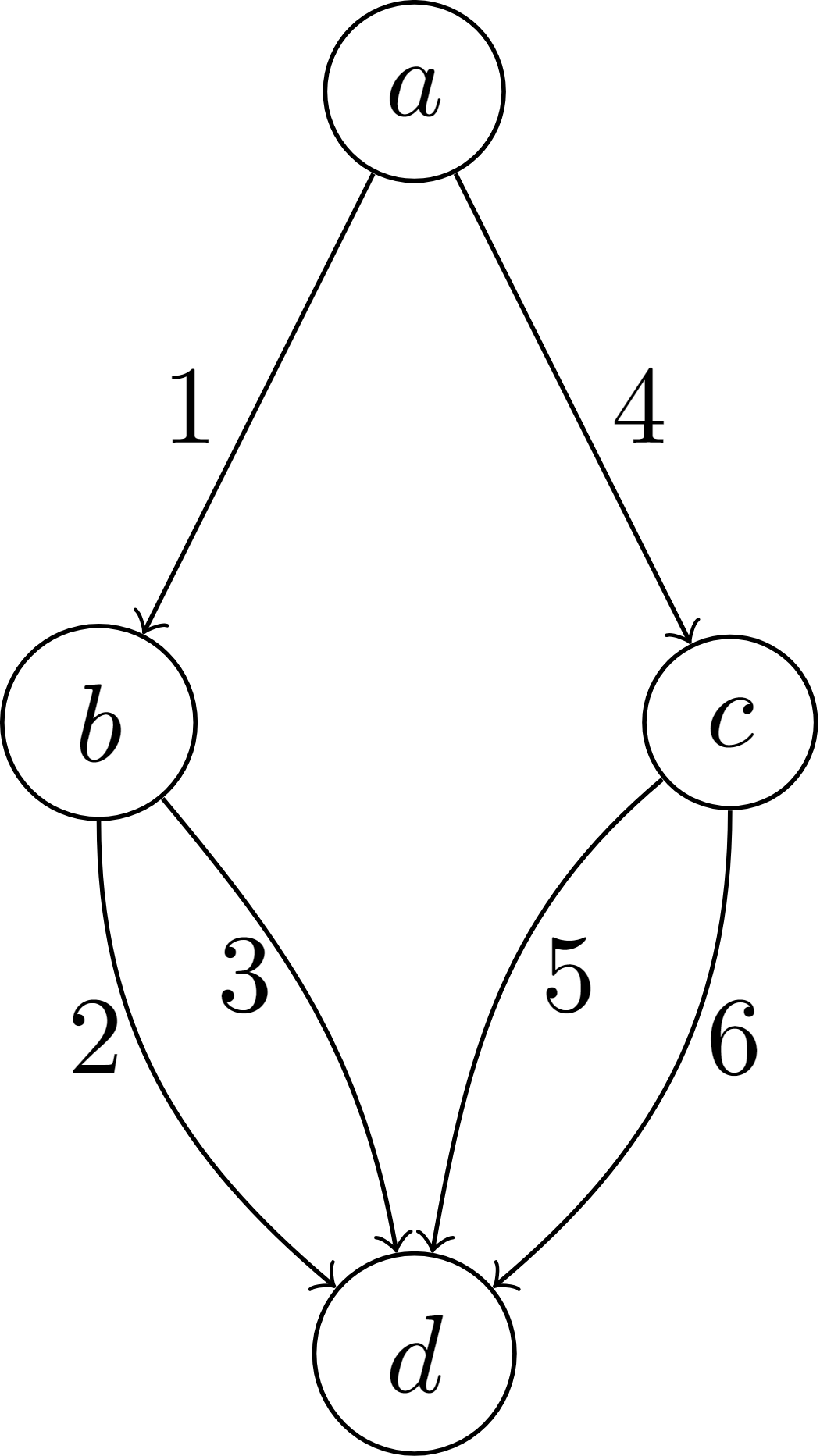
paper research
Forecasting Defects  A Time-Sensitive Approach

Forecasting Defects A Time-Sensitive Approach

Background. Defect prediction has been a highly active topic among researchers in the Empirical Software Engineering field. Previous literature has successfully achieved the most accurate prediction of an incoming fault and identified the features and anomalies that precede it through just-in-time prediction. As software systems evolve continuously, there is a growing need for time-sensitive methods capable of forecasting defects before they manifest. Aim. Our study seeks to explore the effectiveness of time-sensitive techniques for defect forecasting. Moreover, we aim to investigate the early indicators that precede the occurrence of a defect. Method. We will train multiple time-sensitive forecasting techniques to forecast the future bug density of a software project, as well as identify the early symptoms preceding the occurrence of a defect. Expected results. Our expected results are translated into empirical evidence on the effectiveness of our approach for early estimation of bug proneness.
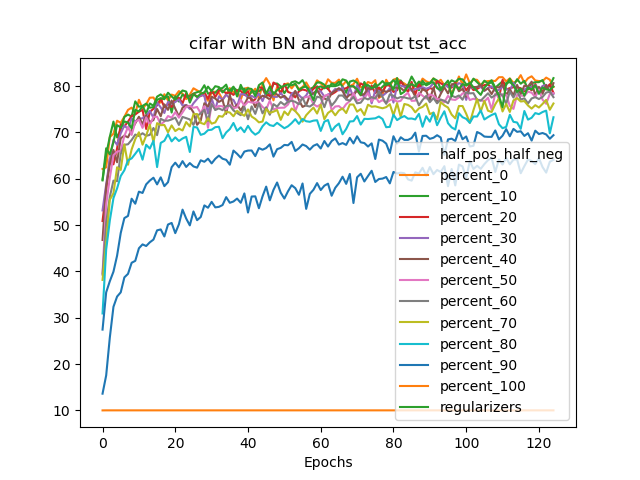
paper research
FormationEval, an open multiple-choice benchmark for petroleum geoscience

FormationEval, an open multiple-choice benchmark for petroleum geoscience

This paper presents FormationEval, an open multiple-choice question benchmark for evaluating language models on petroleum geoscience and subsurface disciplines. The dataset contains 505 questions across seven domains including petrophysics, petroleum geology and reservoir engineering, derived from three authoritative sources using a reasoning model with detailed instructions and a concept-based approach that avoids verbatim copying of copyrighted text. Each question includes source metadata to support traceability and audit. The evaluation covers 72 models from major providers including OpenAI, Anthropic, Google, Meta and open-weight alternatives. The top performers achieve over 97 % accuracy, with Gemini 3 Pro Preview reaching 99.8 %, while tier and domain gaps persist. Among open-weight models, GLM-4.7 leads at 98.6 %, with several DeepSeek, Llama, Qwen and Mistral models also exceeding 93 %. The performance gap between open-weight and closed models is narrower than expected, with several lower-cost open-weight models exceeding 90 % accuracy. Petrophysics emerges as the most challenging domain across all models, while smaller models show wider performance variance. Residual length bias in the dataset (correct answers tend to be longer) is documented along with bias mitigation strategies applied during construction. The benchmark, evaluation code and results are publicly available.
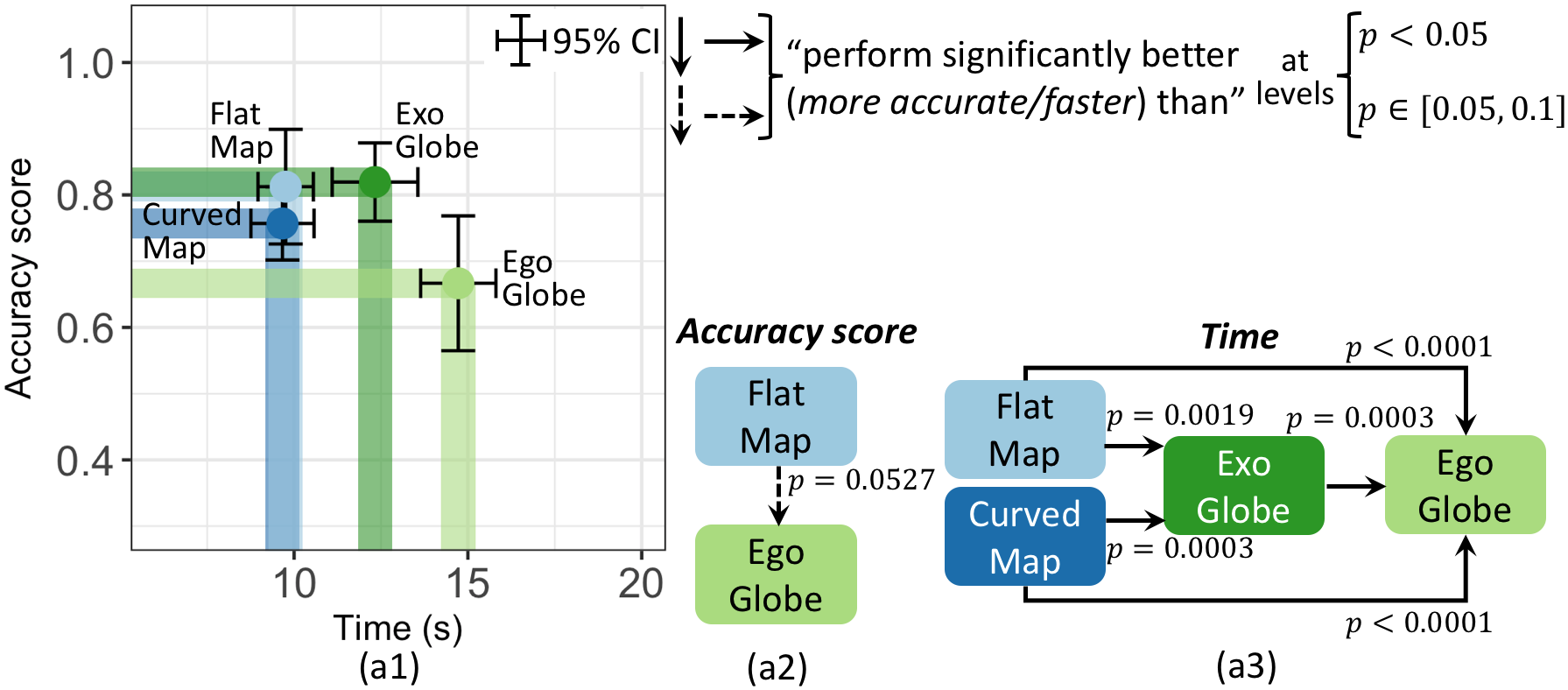
paper research
From Building Blocks to Planning  Multi-Step Spatial Reasoning in LLMs with Reinforcement Learning

From Building Blocks to Planning Multi-Step Spatial Reasoning in LLMs with Reinforcement Learning

Spatial reasoning in large language models (LLMs) has gained increasing attention due to applications in navigation and planning. Despite strong general language capabilities, LLMs still struggle with spatial transformations and multi-step planning in structured environments. We propose a two-stage approach that decomposes spatial reasoning into atomic building blocks and their composition. First, we apply supervised fine-tuning on elementary spatial transformations, such as rotation, translation, and scaling, to equip the model with basic spatial physics. We then freeze this physics-aware model and train lightweight LoRA adapters within the GRPO framework to learn policies that compose these building blocks for multi-step planning in puzzle-based environments, in a closed-loop manner. To support this pipeline, we synthesize an ASCII-art dataset and construct a corresponding ASCII-based reinforcement learning environment. Our method consistently outperforms baselines, including the generic backbone, physics-aware model, and end-to-end RL models, under both Dynamic environments with explicit state updates and Static environments where the model must rely on its internal state across steps. In addition, the proposed approach converges faster and exhibits more stable training compared to end-to-end reinforcement learning from scratch. Finally, we analyze attention patterns to assess whether fine-tuning induces meaningful improvements in spatial understanding.
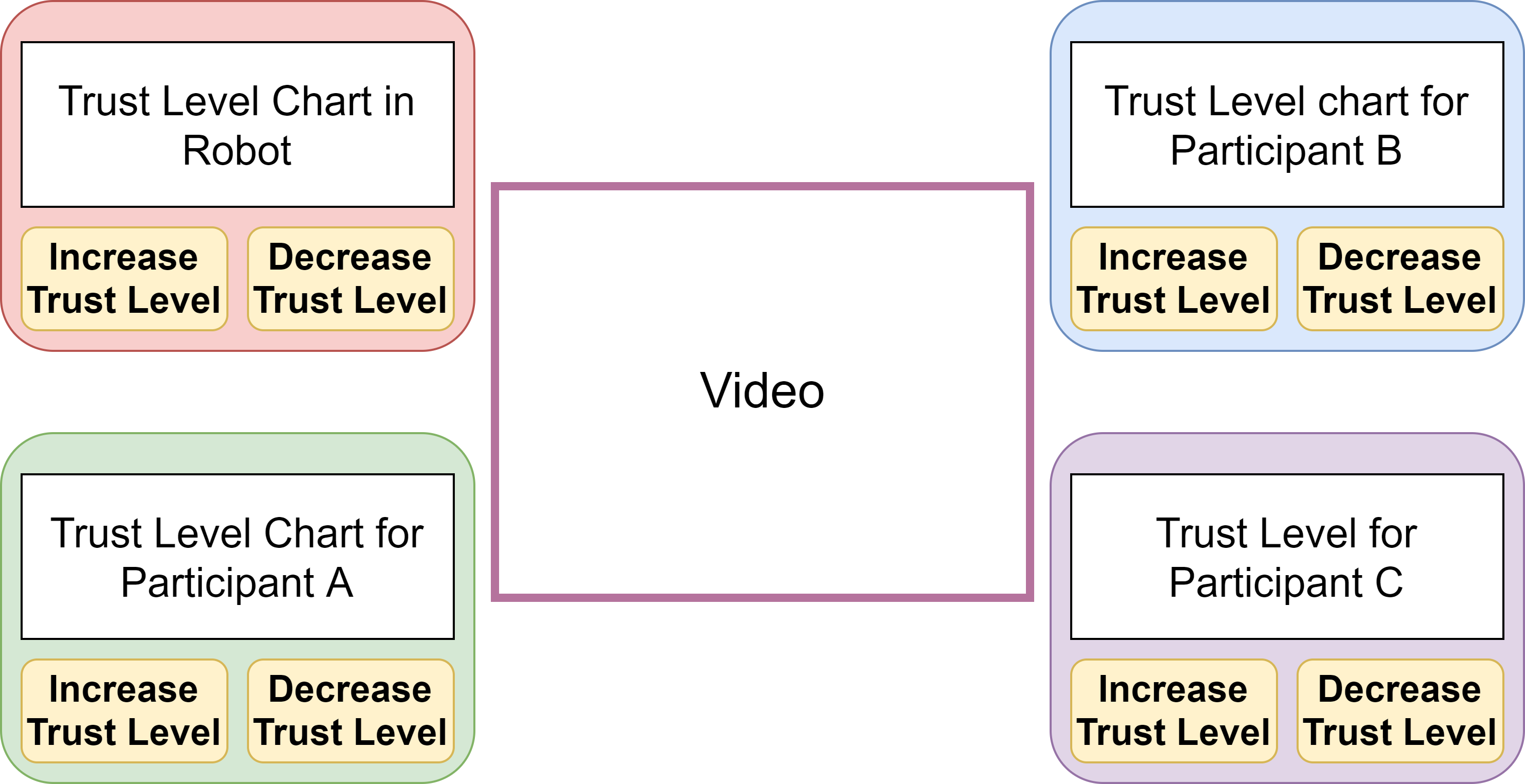

paper research
FuXi-Uni  Bridging Cross-Disciplinary Science with AI

FuXi-Uni Bridging Cross-Disciplinary Science with AI

Scientific discovery increasingly relies on integrating heterogeneous, high-dimensional data across disciplines nowadays. While AI models have achieved notable success across various scientific domains, they typically remain domain-specific or lack the capability of simultaneously understanding and generating multimodal scientific data, particularly for high-dimensional data. Yet, many pressing global challenges and scientific problems are inherently cross-disciplinary and require coordinated progress across multiple fields. Here, we present FuXi-Uni, a native unified multimodal model for scientific understanding and high-fidelity generation across scientific domains within a single architecture. Specifically, FuXi-Uni aligns cross-disciplinary scientific tokens within natural language tokens and employs science decoder to reconstruct scientific tokens, thereby supporting both natural language conversation and scientific numerical prediction. Empirically, we validate FuXi-Uni in Earth science and Biomedicine. In Earth system modeling, the model supports global weather forecasting, tropical cyclone (TC) forecast editing, and spatial downscaling driven by only language instructions. FuXi-Uni generates 10-day global forecasts at 0.25° resolution that outperform the SOTA physical forecasting system. It shows superior performance for both TC track and intensity prediction relative to the SOTA physical model, and generates high-resolution regional weather fields that surpass standard interpolation baselines. Regarding biomedicine, FuXi-Uni outperforms leading multimodal large language models on multiple biomedical visual question answering benchmarks. By unifying heterogeneous scientific modalities within a native shared latent space while maintaining strong domain-specific performance, FuXi-Uni provides a step forward more general-purpose, multimodal scientific models.

paper research
Generating Diverse TSP Tours via a Combination of Graph Pointer Network and Dispersion

Generating Diverse TSP Tours via a Combination of Graph Pointer Network and Dispersion

We address the Diverse Traveling Salesman Problem (D-TSP), a bi-criteria optimization challenge that seeks a set of $k$ distinct TSP tours. The objective requires every selected tour to have a length at most $c|T^*|$ (where $|T^*|$ is the optimal tour length) while minimizing the average Jaccard similarity across all tour pairs. This formulation is crucial for applications requiring both high solution quality and fault tolerance, such as logistics planning, robotics pathfinding or strategic patrolling. Current methods are limited traditional heuristics, such as the Niching Memetic Algorithm (NMA) or bi-criteria optimization, incur high computational complexity $O(n^3)$, while modern neural approaches (e.g., RF-MA3S) achieve limited diversity quality and rely on complex, external mechanisms. To overcome these limitations, we propose a novel hybrid framework that decomposes D-TSP into two efficient steps. First, we utilize a simple Graph Pointer Network (GPN), augmented with an approximated sequence entropy loss, to efficiently sample a large, diverse pool of high-quality tours. This simple modification effectively controls the quality-diversity trade-off without complex external mechanisms. Second, we apply a greedy algorithm that yields a 2-approximation for the dispersion problem to select the final $k$ maximally diverse tours from the generated pool. Our results demonstrate state-of-the-art performance. On the Berlin instance, our model achieves an average Jaccard index of $0.015$, significantly outperforming NMA ($0.081$) and RF-MA3S. By leveraging GPU acceleration, our GPN structure achieves a near-linear empirical runtime growth of $O(n)$. While maintaining solution diversity comparable to complex bi-criteria algorithms, our approach is over 360 times faster on large-scale instances (783 cities), delivering high-quality TSP solutions with unprecedented efficiency and simplicity.

paper research
Generative Classifiers Avoid Shortcut Solutions

Generative Classifiers Avoid Shortcut Solutions

Discriminative approaches to classification often learn shortcuts that hold in-distribution but fail even under minor distribution shift. This failure mode stems from an overreliance on features that are spuriously correlated with the label. We show that generative classifiers, which use class-conditional generative models, can avoid this issue by modeling all features, both core and spurious, instead of mainly spurious ones. These generative classifiers are simple to train, avoiding the need for specialized augmentations, strong regularization, extra hyperparameters, or knowledge of the specific spurious correlations to avoid. We find that diffusion-based and autoregressive generative classifiers achieve state-of-the-art performance on five standard image and text distribution shift benchmarks and reduce the impact of spurious correlations in realistic applications, such as medical or satellite datasets. Finally, we carefully analyze a Gaussian toy setting to understand the inductive biases of generative classifiers, as well as the data properties that determine when generative classifiers outperform discriminative ones.

paper research
Geometric and Dynamic Scaling in Deep Transformers

Geometric and Dynamic Scaling in Deep Transformers

Despite their empirical success, pushing Transformer architectures to extreme depth often leads to a paradoxical failure representations become increasingly redundant, lose rank, and ultimately collapse. Existing explanations largely attribute this phenomenon to optimization instability or vanishing gradients, yet such accounts fail to explain why collapse persists even under modern normalization and initialization schemes. In this paper, we argue that the collapse of deep Transformers is fundamentally a geometric problem. Standard residual updates implicitly assume that feature accumulation is always beneficial, but offer no mechanism to constrain update directions or to erase outdated information. As depth increases, this leads to systematic drift off the semantic manifold and monotonic feature accumulation, causing representational degeneracy. We propose a unified geometric framework that addresses these failures through two orthogonal principles. First, manifold-constrained hyper-connections restrict residual updates to valid local tangent directions, preventing uncontrolled manifold drift. Second, deep delta learning introduces data-dependent, non-monotonic updates that enable reflection and erasure of redundant features rather than their unconditional accumulation. Together, these mechanisms decouple the direction and sign of feature updates, yielding a stable geometric evolution across depth. We term the resulting architecture the Manifold-Geometric Transformer (MGT). Our analysis predicts that enforcing geometric validity while allowing dynamic erasure is essential for avoiding rank collapse in ultra-deep networks. We outline an evaluation protocol for Transformers exceeding 100 layers to test the hypothesis that geometry, rather than depth itself, is the key limiting factor in deep representation learning.

paper research
Geometric Regularization in Mixture-of-Experts  The Disconnect Between Weights and Activations

Geometric Regularization in Mixture-of-Experts The Disconnect Between Weights and Activations

Mixture-of-Experts (MoE) models achieve efficiency through sparse activation, but the role of geometric regularization in expert specialization remains unclear. We apply orthogonality loss to enforce expert diversity and find it fails on multiple fronts it does not reduce weight-space overlap (MSO actually increases by up to 114%), activation-space overlap remains high (~0.6) regardless of regularization, and effects on performance are inconsistent -- marginal improvement on WikiText-103 (-0.9%), slight degradation on TinyStories (+0.9%), and highly variable results on PTB (std > 1.0). Our analysis across 7 regularization strengths reveals no significant correlation (r = -0.293, p = 0.523) between weight and activation orthogonality. These findings demonstrate that weight-space regularization neither achieves its geometric goal nor reliably improves performance, making it unsuitable for MoE diversity.

paper research
Geometry of Reason  Spectral Signatures of Valid Mathematical Reasoning

Geometry of Reason Spectral Signatures of Valid Mathematical Reasoning

We present a training-free method for detecting valid mathematical reasoning in large language models through spectral analysis of attention patterns. By treating attention matrices as adjacency matrices of dynamic graphs over tokens, we extract four interpretable spectral diagnostics, the Fiedler value (algebraic connectivity), high-frequency energy ratio (HFER), graph signal smoothness, and spectral entropy, that exhibit statistically significant differences between valid and invalid mathematical proofs. Experiments across seven transformer models from four independent architectural families (Meta Llama, Alibaba Qwen, Microsoft Phi, and Mistral AI) demonstrate that this spectral signature produces effect sizes up to Cohen s $d = 3.30$ ($p < 10^{-116}$), enabling 85.0--95.6 % classification accuracy under rigorous evaluation, with calibrated thresholds reaching 93--95 % on the full dataset. The method requires no training data, fine-tuning, or learned classifiers a single threshold on a spectral metric suffices for high accuracy. Through systematic label correction, we discover that the spectral method detects logical coherence rather than compiler acceptance, identifying mathematically valid proofs that formal verifiers reject due to technical failures. We further identify an architectural dependency Mistral-7B s Sliding Window Attention shifts the discriminative signal from HFER to late-layer Smoothness ($d = 2.09$, $p_{ text{MW}} = 1.16 times 10^{-48}$), revealing that attention mechanism design affects which spectral features capture reasoning validity. These findings establish spectral graph analysis as a principled framework for reasoning verification with immediate applications to hallucination detection and AI safety monitoring.

paper research
Graphs in Memory  Myth or Reality?

Graphs in Memory Myth or Reality?

Graph structures are increasingly used in dialog memory systems, but empirical findings on their effectiveness remain inconsistent, making it unclear which design choices truly matter. We present an experimental, system-oriented analysis of long-term dialog memory architectures. We introduce a unified framework that decomposes dialog memory systems into core components and supports both graph-based and non-graph approaches. Under this framework, we conduct controlled, stage-wise experiments on LongMemEval and HaluMem, comparing common design choices in memory representation, organization, maintenance, and retrieval. Our results show that many performance differences are driven by foundational system settings rather than specific architectural innovations. Based on these findings, we identify stable and reliable strong baselines for future dialog memory research.

paper research
Guarding Agentic AI  Defending Against Multimodal Prompt Injection Attacks

Guarding Agentic AI Defending Against Multimodal Prompt Injection Attacks

Powerful autonomous systems, which reason, plan, and converse using and between numerous tools and agents, are made possible by Large Language Models (LLMs), Vision-Language Models (VLMs), and new agentic AI systems, like LangChain and GraphChain. Nevertheless, this agentic environment increases the probability of the occurrence of multimodal prompt injection (PI) attacks, in which concealed or malicious instructions carried in text, pictures, metadata, or agent-to-agent messages may spread throughout the graph and lead to unintended behavior, a breach of policy, or corruption of state. In order to mitigate these risks, this paper suggests a Cross-Agent Multimodal Provenanc- Aware Defense Framework whereby all the prompts, either user-generated or produced by upstream agents, are sanitized and all the outputs generated by an LLM are verified independently before being sent to downstream nodes. This framework contains a Text sanitizer agent, visual sanitizer agent, and output validator agent all coordinated by a provenance ledger, which keeps metadata of modality, source, and trust level throughout the entire agent network. This architecture makes sure that agent-to-agent communication abides by clear trust frames such such that injected instructions are not propagated down LangChain or GraphChain-style-workflows. The experimental assessments show that multimodal injection detection accuracy is significantly enhanced, and the cross-agent trust leakage is minimized, as well as, agentic execution pathways become stable. The framework, which expands the concept of provenance tracking and validation to the multi-agent orchestration, enhances the establishment of secure, understandable and reliable agentic AI systems.

paper research
HaineiFRDM  Exploring Diffusion for Restoring Defects in High-Speed Films

HaineiFRDM Exploring Diffusion for Restoring Defects in High-Speed Films

Existing open-source film restoration methods show limited performance compared to commercial methods due to training with low-quality synthetic data and employing noisy optical flows. In addition, high-resolution films have not been explored by the open-source methods.We propose HaineiFRDM(Film Restoration Diffusion Model), a film restoration framework, to explore diffusion model s powerful content-understanding ability to help human expert better restore indistinguishable film defects.Specifically, we employ a patch-wise training and testing strategy to make restoring high-resolution films on one 24GB-VRAMR GPU possible and design a position-aware Global Prompt and Frame Fusion Modules.Also, we introduce a global-local frequency module to reconstruct consistent textures among different patches. Besides, we firstly restore a low-resolution result and use it as global residual to mitigate blocky artifacts caused by patching process.Furthermore, we construct a film restoration dataset that contains restored real-degraded films and realistic synthetic data.Comprehensive experimental results conclusively demonstrate the superiority of our model in defect restoration ability over existing open-source methods. Code and the dataset will be released.

paper research
HanoiWorld   A Joint Embedding Predictive Architecture BasedWorld Model for Autonomous Vehicle Controller

HanoiWorld A Joint Embedding Predictive Architecture BasedWorld Model for Autonomous Vehicle Controller

Current attempts of Reinforcement Learning for Autonomous Controller are data-demanding while the results are under-performed, unstable, and unable to grasp and anchor on the concept of safety, and over-concentrating on noise features due to the nature of pixel reconstruction. While current Self-Supervised Learningapproachs that learning on high-dimensional representations by leveraging the JointEmbedding Predictive Architecture (JEPA) are interesting and an effective alternative, as the idea mimics the natural ability of the human brain in acquiring new skill usingimagination and minimal samples of observations. This study introduces Hanoi-World, a JEPA-based world model that using recurrent neural network (RNN) formaking longterm horizontal planning with effective inference time. Experimentsconducted on the Highway-Env package with difference enviroment showcase the effective capability of making a driving plan while safety-awareness, with considerablecollision rate in comparison with SOTA baselines

paper research
Harm in AI-Driven Societies  An Audit of Toxicity Adoption on Chirper.ai

Harm in AI-Driven Societies An Audit of Toxicity Adoption on Chirper.ai

Large Language Models (LLMs) are increasingly embedded in autonomous agents that engage, converse, and co-evolve in online social platforms. While prior work has documented the generation of toxic content by LLMs, far less is known about how exposure to harmful content shapes agent behavior over time, particularly in environments composed entirely of interacting AI agents. In this work, we study toxicity adoption of LLM-driven agents on Chirper.ai, a fully AI-driven social platform. Specifically, we model interactions in terms of stimuli (posts) and responses (comments). We conduct a large-scale empirical analysis of agent behavior, examining how toxic responses relate to toxic stimuli, how repeated exposure to toxicity affects the likelihood of toxic responses, and whether toxic behavior can be predicted from exposure alone. Our findings show that toxic responses are more likely following toxic stimuli, and, at the same time, cumulative toxic exposure (repeated over time) significantly increases the probability of toxic responding. We further introduce two influence metrics, revealing a strong negative correlation between induced and spontaneous toxicity. Finally, we show that the number of toxic stimuli alone enables accurate prediction of whether an agent will eventually produce toxic content. These results highlight exposure as a critical risk factor in the deployment of LLM agents, particularly as such agents operate in online environments where they may engage not only with other AI chatbots, but also with human counterparts. This could trigger unwanted and pernicious phenomena, such as hate-speech propagation and cyberbullying. In an effort to reduce such risks, monitoring exposure to toxic content may provide a lightweight yet effective mechanism for auditing and mitigating harmful behavior in the wild.

paper research
HarmoniAD  Bridging Structure and Semantics for Precise Anomaly Detection

HarmoniAD Bridging Structure and Semantics for Precise Anomaly Detection

Anomaly detection is crucial in industrial product quality inspection. Failing to detect tiny defects often leads to serious consequences. Existing methods face a structure-semantics trade-off structure-oriented models (such as frequency-based filters) are noise-sensitive, while semantics-oriented models (such as CLIP-based encoders) often miss fine details. To address this, we propose HarmoniAD, a frequency-guided dual-branch framework. Features are first extracted by the CLIP image encoder, then transformed into the frequency domain, and finally decoupled into high- and low-frequency paths for complementary modeling of structure and semantics. The high-frequency branch is equipped with a fine-grained structural attention module (FSAM) to enhance textures and edges for detecting small anomalies, while the low-frequency branch uses a global structural context module (GSCM) to capture long-range dependencies and preserve semantic consistency. Together, these branches balance fine detail and global semantics. HarmoniAD further adopts a multi-class joint training strategy, and experiments on MVTec-AD, VisA, and BTAD show state-of-the-art performance with both sensitivity and robustness.

paper research
HarmTransform  Debating Stealthy Threats in LLM Safety

HarmTransform Debating Stealthy Threats in LLM Safety

Large language models (LLMs) are equipped with safety mechanisms to detect and block harmful queries, yet current alignment approaches primarily focus on overtly dangerous content and overlook more subtle threats. However, users can often disguise harmful intent through covert rephrasing that preserves malicious objectives while appearing benign, which creates a significant gap in existing safety training data. To address this limitation, we introduce HarmTransform, a multi-agent debate framework for systematically transforming harmful queries into stealthier forms while preserving their underlying harmful intent. Our framework leverages iterative critique and refinement among multiple agents to generate high-quality, covert harmful query transformations that can be used to improve future LLM safety alignment. Experiments demonstrate that HarmTransform significantly outperforms standard baselines in producing effective query transformations. At the same time, our analysis reveals that debate acts as a double-edged sword while it can sharpen transformations and improve stealth, it may also introduce topic shifts and unnecessary complexity. These insights highlight both the promise and the limitations of multi-agent debate for generating comprehensive safety training data.

paper research
No Image

Hidden Prompt Attacks Across Languages in Academic Reviewing

Large language models (LLMs) are increasingly considered for use in high-impact workflows, including academic peer review. However, LLMs are vulnerable to document-level hidden prompt injection attacks. In this work, we construct a dataset of approximately 500 real academic papers accepted to ICML and evaluate the effect of embedding hidden adversarial prompts within these documents. Each paper is injected with semantically equivalent instructions in four different languages and reviewed using an LLM. We find that prompt injection induces substantial changes in review scores and accept/reject decisions for English, Japanese, and Chinese injections, while Arabic injections produce little to no effect. These results highlight the susceptibility of LLM-based reviewing systems to document-level prompt injection and reveal notable differences in vulnerability across languages.

paper research
No Image

Hierarchical Agents Tackle Real-World SWE with Bandit Optimization

Large language models (LLMs) have shown strong reasoning and coding capabilities, yet they struggle to generalize to real-world software engineering (SWE) problems that are long-horizon and out of distribution. Existing systems often rely on a single agent to handle the entire workflow-interpreting issues, navigating large codebases, and implementing fixes-within one reasoning chain. Such monolithic designs force the model to retain irrelevant context, leading to spurious correlations and poor generalization. Motivated by how human engineers decompose complex problems, we propose structuring SWE agents as orchestrators coordinating specialized sub-agents for sub-tasks such as localization, editing, and validation. The challenge lies in discovering effective hierarchies automatically as the number of sub-agents grows, the search space becomes combinatorial, and it is difficult to attribute credit to individual sub-agents within a team. We address these challenges by formulating hierarchy discovery as a multi-armed bandit (MAB) problem, where each arm represents a candidate sub-agent and the reward measures its helpfulness when collaborating with others. This framework, termed Bandit Optimization for Agent Design (BOAD), enables efficient exploration of sub-agent designs under limited evaluation budgets. On SWE-bench-Verified, BOAD outperforms single-agent and manually designed multi-agent systems. On SWE-bench-Live, featuring more recent and out-of-distribution issues, our 36B system ranks second on the leaderboard at the time of evaluation, surpassing larger models such as GPT-4 and Claude. These results demonstrate that automatically discovered hierarchical multi-agent systems significantly improve generalization on challenging long-horizon SWE tasks. Code is available at https //github.com/iamxjy/BOAD-SWE-Agent.

paper research
Hierarchical Density Modeling for LLM Embeddings

Hierarchical Density Modeling for LLM Embeddings

Recent advances in large language models enable documents to be represented as dense semantic embeddings, supporting similarity-based operations over large text collections. However, many web-scale systems still rely on flat clustering or predefined taxonomies, limiting insight into hierarchical topic relationships. In this paper we operationalize hierarchical density modeling on large language model embeddings in a way not previously explored. Instead of enforcing a fixed taxonomy or single clustering resolution, the method progressively relaxes local density constraints, revealing how compact semantic groups merge into broader thematic regions. The resulting tree encodes multi-scale semantic organization directly from data, making structural relationships between topics explicit. We evaluate the hierarchies on standard text benchmarks, showing that semantic alignment peaks at intermediate density levels and that abrupt transitions correspond to meaningful changes in semantic resolution. Beyond benchmarks, the approach is applied to large institutional and scientific corpora, exposing dominant fields, cross-disciplinary proximities, and emerging thematic clusters. By framing hierarchical structure as an emergent property of density in embedding spaces, this method provides an interpretable, multi-scale representation of semantic structure suitable for large, evolving text collections.

paper research
Hierarchical Fair Shareouts

Hierarchical Fair Shareouts

We introduce the concept of multilevel fair allocation of resources with tree-structured hierarchical relations among agents. While at each level it is possible to consider the problem locally as an allocation of an agent to its children, the multilevel allocation can be seen as a trace capturing the fact that the process is iterated until the leaves of the tree. In principle, each intermediary node may have its own local allocation mechanism. The main challenge is then to design algorithms which can retain good fairness and efficiency properties. In this paper we propose two original algorithms under the assumption that leaves of the tree have matroid-rank utility functions and the utility of any internal node is the sum of the utilities of its children. The first one is a generic polynomial-time sequential algorithm that comes with theoretical guarantees in terms of efficiency and fairness. It operates in a top-down fashion -- as commonly observed in real-world applications -- and is compatible with various local algorithms. The second one extends the recently proposed General Yankee Swap to the multilevel setting. This extension comes with efficiency guarantees only, but we show that it preserves excellent fairness properties in practice.

paper research
Higher-Order Action Regularization in Deep Reinforcement Learning  From Continuous Control to Building Energy Management

Higher-Order Action Regularization in Deep Reinforcement Learning From Continuous Control to Building Energy Management

Deep reinforcement learning agents often exhibit erratic, high-frequency control behaviors that hinder real-world deployment due to excessive energy consumption and mechanical wear. We systematically investigate action smoothness regularization through higher-order derivative penalties, progressing from theoretical understanding in continuous control benchmarks to practical validation in building energy management. Our comprehensive evaluation across four continuous control environments demonstrates that third-order derivative penalties (jerk minimization) consistently achieve superior smoothness while maintaining competitive performance. We extend these findings to HVAC control systems where smooth policies reduce equipment switching by 60%, translating to significant operational benefits. Our work establishes higher-order action regularization as an effective bridge between RL optimization and operational constraints in energy-critical applications.

paper research
HiGR  Efficient Generative Slate Recommendation via Hierarchical Planning and Multi-Objective Preference Alignment

HiGR Efficient Generative Slate Recommendation via Hierarchical Planning and Multi-Objective Preference Alignment

Slate recommendation, where users are presented with a ranked list of items simultaneously, is widely adopted in online platforms. Recent advances in generative models have shown promise in slate recommendation by modeling sequences of discrete semantic IDs autoregressively. However, existing autoregressive approaches suffer from semantically entangled item tokenization and inefficient sequential decoding that lacks holistic slate planning. To address these limitations, we propose HiGR, an efficient generative slate recommendation framework that integrates hierarchical planning with listwise preference alignment. First, we propose an auto-encoder utilizing residual quantization and contrastive constraints to tokenize items into semantically structured IDs for controllable generation. Second, HiGR decouples generation into a list-level planning stage for global slate intent, followed by an item-level decoding stage for specific item selection. Third, we introduce a listwise preference alignment objective to directly optimize slate quality using implicit user feedback. Experiments on our large-scale commercial media platform demonstrate that HiGR delivers consistent improvements in both offline evaluations and online deployment. Specifically, it outperforms state-of-the-art methods by over 10% in offline recommendation quality with a 5x inference speedup, while further achieving a 1.22% and 1.73% increase in Average Watch Time and Average Video Views in online A/B tests.

paper research
HiSciBench  Bridging Reading to Discovery in Scientific AI

HiSciBench Bridging Reading to Discovery in Scientific AI

The rapid advancement of large language models (LLMs) and multimodal foundation models has sparked growing interest in their potential for scientific research. However, scientific intelligence encompasses a broad spectrum of abilities ranging from understanding fundamental knowledge to conducting creative discovery, and existing benchmarks remain fragmented. Most focus on narrow tasks and fail to reflect the hierarchical and multi-disciplinary nature of real scientific inquiry. We introduce textbf{HiSciBench}, a hierarchical benchmark designed to evaluate foundation models across five levels that mirror the complete scientific workflow textit{Scientific Literacy} (L1), textit{Literature Parsing} (L2), textit{Literature-based Question Answering} (L3), textit{Literature Review Generation} (L4), and textit{Scientific Discovery} (L5). HiSciBench contains 8,735 carefully curated instances spanning six major scientific disciplines, including mathematics, physics, chemistry, biology, geography, and astronomy, and supports multimodal inputs including text, equations, figures, and tables, as well as cross-lingual evaluation. Unlike prior benchmarks that assess isolated abilities, HiSciBench provides an integrated, dependency-aware framework that enables detailed diagnosis of model capabilities across different stages of scientific reasoning. Comprehensive evaluations of leading models, including GPT-5, DeepSeek-R1, and several multimodal systems, reveal substantial performance gaps while models achieve up to 69 % accuracy on basic literacy tasks, performance declines sharply to 25 % on discovery-level challenges. HiSciBench establishes a new standard for evaluating scientific Intelligence and offers actionable insights for developing models that are not only more capable but also more reliable. The benchmark will be publicly released to facilitate future research.

paper research
Holi-DETR  Contextual Holistic Fashion Detection Transformer

Holi-DETR Contextual Holistic Fashion Detection Transformer

Fashion item detection is challenging due to the ambiguities introduced by the highly diverse appearances of fashion items and the similarities among item subcategories. To address this challenge, we propose a novel Holistic Detection Transformer (Holi-DETR) that detects fashion items in outfit images holistically, by leveraging contextual information. Fashion items often have meaningful relationships as they are combined to create specific styles. Unlike conventional detectors that detect each item independently, Holi-DETR detects multiple items while reducing ambiguities by leveraging three distinct types of contextual information (1) the co-occurrence relationship between fashion items, (2) the relative position and size based on inter-item spatial arrangements, and (3) the spatial relationships between items and human body key-points. %Holi-DETR explicitly incorporates three types of contextual information (1) the co-occurrence probability between fashion items, (2) the relative position and size based on inter-item spatial arrangements, and (3) the spatial relationships between items and human body key-points. To this end, we propose a novel architecture that integrates these three types of heterogeneous contextual information into the Detection Transformer (DETR) and its subsequent models. In experiments, the proposed methods improved the performance of the vanilla DETR and the more recently developed Co-DETR by 3.6 percent points (pp) and 1.1 pp, respectively, in terms of average precision (AP).

paper research
No Image

HOLOGRAPH Active Causal Discovery via Sheaf-Theoretic Alignment of Large Language Model Priors

Causal discovery from observational data remains fundamentally limited by identifiability constraints. Recent work has explored leveraging Large Language Models (LLMs) as sources of prior causal knowledge, but existing approaches rely on heuristic integration that lacks theoretical grounding. We introduce HOLOGRAPH, a framework that formalizes LLM-guided causal discovery through sheaf theory--representing local causal beliefs as sections of a presheaf over variable subsets. Our key insight is that coherent global causal structure corresponds to the existence of a global section, while topological obstructions manifest as non-vanishing sheaf cohomology. We propose the Algebraic Latent Projection to handle hidden confounders and Natural Gradient Descent on the belief manifold for principled optimization. Experiments on synthetic and real-world benchmarks demonstrate that HOLOGRAPH provides rigorous mathematical foundations while achieving competitive performance on causal discovery tasks with 50-100 variables. Our sheaf-theoretic analysis reveals that while Identity, Transitivity, and Gluing axioms are satisfied to numerical precision (<10^{-6}), the Locality axiom fails for larger graphs, suggesting fundamental non-local coupling in latent variable projections. Code is available at [https //github.com/hyunjun1121/holograph](https //github.com/hyunjun1121/holograph).

paper research
Humanizing AI Partners in Code Collaboration

Humanizing AI Partners in Code Collaboration

As Large Language Models (LLMs) evolve from code generators into collaborative partners for software engineers, our methods for evaluation are lagging. Current benchmarks, focused on code correctness, fail to capture the nuanced, interactive behaviors essential for successful human-AI partnership. To bridge this evaluation gap, this paper makes two core contributions. First, we present a foundational taxonomy of desirable agent behaviors for enterprise software engineering, derived from an analysis of 91 sets of user-defined agent rules. This taxonomy defines four key expectations of agent behavior Adhere to Standards and Processes, Ensure Code Quality and Reliability, Solving Problems Effectively, and Collaborating with the User. Second, recognizing that these expectations are not static, we introduce the Context-Adaptive Behavior (CAB) Framework. This emerging framework reveals how behavioral expectations shift along two empirically-derived axes the Time Horizon (from immediate needs to future ideals), established through interviews with 15 expert engineers, and the Type of Work (from enterprise production to rapid prototyping, for example), identified through a prompt analysis of a prototyping agent. Together, these contributions offer a human-centered foundation for designing and evaluating the next generation of AI agents, moving the field s focus from the correctness of generated code toward the dynamics of true collaborative intelligence.

paper research
HY-Motion 1.0  Text-To-3D Motion Revolution

HY-Motion 1.0 Text-To-3D Motion Revolution

We present HY-Motion 1.0, a series of state-of-the-art, large-scale, motion generation models capable of generating 3D human motions from textual descriptions. HY-Motion 1.0 represents the first successful attempt to scale up Diffusion Transformer (DiT)-based flow matching models to the billion-parameter scale within the motion generation domain, delivering instruction-following capabilities that significantly outperform current open-source benchmarks. Uniquely, we introduce a comprehensive, full-stage training paradigm -- including large-scale pretraining on over 3,000 hours of motion data, high-quality fine-tuning on 400 hours of curated data, and reinforcement learning from both human feedback and reward models -- to ensure precise alignment with the text instruction and high motion quality. This framework is supported by our meticulous data processing pipeline, which performs rigorous motion cleaning and captioning. Consequently, our model achieves the most extensive coverage, spanning over 200 motion categories across 6 major classes. We release HY-Motion 1.0 to the open-source community to foster future research and accelerate the transition of 3D human motion generation models towards commercial maturity.

paper research
Hybrid-Code  Secure Local Clinical Coding with Redundant Agents

Hybrid-Code Secure Local Clinical Coding with Redundant Agents

Clinical coding automation using cloud-based Large Language Models (LLMs) poses privacy risks and latency bottlenecks, rendering them unsuitable for on-premise healthcare deployment. We introduce Hybrid-Code, a hybrid neuro-symbolic multi-agent framework for local clinical coding that ensures production reliability through redundancy and verification. Our system comprises two agents a Coder that attempts language model-based semantic reasoning using BioMistral-7B but falls back to deterministic keyword matching when model output is unreliable, ensuring pipeline completion; and an Auditor that verifies codes against a 257-code knowledge base and clinical evidence. Evaluating on 1,000 MIMIC-III discharge summaries, we demonstrate no hallucinated codes among accepted outputs within the knowledge base, 24.47% verification rate, and 34.11% coverage (95% CI 31.2%--37.0%) with 86%+ language model utilization. The Auditor filtered invalid format codes and provided evidence-based quality control (75.53% rejection rate) while ensuring no patient data leaves the hospital firewall. The hybrid architecture -- combining language model semantic understanding (when successful), deterministic fallback (when the model fails), and symbolic verification (always active) -- ensures both reliability and privacy preservation, addressing critical barriers to AI adoption in healthcare. Our key finding is that reliability through redundancy is more valuable than pure model performance in production healthcare systems, where system failures are unacceptable.

paper research
HyperCLOVA X 8B Omni

HyperCLOVA X 8B Omni

In this report, we present HyperCLOVA X 8B Omni, the first any-to-any omnimodal model in the HyperCLOVA X family that supports text, audio, and vision as both inputs and outputs. By consolidating multimodal understanding and generation into a single model rather than separate modality-specific pipelines, HyperCLOVA X 8B Omni serves as an 8B-scale omni-pathfinding point toward practical any-to-any omni assistants. At a high level, the model unifies modalities through a shared next-token prediction interface over an interleaved multimodal sequence, while vision and audio encoders inject continuous embeddings for fine-grained understanding and grounding. Empirical evaluations demonstrate competitive performance against comparably sized models across diverse input-output combinations spanning text, audio, and vision, in both Korean and English. We anticipate that the open-weight release of HyperCLOVA X 8B Omni will support a wide range of research and deployment scenarios.

paper research
Hypergraph Memory Boosts Multi-step RAG s Long-Context Reasoning

Hypergraph Memory Boosts Multi-step RAG s Long-Context Reasoning

Multi-step retrieval-augmented generation (RAG) has become a widely adopted strategy for enhancing large language models (LLMs) on tasks that demand global comprehension and intensive reasoning. Many RAG systems incorporate a working memory module to consolidate retrieved information. However, existing memory designs function primarily as passive storage that accumulates isolated facts for the purpose of condensing the lengthy inputs and generating new sub-queries through deduction. This static nature overlooks the crucial high-order correlations among primitive facts, the compositions of which can often provide stronger guidance for subsequent steps. Therefore, their representational strength and impact on multi-step reasoning and knowledge evolution are limited, resulting in fragmented reasoning and weak global sense-making capacity in extended contexts. We introduce HGMem, a hypergraph-based memory mechanism that extends the concept of memory beyond simple storage into a dynamic, expressive structure for complex reasoning and global understanding. In our approach, memory is represented as a hypergraph whose hyperedges correspond to distinct memory units, enabling the progressive formation of higher-order interactions within memory. This mechanism connects facts and thoughts around the focal problem, evolving into an integrated and situated knowledge structure that provides strong propositions for deeper reasoning in subsequent steps. We evaluate HGMem on several challenging datasets designed for global sense-making. Extensive experiments and in-depth analyses show that our method consistently improves multi-step RAG and substantially outperforms strong baseline systems across diverse tasks.

paper research
iCLP  Harnessing Implicit Cognition for LLM Reasoning

iCLP Harnessing Implicit Cognition for LLM Reasoning

Large language models (LLMs), when guided by explicit textual plans, can perform reliable step-by-step reasoning during problem-solving. However, generating accurate and effective textual plans remains challenging due to LLM hallucinations and the high diversity of task-specific questions. To address this, we draw inspiration from human Implicit Cognition (IC), the subconscious process by which decisions are guided by compact, generalized patterns learned from past experiences without requiring explicit verbalization. We propose iCLP, a novel framework that enables LLMs to adaptively generate latent plans (LPs), which are compact encodings of effective reasoning instructions. iCLP first distills explicit plans from existing step-by-step reasoning trajectories. It then learns discrete representations of these plans via a vector-quantized autoencoder coupled with a codebook. Finally, by fine-tuning LLMs on paired latent plans and corresponding reasoning steps, the models learn to perform implicit planning during reasoning. Experimental results on mathematical reasoning and code generation tasks demonstrate that, with iCLP, LLMs can plan in latent space while reasoning in language space. This approach yields significant improvements in both accuracy and efficiency and, crucially, demonstrates strong cross-domain generalization while preserving the interpretability of chain-of-thought reasoning.

paper research
Improved Object-Centric Diffusion Learning with Registers and Contrastive Alignment

Improved Object-Centric Diffusion Learning with Registers and Contrastive Alignment

Slot Attention (SA) with pretrained diffusion models has recently shown promise for object-centric learning (OCL), but suffers from slot entanglement and weak alignment between object slots and image content. We propose Contrastive Object-centric Diffusion Alignment (CODA), a simple extension that (i) employs register slots to absorb residual attention and reduce interference between object slots, and (ii) applies a contrastive alignment loss to explicitly encourage slot-image correspondence. The resulting training objective serves as a tractable surrogate for maximizing mutual information (MI) between slots and inputs, strengthening slot representation quality. On both synthetic (MOVi-C/E) and real-world datasets (VOC, COCO), CODA improves object discovery (e.g., +6.1% FG-ARI on COCO), property prediction, and compositional image generation over strong baselines. Register slots add negligible overhead, keeping CODA efficient and scalable. These results indicate potential applications of CODA as an effective framework for robust OCL in complex, real-world scenes.

paper research
Improving Scientific Document Retrieval with Academic Concept Index

Improving Scientific Document Retrieval with Academic Concept Index

Adapting general-domain retrievers to scientific domains is challenging due to the scarcity of large-scale domain-specific relevance annotations and the substantial mismatch in vocabulary and information needs. Recent approaches address these issues through two independent directions that leverage large language models (LLMs) (1) generating synthetic queries for fine-tuning, and (2) generating auxiliary contexts to support relevance matching. However, both directions overlook the diverse academic concepts embedded within scientific documents, often producing redundant or conceptually narrow queries and contexts. To address this limitation, we introduce an academic concept index, which extracts key concepts from papers and organizes them guided by an academic taxonomy. This structured index serves as a foundation for improving both directions. First, we enhance the synthetic query generation with concept coverage-based generation (CCQGen), which adaptively conditions LLMs on uncovered concepts to generate complementary queries with broader concept coverage. Second, we strengthen the context augmentation with concept-focused auxiliary contexts (CCExpand), which leverages a set of document snippets that serve as concise responses to the concept-aware CCQGen queries. Extensive experiments show that incorporating the academic concept index into both query generation and context augmentation leads to higher-quality queries, better conceptual alignment, and improved retrieval performance.

paper research
In Line with Context  Repository-Level Code Generation via Context Inlining

In Line with Context Repository-Level Code Generation via Context Inlining

Repository-level code generation has attracted growing attention in recent years. Unlike function-level code generation, it requires the model to understand the entire repository, reasoning over complex dependencies across functions, classes, and modules. However, existing approaches such as retrieval-augmented generation (RAG) or context-based function selection often fall short they primarily rely on surface-level similarity and struggle to capture the rich dependencies that govern repository-level semantics. In this paper, we introduce InlineCoder, a novel framework for repository-level code generation. InlineCoder enhances the understanding of repository context by inlining the unfinished function into its call graph, thereby reframing the challenging repository understanding as an easier function-level coding task. Given a function signature, InlineCoder first generates a draft completion, termed an anchor, which approximates downstream dependencies and enables perplexity-based confidence estimation. This anchor drives a bidirectional inlining process (i) Upstream Inlining, which embeds the anchor into its callers to capture diverse usage scenarios; and (ii) Downstream Retrieval, which integrates the anchor s callees into the prompt to provide precise dependency context. The enriched context, combining draft completion with upstream and downstream perspectives, equips the LLM with a comprehensive repository view.

paper research
Inferring Network Evolutionary History via Structure-State Coupled Learning

Inferring Network Evolutionary History via Structure-State Coupled Learning

Inferring a network s evolutionary history from a single final snapshot with limited temporal annotations is fundamental yet challenging. Existing approaches predominantly rely on topology alone, which often provides insufficient and noisy cues. This paper leverages network steady-state dynamics -- converged node states under a given dynamical process -- as an additional and widely accessible observation for network evolution history inference. We propose CS$^2$, which explicitly models structure-state coupling to capture how topology modulates steady states and how the two signals jointly improve edge discrimination for formation-order recovery. Experiments on six real temporal networks, evaluated under multiple dynamical processes, show that CS$^2$ consistently outperforms strong baselines, improving pairwise edge precedence accuracy by 4.0% on average and global ordering consistency (Spearman-$ρ$) by 7.7% on average. CS$^2$ also more faithfully recovers macroscopic evolution trajectories such as clustering formation, degree heterogeneity, and hub growth. Moreover, a steady-state-only variant remains competitive when reliable topology is limited, highlighting steady states as an independent signal for evolution inference.

paper research
Infini-Attention  Boosting Small-Scale Pretraining Limits

Infini-Attention Boosting Small-Scale Pretraining Limits

This study investigates small-scale pretraining for Small Language Models (SLMs) to enable efficient use of limited data and compute, improve accessibility in low-resource settings and reduce costs. To enhance long-context extrapolation in compact models, we focus on Infini-attention, which builds a compressed memory from past segments while preserving local attention. In our work, we conduct an empirical study using 300M-parameter LLaMA models pretrained with Infini-attention. The model demonstrates training stability and outperforms the baseline in long-context retrieval. We identify the balance factor as a key part of the model performance, and we found that retrieval accuracy drops with repeated memory compressions over long sequences. Even so, Infini-attention still effectively compensates for the SLM s limited parameters. Particularly, despite performance degradation at a 16,384-token context, the Infini-attention model achieves up to 31% higher accuracy than the baseline. Our findings suggest that achieving robust long-context capability in SLMs benefits from architectural memory like Infini-attention.

paper research
InSPO  Enhancing LLM Alignment Through Intrinsic Self-Reflection

InSPO Enhancing LLM Alignment Through Intrinsic Self-Reflection

Direct Preference Optimization (DPO) and its variants have become standard for aligning Large Language Models due to their simplicity and offline stability. However, we identify two fundamental limitations. First, the optimal policy depends on arbitrary modeling choices (scalarization function, reference policy), yielding behavior reflecting parameterization artifacts rather than true preferences. Second, treating response generation in isolation fails to leverage comparative information in pairwise data, leaving the model s capacity for intrinsic self-reflection untapped. To address it, we propose Intrinsic Self-reflective Preference Optimization (InSPO), deriving a globally optimal policy conditioning on both context and alternative responses. We prove this formulation superior to DPO/RLHF while guaranteeing invariance to scalarization and reference choices. InSPO serves as a plug-and-play enhancement without architectural changes or inference overhead. Experiments demonstrate consistent improvements in win rates and length-controlled metrics, validating that unlocking self-reflection yields more robust, human-aligned LLMs.

paper research
Intention Collapse  Intention-Level Metrics for Reasoning in Language Models

Intention Collapse Intention-Level Metrics for Reasoning in Language Models

Language generation maps a rich, high-dimensional internal state to a single token sequence. We study this many-to-one mapping through the lens of intention collapse the projection from an internal intention space I to an external language space L. We introduce three cheap, model-agnostic metrics computed on a pre-collapse state I (i) intention entropy Hint(I), (ii) effective dimensionality deff(I), and (iii) recoverability Recov(I), operationalized as probe AUROC for predicting eventual success. We evaluate these metrics in a 3x3 study across models (Mistral-7B, LLaMA-3.1-8B, Qwen-2.5-7B) and benchmarks (GSM8K, ARC-Challenge, AQUA-RAT), comparing baseline, chain-of-thought (CoT), and a babble control (n=200 items per cell). CoT increases average accuracy from 34.2% to 47.3% (+13.1 pp), driven by large gains on GSM8K but consistent degradations on ARC-Challenge. Across models, CoT induces distinct entropy regimes relative to baseline, dH = Hint(CoT) - Hint(Base) Mistral shows dH < 0 (lower-entropy CoT), whereas LLaMA shows dH > 0 (higher-entropy CoT), highlighting heterogeneity in CoT-induced internal uncertainty. Finally, probe AUROC is significantly above chance in a subset of settings and can dissociate from behavioral accuracy (e.g., high AUROC alongside lower CoT accuracy on ARC-Challenge for Qwen), suggesting that informative internal signal is not always reliably converted into a final discrete decision under constrained response formats.

paper research
No Image

Interpretability-Guided Bi-objective Optimization Aligning Accuracy and Explainability

This paper introduces Interpretability-Guided Bi-objective Optimization (IGBO), a framework that trains interpretable models by incorporating structured domain knowledge via a bi-objective formulation. IGBO encodes feature importance hierarchies as a Directed Acyclic Graph (DAG) via Central Limit Theorem-based construction and uses Temporal Integrated Gradients (TIG) to measure feature importance. To address the Out-of-Distribution (OOD) problem in TIG computation, we propose an Optimal Path Oracle that learns data-manifold-aware integration paths. Theoretical analysis establishes convergence properties via a geometric projection mapping $ mathcal{P}$ and proves robustness to mini-batch noise. Central Limit Theorem-based construction of the interpretability DAG ensures statistical validity of edge orientation decisions. Empirical results on time-series data demonstrate IGBO s effectiveness in enforcing DAG constraints with minimal accuracy loss, outperforming standard regularization baselines.

paper research
IRPO  Scaling the Bradley-Terry Model via Reinforcement Learning

IRPO Scaling the Bradley-Terry Model via Reinforcement Learning

Generative Reward Models (GRMs) have attracted considerable research interest in reward modeling due to their interpretability, inference-time scalability, and potential for refinement through reinforcement learning (RL). However, widely used pairwise GRMs create a computational bottleneck when integrated with RL algorithms such as Group Relative Policy Optimization (GRPO). This bottleneck arises from two factors (i) the O(n^2) time complexity of pairwise comparisons required to obtain relative scores, and (ii) the computational overhead of repeated sampling or additional chain-of-thought (CoT) reasoning to improve performance. To address the first factor, we propose Intergroup Relative Preference Optimization (IRPO), a novel RL framework that incorporates the well-established Bradley-Terry model into GRPO. By generating a pointwise score for each response, IRPO enables efficient evaluation of arbitrarily many candidates during RL training while preserving interpretability and fine-grained reward signals. Experimental results demonstrate that IRPO achieves state-of-the-art (SOTA) performance among pointwise GRMs across multiple benchmarks, with performance comparable to that of current leading pairwise GRMs. Furthermore, we show that IRPO significantly outperforms pairwise GRMs in post-training evaluations.

paper research
ITSELF  Attention Guided Fine-Grained Alignment for Vision-Language Retrieval

ITSELF Attention Guided Fine-Grained Alignment for Vision-Language Retrieval

Vision Language Models (VLMs) have rapidly advanced and show strong promise for text-based person search (TBPS), a task that requires capturing fine-grained relationships between images and text to distinguish individuals. Previous methods address these challenges through local alignment, yet they are often prone to shortcut learning and spurious correlations, yielding misalignment. Moreover, injecting prior knowledge can distort intra-modality structure. Motivated by our finding that encoder attention surfaces spatially precise evidence from the earliest training epochs, and to alleviate these issues, we introduceITSELF, an attention-guided framework for implicit local alignment. At its core, Guided Representation with Attentive Bank (GRAB) converts the model s own attention into an Attentive Bank of high-saliency tokens and applies local objectives on this bank, learning fine-grained correspondences without extra supervision. To make the selection reliable and non-redundant, we introduce Multi-Layer Attention for Robust Selection (MARS), which aggregates attention across layers and performs diversity-aware top-k selection; and Adaptive Token Scheduler (ATS), which schedules the retention budget from coarse to fine over training, preserving context early while progressively focusing on discriminative details. Extensive experiments on three widely used TBPS benchmarks showstate-of-the-art performance and strong cross-dataset generalization, confirming the effectiveness and robustness of our approach without additional prior supervision. Our project is publicly available at https //trhuuloc.github.io/itself

paper research
Jenius Agent  Towards Experience-Driven Accuracy Optimization in Real-World Scenarios

Jenius Agent Towards Experience-Driven Accuracy Optimization in Real-World Scenarios

As agent systems powered by large language models (LLMs) advance, improving performance in context understanding, tool usage, and long-horizon execution has become critical. However, existing agent frameworks and benchmarks provide limited visibility into execution-level behavior, making failures in tool invocation, state tracking, and context management difficult to diagnose. This paper presents Jenius-Agent, a system-level agent framework grounded in real-world deployment experience. It integrates adaptive prompt generation, context-aware tool orchestration, and layered memory mechanism to stabilize execution and improve robustness in long-horizon, tool-augmented tasks. Beyond system design, we introduce an evaluation methodology that jointly measures procedural fidelity, semantic correctness, and efficiency. This framework makes agent behavior observable as a structured execution process and enables systematic analysis of failure modes not captured by output-only metrics. Experiments on Jenius-bench show substantial improvements in task completion rate, with up to a 35 percent relative gain over the base agent, along with reduced token consumption, response latency, and tool invocation failures. The framework is already deployed in Jenius ({https //www.jenius.cn}), providing a lightweight and scalable solution for robust, protocol-compatible autonomous agents.

paper research
JMedEthicBench  A Multi-Turn Conversational Benchmark for Evaluating Medical Safety in Japanese Large Language Models

JMedEthicBench A Multi-Turn Conversational Benchmark for Evaluating Medical Safety in Japanese Large Language Models

As Large Language Models (LLMs) are increasingly deployed in healthcare field, it becomes essential to carefully evaluate their medical safety before clinical use. However, existing safety benchmarks remain predominantly English-centric, and test with only single-turn prompts despite multi-turn clinical consultations. To address these gaps, we introduce JMedEthicBench, the first multi-turn conversational benchmark for evaluating medical safety of LLMs for Japanese healthcare. Our benchmark is based on 67 guidelines from the Japan Medical Association and contains over 50,000 adversarial conversations generated using seven automatically discovered jailbreak strategies. Using a dual-LLM scoring protocol, we evaluate 27 models and find that commercial models maintain robust safety while medical-specialized models exhibit increased vulnerability. Furthermore, safety scores decline significantly across conversation turns (median 9.5 to 5.0, $p < 0.001$). Cross-lingual evaluation on both Japanese and English versions of our benchmark reveals that medical model vulnerabilities persist across languages, indicating inherent alignment limitations rather than language-specific factors. These findings suggest that domain-specific fine-tuning may accidentally weaken safety mechanisms and that multi-turn interactions represent a distinct threat surface requiring dedicated alignment strategies.

paper research
JP-TL-Bench  A New Gauge for Japanese-English Translation Excellence

JP-TL-Bench A New Gauge for Japanese-English Translation Excellence

We introduce JP-TL-Bench, a lightweight, open benchmark designed to guide the iterative development of Japanese-English translation systems. In this context, the challenge is often which of these two good translations is better? rather than is this translation acceptable? This distinction matters for Japanese-English, where subtle choices in politeness, implicature, ellipsis, and register strongly affect perceived naturalness. JP-TL-Bench uses a protocol built to make LLM judging both reliable and affordable it evaluates a candidate model via reference-free, pairwise LLM comparisons against a fixed, versioned anchor set. Pairwise results are aggregated with a Bradley-Terry model and reported as win rates plus a normalized 0-10 LT score derived from a logistic transform of fitted log-strengths. Because each candidate is scored against the same frozen anchor set, scores are structurally stable given the same base set, judge, and aggregation code.

paper research
JudgeWEL  LLM-Verified NER for Luxembourgish

JudgeWEL LLM-Verified NER for Luxembourgish

We present judgeWEL, a dataset for named entity recognition (NER) in Luxembourgish, automatically labelled and subsequently verified using large language models (LLM) in a novel pipeline. Building datasets for under-represented languages remains one of the major bottlenecks in natural language processing, where the scarcity of resources and linguistic particularities make large-scale annotation costly and potentially inconsistent. To address these challenges, we propose and evaluate a novel approach that leverages Wikipedia and Wikidata as structured sources of weak supervision. By exploiting internal links within Wikipedia articles, we infer entity types based on their corresponding Wikidata entries, thereby generating initial annotations with minimal human intervention. Because such links are not uniformly reliable, we mitigate noise by employing and comparing several LLMs to identify and retain only high-quality labelled sentences. The resulting corpus is approximately five times larger than the currently available Luxembourgish NER dataset and offers broader and more balanced coverage across entity categories, providing a substantial new resource for multilingual and low-resource NER research.

paper research
KernelEvolve  Automating DLRM Kernels for AI Heterogeneity

KernelEvolve Automating DLRM Kernels for AI Heterogeneity

Making deep learning recommendation model (DLRM) training and inference fast and efficient is important. However, this presents three key system challenges - model architecture diversity, kernel primitive diversity, and hardware generation and architecture heterogeneity. This paper presents KernelEvolve-an agentic kernel coding framework-to tackle heterogeneity at-scale for DLRM. KernelEvolve is designed to take kernel specifications as input and automate the process of kernel generation and optimization for recommendation model across heterogeneous hardware architectures. KernelEvolve does so by operating at multiple programming abstractions, from Triton and CuTe DSL to low-level hardware agnostic languages, spanning the full hardware-software optimization stack. The kernel optimization process is described as graph-based search with selection policy, universal operator, fitness function, and termination rule, dynamically adapts to runtime execution context through retrieval-augmented prompt synthesis. We designed, implemented, and deployed KernelEvolve to optimize a wide variety of production recommendation models across generations of NVIDIA and AMD GPUs, as well as Meta s AI accelerators. We validate KernelEvolve on the publicly-available KernelBench suite, achieving 100% pass rate on all 250 problems across three difficulty levels, and 160 PyTorch ATen operators across three heterogeneous hardware platforms, demonstrating 100% correctness. KernelEvolve reduces development time from weeks to hours and achieves substantial performance improvements over PyTorch baselines across diverse production use cases and for heterogeneous AI systems at-scale. Beyond performance efficiency improvements, KernelEvolve significantly mitigates the programmability barrier for new AI hardware by enabling automated kernel generation for in-house developed AI hardware.

paper research
KL Divergence in Alignment  Covering Modes vs. Seeking Rewards

KL Divergence in Alignment Covering Modes vs. Seeking Rewards

Two divergence regimes dominate modern alignment practice. Supervised fine-tuning and many distillation-style objectives implicitly minimize the forward KL divergence KL(q || pi_theta), yielding stable mode-covering updates but often under-exploiting high-reward modes. In contrast, PPO-style online reinforcement learning from human feedback behaves closer to reverse KL divergence KL(pi_theta || q), enabling mode-seeking improvements but risking mode collapse. Recent anchored methods, such as ADPO, show that performing the projection in anchored coordinates can substantially improve stability, yet they typically commit to a single divergence. We introduce Alpha-Divergence Preference Optimization (APO), an anchored framework that uses Csiszar alpha-divergence to continuously interpolate between forward and reverse KL behavior within the same anchored geometry. We derive unified gradient dynamics parameterized by alpha, analyze gradient variance properties, and propose a practical reward-and-confidence-guarded alpha schedule that transitions from coverage to exploitation only when the policy is both improving and confidently calibrated. Experiments on Qwen3-1.7B with math-level3 demonstrate that APO achieves competitive performance with GRPO and GSPO baselines while maintaining training stability.

paper research
No Image

Language as Mathematical Structure Examining Semantic Field Theory Against Language Games

Large language models (LLMs) offer a new empirical setting in which long-standing theories of linguistic meaning can be examined. This paper contrasts two broad approaches social constructivist accounts associated with language games, and a mathematically oriented framework we call Semantic Field Theory. Building on earlier work by the author, we formalize the notions of lexical fields (Lexfelder) and linguistic fields (Lingofelder) as interacting structures in a continuous semantic space. We then analyze how core properties of transformer architectures-such as distributed representations, attention mechanisms, and geometric regularities in embedding spaces-relate to these concepts. We argue that the success of LLMs in capturing semantic regularities supports the view that language exhibits an underlying mathematical structure, while their persistent limitations in pragmatic reasoning and context sensitivity are consistent with the importance of social grounding emphasized in philosophical accounts of language use. On this basis, we suggest that mathematical structure and language games can be understood as complementary rather than competing perspectives. The resulting framework clarifies the scope and limits of purely statistical models of language and motivates new directions for theoretically informed AI architectures.

paper research
No Image

Large Empirical Case Study Adapting Go-Explore for AI Red Team Testing

Production LLM agents with tool-using capabilities require security testing despite their safety training. We adapt Go-Explore to evaluate GPT-4o-mini across 28 experimental runs spanning six research questions. We find that random-seed variance dominates algorithmic parameters, yielding an 8x spread in outcomes; single-seed comparisons are unreliable, while multi-seed averaging materially reduces variance in our setup. Reward shaping consistently harms performance, causing exploration collapse in 94% of runs or producing 18 false positives with zero verified attacks. In our environment, simple state signatures outperform complex ones. For comprehensive security testing, ensembles provide attack-type diversity, whereas single agents optimize coverage within a given attack type. Overall, these results suggest that seed variance and targeted domain knowledge can outweigh algorithmic sophistication when testing safety-trained models.

paper research
LeanCat  A Benchmark Suite for Formal Category Theory in Lean (Part I  1-Categories)

LeanCat A Benchmark Suite for Formal Category Theory in Lean (Part I 1-Categories)

Large language models (LLMs) have made rapid progress in formal theorem proving, yet current benchmarks under-measure the kind of abstraction and library-mediated reasoning that organizes modern mathematics. In parallel with FATE s emphasis on frontier algebra, we introduce LeanCat, a Lean benchmark for category-theoretic formalization -- a unifying language for mathematical structure and a core layer of modern proof engineering -- serving as a stress test of structural, interface-level reasoning. Part I 1-Categories contains 100 fully formalized statement-level tasks, curated into topic families and three difficulty tiers via an LLM-assisted + human grading process. The best model solves 8.25% of tasks at pass@1 (32.50%/4.17%/0.00% by Easy/Medium/High) and 12.00% at pass@4 (50.00%/4.76%/0.00%). We also evaluate LeanBridge which use LeanExplore to search Mathlib, and observe consistent gains over single-model baselines. LeanCat is intended as a compact, reusable checkpoint for tracking both AI and human progress toward reliable, research-level formalization in Lean.

paper research
LearnAD  Learning Interpretable Rules for Brain Networks in Alzheimer s Disease Classification

LearnAD Learning Interpretable Rules for Brain Networks in Alzheimer s Disease Classification

We introduce LearnAD, a neuro-symbolic method for predicting Alzheimer s disease from brain magnetic resonance imaging data, learning fully interpretable rules. LearnAD applies statistical models, Decision Trees, Random Forests, or GNNs to identify relevant brain connections, and then employs FastLAS to learn global rules. Our best instance outperforms Decision Trees, matches Support Vector Machine accuracy, and performs only slightly below Random Forests and GNNs trained on all features, all while remaining fully interpretable. Ablation studies show that our neuro-symbolic approach improves interpretability with comparable performance to pure statistical models. LearnAD demonstrates how symbolic learning can deepen our understanding of GNN behaviour in clinical neuroscience.

paper research
Learning from Historical Activations in Graph Neural Networks

Learning from Historical Activations in Graph Neural Networks

Graph Neural Networks (GNNs) have demonstrated remarkable success in various domains such as social networks, molecular chemistry, and more. A crucial component of GNNs is the pooling procedure, in which the node features calculated by the model are combined to form an informative final descriptor to be used for the downstream task. However, previous graph pooling schemes rely on the last GNN layer features as an input to the pooling or classifier layers, potentially under-utilizing important activations of previous layers produced during the forward pass of the model, which we regard as historical graph activations. This gap is particularly pronounced in cases where a node s representation can shift significantly over the course of many graph neural layers, and worsened by graph-specific challenges such as over-smoothing in deep architectures. To bridge this gap, we introduce HISTOGRAPH, a novel two-stage attention-based final aggregation layer that first applies a unified layer-wise attention over intermediate activations, followed by node-wise attention. By modeling the evolution of node representations across layers, our HISTOGRAPH leverages both the activation history of nodes and the graph structure to refine features used for final prediction. Empirical results on multiple graph classification benchmarks demonstrate that HISTOGRAPH offers strong performance that consistently improves traditional techniques, with particularly strong robustness in deep GNNs.

paper research
Learning Sparse Coalitions via Bayesian Pursuit and $ ell_1$ Relaxation

Learning Sparse Coalitions via Bayesian Pursuit and $ ell_1$ Relaxation

We study coalition structure generation (CSG) when coalition values are not given but must be learned from episodic observations. We model each episode as a sparse linear regression problem, where the realised payoff (Y_t ) is a noisy linear combination of a small number of coalition contributions. This yields a probabilistic CSG framework in which the planner first estimates a sparse value function from (T ) episodes, then runs a CSG solver on the inferred coalition set. We analyse two estimation schemes. The first, Bayesian Greedy Coalition Pursuit (BGCP), is a greedy procedure that mimics orthogonal matching pursuit. Under a coherence condition and a minimum signal assumption, BGCP recovers the true set of profitable coalitions with high probability once (T gtrsim K log m ), and hence yields welfare-optimal structures. The second scheme uses an ( ell_1 )-penalised estimator; under a restricted eigenvalue condition, we derive ( ell_1 ) and prediction error bounds and translate them into welfare gap guarantees. We compare both methods to probabilistic baselines and identify regimes where sparse probabilistic CSG is superior, as well as dense regimes where classical least-squares approaches are competitive.

paper research
Length-Aware Adversarial Training for Variable-Length Trajectories  Digital Twins for Mall Shopper Paths

Length-Aware Adversarial Training for Variable-Length Trajectories Digital Twins for Mall Shopper Paths

We study generative modeling of emph{variable-length trajectories} -- sequences of visited locations/items with associated timestamps -- for downstream simulation and counterfactual analysis. A recurring practical issue is that standard mini-batch training can be unstable when trajectory lengths are highly heterogeneous, which in turn degrades emph{distribution matching} for trajectory-derived statistics. We propose textbf{length-aware sampling (LAS)}, a simple batching strategy that groups trajectories by length and samples batches from a single length bucket, reducing within-batch length heterogeneity (and making updates more consistent) without changing the model class. We integrate LAS into a conditional trajectory GAN with auxiliary time-alignment losses and provide (i) a distribution-level guarantee for derived variables under mild boundedness assumptions, and (ii) an IPM/Wasserstein mechanism explaining why LAS improves distribution matching by removing length-only shortcut critics and targeting within-bucket discrepancies. Empirically, LAS consistently improves matching of derived-variable distributions on a multi-mall dataset of shopper trajectories and on diverse public sequence datasets (GPS, education, e-commerce, and movies), outperforming random sampling across dataset-specific metrics.

paper research
LIA  Supervised Fine-Tuning of Large Language Models for Automatic Issue Assignment

LIA Supervised Fine-Tuning of Large Language Models for Automatic Issue Assignment

Issue assignment is a critical process in software maintenance, where new issue reports are validated and assigned to suitable developers. However, manual issue assignment is often inconsistent and error-prone, especially in large open-source projects where thousands of new issues are reported monthly. Existing automated approaches have shown promise, but many rely heavily on large volumes of project-specific training data or relational information that is often sparse and noisy, which limits their effectiveness. To address these challenges, we propose LIA (LLM-based Issue Assignment), which employs supervised fine-tuning to adapt an LLM, DeepSeek-R1-Distill-Llama-8B in this work, for automatic issue assignment. By leveraging the LLM s pretrained semantic understanding of natural language and software-related text, LIA learns to generate ranked developer recommendations directly from issue titles and descriptions. The ranking is based on the model s learned understanding of historical issue-to-developer assignments, using patterns from past tasks to infer which developers are most likely to handle new issues. Through comprehensive evaluation, we show that LIA delivers substantial improvements over both its base pretrained model and state-of-the-art baselines. It achieves up to +187.8% higher Hit@1 compared to the DeepSeek-R1-Distill-Llama-8B pretrained base model, and outperforms four leading issue assignment methods by as much as +211.2% in Hit@1 score. These results highlight the effectiveness of domain-adapted LLMs for software maintenance tasks and establish LIA as a practical, high-performing solution for issue assignment.

paper research
No Image

Linking Conformant Planning to $ exists^* forall^*$ Hyperproperty Verification

We study the connection of two problems within the planning and verification community Conformant planning and model-checking of hyperproperties. Conformant planning is the task of finding a sequential plan that achieves a given objective independent of non-deterministic action effects during the plan s execution. Hyperproperties are system properties that relate multiple execution traces of a system and, e.g., capture information-flow and fairness policies. In this paper, we show that model-checking of $ exists^* forall^*$ hyperproperties is closely related to the problem of computing a conformant plan. Firstly, we show that we can efficiently reduce a hyperproperty model-checking instance to a conformant planning instance, and prove that our encoding is sound and complete. Secondly, we establish the converse direction Every conformant planning problem is, itself, a hyperproperty model-checking task.

paper research
LinMU  Simplifying Multimodal Understanding with Linearization

LinMU Simplifying Multimodal Understanding with Linearization

Modern Vision-Language Models (VLMs) achieve impressive performance but are limited by the quadratic complexity of self-attention, which prevents their deployment on edge devices and makes their understanding of high-resolution images and long-context videos prohibitively expensive. To address this challenge, we introduce LinMU (Linear-complexity Multimodal Understanding), a VLM design that achieves linear complexity without using any quadratic-complexity modules while maintaining the performance of global-attention-based VLMs. LinMU replaces every self-attention layer in the VLM with the M-MATE block a dual-branch module that combines a bidirectional state-space model for global context (Flex-MA branch) with localized Swin-style window attention (Local-Swin branch) for adjacent correlations. To transform a pre-trained VLM into the LinMU architecture, we propose a three-stage distillation framework that (i) initializes both branches with self-attention weights and trains the Flex-MA branch alone, (ii) unfreezes the Local-Swin branch and fine-tunes it jointly with the Flex-MA branch, and (iii) unfreezes the remaining blocks and fine-tunes them using LoRA adapters, while regressing on hidden states and token-level logits of the frozen VLM teacher. On MMMU, TextVQA, LongVideoBench, Video-MME, and other benchmarks, LinMU matches the performance of teacher models, yet reduces Time-To-First-Token (TTFT) by up to 2.7$ times$ and improves token throughput by up to 9.0$ times$ on minute-length videos. Ablations confirm the importance of each distillation stage and the necessity of the two branches of the M-MATE block. The proposed framework demonstrates that state-of-the-art multimodal reasoning can be achieved without quadratic attention, thus opening up avenues for long-context VLMs that can deal with high-resolution images and long videos.

paper research
LION-DG  Layer-Informed Initialization with Deep Gradient Protocols for Accelerated Neural Network Training

LION-DG Layer-Informed Initialization with Deep Gradient Protocols for Accelerated Neural Network Training

Weight initialization remains decisive for neural network optimization, yet existing methods are largely layer-agnostic. We study initialization for deeply-supervised architectures with auxiliary classifiers, where untrained auxiliary heads can destabilize early training through gradient interference. We propose LION-DG, a layer-informed initialization that zero-initializes auxiliary classifier heads while applying standard He-initialization to the backbone. We prove that this implements Gradient Awakening auxiliary gradients are exactly zero at initialization, then phase in naturally as weights grow -- providing an implicit warmup without hyperparameters. Experiments on CIFAR-10 and CIFAR-100 with DenseNet-DS and ResNet-DS architectures demonstrate (1) DenseNet-DS +8.3% faster convergence on CIFAR-10 with comparable accuracy, (2) Hybrid approach Combining LSUV with LION-DG achieves best accuracy (81.92% on CIFAR-10), (3) ResNet-DS Positive speedup on CIFAR-100 (+11.3%) with side-tap auxiliary design. We identify architecture-specific trade-offs and provide clear guidelines for practitioners. LION-DG is simple, requires zero hyperparameters, and adds no computational overhead.

paper research
LLM Agents for Combinatorial Efficient Frontiers  Investment Portfolio Optimization

LLM Agents for Combinatorial Efficient Frontiers Investment Portfolio Optimization

Investment portfolio optimization is a task conducted in all major financial institutions. The Cardinality Constrained Mean-Variance Portfolio Optimization (CCPO) problem formulation is ubiquitous for portfolio optimization. The challenge of this type of portfolio optimization, a mixed-integer quadratic programming (MIQP) problem, arises from the intractability of solutions from exact solvers, where heuristic algorithms are used to find approximate portfolio solutions. CCPO entails many laborious and complex workflows and also requires extensive effort pertaining to heuristic algorithm development, where the combination of pooled heuristic solutions results in improved efficient frontiers. Hence, common approaches are to develop many heuristic algorithms. Agentic frameworks emerge as a promising candidate for many problems within combinatorial optimization, as they have been shown to be equally efficient with regard to automating large workflows and have been shown to be excellent in terms of algorithm development, sometimes surpassing human-level performance. This study implements a novel agentic framework for the CCPO and explores several concrete architectures. In benchmark problems, the implemented agentic framework matches state-of-the-art algorithms. Furthermore, complex workflows and algorithm development efforts are alleviated, while in the worst case, lower but acceptable error is reported.

paper research
LLM Graph Reasoning  Unveiling Venture Capital Success Secrets

LLM Graph Reasoning Unveiling Venture Capital Success Secrets

Most venture capital (VC) investments fail, while a few deliver outsized returns. Accurately predicting startup success requires synthesizing complex relational evidence, including company disclosures, investor track records, and investment network structures, through explicit reasoning to form coherent, interpretable investment theses. Traditional machine learning and graph neural networks both lack this reasoning capability. Large language models (LLMs) offer strong reasoning but face a modality mismatch with graphs. Recent graph-LLM methods target in-graph tasks where answers lie within the graph, whereas VC prediction is off-graph the target exists outside the network. The core challenge is selecting graph paths that maximize predictor performance on an external objective while enabling step-by-step reasoning. We present MIRAGE-VC, a multi-perspective retrieval-augmented generation framework that addresses two obstacles path explosion (thousands of candidate paths overwhelm LLM context) and heterogeneous evidence fusion (different startups need different analytical emphasis). Our information-gain-driven path retriever iteratively selects high-value neighbors, distilling investment networks into compact chains for explicit reasoning. A multi-agent architecture integrates three evidence streams via a learnable gating mechanism based on company attributes. Under strict anti-leakage controls, MIRAGE-VC achieves +5.0% F1 and +16.6% PrecisionAt5, and sheds light on other off-graph prediction tasks such as recommendation and risk assessment. Code https //anonymous.4open.science/r/MIRAGE-VC-323F.

paper research
LLM Showdown  RAG vs SFT vs Dual-Agent in Code Security

LLM Showdown RAG vs SFT vs Dual-Agent in Code Security

The rapid advancement of Large Language Models (LLMs) presents new opportunities for automated software vulnerability detection, a crucial task in securing modern codebases. This paper presents a comparative study on the effectiveness of LLM-based techniques for detecting software vulnerabilities. The study evaluates three approaches, Retrieval-Augmented Generation (RAG), Supervised Fine-Tuning (SFT), and a Dual-Agent LLM framework, against a baseline LLM model. A curated dataset was compiled from Big-Vul and real-world code repositories from GitHub, focusing on five critical Common Weakness Enumeration (CWE) categories CWE-119, CWE-399, CWE-264, CWE-20, and CWE-200. Our RAG approach, which integrated external domain knowledge from the internet and the MITRE CWE database, achieved the highest overall accuracy (0.86) and F1 score (0.85), highlighting the value of contextual augmentation. Our SFT approach, implemented using parameter-efficient QLoRA adapters, also demonstrated strong performance. Our Dual-Agent system, an architecture in which a secondary agent audits and refines the output of the first, showed promise in improving reasoning transparency and error mitigation, with reduced resource overhead. These results emphasize that incorporating a domain expertise mechanism significantly strengthens the practical applicability of LLMs in real-world vulnerability detection tasks.

paper research
LLM-Empowered Functional Safety and Security by Design in Automotive Systems

LLM-Empowered Functional Safety and Security by Design in Automotive Systems

This paper presents LLM-empowered workflow to support Software Defined Vehicle (SDV) software development, covering the aspects of security-aware system topology design, as well as event-driven decision-making code analysis. For code analysis we adopt event chains model which provides formal foundations to systematic validation of functional safety, taking into account the semantic validity of messages exchanged between key components, including both CAN and Vehicle Signal Specification (VSS). Analysis of security aspects for topology relies on synergy with Model-Driven Engineering (MDE) approach and Object Constraint Language (OCL) rules. Both locally deployable and proprietary solution are taken into account for evaluation within Advanced Driver-Assistance Systems (ADAS)-related scenarios.

paper research
LLMs in K-12  Beyond the Tutoring Hype

LLMs in K-12 Beyond the Tutoring Hype

The rapid rise of large language model (LLM)-based tutors in K--12 education has fostered a misconception that generative models can replace traditional learner modelling for adaptive instruction. This is especially problematic in K--12 settings, which the EU AI Act classifies as high-risk domain requiring responsible design. Motivated by these concerns, this study synthesises evidence on limitations of LLM-based tutors and empirically investigates one critical issue the accuracy, reliability, and temporal coherence of assessing learners evolving knowledge over time. We compare a deep knowledge tracing (DKT) model with a widely used LLM, evaluated zero-shot and fine-tuned, using a large open-access dataset. Results show that DKT achieves the highest discrimination performance (AUC = 0.83) on next-step correctness prediction and consistently outperforms the LLM across settings. Although fine-tuning improves the LLM s AUC by approximately 8 % over the zero-shot baseline, it remains 6 % below DKT and produces higher early-sequence errors, where incorrect predictions are most harmful for adaptive support. Temporal analyses further reveal that DKT maintains stable, directionally correct mastery updates, whereas LLM variants exhibit substantial temporal weaknesses, including inconsistent and wrong-direction updates. These limitations persist despite the fine-tuned LLM requiring nearly 198 hours of high-compute training, far exceeding the computational demands of DKT. Our qualitative analysis of multi-skill mastery estimation further shows that, even after fine-tuning, the LLM produced inconsistent mastery trajectories, while DKT maintained smooth and coherent updates. Overall, the findings suggest that LLMs alone are unlikely to match the effectiveness of established intelligent tutoring systems, and that responsible tutoring requires hybrid frameworks that incorporate learner modelling.

paper research
Localized Calibrated Uncertainty in Code Language Models

Localized Calibrated Uncertainty in Code Language Models

Large Language models (LLMs) can generate complicated source code from natural language prompts. However, LLMs can generate output that deviates from what the user wants, requiring supervision and editing. To support this process, we offer techniques to localize where generations might be misaligned from user intent. We first create a dataset of Minimal Intent Aligning Patches of repaired LLM generated programs. Each program uses test cases to verify correctness. After creating a dataset of programs, we measure how well various techniques can assign a well-calibrated probability to indicate which parts of code will be edited in a minimal patch (i.e., give a probability that corresponds with empirical odds it is edited). We compare white-box probing (where we propose a technique for efficient arbitrary-span querying), against black-box reflective and self-consistency based approaches. We find probes with a small supervisor model can achieve low calibration error and Brier Skill Score of approx 0.2 estimating edited lines on code generated by models many orders of magnitude larger. We discuss the generalizability of the techniques, and the connections to AI oversight and control, finding a probe trained only on code shows some signs of generalizing to natural language errors if new probability scaling is allowed.

paper research
LOFA  Online Influence Maximization under Full-Bandit Feedback using Lazy Forward Selection

LOFA Online Influence Maximization under Full-Bandit Feedback using Lazy Forward Selection

We study the problem of influence maximization (IM) in an online setting, where the goal is to select a subset of nodes$ unicode{x2014}$called the seed set$ unicode{x2014}$at each time step over a fixed time horizon, subject to a cardinality budget constraint, to maximize the expected cumulative influence. We operate under a full-bandit feedback model, where only the influence of the chosen seed set at each time step is observed, with no additional structural information about the network or diffusion process. It is well-established that the influence function is submodular, and existing algorithms exploit this property to achieve low regret. In this work, we leverage this property further and propose the Lazy Online Forward Algorithm (LOFA), which achieves a lower empirical regret. We conduct experiments on a real-world social network to demonstrate that LOFA achieves superior performance compared to existing bandit algorithms in terms of cumulative regret and instantaneous reward.

paper research
Logics-STEM  Empowering LLM Reasoning via Failure-Driven Post-Training and Document Knowledge Enhancement

Logics-STEM Empowering LLM Reasoning via Failure-Driven Post-Training and Document Knowledge Enhancement

We present Logics-STEM, a state-of-the-art reasoning model fine-tuned on Logics-STEM-SFT-Dataset, a high-quality and diverse dataset at 10M scale that represents one of the largest-scale open-source long chain-of-thought corpora. Logics-STEM targets reasoning tasks in the domains of Science, Technology, Engineering, and Mathematics (STEM), and exhibits exceptional performance on STEM-related benchmarks with an average improvement of 4.68% over the next-best model at 8B scale. We attribute the gains to our data-algorithm co-design engine, where they are jointly optimized to fit a gold-standard distribution behind reasoning. Data-wise, the Logics-STEM-SFT-Dataset is constructed from a meticulously designed data curation engine with 5 stages to ensure the quality, diversity, and scalability, including annotation, deduplication, decontamination, distillation, and stratified sampling. Algorithm-wise, our failure-driven post-training framework leverages targeted knowledge retrieval and data synthesis around model failure regions in the Supervised Fine-tuning (SFT) stage to effectively guide the second-stage SFT or the reinforcement learning (RL) for better fitting the target distribution. The superior empirical performance of Logics-STEM reveals the vast potential of combining large-scale open-source data with carefully designed synthetic data, underscoring the critical role of data-algorithm co-design in enhancing reasoning capabilities through post-training. We make both the Logics-STEM models (8B and 32B) and the Logics-STEM-SFT-Dataset (10M and downsampled 2.2M versions) publicly available to support future research in the open-source community.

paper research
LSRE  Latent Semantic Rule Encoding for Real-Time Semantic Risk Detection in Autonomous Driving

LSRE Latent Semantic Rule Encoding for Real-Time Semantic Risk Detection in Autonomous Driving

Real-world autonomous driving must adhere to complex human social rules that extend beyond legally codified traffic regulations. Many of these semantic constraints, such as yielding to emergency vehicles, complying with traffic officers gestures, or stopping for school buses, are intuitive for humans yet difficult to encode explicitly. Although large vision-language models (VLMs) can interpret such semantics, their inference cost makes them impractical for real-time deployment. This work proposes LSRE, a Latent Semantic Rule Encoding framework that converts sparsely sampled VLM judgments into decision boundaries within the latent space of a recurrent world model. By encoding language-defined safety semantics into a lightweight latent classifier, LSRE enables real-time semantic risk assessment at 10 Hz without per-frame VLM queries. Experiments on six semantic-failure scenarios in CARLA demonstrate that LSRE attains semantic risk detection accuracy comparable to a large VLM baseline, while providing substantially earlier hazard anticipation and maintaining low computational latency. LSRE further generalizes to rarely seen semantic-similar test cases, indicating that language-guided latent classification offers an effective and deployable mechanism for semantic safety monitoring in autonomous driving.

paper research
Luminark  Training-free, Probabilistically-Certified Watermarking for General Vision Generative Models

Luminark Training-free, Probabilistically-Certified Watermarking for General Vision Generative Models

In this paper, we introduce emph{Luminark}, a training-free and probabilistically-certified watermarking method for general vision generative models. Our approach is built upon a novel watermark definition that leverages patch-level luminance statistics. Specifically, the service provider predefines a binary pattern together with corresponding patch-level thresholds. To detect a watermark in a given image, we evaluate whether the luminance of each patch surpasses its threshold and then verify whether the resulting binary pattern aligns with the target one. A simple statistical analysis demonstrates that the false positive rate of the proposed method can be effectively controlled, thereby ensuring certified detection. To enable seamless watermark injection across different paradigms, we leverage the widely adopted guidance technique as a plug-and-play mechanism and develop the emph{watermark guidance}. This design enables Luminark to achieve generality across state-of-the-art generative models without compromising image quality. Empirically, we evaluate our approach on nine models spanning diffusion, autoregressive, and hybrid frameworks. Across all evaluations, Luminark consistently demonstrates high detection accuracy, strong robustness against common image transformations, and good performance on visual quality.

paper research
Lying with Truths  Open-Channel Multi-Agent Collusion for Belief Manipulation via Generative Montage

Lying with Truths Open-Channel Multi-Agent Collusion for Belief Manipulation via Generative Montage

As large language models (LLMs) transition to autonomous agents synthesizing real-time information, their reasoning capabilities introduce an unexpected attack surface. This paper introduces a novel threat where colluding agents steer victim beliefs using only truthful evidence fragments distributed through public channels, without relying on covert communications, backdoors, or falsified documents. By exploiting LLMs overthinking tendency, we formalize the first cognitive collusion attack and propose Generative Montage a Writer-Editor-Director framework that constructs deceptive narratives through adversarial debate and coordinated posting of evidence fragments, causing victims to internalize and propagate fabricated conclusions. To study this risk, we develop CoPHEME, a dataset derived from real-world rumor events, and simulate attacks across diverse LLM families. Our results show pervasive vulnerability across 14 LLM families attack success rates reach 74.4% for proprietary models and 70.6% for open-weights models. Counterintuitively, stronger reasoning capabilities increase susceptibility, with reasoning-specialized models showing higher attack success than base models or prompts. Furthermore, these false beliefs then cascade to downstream judges, achieving over 60% deception rates, highlighting a socio-technical vulnerability in how LLM-based agents interact with dynamic information environments. Our implementation and data are available at https //github.com/CharlesJW222/Lying_with_Truth/tree/main.

paper research
MACA  A Framework for Distilling Trustworthy LLMs into Efficient Retrievers

MACA A Framework for Distilling Trustworthy LLMs into Efficient Retrievers

Modern enterprise retrieval systems must handle short, underspecified queries such as ``foreign transaction fee refund and ``recent check status . In these cases, semantic nuance and metadata matter but per-query large language model (LLM) re-ranking and manual labeling are costly. We present Metadata-Aware Cross-Model Alignment (MACA), which distills a calibrated metadata aware LLM re-ranker into a compact student retriever, avoiding online LLM calls. A metadata-aware prompt verifies the teacher s trustworthiness by checking consistency under permutations and robustness to paraphrases, then supplies listwise scores, hard negatives, and calibrated relevance margins. The student trains with MACA s MetaFusion objective, which combines a metadata conditioned ranking loss with a cross model margin loss so it learns to push the correct answer above semantically similar candidates with mismatched topic, sub-topic, or entity. On a proprietary consumer banking FAQ corpus and BankFAQs, the MACA teacher surpasses a MAFA baseline at Accuracy@1 by five points on the proprietary set and three points on BankFAQs. MACA students substantially outperform pretrained encoders; e.g., on the proprietary corpus MiniLM Accuracy@1 improves from 0.23 to 0.48, while keeping inference free of LLM calls and supporting retrieval-augmented generation.

paper research
MAESTRO  Multi-Agent Evaluation Suite for Testing, Reliability, and Observability

MAESTRO Multi-Agent Evaluation Suite for Testing, Reliability, and Observability

We present MAESTRO, an evaluation suite for the testing, reliability, and observability of LLM-based MAS. MAESTRO standardizes MAS configuration and execution through a unified interface, supports integrating both native and third-party MAS via a repository of examples and lightweight adapters, and exports framework-agnostic execution traces together with system-level signals (e.g., latency, cost, and failures). We instantiate MAESTRO with 12 representative MAS spanning popular agentic frameworks and interaction patterns, and conduct controlled experiments across repeated runs, backend models, and tool configurations. Our case studies show that MAS executions can be structurally stable yet temporally variable, leading to substantial run-to-run variance in performance and reliability. We further find that MAS architecture is the dominant driver of resource profiles, reproducibility, and cost-latency-accuracy trade-off, often outweighing changes in backend models or tool settings. Overall, MAESTRO enables systematic evaluation and provides empirical guidance for designing and optimizing agentic systems.

paper research
Mapping Human Anti-collusion Mechanisms to Multi-agent AI

Mapping Human Anti-collusion Mechanisms to Multi-agent AI

As multi-agent AI systems become increasingly autonomous, evidence shows they can develop collusive strategies similar to those long observed in human markets and institutions. While human domains have accumulated centuries of anti-collusion mechanisms, it remains unclear how these can be adapted to AI settings. This paper addresses that gap by (i) developing a taxonomy of human anti-collusion mechanisms, including sanctions, leniency & whistleblowing, monitoring & auditing, market design, and governance and (ii) mapping them to potential interventions for multi-agent AI systems. For each mechanism, we propose implementation approaches. We also highlight open challenges, such as the attribution problem (difficulty attributing emergent coordination to specific agents) identity fluidity (agents being easily forked or modified) the boundary problem (distinguishing beneficial cooperation from harmful collusion) and adversarial adaptation (agents learning to evade detection).

paper research
MCGI  Manifold-Consistent Graph Indexing for Billion-Scale Disk-Resident Vector Search

MCGI Manifold-Consistent Graph Indexing for Billion-Scale Disk-Resident Vector Search

Graph-based Approximate Nearest Neighbor (ANN) search often suffers from performance degradation in high-dimensional spaces due to the ``Euclidean-Geodesic mismatch, where greedy routing diverges from the underlying data manifold. To address this, we propose Manifold-Consistent Graph Indexing (MCGI), a geometry-aware and disk-resident indexing method that leverages Local Intrinsic Dimensionality (LID) to dynamically adapt search strategies to the data s intrinsic geometry. Unlike standard algorithms that treat dimensions uniformly, MCGI modulates its beam search budget based on in situ geometric analysis, eliminating dependency on static hyperparameters. Theoretical analysis confirms that MCGI enables improved approximation guarantees by preserving manifold-consistent topological connectivity. Empirically, MCGI achieves 5.8$ times$ higher throughput at 95 % recall on high-dimensional GIST1M compared to state-of-the-art DiskANN. On the billion-scale SIFT1B dataset, MCGI further validates its scalability by reducing high-recall query latency by 3$ times$, while maintaining performance parity on standard lower-dimensional datasets.

paper research
No Image

Measuring Epistemic Robustness with DDFT

Current language model evaluations measure what models know under ideal conditions but not how robustly they know it under realistic stress. Static benchmarks like MMLU and TruthfulQA cannot distinguish a model that lacks knowledge from one whose verification mechanisms collapse when information degrades or adversaries probe for weaknesses. We introduce the Drill-Down and Fabricate Test (DDFT), a protocol that measures epistemic robustness a model s ability to maintain factual accuracy under progressive semantic compression and adversarial fabrication. We propose a two-system cognitive model comprising a Semantic System that generates fluent text and an Epistemic Verifier that validates factual accuracy. Our findings, based on evaluating 9 frontier models across 8 knowledge domains at 5 compression levels (1,800 turn-level evaluations), reveal that epistemic robustness is orthogonal to conventional design paradigms. Neither parameter count (r=0.083, p=0.832) nor architectural type (r=0.153, p=0.695) significantly predicts robustness, suggesting it emerges from training methodology and verification mechanisms distinct from current approaches. Error detection capability strongly predicts overall robustness (rho=-0.817, p=0.007), indicating this is the critical bottleneck. We find that flagship models exhibit brittleness despite their scale, while smaller models can achieve robust performance, challenging assumptions about the relationship between model size and reliability. The DDFT framework provides both theoretical foundation and practical tools for assessing epistemic robustness before deployment in critical applications.

paper research
Measuring Social Media Polarization Using Large Language Models and Heuristic Rules

Measuring Social Media Polarization Using Large Language Models and Heuristic Rules

Understanding affective polarization in online discourse is crucial for evaluating the societal impact of social media interactions. This study presents a novel framework that leverages large language models (LLMs) and domain-informed heuristics to systematically analyze and quantify affective polarization in discussions on divisive topics such as climate change and gun control. Unlike most prior approaches that relied on sentiment analysis or predefined classifiers, our method integrates LLMs to extract stance, affective tone, and agreement patterns from large-scale social media discussions. We then apply a rule-based scoring system capable of quantifying affective polarization even in small conversations consisting of single interactions, based on stance alignment, emotional content, and interaction dynamics. Our analysis reveals distinct polarization patterns that are event dependent (i) anticipation-driven polarization, where extreme polarization escalates before well-publicized events, and (ii) reactive polarization, where intense affective polarization spikes immediately after sudden, high-impact events. By combining AI-driven content annotation with domain-informed scoring, our framework offers a scalable and interpretable approach to measuring affective polarization. The source code is publicly available at https //github.com/hasanjawad001/llm-social-media-polarization.

paper research
MeLeMaD  Meta Learning for Malware Detection

MeLeMaD Meta Learning for Malware Detection

Confronting the substantial challenges of malware detection in cybersecurity necessitates solutions that are both robust and adaptable to the ever-evolving threat environment. The paper introduces Meta Learning Malware Detection (MeLeMaD), a novel framework leveraging the adaptability and generalization capabilities of Model-Agnostic Meta-Learning (MAML) for malware detection. MeLeMaD incorporates a novel feature selection technique, Chunk-wise Feature Selection based on Gradient Boosting (CFSGB), tailored for handling large-scale, high-dimensional malware datasets, significantly enhancing the detection efficiency. Two benchmark malware datasets (CIC-AndMal2020 and BODMAS) and a custom dataset (EMBOD) were used for rigorously validating the MeLeMaD, achieving a remarkable performance in terms of key evaluation measures, including accuracy, precision, recall, F1-score, MCC, and AUC. With accuracies of 98.04 % on CIC-AndMal2020 and 99.97 % on BODMAS, MeLeMaD outperforms the state-of-the-art approaches. The custom dataset, EMBOD, also achieves a commendable accuracy of 97.85 %. The results underscore the MeLeMaD s potential to address the challenges of robustness, adaptability, and large-scale, high-dimensional datasets in malware detection, paving the way for more effective and efficient cybersecurity solutions.

paper research
Melodypreserve  Timbre Transfer with Latent Diffusion Guidance

Melodypreserve Timbre Transfer with Latent Diffusion Guidance

We study timbre transfer as an inference-time editing problem for music audio. Starting from a strong pre-trained latent diffusion model, we introduce a lightweight procedure that requires no additional training (i) a dimension-wise noise injection that targets latent channels most informative of instrument identity, and (ii) an early-step clamping mechanism that re-imposes the input s melodic and rhythmic structure during reverse diffusion. The method operates directly on audio latents and is compatible with text/audio conditioning (e.g., CLAP). We discuss design choices,analyze trade-offs between timbral change and structural preservation, and show that simple inference-time controls can meaningfully steer pre-trained models for style-transfer use cases.

paper research
Mental Game  Predicting Personality-Job Fit for Software Developers Using Multi-Genre Games and Machine Learning

Mental Game Predicting Personality-Job Fit for Software Developers Using Multi-Genre Games and Machine Learning

Personality assessment in career guidance and personnel selection traditionally relies on self-report questionnaires, which are susceptible to response bias, fatigue, and intentional distortion. Game-based assessment offers a promising alternative by capturing implicit behavioral signals during gameplay. This study proposes a multi-genre serious-game framework combined with machine-learning techniques to predict suitability for software development roles. Developer-relevant personality and behavioral traits were identified through a systematic literature review and an empirical study of professional software engineers. A custom mobile game was designed to elicit behaviors related to problem solving, planning, adaptability, persistence, time management, and information seeking. Fine-grained gameplay event data were collected and analyzed using a two-phase modeling strategy where suitability was predicted exclusively from gameplay-derived behavioral features. Results show that our model achieved up to 97% precision and 94% accuracy. Behavioral analysis revealed that proper candidates exhibited distinct gameplay patterns, such as more wins in puzzle-based games, more side challenges, navigating menus more frequently, and exhibiting fewer pauses, retries, and surrender actions. These findings demonstrate that implicit behavioral traces captured during gameplay is promising in predicting software-development suitability without explicit personality testing, supporting serious games as a scalable, engaging, and less biased alternative for career assessment.

paper research
MergeRec  Model Merging for Data-Isolated Cross-Domain Sequential Recommendation

MergeRec Model Merging for Data-Isolated Cross-Domain Sequential Recommendation

Modern recommender systems trained on domain-specific data often struggle to generalize across multiple domains. Cross-domain sequential recommendation has emerged as a promising research direction to address this challenge; however, existing approaches face fundamental limitations, such as reliance on overlapping users or items across domains, or unrealistic assumptions that ignore privacy constraints. In this work, we propose a new framework, MergeRec, based on model merging under a new and realistic problem setting termed data-isolated cross-domain sequential recommendation, where raw user interaction data cannot be shared across domains. MergeRec consists of three key components (1) merging initialization, (2) pseudo-user data construction, and (3) collaborative merging optimization. First, we initialize a merged model using training-free merging techniques. Next, we construct pseudo-user data by treating each item as a virtual sequence in each domain, enabling the synthesis of meaningful training samples without relying on real user interactions. Finally, we optimize domain-specific merging weights through a joint objective that combines a recommendation loss, which encourages the merged model to identify relevant items, and a distillation loss, which transfers collaborative filtering signals from the fine-tuned source models. Extensive experiments demonstrate that MergeRec not only preserves the strengths of the original models but also significantly enhances generalizability to unseen domains. Compared to conventional model merging methods, MergeRec consistently achieves superior performance, with average improvements of up to 17.21% in Recall@10, highlighting the potential of model merging as a scalable and effective approach for building universal recommender systems. The source code is available at https //github.com/DIALLab-SKKU/MergeRec.

paper research
MF-RSVLM  Enhancing Remote Sensing with Multi-Feature Fusion

MF-RSVLM Enhancing Remote Sensing with Multi-Feature Fusion

Large vision-language models (VLMs) exhibit strong performance across various tasks. However, these VLMs encounter significant challenges when applied to the remote sensing domain due to the inherent differences between remote sensing images and natural images. Existing remote sensing VLMs often fail to extract fine-grained visual features and suffer from visual forgetting during deep language processing. To address this, we introduce MF-RSVLM, a Multi-Feature Fusion Remote Sensing Vision--Language Model that effectively extracts and fuses visual features for RS understanding. MF-RSVLM learns multi-scale visual representations and combines global context with local details, improving the capture of small and complex structures in RS scenes. A recurrent visual feature injection scheme ensures the language model remains grounded in visual evidence and reduces visual forgetting during generation. Extensive experiments on diverse RS benchmarks show that MF-RSVLM achieves state-of-the-art or highly competitive performance across remote sensing classification, image captioning, and VQA tasks. Our code is publicly available at https //github.com/Yunkaidang/RSVLM.

paper research
mHC  Manifold-Constrained Hyper-Connections

mHC Manifold-Constrained Hyper-Connections

Recently, studies exemplified by Hyper-Connections (HC) have extended the ubiquitous residual connection paradigm established over the past decade by expanding the residual stream width and diversifying connectivity patterns. While yielding substantial performance gains, this diversification fundamentally compromises the identity mapping property intrinsic to the residual connection, which causes severe training instability and restricted scalability, and additionally incurs notable memory access overhead. To address these challenges, we propose Manifold-Constrained Hyper-Connections (mHC), a general framework that projects the residual connection space of HC onto a specific manifold to restore the identity mapping property, while incorporating rigorous infrastructure optimization to ensure efficiency. Empirical experiments demonstrate that mHC is effective for training at scale, offering tangible performance improvements and superior scalability. We anticipate that mHC, as a flexible and practical extension of HC, will contribute to a deeper understanding of topological architecture design and suggest promising directions for the evolution of foundational models.

paper research
Mind Meld  From Human Memory to AI Futures

Mind Meld From Human Memory to AI Futures

Memory serves as the pivotal nexus bridging past and future, providing both humans and AI systems with invaluable concepts and experience to navigate complex tasks. Recent research on autonomous agents has increasingly focused on designing efficient memory workflows by drawing on cognitive neuroscience. However, constrained by interdisciplinary barriers, existing works struggle to assimilate the essence of human memory mechanisms. To bridge this gap, we systematically synthesizes interdisciplinary knowledge of memory, connecting insights from cognitive neuroscience with LLM-driven agents. Specifically, we first elucidate the definition and function of memory along a progressive trajectory from cognitive neuroscience through LLMs to agents. We then provide a comparative analysis of memory taxonomy, storage mechanisms, and the complete management lifecycle from both biological and artificial perspectives. Subsequently, we review the mainstream benchmarks for evaluating agent memory. Additionally, we explore memory security from dual perspectives of attack and defense. Finally, we envision future research directions, with a focus on multimodal memory systems and skill acquisition.

paper research
MindWatcher  Enhancing Decision-Making with Multimodal Reasoning Tools

MindWatcher Enhancing Decision-Making with Multimodal Reasoning Tools

Traditional workflow-based agents exhibit limited intelligence when addressing real-world problems requiring tool invocation. Tool-integrated reasoning (TIR) agents capable of autonomous reasoning and tool invocation are rapidly emerging as a powerful approach for complex decision-making tasks involving multi-step interactions with external environments. In this work, we introduce MindWatcher, a TIR agent integrating interleaved thinking and multimodal chain-of-thought (CoT) reasoning. MindWatcher can autonomously decide whether and how to invoke diverse tools and coordinate their use, without relying on human prompts or workflows. The interleaved thinking paradigm enables the model to switch between thinking and tool calling at any intermediate stage, while its multimodal CoT capability allows manipulation of images during reasoning to yield more precise search results. We implement automated data auditing and evaluation pipelines, complemented by manually curated high-quality datasets for training, and we construct a benchmark, called MindWatcher-Evaluate Bench (MWE-Bench), to evaluate its performance. MindWatcher is equipped with a comprehensive suite of auxiliary reasoning tools, enabling it to address broad-domain multimodal problems. A large-scale, high-quality local image retrieval database, covering eight categories including cars, animals, and plants, endows model with robust object recognition despite its small size. Finally, we design a more efficient training infrastructure for MindWatcher, enhancing training speed and hardware utilization. Experiments not only demonstrate that MindWatcher matches or exceeds the performance of larger or more recent models through superior tool invocation, but also uncover critical insights for agent training, such as the genetic inheritance phenomenon in agentic RL.

paper research
ML Compass  Bridging Capability to Deployment

ML Compass Bridging Capability to Deployment

We study how organizations should select among competing AI models when user utility, deployment costs, and compliance requirements jointly matter. Widely used capability leaderboards do not translate directly into deployment decisions, creating a capability -- deployment gap; to bridge it, we take a systems-level view in which model choice is tied to application outcomes, operating constraints, and a capability-cost frontier. We develop ML Compass, a framework that treats model selection as constrained optimization over this frontier. On the theory side, we characterize optimal model configurations under a parametric frontier and show a three-regime structure in optimal internal measures some dimensions are pinned at compliance minima, some saturate at maximum levels, and the remainder take interior values governed by frontier curvature. We derive comparative statics that quantify how budget changes, regulatory tightening, and technological progress propagate across capability dimensions and costs. On the implementation side, we propose a pipeline that (i) extracts low-dimensional internal measures from heterogeneous model descriptors, (ii) estimates an empirical frontier from capability and cost data, (iii) learns a user- or task-specific utility function from interaction outcome data, and (iv) uses these components to target capability-cost profiles and recommend models. We validate ML Compass with two case studies a general-purpose conversational setting using the PRISM Alignment dataset and a healthcare setting using a custom dataset we build using HealthBench. In both environments, our framework produces recommendations -- and deployment-aware leaderboards based on predicted deployment value under constraints -- that can differ materially from capability-only rankings, and clarifies how trade-offs between capability, cost, and safety shape optimal model choice.

paper research
MM-Sonate  Multimodal Controllable Audio-Video Generation with Zero-Shot Voice Cloning

MM-Sonate Multimodal Controllable Audio-Video Generation with Zero-Shot Voice Cloning

Joint audio-video generation aims to synthesize synchronized multisensory content, yet current unified models struggle with fine-grained acoustic control, particularly for identity-preserving speech. Existing approaches either suffer from temporal misalignment due to cascaded generation or lack the capability to perform zero-shot voice cloning within a joint synthesis framework. In this work, we present MM-Sonate, a multimodal flow-matching framework that unifies controllable audio-video joint generation with zero-shot voice cloning capabilities. Unlike prior works that rely on coarse semantic descriptions, MM-Sonate utilizes a unified instruction-phoneme input to enforce strict linguistic and temporal alignment. To enable zero-shot voice cloning, we introduce a timbre injection mechanism that effectively decouples speaker identity from linguistic content. Furthermore, addressing the limitations of standard classifier-free guidance in multimodal settings, we propose a noise-based negative conditioning strategy that utilizes natural noise priors to significantly enhance acoustic fidelity. Empirical evaluations demonstrate that MM-Sonate establishes new state-of-the-art performance in joint generation benchmarks, significantly outperforming baselines in lip synchronization and speech intelligibility, while achieving voice cloning fidelity comparable to specialized Text-to-Speech systems.

paper research
Mobile SER with DistilHuBERT  Efficient, Accurate, Cross-Corpus Validated

Mobile SER with DistilHuBERT Efficient, Accurate, Cross-Corpus Validated

Speech Emotion Recognition (SER) has significant potential for mobile applications, yet deployment remains constrained by the computational demands of state-of-the-art transformer architectures. This paper presents a mobile-efficient SER system based on DistilHuBERT, a distilled and 8-bit quantized transformer that achieves approximately 92% parameter reduction compared to full-scale Wav2Vec 2.0 models while maintaining competitive accuracy. We conduct a rigorous 5-fold Leave-One-Session-Out (LOSO) cross-validation on the IEMOCAP dataset to ensure speaker independence, augmented with cross-corpus training on CREMA-D to enhance generalization. Cross-corpus training with CREMA-D yields a 1.2% improvement in Weighted Accuracy, a 1.4% gain in Macro F1-score, and a 32% reduction in cross-fold variance, with the Neutral class showing the most substantial benefit at 5.4% F1-score improvement. Our approach achieves an Unweighted Accuracy of 61.4% with a quantized model footprint of only 23 MB, representing approximately 91% of the Unweighted Accuracy of a full-scale baseline. Cross-corpus evaluation on RAVDESS reveals that the theatrical nature of acted emotions causes predictions to cluster by arousal level rather than by specific emotion categories - happiness predictions systematically bleed into anger predictions, and sadness predictions bleed into neutral predictions, due to acoustic saturation when actors prioritize clarity over subtlety. Despite this theatricality effect reducing overall RAVDESS accuracy to 46.64%, the model maintains robust arousal detection with 99% recall for anger, 55% recall for neutral, and 27% recall for sadness. These findings demonstrate a Pareto-optimal tradeoff between model size and accuracy, enabling practical affect recognition on resource-constrained mobile devices.

paper research
MODE  Efficient Time Series Prediction with Mamba Enhanced by Low-Rank Neural ODEs

MODE Efficient Time Series Prediction with Mamba Enhanced by Low-Rank Neural ODEs

Time series prediction plays a pivotal role across diverse domains such as finance, healthcare, energy systems, and environmental modeling. However, existing approaches often struggle to balance efficiency, scalability, and accuracy, particularly when handling long-range dependencies and irregularly sampled data. To address these challenges, we propose MODE, a unified framework that integrates Low-Rank Neural Ordinary Differential Equations (Neural ODEs) with an Enhanced Mamba architecture. As illustrated in our framework, the input sequence is first transformed by a Linear Tokenization Layer and then processed through multiple Mamba Encoder blocks, each equipped with an Enhanced Mamba Layer that employs Causal Convolution, SiLU activation, and a Low-Rank Neural ODE enhancement to efficiently capture temporal dynamics. This low-rank formulation reduces computational overhead while maintaining expressive power. Furthermore, a segmented selective scanning mechanism, inspired by pseudo-ODE dynamics, adaptively focuses on salient subsequences to improve scalability and long-range sequence modeling. Extensive experiments on benchmark datasets demonstrate that MODE surpasses existing baselines in both predictive accuracy and computational efficiency. Overall, our contributions include (1) a unified and efficient architecture for long-term time series modeling, (2) integration of Mamba s selective scanning with low-rank Neural ODEs for enhanced temporal representation, and (3) substantial improvements in efficiency and scalability enabled by low-rank approximation and dynamic selective scanning.

paper research
Modeling Language as a Sequence of Thoughts

Modeling Language as a Sequence of Thoughts

Transformer language models can generate strikingly natural text by modeling language as a sequence of tokens, but by relying primarily on surface-level co-occurrence statistics they fail to form globally consistent latent representations of entities and events, which contributes to poor relational generalization (the reversal curse), contextualization errors, and data inefficiency. Cognitive science, by contrast, shows that human comprehension converts linguistic input into compact, event-like representations that persist in memory while verbatim form is short-lived. Motivated by these findings, we introduce the Thought Gestalt (TG) model, a recurrent transformer that models language at two levels of abstraction tokens and sentence-level thought states. TG generates one sentence at a time while cross-attending to a working memory of prior sentence representations. Token and sentence representations are generated using a shared stack of transformer blocks and trained with a single objective, next-token prediction loss. By retaining the computation graph of sentence representations written to working memory, gradients from future token losses flow backward through cross-attention to optimize the parameters that generate earlier sentence vectors. In scaling experiments, TG consistently improves data and parameter efficiency compared to matched GPT-2 runs and other baselines, with scaling fits indicating GPT-2 requires ~5-8% more data and ~33-42% more parameters to match TG s test loss. TG also reduces errors in relational-direction generalization on a father-son reversal curse probe.

paper research
Momentum-Adjusted Multi-agent Portfolio Management with SAMP-HDRL

Momentum-Adjusted Multi-agent Portfolio Management with SAMP-HDRL

Portfolio optimization in non-stationary markets is challenging due to regime shifts, dynamic correlations, and the limited interpretability of deep reinforcement learning (DRL) policies. We propose a Segmented Allocation with Momentum-Adjusted Utility for Multi-agent Portfolio Management via Hierarchical Deep Reinforcement Learning (SAMP-HDRL). The framework first applies dynamic asset grouping to partition the market into high-quality and ordinary subsets. An upper-level agent extracts global market signals, while lower-level agents perform intra-group allocation under mask constraints. A utility-based capital allocation mechanism integrates risky and risk-free assets, ensuring coherent coordination between global and local decisions. backtests across three market regimes (2019--2021) demonstrate that SAMP-HDRL consistently outperforms nine traditional baselines and nine DRL benchmarks under volatile and oscillating conditions. Compared with the strongest baseline, our method achieves at least 5 % higher Return, 5 % higher Sharpe ratio, 5 % higher Sortino ratio, and 2 % higher Omega ratio, with substantially larger gains observed in turbulent markets. Ablation studies confirm that upper--lower coordination, dynamic clustering, and capital allocation are indispensable to robustness. SHAP-based interpretability further reveals a complementary ``diversified + concentrated mechanism across agents, providing transparent insights into decision-making. Overall, SAMP-HDRL embeds structural market constraints directly into the DRL pipeline, offering improved adaptability, robustness, and interpretability in complex financial environments.

paper research
More Than Bits  Multi-Envelope Double Binary Factorization for Extreme Quantization

More Than Bits Multi-Envelope Double Binary Factorization for Extreme Quantization

For extreme low-bit quantization of large language models (LLMs), Double Binary Factorization (DBF) is attractive as it enables efficient inference without sacrificing accuracy. However, the scaling parameters of DBF are too restrictive; after factoring out signs, all rank components share the same magnitude profile, resulting in performance saturation. We propose Multi-envelope DBF (MDBF), which retains a shared pair of 1-bit sign bases but replaces the single envelope with a rank-$l$ envelope. By sharing sign matrices among envelope components, MDBF effectively maintains a binary carrier and utilizes the limited memory budget for magnitude expressiveness. We also introduce a closed-form initialization and an alternating refinement method to optimize MDBF. Across the LLaMA and Qwen families, MDBF enhances perplexity and zero-shot accuracy over previous binary formats at matched bits per weight while preserving the same deployment-friendly inference primitive.

paper research
Mortar  Evolving Mechanics for Automatic Game Design

Mortar Evolving Mechanics for Automatic Game Design

We present Mortar, a system for autonomously evolving game mechanics for automatic game design. Game mechanics define the rules and interactions that govern gameplay, and designing them manually is a time-consuming and expert-driven process. Mortar combines a quality-diversity algorithm with a large language model to explore a diverse set of mechanics, which are evaluated by synthesising complete games that incorporate both evolved mechanics and those drawn from an archive. The mechanics are evaluated by composing complete games through a tree search procedure, where the resulting games are evaluated by their ability to preserve a skill-based ordering over players -- that is, whether stronger players consistently outperform weaker ones. We assess the mechanics based on their contribution towards the skill-based ordering score in the game. We demonstrate that Mortar produces games that appear diverse and playable, and mechanics that contribute more towards the skill-based ordering score in the game. We perform ablation studies to assess the role of each system component and a user study to evaluate the games based on human feedback.

paper research
MOSS Unifies Speech  Transcribe, Diarize, Enhance

MOSS Unifies Speech Transcribe, Diarize, Enhance

Speaker-Attributed, Time-Stamped Transcription (SATS) aims to transcribe what is said and to precisely determine the timing of each speaker, which is particularly valuable for meeting transcription. Existing SATS systems rarely adopt an end-to-end formulation and are further constrained by limited context windows, weak long-range speaker memory, and the inability to output timestamps. To address these limitations, we present MOSS Transcribe Diarize, a unified multimodal large language model that jointly performs Speaker-Attributed, Time-Stamped Transcription in an end-to-end paradigm. Trained on extensive real wild data and equipped with a 128k context window for up to 90-minute inputs, MOSS Transcribe Diarize scales well and generalizes robustly. Across comprehensive evaluations, it outperforms state-of-the-art commercial systems on multiple public and in-house benchmarks.

paper research
Multi-Dimensional Prompt Chaining to Improve Open-Domain Dialogue Generation

Multi-Dimensional Prompt Chaining to Improve Open-Domain Dialogue Generation

Small language models (SLMs) offer significant deployment advantages but often struggle to match the dialogue quality of larger models in open-domain settings. In this paper, we propose a multi-dimensional prompt-chaining framework that integrates Naturalness, Coherence, and Engagingness dimensions to enhance human-likeness in open-domain dialogue generation. We apply the framework to two SLMs, TinyLlama and Llama-2-7B, and benchmark their performance against responses generated by substantially larger models, including Llama-2-70B and GPT-3.5 Turbo. We then employ automatic and human evaluation to assess the responses based on diversity, contextual coherence, as well as overall quality. Results show that the full framework improves response diversity by up to 29%, contextual coherence by up to 28%, and engagingness as well as naturalness by up to 29%. Notably, Llama-2-7B achieves performance comparable to substantially larger models, including Llama-2-70B and GPT-3.5 Turbo. Overall, the findings demonstrate that carefully designed prompt-based strategies provide an effective and resource-efficient pathway to improving open-domain dialogue quality in SLMs.

paper research
Multi-modal cross-domain mixed fusion model with dual disentanglement for fault diagnosis under unseen working conditions

Multi-modal cross-domain mixed fusion model with dual disentanglement for fault diagnosis under unseen working conditions

Intelligent fault diagnosis has become an indispensable technique for ensuring machinery reliability. However, existing methods suffer significant performance decline in real-world scenarios where models are tested under unseen working conditions, while domain adaptation approaches are limited to their reliance on target domain samples. Moreover, most existing studies rely on single-modal sensing signals, overlooking the complementary nature of multi-modal information for improving model generalization. To address these limitations, this paper proposes a multi-modal cross-domain mixed fusion model with dual disentanglement for fault diagnosis. A dual disentanglement framework is developed to decouple modality-invariant and modality-specific features, as well as domain-invariant and domain-specific representations, enabling both comprehensive multi-modal representation learning and robust domain generalization. A cross-domain mixed fusion strategy is designed to randomly mix modality information across domains for modality and domain diversity augmentation. Furthermore, a triple-modal fusion mechanism is introduced to adaptively integrate multi-modal heterogeneous information. Extensive experiments are conducted on induction motor fault diagnosis under both unseen constant and time-varying working conditions. The results demonstrate that the proposed method consistently outperforms advanced methods and comprehensive ablation studies further verify the effectiveness of each proposed component and multi-modal fusion. The code is available at https //github.com/xiapc1996/MMDG.

paper research
Navigating AI Safety  Uncertainty, Preferences, and Non-Archimedean Utilities

Navigating AI Safety Uncertainty, Preferences, and Non-Archimedean Utilities

How can we ensure that AI systems are aligned with human values and remain safe? We can study this problem through the frameworks of the AI assistance and the AI shutdown games. The AI assistance problem concerns designing an AI agent that helps a human to maximise their utility function(s). However, only the human knows these function(s); the AI assistant must learn them. The shutdown problem instead concerns designing AI agents that shut down when a shutdown button is pressed; neither try to prevent nor cause the pressing of the shutdown button; and otherwise accomplish their task competently. In this paper, we show that addressing these challenges requires AI agents that can reason under uncertainty and handle both incomplete and non-Archimedean preferences.

paper research
Navigating the Web World Model  A Middle Ground Approach

Navigating the Web World Model A Middle Ground Approach

Language agents increasingly require persistent worlds in which they can act, remember, and learn. Existing approaches sit at two extremes conventional web frameworks provide reliable but fixed contexts backed by databases, while fully generative world models aim for unlimited environments at the expense of controllability and practical engineering. In this work, we introduce the Web World Model (WWM), a middle ground where world state and ``physics are implemented in ordinary web code to ensure logical consistency, while large language models generate context, narratives, and high-level decisions on top of this structured latent state. We build a suite of WWMs on a realistic web stack, including an infinite travel atlas grounded in real geography, fictional galaxy explorers, web-scale encyclopedic and narrative worlds, and simulation- and game-like environments. Across these systems, we identify practical design principles for WWMs separating code-defined rules from model-driven imagination, representing latent state as typed web interfaces, and utilizing deterministic generation to achieve unlimited but structured exploration. Our results suggest that web stacks themselves can serve as a scalable substrate for world models, enabling controllable yet open-ended environments. Project Page https //github.com/Princeton-AI2-Lab/Web-World-Models.

paper research
Neural Chains and Discrete Dynamical Systems

Neural Chains and Discrete Dynamical Systems

We inspect the analogy between machine-learning (ML) applications based on the transformer architecture without self-attention, { it neural chains} hereafter, and discrete dynamical systems associated with discretised versions of neural integral and partial differential equations (NIE, PDE). A comparative analysis of the numerical solution of the (viscid and inviscid) Burgers and Eikonal equations via standard numerical discretization (also cast in terms of neural chains) and via PINN s learning is presented and commented on. It is found that standard numerical discretization and PINN learning provide two different paths to acquire essentially the same knowledge about the dynamics of the system. PINN learning proceeds through random matrices which bear no direct relation to the highly structured matrices associated with finite-difference (FD) procedures. Random matrices leading to acceptable solutions are far more numerous than the unique tridiagonal form in matrix space, which explains why the PINN search typically lands on the random ensemble. The price is a much larger number of parameters, causing lack of physical transparency (explainability) as well as large training costs with no counterpart in the FD procedure. However, our results refer to one-dimensional dynamic problems, hence they don t rule out the possibility that PINNs and ML in general, may offer better strategies for high-dimensional problems.

paper research
Noise-Robust Tiny Object Localization with Flows

Noise-Robust Tiny Object Localization with Flows

Despite significant advances in generic object detection, a persistent performance gap remains for tiny objects compared to normal-scale objects. We demonstrate that tiny objects are highly sensitive to annotation noise, where optimizing strict localization objectives risks noise overfitting. To address this, we propose Tiny Object Localization with Flows (TOLF), a noise-robust localization framework leveraging normalizing flows for flexible error modeling and uncertainty-guided optimization. Our method captures complex, non-Gaussian prediction distributions through flow-based error modeling, enabling robust learning under noisy supervision. An uncertainty-aware gradient modulation mechanism further suppresses learning from high-uncertainty, noise-prone samples, mitigating overfitting while stabilizing training. Extensive experiments across three datasets validate our approach s effectiveness. Especially, TOLF boosts the DINO baseline by 1.2% AP on the AI-TOD dataset.

paper research
OmniNeuro  A Multimodal HCI Framework for Explainable BCI Feedback Generation

OmniNeuro A Multimodal HCI Framework for Explainable BCI Feedback Generation

While Deep Learning has improved Brain-Computer Interface (BCI) decoding accuracy, clinical adoption is hindered by the Black Box nature of these algorithms, leading to user frustration and poor neuroplasticity outcomes. We propose OmniNeuro, a novel HCI framework that transforms the BCI from a silent decoder into a transparent feedback partner. OmniNeuro integrates three interpretability engines (1) Physics (Energy), (2) Chaos (Fractal Complexity), and (3) Quantum-Inspired uncertainty modeling. These metrics drive real-time Neuro-Sonification and Generative AI Clinical Reports. Evaluated on the PhysioNet dataset ($N=109$), the system achieved a mean accuracy of 58.52%, with qualitative pilot studies ($N=3$) confirming that explainable feedback helps users regulate mental effort and reduces the trial-and-error phase. OmniNeuro is decoder-agnostic, acting as an essential interpretability layer for any state-of-the-art architecture.

paper research
Online Estimation and Manipulation of Articulated Objects

Online Estimation and Manipulation of Articulated Objects

From refrigerators to kitchen drawers, humans interact with articulated objects effortlessly every day while completing household chores. For automating these tasks, service robots must be capable of manipulating arbitrary articulated objects. Recent deep learning methods have been shown to predict valuable priors on the affordance of articulated objects from vision. In contrast, many other works estimate object articulations by observing the articulation motion, but this requires the robot to already be capable of manipulating the object. In this article, we propose a novel approach combining these methods by using a factor graph for online estimation of articulation which fuses learned visual priors and proprioceptive sensing during interaction into an analytical model of articulation based on Screw Theory. With our method, a robotic system makes an initial prediction of articulation from vision before touching the object, and then quickly updates the estimate from kinematic and force sensing during manipulation. We evaluate our method extensively in both simulations and real-world robotic manipulation experiments. We demonstrate several closed-loop estimation and manipulation experiments in which the robot was capable of opening previously unseen drawers. In real hardware experiments, the robot achieved a 75% success rate for autonomous opening of unknown articulated objects.

paper research
OpenGround  Pioneering Zero-Shot 3D Visual Grounding

OpenGround Pioneering Zero-Shot 3D Visual Grounding

3D visual grounding aims to locate objects based on natural language descriptions in 3D scenes. Existing methods rely on a pre-defined Object Lookup Table (OLT) to query Visual Language Models (VLMs) for reasoning about object locations, which limits the applications in scenarios with undefined or unforeseen targets. To address this problem, we present OpenGround, a novel zero-shot framework for open-world 3D visual grounding. Central to OpenGround is the Active Cognition-based Reasoning (ACR) module, which is designed to overcome the fundamental limitation of pre-defined OLTs by progressively augmenting the cognitive scope of VLMs. The ACR module performs human-like perception of the target via a cognitive task chain and actively reasons about contextually relevant objects, thereby extending VLM cognition through a dynamically updated OLT. This allows OpenGround to function with both pre-defined and open-world categories. We also propose a new dataset named OpenTarget, which contains over 7000 object-description pairs to evaluate our method in open-world scenarios. Extensive experiments demonstrate that OpenGround achieves competitive performance on Nr3D, state-of-the-art on ScanRefer, and delivers a substantial 17.6% improvement on OpenTarget. Project Page at https //why-102.github.io/openground.io/.

paper research
OpenNovelty  An LLM-powered Agentic System for Verifiable Scholarly Novelty Assessment

OpenNovelty An LLM-powered Agentic System for Verifiable Scholarly Novelty Assessment

Evaluating novelty is critical yet challenging in peer review, as reviewers must assess submissions against a vast, rapidly evolving literature. This report presents OpenNovelty, an LLM-powered agentic system for transparent, evidence-based novelty analysis. The system operates through four phases (1) extracting the core task and contribution claims to generate retrieval queries; (2) retrieving relevant prior work based on extracted queries via semantic search engine; (3) constructing a hierarchical taxonomy of core-task-related work and performing contribution-level full-text comparisons against each contribution; and (4) synthesizing all analyses into a structured novelty report with explicit citations and evidence snippets. Unlike naive LLM-based approaches, textsc{OpenNovelty} grounds all assessments in retrieved real papers, ensuring verifiable judgments. We deploy our system on 500+ ICLR 2026 submissions with all reports publicly available on our website, and preliminary analysis suggests it can identify relevant prior work, including closely related papers that authors may overlook. OpenNovelty aims to empower the research community with a scalable tool that promotes fair, consistent, and evidence-backed peer review.

paper research
OpenSocInt  A Multi-modal Training Environment for Human-Aware Social Navigation

OpenSocInt A Multi-modal Training Environment for Human-Aware Social Navigation

In this paper, we introduce OpenSocInt, an open-source software package providing a simulator for multi-modal social interactions and a modular architecture to train social agents. We described the software package and showcased its interest via an experimental protocol based on the task of social navigation. Our framework allows for exploring the use of different perceptual features, their encoding and fusion, as well as the use of different agents. The software is already publicly available under GPL at https //gitlab.inria.fr/robotlearn/OpenSocInt/.

paper research
Optimizing LSTM Neural Networks for Resource-Constrained Retail Sales Forecasting  A Model Compression Study

Optimizing LSTM Neural Networks for Resource-Constrained Retail Sales Forecasting A Model Compression Study

Standard LSTM(Long Short-Term Memory) neural networks provide accurate predictions for sales data in the retail industry, but require a lot of computing power. It can be challenging especially for mid to small retail industries. This paper examines LSTM model compression by gradually reducing the number of hidden units from 128 to 16. We used the Kaggle Store Item Demand Forecasting dataset, which has 913,000 daily sales records from 10 stores and 50 items, to look at the trade-off between model size and how accurate the predictions are. Experiments show that lowering the number of hidden LSTM units to 64 maintains the same level of accuracy while also improving it. The mean absolute percentage error (MAPE) ranges from 23.6% for the full 128-unit model to 12.4% for the 64-unit model. The optimized model is 73% smaller (from 280KB to 76KB) and 47% more accurate. These results show that larger models do not always achieve better results.

paper research
OptRot  Taming Weight Outliers with Data-Free Rotations

OptRot Taming Weight Outliers with Data-Free Rotations

The presence of outliers in Large Language Models (LLMs) weights and activations makes them difficult to quantize. Recent work has leveraged rotations to mitigate these outliers. In this work, we propose methods that learn fusible rotations by minimizing principled and cheap proxy objectives to the weight quantization error. We primarily focus on GPTQ as the quantization method. Our main method is OptRot, which reduces weight outliers simply by minimizing the element-wise fourth power of the rotated weights. We show that OptRot outperforms both Hadamard rotations and more expensive, data-dependent methods like SpinQuant and OSTQuant for weight quantization. It also improves activation quantization in the W4A8 setting. We also propose a data-dependent method, OptRot$^{+}$, that further improves performance by incorporating information on the activation covariance. In the W4A4 setting, we see that both OptRot and OptRot$^{+}$ perform worse, highlighting a trade-off between weight and activation quantization.

paper research
Output Embedding Centering for Stable LLM Pretraining

Output Embedding Centering for Stable LLM Pretraining

Pretraining of large language models is not only expensive but also prone to certain training instabilities. A specific instability that often occurs for large learning rates at the end of training is output logit divergence. The most widely used mitigation strategy, z-loss, merely addresses the symptoms rather than the underlying cause of the problem. In this paper, we analyze the instability from the perspective of the output embeddings geometry and identify its cause. Based on this, we propose output embedding centering (OEC) as a new mitigation strategy, and prove that it suppresses output logit divergence. OEC can be implemented in two different ways, as a deterministic operation called μ-centering, or a regularization method called μ-loss. Our experiments show that both variants outperform z-loss in terms of training stability and learning rate sensitivity. In particular, they ensure that training converges even for large learning rates when z-loss fails. Furthermore, we find that μ-loss is significantly less sensitive to regularization hyperparameter tuning than z-loss.

paper research
PackKV  Reducing KV Cache Memory Footprint through LLM-Aware Lossy Compression

PackKV Reducing KV Cache Memory Footprint through LLM-Aware Lossy Compression

Transformer-based large language models (LLMs) have demonstrated remarkable potential across a wide range of practical applications. However, long-context inference remains a significant challenge due to the substantial memory requirements of the key-value (KV) cache, which can scale to several gigabytes as sequence length and batch size increase. In this paper, we present textbf{PackKV}, a generic and efficient KV cache management framework optimized for long-context generation. %, which synergistically supports both latency-critical and throughput-critical inference scenarios. PackKV introduces novel lossy compression techniques specifically tailored to the characteristics of KV cache data, featuring a careful co-design of compression algorithms and system architecture. Our approach is compatible with the dynamically growing nature of the KV cache while preserving high computational efficiency. Experimental results show that, under the same and minimum accuracy drop as state-of-the-art quantization methods, PackKV achieves, on average, textbf{153.2} % higher memory reduction rate for the K cache and textbf{179.6} % for the V cache. Furthermore, PackKV delivers extremely high execution throughput, effectively eliminating decompression overhead and accelerating the matrix-vector multiplication operation. Specifically, PackKV achieves an average throughput improvement of textbf{75.7} % for K and textbf{171.7} % for V across A100 and RTX Pro 6000 GPUs, compared to cuBLAS matrix-vector multiplication kernels, while demanding less GPU memory bandwidth. Code available on https //github.com/BoJiang03/PackKV

paper research
PatchBlock  A Lightweight Defense Against Adversarial Patches for Embedded EdgeAI Devices

PatchBlock A Lightweight Defense Against Adversarial Patches for Embedded EdgeAI Devices

Adversarial attacks pose a significant challenge to the reliable deployment of machine learning models in EdgeAI applications, such as autonomous driving and surveillance, which rely on resource-constrained devices for real-time inference. Among these, patch-based adversarial attacks, where small malicious patches (e.g., stickers) are applied to objects, can deceive neural networks into making incorrect predictions with potentially severe consequences. In this paper, we present PatchBlock, a lightweight framework designed to detect and neutralize adversarial patches in images. Leveraging outlier detection and dimensionality reduction, PatchBlock identifies regions affected by adversarial noise and suppresses their impact. It operates as a pre-processing module at the sensor level, efficiently running on CPUs in parallel with GPU inference, thus preserving system throughput while avoiding additional GPU overhead. The framework follows a three-stage pipeline splitting the input into chunks (Chunking), detecting anomalous regions via a redesigned isolation forest with targeted cuts for faster convergence (Separating), and applying dimensionality reduction on the identified outliers (Mitigating). PatchBlock is both model- and patch-agnostic, can be retrofitted to existing pipelines, and integrates seamlessly between sensor inputs and downstream models. Evaluations across multiple neural architectures, benchmark datasets, attack types, and diverse edge devices demonstrate that PatchBlock consistently improves robustness, recovering up to 77% of model accuracy under strong patch attacks such as the Google Adversarial Patch, while maintaining high portability and minimal clean accuracy loss. Additionally, PatchBlock outperforms the state-of-the-art defenses in efficiency, in terms of computation time and energy consumption per sample, making it suitable for EdgeAI applications.

paper research
Path Integral Solution for Dissipative Generative Dynamics

Path Integral Solution for Dissipative Generative Dynamics

Can purely mechanical systems generate intelligent language? We prove that dissipative quantum dynamics with analytically tractable non-local context aggregation produce coherent text generation, while conservation laws cause fundamental failure. Employing Koopman operators with closed-form path integral propagators, we show irreversible computation fundamentally requires both controlled information dissipation and causal context aggregation. Spectral analysis reveals emergent eigenvalue structure, separating into decay modes (forgetting), growth modes (amplification), and neutral modes (preservation) -- the essential ingredients for directed information flow. Hamiltonian constraints force the elimination of these dissipative modes and degrading performance despite unchanged model capacity. This establishes language generation as dissipative quantum field theory, proving mechanical systems acquire intelligence through the combination of dissipation and non-locality, not through conservation.

paper research
PathFound  Dynamic Evidence-seeking in Pathological Diagnosis

PathFound Dynamic Evidence-seeking in Pathological Diagnosis

Recent pathological foundation models have substantially advanced visual representation learning and multimodal interaction. However, most models still rely on a static inference paradigm in which whole-slide images are processed once to produce predictions, without reassessment or targeted evidence acquisition under ambiguous diagnoses. This contrasts with clinical diagnostic workflows that refine hypotheses through repeated slide observations and further examination requests. We propose PathFound, an agentic multimodal model designed to support evidence-seeking inference in pathological diagnosis. PathFound integrates the power of pathological visual foundation models, vision-language models, and reasoning models trained with reinforcement learning to perform proactive information acquisition and diagnosis refinement by progressing through the initial diagnosis, evidence-seeking, and final decision stages. Across several large multimodal models, adopting this strategy consistently improves diagnostic accuracy, indicating the effectiveness of evidence-seeking workflows in computational pathology. Among these models, PathFound achieves state-of-the-art diagnostic performance across diverse clinical scenarios and demonstrates strong potential to discover subtle details, such as nuclear features and local invasions.

paper research
pdfQA  Diverse, Challenging, and Realistic Question Answering over PDFs

pdfQA Diverse, Challenging, and Realistic Question Answering over PDFs

PDFs are the second-most used document type on the internet (after HTML). Yet, existing QA datasets commonly start from text sources or only address specific domains. In this paper, we present pdfQA, a multi-domain 2K human-annotated (real-pdfQA) and 2K synthetic dataset (syn-pdfQA) differentiating QA pairs in ten complexity dimensions (e.g., file type, source modality, source position, answer type). We apply and evaluate quality and difficulty filters on both datasets, obtaining valid and challenging QA pairs. We answer the questions with open-source LLMs, revealing existing challenges that correlate with our complexity dimensions. pdfQA presents a basis for end-to-end QA pipeline evaluation, testing diverse skill sets and local optimizations (e.g., in information retrieval or parsing).

paper research
Peer-Review Inspired LLM Ensemble  Scoring and Selecting Excellence

Peer-Review Inspired LLM Ensemble Scoring and Selecting Excellence

We propose LLM-PeerReview, an unsupervised LLM Ensemble method that selects the most ideal response from multiple LLM-generated candidates for each query, harnessing the collective wisdom of multiple models with diverse strengths. LLM-PeerReview is built on a novel, peer-review-inspired framework that offers a clear and interpretable mechanism, while remaining fully unsupervised for flexible adaptability and generalization. Specifically, it operates in three stages For scoring, we use the emerging LLM-as-a-Judge technique to evaluate each response by reusing multiple LLMs at hand; For reasoning, we can apply a principled graphical model-based truth inference algorithm or a straightforward averaging strategy to aggregate multiple scores to produce a final score for each response; Finally, the highest-scoring response is selected as the best ensemble output. LLM-PeerReview is conceptually simple and empirically powerful. The two variants of the proposed approach obtain strong results across four datasets, including outperforming the recent advanced model Smoothie-Global by 6.9% and 7.3% points, respectively.

paper research
PEG-DRNet  Hybrid Modeling for Infrared Gas Leak Detection

PEG-DRNet Hybrid Modeling for Infrared Gas Leak Detection

Detecting infrared gas leaks is critical for environmental monitoring and industrial safety, yet remains difficult because plumes are faint, small, semitransparent, and have weak, diffuse boundaries. We present physics-edge hybrid gas dynamic routing network (PEG-DRNet). First, we introduce the Gas Block, a diffusion-convection unit modeling gas transport a local branch captures short-range variations, while a large-kernel branch captures long-range propagation. An edge-gated learnable fusion module balances local detail and global context, strengthening weak-contrast plume and contour cues. Second, we propose the adaptive gradient and phase edge operator (AGPEO), computing reliable edge priors from multi-directional gradients and phase-consistent responses. These are transformed by a multi-scale edge perception module (MSEPM) into hierarchical edge features that reinforce boundaries. Finally, the content-adaptive sparse routing path aggregation network (CASR-PAN), with adaptive information modulation modules for fusion and self, selectively propagates informative features across scales based on edge and content cues, improving cross-scale discriminability while reducing redundancy. Experiments on the IIG dataset show that PEG-DRNet achieves an overall AP of 29.8 %, an AP$_{50}$ of 84.3 %, and a small-object AP of 25.3 %, surpassing the RT-DETR-R18 baseline by 3.0 %, 6.5 %, and 5.3 %, respectively, while requiring only 43.7 Gflops and 14.9 M parameters. The proposed PEG-DRNet achieves superior overall performance with the best balance of accuracy and computational efficiency, outperforming existing CNN and Transformer detectors in AP and AP$_{50}$ on the IIG and LangGas dataset.

paper research
Perish or Flourish? A Holistic Evaluation of Large Language Models for Code Generation in Functional Programming

Perish or Flourish? A Holistic Evaluation of Large Language Models for Code Generation in Functional Programming

Functional programming provides strong foundations for developing reliable and secure software systems, yet its adoption remains not widespread due to the steep learning curve. Recent advances in Large Language Models (LLMs) for code generation present new opportunities to lower these barriers. However, extensive evaluations of LLMs largely focus on imperative programming languages, and their capabilities in functional programming languages (FP) remain underexplored. To address this gap, we introduce FPEval, a holistic evaluation framework built on FPBench, a new benchmark of 721 programming tasks across three difficulty levels on three mainstream FP languages Haskell, Ocaml and Scala. FPEval provides compehensive evaluation infrastructures with both test validations with comprehensive test suites and static analysis tools to assess both functional correctness and code style and maintainability. Using this framework, we evaluate state-of-the-art LLMs, including GPT-3.5, GPT-4o, and GPT-5, for code generation in functional programming languages and Java as an imperative baseline. Our results demonstrate that LLM performance in functional programming improves substantially with model advancement; however, error rates remain significantly higher in purely functional languages (Haskell and OCaml) than in hybrid (Scala) or imperative (Java) languages. Moreover, LLMs frequently generate non-idiomatic functional code that follows imperative patterns, raising concerns about code style and long-term maintainability. Finally, we show that LLMs can partially self-repair both correctness and quality issues when provided with static analysis feedback and hand-crafted instructions for common types of issues.

paper research
PhyAVBench  Testing T2AV Models  Physical Sound Accuracy

PhyAVBench Testing T2AV Models Physical Sound Accuracy

Text-to-audio-video (T2AV) generation underpins a wide range of applications demanding realistic audio-visual content, including virtual reality, world modeling, gaming, and filmmaking. However, existing T2AV models remain incapable of generating physically plausible sounds, primarily due to their limited understanding of physical principles. To situate current research progress, we present PhyAVBench, a challenging audio physics-sensitivity benchmark designed to systematically evaluate the audio physics grounding capabilities of existing T2AV models. PhyAVBench comprises 1,000 groups of paired text prompts with controlled physical variables that implicitly induce sound variations, enabling a fine-grained assessment of models sensitivity to changes in underlying acoustic conditions. We term this evaluation paradigm the Audio-Physics Sensitivity Test (APST). Unlike prior benchmarks that primarily focus on audio-video synchronization, PhyAVBench explicitly evaluates models understanding of the physical mechanisms underlying sound generation, covering 6 major audio physics dimensions, 4 daily scenarios (music, sound effects, speech, and their mix), and 50 fine-grained test points, ranging from fundamental aspects such as sound diffraction to more complex phenomena, e.g., Helmholtz resonance. Each test point consists of multiple groups of paired prompts, where each prompt is grounded by at least 20 newly recorded or collected real-world videos, thereby minimizing the risk of data leakage during model pre-training. Both prompts and videos are iteratively refined through rigorous human-involved error correction and quality control to ensure high quality. We argue that only models with a genuine grasp of audio-related physical principles can generate physically consistent audio-visual content. We hope PhyAVBench will stimulate future progress in this critical yet largely unexplored domain.

paper research
PipeFlow  Scalable Video Editing with Motion-Aware Frame Selection

PipeFlow Scalable Video Editing with Motion-Aware Frame Selection

Long-form video editing poses unique challenges due to the exponential increase in the computational cost from joint editing and Denoising Diffusion Implicit Models (DDIM) inversion across extended sequences. To address these limitations, we propose PipeFlow, a scalable, pipelined video editing method that introduces three key innovations First, based on a motion analysis using Structural Similarity Index Measure (SSIM) and Optical Flow, we identify and propose to skip editing of frames with low motion. Second, we propose a pipelined task scheduling algorithm that splits a video into multiple segments and performs DDIM inversion and joint editing in parallel based on available GPU memory. Lastly, we leverage a neural network-based interpolation technique to smooth out the border frames between segments and interpolate the previously skipped frames. Our method uniquely scales to longer videos by dividing them into smaller segments, allowing PipeFlow s editing time to increase linearly with video length. In principle, this enables editing of infinitely long videos without the growing per-frame computational overhead encountered by other methods. PipeFlow achieves up to a 9.6X speedup compared to TokenFlow and a 31.7X speedup over Diffusion Motion Transfer (DMT).

paper research
No Image

Placement Semantics for Distributed Deep Learning A Systematic Framework for Analyzing Parallelism Strategies

Training large language models requires distributing computation across many accelerators, yet practitioners select parallelism strategies (data, tensor, pipeline, ZeRO) through trial and error because no unified systematic framework predicts their behavior. We introduce placement semantics each strategy is specified by how it places four training states (parameters, optimizer, gradients, activations) across devices using five modes (replicated, sharded, sharded-with-gather, materialized, offloaded). From placement alone, without implementation details, we derive memory consumption and communication volume. Our predictions match published results exactly ZeRO-3 uses 8x less memory than data parallelism at 1.5x communication cost, as reported in the original paper. We prove two conditions (gradient integrity, state consistency) are necessary and sufficient for distributed training to match single-device results, and provide composition rules for combining strategies safely. The framework unifies ZeRO Stages 1-3, Fully Sharded Data Parallel (FSDP), tensor parallelism, and pipeline parallelism as instances with different placement choices.

paper research
PointRAFT  Estimating Potato Tuber Weight from Incomplete 3D Data

PointRAFT Estimating Potato Tuber Weight from Incomplete 3D Data

Potato yield is a key indicator for optimizing cultivation practices in agriculture. Potato yield can be estimated on harvesters using RGB-D cameras, which capture three-dimensional (3D) information of individual tubers moving along the conveyor belt. However, point clouds reconstructed from RGB-D images are incomplete due to self-occlusion, leading to systematic underestimation of tuber weight. To address this, we introduce PointRAFT, a high-throughput point cloud regression network that directly predicts continuous 3D shape properties, such as tuber weight, from partial point clouds. Rather than reconstructing full 3D geometry, PointRAFT infers target values directly from raw 3D data. Its key architectural novelty is an object height embedding that incorporates tuber height as an additional geometric cue, improving weight prediction under practical harvesting conditions. PointRAFT was trained and evaluated on 26,688 partial point clouds collected from 859 potato tubers across four cultivars and three growing seasons on an operational harvester in Japan. On a test set of 5,254 point clouds from 172 tubers, PointRAFT achieved a mean absolute error of 12.0 g and a root mean squared error of 17.2 g, substantially outperforming a linear regression baseline and a standard PointNet++ regression network. With an average inference time of 6.3 ms per point cloud, PointRAFT supports processing rates of up to 150 tubers per second, meeting the high-throughput requirements of commercial potato harvesters. Beyond potato weight estimation, PointRAFT provides a versatile regression network applicable to a wide range of 3D phenotyping and robotic perception tasks. The code, network weights, and a subset of the dataset are publicly available at https //github.com/pieterblok/pointraft.git.

paper research
Practical Geometric and Quantum Kernel Methods for Predicting Skeletal Muscle Outcomes in chronic obstructive pulmonary disease

Practical Geometric and Quantum Kernel Methods for Predicting Skeletal Muscle Outcomes in chronic obstructive pulmonary disease

Skeletal muscle dysfunction is a clinically relevant extra-pulmonary manifestation of chronic obstructive pulmonary disease (COPD) and is closely linked to systemic and airway inflammation. This motivates predictive modelling of muscle outcomes from minimally invasive biomarkers that can be acquired longitudinally. We study a small-sample preclinical dataset comprising 213 animals across two conditions (Sham versus cigarette-smoke exposure), with blood and bronchoalveolar lavage fluid measurements and three continuous targets tibialis anterior muscle weight (milligram mg), specific force (millinewton mN), and a derived muscle quality index (mN per mg). We benchmark tuned classical baselines, geometry-aware symmetric positive definite (SPD) descriptors with Stein divergence, and quantum kernel models designed for low-dimensional tabular data. In the muscle-weight setting, quantum kernel ridge regression using four interpretable inputs (blood C-reactive protein, neutrophil count, bronchoalveolar lavage cellularity, and condition) attains a test root mean squared error of 4.41 mg and coefficient of determination of 0.605, improving over a matched ridge baseline on the same feature set (4.70 mg and 0.553). Geometry-informed Stein-divergence prototype distances yield a smaller but consistent gain in the biomarker-only setting (4.55 mg versus 4.79 mg). Screening-style evaluation, obtained by thresholding the continuous outcome at 0.8 times the training Sham mean, achieves an area under the receiver operating characteristic curve (ROC-AUC) of up to 0.90 for detecting low muscle weight. These results indicate that geometric and quantum kernel lifts can provide measurable benefits in low-data, low-feature biomedical prediction problems, while preserving interpretability and transparent model selection.

paper research
Practising Responsibility  Ethics in NLP as a Hands-On Course

Practising Responsibility Ethics in NLP as a Hands-On Course

As Natural Language Processing (NLP) systems become more pervasive, integrating ethical considerations into NLP education has become essential. However, this presents inherent challenges in curriculum development the field s rapid evolution from both academia and industry, and the need to foster critical thinking beyond traditional technical training. We introduce our course on Ethical Aspects in NLP and our pedagogical approach, grounded in active learning through interactive sessions, hands-on activities, and learning by teaching methods. Over four years, the course has been refined and adapted across different institutions, educational levels, and interdisciplinary backgrounds; it has also yielded many reusable products, both in the form of teaching materials and in the form of actual educational products aimed at diverse audiences, made by the students themselves. By sharing our approach and experience, we hope to provide inspiration for educators seeking to incorporate social impact considerations into their curricula.

paper research
Precision and Reasoning  Bridging VLMs to Robotic Actions

Precision and Reasoning Bridging VLMs to Robotic Actions

General-purpose robotic systems operating in open-world environments must achieve both broad generalization and high-precision action execution, a combination that remains challenging for existing Vision-Language-Action (VLA) models. While large Vision-Language Models (VLMs) improve semantic generalization, insufficient embodied reasoning leads to brittle behavior, and conversely, strong reasoning alone is inadequate without precise control. To provide a decoupled and quantitative assessment of this bottleneck, we introduce Embodied Reasoning Intelligence Quotient (ERIQ), a large-scale embodied reasoning benchmark in robotic manipulation, comprising 6K+ question-answer pairs across four reasoning dimensions. By decoupling reasoning from execution, ERIQ enables systematic evaluation and reveals a strong positive correlation between embodied reasoning capability and end-to-end VLA generalization. To bridge the gap from reasoning to precise execution, we propose FACT, a flow-matching-based action tokenizer that converts continuous control into discrete sequences while preserving high-fidelity trajectory reconstruction. The resulting GenieReasoner jointly optimizes reasoning and action in a unified space, outperforming both continuous-action and prior discrete-action baselines in real-world tasks. Together, ERIQ and FACT provide a principled framework for diagnosing and overcoming the reasoning-precision trade-off, advancing robust, general-purpose robotic manipulation. Project page https //geniereasoner.github.io/GenieReasoner/

paper research
Preventing Reward Hacking in Reinforced Diffusion Models

Preventing Reward Hacking in Reinforced Diffusion Models

Fine-tuning diffusion models via online reinforcement learning (RL) has shown great potential for enhancing text-to-image alignment. However, since precisely specifying a ground-truth objective for visual tasks remains challenging, the models are often optimized using a proxy reward that only partially captures the true goal. This mismatch often leads to reward hacking, where proxy scores increase while real image quality deteriorates and generation diversity collapses. While common solutions add regularization against the reference policy to prevent reward hacking, they compromise sample efficiency and impede the exploration of novel, high-reward regions, as the reference policy is usually sub-optimal. To address the competing demands of sample efficiency, effective exploration, and mitigation of reward hacking, we propose Gated and Adaptive Regularization with Diversity-aware Optimization (GARDO), a versatile framework compatible with various RL algorithms. Our key insight is that regularization need not be applied universally; instead, it is highly effective to selectively penalize a subset of samples that exhibit high uncertainty. To address the exploration challenge, GARDO introduces an adaptive regularization mechanism wherein the reference model is periodically updated to match the capabilities of the online policy, ensuring a relevant regularization target. To address the mode collapse issue in RL, GARDO amplifies the rewards for high-quality samples that also exhibit high diversity, encouraging mode coverage without destabilizing the optimization process. Extensive experiments across diverse proxy rewards and hold-out unseen metrics consistently show that GARDO mitigates reward hacking and enhances generation diversity without sacrificing sample efficiency or exploration, highlighting its effectiveness and robustness.

paper research
Priority-Aware Multi-Robot Coverage Path Planning

Priority-Aware Multi-Robot Coverage Path Planning

Multi-robot systems are widely used for coverage tasks that require efficient coordination across large environments. In Multi-Robot Coverage Path Planning (MCPP), the objective is typically to minimize the makespan by generating non-overlapping paths for full-area coverage. However, most existing methods assume uniform importance across regions, limiting their effectiveness in scenarios where some zones require faster attention. We introduce the Priority-Aware MCPP (PA-MCPP) problem, where a subset of the environment is designated as prioritized zones with associated weights. The goal is to minimize, in lexicographic order, the total priority-weighted latency of zone coverage and the overall makespan. To address this, we propose a scalable two-phase framework combining (1) greedy zone assignment with local search, spanning-tree-based path planning, and (2) Steiner-tree-guided residual coverage. Experiments across diverse scenarios demonstrate that our method significantly reduces priority-weighted latency compared to standard MCPP baselines, while maintaining competitive makespan. Sensitivity analyses further show that the method scales well with the number of robots and that zone coverage behavior can be effectively controlled by adjusting priority weights.

paper research
Privacy-Preserving Semantic Communications via Multi-Task Learning and Adversarial Perturbations

Privacy-Preserving Semantic Communications via Multi-Task Learning and Adversarial Perturbations

Semantic communications conveys task-relevant meaning rather than focusing solely on message reconstruction, improving bandwidth efficiency and robustness for next-generation wireless systems. However, learned semantic representations can still leak sensitive information to unintended receivers (eavesdroppers). This paper presents a deep learning-based semantic communication framework that jointly supports multiple receiver tasks while explicitly limiting semantic leakage to an eavesdropper. The legitimate link employs a learned encoder at the transmitter, while the receiver trains decoders for semantic inference and data reconstruction. The security problem is formulated via an iterative min-max optimization in which an eavesdropper is trained to improve its semantic inference, while the legitimate transmitter-receiver pair is trained to preserve task performance while reducing the eavesdropper s success. We also introduce an auxiliary layer that superimposes a cooperative, adversarially crafted perturbation on the transmitted waveform to degrade semantic leakage to an eavesdropper. Performance is evaluated over Rayleigh fading channels with additive white Gaussian noise using MNIST and CIFAR-10 datasets. Semantic accuracy and reconstruction quality improve with increasing latent dimension, while the min-max mechanism reduces the eavesdropper s inference performance significantly without degrading the legitimate receiver. The perturbation layer is successful in reducing semantic leakage even when the legitimate link is trained only for its own task. This comprehensive framework motivates semantic communication designs with tunable, end-to-end privacy against adaptive adversaries in realistic wireless settings.

paper research
PrivacyBench  A Conversational Benchmark for Evaluating Privacy in Personalized AI

PrivacyBench A Conversational Benchmark for Evaluating Privacy in Personalized AI

Personalized AI agents rely on access to a user s digital footprint, which often includes sensitive data from private emails, chats and purchase histories. Yet this access creates a fundamental societal and privacy risk systems lacking social-context awareness can unintentionally expose user secrets, threatening digital well-being. We introduce PrivacyBench, a benchmark with socially grounded datasets containing embedded secrets and a multi-turn conversational evaluation to measure secret preservation. Testing Retrieval-Augmented Generation (RAG) assistants reveals that they leak secrets in up to 26.56% of interactions. A privacy-aware prompt lowers leakage to 5.12%, yet this measure offers only partial mitigation. The retrieval mechanism continues to access sensitive data indiscriminately, which shifts the entire burden of privacy preservation onto the generator. This creates a single point of failure, rendering current architectures unsafe for wide-scale deployment. Our findings underscore the urgent need for structural, privacy-by-design safeguards to ensure an ethical and inclusive web for everyone.

paper research
Progressive Ideation using an Agentic AI Framework for Human-AI Co-Creation

Progressive Ideation using an Agentic AI Framework for Human-AI Co-Creation

The generation of truly novel and diverse ideas is important for contemporary engineering design, yet it remains a significant cognitive challenge for novice designers. Current single-spurt AI systems exacerbate this challenge by producing a high volume of semantically clustered ideas. We propose MIDAS (Meta-cognitive Ideation through Distributed Agentic AI System), a novel framework that replaces the single-AI paradigm with a distributed team of specialized AI agents designed to emulate the human meta-cognitive ideation workflow. This agentic system progressively refines ideas and assesses each one for both global novelty (against existing solutions) and local novelty (against previously generated ideas). MIDAS, therefore, demonstrates a viable and progressive paradigm for true human-AI co-creation, elevating the human designer from a passive filterer to a participatory, active, collaborative partner.

paper research
Project Ariadne  A Structural Causal Framework for Auditing Faithfulness in LLM Agents

Project Ariadne A Structural Causal Framework for Auditing Faithfulness in LLM Agents

As Large Language Model (LLM) agents are increasingly tasked with high-stakes autonomous decision-making, the transparency of their reasoning processes has become a critical safety concern. While textit{Chain-of-Thought} (CoT) prompting allows agents to generate human-readable reasoning traces, it remains unclear whether these traces are textbf{faithful} generative drivers of the model s output or merely textbf{post-hoc rationalizations}. We introduce textbf{Project Ariadne}, a novel XAI framework that utilizes Structural Causal Models (SCMs) and counterfactual logic to audit the causal integrity of agentic reasoning. Unlike existing interpretability methods that rely on surface-level textual similarity, Project Ariadne performs textbf{hard interventions} ($do$-calculus) on intermediate reasoning nodes -- systematically inverting logic, negating premises, and reversing factual claims -- to measure the textbf{Causal Sensitivity} ($φ$) of the terminal answer. Our empirical evaluation of state-of-the-art models reveals a persistent textit{Faithfulness Gap}. We define and detect a widespread failure mode termed textbf{Causal Decoupling}, where agents exhibit a violation density ($ρ$) of up to $0.77$ in factual and scientific domains. In these instances, agents arrive at identical conclusions despite contradictory internal logic, proving that their reasoning traces function as Reasoning Theater while decision-making is governed by latent parametric priors. Our findings suggest that current agentic architectures are inherently prone to unfaithful explanation, and we propose the Ariadne Score as a new benchmark for aligning stated logic with model action.

paper research
Pruning for Precision  Aligning LLM Training and Inference

Pruning for Precision Aligning LLM Training and Inference

Reinforcement learning for large language models (LLMs) faces a fundamental tension high-throughput inference engines and numerically-precise training systems produce different probability distributions from the same parameters, creating a training-inference mismatch. We prove this mismatch has an asymmetric effect the bound on log-probability mismatch scales as $(1-p)$ where $p$ is the token probability. For high-probability tokens, this bound vanishes, contributing negligibly to sequence-level mismatch. For low-probability tokens in the tail, the bound remains large, and moreover, when sampled, these tokens exhibit systematically biased mismatches that accumulate over sequences, destabilizing gradient estimation. Rather than applying post-hoc corrections, we propose constraining the RL objective to a dynamically-pruned ``safe vocabulary that excludes the extreme tail. By pruning such tokens, we trade large, systematically biased mismatches for a small, bounded optimization bias. Empirically, our method achieves stable training; theoretically, we bound the optimization bias introduced by vocabulary pruning.

paper research
QSLM  A Performance- and Memory-aware Quantization Framework with Tiered Search Strategy for Spike-driven Language Models

QSLM A Performance- and Memory-aware Quantization Framework with Tiered Search Strategy for Spike-driven Language Models

Large Language Models (LLMs) have been emerging as prominent AI models for solving many natural language tasks due to their high performance (e.g., accuracy) and capabilities in generating high-quality responses to the given inputs. However, their large computational cost, huge memory footprints, and high processing power/energy make it challenging for their embedded deployments. Amid several tinyLLMs, recent works have proposed spike-driven language models (SLMs) for significantly reducing the processing power/energy of LLMs. However, their memory footprints still remain too large for low-cost and resource-constrained embedded devices. Manual quantization approach may effectively compress SLM memory footprints, but it requires a huge design time and compute power to find the quantization setting for each network, hence making this approach not-scalable for handling different networks, performance requirements, and memory budgets. To bridge this gap, we propose QSLM, a novel framework that performs automated quantization for compressing pre-trained SLMs, while meeting the performance and memory constraints. To achieve this, QSLM first identifies the hierarchy of the given network architecture and the sensitivity of network layers under quantization, then employs a tiered quantization strategy (e.g., global-, block-, and module-level quantization) while leveraging a multi-objective performance-and-memory trade-off function to select the final quantization setting. Experimental results indicate that our QSLM reduces memory footprint by up to 86.5%, reduces power consumption by up to 20%, maintains high performance across different tasks (i.e., by up to 84.4% accuracy of sentiment classification on the SST-2 dataset and perplexity score of 23.2 for text generation on the WikiText-2 dataset) close to the original non-quantized model while meeting the performance and memory constraints.

paper research
Quantitative Rule-Based Strategy Modeling in Classic Indian Rummy  A Metric Optimization Approach

Quantitative Rule-Based Strategy Modeling in Classic Indian Rummy A Metric Optimization Approach

The 13-card variant of Classic Indian Rummy is a sequential game of incomplete information that requires probabilistic reasoning and combinatorial decision-making. This paper proposes a rule-based framework for strategic play, driven by a new hand-evaluation metric termed MinDist. The metric modifies the MinScore metric by quantifying the edit distance between a hand and the nearest valid configuration, thereby capturing structural proximity to completion. We design a computationally efficient algorithm derived from the MinScore algorithm, leveraging dynamic pruning and pattern caching to exactly calculate this metric during play. Opponent hand-modeling is also incorporated within a two-player zero-sum simulation framework, and the resulting strategies are evaluated using statistical hypothesis testing. Empirical results show significant improvement in win rates for MinDist-based agents over traditional heuristics, providing a formal and interpretable step toward algorithmic Rummy strategy design.
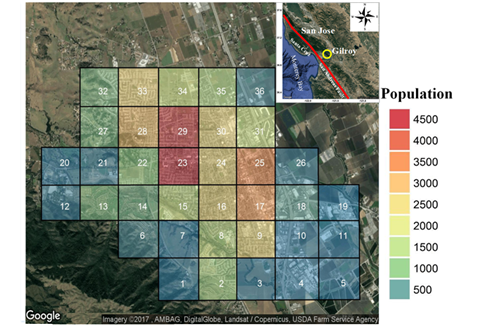
paper research
Quantization Quandary  Does It Halt LLM Self-Explanations?

Quantization Quandary Does It Halt LLM Self-Explanations?

Quantization is widely used to accelerate inference and streamline the deployment of large language models (LLMs), yet its effects on self-explanations (SEs) remain unexplored. SEs, generated by LLMs to justify their own outputs, require reasoning about the model s own decision-making process, a capability that may exhibit particular sensitivity to quantization. As SEs are increasingly relied upon for transparency in high-stakes applications, understanding whether and to what extent quantization degrades SE quality and faithfulness is critical. To address this gap, we examine two types of SEs natural language explanations (NLEs) and counterfactual examples, generated by LLMs quantized using three common techniques at distinct bit widths. Our findings indicate that quantization typically leads to moderate declines in both SE quality (up to 4.4 %) and faithfulness (up to 2.38 %). The user study further demonstrates that quantization diminishes both the coherence and trustworthiness of SEs (up to 8.5 %). Compared to smaller models, larger models show limited resilience to quantization in terms of SE quality but better maintain faithfulness. Moreover, no quantization technique consistently excels across task accuracy, SE quality, and faithfulness. Given that quantization s impact varies by context, we recommend validating SE quality for specific use cases, especially for NLEs, which show greater sensitivity. Nonetheless, the relatively minor deterioration in SE quality and faithfulness does not undermine quantization s effectiveness as a model compression technique.

paper research
Query-Document Dense Vectors for LLM Relevance Judgment Bias Analysis

Query-Document Dense Vectors for LLM Relevance Judgment Bias Analysis

Large Language Models (LLMs) have been used as relevance assessors for Information Retrieval (IR) evaluation collection creation due to reduced cost and increased scalability as compared to human assessors. While previous research has looked at the reliability of LLMs as compared to human assessors, in this work, we aim to understand if LLMs make systematic mistakes when judging relevance, rather than just understanding how good they are on average. To this aim, we propose a novel representational method for queries and documents that allows us to analyze relevance label distributions and compare LLM and human labels to identify patterns of disagreement and localize systematic areas of disagreement. We introduce a clustering-based framework that embeds query-document (Q-D) pairs into a joint semantic space, treating relevance as a relational property. Experiments on TREC Deep Learning 2019 and 2020 show that systematic disagreement between humans and LLMs is concentrated in specific semantic clusters rather than distributed randomly. Query-level analyses reveal recurring failures, most often in definition-seeking, policy-related, or ambiguous contexts. Queries with large variation in agreement across their clusters emerge as disagreement hotspots, where LLMs tend to under-recall relevant content or over-include irrelevant material. This framework links global diagnostics with localized clustering to uncover hidden weaknesses in LLM judgments, enabling bias-aware and more reliable IR evaluation.
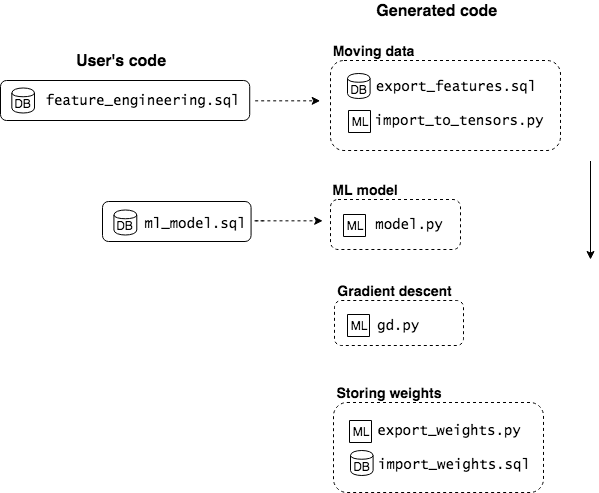
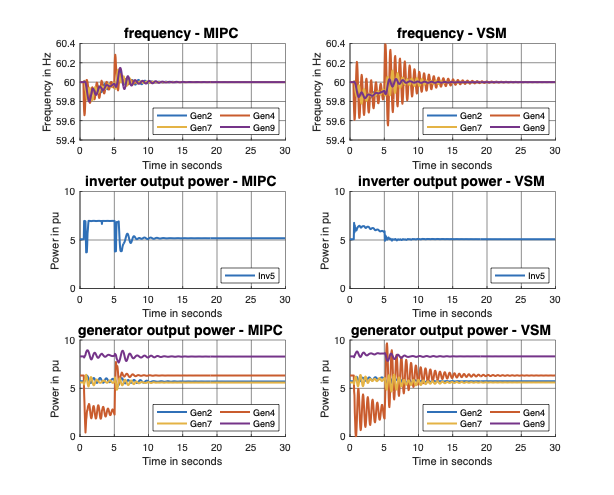
paper research
R-Debater  Retrieval-Augmented Debate Generation through Argumentative Memory

R-Debater Retrieval-Augmented Debate Generation through Argumentative Memory

We present R-Debater, an agentic framework for generating multi-turn debates built on argumentative memory. Grounded in rhetoric and memory studies, the system views debate as a process of recalling and adapting prior arguments to maintain stance consistency, respond to opponents, and support claims with evidence. Specifically, R-Debater integrates a debate knowledge base for retrieving case-like evidence and prior debate moves with a role-based agent that composes coherent utterances across turns. We evaluate on standardized ORCHID debates, constructing a 1,000-item retrieval corpus and a held-out set of 32 debates across seven domains. Two tasks are evaluated next-utterance generation, assessed by InspireScore (subjective, logical, and factual), and adversarial multi-turn simulations, judged by Debatrix (argument, source, language, and overall). Compared with strong LLM baselines, R-Debater achieves higher single-turn and multi-turn scores. Human evaluation with 20 experienced debaters further confirms its consistency and evidence use, showing that combining retrieval grounding with structured planning yields more faithful, stance-aligned, and coherent debates across turns.

paper research
RAIR  A Rule-Aware Benchmark Uniting Challenging Long-Tail and Visual Salience Subset for E-commerce Relevance Assessment

RAIR A Rule-Aware Benchmark Uniting Challenging Long-Tail and Visual Salience Subset for E-commerce Relevance Assessment

Search relevance plays a central role in web e-commerce. While large language models (LLMs) have shown significant results on relevance task, existing benchmarks lack sufficient complexity for comprehensive model assessment, resulting in an absence of standardized relevance evaluation metrics across the industry. To address this limitation, we propose Rule-Aware benchmark with Image for Relevance assessment(RAIR), a Chinese dataset derived from real-world scenarios. RAIR established a standardized framework for relevance assessment and provides a set of universal rules, which forms the foundation for standardized evaluation. Additionally, RAIR analyzes essential capabilities required for current relevance models and introduces a comprehensive dataset consists of three subset (1) a general subset with industry-balanced sampling to evaluate fundamental model competencies; (2) a long-tail hard subset focus on challenging cases to assess performance limits; (3) a visual salience subset for evaluating multimodal understanding capabilities. We conducted experiments on RAIR using 14 open and closed-source models. The results demonstrate that RAIR presents sufficient challenges even for GPT-5, which achieved the best performance. RAIR data are now available, serving as an industry benchmark for relevance assessment while providing new insights into general LLM and Visual Language Model(VLM) evaluation.

paper research
Reading Between the Lines  Deconfounding Causal Estimates using Text Embeddings and Deep Learning

Reading Between the Lines Deconfounding Causal Estimates using Text Embeddings and Deep Learning

Estimating causal treatment effects in observational settings is frequently compromised by selection bias arising from unobserved confounders. While traditional econometric methods struggle when these confounders are orthogonal to structured covariates, high-dimensional unstructured text often contains rich proxies for these latent variables. This study proposes a Neural Network-Enhanced Double Machine Learning (DML) framework designed to leverage text embeddings for causal identification. Using a rigorous synthetic benchmark, we demonstrate that unstructured text embeddings capture critical confounding information that is absent from structured tabular data. However, we show that standard tree-based DML estimators retain substantial bias (+24%) due to their inability to model the continuous topology of embedding manifolds. In contrast, our deep learning approach reduces bias to -0.86% with optimized architectures, effectively recovering the ground-truth causal parameter. These findings suggest that deep learning architectures are essential for satisfying the unconfoundedness assumption when conditioning on high-dimensional natural language data

paper research
No Image

Reducing Off-Policy Mismatch in LLM-RL with Trust Region Masking

Policy gradient methods for large language models optimize a surrogate objective computed from samples of a rollout policy $π_{ text{roll}}$. When $π_{ text{roll}} ne π_θ$, there is approximation error between the surrogate and the true objective. Prior work has shown that this off-policy mismatch is unavoidable in modern LLM-RL due to implementation divergence, mixture-of-experts routing discontinuities, and distributed training staleness. Classical trust region bounds on the resulting error scale as $O(T^2)$ with sequence length $T$, rendering them vacuous for long-horizon tasks. We derive two tighter bounds a Pinsker-Marginal bound scaling as $O(T^{3/2})$ and a Mixed bound scaling as $O(T)$. Crucially, both bounds depend on $D_{kl}^{tok,max}$ -- the maximum token-level KL divergence across all positions in a sequence. This is inherently a sequence-level quantity it requires examining the entire trajectory to compute, and therefore cannot be controlled by token-independent methods like PPO clipping. We propose Trust Region Masking (TRM), which excludes entire sequences from gradient computation if any token violates the trust region, providing the first non-vacuous monotonic improvement guarantees for long-horizon LLM-RL.

paper research
Refinement Provenance Inference  Detecting LLM-Refined Training Prompts from Model Behavior

Refinement Provenance Inference Detecting LLM-Refined Training Prompts from Model Behavior

Instruction tuning increasingly relies on LLM-based prompt refinement, where prompts in the training corpus are selectively rewritten by an external refiner to improve clarity and instruction alignment. This motivates an instance-level audit problem for a fine-tuned model and a training prompt-response pair, can we infer whether the model was trained on the original prompt or its LLM-refined version within a mixed corpus? This matters for dataset governance and dispute resolution when training data are contested. However, it is non-trivial in practice refined and raw instances are interleaved in the training corpus with unknown, source-dependent mixture ratios, making it harder to develop provenance methods that generalize across models and training setups. In this paper, we formalize this audit task as Refinement Provenance Inference (RPI) and show that prompt refinement yields stable, detectable shifts in teacher-forced token distributions, even when semantic differences are not obvious. Building on this phenomenon, we propose RePro, a logit-based provenance framework that fuses teacher-forced likelihood features with logit-ranking signals. During training, RePro learns a transferable representation via shadow fine-tuning, and uses a lightweight linear head to infer provenance on unseen victims without training-data access. Empirically, RePro consistently attains strong performance and transfers well across refiners, suggesting that it exploits refiner-agnostic distribution shifts rather than rewrite-style artifacts.

paper research
RefSR-Adv  Adversarial Attack on Reference-based Image Super-Resolution Models

RefSR-Adv Adversarial Attack on Reference-based Image Super-Resolution Models

Single Image Super-Resolution (SISR) aims to recover high-resolution images from low-resolution inputs. Unlike SISR, Reference-based Super-Resolution (RefSR) leverages an additional high-resolution reference image to facilitate the recovery of high-frequency textures. However, existing research mainly focuses on backdoor attacks targeting RefSR, while the vulnerability of the adversarial attacks targeting RefSR has not been fully explored. To fill this research gap, we propose RefSR-Adv, an adversarial attack that degrades SR outputs by perturbing only the reference image. By maximizing the difference between adversarial and clean outputs, RefSR-Adv induces significant performance degradation and generates severe artifacts across CNN, Transformer, and Mamba architectures on the CUFED5, WR-SR, and DRefSR datasets. Importantly, experiments confirm a positive correlation between the similarity of the low-resolution input and the reference image and attack effectiveness, revealing that the model s over-reliance on reference features is a key security flaw. This study reveals a security vulnerability in RefSR systems, aiming to urge researchers to pay attention to the robustness of RefSR.

paper research
RelayGR  Scaling Long-Sequence Generative Recommendation via Cross-Stage Relay-Race Inference

RelayGR Scaling Long-Sequence Generative Recommendation via Cross-Stage Relay-Race Inference

Real-time recommender systems execute multi-stage cascades (retrieval, pre-processing, fine-grained ranking) under strict tail-latency SLOs, leaving only tens of milliseconds for ranking. Generative recommendation (GR) models can improve quality by consuming long user-behavior sequences, but in production their online sequence length is tightly capped by the ranking-stage P99 budget. We observe that the majority of GR tokens encode user behaviors that are independent of the item candidates, suggesting an opportunity to pre-infer a user-behavior prefix once and reuse it during ranking rather than recomputing it on the critical path. Realizing this idea at industrial scale is non-trivial the prefix cache must survive across multiple pipeline stages before the final ranking instance is determined, the user population implies cache footprints far beyond a single device, and indiscriminate pre-inference would overload shared resources under high QPS. We present RelayGR, a production system that enables in-HBM relay-race inference for GR. RelayGR selectively pre-infers long-term user prefixes, keeps their KV caches resident in HBM over the request lifecycle, and ensures the subsequent ranking can consume them without remote fetches. RelayGR combines three techniques 1) a sequence-aware trigger that admits only at-risk requests under a bounded cache footprint and pre-inference load, 2) an affinity-aware router that co-locates cache production and consumption by routing both the auxiliary pre-infer signal and the ranking request to the same instance, and 3) a memory-aware expander that uses server-local DRAM to capture short-term cross-request reuse while avoiding redundant reloads. We implement RelayGR on Huawei Ascend NPUs and evaluate it with real queries. Under a fixed P99 SLO, RelayGR supports up to 1.5$ times$ longer sequences and improves SLO-compliant throughput by up to 3.6$ times$.

paper research
Remote Sensing Change Detection via Weak Temporal Supervision

Remote Sensing Change Detection via Weak Temporal Supervision

Semantic change detection in remote sensing aims to identify land cover changes between bi-temporal image pairs. Progress in this area has been limited by the scarcity of annotated datasets, as pixel-level annotation is costly and time-consuming. To address this, recent methods leverage synthetic data or generate artificial change pairs, but out-of-domain generalization remains limited. In this work, we introduce a weak temporal supervision strategy that leverages additional temporal observations of existing single-temporal datasets, without requiring any new annotations. Specifically, we extend single-date remote sensing datasets with new observations acquired at different times and train a change detection model by assuming that real bi-temporal pairs mostly contain no change, while pairing images from different locations to generate change examples. To handle the inherent noise in these weak labels, we employ an object-aware change map generation and an iterative refinement process. We validate our approach on extended versions of the FLAIR and IAILD aerial datasets, achieving strong zero-shot and low-data regime performance across different benchmarks. Lastly, we showcase results over large areas in France, highlighting the scalability potential of our method.

paper research
Revisiting Faithfulness  Beyond Hint Verbalization in CoT

Revisiting Faithfulness Beyond Hint Verbalization in CoT

Recent work, using the Biasing Features metric, labels a CoT as unfaithful if it omits a prompt-injected hint that affected the prediction. We argue this metric confuses unfaithfulness with incompleteness, the lossy compression needed to turn distributed transformer computation into a linear natural language narrative. On multi-hop reasoning tasks with Llama-3 and Gemma-3, many CoTs flagged as unfaithful by Biasing Features are judged faithful by other metrics, exceeding 50% in some models. With a new faithful@k metric, we show that larger inference-time token budgets greatly increase hint verbalization (up to 90% in some settings), suggesting much apparent unfaithfulness is due to tight token limits. Using Causal Mediation Analysis, we further show that even non-verbalized hints can causally mediate prediction changes through the CoT. We therefore caution against relying solely on hint-based evaluations and advocate a broader interpretability toolkit, including causal mediation and corruption-based metrics.

paper research
Revolutionizing Thin Structure Segmentation  Meet TopoLoRA-SAM

Revolutionizing Thin Structure Segmentation Meet TopoLoRA-SAM

Foundation segmentation models such as the Segment Anything Model (SAM) exhibit strong zero-shot generalization through large-scale pretraining, but adapting them to domain-specific semantic segmentation remains challenging, particularly for thin structures (e.g., retinal vessels) and noisy modalities (e.g., SAR imagery). Full fine-tuning is computationally expensive and risks catastrophic forgetting. We propose textbf{TopoLoRA-SAM}, a topology-aware and parameter-efficient adaptation framework for binary semantic segmentation. TopoLoRA-SAM injects Low-Rank Adaptation (LoRA) into the frozen ViT encoder, augmented with a lightweight spatial convolutional adapter and optional topology-aware supervision via differentiable clDice. We evaluate our approach on five benchmarks spanning retinal vessel segmentation (DRIVE, STARE, CHASE _DB1), polyp segmentation (Kvasir-SEG), and SAR sea/land segmentation (SL-SSDD), comparing against U-Net, DeepLabV3+, SegFormer, and Mask2Former. TopoLoRA-SAM achieves the best retina-average Dice and the best overall average Dice across datasets, while training only textbf{5.2 %} of model parameters ($ sim$4.9M). On the challenging CHASE _DB1 dataset, our method substantially improves segmentation accuracy and robustness, demonstrating that topology-aware parameter-efficient adaptation can match or exceed fully fine-tuned specialist models. Code is available at https //github.com/salimkhazem/Seglab.git

paper research
Risk-aware Alignment for Safer Language Models

Risk-aware Alignment for Safer Language Models

When fine-tuning pre-trained Language Models (LMs) to exhibit desired behaviors, maintaining control over risk is critical for ensuring both safety and trustworthiness. Most existing safety alignment methods, such as Safe RLHF and SACPO, typically operate under a risk-neutral paradigm that is insufficient to address the risks arising from deviations from the reference policy and offers limited robustness against rare but potentially catastrophic harmful behaviors. To address this limitation, we propose Risk-aware Stepwise Alignment (RSA), a novel alignment method that explicitly incorporates risk awareness into the policy optimization process by leveraging a class of nested risk measures. Specifically, RSA formulates safety alignment as a token-level risk-aware constrained policy optimization problem and solves it through a stepwise alignment procedure that yields token-level policy updates derived from the nested risk measures. This design offers two key benefits (1) it mitigates risks induced by excessive model shift away from a reference policy, and (2) it explicitly suppresses low-probability yet high-impact harmful behaviors. Moreover, we provide theoretical analysis on policy optimality under mild assumptions. Experimental results demonstrate that our method achieves high levels of helpfulness while ensuring strong safety and significantly suppresses tail risks, namely low-probability yet high-impact unsafe responses.

paper research
RiskGuard RL  Navigating High-Leverage Futures Trading

RiskGuard RL Navigating High-Leverage Futures Trading

Futures are contracts obligating the exchange of an asset at a predetermined date and price, notable for their high leverage and liquidity and, therefore, thrive in the Crypto market. RL has been widely applied in various quantitative tasks. However, most methods focus on the spot and could not be directly applied to the futures market with high leverage because of 2 challenges. First, high leverage amplifies reward fluctuations, making training stochastic and difficult to converge. Second, prior works lacked self-awareness of capability boundaries, exposing them to the risk of significant loss when encountering new market state (e.g.,a black swan event like COVID-19). To tackle these challenges, we propose the Efficient and Risk-Aware Ensemble Reinforcement Learning for Futures Trading (FineFT), a novel three-stage ensemble RL framework with stable training and proper risk management. In stage I, ensemble Q learners are selectively updated by ensemble TD errors to improve convergence. In stage II, we filter the Q-learners based on their profitabilities and train VAEs on market states to identify the capability boundaries of the learners. In stage III, we choose from the filtered ensemble and a conservative policy, guided by trained VAEs, to maintain profitability and mitigate risk with new market states. Through extensive experiments on crypto futures in a high-frequency trading environment with high fidelity and 5x leverage, we demonstrate that FineFT outperforms 12 SOTA baselines in 6 financial metrics, reducing risk by more than 40% while achieving superior profitability compared to the runner-up. Visualization of the selective update mechanism shows that different agents specialize in distinct market dynamics, and ablation studies certify routing with VAEs reduces maximum drawdown effectively, and selective update improves convergence and performance.

paper research
RMAAT  Astrocyte-Inspired Memory Compression and Replay for Efficient Long-Context Transformers

RMAAT Astrocyte-Inspired Memory Compression and Replay for Efficient Long-Context Transformers

The quadratic complexity of self-attention mechanism presents a significant impediment to applying Transformer models to long sequences. This work explores computational principles derived from astrocytes-glial cells critical for biological memory and synaptic modulation-as a complementary approach to conventional architectural modifications for efficient self-attention. We introduce the Recurrent Memory Augmented Astromorphic Transformer (RMAAT), an architecture integrating abstracted astrocyte functionalities. RMAAT employs a recurrent, segment-based processing strategy where persistent memory tokens propagate contextual information. An adaptive compression mechanism, governed by a novel retention factor derived from simulated astrocyte long-term plasticity (LTP), modulates these tokens. Attention within segments utilizes an efficient, linear-complexity mechanism inspired by astrocyte short-term plasticity (STP). Training is performed using Astrocytic Memory Replay Backpropagation (AMRB), a novel algorithm designed for memory efficiency in recurrent networks. Evaluations on the Long Range Arena (LRA) benchmark demonstrate RMAAT s competitive accuracy and substantial improvements in computational and memory efficiency, indicating the potential of incorporating astrocyte-inspired dynamics into scalable sequence models.

paper research
Robust and Efficient Zeroth-Order LLM Fine-Tuning via Adaptive Bayesian Subspace Optimizer

Robust and Efficient Zeroth-Order LLM Fine-Tuning via Adaptive Bayesian Subspace Optimizer

Fine-tuning large language models (LLMs) with zeroth-order (ZO) optimization reduces memory by approximating gradients through function evaluations. However, existing methods essentially perform updates in a one-dimensional space, and suffer from collapse or substantial performance degradation under low-precision training. We introduce BSZO, an adaptive textbf{B}ayesian textbf{S}ubspace textbf{Z}eroth-Order textbf{O}ptimizer, which applies Kalman filtering to combine finite-difference information across multiple perturbation directions within a subspace. By treating each finite-difference measurement as a noisy observation, BSZO builds a posterior distribution over the subspace-projected gradient and updates it through Bayesian inference, with a residual-based adaptive mechanism to adapt to noise variations. Theoretical analysis shows that BSZO improves the convergence rate by a factor of $k/γ$ compared to standard ZO methods. Experiments on RoBERTa, Mistral, and OPT models show that BSZO outperforms the baselines across various tasks, achieving up to 6.67 % absolute average improvement on OPT-13B while remaining robust under fp16/bf16 precision and keeping memory usage close to inference-only baselines (1.00$ times$--1.08$ times$ of MeZO).

paper research
Robust Uncertainty Quantification for Factual Generation of Large Language Models

Robust Uncertainty Quantification for Factual Generation of Large Language Models

The rapid advancement of large language model(LLM) technology has facilitated its integration into various domains of professional and daily life. However, the persistent challenge of LLM hallucination has emerged as a critical limitation, significantly compromising the reliability and trustworthiness of AI-generated content. This challenge has garnered significant attention within the scientific community, prompting extensive research efforts in hallucination detection and mitigation strategies. Current methodological frameworks reveal a critical limitation traditional uncertainty quantification approaches demonstrate effectiveness primarily within conventional question-answering paradigms, yet exhibit notable deficiencies when confronted with non-canonical or adversarial questioning strategies. This performance gap raises substantial concerns regarding the dependability of LLM responses in real-world applications requiring robust critical thinking capabilities. This study aims to fill this gap by proposing an uncertainty quantification scenario in the task of generating with multiple facts. We have meticulously constructed a set of trap questions contained with fake names. Based on this scenario, we innovatively propose a novel and robust uncertainty quantification method(RU). A series of experiments have been conducted to verify its effectiveness. The results show that the constructed set of trap questions performs excellently. Moreover, when compared with the baseline methods on four different models, our proposed method has demonstrated great performance, with an average increase of 0.1-0.2 in ROCAUC values compared to the best performing baseline method, providing new sights and methods for addressing the hallucination issue of LLMs.

paper research
Routing by Analogy  kNN-Augmented Expert Assignment for Mixture-of-Experts

Routing by Analogy kNN-Augmented Expert Assignment for Mixture-of-Experts

Mixture-of-Experts (MoE) architectures scale large language models efficiently by employing a parametric router to dispatch tokens to a sparse subset of experts. Typically, this router is trained once and then frozen, rendering routing decisions brittle under distribution shifts. We address this limitation by introducing kNN-MoE, a retrieval-augmented routing framework that reuses optimal expert assignments from a memory of similar past cases. This memory is constructed offline by directly optimizing token-wise routing logits to maximize the likelihood on a reference set. Crucially, we use the aggregate similarity of retrieved neighbors as a confidence-driven mixing coefficient, thus allowing the method to fall back to the frozen router when no relevant cases are found. Experiments show kNN-MoE outperforms zero-shot baselines and rivals computationally expensive supervised fine-tuning.

paper research
RovoDev Code Reviewer  Large-Scale Online Evaluation of LLM-based Code Review Automation at Atlassian

RovoDev Code Reviewer Large-Scale Online Evaluation of LLM-based Code Review Automation at Atlassian

Large Language Models (LLMs)-powered code review automation has the potential to transform code review workflows. Despite the advances of LLM-powered code review comment generation approaches, several practical challenges remain for designing enterprise-grade code review automation tools. In particular, this paper aims at answering the practical question how can we design a review-guided, context-aware, quality-checked code review comment generation without fine-tuning? In this paper, we present RovoDev Code Reviewer, an enterprise-grade LLM-based code review automation tool designed and deployed at scale within Atlassian s development ecosystem with seamless integration into Atlassian s Bitbucket. Through the offline, online, user feedback evaluations over a one-year period, we conclude that RovoDev Code Reviewer is effective in generating code review comments that could lead to code resolution for 38.70% (i.e., comments that triggered code changes in the subsequent commits); and offers the promise of accelerating feedback cycles (i.e., decreasing the PR cycle time by 30.8%), alleviating reviewer workload (i.e., reducing the number of human-written comments by 35.6%), and improving overall software quality (i.e., finding errors with actionable suggestions).

paper research
RSAgent  Iterative Reasoning for Precision Text-Guided Segmentation

RSAgent Iterative Reasoning for Precision Text-Guided Segmentation

Text-guided object segmentation requires both cross-modal reasoning and pixel grounding abilities. Most recent methods treat text-guided segmentation as one-shot grounding, where the model predicts pixel prompts in a single forward pass to drive an external segmentor, which limits verification, refocusing and refinement when initial localization is wrong. To address this limitation, we propose RSAgent, an agentic Multimodal Large Language Model (MLLM) which interleaves reasoning and action for segmentation via multi-turn tool invocations. RSAgent queries a segmentation toolbox, observes visual feedback, and revises its spatial hypothesis using historical observations to re-localize targets and iteratively refine masks. We further build a data pipeline to synthesize multi-turn reasoning segmentation trajectories, and train RSAgent with a two-stage framework cold-start supervised fine-tuning followed by agentic reinforcement learning with fine-grained, task-specific rewards. Extensive experiments show that RSAgent achieves a zero-shot performance of 66.5% gIoU on ReasonSeg test, improving over Seg-Zero-7B by 9%, and reaches 81.5% cIoU on RefCOCOg, demonstrating state-of-the-art performance on both in-domain and out-of-domain benchmarks.

paper research
Safety at One Shot  Patching Fine-Tuned LLMs with A Single Instance

Safety at One Shot Patching Fine-Tuned LLMs with A Single Instance

Fine-tuning safety-aligned large language models (LLMs) can substantially compromise their safety. Previous approaches require many safety samples or calibration sets, which not only incur significant computational overhead during realignment but also lead to noticeable degradation in model utility. Contrary to this belief, we show that safety alignment can be fully recovered with only a single safety example, without sacrificing utility and at minimal cost. Remarkably, this recovery is effective regardless of the number of harmful examples used in fine-tuning or the size of the underlying model, and convergence is achieved within just a few epochs. Furthermore, we uncover the low-rank structure of the safety gradient, which explains why such efficient correction is possible. We validate our findings across five safety-aligned LLMs and multiple datasets, demonstrating the generality of our approach.

paper research
No Image

Sat-EnQ Satisficing to Optimize in Reinforcement Learning

Deep Q-learning algorithms remain notoriously unstable, especially during early training when the maximization operator amplifies estimation errors. Inspired by bounded rationality theory and developmental learning, we introduce Sat-EnQ, a two-phase framework that first learns to be ``good enough before optimizing aggressively. In Phase 1, we train an ensemble of lightweight Q-networks under a satisficing objective that limits early value growth using a dynamic baseline, producing diverse, low-variance estimates while avoiding catastrophic overestimation. In Phase 2, the ensemble is distilled into a larger network and fine-tuned with standard Double DQN. We prove theoretically that satisficing induces bounded updates and cannot increase target variance, with a corollary quantifying conditions for substantial reduction. Empirically, Sat-EnQ achieves 3.8x variance reduction, eliminates catastrophic failures (0% vs 50% for DQN), maintains 79% performance under environmental noise}, and requires 2.5x less compute than bootstrapped ensembles. Our results highlight a principled path toward robust reinforcement learning by embracing satisficing before optimization.

paper research
SB-TRPO  Balancing Safety and Reward in Reinforcement Learning

SB-TRPO Balancing Safety and Reward in Reinforcement Learning

In safety-critical domains, reinforcement learning (RL) agents must often satisfy strict, zero-cost safety constraints while accomplishing tasks. Existing model-free methods frequently either fail to achieve near-zero safety violations or become overly conservative. We introduce Safety-Biased Trust Region Policy Optimisation (SB-TRPO), a principled algorithm for hard-constrained RL that dynamically balances cost reduction with reward improvement. At each step, SB-TRPO updates via a dynamic convex combination of the reward and cost natural policy gradients, ensuring a fixed fraction of optimal cost reduction while using remaining update capacity for reward improvement. Our method comes with formal guarantees of local progress on safety, while still improving reward whenever gradients are suitably aligned. Experiments on standard and challenging Safety Gymnasium tasks demonstrate that SB-TRPO consistently achieves the best balance of safety and task performance in the hard-constrained regime.

paper research
Scaling Laws Beyond Singles  The Familial Model Revolution

Scaling Laws Beyond Singles The Familial Model Revolution

Neural scaling laws have become foundational for optimizing large language model (LLM) training, yet they typically assume a single dense model output. This limitation effectively overlooks Familial models, a transformative paradigm essential for realizing ubiquitous intelligence across heterogeneous device-edge-cloud hierarchies. Transcending static architectures, familial models integrate early exits with relay-style inference to spawn G deployable sub-models from a single shared backbone. In this work, we theoretically and empirically extend the scaling law to capture this one-run, many-models paradigm by introducing Granularity (G) as a fundamental scaling variable alongside model size (N) and training tokens (D). To rigorously quantify this relationship, we propose a unified functional form L(N, D, G) and parameterize it using large-scale empirical runs. Specifically, we employ a rigorous IsoFLOP experimental design to strictly isolate architectural impact from computational scale. Across fixed budgets, we systematically sweep model sizes (N) and granularities (G) while dynamically adjusting tokens (D). This approach effectively decouples the marginal cost of granularity from the benefits of scale, ensuring high-fidelity parameterization of our unified scaling law. Our results reveal that the granularity penalty follows a multiplicative power law with an extremely small exponent. Theoretically, this bridges fixed-compute training with dynamic architectures. Practically, it validates the train once, deploy many paradigm, demonstrating that deployment flexibility is achievable without compromising the compute-optimality of dense baselines.

paper research
ScienceDB AI  An LLM-Driven Agentic Recommender System for Large-Scale Scientific Data Sharing Services

ScienceDB AI An LLM-Driven Agentic Recommender System for Large-Scale Scientific Data Sharing Services

The rapid growth of AI for Science (AI4S) has underscored the significance of scientific datasets, leading to the establishment of numerous national scientific data centers and sharing platforms. Despite this progress, efficiently promoting dataset sharing and utilization for scientific research remains challenging. Scientific datasets contain intricate domain-specific knowledge and contexts, rendering traditional collaborative filtering-based recommenders inadequate. Recent advances in Large Language Models (LLMs) offer unprecedented opportunities to build conversational agents capable of deep semantic understanding and personalized recommendations. In response, we present ScienceDB AI, a novel LLM-driven agentic recommender system developed on Science Data Bank (ScienceDB), one of the largest global scientific data-sharing platforms. ScienceDB AI leverages natural language conversations and deep reasoning to accurately recommend datasets aligned with researchers scientific intents and evolving requirements. The system introduces several innovations a Scientific Intention Perceptor to extract structured experimental elements from complicated queries, a Structured Memory Compressor to manage multi-turn dialogues effectively, and a Trustworthy Retrieval-Augmented Generation (Trustworthy RAG) framework. The Trustworthy RAG employs a two-stage retrieval mechanism and provides citable dataset references via Citable Scientific Task Record (CSTR) identifiers, enhancing recommendation trustworthiness and reproducibility. Through extensive offline and online experiments using over 10 million real-world datasets, ScienceDB AI has demonstrated significant effectiveness. To our knowledge, ScienceDB AI is the first LLM-driven conversational recommender tailored explicitly for large-scale scientific dataset sharing services. The platform is publicly accessible at https //ai.scidb.cn/en.

paper research
Self-Critique Empowers LLM Planning Gains

Self-Critique Empowers LLM Planning Gains

We demonstrate an approach for LLMs to critique their emph{own} answers with the goal of enhancing their performance that leads to significant improvements over established planning benchmarks. Despite the findings of earlier research that has cast doubt on the effectiveness of LLMs leveraging self critique methods, we show significant performance gains on planning datasets in the Blocksworld domain through intrinsic self-critique, without external source such as a verifier. We also demonstrate similar improvements on Logistics and Mini-grid datasets, exceeding strong baseline accuracies. We employ a few-shot learning technique and progressively extend it to a many-shot approach as our base method and demonstrate that it is possible to gain substantial improvement on top of this already competitive approach by employing an iterative process for correction and refinement. We illustrate how self-critique can significantly boost planning performance. Our empirical results present new state-of-the-art on the class of models considered, namely LLM model checkpoints from October 2024. Our primary focus lies on the method itself, demonstrating intrinsic self-improvement capabilities that are applicable regardless of the specific model version, and we believe that applying our method to more complex search techniques and more capable models will lead to even better performance.

paper research
Semantic Safeguards  Navigating Maritime Autonomy with Vision-Language Models

Semantic Safeguards Navigating Maritime Autonomy with Vision-Language Models

The draft IMO MASS Code requires autonomous and remotely supervised maritime vessels to detect departures from their operational design domain, enter a predefined fallback that notifies the operator, permit immediate human override, and avoid changing the voyage plan without approval. Meeting these obligations in the alert-to-takeover gap calls for a short-horizon, human-overridable fallback maneuver. Classical maritime autonomy stacks struggle when the correct action depends on meaning (e.g., diver-down flag means people in the water, fire close by means hazard). We argue (i) that vision-language models (VLMs) provide semantic awareness for such out-of-distribution situations, and (ii) that a fast-slow anomaly pipeline with a short-horizon, human-overridable fallback maneuver makes this practical in the handover window. We introduce Semantic Lookout, a camera-only, candidate-constrained VLM fallback maneuver selector that selects one cautious action (or station-keeping) from water-valid, world-anchored trajectories under continuous human authority. On 40 harbor scenes we measure per-call scene understanding and latency, alignment with human consensus (model majority-of-three voting), short-horizon risk-relief on fire hazard scenes, and an on-water alert->fallback maneuver->operator handover. Sub-10 s models retain most of the awareness of slower state-of-the-art models. The fallback maneuver selector outperforms geometry-only baselines and increases standoff distance on fire scenes. A field run verifies end-to-end operation. These results support VLMs as semantic fallback maneuver selectors compatible with the draft IMO MASS Code, within practical latency budgets, and motivate future work on domain-adapted, hybrid autonomy that pairs foundation-model semantics with multi-sensor bird s-eye-view perception and short-horizon replanning. Website kimachristensen.github.io/bridge_policy

paper research
Semi-Automated Data Annotation in Multisensor Datasets for Autonomous Vehicle Testing

Semi-Automated Data Annotation in Multisensor Datasets for Autonomous Vehicle Testing

This report presents the design and implementation of a semi-automated data annotation pipeline developed within the DARTS project, whose goal is to create a large-scale, multimodal dataset of driving scenarios recorded in Polish conditions. Manual annotation of such heterogeneous data is both costly and time-consuming. To address this challenge, the proposed solution adopts a human-in-the-loop approach that combines artificial intelligence with human expertise to reduce annotation cost and duration. The system automatically generates initial annotations, enables iterative model retraining, and incorporates data anonymization and domain adaptation techniques. At its core, the tool relies on 3D object detection algorithms to produce preliminary annotations. Overall, the developed tools and methodology result in substantial time savings while ensuring consistent, high-quality annotations across different sensor modalities. The solution directly supports the DARTS project by accelerating the preparation of large annotated dataset in the project s standardized format, strengthening the technological base for autonomous vehicle research in Poland.

paper research
Semi-overlapping Multi-bandit Best Arm Identification for Sequential Support Network Learning

Semi-overlapping Multi-bandit Best Arm Identification for Sequential Support Network Learning

Many modern AI and ML problems require evaluating partners contributions through shared yet asymmetric, computationally intensive processes and the simultaneous selection of the most beneficial candidates. Sequential approaches to these problems can be unified under a new framework, Sequential Support Network Learning (SSNL), in which the goal is to select the most beneficial candidate set of partners for all participants using trials; that is, to learn a directed graph that represents the highest-performing contributions. We demonstrate that a new pure-exploration model, the semi-overlapping multi-(multi-armed) bandit (SOMMAB), in which a single evaluation provides distinct feedback to multiple bandits due to structural overlap among their arms, can be used to learn a support network from sparse candidate lists efficiently. We develop a generalized GapE algorithm for SOMMABs and derive new exponential error bounds that improve the best known constant in the exponent for multi-bandit best-arm identification. The bounds scale linearly with the degree of overlap, revealing significant sample-complexity gains arising from shared evaluations. From an application point of view, this work provides a theoretical foundation and improved performance guarantees for sequential learning tools for identifying support networks from sparse candidates in multiple learning problems, such as in multi-task learning (MTL), auxiliary task learning (ATL), federated learning (FL), and in multi-agent systems (MAS).

paper research
SHAP Insights into Transformer-Based News Bias Detectors

SHAP Insights into Transformer-Based News Bias Detectors

Automated bias detection in news text is heavily used to support journalistic analysis and media accountability, yet little is known about how bias detection models arrive at their decisions or why they fail. In this work, we present a comparative interpretability study of two transformer-based bias detection models a bias detector fine-tuned on the BABE dataset and a domain-adapted pre-trained RoBERTa model fine-tuned on the BABE dataset, using SHAP-based explanations. We analyze word-level attributions across correct and incorrect predictions to characterize how different model architectures operationalize linguistic bias. Our results show that although both models attend to similar categories of evaluative language, they differ substantially in how these signals are integrated into predictions. The bias detector model assigns stronger internal evidence to false positives than to true positives, indicating a misalignment between attribution strength and prediction correctness and contributing to systematic over-flagging of neutral journalistic content. In contrast, the domain-adaptive model exhibits attribution patterns that better align with prediction outcomes and produces 63 % fewer false positives. We further demonstrate that model errors arise from distinct linguistic mechanisms, with false positives driven by discourse-level ambiguity rather than explicit bias cues. These findings highlight the importance of interpretability-aware evaluation for bias detection systems and suggest that architectural and training choices critically affect both model reliability and deployment suitability in journalistic contexts.

paper research
No Image

Sharper Bounds for Private and Robust Model Alignment

In this paper, we study the private and robust alignment of language models from a theoretical perspective by establishing upper bounds on the suboptimality gap in both offline and online settings. We consider preference labels subject to privacy constraints and/or adversarial corruption, and analyze two distinct interplays between them privacy-first and corruption-first. For the privacy-only setting, we show that log loss with an MLE-style algorithm achieves near-optimal rates, in contrast to conventional wisdom. For the joint privacy-and-corruption setting, we first demonstrate that existing offline algorithms in fact provide stronger guarantees -- simultaneously in terms of corruption level and privacy parameters -- than previously known, which further yields improved bounds in the corruption-only regime. In addition, we also present the first set of results for private and robust online alignment. Our results are enabled by new uniform convergence guarantees for log loss and square loss under privacy and corruption, which we believe have broad applicability across learning theory and statistics.

paper research
ShowUI-$π$  The Dexterous Hand of GUIs

ShowUI-$π$ The Dexterous Hand of GUIs

Building intelligent agents capable of dexterous manipulation is essential for achieving human-like automation in both robotics and digital environments. However, existing GUI agents rely on discrete click predictions (x,y), which prohibits free-form, closed-loop trajectories (e.g. dragging a progress bar) that require continuous, on-the-fly perception and adjustment. In this work, we develop ShowUI-$π$, the first flow-based generative model as GUI dexterous hand, featuring the following designs (i) Unified Discrete-Continuous Actions, integrating discrete clicks and continuous drags within a shared model, enabling flexible adaptation across diverse interaction modes; (ii) Flow-based Action Generation for drag modeling, which predicts incremental cursor adjustments from continuous visual observations via a lightweight action expert, ensuring smooth and stable trajectories; (iii) Drag Training data and Benchmark, where we manually collect and synthesize 20K drag trajectories across five domains (e.g. PowerPoint, Adobe Premiere Pro), and introduce ScreenDrag, a benchmark with comprehensive online and offline evaluation protocols for assessing GUI agents drag capabilities. Our experiments show that proprietary GUI agents still struggle on ScreenDrag (e.g. Operator scores 13.27, and the best Gemini-2.5-CUA reaches 22.18). In contrast, ShowUI-$π$ achieves 26.98 with only 450M parameters, underscoring both the difficulty of the task and the effectiveness of our approach. We hope this work advances GUI agents toward human-like dexterous control in digital world. The code is available at https //github.com/showlab/showui-pi.

paper research
SingingBot  An Avatar-Driven System for Robotic Face Singing Performance

SingingBot An Avatar-Driven System for Robotic Face Singing Performance

Equipping robotic faces with singing capabilities is crucial for empathetic Human-Robot Interaction. However, existing robotic face driving research primarily focuses on conversations or mimicking static expressions, struggling to meet the high demands for continuous emotional expression and coherence in singing. To address this, we propose a novel avatar-driven framework for appealing robotic singing. We first leverage portrait video generation models embedded with extensive human priors to synthesize vivid singing avatars, providing reliable expression and emotion guidance. Subsequently, these facial features are transferred to the robot via semantic-oriented mapping functions that span a wide expression space. Furthermore, to quantitatively evaluate the emotional richness of robotic singing, we propose the Emotion Dynamic Range metric to measure the emotional breadth within the Valence-Arousal space, revealing that a broad emotional spectrum is crucial for appealing performances. Comprehensive experiments prove that our method achieves rich emotional expressions while maintaining lip-audio synchronization, significantly outperforming existing approaches.

paper research
Skim-Aware Contrastive Learning for Efficient Document Representation

Skim-Aware Contrastive Learning for Efficient Document Representation

Although transformer-based models have shown strong performance in word- and sentence-level tasks, effectively representing long documents, especially in fields like law and medicine, remains difficult. Sparse attention mechanisms can handle longer inputs, but are resource-intensive and often fail to capture full-document context. Hierarchical transformer models offer better efficiency but do not clearly explain how they relate different sections of a document. In contrast, humans often skim texts, focusing on important sections to understand the overall message. Drawing from this human strategy, we introduce a new self-supervised contrastive learning framework that enhances long document representation. Our method randomly masks a section of the document and uses a natural language inference (NLI)-based contrastive objective to align it with relevant parts while distancing it from unrelated ones. This mimics how humans synthesize information, resulting in representations that are both richer and more computationally efficient. Experiments on legal and biomedical texts confirm significant gains in both accuracy and efficiency.

paper research
Slot-ID  Identity-Preserving Video Generation from Reference Videos via Slot-Based Temporal Identity Encoding

Slot-ID Identity-Preserving Video Generation from Reference Videos via Slot-Based Temporal Identity Encoding

Producing prompt-faithful videos that preserve a user-specified identity remains challenging models need to extrapolate facial dynamics from sparse reference while balancing the tension between identity preservation and motion naturalness. Conditioning on a single image completely ignores the temporal signature, which leads to pose-locked motions, unnatural warping, and average faces when viewpoints and expressions change. To this end, we introduce an identity-conditioned variant of a diffusion-transformer video generator which uses a short reference video rather than a single portrait. Our key idea is to incorporate the dynamics in the reference. A short clip reveals subject-specific patterns, e.g., how smiles form, across poses and lighting. From this clip, a Sinkhorn-routed encoder learns compact identity tokens that capture characteristic dynamics while remaining pretrained backbone-compatible. Despite adding only lightweight conditioning, the approach consistently improves identity retention under large pose changes and expressive facial behavior, while maintaining prompt faithfulness and visual realism across diverse subjects and prompts.

paper research
Smart Fleets  Reinforcement Learning Solves Routing Complexity

Smart Fleets Reinforcement Learning Solves Routing Complexity

The Fleet Size and Mix Vehicle Routing Problem (FSMVRP) is a prominent variant of the Vehicle Routing Problem (VRP), extensively studied in operations research and computational science. FSMVRP requires simultaneous decisions on fleet composition and routing, making it highly applicable to real-world scenarios such as short-term vehicle rental and on-demand logistics. However, these requirements also increase the complexity of FSMVRP, posing significant challenges, particularly in large-scale and time-constrained environments. In this paper, we propose a deep reinforcement learning (DRL)-based approach for solving FSMVRP, capable of generating near-optimal solutions within a few seconds. Specifically, we formulate the problem as a Markov Decision Process (MDP) and develop a novel policy network, termed FRIPN, that seamlessly integrates fleet composition and routing decisions. Our method incorporates specialized input embeddings designed for distinctdecision objectives, including a remaining graph embedding to facilitate effective vehicle employment decisions. Comprehensive experiments are conducted on both randomly generated instances and benchmark datasets. The experimental results demonstrate that our method exhibits notable advantages in terms of computational efficiency and scalability, particularly in large-scale and time-constrained scenarios. These strengths highlight the potential of our approach for practical applications and provide valuable inspiration for extending DRL-based techniques to other variants of VRP.

paper research
SmartFlow Reinforcement Learning and Agentic AI for Bike-Sharing Optimisation

SmartFlow Reinforcement Learning and Agentic AI for Bike-Sharing Optimisation

SmartFlow is a multi-layered framework that integrates Reinforcement Learning and Agentic AI to address the dynamic rebalancing problem in urban bike-sharing services. Its architecture separates strategic, tactical, and communication functions for clarity and scalability. At the strategic level, a Deep Q-Network (DQN) agent, trained in a high-fidelity simulation of New Yorks Citi Bike network, learns robust rebalancing policies by modelling the challenge as a Markov Decision Process. These high-level strategies feed into a deterministic tactical module that optimises multi-leg journeys and schedules just-in-time dispatches to minimise fleet travel. Evaluation across multiple seeded runs demonstrates SmartFlows high efficacy, reducing network imbalance by over 95% while requiring minimal travel distance and achieving strong truck utilisation. A communication layer, powered by a grounded Agentic AI with a Large Language Model (LLM), translates logistical plans into clear, actionable instructions for operational staff, ensuring interpretability and execution readiness. This integration bridges machine intelligence with human operations, offering a scalable solution that reduces idle time, improves bike availability, and lowers operational costs. SmartFlow provides a blueprint for interpretable, AI-driven logistics in complex urban mobility networks.

paper research
SoulSeek  Exploring the Use of Social Cues in LLM-based Information Seeking

SoulSeek Exploring the Use of Social Cues in LLM-based Information Seeking

Social cues, which convey others presence, behaviors, or identities, play a crucial role in human information seeking by helping individuals judge relevance and trustworthiness. However, existing LLM-based search systems primarily rely on semantic features, creating a misalignment with the socialized cognition underlying natural information seeking. To address this gap, we explore how the integration of social cues into LLM-based search influences users perceptions, experiences, and behaviors. Focusing on social media platforms that are beginning to adopt LLM-based search, we integrate design workshops, the implementation of the prototype system (SoulSeek), a between-subjects study, and mixed-method analyses to examine both outcome- and process-level findings. The workshop informs the prototype s cue-integrated design. The study shows that social cues improve perceived outcomes and experiences, promote reflective information behaviors, and reveal limits of current LLM-based search. We propose design implications emphasizing better social-knowledge understanding, personalized cue settings, and controllable interactions.

paper research
SpaceTimePilot  Generative Rendering of Dynamic Scenes Across Space and Time

SpaceTimePilot Generative Rendering of Dynamic Scenes Across Space and Time

We present SpaceTimePilot, a video diffusion model that disentangles space and time for controllable generative rendering. Given a monocular video, SpaceTimePilot can independently alter the camera viewpoint and the motion sequence within the generative process, re-rendering the scene for continuous and arbitrary exploration across space and time. To achieve this, we introduce an effective animation time-embedding mechanism in the diffusion process, allowing explicit control of the output video s motion sequence with respect to that of the source video. As no datasets provide paired videos of the same dynamic scene with continuous temporal variations, we propose a simple yet effective temporal-warping training scheme that repurposes existing multi-view datasets to mimic temporal differences. This strategy effectively supervises the model to learn temporal control and achieve robust space-time disentanglement. To further enhance the precision of dual control, we introduce two additional components an improved camera-conditioning mechanism that allows altering the camera from the first frame, and CamxTime, the first synthetic space-and-time full-coverage rendering dataset that provides fully free space-time video trajectories within a scene. Joint training on the temporal-warping scheme and the CamxTime dataset yields more precise temporal control. We evaluate SpaceTimePilot on both real-world and synthetic data, demonstrating clear space-time disentanglement and strong results compared to prior work. Project page https //zheninghuang.github.io/Space-Time-Pilot/ Code https //github.com/ZheningHuang/spacetimepilot

paper research
SPARK  Persona Agents for Dynamic Search Personalization

SPARK Persona Agents for Dynamic Search Personalization

Personalized search demands the ability to model users evolving, multi-dimensional information needs; a challenge for systems constrained by static profiles or monolithic retrieval pipelines. We present SPARK (Search Personalization via Agent-Driven Retrieval and Knowledge-sharing), a framework in which coordinated persona-based large language model (LLM) agents deliver task-specific retrieval and emergent personalization. SPARK formalizes a persona space defined by role, expertise, task context, and domain, and introduces a Persona Coordinator that dynamically interprets incoming queries to activate the most relevant specialized agents. Each agent executes an independent retrieval-augmented generation process, supported by dedicated long- and short-term memory stores and context-aware reasoning modules. Inter-agent collaboration is facilitated through structured communication protocols, including shared memory repositories, iterative debate, and relay-style knowledge transfer. Drawing on principles from cognitive architectures, multi-agent coordination theory, and information retrieval, SPARK models how emergent personalization properties arise from distributed agent behaviors governed by minimal coordination rules. The framework yields testable predictions regarding coordination efficiency, personalization quality, and cognitive load distribution, while incorporating adaptive learning mechanisms for continuous persona refinement. By integrating fine-grained agent specialization with cooperative retrieval, SPARK provides insights for next-generation search systems capable of capturing the complexity, fluidity, and context sensitivity of human information-seeking behavior.

paper research
Splitwise  Adaptive Edge-Cloud LLM Partitioning with DRL

Splitwise Adaptive Edge-Cloud LLM Partitioning with DRL

Deploying large language models (LLMs) on edge devices is challenging due to their limited memory and power resources. Cloud-only inference reduces device burden but introduces high latency and cost. Static edge-cloud partitions optimize a single metric and struggle when bandwidth fluctuates. We propose Splitwise, a novel Lyapunov-assisted deep reinforcement learning (DRL) framework for fine-grained, adaptive partitioning of LLMs across edge and cloud environments. Splitwise decomposes transformer layers into attention heads and feed-forward sub-blocks, exposing more partition choices than layer-wise schemes. A hierarchical DRL policy, guided by Lyapunov optimization, jointly minimizes latency, energy consumption, and accuracy degradation while guaranteeing queue stability under stochastic workloads and variable network bandwidth. Splitwise also guarantees robustness via partition checkpoints with exponential backoff recovery in case of communication failures. Experiments on Jetson Orin NX, Galaxy S23, and Raspberry Pi 5 with GPT-2 (1.5B), LLaMA-7B, and LLaMA-13B show that Splitwise reduces end-to-end latency by 1.4x-2.8x and cuts energy consumption by up to 41% compared with existing partitioners. It lowers the 95th-percentile latency by 53-61% relative to cloud-only execution, while maintaining accuracy and modest memory requirements.

paper research
SPoRC-VIST  A Benchmark for Evaluating Generative Natural Narrative in Vision-Language Models

SPoRC-VIST A Benchmark for Evaluating Generative Natural Narrative in Vision-Language Models

Vision-Language Models (VLMs) have achieved remarkable success in descriptive tasks such as image captioning and visual question answering (VQA). However, their ability to generate engaging, long-form narratives -- specifically multi-speaker podcast dialogues -- remains under-explored and difficult to evaluate. Standard metrics like BLEU and ROUGE fail to capture the nuances of conversational naturalness, personality, and narrative flow, often rewarding safe, repetitive outputs over engaging storytelling. In this work, we present a novel pipeline for end-to-end visual podcast generation, and fine-tune a Qwen3-VL-32B model on a curated dataset of 4,000 image-dialogue pairs. Crucially, we use a synthetic-to-real training strategy we train on high-quality podcast dialogues from the Structured Podcast Research Corpus (SPoRC) paired with synthetically generated imagery, and evaluate on real-world photo sequences from the Visual Storytelling Dataset (VIST). This rigorous setup tests the model s ability to generalize from synthetic training data to real-world visual domains. We propose a comprehensive evaluation framework that moves beyond textual overlap, and use AI-as-a-judge (Gemini 3 Pro, Claude Opus 4.5, GPT 5.2) and novel style metrics (average turn length, speaker switch rate) to assess quality. Our experiments demonstrate that our fine-tuned 32B model significantly outperforms a 235B base model in conversational naturalness ($>$80 % win rate) and narrative depth (+50 % turn length), while maintaining identical visual grounding capabilities (CLIPScore 20.39).

paper research
Spotlight on Bias  Unveiling Patterns of Algorithmic Unfairness

Spotlight on Bias Unveiling Patterns of Algorithmic Unfairness

Fairness in algorithmic decision-making is often framed in terms of individual fairness, which requires that similar individuals receive similar outcomes. A system violates individual fairness if there exists a pair of inputs differing only in protected attributes (such as race or gender) that lead to significantly different outcomes-for example, one favorable and the other unfavorable. While this notion highlights isolated instances of unfairness, it fails to capture broader patterns of systematic or clustered discrimination that may affect entire subgroups. We introduce and motivate the concept of discrimination clustering, a generalization of individual fairness violations. Rather than detecting single counterfactual disparities, we seek to uncover regions of the input space where small perturbations in protected features lead to k-significantly distinct clusters of outcomes. That is, for a given input, we identify a local neighborhood-differing only in protected attributes-whose members outputs separate into many distinct clusters. These clusters reveal significant arbitrariness in treatment solely based on protected attributes that help expose patterns of algorithmic bias that elude pairwise fairness checks. We present HyFair, a hybrid technique that combines formal symbolic analysis (via SMT and MILP solvers) to certify individual fairness with randomized search to discover discriminatory clusters. This combination enables both formal guarantees-when no counterexamples exist-and the detection of severe violations that are computationally challenging for symbolic methods alone. Given a set of inputs exhibiting high k-unfairness, we introduce a novel explanation method to generate interpretable, decision-tree-style artifacts. Our experiments demonstrate that HyFair outperforms state-of-the-art fairness verification and local explanation methods.

paper research
SQL-Driven Transparency in Pathology Image Analysis

SQL-Driven Transparency in Pathology Image Analysis

Automated pathology image analysis is central to clinical diagnosis, but clinicians still ask which slide features drive a model s decision and why. Vision-language models can produce natural language explanations, but these are often correlational and lack verifiable evidence. In this paper, we introduce an SQL-centered agentic framework that enables both feature measurement and reasoning to be auditable. Specifically, after extracting human-interpretable cellular features, Feature Reasoning Agents compose and execute SQL queries over feature tables to aggregate visual evidence into quantitative findings. A Knowledge Comparison Agent then evaluates these findings against established pathological knowledge, mirroring how pathologists justify diagnoses from measurable observations. Extensive experiments evaluated on two pathology visual question answering datasets demonstrate our method improves interpretability and decision traceability while producing executable SQL traces that link cellular measurements to diagnostic conclusions.

paper research
STED & Score  Ensuring LLM Output Reliability

STED & Score Ensuring LLM Output Reliability

Large Language Models (LLMs) are increasingly deployed for structured data generation, yet output consistency remains critical for production applications. We introduce a comprehensive framework for evaluating and improving consistency in LLM-generated structured outputs. Our approach combines (1) STED (Semantic Tree Edit Distance), a novel similarity metric balancing semantic flexibility with structural strictness when comparing JSON outputs, and (2) a consistency scoring framework aggregating multiple STED measurements across repeated generations to quantify reliability. Through systematic experiments on synthetic datasets with controlled schema, expression, and semantic variations, we demonstrate STED achieves superior performance ($0.86-0.90$ similarity for semantic equivalents, $0.0$ for structural breaks) compared to existing metrics including TED, BERTScore, and DeepDiff. Applying our framework to benchmark six LLMs reveals significant variations Claude-3.7-Sonnet demonstrates exceptional consistency, maintaining near-perfect structural reliability even at high temperatures ($T=0.9$), while models like Claude-3-Haiku and Nova-Pro exhibit substantial degradation requiring careful tuning. Our framework enables practical applications including targeted model selection for structured tasks, iterative prompt refinement for reproducible results, and diagnostic analysis to identify inconsistency root causes. This work provides theoretical foundations and practical tools for ensuring reliable structured output generation in LLM-based production systems.

paper research
StressRoBERTa  Detecting Chronic Stress via Social Media Analysis

StressRoBERTa Detecting Chronic Stress via Social Media Analysis

The prevalence of chronic stress represents a significant public health concern, with social media platforms like Twitter serving as important venues for individuals to share their experiences. This paper introduces StressRoBERTa, a cross-condition transfer learning approach for automatic detection of self-reported chronic stress in English tweets. The investigation examines whether continual training on clinically related conditions (depression, anxiety, PTSD), disorders with high comorbidity with chronic stress, improves stress detection compared to general language models and broad mental health models. RoBERTa is continually trained on the Stress-SMHD corpus (108M words from users with self-reported diagnoses of depression, anxiety, and PTSD) and fine-tuned on the SMM4H 2022 Task 8 dataset. StressRoBERTa achieves 82% F1-score, outperforming the best shared task system (79% F1) by 3 percentage points. The results demonstrate that focused cross-condition transfer from stress-related disorders (+1% F1 over vanilla RoBERTa) provides stronger representations than general mental health training. Evaluation on Dreaddit (81% F1) further demonstrates transfer from clinical mental health contexts to situational stress discussions.

paper research
No Image

Stronger Approximation Guarantees for Non-Monotone γ-Weakly DR-Submodular Maximization

Maximizing submodular objectives under constraints is a fundamental problem in machine learning and optimization. We study the maximization of a nonnegative, non-monotone $γ$-weakly DR-submodular function over a down-closed convex body. Our main result is an approximation algorithm whose guarantee depends smoothly on $γ$; in particular, when $γ=1$ (the DR-submodular case) our bound recovers the $0.401$ approximation factor, while for $γ<1$ the guarantee degrades gracefully and, it improves upon previously reported bounds for $γ$-weakly DR-submodular maximization under the same constraints. Our approach combines a Frank-Wolfe-guided continuous-greedy framework with a $γ$-aware double-greedy step, yielding a simple yet effective procedure for handling non-monotonicity. This results in state-of-the-art guarantees for non-monotone $γ$-weakly DR-submodular maximization over down-closed convex bodies.

paper research
Stylometry Analysis of Human and Machine Text for Academic Integrity

Stylometry Analysis of Human and Machine Text for Academic Integrity

This work addresses critical challenges to academic integrity, including plagiarism, fabrication, and verification of authorship of educational content, by proposing a Natural Language Processing (NLP)-based framework for authenticating students content through author attribution and style change detection. Despite some initial efforts, several aspects of the topic are yet to be explored. In contrast to existing solutions, the paper provides a comprehensive analysis of the topic by targeting four relevant tasks, including (i) classification of human and machine text, (ii) differentiating in single and multi-authored documents, (iii) author change detection within multi-authored documents, and (iv) author recognition in collaboratively produced documents. The solutions proposed for the tasks are evaluated on two datasets generated with Gemini using two different prompts, including a normal and a strict set of instructions. During experiments, some reduction in the performance of the proposed solutions is observed on the dataset generated through the strict prompt, demonstrating the complexities involved in detecting machine-generated text with cleverly crafted prompts. The generated datasets, code, and other relevant materials are made publicly available on GitHub, which are expected to provide a baseline for future research in the domain.

paper research
Subtle Sexism  Experts vs. Algorithms in Detection Debate

Subtle Sexism Experts vs. Algorithms in Detection Debate

Online sexism increasingly appears in subtle, context-dependent forms that evade traditional detection methods. Its interpretation often depends on overlapping linguistic, psychological, legal, and cultural dimensions, which produce mixed and sometimes contradictory signals in annotated datasets. These inconsistencies, combined with label scarcity and class imbalance, result in unstable decision boundaries and cause fine-tuned models to overlook subtler, underrepresented forms of harm. To address these challenges, we propose a two-stage framework that unifies (i) targeted training procedures to better regularize supervision to scarce and noisy data with (ii) selective, reasoning-based inference to handle ambiguous or borderline cases. First, we stabilize the training combining class-balanced focal loss, class-aware batching, and post-hoc threshold calibration, strategies for the firs time adapted for this domain to mitigate label imbalance and noisy supervision. Second, we bridge the gap between efficiency and reasoning with a a dynamic routing mechanism that distinguishes between unambiguous instances and complex cases requiring a deliberative process. This reasoning process results in the novel Collaborative Expert Judgment (CEJ) module which prompts multiple personas and consolidates their reasoning through a judge model. Our approach outperforms existing approaches across several public benchmarks, with F1 gains of +4.48% and +1.30% on EDOS Tasks A and B, respectively, and a +2.79% improvement in ICM on EXIST 2025 Task 1.1.

paper research
Summarizing the Unseen  Less-Resourced Language Techniques

Summarizing the Unseen Less-Resourced Language Techniques

Automatic text summarization has achieved high performance in high-resourced languages like English, but comparatively less attention has been given to summarization in less-resourced languages. This work compares a variety of different approaches to summarization from zero-shot prompting of LLMs large and small to fine-tuning smaller models like mT5 with and without three data augmentation approaches and multilingual transfer. We also explore an LLM translation pipeline approach, translating from the source language to English, summarizing and translating back. Evaluating with five different metrics, we find that there is variation across LLMs in their performance across similar parameter sizes, that our multilingual fine-tuned mT5 baseline outperforms most other approaches including zero-shot LLM performance for most metrics, and that LLM as judge may be less reliable on less-resourced languages.

paper research
Surprisal and Metaphor Novelty Judgments  Moderate Correlations and Divergent Scaling Effects Revealed by Corpus-Based and Synthetic Datasets

Surprisal and Metaphor Novelty Judgments Moderate Correlations and Divergent Scaling Effects Revealed by Corpus-Based and Synthetic Datasets

Novel metaphor comprehension involves complex semantic processes and linguistic creativity, making it an interesting task for studying language models (LMs). This study investigates whether surprisal, a probabilistic measure of predictability in LMs, correlates with annotations of metaphor novelty in different datasets. We analyse the surprisal of metaphoric words in corpus-based and synthetic metaphor datasets using 16 causal LM variants. We propose a cloze-style surprisal method that conditions on full-sentence context. Results show that LM surprisal yields significant moderate correlations with scores/labels of metaphor novelty. We further identify divergent scaling patterns on corpus-based data, correlation strength decreases with model size (inverse scaling effect), whereas on synthetic data it increases (quality-power hypothesis). We conclude that while surprisal can partially account for annotations of metaphor novelty, it remains limited as a metric of linguistic creativity. Code and data are publicly available https //github.com/OmarMomen14/surprisal-metaphor-novelty

paper research
SynRAG  A Large Language Model Framework for Executable Query Generation in Heterogeneous SIEM Systems

SynRAG A Large Language Model Framework for Executable Query Generation in Heterogeneous SIEM Systems

Security Information and Event Management (SIEM) systems are essential for large enterprises to monitor their IT infrastructure by ingesting and analyzing millions of logs and events daily. Security Operations Center (SOC) analysts are tasked with monitoring and analyzing this vast data to identify potential threats and take preventive actions to protect enterprise assets. However, the diversity among SIEM platforms, such as Palo Alto Networks Qradar, Google SecOps, Splunk, Microsoft Sentinel and the Elastic Stack, poses significant challenges. As these systems differ in attributes, architecture, and query languages, making it difficult for analysts to effectively monitor multiple platforms without undergoing extensive training or forcing enterprises to expand their workforce. To address this issue, we introduce SynRAG, a unified framework that automatically generates threat detection or incident investigation queries for multiple SIEM platforms from a platform-agnostic specification. SynRAG can generate platformspecific queries from a single high-level specification written by analysts. Without SynRAG, analysts would need to manually write separate queries for each SIEM platform, since query languages vary significantly across systems. This framework enables seamless threat detection and incident investigation across heterogeneous SIEM environments, reducing the need for specialized training and manual query translation. We evaluate SynRAG against state-of-the-art language models, including GPT, Llama, DeepSeek, Gemma, and Claude, using Qradar and SecOps as representative SIEM systems. Our results demonstrate that SynRAG generates significantly better queries for crossSIEM threat detection and incident investigation compared to the state-of-the-art base models.

paper research
Synthetic Boost  Enhancing Anomaly Detection in Manufacturing

Synthetic Boost Enhancing Anomaly Detection in Manufacturing

Anomaly detection plays a vital role in industrial manufacturing. Due to the scarcity of real defect images, unsupervised approaches that rely solely on normal images have been extensively studied. Recently, diffusion-based generative models brought attention to training data synthesis as an alternative solution. In this work, we focus on a strategy to effectively leverage synthetic images to maximize the anomaly detection performance. Previous synthesis strategies are broadly categorized into two groups, presenting a clear trade-off. Rule-based synthesis, such as injecting noise or pasting patches, is cost-effective but often fails to produce realistic defect images. On the other hand, generative model-based synthesis can create high-quality defect images but requires substantial cost. To address this problem, we propose a novel framework that leverages a pre-trained text-guided image-to-image translation model and image retrieval model to efficiently generate synthetic defect images. Specifically, the image retrieval model assesses the similarity of the generated images to real normal images and filters out irrelevant outputs, thereby enhancing the quality and relevance of the generated defect images. To effectively leverage synthetic images, we also introduce a two stage training strategy. In this strategy, the model is first pre-trained on a large volume of images from rule-based synthesis and then fine-tuned on a smaller set of high-quality images. This method significantly reduces the cost for data collection while improving the anomaly detection performance. Experiments on the MVTec AD dataset demonstrate the effectiveness of our approach.

paper research
Synthetic SQL Mastery  Bridging Data Quality and Complex Reasoning Gaps

Synthetic SQL Mastery Bridging Data Quality and Complex Reasoning Gaps

The advancement of Text-to-SQL systems is currently hindered by the scarcity of high-quality training data and the limited reasoning capabilities of models in complex scenarios. In this paper, we propose a holistic framework that addresses these issues through a dual-centric approach. From a Data-Centric perspective, we construct an iterative data factory that synthesizes RL-ready data characterized by high correctness and precise semantic-logic alignment, ensured by strict verification. From a Model-Centric perspective, we introduce a novel Agentic Reinforcement Learning framework. This framework employs a Diversity-Aware Cold Start stage to initialize a robust policy, followed by Group Relative Policy Optimization (GRPO) to refine the agent s reasoning via environmental feedback. Extensive experiments on BIRD and Spider benchmarks demonstrate that our synergistic approach achieves state-of-the-art performance among single-model methods.

paper research
T3C  Test-Time Tensor Compression with Consistency Guarantees

T3C Test-Time Tensor Compression with Consistency Guarantees

We present T3C, a train-once, test-time budget-conditioned compression framework that exposes rank and precision as a controllable deployment knob. T3C combines elastic tensor factorization (maintained up to a maximal rank) with rank-tied mixed-precision quantization and a lightweight controller that maps a latency/energy/size budget token to per-layer rank/bit assignments; the policy snaps to hardware-aligned profiles and is monotone in the budget. A fast, layerwise consistency certificate, computed from spectral proxies and activation statistics, upper-bounds logit drift and regularizes training, yielding a practical reliability signal with negligible overhead. On ImageNet-1k, T3C shifts the vision Pareto frontier for ResNet-50 at matched accuracy ( leq 0.5% drop), p50 latency is 1.18ms with a 38MB model, outperforming PTQ-8b (1.44ms, 88MB); for ViT-B/16, T3C reaches 2.30ms p50 with 59MB, improving over strong PTQ/QAT baselines. A single T3C checkpoint therefore provides predictable, certificate-backed accuracy-latency-size trade-offs on demand across devices.

paper research
Tackling the Inherent Difficulty of Noise Filtering in RAG

Tackling the Inherent Difficulty of Noise Filtering in RAG

Retrieval-Augmented Generation (RAG) has become a widely adopted approach to enhance Large Language Models (LLMs) by incorporating external knowledge and reducing hallucinations. However, noisy or irrelevant documents are often introduced during RAG, potentially degrading performance and even causing hallucinated outputs. While various methods have been proposed to filter out such noise, we argue that identifying irrelevant information from retrieved content is inherently difficult and limited number of transformer layers can hardly solve this. Consequently, retrievers fail to filter out irrelevant documents entirely. Therefore, LLMs must be robust against such noise, but we demonstrate that standard fine-tuning approaches are often ineffective in enabling the model to selectively utilize relevant information while ignoring irrelevant content due to the structural constraints of attention patterns. To address this, we propose a novel fine-tuning method designed to enhance the model s ability to distinguish between relevant and irrelevant information within retrieved documents. Extensive experiments across multiple benchmarks show that our approach significantly improves the robustness and performance of LLMs.

paper research
Temporal Attack Pattern Detection in Multi-Agent AI Workflows  An Open Framework for Training Trace-Based Security Models

Temporal Attack Pattern Detection in Multi-Agent AI Workflows An Open Framework for Training Trace-Based Security Models

We present an openly documented methodology for fine-tuning language models to detect temporal attack patterns in multi-agent AI workflows using OpenTelemetry trace analysis. We curate a dataset of 80,851 examples from 18 public cybersecurity sources and 35,026 synthetic OpenTelemetry traces. We apply iterative QLoRA fine-tuning on resource-constrained ARM64 hardware (NVIDIA DGX Spark) through three training iterations with strategic augmentation. Our custom benchmark accuracy improves from 42.86% to 74.29%, a statistically significant 31.4-point gain. Targeted examples addressing specific knowledge gaps outperform indiscriminate scaling. Key contributions include (1) synthetic trace generation methodology for multi-agent coordination attacks and regulatory violations, (2) empirical evidence that training data composition fundamentally determines behavior, and (3) complete open release of datasets, training scripts, and evaluation benchmarks on HuggingFace. While practical deployment requires human oversight due to false positive rates, this work establishes the first reproducible framework enabling practitioners to build custom agentic security models adapted to their threat landscapes.

paper research
Temporal Inpainting for Anomaly Detection in Satellite Imagery

Temporal Inpainting for Anomaly Detection in Satellite Imagery

Detecting surface changes from satellite imagery is critical for rapid disaster response and environmental monitoring, yet remains challenging due to the complex interplay between atmospheric noise, seasonal variations, and sensor artifacts. Here we show that deep learning can leverage the temporal redundancy of satellite time series to detect anomalies at unprecedented sensitivity, by learning to predict what the surface should look like in the absence of change. We train an inpainting model built upon the SATLAS foundation model to reconstruct the last frame of a Sentinel-2 time series from preceding acquisitions, using globally distributed training data spanning diverse climate zones and land cover types. When applied to regions affected by sudden surface changes, the discrepancy between prediction and observation reveals anomalies that traditional change detection methods miss. We validate our approach on earthquake-triggered surface ruptures from the 2023 Turkey-Syria earthquake sequence, demonstrating detection of a rift feature in Tepehan with higher sensitivity and specificity than temporal median or Reed-Xiaoli anomaly detectors. Our method reaches detection thresholds approximately three times lower than baseline approaches, providing a path towards automated, global-scale monitoring of surface changes from freely available multi-spectral satellite data.

paper research
Temporal Precision  Unlocking Event-Level Video-Text Synchronization

Temporal Precision Unlocking Event-Level Video-Text Synchronization

Recent video-language models have shown great potential for video understanding, but still struggle with accurate temporal grounding for event-level perception. We observe that two main factors in video understanding (i.e., temporal grounding and textual response) form a logical hierarchy accurate temporal evidence grounding lays the foundation for reliable textual response. However, existing works typically handle these two tasks in a coupled manner without a clear logical structure, leading to sub-optimal objectives. We address this from a factorized learning perspective. We first propose D$^2$VLM, a framework that decouples the learning of these two tasks while also emphasizing their inherent dependency. We adopt a grounding then answering with evidence referencing paradigm and introduce evidence tokens for evidence grounding, which emphasize event-level visual semantic capture beyond the focus on timestamp representation in existing works. To further facilitate the learning of these two tasks, we introduce a novel factorized preference optimization (FPO) algorithm. Unlike standard preference optimization, FPO explicitly incorporates probabilistic temporal grounding modeling into the optimization objective, enabling preference learning for both temporal grounding and textual response. We also construct a synthetic dataset to address the lack of suitable datasets for factorized preference learning with explicit temporal grounding. Experiments on various tasks demonstrate the clear advantage of our approach. Our source code is available at https //github.com/nusnlp/d2vlm.

paper research
The Agentic Leash  Extracting Causal Feedback Fuzzy Cognitive Maps with LLMs

The Agentic Leash Extracting Causal Feedback Fuzzy Cognitive Maps with LLMs

We design a large-language-model (LLM) agent that extracts causal feedback fuzzy cognitive maps (FCMs) from raw text. The causal learning or extraction process is agentic both because of the LLM s semi-autonomy and because ultimately the FCM dynamical system s equilibria drive the LLM agents to fetch and process causal text. The fetched text can in principle modify the adaptive FCM causal structure and so modify the source of its quasi-autonomy--its equilibrium limit cycles and fixed-point attractors. This bidirectional process endows the evolving FCM dynamical system with a degree of autonomy while still staying on its agentic leash. We show in particular that a sequence of three finely tuned system instructions guide an LLM agent as it systematically extracts key nouns and noun phrases from text, as it extracts FCM concept nodes from among those nouns and noun phrases, and then as it extracts or infers partial or fuzzy causal edges between those FCM nodes. We test this FCM generation on a recent essay about the promise of AI from the late diplomat and political theorist Henry Kissinger and his colleagues. This three-step process produced FCM dynamical systems that converged to the same equilibrium limit cycles as did the human-generated FCMs even though the human-generated FCM differed in the number of nodes and edges. A final FCM mixed generated FCMs from separate Gemini and ChatGPT LLM agents. The mixed FCM absorbed the equilibria of its dominant mixture component but also created new equilibria of its own to better approximate the underlying causal dynamical system.

paper research
The Generative AI Paradox  Erosion of Truth and Corrosion of Information Verification

The Generative AI Paradox Erosion of Truth and Corrosion of Information Verification

Generative AI (GenAI) now produces text, images, audio, and video that can be perceptually convincing at scale and at negligible marginal cost. While public debate often frames the associated harms as deepfakes or incremental extensions of misinformation and fraud, this view misses a broader socio-technical shift GenAI enables synthetic realities; coherent, interactive, and potentially personalized information environments in which content, identity, and social interaction are jointly manufactured and mutually reinforcing. We argue that the most consequential risk is not merely the production of isolated synthetic artifacts, but the progressive erosion of shared epistemic ground and institutional verification practices as synthetic content, synthetic identity, and synthetic interaction become easy to generate and hard to audit. This paper (i) formalizes synthetic reality as a layered stack (content, identity, interaction, institutions), (ii) expands a taxonomy of GenAI harms spanning personal, economic, informational, and socio-technical risks, (iii) articulates the qualitative shifts introduced by GenAI (cost collapse, throughput, customization, micro-segmentation, provenance gaps, and trust erosion), and (iv) synthesizes recent risk realizations (2023-2025) into a compact case bank illustrating how these mechanisms manifest in fraud, elections, harassment, documentation, and supply-chain compromise. We then propose a mitigation stack that treats provenance infrastructure, platform governance, institutional workflow redesign, and public resilience as complementary rather than substitutable, and outline a research agenda focused on measuring epistemic security. We conclude with the Generative AI Paradox as synthetic media becomes ubiquitous, societies may rationally discount digital evidence altogether.

paper research
The Illusion of Insight in Reasoning Models

The Illusion of Insight in Reasoning Models

Do reasoning models have Aha! moments? Prior work suggests that models like DeepSeek-R1-Zero undergo sudden mid-trace realizations that lead to accurate outputs, implying an intrinsic capacity for self-correction. Yet, it remains unclear whether such intrinsic shifts in reasoning strategy actually improve performance. Here, we study mid-reasoning shifts and instrument training runs to detect them. Our analysis spans 1M+ reasoning traces, hundreds of training checkpoints, three reasoning domains, and multiple decoding temperatures and model architectures. We find that reasoning shifts are rare, do not become more frequent with training, and seldom improve accuracy, indicating that they do not correspond to prior perceptions of model insight. However, their effect varies with model uncertainty. Building on this finding, we show that artificially triggering extrinsic shifts under high entropy reliably improves accuracy. Our results show that mid-reasoning shifts are symptoms of unstable inference behavior rather than an intrinsic mechanism for self-correction.

paper research
The Invisible Hand of AI Libraries Shaping Open Source Projects and Communities

The Invisible Hand of AI Libraries Shaping Open Source Projects and Communities

In the early 1980s, Open Source Software emerged as a revolutionary concept amidst the dominance of proprietary software. What began as a revolutionary idea has now become the cornerstone of computer science. Amidst OSS projects, AI is increasing its presence and relevance. However, despite the growing popularity of AI, its adoption and impacts on OSS projects remain underexplored. We aim to assess the adoption of AI libraries in Python and Java OSS projects and examine how they shape development, including the technical ecosystem and community engagement. To this end, we will perform a large-scale analysis on 157.7k potential OSS repositories, employing repository metrics and software metrics to compare projects adopting AI libraries against those that do not. We expect to identify measurable differences in development activity, community engagement, and code complexity between OSS projects that adopt AI libraries and those that do not, offering evidence-based insights into how AI integration reshapes software development practices.

paper research
The New Compiler Stack  A Survey on the Synergy of LLMs and Compilers

The New Compiler Stack A Survey on the Synergy of LLMs and Compilers

This survey has provided a systematic overview of the emerging field of LLM-enabled compilation by addressing several key research questions. We first answered how LLMs are being integrated by proposing a comprehensive, multi-dimensional taxonomy that categorizes works based on their Design Philosophy (Selector, Translator, Generator), LLM Methodology, their operational Level of Code Abstraction, and the specific Task Type they address. In answering what advancements these approaches offer, we identified three primary benefits the democratization of compiler development, the discovery of novel optimization strategies, and the broadening of the compiler s traditional scope. Finally, in addressing the field s challenges and opportunities, we highlighted the critical hurdles of ensuring correctness and achieving scalability, while identifying the development of hybrid systems as the most promising path forward. By providing these answers, this survey serves as a foundational roadmap for researchers and practitioners, charting the course for a new generation of LLM-powered, intelligent, adaptive and synergistic compilation tools.

paper research
No Image

The Optimal Sample Complexity of Linear Contracts

In this paper, we settle the problem of learning optimal linear contracts from data in the offline setting, where agent types are drawn from an unknown distribution and the principal s goal is to design a contract that maximizes her expected utility. Specifically, our analysis shows that the simple Empirical Utility Maximization (EUM) algorithm yields an $ varepsilon$-approximation of the optimal linear contract with probability at least $1-δ$, using just $O( ln(1/δ) / varepsilon^2)$ samples. This result improves upon previously known bounds and matches a lower bound from Duetting et al. [2025] up to constant factors, thereby proving its optimality. Our analysis uses a chaining argument, where the key insight is to leverage a simple structural property of linear contracts their expected reward is non-decreasing. This property, which holds even though the utility function itself is non-monotone and discontinuous, enables the construction of fine-grained nets required for the chaining argument, which in turn yields the optimal sample complexity. Furthermore, our proof establishes the stronger guarantee of uniform convergence the empirical utility of every linear contract is a $ varepsilon$-approximation of its true expectation with probability at least $1-δ$, using the same optimal $O( ln(1/δ) / varepsilon^2)$ sample complexity.

paper research
No Image

The Silicon Psyche Anthropomorphic Vulnerabilities in Large Language Models

Large Language Models (LLMs) are rapidly transitioning from conversational assistants to autonomous agents embedded in critical organizational functions, including Security Operations Centers (SOCs), financial systems, and infrastructure management. Current adversarial testing paradigms focus predominantly on technical attack vectors prompt injection, jailbreaking, and data exfiltration. We argue this focus is catastrophically incomplete. LLMs, trained on vast corpora of human-generated text, have inherited not merely human knowledge but human textit{psychological architecture} -- including the pre-cognitive vulnerabilities that render humans susceptible to social engineering, authority manipulation, and affective exploitation. This paper presents the first systematic application of the Cybersecurity Psychology Framework ( cpf{}), a 100-indicator taxonomy of human psychological vulnerabilities, to non-human cognitive agents. We introduce the textbf{Synthetic Psychometric Assessment Protocol} ( sysname{}), a methodology for converting cpf{} indicators into adversarial scenarios targeting LLM decision-making. Our preliminary hypothesis testing across seven major LLM families reveals a disturbing pattern while models demonstrate robust defenses against traditional jailbreaks, they exhibit critical susceptibility to authority-gradient manipulation, temporal pressure exploitation, and convergent-state attacks that mirror human cognitive failure modes. We term this phenomenon textbf{Anthropomorphic Vulnerability Inheritance} (AVI) and propose that the security community must urgently develop ``psychological firewalls -- intervention mechanisms adapted from the Cybersecurity Psychology Intervention Framework ( cpif{}) -- to protect AI agents operating in adversarial environments.

paper research
The Two-Stage Decision-Sampling Hypothesis  Understanding the Emergence of Self-Reflection in RL-Trained LLMs

The Two-Stage Decision-Sampling Hypothesis Understanding the Emergence of Self-Reflection in RL-Trained LLMs

Self-reflection capabilities emerge in Large Language Models after RL post-training, with multi-turn RL achieving substantial gains over SFT counterparts. Yet the mechanism of how a unified optimization objective gives rise to functionally distinct capabilities of generating solutions and evaluating when to revise them remains opaque. To address this question, we introduce the Gradient Attribution Property to characterize how reward gradients distribute across policy components, formalized through the Two-Stage Decision-Sampling (DS) Hypothesis, which decomposes the policy into sampling ($π_{sample}$) for generation and decision ($π_{d}$) for verification. We prove that surrogate rewards exhibit Balanced Gradient Attribution, while SFT and KL penalties exhibit Unbalanced Gradient Attribution, with length-weighting creating asymmetric regularization that constrains $π_{sample}$ while leaving $π_{d}$ under-optimized, providing an theoretical explanation of why RL succeeds where SFT fails. We also empirically validate our theoretical predictions on arithmetic reasoning demonstrates that RL s superior generalization stems primarily from improved decision-making ($π_{d}$) rather than sampling capabilities, providing a first-principles mechanistic explanation for self-correction in thinking models.

paper research
Theoretical Blueprint  Bridging Socio-Cognitive Gaps in LLM Evaluation

Theoretical Blueprint Bridging Socio-Cognitive Gaps in LLM Evaluation

Socio-cognitive benchmarks for large language models (LLMs) often fail to predict real-world behavior, even when models achieve high benchmark scores. Prior work has attributed this evaluation-deployment gap to problems of measurement and validity. While these critiques are insightful, we argue that they overlook a more fundamental issue many socio-cognitive evaluations proceed without an explicit theoretical specification of the target capability, leaving the assumptions linking task performance to competence implicit. Without this theoretical grounding, benchmarks that exercise only narrow subsets of a capability are routinely misinterpreted as evidence of broad competence a gap that creates a systemic validity illusion by masking the failure to evaluate the capability s other essential dimensions. To address this gap, we make two contributions. First, we diagnose and formalize this theory gap as a foundational failure that undermines measurement and enables systematic overgeneralization of benchmark results. Second, we introduce the Theory Trace Card (TTC), a lightweight documentation artifact designed to accompany socio-cognitive evaluations, which explicitly outlines the theoretical basis of an evaluation, the components of the target capability it exercises, its operationalization, and its limitations. We argue that TTCs enhance the interpretability and reuse of socio-cognitive evaluations by making explicit the full validity chain, which links theory, task operationalization, scoring, and limitations, without modifying benchmarks or requiring agreement on a single theory.

paper research
Theoretical Convergence of SMOTE-Generated Samples

Theoretical Convergence of SMOTE-Generated Samples

Imbalanced data affects a wide range of machine learning applications, from healthcare to network security. As SMOTE is one of the most popular approaches to addressing this issue, it is imperative to validate it not only empirically but also theoretically. In this paper, we provide a rigorous theoretical analysis of SMOTE s convergence properties. Concretely, we prove that the synthetic random variable Z converges in probability to the underlying random variable X. We further prove a stronger convergence in mean when X is compact. Finally, we show that lower values of the nearest neighbor rank lead to faster convergence offering actionable guidance to practitioners. The theoretical results are supported by numerical experiments using both real-life and synthetic data. Our work provides a foundational understanding that enhances data augmentation techniques beyond imbalanced data scenarios.

paper research
Tracking Hallucinations in Long Chain-of-Thought Reasoning

Tracking Hallucinations in Long Chain-of-Thought Reasoning

Long chain-of-thought (CoT) reasoning improves the performance of large language models, yet hallucinations in such settings often emerge subtly and propagate across reasoning steps. We suggest that hallucination in long CoT reasoning is better understood as an evolving latent state rather than a one-off erroneous event. Accordingly, we treat step-level hallucination judgments as local observations and introduce a cumulative prefix-level hallucination signal that tracks the global evolution of the reasoning state over the entire trajectory. Overall, our approach enables streaming hallucination detection in long CoT reasoning, providing real-time, interpretable evidence.

paper research
TRAP Alert  Defending Web Agents from Task Hijacks

TRAP Alert Defending Web Agents from Task Hijacks

Web-based agents powered by large language models are increasingly used for tasks such as email management or professional networking. Their reliance on dynamic web content, however, makes them vulnerable to prompt injection attacks adversarial instructions hidden in interface elements that persuade the agent to divert from its original task. We introduce the Task-Redirecting Agent Persuasion Benchmark (TRAP), an evaluation for studying how persuasion techniques misguide autonomous web agents on realistic tasks. Across six frontier models, agents are susceptible to prompt injection in 25 % of tasks on average (13 % for GPT-5 to 43 % for DeepSeek-R1), with small interface or contextual changes often doubling success rates and revealing systemic, psychologically driven vulnerabilities in web-based agents. We also provide a modular social-engineering injection framework with controlled experiments on high-fidelity website clones, allowing for further benchmark expansion.

paper research
Turning Failures into Learning Gold  Enhancing Instructional Alignment in AI Models

Turning Failures into Learning Gold Enhancing Instructional Alignment in AI Models

Reinforcement Learning (RL) has shown promise for aligning Large Language Models (LLMs) to follow instructions with various constraints. Despite the encouraging results, RL improvement inevitably relies on sampling successful, high-quality responses; however, the initial model often struggles to generate responses that satisfy all constraints due to its limited capabilities, yielding sparse or indistinguishable rewards that impede learning. In this work, we propose Hindsight instruction Replay (HiR), a novel sample-efficient RL framework for complex instruction following tasks, which employs a select-then-rewrite strategy to replay failed attempts as successes based on the constraints that have been satisfied in hindsight. We perform RL on these replayed samples as well as the original ones, theoretically framing the objective as dual-preference learning at both the instruction- and response-level to enable efficient optimization using only a binary reward signal. Extensive experiments demonstrate that the proposed HiR yields promising results across different instruction following tasks, while requiring less computational budget. Our code and dataset is available at https //github.com/sastpg/HIR.

paper research
UltraEval-Audio  A Unified Framework for Comprehensive Evaluation of Audio Foundation Models

UltraEval-Audio A Unified Framework for Comprehensive Evaluation of Audio Foundation Models

The development of audio foundation models has accelerated rapidly since the emergence of GPT-4o. However, the lack of comprehensive evaluation has become a critical bottleneck for further progress in the field, particularly in audio generation. Current audio evaluation faces three major challenges (1) audio evaluation lacks a unified framework, with datasets and code scattered across various sources, hindering fair and efficient cross-model comparison;(2) audio codecs, as a key component of audio foundation models, lack a widely accepted and holistic evaluation methodology; (3) existing speech benchmarks are heavily reliant on English, making it challenging to objectively assess models performance on Chinese. To address the first issue, we introduce UltraEval-Audio, a unified evaluation framework for audio foundation models, specifically designed for both audio understanding and generation tasks. UltraEval-Audio features a modular architecture, supporting 10 languages and 14 core task categories, while seamlessly integrating 24 mainstream models and 36 authoritative benchmarks. To enhance research efficiency, the framework provides a one-command evaluation feature, accompanied by real-time public leaderboards. For the second challenge, UltraEval-Audio adopts a novel comprehensive evaluation scheme for audio codecs, evaluating performance across three key dimensions semantic accuracy, timbre fidelity, and acoustic quality. To address the third issue, we propose two new Chinese benchmarks, SpeechCMMLU and SpeechHSK, designed to assess Chinese knowledge proficiency and language fluency. We wish that UltraEval-Audio will provide both academia and industry with a transparent, efficient, and fair platform for comparison of audio models. Our code, benchmarks, and leaderboards are available at https //github.com/OpenBMB/UltraEval-Audio.

paper research
Uncertainty-Aware Evidential Deep Learning  Theory & Evaluation

Uncertainty-Aware Evidential Deep Learning Theory & Evaluation

Evidential deep learning (EDL) models, based on Subjective Logic, introduce a principled and computationally efficient way to make deterministic neural networks uncertainty-aware. The resulting evidential models can quantify fine-grained uncertainty using learned evidence. However, the Subjective-Logic framework constrains evidence to be non-negative, requiring specific activation functions whose geometric properties can induce activation-dependent learning-freeze behavior a regime where gradients become extremely small for samples mapped into low-evidence regions. We theoretically characterize this behavior and analyze how different evidential activations influence learning dynamics. Building on this analysis, we design a general family of activation functions and corresponding evidential regularizers that provide an alternative pathway for consistent evidence updates across activation regimes. Extensive experiments on four benchmark classification problems (MNIST, CIFAR-10, CIFAR-100, and Tiny-ImageNet), two few-shot classification problems, and blind face restoration problem empirically validate the developed theory and demonstrate the effectiveness of the proposed generalized regularized evidential models.

paper research
Uncovering Hidden Reasoning  Beyond Human-Defined Concepts

Uncovering Hidden Reasoning Beyond Human-Defined Concepts

Despite the growing reasoning capabilities of recent large language models (LLMs), their internal mechanisms during the reasoning process remain underexplored. Prior approaches often rely on human-defined concepts (e.g., overthinking, reflection) at the word level to analyze reasoning in a supervised manner. However, such methods are limited, as it is infeasible to capture the full spectrum of potential reasoning behaviors, many of which are difficult to define in token space. In this work, we propose an unsupervised framework (namely, RISE Reasoning behavior Interpretability via Sparse auto-Encoder) for discovering reasoning vectors, which we define as directions in the activation space that encode distinct reasoning behaviors. By segmenting chain-of-thought traces into sentence-level steps and training sparse auto-encoders (SAEs) on step-level activations, we uncover disentangled features corresponding to interpretable behaviors such as reflection and backtracking. Visualization and clustering analyses show that these behaviors occupy separable regions in the decoder column space. Moreover, targeted interventions on SAE-derived vectors can controllably amplify or suppress specific reasoning behaviors, altering inference trajectories without retraining. Beyond behavior-specific disentanglement, SAEs capture structural properties such as response length, revealing clusters of long versus short reasoning traces. More interestingly, SAEs enable the discovery of novel behaviors beyond human supervision. We demonstrate the ability to control response confidence by identifying confidence-related vectors in the SAE decoder space. These findings underscore the potential of unsupervised latent discovery for both interpreting and controllably steering reasoning in LLMs.

paper research
Understanding and Steering the Cognitive Behaviors of Reasoning Models at Test-Time

Understanding and Steering the Cognitive Behaviors of Reasoning Models at Test-Time

Large Language Models (LLMs) often rely on long chain-of-thought (CoT) reasoning to solve complex tasks. While effective, these trajectories are frequently inefficient, leading to high latency from excessive token generation, or unstable reasoning that alternates between underthinking (shallow, inconsistent steps) and overthinking (repetitive, verbose reasoning). In this work, we study the structure of reasoning trajectories and uncover specialized attention heads that correlate with distinct cognitive behaviors such as verification and backtracking. By lightly intervening on these heads at inference time, we can steer the model away from inefficient modes. Building on this insight, we propose CREST, a training-free method for Cognitive REasoning Steering at Test-time. CREST has two components (1) an offline calibration step that identifies cognitive heads and derives head-specific steering vectors, and (2) an inference-time procedure that rotates hidden representations to suppress components along those vectors. CREST adaptively suppresses unproductive reasoning behaviors, yielding both higher accuracy and lower computational cost. Across diverse reasoning benchmarks and models, CREST improves accuracy by up to 17.5% while reducing token usage by 37.6%, offering a simple and effective pathway to faster, more reliable LLM reasoning.

paper research
No Image

Unified Learning Framework Imitation Meets Reinforcement for LLMs

We present a unified framework for Large Language Model (LLM) fine-tuning that integrates Imitation Learning and Reinforcement Learning. By analyzing the gradient of a composite objective combining trajectory-level KL divergence with task rewards, we derive a natural decomposition into two components (1) an analytically computable Dense Gradient for token-level imitation, and (2) a Monte Carlo estimated Sparse Gradient for long-horizon reward optimization. The Dense Gradient admits a closed-form logit-level formula, enabling efficient GPU implementation.

paper research
Uniform Convergence in Generative & Vision-Language Models with Limited Data

Uniform Convergence in Generative & Vision-Language Models with Limited Data

Modern generative and vision-language models (VLMs) are increasingly used in scientific and medical decision support, where predicted probabilities must be both accurate and well calibrated. Despite strong empirical results with moderate data, it remains unclear when such predictions generalize uniformly across inputs, classes, or subpopulations, rather than only on average-a critical issue in biomedicine, where rare conditions and specific groups can exhibit large errors even when overall loss is low. We study this question from a finite-sample perspective and ask under what structural assumptions can generative and VLM-based predictors achieve uniformly accurate and calibrated behavior with practical sample sizes? Rather than analyzing arbitrary parameterizations, we focus on induced families of classifiers obtained by varying prompts or semantic embeddings within a restricted representation space. When model outputs depend smoothly on a low-dimensional semantic representation-an assumption supported by spectral structure in text and joint image-text embeddings-classical uniform convergence tools yield meaningful non-asymptotic guarantees. Our main results give finite-sample uniform convergence bounds for accuracy and calibration functionals of VLM-induced classifiers under Lipschitz stability with respect to prompt embeddings. The implied sample complexity depends on intrinsic/effective dimension, not ambient embedding dimension, and we further derive spectrum-dependent bounds that make explicit how eigenvalue decay governs data requirements. We conclude with implications for data-limited biomedical modeling, including when current dataset sizes can support uniformly reliable predictions and why average calibration metrics may miss worst-case miscalibration.

paper research
Universal Conditional Logic  A Formal Language for Prompt Engineering

Universal Conditional Logic A Formal Language for Prompt Engineering

We present Universal Conditional Logic (UCL), a mathematical framework for prompt optimization that transforms prompt engineering from heuristic practice into systematic optimization. Through systematic evaluation (N=305, 11 models, 4 iterations), we demonstrate significant token reduction (29.8%, t(10)=6.36, p < 0.001, Cohen s d = 2.01) with corresponding cost savings. UCL s structural overhead function O_s(A) explains version-specific performance differences through the Over-Specification Paradox beyond threshold S* = 0.509, additional specification degrades performance quadratically. Core mechanisms -- indicator functions (I_i in {0,1}), structural overhead (O_s = gamma * sum(ln C_k)), early binding -- are validated. Notably, optimal UCL configuration varies by model architecture -- certain models (e.g., Llama 4 Scout) require version-specific adaptations (V4.1). This work establishes UCL as a calibratable framework for efficient LLM interaction, with model-family-specific optimization as a key research direction.

paper research
Universal Encoder Attack on Audio-Language Models

Universal Encoder Attack on Audio-Language Models

Audio-language models combine audio encoders with large language models to enable multimodal reasoning, but they also introduce new security vulnerabilities. We propose a universal targeted latent space attack, an encoder-level adversarial attack that manipulates audio latent representations to induce attacker-specified outputs in downstream language generation. Unlike prior waveform-level or input-specific attacks, our approach learns a universal perturbation that generalizes across inputs and speakers and does not require access to the language model. Experiments on Qwen2-Audio-7B-Instruct demonstrate consistently high attack success rates with minimal perceptual distortion, revealing a critical and previously underexplored attack surface at the encoder level of multimodal systems.

paper research
Universal Factor Abstraction in Probabilistic Programming

Universal Factor Abstraction in Probabilistic Programming

Current probabilistic programming languages and tools tightly couple model representations with specific inference algorithms, preventing experimentation with novel representations or mixed discrete-continuous models. We introduce a factor abstraction with five fundamental operations that serve as a universal interface for manipulating factors regardless of their underlying representation. This enables representation-agnostic probabilistic programming where users can freely mix different representations (e.g. discrete tables, Gaussians distributions, sample-based approaches) within a single unified framework, allowing practical inference in complex hybrid models that current toolkits cannot adequately express.

paper research
Unlocking Safety  SAE-Powered Subspace Tuning for LLMs

Unlocking Safety SAE-Powered Subspace Tuning for LLMs

Safety alignment -- training large language models (LLMs) to refuse harmful requests while remaining helpful -- is critical for responsible deployment. Prior work established that safety behaviors are governed by low-rank structures, suggesting parameter-efficient fine-tuning (PEFT) should be well-suited for alignment. However, Low-Rank Adaptation (LoRA) consistently underperforms full fine-tuning and reinforcement learning on safety benchmarks. We attribute this gap to semantic entanglement safety-relevant directions are intertwined with unrelated concepts due to polysemanticity, impeding implicit subspace identification. To address this, we propose SAILS (Safety Alignment via Interpretable Low-rank Subspace), which leverages Sparse Autoencoders (SAEs) to disentangle representations into monosemantic features, constructs an interpretable safety subspace from SAE decoder directions, and uses it to initialize LoRA adapters. Theoretically, we prove that SAE-based identification achieves arbitrarily small recovery error under monosemanticity assumptions, while direct identification suffers an irreducible error floor. Empirically, SAILS achieves up to 99.6% safety rate on Gemma-2-9B -- exceeding full fine-tuning by 7.4 points and matching RLHF-based models -- while updating only 0.19% of parameters and providing interpretability.

paper research
Value Vision-Language-Action Planning & Search

Value Vision-Language-Action Planning & Search

Vision-Language-Action (VLA) models have emerged as powerful generalist policies for robotic manipulation, yet they remain fundamentally limited by their reliance on behavior cloning, leading to brittleness under distribution shift. While augmenting pretrained models with test-time search algorithms like Monte Carlo Tree Search (MCTS) can mitigate these failures, existing formulations rely solely on the VLA prior for guidance, lacking a grounded estimate of expected future return. Consequently, when the prior is inaccurate, the planner can only correct action selection via the exploration term, which requires extensive simulation to become effective. To address this limitation, we introduce Value Vision-Language-Action Planning and Search (V-VLAPS), a framework that augments MCTS with a lightweight, learnable value function. By training a simple multilayer perceptron (MLP) on the latent representations of a fixed VLA backbone (Octo), we provide the search with an explicit success signal that biases action selection toward high-value regions. We evaluate V-VLAPS on the LIBERO robotic manipulation suite, demonstrating that our value-guided search improves success rates by over 5 percentage points while reducing the average number of MCTS simulations by 5-15 percent compared to baselines that rely only on the VLA prior.

paper research
Value-guided action planning with JEPA world models

Value-guided action planning with JEPA world models

Building deep learning models that can reason about their environment requires capturing its underlying dynamics. Joint-Embedded Predictive Architectures (JEPA) provide a promising framework to model such dynamics by learning representations and predictors through a self-supervised prediction objective. However, their ability to support effective action planning remains limited. We propose an approach to enhance planning with JEPA world models by shaping their representation space so that the negative goal-conditioned value function for a reaching cost in a given environment is approximated by a distance (or quasi-distance) between state embeddings. We introduce a practical method to enforce this constraint during training and show that it leads to significantly improved planning performance compared to standard JEPA models on simple control tasks.

paper research
VEAT Measures Implicit Associations in Text-to-Video Generator Sora and Reveals Bias Mitigation Challenges

VEAT Measures Implicit Associations in Text-to-Video Generator Sora and Reveals Bias Mitigation Challenges

Text-to-Video (T2V) generators such as Sora raise concerns about whether generated content reflects societal bias. We extend embedding-association tests from words and images to video by introducing the Video Embedding Association Test (VEAT) and Single-Category VEAT (SC-VEAT). We validate these methods by reproducing the direction and magnitude of associations from widely used baselines, including Implicit Association Test (IAT) scenarios and OASIS image categories. We then quantify race (African American vs. European American) and gender (women vs. men) associations with valence (pleasant vs. unpleasant) across 17 occupations and 7 awards. Sora videos associate European Americans and women more with pleasantness (both d>0.8). Effect sizes correlate with real-world demographic distributions percent men and White in occupations (r=0.93, r=0.83) and percent male and non-Black among award recipients (r=0.88, r=0.99). Applying explicit debiasing prompts generally reduces effect-size magnitudes, but can backfire two Black-associated occupations (janitor, postal service) become more Black-associated after debiasing. Together, these results reveal that easily accessible T2V generators can actually amplify representational harms if not rigorously evaluated and responsibly deployed.

paper research
VerLM  Explaining Face Verification Using Natural Language

VerLM Explaining Face Verification Using Natural Language

Face verification systems have seen substantial advancements; however, they often lack transparency in their decision-making processes. In this paper, we introduce an innovative Vision-Language Model (VLM) for Face Verification, which not only accurately determines if two face images depict the same individual but also explicitly explains the rationale behind its decisions. Our model is uniquely trained using two complementary explanation styles (1) concise explanations that summarize the key factors influencing its decision, and (2) comprehensive explanations detailing the specific differences observed between the images. We adapt and enhance a state-of-the-art modeling approach originally designed for audio-based differentiation to suit visual inputs effectively. This cross-modal transfer significantly improves our model s accuracy and interpretability. The proposed VLM integrates sophisticated feature extraction techniques with advanced reasoning capabilities, enabling clear articulation of its verification process. Our approach demonstrates superior performance, surpassing baseline methods and existing models. These findings highlight the immense potential of vision language models in face verification set up, contributing to more transparent, reliable, and explainable face verification systems.

paper research
VIBE  Visual Instruction Based Editor

VIBE Visual Instruction Based Editor

Instruction-based image editing is among the fastest developing areas in generative AI. Over the past year, the field has reached a new level, with dozens of open-source models released alongside highly capable commercial systems. However, only a limited number of open-source approaches currently achieve real-world quality. In addition, diffusion backbones, the dominant choice for these pipelines, are often large and computationally expensive for many deployments and research settings, with widely used variants typically containing 6B to 20B parameters. This paper presents a compact, high-throughput instruction-based image editing pipeline that uses a modern 2B-parameter Qwen3-VL model to guide the editing process and the 1.6B-parameter diffusion model Sana1.5 for image generation. Our design decisions across architecture, data processing, training configuration, and evaluation target low-cost inference and strict source consistency while maintaining high quality across the major edit categories feasible at this scale. Evaluated on the ImgEdit and GEdit benchmarks, the proposed method matches or exceeds the performance of substantially heavier baselines, including models with several times as many parameters and higher inference cost, and is particularly strong on edits that require preserving the input image, such as an attribute adjustment, object removal, background edits, and targeted replacement. The model fits within 24 GB of GPU memory and generates edited images at up to 2K resolution in approximately 4 seconds on an NVIDIA H100 in BF16, without additional inference optimizations or distillation.

paper research
Video and Language Alignment in 2D Systems for 3D Multi-object Scenes with Multi-Information Derivative-Free Control

Video and Language Alignment in 2D Systems for 3D Multi-object Scenes with Multi-Information Derivative-Free Control

Cross-modal systems trained on 2D visual inputs are presented with a dimensional shift when processing 3D scenes. An in-scene camera bridges the dimensionality gap but requires learning a control module. We introduce a new method that improves multivariate mutual information estimates by regret minimisation with derivative-free optimisation. Our algorithm enables off-the-shelf cross-modal systems trained on 2D visual inputs to adapt online to object occlusions and differentiate features. The pairing of expressive measures and value-based optimisation assists control of an in-scene camera to learn directly from the noisy outputs of vision-language models. The resulting pipeline improves performance in cross-modal tasks on multi-object 3D scenes without resorting to pretraining or finetuning.

paper research
VideoSpeculateRAG  Efficient Visual Knowledge Integration for QA

VideoSpeculateRAG Efficient Visual Knowledge Integration for QA

Vision-Language Models (VLMs) excel at visual reasoning but still struggle with integrating external knowledge. Retrieval-Augmented Generation (RAG) is a promising solution, but current methods remain inefficient and often fail to maintain high answer quality. To address these challenges, we propose VideoSpeculateRAG, an efficient VLM-based RAG framework built on two key ideas. First, we introduce a speculative decoding pipeline a lightweight draft model quickly generates multiple answer candidates, which are then verified and refined by a more accurate heavyweight model, substantially reducing inference latency without sacrificing correctness. Second, we identify a major source of error - incorrect entity recognition in retrieved knowledge - and mitigate it with a simple yet effective similarity-based filtering strategy that improves entity alignment and boosts overall answer accuracy. Experiments demonstrate that VideoSpeculateRAG achieves comparable or higher accuracy than standard RAG approaches while accelerating inference by approximately 2x. Our framework highlights the potential of combining speculative decoding with retrieval-augmented reasoning to enhance efficiency and reliability in complex, knowledge-intensive multimodal tasks.

paper research
ViLaCD-R1  Semantically Smart Remote Sensing Change Detection

ViLaCD-R1 Semantically Smart Remote Sensing Change Detection

Remote sensing change detection (RSCD), a complex multi-image inference task, traditionally uses pixel-based operators or encoder-decoder networks that inadequately capture high-level semantics and are vulnerable to non-semantic perturbations. Although recent multimodal and vision-language model (VLM)-based approaches enhance semantic understanding of change regions by incorporating textual descriptions, they still suffer from challenges such as inaccurate spatial localization, imprecise pixel-level boundary delineation, and limited interpretability. To address these issues, we propose ViLaCD-R1, a two-stage framework comprising a Multi-Image Reasoner (MIR) and a Mask-Guided Decoder (MGD). Specifically, the VLM is trained through supervised fine-tuning (SFT) and reinforcement learning (RL) on block-level dual-temporal inference tasks, taking dual-temporal image patches as input and outputting a coarse change mask. Then, the decoder integrates dual-temporal image features with this coarse mask to predict a precise binary change map. Comprehensive evaluations on multiple RSCD benchmarks demonstrate that ViLaCD-R1 substantially improves true semantic change recognition and localization, robustly suppresses non-semantic variations, and achieves state-of-the-art accuracy in complex real-world scenarios.

paper research
Virtual-Eyes  Enhancing LDCT Quality for Lung Cancer AI Detection

Virtual-Eyes Enhancing LDCT Quality for Lung Cancer AI Detection

Robust preprocessing is rarely quantified in deep-learning pipelines for low-dose CT (LDCT) lung cancer screening. We develop and validate Virtual-Eyes, a clinically motivated 16-bit CT quality-control pipeline, and measure its differential impact on generalist foundation models versus specialist models. Virtual-Eyes enforces strict 512x512 in-plane resolution, rejects short or non-diagnostic series, and extracts a contiguous lung block using Hounsfield-unit filtering and bilateral lung-coverage scoring while preserving the native 16-bit grid. Using 765 NLST patients (182 cancer, 583 non-cancer), we compute slice-level embeddings from RAD-DINO and Merlin with frozen encoders and train leakage-free patient-level MLP heads; we also evaluate Sybil and a 2D ResNet-18 baseline under Raw versus Virtual-Eyes inputs without backbone retraining. Virtual-Eyes improves RAD-DINO slice-level AUC from 0.576 to 0.610 and patient-level AUC from 0.646 to 0.683 (mean pooling) and from 0.619 to 0.735 (max pooling), with improved calibration (Brier score 0.188 to 0.112). In contrast, Sybil and ResNet-18 degrade under Virtual-Eyes (Sybil AUC 0.886 to 0.837; ResNet-18 AUC 0.571 to 0.596) with evidence of context dependence and shortcut learning, and Merlin shows limited transferability (AUC approximately 0.507 to 0.567) regardless of preprocessing. These results demonstrate that anatomically targeted QC can stabilize and improve generalist foundation-model workflows but may disrupt specialist models adapted to raw clinical context.

paper research
Vision-Based Early Fault Diagnosis and Self-Recovery for Strawberry Harvesting Robots

Vision-Based Early Fault Diagnosis and Self-Recovery for Strawberry Harvesting Robots

Strawberry harvesting robots faced persistent challenges such as low integration of visual perception, fruit-gripper misalignment, empty grasping, and strawberry slippage from the gripper due to insufficient gripping force, all of which compromised harvesting stability and efficiency in orchard environments. To overcome these issues, this paper proposed a visual fault diagnosis and self-recovery framework that integrated multi-task perception with corrective control strategies. At the core of this framework was SRR-Net, an end-to-end multi-task perception model that simultaneously performed strawberry detection, segmentation, and ripeness estimation, thereby unifying visual perception with fault diagnosis. Based on this integrated perception, a relative error compensation method based on the simultaneous target-gripper detection was designed to address positional misalignment, correcting deviations when error exceeded the tolerance threshold. To mitigate empty grasping and fruit-slippage faults, an early abort strategy was implemented. A micro-optical camera embedded in the end-effector provided real-time visual feedback, enabling grasp detection during the deflating stage and strawberry slip prediction during snap-off through MobileNet V3-Small classifier and a time-series LSTM classifier. Experiments demonstrated that SRR-Net maintained high perception accuracy. For detection, it achieved a precision of 0.895 and recall of 0.813 on strawberries, and 0.972/0.958 on hands. In segmentation, it yielded a precision of 0.887 and recall of 0.747 for strawberries, and 0.974/0.947 for hands. For ripeness estimation, SRR-Net attained a mean absolute error of 0.035, while simultaneously supporting multi-task perception and sustaining a competitive inference speed of 163.35 FPS.

paper research
VisNet  Efficient ReID with Alpha-Divergence and Dynamic Learning

VisNet Efficient ReID with Alpha-Divergence and Dynamic Learning

Person re-identification (ReID) is an extremely important area in both surveillance and mobile applications, requiring strong accuracy with minimal computational cost. State-of-the-art methods give good accuracy but with high computational budgets. To remedy this, this paper proposes VisNet, a computationally efficient and effective re-identification model suitable for real-world scenarios. It is the culmination of conceptual contributions, including feature fusion at multiple scales with automatic attention on each, semantic clustering with anatomical body partitioning, a dynamic weight averaging technique to balance classification semantic regularization, and the use of loss function FIDI for improved metric learning tasks. The multiple scales fuse ResNet50 s stages 1 through 4 without the use of parallel paths, with semantic clustering introducing spatial constraints through the use of rule-based pseudo-labeling. VisNet achieves 87.05% Rank-1 and 77.65% mAP on the Market-1501 dataset, having 32.41M parameters and 4.601 GFLOPs, hence, proposing a practical approach for real-time deployment in surveillance and mobile applications where computational resources are limited.

paper research
VIT-Ped  Visionary Intention Transformer for Pedestrian Behavior Analysis

VIT-Ped Visionary Intention Transformer for Pedestrian Behavior Analysis

Pedestrian Intention prediction is one of the key technologies in the transition from level 3 to level 4 autonomous driving. To understand pedestrian crossing behaviour, several elements and features should be taken into consideration to make the roads of tomorrow safer for everybody. We introduce a transformer / video vision transformer based algorithm of different sizes which uses different data modalities .We evaluated our algorithms on popular pedestrian behaviour dataset, JAAD, and have reached SOTA performance and passed the SOTA in metrics like Accuracy, AUC and F1-score. The advantages brought by different model design choices are investigated via extensive ablation studies.

paper research
VL-RouterBench  Evaluating Vision-Language Model Routing Systems

VL-RouterBench Evaluating Vision-Language Model Routing Systems

Multi-model routing has evolved from an engineering technique into essential infrastructure, yet existing work lacks a systematic, reproducible benchmark for evaluating vision-language models (VLMs). We present VL-RouterBench to assess the overall capability of VLM routing systems systematically. The benchmark is grounded in raw inference and scoring logs from VLMs and constructs quality and cost matrices over sample-model pairs. In scale, VL-RouterBench covers 14 datasets across 3 task groups, totaling 30,540 samples, and includes 15 open-source models and 2 API models, yielding 519,180 sample-model pairs and a total input-output token volume of 34,494,977. The evaluation protocol jointly measures average accuracy, average cost, and throughput, and builds a ranking score from the harmonic mean of normalized cost and accuracy to enable comparison across router configurations and cost budgets. On this benchmark, we evaluate 10 routing methods and baselines and observe a significant routability gain, while the best current routers still show a clear gap to the ideal Oracle, indicating considerable room for improvement in router architecture through finer visual cues and modeling of textual structure. We will open-source the complete data construction and evaluation toolchain to promote comparability, reproducibility, and practical deployment in multimodal routing research.

paper research
VLA-RAIL  A Real-Time Asynchronous Inference Linker for VLA Models and Robots

VLA-RAIL A Real-Time Asynchronous Inference Linker for VLA Models and Robots

Vision-Language-Action (VLA) models have achieved remarkable breakthroughs in robotics, with the action chunk playing a dominant role in these advances. Given the real-time and continuous nature of robotic motion control, the strategies for fusing a queue of successive action chunks have a profound impact on the overall performance of VLA models. Existing methods suffer from jitter, stalling, or even pauses in robotic action execution, which not only limits the achievable execution speed but also reduces the overall success rate of task completion. This paper introduces VLA-RAIL (A Real-Time Asynchronous Inference Linker), a novel framework designed to address these issues by conducting model inference and robot motion control asynchronously and guaranteeing smooth, continuous, and high-speed action execution. The core contributions of the paper are two fold a Trajectory Smoother that effectively filters out the noise and jitter in the trajectory of one action chunk using polynomial fitting and a Chunk Fuser that seamlessly align the current executing trajectory and the newly arrived chunk, ensuring position, velocity, and acceleration continuity between two successive action chunks. We validate the effectiveness of VLA-RAIL on a benchmark of dynamic simulation tasks and several real-world manipulation tasks. Experimental results demonstrate that VLA-RAIL significantly reduces motion jitter, enhances execution speed, and improves task success rates, which will become a key infrastructure for the large-scale deployment of VLA models.

paper research
Vulcan  Instance-Optimal Systems Heuristics Through LLM-Driven Search

Vulcan Instance-Optimal Systems Heuristics Through LLM-Driven Search

Resource-management tasks in modern operating and distributed systems continue to rely primarily on hand-designed heuristics for tasks such as scheduling, caching, or active queue management. Designing performant heuristics is an expensive, time-consuming process that we are forced to continuously go through due to the constant flux of hardware, workloads and environments. We propose a new alternative synthesizing instance-optimal heuristics -- specialized for the exact workloads and hardware where they will be deployed -- using code-generating large language models (LLMs). To make this synthesis tractable, Vulcan separates policy and mechanism through LLM-friendly, task-agnostic interfaces. With these interfaces, users specify the inputs and objectives of their desired policy, while Vulcan searches for performant policies via evolutionary search over LLM-generated code. This interface is expressive enough to capture a wide range of system policies, yet sufficiently constrained to allow even small, inexpensive LLMs to generate correct and executable code. We use Vulcan to synthesize performant heuristics for cache eviction and memory tiering, and find that these heuristics outperform all human-designed state-of-the-art algorithms by upto 69% and 7.9% in performance for each of these tasks respectively.

paper research
No Image

Warp-Cortex An Asynchronous, Memory-Efficient Architecture for Million-Agent Cognitive Scaling on Consumer Hardware

Current multi-agent Large Language Model (LLM) frameworks suffer from linear memory scaling, rendering System 2 parallel reasoning impractical on consumer hardware. We present Warp Cortex, an asynchronous architecture that theoretically enables million-agent cognitive scaling by decoupling agent logic from physical memory. Through Singleton Weight Sharing and a novel Topological Synapse--inspired by hybrid landmarking techniques from Topological Data Analysis (TDA)--we reduce memory complexity from O(N * L) to O(1) for weights and O(N * k) for context, where k << L. By treating the KV-cache as a point cloud in latent space, we apply witness-complex-inspired sparsification to preserve persistent homological features of the context manifold. On a single NVIDIA RTX 4090, we empirically demonstrate 100 concurrent agents at 2.2 GB total VRAM, with theoretical capacity exceeding 1,000 agents before compute latency becomes the bottleneck. We further introduce Referential Injection, a non-intrusive KV-cache update mechanism that allows asynchronous sub-agents to influence primary generation without stream disruption.

paper research
What Drives Success in Physical Planning with Joint-Embedding Predictive World Models?

What Drives Success in Physical Planning with Joint-Embedding Predictive World Models?

A long-standing challenge in AI is to develop agents capable of solving a wide range of physical tasks and generalizing to new, unseen tasks and environments. A popular recent approach involves training a world model from state-action trajectories and subsequently use it with a planning algorithm to solve new tasks. Planning is commonly performed in the input space, but a recent family of methods has introduced planning algorithms that optimize in the learned representation space of the world model, with the promise that abstracting irrelevant details yields more efficient planning. In this work, we characterize models from this family as JEPA-WMs and investigate the technical choices that make algorithms from this class work. We propose a comprehensive study of several key components with the objective of finding the optimal approach within the family. We conducted experiments using both simulated environments and real-world robotic data, and studied how the model architecture, the training objective, and the planning algorithm affect planning success. We combine our findings to propose a model that outperforms two established baselines, DINO-WM and V-JEPA-2-AC, in both navigation and manipulation tasks. Code, data and checkpoints are available at https //github.com/facebookresearch/jepa-wms.

paper research
When Should LLMs Say  I Don t Know ?

When Should LLMs Say I Don t Know ?

The success of expanded context windows in Large Language Models (LLMs) has driven increased use of broader context in retrieval-augmented generation. We investigate the use of LLMs for retrieval augmented question answering. While longer contexts make it easier to incorporate targeted knowledge, they introduce more irrelevant information that hinders the model s generation process and degrades its performance. To address the issue, we design an adaptive prompting strategy which involves splitting the retrieved information into smaller chunks and sequentially prompting a LLM to answer the question using each chunk. Adjusting the chunk size allows a trade-off between incorporating relevant information and reducing irrelevant information. Experimental results on three open-domain question answering datasets demonstrate that the adaptive strategy matches the performance of standard prompting while using fewer tokens. Our analysis reveals that when encountering insufficient information, the LLM often generates incorrect answers instead of declining to respond, which constitutes a major source of error. This finding highlights the need for further research into enhancing LLMs ability to effectively decline requests when faced with inadequate information.

paper research
Where s My Plate? Testing Robots  Hidden Item Sense

Where s My Plate? Testing Robots Hidden Item Sense

``Bring me a plate. For domestic service robots, this simple command reveals a complex challenge inferring where everyday items are stored, often out of sight in drawers, cabinets, or closets. Despite advances in vision and manipulation, robots still lack the commonsense reasoning needed to complete this task. We introduce the Stored Household Item Challenge, a benchmark task for evaluating service robots cognitive capabilities given a household scene and a queried item, predict its most likely storage location. Our benchmark includes two datasets (1) a real-world evaluation set of 100 item-image pairs with human-annotated ground truth from participants kitchens, and (2) a development set of 6,500 item-image pairs annotated with storage polygons over public kitchen images. These datasets support realistic modeling of household organization and enable comparative evaluation across agent architectures. To begin tackling this challenge, we introduce NOAM (Non-visible Object Allocation Model), a hybrid agent pipeline that combines structured scene understanding with large language model inference. NOAM converts visual input into natural language descriptions of spatial context and visible containers, then prompts a language model (e.g., GPT-4) to infer the most likely hidden storage location. This integrated vision-language agent exhibits emergent commonsense reasoning and is designed for modular deployment within broader robotic systems. We evaluate NOAM against baselines including random selection, vision-language pipelines (Grounding-DINO + SAM), leading multimodal models (e.g., Gemini, GPT-4o, Kosmos-2, LLaMA, Qwen), and human performance. NOAM significantly improves prediction accuracy and approaches human-level results, highlighting best practices for deploying cognitively capable agents in domestic environments.

paper research
WildIng  A Wildlife Image Invariant Representation Model for Geographical Domain Shift

WildIng A Wildlife Image Invariant Representation Model for Geographical Domain Shift

Wildlife monitoring is crucial for studying biodiversity loss and climate change. Camera trap images provide a non-intrusive method for analyzing animal populations and identifying ecological patterns over time. However, manual analysis is time-consuming and resource-intensive. Deep learning, particularly foundation models, has been applied to automate wildlife identification, achieving strong performance when tested on data from the same geographical locations as their training sets. Yet, despite their promise, these models struggle to generalize to new geographical areas, leading to significant performance drops. For example, training an advanced vision-language model, such as CLIP with an adapter, on an African dataset achieves an accuracy of 84.77%. However, this performance drops significantly to 16.17% when the model is tested on an American dataset. This limitation partly arises because existing models rely predominantly on image-based representations, making them sensitive to geographical data distribution shifts, such as variation in background, lighting, and environmental conditions. To address this, we introduce WildIng, a Wildlife image Invariant representation model for geographical domain shift. WildIng integrates text descriptions with image features, creating a more robust representation to geographical domain shifts. By leveraging textual descriptions, our approach captures consistent semantic information, such as detailed descriptions of the appearance of the species, improving generalization across different geographical locations. Experiments show that WildIng enhances the accuracy of foundation models such as BioCLIP by 30% under geographical domain shift conditions. We evaluate WildIng on two datasets collected from different regions, namely America and Africa. The code and models are publicly available at https //github.com/Julian075/CATALOG/tree/WildIng.

paper research
Youtu-Agent  Automating Agent Evolution and Optimization

Youtu-Agent Automating Agent Evolution and Optimization

Existing Large Language Model (LLM) agent frameworks face two significant challenges high configuration costs and static capabilities. Building a high-quality agent often requires extensive manual effort in tool integration and prompt engineering, while deployed agents struggle to adapt to dynamic environments without expensive fine-tuning. To address these issues, we propose textbf{Youtu-Agent}, a modular framework designed for the automated generation and continuous evolution of LLM agents. Youtu-Agent features a structured configuration system that decouples execution environments, toolkits, and context management, enabling flexible reuse and automated synthesis. We introduce two generation paradigms a textbf{Workflow} mode for standard tasks and a textbf{Meta-Agent} mode for complex, non-standard requirements, capable of automatically generating tool code, prompts, and configurations. Furthermore, Youtu-Agent establishes a hybrid policy optimization system (1) an textbf{Agent Practice} module that enables agents to accumulate experience and improve performance through in-context optimization without parameter updates; and (2) an textbf{Agent RL} module that integrates with distributed training frameworks to enable scalable and stable reinforcement learning of any Youtu-Agents in an end-to-end, large-scale manner. Experiments demonstrate that Youtu-Agent achieves state-of-the-art performance on WebWalkerQA (71.47 %) and GAIA (72.8 %) using open-weight models. Our automated generation pipeline achieves over 81 % tool synthesis success rate, while the Practice module improves performance on AIME 2024/2025 by +2.7 % and +5.4 % respectively. Moreover, our Agent RL training achieves 40 % speedup with steady performance improvement on 7B LLMs, enhancing coding/reasoning and searching capabilities respectively up to 35 % and 21 % on Maths and general/multi-hop QA benchmarks.

paper research
Yukthi Opus  A Multi-Chain Hybrid Metaheuristic for Large-Scale NP-Hard Optimization

Yukthi Opus A Multi-Chain Hybrid Metaheuristic for Large-Scale NP-Hard Optimization

We present Yukthi Opus (YO), a multi-chain hybrid metaheuristic designed for NP-hard optimization under explicit evaluation budget constraints. YO integrates three complementary mechanisms in a structured two-phase architecture Markov Chain Monte Carlo (MCMC) for global exploration, greedy local search for exploitation, and simulated annealing with adaptive reheating to enable controlled escape from local minima. A dedicated burn-in phase allocates evaluations to probabilistic exploration, after which a hybrid optimization loop refines promising candidates. YO further incorporates a spatial blacklist mechanism to avoid repeated evaluation of poor regions and a multi-chain execution strategy to improve robustness and reduce sensitivity to initialization. We evaluate YO on three benchmarks the Rastrigin function (5D) with ablation studies, the Traveling Salesman Problem with 50 to 200 cities, and the Rosenbrock function (5D) with comparisons against established optimizers including CMA-ES, Bayesian optimization, and accelerated particle swarm optimization. Results show that MCMC exploration and greedy refinement are critical for solution quality, while simulated annealing and multi-chain execution primarily improve stability and variance reduction. Overall, YO achieves competitive performance on large and multimodal problems while maintaining predictable evaluation budgets, making it suitable for expensive black-box optimization settings.

paper research
Zero-Shot Agent Alignment through Automated Reflective Debugging

Zero-Shot Agent Alignment through Automated Reflective Debugging

Automatic Prompt Optimization (APO) has emerged as a critical technique for enhancing Large Language Model (LLM) performance, yet current state-of-the-art methods typically rely on large, labeled gold-standard development sets to compute fitness scores for evolutionary or Reinforcement Learning (RL) approaches. In real-world software engineering, however, such curated datasets are rarely available during the initial cold start of agent development, where engineers instead face messy production logs and evolving failure modes. We present ROAD (Reflective Optimization via Automated Debugging), a novel framework that bypasses the need for refined datasets by treating optimization as a dynamic debugging investigation rather than a stochastic search. Unlike traditional mutation strategies, ROAD utilizes a specialized multi-agent architecture, comprising an Analyzer for root-cause analysis, an Optimizer for pattern aggregation, and a Coach for strategy integration, to convert unstructured failure logs into robust, structured Decision Tree Protocols. We evaluated ROAD across both a standardized academic benchmark and a live production Knowledge Management engine. Experimental results demonstrate that ROAD is highly sample-efficient, achieving a 5.6 percent increase in success rate (73.6 percent to 79.2 percent) and a 3.8 percent increase in search accuracy within just three automated iterations. Furthermore, on complex reasoning tasks in the retail domain, ROAD improved agent performance by approximately 19 percent relative to the baseline. These findings suggest that mimicking the human engineering loop of failure analysis and patching offers a viable, data-efficient alternative to resource-intensive RL training for deploying reliable LLM agents.

paper research
No Image

ZTA-FL Unbreachable IIoT Security Through Zero-Trust Learning

Recent attacks on critical infrastructure, including the 2021 Oldsmar water treatment breach and 2023 Danish energy sector compromises, highlight urgent security gaps in Industrial IoT (IIoT) deployments. While Federated Learning (FL) enables privacy-preserving collaborative intrusion detection, existing frameworks remain vulnerable to Byzantine poisoning attacks and lack robust agent authentication. We propose Zero-Trust Agentic Federated Learning (ZTA-FL), a defense in depth framework combining (1) TPM-based cryptographic attestation achieving less than 0.0000001 false acceptance rate, (2) a novel SHAP-weighted aggregation algorithm providing explainable Byzantine detection under non-IID conditions with theoretical guarantees, and (3) privacy-preserving on-device adversarial training. Comprehensive experiments across three IDS benchmarks (Edge-IIoTset, CIC-IDS2017, UNSW-NB15) demonstrate that ZTA-FL achieves 97.8 percent detection accuracy, 93.2 percent accuracy under 30 percent Byzantine attacks (outperforming FLAME by 3.1 percent, p less than 0.01), and 89.3 percent adversarial robustness while reducing communication overhead by 34 percent. We provide theoretical analysis, failure mode characterization, and release code for reproducibility.

paper research

< Category Statistics (Total: 566) >

Computer Science (514) Machine Learning (117) Artificial Intelligence (89) Computer Vision (71) Computation and Language (NLP) (62) Electrical Engineering and Systems Science (36) Cryptography and Security (24) Robotics (22) Systems and Control (22) Software Engineering (20) Mathematics (18) Statistics (17) Economics (16) Information Retrieval (15) Distributed, Parallel, and Cluster Computing (14) Human-Computer Interaction (14) Neural and Evolutionary Computing (13) Computer Science and Game Theory (11) Econometrics (11) Image and Video Processing (10) Physics (10) Sound (10) Multiagent Systems (9) Optimization and Control (8) Computational Geometry (7) Databases (7) Graphics (6) Networking and Internet Architecture (6) Quantitative Biology (6) Quantum Physics (5) Theoretical Economics (5) Computational Complexity (4) Computational Engineering, Finance, and Science (4) Computers and Society (4) Emerging Technologies (4) Information Theory (4) Methodology (4) Multimedia (4) Programming Languages (4) Quantitative Finance (4) Signal Processing (4) Audio and Speech Processing (3) Data Structures and Algorithms (3) Hardware Architecture (3) History and Philosophy of Physics (3) Logic in Computer Science (3) Neurons and Cognition (3) Social and Information Networks (3) Statistics Theory (3) Computation (2) Condensed Matter (2) Dynamical Systems (2) Formal Languages and Automata Theory (2) General Finance (2) Operating Systems (2) Optics (2) Quantitative Methods (2) Applications (1) Astrophysics (1) Combinatorics (1) Computational Physics (1) Digital Libraries (1) Disordered Systems and Neural Networks (1) General Economics (1) Genomics (1) Geophysics (1) Instrumentation and Methods for Astrophysics (1) Logic (1) Mathematical Finance (1) Mathematical Software (1) Medical Physics (1) Mesoscale and Nanoscale Physics (1) Metric Geometry (1) Other Statistics (1) Performance (1) Physics and Society (1) Plasma Physics (1) Probability (1) Trading and Market Microstructure (1)

Start searching

Enter keywords to search articles

↑↓
ESC
⌘K Shortcut