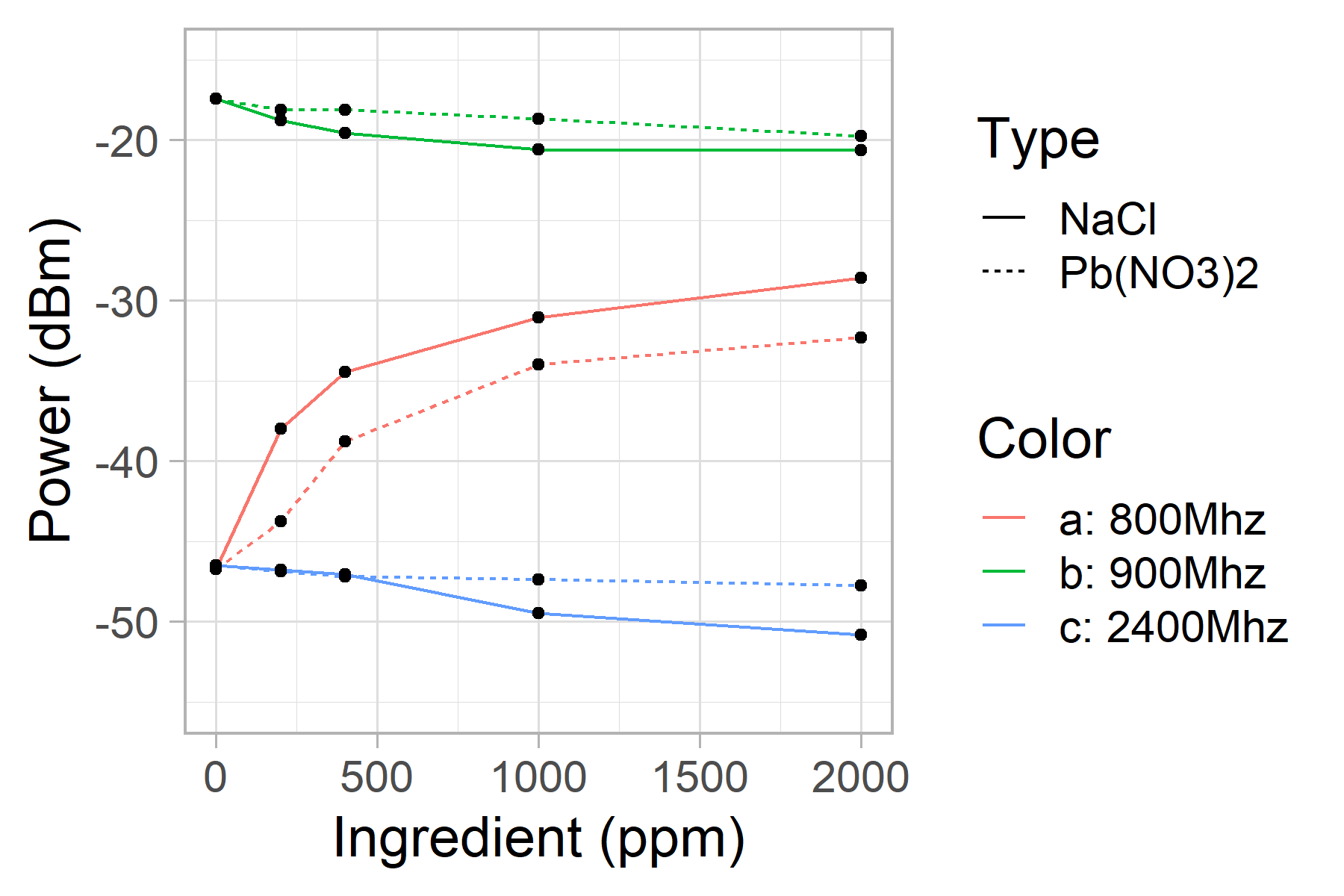
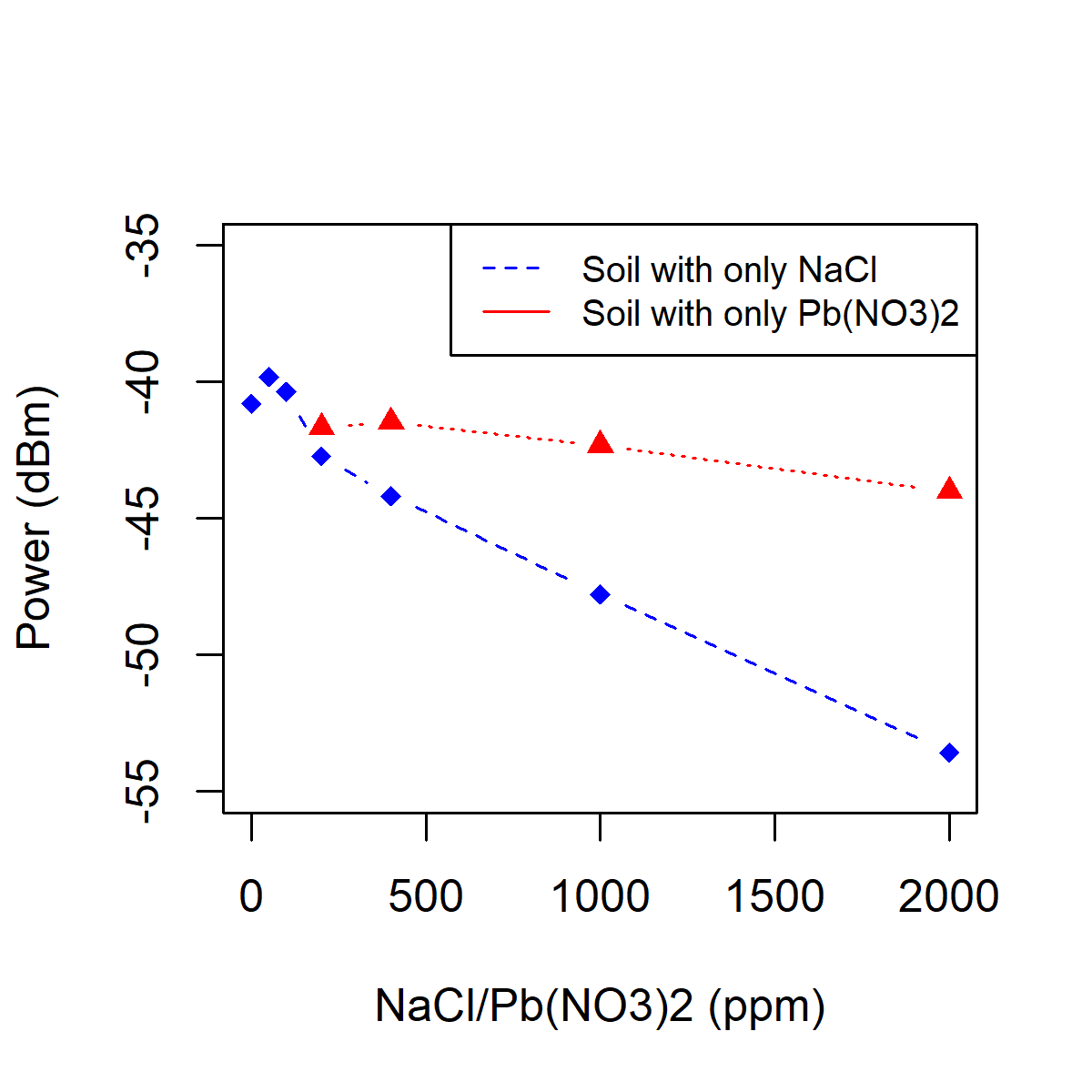
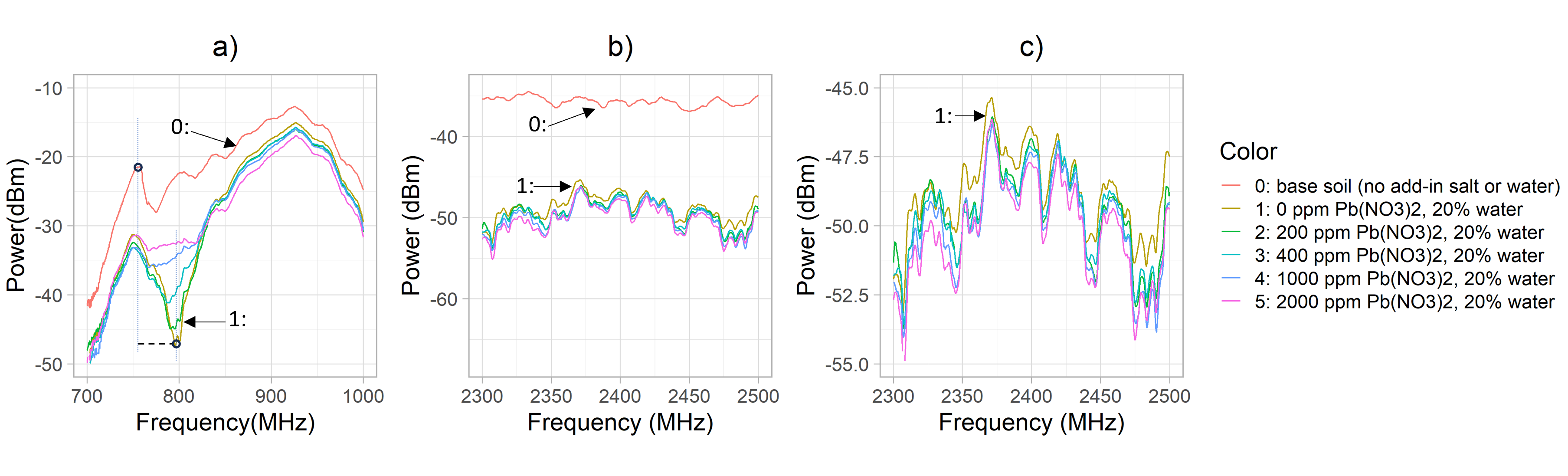
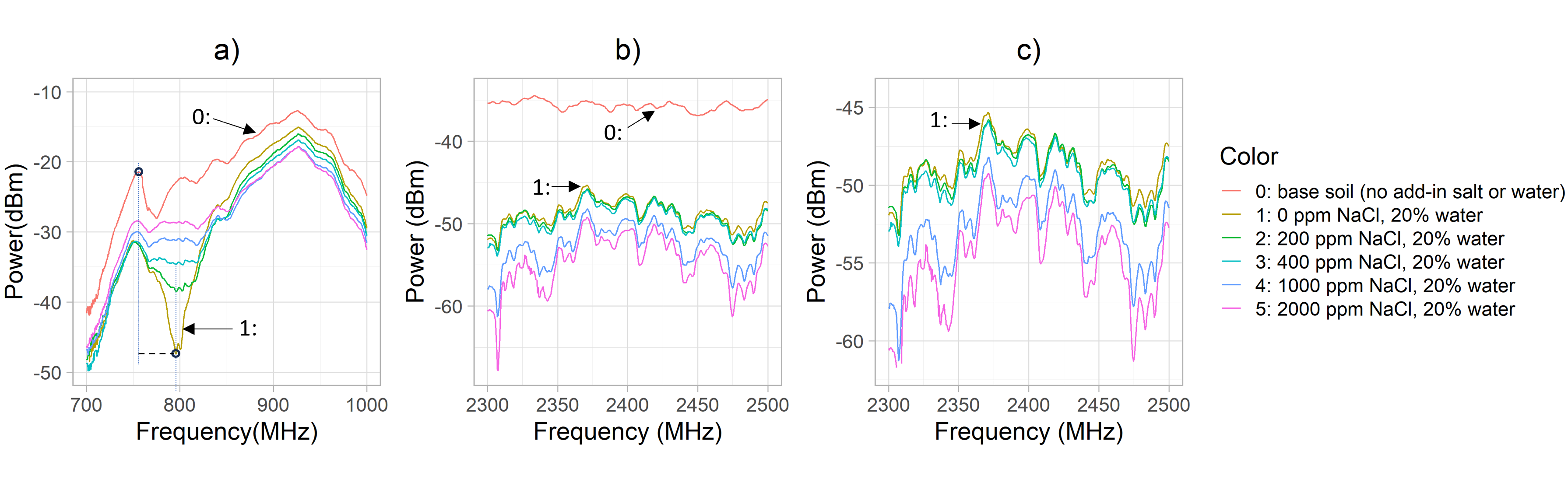
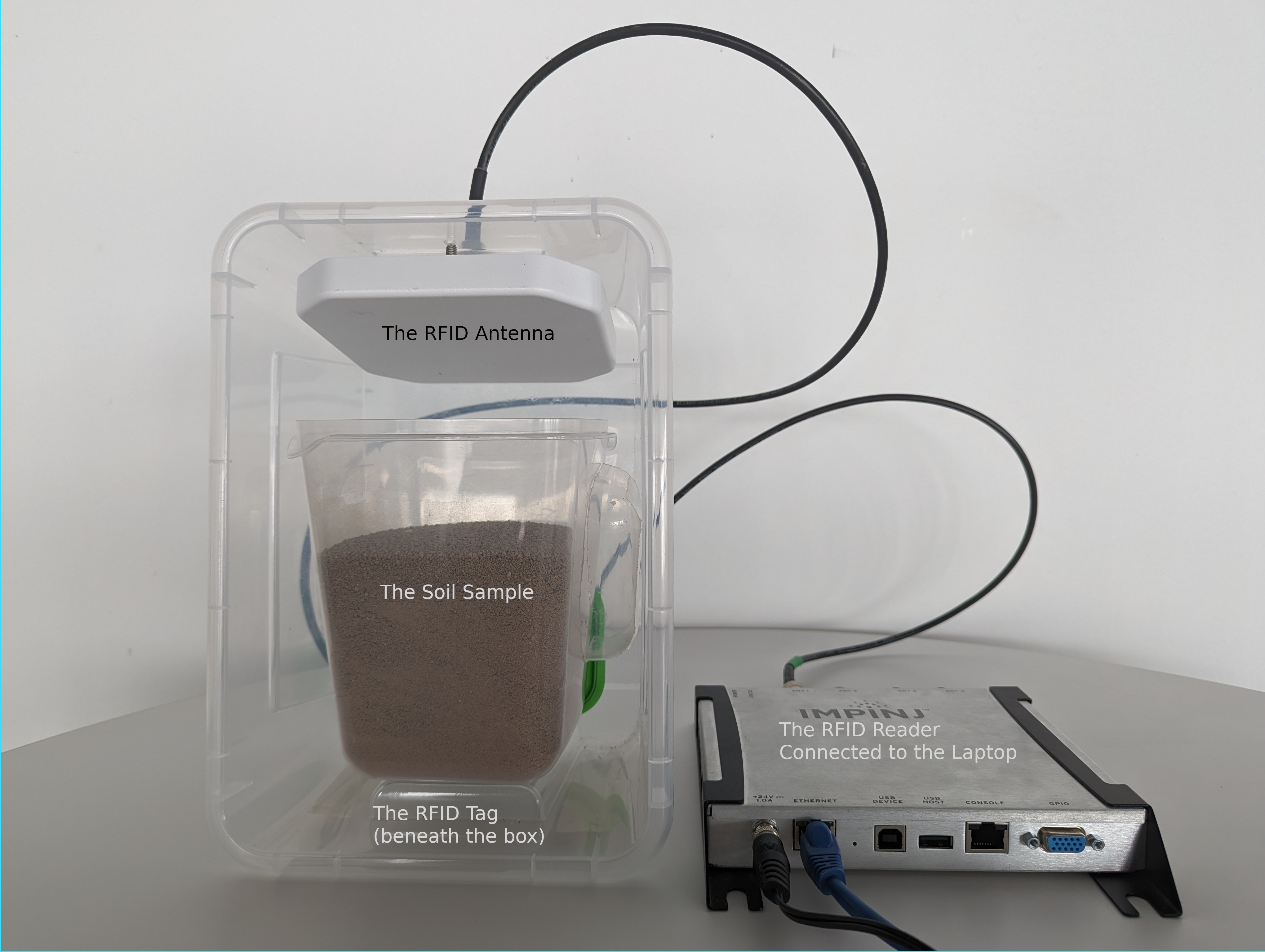
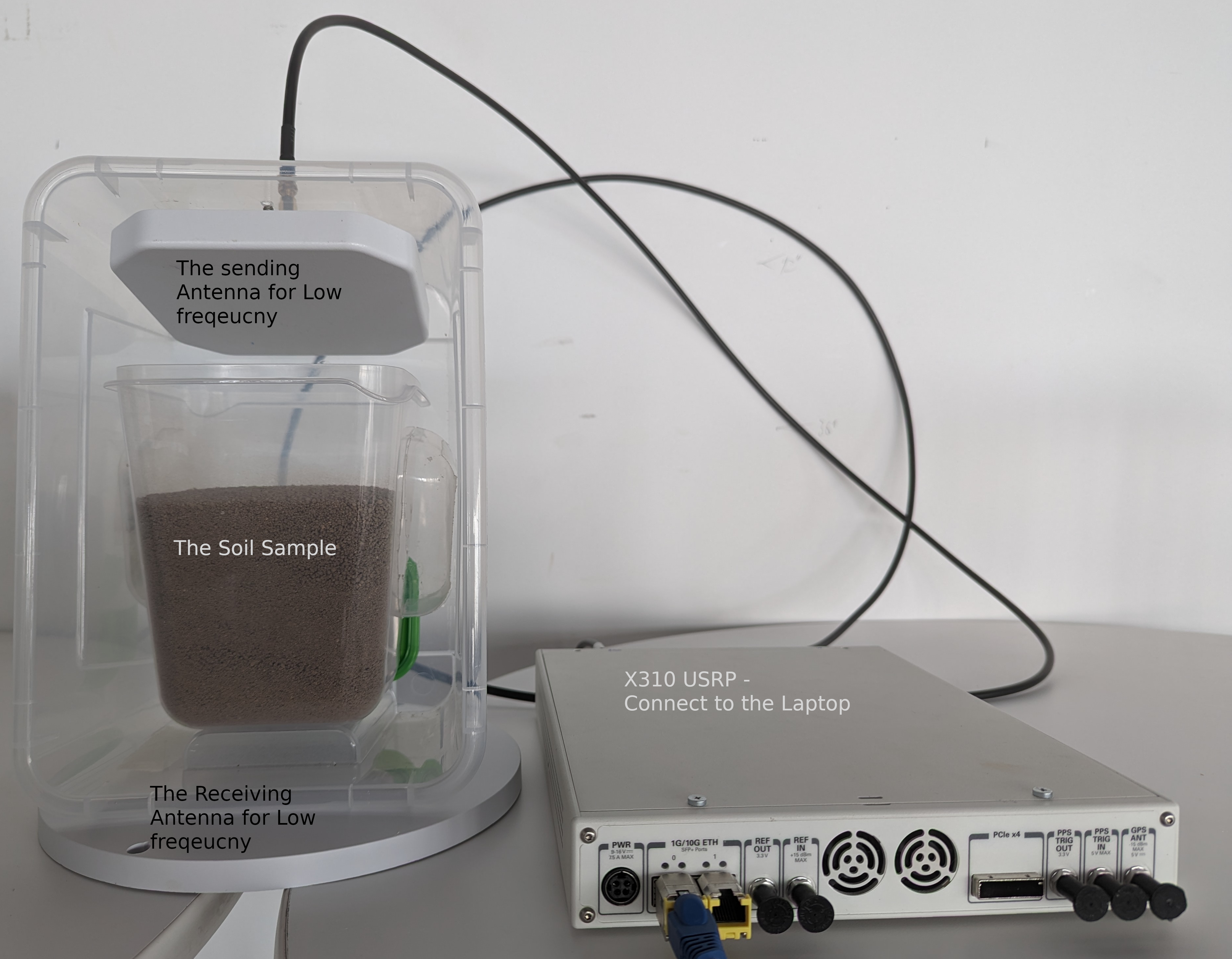
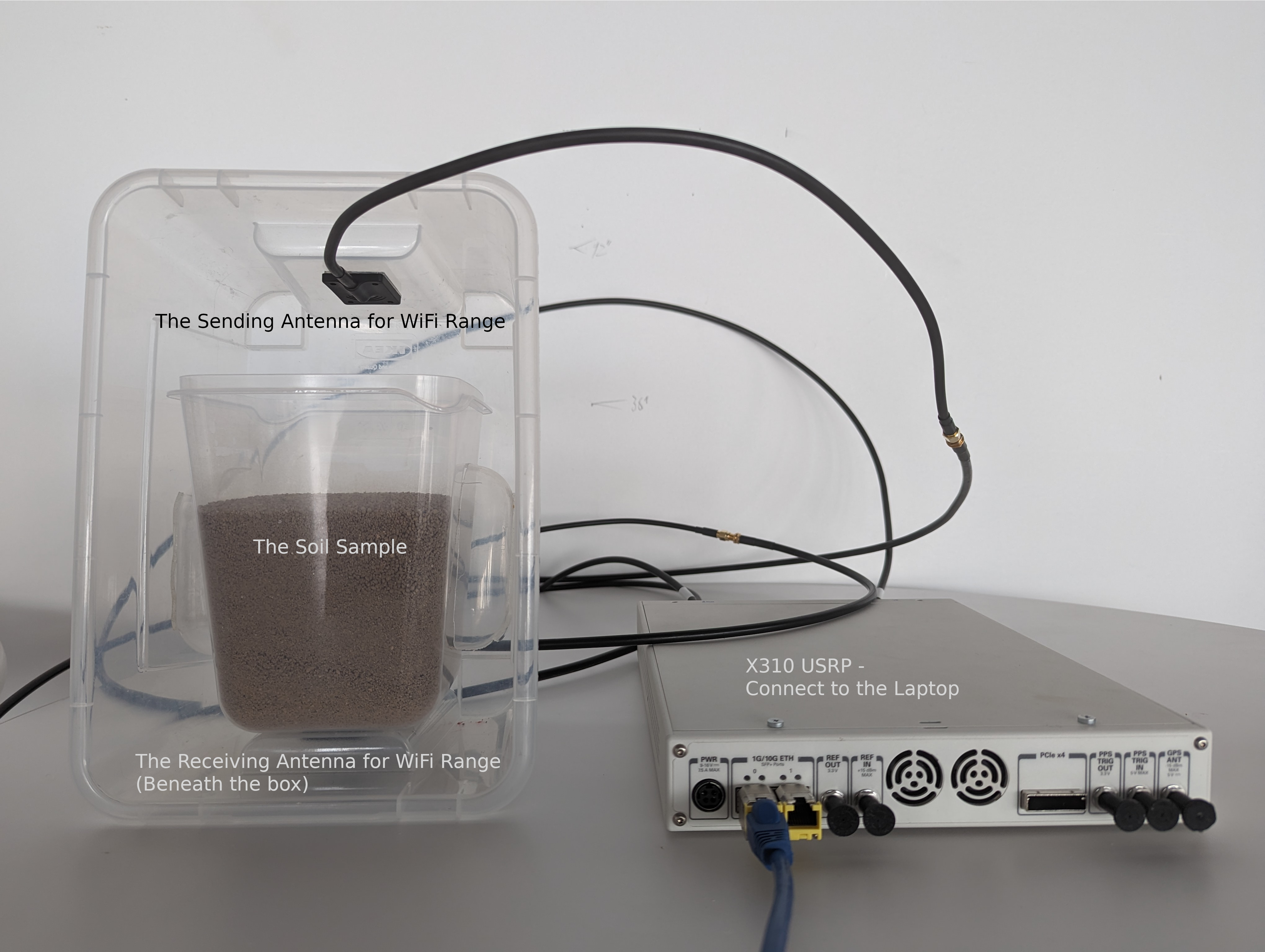
Widespread Pb (lead) contamination of urban soil significantly impacts food safety and public health and hinders city greening efforts. However, most existing technologies for measuring Pb are labor-intensive and costly. In this study, we propose SoilScanner, a radio frequency-based wireless system that can detect Pb in soils. This is based on our discovery that the propagation of different frequency band radio signals is affected differently by different salts such as NaCl and Pb(NO3)2 in the soil. In a controlled experiment, manually adding NaCl and Pb(NO3)2 in clean soil, we demonstrated that different salts reflected signals at different frequencies in distinct patterns. In addition, we confirmed the finding using uncontrolled field samples with a machine learning model. Our experiment results show that SoilScanner can classify soil samples into low-Pb and high-Pb categories (threshold at 200 ppm) with an accuracy of 72%, with no sample with > 500 ppm of Pb being misclassified. The results of this study show that it is feasible to build portable and affordable Pb detection and screening devices based on wireless technology.
💡 Deep Analysis
📄 Full Content
Feasibility of Radio Frequency Based Wireless Sensing of Lead
Contamination in Soil
Yixuan Gao
yixuan@cs.cornell.edu
Cornell Tech
New York, USA
Tanvir Ahmed
tanvir@infosci.cornell.edu
Cornell Tech
New York, USA
Mikhail Mohammed
mikhail.mohammed05@bcmail.cuny.edu
Brooklyn College of the City
University of New York
New York, USA
Zhongqi Cheng
ZCheng@brooklyn.cuny.edu
Brooklyn College of the City
University of New York
New York, USA
Rajalakshmi Nandakumar
rajalakshmi.nandakumar@cornell.edu
Cornell Tech
New York, USA
ABSTRACT
Widespread Pb (lead) contamination of urban soil significantly im-
pacts food safety and public health and hinders city greening efforts.
However, most existing technologies for measuring Pb are labor-
intensive and costly. In this study, we propose SoilScanner, a radio
frequency-based wireless system that can detect Pb in soils. This is
based on our discovery that the propagation of different frequency
band radio signals is affected differently by different salts such as
NaCl and Pb(NO3)2 in the soil. In a controlled experiment, manu-
ally adding NaCl and Pb(NO3)2 in clean soil, we demonstrated that
different salts reflected signals at different frequencies in distinct
patterns. In addition, we confirmed the finding using uncontrolled
field samples with a machine learning model. Our experiment re-
sults show that SoilScanner can classify soil samples into low-Pb
and high-Pb categories (threshold at 200 ppm) with an accuracy of
72%, with no sample with > 500 ppm of Pb being misclassified. The
results of this study show that it is feasible to build portable and
affordable Pb detection and screening devices based on wireless
technology.
CCS CONCEPTS
• Computer systems organization →Sensor networks; • Hard-
ware →Sensor applications and deployments; • Computing
methodologies →Machine learning approaches.
KEYWORDS
Sensing Application, Urban Health, Soil Lead Contamination, Signal
Processing, Machine Learning
1
INTRODUCTION
Urban soils are significant resources and provide essential ecologi-
cal services such as growing produce, assimilation of organic waste,
stormwater management, greening cities, improving air and water
quality, and combating urban heat island effects [4]. However, nu-
merous studies have shown that urban soils are often contaminated,
primarily due to historical and current anthropogenic activities [28].
Lead (Pb), an invisible, odorless neurotoxin, is of particular con-
cern, given its widespread presence in the environment and strong
association with neurocognitive disorders and aggression in adoles-
cents - especially for children [1, 24]. Pb is found to be present at
elevated levels in urban soils worldwide. In New York City, it was
found that over 50% of the garden soils tested contained more than
400 parts per million (ppm) of Pb – the previous general threshold
set by the U.S. Environmental Protection Agency (EPA) and the
New York State Department of Environmental Conservation [5]. In
an official statement released on January 17, 2024, to strengthen the
safeguards to protect families and children from Pb-contaminated
soil, the U.S. EPA lowered the screening level for Pb in soil at resi-
dential properties from 400ppm to 200ppm [10], which is now the
current screening standard. There is an urgent need to screen ur-
ban soils for traces of metal contaminants (such as Pb) as they can
significantly impact public health and the safety of food grown in
urban community gardens [22, 25].
Currently, composite soil samples are commonly sent to commer-
cial or academic laboratories for analysis, utilizing chemical process-
ing techniques and advanced instrumentation. Such analysis tends
to require substantial labor and incur significant expenses [34], and
thus poses challenges for many urban communities. These commu-
nities, often characterized by economic disadvantages, a prevalence
of minority or marginalized populations, and a disproportionate
burden of environmental contamination, face particular difficulties
in accessing related resources. Furthermore, soil Pb is highly het-
erogeneous at a small scale, even within the same garden [12, 15].
Pb levels can vary by more than an order of magnitude at different
locations within the same garden [3]. Thus, a composite soil sample
is not able to reveal such variations and will miss hotspots that
may pose the most health risks. While Portable X-Ray Fluorescence
(pXRF[40]) has emerged as a handy tool for in-situ (or lab) screening
of Pb and other metals in soils [11, 19, 27, 30, 33, 35, 42], the in-
strument typically costs $20,000-60,000, which is not affordable for
most communities. Therefore, there is a need to develop low-cost
alternatives to detect Pb in situ, so as to be able to accurately map
sites for contamination. This study aims to address this need by
examining the feasibility of developing an accessible and affordable
Radio Frequency (RF) based wireless sensor that can monitor Pb.
As a rapidly emerging technology, radio f