Degrading Voice: A Comprehensive Overview of Robust Voice Conversion Through Input Manipulation

Reading time: 5 minute
...

📝 Original Info

📝 Abstract

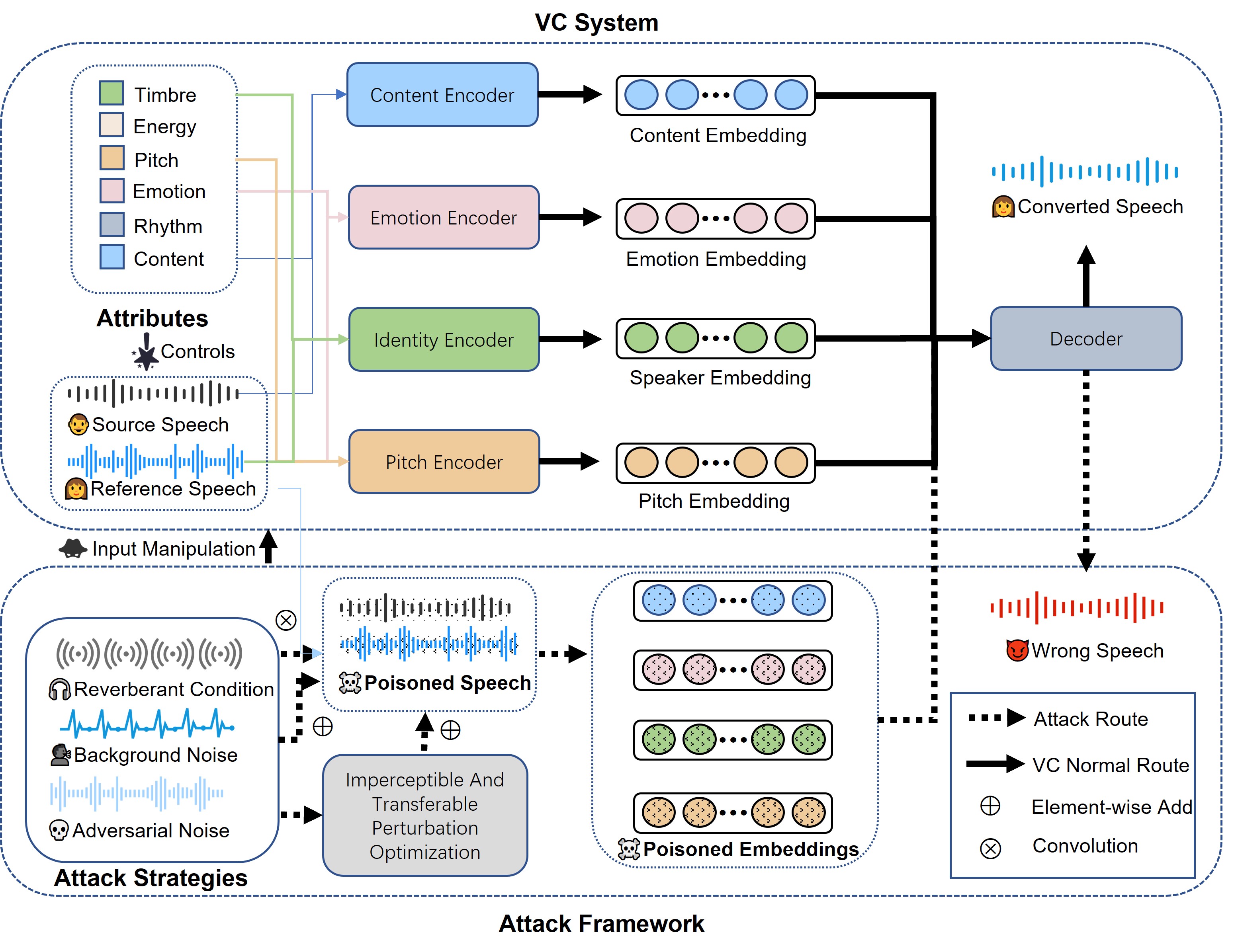
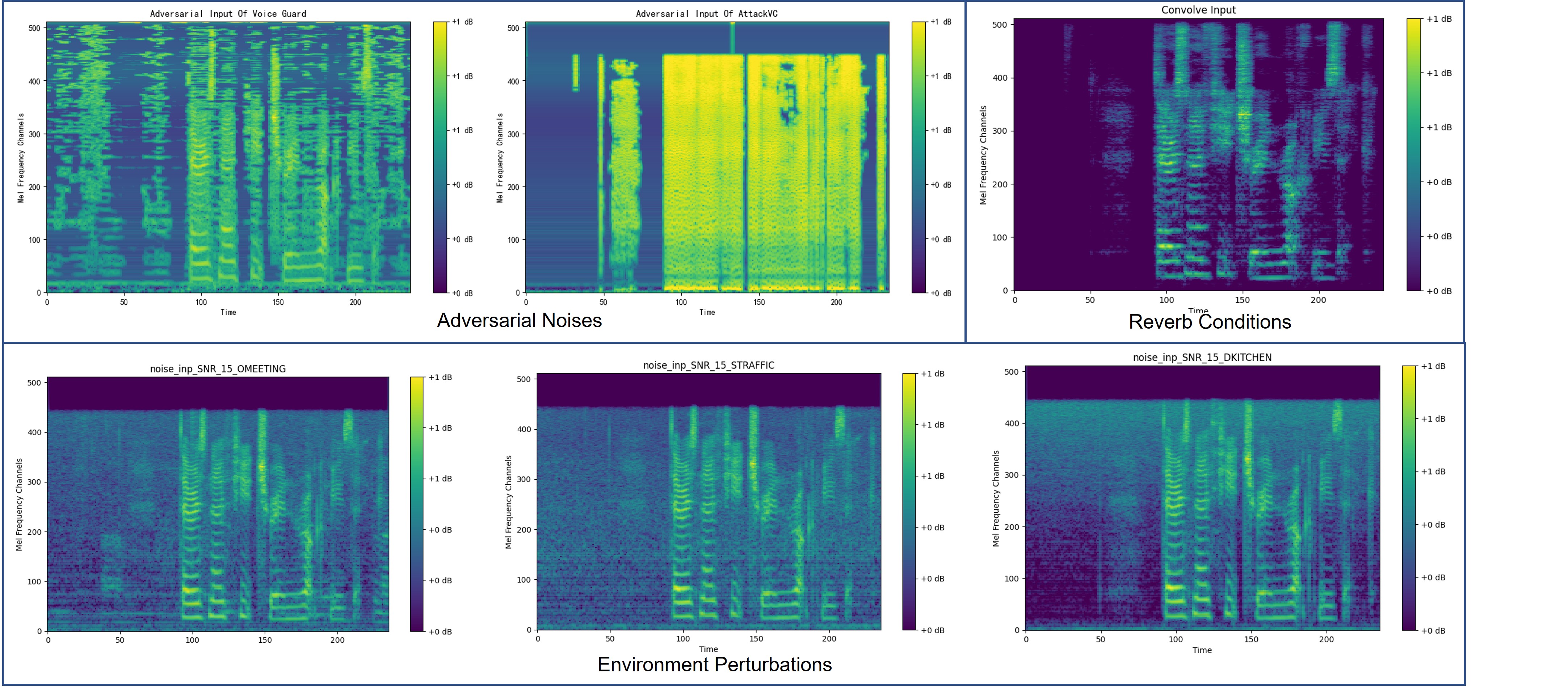
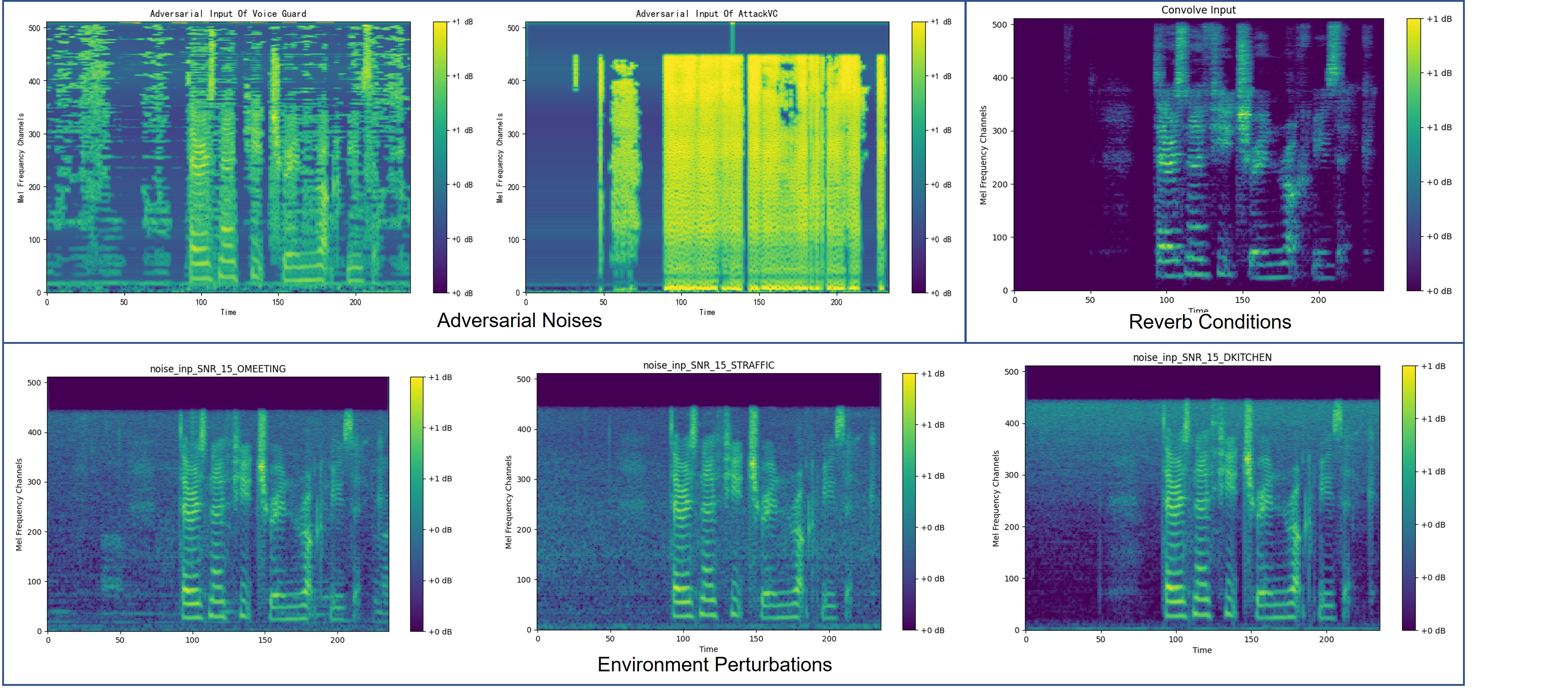
Identity, accent, style, and emotions are essential components of human speech. Voice conversion (VC) techniques process the speech signals of two input speakers and other modalities of auxiliary information such as prompts and emotion tags. It changes para-linguistic features from one to another, while maintaining linguistic contents. Recently, VC models have made rapid advancements in both generation quality and personalization capabilities. These developments have attracted considerable attention for diverse applications, including privacy preservation, voice-print reproduction for the deceased, and dysarthric speech recovery. However, these models only learn non-robust features due to the clean training data. Subsequently, it results in unsatisfactory performances when dealing with degraded input speech in real-world scenarios, including additional noise, reverberation, adversarial attacks, or even minor perturbation. Hence, it demands robust deployments, especially in real-world settings. Although latest researches attempt to find potential attacks and countermeasures for VC systems, there remains a significant gap in the comprehensive understanding of how robust the VC model is under input manipulation. here also raises many questions: For instance, to what extent do different forms of input degradation attacks alter the expected output of VC models? Is there potential for optimizing these attack and defense strategies? To answer these questions, we classify existing attack and defense methods from the perspective of input manipulation and evaluate the impact of degraded input speech across four dimensions, including intelligibility, naturalness, timbre similarity, and subjective perception. Finally, we outline open issues and future directions.
💡 Deep Analysis

Figure 1

📄 Full Content

Degrading Voice: A Comprehensive Overview of Robust Voice Conversion Through Input Manipulation XINNING SONG, Tongji University, China ZHIHUA WEI, Tongji University, China RUI WANG, iFLYTEK Research, China HAIXIAO HU, Binjiang Institute Of Zhejiang University, China YANXIANG CHEN, Hefei University of Technology, China MENG HAN∗, Zhejiang University, China Identity, accent, style, and emotions are essential components of human speech. Voice conversion (VC) techniques process the speech signals of two input speakers and other modalities of auxiliary information such as prompts and emotion tags. It changes para-linguistic features from one to another, while maintaining linguistic contents. Recently, VC models have made rapid advancements in both generation quality and personalization capabilities. These developments have attracted considerable attention for diverse applications, including privacy preservation, voice-print reproduction for the deceased, and dysarthric speech recovery. However, these models only learn non-robust features due to the clean training data. Subsequently, it results in unsatisfactory performances when dealing with degraded input speech in real-world scenarios, including additional noise, reverberation, adversarial attacks, or even minor perturbation. Hence, it demands robust deployments, especially in real-world settings. Although latest researches attempt to find potential attacks and countermeasures for VC systems, there remains a significant gap in the comprehensive understanding of how robust the VC model is under input manipulation. There also raises many questions: for instance, to what extent do different forms of input degradation attacks alter the expected output of VC models? From what perspectives do current defense methods address these attacks, and how can they be categorized based on their defensive state? Is there potential for optimizing these attack and defense strategies? To answer these questions, we classify existing attack and defense methods from the perspective of input manipulation and evaluate the impact of degraded input speech across four dimensions, including intelligibility, naturalness, timbre similarity, and subjective perception. Finally, we outline open issues and future directions. CCS Concepts: • General and reference →Surveys and overviews; • Computing methodologies → Speech signal processing; Neural networks; • Security and privacy →Software robustness. Additional Key Words and Phrases: voice conversion, noise environment, adversarial attacks, robustness, perturbations, review ACM Reference Format: Xinning Song, Zhihua Wei, Rui Wang, Haixiao Hu, Yanxiang Chen, and Meng Han. 2025. Degrading Voice: A Comprehensive Overview of Robust Voice Conversion Through Input Manipulation. J. ACM 37, 4, Article 111 (November 2025), 28 pages. https://doi.org/XXXXXXX.XXXXXXX Authors’ Contact Information: Xinning Song, xinningsong@tongji.edu.cn, Tongji University, Shanghai, China; Zhihua Wei, zhihua_wei@tongji.edu.cn, Tongji University, Shanghai, China; Rui Wang, ruiwang88@iflytek.com, iFLYTEK Research, Shanghai, China; Haixiao Hu, chenyx@hfut.edu.cn, Binjiang Institute Of Zhejiang University, Zhejiang, China; Yanxiang Chen, haixiaohu@sanyau.edu.cn, Hefei University of Technology, Hefei, China; Meng Han, mhan@zju.edu.cn, Zhejiang University, Zhejiang, China. Permission to make digital or hard copies of all or part of this work for personal or classroom use is granted without fee provided that copies are not made or distributed for profit or commercial advantage and that copies bear this notice and the full citation on the first page. Copyrights for components of this work owned by others than the author(s) must be honored. Abstracting with credit is permitted. To copy otherwise, or republish, to post on servers or to redistribute to lists, requires prior specific permission and/or a fee. Request permissions from permissions@acm.org. © 2025 Copyright held by the owner/author(s). Publication rights licensed to ACM. ACM 1557-735X/2025/11-ART111 https://doi.org/XXXXXXX.XXXXXXX J. ACM, Vol. 37, No. 4, Article 111. Publication date: November 2025. arXiv:2512.06304v1 [eess.AS] 6 Dec 2025 111:2 Xinning Song et al. 1 Introduction High-fidelity and personalized audio generation has always been a hot topic in audio domain. Speech synthesis, a task that extracts representational information from various input signals (e.g., voice, language, emotion, songs) and presents them in the form of speech, has attracted widespread attention in society. Particularly, voice conversion (VC) is a style-transfer technique that endeavors to transform a source dialect into an expression that resonates with the melodic tones of the target speaker, while retaining the linguistic essence of the source speaker[87]. In other words, VC models modify para-linguistic features such as pitch, timbre and style from source speaker, while preserving speaker-independent information like content. Typically,
📸 Image Gallery

DegradedNoise.jpg DegradedNoise2.jpg EERDistribution.png acm-jdslogo.png overview.jpg sample-franklin.png

Reference

This content is AI-processed based on open access ArXiv data.

Start searching

Enter keywords to search articles

↑↓
ESC
⌘K Shortcut