Many industrial sectors have been using of machine learning at inference mode on edge devices. Future directions show that training on edge devices is promising due to improvements in semiconductor performance. Wireless Ad Hoc Federated Learning (WAFL) has been proposed as a promising approach for collaborative learning with device-to-device communication among edges. In particular, WAFL with Vision Transformer (WAFL-ViT) has been tested on image recognition tasks with the UTokyo Building Recognition Dataset (UTBR). Since WAFL-ViT is a mission-oriented sensor system, it is essential to construct specific datasets by each mission. In our work, we have developed the Chulalongkorn University Building Recognition Dataset (CUBR), which is specialized for Chulalongkorn University as a case study in Thailand. Additionally, our results also demonstrate that training on WAFL scenarios achieves better accuracy than self-training scenarios. Dataset is available in https://github.com/jo2lxq/wafl/.
Machine learning on edge devices has become increasingly important because of the growing demand for distributed sensor systems. In this context, federated learning is one of the approaches for machine learning on edge devices. Centralized federated learning [1], [2] was originally proposed for machine learning on edges, which has been applied to many real-world problems, such as mobile keyboard prediction [3], COVID-19 warning systems [4], and financial risk management [5]. Meanwhile, decentralized federated learning [6], [7] has also been proposed to tackle problems such as privacy issues and the single point of failure that are attributed to traditional federated learning.
In particular, Wireless Ad hoc Federated Learning (WAFL) [6] has been proposed as a framework for decentralized federated learning. WAFL has been applied to a generative adversarial network [8] and the robustness of model poisoning attacks [9], respectively. WAFL-ViT [7] is proposed as a collaborative training method for Vision Transformer [10] for the mission-oriented image recognition task with the UTokyo Building Recognition Dataset (UTBR). While sensor systems such as WAFL are expected to be constructed for a specific mission, such as an image recognition task of UTBR, few datasets have been investigated for WAFL-ViT.
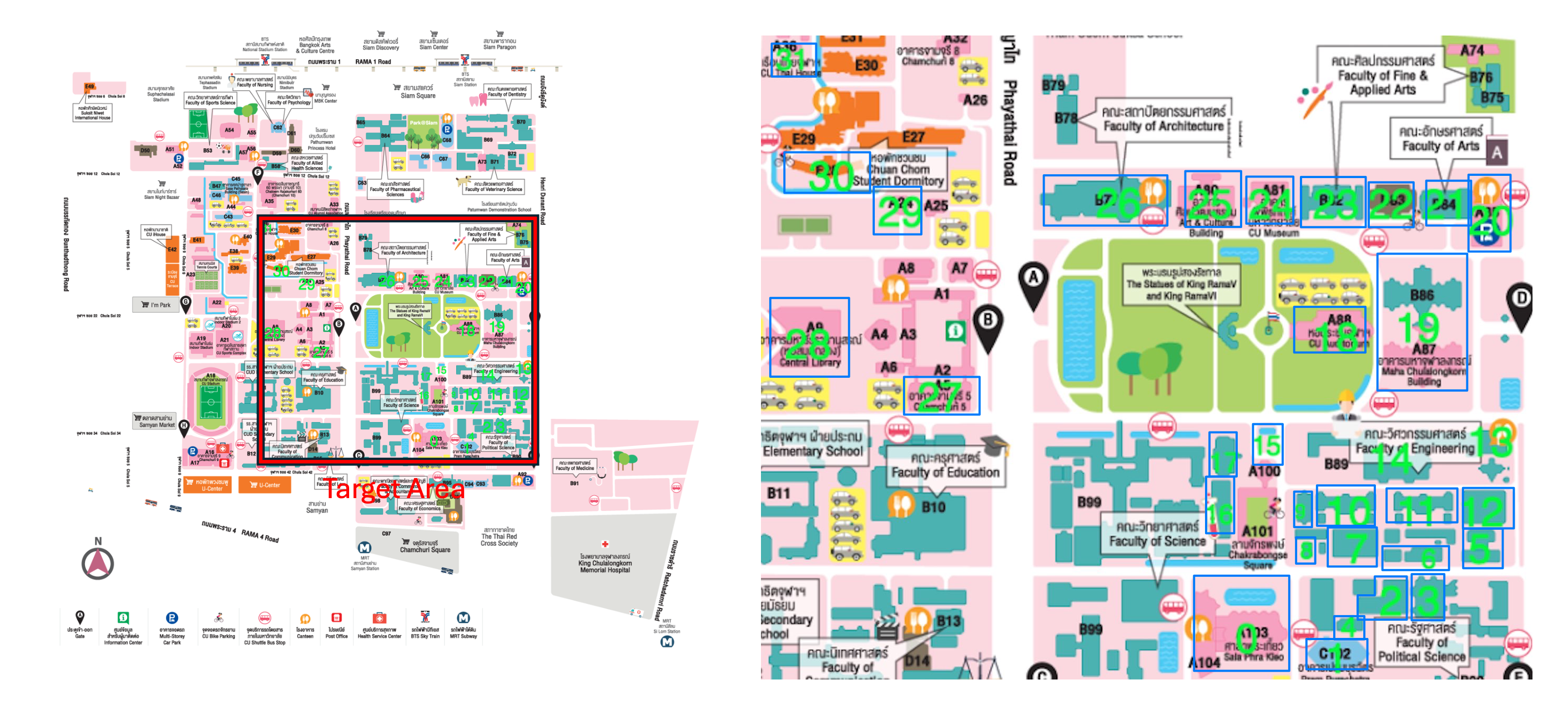
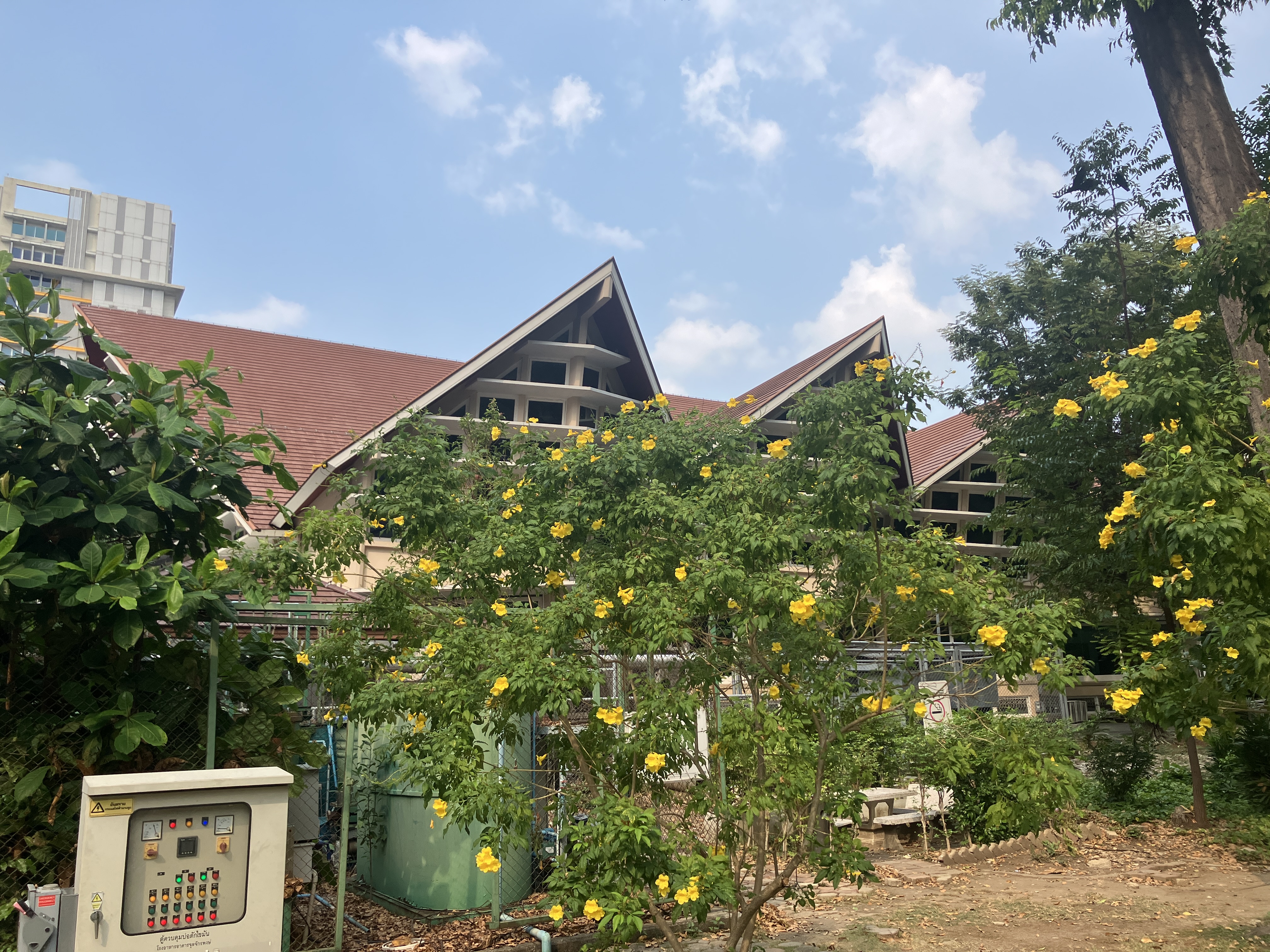
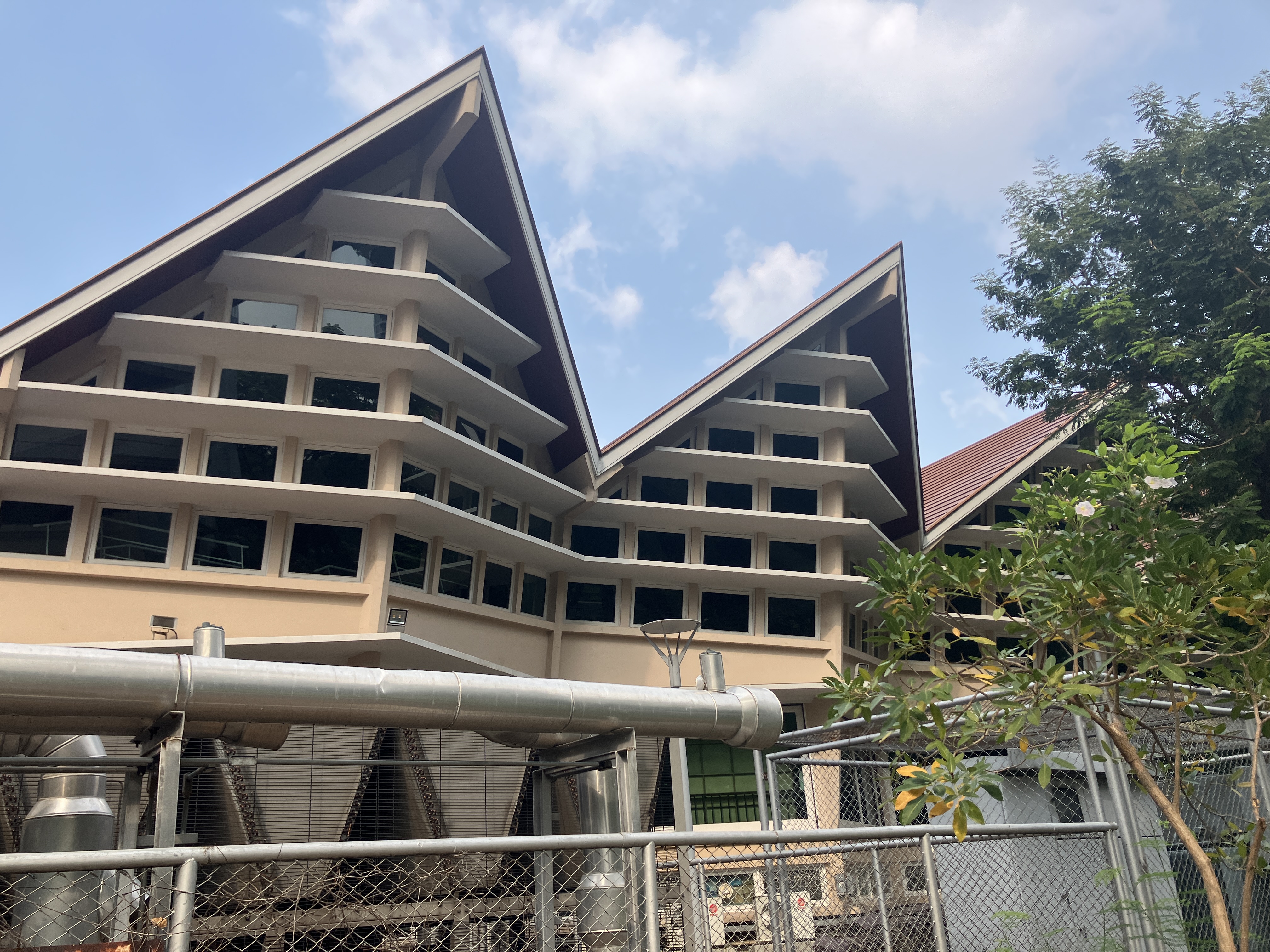
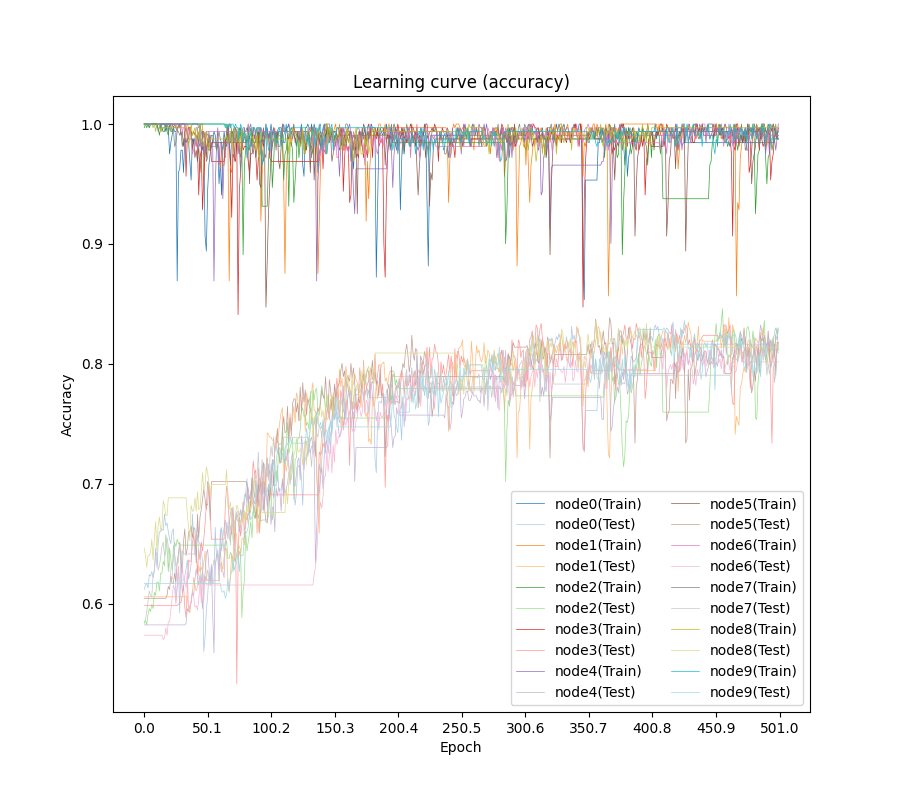
In this study, we consider the image recognition task for the smart-campus application in Chulalongkorn University. Therefore, we create the Chulalongkorn University Building Recognition Dataset (CUBR) under the assumption of an IoT sensor system. CUBR compounds of 32 buildings, where the number of images of each building is about 100. To consider an IoT environment of Chulalongkorn University, we assume that 10 devices are distributed in the campus of Chulalongkorn University. Moreover, we evaluated the dataset by using collaborative learning. In our evaluation, we compare Vision Transformer (ViT) [10] with VGG [11], Resnet [12], and Mobilenet [13] with WAFL and self-training cases, respectively. As a result of the experiment, we show that WAFL enhances the accuracy compared to self-training cases.
Our contributions are summarized as follows:
-We tackle evaluating the decentralized federated learning model WAFL. -We develop the new dataset CUBR, which is composed of 32 labeled buildings for the image recognition task. -We demonstrate that WAFL works for the created CUBR compared to the self-training cases.
In this section, we explain related works about WAFL and its dataset. Federated learning has been proposed as a method to enhance model generalization by performing machine learning across multiple edge devices [14]. In recent years, applications of federated learning in the real world have been proposed. Hard et al. [3] suggested the application of federated learning in predictive models for mobile keyboards, while Ouyang et al. [4] applied federated learning to the COVID-19 early warning system. In addition, Pingulkar et al. [5] investigated the architecture of asset management using federated learning.
However, traditional federated learning models [1], [2] Ochiai et al. [6] proposed Wireless Ad hoc Federated Learning (WAFL), which is a fully decentralized and mission-oriented federated learning model under the idea of the work by Frodigh et al. [15]. WAFL applications have been investigated for several missions since WAFL is a mission-oriented sensor system. While Tezuka et al. [9] investigated the robustness of WAFL for the model poissoning attacks, Tomiyama et al. [8] addressed distributed generative adversarial networks using WAFL.
In this context, Ochiai et al. [7] proposed WAFL-ViT [7], which is a collaborative training method for Vision Transformer [10]. In the following, we briefly explain the foundation of WAFL-ViT. We denote n as devices participating in the training. Let adj(n) and W n be the set of neighbor nodes of device n and parameters of MLP heads of device n, where λ means a hyperparameter between 0 to 1, respectively. Then, the algorithm of parameter exchange is given as follows:
Using this algorithm, the parameters of their MLP heads are updated. In training, parameters of MLP heads are fine-tuned with their local images once per round. To avoid overfitting to the local images, all parameters of each ViT in each device are not fine-tuned.
To evaluate WAFL-ViT, Ochiai et al. [7] also created the UTokyo Building Recognition Dataset (UTBR) composed of 10 labeled buildings, which is assumed to be utilized for a smart-campus service. While creating a dataset of the mission-oriented task for WAFL is essential, there are few datasets for the image recognition task, except for UTBR. Hence, we tackle creating a large dataset of Chulalongkorn University for the image recognition task.
In this section, we explain the contents of the created dataset in detail. For WAFL, which is a mission-oriented sensor system, we created a Chulalongkorn University Building Recognition Dataset (CUBR). The cor
This content is AI-processed based on open access ArXiv data.