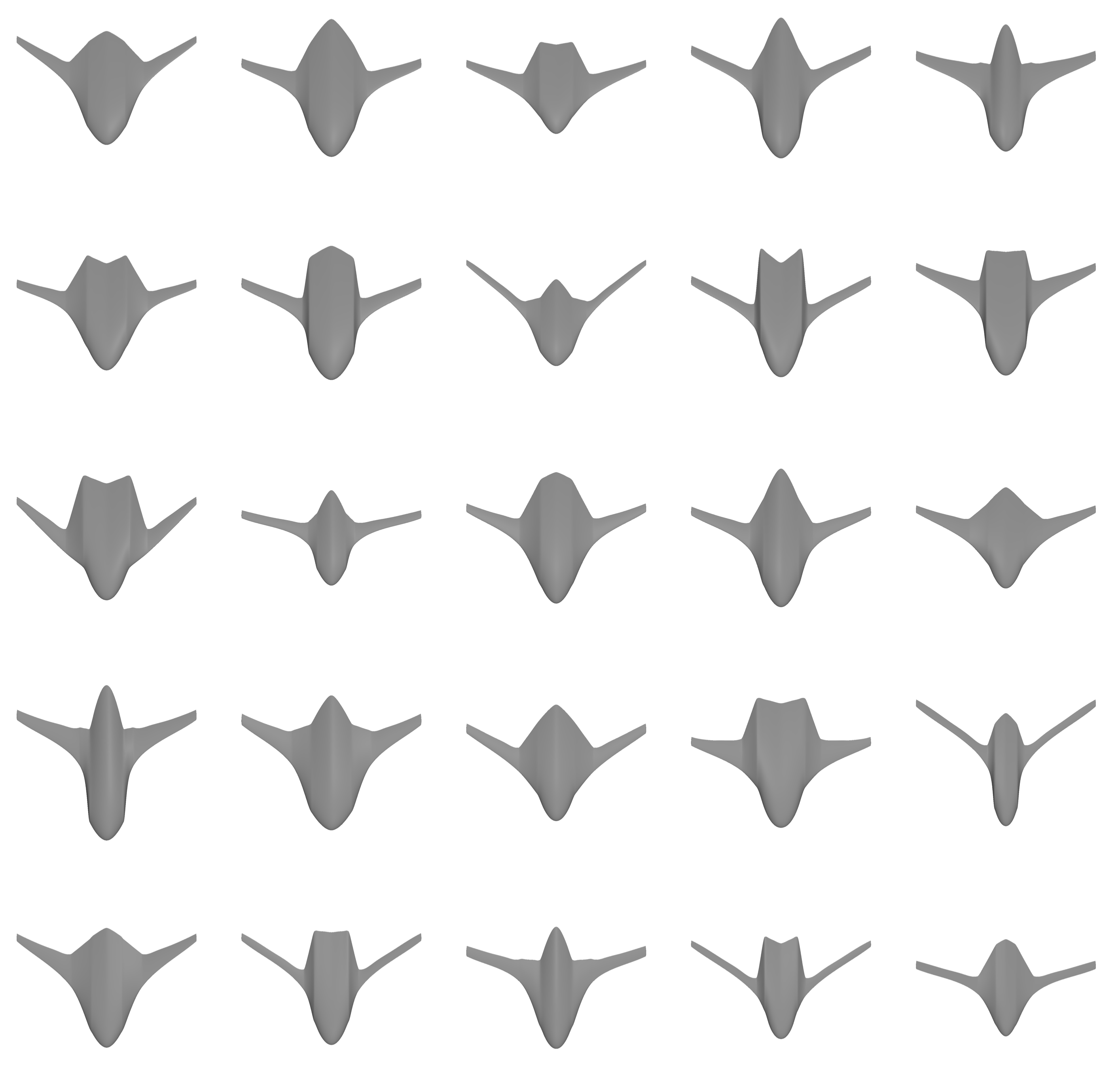
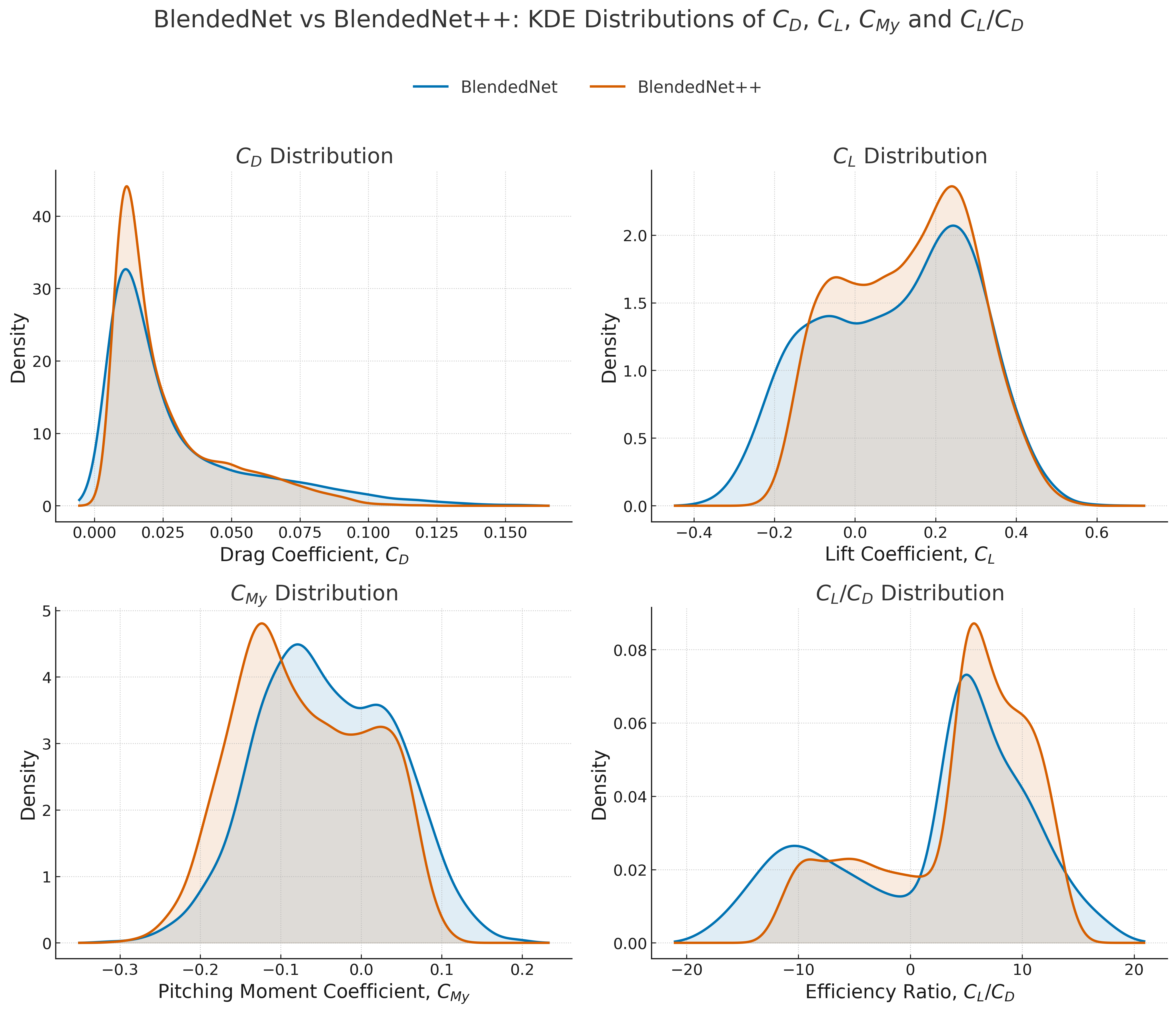
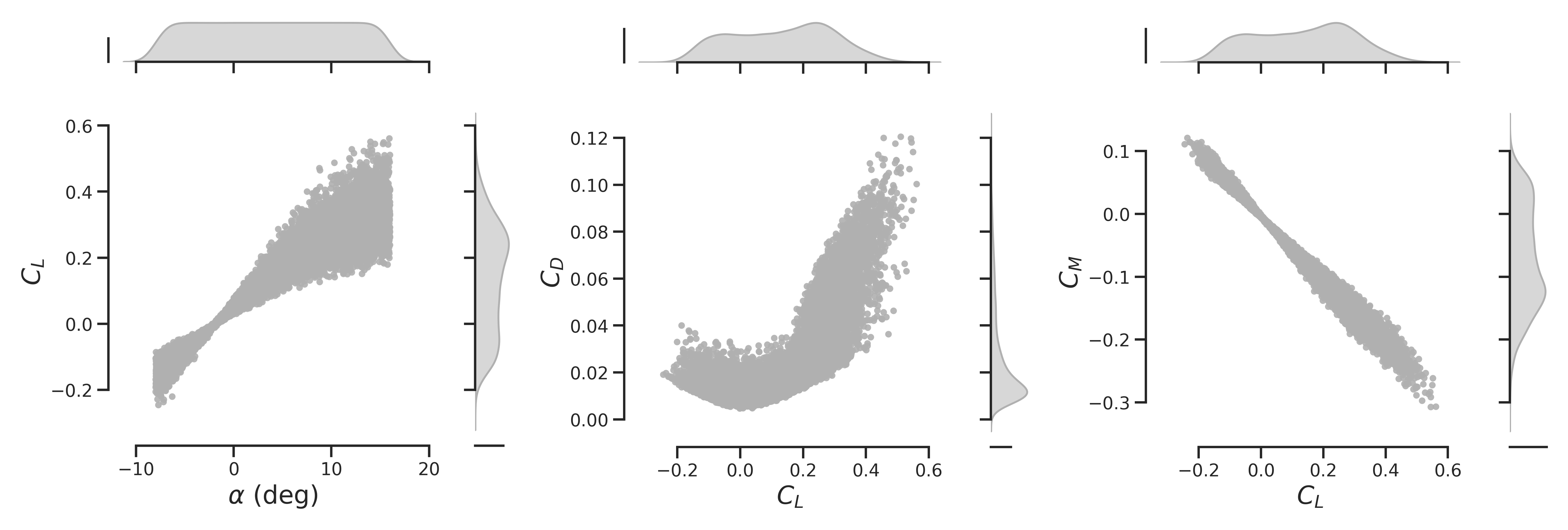
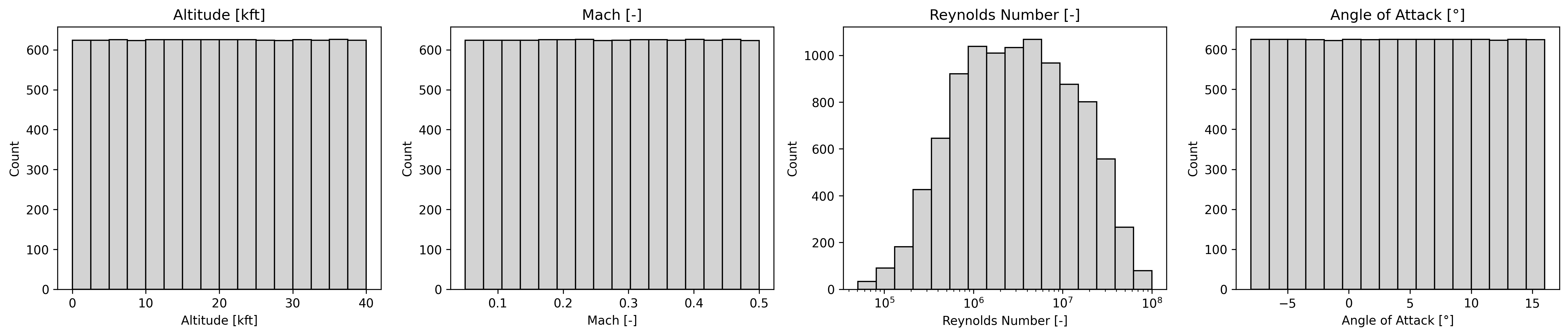
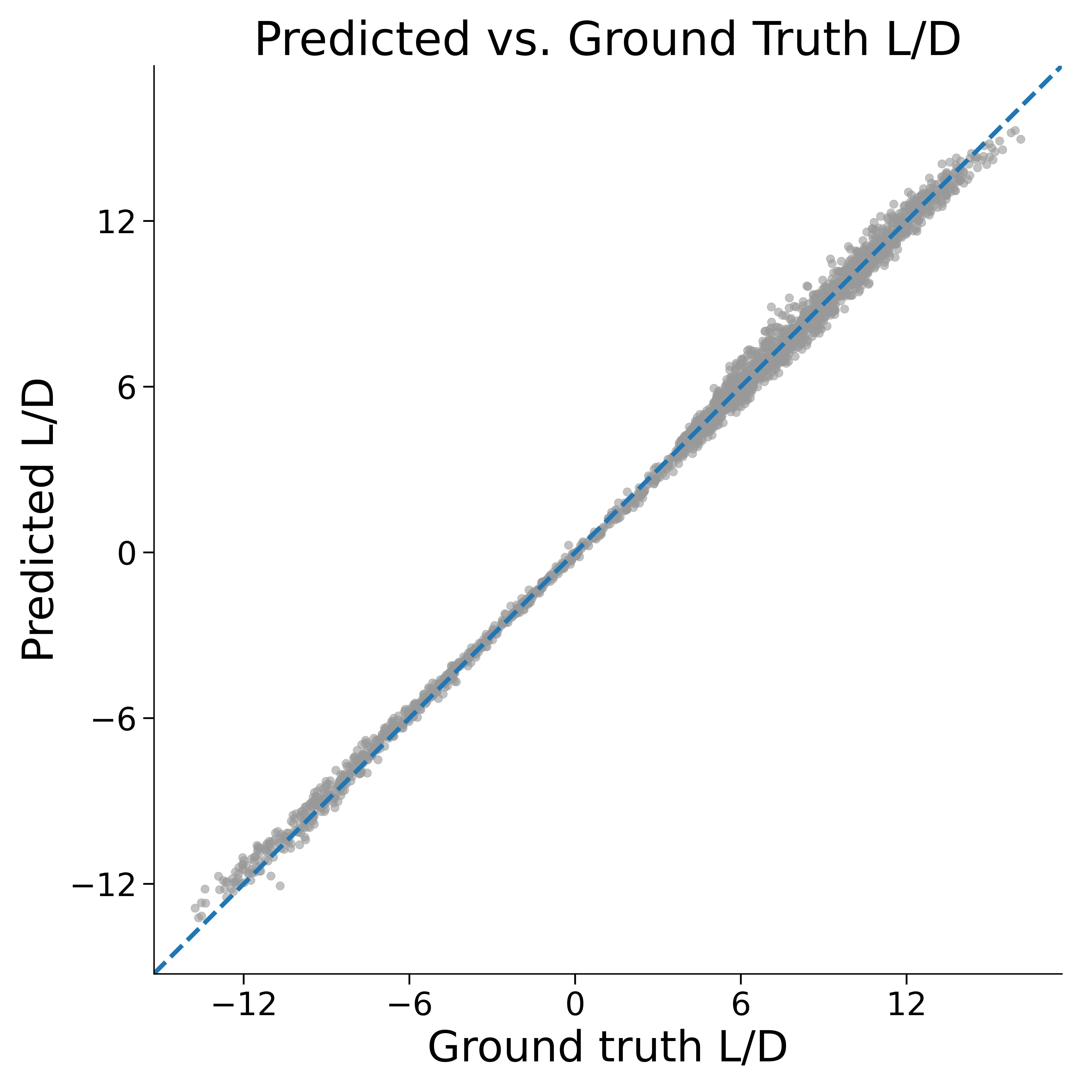
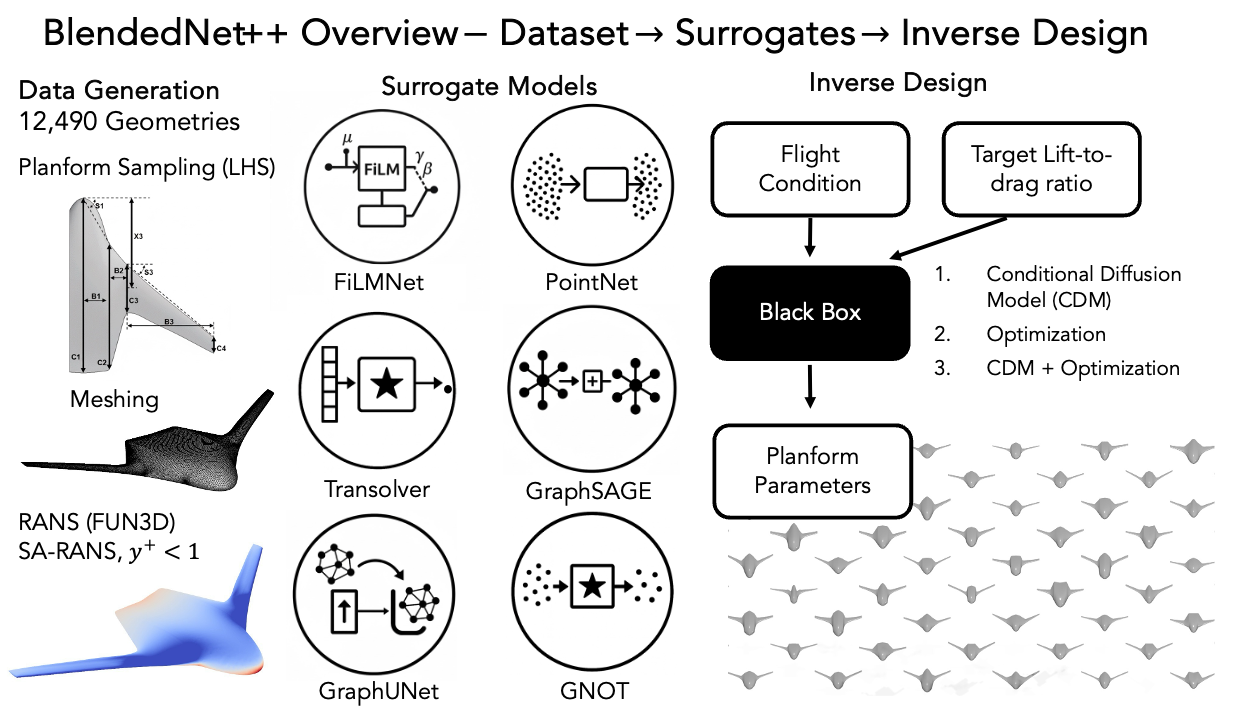
Despite progress in machine learning-based aerodynamic surrogates, the scarcity of large, field-resolved datasets limits progress on accurate pointwise prediction and reproducible inverse design for aircraft. We introduce BlendedNet++, a large-scale aerodynamic dataset and benchmark focused on blended wing body (BWB) aircraft. The dataset contains over 12,000 unique geometries, each simulated at a single flight condition, yielding 12,490 aerodynamic results for steady RANS CFD. For every case, we provide (i) integrated force/moment coefficients CL, CD, CM and (ii) dense surface fields of pressure and skin friction coefficients Cp and (Cfx, Cfy, Cfz). Using this dataset, we standardize a forward-surrogate benchmark to predict pointwise fields across six model families: GraphSAGE, GraphUNet, PointNet, a coordinate Transformer (Transolver-style), a FiLMNet (coordinate MLP with feature-wise modulation), and a Graph Neural Operator Transformer (GNOT). Finally, we present an inverse design task of achieving a specified lift-to-drag ratio under fixed flight conditions, implemented via a conditional diffusion model. To assess performance, we benchmark this approach against gradient-based optimization on the same surrogate and a diffusion-optimization hybrid that first samples with the conditional diffusion model and then further optimizes the designs. BlendedNet++ provides a unified forward and inverse protocol with multi-model baselines, enabling fair, reproducible comparison across architectures and optimization paradigms. We expect BlendedNet++ to catalyze reproducible research in field-level aerodynamics and inverse design; resources (dataset, splits, baselines, and scripts) will be released upon acceptance.
(All symbols include units where applicable; "-" denotes dimensionless.) 1 Introduction
Blended Wing Body (BWB) aircraft have gained significant attention as a promising next-generation configuration due to their potential for enhanced aerodynamic efficiency and fuel economy. By integrating the fuselage and wings into a single lifting surface, BWBs can achieve higher lift-to-drag ratios, reduced structural weight, and lower fuel consumption relative to conventional tube-and-wing designs [1]. Early studies and recent assessments corroborate these advantages, reporting sizable reductions in fuel burn alongside structural benefits [1][2][3]. Realizing these gains, however, demands accurate modeling of complex aerodynamics. High-fidelity CFD is a natural fit but remains computationally intensive for large design sweeps, slowing concept iteration and constraining broad design-of-experiments [4,5].
Why machine learning? Data-driven surrogates can approximate high-fidelity solvers at orders-of-magnitude lower runtime, enabling rapid screening, sensitivity analysis, and inverse design under tight iteration budgets [6,7]. Yet surrogates trained on small or narrow datasets tend to overfit specific geometries or flight conditions and fail to generalize. This challenge is amplified for field-level prediction, where learning dense surface quantities (C p , C f ) is high-dimensional and requires many unique shapes with consistent labels to capture local boundary-layer behavior and nonlocal interactions across the airframe. Empirically, recent field-resolved works in external aerodynamics (e.g., DrivAerNet++) show that scaling both dataset size and physical fidelity systematically improves predictive accuracy and out-of-distribution robustness, and reveals clear scaling behaviors in aerodynamic learning tasks [8][9][10]. Robust surrogates therefore require large, diverse, field-resolved datasets with standardized splits and metrics for fair assessment and reproducibility. Because architectures encode different inductive biases such as point set, graph, transformer/operator, and FiLM style conditioning, robust conclusions require a standardized benchmark across model families. We evaluate six complementary families on a shared, geometry-disjoint split to compare accuracy and scalability on equal footing.
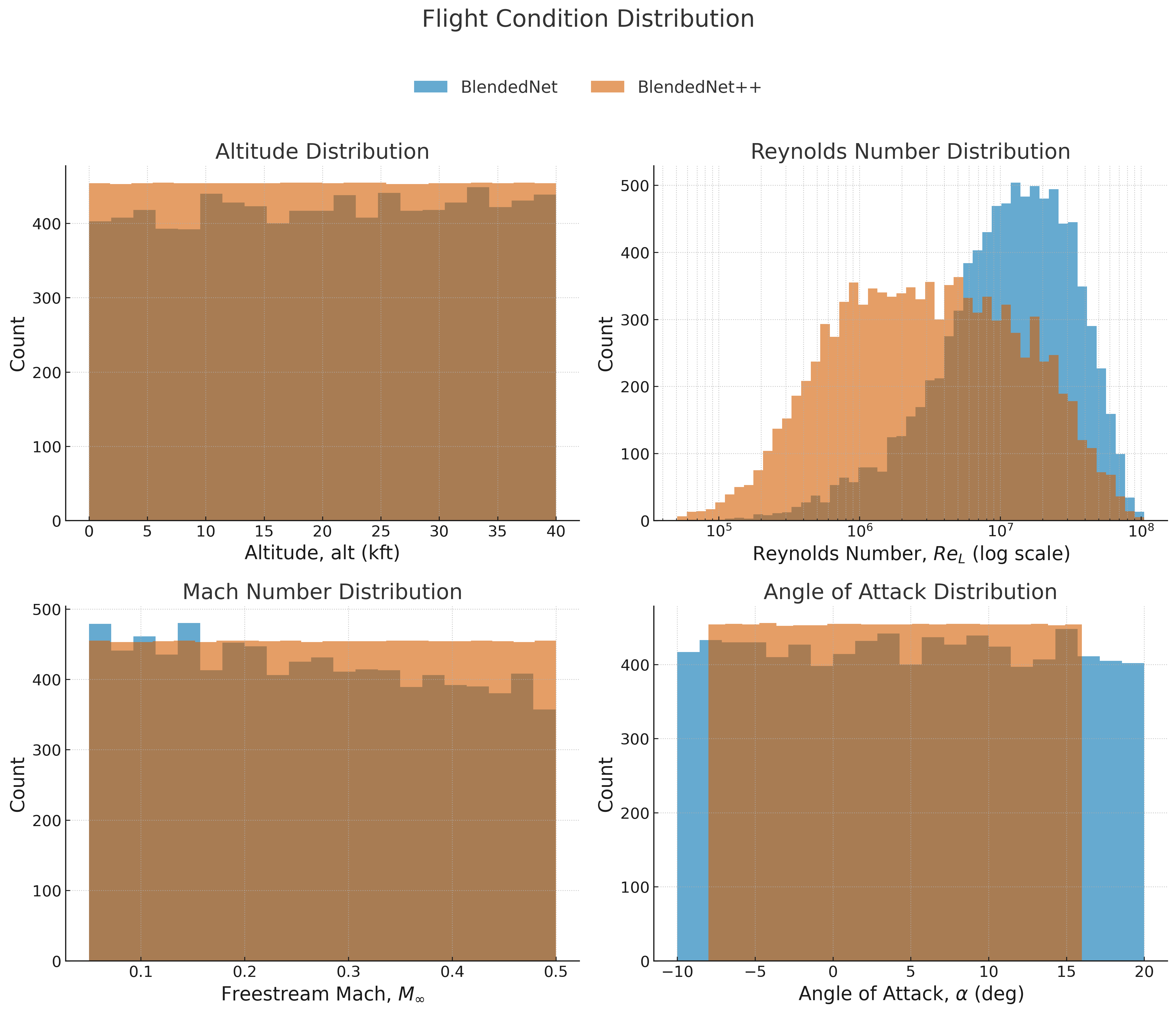
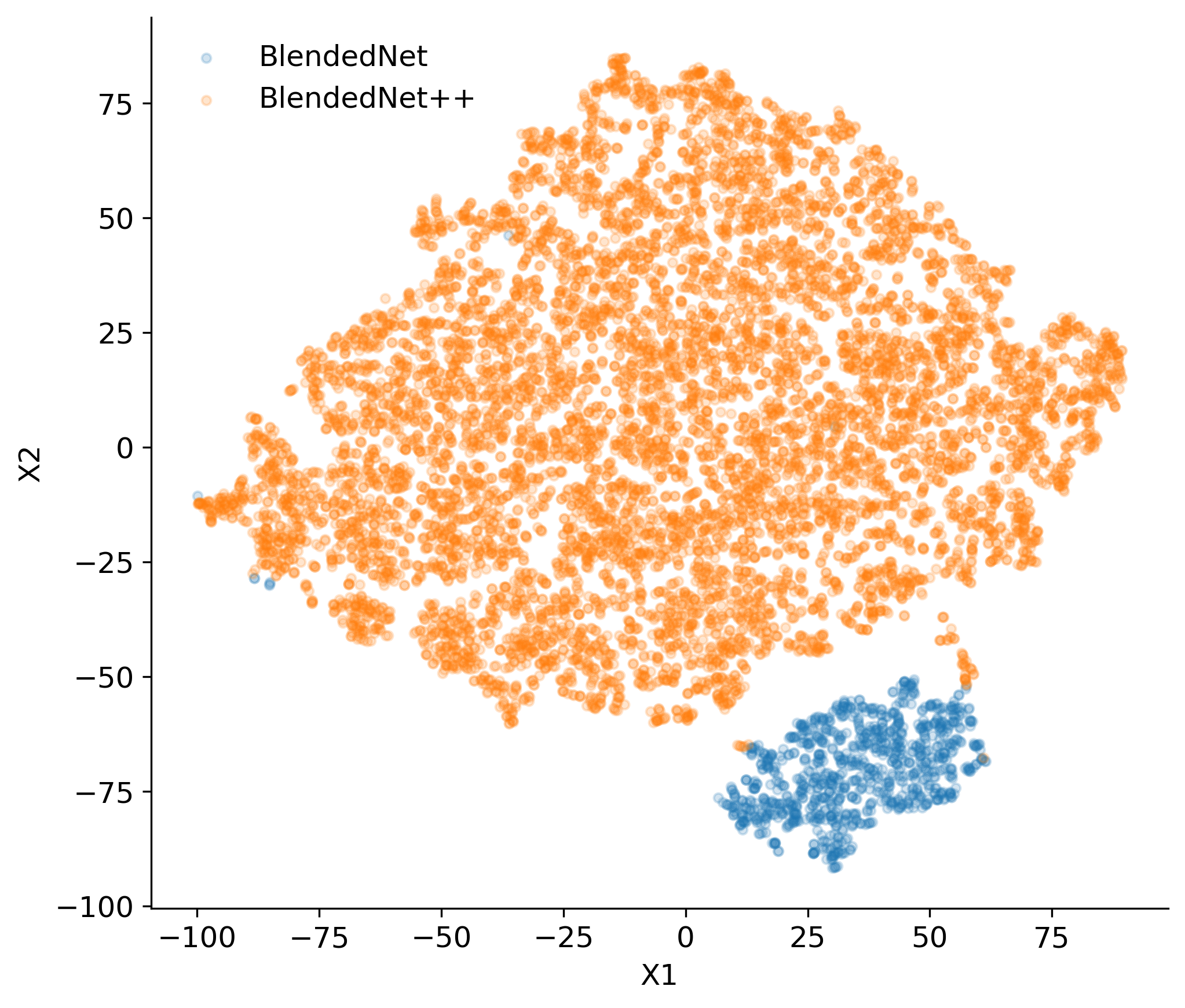
BlendedNet2 [11] took an initial step toward addressing data scarcity with 1099 geometries and dense surface outputs across multiple flight conditions, demonstrating that data-driven surrogates can predict pointwise pressure and skinfriction fields with low error. Yet, broader exploration of BWB design still lacks (i) a larger, more realistic design space with tighter parameter bounds, (ii) standardized, geometry-disjoint splits and consistent forward benchmarks across diverse machine learning model families, and (iii) a clear, reproducible inverse-design baseline using generative AI beyond purely gradient-based surrogates.
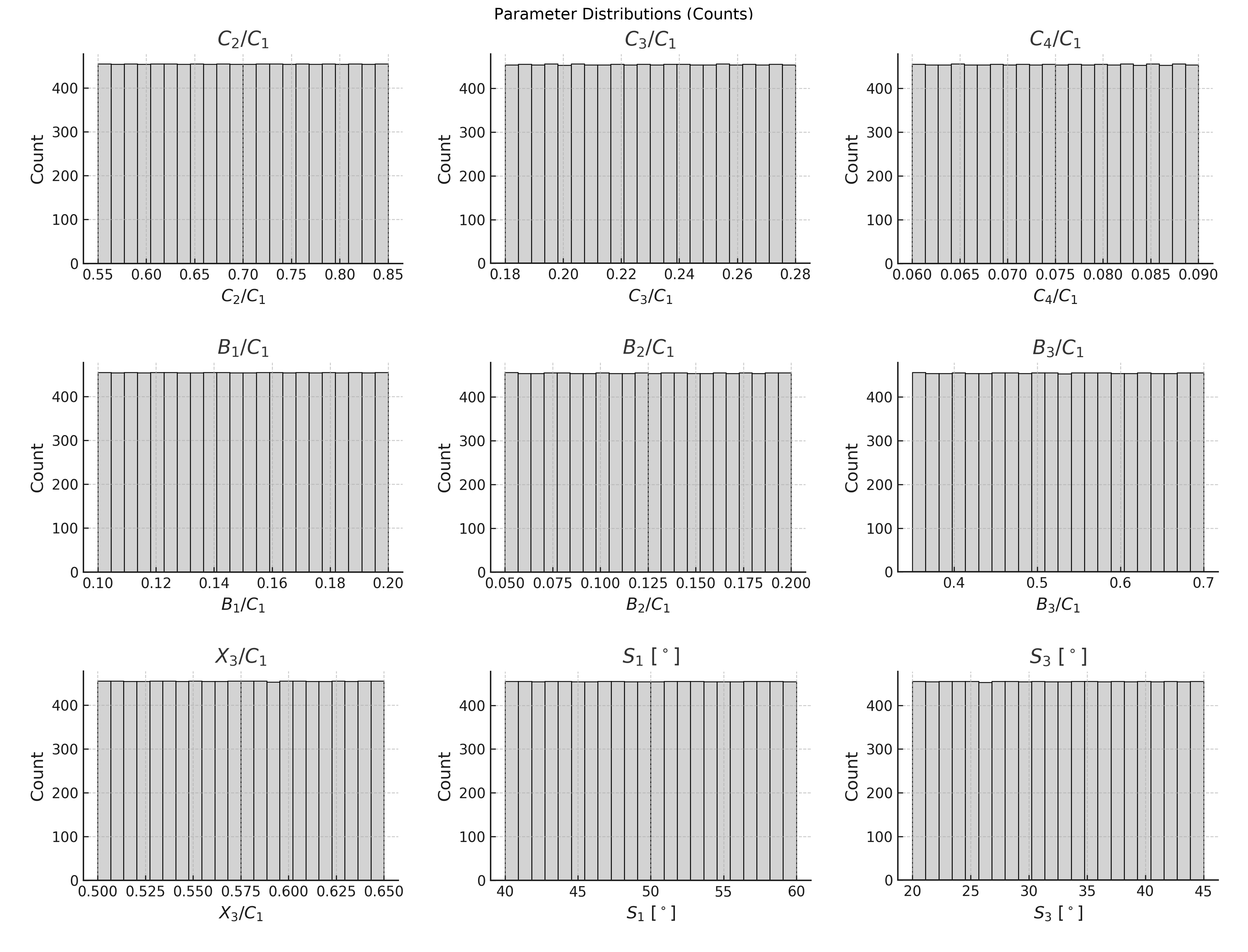
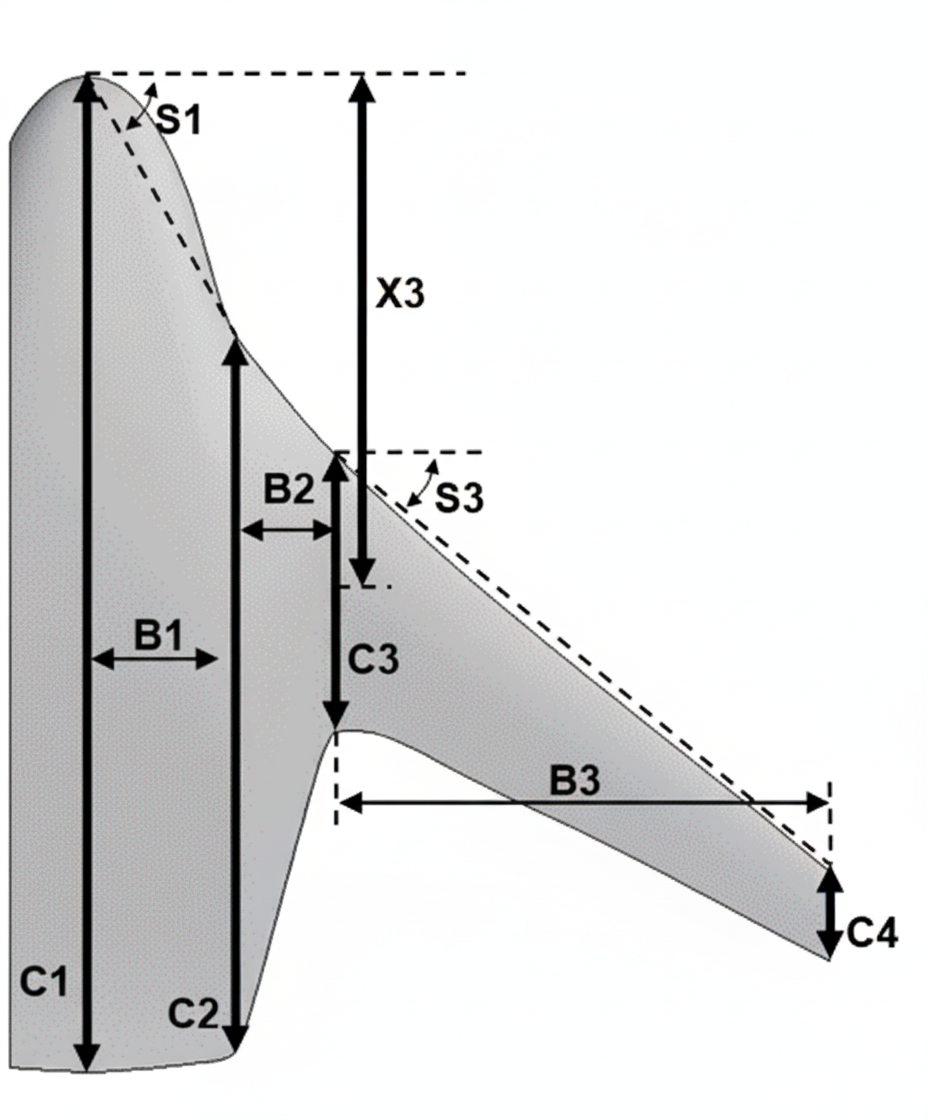
BlendedNet++ expands this line: 12,490 distinct BWB geometries at one flight condition each, all with integrated coefficients and dense surface fields. We (1) document an updated, planform-centric parameterization with realistic bounds inspired by prior work [12] and multi-fidelity practice [13][14][15]; (2) release geometry-disjoint splits; (3) establish a six-model forward benchmark spanning graph, point-set, coordinate-transformer, FiLM, and operator-learning paradigms; and (4) compare a conditional diffusion model, a gradient-based optimizer, and a diffusion-optimization hybrid that first samples diverse candidates with the conditional diffusion model and then locally optimizes them for near-exact target lift to drag adherence.
Our contributions are the following:
• Scaled BWB dataset with surface fields. 12,490 geometries (one flight condition each) with C L , C D , C M and dense surface C p , (C fx , C fy , C fz ), enabling field-level learning at scale.
• Realistic parameterization and standardized splits. Updated bounds and geometry-disjoint train/test splits for fair comparison and robust generalization.
• Six-family forward benchmark. GraphSAGE, GraphUNet, PointNet, a coordinate Transformer (Transolver-style), FiLMNet, and a Graph Neural Operator Transformer (GNOT) with unified metrics on pointwise fields.
• Inverse-design baseline. We compare a conditional diffusion model (conditioned on flight conditions and target L/D), a gradient-based optimizer on the same surrogate and box constraints, and a diffusion-optimization hybrid that first samples diverse candidates with the conditional diffusion model and then locally refines them through the same gradient-based optimizer for near-exact target lift to drag adherence.
Our objective is to facilitate systematic investigation of field-level aerodynamics, to enable rigorous and standardized model comparisons, and to provide a reproducible framework that supports future scaling and multi-condition dataset extensions. An overview of the dat
This content is AI-processed based on open access ArXiv data.