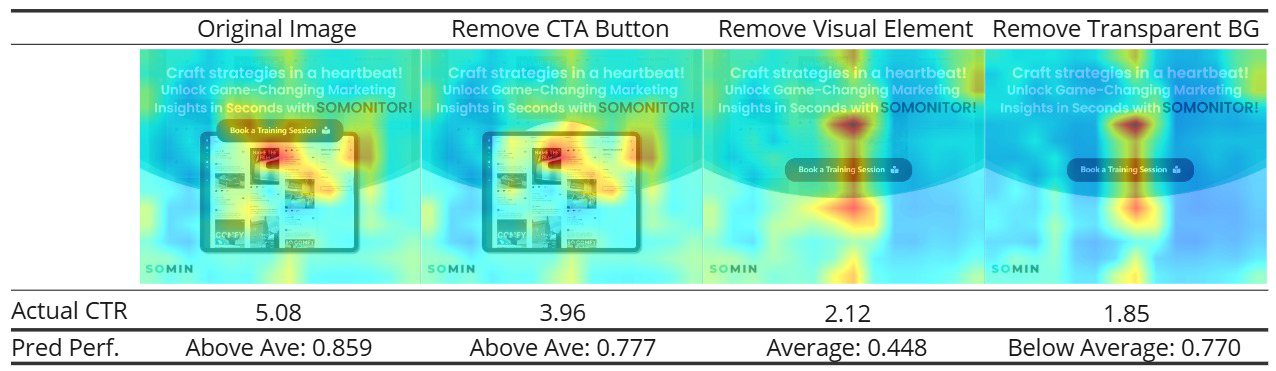
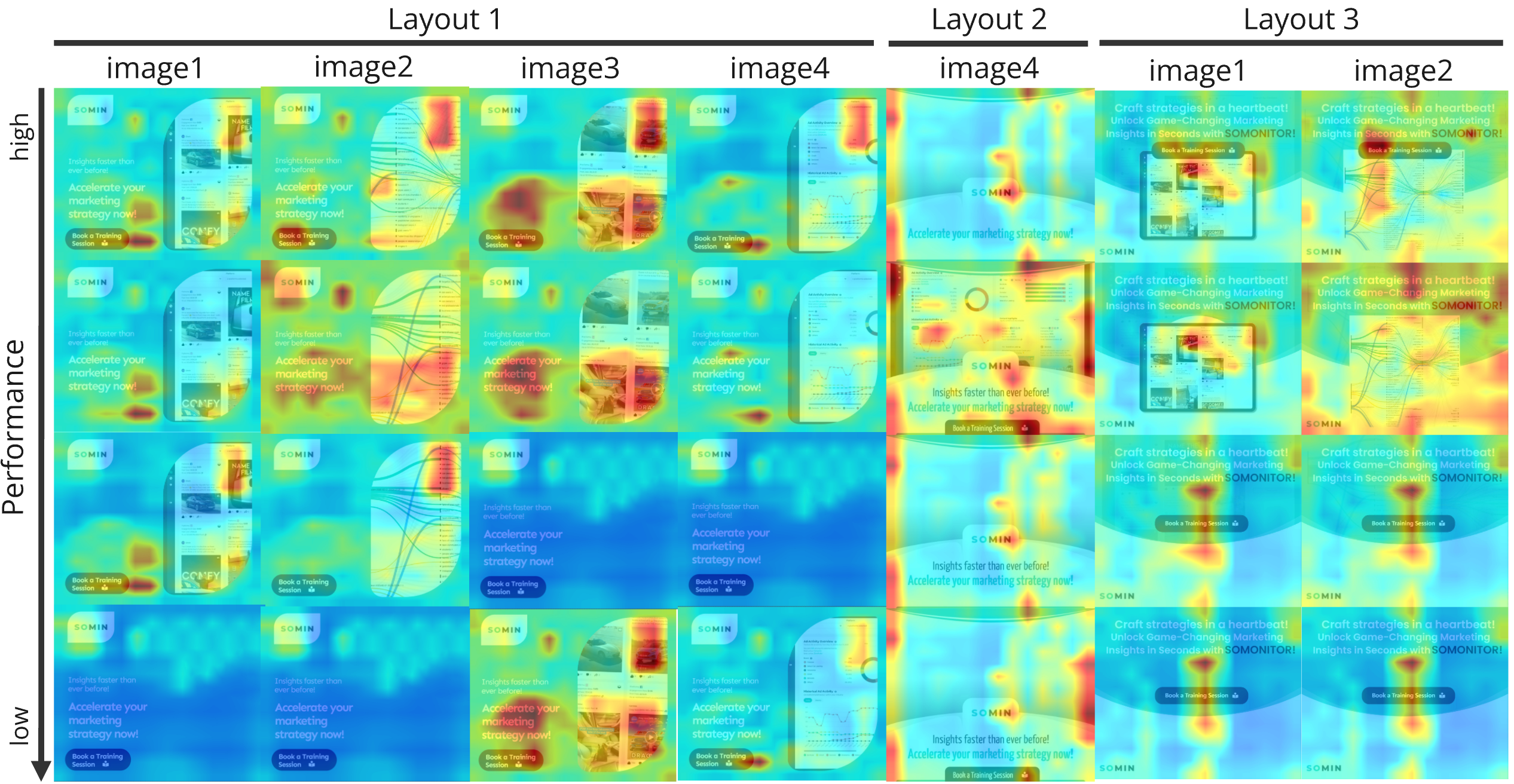
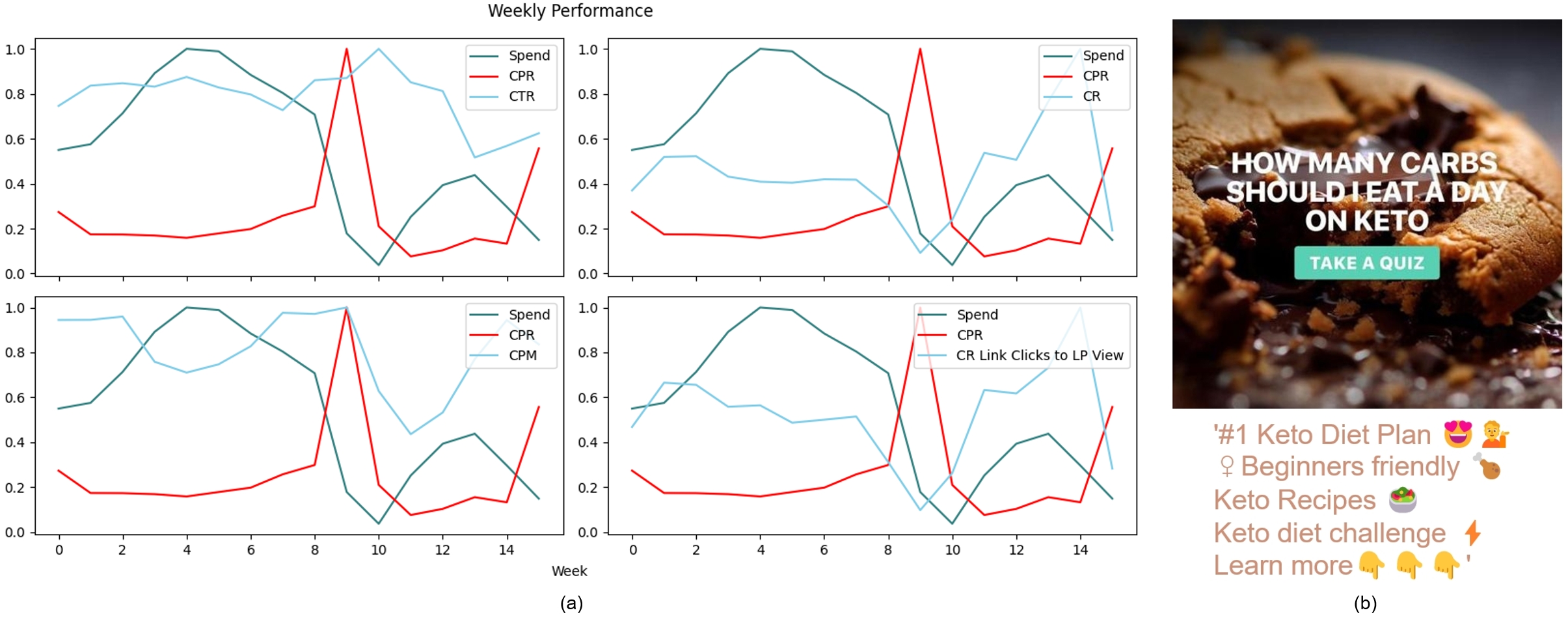
The future of digital marketing lies in the convergence of human creativity and generative AI, where insight, strategy, and storytelling are co-authored by intelligent systems. We present MindFuse, a brave new explainable generative AI framework designed to act as a strategic partner in the marketing process. Unlike conventional LLM applications that stop at content generation, MindFuse fuses CTR-based content AI-guided co-creation with large language models to extract, interpret, and iterate on communication narratives grounded in real advertising data. MindFuse operates across the full marketing lifecycle: from distilling content pillars and customer personas from competitor campaigns to recommending in-flight optimizations based on live performance telemetry. It uses attention-based explainability to diagnose ad effectiveness and guide content iteration, while aligning messaging with strategic goals through dynamic narrative construction and storytelling. We introduce a new paradigm in GenAI for marketing, where LLMs not only generate content but reason through it, adapt campaigns in real time, and learn from audience engagement patterns. Our results, validated in agency deployments, demonstrate up to 12 times efficiency gains, setting the stage for future integration with empirical audience data (e.g., GWI, Nielsen) and full-funnel attribution modeling. MindFuse redefines AI not just as a tool, but as a collaborative agent in the creative and strategic fabric of modern marketing.
The online marketing ecosystem is undergoing a transformation driven by an exponential increase in the volume and complexity of multimedia content. From advertising libraries and social media to consumer behavior data, marketers today navigate a turbulent digital environment that demands not only speed and precision but also strategic depth and creativity. The primary challenge lies in synthesizing insights at scale without sacrificing interpretability [27,71,74,75] or intent, which has been considered to be a major bottleneck of traditional machine learning in the marketing [14,25,30,31,37] and, more specifically, AI-driven user profiling [5, 6, 8, 13, 20-24, 26, 28, 29, 50, 61, 62, 68-70, 73, 76] domains.
Recent breakthroughs in LLMs have offered promising pathways for tackling these challenges. These models have demonstrated success across a range of domains, from low-resource translation and program synthesis to engineering and control systems [10][11][12]41]. Their architecture continues to evolve, with newer Transformer variants such as Longformer [2], Linformer [67], and Mamba-style state-space models [33,57] drastically extending context lengths and reducing inference complexity [45,66]. These advances enable the direct analysis of large-scale text and multimedia datasets-a crucial requirement in marketing.
Furthermore, LLMs now possess multimodal capabilities [53,64], allowing them to jointly process image, video, and audio alongside text. These systems can also be integrated with generative diffusion models [35,60] to generate campaign-ready media, making them increasingly relevant for advertising content production [36,44]. Despite these capabilities, a fundamental gap remains in applying LLMs to strategic marketing workflows. While they excel at generating content, LLMs perform inconsistently in content understanding-a critical task in identifying high-impact ads and strategising future campaigns [7,77]. This shortcoming is especially problematic given that industry-grade content assessment models used by platforms such as Meta [34], Google [46], and Alibaba [55] are proprietary and inaccessible to most marketers, and although there was a growing body of research in ad understanding [63], before the advent of multimodal LLMs it had been insufficiently powerful to actually be practical.
To address this, we propose MindFuse, a Generative AI framework that reimagines the role of intelligent systems in marketing-not merely as tools for automation, but as co-strategists. Mind-Fuse integrates a CTR-based prediction model with generative LLMs to power a novel workflow for campaign ideation, audience segmentation, and team briefing. Crucially, it shifts from static analysis to dynamic persona mining and narrative generation, effectively constructing high-quality content briefs aligned with market needs.
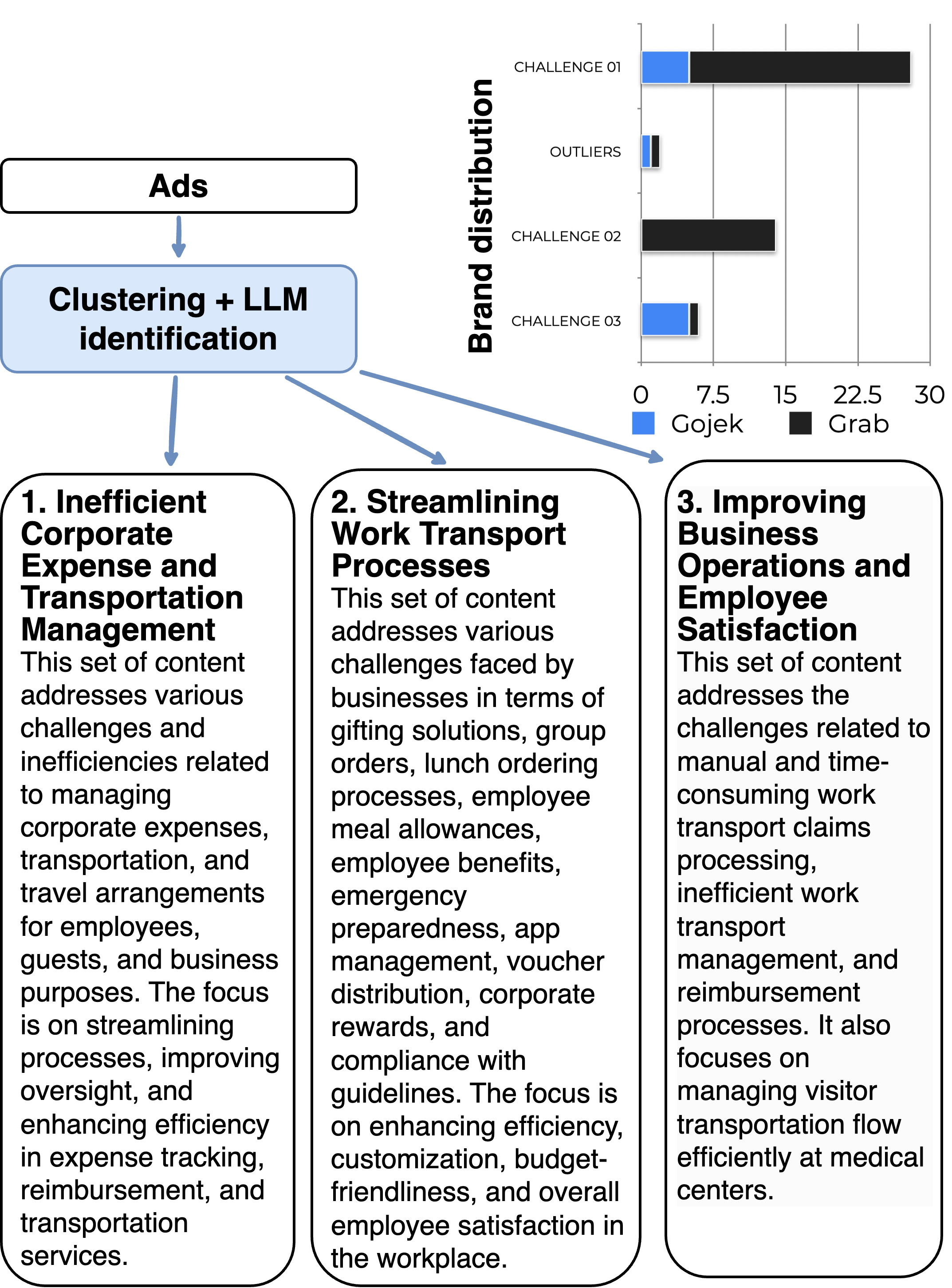
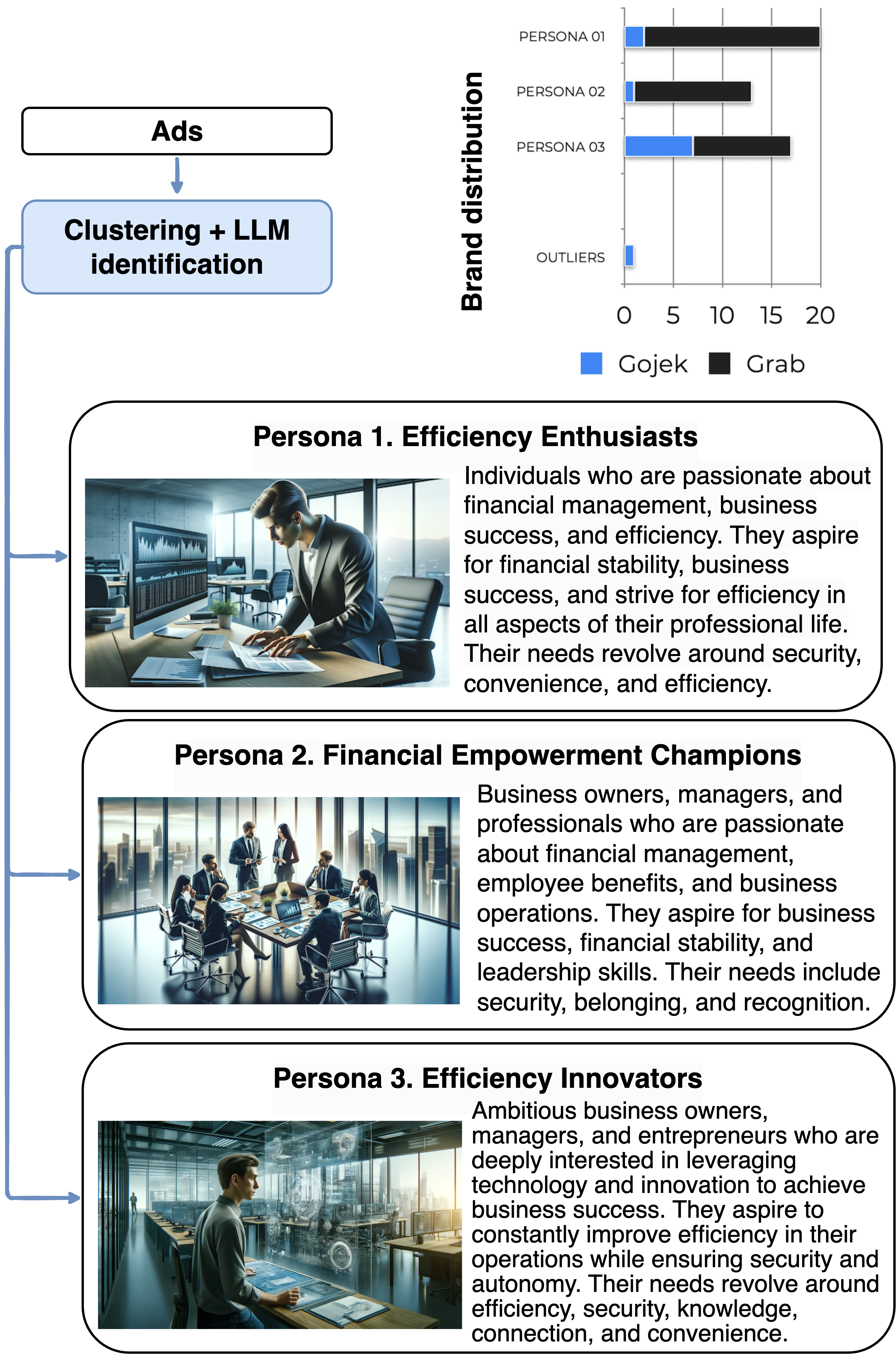
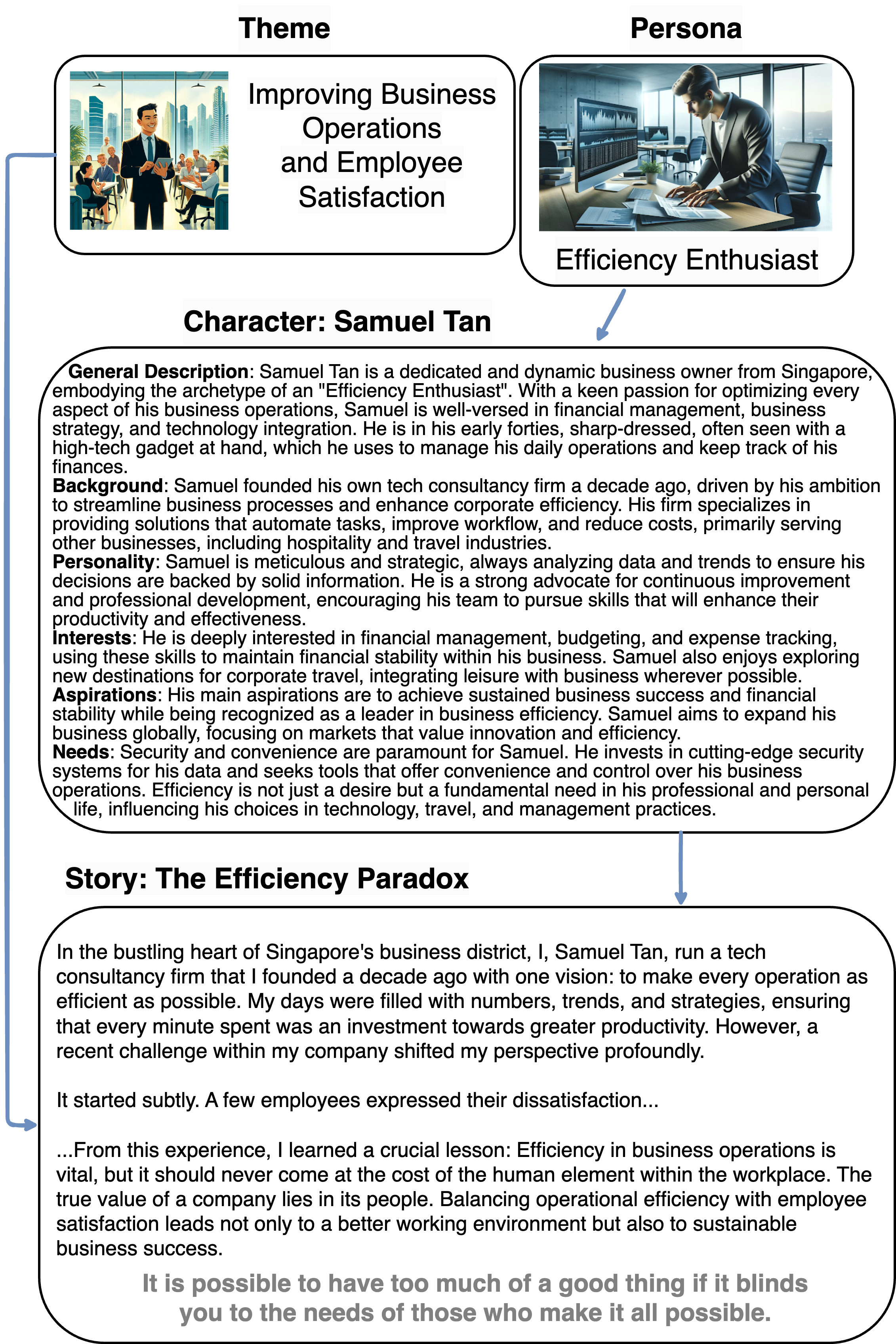
This system builds on recent advances in explainable and actionable AI [52,54,75], using clustering techniques and LLM to extract communication personas and thematic challenges from large-scale ad corpora. These are synthesized into narrative briefs-compact, strategy-ready stories that marketers can use for content calendars, creative direction, or campaign pitches.
MindFuse is a novel brave idea, which is grounded in prior work on recommender systems and user modeling, which traditionally relied on topic models [42], convolutional networks [63], and handcrafted user profiles [5]. Our approach moves beyond these paradigms, offering LLM-powered, explainable pipelines that allow human strategists to collaborate with AI on equal footing. By automating the transformation of ad performance data into creative strategy, MindFuse envisions a new generation of AI systems that supplant human intuition in marketing.
Digital marketers routinely face the challenge of processing vast and constantly updating volumes of creative assets-ranging from advertisements and campaign messages to competitor materials and user interactions. In such a high-frequency, “always-on” environment, manual analysis of each asset or campaign becomes infeasible, creating a pressing need for scalable, automated interpretation tools.
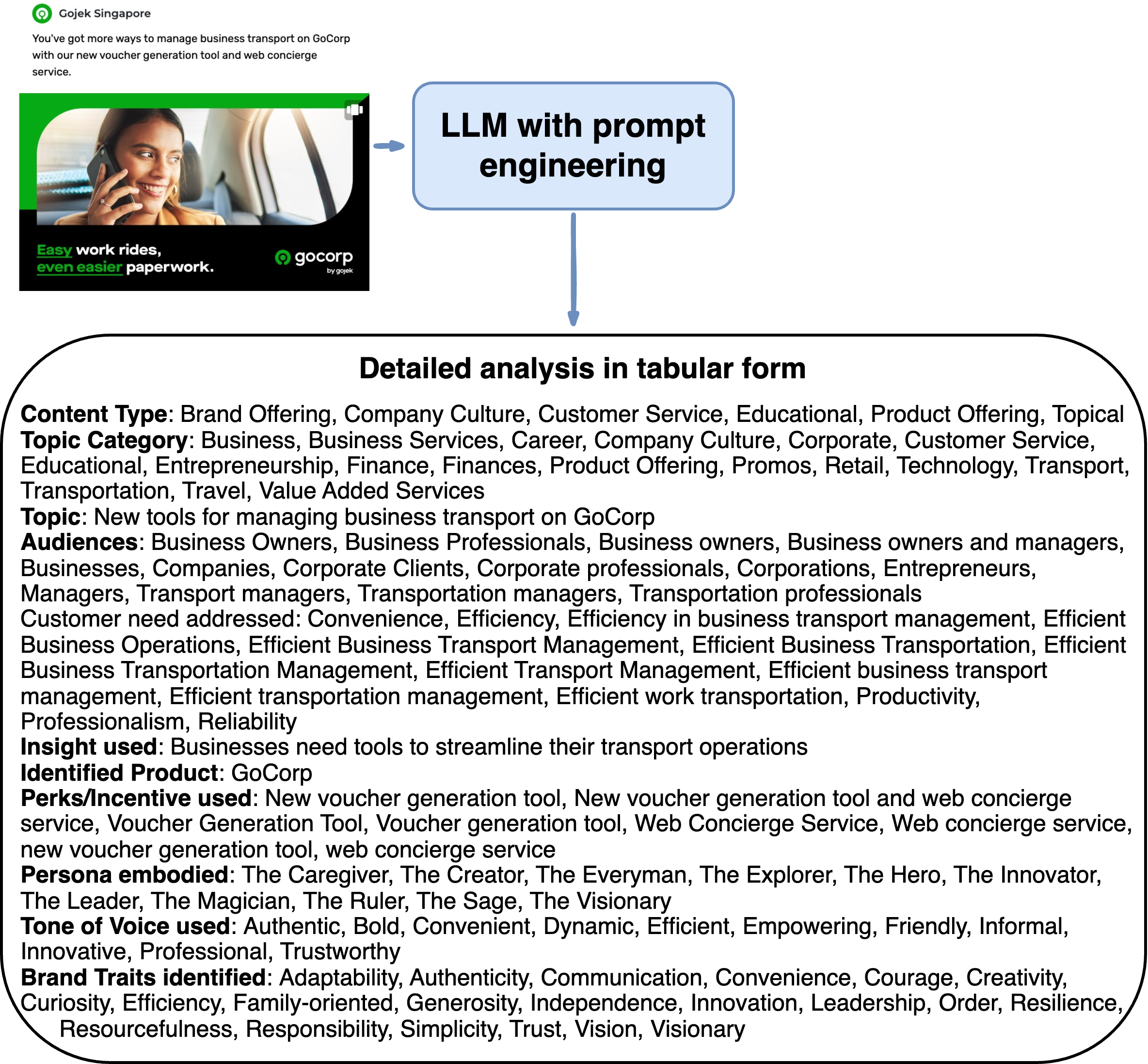
To address this, we introduce a semantic layer within the Mind-Fuse framework that leverages LLMs to extract structured insights from marketing content. These insights-referred to as content pillars-form the foundation for downstream strategic analysis and narrative generation. They represent interpretable attributes such as customer needs, product value propositions, emotional appeals, and stylistic tone.
Our pipeline, begins by processing ad corpora through an LLM fine-tuned with domain-specific prompts. The model identifies structured semantic units in each creative asset (e.g., what need it targets, which product is featured), and stores these in tabular form. These content pillars are then aggregated and analyzed to reveal latent patterns in a brand’s communication strategy-such as the dominant audie
This content is AI-processed based on open access ArXiv data.