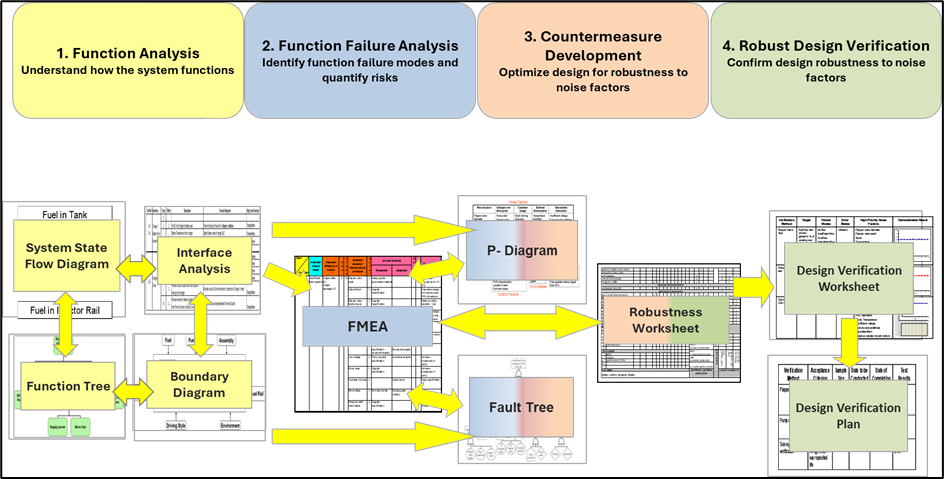
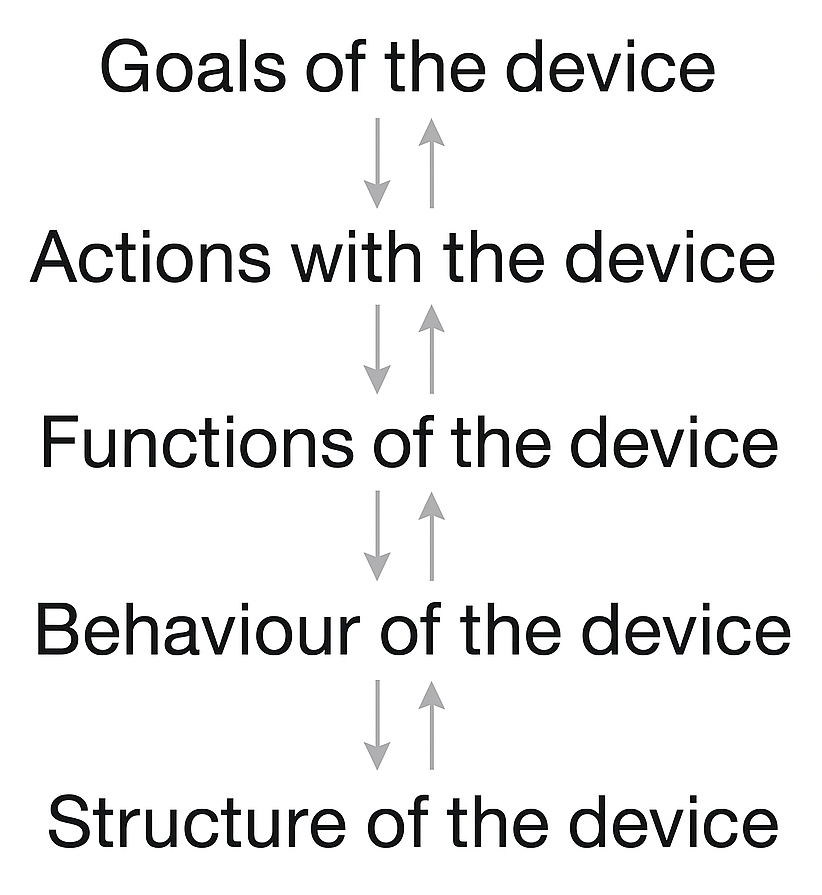
This article presents a state-of-the-art review of recent advances aimed at transforming traditional Failure Mode and Effects Analysis (FMEA) into a more intelligent, data-driven, and semantically enriched process. As engineered systems grow in complexity, conventional FMEA methods, largely manual, document-centric, and expert-dependent, have become increasingly inadequate for addressing the demands of modern systems engineering. We examine how techniques from Artificial Intelligence (AI), including machine learning and natural language processing, can transform FMEA into a more dynamic, data-driven, intelligent, and model-integrated process by automating failure prediction, prioritisation, and knowledge extraction from operational data. In parallel, we explore the role of ontologies in formalising system knowledge, supporting semantic reasoning, improving traceability, and enabling cross-domain interoperability. The review also synthesises emerging hybrid approaches, such as ontology-informed learning and large language model integration, which further enhance explainability and automation. These developments are discussed within the broader context of Model-Based Systems Engineering (MBSE) and function modelling, showing how AI and ontologies can support more adaptive and resilient FMEA workflows. We critically analyse a range of tools, case studies, and integration strategies, while identifying key challenges related to data quality, explainability, standardisation, and interdisciplinary adoption. By leveraging AI, systems engineering, and knowledge representation using ontologies, this review offers a structured roadmap for embedding FMEA within intelligent, knowledge-rich engineering environments.
💡 Deep Analysis
📄 Full Content
AI- and Ontology-Based Enhancements to FMEA for Advanced Systems Engineering:
Current Developments and Future Directions
Haytham Younusa, Sohag Kabira,∗, Felician Campeana,b, Pascal Bonnaudc, David Delauxc
aSchool of Computing and Engineering, University of Bradford, Bradford, BD7 1DP, UK
bSAFI Verse Limited, Bradford BD16 4DR, UK
cValeo, 75017 Paris, France
Abstract
This article presents a state-of-the-art review of recent advances aimed at transforming traditional Failure Mode and Effects Anal-
ysis (FMEA) into a more intelligent, data-driven, and semantically enriched process. As engineered systems grow in complexity,
conventional FMEA methods, largely manual, document-centric, and expert-dependent, have become increasingly inadequate for
addressing the demands of modern systems engineering. We examine how techniques from Artificial Intelligence (AI), including
machine learning and natural language processing, can transform FMEA into a more dynamic, data-driven, intelligent, and model-
integrated process by automating failure prediction, prioritisation, and knowledge extraction from operational data. In parallel, we
explore the role of ontologies in formalising system knowledge, supporting semantic reasoning, improving traceability, and en-
abling cross-domain interoperability. The review also synthesises emerging hybrid approaches, such as ontology-informed learning
and large language model integration, which further enhance explainability and automation. These developments are discussed
within the broader context of Model-Based Systems Engineering (MBSE) and function modelling, showing how AI and ontologies
can support more adaptive and resilient FMEA workflows. We critically analyse a range of tools, case studies, and integration
strategies, while identifying key challenges related to data quality, explainability, standardisation, and interdisciplinary adoption.
By leveraging AI, systems engineering, and knowledge representation using ontologies, this review offers a structured roadmap for
embedding FMEA within intelligent, knowledge-rich engineering environments.
Keywords:
Failure Mode and Effects Analysis (FMEA), Artificial Intelligence (AI), Ontologies, Knowledge Representation, Model-Based
Systems Engineering (MBSE), Machine Learning (ML), Large Language Models (LLMs), Semantic Reasoning, System
Reliability, Intelligent Systems Engineering
1. Introduction
In an era of increasingly complex systems and accelerated
design cycles, particularly in domains such as automotive en-
gineering, traditional approaches to Failure Modes and Effects
Analysis (FMEA) and systems engineering are revealing sig-
nificant limitations (Syed, 2024; Younus et al., 2024). Conven-
tional FMEA methods, typically implemented as static tables
or spreadsheets, struggle to keep pace with rapid design iter-
ations, cross-disciplinary collaboration, and the integration of
feedback across a product’s lifecycle (Korsunovs et al., 2022).
They rely heavily on expert judgement, are prone to subjectiv-
ity, and remain largely disconnected from digital system mod-
els. Similarly, document-centric systems engineering lacks the
semantic consistency and automation required to manage multi-
disciplinary data and ensure traceability across lifecycle stages.
These challenges have led to a growing interest in data-driven,
∗Corresponding author
Email addresses: hiamoham@bradford.ac.uk (Haytham Younus),
s.kabir2@bradford.ac.uk (Sohag Kabir), fcampean@bradford.ac.uk
(Felician Campean), pascal.bonnaud@valeo.com (Pascal Bonnaud),
david.delaux@valeo.com (David Delaux)
model-integrated, and semantically enriched approaches to re-
liability analysis (Akundi et al., 2022).
Artificial Intelligence (AI) and ontology-based knowledge
engineering have emerged as complementary enablers of this
transformation (Baydaro˘glu et al., 2022). AI techniques, in-
cluding Machine Learning (ML), Natural Language Process-
ing (NLP), and Large Language Models (LLMs), offer pre-
dictive and analytical capabilities that can enhance or auto-
mate aspects of FMEA, such as failure detection, prioritisa-
tion, and classification (Gope et al., 2020). However, while
AI introduces scalability and automation, it often lacks trans-
parency and domain interpretability. Ontologies address this
gap by providing a formal, semantically rich framework for rep-
resenting functions, behaviours, structures, and failure relations
within engineering systems.
Through ontological reasoning
and knowledge formalisation, they enable machine-processable
yet human-verifiable models that improve traceability, inter-
operability, and explainability (Tsaneva et al., 2024).
The
convergence of AI and ontology-based modelling thus repre-
sents a promising pathway toward intelligent, adaptive, and
explainable FMEA within Model-Based Systems Engineering
(MBSE).
Preprint submitted to arXiv
November 25, 2025
arXiv:2511.17743v1 [cs.AI] 21 Nov 2025
This review is positioned at the intersection of system en-
g