SAND: A Self-supervised and Adaptive NAS-Driven Framework for Hardware Trojan Detection
📝 Original Info
- Title: SAND: A Self-supervised and Adaptive NAS-Driven Framework for Hardware Trojan Detection
- ArXiv ID: 2510.23643
- Date: 2025-10-24
- Authors: ** 제공된 논문에 저자 정보가 명시되어 있지 않습니다. (정보 없음) **
📝 Abstract
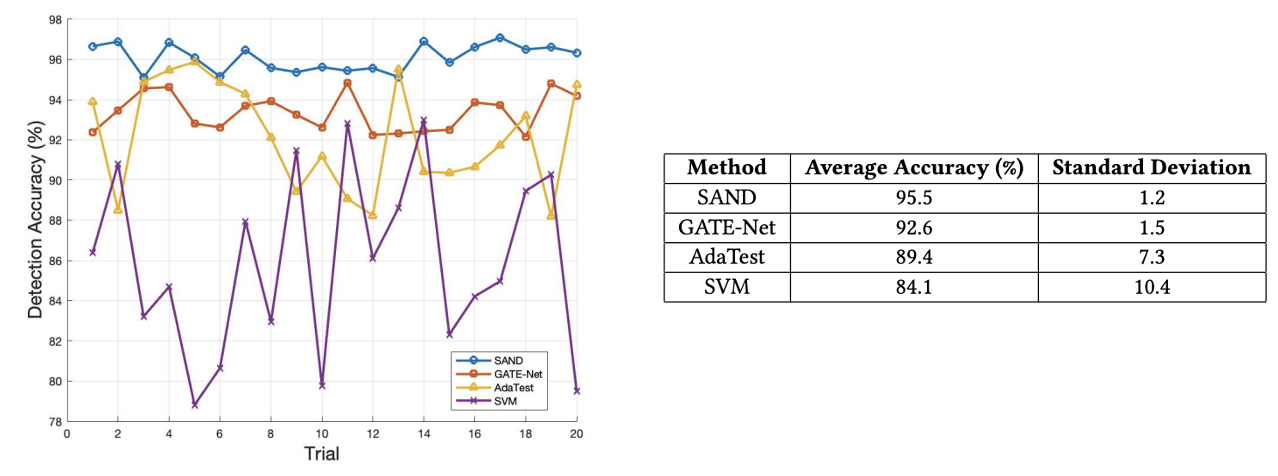
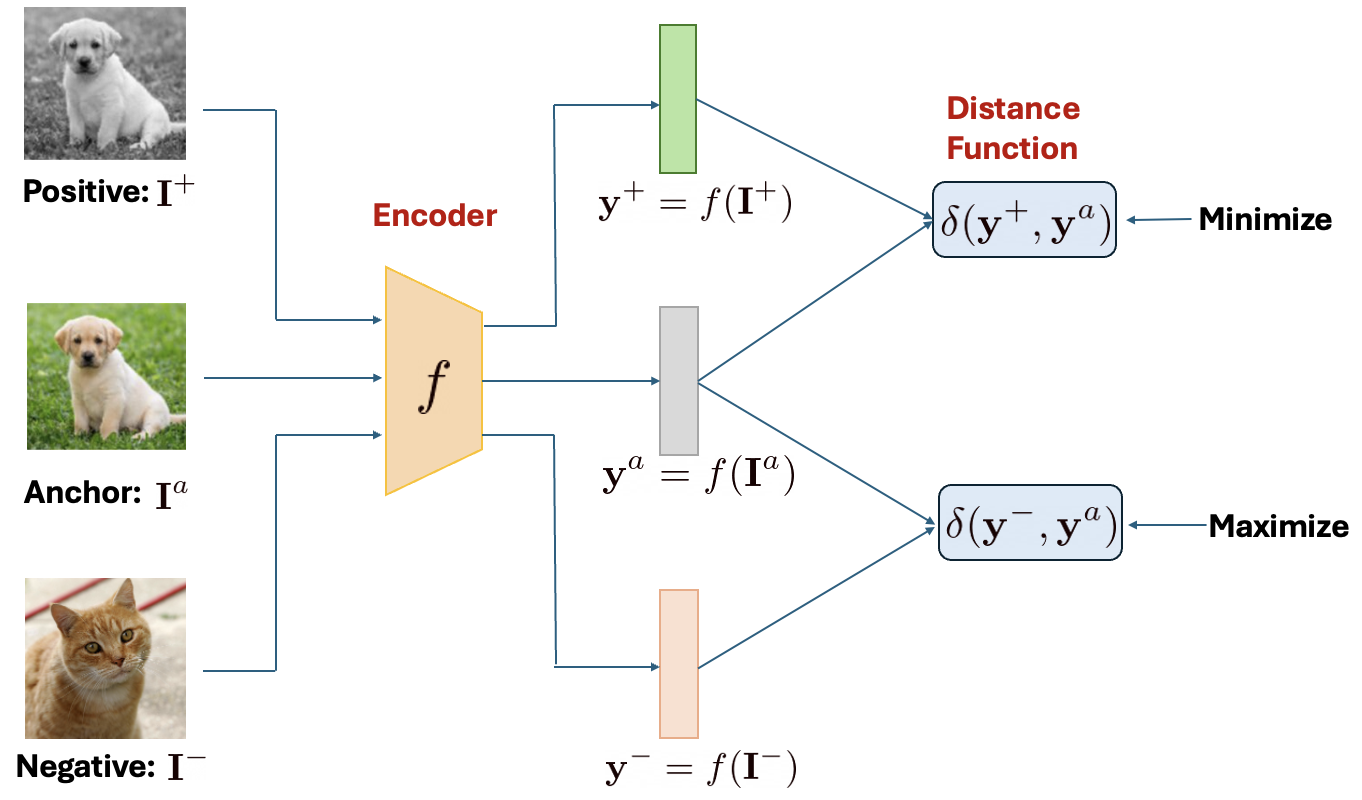
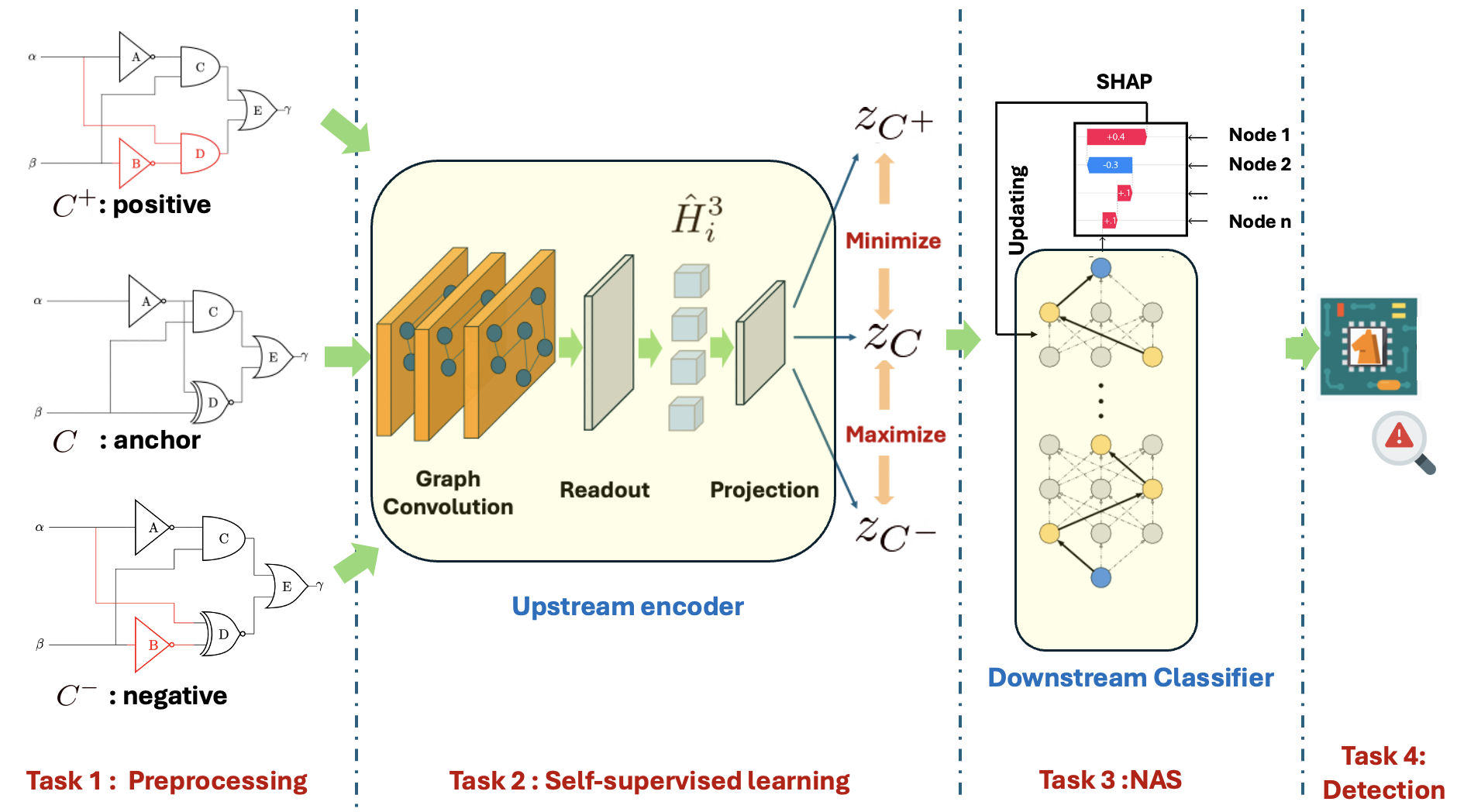
The globalized semiconductor supply chain has made Hardware Trojans (HT) a significant security threat to embedded systems, necessitating the design of efficient and adaptable detection mechanisms. Despite promising machine learning-based HT detection techniques in the literature, they suffer from ad hoc feature selection and the lack of adaptivity, all of which hinder their effectiveness across diverse HT attacks. In this paper, we propose SAND, a selfsupervised and adaptive NAS-driven framework for efficient HT detection. Specifically, this paper makes three key contributions. (1) We leverage self-supervised learning (SSL) to enable automated feature extraction, eliminating the dependency on manually engineered features. (2) SAND integrates neural architecture search (NAS) to dynamically optimize the downstream classifier, allowing for seamless adaptation to unseen benchmarks with minimal fine-tuning. (3) Experimental results show that SAND achieves a significant improvement in detection accuracy (up to 18.3%) over state-of-the-art methods, exhibits high resilience against evasive Trojans, and demonstrates strong generalization.💡 Deep Analysis
📄 Full Content
📸 Image Gallery
Reference
This content is AI-processed based on open access ArXiv data.