Building a Media Ecosystem Observatory from Scratch: Infrastructure, Methodology, and Insights
📝 Original Info
- Title: Building a Media Ecosystem Observatory from Scratch: Infrastructure, Methodology, and Insights
- ArXiv ID: 2506.10942
- Date: 2025-06-12
- Authors: Zeynep Pehlivan, Saewon Park, Alexei Sisulu Abrahams, Mika Desblancs-Patel, Benjamin David Steel, Aengus Bridgman
📝 Abstract
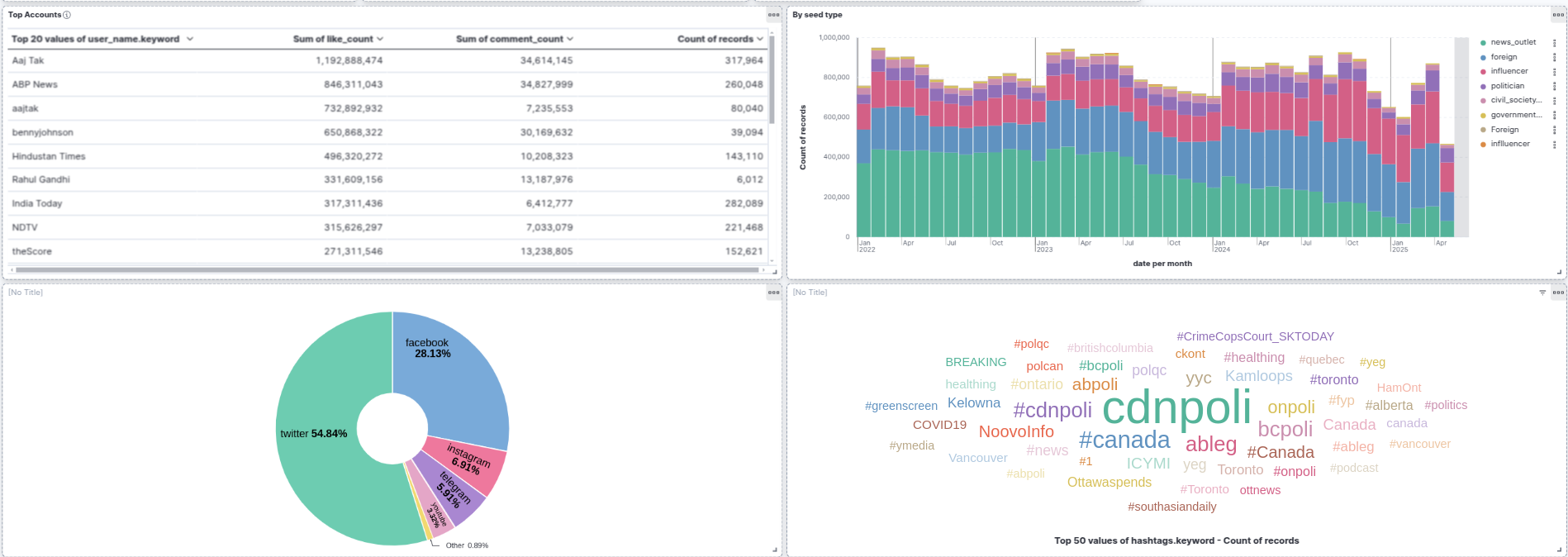
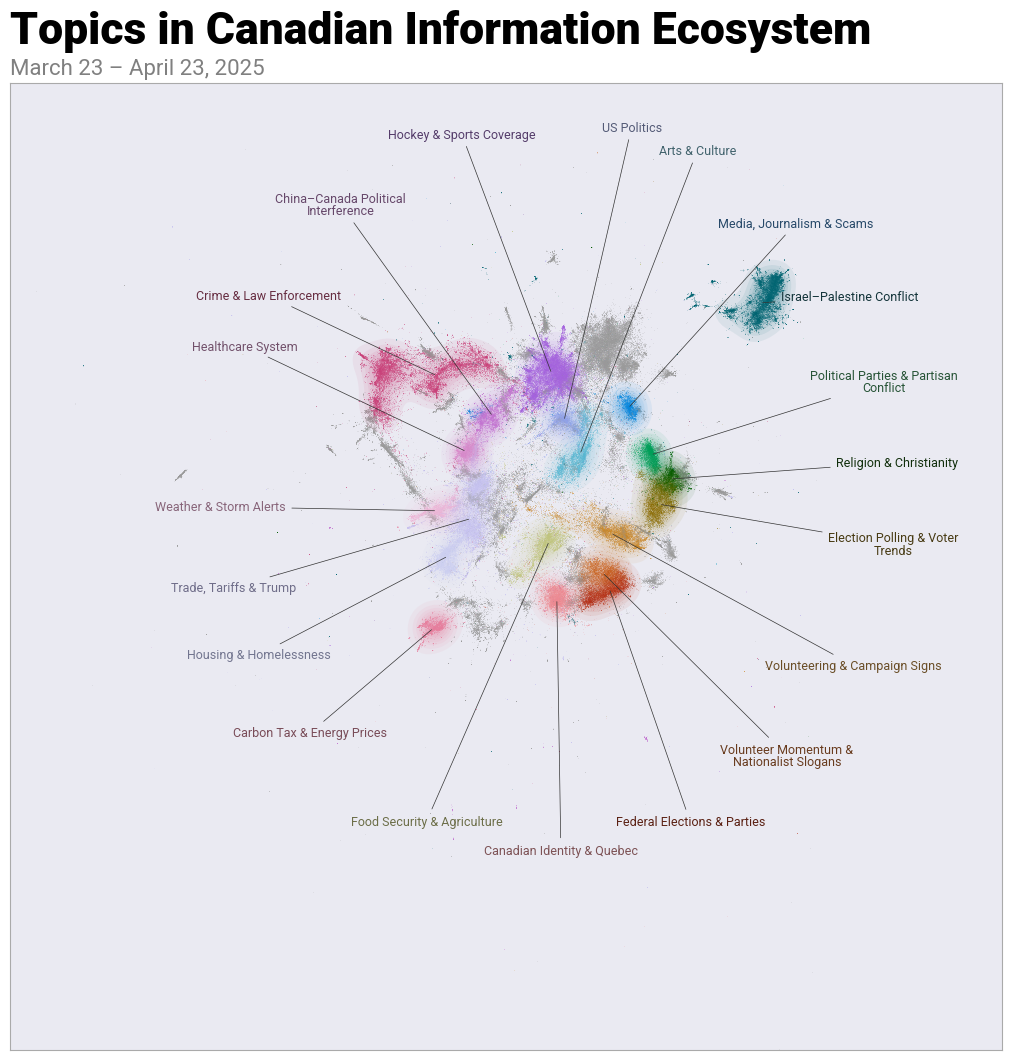
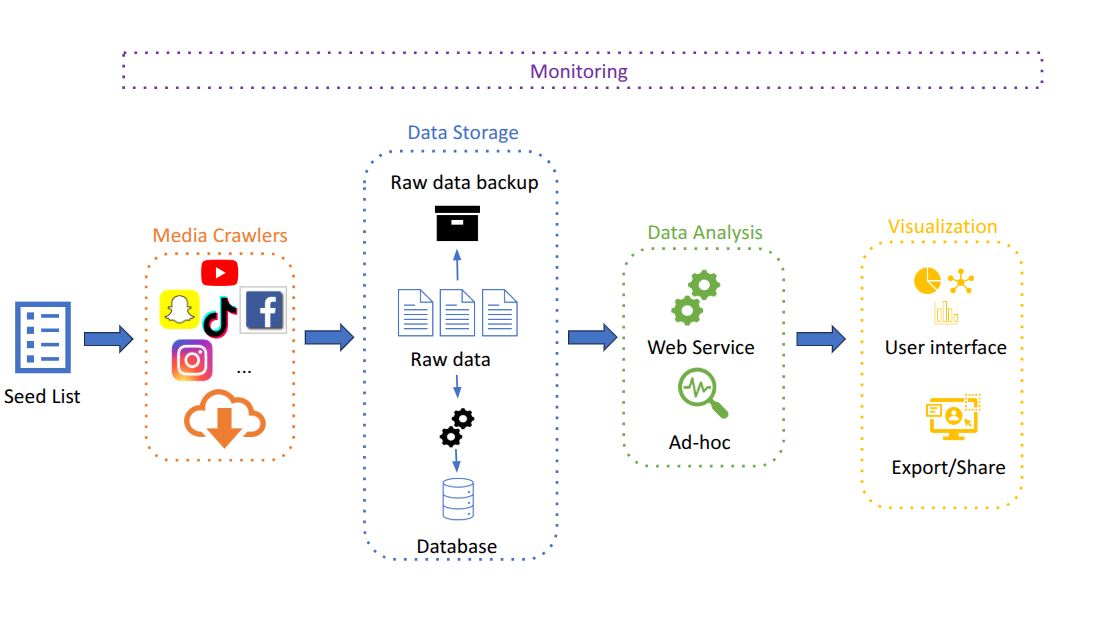
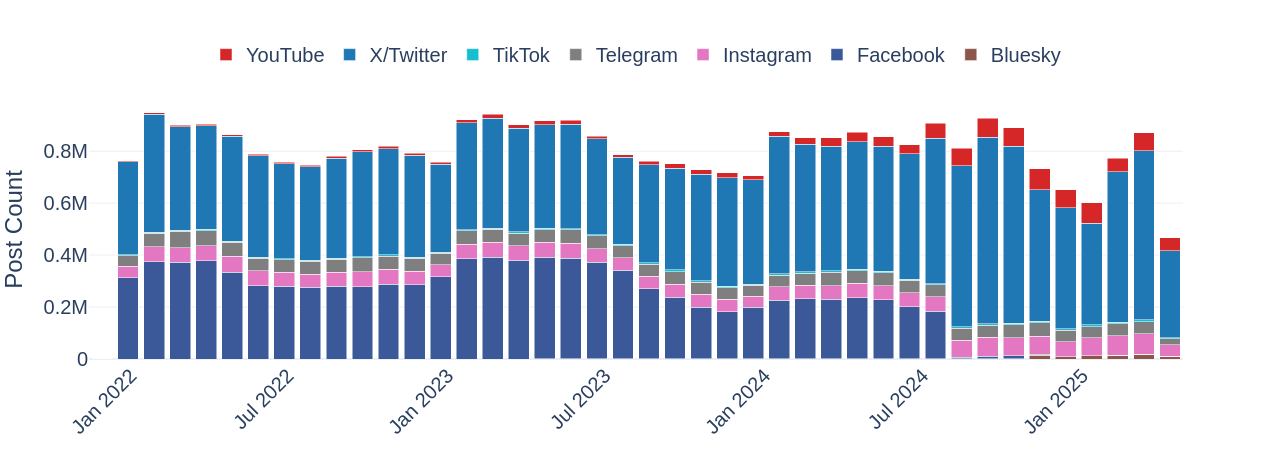
Understanding the flow of information across today's fragmented digital media landscape requires scalable, cross-platform infrastructure. In this paper, we present the Canadian Media Ecosystem Observatory, a national-scale infrastructure designed to monitor political and media discourse across platforms in near real time. Media Ecosystem Observatory (MEO) data infrastructure features custom crawlers for major platforms, a unified indexing pipeline, and a normalization layer that harmonizes heterogeneous schemas into a common data model. Semantic embeddings are computed for each post to enable similarity search and vector-based analyses such as topic modeling and clustering. Processed and raw data are made accessible through API, dashboards and website, supporting both automated and ad hoc research workflows. We illustrate the utility of the observatory through example analyses of major Canadian political events, including Meta's 2023 news ban and the recent federal elections. As a whole, the system offers a model for digital trace infrastructure and an evolving research platform for studying the dynamics of modern media ecosystems.💡 Deep Analysis
This research explores the key findings and methodology presented in the paper: Building a Media Ecosystem Observatory from Scratch: Infrastructure, Methodology, and Insights.Understanding the flow of information across today’s fragmented digital media landscape requires scalable, cross-platform infrastructure. In this paper, we present the Canadian Media Ecosystem Observatory, a national-scale infrastructure designed to monitor political and media discourse across platforms in near real time. Media Ecosystem Observatory (MEO) data infrastructure features custom crawlers for major platforms, a unified indexing pipeline, and a normalization layer that harmonizes heterogeneous schemas into a common data model. Semantic embeddings are computed for each post to enable similarity search and vector-based analyses such as topic modeling and clustering. Processed and raw data are made accessible through API, dashboards and website, supporting both automated and ad hoc research workflows. We illustrate the utility of the observatory through example analyses of major Canadian political events, including Meta’s 2023 news ban and the recent federal elections. As a wh
📄 Full Content
📸 Image Gallery