Robust Earthquake Location using Random Sample Consensus (RANSAC)
📝 Original Info
- Title: Robust Earthquake Location using Random Sample Consensus (RANSAC)
- ArXiv ID: 2502.10933
- Date: 2025-02-15
- Authors: Weiqiang Zhu, Bo Rong, Yaqi Jie, S. Shawn Wei
📝 Abstract
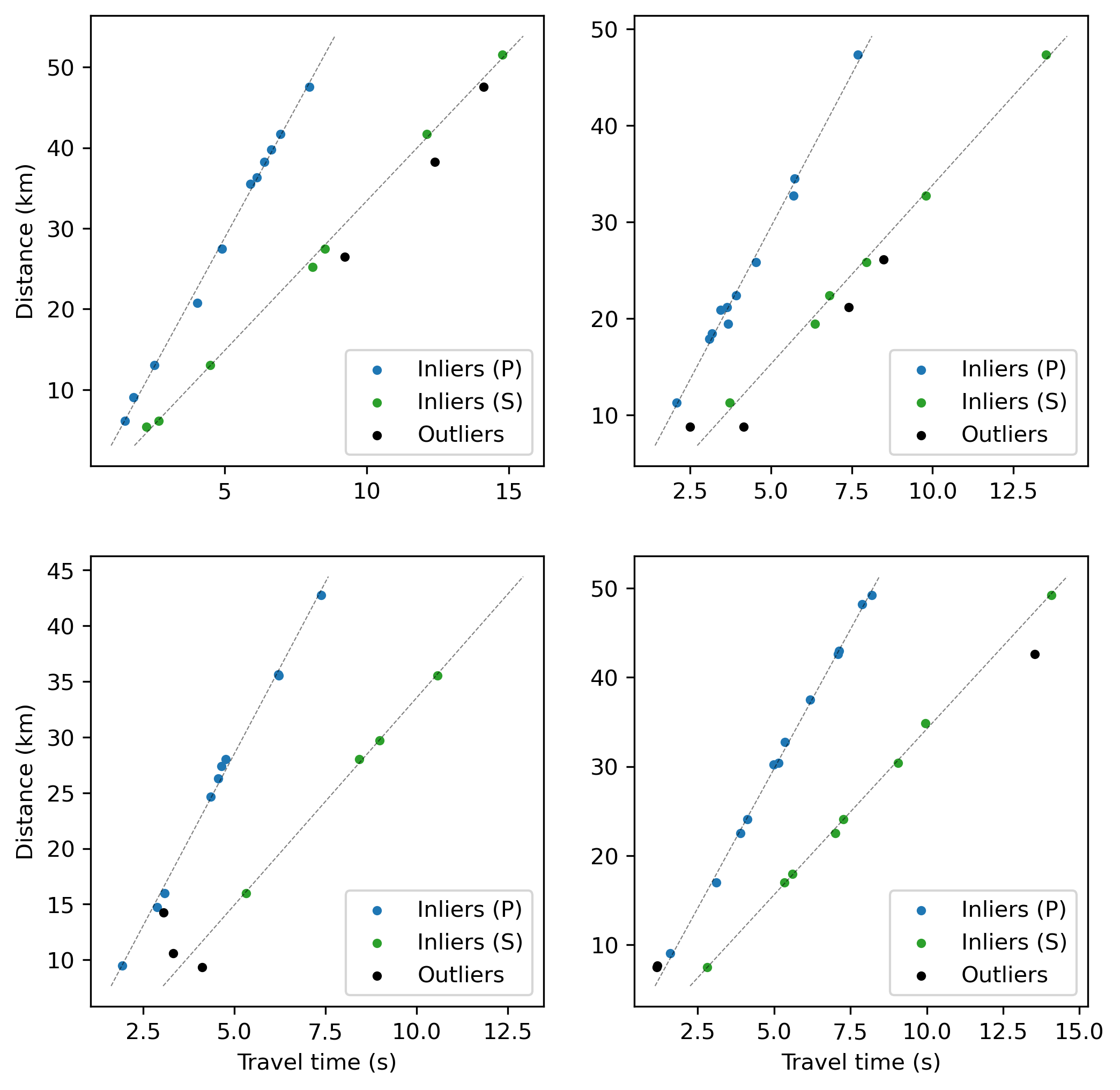
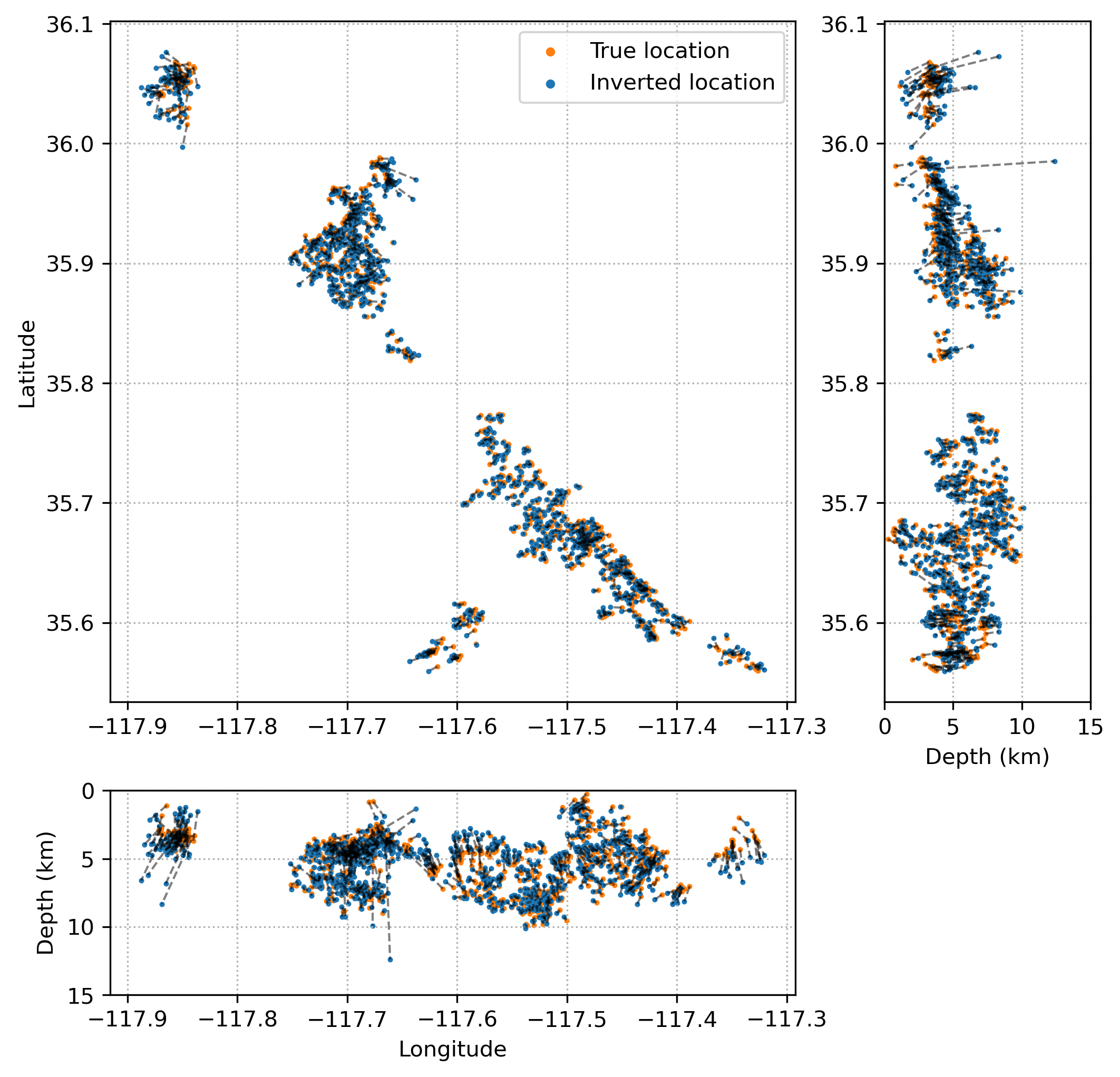
Accurate earthquake location, which determines the origin time and location of seismic events using phase arrival times or waveforms, is fundamental to earthquake monitoring. While recent deep learning advances have significantly improved earthquake detection and phase picking, particularly for smaller-magnitude events, the increased detection rate introduces new challenges for robust location determination. These smaller events often contain fewer P- and S-phase picks, making location accuracy more vulnerable to false or inaccurate picks. To enhance location robustness against outlier picks, we propose a machine learning method that incorporates the Random Sample Consensus (RANSAC) algorithm. RANSAC employs iterative sampling to achieve robust parameter optimization in the presence of substantial outliers. By integrating RANSAC's iterative sampling into traditional earthquake location workflows, we effectively mitigate biases from false picks and improve the robustness of the location process. We evaluated our approach using both synthetic data and real data from the Ridgecrest earthquake sequence. The results demonstrate comparable accuracy to traditional location algorithms while showing enhanced robustness to outlier picks.💡 Deep Analysis
This research explores the key findings and methodology presented in the paper: Robust Earthquake Location using Random Sample Consensus (RANSAC).Accurate earthquake location, which determines the origin time and location of seismic events using phase arrival times or waveforms, is fundamental to earthquake monitoring. While recent deep learning advances have significantly improved earthquake detection and phase picking, particularly for smaller-magnitude events, the increased detection rate introduces new challenges for robust location determination. These smaller events often contain fewer P- and S-phase picks, making location accuracy more vulnerable to false or inaccurate picks. To enhance location robustness against outlier picks, we propose a machine learning method that incorporates the Random Sample Consensus (RANSAC) algorithm. RANSAC employs iterative sampling to achieve robust parameter optimization in the presence of substantial outliers. By integrating RANSAC’s iterative sampling into traditional earthquake location workflows, we effectively mitigate biases from false picks and improve the robustness of the location
📄 Full Content
📸 Image Gallery