This letter briefly introduces the concepts of Dicke superradiance (SR) and superfluorescence (SF), their difference to amplified spontaneous emission (ASE), and the hints for identifying them in experiment. As a typical example it analyzes the latest observations by Dogariu et al. (Science 331, 442, 2011), and clarifies that it is SR. It also highlights the revealed potential significant application of SR and SF for remote sensing in air.
Brief comment: Dicke Superradiance and Superfluorescence Find
Application for Remote Sensing in Air
D. C. Dai*
Physics Department, Durham University, South Road, Durham DH1 3LE, United Kingdom
*Corresponding author: dechang.dai@durham.ac.uk
Received Month X, XXXX; revised Month X, XXXX; accepted Month X,
XXXX; posted Month X, XXXX (Doc. ID XXXXX); published Month X, XXXX
This letter briefly introduces the concepts of Dicke superradiance (SR) and superfluorescence (SF), their difference to
amplified spontaneous emission (ASE), and the hints for identifying them in experiment. As a typical example it analyzes the
latest observations by Dogariu et al. (Science 331, 442, 2011), and clarifies that it is SR. It also highlights the revealed
potential significant application of SR and SF for remote sensing in air. © 2011 Optical Society of America
OCIS Codes: 020.1670, 270.1670, 260.7120, 010.0280, 280.1350
In 1954 Dicke predicted the cooperative emission from a
dense excited two-level system of gaseous atoms or
molecules in population inversion in the absence of a laser
cavity [1], soon after, Bonifacio and Lugiato termed it into
two distinct forms [2]: Dicke Superradiance (SR) and
Superfluorescence (SF). In a simplified picture, SR is from
such an energy level prepared directly by laser into a
quantum state which has an initial macroscopic dipole
(coherence); whereas SF is from an initially incoherent
energy level, which later on spontaneously builds-up a
macroscopic dipole, in this case the system is started by
normal fluorescent emission (FL), then gives rise to SF
pulse, having a characteristic induction time (τD) for the
coherence development [2,3]. Both SR and SF are greatly
limited by an opposed factor, the dephasing time (T2 or
T2*, defined by the inverse of linewidth of a corresponding
optical transition containing homogeneous broadening
only or inhomogeneous broadening respectively), which
always acts to destroy the coherence [2,3].
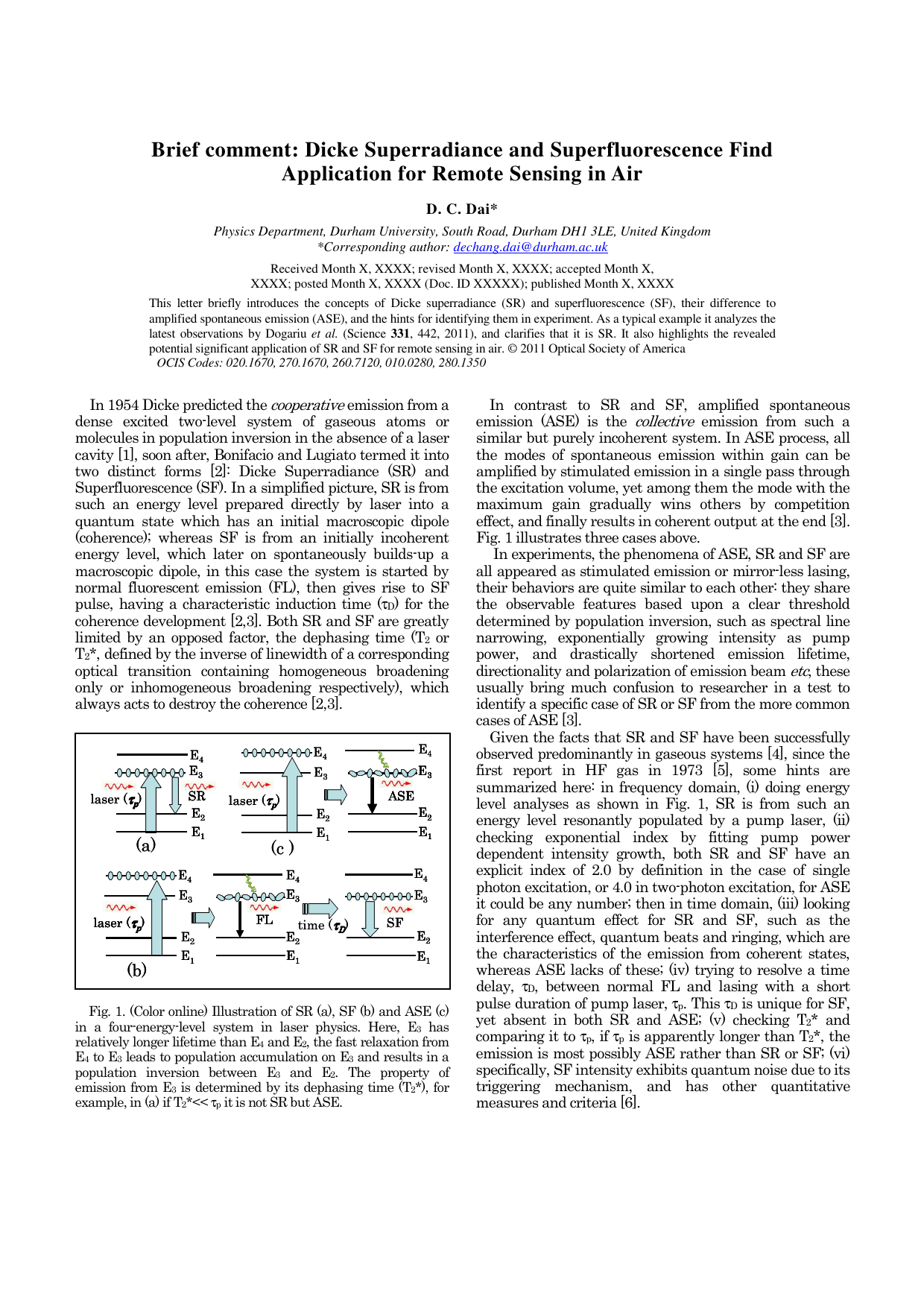
Fig. 1. (Color online) Illustration of SR (a), SF (b) and ASE (c)
in a four-energy-level system in laser physics. Here, E3 has
relatively longer lifetime than E4 and E2, the fast relaxation from
E4 to E3 leads to population accumulation on E3 and results in a
population inversion between E3 and E2. The property of
emission from E3 is determined by its dephasing time (T2*), for
example, in (a) if T2*« τp it is not SR but ASE.
In contrast to SR and SF, amplified spontaneous
emission (ASE) is the collective emission from such a
similar but purely incoherent system. In ASE process, all
the modes of spontaneous emission within gain can be
amplified by stimulated emission in a single pass through
the excitation volume, yet among them the mode with the
maximum gain gradually wins others by competition
effect, and finally results in coherent output at the end [3].
Fig. 1 illustrates three cases above.
In experiments, the phenomena of ASE, SR and SF are
all appeared as stimulated emission or mirror-less lasing,
their behaviors are quite similar to each other: they share
the observable features based upon a clear threshold
determined by population inversion, such as spectral line
narrowing, exponentially growing intensity as pump
power, and drastically shortened emission lifetime,
directionality and polarization of emission beam etc, these
usually bring much confusion to researcher in a test to
identify a specific case of SR or SF from the more common
cases of ASE [3].
Given the facts that SR and SF have been successfully
observed predominantly in gaseous systems [4], since the
first report in HF gas in 1973 [5], some hints are
summarized here: in frequency domain, (i) doing energy
level analyses as shown in Fig. 1, SR is from such an
energy level resonantly populated by a pump laser, (ii)
checking exponential index by fitting pump power
dependent intensity growth, both SR and SF have an
explicit index of 2.0 by definition in the case of single
photon excitation, or 4.0 in two-photon excitation, for ASE
it could be any number; then in time domain, (iii) looking
for any quantum effect for SR and SF, such as the
interference effect, quantum beats and ringing, which are
the characteristics of the emission from coherent states,
whereas ASE lacks of these; (iv) trying to resolve a time
delay, τD, between normal FL and lasing with a short
pulse duration of pump laser, τp. This τD is unique for SF,
yet absent in both SR and ASE; (v) checking T2* and
comparing it to τp, if τp is apparently longer than T2*, the
emission is most possibly ASE rather than SR or SF; (vi)
specifically, SF intensity exhibits quantum noise due to its
triggering mechanism, and has other quantitative
measures and criteria [6].
time (τD)
(a)
E4
E3
E2
E1
laser (τp)
E4
E2
E3
E1
FL
E2
E1
E4
E3
SF
E4
E3
E2
E1
laser (τp)
E4
E2
E3
E1
ASE
(c )
(b)
laser (τp)
SR
E3
E2
E1
E4
time (τD)
(a)
E4
E3
E2
E1
laser (τ
This content is AI-processed based on open access ArXiv data.