차단 클러스터 회귀 분석
읽는 시간: 3 분
...
📝 원문 정보
- Title: Blocked Clusterwise Regression
- ArXiv ID: 2001.11130
- 발행일: 2020-01-31
- 저자: Max Cytrynbaum
📝 초록 (Abstract)
최근 경제계량학 문헌에서는 패널 데이터의 관찰되지 않은 횡단면적 이질성을 각 횡단 단위에 대해 일차원적이고 이산적인 잠재 변수를 할당함으로써 모델링하고 있다. 이러한 모델은 회귀 클러스터링 방법을 통해 추정과 추론이 가능하다는 것이 밝혀졌다. 본 논문은 패널 데이터가 중요한 이산 횡단 구조를 가지고 있더라도, 이 문헌에서 연구된 클러스터드 이질성 모델들이 심각하게 잘못 지정될 수 있다는 발견을 동기로 삼고 있다. 이를 해결하기 위해, 본 논문에서는 각 단위가 서로 약간 연관되어 있는 다중 잠재 변수를 가질 수 있도록 이전의 이산적 관찰되지 않은 이질성 접근법을 일반화한다. 우리는 우리의 모델에 대한 k-평균 스타일 추정기의 추론 결과를 제공하고, 각 잠재 변수에 대한 클러스터 개수 선택을 위한 정보 기준을 개발한다. 몬테카를로 시뮬레이션은 이론적 결과를 확인하며, 유한 표본 추정과 모델 선택의 성능에 대한 직관을 제공한다. 또한 우리는 클러스터가 과도하게 지정된 경우에 대한 클러스터링 이론에 기여하고, 이 설정에 대해 새로운 수렴 속도를 도출한다. 우리의 결과는 k-평균 스타일 추정기에서 클러스터 개수가 과도하게 지정되었을 때 심각한 과적합이 발생할 수 있음을 시사한다.💡 논문 핵심 해설 (Deep Analysis)
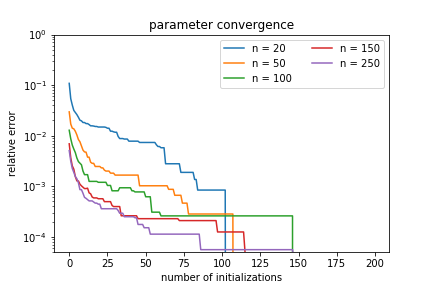
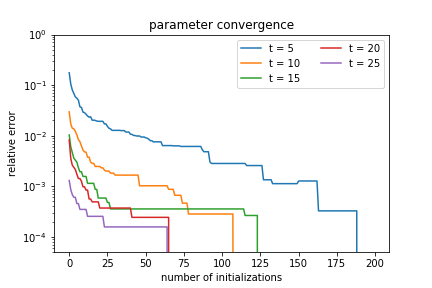
This paper introduces a method to improve the modeling of cross-sectional heterogeneity in panel data using blocked clusterwise regression, which generalizes previous discrete unobserved heterogeneity models. The authors identify that existing clustered heterogeneity models can be misspecified even when significant discrete structure exists within the data. To address this, they propose allowing each unit to have multiple latent variables that describe its response-type to different covariates. These latent variables are not perfectly correlated but somewhat related, reflecting a more nuanced view of how units respond differently across various conditions.The paper develops an inference framework for a k-means style estimator in their model and introduces information criteria to jointly select the number of clusters for each latent variable. Monte Carlo simulations confirm theoretical results and provide insight into finite-sample performance. Additionally, they contribute to clustering theory by deriving new convergence rates when the number of clusters is over-specified.
The significance lies in enabling more precise modeling and inference for panel data, particularly where heterogeneity involves complex response patterns across different conditions. This approach can lead to better predictions and a deeper understanding of underlying dynamics in various fields beyond economics.