The role of neuromorphic principles in the future of biomedicine and healthcare
Neuromorphic engineering has matured over the past four decades and is currently experiencing explosive growth with the potential to transform biomedical engineering and neurotechnologies. Participants at the Neuromorphic Principles in Biomedicine an…
Authors: Grace M. Hwang, Jessica D. Falcone, Joseph D. Monaco
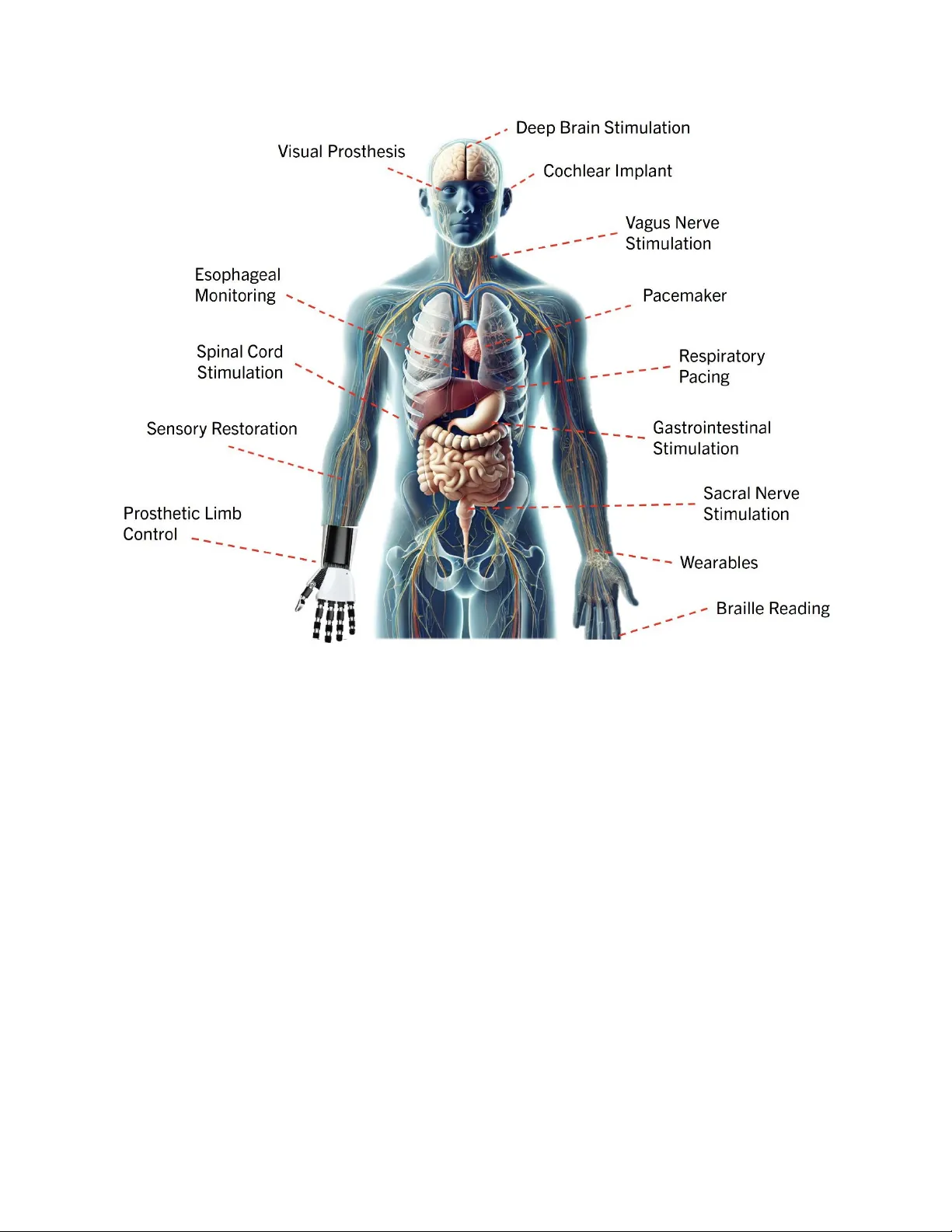
1 The role of neuro m orphic p rin c i pl es in the f utu re of bio med ic in e an d he althcar e Gr ace M. H wan g 1 , Jess ica D. F alco ne 2 , Jo s eph D . Mo na co 1 , Court ney R. P i nar d 3 , Je s si ca A. Mollic k 4 , Ro ger L. M iller 5 , S tep ha nie L. G age 6 , And re y V. Kan ae v 6 , Mar gar e t Ki m 7 , R. Ale L u k as zew 7 , Ste ve n M. Zehnde r 7 , Da vid Rampulla 2 1 N ati on al Inst itute of Neurolog ic a l Dis orders a nd St roke (N IND S) , N atio n al Ins titute s of He alth ( NI H) , The B rai n Research T hr ou gh A dvancing Inno va t ive Neu rotech nol ogies ® (BRA I N) I nit i a tiv e, B ethesda, MD 20892 , USA 2 Na tion a l Inst it u t e of Bio med ica l Imag ing a nd Bioen gin eering ( NIB IB) , N I H, Bethes da , MD 20892 , US A 3 Na tion a l Inst it u t e of M enta l H ealth (NI MH), N I H, B eth e sd a , M D 20892 , U S A 4 Na tion a l Inst it u t e of D rug Abus e (NI DA ), N I H, Bethe s d a , MD 20892 , USA 5 Nati onal In sti tu te o n De a fne ss and Other C o mmuni cation Disorde rs (NI D CD ), N I H, Bethes da, M D 20892 , USA 6 U nit ed S t ate s N ati on al Scie nc e Found at io n (N SF ), Direc torat e for C om puter a nd Inform a tion Scien ce an d E ng ineering ( C IS E ) , A lexa nd ria , VA , 22314 , US A 7 U nit ed S t ate s N a tion a l Scienc e Fou ndat ion (NS F ) , Direc to rate for E ng ineerin g ( EN G ) , Al ex andr ia , V A, 22314 , US A A bstrac t Neurom orph ic eng ineering has ma tured over t he p ast fou r deca de s a nd i s c urrent l y experien cin g explos iv e grow t h w ith t h e pot ent ia l to t r a nsfo rm b iomed ical en gin eering a nd n eur ot ec hn ol o gies . Par ticip ants at the Neu romo rphic Prin cip les in Biom edic ine a n d H ea lthca re (NPBH ) W orks hop (Oct ober 2024) — repres ent ing a b roa d c ross - sec t ion of th e co mm uni ty , includ ing early - ca reer an d esta blis hed scho l ar s, engineers , scien tist s, c lin icia ns, indus t r y, and fun ders — c onvened t o disc u s s the s tat e of t he field, curre nt and fut ure challenge s , a nd strate gies for adv a n cing neuromor phi c re search a nd dev elopm ent for biom edic a l app licat ions . Pub licly a pp roved reco rdings wi th tr ans cr ipts ( https ://2024.ne uro - me d. or g/ pro gr am / se ssio n - v ideo - an d - tran scr ipts ) a nd s lid es ( h t tps ://2024.neur o - med.org/pr ogram/ses s ion - s lides ) c a n be fo und at the works hop web s ite. Ke ywo rds : neuro m or phic, workshop , b rai n - ins pired , Neu roAI , neur omod ulat io n, bioin terfa c es , br ai n - mac hin e int erfa c e Int r o duct io n Neurom orph ic e ng ineerin g wa s orig ina lly desc ribed in the 1980s a s s imp le a n a log circu its t h a t emula te d th e tem pora l p roc e s sing o f s igna ls in th e bra in (e. g., s ilic on retin a (1 – 5) ). Th e field h as s inc e evo lved f rom stri ctly sm al l - sc a le har dw ar e - spec ific im plemen tat ions to encompass l arg e - sc a le h ardw a re (6,7) , har dw ar e /so f t ware co - des ign (8) , AI al gori th ms (9) , compu ta tion a l app roa ches ( 10) , desig n p rinc iples (11) , a nd b ioelec tron ics (12,13) th at c ollec t ively mimic b r a in and ne rvo u s s yste m f un cti on s . A su b set o f neuro morphic eng ineering is sh o w ing prom i s e in m edic a l a pplica t ions (14 – 1 6) , incl uding i n lea rnin g ci rcui ts (17) , seiz ure p redic tio n (18) , seiz ure det ection (19 – 22) , neuropr osthes es (23 ,24) , neur omodulati on (25) , b rai n - m ach ine int erfac e (26,27) wi th on - c hip spike sort ing (28,29) , an d st retchable neuro morphic wea rab le devic es (13,30 , 31) ( F ig ure 1 ). 2 Fig ur e 1 . Vi su al o ver v i ew o f hum a n b od y sy ste ms whe r e fut ure dev ic es ba sed on n eur omorphic prin cip les c ould be a pplied . Th e se a pp licat ions includ e , bu t ar e not l imi ted to , d eep br a i n stimul ati on, vis ua l p rosth esis, c o c hlea r im pl a n t s , v a gus nerv e stim ulat ion, es ophagea l mo nit ori ng , p ace mak e r s , s p inal c ord s timula t ion, res pira t ory pac ing, sen sory res t orat ion , g as tr oin te stin al sti mul ati on , sac r a l ner ve stimul atio n, pr o stheti c limb co ntro l , we ar a b l es , a n d Bra ille rea din g . F igure c redit : adapted with perm is sion from El is a Don ati ’ s Neurom orph ic Princ iples in B iomed icin e and H e a lt hca re w orkshop pres ent atio n in Sessi on 2. In sp ired by recen t ad v a nces in neurom orph ic en g ineering for he a lth, Natio na l Ins titut es of Hea lth (N IH) pr o gram o ffici al s — repres ent ing the NI H B rain Resea r ch Th rough Advancing I nnova t iv e Neurotec hnol ogie s ® (BR A IN) I nit i a t ive, the Na tiona l In stit ut e of Biom edica l I mag ing a nd Bioeng ineerin g (NIBI B) , and t he Na tion a l Inst itut e of Neurolo gic a l Dis ord ers an d S troke ( NIND S )— c olla borat ed w ith U.S. Na t ional Sc ienc e Found a tion (NS F ) prog ram direc t ors — rep res en t i ng the D irect or a t e for E ng ineerin g (ENG ) a nd the Direc t ora te for Compu ter a n d I nfo rmat ion Sc ienc es ( C ISE )— to org anize t h e Neurom orph ic Prin c iples in Biom edic ine a nd Healt h (NPB H) hy bri d w orks h op on 21 - 22 October, 2024 , in Ba lt imore , M ary l an d , US A . See T a ble 1 for a lis t of the in vit ed spe ak er s , co - ch air s, p a n elists , and guidin g ques t io ns . Th e N PB H workshop had 171 p a rticipant s (84 in - pers on; 87 v irtual) , ran g ing from ea rly - career t o es tab lish ed scho l ar s and includ ing biom edica l eng ineers , neurom orp hic en g ineers , neu roscien tist s, ma teria l s cien tist s, c linic ia ns, sma ll b us iness e s , federa l fu nder s, a nd priv at e inv estors . Th e p a rt icipa nts c on ven ed wit h t he g oal t o explore t he in ters ec tion of n eurom orph ic en gin eering wit h h e a lth care a p plica tion s. A forw a rd - lookin g communit y ro admap will b e pub lis hed s epara t ely b y w ork s hop att endees. Thi s a rtic le 3 s erves to su m mar iz e wor ks ho p p re se nt ati on s and di scu s sio ns an d hig hlig h t opportunities for neu romorp hic eng ineerin g in neur otec hn olog y a n d biomedic a l eng ineerin g . S e cti o n 1 (To pi cs Cove r ed and Major Di scussions) and Se cti on 2 (Op en Quest ions and Crit ica l Cha lleng es ( B a rriers ) ar e b ase d s olely on w orkshop discuss ion s. S ect ion 3 ( Ou tlook an d V is ion for Next St eps ) c om pris e s pers p ect ives from works hop part ic ipant s an d pro g ra m rep res entat ives tha t were s yn thesiz ed f ollowin g the workshop . Ta bl e 1 : S pea kers , Co - c hai r s, P a nelis ts , and Gui ding Q ue stion s Sp eak er Nam e Title of Talk Co - cha irs/ Pane l ists Guiding Que stio ns Day 1 – 21 Oc tob e r, 2024 Timo th y Deni s on ( Univ ersit y of Oxf ord , Eng l and ) Keynote: Tow a rd s “Neur o/Physio - m orphic ” Dev i c es [G enera t ion 3? ] Se ssio n 1 To pi c 1 - E pile psy & Cort ic al Disorde rs ( Neu romodul ation) Willia m Sta c ey ( Univ ersit y of Mi chi g an ) Data Drive n c lass ifica tion wit hout a go ld s tan d a rd: epilept ic HF Os Se ssio n 1 Co - ch ai r s: Gr a ce Hw an g (N IH/ NIN DS) , J e ssi c a Fal co ne (N IH/ NIBIB ) P anel i sts: Syd ne y Cash ( Harv ar d M as s ach use t ts Gen eral H os pita l ) , Natha n Cr one ( JHU) , K endall L ee (M ayo C linic ), Giac omo Va lle (C ha l m ers Univ ers ity of Te chno lo g y, Sweden ) , Chr i s Roz ell (Georg ia In s tit ute of Technolog y , G IT ) 1. If you ha d a low pow er, i m pla nta ble chip that could run any algori thm ( re al - tim e, closed - loop , m ac hine lea rning ( ML) , artifi c i a l intellig enc e ( AI ) , etc. ), how w ould you u s e it ? W h a t are the encodi ng and de c oding c ha lleng e s in ep ileps y, m ovement, and p sy chi atri c di so rd er s? 2. What s trat egies (materia ls , tec h nolog y, a lg orithms, th eory) can we u s e to in terf ace w ith th e brain in a more neuromorphi c m a nner ? Is it c ritic a l for n eurom odulat ion (h a r dwar e o r softw are ) to mimi c the br ai n? W h y? 3. Wha t imp act coul d m a j or neu romod ula t ion c om panies hav e in th is proc ess? W hat is n eeded for c linic a l tra nslat ion? Sr idevi S a rma ( Johns Ho pk in s Un ivers ity (J HU )) A Res tin g Sta te E EG Bi omark er Poi nts to Seiz ure O ns et Zon e V iktor J irsa ( Ai x - Mars eille Un ivers ité , Inse r m , Fr an ce ) V irtu a l Bra in T w in s fo r M edic ine - Enc ep halomorphi c Sys tem s Sessi on 2 To pic 2 - Human- m ac hi ne in te rfa ce s (Pro s the ti c s) Jame s Co t ton ( North wes tern Un ivers i ty ) C linic a l G a ps and Un ders tan ding Rea l Wor ld Outco mes fo r P ro sthe sis U se rs wi th A I T ech nolog ies Se ssio n 2 Co - chairs : Lu ke Osbo r n ( C as e Western Res erv e Univ ers ity ) , F ra n c isc o Valero - Cue v a s (Unive rsity of Southern C alif ornia ) Pa nelis ts : Xing Chen (Un ivers ity of Pit t sb urgh) , N iti sh Th ak or ( JHU) , H elen Huang ( N o rth C aro l in a St ate Un ivers ity ) , Vika sh G ilja (Un ivers ity of S a n Diego 1. H ow can neu romorphic prin cip les imp act t he a bilit y to c onv ey com plex or hi gh - res olu tion s en s ory info rma tion thro ugh neur a l int erfa c es? W h a t’s the c urren t limit a tio n? P rocess ing power, s ensors, neu ral in terf ac es, ph y s iolog ica l underst a nding ? 2. In w h at w ay s co u ld a l ow p ow er sys te m , whic h ad ap t s to an d e vo lv es wit h t he us er , bene fi t h uman - Ranu Jung ( Univ ersit y of Ar kan sa s ) El isa D o n ati (Un ivers ity of Zuri c h & ETH C onv ergence: Dep loyin g Neuroelec t ronic In terf aces Neurom orph ic Ha rdwa re for C los ed - loop in Hea lt hca re 4 Sp eak er Nam e Title of Talk Co - cha irs/ Pane l ists Guiding Que stio ns Zu ri ch, Sw it zerla nd) (UC SD )) , Sh ih - C hii L iu (Un ivers ity of Z uric h & ETH Zu ri ch , Sw itz erla nd ) mac hin e int erfa c e s or reha bilit a tio n tools ? 3. What a re the benefits for us in g neuro morphic co m putin g in neur a l pros t hes i s ? D oes it bring extra ben efi t for rob us t d a ily u se? A re th ere unknown fun ction al bene fi t s ? 4. Is ther e an o ppor tuni ty to u se neu romorp hic prin cip les to rev ea l mec han isms t hat giv e ris e to f unct ion, a nd exp la in dys funct ion , while poin tin g a pat h to c linic a l treat ment? Day 2 – 22 Oc tob e r, 2024 Zhenan B a o ( St anfo r d Un ivers ity ) Keynote: L earnin g f rom s kin : from M at erials , S ens ing F unc tions t o Neu romorp hic Eng ineerin g Se ssio n 3 To pi c 3 - M ate ri al s for Ne u rom orp hic s (Devi ces ) Duygu Kuzu m ( U CSD ) Innov a ting Beyon d E lect rop hysiolog y : M ult imoda l Neura l Interfa c es and Neurom orph ic C o - Des ig n Se ssio n 3 co - Ch a ir s : Duy gu Kuzum (U CS D ) , Shan tanu Ch ak rab ar ty ( Washi ng ton Un ivers ity S t. Lou is ) Pa nelis ts : Gina Adam (Geo rge Washington Un ivers ity ) , Jenn ifer H asler ( GIT ) , Gert C auw enb erghs (U CSD) , Ulkuhan G uler (Wo rces t er Polyt ec hn i c Instit ute ) 1. What a re th e opp ortu nit ies in using new mat eria ls a nd d evic e tec h nolog ies ? How will t hes e in terfa c e wit h t he t iss ue (bio compat ibilit y) a n d compl eme n tary metal - oxide semi cond uc tor ( CM OS ) elect ronics ? 2. Is neuromorphi c t he o nly s ol ution to power, ba ndw id th and thro ughput prob lems for im pla n ts? 3. What a re th e c h a lleng es in ma n ufacturing neur o morphic chi ps for b iomed icin e? C os t? 4. What a re the benefits of on - chi p lea rning or a dap tat ion fo r neuro morphic hard ware? 5. What a re th e c h a lleng es in tran slati on o f neu romo rph ic to the c linic ? W hat role s hould ind ustry pla y in that? T ony Lew is ( Br a inChip ) Flow Ma c hine s a nd Neurom orph ic Devic es Deji Akinw a nde ( Univ ersit y of Te xas Au sti n ) To w ard s He alt h Monitori ng & Com pu ti ng u si ng A dvanced Ma teria ls Se ssio n 4 To pi c 4 - Me dical Imaging, Wea rabl es and A nal ysis Sihong W a ng ( Univ ersit y of Chi c ago ) Bio - elec tron ic inter fa ces: from hi gh fi delit y bios ens ing t o int egra t ed neu romorp hic edg e compu ti ng Se ssio n 4 co - Ch ai r s: R alp h Et ie nne - Cu mmi ng s (JHU) , Jen nifer Bla in Ch ris ten (A rizon a State U niv ersit y ) Pa nelis ts : An dreas A ndreo u (J HU) , R obert Stev ens (JH U) , Pa mela A bsh ire (Univ ersit y o f Mar y lan d , C olleg e Park ) , 1. If you ha d a low pow er, i m pla nta ble chip that could run any algori thm ( re al - tim e, closed - loop, ML , AI, et c. ), how would you u se it? 2. What new stra t e g ies (mat eria ls, tec h nolog y, a lg orithms, th eory) can we u tiliz e? 3. How ca n neu romo rp h ic p rinc iples ma ke t hese idea s a rea lity ? Er ik a S chm it t ( Ca mbr ya ) Novel n eurom orph ic a lgorit hms for a dap tiv e lea rning a t t h e edg e 5 Sp eak er Nam e Title of Talk Co - cha irs/ Pane l ists Guiding Que stio ns J. Brad Ai mon e ( San di a N ati on al L aborat ories ) From new neuro ns to ne w ch ip s: a p ath to a new w a y of thinki ng about the br a in? Amp ar o G üe me s (Univers it y of Cambridge, Eng l and) 4. What im pac t/role d oes m a jor imp la ntab le / w ea rables compan ies ha ve in th is pro c ess ? W hat is the pa t h wa y fo r clin ic al t rans l a t ion? Pu bl icl y a ppr ov ed r ec or din gs w it h tr an scri pt s can be fou n d on th e N PBH w ork sh o p we bsit e at https :/ /2024.ne uro - me d.o rg/ pr o gra m/ se ssi on - vi deo - an d - tr an scr i pt s .P rese ntation sl i des c a n be found at http s :/ /2024.n e uro - me d.o rg/ pr o gra m/ se ssi on - sli de s . A p pendi x 1 con tai n s a syn o psi s of t he me et i ng . A ppendi x 2 pre se n ts t h e p a ne lis ts ’ P osit ion St at eme nt on the Ne eds , Cha lle ng e, Co ntr ib utio n, Imp ac t a nd Inves tme nt fo r the fi eld . T he t opics disc uss ed at t his works hop h a v e reverbera t ed a cro s s rela t ed m eetings spo ns ored b y t he NIH and t he N SF inc lud in g : (1 ) the 23 Oc tobe r 2024 NIH Wed n esda y Aft ernoon L e c tu re S eries ( WA LS ) lec tu re ( https :// videoc a s t .nih.gov/ watch= 55007 ) i n w hich Br a d Aim one i ntroduced hi s Sand ia research gro up’s prelim ina ry implem ent atio n of the ad ul t D ros o p h ila melanogast er con nectome on the L oihi neuromor phic pl atf or m co mprising 14 0K neur ons and 50M syn aps e s (32) ; ( 2) the 12 - 13 November 2024 N IH BR AIN NeuroAI Works hop (33 , 34) ( Day 1 videoc as t , htt ps :// videoc a st.ni h.g ov/w atch=551 60 ; Day 2 vid eocast , htt p s://videocast.nih.g o v/w a tch=55262 ) ; (3) the 27- 29 A u gust 2025 NSF - spo n sor ed Neur oAI +Beyo nd Works hop ( NSF Aw ard No. 2533276 ; ( 35) ) ; (4) the 27 A u g u st 2025 NI H BRA IN M ulti - Coun cil Wor king Group meet ing ( http s :// videoca s t. nih.gov/w a t c h=5687 2 ) a t which the N euroAI Innova tion Domain was publicly intro duc ed b y NI H B R AIN D ire c tor Jo hn Ngai a s par t o f t he B RAIN In itiat ive ’s anti ci pat ed future res e a rc h r oad m ap (36) ; (5) th e 13 N ovember 2025 N IH / BR AIN M inis ymp os iu m on Neu romo r ph ic E ngin eering for C linic a l Care h eld at the B R AIN - sponsored 12 th A nnual Inst itu te of E lec trica l a nd Elec t ronics E n g ineers ( IE EE ) En gin eering in M edic ine an d Biolog y Societ y ’s ( E MB S ) Int ernat iona l C o n ference on Neura l Eng ine eri ng and R e hab ilita t ion ( N ER 25 ) ( http s :/ /neuro .embs .or g /2 025/nih - br ai n - in itia t ive - min isy mposi u m/ ; http s :// www.yout ube.com/ watch?v=ljsd Sc N vrKg ). To pi cs Covered an d Major D iscu ssions T he w orks hop empha siz ed b idirec tio n a l kn owled ge exc han ge b etween en gin eer s and c lin icia ns, with par ti cul ar fo cu s o n whether and h ow n euromorph ic a pproac h es can a ddres s c ritic al c ha lleng es for c lin ical applications. Throug hout t he meeti ng , p a rt ic ip a nts hig hlig hted t he im porta nc e of focu sing o n rea l - wor ld imp act rath er th an m erely m imic kin g b iologica l s tr u c t ure s a nd d y n a m ics. This perspec t ive wa s rein forc ed th roug h cas e s tudies of dev ic es t hat h av e s ucc essf ully trans lat ed t o clin ica l us e, su ch as ad ap tiv e de e p bra in s t imula tion (DB S ) fo r Par ki nso n’ s di sea se (PD) a nd s ens ory feedbac k sy stems f or pros t het ic lim bs . Cur ren t U nd ersta n di ng and Sta te - of - the - art Day 1 Ke ynot e : Tow ards “Ne uro/P hy sio - morp hic” Devices [Ge ne ration 3?] Timo th y Den is on pres ented on the oppo rtun ity a nd challen ges fo r us ing elec tron ic ha rdwa re an d so ftw ar e to intellig ent ly stimul ate the ne rv ou s syste m i n re al ti me t o ame li orate sy mpto ms. He focus ed on a dap tiv e DB S s yst ems like t he M ed tron ic st imu l a t or (e.g ., Perc ept TM (37 ,38) , Sum mi t RC+ S (39) ) tha t ha ve sho wn clin ic al ben efi ts for PD pa tie nts . He em ph asiz ed t he im porta nce of n ot jus t n eurom orph ic but a lso clos ed - loop “p hysiomorph ic” approaches th at u s e ph ysiolog ica l ma rkers to a dj u s t s t imu l a tio n in rea l 6 time to be tter m a tc h ind ividu a l bra in s t ates . Thes e sy stems u tiliz e du al - th res hold hom eosta tic a pproac h e s ins pired by n atu ral p hysio logica l s yst ems, w hic h outp erform s impler th resh old - based c ont rols . A lg orith mic p ro c essin g is perf ormed on ext erna l s yst e ms where p a rameters c a n b e up d at ed th roug h t elemet ry . A lt hough these s yst ems d o not c urren tly em ploy neurom orph ic ha rdwa re or a lgorit hms , Deni s on expla ined that the s e phy siomorphi c approaches a re ins p ired by hu m a n phys iolog y. H e pres en ted a v i si on for “ Genera tio n 3” devic es t hat wo ul d m odel a nd rest ore p hysiolo gy , noti n g th at current neurom odu l a tion dev ices l ack predic t ive ca pabilit ies . De nison fur ther note d tha t a lg orit h m s are of ten r udime ntary , due t o lim ited pow er bu d g et s on curr ent d evic es . Wh ile neur omorp hic tec h nolog ies may c onfer a d v a ntag es in pow er efficien cy , th ey n eed t o de m onst ra te adva nta ges ov er c la ssic dig ital s igna l proc essin g and pati ent - releva nt perfo rma nce m etrics . A gr eat way to eng age the c o mmu nity o n nov el a lgorit hm des ign c ould be t hrough “ b a ttl e o f the a l gori th ms” co mp eti tion s t h at ev al u ate d ifferent dev ices running different alg orit h m s for different dis eas es , allow ing res e a rc her s t o mon etiz e t heir idea s . Topic 1 - Epi leps y & Cort ic al Dis o rde rs ( Ne uromo du lati on) Willia m St ace y exp lain ed that cu rrent surg ical d ecis ion s for int rac t a b le epileps y largely rely on em piric a l ob ser vati o n s and visua l a n a lysis of elect roenc epha log raphy ( E EG ) pat t ern s deriv ed fro m d eca d e s - old met hod olog ies. E xis ting neu ro m odu lation devic es , su ch a s DBS, res pons ive neu r o s timul at ion (RNS), a nd vagus ner ve s timul at ion ( VN S ), w ere no t opt im ized f or epilep sy trea tmen t an d s t imula tion pa r a m eters were in itia lly borrowed from ot her a pplica t ion s . Som e c los ed - loop RN S devic es s ense a nd s tim ulat e wit h a four - ye a r ba ttery life but su ffer fr om extremely low proc es sin g p o w er . For exa mple , o nly five minute s of continuou s data fro m a few c ha nnels are typica lly sa ve d ove r the course of 24 hour s (25) . Iden tif ying biom a rkers to de ter mine epilep tog enic z one s rem ain s an a cti ve are a o f researc h o wi ng i n par t to the lack of gold standard v a li dation . Thr e e promis in g me tho ds for t reatin g ep ileps y w ere pres en ted , including : ( 1) h igh - f req uenc y oscilla t ions ( HFO s ) ( by S ta ce y ) f ro m i ntr a cr ani al E EG ( i EEG ) (40 – 42) ; ( 2) res t ing state iE E G ( b y S ridevi Sar m a ) an al y sis devoi d of s eizu re da t a (43) ; ( 3) v irtu al b ra in m odels ( by Vi k to r J ir sa ) con str u c te d fr om pers onaliz ed neu roima g ing dat a se t s (44 – 47) . Stac e y expla ined th at n euro m or phic t echnol ogies a nd appro a che s are ra rely u sed in ep ileps y in t he U nit ed S tat es . Demo n strate d us e s inc lude real - time seizu re predic t ion (I BM T rueNort h (48) ) and re al - ti me HF O dete cti on from i EE G in Zuric h Swit zerla nd (22, 49) . Topic 2 - Hum an - m ac hi ne int erf ace s ( Prost het ics ) T hree t alks w ere pres en ted o n c linic a l pers p e c tiv es o f neur al in terf aces a n d rehabilit a tio n. Ja mes Co tto n st ar te d th e sess ion w ith em phas i s on patien t p ers pectiv es, rev e a ling tha t pa tient s prioritiz e com fort , redu ced pa in, a nd psyc holog ica l fact ors over advan ced te c h nica l feat ures, with s tu dies s how ing s o c ket fi t is su es an d s kin p roblem s as pat ient - rep orted priorit ies (50) . A s de sc ri bed by Ranu Ju ng (51) , t he f u ndam enta l c h a lleng e of b iohy brid s y stems rema ins la rg ely unsolved : b iolog ica l sy stems a re n on - lin ea r , non - statio n ary, mul ti - scal e and pl ast i c, yet c urr ent tec h nolog ies rem a in rela t ively fixed . Re se ar ch e ff or ts to a ddre ss th i s probl em i n pr ostheti c s d ate back to 2006 an d we r e orig ina lly f und ed a s pa rt of an NI H Bioen g ineering Res earc h Part ners hip Prog ram , DAR P A’ s RE - N ET and HAP TI X pr o gra ms, and the Join t Wa rfight er M edica l Res e a rc h Prog ra m . F or exa m ple, a fu lly im pla nt ed syst em was dev eloped th a t pr ovide d sensory feed back fr om se n s or s i n a pro stheti c hand v i a wireles s co m m unicat ion to im plan ted elec t rodes to direct ly s t imula t e nerves (52,53) . In one ca s e, 7 a pr osthe ti c h and p artici pa nt was a ble t o feel s ensa tion in his miss ing h a nd for th e fi rst time in 74 y ears (54) . T he pro stheti c tec hn olog ies p re s ent ed by Ju n g w ere not neur omorphi c , bu t se r ved to represen t an asse ssme nt o f the st ate of the art . El isa Do na ti pres en t ed n eurom orph ic ha rdware ap pr o ach es th at spec ifica lly ena ble d effic ient sensory feedb a ck b y d irect ly s timula t in g nerv es wit h patt erns tha t mimic nat ural s ensat ion (24) . These s yste ms hav e c ompara ble ac curac ies to deep learn ing - b a sed ap pr o ach es , ye t us e s ign ifican tly fewer pa ra m eters and less p ow er (55,56) . D on ati al s o describe d a “ Neuromorp hic Tw in ” as an em erg i ng t ool th at p hysica lly emu late s the s o ma tose n s o ry cor tex of hu man p atie nt s to cre ate ne uro sti mulati on patter n s . Thi s emu la tor c ou ld improve t he q ua lity of res t ored feed bac k for n eura l pros t he s es by be tter re produc ing natu r al sen sa ti on s (57) . Ot her p romising bio medica l n eurom orphic in terfac es c overed in t his s essio n inc lud e ca rd i a c a ctiv ity mon itorin g (58) ( f ro m Don ati ) and r e al - tim e pers onaliz ed res p irat ory p a c ing (59) ( fr om Jung ). Day 2 Key not e: Learn ing f rom s kin: from M at eri als, S ens ing F unc ti ons to Ne uromo rp hic E ngi ne eri ng Zhenan B ao pro vided an u p date o n a c ollec tion of s kin - like elect ron ic p olym ers an d mate ri al s wi th enh anc ed elec tric a l ca p a bilit ies co m par ed to tr ad ition a l s e mic on duct or mat eria l s . She p resen ted fro nt - end proc es sing pre s sur e se nso r s o n a stre tc hable sub str ate wit h over 1,000 t r ans i stors in t he int eg rated ci rcui t. The se p re ss ur e se nso rs ex ceed ed hu man ta ctile res olu tion (bet ter t ha n 500 mic rons ) , whi ch wa s de mons trated with im pro vem en t in Bra ille rea d ing ( 60) . Another tech nology, t er m ed “neur omorphic sk in” , h ad n o rigid elect ronic c ompon ents an d e mula te d t he s ensory feedb ack f unct ions of b iolog ica l s kin , inc lud ing mu ltimoda l rec ept ion, n erve - like p uls e - t ra in s ig nal c ond ition ing, an d closed - loop act uation (13) . Ba o no ted t hat prot o t yp ing t hes e nonc onven tio n a l mat eria ls pr e sen t s ma n y c h a lleng es, one of wh ich is tes t ing long - t erm bio c om p a t ibilit y. B ao co nclu de d tha t othe r key c h a llen ge s for the c o mmun ity ar e pr ototyp ing no nconven tional m a teria ls and id entif yin g whic h bio m edica l ap plica tions w ould benefit mo s t fr om ne uromorphi c or hybri d design approa c h es . Topic 3 - Ma ter ia l s f o r N eur o m o rph i cs (D evi ces) Two t alk s fo cu sed on n ovel ma teria ls w hile a t hird t a lk was a bout a commerc ia l neurom orphic p rocess or. F or neu ral in terf ac es, Du yg u Kuz um d escrib ed ho w transp a re nt g r aphene - bas ed mic roelec trod es ena ble d mu ltim odal exp erimen ts by s i m ultan eous ly c ollect ing elec tro phys iolog ica l rec ordings while a llow ing opt ic al ima g in g a nd st imula tion witho ut c rosst alk (61) . As a n ex a mp le, sh e desc ribed r es is tiv e RAM - based neurom orphic p rocessors dev eloped in her la b that perfo rm ed effic ient sp ike - sorti ng wi th 30 - 50 ti me s les s en ergy c onsumpt ion t han trad ition al ap proac hes (62) . Kuz u m sho we d how pri nc iples of neuro morphic co - des ig n c ould be a p p lied t o dec ode in divid ua l c ellula r c a l c ium ac t i vit y in deep er bra in la yers us ing on ly s urfa ce p otentia ls measured f rom graphe ne - based elec trod es an d neuro m or phic c omp u t ation a l mod els wit h rec u rrent neural n etw orks . This t echniq ue su cce ssf u ll y e xp and ed th e spatia l rea ch of d eploy ed elec trod es ( 61) . Deji Akinwa nde p resented two - dim en s iona l (2 D) ma teria ls ( e .g. , graphe ne , less than a nano m ete r thick ) for use i n “or gan - tr on ics ” ( in vivo sen sin g) and “ ski n - tro nics” (direc t s kin in terf ac in g). Ap plic atio ns inc lud ed elec trop hy siolo gica l mo nit oring (63) , im plan t a b le sen s in g ( pac emaker (64) ) , an d a w r ist - wo rn 8 bioim ped anc e sen s or for moni tor ing bloo d pressure w ith c linica l - gr ad e a c cur acy (6 5) . He a ls o pres ent ed “Ato m - r esi sto rs” ( m emris t or s in a t o m ically th in ma teria ls ) th at d e mons trat e both bi na ry a nd analog res ist anc e swit chin g (66) in neu ral n etw orks, wit h c lass ifica tion ac c u racy a pproac hing t heoret ica l limits in a Mod i fie d Nati o n al In sti tu te of S tan d ard s a nd Te chn ol o gy d at ab ase ( MN IS T ) digit r ec og nit ion ta s k. On th e c o m merc i a l s ide, Tony Le w is de scribe d Bra inCh ip’s A kid a a rchit ec tu re , wh ich opera t e s as an even t - b a s ed, dig ital, n ear - mem ory co mputin g s ys tem u s in g w eigh ted spikes . Akida a c hiev ed st ate - of - the - a rt res ults in a myr i ad of ta sk s ( gest ure rec ognit ion, eye t rac king , denoisin g, a n d a udio keyw ord sp ott ing ) wh ile o pera ting at extrem ely low po wer (0 .25 milliw a tts ). Le wi s presen ted d a ta sh o w ing tha t Br ai nCh ip ’s T emp ora l Ev ent -B as ed Neura l Net wo rks pro c ess ing unit a chiev ed bet t er perplexit y s c ores tha n st ate - of - the - ar t larg e la n g uag e m odels ( e .g. , M a mba an d Ll a ma 3. 2 ) us ing a fra ctio n of the tr aining d at a an d h al f th e mod el s ize. Topic 4 - Me dica l Im ag ing , We ara bles a nd An alys is On e ta lk f ocus ed on weara bles, while tw o t a lks fo c us ed o n a lg orith ms. Si hon g W an g pres ent ed stre tchabl e , so ft se micon du ctor p oly me rs th at y ielded s tab le sig nal q u a lit y, direc t ly a dh ere d to tis s ue sur fa ce s ( s uch as a b e at in g he ar t ), and suppre ss ed the fo reign body res ponse b y incorpora ting immu no modu la tory pro per tie s int o th e poly mers (64) . H is p re se nt ati on al so su gge ste d the n eed t o shift the proc essing of s en s or data from off - ch ip , cl ou d co mp uti n g to on - chi p , ed g e co mputin g . W an g then dem onst ra ted a f ully s t retchab le, w ear abl e arr a y for on - chi p cl a ssifi cat ion of elect roc a rdiog r a m ( E CG ) si gn als with elec t ro c hem ica l trans ist or - b ase d ne uro morphic h ar dw ar e (30,67) . Br ad A im o ne pres en ted neurom orph ic a lg orit h m s t h at leverag ed s tructura l rela t ions hip s f rom c onnect om es rat her t han rely ing s olely o n s equen tial t ime - b as ed a na ly s es , and wh i ch e x cel l ed at s amplin g p roblem s (68) a n d finite elem ent ap proac hes (69) . H is ne uromorphi c ap pr oa ch to s olvi ng partial differen tia l equ at ions show ed dynam ics rem a rk a bly sim ila r to biolog ica l neura l recordin gs , de s pit e dra stic differen c es in a rchit ec tu re s . Aimo ne note d th at b oth ne uromorphi c approa c hes a nd t he b iolog ical br ai n utiliz e d het erogen eity , p a ra llel proc es s ing, and s pat i a l t empo ral p roc e s s in g . In a rec ent prep rint , A imon e addit iona lly h igh lights th e se bio logic a l feat ures as crit ica l to dev elopin g the or eti ca l frame wo rk s to char ac te r iz e t he lim its a nd cap abilities of neuromor phic c omp uting (70) . On the c ommer cial s ide, E rika Sc hmit t d escrib ed Ca mbrya’ s w ork dev eloping n eurom orphic a lg orithms to s olve t he au dito ry blin d s ourc e s ep a rat ion p roblem us ing densit y n etworks t h a t do n o t require p rior tra in in g (71) . Reg ulator s and F u nders S ession P rogram staff from the NSF, NIH, A r my, a nd Defens e Adva n c ed Re se ar c h Projec ts Agen c y (DAR P A ) pres ent ed relev a nt fun ding opp ortu nit ies and co mpe titi on s to encour age p arti cip a nt sub m is si ons . A ddit iona l d etails ca n be f ound in App endix 1 ; funders ’ pr esen tat ions ca n b e retriev ed from htt p s://2024.neuro - med.or g /pr ogr a m/ s es sion - slides . T h e Unit ed S tat e s F ood an d Drug A dmin ist r a t ion (F D A) provid ed an ov erview of p rogra ms f or overs eein g nov el med ica l d evic es, ex pla ining a t hree - tier c lass ifica tion system a nd hig hlig hting t he need to eng age early thro ug h the Q - sub mi s sio n pr oce s s. Key c onsid era tions rais ed during dis c ussions throug hout t he meet ing include d: ( 1) difficu lty of va lidat ion of a dap tiv e systems ; ( 2) s ec urit y a nd saf ety , including the need for fa ils a fe mec han isms in g enera l , and cyber sec urit y in im pl a nta ble s yst e m s ; ( 3) ma nuf acturing 9 verifi c ation , inc lud in g c h a lleng es in v erifyin g n eurom orphic hard w a re manuf a c t uri ng ; and ( 4) edu c a ting res earc hers abo ut the reg u lat ory pro c ess . It wa s note d th at t he FD A Gu id a nce d oc u m ent on Physiologic Cl ose d - L oop C ont rol D ev ic es (72) an d the I n t erna t ional E lec trot e c hn ical Co mmis s ion ’s ( I EC ) Do cume nt # 60601 -1- 10 ( 73) we re g ood s tarting point s for d evic e dev elopers . T he Open GPU Fou nda tion al so pres ent ed t heir in teres t an d rat ionale for in ves t ing in h a r dwar e th at de mon str ate d ad v ant age s i n tem pora l c o m pu ting, noisy s t oc hastic c o m puting , energy effi cienc y, a nd mult idim e ns ion al c o m putin g . OpenGPU a ddit iona lly disc u s s ed its aims to creat e sta nda rdiz ed int erfac es be t ween ha rdwa re a nd “w et ware” ( e.g., org a noids) . Op en Q ues tion s and C riti cal C halle n ges (Barriers ) T he neuro morp hic biom edi c a l field f a c es severa l s ignifi cant c halleng es tha t m u s t b e a ddres s ed to rea lize its fu ll pot ent ia l. Thi s se ct io n prov ides a th e mat ic organ izat ion of challen ges dis c u ssed and deb a ted by NP BH w orkshop p an e li st s an d par ti ci p an ts . Clin ic al Cha llen g es Epilepsy , ne urolo gica l , and psychi atr ic conditio ns C lin icia ns exp res sed m aj or challen ges inh erent to th e stud y of epilep s y a nd the identifi ca tio n of th e epilep tog enic z one. T h e state - of - th e - a rt dev ices u sed to st imu l a t e specific bra in regions to p re dict or a bort s eizur es are not suffi cient. I mpla nta ble devic es s uffer from s ign i fi can t lim itat i ons in sa mp ling r ate and b and wi dth , bit pre c is ion, and c o m putation a l capa bilities , ham perin g res e a rc h prog ress . C lin icia ns no ted tha t altho ug h t h e field is mov in g a w ay from a on e- se ttin g - fit s - a ll mo del a nd to war d s pers onaliz ing th e s ett in g s on d evic e s t o meet the need s o f indiv idu al s , th ere rema ins a n ur gent n eed for devic es wit h more c hanne ls, custo miz able sam plin g rat es, an d g reater s ig n a l - to - nois e ra tios in fully imp la ntab le wireles s form - f acto r s . Over the c ourse o f th e wor ksho p, p a nelis ts ident ified a crit ical need for int ermed ia te bioma rkers that co uld pro vide ea rlier indic a t ions of treat ment effi cacy prior t o th e ch a n g e in c linic a l sym ptoms , p a rt ic ul a rly in ps y chia tric a p plicat ion s. D ata c ollect ion limit at ions T he lim ita t ion s of c urrent data co llect ion were al so d i scu sse d . S om e devic es do not reco rd a nd sav e d a ta continuou sly, and hi gh - res olu tion data is primarily a va ilable on ly d uring inp a tient m onit orin g ra t her t h a n in a mbu l atory se tti ng s. Pa rticip ants prov ided specific tec hnical req uiremen ts for n eura l record ing s in a mbula to ry a n d inpa tient a c ute a bilit ies , inc luding cust omiza b le elect rode p lacem e n t, stim ulat ion pa ramet ers, sam plin g rat es (0.5 – 4, 000 Hz), an d continu ous d ata c ollec tion . Pa rt icipa nts id ent ified a not her c ritic a l gap i n the need for t im e - s yn c hro nized , s im ultan eous m ult imo d a l rec ordin g wit h hig h s patio tem poral res olut ion f or elec tric a l a nd ch emica l s ignals in clu ding p otass ium, oxyg en, a nd variou s ne uro trans mitte rs. Dev eloping t his multim odal da ta c ollec t ion ca pabilit y w ou ld be a c rit ical im prov emen t for in pa tien t ac ut e s etting s . Eng inee r ing Ch alle nge s W hether neuromor phic a pproa ches o ffer re al - wo rl d a dvan tag e s over con ven tiona l met hods rem a ins an open ques t ion . S o me par ti ci p an ts ar gu ed that neuromorp hic systems excel a t s pecific applic ation s that rec over fu nc t ion (e.g ., lim b loss , s igh t or hea ring restora t ion, perip hera l nerv e inj ur y , s pinal c ord in jury ) and requ ir e ultr a - low p o w er or rea l - ti me ad apt ati o n . O th ers s ugges t ed focu sing o n d emon st r a t ed 10 c apa bilit ies ra t her t han p hilos ophica l ad heren ce t o bio logica l prin cip les . Wh ile neur omorphic tec h nolog ies ma y be adv an t ag e ou s in pow er efficien c y or l aten cy , worksh op p ar ti ci p ant s a s serte d th at the re must be d e mons trate d ben e fi ts in va riou s de s ign cons ideratio ns , in c ludin g ma nufact ura bilit y , relia bilit y testi ng , m an ag e me nt of s igna l drift in analo g sys t e m s, syst em verifi ca tio n , ris k ma na g em ent, and op ti miz a tio n ac ross m ult iple pa ramet ers (e.g . , no t only p ower c on s u m ption ). The d ichoto my of o ff - chi p v s. on - chip c omp uting w as ra is ed mult iple t imes . P ar ti ci p ant s d isc u ss ed w hether futur e neuro m or phic c ir c uits shoul d c o m m unic at e wireles sly w ith sens ors an d st imu lators or be imp la nt ed toget her as a n integ rated sys tem. T he la tter ap pr o ach was p referred a cco rdi ng t o mu ltip le workshop p articipant s who m entioned that ra dio t elemet ry remains exp en s ive c ompa red to on - chi p c omp u t ation , with t elemet ry c ons u m ing upwa rds of 80% of t he p o w er bud get (74 , 7 5) . Th e develo pmen t of a ut ono mous (telem etry - f ree) c losed - loop neu romodulation syst e ms remain s a crit ic al c hallen ge t hat neu romorp hic tec hnolog ies ar e p ois ed to ta c kle (25) . F or med ical d evic es , som e part icipa nts exp res sed c yb ersecu rity c on c erns fo r sy st e ms th at require conti nuo us co mmu ni cati on wi t h t he cloud . N euromor phic a pproa c hes were s u ggested to be inher ently les s h ack able due to the pot ent ia l for s elf - su ffi cie nt, au tonomou s opera tion and on - bo ar d pr o ce ssi n g . Fo r b rai n - mac hin e int erfac es (B MIs ) , sev eral pa rtic ipan ts as s erted t h at key t ec hnical c ha llen ges inc lud e ad ap tin g to s ig n a l v a riability in n eura l int erfa c es . R e co rdi ng s c a n cha n g e dram atica lly w ithi n w eeks due t o shi ft s in elect rode pos ition or c ellula r res pon s ivity , w hich co uld be addressed t hro ugh on - c hip learn ing and ada pt at io n . Par ti cip ant s n ot e d th at t he c oncept of “ deg eneracy” — t hat biolog ic a l sys tems like th e hum a n bra in ac hiev e res ilienc e by adap tiv ely s elec tin g fro m m ult iple di stinct p at h w ay s and st ru ctu re s to imp lemen t a ny g iven func tion or beh av ior — pres ents a fund a m ental co mpl ica t ion for the encoding an d decoding of neur a l sig nal s . P arti cipa nts ou t lined oth er technic a l c hallen ges t hat re m ai n fo r neural i nt er fa ce s, i ncluding ti ssu e d am age during elect rode imp la ntat ion , lim ited s pat ial r esolu tion of recordin gs , a n d bulky h e ad - st age equ ipm en t for op tic a l imag ing . Re ga r din g h yb rid neu ra l inter faces , one part icipa nt n o ted th at the field c urren tly lacks a cr os s - m apping for u nders t a n d ing bidirec t iona l c o n trol b etw een biolog ic a l a nd a rtifi cial s ilico n neur ons . The pa rtic ipan t sug gested that a key measure of th e fun c tiona l embod imen t of a n art i fi c i a l ne uron is w het her b iolog ica l neuro ns integ rate wit h it and trea t i t “ a s one o f their o w n”. Fo r example , a n a rt ificia l em bod imen t of a giv en neu rona l c ell t ype c ou ld be en gin eered t o enhan ce repa ir functi ons a t the ne ural i nterfac e w hi ch imp rove me asu re s of bid irec tion a l c ontrol . Mat e rials Ch al le nges M any pa rtic ipan ts expres s ed t he v iew that i nte grati ng neurom orph i c dev ices at th e biolog ic a l int erfa c e rema in s a c hallen ge. F or bo th we ar abl e and i m pl anted device s , seamles s interfa c e s require bioc om p a t ible, stret cha ble, con formable, flexib le , an d of ten bi odegr a d able mater ials , whi ch e licit a min ima l immu ne res pons e . P ar ti cip ant s v iewed t he organ , locat ion, a nd du ration o f th e int erfa c e to be key f ac t or s t o c on s ider w hen eva luat ing a dev ice’s bio compat ibilit y a nd sta bilit y . Th e re was co n sen su s that p r oto typ in g and a sse ssi ng the long - term biolog ic al su ccess of novel , no nc on ventional ma teria ls wou ld be difficult. 11 Benc hm ar ks v s . D atas et s Work sh op part icip ant s id en t ifi ed th e need to develop spec ific, sta n d ar dized d a tas ets rather t han foc usin g on benchm a rk s, w hi ch some pa rti cipants found to be re s tri c tive ( refer t o (76) fo r an e xamp l e ) . Aim on e a rgu ed t h a t benchma rkin g, des pit e its p opu la rity in ML/ AI dev elopm ent, would b e count erprod uc tiv e for the neur omorphic co m m unity as dev elo pers would be forced to u s e ou tdat ed pa radigm s w hile t he fi eld of neuros c ienc e m oves forw a rd. And re o u offered his t oric al cont ext from speec h p r oc es s in g , no ti ng th a t ben ch marks init ia lly h elped s ta ndard ize ev alua tion . H o w ever, inn ovat ion was eventua lly co n s t rain ed s inc e resea rchers opt im ized spec ifica lly for ben c hmark d atas ets ra ther tha n so lving r e al - world pr oblems. T he dis cuss ion h igh ligh ted the prec a rious balan ce b etween findi n g va lue in sta nda r diz ed d a t a s e t s w hile a void ing rest rictiv e ben chma rks . Work sh op part ic ipant s rec o g nized th e need f or d at ase t s to charac ter ize neu roscien ce p rinc iples and ena ble the co - de si gn of mat eria l s , devic e s , a nd a lg orith ms t h a t c o mp ute loc a lly . Thi s crit ical c hallen ge w ill requ ire clos ed - loop integ ra t ion bet w een s ens ing, co mp u t ing , an d a ctua tion . Another crit ic a l cha lleng e that ar ose in di scussions was t he a vaila bilit y o f tim e - syn c hro nized multi - mod al dat ase t s for a s ingle ta sk . F ina lly, the dev elopm ent and us e of stan da rdiz ed m etric s, inc luding en ergy effi c ien cy , com pact ne s s, noise, and r obustnes s of the ha rd wa re and soft ware , w as al so hig h lighted as a c h a lleng e . Inf ras t ru ct u re Chal lenge s Acce ss t o f abricat ion facilit ies , desi gn to ol s, stan dards In fras tru cture lim ita t ions c onst rain prog re s s in the field, w ith ma ny wo rks ho p parti ci pan ts ca lling for bet ter a cc ess t o fab ricat ion f ac ilit ies , d e s ign too ls f or asy nchr onous c irc uits , sta ndardized int erfa ces bet ween ha rdwa re a nd “wetwa re” (biolog ic al s ys tems ) , a nd bett er s h a rin g of prot ocols esp ecia lly for n ovel mat eria ls . T here wa s d i s c u ss ion a b ou t limit ed a cc ess t o fab ricat ion f ac ilit ies and a st rong ca ll to es t ablis h prog ra ms s i m ila r to t he h is torica l MO SIS (77) in itia t ive t h a t prov ided f ree ch ip ma n u fa cturin g f or a cad emic res ea rchers . ( The a uthor s note th a t “ M OSIS 2 .0” wa s re - launched in 2023 as a co mpo nen t of a C a li fornia innov ation hub supported by the U.S. CH IP S a nd S ci en ce A ct o f 20 22 ; see http s:/ /ww w.mo sis2 .co m/a bout - us for d etails .) Pa rt icipa nts s ugg e s t ed expa nding beyond s ilicon c hips t o inc orpo rat e new m ateria ls a nd st ruct ural c omplexit y (e.g ., b endab le bioelec tron ic s) wit h a s up port ing infra s t ru c t ure equ iva lent t o MO SIS for th ese novel a pproac hes . Part ic ipant s express ed t he view t h a t d evelop men t w ould a ccelera t e if t ools for des ig nin g as ync hron ou s c irc uits an d t ran s ferrin g s pikin g neura l net wo rks b etween h a rd w a re plat forms were a vaila ble. Acc ess t o st anda rdiz ed tes ting m et hods fo r novel c omp onents like m emris t or a rr a ys wa s note d b y par tici pan ts a s a lim it ation. P rotocol s ha ring t o elimin ate th e need to s tar t from sc ratc h, es pecia lly w hen dev eloping no vel bioh yb rid neu romorphic m ateria ls w a s hig hlig ht ed m ult iple t imes b y p ar ti c i pan ts . Th e gap between th e des ign t ool ec os y s tems ava ilable for tra d ition a l dig it a l s ig n a l p rocess ing v ersus neuromorp hic comp uting was also empha siz ed as a barrier t o broader adoption. Man ufac t uri ng C h alle nge s M anufact uring cha lleng es were dis c uss ed by p ar ti cip ant s , in c lud ing s plit foun dry issu es (e .g. , w here t he low er lay ers a nd u p p er la yers a re m a nu f ac t ured in diff erent l oc a tions ) and tool - chain limit a tio ns . T he high cost of c hip fa brica tion wa s a ls o r a is ed , wi th p a rt ic ipants ’ es tima tes r angi ng fr o m $2 – 30 m illion to produce a ne w ch ip d esign . So me par ti cip an t s ar gue d th at a f ew t ho u s and d ol l ars o n a mu l ti - projec t 12 waf er ( MP W) r un c oul d yield sufficie nt pr odu c tion f or hea lt hca re a p p licat ions . F or e x amp le , after the works hop , A ndreou cl ar i fied th at mi ni mum or der s for MP W th ro u gh Eur o pr ac ti ce o r Mu se we re esti mate d at $ 5 , 000 or $6 , 250 depe nding on pr o ce ss node an d tha t Eu ro pr ac ti ce al so sup por ts fab ric ation of cir cui ts u sing org a nic s emic on d u ctors and fl exible s ubst rates . Differen t pa rt i c ipant s not ed on mult iple oc cas ions t hat neu romorp hic a pplica t ions ca n be d evelop ed w ith st and ar d C MO S t echnology , w hic h is much mo re w idely a v a ila ble . Another c h a llen ge ra is ed by p art ici p an t s w as dev eloping t est ing method s f or novel c ompone nts , like m emris t or a rra ys . Parti cip ant s fur ther note d th at it wa s d i fficu lt to pred ict c hron ic relia bilit y in ha rs h biolo gic a l env ironm ent s, wh ere perform a nc e c a n be impac t ed by temp er atur e fluc tu a ti ons , forei g n body re s pon se , and ma teria l d egrad ation. Commer cial iza tion Regul atory Chal lenges Par ticip ants note d th at t he reg ulat ory p a t h w ay p resen t ed a ddit ional c om plexit y, partic ula rly f or a dapt ive s yst em s t hat learn a nd cha nge over t im e . This r ai s ed ques tions a bout ho w to qu antif y the benefits of a d a pta t ion and esta blis h ap propria t e reg ul a t ory f ramew orks that en abl e res ponsib le i nnova tion. The imp orta nce o f fa il - sa fe m echanis ms in a d a pt ive sy stems to ens u re devic es rever t t o ba s eline fu nc t ion a lit y if pro blems a ris e w as r ai se d mult iple t imes by pa rt i c ipa nts . The sim ila r ity to auto no mo us vehi cl es wi th differen t levels of a ut onom y w a s al so mad e . O ne par t ici pan t n oted th at sim ilar conc erns a ro s e when NeuroPac e RNS wa s first la unched ; d o se lim its w ere emp loyed as g uardrails t o limit the ris k t o pa t ients s hould th e dev ice g o aw ry. M any part ic ipants expres s ed the need for bet ter educ a tion for resea rc hers abo ut reg ul a t ory p rocess . Clin ical Tr ans lat ion C hallen ges Pa rtic ipan ts express ed con ce rn s th at c lin ical t ra nsla t ion is hinde red by long inve st ment horizons that do no t a lig n w ith ty pica l busin ess exp ectatio ns . T here a re diffic u lties in dem o ns t r a t in g imp roved rea l - worl d function , be yo nd lab or a tory p erformance . P ar ti ci pan ts d i scu s se d a disc onnect between wha t res ea r c hers priorit ize ( e .g. , adv an ce s in t e c hnica l fea t ures ) versu s what pat ient s va lue ( e.g. , i m pr oved comf or t, redu ced pa in, a n d a vo iding emba rrassm ent from dev ice f ailu res ) . P a ti ent p r i v ac y a nd dat a se cur i ty c ons iderat ions were a l s o m ent ioned as c ha llen ge s for c linic a l tra nslat ion . Investm ent C hal lenges Pa rtic ipan t con se n sus poi n ted to a “ c hic ken a nd egg” p roblem in in ves tment — developers need d a ta t o jus t ify in ves tment in n ovel d evic es, but g ath ering th is da ta c an require s ubsta nt ia l i nit ia l inves t ment in the dev ices . S o m e pa rt icipa nts st ate d th at t his has led t o a c ons ervat ive t echno logy developm ent ap pr o ach in which c om p a n ies inc rementa lly imp rove th eir est a blis hed te c hnolo g ie s r ather th a n pursuing innov at ive de si gns. Mu ltip le indu stry pa rticip ant s no ted th a t l on g in vest ment h orizon s do no t alig n w ith typica l bu sin ess exp ecta t ion s . Tr ans d isc ip lina ry Commu nica tion a nd E duc ation One of the mos t per sisten t th eme s thr ou ghou t NPB H wo rk shop d is cu ssi on s wa s the need for tra nsd iscip lina ry ed uca tion to b ridg e th e c ommun icat ion gap b etween en gin eers, sc ient ists , an d c linic ia ns . F or exa mple, Gina Adam stress ed t he im porta nc e of in terd isc ip lin a ry colla b oration a nd e duca ti on, while Nit ish T ha kor not ed t hat e s tab lis hed n eurosc ienc e c o m munit ies — oft en rooted in 13 experim ent a lly - d riven , m e c han ist i c , a nd reduct ionis t a pp roach es — may find ne ur omorphic con cept s un familia r or diffi c ult t o co n t extu a lize w ith in their fra mew orks . P a rt icip ants a ls o c a l led for dev elop in g tr an s disc iplina ry team s that include n eurom orph ic engin eers , ma teria l sc ient ists, neuros cien tis ts, c linic ia ns , data scien tis ts, a nd regu l a tory expert s . A mp a r o Güe mes r a ised the que s tion of whether one l ab should hou se m any d o mai n s o f expertis e or s p ec ializ ed la bs s hou ld be enc ourag ed to c ollab orate , a dec is ion which is p art i c ula rly impa ctfu l for hiri ng w hen settin g up a l ab. O utlo ok an d Vi sion fo r N ex t Step s Ne urom o rp hic Pr inc iple s f o r Biome dic al A pp lic atio ns NP BH W orkshop Ch ai r, Ralph Etienne - Cu mming s , pres ent ed a s ummary of t his m e et ing a t the NIH B R AIN NeuroAI Works hop (33 , 34,78) w here he id ent ifi ed four key tec hn ical a dvan tages of neu romor phic prin cip les fo r biomed ic al a pp licat ions. These inc lu de pow er efficienc y ; on - chi p , re al - tim e proc e s s ing ; a d a pta bilit y a n d res ilienc e ; a nd a nat ur a lis t ic cod e for int erfa c ing w ith th e nerv ou s s yst em. Pow er effic ien cy — alo n g with reduc ed po w er requirem ent s for b iomed ica l s y stem s — lowers heat dis s ipat ion, wh ic h is part icu l a rly im pac t ful fo r impla ntab le devic es . O n - chip, rea l - t i m e proc essing p rovid es low - latency s igna l proc essin g for c losed - loop a lgo rithms , avo i ds th e complexit y of tr an s ferring data to the c lo ud, and imp roves s e c urit y b y only stor ing d ata lo c a lly . Ada p t abilit y a llow s th e s yst em t o lea r n a n d ta ilor th e trea t ment p a r a digm as t ime p rogress es a nd the biolog ic a l resp onse c hang e s . La stl y , the even t - based s piking c ode of neuro morp hic mod els and d evic es ma y ena ble im prov ed neu r a l int erfa c es by mimi c king th e na tura l s piking pat ter n s of neuronal ci r cuit s in th e t a rg eted reg ions of t he brain . Neuromo rphic a dvan cements may be es pecia lly impo rtant for c lin ica l app licat ions ( s ee Fi gur e 1) where a l arge amo u nt o f da ta is c ollec t ed , pred ict ive a lg orit h m s a re requi red, a nd low he at - dis s ip a t ion a nd e xtended bat t er y - life ar e cr i tical for im pla nta ble s yste ms . Wor ksho p p artici pa nts su gges ted th a t w hen ap ply in g neu romorp hic princip les to solv e biom edic a l prob lems , th e fo c u s sh ould b e on t he c linica l a pp licat ion (whi ch c an of ten be neg le c ted ) . P art ici p an t s di scu sse d t h e ad v an ta ge s in neur a l engin eering of develop ing neuro morp hic s olut ions t hat prec is ely ta rg et spec ific neural c irc uits for a dis eas e rat her t h a n b ro a dly stimu latin g bra in re gion s . On the other hand , parti cipan ts no te d th at en gin eers shoul d be unrestr ained to de te rmi ne th e most appr opr ia te tec h nica l solu tio n for t he p roblem a t hand . Pa nelis ts em phasiz ed ident ify ing sp e c ific a pp licat ions w here neu romorp hic prov ides c lea r a dvan tag e s (e.g ., low - la tency t o a chieve r eal - tim e c lose d- loop s ystems ; extrem ely effic ient and res ilient circ uit s ). Fu tu r e R esear ch A r ea s Bio int erf aces M ult imoda l Bios e nso r s Pa rtic ipan ts d is cussed th e need f or bet ter w ea rable s ens ors t hat mov e bey on d th e lim ita t ions of t he clinic a nd c ollec t d a ta while su bjec ts a re m obile a n d engaged in n atura l b ehaviors . Sev er a l c linic ia n s emp has ized th e need f or tec h nolog ies th at m onit or mult iple biom a rkers . T his includes c he m ic al sig nals , such as pot a s s ium , oxygen, sodi um, and v arious neurotr a n smitters (up to 24 as describe d in (79) ) . Pa rtic ipan ts a ls o disc uss ed the n eed fo r mult im oda l rec ordin g d evi c es tha t can s imult a neously meas ure elec tric a l act ivit y a long s ide c hem ica l sig nals to prov ide a m ore c omplete p ict ure of neura l f unc t ion . 14 Im po rt a n t dev i c e sp ecifica tio n s were d isc ussed inclu ding bioc ompat ibilit y, low im mune res po ns e, s tret cha bilit y, fl exibilit y, a dhesiv eness , an d t he a bilit y to eit her d iss olv e or rema in s t a b le in t h e bo dy (e.g., he ar t vs. s to mach) depe nding on the b iomed ical a pp licat ion . T h e potent ia l for neu romo rphic a pproach es to ena ble bet t er sen s or int egrat ion a c ross moda lities ( i.e. , m olecu la r , pres sure, elec trop hy siolo gy ) an d to opera t e at different time - s cal e s wi th lo w pow er consumpt ion and min imal la tency r eq uirem ent s was c ons idered a st reng th . Novel M a t eria ls T here were s ev era l pres ent ation s o n nove l flexib le an d s tret cha ble ma teria ls , a nd t h er e w as co nse n su s that th es e charact eris tics are a req uirem ent for nex t - g enera t ion neuro morphi c bio i nte r face s. Bao highli g hted how the field is a p p lying mat eria l scien c e to replic a t e rig id s ilic on c ircuits i n soft, e mbedded jelly - like ma t eria ls, of ten w it h c om parable elec t ronic prop erties . Ba o then pr esente d a na noconfined poly mer semico n duc tor (D PPT - TT) i n a matr ix ma te ri a l (SE BS) th at c an be ta ilored t o b e s tret c h a ble, s elf - hea ling , or biod egra da ble (80,81) . W a ng a ls o pres ented a s oft , flexible, immu ne - co mpati bl e o rg ani c elec troc hem ica l tra nsist or (O ECT ) usin g a s emicon duct or poly m er (p(g 2 T - T)). Wan g de mons tr a te d ho w t he foreig n b ody resp ons e ca n be m inim i z ed by us ing b ackb one (s eleno phen e ) and si d e - ch ai n ( THP an d TM O gr ou ps) m olec ul a r d esig n st r a t egies (82) . A ki nw a nde sugges ted that the hu man bo dy s houl d be int egra t ed as a n ac t ive c om pon en t of t he d evic e ra th er tha n a pass ive t arge t for tre at ment a nd obs erva tion. His wo r k implem ent ed u ltra - th in g raphen e in elec tron ic tat toos e mb e dded i n the surface of th e s kin (65) . Pan elist s a ls o disc u s s ed the im port anc e of bio compat ibilit y a nd CMO S int egr ation w it h new mat eria ls . Diffi c ult ies in c linica l t rans lat ion of no vel ma t eria ls were not ed b y pa rtic ipa nts . NI BIB’s Biomat eria ls Netw ork ( https :// videoc a s t .nih.gov/ watch= 45769 , st arti ng a t ti me 2: 27:1 0) is an examp le of a compl eme n tary fun d ing me ch ani sm for nov el neu romorp hic m ateria ls . The biom at eria ls t ra n s la tion proc es s i s oft en enc umb ered by th e s o c a lled “va lley of d ea th ” , beyond w hich f ew bioma t eria l tec h nolog ies mak e the t r a ns it ion from benc h t o bedsid e . Th e B iomat er i als Netw ork ai ms t o ac celera t e biom a teria ls - ba sed t ech nology d evelop men t vi a a c oordinat ion c enter and tr an sl at i o nal re so ur ce s that s upp ort t e c hn olog y d evelopment projec ts . The go al of this infr ast ruc ture is t o fac ilita t e c olla borat ion, imp rove d iss em inat ion, a nd prope l clin ical t ra nsla t ion a n d c o m mercia lizat ion of b iom ateria ls . Neuromo rphic Neur om odula tio n Duygu Ku z um c on cluded th at neur omorp hics can h elp neu ros cien c e a nd neurom e d icin e in t wo m a jor way s: (1) neurom orph ic com putat iona l m odels ca n int eg r a te in form ation from mu l tip le mod a lities t o c reat e acc urate, low - d i men s ion a l n eura l repres ent atio ns to im pro ve neu r a l pros t h et ic s or B MI perf orma nce; (2) n eurom orph ic ha rd w a re can tran sf or m neura l rec ord ing methodolog ies b y en ab ling on - chi p, r eal - time s ig nal p rocess ing w it h lea rnin g ca pabilit ies . Th ese ca pabilit ies ca n shift t he p roc ess ing l ocat io n o f th e d at a from off - chip to on - chi p a n d increas e the lon gev ity and st a bilit y of neura l in terf ac es . Pa rtic ipan ts express ed t hat ext erna l relia nc e on in tern et res ou r c es a lso p ose s security ris ks , whi ch can be o bvi at ed by o n - chip pro cess ing . P ar ti cipan ts a s ser ted th at n euromorph ic n eurom o d ula tio n dev ices c a n be d eveloped us ing leg acy pr oce ss no de s (e .g., 180 n m, 6 5 n m) th at wo ul d no t dep e nd on acce s s to co st - proh ibit ive new infr a stru c ture. O ne exam ple wa s proposed b y par ti ci pan t Tobi Del br uc k wh o des cribed an approa c h to s hort - t er m lea rn ing via the us e of h idden pers is tent s ta te s th a t sto r e s m emories fo r a rbit rar ily lon g t imes u si ng co nte xt - dep enden t con trol o f a fo rge tting ti me - c ons tant , whi ch a llow s r apid 15 memo ry up d a te s ( 83) . Del bruc k conten d ed tha t i t wa s fe a s ible to build on - chi p mixed - sign al CM OS c ont roller s using aff o rd abl e 65 – n m tech no logy that r un on 1 V supply, utilizin g 1 mm 2 of s ilic on and a 2 - la yer rec urrent neur a l n et wor ks com pris ing 50 k we igh t s . This syst em w ould consu me fe w er tha n 5 µ W ( at 100 Hz upd ate ra te wi th a 250 k Hz clo ck including a non - optim ized low - po wer sta ti c r a nd o m - ac ce s s memo ry ) an d coul d p owe r m an y re al - t im e det e c tion and c ontrol t a s k s in s tan d a rd iEEG elect rode a rra ys , es pec ia lly fo r use i n ta ndem wi t h opto gene ti c sti mul ati on . Real -T ime , On -Chip Lea rning Pa rtic ipan ts h igh ligh ted tha t B MI si gn al s ar e kn own to d rif t ove r ti me (84) , su gge sti ng th at on - ch ip lea rning c ould b e a fast a nd e ffic ien t w ay t o correc t s ignal d rift reg a rdles s of the source of t he drif t . Par ticip ants a lso n o t ed t h a t int erpers onal a n d int r a pers ona l va ria bilit y in b iolog ica l rec ord ing s c ou ld a ls o be addres s ed by on - c hip learn ing . This w ould benefi t lon g - te rm ex per ime nt s th a t tr ack th e same type o f biolog ic a l dyn am ic s t o study behavior and cogni tion in both an i mal s an d h u m an s. An advant a ge of the r eal - time co mpone nt is a reduct ion in pr o cessi n g tim e, a s there is n o long er a wait t o t ran sf e r th e dat a to the cloud. Thi s c ould m inim i z e dela ys in clos ed - loop a l gorit hms. As decodin g alg orithms utiliz ing mac hin e lea rning a nd s pikin g n eura l netwo rks b ec o m e more prev a lent (85 – 87) , p a rticip ants c onclude d that s hift ing from c loud st reamin g to rea l - time , o n - chi p h ardwa re pro cess ing (25) can be com plem enta ry and expand the te c hn ical ca pab ilities of neuromo dula tion, B M I, a nd clo sed - loop biom e dic a l s yst e m s . Nex t -G eneration P ros theses Par ticip ants en t husias tica lly not ed t h a t n euromo rphic ha rdware a nd prin cip les a ppear rip e for pro st het ic a pplica t ions that req uire neu ra l rec ording , dec odin g, en cod ing, a nd closed - loo p c o ntrol t o e nha nce c omp lex bidirec t iona l s ensory inform at ion pro cess ing . Pan elist s highlig ht ed t he potent ia l for h igh - den sity neu ral p robes t o s imulta neous ly rec ord and s timula t e , em pha s iz ing tha t n euro m orph ic ap proaches exc el a t ext ract ing s pars e inform ation for rea l - t ime, low - la t en c y feedbac k sy stems. Preli min a ry pay off s are not a ble in v is u a l p ros thet i c s where t he fi eld c an levera g e extens iv e knowled ge of t h e func t ion a l a nat omy of t he v isu a l cor tex and apply dim ensiona lit y red uct ion m eth od s t o pred ict the loc ation s at w hich phosph e ne s will a ppea r in stea d of relian c e on pat ient report s (88) . Parti ci pan ts arg ue d tha t t he perip hera l nervou s sys tem c ould s tan d t o benefi t from neu ro m orph ic st ra te g ies but is a n “ ignored c ous in” de s p ite it s c ritic a l imp ortance to b rain res earch . There w as gen eral c onc urr en ce t hat neu romorp hic s is a pprop riate f or th e repla c emen t of lost func t ion . T his has been o bs erv ed in t he h ist ory of c oc hlea r im plants , in a ddition to emerg ing evid enc e in s ight rest or a t ion an d s o ma tosens ory neuro prosthese s (89) . Time - S ynchro nized M ultimoda l Da t aset s The NIH BR AI N B BQS (Br ain B ehav io r Qu a n tificat i on a nd S ynchroni zation) program ( htt ps://br a in - bbqs.org ) — wh ich a ims t o ca pture s ync hroniz ed n eura l and behav iora l da ta in natura lis tic env ironm ents ac ro ss both cli nica l and non - clin ical p opu lat ions — was m ent ioned by mu ltiple par t ici p ant s . T he imp orta nce of sim ulta neous, multim odal rec ordin gs with d ifferent sens or t yp e s (e.g . , E EG , elec trooc u logram ( EO G ) , elec t romyog raphy ( E MG ) , elect roc ortic ogra phy ( ECo G ) ) c aptur in g the s ame even ts and be haviors w as e mp h a s ized . Thi s neur al - behav iora l s ynch roniza tion would allow f or c orrela tion ac ross m oda lities a nd enable unc on str a ine d algor ithm re se ar ch and de velopment. An d r eas A ndreo u not ed t hat res e a rc her s s uch as Pa ri s a Rashid i a re co llect ing data from Intensiv e C a re Units ( ICU s ) pot ent ia lly w ith even t - b as ed ca m er a s that c ould be of grea t v a lu e to t he n eu rom orp hic 16 com muni ty (90) . Andre ou f urther noted the i mpor tance of look ing b eyond the neur omorphi c worl d to the br oader com muni ty for d at ase t s. Sy d ney C ash noted t hat subst a nti al intracranial r ecor ding dataset s a lread y exis t thro u g h BRA IN Init ia tiv e d a ta rep os itories like D a ta A rc hiv e for t he BRA IN I nit i a t ive ( DAB I ; https:// da bi.lo ni.usc.edu ) an d the Dis trib ut ed A rc hiv e s for Neu roph ys iolog y Data I n tegr a ti on ( D AND I ; https:// da ndi arc hive .org ) . T hese d atas ets hav e been p reviou s ly lev erag ed in a lgorithm dev elopm ent c omp etit ions t o s olve b iomed ical p roblem s su ch as seiz ure p redic tion . Mult iple p a rtic ipa nts s ugg est ed th a t futu re a lgorit hmic or da ta c ha lleng e s us ing t hes e m ult imo d a l da taset s c ould feature ne uromorphi c a lgorit hms , h ar dw ar e , or cod e s ign , an d ev a luat e sp e ci fic adv ant a ge s over con vention a l ap proac hes. Standa rds Pa rtic ipan ts express ed t hat the imp ort anc e of open s tanda rd s ca nno t be overlooked . It w as no ted th at s uccessful op en st and ar d mo de l s lik e USB a nd O penGL tr a n sfo rmed co mpu ting thr ou gh co mmon int erfa c es. T he O penGPU F ou n d ation hig hlig ht ed t h e n euro m orph ic inter mediat e repres ent a tio n (N IR (10) ), a co mmo n t ool - ch ai n lay er th at tr an sla te s betw een frontend sim ul a t ed app lica t ions an d neuro morphic mod eling so f tw ar e and b ack e nd digit a l h a rd ware pla t forms . NI R cleverly dec ou ples th e s oft ware from t he ha rdware la y er , ena blin g the p oten tial for sea m less in teg r a t ion with mixed - s ig nal chi p s, an al og h ar dw ar e, an d hy br id di gi t al - an al og sy ste ms. Th u s far , NI R ha s su cce s sfu ll y e val ua ted four har dw ar e pl atf or m s and seven si mul at or s. N I R repres ent s a n exc itin g direc t ion for t he fi eld t o promo te wid er a dopt ion and fas t er develo pm ent o f neu romorp hic s yst ems. Benc hmarks The val u e of b enchm arking for adv an c in g tec hnolog y dev elopm en t w as de b ate d b y par ti ci p ant s : while com mon me tri cs f or h ead - to - head comparis on of d ifferent ap proac he s ena bles ob j e ct ive a ss essmen t, s ome pa rtic ipan ts express ed c oncern s t h at s uch metric s ca n lead to in c rementa l progres s a t t he ex p ens e of p oten tia lly tra nsfo rm a t ive in nov ation . T hrou ghout the c y cle of ne uromorphi c deve lopment, funder s need to m a ke evid enc e - b ased dec is ion s and c o m pa re nov el a p p roa ches to est ablished b enc hma rks . T hes e cyc les m ay be d ifferent depend ing on th e neurom orp hic pl a tf orm (e. g., c hip - l e ss we ar abl e s v s. on - chip CMOS device s). F or exa mp le, Neuro Ben ch (76) is a c ollabo rat ively des igned framew ork for neuro morphic benc hmark s th at re sulted f rom open com munity i nput a c ros s acade mia and indus try , supported by c umula t ive effort s of t he NSF - fun ded T ellu ride Neuro morp hic C ognition E ng ineering Work sh op, t he Neu ral I nsp ired C om putation E lemen t (NIC E ) c onf erenc e, an d rec ently p romo ted at the Internati ona l Confe rence on N euromorphi c S y st em s (ICON S) in 2025 . Ne uroBench provide s flexib le benchmark ing th at i s int end ed t o c o - ev olve w ith the fi eld as it g ro w s t h roug h c om p et i tions , workshops, a nd c entra liz ed lea derb oards . I n its c u rrent form, Neu roBen ch h a s t wo trac k s : a lg o rit hm ic and s yst e m s . T he a lgorit hm trac k is hardwa re - in depen dent, ut ilizin g d atas et, a lg orithm, a n d metric s , while t he s y stem tr ack pro vides en d - to - end ev a lu a t ion of an inte grate d syste m. Ne uro Be nch h as sup por ted a co mmu ni ty - driv en Gra n d C h a llen ge on neu ral d ec oding for m ot or c ont rol of n on - huma n primates in IEEE BioCA S conferences in 2024 (91) and 2025. Be nchm a rk ing tools like NeuroB enc h may pr ove to be ke y ena b lers of com muni ty - driven ad v an ce s for the neurom orp hi c biom edica l fi eld . O ther impo rta n t c onsid era tion s f or dat ase ts a n d bench marks d e s crib ed by t he embodied neuro morp hic int elligen c e comm unity ( see Box 6 in (92) ) will a ls o need to b e c ons idered giv en t he inext ric a ble link betw een em bod iment a n d biomedic a l eng ineerin g. 17 In fras tr u ctu re to Adva nce Neu romorphic Engine ering T he im portan c e of t emp or a l proc ess ing a nd th e need t o inv est in resea rch a n d desig n m eth odolog ie s — like c o - des ig n a lg orit h m s wit h sy nchron ous c irc uit s or even t - b ase d (a syn ch ro no u s) ci rcu its — w ere str es se d by p artic ipa nts , noti n g th at curre nt d esign auto ma tio n too ls c a nn o t sup por t a uto mate d wo rkflo ws from alg orit h m s to c hip des i g n. Neura l c hip lets (93) w ere pos ed a s a way forw a rd g iven t heir mo dula rit y, sc alab ility , an d reu sab ility . The Na tional Institu te of Stand a rds and Te chno logy (NIST) N ati o n al Adv an ce d P ack agi n g M an uf a ctu ri n g Pr o gr am (94) , ini tia ted as par t of the U.S . C HIP S and S cien ce A ct of 2022 , w as hi ghlighted as a new ly releas ed funding opp ortu nity relev an t t o th e ne ur omorphic co mmu ni ty ; it wa s note d th at b iom edi c a l pac k a g ing is wit hin th e s co pe of thi s Progra m . T he N eur omor phi c C o mmo n s - T HOR p rojec t , a warded by NS F in 202 4 (A w ard No. 2346527 , http s:/ /ww w.ne uro morp hic com mon s.co m ), aims to d evelop a nd d eploy la rge - sca le neu rom orphic c omp u t ing researc h infras truct ure offerin g c ommun ity a ccess to h eterog eneous ne uro morp hic com pu ti ng h ar dw ar e sy st em s th ro u gh cl o se - knit p a rtner s hip s wi th i nd u str y. TH OR o ffe r s (1) re mote ac ce ss t o l ar ge - sca le n eurom orph ic sys tems ; (2) open - s ou rce hard ware/s oft ware co - d es ign fr a m eworks and t ool s ; (3) co mmon be nch mark s an d com pe titio ns; and (4) ra pid al gorithm deve lo pment by provi ding a ccess to a collec t ion of learn ing mo dules, netwo rk mod els , an d examp le fra mew orks. In a ddit ion, t he NS F h as sponsored the A CCE SS ( A dvanced Cyb erinfra s truc ture Co ordina t ion Ec osys t e m : Ser vic es & Supp ort ) P ro gra m, w hi ch pro vides acc es s to gr adu ate s tud en t s, researc hers , an d e du c ator s i n the Unite d St ate s t o ut ilize a dva nced c ompu ting s ys tems and s ervic es at no c ost . F o r det a ils ab out th e pr o gram and elig ibilit y , s ee h ttp s:/ / acce ss - ci. or g . Computa tiona l Infrastruc ture to Imp rove Cli nica l Care V iktor J irs a’s pr esen tat ion s howed t hat virt ua l bra in mo dels derived fr om pati ent - s p eci fic d at a se ts c an de mons trate su rp ri si ng ly acc urat e predic t ions for individ ua l resp onses to diff erent st imu l a tion para mete rs an d for det erm ining t he locations of epilep tog enic z ones ou t sid e a reas a ccess ible b y imp la nt ed elec trod es (44 ,45) . S imula tio n - based inferen ce f or pers ona liz ation requ ires t hou sands of mo del s imu lation s , whi ch pres en t s a su bstan tia l c o m putat iona l bot t lenec k (e.g ., Ji rs a c o mme nted th at 20 min utes of f M R I rest ing - s ta te rec ordin gs co ul d require m ore th a n t wo da y s of proc es sing t im e even wit h Gr ap hi cs Pr o ce ssi n g Uni t ( GP U ) acc elera tio n). Thes e v irtual b ra in m odels hav e not been imp lemen ted on c urre nt neuromorphi c a r chitectur es su ch as Sp iNNa ker or Br ai nSc al e S . I t r e m ain s an open que s tion whe ther othe r neur omorphic ar c hite c t ures — such a s In tel ’ s Loi hi p l atf or m or othe r spi k ing neural network c hips ; for rev iew s o f c urr ent and emer g i ng pl atform s , s ee (9,95, 96) — co ul d address th e compu tat ion a l b ott lenec k of br ai n - sc a le pred ict ive m odelin g f or epileps y a nd other neu rologic a l dis eas es . New App r oa ch Methodo logi es (N A Ms) New A p proac h Met hod ologies (NAMs ) a re int end ed t o a ccu r a tely m odel hu man bio log y , e nco mp as s ing in vi tro or gan - on - a - c hi p sy ste m s and in silico appro ache s per for med b y co mpu ting p la tfor ms or cu sto m ha rdwa re, inc lud in g mat hematica l m odeling , si mu l atio n , an d M L /AI ap p ro a che s (97 ) . Comp ut ati o n al models (e.g., virt u a l b rain t wi ns ( 47) ), neuromorphi c emulator s (e. g ., neuro mor phic twin (57) ), an d an al og or mixed - s ig n a l neu rom orphic d evic e s m ay p ro vi de a b asi s f or future e nergy - effic ient , perso n a liz ed, and safe N AM s wit h the p oten tial t o a ccelera t e neu roscien ce an d b rai n - health tech nolo g ies . NA M s w ere not 18 explic it ly dis c uss ed at th e NP BH work s hop, b ut s ev er a l relat ed technique s w ere pres ent ed, inclu ding Jirs a ’s v irt u a l bra in twi n s and Don ati’s c ortica l em ulato r. Th e NIH rec ently (29 A pril , 2025) announced th at it is p rioritiz ing N AMs - b ase d ap pr o ach e s : htt ps :// www.nih. gov/new s - even t s /n ews - releas es /nih - priorit ize - hum a n - b ase d - researc h - techn olog ies . Tr ansd iscip li na r y Educ atio n Bas ed o n com munity inp ut , t arg eted edu ca t iona l init iativ es to b ols ter n eurom orphic en gin eering in neu rosc ien ce an d hea lthca re m ay require bu ilding t ran sdis cip lina ry team s w ith a sha red voca bu l a ry, c omp lementa ry expert ise, a nd a ccess ible t ra inin g t hat s p a n s the res ea rch – t r a ns lat i on p ipeline. In the few po stgr ad u ate neuro morphi c eng ineerin g p rogram s that exis t , tr aining is heav ily w e ig ht ed t oward phys ics, mat eria l s cien ce, a nd elec tric a l and c ompu ter en gin eering (98) . Man y n euromorph ic d evic e eng ineers d o not have form al training in neur o a natomy a nd neur oph ys iol ogy, in vi t ro or in vivo n euros c ienc e method s, c linic a l neurosc ienc e, pat ient - c ent ered d esign, the reg ula t ory p roc e s s, and /or neu roeth ic al c onsid era tions for m edic a l dev ice d evelop men t (98,99) . F or exa mple, as of 202 0, there w ere no s p ec ifi c po s tgra dua te eng ineerin g p rogra ms tha t t r a in ed studen ts in t he fi eld of imp la ntab le and w earab l e elect ronic s for s ens ing a nd t reat ing diag nosed neurolo gica l dis eas es (98, 9 9) . Theref ore , n eurom orph ic eng ineering tea ms may not a lign techn ical ca pab ilities , s u c h as des ignin g in terfac es a nd a lg orithms, w ith rea l - wo rl d c linic a l impac t . Devel oping hum a n - and b r ai n - m ach ine int erfa c e s requ ires ex pertis e a nd tr aining in m ic ro - elec t rode des ig n, biocom p a t ible ma teria ls, low - power c ircu it d es ign, an d rea l - t i m e neura l s igna l proc ess ing . Fo r exa mp le, an emerg ing them e from the w orksho p , di scu sse d b y Duy gu Ku z um and others, w as th e call to sh ift process ing from off - ch ip , cl ou d - b ased co mputin g to on - c hip, ed ge com puting i n human - an d br ai n - mac hin e int erfa c e develo pment (s ee Enginee ring Chall enges , Topic 4 - Medical Imag ing, Wear ables an d Anal ysis, D ay 2: Ses sion 3 Ma t e rial s f or Neu romo r phic s (Device s) ). Traini ng in t he r ecording and an al ysi s of hi gh - d imensio na l , mu ltim odal data from BMI rec ordin gs ( s ee Clin ical C hallen ges , Data collect ion l imita tion s ) was al s o identifi ed as an i m portant challen ge . On the c linica l s ide , so me atten dees express ed t he view t h a t c linic ia ns w orking w ith B MI s may h ave limit ed f am ilia rity w ith neurom orphic pl atfor ms or h a rdwa re/sof twa re co - de s ig n princ iples . Thi s kn owl edge ga p m ay potentia lly hi nder clin ica l input into the d evelopm ent of n eurob iologic a lly - inspired arch it e ctur e s and dev ice d e s ign , wh ic h i s c ritica l t o ensuri ng respo n s iven ess t o pat i en t n eeds (see C linical Chall enges ). A s im ilar neuromorphi c kno w ledg e ga p exist s in trad ition a l compu tat io n al n euros c ience training , whi ch ty pically foc uses on t heoret ica l mod eling and an alys is , wi th min i mal emphasis on the eng ineerin g d ema nds of deploy ing a l g orit hms in r e al - wor ld c linica l s ett ings in medica l dev ic e s or robotic pl atf or m s. Br ad Aimone di scu s sed ho w neuromor phic compu ting can help u s unde rst and ne uros c ie nc e bet ter b y m ovin g b eyond t radit iona l s equentia l p rocess ing m odels t o m ore bra in - like co mp utat ional fr ame wor ks , inc luding t hos e in co rpor a t ing heterog eneit y, para llel s amplin g and s pat ia l tempora l pr oce ssi n g (s ee Day 2 S ess ion 4: M edi c a l Imag ing, Wea r a bles and Ana lysis ). F ut ure direc t ions t o a dd re s s thes e kn owled ge g ap s an d challen ges c o u ld inc lud e s e vera l tra ini ng and edu cat iona l act iv ities to fo ster coll a bora tion and unde rstandin g of neuro morphic approache s . T hese a ctivit ies c ould foc us on trainin g clin icia ns an d neu rosc ientis ts in neur omorphic appr oa che s, while tra in ing mat eria l scien tis ts an d neuro m or phi c engin eers in neu ros cienc e. S uch c ross - disc iplin ary 19 a pproac h e s ha ve b een em ploy ed in b iophys ics, whic h b e g an by a p p lying qua nt itat i ve m et hods to biolog ic a l prob lems (100,101) . Th e t rai ni n g an d e du c ati o n al a ctiv ities illus t rat ed b el ow ha ve b een s upp orted by U . S. fun ding agen c ies an d c ou ld inf orm fu tu re tra nsd iscip lina ry trainin g o pport un ities for c linic ia ns, computa t ional n eurosc ient ists , mat eria l s cien tist s, a nd eng ineers . (1 ) Inte r disc iplina ry S umm e r Scho ols, Ha ckathons , and Hands - on Wo r ks hops The N SF - fun ded Tellu ride Neurom orp hic Co gn ition Eng ineering Wo rksh op, Neur o - Ins pired Compu tat iona l E lemen ts (NI CE) prog ram (s ee Ben c h ma rks sect ion), a n d t he I n t ernat iona l C onf eren c e on Neurom orphic Sy stems (I CONS ) tuto rials are exa m ples of join t c ommu nity m eetin gs led b y t ra n s disc iplin ary expert s in the neur omorphic spa c e. The se works hops c a n ra ng e f rom a 1 d ay ov erview ( e .g. N IC E ( https :// nice workshop.org ) a nd ICON S ( https:// icons neur o morphic. c c ) ) t o a 3 w eek int ens ive d eep div e ( e.g. Tellurid e ( ht tp s ://s ites .g oogle.c om /view /tellu ride - 2026/home ) ). To pi cs o ve r t he y ear s acr o ss th e se thr e e wo r ksho ps h av e rang ed f rom “ neu ro s c ienc e bas i c s” fo r eng ineers (e.g ., s yna p s es , dendrites , tra v elling wav es, osc illa tio ns , spa tia l nav igat ion, a ud ito ry pat hw a y s, dec od in g s peec h , m usic perc eption , mic rosa ccad es, n eurot ra n s m itters , sy napt i c plas t icit y, n eurom odulat ion , b iologica l neura l net wo rks , se nsor y - motor s yst ems, reinfo rcem ent lea rning , and dec i s ion making , etc. ) to m ore f oc us ed neuro morphic co mput atio n al han d s - on w orks hop top ics (e. g. , Neu roBen ch, Neng o, Bra inS caleS , Sp iNNa k e r 2, sp iking neu r a l net works on FPG A for em bed ded sys tems , neurorob otic s, dy n a m i c vis ion se nsor s , on - c hip lea rn ing for s igna l - d rift c orrec t ion, m ult imoda l bios ens or in teg r a t i on, a nd re a l - time c los ed - loop c on t rol s trat eg ies). (2 ) Algori thm and Da tase t Chal lenges During the di scussion on Be nc h m a rks and Da ta, s eve r a l particip ants voiced t he advant a ge s of c omp etit ive cha llen ges for ad v a n cing neuromorphi c alg orit hm s and d ata se t s — a so - ca lled “ ba ttle of t he a lgorit hms ”. T he dis cuss ion inc luded ut ilizin g m ult i m oda l data sets to develop new n eurom orphic a lgorit hms and h a rd wa re, wh ich c ould t hen be c om pared t o c onvent iona l app roaches to h igh ligh t the neu romorp hic a d v anta ge. As referen c ed a bov e (s ee Tim e Synch roniz ed Multimo dal Datase ts ) , a w ide variet y of ne ura l and b eh avi o ral mul timo d al d a ta sets , in c lud ing int racran ial recordi ng s in h umans, are curre ntly a v a ila ble thro ugh NI H BR AIN Ini ti ativ e d at a arch iv e s su ch as DABI a nd D A ND I, whic h c oul d be in corpo rate d into co mmo n be nc h m ark s for c ha llen ges . C h a lleng es us ing dat a s cienc e met hods c ou ld bu ild a bett er und ersta nd in g of h igh - d imen sio na l mul timod al neu ra l an d b eh a vio ral d at aset s by co mp ar i ng d ifferent alg orit h m s a nd their perfo rma nc e. Du ring th e works h o p, it was n oted tha t t he A m erican E pilep sy S o c iety host ed a n algorit hm develo pmen t c ha lleng e for s eiz ure pred ict ion th rough Kag g le ( http s:/ / www. ka ggle .co m/ c / sei zure - predic tio n ). Th ese typ es o f challen ges enco urage entries f rom t ra n s d isciplin a ry t e a ms an d inc orp orate benc hma rks t hat c ons ider b oth c omp utation a l and c linica lly - releva nt c onst ra ints . (3 ) Clin ical Imm ers ion Pro gram s fo r Enginee rs and Ma teria l Scientist s C linic a l imm er s ion p rog rams for b iomed ical en gin eers c u rrent ly exis t at t he un dergra duat e a nd gra duate level a nd a re fun ded b y t he NIH (102) . The pur po se of t he se prog ram s is t o expos e b iomed ica l en gin eers to clin ica l op era tions and m edica l wor k cu ltu re, wit h t he end goal o f iden tify ing c linic a l cha lleng es. T his mo del c ould be ta ilored for n eurom orphic en gin eers a n d m ateria l s scient is ts t o identify un met biom edic a l need s. C linic a l s ettings for pot ent ia l s hort - t erm rota tio n s c ould inc lude epileps y mon itorin g 20 un its , reh a bilit a tion clin ics, m edica l ima g in g facilit ies , and pros t het i c fittin g c en ters . Pot ent ia l areas of int eres t c ould inclu de (bu t a re not limit ed t o) pa tien t workfl ows, immun o - compat ible bioel ect ronic dev ices , c hallen ges in m edica l im age rec ons t ruct ion , a nd h u man f a c tors in devic e use. (4 ) Mat erials – Devi ce – A lgorit hm C o - D esign Worksho ps fo r Bi omedi cal E ngine er i ng Pa rtic ipan ts n oted tha t t here is a l a c k of data s ets t o fac ilita t e co - des i g n in neu romorphic mat eria ls , dev ices , a nd a lg orith ms. W orks hops h a ve been h eld t o a ddress this co - design g a p for neur omorphic ha rdwa re a nd s oftwa re (exa mples inc lud e, b ut a re not lim ited to: "N SF Workshop o n M a chine Lea rni ng Ha rdwa re Brea kt hroughs T owards Green A I a nd U biqu itous On - Dev i c e In tellig enc e " ( https :// s ite s.goo gle.com/rice.e du/ml - hw - green a i - on - devic eai/ho me ), t he " Worksho p on Ne uromorphi c C omp u t ing : fro m M a t eria l to A lg orit h m (NeuMA ) (h tt ps://s it es.go ogle. co m/v iew/nuema /h ome), and t he NSF Works hop on AI and HW 2035: Sh a ping t he Nex t Deca de ( https ://p ublis h. illinois .ed u/a i - hw - works hop/ ). How ever, there is a la ck of focus on biom edica l applic at ions . D evelopment of w orkshops th at brin g t og eth er mat eria l s scien tis ts , chip des ig ner s , a nd a l g orith m d evelopers fr om a ll s ec tors a nd en gagi ng te am s to wo rk th rough in teg rated des ign prob lems — s uch as bioc om p a tible s t retc hab le int erfa c es wit h on - chip s pi ke so rti ng, syn apti c tran sisto r s, or me mri sto r - bas ed n eur o morp hic h a rd ware vs . c onvent ion al d eep neu ra l network sys tems — i s one approa ch t o f a cilit a te t r a nsdisc ip lina ry t e a mwork . It wa s als o n oted d u ring th e works h o p t hat mat eria l scien tis ts are n ot w ell rep resen ted in t he neuro morphic co m mu ni ty, w hich is a mi ssed o ppor t unity to inc orpor a te th eir expert is e in t he c o - de si gn pr oce ss. Continued support of th e se type s of tr aining and educ at io n act ivit ies w ould fost er an un derstan ding of neuro morphic metho ds, jump - s t ar t cro ss - d iscip lina ry colla b ora tions, and enc o u rage the d evelop ment of a sha red v ocab ul a ry for t he next g enera t ion of n eurom orph ic res earc hers. Co nclu sion: The NPBH W orks hop su c ce ss full y broug ht toge ther engin eers, sc ient ists, clin ic ians , an d fu nders t o explore h ow n eurom orph ic eng ineering c an a dva n c e m edica l ap plica tion s. The wo r k shop inc lu ded se ssi on s on neuromod ulation, pro stheti cs, d evic es, an d we ar abl e s . P a rtic ipan ts emphas iz ed t h a t when dev eloping neu rom orphic t ec h n ologies , the foc us sho uld b e on s olv ing real wo rl d, c linic a l pro blems . T he key is ident ify ing sp ecific a pp licat ions w here neu romor phic approac hes pro vide c le a r, demo n s t r a ble adv an t age s , p art ic ul a rly for rea l - time , clo sed - lo op s yste ms th at requir e low la ten c y a nd high ly e ffi c ient, res ilient circ u its . P ar tic ipants ident ifi ed s evera l s ign i fi can t challen ges tha t the neuro morp hic biom edica l fi eld fa c e s , whic h w ere in t he ar eas of c linica l ap plica tion , en g ineerin g, infr a str uctur e , an d c ommerc ia lizat ion . Throu ghout the wor kshop , parti c ipan ts al so emphasiz ed the ne ed for tra nsd iscip lina ry comm unicat ion a nd educat ion bet w een engineers , neu roscien tis ts , ma teria l sc ient ists, and c li nici a ns. Thi s wo r ksho p h as h i g hlig ht ed res e a rc h a rea s of int eres t an d ident i fied exis tin g fed era lly funded p rog rams that ca n b e levera ged to furt her adv anc e the field. Appe nd i x 1: Me etin g Synop sis The two - d ay NP BH wo rk sho p w as a si n gle - tr ack mee tin g stru ctur ed to pro gre ss fr o m cor tic al neu romod ula t ion a p proac he s t o perip hera l tec h nolog ies a nd p rosth etics , follow ed b y a mo der ated 21 dis c u s s ion t o genera t e a r o ad m ap , a n d a funder s pane l to discuss regul at or y c o nsi derations and fundin g opp ortu nit ies . Day t w o foc u s e d o n a dva n c es in ma teria ls re s ea rch a nd en a blin g te ch nolog ies , culmina ting in a mode rated di scu s sio n wi th fo ur the me s: (1) b en ch mar k s an d d at a , (2) clin ic al need: senso r technology , devic e spec ificat ion, data collec t ion, (3) reg ulato ry c onsid erat ions a nd b a rriers , an d (4 ) infra s t ru c t ure need s . D ay 1 - Op e ni ng Rema rk s Ralph E tie nne - Cum m ing s int roduc ed th e co n cep t of neuro m or phic princ iples by dr aw ing in sp ira tion from nat ure w it h exa mp les f rom A n toni Gaudi ( Naut ilus shell for a rc hit ec tu r a l des ig n s ), L eo nar do da Vi nci ( sy cam ore s eed - ins pired helic opt er ae r od yn ami cs ) , John Hopfi eld (a ssoc iat ive memories ) , Pa ul Mu eller and Carv er Me ad ( tr an si sto r - b a s ed neuron mod els ( 4, 5) ) , an d Mi sh a Ma ho w ald and Er i c Vit to z ( nature - ins pired elect ron ics ). He pres ent ed G ert C auw enb erghs ’ neuro morphic anal y sis b y synt he si s fram ework (103) hi ghlighting t he differen t mo deling gran ula rities acro ss m an y sp ati al sc ale s , fr om s ing le - c h ann el tran sisto r mod el s ( t he wa y transis tors operate in the subthre shold) to whole - br ain comp u tati onal proc es s e s , em p h a s iz ing th e imp ortan c e of c onsiderin g t he en tire c on tin uum. R al ph as ser ted th at neu romorp hic prin cip les can impact hea lthca re in m ult iple dom a ins inc lu ding diagnos is , neural int erfa c es, b iologic a l a n alys is, a nd t he dev elopm ent of spec ia lized neu romorp hi c t o ols for m edic a l a pplica t ions . H e co n clu ded b y remind ing t he audience t hat the defi n ition of “neu ro m orph ic” h a s evolv ed from st ric tly h a rd w a re - sp ecific imp lementat ions to enco mpass low - level se nsor y p r oce ssi n g, AI a lgorit hms , d a ta scienc e ap proac hes, and c o m pu tat ional ac c elerat ion f or hea lt h c a r e a pp lic ations . A ndrea B e c kel - M itch ener , Deputy Direc t or of the N IH B RAIN In itiat ive, expla ined that BRA IN is a g lobal effort focu s ed on disc overy a n d tec hno logy develo pmen t fo r bett er und ersta nding th e huma n bra in . Sinc e 2014, B RA IN h as in vest ed ov er 3.5 b illion d ol la rs in hu ndred s o f projec t s, y ielding rem a rkable dis c overies a bout b ra in fu n c t ion. B uildi ng o n the s e s igni ficant ac hiev emen ts, B R AIN is int erest ed in levera g ing know ledg e to exp lore new a reas su ch as neu romorphic eng ineerin g a nd s y stems b ased on neu romorp hic princ ip les as pot en t ia lly tr ans format ive app roach es . T his emerg ing fi eld prom is es ne w a rch itect ures, energ y - e ffi cien t c om putin g dev ices, a nd novel a l g orit hms poised to e nhan c e our un ders tan ding of t he b r a in, while a ls o co nt ributing to know ledg e a bou t h e a lth a nd dis ea s e a nd inno v a t ive biom edic a l dev ice d es igns. S h e joked “ I kn ow we’ re foc used on b iomed ical a pplic at i on s here, how ever, w e mig ht just sav e th e planet a long t he wa y ... ”. B R AIN ma intain s a n as s ertiv e d a ta sha r ing polic y (104) , ma kin g wiring dia g r a ms o f mu ltip le org an i s ms’ brain s, fu nct iona l elec trop hysio logica l m easu remen ts, a nd c ellula r “p a rts lis ts” a v a ila ble t hrou gh NI H - supp orted arch ives for res ea rchers t o access a nd utiliz e and enc ourag ed t heir u s e of BR AIN kn owled ge b ases . A d istin ct ive f eature o f BRA I N lies in it s int erdis c iplina ry a pproac h, rec ru iting no t ju st t raditio na l NIH g ra ntees like biolog is ts , bu t als o res e a rc hers from ph y s ica l s cien c e s and en gin eering , whic h h a s prov en ext remely fru itfu l for d evelopin g n ew t ec hn ologies and approache s. P aul Lan e , A cting Dep uty D ivis ion D irec tor, NSF E NG Div is ion of Elec t rical, Commu n ic a tio n s , a nd Cyber S ys te ms (EC CS) Div isio n st ar te d his welc om ing rem ark s wit h a fam ous line f rom T he Gra du ate w ith a sli ght upd ate : “Ou r prot ago nist, Ben jamin , is a t a pa rty w it h a bu nch of older in divid ua ls . O ne ma n c o m es up to him an d talk s abou t the futur e. He says one wor d: pl asti cs. We 're her e to update th at. I migh t s ay one w ord: energ y ” . He a sser te d t ha t the t rans forma tiv e a dvan c e s in s oc iety, in m edicine , f rom a r tifi c ia l int elligen c e, g enera t ive AI , to larg e la nguag e mod els all req uir e e normous a moun ts of e nergy. A nd so 22 a pply ing neu ro m orphic p rinc iples t o ne w c irc uit d e s ig ns, devic e s a nd mat eria ls fro m t he bot t o m up w ill be es s ent ia l. He h as been int erest ed in neuro morp hics sin c e 2018, pa rtic ipat ed in the Bra in I ns pired Dynamic s for E nginee ring E ner gy - efficien t ( BRA ID ) ( 105) E merg ing F ront iers in R e s ea rch a nd Innova tion (E FRI) t opic , a nd fore s aw neuromor phic in the F uture of S e mico ndu cto rs ( F uSe 2 ) (106) prog ra m s i n ter ms of s pin tron ic s, m e m rist ors, phas e cha nge ma teria ls, nov el gat ing c o nc epts, ion g a ting, even strin g ga tin g. He h ope d t o s ee new p artnership s an d i de as e merg e fr om thi s w ork s hop . Da vid Rampulla , Dep uty D irect or of the E xtramu ra l Scien ce Pro gram , A ctin g D irect or of th e Divis ion of Dis c overy Scien ce an d T e c hn olog y (Bio eng ineering ) at N IBIB , view ed n eurom orph ic eng ineering and neuro morphic co mputi n g as a w indow t o next g enera t ion biom edica l t echnolog ies , ba c kreferenc ing Ra lph’ s openin g rema rks t ha t highlight ed be ne fit s of ne uromorphi c techn olog ies to the w hole body. He ec hoed th a t t he s e benefi ts inc lude powe r c ons ump ti o n, h e a l t h, an d p ri vac y highlig hting the v al ue of on - chi p co mp uting th at neg ate s th e need t o sen d d at a to po we r - hungry da ta f ar m s . H e con clud e d with the ob s e rvatio n t hat n e ur omor phi c comp u ting offers t he poss ibilit y of c ommu ni c at ing direc tly wit h hu ma n biology whi ch h as the pote nti al to open up ne w w a y s of e ngineer ing biolo g y for human he alth . Day 1 Key no te - T o wa rd s “ Ne u ro /P hys i o - mo rp hic ” D evic e s [ G eneration 3 ?] T imot hy Den ison , Profess or of E ng ineerin g Sc ienc e, Un ivers ity of O xford , pre s en te d his vis ion for nex t gen era tion ada ptive DBS d evic e s s tart in g w ith a retros pect ive on Med tron ics’s Percept TM for whic h a c linic a l tria l wa s rec ently c omplet ed . T he jour ney f rom op en - loop to c losed - loop ne uro modulat io n is significant; h e emp ha s iz ed the impor tance of not ju st neuromorphi c but also clo se d - loop “ phy siomorphi c ” approache s us in g physiolo gic a l markers t o adju st s t imu l a tion in rea l - time to bet te r ma tch br ai n st ate s. A s emin al pa per by Pet er Brow n a nd Sim on Lit tle (107) lo ng esta blis hed a correla t ion b etw een b eta - b and po wer and sy m pto m s in Pa rkins on’s pat ients , ena bling a t herm o s tat - like a p pro a c h where s t imu l a tio n would be ac tiva te d w hen power exc eed ed a pre - se t t hreshold. H o w ever, mo st ad apti ve sti mul atio n re s earch w as con ducted be t ween “no on and te at ime ,” rai s ing que stions a bout ho w t hese sy s te ms perfo rm a c ross differen t t imes in t he cir cad i a n cyc le, especia lly durin g s leep. Fu ture devic es s hou ld th us inc orpo rat e bot h reac t ive and predic t ive ca pabilit ies , sim ila r to ho w bees p redic t se a s onal c hanges rat her than j ust r ea cting to im medi ate co ndi ti on s, cr e ati ng a tr uly “ ph ysiomorphi c ” syst em. D evelo ping a dapt ive d evic es requ ires ba lanc ing c linic a l nec essit y w ith p ract ica l elemen ts s uch as ec onom ic vi a bilit y, wo rkflow c onsidera t ions, a nd n a viga ting c omplex regu la tory pathway s . A m aj or c ha lleng e in d evelopin g n ovel b ioelec tron ic devic es is th e “chic ken a nd egg ” p roblem - needin g da ta t o jus t ify in ves tment but req uirin g in ves tm ent t o gat her t he neces sa ry da t a . De nison advo ca te d f o r an inc rem ental a p proac h usin g “s cienc e pla tf orms” that b uild u pon exis ting t echnolog i es w ith gua r a nt eed th era pies while ena blin g exp lora tion of nov el c onc epts wit h minim a l a dd ition al in vest ment, hig hlig hting a c olla bora tio n that en ta iled j ust o ne fi rmwa re eng ineering (< $1M dolla rs) o n s pinal cord s tim ulatio n using neuro morphic proces s ing ( 108) . Deniso n is a proponen t of fig uring out what one c an do to incremen t a lly imp rove exis t ing tec hn olog ies giv en t he “ hid den ca pab ilities ” in them. Deni s on reminis c ed a bo ut Neu ro P a ce ’s Resp ons ive Neu ros timula t ion ( RN S ) w hile it was s t ill in dev elopm ent , rem indin g that a u d ienc e tha t ea rly sti mul ator s w ere c onc eptua liz ed as “rev ers ible les ions ”, 23 wh ic h m ay ha ve anch ored th e field to stat ic a pproac hes rather t han dy namic physiologic a l int ervent ion s. A key des ign c onst ra int i s po we r c onsumption . Sti mul a tor s typi call y run a t aro und 100 micro watt s ( wh ile car di a pa ce m ak er s r un ar o un d 1 mi cr ow at t) requir ing a dapt ive s ensin g an d c ontrol s yst ems t o opera t e a t about one - t ent h that pow er level. Tra ined as a circ uit des igner and influe nc ed by m any hour s of ultr a - lo w pow er des ig n c onversa tion s wit h R ah ul S arp esh k ar (109) , De nison dev eloped a “ b ra in ra dio” (110) to ex tract micr ovo lt - lev el sig nals from the bas a l ganglia w hile c on suming o nly 5 mic rowatt s, wit h a n other 5 – 10 mi cro watt s for the al gori th m to adj u s t stimul atio n. O the r e arly suc cess e s inc lu d ed us ing c ortica l s ens ing for b rain - c o m puter in terfa c es in ALS pat ients (111 , 112) and es sentia l t remor (113) , bu t c hallen ges rema in in s ens ing from deeper bra in s tr u c t ures like th e bas a l ganglia a nd tha lamus w here s ig na l s w ere 10 – 20 t im es sma ller than s eiz ures . T he B R AIN - fu nded Su mmi t R C + S de vice (39) repres ent ed a tech nolog ical a d v a ncement , mov ing from a n a log preproc essing to on - chip f a st Four ie r transfo r ms t hat r edu ced po wer c o nsu mpti on to n anow atts per c ha n nel w hile ena b ling meas urem ent a c ro s s m ult iple freq uenc y b a n ds . Thi s sy stem a llow ed one t o set lower and up per bo unds a nd an in - ra nge “ no a cti on req uired ” bound , s imila r t o t he t heory of Wa lt er Cannon to a dhere to how hu ma n p hy s io logy w or ks. At is su e is ris k man agem en t a n d way s for reg ula to r s to ensure that neuro morphic or phy siomorphi c technologie s w oul d be safe . ( I nt eres ted rea d ers are referred t o Guidance document 60601 -1- 10 (72) an d Appe ndix 1 - Da y 1 M ee t t he Funde rs .) Denison c larifi ed that Sum mit R C+S d ev i ce was embedded with actua tion limi t s, uppe r a nd l ower bounds, and fa llba c k m ode t o ens u re safet y . “With th e s e saf ety systems in p lac e, it crea t ed a sa n d box w here w e c ould explore n ew a lg orit hm s. ” Deni son su gge sted th at a g reat wa y t o engag e the c om muni t y on no vel a lgorit hm de si gn co uld be t hro ug h “the bat tle o f th e a lgorit hms ” w hich w o uld a llow different devic es to run different alg orit hm s for d ifferent dis eases a nd allo w res e a rc hers to mon eti z e their idea s . T he o ngoi ng AD AP T - PD s tudy aim ed at demons trat ing s af ety and effec tiv eness of ada ptiv e DBS a lgorit hms in Pa rkin son’ s di se a se p at ients ( M ed t ronic Perc ept TM dev ice ) (37,38) com pa red t wo c ont rol a lgorit hms : a s ing le - thre s hol d “ b ang - b ang ” appr o ac h ve rsu s a du al - t hreshold ad ap t i ve DBS home os tati c a pproac h inspired b y p hy siolo gica l s yst e ms that a llow pa ramet ers t o vary w ith in a cc eptab le limit s . S tu dy r esu lts s ho wed th at the d ual - thres h old homeos tat i c a pproach d emonst rated sta tistic ally s ignifica nt c linic a l imp rovem en t s over t he s ingle - t hre s hol d approa c h , s u gg e sting tha t m imicki ng na t ural ph ys iolog ical res pon s e s m a y be more effec tiv e. Denison n o ted th at 30 - 60% of t he va ria n c e in t he b eta band for PD p atien ts is rela ted to tim e of da y, sugg e s t ing future d evic es s hou ld incorp ora te c irc adia n rhy th micit y in to t heir d esig n. I n co n cl usi on, e nergy effi c ien c y rem a ins a c ritica l co nsidera t ion, wit h neu romorp hic a p p roac hes needin g t o d e mon strat e a dvan ta g es over c las s i c dig ital s ig n a l pro cess ing , pa rt icu l a rly f or imp la ntab le med ical d evic es . Fut ure c h a llen ges inc lude des ig ning for ma nu f a ctu rabilit y, tes t reliab ility , m a nag ing s igna l drift in an a log syst ems, s yst em v erifica t ion, risk m ana g e m ent , an d opt imiz ing a c ross multip le dim ens ions rath er th an foc usin g o n a s ing le para m e ter like pow er consu mpti on. Da y 1 K eyno te – Q&A Highl ight s Syd ne y Ca sh from Ma ssac hus etts Genera l H o s pita l inqu ired a bo ut the o n - chip ve rsus off - c hip p roc essin g dic hot omy, not ing t he t en s ion bet ween min i a tu rizin g com puting po wer on to ch ips vers u s st reamin g da ta to perform proc es s in g ext erna lly in th e c loud. De nison a c knowledg ed sy stem distr ibut ion as a n import a n t des ig n c onsidera t ion, referen c ing his wo rk wit h Cort ec’s b r a in int erc hang e s y stem w hic h s t reams data out 24 for ext erna l pro ces s ing bef ore sen din g comman ds b ac k, with la t ency being a c ritical fa c t or. Deni s on no ted a m u lt i - tiered a pproac h d e m onst rat ed by G reg W orrell a t Ma y o C linic us in g S u mm it RC + S , emp loyin g s imple em bedd ed a lg orithms for quic k res pons es while s im ulta neous ly s tream ing data to pa t ient - ca rried dev ic es a nd c loud proc e s s in g for m ore s oph is ti c at ed a lgo r i th ms . He emp hasi zed th at pa t ient experienc e mus t b e cons idered w hen des igning dis t ributed s ys tems, n otin g pra ct i c a l cha lleng es suc h a s r adi o l in ks b r eakin g when pat ient s ro ll over d uring s leep a nd th e burd en of requirin g p at ient s to ma nage m ult iple ext erna l c omp onents . Duygu Kuzu m from UCSD quest ioned the relia nc e on loca l field poten tia ls (LF Ps ), h i gh ligh tin g their c omp lex natu re as vaguely defi ned s pat iot emp or a l av erages w hos e inf ormat ion c o nt ent depen ds hea vily on m eas urem ent met hods, part ic ul a rly wit h la rg e DBS elec t rodes tha t in troduc e signifi ca nt s p a t ia l aver a ging. Denison c larifi ed t h at wh ile LF Ps hav e limita t ions, they hav e proven reliab ility over long - ter m rec ording s c o m p a red to a lt ernat ives, ackn owled ging t hat th ey rema in s uscept ible t o a rtif act s s uch as EC G si g nals t hat c a n b e pic ked up wh en d evic e s a re plac ed in the p ec toral reg ion. In r e spon se t o T obi D elbru c k’s onlin e ques t ion abo ut ep ilept ic seiz ure d etec t ion a nd qu enc hin g, Den i so n s ugges t ed t he fi eld needs t o regrou p with fres h p ersp e c tiv es on epileps y tre a t ment, pa rt icula rly qu est ionin g whet her c u rrent a ppro ach e s like RNS m igh t be t rig gerin g in terv ent ions t oo la t e in s eizu re pr og re ssio n. Denison crit iqu ed c urren t app roac hes in c lu ding th e S A N T E tria l’ s a pp li c ation of v aga l nerv e s tim ulat ion pa ram e t ers t o n ew n etworks a nd dis e a s e s tat es, n ot ing u n int ended cons equenc es su ch a s s leep s tat e c orrupt ion when s timula t in g t he ant erior nu c leus of t he t h a lam us during nightti m e. Sihong W a ng from th e Univ ers ity of Chica g o a s ked whet her fu tu re neuro morp hic ana ly sis c irc uits should wireles s ly comm unica t e w ith senso rs an d stim ulat ors or be im pla nted t og eth er a s a n in teg r a t ed syst em. Deni s on empha siz ed that ra dio t elemet ry rema ins rela tiv ely exp ens ive c ompared to on - chi p co mp u ta tio n, with much of hi s current DyNeu Mo (114) s t udy foc used on prac t ical is sues like t ea ching families a bo ut rec ha rg e m a nag ement rath er th an a lgorit hms or neu roscien c e princ iples . He pref er red incorpo rat ing mo re proc es sing w it hin im plan ted devic e s g iven current limit a tio n s , not ing tha t t el em etry ty pica lly con sumes a n order of mag nitud e more pow er th a n on - c hip a lg orit hms . This w as c o nfi rmed by Ral ph Et ie nne - Cu mmi ng s w h o cla rifi ed tha t pu blis hed litera t ure show ed t elemet ry us ed approx ima t ely 80% o f on - chip po we r con sump ti on ( 74, 75) . D ay 1 S ess io n 1 : Ep il epsy & Co rti cal Disord e r s (Ne uromo dul atio n) Se ssio n 1 , mode rated by Gr ac e H wang of NI NDS an d Je ssi c a Fal co ne of NIB IB , w as a d eep div e int o epilep sy d iagn o si s and car e us ing DBS and rec ording techn olog ies and th e virt ual brain . The fir st spe ake r wa s Willia m S ta cey , M.D. , Ph.D. , of t he U nivers it y of M ic higan . Hi s t alk , Da ta Dri ven cl assificatio n wi t hout a gold standa rd: epileptic HFOs , intr oduced th a t epileps y a ffect s one in a h und red peop le wit h on e - thir d no t respo ndi n g to tre atme nt whi ch present s s ubsta ntial c hallen ges in un ders tan ding s eizu re origin s a nd develop ing effective t rea tment s. The c urren t s u r gic a l dec ision s f or int ra cta ble ep ileps y rely hea vily on em piric a l observ a tions us in g vis ual a na ly s is of EE G pa tt erns deriv ed from decade s - old methodolog ies. E xis t ing neuromod ula tion dev i c es ( VN S , DB S , RN S ) were n ever p roperly opt imiz ed f or epileps y trea t ment, w it h stim ulat ion p aram et ers of ten borrow ed f ro m oth er ap plica tio n s . So me c los ed - loop d evic es s ens e a nd stim ulate w it h fou r - yea r b a tt ery life b ut suff er from ext reme ly low pr oce ssi n g po wer : “ 24 hours of recording res ults in j u st five m inutes of s a ved data and o nl y f r om a f ew 25 channel s . The prob lem is t hat t he st ate of the art for c linic ia ns is ju st not g ood en o ug h. We keep inven tin g a nd add ing ne w thin gs t o the clinic a l pip eline. A nd it rea lly has n't made m uch of a differen ce. ” He inv est iga tes high f requen cy o s c illa tions (HFO s ) w hic h rep resen t a p romis ing b iomarker fo r ident ify ing epilep tog enic z ones , b u t d isting uish ing p a t holog ica l from normal H FO s rema ins c hallen gin g d ue t o lack of go ld st and ar d val id at io n. Ad va nce d d at a - d riven approa c hes , includi ng non - ne gati v e matri x f a c tor i za ti on , graph theo ry, one - cl a ss su ppo rt ve cto r mac h ine s a nd Uniform Ma nifold A p pr oximat ion a nd Projec tion ( U MAP ) clus t ering of m illions of HF Os s h o w pot ent i a l for iden tif ying ep ilepto gen ic t is s ue w ith great er s pec ificit y [ (41,42) , and unpubl ished d a t a ]. A r ecen t mul ti - c ent er H FO stu d y al so s howed p romis in g re sul t s for d etec t ing s eiz ures a nd other i nt racr an ial EEG p a ttern s to im prov e post surgica l seiz ure out c ome (40) . N e uromorphi c i s nas c en t in epilep sy , uses inc lu de r eal - time s eiz ure pred ict ion ( IBM TrueNo rth (48) ) an d r eal - time H FO de te ctio n from int racran ial EE G ( 22, 49) . In co n cl usi on , St ace y asse rt e d th at c urrent imp la ntab le devic es for epileps y su ffer from s ignific ant lim ita t ions in sa mp ling freq u enc y, bit prec isio n, a nd c omputat iona l ca p a bilit ies , hamp ering res e a rc h prog ress . The fi eld needs new a naly tica l t ools to pr oce ss hi gh - res olu t ion, h igh - throu ghput E EG d at a , and low - pow er dev ices t o bett e r int erfa c e wit h t he bra in, regar dles s of whether t hey specific a lly m imi c bra in st ructu re. The se co nd sp e ak er wa s Dr. Sridev i S arma of Joh ns H opkins U niv ersit y. H er tal k , A R e stin g S ta te E EG Bi omarke r Po ints t o Sei zure Onse t Zone , f ocused on dru g - res istan t epilep s y pat ients wh ose surg ical out c omes vary sig nifica nt ly, wit h succ e s s r a tes a verag ing a roun d 50% for s eizu re freedom follow ing res ect ion. Her la b d evelop ed t he “ EZt rac k - RS ” soft w a re tool that u ses res t ing s tat e int racra n i a l E EG to iden tify pot ent ia l epilept og enic zo nes w ith out relyin g on s eizu re da ta, func t ioning as a de c is ion s u p p ort tool. Her approach refra m e s th e problem by foc usin g on t he inhibit ion hyp oth es i s : epilep tog enic z ones may be s t rong “s in ks” bein g in hib ited b y “s ourc es” in th e bra in’s netwo rk durin g n on - seiz ure st ates . Netw ork n odes ca n be d eterm ined b a sed on jus t 5 minute s o f i nt ra cr ani al EE G da ta . She ha s t ested EZt ra ck - RS on 65+ p a t ients across s ix c ent er s dem on s t r a t ing tha t overlap b etw een predic ted epilep tog enic z ones and s u r g ically trea t ed a re a s c orrela t ed w ith s ucc essfu l s ur g ica l out co me s (43) . Sh e a ssert ed t hat neuro morp hi c c o m pu ting is releva n t fo r r e al - ti me closed - loop c on t rol such a s in 1) using a neu romorp hic feedb ack con troller for d rug releas e t o preven t s eiz ures vi a a no tio n al no n - invas iv e ultrasou nd neuromodul ation s ys te m , or 2) for m edic a l ap plic ation s wh ere hig h s pa t ia l a nd t e m pora l prec is ion is need ed t o ra pidly a lter b ra in or perip hera l nerv e temp eratur e u sin g a t hin - fi lm therm oelec tric (115) devic e . Sri exp lain ed t ha t her Ph.D. trainin g w as i n pur e con t ro l theory ; s he b ecam e int eres ted in neu rosc ien ce in grad u a t e sch ool w hen sh e st udied w ith th e lat e S uza nn e Co rkin on mot or s yst ems and PD . It is her v iew t hat advan ced c ont rol t heory a pplica tio n s in n eurom odu lation have n ot kep t p ace w it h dev elopm ent s in other fi elds, with m ost biolog ic a l control s yst ems still u sin g s im ple t hres hold or propo rtional a ppro ache s . Modern cont rol meth od s (opt im a l con trol, rob u s t c o nt rol, n etwork c on t rol) requ ire more s ophis t ic ated c omputa tio n a l a pproac hes t h a t could ben efit from neuromorph i c imp lemen tat ion. Sh e co n cl ude d th at n euromorp hic c o mp ut ing c ould p rovid e th e n ec es sa ry c omp u t ation a l capa city f or imp lemen tin g s ophis ticat ed feedb ack con tro llers in a pplica t ions r a ng ing from foc us ed u ltras ound t o t herm oelect ric neu ro m odulat ion. The fin al spe ak er wa s Dr. Vik to r J ir sa o f In se r m . He wa s heav ily inv olved wit h t he Hum an Bra in Projec t that used neuromo rphi c a r chitecture s i nc ludi ng S pi NN ak e r an d B r ai nS cal e s waf er . While the Human Bra in Pro ject jus t en ded in 202 3 , the ne uromorphi c infr a stru ctur e rema in s ac tiv e in the d igit a l neu rosc ien ce in fras tr u ctur e, EB R AIN S (https://ww w.ebrain s .eu/ ) . Ji r sa’ s t alk , Virt ual Br ain T wins for Med icine 26 - Encephal omo rphic Sys t ems , f ea t u red dig ita l t w in s usin g an in div idua l’s neu roimag in g da ta (inc lud in g diffu sion ten sor weig h t ed imag ing ) to model bra in d ynam ics at va rious sca les, enabling p redic tio n of epilep tog enic z ones and r esp onses to n eurost imu l a tio n. H e expla ined that c urren t v irtu a l bra in m odels opera t e wit h 2 00 - 300 n odes repres en ting b rain reg ions, but a re sc a ling to 2 00,000 no des to ac hiev e millim et er - s cale res olu tion needed for n euros tim ula t ion ap plic ation s. A lread y v irtua l bra in m odels h ave pred i ct ed epilept og enic zo nes that lie ou ts ide a rea s ac c e s s ible by imp lanted elec trodes (44 – 46) , pot ent ia lly exp lain ing cases of u nsucc ess ful s urg i c a l outc omes (2 9% of reg ions lin k ed t o fa iled c as es ). Dig ita l t wins built from pat ient - s pec ific d a ta sho w surp risin g pred ic tiv e power fo r indiv idua l res pons es to differen t s tim ula t ion param eters in t erm s of s pat ia l - tempo r al dyn ami cs. H o w ever, m aj or co m put at io n al cha ll enge s ex ist in r unning high - res olut ion v irtual b ra in s imu l a tio ns : 2 0 minute s of f MRI res tin g st ate rec ording s require mor e than t wo days of pro cess ing t ime ev en w ith GPU acc elera tion. Current neu romorp hic a r c hit ec tures like S piNN aker a n d Br ai nS c ale S ha ve n o t been s ucc e s sfu lly a pp lied t o th ese full - bra in m odels du e to lim ita tion s in hand ling tim e delay s, n ois e, an d high d imen siona lity . H e conc luded that s imul atio n - based inferen c e for pers on aliz a tio n requ ires t ho u sa nds o f mod el s imu lat ions, c rea t in g a s ub st an ti al co mp u tati onal b ottle ne c k tha t ne uro morp hic arch ite ctu re s c ould pot en t ia lly a dd ress. D ay 1 S e ssio n 1 : P a nel D is c uss ion Hi ghl ig hts Thr e e clinic ia ns ( Sydney C a sh of Mass Gener a l, Na than Crone of Jo hns Hopki ns, Ke nda ll L ee of Mayo C linic ) an d t wo neur a l engin eers ( Giac om o V a lle of C halm ers Univ ers it y of T ec h n ology in S w eden, a nd C hris Roz ell of G eorgia T ech ) joined th e Ses s ion 1 Panel dis c uss ion. W hen a s ke d w h a t th ey would do if giv en a low pow er im planta ble c hip , mo st c linic ia n s em phasiz ed t he need for dev ic es wit h m ore c h a nnels , bet ter s am pling rates , a n d g rea ter s igna l - to - n oi s e ra t ios in fully im pla n t a ble w ireless f orm f act ors . Kenda ll Le e im pres s ed u p o n the pane l tha t t he br a in i s elect rochem ica l ; n euroch emica l s ensing pres en ts prom is ing opp ortunit ies a lon gsid e elect roph ysiolog ic a l approac hes but g enerat es eno rmou s am ounts of da ta r equirin g a dva nced p roc essin g. Lee further m ent ioned mu ltip le cyc lic s qua re w a ve v oltammet ry ( MCS W V) an d N - sha ped mult iple c yclic s qua re wave volt amm etry (N - MC SW V ) th at n ow al lo ws moni tor ing of a bs olu te va lue neu roc hem i c al ch ang es in th e br a in that ca n be us ed for elec t roc hem ica l clos ed - loop neuro modulat io n (116 , 117) . Vik to r J ir sa po in te d out th at m ult iple c hips w o u ld be n eeded b ec aus e th e bra in is a s p atia l tem poral s ys tem . N athon Cro ne agreed , expla inin g t hat there is a gr owin g ap prec iation th a t ep ilepsy a ris es fro m broa d er bra in n etworks tha n prev ious ly thoug hts, a nd th us it i s i mpor tant to s ample as much of th e netw ork a s po s s ible t o develop effect ive a blat ive a nd n euro m odu lation thera p ies. The p anel w as in concur rence th a t t im e s cales pres ent a signifi ca nt cha lleng e in optim iz ing trea tments , wit h m onths oft en need ed to det er m ine if int erven tion s are effec tiv e, pa rticula rly i n ps ych iatric a pplica t ions . C ollec tiv ely, t he panelis ts ident ifi ed a crit ica l need for int ermedia t e bioma rkers tha t could prov ide ea rlier in dic a tio ns of treat ment effi cacy b efore c linic al s ymp tom s cha ng e. Sri Sa rm a hi g hli ght ed th e impo rta nce of ma inta in in g s p a c e for scien tific dis covery alon gsid e AI a nd n euro m orph ic a p proac hes, a s f undamen tal un ders tan ding of bra in h ealth is s t ill lac kin g. Th e limit ation of c urren t d ata c ollec t ion in epilep sy wa s al so dis cuss ed, w ith hig h - reso lutio n dat a primarily a vaila ble on ly d uring in patien t mon itor ing r ather th a n i n ambul ator y s e tting s ; d at ase t s from am bu l atory device s are ext remely l imit ed . 27 D ay 1 S e ssio n 2 : Hu man - m ac hine I nterf aces ( Pr osthe ti cs ) Se ssio n 2 , modera ted by Lu ke Os b or n of C as e Wester n Res erv e Univ ers ity and Fr an cis co V al er o - Cue v as o f th e Univ ers ity of S outhern Calif ornia , focused on how neuro morphi c principle s and t ec hnolo gies m ay enhan c e H MIs , we a ra ble s ensors, a nd reha bilit a tion techn olog ies . The fir st spe ake r wa s Dr . Ja me s Cotto n , a physic ia n sc ient i s t at S hirley Ryan Abilit yLa b . His talk , Clin ical Ga ps and U nderstandi ng Real Wo rld O ut co mes for P rosthesi s Users w ith AI Techno logi es , fo cu sed on the g aps in under s tandi ng r e al - w orld fu nct ion a nd how tec hnolog y rea d iness levels help context ua liz e how prep ared inn ova tio n s a re for a ct u a l im plem entat ion in pa t ient c a re ( 118) . He em pha siz ed the c ru cial n eed for p rost het ic dev ices to dem onst rate im prov ed rea l - w or ld fun ct io n t hro ugh home trials rather th a n labo rator y asses smen ts , poi nting o u t th a t l ab - b a s ed eva luation s oft en don’ t p redic t how t ec hn ologies will perfo rm in da ily life sit ua t ions (119) . H e expla in ed tha t pa tients priorit iz e com fort , r edu c ed pa in, a nd ps ych olog ical fa ct ors like a voidin g em barras smen t f rom falls ov er a dvan ced t ech nica l fea tures , wit h s tu dies s how in g s o c ket fi t iss ues a n d skin problem s a re what p a t ients m ost freq uent ly rep o rt (50) . H is r ese arch fo cu se d on dev eloping a cc essib le mov emen t ana lys i s s yst ems for c lin ica l set tin gs t h a t c an c aptu re ric h biom ec hanica l dat a, wh i c h c ould provid e bet ter in div idua liz ed un derstan ding of p a t ients’ mo vem ent pa tterns for p redic t ing f a ll ris k a nd im prov ing int erven tions (120) . He proposed a fra m ewor k us ing c om putat iona l metho ds to lin k c linic a l a ssess m en t s w ith real - world a ctiv ities , c rea tin g “dig ita l twin s” th a t c ou ld simula t e ho w differen t int erven tion s m ight a ffe c t p a t ient outcom e s wit hout requ iring exten siv e randomized cont rolled t ria ls . He c onclu ded b y empha siz ing t he im porta nc e of ca us a l m odelin g approache s to unders ta n d ing th e c o m plex int era ction s b etween b ra in s igna ls, p rosth etic dev ices, a n d reha bilit a tio n outc omes for i mpr ovi ng lon g it udin a l p a t ient d a ta . The se co nd sp e ak er wa s Dr. R a nu Jun g , a n Ass oc iat e Vi ce C han cello r an d D isting uish ed Profes s or a t the Un ivers ity of A rkansa s . Her ta l k, Con verge nce : Deploying N eu r oelec t ronic Inter faces , em phas iz ed that tec h nolog y d evelopmen t m u s t be g in w it h t he desired impac t in m ind, add ressin g not o nly t he t ra dit ional “v a lley of d ea th” b etw een la b an d c ommerc ia lizat ion, b u t a lso th e gap bet ween c o m merc i a liz a tion a nd wid es prea d d eployment whic h in volv es ec onomics , polic ies, polit ics, a nd beha v ior. Jung explaine d t h at t he hea lthca re s pendin g t rend is p rojec ted to increa s e by 74 8% for w ellness tec hn o log ies by 2040 , while s pend ing on d i s ease t rea tment is dec re a s ing, hig hlig h t ing th e imp or t a n c e of d evelop ing tec hn olog ies that ma ke ec on o m ic s ense a nd c ontribu te t o w ell - bein g ra ther t ha n just t reating dis ease. She a ss erted th at th e fun dam ental c hallen ge o f bioh ybr id s yst ems, a s de s c ribed in her book (51) rem a ins la r g ely un s olved: biolog ic a l sys tems a re non - lin ear, n on - s tati onary , mul ti - s ca le and pla st ic , while exis t ing tec hnologies , des pit e so me a dap tiv e alg orit h m s, rema in rela tiv ely fi xed. J ung pres ented h er wo rk on res pira t ory p acin g us ing neu romo rphic c ontrollers t ha t in c orporat e ada p t ive p a t t ern g enera t or s t o res pond to ch ang ing met abolic need s , su ch as CO 2 levels , aut omat i c a lly adju s ting t ida l vo lum e a nd res p i ra tory ra te (59) . Th i s r esp ir ator y p aci ng sy ste m u se d a c omputa tion a l mo del w ith a n euromorph ic c los ed - loop c ontrol s ystem th a t c a n automa t i c ally pers onaliz e s tim ulat ion pa tt ern s a nd make rea l - tim e predic t i on s. Fo r pr os theti c limb s , J ung desc ribed a fully imp la n t ed s yst e m develo ped s inc e 2 006 (a s p ar t o f an NI H B ioeng ineerin g Re se ar ch Par tne r shi p Pr og ram an d D ARP A ’s RE - NET and H AP TI X pro gra ms, a nd the Joi nt Wa rfi ght er M edica l Res ea r c h Prog ram ) that pr ovi de d s ensory feedb ack b y d irect ly stimu l a t ing nerv es, w ith s ens ors in th e pros t het ic ha n d co m m un i c atin g w ireles sly w ith imp lant ed elec trod es . The pr ost h eti c sy ste m use d a dis t ribut ed in terfas c icula r stim ulat ion a pp ro a c h with long it udinal w ires plac ed a long n erves , a llow ing for 28 s elect ive s t imula tion by v a ry in g elec trod e loc a tion (52,53) , co n fig ur ati o n , an d w ave f o rm sh ape . Jung emp has ized that w hile resea rc h ers focu s on sp ec i fi c sens ory mo da lities like pres s u re or pro pr ioc ept ion, pa t ients ma y ca re m ore a bout ot her as pect s o f s en sa tio n t h a t a re pra ctic a l a n d usefu l to t hem , s uc h as s imp le tin glin g s ensat ions w ith go od c la rit y and lo c ati on . Sh e c onc lud ed her p res en t a tion with t wo ca se s tu dies de m onst ra ted profou nd impac t : on e p a rt icipa nt s eamles s ly in tegra ted t he s ens ory feedbac k aft er ye ar s of non - sens orized p ro sthe ti c use as p ar t of th e NIH fu nded NEP H Stud y (121) , while a n oth er experien ced sen sat ion in his m issin g han d for t he fi r s t t ime in 74 yea r s , de scr i b ed by his w ife as a “mi r acl e .” T he t hird s peaker w as Dr. E lisa Do n ati of th e Univ ers ity of Zu ric h a nd E TH Z uric h. Her t a lk, N eurom o rphic Ha rdw are f or Cl ose d - loo p in Heal thcare , describe d neuromorphi c h ar dw ar e as an id e al app ro ach t o com muni cate nat ively with t he human n er vo u s sy ste m. It c a n a d dress key c hallen ges in n eura l int erfa c es by work ing in a low - p ower reg im e th roug h ev en t - based proc essin g, w hich o nly p roc esses releva nt info rma tion r a t her than enti re signals continuo usly. She arg ue d th at n eurom orph ic sy stems en a ble loc a l proc es s in g of n eura l dat a, red uc ing bandw idth requ iremen ts for w ireles s tra nsmis sion, wh ile al so a llowin g f or rea l - t ime ada ptat ion a nd lea rning w ith s uperio r sp atia l - te mpor al re sol u tion c o mpar ed to co nve nt io n al app ro ache s. She pres ented h er wo rk on m ixed - s ign a l ne uromorphi c arc hite ctures t hat us e a n a log s ubthres h old c ircuit s t o emula t e neural b eha vior, with tra nsist ors func tion ing like “L eg o bloc ks ” tha t can be combi ned to crea te neurons and s ynapse s with customiz a ble fea t ures i ncluding a continuo us pr ostheti c h and c o ntro l th at m a p s elec trom yogra phy sig nal s to fin ge r mo veme n ts . Thi s sy ste m ac hiev ed c ompa rab le accu racy to d eep lea rnin g ap proac hes usi n g sig ni fi ca nt ly fewer pa rameters an d low er pow er requ iremen ts ( (56) , Manne s chi 2024 i n prep ). She describe d her n eurom orph ic a pp roa c h f or tac t ile feedb a ck in pros thet ics, show ing how a s im ple s pikin g n eur a l n etw ork w ith under 1, 100 neuro ns c ould mat c h the 90% c lass ifica tion accurac y of a C NN for iden tify ing 17 differen t g ra sp ed ob ject s (55) . She al so dev eloped a “ N e uromorphi c T win” w ith just 200 ne urons to e mul ate c ort ica l lay er 4 of the s omatos en s ory c ortex t hat ac c urat ely rep lica t ed a dap tat ion p henomena seen durin g in vas ive st imulat ion in hu man pa t ients, where s ub jects stop feeling s ensa tio n s a ft er co n t inu ou s s t i mu la tion (57) . Dona ti co ncl ud ed by applying neuro mor phic t echn ologies t o cr e ate adaptiv e pac emaker b a sed on cent r a l pa tter n g enera tors for c a rdiac ac tiv ity mo nit oring (58) , long - term m on itorin g in p a t ients w it h dement ia foc us in g on m ulti - day s an d m ul ti - su bject ada p t a bilit y, a nd p o s t s troke reh a bilit at ion . D a y 1 Se s si on 2 : Panel D is c uss ion Hi ghl ig hts Xing Chen of t he U nivers ity of Pitt s burgh , Nit ish T h a kor of Joh ns Hop kins Un ivers it y , Hele n H ua ng of Un ivers ity of Nort h Ca rolina , Vika sh Gilja of th e Univ ers ity of C ali fo r ni a, S an Dieg o ( and Par ad ro mi cs) , and Shi h - Chii L iu of t he Un ivers it y of Z uric h join ed t he pan el alo ng wit h the s peakers an d se s sio n co - ch ai r s . When aske d abo u t what im p ac t n eurom orph i c prin cip les c ou ld hav e in c onv eying high ly c om plex in for mation b ack to hu mans t hrough u se r in ter face s, Xing Chen fra m ed th e challenge in term s of effi cacy , fea s ibilit y, and safet y for vis ual p ros theses . O n e need s a d evic e that ca n be ca librated q uic kly during a c linic a l tria l wh ere it w ill no t t a ke mon ths o f man u a l rep ortin g t o det erm ine phosph e ne loca t ions . In ter ms of s afety , o ne ne eds to ens ure tha t s ti mu la t ion d oe s not lea d t o propaga t ing a ctiv ities an d g enera t e epilep tic s eizu res. Fran cisc o Va lero - Cueva s em phasiz ed foc usin g on enablin g p erc e pt s rather t han replic a tin g s i g na l s , not ing that biolog ica l syst ems nat urally filt er s ens ory in format io n an d a dapt to c re a t e mea n in g fu l perc ept ions regard les s o f inpu t modalit y. Nit ish Th ako r id entifi ed three key neura l int erfa c e 29 com pon en t s (de co d in g, en co di ng , an d co ntr ol ) ackn owl edgi n g un resolv ed q uestions ab out mod eling rec eptors in t he p eriphery , and unders ta nding n erve a nd f a sc icle en c oding precis ion . Sh ih - C hii L iu hig hlig ht ed t he exc it ing po t ent ia l of hig h - dens ity n eura l pro bes (10,00 0 elec tro des ) for s imu lta neo u s rec ording a nd s tim ulat ion, e m phas iz ing t h a t neu romorp hic a pp ro a c hes exc el a t extra c ting s pars e informa t ion for real - t im e, low - lat enc y clos ed - loop sy ste ms. Sh e s pec ulat ed t hat w it h 10, 00 0 elec trod es, one coul d i magi ne s tim ulat ing different lay ers of the cort ex a nd ho w th at c ou ld dram atic a lly ass is t a blin d ind ividu a l one da y . When aske d if low pow er s yst em t h a t ada pts t o evolv e wit h users wou ld benefit th e us er or reh ab ilita t ion, Helen Hu a n g disc uss ed t he im portanc e of pers on aliza t ion in m edica l dev ic es, n oting t hat int ersu bject va ria t ion requ ires a daptiv e ap pro a c hes at differen t t ime s ca les, s ugg esting tha t reinf orc ement lea rning c ould c on tin uously update d evic e pa ram eters . H elen a ls o exp ress ed en thus i a sm fo r neuromor phic an al og appr o ac h es o win g to its latency , esp e c ia lly if t hes e c irc uits c ould direc t ly in terfac e w ith th e h u man ne r vou s sy ste m . Mu ltip le pa nelis ts add ressed th e c ha lleng e of s par se an d varia ble d a ta in neura l int erfa c es, w ith E li s a Donati p oint ing out tha t sig n a ls c han ge ev en w ith in the s ame su bjec t ov er tim e du e to elect rode s h ifts or c ellula r t urn over. J ame s Cotto n s uggest ed t h a t c orrec tly implemen ted AI a pproach es c ould h elp b y a lig ning l a t ent ma n ifolds b e tw een in div idua l s t o ena ble m ore ra pid ca libra t ion (referenc in g L ee M iller (122) ) , wh ile V ika sh Gilja desc ribed h ow s p eech res torat ion s yst ems lev era ge f ounda tiona l mo dels from hea lthy in divid ua l s . F ranc isc o V alero - C ueva s argued that neuro mor phi c /physiomor phi c c omp u t ing exc els a t em bed ded log i c (c ont r a st ing with b ig d ata /opt i m izat ion) b ecaus e it c an lev erag e ins ig hts f rom t he p hysica l s ubst r a t e wh ere lea rning occ ur s . When aske d a bou t ha rdware a nd s of t ware lim ita t ions, Ni ti sh Th ak or no ted s ig nificant challen ges in conveying neuro mor phic c on cept s to esta blish ed neu ros cienc e comm unit ies that are ba s ed o n experim ent a lly dr iven, m echa nistic , reduct ion ist neu ros cienc e. E ven the esta blis hed neuro morp hic DAVI S ca me ra ( htt ps ://iniv a tion . c om / s olut ions /camera s ) is a sm a ll p a rt of t he la rg er cam e ra ec os yst e m . Xi ng Che n high lighted prelimin a ry pay offs in vis u a l pro st hetic s, w hereb y c a rryin g out rec ordin gs from t he bra in s im ulta neously du ring stim ula ti on , t he fi eld is ab le to lev era ge ext ens iv e knowledg e of t he fun c tional ana tomy o f th e vis ual c ort ex a n d ap ply di m ens ionalit y reduc t ion m et hods to predic t t he loc a tions a t w hic h p ho sph e ne s ar e goi n g t o ap p ear i nste ad of relia nc e on patien t rep orts . Th e p a nel c onc lud ed w ith c a lls for dem onst ratin g c lea r clin ic al b enefi ts of neu romo rphic a pp r oa c he s , bridg ing gap s wit h t ra dit ional n eurosc ienc e, a nd d evelop ing mu ltid i s cip lina ry te a ms that inclu de neuro morphic eng ineers , neur oscie nt ist s , a nd mat erials sc ient is ts t o cr e a te b ett er neu ral in terf aces to co mmun i cate with the nervo us s y st em . D ay 1 : M o derate d Di sc ussio n T his disc u s s ion was mo derated by Sunny Bains of th e U n ivers ity C ollege L ondon w ho be gan wi th explorin g t hree p oten tia l a rea s w here neu rom orphic c o m pu ting c ou ld c o nt ribu te to bio medic a l a pplica t ions : a dva n c in g sc ientific un derstan ding of neu ral s i g na l s , develo ping imp l ant a ble devic es w ith low pow er requirem ent s , a nd ena bling pers ona liza t io n thro ugh adaptive circuit s that can ch ang e as pa t ients’ n eed s evo lve ov er tim e. Gra c e Hw a n g ra i s ed a crit ic al q uest ion a bout h ow n euromorph ic approac hes migh t ad dress th e problem of va ria bilit y with in ind ividu a l s , wh ere pros th etic train ing ca n be c ome in effect ive a fter jus t t wo weeks due 30 to neura l c han ges or elec t rode m ovem ent . Eli sa D o na ti expla ined t ha t despit e c h a ngin g b ra in rec ordin gs, s table “ la tent dynam ics” can b e ident ified in lower - di m ens ional s pac e, a nd neu ro morphic s yst ems a re pa rt icu l a rly g ood at ext ra cting t he s e un derly ing dy n am ics an d w orking w ith them. Vikt or Jirs a i nt ro duced th e c onc ept of “ deg enerac y” a s a fun d am ent a l c ha lleng e in n eura l syst ems, where t he s ame in divid ua l ca n gen era te iden tica l beha v iors t h roug h differen t neu ra l p a t h w ays, creat ing difficu lties for bot h en co ding and decodi ng neural si g nal s. Jame s Cotton n o t ed t h a t biolog ical sys tems n a t ur a lly ha ve va ria bilit y in dim ens ions t hat don’t affect t a s k perfor m a n ce, s u g g esting tha t effectiv e ass istiv e sys tems sh o uld mirror th is flexibilit y rat her t h a n t rying t o elimina t e a ll va ri a bilit y. El isa D o n ati ask e d w h y Spi NN ak e r an d Br ai n Sc al eS w ere una ble to support V ikt or Jirs a’s virt ual b rain twi ns t o wh ic h V ikto r cla rifi ed t ha t thes e syst ems w ere op tim ized to us e sp iking neurons wh ile th e virt ua l bra in o pera tes at t he mea n field level g ivin g ris e t o a fundame ntal m athe ma tical i n comp at i b ility issu e. Ralph E tie nne - Cu mmings emp h as ized tha t n eurom orph i c ap proaches s ee m pa rt i cula rly w ell - s u ited for pros t het ic ap plica tion s that requ ire th e full n eura l rec ordin g, dec od ing , enc oding, and c on trol lo op, ask ing th e pa nel w hether t his is w here neu romo rphic t ec hno logy is most rea d y for d eploy ment . Ni ti sh Thak or hig hlig ht ed t he need for b ett er tac t ile modelin g ac ros s t he ent ire neu ra l ch a in from rec ept ors , to f as cicl es , to c ortex for s ens ory pros t h etics highli g ht ing Luk e Osb or n ’s neuro morphi c prosthe s i s wor k ( 23) . Th ak o r further noted tha t s o me mod els a re ig nore d (123,124) w hile t he perip hera l nerv es rema in a n “ignored c ous in” c om p a red t o bra in res e a rch despit e t heir c ritic a l im portanc e. Xing Chen enthus ias tica lly expres s ed h er int erest in c om bin ing neuroreg enerat ion t hera p ies an d pha rma c eu ti c a ls w ith c losed - loop stimul atio n in t he perip hera l or c ent ra l nerv ous s yst ems, referen cin g Greg oire Co u rt ine’ s wo rk i n w hich c hem ical c o c kt a ils we re injec t ed in to t he s pin a l c ord for c lose d- l oop sti mula tio n (125) . Syd ne y Ca sh prop o s ed t h a t while th e int erfa c es w ith t he nerv ous syst em need t o be neurom orph ic o r ph ys iolog ically c ompatib le, t he c omputa t ion a l c om ponents in between cou ld p otentia lly us e a n y tec h nolog y t hat works effec tiv ely. Mu ltip le pa rt icipa nts d eb a t ed w he t her t he v a lue of neurom orp hic a pproac h e s sh ould be evalu a ted based on p ract ica l perform a n c e me tric s ( siz e, weig h t, power, la tency, throughpu t, effi cienc y ) r athe r th an p h ilos ophica l adh erenc e to biolog ic al p rinc iples . R og er M iller emp has ized th e imp ortance of phy s iolog ically a p p ropria t e sig nals based o n experi en ce wit h c o c hlea r imp la nts . W hile c ochlea r imp la n t s w ork well w hen elec trod es a re p roperly pos it ioned t o rep lica t e na tura l frequ enc y ma pp ing, m i s plac ed elec t rodes (w here freq uen cies do n't m atc h their n orma l loc atio ns ) requ ire pa t ient ad ap t ati on th at d oe s n' t al w ay s su c cee d . S o ther e really is a v a lu e in fin ding w hat t he ph ysiolog ical s igna l is a nd u si ng th at to des ig n a ne uroprost hesis . C hris Roz ell obs erved tha t t hose w orking on r eplacem ent of lo st fu n c t ion ( e.g . , pro t h es is, B M I , co chl e ar imp la nt ) see m ed m ore ent hus iast ic a bou t n euro m orph ic solu tio n s t h a n t hose f ocus ed on mod ul a t ing a berra nt neu r a l act ivit y for c ond itions like epileps y or DBS for psychiatri c neur omo dulat io n . Ja mes Cotto n countered th at as a cli ni ci an h e’s ag no sti c if the solution i s neur omorphic , he would pres c ribe a wh eelch a ir in t he fores eea ble f utu re beca us e exos keleton s , thou g h a re more ne uromorphi c t h an wh eelc ha irs , a re fa r fro m usable f or mos t p a t ients . Br ad Aimo n e encou raged c linic ians to “drea m big” a b o ut wha t alg orit hms t hey wo u ld wa nt in im plan ts if po wer a nd la tency cons tra ints weren’ t an iss u e , sugg e s t ing neur o mo rphic hard ware opens a wid er a pert ure of c om putat iona l poss ibilit ies . Ken da ll L ee describ ed his n euros urg i c a l perspec t ive t hat the idea l 31 neu romorp hic so lut ion would prec is ely t a r g et t he spec ific neu rons inv olved in a diseas e rather t ha n broa dly s timulat ing bra in region s, c o m parin g it to un dersta nding th e princ iples of fligh t ra t her than s imp ly m i m ickin g b irds . Ken d a ll further a ss erted th at we can’t c h a nge t he brain but we ca n c h a nge t he compu te r to bette r ma tch how the br ain work s , a r guing th at i t is better t o int era c t w it h t he bra in t h roug h s pikes . D av id Wy att c autio ned ab o u t d icta ting t he en gin eering s olut ion and s ugg ested t ha t it is best to focus on the proble m an d p a tien t needs , and cha lleng e eng ineers to p ropose s olution s tha t bett er so lve th e prob lem, whet her th at i s neur omorphic , qu ant u m , an al og, MIMD , v on N euman n , or othe r . Tim Deni s on empha siz ed the im porta nc e of keep ing a s yst ems m indset a nd s h a re d the s tory of ho w M edt ronic revolu tion ized ada p t ive c a rdiac pacemaker u s ing motion c ry sta l w ith piez o elect ric to a void hea rt fa ilures . T he dis cuss ion c onclu ded wit h Grac e Hwan g empha siz ing t he im porta nc e of id entif yin g b oth s hort - term and long - term tech nolog ica l solu tio n s for s pec ific d ise ase s and su gg es ting that neu romor phic a ppro aches s hould n’t be c onst ra ined t o human biolog y b u t c ould draw in s pir a t ion fro m ma ny species . Day 1: Mee t the Fund er s Dr. Z a ch McKinney of th e Uni ted Sta tes Food a n d Drug A dminis tration ( FDA ) prov id ed a h igh - lev el overv iew of FD A’s reg ulat ory f ramew ork a nd pro g rams fo r nov el medica l dev ic es. He expla ined t ha t th e F D A reg ula t e s a p p roxima t ely 2 0 % of t he U S ec o n omy, wit h the C en ter for Devic es and Ra dio logica l H ealth (C DR H) s pec ifica lly over seein g m edica l devic es thro u g h a ris k - based a pproa ch consi dering both intende d use and technolo g i cal char ac teris t ics. F D A uses a t hree - tier c lass ifica tion system : C l a ss 1 (low ris k) devic e s a re gen era lly exem pt from pre - ma rket r eview ; C lass 2 (mod era te ris k) t yp i c ally follow t he 51 0(k) p at hw a y to m a rket c leara nce v ia d emons trat ion of subs tantia l eq uiva len ce t o on e or mor e lega lly m a rket ed “p redic a te” devices ; and C l a ss 3 (hig hest risk) require p re - mar ke t ap pr ov al . T he Q - s ubmis sio n pro gra m prov ides free op port unit ies for d evic e dev elopers to eng ag e w ith F D A ea rly and of ten, a llow ing for feedb a ck on scient ific approac hes before form a l subm ission s . I nvest igat iona l D evice E xemp tion s (IDEs) a re required for sig nifi c a n t risk clinic a l stu dies, wit h a ppro v a l bas ed prim a rily on patien t s a fety , ben efit /ris k, and inform ed c onsen t c ons id erations rat her th an scien tific merit . F D A rec og niz es th ree c linic a l stud y sta ges : early fea s ibility stu dies (sma ll - sca le pro tot yp e test ing ) , tra d itiona l fea sib ility stu dies (pilot s tud ies wit h fi nal dev ice), a nd pivot a l invest igat ions ( fi na l dev ice fo r m a rk e tin g a pp licat ion ). The Brea kt hroug h Devices Prog ram exp edit es d evelop men t and review for h igh - impac t devic es trea t in g life - th rea ten ing or irrevers ibly deb ilita t ing co ndit ions, prov idin g fast er review c yc les a nd acc ess to t he Tot a l Produ c t L ifecy cle A dvis ory Pr ogram ( T AP) . He encour ag e d d evelop ers o f neu romorp hic t echnolog ies to eng age ea rly a nd often through t he Q - su b m issio n proc ess , a s regu l a tory a pp roac h es w ill be det erm ined ca se - by - cas e bas ed on compreh ens ive ris k - be ne fit as se ssm en ts in view of eac h d ev ic e’ s techn olog ical c ha r a cteris t ics a nd int end ed us e . F DA h as a l s o b een w orking to develop Gu ida n c e on “p redeterm ined cha nge co n tro l pl ans (P C CP s) ” t hat (when fi n a liz ed) (126) may provide a sy ste m ati c me ch a ni sm to ac cou nt for t he a da ptiv e na ture of n eurom orph ic t ec hno logies in reg u l a tory subm i s s ions. Dav id W ya tt , f ou n de r of the O penGP U F o und a tion , de scribe d his m o tivati on for fundi ng neur omorphic stand a rds a nd te chnologie s by p oin tin g to t he uns u s ta ina ble powe r co n s u mpti on o f curr ent AI d ata c ent ers, with indiv idual serv er ra ck s con suming 1 28 kilow a t t s eac h (eq uivalen t t o s i x h omes ) plu s 60+ liters of wa t er per m inut e ; expon ent ial g rowth in A I m odel c omplexit y a nd computat iona l d emand s, dou bling a pp roximat ely ev ery 3 .5 m onths ( Mo o re ’s La w s quar e d) , c rea ting un sustai na ble energ y 32 requ iremen ts t h a t can no t be s olv ed s imply by expan ding the po w er infra s t ru c tu re ; a nd b iolog ical s yst ems th at perf orm rem a rka ble c o m pu tat ion s wit h m inima l energ y ( ty pica lly abo u t 20 watt s), lev era ging enorm ous int erc onn e c tiv ity a nd t e m pora l proc e s s in g tha t fu ndam en t a lly differs from tra d itional v on Ne um ann c om puting a rchite ctures. The Ope nGPU Founda tion is focu s e d on fundin g t est c hips , es pe c ia lly neuro morphic exemp la ry a pp licat ions t hat demo n strat e ad van ta ge s i n te m po r al , st och ast i c, or mul ti - dim ens iona l compu tin g , an d energy effic iency . Open GPU ai m s to c rea t e s tandardiz ed har dw ar e - sof t w are int erfa c es t o ac celera t e broader adoption by application a nd s y s te m s develop ers , a s th e Open GL ( Ope n Graphics Libr ary ) a pp licat ion p rogramm ing int erface ( API ) did for ea rly GPU s and N vid ia ’s prop rietary CUD A ( C o m pu te Un i fi ed Dev ice A r c hit ec ture) fra mew ork did fo r g en eral - p ur po se co mputi ng on GPU s ( GPGP U) . Wy att env ision ed in terfac es that c ou ld pot en t ia lly ext end to “w etwa re” (b i olog ic al a nd hybrid ) sys te m s , an d sug ge st ed this co uld all be a c hiev ed by follow ing t he s ucc ess ful m ode l of nim ble open st and ar ds as so ci ati o ns — like US B , RI SC - V, and OpenG L — throu gh indu s try - wide gro u ps which pr opose , dev elop, a nd ma inta in open protocols t o ena b le vibra nt an d in terop era ble tec hnol og y ec osystems . Rec ent a d v a nc es in n eurom orph ic computin g in c lude t he d evelopm ent of n euromorph ic interm edia t e repres ent a tion ( NIR , (10) ) f or intero pera ble s oft wa re dev elopm ent ac ross va s t ly differen t neu rom orphic ha rdwa re proc ess or arch itec tu re s a n d effic ient sta t e space mo dels b a s ed on t ern a ry repres ent at ions , th a t hav e demonst ra ted reducing a LLM (la rge la ngu age m odels a s in Ch atGPT, Grok, D eepS eek) from a 700 - w at t NVI D I A - GPU wor kl oad, do wn i nto 1 3 w a t t co mmodi ty FPG A chip (127) . Op enGP U ( https :// www. O penGP U.com ) s eeks to in ves t in s olut ions f or cus tomer - defined pro ble m s and pr ojects th a t fi ll fun ding gaps betw een NSF , D OE and other ag enc ies, w ith focus on c ommerc ia lizat i on and eng ineerin g rig or. Fed eral Fund in g O ppo rt uni tie s The BR AIN Init i ativ e is d ise a se - ag no sti c an d foc uses on develop ing new t ools , t heo r ies a nd m ethods, and c ollect ing la rg e - sc a le d at as et s , whi ch it is int erested in levera g ing in co nv er ge n t ap p ro ache s an d tec h nolog ies a t t he in ters e c t ion of AI and neuro science ; see t he NIH H i g hlig ht ed T o pi c that e nc our age s releva nt pr op os al sub mi ssio n s to p ar e nt a n nounce m ent s at http s :// grants.ni h.gov/ funding/find -a- fit - for - your - res ea r c h /hig hlig hted - top ic s/ 18 . Add ition a lly, Neuro A I - relat ed a pplica t ions may be s u bmitt ed t o BR AI N I nit ia tiv e: Theories , M o d els a nd M ethods fo r Ana lysis of C o m plex D a ta from t he B rain (R0 1 C linica l T rial N ot A llow ed); see ht tp s :// grants.ni h.gov/gr a nt s / g uide /rfa - fil e s/R FA - DA - 27 - 004.html . NI NDS su pports re s e arch using bi g data approache s a n d developi ng d evi c es to pro vide real - t ime, rea l - lif e da ta, with fun ding op port unit ies inc lud in g T r ansl ati o n al N eura l D evic es (R61/ R 33), Bioen gin eering Re se ar ch Gr an ts ( BR G ) , and C olla bor a t ive O pp or t unit ies for M ult idisc iplin ary, Bold, and Innov ativ e Neuros c ienc e (CO MBINE ) . F or m ore, vis it h ttp s:/ /ww w.gr an ts. gov/ and se arch for NI H opportunitie s via the K e ywo rd (s ) or Oppo rtunity Numbe r fi eld s. NIB IB sits bet ween fundam ental sc ienc e/en gin eering at NSF and c linica l t rans lat ion at ot her NI H ins t itu te s , s up port ing broad platf orm t echno logy a nd biom edica l a p p lica t ions ac ross im ag ing, b ionic s, pros t het ics, w earab les, a nd A I/ML . F undin g c oul d be se c ure d t hro ugh m a ny mecha nism s includi ng p arent R01, R21 , R03 , a nd P41. F or m ore, vis it h ttps://ww w.nibib.nih.gov/fundi ng . 33 T he Bra in Beh avior Qu ant ificat ion a nd Sy n c h ronizat ion (BBQS) p rogram integ rat es dens e record ing s of neu ral s ig nals , behav ior, a nd environ ment, w ith pa rt i c ula r int eres t in energ y - efficien t s en s or t ech nolog ies for m inim a lly inv as ive m onit oring . F or m ore, vis it htt ps :// brain - bbq s.org/ . NIDA’s dat a scie nc e a nd infor m a t ic s program su pports dat a sharing , infra s truc ture, standard s dev elopm ent , an d int eg r a tion too ls f or BRAI N I nit i a tiv e res ea rch, w ith m ult iple w eb - acc e s s ible d ata a rch ives a lrea dy e s tab lis hed. Fo r more, v is it https://ni da . nih.gov/a bout - nid a/org a niza tion /div isions /divis ion - neuro science - b ehavior - dnb/da t a - sci en ce - res earc h The NIH Com mon Fund’ s Precis ion M edic ine w ith A I : I n t egrat ing Imag ing w ith Multim od al Da ta (PR IMED - AI ) p rog ram w ill co mbin e c linic a l imag ing w it h ot her t ypes of hea lth data (“m ult i m o da l dat a ”) t o dev elop inn ova t ive a r tifi c i a l int elligen c e (AI ) - p o w ered c linic a l dec is ion su pport ( C D S) t ools t o ena b le new pers ona liz ed m edic ine st rateg ies . F or more, visit https://co mmonfund.ni h.g o v/pr imed - ai . N SF E NG Direct orat e has inves t ed ~ $58 5 m il lion in 875 brain - in sp ired res ea rc h aw ards a nd ~ $37 m illion in 65 neu romorp hic projec t s, w it h the Div isio n of E lec trica l, C o mmun icat ion s an d Cy ber S yst ems man agi ng ~ $107 mil lion in 225 b rai n - ins pired resea rc h aw ar ds an d ~ $19 m illion in 50 neuromor phic pr oj e cts (5 0 a war d s) . Th e mome nt um in th is spac e a s reflect ed by recent inv es t m e n ts mad e by N S F EF RI prog ra ms in clu ding BR AID w hi ch invest ed ~ 28 m illion in 16 a wa rds ( ( 128) , Ta ble 1 ) and Bi oco mputi n g th roug h En gin eering Orga noid Intellig enc e (Beg inO I ) whi ch foc use d on under standi ng fundamen ta l biolog ic a l princ iples a nd the u s e of biolog ic a l c o nst ruc ts w ith h ardwa re in terfac es for com pu ting ra t her th a n ex a c t biolog ical m im i c ry t o a d d res s uns usta inable en ergy dem ands of cu rrent com putin g approache s. F or m ore, vis it htt ps://w ww. n s f. gov /fun ding/opp ortu nit ies /emerg ing - front iers - res earch - innovation - efri - bio computing/13708/ nsf24 - 508 . NS F CI SE D irec torat e’s F oundat ion of E merg ing T e c hno logies (F E T) program fo c uses on going beyon d von Ne um ann com puting t hro ug h bio c o mpu t ing, q uantu m com puting, and ne uromorp hic computi ng approache s. F or m ore, vis it http s :// www.nsf.gov/fundi ng/o pportunities/fe t - ccf - fou n da t ion s - em erging - tec h nolog ies . NS F’s SBIR prog r a m p rovides up to $2 million t o seed initia t ives tha t t ra nsla te sc ien t ifi c brea k th roug hs into pro duc t s or s er vices, funding hig h - ri sk, h i gh - i mp act te chno lo gy deve lo p ment. F or m ore, vis it https:// s eedf und.nsf.gov/ . A rmy Resea r c h La b or a tory s eeks b as ic foun dat ional s c ien c e opp ort unit ies to en ha n ce s old ier/hum an s yst em s p erform anc e, wit h prog rams in Neurop hy siolo gy of Cognit ion a n d Bion ic Elect ronic s s up port ing hi gh - ris k p rojects wit ho u t prelim ina ry data req uirem ents. The f undi ng i nc lude s e fforts to under stand bra in c ompu tat ions for g rou n db rea king dev elopm en t of t heories , a lgor ithms, and ha rdware, as w ell a s efforts t o develop novel hybrid com put in g s yste m s t o h a rness the a dvantag e s of b oth living and non - livin g n etw ork s . F or more, vi s it http s:/ /ww w. arl. a r my. mil /col labo rate - with - u s/o ppor tuni ty/arl - b a a/ . D ARP A purs ues neuro - inspired com putin g throu gh m u ltip le offic es in c lud ing I2O (AI a nd cy bers ecurit y) , M TO (m icrosys tems inc ludin g s ca lable a n a log neura l net w ork s ), and DSO (Defens e S c ienc e s Offic e with broa d solic ita tion s ). F or mo re, v is it ht tp s:// www. darp a. mi l/ wor k - wi th - us/oppo rtunit ies . A ne w N S F - N IH bip has i c awa rd mec han ism ca lled “ B RING Syn B io” allow s projec ts t o s t a r t w it h NSF funding for tw o ye ars then tr a n s iti on to NIH for two ye a rs , c urr ently focused o n syn th eti c bio logy but 34 pot ent ia lly exp an ding t o ot her a reas . F or mo re, v is it https://w ww.nsf. gov/funding/ oppo rtunities/br ing - syn bio - biomed ical - resea rch - init i a tiv e - next - gen - b iotec hn olog ie s /ns f24 - 603/solicit a ti on . E xis ting NSF - NI H colla bo rations in clu ding t he C ollabora t ive R es e a rch in Com p u tat iona l Neu rosc ien ce (C RC N S ) prog ram, a nd th e Sma rt H e a lth and Biom edica l Res ea r c h in t he E r a of Ar ti fi c i a l In tellig enc e a nd A dvanced Dat a Sc ien ce ( SCH ) prog r a m ar e als o in scop e for n eurom orphic app roaches . F or more on CR CN S: ht tps :// www. ns f. gov/fundi ng /o pportu nities/crcn s - c olla borat ive - res earc h - co mp ut ati o n al - neuro s cience . F or more on S CH: https://w ww.nsf.gov/fun ding/oppor tun iti es/ s ch - s mar t - h ea lth - biomedi cal - res earc h - era - arti fi ci al - int elligen c e . Day 2: Key no te – Lea r ning f r o m S kin: from Mater ial s, S e ns ing Func tio n s to N eu romo rphic En gi nee rin g Zhenan B a o, K.K . Lee Prof ess or of Ch emica l E n gin eering of S tanf ord U nivers it y , pres ented her w ork on sk in - ins pired ma teria ls and elec tron ic sys tems that process s igna ls at the se nsor interfa ce. Th is mi mic s how skin me chanore c eptor s re s po nd to ex t er na l s timuli thro ug h fre quency - en c od e d s pike t ra in s ig n a ls . Bao ’ s te a m cr e ate d b re ak t hr ou gh m ate r ial s w ith n ano - con fine d s truc ture s th at for c e po lyme rs to adapt planar c onfi gurations , s igni ficantly enh an c ing cha r ge tr ansp ort mo b il ity comp are d to traditi onal s emic on du cto r ma teri als. The res earc h has p rodu ced a c ollect ion of s kin - lik e elect ronic m ateria ls inc lud ing stret cha ble s emicon duct ors, biodeg ra dable c on d u ct ors, s elf - h ea ling polymers , a nd tran spa rent elec trod es w it h ord ers of mag nitud e lower im ped anc e than meta l elec trod es wh en in con tac t w ith ti ssue (60) . Ba o’s grou p has d e velop ed in teg ra ted circu its w ith over 1 ,0 00 t r a ns ist ors on s t retc h a ble s ubst r a t es opera t ing a t m ega hertz freq uen cies , enablin g sig nal p roces s ing direc t ly at th e s en s i n g f ront . Thi s l ed to th e c reat ion of press ure s ens ors w ith high s pat i a l res olut ion (les s t h a n 500 m ic rons ) t ha t exc eed human tac t ile reso lut ion, dem onst rating t he po tentia l t o develo p elec tron ic skin s w ith ca pabilities bey ond biolog ic a l limit a tions inc ludin g acc urac y impro vem ents in Bra ille rea ding (60) . He r r e s e a r ch de mon str ate d neu romorp hic s igna l proc e s s ing by us ing ring osc illa tors t o gen er a t e sp ike tra in s igna ls w it h pres sure info rma t ion enc od ed a s freq uency a nd sy napt ic transis t or s t h a t comb ine m ultip le sens or inp ut s (129) . Fo r imp la ntab le a pplica t ion s , the team dev eloped “Neuro St ring ” - one - dimens iona l fl exible prob es w ith 150 - 300 sens or s in a n arrow (150 - 250 μ m) dia mete r str u c tur e th at c a n b e imp l anted i n the b rain a n d gut f or s imu ltaneo us neuro transm itter m easu remen ts in r ode nts (130) . She then intro duced the la t e s t v ers ion of her elec tron ic sk in, which she c oined “ neuromorp hic s kin ” wh ere th e frequ enc y en c oded sig nal, th e s ens or, a n d c irc uit s are a ll m onolit hica lly int egrat ed int o a s ens ing s heet where pres s ure or t em pera ture info rma t ion c ould be enc oded. T h is sy stem is d evoid of any rigid elec tron ic com pon ents , can em ulat e th e s en s ory feedb ack f unct ions of b iolog ica l s kin, in clu ding mu ltim odal rec ept ion, n erve - lik e puls e - t r a in sig nal c ond ition ing, and c los ed - loop actua tion (13) . S he remin ded th e a udien c e t h at m ost of th e mat eria ls that she develop s are r elat ively new with un certa in long - ter m bio compat ibilit y. Bao conc luded by identify ing key c hallen ges inc lu ding the need for lon g - te rm bioc om p a t ibilit y t es ting, c ha llen ges in prot oty pin g no nc onve ntio na l m a ter ials, and det ermin ing wh ich a pplica t ions w ould ben efi t m ost from th e hyb rid or neu romorp hic de s ig n appro ach. A s a m ult idisc iplina ry com m uni ty , we nee d to unders t a nd t he stren gt hs a n d th e limit ations for diff erent d esig n approa ch es . 35 Day 2 Key no te – Q &A Hi ghl ig hts When que stione d a bout wh a t co ns tit utes “ne uromorphi c,” B a o clari fi ed that her ap p ro ach mim ic s sp ike tra in commu nicatio n ra th er than precisely replic at ing neu r a l act ion pot ent ia l profi l es . F ocusing on a s imp list ic un ders tan ding of n euron s and s ynapse s resu lts in s im ple r circ uit des ign s . Whe n a ddre ssing pow er effic iency , B a o not ed tha t the des ig ned tr ansi sto rs h av e a lower c ha r g e carrier mobi li ty than c ryst allin e s ilicon . How ever, the t rans ist ors a ls o c ond u c t less c urr ent wit h m inimal hea tin g dur ing opera tion. P oten tia l app lic ations w ere disc uss ed, inclu ding enh anc ed tac tile s ens ing for hum a ns as well a s robots , pro s t het ics w ith c yb ernetic p orts, s kin - to - s kin c ommun icat ion mo da lities, and fl exible s ens ors for t he gut . Da y 2 : S es sion 3 M a teri als f or Neurom orphics (Devices ) Se ssio n 3 was moder ated by Dr. S ha n tanu C ha kr abartty of W ashington U niver s ity St. Louis a nd Dr. Duygu Ku zum of the U niv ersit y of Ca lifornia S an Dieg o (U CSD) and c overed mult im od a l n e ura l int erfa c es and neuro morphic co - des ig n , Brainc hip ’s n eurom orp hic de v ic e, and n ovel ma teria ls for b iomed ic al app li c ati o ns and neuromor p hic co mputin g. The fir st spe ake r wa s Dr. Duy gu Ku z um . Her talk, In no vat i ng Beyond Electroph ysio logy: M ultimo dal Neural Interfac es and Ne ur om orp hic Co - De sig n , add ressed limit a tions in c urren t n eura l rec o rdin g t ec hn ologies and expla ined th e va lue o f neu romorp hic c o - d es ign . While elec tr ophy s iolog ical rec ordin g t ec hn ologies ha ve ma d e s teady prog ress ion, re cor di ng ca pa ci ty is st ill a limit a tion , wit h even advan ced Neurop ixel pr ob es only capturi ng about 1 , 000 ne urons simult aneou sly. O pt i c al ima g in g tec h niqu e s , i n comp ar i son , h ave dou bled in rec ording c a p ac it y a pproxima t ely ev ery 1 .5 y e a rs a nd can no w ima ge te ns of thou sa n ds of neuro ns acro ss 3D brain volu mes (131) . Cur rent n eural in terfa c e cha lleng es includ e t iss u e d a mag e during imp la ntat ion , lim ited s patia l res olu tion of record ing s , and bul ky he ad - sta ge eq uipment for op tic a l im a gi n g. Kuzum ha s deve loped tran sparent gra phene - based m ic roelec trod es that a llow for mu ltim odal experim ent s by in teg r a t ing opt i c a l imag ing, opt o g enet ic st imu l a t ion, a nd elect rop h y sio logic a l rec ordin gs with out cro sstalk (61) . T hese t ra nsparen t elec t rodes s i mu ltan eous ly monit or neu ra l a c tiv ity a t mult iple s patia l sc a le s , inc luding rec ordin g loca l fi eld pot ent ia ls fro m the c ort ical s urfac e while mon itorin g c a lc iu m s pikes from deeper lay ers (132) . F or rea l - t ime n eur a l s ig n a l p rocess ing, Kuzu m h as d evelop ed neuro morphic brain m achine interf ac e s b ased on r es istive ran do m acce ss me mo ry (R RAM ), -- a ls o ca lled memr isto r cr o ssb ar arr ays -- to p erform effic ient , i n - me mor y s pike s ort in g (28) . She has de mon str ate d th at RRAM cro ssb ars c ould proc e s s rec ordin gs from 10 0 c han nels within 4.8 mic ros e c onds while c ons uming 30 - 50 tim e s les s energ y than F PGA approac hes (62) . Kuzum ha s al so led resea rc h on neur omorphi c c o - des ig n t o extrap ola te add itio n a l s pat ial inform ation from neura l rec ord ing s wi th ne u ro- inspi red approaches. Neural rec ordin gs fr om t he surf ac e of th e br a in include s p at ial ly in teg r a t ed d at a of the ne ura l act iv ity furt her b elow t he elec t rode. Using neuro morphi c c omp u t ation a l mod els wit h rec u rrent neural n etw orks , Kuzu m success fully dec oded ind ividu a l cellu la r c alc ium ac tiv ity in d eeper bra in la yer s u sin g on ly su rface p ot entials , expan ding s p a tia l rea ch (61) . Kuzum c on cluded th a t neuro morphi cs ca n help ne uros c ie nc e and neu romed icin e i n two m ajo r wa ys: [1] neuro morphic co m put a tion al mod els c an int e g ra te in forma tion from mu ltiple m odalit ies to create 36 a ccu rate, low dim en s iona l neural repres enta tion s to impro ve neu ra l pros thet ics or BM I performa nc e ; [2] neuro morphic hard ware can tr ansf orm n eural rec ordin g m et h odologies b y ena bling on - chip , r e al - time s igna l proc essin g with learning capab ilities tha t can sh ift the p roc essin g loca t ion of th e da ta an d inc reas e long evit y a n d s ta bilit y of n eura l int erfa c e s . The se co nd sp e ak er wa s Dr. To n y Le wi s , CT O o f B rai n C hip . H is ta lk, Flo w Mac hines a nd Neu romo rphic Devices , pres ented Bra in Chip’s c ommerc i a l neu romorp hic tech nolog y . The Ak i da 2. x chi p w as featured , which is a dig ital, ev ent - based, ne a r - memo ry co mpu t e sy ste m. Th e A kid a a r c h itec tu re has a di st ri but ed array of proce ss or s conne c ted in a mesh networ k . E ach pr o ces so r cont a ins four no des and e a c h node co nt ai n s a Tem p or al Eve n t - b as ed Neu ral Net works ( T EN N s ) pro c e ss in g unit. Eve nt - ba sed con volut ion dra mat ica lly red uc es c omputa tion al req uirem ents by o nly p roc e s s ing non - z ero values . F or e xample , even t - b a s ed conv olut ion ca n reduce t he m ult iply - acc umu late opera t ions (MACs ) from 225 to 2 7, w hile compu ti ng the sa me r esult. L e w is introd u c ed t he c oncept of “flow m ach ines ” t o dis tingu is h fut ure ed ge AI (which include s neuromor phic s and TENNS ) from conven tiona l AI s y stems that levera g e s tat e m emory . Bra inC hip’ s TE NNs m odel is a s tat e s p ac e m odel t hat lev era ges ev en t - ba sed compu tat ion and ca n rep lace tran sfo rme r ta s k s , su ch as languag e m odels , spa ti ot em po r al dat a, an d t i m e series d ata , w hile dra mat ica lly red uc ing power c onsum ption. Th e a ppro ach u s es C heb yshev poly nomia ls to c omput e c onv olut ions in kern el mod e or rec urs ive m ode, a llow ing for t ra ining of ext rem ely d eep net wo rks ( 100+ la yers ) . Bra inChip ’s TEN N s h ave many uses inclu ding aud io denois in g, au d io ke ywor d spotti ng , g enerativ e AI l arg e - la nguag e mod els, and indust ria l art ificia l int ellig enc e of th ings. T h e a udio keyw ord s po tting o pe rat es a t 0.2 5 milliw atts w ith 97 % ac curac y , and t he a u dio den ois in g s yst e m c an r emo v e back g ro und nois e from s peec h sam ples while ma in tainin g intellig ibilit y , p oten tia lly lea ding to “ su per int ellig ibi lity ” a pplica t ions . Br ai nChi p ’s TEN N s ach ieved b ett er perp lexity sco re s ( a bilit y o f a larg e - lan gua ge model t o pred ict th e next wo rd) th an Ma mb a an d Lla m a 3. 2 wi th a fra ction of the da ta at h alf the m odel s iz e. Le wi s emp has ized tha t succ ess ful neu rom orphic implem enta tion requires b oth clev er hard wa re a nd so ftwa re th at can t ake adv ant a ge o f th at h ar d war e to cre ate sp arse ne t wor ks . The thi r d spe ak er wa s Dr. Deji A kinw a nde of th e Univ ers ity of T exas at Aust in. H is ta lk, Tow ards Heal t h Moni toring & Com put in g using Advanced M a t erial s , focus ed on fu n d amen t a l m ateria ls , p a rt ic ul a rly tw o - dim ens iona l (2D ) mat eria ls like g rap hen e , which a re atom ica lly t hin, fl exible, s tret cha ble, a nd p oten tially bioc om p a t ible fo r biom edic a l ap plica tions and n eurom orph ic com putin g. Thes e 2D ma t eria l s ar e le ss than a n a no mete r thi ck and offer mu ltif unct ional prop erties a s elect rodes, senso rs, a m plifi ers, and tr an si sto rs. A kinwa nd e ’ s lab explore d t hes e mat eria l s for b oth “orga n - tr o nics” ( in vi vo sen sin g) and “ ski n - tro nic s” (direc t s kin in terf ac ing ) by build ing on prior wo rk demon s trat ing gra p hene’s effec tiv eness for imp la ntab le sensin g and elec tr ophys iolog ica l m o n itorin g (63) . Gra phen e’s t r a nsp arenc y enab les c omb ined h igh s pat ial resolu tio n opt ica l imag ing w ith hig h t e mp ora l res olut ion elec t rical rec ordin g , an d c an a ls o be used for t rea tm ent a p p lica t ions s uch as a t rans p a ren t g r a ph ene pac e ma ker (64) . Aki nw an de has d evelop ed ult r a - thin gra phene elec t ronic t att oos th at a re barely det ecta ble on ski n an d can b e u sed as a wr is t - worn b ioim peda nce s ensor f or blood pres s ure m onit oring . In addition, h e a c hiev ed clin ical - gr ade a c cur a cy of blood pres s ure m o nit oring through an AdaBoost regre ssion mod el (65) . Wi th re spect to neu romorp hic mat eria ls, A kinwa nde ha s cr ea ted “a tom - res is tors” (memris to rs in atomic a lly t hin ma teri als) th at de mon str ate d both bin a ry and a nalog re s i stance sw it ching (66) . Thes e a tom - re si sto rs ar e s uit able for n eura l net wo rks , with c lassifi ca tion a ccurac y a pproac hing t heoret ical li m its in a n M NI ST dig it rec ogn ition tas k . He al so develo ped fl exible s yn aptic tran s i s tors using g ra phen e wit h nafi on (a 37 fl uorop olym er ion c onduc tor) as th e dielect ric lay er, en a blin g po tentia t ion a nd dep res s ion fu nct iona lity wit h ext rem ely low energ y d is sipa tion compared to oth er mat eria ls (133) . Th e mo st in tim a te in terfac e bet ween s y n th etic a nd biolog ical m a t eria ls t hat Akinw a nde ’s te am ha s creat ed is a “skin - g a te d tr an sistor for neurom orphic t a t t oos ” . Here, th e huma n skin direc tly s erves a s t he ga te d ielect ric la yer of th e tra nsis t or, a llow ing synap tic w eig ht ch ang es d irectly th roug h s kin int erfa ce ( unp ublished work ). Th eir fut ure g oa l is t o move from offl ine pro cess ing to loca l sens ing and c o m put ing to en abl e d irect m onit oring of p hys iolog ica l indic a t or s , like s odiu m or ca lc ium ions , w ith m inimal d evic e requ ire men ts . D a y 2 Se s si on 3: P a nel D iscuss ion Hi ghl ig hts Gi na Ad a m of George W ash ingto n Un ivers ity , Jenn ifer H asler o f Georg ia T ech , Gert C auw enb erghs o f UCS D , and Ulku h a n G uler of W orc es ter Poly t echnic I n s t itute join ed t he pa nel a lon g wit h t he s peakers and se ssi on co - ch ai rs. Shant a nu Chakr abar t y high lig hted t he im porta nc e of embo di me nt an d c on t rol in hyb rid n eura l int erfa c es . C ross m a pping between biolog ic a l a nd synt het i c neu rons is miss ing . He ponde red if biolo gic a l neu rons wou ld t rea t silic on neuron s as t heir ow n. Jenn ifer Has ler ar gue d t ha t neur omorphic a pplic at ions or wea rab le, im pla nta ble sy stem cou ld very w ell be d one ent irely wit hin st a ndard co m ple men ta r y metal - oxide s em ico ndu ctor ( CMO S ) (7) . Gert C a uwenb erghs em phasiz ed retur ning t o the physical fo undations th a t Ca rver M ead es tab lish ed when c oinin g " n eurom orphic engineerin g, " noting tha t despit e different s ubst rates (bio logy vs . silic on ), s imila r phy s i c a l princ iples g o v ern b oth sys tems ( 4 ,5) . Both biolog ic a l ion mo vem ent thro ug h c han nels a nd elect ron /hole m ovem ent in t r a ns i s t ors a re go verned by th e sam e foundation al physics - Boltzma nn s tat i s t ics and th ermodyn amics . T hese prin c iples ext end t o hig her levels , including networ k - level beh a viors a nd ener gy - based o ptim izat ion dynamic s . Th e fie l d b en efits fr om compl eme n tary to p - do wn and botto m - up approa ches t h a t c rea te sy nerg ies b etwe en comp u tati onal sys te m s n eurosc ienc e a nalys is an d ne ur omo rp hi c sy ste m s engin eering synt hesis . Thi s appro a ch en a ble s s ca ling from car riers u p t o wh ole bra in - level in terf ac e s w ith isomorp hism at every level and h a s le d t o mo re effic ient neura l int erfac e circ uits ins pired by neur omorp hi c c omput ing princ ip les (134) . Ul kuha n Gu ler des cr ibed a bio morp hic transc utaneo us s en s i ng sy ste m tha t her lab p roto typ ed to det ec t oxy gen and carbon diox id e molec u les in a p at ch or w atc h f or mf ac tor . Gina A dam express e d th e need f or: 1) dat ase ts to co - d e s ign mat eria l s , devic es, a nd a lgo rithms tha t ca n com pute loc a lly. This requ ires a c los ed loop b etw een s ens ing, computin g, a nd act uat ion; 2 ) met rics, inc lud in g energ y efficien c y, c ompact ness, nois e, a n d robus tness of t he ha rdwa re and s oftware; 3 ) int erdis c iplina ry c olla bor a t i on an d educ ation . When asked abou t new neuromorphi c opp ort unit ies in using new m ateria ls , panelis t s dis cuss ed t he imp orta nce o f bioc om pat ibility a nd CMOS int egrat ion fo r new mat eria ls . Deji A kin wan de su gge st ed t h at the hum a n body should b e int egrat ed a s an active co mponent of th e devic e rat her t ha n just v iewin g t he hum a n body a s a pass ive tar ge t to pr obe , tre at, and/o r stud y . Wh en dis cuss ing w het her n eurom orph ic is the on ly s olut ion to p ower an d ban dw id t h c hallen ges , Shant a nu Chakr abar t y emphasiz ed iden tif yin g s pe c ific applic a tions where neu romorphic prov ides c lear adv an t age s (e.g., laten cy t o ach ieve rea l - t ime close d- loop s yste ms , ext remely effic ie n t a nd res ilient ci rcui ts ). When a s ke d a bou t c halleng es in ma nufact urin g n eurom orph i c ch ips for b iomed ic ine, To ny L ew is expla ined tha t he ta rgets CMOS becaus e it is widely ava ilable . Ot her manuf a ctur ing challe ng e s in c lud e 38 s plit foun dry issu es, t ool c h a in limit a tion s, an d th e hig h cost s ass oc i a ted with c h ip fabrica t ion, w it h es tima tes r a n ging fr om $ 2 - 30 m illion jus t to sta rt a chip (w hile ot hers a rgue tha t a few t housa nd dolla r s on a mul ti - p roject waf er run is suffic ient a t la rg e volume p roduc t ion lev els ). When a s ke d a bou t be ne fit s o f on - chi p learn ing , Duy gu Kuzum expla ined t hat neural sig na ls drift ov er time for a va riet y of biolog ic a l a nd n on - biolog ic al reas on s. On - chip lea rning c ould be a fas t an d effici e nt wa y t o co rrect for s igna l drift ; th is wou ld ben efit long term experim ent s th a t tr a ck t he s a me type of neur al dy namics ov er tim e to study beh avior and c ognitio n in both a nim al a nd h um a n s . Ul kuhan Guler added th at interpers ona l an d int ra per s on a l v a ria t ion s c ould als o b e addre ss ed by on - chip lea rning . Ger t Cau wenb er gh s offered th at from a c irc uit pers pect ive, one a d d ition al a dvanta ge of a dap t a t ion is to c ircu mvent imp erfec tions . Wh en as ked a bout c hallen ges in clin ical t ra nsla t ion , pan elist s expla ined tha t a key cha lleng e is that l ong inv est m en t horiz ons d o no t a lig n w ith t ypica l bu s ine s s expect ation s, as well as reg ulat ory p athwa ys, priv ac y c onc erns, a nd s ec urit y c on sid eration s. D a y 2 Se s si on 4 : Medic al Im a gin g , W earables and A n alys i s Se ssio n 4 , modera ted by Jennifer Bla in Chr ist en of A riz ona S tat e Un ivers ity a nd Ralph E tien ne - Cu m min g s of Johns Hopki ns , cov er e d we ar ab le s, biomed ical in terf aces , an al ysi s , a nd c o mpu ta tio n using neu romorp hic dev ices . The fir st spe ake r wa s Sihon g Wang of t he U nivers ity of C hicago. His ta lk , Bio - el ectr o ni c interfaces: from high fidel ity biosensi ng to in tegra t ed ne urom orphic e dge com puting, presented new bio - elect ronic in terfac es that ena bled prec is ion m edic ine t hrough la rge - sca le ph ysiolog ica l da ta m onit orin g and ne uromorphi c compu ti ng . He ass erted that c u rrent comm ercia l wea rable a nd imp l a ntab le dev ices fa c e s everal c ha lleng e s th at limit dat a collec t ion ca pabilit ies . The se includ e limited func tion and l a ck of a cce ss to imp orta nt p hysiolo gic a l bioma rkers in w ea r a ble dev ic es and re duc ed lifesp an of im pla nta ble dev ices (typi ca ll y < 2 ye ars in th e case of b ra in elec tro des ). Ac a demic researc h is in creas ingly ut ilizin g A I to ana lyz e wearable a nd impl antable data , bu t the r aw se nsor da ta i s t yp ically proc ess ed thro ugh c lo ud compu ting, which in cre ase s lat ency , cons um e s more p ower, an d ris ks privacy brea ches . He po s ed two g ra nd ch alleng e s for the fi eld a s follows : 1) how to dev elop c onfo rmable, elas tic , low profil e s ensors for c ollect ing hi gh - fid elity, mult i - mo dal, and lo ng - t erm st a ble data a t s kin /tis sue s urf aces? And 2 ) how to inc orpo rat e neu romo rphic edge c omput ing func tions int o weara ble/im pla ntable s ys tem s? To ad dr e ss gr and c h a llen ge #1 , Wan g has d evelop ed a so ft , str et ch ab le , im muno - compat ible, bioa dh es ive , b ioelect ronic int erfac e to imp ro ve the s ig nal - to - nois e ra tio of th e sensor . Th e prop erties of th e int erfa c e preven t s igna l deca y by con for m ing to the ti ssu e and preve nt ing fi br o si s for long - ter m imp la nts . The h ydr oge l interf ac e is c om pris ed of a n i mmu ne - c ompa tible, se m icond ucting po ly m er , whi ch res ult ed in a sup pr e ssed fo re ig n bo dy r e spo n se ( FB R) when impl anted subcut a neo usly for 4 w ee ks (135) ; when selen oph ene is inc orpor ated s uppres s ion of th e F BR reac h ed 68% (82) . An or g a ni c elec troc h emica l tra nsis t or (OE CT) wa s de s ig ned us ing th e h y drog el s emic onduct or to recor d bot h elec t rica l an d chem ical si gn als. Thi s bioelec tron ic interf ac e can d irect ly at tac h t o tis sue s urfac es, lik e a b ea ting ra t hea r t , a nd ma in tain st able s ig na l qualit y t hro u g h st rong mechan ical in terf a cial a dh es ion (136) . 39 Reg a rding g ra n d c h a lleng e #2 , Wang d emo n s t rated a fu lly st retc hab le , neuro morp hic c omp uting 3x3 ar ray with inte gra te d me mo ry and comp u ting fu n c ti on s direc t ly on the ha rdwa re u sin g O ECT s . Th e neu romorp hic dev ice h as hi g h cla ssi fic ati o n ac cur a cy f or ab n or m al EC G si gn al s and mai n t ain s that ac cur acy dur ing inc reas ing me ch an i cal str ai n ( 30) . He th en fea tu red Gin a Adam’ s w ork o n neuromorphi c de tecti on of propagation w avefront in car di ac ven t ric ula r fibrilla tion to tri gger prec is e a blation (137) as an ins pira t ion t o his rec ent res ea rch on la rg e - sc al e , s t ret cha ble neu romor phic c irc uits for on - body edge pr oce ssi n g of sen sor y da ta for p rec ise t reatm ent d elivery ( 67) . He c onc lu ded his talk b y pos in g fou r addit iona l quest ions for t he field to res olve, a s follow s : (1) Which part of m ac hine lea rn ing ( ML ) / neu romo rphic data proc ess ing funct ions sh ould b e phys ically int egra t ed with s en s ory dev ices (i.e. edg e vs c loud c o m put ing) ? (2) How ca n w e bet ter p hysica lly integ rat e an d func t ion a lly merg e s ensing fu n c t ion s w ith neur omorphic compu ti ng? (3) Wh ich ty pe of ML alg orit hms an d neu romo rphic dev i c e t ypes could be t he m o s t s uit able for int egra t ing w ith sen s ory d evic e s to provi de t he low es t com plexit y and pow er c onsumpt ion? (4) Wh at s h ould b e th e des ign of p eriphera l c irc uits that a ls o hav e tiss ue / sk i n - like p ropert ies ? The se co nd sp e ak er wa s Er ik a S ch mitt of Cambry a . Her talk, Novel neuromor phic algorithms for ada ptive lea r ni ng at the ed ge , foc used on t he au di t or y blind so urce separa tion probl em using synchro ny loop prop aga t ion t hrough bidirec t iona l s i g na l exc hange ac ros s gra ded s pikes in den s ity net w orks (71) . Ca mbr y a’ s network a rc hit ectu re wa s in s p ired by th e a udit ory s yst em with ton o t opic org a nizat ion a nd inc rea s in g ly c omplex c og nit ive fu nct ions . As a re sul t, t hi s net work archite cture can se par at e mu ltiple a udio sig nals from c row ded , no i sy env ironm en t s wit h no prior t ra ining dat a , a lea r n ing tim e of 0. 5 se cond s, and a m odel s ize o f only 12,000 par am eters. Wh ile over 1. 5 m illion peo p le glo ba lly a re aff ected by so me fo rm of hea ring los s, f ew p eople w ith mild to m oderat e hea ring loss use as s istive d evic es . Ca mbr y a’ s tec hnology c an p rovide an a lternat ive to addres s he a rin g loss by allo wing u sers t o s elec t an d a mp lify spec ific voic es in cro wd ed enviro nm ents insta ntaneously . L ea rning is h appening direc tly on t he dev ice with no cl ou d pr oce ssi n g required . He r tea m is pu r s uin g ma rket en try through tra dit ional ha rdwa re wit h a fl exible S DK t h a t c an in t egrat e wit h exis tin g h e a ring devic e s . Lon g ter m, Ca mbry a wo ul d like to imp lement t heir a rc hit ect ure on neuromor phic hard wa re . F inally , S ch mitt no te d tha t the neuro morphic nature of their algor ithm is n o long er div ulg ed t o pot entia l inves t or s bec a use the te rm “neuro m or phic” mak e s the te ch nol ogy appear more ris ky. Th erefore, th ere is a n eed in this c urr ent funding e co syste m to gen erat e exc item ent a roun d neuro mor phics and t heir nea r - t erm , com me r ci al c apa bilit ies . T he t hird s peaker w as J. B ra d A im one of Sand ia N a tiona l L abora to r ies . Hi s t al k, Fro m ne w neurons to new chips: a path to a new w ay of thinki ng about t he b rain? , di scussed ho w neuromor phic compu ting can help us underst and n eurosc ienc e bet ter b y m o v ing bey ond t r a d itiona l seq uent ia l proc e s s ing m odels t o m ore br ai n - like c om putation a l fra meworks . He ob s erved th at c urrent theoret ica l n euroscienc e fra m eworks as overly sim plis t ic , often a pp lying t he sam e fundam ental prin c iples to differen t bra in region s des p ite t heir div erse a rc hit ectu res a nd f unct ions . Ai mone ’s te am ha s ex plo re d spati al - t em p ora l pro ces s ing a p p roac hes th a t trace cau sal c hain s thro ug h s pikin g n etw orks, levera g ing s truct ural rela t ions hips from c onnec tomes ra th er tha n relyin g s olely on s eq uent i a l t ime - b ased an al yse s . The y h av e f ound that ne uromorphi c s yst em s exc el led a t samplin g p roblem s ( i.e ., Mo nte C a r lo me thod s (68) ) a nd p hysica lly mapp ing spatia l 40 int era ct ions ( i. e. , fi nit e elemen t a pproach es (69) ) , whic h ma y refl e c t fu n d amenta l compu tat ional prin c iples of the br a in. Th eir neurom orph ic app roac h to s olv in g pa rtial differen tia l equ a tion s show ed d yna mi c s rema rka b ly s im ila r to b iolog ica l n eur a l rec ordin gs , de s pit e dras tic differen ces in arc hi tectur e s. A imo ne con clu de d t hat “ w hat m a ke s neu romorp hic hard ware s pecia l a re th e th in g s that ma ke bra ins spec i a l .” Bot h u tiliz e hetero gen eity , p a r a llel proc es s ing, a nd s pat i a l tem pora l p roc e s sing . T hus , thes e att ribu tes des erve m ore fo cu s when creatin g t heoret ica l fra meworks for u nders ta nding h ow the bra in w orks . D a y 2 Se s si on 4 : Panel D is c uss ion Hi ghl ig hts Andreas Andr eou and Robert Steven s of Johns Hopk ins U nivers ity , P a m ela A b s h ire of t he Un ivers ity of Mar y lan d , Co ll e ge Par k, an d Amp ar o G üe me s of t he U nivers it y o f Cam bridge i n the United Kingdom joined th e pa nel a lon g w ith the s pe a kers a nd s ession c o - ch ai rs. An dre as Andreo u h igh ligh ted the imp ortan ce o f con str ucti ng algor ithm s th at ex plo it tem poral proc e s s in g or time , an d th e need to in ves t in res ear ch a nd des i g n m eth o dolog ies , like co - desi gn a lgor ith m s w ith s ynchrono us cir cui ts or even t - ba se d ci rcui ts. However, de s ign aut omat ion tool s a re not able to sup por t auto ma ted wo r kflo ws f rom a l gori th m - to - chip de sign. He ass ert ed tha t n eur a l c hip lets a re the way t o go , a s t hey a re mod ul ar , s cal ab le , a nd reus a ble . Neura l c hip lets can be in teg rated int o hetero gen eous dev ices of va rious c om plexit ies wi th differen t m at eria ls a nd s t ructu res . He conclude d with a newly relea s ed f und in g opp ort unit y ca lled N ati on al Adv an ce d P ac k agi n g M anu f a ctur i ng P r ogr am (94) an d su gge ste d th at t he N IH pay s atten ti on to this funding m ode l. T he pa n el discus sed c ha lleng es in b ring ing neu romorp hic t ec hnolog ies t o hea lt h c are, inc lud ing regu la tory ba rriers , integ ratio n wit h exis tin g clinic a l wo rk fl ows, b a rrier w ith mu ltiple dis cip lines need ed t o be s ucc essfu l (neu ros cienc e, ma teria ls, data sc ienc e, eng ineer ing ), a nd clea r dem onst r a t ions of the b en e fit s of ne uromorphics . Pow er requirem ent s w ere deba t ed , w ith m an y par ti c ip an ts argui ng t hat ne uromorphi c approache s (l ow po wer , low heat diss ipa tion ) a re es sen tial fo r impla n tab le devic es , w hile a fe w su gge ste d th e pow er a dvan tages might be ov ers old for many med ical a pplic ation s . In di s c u ss ing flexib le bioelec t ronic s , p anelis t s hig hlig ht ed the p oten tia l for neurom orph ic a ppro ach e s to ena ble bet ter sen so r fus ion acro ss m odalit ies (molec ula r, press ure ) a nd different ti me - s c ale s . Pan elis ts stro ng ly iden tifi ed a need f or ne w des ign too ls, fab ricat ion p lat forms, syst e m s int e g rat ion beyo n d ch ip d esig n, an d st an d ard s for neurom orph ic d evic es to acc elera te d evelop men t a n d redu ce tim e s pent on c usto m im plem entat ions . The term “neuro morphi c” was noted a s a pot ent ial h ind er a nce to war d s technology ad option, and sug ge sti on s were mad e to f ocu s inste ad o n de mo nstr ating the “ma g i c al” c a pabilit ies tha t ca nn o t be a ch ieved with c onv entiona l app roac hes . Day 2: Modera ted Di s cussion Openi ng D isc ussio n on Be nchmarks and Data Work sh op part icip ant s id en t ifi ed th e need to develop spec ific, sta n d ar dized d a tas ets rather t han foc usin g on b enc hma rks, w hich some pa rt i c ipa nts fou nd to be res t ric tiv e. Bra d Aim one arg ued th at benc h m a rking, des pit e its p opularit y in A I d evelop ment, w ould be c oun terp roduct ive fo r th e neurom orp hic comm unity by forc ing develop ers t o us e outdated pa r a digm s w hile t he fi eld of neu rosc ien ce moves forw a rd. And reas A ndreo u offered his t oric al c ontext from c o m pu ter vis ion , notin g t h a t benchma rk s init ia lly help ed st an d a rdiz e eva luat ion. How ever, in no v a tion w as ev ent u a lly co n s t r a ined s in ce res earc hers optim ized s pec ifically for benc hma rk da taset s r a ther t han s olv in g real - wo rld prob lems . Th e di s c us s ion hig hlig ht ed 41 th e prec a rious balan ce b etween a c knowledg ing the v alu e of s tan dardiz ed da t a s ets while a v oidin g res tric t ive ben c h m a rk s . Sev era l pa rt icipa nts emp h asi ze d t he imp ortanc e of simultaneo us, mult imodal r ecord ing s wi th different se nsor ty p es (e .g . EEG , EOG, EMG, ECoG) c ap tur ing th e sam e even ts. This w ould a llow for c orrela tion acr o ss m ult iple mod a lities and facilit a te a lgorit hm develo pment w it hout c onst ra ini n g in nov ation . An dr e as A ndreo u not ed t hat res e a rc her s s uch as Pa ri s a Rashid i a re co llect ing data from ICUs p oten tially wit h even t - b a s ed cameras t h a t c o uld be of g rea t v a lu e to t he n eurom orph ic commu nit y. It is crit ica l to look ou t s ide t he n eurom orph ic world to the br oade r co mmu ni ty for dat asets. Syd ney Cas h note d th at s ubsta nt ial in trac r a n ial rec ord ing d a ta sets a lready ex ist th rough BR AIN d at a repos it ories lik e DA BI a nd DANDI . A ls o , th ese d a tas ets h a v e been p reviou sly levera g ed in algorit hm dev elopment co mpet it ion s like Ka ggle t o s olve b iomed ica l p roblems s uch a s s eizu re predic t ion. Mul tipl e par ti cipan ts s ugge sted th at fut ure a lg orit hm i c or da ta c hallen ges usin g t h es e mu lti m oda l data s ets c o u ld featur e neuro morphic a lgorit hms or ha rd w a re and t he sp e c ific a dva n t age ov er con ven tiona l ap pro a ches . Clin ical N eed: Sensor Te chnolo gy, Device Specific ations , and Data C ollect ion Pa rtic ipan ts d is cussed th e need f or bet ter w ea rable s ens ors t hat mov e bey on d th e lim ita t ions of t he clinic and c ollec t data while s ubjec ts are m obile a n d engag ed in n a tural b ehavio rs. Co rne lia F erm uller hig hlig ht ed ev ent - b ased vis ion s ensors in th e neuromorp hic comm unity (e.g ., https://iniv at ion .c om/) as a suc ce ssf ul tec h nolog y with pract ical a p plicat ions in low - pow er eye t rac king a nd act i on reco gn ition . Dan a Sc h loesser mentioned t he BRAIN BB QS (Br ain Be ha vior Quanti ficat io n a nd S ynchroni za tion) program, wh ich a ims to ca pt ure syn chroniz ed n eura l a n d beha v ior a l da ta in nat ura list ic en viron men ts ac ross b oth c linic a l and n on - clin ica l p opulat ions . It was n oted tha t com p a nies like T u cker D avis T ec hno logies pro vide mu ltim odal rec ordin g s yst e m s in clu ding elec trop hysio logy , fib er phot om etry, au ditory, a nd b eh a v ior on prec linic a l a nimals . Th is d i s cus sio n highlig ht ed imp ortan t dev i c e sp ec i fi cat ions inc l u d ing bioc ompat ibilit y, s tret cha bilit y, a dh e s iven ess, power c on sumption , lat ency requirem ents , a nd t he ability to eit her d is solv e or rem ain s table in th e bod y (e. g. , h e a rt v ers u s s t o mac h) depen ding on th e applic ation. Willia m Sta c ey prov ided spec ific techn ical requ iremen ts for neu ra l record ing s in ambula tory and inp a tient acu te setti n g t h a t would benefi t neurolo gy, p syc hi a t ry, a n d neurom odu lation ap plica tion s . These c apa bilit ies includ e cust o m izab le elect rode p la cem ent, s timul ati on p a r ame ters , an d s amp ling rates (0. 5 - 4000 Hz), a s w ell a s da ta c ollec tion on c on tinuou s recordi ng s . Sev era l c linic ia n s em phasiz ed t he need for t ech nolog ies th at moni tor m ult iple b ioma rkers . T his i nc lude s c hem ical s ig n a ls, s u c h as potas s iu m , oxygen, s od ium, a n d v a rious neu rotransm itters (up to 27). Ro ber t St ev ens s pec i fi cally ident ifi ed th e immun e sys tem as a c ritic a l but u nder - su rveilled biolog ica l s yst em th at lacks continuou s , re al - time mo ni tori ng . Ti m De ni so n not ed t h a t c ompa nies s uch as SetP oint M edical and Ga lvan i ha ve on go in g c linica l tria ls in t he immunomod ul a tion s pa ce , cau ti oni ng ag ains t reinven ti ng the wh eel. Pa rtic ip ants d i s cussed th e need f or mu ltim odal rec ord ing devic es t h a t ca n s i m ult aneous ly meas ure elec t ric al ac t ivit y alon gside c h emica l s ignals t o pro vide a m ore c o m plet e pic tu re of neu ra l function. Regul atory C on side r a tions a nd Barrier s Pa rtic ipan ts ca lled f or bet ter ed uc a tion on reg ulat ory p roc esses for a da p t ive s yst e m s . T im D enis on no ted th e exis ten ce of regu lat ory gu ida nce doc umen ts for p hysio logic c ont rol s yst e m s (7 2) , docu men t # 60601 - 42 1- 10 (73) , and AI - based med ical d evic es (126) th a t o u tlin e i mpor ta nt r egul ator y c o n si der ations f or dev elopers . Pa rtic ip ants iden tified ma nufact urin g c halleng es s pec i fi c to neu romorphic dev ices, inc ludin g tes t ing m eth od s fo r novel c om pon ents like mem ris tor a rray s an d ensu ring relia bility in t he h a rsh biolog ic a l environ men t w here tempera t ure fluc tuation s a nd t he foreig n bod y res ponse ca n a ffe c t perform a nc e. P am Abs hi r e ra is ed c onc erns abou t reg ulat ing ad apt ive s y s t e m s, not ing the diffic u l ty in qu antif yin g t he ben efit s of a d a p t a t ion and esta blis hing a pp ropriate reg ula t ory fram ewo rk s for sy stems that lear n a nd c hang e over t im e. Sh an t anu Ch akr ab ar ty d i s cussed th e imp ortan ce o f fa il - sa fe m echa nisms in ada pt ive s yst em s , s imila r t o auton omous vehic les w ith different levels of au ton omy, to ensure devic es can revert to bas eline fu nc tion ing if prob lems a ris e . Other parti cipan ts sugge ste d th at neu ro mo rphi c syste ms are r esilien t t o ha c king, wh en com p a red to t oday ’s elec t ronics , owing t o t he s t ochas tic n a ture o f th e bra in. T his led t o a disc u s s ion o n the s tabilit y plas tic it y dilemm a an d how w ould th e F D A reg ula t e an un stable syste m. Tim Den is on no ted th a t when N euroP ace RNS was fir s t la unche d, si milar c oncerns a ro s e, and dos e lim its w ere emp loyed as g uard rails to lim it ris k t o the user shou ld t he d evi c e go a wry . Inf rastructure Needs M ult iple pa rt ic ip a nts emphas ized th e need f or bet ter in fra s truct ure t o sup port neuromorp hic eng ineerin g, inc lu ding fabric at ion ac c e s s, d esig n tools , prot o c ol s harin g, a n d s t andardiz atio n. T here wa s dis c u s s ion ab out limit ed acc ess t o fa b ricat ion fac ilit ies a n d a ca ll to esta blis h p rograms s imila r t o t he his t orica l MOS IS init ia tiv e tha t p rovided fre e chip manufa c t uring for academi c researchers (77) . Andr e as A ndreo u s u g g e s ted expa nding bey ond silic on c h ip s t o inc orpo rate new mat eria ls and st ruct ural c omp lexity (e.g ., ben d a ble bio - elec t ronics ), with a s u pport ing inf r a s truct ure eq uivalen t t o MO SIS for t hes e novel a pproa c hes. Sunny B ain s reitera t ed Jen nifer B lain Ch ri ste n ’s sug g est ion for protocol s ha rin g to elimin a te t he n eed to sta rt from sc rat ch, es p e c ia lly w hen d evelop ing nov el biohy brid neuro morp hic mat eria ls . Ulk uhan Gule r not ed t he im port anc e of c hip de s ig n t o ensure U S c ompetit ivenes s in t he g lob al ma rket . C ornelia F erm uller ident ifi ed t he la ck of d esig n tools for th e neurom orph ic commu nit y a s a c ritic a l gap . Dev elopm ent wo uld acc elera te if t ools for d es ign ing asy nchro nous c ircuit s and t ra n s ferrin g s piking neu ra l net works b etw een har dware p la tfor m s w ere a vaila ble. Grac e Hwa n g poin ted out th e s ign ificant gap between t he des ig n t ool eco sys tems a va ilable for tr ad ition a l digit a l signa l proc ess ing vers us n eurom orphic c ompu ting, em p h asiz ing that s ubs tantia l w ork rema ins t o make neuro morp hic approache s m o re acc essib le a nd sca la ble. Appe nd i x 2: P ane lists ’ P os iti on Sta temen ts To pi c 1 - Epil epsy & Cortic al Disorders (N e uromo dulatio n) Vi kt or Ji r sa: In the past twent y y e a rs, w e h a ve ma de s ignifica nt prog res s in c reat ing dig ita l m odels of an ind ividu a l’s brain , s o called virt ua l bra in tw ins. B y com binin g b r a in im agin g da ta w ith mat hema tica l mo dels , we c an pr edic t ou tcom e s mo re acc urat ely t han u s ing eac h me th od sep ar at e l y. Our app ro a ch h as help ed us un ders tan d n or m al b ra in s ta tes, th eir opera t ion and c ondit ions like h ea lthy a ging , d e m entia a nd ep ileps y. U s in g a c ombinat ion of com putat iona l m odelin g an d dy n am ical s ys tems a n a ly s is we provi de a mec han istic desc ript ion of th e format ion o f res tin g s tat e m anifo ld via t he n etw ork c onn ectiv ity . We demo nstr ate t ha t the sy mme try b re a k ing b y the co nne ctiv ity cre ate s a cha r ac te r istic flo w o n the 43 ma n ifold, w hic h produc es the ma jor da ta fea tu re s acro ss sc a les an d imag ing m oda lit ies . T hes e inc lu de spontaneou s high ampli tude c o - a c tiva tions , n eurona l casc ades , s pectra l c ort ical g r a d ient s, m ult i s tab ility , a nd ch aract eris tic func tiona l con nect ivit y dy nam ic s. Wh en agg rega ted a c ross c ortica l hiera rc hies , t hes e mat c h the profi les from em pirica l da ta a nd expla in fea tures of the b rain ’s m i c ros tate orga n izat ion. E xamp les f or clin ic al t r a n slat ion a re ta ken from dru g r esist ant epileps y and m en t a l dis ord ers . T he d ig ital bra in t w in a u gments th e v a lue o f emp iric al d a ta by c om plet in g m issing data , a llowin g clin ical h yp oth e s is tes t ing a nd optimiz ing tr eatm en t s trat egies for t he in div idual p at ient . Virt u a l B rain T wins a re p art of the E urop ean infras t ru c t ure ca lled E BRA INS, w hic h s u pports res earch ers w orld wid e in d igit a l neuro scien ce. Kendal l L ee: M od ern neu r a l eng ineerin g t ec hno logies now a llow for c on trol of neurot ra nsm itt er levels by DBS . A rt i fi cial I nt elligen ce w ill allo w for a ut omat ed n eur a l c ont rol alg orit h m s in the fut ure. F urt her c omp lex elect ro - ana lytic al met hodo logies suc h as MC SWV, will a ls o be av a ilab le for n europs y chia tric th era pies . C hris Roz ell: C urr ently , c ommerc ia l neu rotechn olog ies a re d esign ed w ith v ery minim a l proc ess ing c apa bilit y, g eared almos t entirely tow a rd very specific not ions of w h a t onboard proc essin g is nec e s sa ry for clos ed - lo op s timula t ion to tre a t specific dis orders suc h as epileps y an d PD . There are p res um ably ma ny c onst r a int s driv ing th is n a rrow prod uct des ign, in c luding p ower cons umptio n , form fac to r limit a tio ns, a nd t he t ime n ecessa ry f or new eng ineerin g d esigns that meet reg ulatory s tan d a rd s. F ut ure innovation s w ould ben efit from a n exp a n ded s et of cap abilities in a pa c k a ge that improv es the user experien ce in wa y s that w ill inc rea s e acc ess ibilit y (e. g. , sma ller form fa c tors, long er b at t er y life, et c .). Sr idevi S a rma: Durin g ro ut ine ph y s ica l exa mina tions, va rious ph y s iolog ica l pa rameters s uch as age, weig ht , height , a nd b lood p ressu re a re meas ured to ga uge ov erall h ea lth statu s . Am ong th e s e, Body Ma ss In dex s erves as a w idely ut ilized tool t o s trat ify indiv idu als in to d ifferent weig h t catego ries, a iding in t he iden tifi ca tion of pot entia l healt h ris ks . H owev er, a pertin ent inquiry a rises regard ing th e ident ifica t ion of ind ica t or s for b ra in hea lt h and wheth er a quan tita tiv e a ssess m en t of b rain hea lt h ca n b e derived from ima g ing dat a . I n t his pro po s ed st ud y , w e dev elop t he “B ra in E nt rop y I nd ex (BE I ) , " a no vel qu a nt it a t ive meas ure o f bra in h ea lth, ra ngin g b etween 0 to 1 , w here a h igh BEI (e.g ., > .7 5) w ould indic a te a h ea lthy bra in a n d a low BEI wou ld in dica te a ris k fo r a n eurolog ic a l dis order. Th e B E I is not deriv ed b y t ra ining mac hin e lea rning m odels on larg e dat a s ets, whic h is th e typica l a pp ro a ch us ed today t o diag no s e neu rologic a l dis ord ers from im a g ing data . In c ont r a st, the BE I is deriv ed from a un ifyin g the ory th at c omb ines princip les from t herm odynam ics, dynam ica l sys tems a nd mat rix th eory. T his un ifying t heory (i) iden tifi es propert ies that a hea lthy hu man br a in a t rest must h a ve, a nd t h en (ii) der iv es m etric s t hat c ha r a cteriz e w het her t hes e prop erties exis t in a p a t ient u s ing ima ging d ata . The id ea is t o ca pture res t ing - st ate E EG f or 10 - 1 5 m inu tes from pat ient s vis iting t heir p rima ry care p hysic ians f or a nn u a l exa ms an d c omp u t e th e BEI in m inut e s a ft er th e E E G s ca n is ca pt ured . Furt herm ore, we illu st r a t e how dev i a tion s in BE I ca n effectively clas s ify va rious neurolo gica l dis orders , in c lud ing epileps y , A lz heimer’ s dis ease, and fron tot emp ora l dementia . T h e BE I a ls o f a c ilit ates th e ass ess ment of t rea t m ent effic a cy , w ith succ ess ful tre atmen ts re sto ri ng the B EI t o a hea lt hy r a ng e. Fina lly , we s howca s e ho w linea r t ime - vary ing mo dels can be lev erag ed t o s im ulate v irtu a l surg eries f or epileps y ba s ed on neurosu rgeon 's pla n s, wit h s ur g ica l s ucc ess p redic ted by meas urin g the BE I pre - and po s t - virt u a l s urg ery. Willia m Sta c ey: Hig h F requ en c y O scilla t ions (HFOs ) hav e been in ves t igat ed for o ver 20 yea rs a s a pot ent i a l biom a rker of ep ileptic t is su e. H owev er, H FO s a re a ls o present in n ormal b ra in. T here ha s been g reat 44 int eres t in dis tin gu i s hing n ormal from pat holog ica l HFOs . Ea rly s tudies on sma ll data sets sugges t ed that HFO s c ould be c las sified by pea k freq uency , a s en t imen t that persis ts to th i s day. H o wev er, ma ny lat er rigo rous s tu die s ha v e refut ed t his, a nd th ere is no tru e go ld stan da rd for comparison . We c ollec t ed a la rge da tas et w ith millions of H FOs and us ed sev era l stra tegies to fi nd patho logica l fea tu res . We fi nd c ons i s t ent feat ures in man y pat ients , but the la r g e het erogen eity betw een pat ients ma kes c lass i fi ca tio n very diffi cu lt. La rger da tas ets a nd bet t er controls (w hich a re extrem ely diffi cult to ac quire) a re need ed for bet ter c las sifica tio n. Syd ne y Ca sh: Neura l int erfac es, n eurom odu l a tory syst ems a nd br a in - c omput er interfa c es, h ave mad e s ign ificant strid es ov er the p ast deca de , eviden c ed by on g oing clin ical t ria ls and increa sin g clinic a l a pplica t ions . How ever, s ubsta nt ia l cha lleng e s rema in in ha rn e s s in g th eir full p oten tia l fo r clin ic al u s e. O n th e eng ineering s ide, challen ges s uch as energ y effic ienc y, pac kagin g, dat a manag e m ent , an d s ec urit y a re iden tifi ed a nd t h e focus of resea rc h in mult iple g roups . Convers ely, our u nderst anding of h uman br ai n ph ys iolog y and its in terfa c e w ith th ese t e c hn olog ies often lags b ehind our en gin eering cap ab ilities , w hic h tra nsla t e s t o a poor g r a s p of the f undamen tal c onst ra in t s underlyin g n eurom orph ic a p pro a ches . For ins t anc e, in w ell - s tu died con dit ions like epilep s y, we s t ill gr apple w ith crit ica l ques t i on s: Wh ere do s eizu res o rigin at e? Ho w d o they s tart ? Wha t is t he opt i m a l scale fo r int erac t ing w ith a nd ma pping s eiz ure a ctivit y ? What a reas shou ld w e targ et f or mo dulat ion? F ur t herm ore, we rema in u ncerta in ab out t he s hor t - and long - term c ellula r res ponses t o variou s forms of neuro mod ul a t ion. To f ully levera ge t he p oten tial of br ai n - c om puter int erfa c es a nd neuromod ulatory t echnolog ies , contin ued invest ment a n d int erdis c iplina ry dia log ue are es s en t ia l. T his ca nn ot b e a ch ieved withou t in teg r a t ing eng ineering a dvan cements wit h b iolog ical u nders ta nding in a co llabora tiv e feedb ack lo op. N ath an Cr o ne : Re c ent c linica l tria ls of im plan table b ra in - compu ter inte rfac e s ha ve shown tha t both single un it a ctiv ity and elect roc ortic ogra phic s igna ls ca n be d eco ded in to t ext a nd sp eech t o res tore c ommun icat ion in peop le wit h v ary ing deg rees of L ocked I n Sy ndro me. Th ese ac hievemen ts hav e relied hea vily on ad v a nces in ma c hin e lea rning t h a t were origin a lly ins p ired by neu romorphic prin cip les . Ho wev er, cu rrent dec odin g models requ ire va st ly g rea ter c o m pu ting p ower t han is pra ct i c a l for f ully imp la ntab le, wireles s B MI s yst ems. M oreover, t he lim ita t ions of cu rrent ly a vaila b le neu ral in terf ac es h a ve hig hlig ht ed th e need for fi ner a nd mor e com prehens ive sa mplin g of neura l elements , further infl at ing dem a n d s o n data transm issio n a nd c omputat ion . Neurom orph ic princ iples cou ld potent ia lly b e us ed in th e des ig n of n europ rost hetic dev ices t hat meet thes e grow ing need s . Furt herm or e, th es e princ ip les ma y be p art ic ul a rly help ful w hen mov ing bey on d dec odin g the n europh ysiolog ic a l sign atures of bra in hea lt h and di se ase , to r est or ing he althy br a in function t hro ug h e ffective ne ur a l stimul atio n. Gia c o m o Va lle : Th e needs for t he n eurom orph ic te c h nolog ies in neu ropros t he t ic s r ela te t o t he exploit a tion of b iologic a lly ins pired p roc ess t o int erfac e, c ommun i c ate a nd int er a c t wit h t he nerv ous s yst em at multiple levels . Neuro morp hic tec h cou ld p oten tially allo w fo r a b e tter i nf or matio n tr ansfer bet ween the a rt i fi cial a nd biolog ical s yst ems. Mo reover, th e hig h lev el of po rta bilit y a n d em beddab ility c ould b oos t the t ra ns a b ility of t hes e tec hnolog ies into clin ic al ap plica tion s (24) . The ch a lleng e s a re rela ted to the exploit at ion of th e s ophist ica ted n eurom orph ic fr a mework g iven th e limit s o f t he c u rrent ava ila ble int erfa c ing techn olog y. Mo reover, th e neu romorp hic t echnolog y is ba sed on the em ula t ion of t he biolog ic a l co unt erparts . Not ab ly, im porta nt n a tura l proc ess es rela ted to t he t a r g et n eura l s truc tu res ha ve not been defi n ed or not exha u s t ively inves t i g ated y et, m ak in g th e va lid a t ion qu ite cha lleng ing . The 45 c ont ribut ion of neurom orph ic t e c h has s hown int eres tin g app licat ions in art ificia l sens ing (vis ion and to uc h) a nd compu ting. Th e flexib ility of th e tec hn ology , it s emb eddab ility , c ould fa vor its a pplica t ion in every da y life s et tin gs (e.g . pros thet ic s). T he benefit to exp loit a c om p u tat ion bas ed on neu ra l emu lat ion wo uld a llow for a bet t er human - mac hin e int erfa cing. Human neura l p roc e s sin g has been s ha p ed by evolut ion over thou sa nds of y e a rs , an d it is fl exible a nd effic ient . I ts e m ulat ion th roug h neu rom orph ic te ch ope n s im p ortan t app lic ation s in eng ineering a nd m edic ine (n eurom odulat ion, neuropro st het ics, etc .). T he d esign o f a fut ure g enerat ion of bio - in s pired neu ropros t het i c devic es a llow ing the a rt ifi cial c onv ey a n ce of more c omplex in form at ion and t herapies w ith neurost im ul a t ion c ould dra s tica lly impr ove th e field . T he neuro morp hic tec h cou ld pot ent i a lly increa s e , not only the effi c acy b ut a lso the accepta n c e of more bio - ins pired neurop ros th etic dev ic e s . T he use of neuro st imu l a t ion is a l s o critic a l t o bra i n– c omp u t er int erfa c ing, as w ell as bioelec tro nic med icin e, in whic h t he elec trica l s tim u la tion targ ets the c ent ral, or t he au ton o m ic, n ervous sy stems, res pect ively . As t he h ea lthcare s ecto r inc reasin gly adop ts A I a nd ad v a n ced c omputa tion a l method s, n eurom orphic t ec hno logies a re likely to p lay a piv otal role, ma kin g them a c o m pellin g a rea for in ves tment . I nves ting in neuro morp hic tech nolog ies in m edic ine pres ent s s ever a l prom is ing opportu nit ies: neur oprost hetics , diag nost ics, m enta l hea lth applic at ions , we ar ab le devic es , rehabilit a tion tech nolog ies , an d A I in m edic ine. Topi c 2 - Human- m a chi ne in ter fa ce s (P ro sth e ti cs) Xing Chen: Needs : Clin ica l s olution s t hat a re sa fe, long - liv ed and effec tiv e, provid ing a ssis tanc e in da ily tas ks , object recog nit ion, n avig ation , an d ind epend enc e. Cha llen ges: Techn olog ical c ha llen ges in int erfa c ing wit h t he bra in w it h sufficien t res olut ion a nd s pec i fi c it y , a llowin g neu romodula t ion w ith out ind uc ing s eizu res and a berran t ac tiv ity, build ing dev ices t hat a re easy to impla n t a cros s c linica l s ites a nd ind ividu a l pat ients . Co n t ribu tion s: Develop ment of b ioco mpat ible mat eria ls, s c ient ifi c understa ndin g of neu ral en cod ing a nd d ecoding to im prov e s p ecific it y a nd efficac y o f neuro modul a ti on techniques. Im pact : Prov iding hop e a nd ins pira tio n for b lind a n d visu ally im p a ired p eople, a nd l a yin g the fo und ation for b reakt hro ug h dev ic es. Inv estm en t : Ha rness ing so lut ion s fro m t he la b an d brin ging t hem to p a t ients. Rec ruit m ent of p a tien ts and other s tak eholders t o shap e a nd guid e the fi eld from an ea rly s tag e. Rais ing a waren ess am ongs t the g enera l pu blic of b oth th e prom i s e a nd p itfalls of th is t ec h n olog y. Helen Hu a n g : 1. T he d e s ign princ ip les f or neura l - mac hin e int erfac es (NMI s ) s hou ld be an c hored in es tablis h ed hu man mo tor c ontrol a nd lea rning t heories . 2 . The des ign of an efferent neura l dec oder should be guide d by hum an neur ome chanics . 3. Th e design of an aff erent n eura l enc oder s hou ld a im t o enh anc e sen s orimotor in teg ra tion 4. Neuro morp hic c omput ing a nd a rt ificia l int ellig enc e are po werfu l to ols f or a ddress ing NMI ada p t ation s to in div idual us ers a n d for ev olvin g ov er t ime, w ith low p ower consumption and dis t ri buted proce s sing. Ranu Jung: Neurot ec h n olog y hold s the prom is e of enhan cin g our understa nd ing a n d offering innov at ive trea t ment o f bot h p hysica l a nd menta l hea lt h c on dit ions . How ever, transit ion ing these a d v a ncem ents from th e la bora t ory to c linic a l a nd hom e s ett ings to t r a nsf orm h ea lt hcare rema in s a s ig ni fi ca nt cha lleng e. T his talk d isc usses t he use of a c onverg enc e a pp roac h for p ioneerin g a dva nc e m ents in neu rotec h nolog y to revolut ion ize hea lt hca re. T he jo urney from c onc ept to develop men t an d dep loyment of a Neura l - En ab le d P ro stheti c Han d Syste m in an FDA appr ove d first - in - h u ma n t ria l will b e us ed t o illus t rat e t he exten s ive c olla bora t ion ac ro s s g overn men t, ind ust ry, a ca de m ia , an d the v olunt eer pa rt ic ip a nts nec e s sa ry to mak e m aj o r ad v an ce s in hu m an - mac hine in terf a ces. 46 Luke O s born: Neuromorp hic enc od in g is nec e s sa ry for r educ ing c om plex, hig h d i mens iona l s ensor s igna ls (e. g. , t ac t ile, v is ion, a ud itory ) int o m e a nin gfu l feat ures for driv ing us efu l s en s ory feedb ack stimul atio n par adig ms i n se nso ry - ena bled prost hes e s , br a in - c ompu ter i nt er fa ces , and hum an - m a chine int erfa c es . A key c halleng e is und ersta nding w h at t hes e meanin gful fea tu res a re and how to effec tiv ely communic at e them bac k t o a h u man o r int elligen t s yst em . N iti sh Th ak or : Prost hes e s , wheth er up per or low er lim b for a m put ees , h a ve con c en t ra ted on a c hiev ing mec hat ron ic mot ion a nd co nt rol. C ontrol is a chieved th roug h musc le, nerve or dire c t c ort i c a l int erface, a nd us ing eith er nonin vas ive o r inva s ive ap proac hes . How ever, prost hes i s in g enera l a n d neu ropros t hes i s in p art ic ular a re only now a t ten ding t o inc orpo rating s ensory enc o d ing a nd feed bac k. I will d isc uss th e need t o develop different sen s ory m od a lit ies and mim i c king th e senso ry mo d a lit ies in biom imet ic man ner. Th is w ould inv olve s ensors t h a t m imic rec eptors in t he s kin and enc od e th em a s neu ral s p iking act ivit y. T his a pp ro a c h has ma ny a dvan tag e s in t erm s o f enc o d ing , but a lso po s es c ha lleng e s in t erms of nov el alg orit hms a nd n ovel ap proac hes to neural in ter fa ce and fee dba ck. T herefore, m y g o a l is t o pres ent s om e ideas an d p rovoke d iscuss ion on s ensors, s e ns ory enc oding , n eur a l int erfa c e and ac hiev ing s en s ory prost hes is solu tio ns for bu ilding fu tu re c lo s ed - loop brain - m achine int erfa c e tec hnolog ies. To pi c 3 - M ateri al s fo r Ne urom orp h ic s (De vi ces) Gert Cauwenber ghs: Our wo rk offers a n efficien t neuro morp hic h a rdwa re - sof tw ar e co - desi gn fra me work rec tify ing t he energ y - effic iency imbala nc e betw een the tra in ing an d th e inferen ce pha s e s in m a c hin e lea rning (ML ) art ific ial in tellig enc e (A I) sy stems. It levera ges t he great t olera nce of tas k perf orma nce a ch ievable d urin g in ferenc e t o mem ory leakag e du ring train ing, t o im plem ent neuromorp hic pa r a digm s for energ y - effic ien t m emo ry th roughou t the lea rnin g pha se. Hence it s ubs tantia lly red uc es t he overall energy footprint of ML - b as ed A I, as it is dom in a t ed by t he energ y costs of t rain ing w hic h req uires s ign ificant ly more para meter up dates and me m ory w rites c om p a red to inferen c e. Op erat ing a t m ult iple time - sca les to im plem ent s yna ptic m etap last i c it y w here fas t epis odic - me mor y work in conjunct io n with one - sh ot con tin u a l on line lea rnin g a rc hit e c t ures, th e s e lear ning - in - m emory s yst ems s t rike a b a la nce bet ween th e a d a ptatio n ra te o f th e s y n aptic elem ents and t heir p aram eter reten tion ca pab ility to realiz e an o pt im al tr ade d - off w ith respec t to t h e energ y d issip at ed p er memory writ e. Shant a nu Chakr abar t ty: Hybrid neur al in terf ac es, c om pris in g biolo gic a l a nd synt hetic neu rons , prov ide a pa t h wa y fo r des ign ing t he nex t g enera t ion of n euroen gin eering s y s t e m s. E xis ting wet wa re - h ard war e imp lemen tat ions hav e non - over lap ping a rc hit e c t ur a l a nd operat iona l bou ndaries , wi th e ach su bsy ste m opt imiz ed in depen den tly u s ing plat form - spec i fi c s igna l repres ent at ions. In cont r a s t, a tru e hyb rid neu r a l int erfa c e sh ould f a c ilitat e c ross - map ping between biolog ic a l and sy nt het i c neuron s, en a bling the s yst em to s eam less ly optimiz e a nd deleg at e c o m putat iona l ca p a bilit ies bet ween th e two doma ins. T h i s ty pe of int erfa c e wou ld no t on ly b etter c ont rol th e capa bilit ies of biolog ic a l sys tems at t he neura l c ircu it lev el but also aug m ent a nd repair ne ural functio ns a t th e s y stem level. C u rrent ly, s evera l c hallen ges exis t in a ch ievin g s uch a hybrid interf ac e. Besid e s the d ifficult ies in des ign ing bioma teria ls, elect rodes , and opt rodes t h a t can s eamles s ly st imula te an d rec ord fro m b iologic a l neu rons ov er long period s , an d t he c ha lleng e of lon g - term pow ering of su ch s yst ems, a c ritica l c o m pu tat ion a l c hallen ge lies in t he m is ma tc h a t t he in terfac e bet w een the neu robiolog ic a l a nd n euromorph ic d o m a in s . F irst , t here is a ba n d w idt h an d int erfa c e challen ge d ue to t he lack of sp ecific ity in s t imulat ion a nd record ing , wit h effi cacy that drift s ov er 47 tim e. S ec ond, t here is a repres en tat ion cha llen ge a ri s in g fro m t he m i s matc h betw een t he c omp lex s patio tem poral repres en ta t ion s in cou pled neuron a l systems a n d th e simpler s p at i ot em pora l dy n am ic s in c urrent neu romo rphic s yst ems. T he s e c o m pu t a t ional c hallen g es prev ent effec t ive cros s - m a pping bet ween biolog ic a l and sy nth etic n euron s. We believ e t hat em ploy ing a n en ergy - b ased or Ham ilto nia n - like j oint m odeling a nd synt hesis of b iologic a l and neuro morp hic s yst ems m i g ht a ddress t he s e c ha lleng e s . S uch a hyb rid neu ra l int erface c ou ld t hen c ontin uously evolv e a nd d elega t e func tions ac ross both neuro biolo g y and neuro morphi c s y s tems. Ulkuhan Gule r: Biom edic a l s ens ors g enera t e c ont inu ous strea ms of dat a, often requ iring real - time proc es s in g t o ens ure t imely, accu rat e a n alys is an d pro mpt ac tion bas ed on t he int erpret a tion of t his info rma t ion. B y im plem en t ing neu romo rphic t echniq ues direc tly on - chi p , da ta can be pro c essed effic ien tly wit h low po w er cons umptio n, en a blin g w ireles s t r a nsm ission of the p rocess ed s i g na ls. T his redu ces th e need for off - c hip data han dling , resultin g in c o m pac t, energ y - e ffi c ient, a n d hig hly respons ive biom edic a l syst ems, wh i c h a re c rucia l for w ea r a ble or im pla n table h ea lth monitorin g d evic es . Duygu Kuzu m: T he n ext lea p in imp l a nta ble neu ra l int erfa c e s requires t ec hnolo gical a dva nc es in mat eria ls , d evic e s , a nd c omp u t ing para digms. Mult imoda l ap proac hes int eg ratin g optic a l a nd elec trica l s ens ing m odalit ies c an o verc ome sp atiot emp or a l res olut ion lim it s of neura l s ens ing as w ell as op en u p new avenue s for non - inva siv e neu r a l rec ording . I nt eg r a tion of s ensin g, c omputa tion a nd m e m ory o n a s ing le a rray ca n en ab le rea l - t i me p roc essin g of neura l s igna l s for com pact , low - power a nd high - throughpu t neuromor phic br ain - mach ine in terfac es . H ere, I will pres ent t his vis ion, it s cha lleng es, and dis c u s s rec ent a d v a n c es in t he a reas of t ra nsparen t n eura l int erfac es f or mu ltim odal rec ord ing s, neurom orphic a pproaches for on - chip ne ural proce ss ing a nd comput at io na l co - desig n a t the s y s t em lev el for m inim a lly inv as ive neu ra l int erfa ces. Ton y Le wis: Int elligen t d evic es, from w e a ra ble h ea lth m onit ors to im plants , in c rea s i ng ly su rroun d us. As th es e tec h n olog ies ev olve, more effi c ient AI s y s t ems a re cruc ial. Tradit ion al d eep learn ing , wh ile pow erful, s tru ggles wit h edge d eploy men t d ue t o hi g h c ompu t a t ional a nd energy d eman ds. W e intr oduc e F low M ach ine s , a no vel pa ra digm for bio medica l w ea r a bles levera g ing s tat e spac e mo de ls a nd neurom orphic c omp u t ing . U nlike c onv ent ional fra m e - b ased deep lea rn ing, F low Ma c hin e s creat e int erna l repres ent a tions of th e extern a l world inc rem entally , ut ilizin g p rocess ing h is tory . T his a p pro a c h con tras ts wit h t yp i c a l edg e - d eploy ed deep lea rning net w orks th at rec om pute fro m sc ratc h, ignorin g p ast c omp u t ation s . F low Mach ines a cc umula te in terna l repres ent a tions o ver t ime, enabling more c om pact a nd effic ient AI mod els suita ble for res ourc e - cons trained wea rab les. By t r a nsc en di ng t ra dit ion a l pa ra digms, w e a im t o enab le s ophist icat ed an alys is a nd d ec i s ion - ma king in a n ew cla ss of int ellig ent biom edic a l dev ices. Ou r resea rc h co - opt imiz e s F low Ma ch ine s u sing s ta te spac e models a s their co re a rch itect ure. Th i s met hod a dd resses edge c omput ing limita tio ns by levera g ing int e rna l s tat e and inc rem ental lea rn ing , ac hiev ing s tat e - of - the - a rt p erforman ce ac ross variou s edg e cha lleng es, fro m heal th mo nito ring to a daptiv e th era peut i c s . F low M ac hines p ro m ise t o rev olut ioniz e wea rable hea lthca re tec h nolog y, pav ing th e w ay for p ers ona liz ed, c ont ext - awa re s olut ions an d im proved pa t ient outcomes . To pi c 4 - Medi cal Imaging, Wearabl es and A nal ysis Br ad Aimo n e : I nsp ired by experien ces in mod eling a dult hip po c am p a l neu rog enes i s , in t his t alk I w ill des c ribe ho w t he cha llen ges of m odelin g the d ivers e t ime an d s p a t i a l s cales of t he bra in’s plas tic it y and dy namics led m e to look to wa rds t he emerg ing fi eld of neu romo r phic c o m pu ting as a pot entia l so lutio n. 48 T oday’s neu rom orphic syst ems a re b egin ning t o rea ch bra in - like s cales in t erms o f nu mbers of neuro n s , a nd in terac t in g w ith these s yst e m s pres ents s imila r c hallen ges . I w ill des c ribe a ra nge of u nexp ect ed res ult s t hat w e ha ve lea rn ed from brain - like c omp uting syst ems operat ing a t this sca le. F ina lly , I will rev isit my orig ina l g o a l of h ow u nders ta nding n eura l c o m putat ions at b iolog ica lly rea list i c s ca les on neuro morphic syste ms c a n, in turn , help us unders tand how a nd why t he br ain op e ra tes the w a y that it d o es. Sihong W a ng : Prec isio n m edic ine, the fut ure of hea lt hca re, p romises pers ona lized dia gn o s is and trea t ment b y c onsid ering each ind ividu a l' s uniq ue g enet ic ma keu p , ag e, medic a l hist ory, and env ironm ent . Ac hievin g t his v isio n hin ges on tw o c rit ica l ca pab ilities : (1 ) c ont inuo us , high - res olu t ion, mul ti - m o da l b iosens ing a t t he in terf ace of skin a nd tis sue, and ( 2) rea l - time , hi gh - th ro ug hput a n a lysis of la rge, c o m plex da tas ets to enable t imely int ervent ions . Ho w ever, t he s e a dvances com e wit h s ignifica nt c ha lleng e s . F irs t, bio - elec tron ic in terfa ces m u s t esta blish an d ma in t a in s ta ble, long - te rm co nt act with biolog ic a l tis sues to ensu re effect ive s ens ing. S eco n d , ac hiev ing e ffic ient d a ta proc e s s ing an d power ma nagem ent requires t he s e a m le s s int egrat ion of neurom orp hic c omp u ting di re ctl y onto the b io - elec tron ic s en sing p la tfo r m, ena bling edg e c o m put ing nea r t he sens or. In this t a lk, I will p res ent our w ork on d evelop ing orga n ic sem ic on d ucto r - a nd tran sis tor - bas ed bios ensors t hat inc orporat e biom im etic pr op er ti es such as s kin - like s t retcha b ility , bioa dhesiv enes s, an d im mune c ompatib ility . I will a ls o int rodu ce o ur prog res s in c re a t ing int rin s ic a lly st retcha b le neurom orp hic devices an d a rra ys ca p a ble of perfo rmin g n ear - s ens or edg e computin g, a dva n c ing th e fi eld of bio - elect r onic in terfa c e s t oward rea l - ti me , pers ona liz ed h ealthca re. T h e success fu l deploy men t o f th e s e tec h nolog ies c ould revolut ion ize pa t ient c are, enab ling ea rlier det ect ion of dis eas es a nd m ore pr ecis e int erven tio n s . R ea lizing t his futu re will requ ire sig nifi c a nt i nve stme nt in cro ss - disc iplina ry res e a rc h , inf ra struc ture, a n d long - ter m sup por t for s cala ble b io - elec t ronic ma nufac t uring . Dis c laimers T he opin ions expres s ed in th i s ar tic le are t he a ut ho r s own an d do no t refl e c t t he view of th e Nat iona l Instit ute s of He al th , the De par tmen t of He al th a nd Hum an Se rvi ce s, o r the Unite d S tate s Gove rnme n t. Dr. M cKinn ey’s rema rks in the N PBH w orks hop repres ent his p erso n a l pers p ectives based on his reg ulat ory experien ce a nd do not cons tit ut e a ny sta tem en t of offi cial pos it ion or polic y of the U S F ood and Drug Admin i stra tion or th e US gov er nmen t. Hi s co ntri but ion t o the pres en t ma nuscript w as lim ited to en s uring a n acc ura te su m ma ry o f his rem arks in th e work sh op rega rding a p plica ble reg ula tory pro ces s e s . An y opin ions , findings , conclus ions , or recommen dat ion s expres s ed herein are those of the author (s) and do not nec essarily reflec t the v iews of the U.S. Nation a l Scienc e F oundat ion. Ackno w ledgement The NPBH Work s ho p was supported by N SF Confe rence Aw a rd ( 2433739 ) through c o - fundin g fro m the follow ing N SF prog rams: E lectron ic s, Phot on ics & M ag netic D evi c es (E P M D), D isab ility a n d Reh abilita t ion Eng ine eri ng (DA RE ) , C o mm unica tion s, Circ uits & S ens ing - S ys te ms ( CC SS) , a nd F ou nd a t io ns o f E m e rg ing T ech nolog ies ( F ET ) . N IH NIN DS and N IB IB co - spo n sor e d th is wo rk sho p vi a trav el su pp or t. The au tho rs ac k no wle dge th ou ghtful co mmen ts fr om Hol ly Moo re , V i ck y Whitte mo r e, Ralph Etie nne - Cum mi ng s, D avi d W yatt, Andre as Andreou, Luke O s born, Tob i Delbruck, A ndrea B e c kel - M itch ener, John N gai, Stev en Zeh nd er, Chou Hu ng, P aul Lan e , So o - Sian g Li m, Jeffrey Kop s ick, M i c hele F erra nt e, Y vonne 49 Be nnett, Da n a Sc hloes s er and referen ce h elp fro m Meg an Fr an ko w ski . The a uthors further thank the mem bers of t he NIH B R A I N NeuroA I Wo rking Group and t he F edera l NeuroAI F und ers Workin g G roup . G enerative A I D is closure T he A nthrop ic C laud e S on n et 3 .7 la rg e - la ngu age m odel wa s us ed t o gen er a te the in itia l d ra ft of Appendix 1 based on the correct ed a ud io tran scrip ts of p res ent ations an d disc uss i on s at the worksho p . Th e draf t was subs equent ly rev iewed , ed ited , an d verifi ed fo r a ccur ac y by th e auth or s by cr os s - referenc in g c la ims , pers pect ives, a nd oth er st ate me nt s a gai n st th e tr a nsc rip ts, s lid es , and ot her sour ce s. In a dditio n, the a ut hor s inv ited the w o rk sho p spe ake r s to review th e ir respec t ive sect io ns i n A ppendix 1 and to provide fe edbac k to ve ri fy ac cur acy , r e me dy any omi ssi on s, an d improv e the overa ll qu a lity of t he pres ent atio n summa ries . Th e au thor s th ank the work sh op par ti cipan ts fo r contrib uting th eir feedb a ck and helping ens ure that their v iews a re a cc urately refl ec ted . Ref er ences 1. M ea d CA , M ahowa ld MA . A s ilic on m odel o f ea rly v isua l proc ess ing . Neura l Net w. 1 9 88 Ja n ;1(1 ):91 – 7. 2. Mahowald M, Dougl a s R. A sili c on neuro n. Na ture. 1991 Dec 1;3 54(6354):515 – 8. doi:10.1038/354515a0 3. M ea d C . Neu romo rphic E n gin eering : I n M em ory o f M is h a Mahowa ld. Neura l C omp ut . 2 023 Feb 17;35(3):343 – 83. doi:10.1162/ nec o_ a_01553 4. Mea d CA. Neuromorphic el ec tronic s ystem s. 1990. 78(10):1629 – 36. 5. Mea d C. Analog V L S I and neur al s y s te ms. Bo ston , MA: A ddison - W e s ley L on gm a n Pu b lish ing C o. , I nc.; 1989. 6. Boa hen K. Dend rocentric lea rn ing for s ynth etic int ellig enc e. N a t ure. 2 022 Dec ;612(79 38): 43 – 50. 7. Has ler J, Ma rr B. Fin din g a roa dma p to ac hieve la rg e neu romo rphic hard ware s yst e m s . F ron t Neur os ci. 2013 Sep;7:118. 8. Sc hu m a n CD, Kulkarni SR, P a rs a M , Mitchel l JP, Date P , Kay B. Oppor tunitie s for neuromor phic computing algorithms and applic at io ns. Nat Com put Sc i. 2022 Jan 1;2(1):10 – 9. doi :10.1038/ s 43588 - 021 - 00184 -y 9. Kudithipudi D, Sc hu man C, Viney ard CM, Pan dit T, M er kel C, Kuben dran R, et al. Ne uro morphic comp u ting at scale. Nature. 2025 Jan;637(8047):801 – 12. 10. Peders en J E , Ab reu S , Jobst M , L enz G, F r a V, Bauer F C, et a l. Neu romo rphic int erm e dia t e repres ent a tion : A un ified instru ction set for inter opera ble bra in - inspire d c o mputing. Nat C om mun. 2024 Sep;15(1):8122. 11. C ass idy AS , G eorgio u J, A n dreou AG . Des ign of silic on bra ins in t he na no - CM OS er a : Spiking neur ons, lea rning s yna p s es a nd neural a rc hit e c t ure opt im izat ion. N eura l Netw . 2 013;45: 4 – 26 . doi:https ://do i.org/10.1016/j.ne unet. 2013.05. 011 12. Kim Y, C hort o s A, Xu W, L iu Y, Oh JY, So n D, et a l. A bioins p ired flex ible orga n ic art ificia l a fferent nerve. Science. 2018 Jun;360(6392) :998 – 1003. 13. Wang W, Ji a ng Y, Z hong D, Zh a ng Z , Chou dhury S, Lai JC , et al. Ne uromorphi c sensor imotor l oop emb odied by m on olith ically int egrat ed, low - vol tage , sof t e - s kin. S c ie nc e. 2023 May;380(6646) :735 – 42. 14. Don a ti E , I n d iveri G. Neurom orph ic bioelec tro nic med icin e for n ervous s yst em int er fa c e s : from neu ral c om putat iona l prim it ives to medica l a pp licat ions. Prog B iomed E n g . 20 23 F eb 17;5 (1): 0130 02. doi:10.1088/2516 - 1091/ ac b51 c 15. A boumerh i K, Güem es A, L iu H, T en ore F, E t ienne - C u mmin gs R. Neu romorp hic applic a t ions in medicine. J Neur a l Eng . 20 23 A u g;20(4):041004. doi:10.1088/1741 - 2552/ a ce c a3 50 16. Indiveri G. Ne uromorphic is d ead. L ong live neuro m or ph ic. Neur on. 2025 Oct 15;11 3(20):3311 – 4. doi:10.1016/j .neuron.2025.09.020 17. Ru bino A, C a rt iglia M, Payva nd M, Indiv eri G. Neurom orph ic a nalo g c irc uits for robu s t on - chi p al w ays - on learning in spiki ng neur a l ne t work s. In: 2023 I EEE 5 th I n ternation al Confe rence on A rtific ia l Int ellig enc e C ircu its a nd S ystems (A IC A S ). IEEE ; 2023 . p . 1– 5. 18. Tian F, Yang J, Zhao S , Sawan M. Ne uroCAR E : A g ene ric neuro m or phic edge c ompu ting frame w or k for healthcare applic a tions. Front Neuro sci. 2023 Ja n;17: 1093865. 19. Ba rt els J , Ga llou O , I to H, Co ok M , Sarn th ein J, I nd iveri G, et a l. Even t d riven n eura l netw ork on a mixed s ign al n eurom orph i c proc ess or for E EG b ased epilept ic s eizu re detec t ion. S ci Rep. 2025 May 7;15(1):15965. doi:10.1038/ s 41598 - 025 - 99272 - 6 20. Ga llou O, Bart els J , G h os h S , Schin dler K , Sa rnthein J, In div eri G. O nlin e epilept ic s eizu re detec t ion in long - ter m iEE G rec ordin gs us ing mixed - s igna l neurom orp hic c irc uits . I n: 2 024 IEE E Biom edic a l C ircu its and S yst ems C onf erenc e (BioCA S ). I EEE ; 202 4. p . 1– 5. 21. L i R, Zhao G, M uir D R, L ing Y, Burelo K, Kh oe M , et a l. R ea l - time sub - milliw a t t epilep s y det ectio n imp lemen ted on a s pikin g neura l n et w ork ed ge in ferenc e pro ces s or. C ompu t Bio l Med . 2024;183:109225. doi:ht t ps://doi.o rg/10.1016/j.compbio m ed.2024.10 9225 22. Sh a rifshaz ileh M , Burelo K , Sarn thein J, I nd iveri G. A n elec tron ic neuro morp hi c s ystem f or rea l - time det ec tion of hig h f requen cy o s c illa tions (HFO ) in in trac ra nial EE G. Nat C ommu n. 2 0 2 1 May;12(1):3095. 23. Os b orn LE, Drag omir A, Bet tha u s er J L, Hunt CL , Nguyen HH, K a liki R R, et a l. Pros th e s is wit h neu romorp hic mu ltilay ered e - der m is perceives tou c h a nd p a in. S c i Robot. 2018 Jun;3( 19):ea at3818. 24. Don a ti E , V a lle G. Neurom orph ic ha rdwa re for s omat os ensory neuro pros th e s es . N a t C o mmu n. 2 024 Jan ;15(1):556. 25. Herbo z o Contrer as L F, Truon g ND, Eshr a ghi a n JK , Xu Z, Huang Z, Ber sa ni - V eron i TV, et al. Neurom orph ic neurom odu lation : T owa rd s t he next g eneratio n of c los ed - lo op neur ostimul at io n. PNAS Nexus. 2024 Nov;3(11): ga e488. doi:h ttps://doi .org/10.1093/pnasnexus/pg ae 4 8 8 26. Det hier J , Nu yu jukia n P, E lia smit h C, Stewa rt T, E lassaa d SA, Sh enoy KV , et a l. A Br a in - M achine In terf ace O perat ing wit h a R e a l - T i m e S piking Neura l Net w ork C ont rol A l g orith m. A d v Neura l I nf Process Syst. 2011;2011:22 13 – 21. PubMed PMID: 253091 06; Pub M ed Central PM C I D: PM C4190036. 27. In div eri G, L ina re s - Barr a n c o B, Hamilton TJ , va n S c ha ik A, Etienne - C umming s R, Del bruck T, et al. Neur om or ph ic silicon neuron circuit s . Front Neuros c i. 2011;5:73. doi:10.3389/f nins. 2011.00073 PubMed P M ID: 21747754; Pub Med C entr al PMCID: PM C 3130465. 28. Shi Y, Ananthakr ishnan A , Oh S , Liu X , Hot a G , Cauw en be rghs G , et al. A neuromor phi c brain inter fa ce based o n R R AM cro s sb a r arr ays for high thro ug hp ut real - t ime s pik e sort ing. I EEE Tran s Elect ron De v ice s. 2022 Apr;69(4):2137 – 44. 29. Yoo J, S hoa ran M . Neur a l in terfa c e syst ems w ith on - devic e c omput ing: ma chine lea rn ing a nd neuro morphic ar c hitect ures. Curr Opin Biotechnol . 2021 Dec;7 2:95 – 101. 30. Da i S , D a i Y, Zhao Z , X ia F , L i Y, Liu Y, et al. I nt rins ica lly st retc hab le neuro morp hic devices fo r on - body proc es s in g of hea lt h d a ta wit h a rt ificia l int elligen ce. Matter. 2022 Oct; 5(10 ):33 75 – 90. 31. C hoi Y, Jin P, L ee S , S ong Y, Ta y R Y, K i m G, et al. All - print ed c h ip - less w ea r a ble n eurom orph ic sy s tem for m ult imod a l phys icoch emica l hea lth m onit oring . Nat C o m mun. 2 025 J ul 1; 16(1 ):5689. doi:10.1038/s41467 - 025 - 60 854 -7 32. Wa ng F, T heilman BH, R ot h ga ng er F, S ev era W, V iney a rd C M, A imo ne JB . Neurom orp hic Sim ulat ion of D roso phila M elanoga ster B rain C onn e c tom e on Loih i 2 [I nt ernet ]. a rXiv ; 20 25 [c ited 202 5 S ep 7]. Available from: http://arxiv.org/ab s /2508.1679 2 doi:10.48550/ar Xiv.2508. 16792 33. BR AI N Neur oAI W orks hop Meet ing S ummary [I nt ernet]. Nation a l Inst it u t es of H ealth; 202 4 [c ited 2025 Dec 7]. Available from: ht tps ://bra inin itia t ive.n ih. gov / s ites /def ault/fi les /doc umen t s /BRA IN%2 0NeuroA I% 20Works hop%2 0S u mmary_2024_508 c.pd f 51 34. NIH BRA IN Neu roAI W orks hop 2 024 — P rogr am Boo k [In te rne t]. Natio nal In stit ute s o f Heal th; 202 4 [c ited 2025 Dec 7]. A va ilab le from : ht tps ://bra inin itia t ive.n ih. gov / s ites /def ault/fi les /doc umen t s /20 24%20 NIH% 20BRAI N % 20Neu roAI% 20 Workshop % 20Fin a l%20Pro gram%20Boo k_508c%201.pdf 35. F ellous JM, Ca u w enb erghs G, F ermu ller C , Sa ndam irs k a ya Y, S ejnows ki T . Neuro AI an d Bey ond . 2026. doi:https://doi .org/10.48550/arXiv.2601.19955 36. NIH BRA IN R es e a rc h R oa d ma p [I nt ernet ]. Natio na l Ins tit ut e s of H ea lth; 20 25 [c ited 20 25 D ec 7 ]. A v a ila ble fro m: h tt p s ://b ra ininit ia tiv e.nih .g o v /sit es /defau lt/fi les /2025 - 11/BRAI N %20Re s ear c h % 20Ro ad m a p % 20I nnovation%20Dom a ins_50 8c.p df 37. Br onte - St e w a rt H, Beud el M , Os t rem JL, F a sa no A, A lm eida L , Hass ell T , et al. A dap tive DBS A lgorit hm for Pers on a lized T hera py in Parkins on ’s D is e a se: A DAPT - PD c linica l tria l m eth odolog y an d e arl y d at a (P 1 - 11.002). Ne urology. 2023 Apr;100(17_s upplement_2). 38. Br onte - St e w a rt H M , Beud el M, Os trem JL, L it tle S , A lm eid a L, Ram irez - Z am or a A , e t al. Lon g - Ter m Pers ona liz ed A dapt ive D eep Bra in S tim ul a t ion in Pa rkins on D is e a se: A Nonra ndom i z ed C linic a l T ri a l. JAMA Ne urol. 2025 Sep 22. doi:10.1001/ja maneurol.2025.2781 39. Oeh rn C R, C ern era S, Hamm er LH, S hcherb a kova M, Ya o J, H ahn A, et al. Chron ic a dap tiv e deep bra in s t imula tion versus conv ent ional s t imulat ion in Pa rkins on’s d i s ease: a b lind ed ra nd omiz ed feas ibi lity t ri a l. Nat Med. 2024 Nov 1;30(11):3345 – 56. doi:10.1038/ s 4159 1 - 024 - 03196 -z 40. Dim a kopou los V , G o t man J , Klim es P, von E llenrieder N, T a n S B, S mith G , et a l. M u lticent re a naly sis of s eiz ure out c ome predic t ed by remo va l of h igh frequ en c y oscilla t ions . B r a in [I nt ernet ]. 202 4 Nov . Available f rom: htt p s://pubmed.n cbi.nlm.nih. gov/3953026 2/ 41. Glis ke S V , Irw in ZT, C he s t ek C, H eg e m an GL, Brin kman n B, Sagh er O, et a l. Va ria bilit y in th e loca t ion of hi g h fre quency oscill a tions during prol onged intracr a nial EEG recor dings . N at Co mmun. 2018 Jun 1;9(1):2155. doi:10.1038/ s 41467 - 018 - 04549 -2 42. L in J, Sm ith GC , G lis ke SV, Zoch owski M, S hedd en K, S tacey W C . H ig h freq uency oscilla t ion n etw ork dy namics pred ic t ou tcom e in n on - pa llia tiv e epileps y s urg ery. Bra in Commu n. 2 024 F eb 1;6(1):fca e032. doi :10.1093/br a inco mms/fcae032 43. Gunnar s dot tir KM, Li A, Smith RJ, K a n g JY, Korzenie wska A, Cro ne NE, et al. Source - s in k co nnec t ivit y: a nov el int erict a l EE G m a rker for s eizu re loc a liza t ion. B r a in. 2022 Nov; 145( 11): 3901 – 15. 44. Jirs a V, W a n g H, T riebkorn P, H as hem i M, J h a J , G onza lez - Mart inez J, et al. Pers ona lised v irtu al b ra in models in epil eps y. Lanc e t Neurol . 2023 M ay;22(5):443 – 54. 45. M a k ha lova J, M edin a Villa lon S, Wang H , G ius iano B, W oodman M, Béna r C, et al. Vir tua l ep ilept ic pa t ient br a in m odelin g: Rela t ionship s wit h s eiz ure ons et a nd s urg i c al o utcom e. Ep ileps ia . 202 2 Aug ;6 3(8):1942 – 55. 46. Wa ng HE , W oodm a n M , T riebkorn P, L em a re c ha l JD, Jha J , D olloma ja B, et a l. D elinea tin g epilep tog enic net w orks u s ing bra in imaging data an d person a lized modeling in dru g - re sis tan t epil eps y. Sc i Tr a nsl M ed. 2023 J a n;15(680):eab p8982. 47. Wa ng HE , Trieb korn P, Brey to n M , Dollom a ja B , L e m a recha l JD, Pet kos ki S , et a l. V irtua l b rain twins : from ba s i c neu roscien ce t o c linica l us e. N at l Sci R ev. 202 4 M ay 1 ;11 (5):n wae0 79. doi:10.1093/nsr/nw a e079 48. Ki r al - Korn ek I, R oy S, Nurs e E , Ma s hford B , Ka roly P, C a rroll T , et a l. E p ilept ic s eiz ure predic tion us ing big da ta an d deep lea rning : T ow a rd a m o b ile sy s tem. E BioMed ic ine. 2 018 J an;2 7:103 – 11. 49. Burelo K, Sh a rifs h a z ileh M, In div eri G, Sarn thein J. A ut o m atic det ection of hig h - frequenc y osc illa tio ns with neuro m or phic spiki ng neural net works. Front Neur osci. 2022 Jun;16: 8614 80. 50. M anz S, Va lett e R, D amont e F , A van c i G a ud io L, Gonza lez - Va rgas J, S a r t ori M , et a l. A review of us er need s t o driv e th e dev elopm ent of low er limb pros t hes e s . J Neuroeng ineerin g R ehab il. 202 2 Nov 5;19(1):119. doi:10.1186/ s 12984 - 022 - 01097 - 1 Pu bM ed P MID: 363 35345; Pub Med Central PMCID: PMC 9 636812. 51. Ju ng R , edit or. Biohy brid S y st e m s . W einh eim, Germa ny : W iley - V C H Verl a g; 2011. 52 52. Tho t a AK , K un tae go wd an ah al li S, St ar o s ciak A K, Abb as JJ , Or b ay J , Hor ch K W, e t al . A sys te m and met hod to inter face w it h m ult iple g roup s o f a xons in s ev era l fascic les of p eriphera l n erves . Bra in Comp u t I n terfac e s T ribute Gre g Gerh ardt. 2015 Apr 15;244:78 – 84. doi:10.1016/j .jneumeth.2014.07.020 53. Pena AE, Kunt aegowdan a h alli SS, Abb a s JJ , Pa t ri ck J, Horc h KW, Jung R. M ec hanical f a tigue r esistance of a n im pla ntable b ra nc hed lead s y s t e m for a dis t ribut ed set of long it udina l int raf asc icula r ele c trodes. J Neural Eng . 20 17 Nov 10;14(6):066014. doi:10.10 88/ 1741 - 2552/a a 814 d 54. 75 Yea rs a ft er A ccid ent , U AM S S urg eon s , I 3 R R e s ea rchers Rest ore Greenw ood Pa st or’ s Sen se o f T ouc h, A b ility to G rip [I nt ernet ]. A vaila ble fr om: htt ps: //news . u am s. edu /2024 /11/08/75 - year s - af te r - a ccid ent - uams - surgeo ns -i 3 r- res earchers - restore - gre enwo od - p as to rs - sen se - of - to uch - ability - to - gri p/ 55. Wa ng X , G eiger F, Nic ulesc u V, Magn o M, B enini L . L evera g ing tac t ile sen s or s for low la tenc y embedde d sma rt h a nd s for prostheti c a n d robotic appl ications. IEEE Tran s In s tru m Meas. 2022;71:1 – 14. 56. Za nghieri M , O rla n d i M, D o nat i E , G ruppioni E , Ben ini L, Bena tti S . O nlin e unsu perv ised a rm p o s tu re ad ap t atio n f o r sE MG - bas ed ges ture rec ogn ition on a para llel u ltra - low - po wer m ic ro c ont roller. I n: 202 3 I EEE Bio med ical C irc uits an d Syst ems C onf eren c e (B ioC AS). IEEE; 2023. p. 1 – 5. 57. Ram irez H , Donat i E, Behren s W von der, I nd iveri G, Va lle G, Va n a tto u - Sa ifoud ine NVS . A p hysica l emu la tion of s o m atos enso ry c ort ex as a Neu romorphic Twin for neu ra l pros t hes e s . 2024. 58. De L uca C , T inc a ni M, I ndiv eri G, Do n a t i E. A neu romo rphic m ult i - sc al e appr o ach f or r e al - ti me he a r t rate an d state dete ct io n. Npj Unconv Com put. 2025 Apr;2(1) :6. 59. Siu R, Abba s J J , H illen BK , Gom es J, Coxe S, Ca stelli J, et a l. Res t oring ven tilat ory control us ing a n adaptive bioel ec tronic syste m . J Neur ot rauma. 2019 De c; 36(24):3363 – 7 7. 60. Jia ng Y, Zhang Z , Wa ng YX, L i D, C oen CT, Hwa un E, et a l. T opolo gica l supram olec ular net w ork ena bled hig h - con duct ivit y, st retc hab le organ ic b ioelec tron ics . S cien ce. 202 2 Ma r;3 7 5( 6587 ):14 11 – 7. 61. Rameza ni M , Ki m JH, L iu X, Ren C, Aloth man A, De - E knam kul C, et al. Hig h - de n sity tr ans pare nt gra p hene arra ys for pred ict ing c ellula r ca lciu m act ivit y at dept h f rom su rface p otentia l rec ord ing s. Nat Na no tech nol. 2024 Apr;19(4):504 – 13. 62. Shi Y, Ananthakr ishnan A , Oh S , Liu X , Hot a G , Cauw en be rghs G , et al. Hi gh throug hput neuro morphic brain inter face with C uO x resist ive c rossba rs f or real - tim e s pike s ort ing . I n: 202 1 I EEE In tern ation a l Elect ron D evic es M eetin g (IEDM) . IEEE ; 2 021 . p. 16.5 . 1 - 16.5.4. 63. Huang H, Su S , W u N, W an H, Wan S, Bi H, et a l. Gra phene - ba s ed sen sors for hum an health monitor ing. F ront Chem. 20 19 Jun;7:399. 64. L in Z, K ireev D, L iu N, Gupta S, La Pia no J, Obaid SN, et a l. G ra phen e bioint erfac e for c a rdiac arrhyt h mia d ia gn o sis and t re atment . A dv Mat er . 2023 Jun ;35(22):e 2212190. 65. Kireev D, S el K , Ib rahim B, Kuma r N , A kb a ri A, J af ari R, et al. C on t inuous c u ffless mo nit oring of a rteria l b lood pres s ure v ia grap hene b ioimp edanc e ta ttoos . Nat Na no t ec hno l. 202 2 A ug ;1 7(8) :864 – 70. 66. Che n S , M ah m oo di MR , Sh i Y , M aha ta C, Yu an B , Lia n g X , e t al. W afe r - sca le int egra t i on of t wo - dim ens iona l materia ls in h igh - dens ity mem ris tiv e crossba r a rra ys fo r art ificia l neu ra l netw orks . N a t Elect ron. 2020 Oc t; 3(10):638 – 45. 67. L i S, Zha o Z, W eires M , H u S, L i Y, Tang L, et al. Larg e - scale s t retc hab le neurom orp hi c c irc uits f or on - bod y ed ge p rocess ing of s enso ry data . C hemRxiv . 20 24 D ec. 68. Sm it h JD, Hill A J, R eeder LE , F ranke BC , L ehou cq RB , P a rekh O , et al. Neu rom orphic sca ling adv an t age s fo r e ne r gy - effi c ient r a n dom w alk comput a tion s. N a t E lectron. 2022 Feb ;5(2):102 – 12. 69. T heilm an B H , Aim one JB. Solv ing s p a rs e finite elem ent problem s on neur omorp hic ha rdwa re. Na t Mac h I nt el l. 2025 Nov 1;7(11):1845 – 57. doi:10.1038/ s 42 256 - 025 - 01143 -2 70. A imon e JB. Neurom orph ic Com putin g: A T heoret ical F ram ework f or T ime, S pac e, and En ergy Scaling. A rXiv Pr epr A rXi v 2507178 86. 2025. 53 71. Sc hmit t E, Gupt a S , Ab b s P. C on tinuou s lea rn in g for rea l - t im e a u dit ory blind s ourc e s epa rat ion a pplica t ions . In: 2024 Intern a tiona l Con ferenc e on Neurom orph ic Sys tems (ICO NS) . I EE E; 202 4. p. 90 – 3. 72. C ent er for Dev ic es, Rad iolog ical H ea lth . T echn ical c on sid er a tio ns for m edica l devic es w ith ph ys iolog ic c los ed - loo p c on trol technolo g y. U .S. F oo d and Drug A dm ini stration [In ter net]. FDA ; 2023 [cited 2023 Au g 7] . A v a ilable from: htt p s://www.fd a.gov/regul ato ry - infor mation/se a rch - fd a - gu id an ce - do cu me nt s/ tech ni cal - consid era tion s - me di cal - devic es - ph ysiolog ic - c los ed - loop - c on t rol - technology 73. IEC 60601 -1- 10 E d. 1 .2b, 2 020 . M edi c a l elec trica l equ ipm ent - P ar t 1 - 10: G enera l requ iremen ts for ba s i c sa fety a nd essen tial p erforma n ce - Co llat er a l S tan d a rd : Req uirem ents f or th e dev elopm ent of ph ys iolog ic c los ed - loop c ontrollers . [In tern et]. I nt ernat iona l E lectro tec hn i c a l Commis sion (I EC); 202 0 [c ited 2025 Sep 4]. A vaila b le from : ht tps ://web store. iec. c h/en/p ublica tio n/673 83 74. F. Ch e n , A. P . Cha n dr ak as an , V. M. S toj an ovi c. De si gn and An al ysi s of a H ard w are - Effi c ient C omp ressed Sens ing A rch itect ure fo r Da ta Com press ion in Wireles s Sens ors . IEEE J S olid - St ate Circuits . 20 12 Mar;47(3):744 – 56. doi:10.110 9/JSSC.2011.2179451 75. J. Zha ng, Y. Su o , S . M itra , S . Chin, S. Hs iao, R. F . Yaz icio g lu, et al. A n effi c ient a nd c o m pact c omp ressed sens ing m icros ys tem for im pla nta ble neu ra l rec ordings . I EEE T rans B iomed Circ u its Syst. 2014 Aug;8(4):485 – 96. doi :10.1109/TBCAS.2013.2 284254 76. Yik J, V a n den Berg he K, d en Bla n ken D, Bo uhad jar Y, Fa bre M, Hu eber P, et a l. T he neurob enc h fr amewor k fo r be nch marki ng ne uro mo rph ic co mputi n g a l gori th ms and sy stem s. N at Co m mun. 2025 Feb 11;16(1):1545. doi:10.1038/ s41467 - 025 - 567 39 - 4 77. Tom ovi c h C. MO SI S - A gat eway t o s ilic on. I EEE Circ u its Dev ic e s Mag. 1 988 Mar; 4(2):22 – 3. doi:10.1109/101.936 78. A rbib MA . A r t ifi cial int elligen c e meet s bra in t h eory (a ga in). Bio l Cy bern. 2025 Jun 28;11 9(4 – 6):16. doi:10.1007/s00422 - 025 - 01 013 - 5 PubMed P MI D: 405 79583; PubMed Cen t ral PM C ID : PMC 122 04934. 79. Lun a - Mungu ia H , Z e s tos AG, G liske S V, Ken nedy RT, S tac ey WC . Chem i c a l bioma rkers of epilep tog enes is a n d ict og enesis in exp erimen ta l epilep sy . Neu robiol D is. 201 9 Ja n ;121:17 7 – 86. doi:10.1016/j .nbd. 2018.10.005 Pub Med P M ID: 30304705; Pub Med C entr al PMCID : P M C6242767. 80. Xu J, W a ng S, W a ng GJN, Zhu C , Lu o S, Jin L, et al. H ig hly st ret c h a ble polymer sem ico n duc tor fi lms through th e nano c onfi nement e ffect . Sc ie nce. 2017 Jan 6;3 55(6320):59 – 64. doi:10.1126/science. aah 4496 Pub Med P M ID: 28059762. 81. Xu J, Wu HC, Zhu C , Ehr lich A, Shaw L , Niko lka M, et a l. Multi - s ca le orderin g in hig hly s t retc hab le polymer semicon ducting fi l ms. N a t M ater . 2019 Jun;18(6):594 – 601. doi:10.103 8/s41563 - 019 - 0340 - 5 PubMed P M ID: 30988452. 82. Li N, Ka n g S, L iu Z , W a i S, Cheng Z , Da i Y , et al. Immune - c om p a t ible des ig n s of semic ond u c t ing poly mers fo r bioelec tro nic s w it h s u ppress ed fo reign - bod y respon s e. N a t Mat er . 2025 A pr;1 – 9. 83. Zhou S, Li Z, Del bruck T, Kim K , Liu SC. An 8.62 μ W 75dB - DRSo C E nd - to - End Spoken - Langu age - Under s t a nding SoC With C h a n nel - L evel A GC a n d T e m pora l - Sp ar si ty - Aware Stre ami n g - Mode RNN. In : 20 25 IE EE Intern at ional S olid - Stat e Circ u its C onf erenc e (ISSCC) . 202 5. p . 238 – 40. doi:10.1109/ISSC C 49661.2025. 10904788 84. Perg e JA , Homer ML , Ma lik W Q, Cas h S, Eska nda r E , F rieh s G, et a l. I nt ra - day signa l i n sta bilit ies affec t dec odin g p erform anc e in a n in trac ort i c a l neural in terfa c e sys t e m . J Neu ra l E n g . 20 1 3 Jun;10(3):036004. doi:10.1088/1741 - 2560/10/3/ 036004 PubMed PM I D: 23574741; P ubM ed Centra l PMCID: P M C3693851. 85. Ka rpo wicz B M , A li YH, W imalas ena L N, S edler A R , K e s ht k a ra n MR, B odkin K, et a l. St a biliz ing bra in - comp u ter interfaces through alignmen t of l a tent dyn a mics. Na t Co m mu n. 2025 May 19;16(1):4662. doi:10.1038/s41467 - 025 - 59 652 -y 86. Deg enh art A D, B ish op WE, O by E R, Ty ler - Kab ar a E C, C ha se S M, B ati st a AP , e t al . St a bi l iz ati on of a br ai n – compu ter in terf ace v ia th e a lign ment of low - dim en s ion al s paces of n eura l activ ity . Na t Biomed Eng. 20 20 Jul 1;4(7):672 – 85. doi:10.1038/ s 41 551 - 020 - 0542 -9 54 87. Erbslöh A , Buron L, Ur - Reh man Z , M us a ll S , Hryc ak C, Löh ler P, et a l. T echn ical s urv e y of end - to - end signal processing in BCIs using inv a sive M EA s . J Neural Eng. 2024 Oct 15;21(5):0510 03. doi:10.1088/1741 - 2552/ ad8031 88. Lozano A, Chen X, La Gro uw M , Li B , Wang F, v a n der Grinten M , et al. L arge - sca le RF map pin g without visual i nput for neuropr ostheses in macaque a n d human visual corte x. m edRx iv. 2024 Jan 1;2024.12.22.2431904 7. doi:10.1101/2024.12.22.243 19047 89. Liu SC, Delbr uc k T. Ne uromorphic s en sory systems. Sens Sy s t. 2010 Jun 1;20(3) :288 – 95. doi:10.1016/j .c onb.2010.03.007 90. Da vo udi A, M a lhotra KR, Sh i c kel B, Sieg el S , Willia ms S , R upp ert M, et al. In tellig ent ICU for A ut onomous Pa t ient M onit oring Usin g Perv asiv e S ens in g a nd Deep L earnin g. Sci R ep. 2 019 May 29;9(1):8020. doi:10.1038/ s 41598 - 019 - 44004 -w 91. B. Zhou, P. - S . V . Sun , J. Yik, C . Fren kel, V . J. R eddi, A. B asu . Gran d C ha llen ge on Neural D ecod ing for M otor C on t rol of non - H uman Prim a tes. I n: 202 4 I EEE B iomed ical C irc uit s a nd S y s t e m s Con ferenc e (Bio C AS ). 2024. p. 1 – 5. doi :10.1109/BioCAS61083.2024.107 9837 3 92. Ba rt olozz i C, In diveri G , D onat i E . E mbod ied neu romorp hic int ellig enc e. Na t C omm u n. 2 022 F eb 23;13(1):1024. doi:10.1038/ s 41467 - 022 - 28487 - 2 93. A. G. Andreo u, T. Figlio lia, K. S a nni, T . S. M urra y, G. Tog net ti, D. R. Mend a t, et al. N euromorphi c C hiplet A rchit ect ure f or Wid e Area Mot ion Im agery Proc essin g. In : 2024 A rg en t ine Con ferenc e on Elect roni cs (CAE ). 2024. p . 160 – 71. doi:10.1109/ CAE 59785.2 02 4.10487119 94. The Vis io n for the N ational Adva nced P a ck a ging Manuf a ctur ing Progra m [ I nterne t]. Nat io na l In s titut e of S tan d a rds an d T ec hno logy; 20 23 [c it ed 20 25 Sep 4 ]. A v a ila ble f rom: ht tps ://w ww.n is t.gov /sys t e m/fi les /docu ments /2 023 /11/19 /NA P M P - Vis ion - P ape r - 20 231120.pd f 95. M uir DR , S heik S . T he roa d t o co m m erc ia l s ucc ess f or neuro morp hic tech nolog ies . Na t Commun . 2025 Apr 15;16(1):3586. doi:10.1038/ s41467 - 025 - 57 352 - 1 96. T ha k u r CS, M olin J L, Ca uwenb erghs G, I ndiv eri G, Ku mar K , Qia o N, et al. Larg e - Sca l e Neurom orph ic Sp iking A rray Proc ess ors : A Q uest to M imic th e Bra in. Fron t Neu rosc i [In tern et]. 2 018 ;V olum e 12 - 2018. Available from: https:// www.frontie rsin.org/ journals/ne uro science/artic le s/10.3389/fni ns .2018.0 0891 97. Su nd eric K , Wrig ht A M, Kleins t reuer N, L edb e t ter V , M ilora KA, Hap pel C, et a l. C omplemen t - ARI E: C ata lyzing t he dev elopm ent a nd ad op t ion o f new a pproach met hod ologies . N AM J. 2 025; 1:1 0002 6. doi:https ://do i.org/10.1016/j.na mjnl.2025.100026 98. Gh an n am R, Curia G, B rante G , Khosra v i S, Fa n H . I m pl a nta ble a nd W earab le Neuroen gin eering Education: A Review of Postgra du a t e Pr ogra m m es. I EE E Acce s s. 2020;8:212396 – 408. doi:10.1109/ACC E S S .2020.30400 64 99. Rom m elfang er KS, Porc ello D, S alles A, Na lb ac h T ou rn as L . Neu roeth ics h ackat hons bridg e th eory to prac ti ce. Neuron. 2024 Dec 18;112(24):3994 – 8. doi:10.1016/j .n eur on.2024.11.013 100. St a c y RW. T he S t a tus and Devel opment of Biophysic s . Science. 1951 Feb 16;11 3(2929):169 – 75. doi:10.1126/science.113 .2929.169 101. Dü zg üneş N. H istory and Philo sop hy of a Bio phys ics Depar tm en t . T he Biop hysic ist. 2022 Dec;3(2):115 – 20. doi:10.35459/t bp.2022.000218 102. Gu ilford W H, Ko tche M, Sc hmed len RH. A Su rvey of C linica l Imm ersion E xperienc es in Biom edic a l Eng inee ring. Biomed E ng Edu c . 2023 Jul 1;3(2):113 – 22. doi:10.1007/ s43683 - 023 - 001 07 -5 103. C auwen berg hs G. Rev erse eng ineering t he c ogn itiv e bra in. Proc N a t l Acad Sc i. 20 13 S ep 24;110(39):15512 – 3. doi:10.1073/ pnas.1313114110 104. Da ta Scienc e and In forma tics . htt p s ://b ra ininit ia tiv e.nih .g ov/res e a rc h/da t a - sci en ce - and - inf or mati cs [In tern et]. [cit ed 2 025 Ma y 26]. Ava ila ble from : h ttps ://b rain init iativ e.nih .g ov/res e a rc h/d ata - sci e nce - and - inf orma tics 105. Em er gin g Frontie rs in Rese a rch a nd I nnovation ( EFRI - 2022/23) 1. Enginee red Living System s (ELiS) 2. Br ai n - I n s pired Dy n a m i c s for E n g ineerin g E n ergy - Effic ient C ircuit s a nd A rt ifi cial I nt elligen ce (BR AID ) 55 [go vernm ent ] [I ntern et]. [cit ed 2 023 Nov 23 ]. Emerg in g F rontiers in R es earch and I nnova t ion (EF RI - 2022/23). Ava il able fro m : https://ww w .nsf.gov/pub s/2021/nsf21615/ ns f2161 5.htm 106. Fut ure of semi conductors ( FuS e2) https://w ww.nsf. gov/funding/o pportu nities/fuse 2 - future - semic ond uctors/506141/n sf24 - 521. N SF - Na tional S c ience F oun d a t ion [I nternet ]. Av aila b le from : https:// www.nsf.gov/ funding/oppor tuni t ie s /f us e2 - future - sem i con du cto r s/5 0 6141/n sf24 - 521 107. L itt le S , Po gosyan A , Nea l S, Zav a l a B, Zrinz o L, Hariz M, et a l. Ad aptiv e deep bra in s timula t ion in advanc ed P arkinson dise a se. Ann Neurol . 2013 S ep;74(3) :449 – 57. 108. Wagn er F B, Mig n a rdot JB, L e Goff - M igna rdot C G, Dem esmaeker R , Kom i S, C a po gross o M , et a l. T arg e t ed n eurot ec hnolo gy res tores w a lking in h u m a ns w ith sp in a l c ord injury . Na t u re. 2018 Nov;563(7729):65 – 71. 109. Sa rp eshka r R. A nalog V ersus Dig ital: Ext r a po lating from E le c t ronics to Neu robiolog y . Neura l Comp u t. 1998 Oct 1;10(7):160 1 – 38. doi:10.1162/ 089976698300017052 110. A vest ruz AT, San ta W , Ca rlson D, Jens en R, Stans laski S , Helf ens tin e A , et al. A 5 μ W/ c h annel s pect ra l a n a ly sis IC for c hron ic bidirec t ional bra in – mac hin e int erfac es. IEEE J S olid - S t a te Circui t s. 2008 Dec;43(12):3006 – 24. 111. V ans teensel MJ, Pels E GM, B leich ner M G , B r a nc o M P, D enis on T, F reuden burg Z V, et a l. F ully imp la nt ed brain – compu ter in terf ace in a lo cked - in pa tien t w ith AL S. N E ng l J Med. 201 6 Nov;375(21):2060 – 6. 112. V ans teensel MJ, Lein ders S, B ra n c o MP, C rone NE, Den ison T , Freu denb urg Z V, et al. L ong evit y o f a br ai n - c om puter int erfa c e for a myot roph ic latera l sc lerosis . N Eng l J M ed. 2 024 A ug ; 3 91(7 ):61 9 – 26. 113. Op ri E , Cern era S, M olin a R , E i s ing er R S, Ca gle J N, Alm eida L, et al. Ch ronic embedded c ort ico - th a l a mic c los ed - lo op deep bra in st imu l a tio n for t he t rea tment of ess ent ia l trem or. Sc i T r a ns l M ed. 2020 Dec;12(572):eaay7 680. 114. T oth R, Zam ora M , O ttaway J, Gillbe T , M a rt in S , Benja b er M , et al. D yNeu Mo M k - 2: A n in vestig at iona l ci rcad i an - locked neu romod ulat or wit h res po n s ive s t i m ula tio n for a pplied c hro nobio logy . C onf Proc IEEE I nt C onf Syst M a n Cyber n. 2020 O c t;2020:3 433 – 40. 115. Os b orn LE, V enk a tasu braman ia n R, H immta nn M, M or a n CW, Pierc e JM, Ga jendiran P, et a l. E v oking na t ur a l t herma l perc ept ions usin g a t hin - fi lm thermo elect ric devic e wit h h i gh coo lin g pow er dens it y and speed. N a t Biomed Eng . 20 24 Aug;8(8) :1004 – 17. 116. Oh Y, Heien ML, Park C , Ka ng YM, Kim J, Boschen SL, et a l. T rac king to nic dopamine lev els in viv o us ing mult iple c yc lic s quare w a ve v oltamm etry . Bios ens B ioelec tron . 20 18 Dec 1 5;121:1 74 – 82. doi:10.1016/j .bios.2018.08. 034 Pub Med PMID: 3021892 5; PubM ed C entr al PMCID: PMC 6 775780. 117. Shin H, Goyal A, B arnett JH, Ru s hee n AE, Yue n J, Jha R, et a l. Toni c Serotoni n Mea s ur eme nt s In Vivo Usi ng N - Sh a ped Multiple Cyc lic S qu a re Wa ve V oltamme try. A n a l Che m. 2021 D ec 2 8;93(51):16987 – 94. doi:10.1021/acs. a nalchem.1 c 02131 118. Hua ng H H, Ha rgr ove LJ, Ortiz - Ca t a la n M , S ens ing er JW . I nt egrat ing Upp er - Lim b Prost hes es w ith the Human Body: Technol ogy Adv a nce s , Re a dine ss, and Roles in H um a n - Pro sthe s is In ter a ction. Annu Rev Biomed Eng. 2024 Jul;26(1):503 – 28. doi :10.1146/ a nnurev - b ioeng - 110222 - 09 581 6 PubM ed P MI D: 38594922. 119. L ang C E, H ollera n CL , S tru be M J , Ellis T D, Newman CA, Fa hey M , et a l. Im prov e m ent in t he C a pa c it y for A c tiv ity V ers us Imp rovem ent in Perf orma nce of Act ivit y in Daily Lif e Durin g O utpa t ient Rehabili ta tion. J Ne urol P hys T her JNPT. 2023 Jan 1;4 7(1):16 – 25. d oi:10.1097/ NPT.0000000000000413 PubMed P M ID: 35930404; Pub Med C entr al PMCID: PM C 9750113. 120. C imorelli A , Pa tel A, K arakos tas T, C otton RJ . V a lidat ion of port ab le in - c lin ic v ideo - ba se d g ai t an al ysi s for pro s thesis u s er s . Sci Rep. 2024 Feb;14(1):384 0. 121. Kunt a egowd a n ahalli SS . The L ong - t erm Fu n c t iona lit y of a Ha pt ic S ens ory F eedbac k S yst em w ith a n In tra fasc icula r Nerv e In terfa c e [I n t ernet ]. F I U E lec tro nic T hes e s a nd Diss erta t ions; 2022 [c it ed 20 25 Ju n 18]. Availa b le from: htt ps://d igit a lc o m mons.fi u.ed u/et d /5180 122. M a X, R iz z og lio F , B odkin K L , M iller L E . U n s up ervis ed, piec ewis e linea r dec odin g enables a n acc urate pred ict ion o f mu scle a ct ivit y in a mult i - task br a in com puter i nt er fa ce. J Ne ural E ng. 2025 Ja n 56 29;22(1). doi:10.1088/ 1741 - 2552/ adab93 Pub M ed PM I D: 39823647; Pub M ed Central PMCI D: PMC 1 1775726. 123. Saa l H P, Delhay e BP, Ray haun B C , Bensma i a S J. S i m ula t in g tac t ile s ignals fro m the w hole h a nd wit h milli s econd precision. Proc Natl Acad Sci. 2017 Jul 11;114(28):E 5693 – 702. doi:10.1073/pna s .170485611 4 124. Ron gala U B , Ma zzoni A , C hiu razz i M, Cam bon i D, M ila zzo M, Massa ri L , et al. Ta c tile D ec oding of E dg e Orien ta t ion With A rt ificia l C un eate Neuron s in Dyna mic C ond itions . Fro nt Neu rorob otic s [Internet]. 2019;Volume 13 - 2019. A v a il a ble fr om: http s:/ /ww w.fr onti ersin.org/jo urna ls/neuror obotics/artic le s /10.338 9/fnbot.2019.00 044 125. C ourt ine G, G erasim enko Y, van den Brand R , Yew A, M usien ko P, Zho ng H, et a l. T ra ns formatio n of non fun ction al s p in a l c irc uits in to f unct iona l st ates a ft er th e los s o f bra in in put. Na t Neu ros ci. 2009 Oc t 1;1 2(10):1333 – 42. doi:10.1038/nn.2 401 126. M a rketing S ubmiss ion Rec ommen dat ion s for a Predet ermin ed C hang e Contro l Plan for Art ifi c i a l In tellig enc e - Ena bled D evic e S oftwa re F unction s. FDA - 2022 - D- 2 628 [Internet]. U.S. Foo d & D rug Adm ini strati on; [cited 2025 Sep 2]. Av a ilable from: https://w ww.fda.go v /regu lat ory - i nf or mati o n/ se ar ch - fda - g ui dan ce - do cu ments/ mar ke ting - su bmi ssi on - re commenda ti ons - pred eterm ined - c ha ng e - co n tro l - p lan - ar tifi ci al - in tellig enc e 127. Res ea r c hers Ma ke L o w Energ y LLM Brea kthrou gh [In tern et]. [cit ed 2 025 Jun 18]. Ava ila ble from : https:// www.santa cruzw or k s .or g /ne ws/re volutioni zing - energ y - in - lar ge - lan gu age - models 128. Hwang GM , S imoni an AL. Spe c ial I ssue — Bios en s ors a n d Neuros c ience: Is Bios ensors E ngin eering Rea dy t o E mbrace D es ign Princ iples from Neuro scien ce? Bios ensors . 2024 ;14 (2). doi:10.3390/bi os 14020068 129. Kh at ib M, Zha o E T, W ei S , Ab ram s on A, B ish op ES, Ch en C H, et a l. S piral Neu roSt ring : H ig h - dens ity s oft bioelec tron ic fi bers for mult imodal s ens ing a nd st imula tio n. bioR xivorg . 2 023 O c t. 130. Li J, L iu Y, Yu an L, Zh a ng B , Bishop ES, Wang K , et al. A tis s ue - like neur otra nsm itt er sens or fo r th e brain a nd gu t. N at ure. 2022 Jun;60 6(7912):94 – 101. 131. Rameza ni M , Ren Y, C ub ukcu E , Kuzu m D. Innovatin g beyond el ect ro physiol ogy t hr ough multi modal neu ral in terf ac es. Na t Rev E lec tr En g. 2024 Dec ;2 (1): 42 – 57. 132. L iu X , R en C, L u Y, L iu Y, K im J H, L eutg eb S, et a l. Mu ltim od a l n eura l rec ordin gs w ith Neu ro - FI TM un cov er div ers e patt erns of c ort i c a l - hi ppocampal interactions. N a t Neuros c i. 2021 J un;24(6):886 – 96. 133. Kireev D, L iu S , Jin H, Patric k Xia o T, Ben net t CH, A kin wan de D, et a l. M eta plas tic a nd energ y - efficient bioc om p a t ible g rap hen e art ific ial s yna p t ic tr a n sist ors for enhan ced a ccu r a cy neuromorp hic comp u ting. Nat C o mmun. 2022 Jul;13(1):4386. 134. Broc ca rd F D, Jos h i S, Wan g J , Ca u w enb erghs G . Neu romorp hic neu r a l int erfa c es: fro m neu rophy s iolog ical in sp ira tion to b iohybrid cou pling w ith nerv ou s syst ems. J Neura l E ng . 2 017 Jun 2;14(4):041002. doi:10.1088/ 1741 - 25 52/aa67a9 135. Da i Y, Wai S , L i P, Sha n N, C a o Z , L i Y, et a l. Soft h ydro gel s e m ic ond u c t or s wit h au gm en ted biointer a ct ive fun ctions . Sc ience. 2024 Oct;386(6720):431 – 9. 136. L i N, Li Y, Chen g Z , Liu Y, D a i Y, Ka ng S, et a l. B ioa dhesiv e poly mer s em i c onduc tors an d t rans ist ors for i nt imat e bio interfac e s. Science. 2023 Aug;381(6658):68 6 – 93. 137. Yan g Z, Z ha n g L , Ara s K, Efimov IR, Adam GC. H a rdware - map pable c ellu lar n eura l netw orks for dis t ribut ed wa vefro nt d etect ion in next - g ener a t ion ca rdiac imp la n t s . A d v Int ell Sy st. 2022 Aug ;4(8):220 0032.
Original Paper
Loading high-quality paper...
Comments & Academic Discussion
Loading comments...
Leave a Comment