Loss-insensitive quantum noise reduction in a Raman amplifier with coherent feedback
A quantum amplifier usually adds extra noise inevitably through coupling to internal degrees of freedom while amplifying the signal. The introduction of quantum correlations can effectively suppress this extra noise. In this work, we utilize the esta…
Authors: Jianmin Wang, Rong Zhu, Z. Y. Ou
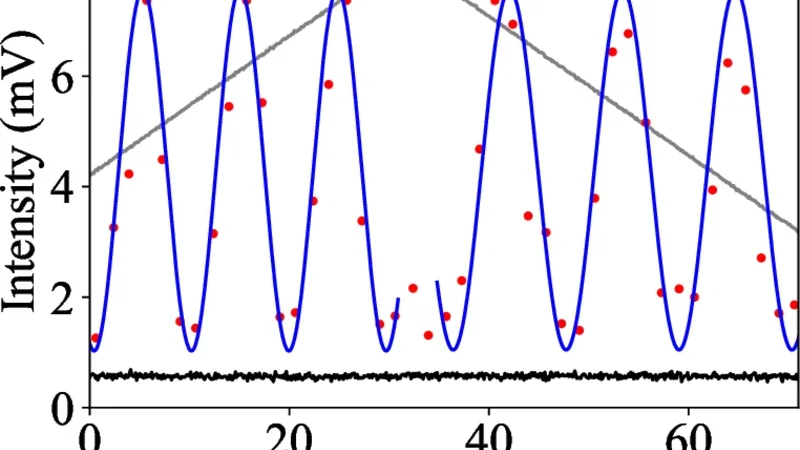
Loss-insensitiv e q uantum noise reduction in a Raman am plifier with coherent f eedbac k Jianmin W ang ∗ , R ong Zhu ∗ , Z. Y . Ou † Depar tment of Ph y sics, City U niv ersity of Hong K ong, 83 T at Chee A v enue, K o w loon, Hong K ong. † Cor responding author . Email: jeffou@cityu.edu.hk ∗ These authors contributed equally to this w ork. A quantum am plifier usuall y adds extra noise ine vit ably thr ough coupling to internal degrees of freedom while amplifying the signal. The introduction of quantum correlations can effectiv el y suppress this extra noise. In this w or k, we utilize the established quantum correlation be tw een the Stok es field and atomic spin w a v es in the Raman amplification process to f eedback a portion of the Stok es field into the amplifier . This leads to a reduction in quantum noise that is inde- pendent of the feedbac k loss at high gain. A maximum of 6 dB noise reduction is observ ed. The single-path f eedback amplifier is f ound to be sensitiv e to the f eedbac k phase, a pr operty that expands its potential f or applications in q uantum precision measurement, and the general concept can be extended to integrated optics and fiber optic sy stems. Amplifiers are widel y used instruments in modern science and technology to enhance small signals to a lev el that can be observed. In the process, noise is inevitabl y amplified as w ell. Do wn to the fundamental le v el, when all the classical noise is eliminated, quantum fluctuations play an impor tant role in the noise per f or mance of the amplifier ( 1–4 ) and add ex cess noise in addition to the amplification of the input noise, leading to the infamous high-g ain 3 dB degradation in the signal-to-noise ratio ( 3 ). 1 The added e xtra noise is due to the coupling to the internal degrees of freedom of the amplifier to acquire gain f or the in put. These inter nal modes are usuall y unattended and are independent of the input. Their quantum fluctuations giv e r ise to the e xtra noise. Parametric amplifiers are a special type of amplifier ac hie v ed through nonlinear parametr ic interaction processes in whic h an idler field is in v ol v ed and serv es as the internal mode of the amplifier . Due to its accessibility , the idler field can be manipulated to alter the noise per f or mance of the amplifier . In par ticular , when the idler field is placed in a squeezed vacuum state, its q uantum fluctuations can be suppressed, and the e xtra noise added to the amplifier can be reduced ( 5, 6 ). The amplifier output noise can be fur ther reduced when its inter nal modes are placed in a quantum-cor related state with the input field ( 7–9 ). Ho w e v er , such approac hes rel y on the e xter nal preparation of squeezed or entangled states, which are vulnerable to optical loss dur ing propagation and mode mismatch betw een the entanglement source and the amplifier . Even small losses can degrade quantum cor relations exponentiall y , whereas mode mismatch introduces classical noise that is amplified alongside the signal, undermining the intended noise reduction. Giv en this, a coherent f eedback architecture that combines cor relation g eneration and amplification in one de vice pro vides a simpler , more robust alter native to the traditional tw o-component setup ( 10, 11 ). Coherent f eedback has emerg ed as a v ersatile tool in quantum optics ov er the past decade, enabling dynamic control of quantum sys tems without relying on e xter nal measurement or state preparation, and has been adopted so f ar to assist with a div erse rang e of tasks ( 12–16 ). By recy cling the amplifier’ s o wn output to establish q uantum correlations internally , this approach eliminates the need f or e xternal entanglement sources and the associated mode matching. So f ar, most theoretical and e xper imental s tudies on noise reduction via entanglement or input- state cor relation ha v e been car r ied out in optical parametr ic amplifiers ( 6, 8 ), where the inter nal idle optical modes can be easily opticall y coupled from the outside. Even coherent f eedbac k implementations f or noise reduction are predominantly based on such optical amplifiers ( 17, 18 ). In contrast, f or amplifiers using atoms as the gain medium, inter nal atomic deg rees are g enerall y not directly accessible. This inaccessibility has hindered the realization of noise reduction in suc h sy stems until recently , with demonstrations rel ying on dual Raman processes within the same atomic ensemble ( 9 ). Notabl y , the localization of internal atomic degrees in Raman amplifiers was once a c halleng e f or noise reduction via entanglement or in put-state cor relation, as internal atomic 2 degrees of freedom are difficult to utilize. This localization, ho w e v er , turns out to be an advantag e in coherent f eedbac k schemes. In this paper , W e in v es tigate a coherent f eedbac k amplifier , which utilizes the same Raman amplifier to prepare atoms in states cor related with the Stok es field b y tapping a small por tion of the output S tokes field and feeding it back to the amplifier , as seen in Fig.1. This arrangement allo ws the internal states of the atoms, which do not tra v el, to be cor related with the in put and leads to the noise reduction in the amplifier ’ s output. W e in v es tigate in detail the quantum noise per f or mance of the Raman amplifier through this mechanism under v arious f eedback conditions. In par ticular , when the transmission is maximized and the loss is near zero, w e achie v e a 6 dB quantum noise reduction that ex ceeds the noise suppression le v el attainable using separate amplifiers. This single-amplifier coherent f eedbac k configuration not only simplifies system comple xity but also eliminates mode mismatch-induced noise, and e xhibits loss insensitivity . W e find that the output is sensitiv e to the f eedbac k phase, making it a promising tool f or quantum sensing applications. Theore tical principles A ccording to the g eneral theory of quantum amplifiers ( 19 ), the output mode is amplified from the input by an amplitude g ain of 𝐺 , but is also coupled to its inter nal modes. F or a Raman amplifier with Alkaline atoms as medium, the inter nal mode is the atomic spin w a v e c haracterized b y a Bosonian operator ˆ 𝑆 and the input-output relation is giv en by ˆ 𝑎 out = 𝐺 ˆ 𝑎 in + 𝑔 ˆ 𝑆 † in (1) where 𝐺 is the amplitude g ain with 𝑔 = √ 𝐺 2 − 1, and ˆ 𝑆 in satisfies [ ˆ 𝑆 in , ˆ 𝑆 † in ] = 1, relating to the atomic coherence. T o achie v e an appreciable gain for the amplifier, the atomic medium is driven b y a strong classical field and 𝐺 is e xponentiall y related to the pump po w er . Eq.(1) resembles the input-output relationship of a parametric amplifier . Note that Eq.(1) is a relation f or field operators and w e can re write it in the quadrature-phase amplitude f or m as ˆ 𝑋 out = 𝐺 ˆ 𝑋 𝑎 in + 𝑔 ˆ 𝑋 𝑆 in (2) where ˆ 𝑋 𝑂 ≡ ˆ 𝑂 + ˆ 𝑂 † with ˆ 𝑂 = ˆ 𝑎 𝑖 𝑛, 𝑜 𝑢 𝑡 , ˆ 𝑆 𝑖 𝑛 . When the atomic medium is initially prepared in ground states and the in put field is in v acuum or coherent s tate, ˆ 𝑋 𝑖 𝑛 and ˆ 𝑋 𝑆 𝑖 𝑛 are independent of each other 3 and w e obtain the output noise le v el as Δ 2 𝑋 out = 𝐺 2 + 𝑔 2 = 2 𝐺 2 − 1 ≡ 𝐺 qn (3) This is typical of amplifier noise consisting of amplified input v acuum noise ( 𝐺 2 ) and e xtra noise ( 𝑔 2 ) added from the internal atomic mode ˆ 𝑆 𝑖 𝑛 . W e define this as the q uantum noise g ain 𝐺 𝑞 𝑛 b y the amplification of the v acuum noise f or both the in put and internal modes. Ho w e v er , when atoms ( ˆ 𝑆 𝑖 𝑛 ) are prepared in a cor related state with the input field ( ˆ 𝑎 𝑖 𝑛 ), the fluctuation of ˆ 𝑋 𝑎 𝑖 𝑛 + ˆ 𝑋 𝑆 𝑖 𝑛 can be smaller than their respectiv e v acuum fluctuations ( 20, 21 ), leading to noise reduction ( 8 ). Our approach is to tap a small portion of the output Stok es and f eed it back to the amplifier f or noise cancellation by quantum correlation. As shown in Fig.1, we use a beam splitter with transmissivity 𝑇 to split a par t of the output Stok es field and f eed it back to the amplifier . An e xtra phase shift 𝜑 is added to control the f eed-bac k phase. W e also add loss 𝐿 using a beam splitter with transmissivity 1 − 𝐿 to couple in the v acuum modes ˆ 𝑐 0 : ˆ 𝑎 in = 𝑒 𝑖 𝜑 √ 1 − 𝐿 √ 𝑇 ˆ 𝑏 0 − √ 1 − 𝑇 ˆ 𝑎 out + √ 𝐿 ˆ 𝑐 0 , (4) where ˆ 𝑏 0 is the input mode. Subs tituting bac k to Eq.(1), w e obtain ˆ 𝑎 out = − 𝐺 𝑒 𝑖 𝜑 ( 1 − 𝑇 ) ( 1 − 𝐿 ) ˆ 𝑎 out + 𝐺 𝑒 𝑖 𝜑 ( 1 − 𝐿 ) 𝑇 ˆ 𝑏 0 + 𝐺 √ 𝐿 ˆ 𝑐 0 + 𝑔 ˆ 𝑆 † in (5) or ˆ 𝑎 out = 𝐺 𝑒 𝑖 𝜑 ( 1 − 𝐿 ) 𝑇 ˆ 𝑏 0 + 𝐺 √ 𝐿 ˆ 𝑐 0 + 𝑔 ˆ 𝑆 † in 1 + 𝐺 𝑒 𝑖 𝜑 ( 1 − 𝑇 ) ( 1 − 𝐿 ) . (6) For the output port, w e ha v e ˆ 𝑏 out = √ 𝑇 ˆ 𝑎 out + √ 1 − 𝑇 ˆ 𝑏 0 , and according to Eq.(6), w e obtain ˆ 𝑏 out = √ 1 − 𝑇 + 𝐺 𝑒 𝑖 𝜑 √ 1 − 𝐿 1 + 𝐺 𝑒 𝑖 𝜑 ( 1 − 𝑇 ) ( 1 − 𝐿 ) ˆ 𝑏 0 + 𝐺 √ 𝑇 𝐿 ˆ 𝑐 0 + 𝑔 √ 𝑇 ˆ 𝑆 † in 1 + 𝐺 𝑒 𝑖 𝜑 ( 1 − 𝑇 ) ( 1 − 𝐿 ) . (7) W e measure the noise v ar iance of the fields by homodyne detection of the quadrature-phase amplitude ˆ 𝑋 = ˆ 𝑎 + ˆ 𝑎 † . T o see the effect of noise per f or mance with f eedbac k, w e compare it to the case when there is no coherent f eedback, that is, 𝐿 = 1 or the coherent f eedback is completel y lost. 4 The noise variance of the quadrature amplitude at the output por t can be calculated from Eq.(7) by setting 𝐿 = 1 and is Δ 2 𝑋 𝑇 𝑏 = 𝑇 ( 2 𝐺 2 − 1 ) + 1 − 𝑇 (8) with 𝑏 ≡ 𝑏 𝑜𝑢 𝑡 . This is just the noise lev el of the output of a regular amplifier after passing through a beam splitter with transmissivity 𝑇 . This sets the ref erence noise le v el that we will compare to f or noise reduction in the f eedbac k case. When 𝑇 ≠ 1, i.e., a por tion of the Stok es field is f ed back into the Raman amplifier with cor related atomic spin w a v es, the output is phase-sensitiv e, especially when 𝑒 𝑖 𝜑 = − 1 and the denominator becomes zero, or a threshold of oscillation is ac hie v ed when 𝐺 𝑡 ℎ = 1 / ( 1 − 𝑇 ) ( 1 − 𝐿 ) . On the other hand, the absolute value of the denominator becomes maximum when 𝑒 𝑖 𝜑 = 1, which minimizes the contr ibution of the last two terms in Eq.(7) that are the sources of the e xtra noise. In this case, the noise v ar iance of output por t ˆ 𝑏 𝑜𝑢 𝑡 is Δ 2 𝑋 𝑏 = √ 1 − 𝑇 + 𝐺 √ 1 − 𝐿 2 + 𝐺 2 𝑇 𝐿 + 𝑔 2 𝑇 1 + 𝐺 ( 1 − 𝑇 ) ( 1 − 𝐿 ) 2 = 𝑇 𝐺 2 + 𝑔 2 − 1 ( 1 + 𝐺 / 𝐺 𝑡 ℎ ) 2 + 1 , (9) with 𝑏 ≡ 𝑏 𝑜𝑢 𝑡 . By comparing Eq.(8) and Eq.(9), we obtain the noise reduction f actor 𝑅 ≡ Δ 2 𝑋 𝑏 Δ 2 𝑋 𝑇 𝑏 = 2 𝑇 𝐺 2 − 1 + ( 1 + 𝐺 / 𝐺 𝑡 ℎ ) 2 ( 1 + 𝐺 / 𝐺 𝑡 ℎ ) 2 ( 2 𝑇 𝐺 2 + 1 − 2 𝑇 ) (10) Quantum noise reduction is characterized b y 𝑅 < 1, whic h depends on the parameters of 𝑇 , 𝐿 , and 𝐺 . T o see this, let us first look at the special case of 𝑇 ≈ 1. In this case, Eq.(10) becomes 𝑅 = 2 𝐺 2 − 2 + ( 1 + 𝐺 / 𝐺 𝑡 ℎ ) 2 ( 1 + 𝐺 / 𝐺 𝑡 ℎ ) 2 ( 2 𝐺 2 − 1 ) , (11) which approac hes 1/4 or − 6dB noise reduction when 𝐺 → 𝐺 𝑡 ℎ ≈ 1 / ( 1 − 𝑇 ) ( 1 − 𝐿 ) ≫ 1. This is amazing considering that a relativ el y larg e amount of noise reduction − 6 dB is achie v ed with f eedbac k of onl y a small fraction (1 − 𝑇 ≪ 1) of the output. 5 For other values of 𝑇 , we find from Eq.(10) that 𝑅 ≈ 1 / ( 1 + 𝐺 / 𝐺 𝑡 ℎ ) 2 when 𝑇 𝐺 2 ≫ 1 and also approaches 1 / 4 f or 𝐺 → 𝐺 𝑡 ℎ , and this is so reg ardless of the magnitude of the f eedbac k loss 𝐿 . So, the noise reduction factor is loss-insensitiv e, in contras t to the g eneral belief that losses alw a y s degrade the quantum noise reduction effect. The reason f or this is that the f eedbac k par t does not create the quantum cor relation but is simpl y an injection into the amplifier , which is where the quantum correlation is generated f or noise reduction. Experimental results and anal y sis W e ne xt present e xperimental v erification of the theor y . The e xper imental schematic is sho wn in Fig.2. A cy lindr ical Pyre x cell with a length of 75 mm contains pure Rb-87 atomic v apor serving as the Raman amplifier . The cell is placed inside a f our -lay er magnetic shield f or isolating the magnetic field of the Ear th and is heated up to 70 ◦ C by a heating belt. Atomic energy le v els are sho wn as the inset of F ig.2, where a collectiv e atomic e xcitation or atomic spin wa ve is f ormed betw een the meta-stable s tate | 𝑚 ⟩ (5 2 𝑆 1 / 2 ( 𝐹 = 2 ) ) and the ground state | 𝑔 ⟩ (5 2 𝑆 1 / 2 ( 𝐹 = 1 ) ) through Raman interaction betw een a strong pump field, which is from a single-frequency laser detuned Δ = 800 MHz from the e x cited state | 𝑒 ⟩ (5 2 𝑃 1 / 2 ( 𝐹 = 2 ) ), and the Stok es field. The continuous light field W ser v es as the pumping field f or the Raman amplifiers (RA) and g enerates the corresponding Stok es fields 𝑆 , and the field 𝑆 ′ is reinjected back into the RA via mir rors M1 and M2. The Stok es and pump fields ha v e or thogonal polarizations and are separated and combined b y polar ization beam splitters. Optical pumping is emplo yed to prepare all atoms in the ground state(not sho wn in the figure). The Raman amplifier whose noise behavior w e aim to characterize is pumped b y the continuous light field W , and w e measure its output quantum noise le v el b y a homodyne detection with its local oscillator (LO) deriv ed from another laser that is frequency tuned close to the S tok es field (about 6.8 GHz belo w the pump). Normall y , the input field of the Raman amplifier is independent of the atomic states. T o generate correlations betw een the atomic states and the input field and a v oid mode mismatch, w e use the output field 𝑆 of the RA, which is no w cor related with the atomic states, as the input signal to the RA by reflecting it back via mir rors and reinjecting it to interact with the same ensemble of atoms. W e in v estig ate the effect of 𝑆 ′ on the quantum noise le v el of the RA. 6 As a ref erence f or comparison, w e record the noise le v el of the output Stok es field 𝑆 of the RA without the injection of 𝑆 ′ . This cor responds to a case where the in put field is independent of the atomic medium, and the measured noise lev el is simpl y the amplified vacuum noise le v el. Ne xt, w e consider the case of 𝑇 ≈ 1 and the f eedbac k is achiev ed with a mir ror M1 and a nearl y transparent reflectiv e sur f ace (in the e xperiment, it is merel y the surface reflection of the detector). Subsequentl y , we quantified the output noise lev el without feedbac k by blocking M1, using this as the noise ref erence le v el, and Fig.3(a) sho w s the result f or 𝐺 𝑞 𝑛 = 33 dB, which is close to the threshold of oscillation. The blue trace is the q uantum noise le v el of the amplifier without f eedbac k. Then w e unblock ed the feedbac k loop to g enerate a quantum cor relation between the atomic medium and the input field to RA. W e scan the phase of the reinjected Stok es field 𝑆 ′ with a piezoelectric transducer . The measured output Stok es noise le v el is sho wn in Fig.3(a) as the red trace when the f eedbac k is on and the f eedback phase 𝜑 is scanned in time. 6 dB of noise reduction is obser ved. W e measure the amount of noise reduction as a function of the quantum gain of the bare amplifier , which increases with the pump po w er , and plot the results in Fig.3(b). As can be seen, the noise reduction increases with the increase of quantum g ain of the bare amplifier , which is consistent with the theoretical predictions. The solid red curv e is a fit from Eq. (11). Ne xt, to in v estigate the impact of f eedbac k parameters 𝑇 and 𝐿 on noise reduction, w e replace the nearl y transparent surface with an ensemble of polar ization beam splitter , a half-w av e plate and mir ror M1 f or variable feedbac k 𝑇 and loss 𝐿 , as shown in Fig.2. The parameters 𝑇 and 𝐿 affect 𝐺 𝑡 ℎ since 𝐺 𝑡 ℎ ≈ 1 / ( 1 − 𝑇 ) ( 1 − 𝐿 ) . W e first fix 𝑇 at 0.25, 𝐺 𝑞 𝑛 = 18 dB and v ar y the f eedbac k loss 𝐿 b y attenuator , with the results sho wn in Fig.4(a). Then w e fix 𝐿 at 0.01, 𝐺 𝑞 𝑛 = 23 dB, and chang e 𝑇 by rotating the HWP , with the results shown in F ig.4(b). The solid red curv es in Fig.4 are a fit to Eq.(10). Fig.4(a) sho w s that the single-path f eedback is not sensitiv e to loss; ev en when the loss reaches 6 dB ( 𝐿 = 0 . 75), the noise reduction can still reach 3 dB. Fig.4(b) sho w s that there e xists an optimal 𝑇 that allo ws a balance of the ne w l y generated and f eedback Stok es fields to reach an optimal noise reduction at finite gain. When a seed Stok es field is injected into the sys tem, this f eedback -based setup e xhibits a phase- dependent inter f erence response. W e injected the seed field into the sy s tem via a beam splitter bef ore the M1 mir ror in Fig.2 with a coherent light injection (the beam splitter , not sho wn in the 7 figure). F igure 5 sho w s the inter f erence fringes as the phase of the back -injected Stok es field 𝑆 ′ is scanned. In conclusion, w e ha v e e xper imentally sho wn a 6 dB reduction of the amplifier ’ s output noise in an atomic Raman amplifier . The e xperimental results w ere predicted b y a detailed theoretical anal y sis and are in good ag reement with them. By recycling a fraction of the amplifier’ s output Stok es field bac k to its input, we establish a dynamic link betw een the optical signal field and the atomic spin wa ve. This closed-loop design eliminates e xternal entanglement sources, and the intrinsic cor respondence between the recy cled optical field and the amplifier’ s mode inherently eliminates mode mismatch issues. Be y ond noise reduction, this single-amplifier coherent f eedback scheme f eatures a simple str ucture, lo w noise, and loss insensitivity , and also offers potential f or fur ther advancement in on-chip squeezing within integrated photonics. When implemented with an atomic g ain medium, it holds the potential f or dual-phase responsiv eness to both optical phase and atomic s tate, a capability that could enable the realization of a lo w -noise amplifier -sensor hybrid de vice and ser v e as a high-perf ormance quantum sensor . 8 T 𝑆 𝑆 𝑎 𝑎 𝑏 𝑏 LO PD - 𝜑 L 𝑐 Raman Amplifier Noise measurement G, g Figure 1 : Conceptual schematic f or a Raman amplifier with single-path feedbac k. The Raman amplifier , labeled with its gain 𝐺 and 𝑔 which satisfy the relation 𝐺 2 − 𝑔 2 = 1, amplifies the input signal field and couples the amplified field ˆ 𝑎 𝑜𝑢 𝑡 into the f eedbac k loop, whic h f eeds back to the amplifier’ s input as ˆ 𝑎 𝑖 𝑛 ; a beam splitter with transmittance 𝑇 then splits the output field, routing a portion ˆ 𝑏 𝑜𝑢 𝑡 to a photodetector (PD) that is combined with a local oscillator (LO) f or noise measurement, while the remaining field continues in the f eedback path. The orange closed loop f or ms the feedbac k channel, which introduces additional vacuum noise ˆ 𝑐 0 via loss and adjus ts the phase of the f eedback loop using a piezoelectr ic transducer . ˆ 𝑏 0 represents the additional vacuum noise introduced by the f eedback loop. The green lines denote the in put ˆ 𝑆 𝑖 𝑛 and output ˆ 𝑆 𝑜𝑢 𝑡 at the idler por t of the Raman amplifier , whic h cor responds to the non-propagating atomic s tate. 9 PZT HD BS PBS W LO Rb HWP S 𝑆 M1 L M2 T | 𝑒 ⟩ Δ W S | 𝑔 ⟩ | 𝑚 ⟩ 𝑆 BD Figure 2 : Sc hematic of the coherent f eedbac k Raman am plifier setup based on a Rb 87 atomic ensemble. A pump field (W) propagates through the atomic ensemble, dr iving the Raman inter - action b y optically pumping atoms from the g round state | 𝑔 ⟩ to the e xcited state | 𝑒 ⟩ . This process g enerates a Stok es field ( 𝑆 ) via stimulated Raman scattering, as atoms relax from | 𝑒 ⟩ to a metastable state | 𝑚 ⟩ and coherently e x cite a spin wa v e( ˆ 𝑆 𝑎 ) within the ensemble. A por tion of the Stok es output field is directed into a coherent feedbac k loop via a polar ization beam splitter (PBS) and mir ror (M1). The f eedbac k loop includes an attenuator (L) to control feedbac k loss, and a combination of a half-wa v e plate (HWP) and PBS that sets the signal transmissivity (T). The field is then retroreflected as the f eedback S tok es field ( 𝑆 ′ ) back into the atomic ensemble via a piezo-electr ic transducer (PZT) mounted on mirror (M2) f or phase scanning. A local oscillator (LO) is combined with the output field at a beam splitter (BS) f or homodyne detection (HD). Un wanted light is routed to a beam dump (BD). (a) (b) Figure 3 : Noise reduction of a Raman amplifier (a) Quantum noise le v el of the output as the f eedbac k phase is scanned. The v acuum or shot noise lev el is -73.6 dB (b) N oise reduction ratio as a function of the quantum g ain 𝐺 𝑞 𝑛 of Raman amplifier without f eedbac k. The solid cur v e is a fit to Eq.(11). 10 Figure 4 : Noise reduction as a function of f eedbac k parame ters with theoretical fitting (a) Measured noise reduction as a function of feedbac k loss 𝐿 , with the solid red curv e representing a theoretical fit from Eq. 10. (b) Measured noise reduction as a function of beam splitter transmittance 𝑇 , with the solid red cur v e representing a theoretical fit from Eq. 10. Figure 5 : Observ ed single-path f eedbac k amplifier sensitiv e to feedbac k phase. Interf erence fringes, represented b y red data points with a blue sinusoidal fitting curv e, are measured at the output of RA as a function of phase scan (g ra y). The blac k cur v e cor responds to the background intensity le v el. 11 R ef erences and N otes 1. H. Heffner , The fundamental noise limit of linear amplifiers. Proc. IRE 50 (7), 1604–1608 (1962). 2. H. A. Haus, J. A. Mullen, Quantum Noise in Linear Amplifiers. Phys. Rev . 128 , 2407–2413 (1962). 3. C. Hong, S. Friberg, L. Mandel, Conditions f or nonclassical beha vior in the light amplifier . J. Opt. Soc. Am. B 2 (3), 494–496 (1985). 4. R. J. Glauber , AMPLIFIERS, A TTENU A TORS AND THE QU ANTUM THEOR Y OF MEA- SUREMENT , in 6th INS W inter Seminar on Structur e and F orces in Elementar y P article Physics (1986). 5. G. J. Milburn, M. L. Ste yn-R oss, D. F . W alls, Linear amplifiers with phase-sensitiv e noise. Phys. Rev . A 35 , 4443–4445 (1987). 6. Z. Y . Ou, S. F . Pereira, H. J. Kimble, Quantum noise reduction in optical amplification. Phys. Rev . Lett. 70 , 3239–3242 (1993). 7. Z. Y . Ou, Quantum amplification with cor related quantum fields. Phy s. Rev . A 48 , R1761– R1764 (1993). 8. J. K ong, F . Hudelist, Z. Y . Ou, W . Zhang, Cancellation of Internal Quantum Noise of an Amplifier b y Quantum Cor relation. Phy s. Rev . Lett. 111 , 033608 (2013). 9. J. W ang, R. Zhu, Y . Li, Z. Y . Ou, Obser v ation of Quantum N oise R eduction in a Raman Amplifier via Quantum Cor relation betw een Atom and Light. Phy s. Rev . Lett. 135 , 203602 (2025). 10. S. Llo yd, Coherent quantum f eedback. Phy s. Rev . A 62 , 022108 (2000). 11. J. E. Gough, S. Wildf euer , Enhancement of field squeezing using coherent f eedback. Phy s. Rev . A 80 , 042107 (2009). 12 12. C. Sa yr in, et al. , Real-time quantum f eedbac k prepares and stabilizes photon number states. Natur e 477 (7362), 73–77 (2011). 13. Y . Zhong, J. Jing, Enhancement of tr ipar tite quantum cor relation by coherent f eedback control. Phys. Rev . A 101 , 023813 (2020). 14. A. Har wood, A. Serafini, Ultimate squeezing through coherent quantum f eedbac k. Phys. Rev . Res. 2 , 043103 (2020). 15. M. Er nzer , et al. , Optical coherent f eedbac k control of a mechanical oscillator . Phys. Rev . X 13 (2), 021023 (2023). 16. K. V odenk ov a, H. Pichler , Continuous coherent quantum feedbac k with time delay s: T ensor netw ork solution. Phy s. Rev . X 14 (3), 031043 (2024). 17. S. Y ok o yama, et al. , Feasibility study of a coherent f eedbac k squeezer . Phys. Rev . A 101 (3), 033802 (2020). 18. S. Iida, M. Y uka w a, H. Y onezaw a, N . Y amamoto, A. Furusaw a, Exper imental demonstration of coherent f eedbac k control on optical field squeezing. IEEE T r ansactions on Automatic Control 57 (8), 2045–2050 (2012). 19. C. M. Cav es, Quantum limits on noise in linear amplifiers. Phys. Rev . D 26 , 1817–1839 (1982). 20. M. D. Reid, Demonstration of the Einstein-P odolsky -R osen parado x using nondeg enerate parametric amplification. Phys. Rev . A 40 , 913–923 (1989). 21. Z. Y . Ou, S. F . Pereira, H. J. Kimble, K. C. Peng, Realization of the Einstein-P odolsky -R osen parado x f or continuous variables. Phys. Rev . Lett. 68 , 3663–3666 (1992). A ckno wledgments Funding: The work is suppor ted b y City U niv ersity of Hong Kong (Project No.9610522) and the General R esearch F und from Hong K ong R esearch Grants Council (N o.11315822). 13 A uthor contributions: Z.Y .Ou super vised the whole project. J.W ang, R.Zhu, and Z.Y .Ou con- ceiv ed the researc h. J.W ang, R.Zhu, and Z.Y .Ou designed the e xper iments. J.W ang and R.Zhu performed the e xperiment. J.W ang and Z.Y .Ou contr ibuted to the theoretical study . J.W ang, R.Zhu, and Z.Y .Ou anal yzed the data. J.W ang dre w the diagrams. J.W ang and Z.Y .Ou wrote the paper . All authors contributed to the discussion and revie w of the manuscript. Compe ting interests: There are no competing interes ts to declare. Data and materials a v ailability : All data needed to e v aluate the conclusions in the paper are present in the paper and/or the Supplementary Mater ials. 14
Original Paper
Loading high-quality paper...
Comments & Academic Discussion
Loading comments...
Leave a Comment