No Absolute Hierarchy of Quantum Complementarity
Bohr's principle of complementarity, prohibiting simultaneous access to certain physical properties within a single experimental arrangement, is considered to be a defining feature of quantum mechanic
Bohr’s principle of complementarity, prohibiting simultaneous access to certain physical properties within a single experimental arrangement, is considered to be a defining feature of quantum mechanics. It is commonly viewed as inducing an intrinsic hierarchy among incompatible observables: some sets of quantum properties are fundamentally more incompatible than others, as quantified by the maximal sharpness permitting their joint measurement. We show that this hierarchy ceases to be absolute in the multi-copy regime. Analyzing qubit spin observables, we prove a No-Comparison Theorem establishing that no global ordering of incompatible observable sets is preserved across all finite-copy configurations. In particular, two sets of observables can exhibit reversed complementarity ordering depending solely on whether the available resources are arranged as identical copies or as parallel-antiparallel pairs. Thus, the degree of quantum incompatibility is not an intrinsic property of observables alone but depends on the global configuration of the prepared quantum probes. Our results uncover a configuration-dependent structure of complementarity, reveal a subtle role of entanglement in shaping the structure of measurement limitations, and call for a reassessment of quantum information protocols under finite resources.
💡 Research Summary
The paper revisits Bohr’s principle of complementarity, which traditionally states that certain pairs of physical properties cannot be accessed simultaneously within a single experimental arrangement. In the standard single‑copy scenario, incompatibility between two observables is quantified by the maximal sharpness (or minimal disturbance) that a joint measurement can achieve; this leads to a well‑defined hierarchy where some observable pairs are intrinsically “more incompatible” than others.
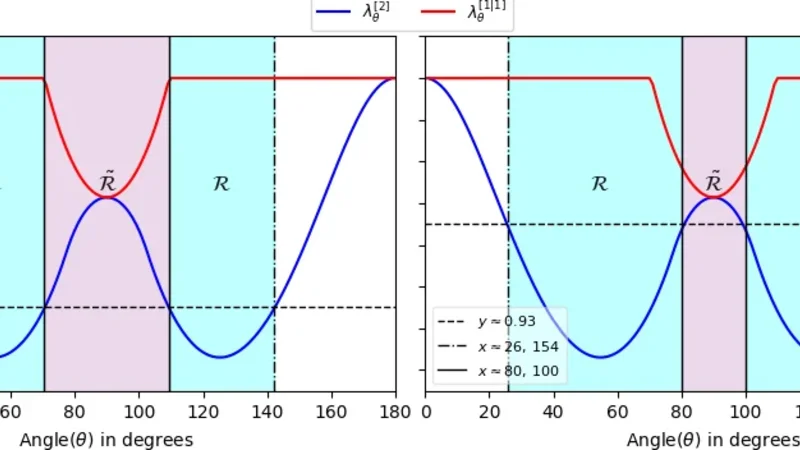
The authors ask whether this hierarchy remains absolute when multiple copies of the quantum probe are available. They focus on qubit spin observables σ·n̂ and σ·m̂, whose relative angle θ determines the degree of incompatibility in the single‑copy case. Two distinct multi‑copy configurations are considered: (i) identical copies, i.e. N copies of the same pure state ρ (ρ⊗N), and (ii) parallel‑antiparallel pairs, i.e. an alternating sequence of ρ and its antipodal state ρ⊥, forming (ρ⊗ρ⊥)⊗(N/2). The antipodal state points in the opposite direction on the Bloch sphere and naturally introduces entanglement between the two halves of each pair.
For each configuration the authors derive the optimal positive‑operator‑valued measure (POVM) that jointly estimates the two spin components. The performance is expressed by the sharpness parameters η_parallel(N,θ) and η_antiparallel(N,θ). Numerical optimization and analytic approximations reveal a striking crossover: for small N the identical‑copy scheme is slightly better, but as N grows the parallel‑antiparallel arrangement yields higher sharpness in a broad angular window (roughly 30°–70°). In other words, the same pair of observables can be “more compatible” when the probes are prepared as antiparallel entangled pairs than when they are prepared as many identical copies.
These observations are formalized in the No‑Comparison Theorem. The theorem states that there exists no global ordering of incompatible observable sets that is preserved across all finite‑copy configurations. Concretely, one can find two observable sets A and B such that A is less incompatible than B for one configuration (e.g., identical copies) but more incompatible for another (e.g., parallel‑antiparallel pairs). The proof proceeds in two steps. First, the authors characterize the full set of admissible joint POVMs for each configuration using linear‑algebraic techniques. Second, they employ quantum‑information tools—specifically mutual‑information bounds—to quantify an “information gap” that arises from the entanglement present in antiparallel pairs. This gap allows the antiparallel scheme to surpass the sharpness limits that hold for identical copies, thereby breaking any universal hierarchy.
The implications are far‑reaching. In quantum metrology, the result suggests that multi‑copy entangled probes can outperform naïve replication strategies, enabling more precise simultaneous estimation of non‑commuting parameters. In quantum sensing, the parallel‑antiparallel arrangement offers a resource‑efficient way to boost sensitivity when the number of available probes is limited. In quantum cryptography, protocols that rely on complementarity (such as BB84) may need to be re‑examined, because an eavesdropper who can manipulate the copy configuration could alter the effective incompatibility and thus the security parameters.
Overall, the paper demonstrates that complementarity is not an intrinsic, configuration‑independent property of observables; rather, it is a relational feature that depends on how the quantum probes are globally prepared and correlated. This insight calls for a reassessment of many quantum‑information tasks that have traditionally assumed a fixed incompatibility hierarchy. Future work is suggested on higher‑dimensional systems, non‑uniform copy patterns, and experimental verification of the predicted configuration‑dependent complementarity effects.
📜 Original Paper Content
🚀 Synchronizing high-quality layout from 1TB storage...