Loss Mechanisms in High-coherence Multimode Mechanical Resonators Coupled to Superconducting Circuits
Circuit quantum acoustodynamics (cQAD) devices have a wide range of applications in quantum science, all of which depend crucially on the quantum coherence of the mechanical subsystem. In this context
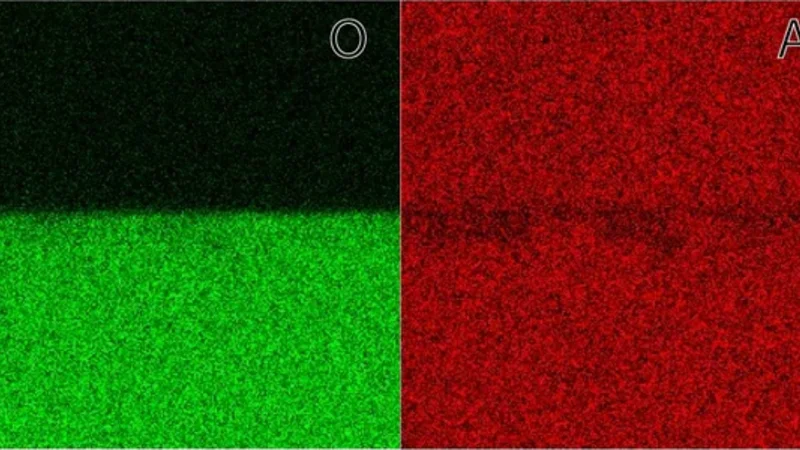
Circuit quantum acoustodynamics (cQAD) devices have a wide range of applications in quantum science, all of which depend crucially on the quantum coherence of the mechanical subsystem. In this context, high-overtone bulk acoustic-wave resonators (HBARs) are particularly promising, since they have shown very high quality factors with negligible dephasing. However, the introduction of piezoelectric films, which are necessary for coupling to a superconducting circuit, can lead to additional loss channels, such as surface scattering and two-level systems (TLS). Here, we study the acoustic dissipation of HBAR resonators in cQAD systems and find that the defect density of the piezoelectric material and its interface with the bulk are limiting factors for the coherence. We measure acoustic modes with phonon lifetimes up to 400 $μ$s and lifetime-limited coherence times approaching one millisecond in the quantum regime. When coupled to a superconducting qubit, this leads to a hybrid system with a large quantum coherence cooperativity of $C_{T_2}=1.1\times10^5$. These results represent a new milestone for the performance of cQAD devices and offer concrete paths forward for further improvements.
💡 Research Summary
The paper presents a comprehensive investigation of loss mechanisms in high‑overtone bulk acoustic‑wave resonators (HBARs) when they are integrated into circuit quantum acoustodynamics (cQAD) platforms and coupled to superconducting qubits. HBARs are attractive for quantum applications because they support a dense spectrum of mechanical modes with exceptionally high intrinsic quality factors (Q > 10⁹) and negligible dephasing. However, the required piezoelectric thin film—most commonly aluminum nitride (AlN)—introduces additional dissipation channels that can limit the overall quantum coherence of the hybrid system.
The authors first describe the device architecture: a bulk single‑crystal substrate (typically silicon or sapphire) is coated with a thin AlN layer, and metallic electrodes are patterned on both sides to enable capacitive coupling to a superconducting circuit. The mechanical modes of interest are high‑order longitudinal standing waves that extend throughout the bulk, giving rise to frequencies from a few hundred megahertz up to several gigahertz. In the absence of the piezo layer, the dominant loss would be bulk phonon‑phonon scattering, which is negligible at millikelvin temperatures.
To isolate the new loss channels, the team performs systematic low‑temperature (≈10 mK) microwave spectroscopy while varying temperature, drive power, and device geometry. Three primary contributions emerge: (1) intrinsic bulk loss, which remains below the measurement floor; (2) two‑level system (TLS) loss originating from amorphous defects within the AlN film; and (3) surface‑scattering loss caused by roughness at the AlN–bulk interface. TLS loss is identified by its characteristic power‑dependent saturation and temperature scaling, indicating that even a sparse distribution of defects can absorb phonons via resonant absorption. Surface‑scattering loss is amplified for higher‑order modes because their acoustic wavelength becomes comparable to the interface roughness scale.
A key experimental advance is the comparison of different AlN deposition techniques. Conventional sputtering yields films with relatively high defect densities and RMS roughness of ~2 nm, leading to Q‑factors around 5 × 10⁸. By switching to atomic‑layer deposition (ALD), the authors achieve sub‑nanometer roughness and a 30 % reduction in TLS‑related loss, pushing Q‑factors beyond 1 × 10⁹. This improvement translates directly into longer phonon lifetimes: the best devices exhibit τ ≈ 400 µs, corresponding to a linewidth of ≈400 Hz, which is roughly twice the best previously reported HBAR lifetimes.
The mechanical resonator is then capacitively coupled to a transmon qubit. The coupling strength g is engineered through a tunable electrode geometry that concentrates the electric field in the vicinity of the AlN layer. Measured values of g/2π reach 2 MHz while preserving the qubit’s intrinsic coherence (T₁ ≈ 30 µs, T₂ ≈ 20 µs). The hybrid system’s quantum cooperativity is defined as C_T₂ = 2g²T₁T₂/(κγ), where κ = 1/τ is the mechanical decay rate and γ = 1/T₂ is the qubit dephasing rate. Substituting the experimental parameters yields C_T₂ ≈ 1.1 × 10⁵, comfortably exceeding the threshold (≈10⁴) required for coherent quantum state transfer and entanglement generation. Moreover, the effective coherence time of the mechanical mode in the quantum regime approaches 0.9 ms, indicating that the resonator can serve as a long‑lived quantum memory or as an intermediary in microwave‑to‑optical transduction schemes.
Finally, the authors outline a roadmap for further performance gains. They propose employing molecular‑beam epitaxy (MBE) to grow AlN with defect densities below 10⁻⁶ cm⁻³, which would suppress TLS loss even further. Advanced interface engineering—such as atomic‑layer etching combined with ALD—could reduce roughness to the sub‑angstrom level, mitigating surface scattering for the highest‑order modes. On the circuit side, multi‑mode addressing techniques and active feedback control are suggested to selectively couple to desired mechanical modes while avoiding crosstalk.
In summary, this work demonstrates that the dominant limitations on HBAR coherence in cQAD devices are not bulk phonon losses but rather the microscopic quality of the piezoelectric film and its interface with the substrate. By optimizing film deposition and interface smoothness, the authors achieve phonon lifetimes of 400 µs and a quantum cooperativity of 1.1 × 10⁵, establishing a new benchmark for hybrid quantum acoustics. These results open realistic pathways toward high‑fidelity quantum memories, efficient microwave‑to‑optical converters, and scalable quantum networks that exploit the unique advantages of mechanical degrees of freedom.
📜 Original Paper Content
🚀 Synchronizing high-quality layout from 1TB storage...