Symbols frequencies in the Thue--Morse word in base $3/2$ and related conjectures
We study a binary Thue--Morse-type sequence arising from the base-$3/2$ expansion of integers, an archetypal automatic sequence in a rational base numeration system. Because the sequence is generated by a periodic iteration of morphisms rather than a…
Authors: Julien Cassaigne, Bastiàn Espinoza, Michel Rigo
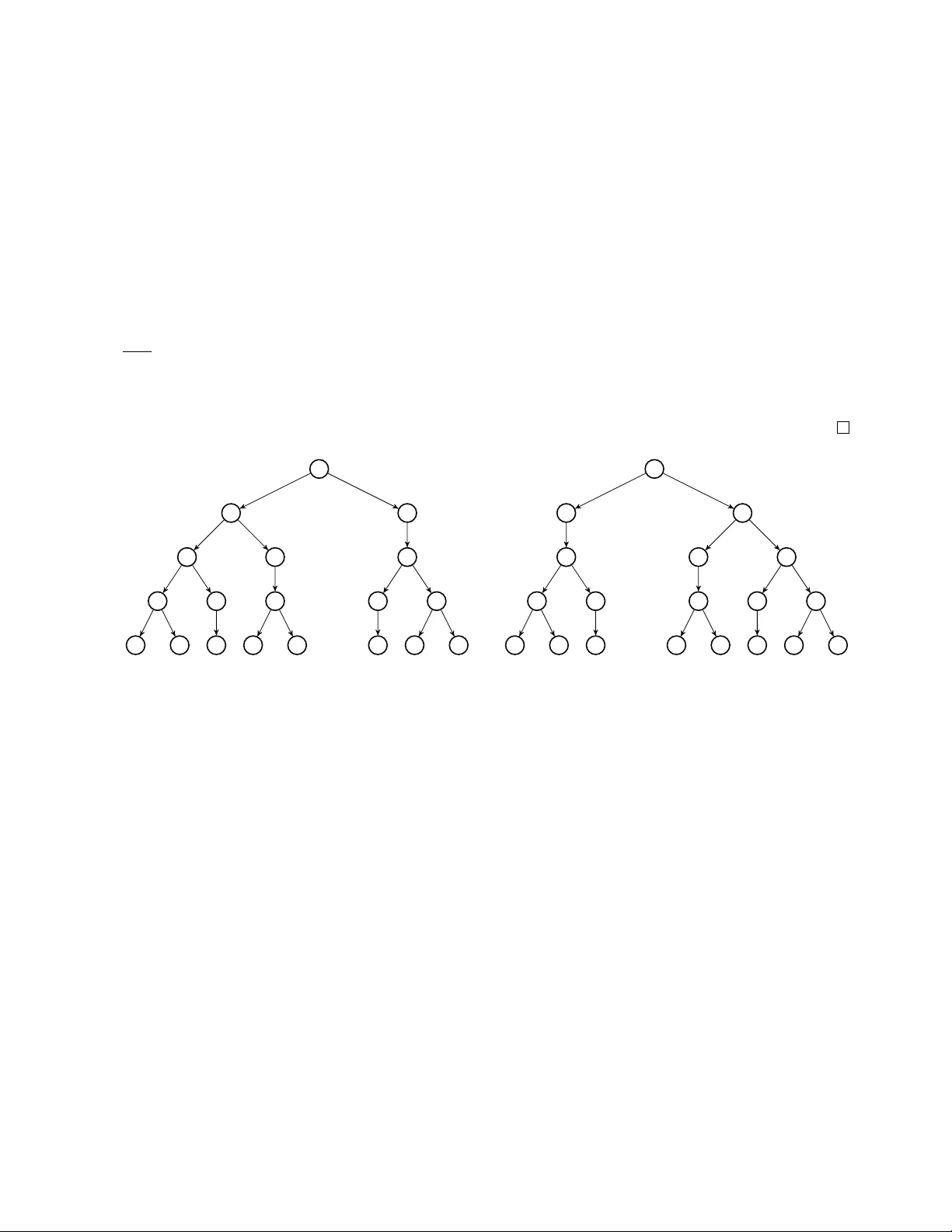
Sym b ols frequencies in the Th ue–Morse w ord in base 3 / 2 and related conjectures Julien Cassaigne CNRS, I2M UMR 7373, Aix-Marseille Univ ersit ´ e, 13453 Marseille, F rance Julien.Cassaigne@math.cnrs.fr and Basti´ an Espinoza, Mic hel Rigo, Manon Stipulan ti Departmen t of Mathematics, Univ ersity of Li ` ege All ´ ee de la D ´ ecouv erte 12 (B37), 4000 Li ` ege, Belgium BAEspinoza@uliege.be , M.Rigo@uliege.be , M.Stipulanti@uliege.be Abstract W e study a binary Th ue–Morse-type sequence arising from the base-3 / 2 expansion of in tegers, an arc het ypal automatic sequence in a rational base numeration system. Because the sequence is generated b y a p eriodic iteration of morphisms rather than a single primitiv e substitution, classical P erron–F rob enius metho ds do not directly apply to determine sym b ol frequencies. W e prov e that b oth symbols 0 , 1 o ccur with frequency 1 / 2 and w e show uniform recurrence and symmetry prop erties of its set of factors. The proof rev eals a structural bridge b et ween combinatorics on w ords and harmonic analysis: the first difference sequence is shown to be T o eplitz, providing dynamical rigidit y , while filtered frequencies naturally enco de a dyadic structure that lifts to the compact group of 2-adic in tegers. In this 2-adic setting, desubstitution b ecomes a linear op erator on F ourier co efficien ts, and a sp ectral contraction argument enforces uniqueness of limiting densities. Our results answ er sev eral conjectures of Dekking (on a sibling sequence) and illustrate how harmonic analysis on compact groups can b e fruitfully com bined with substitution dynamics. Keyw ords: rational base numeration systems; blo ck substitutions; Thue–Morse sequence; frequency; uniform recurrence; Pon tryagin dualit y; F ourier co efficien ts. 2020 Mathematics Sub ject Classification: 68R15, 43A65, 11B85, 11A63 1 In tro duction Giv en a sequence s = ( s n ) n ≥ 0 ∈ A N o v er a finite alphab et A , tw o fundamen tal questions concern the existence and the computation of the frequency of occurrences of a sym b ol a ∈ A 1 app earing in s , namely the quan tit y lim N →∞ # { 0 ≤ i < N | s i = a } N . Answ ering these questions has applications in several fields, e.g., in v arian t measures in sym- b olic dynamics and ergo dic theory [ 33 , 37 ], normalit y in num b er theory [ 10 , 11 ], structure and balance prop erties in com binatorics on w ords [ 1 , 31 , 34 ], data compression and pattern prediction in information theory [ 15 ], densities in ap erio dic tilings [ 9 ]. In this article, our initial motiv ation was to answ er a conjecture that has b een op en for fiv e years [ 40 ]. It concerns the symbol frequencies in the Thue–Morse wor d in b ase 3 / 2: t 3 / 2 = 001110111110110111110000110110 · · · , (1) an infinite sequence generated b y a particular t yp e of substitution obtained b y p erio dically iterating tw o morphisms of constan t length 3; see Section 1.2 for precise definitions. F o cusing on this sequence is natural: it is a typical automatic sequence in a rational base (here 3 / 2). Although generated by simple rules, it exhibits a ric h and non-trivial structure that reflects the complexity of the ob ject. W e prov e that the frequency of 0 is indeed 1 / 2 — as suggested b y n umerical computations as pictured in Fig. 1 — but w e obtain more: we pro ve that t 3 / 2 is uniformly recurren t and its set of factors is closed under bit-wise complement and rev ersal. In con trast with classical primitive substitutive systems, t 3 / 2 arises from a p erio dically iterated morphism and mixes tw o scaling mec hanisms, prev enting a direct application of Perron– F rob enius theory and requiring a different approac h to establish the existence of sym b ol frequencies. Compared with integer base systems or substitutiv e systems, the language of the base-3 / 2 numeration system is highly non-trivial: an y t w o distinct infinite subtrees are non-isomorphic, which is an imp ortant difference to o v ercome. 0 500 1000 1500 2000 0.50 0.52 0.54 0.56 0.58 0.60 14 000 14 200 14 400 14 600 14 800 15 000 0.500 0.501 0.502 0.503 Figure 1: Estimation of the frequency of 0 in prefixes of the Th ue–Morse word t 3 / 2 in base 3 / 2: on the left, for prefixes with length ≤ 2000; on the right, those with length in [14000 , 15000]. W e also answer sev eral conjectures related to a sibling sequence t ′ in tro duced b y Dekking [ 19 ] and recalled in Section 1.4 . As already men tioned b efore, these sequences t 3 / 2 and t ′ 2 are linked to the theory of n umeration systems. The sym b ols of t 3 / 2 can b e computed from the expansions of in tegers in a rational base n umeration system [ 2 ]. More precisely , for an y in teger n ≥ 0, the n -th sym b ol of t 3 / 2 is the parity of the sum-of-digits of n in its base- 3 / 2 expansion. Rational base numeration systems, introduced b y Akiyama, F rougny , and Sak aro vitc h in 2008 [ 2 ] and initially related to a question of Mahler ab out the distribution of the fractional parts of { z (3 / 2) n } , where z is a real, hav e attracted the atten tion of man y researc hers [ 21 , 25 , 40 , 41 , 42 ]. Our solution using techniques from abstract harmonic analysis suggests p ossible extensions to similar problems and, in particular, sheds new ligh t on long- standing conjectures related to the Olden burger–Kolak oski w ord [ 36 , 29 ]; see Section 1.2 for its definition. The study of substitutions and morphic words lies at the crossroads of com binatorics on w ords and sym b olic dynamics, but also harmonic analysis. Bey ond their com binatorial struc- ture, substitutions generate dynamical systems whose sp ectral prop erties enco de arithmetic and structural information. T o ols from abstract harmonic analysis, suc h as F ourier–Stieltjes transforms, sp ectral measures, and Riesz products, pla y a central role in the analysis of these systems [ 37 ]. In particular, the sp ectral theory of substitutive dynamical systems pro- vides a framew ork to distinguish pure p oin t, singular con tinuous, and absolutely contin uous b eha viors [ 9 ]. Let us give a few more examples highlighting the interactions b et w een these seemingly distan t topics. Baake and Grimm derive a F ourier recursion and functional equation for the Th ue–Morse auto correlation measure, yielding an explicit Riesz pro duct representation and a purely singular con tinuous sp ectrum [ 8 ]. Still related to the Thue–Morse word, uniform exp o- nen tial b ounds are obtained for discrete F ourier co efficients of truncated Thue–Morse sums, a v eraged ov er arithmetic parameters [ 35 ]. Finally , automatic sequences admit an efficient decomp osition into a structured comp onen t and a Gow ers-uniform comp onent, sho wing via higher-order F ourier analysis that sequences orthogonal to p eriodic ones ha v e small Gow ers norms and th us b eha v e pseudorandomly with resp ect to additiv e patterns [ 13 ]. The remainder of Section 1 is organized as follows. In Section 1.1 we briefly recall the notion of substitutions and fixed p oin ts. Then, in Section 1.2 , the generation of infinite w ords b y substitutions is extended to the case where a finite num b er of morphisms are applied p erio dically . W e recall that the famous Oldenburger–Kolak oski sequence can b e obtained in this w ay and list the main conjectures ab out it. In Section 1.3 , w e briefly in tro duce the base-3 / 2 numeration system and the corresp onding Thue–Morse sequence t 3 / 2 , follow ed b y the v ariation prop osed b y Dekking in Section 1.4 . Finally , in Section 1.5 , w e talk ab out the organization of the rest of the pap er and we list the main contributions. 1.1 Substitutions or iterated morphisms F or an alphab et A , we let A ∗ denote the set of finite w ords o v er A . Endow ed with concate- nation pro duct, it is a monoid with the empty wor d ε as neutral element. T o distinguish finite and infinite words, the latter are written in bold. A map f : A ∗ → A ∗ is a morphism if it is a homomorphism of monoids, i.e., f ( uv ) = f ( u ) f ( v ) for all u, v ∈ A ∗ . F or an infinite 3 w ord x = ( x n ) n ≥ 0 and in tegers 0 ≤ i ≤ j , we let x [ i, j ] (resp., x [ i, j )) denote the factor x i x i +1 · · · x j (resp., x i x i +1 · · · x j − 1 ) of x . If i = 0, then x [0 , j ) is the length- j prefix of x . If u ∈ A ∗ is a word and a is a sym b ol in A , w e let | u | a denote the num b er of o ccurrences of a in u . This notation extends to factors: if v is a finite word, then | u | v denotes the num b er of o ccurrences of v as a factor of u . W e b egin b y recalling the notion of iterated morphisms. It is a classical metho d for generating infinite words. W e sp ecify the main definitions and start with the (standard) Thue–Morse se quenc e t = ( t n ) n ≥ 0 ( A010060 ) starting with t = 0110100110010110 · · · . This element of { 0 , 1 } N can b e defined b y t n = s 2 ( n ) mo d 2, where s 2 is the sum-of-digits function in base 2. The Th ue–Morse sequence satisfies the relations t 2 n = t n and t 2 n +1 = 1 − t n , ∀ n ≥ 0 . (2) Since every length-2 factor t 2 n t 2 n +1 of t , o ccurring in an ev en p osition, is either 01 or 10 , it is trivial to see that the frequency of 0 (and thus of 1 ) is 1 / 2. This sequence is an example of 2-automatic sequences: for all n ≥ 0, t n is the output of a deterministic finite automaton fed with the base-2 expansion of n . It is thus the fixed p oin t of a 2-uniform morphism, namely f : 0 7→ 01 and 1 7→ 10 . Hence, t can b e obtained by iterating f on 0 . The sequence of finite w ords ( f n ( 0 )) n ≥ 0 con v erges to t , for the pro duct top ology , where { 0 , 1 } has the discrete top ology: f ( 0 ) = 01 , f 2 ( 0 ) = 0110 , f 3 ( 0 ) = 01101001 , . . . Indeed, the length | f n ( 0 ) | = 2 n go es to infinit y with n and each image f n ( 0 ) is a prefix of f n +1 ( 0 ). F or a survey on the Th ue–Morse word, see [ 5 ]. One of its well-kno wn combinatorial features is that it is ov erlap-free: it contains no factor of the form auaua where a is a symbol and u ∈ { 0 , 1 } ∗ is a finite word. F or an integer k ≥ 2, a sequence is k -automatic if it is the image under a c o ding (i.e., a letter-to-letter morphism) of a fixed p oint of a k -uniform morphism (i.e., the length of the image of ev ery letter is k ). F or references on automatic sequences and com binatorics on words, see [ 6 , 31 , 39 ]. Cobham show ed in 1972 that for an automatic sequence, if the frequency of a sym b ol exists, then it is a rational num b er [ 16 ]. The larger class of morphic sequences is obtained by relaxing the assumption that the morphism generating the w ord has constan t length. In that situation, if the frequency of a sym b ol exists, then it is an algebraic num b er [ 6 , Thm. 8.4.5]. Using Perron–F rob enius theory for primitiv e matrices, frequencies of sym b ols exist and can b e obtained as the normalized P erron eigenv ector of the adjacency matrix asso ciated with 4 the morphism, i.e., where the j -th column records the num b er of occurrences of eac h symbol in the image of the letter j . F or example, the T rib onacci word 01020100102 · · · ( A080843 ) is the fixed p oint of the morphism 0 7→ 01 , 1 7→ 02 and 2 7→ 0 and its adjacency matrix is 1 1 1 1 0 0 0 1 0 . 1.2 P erio dically iterated morphisms One ma y generalize the construction of morphic sequences b y replacing a single morphism with a finite family of sev eral morphisms applied p erio dically . This construction pro duces a larger class of infinite w ords [ 30 ]. Definition 1. Let r ≥ 1 b e an in teger, let A b e a finite alphab et, and let f 0 , . . . , f r − 1 b e r morphisms o v er A ∗ . An infinite word x = ( x n ) n ≥ 0 o v er A is an alternating fixe d p oint of ( f 0 , . . . , f r − 1 ) if x = f 0 ( x 0 ) f 1 ( x 1 ) · · · f r − 1 ( x r − 1 ) f 0 ( x r ) · · · f i mo d r ( x i ) · · · . In the literature, one also finds the terminology of p erio dic iter ation of morphisms [ 22 , 30 ]. The famous Oldenbur ger–Kolakoski wor d k = 2211212212211 · · · (shift of A000002 where the first 1 has b een con venien tly deleted) can b e obtained by p erio dically iterating the tw o morphisms [ 17 ] k 0 : 1 7→ 2 , 2 7→ 22 , and k 1 : 1 7→ 1 , 2 7→ 11 . The first few iterations giv e k 0 ( 2 ) = 22 , k 0 ( 2 ) k 1 ( 2 ) = 2211 , k 0 ( 2 ) k 1 ( 2 ) k 0 ( 1 ) k 1 ( 1 ) = 221121 , . . . It is the unique w ord k o v er { 1 , 2 } starting with 2 and satisfying RL ( k ) = k , where RL is the run-length enc o ding map . It is a challenging ob ject of study in com binatorics on w ords. T o accoun t for this, w e recall sev eral long-standing conjectures concerning k [ 43 ]. • It is conjectured that b oth letters o ccur with frequency 1 / 2 in k [ 27 ]. The b est b ounds from Rao [ 38 ] improving on Chv´ atal are 0 . 49992 ≤ lim inf N | k [0 , N ) | 2 N ≤ lim sup N | k [0 , N ) | 2 N ≤ 0 . 50008 . 5 • It is unkno wn whether every factor occurs infinitely often in k (i.e., r e curr enc e ), or ev en with b ounded gaps (i.e., uniform r e curr enc e ). • The r eversal of a w ord a 1 · · · a n is the word a n · · · a 1 , with a i ∈ A . It is op en whether the set of factors of k is closed under reversal or complement (exc hanging 1 ’s and 2 ’s) [ 28 ]. • Although the factor complexity of k is known to b e b ounded by a p olynomial, its precise gro wth remains unclear (recall that, for an infinite sequence x , its factor c omplexity p x giv es, for each in teger n ≥ 0, the n um b er of length- n factors of x ). • F or Oldenburger–Kolak oski sequences ov er larger alphab ets or with different parame- ters, analogous questions concerning frequencies, recurrence, and structural prop erties are largely op en. See [ 12 ] for a recent probabilistic p ersp ective and [ 3 ] where pseudo- substitutions are iterated not necessarily in a p erio dic wa y as in Theorem 1 . As observed by Dekking [ 18 ] for the Oldenburger–Kolak oski w ord k , an alternating fixed p oin t can also b e obtained by an r -blo ck substitution as defined b elow. F or any in teger r ≥ 1, w e let A r denote the set of length- r w ords ov er A . Definition 2. Let r ≥ 1 b e an in teger and let A b e a finite alphab et. An r -blo ck substitution β : A r → A ∗ maps a w ord w 0 · · · w rn − 1 ∈ A ∗ to β ( w 0 · · · w r − 1 ) β ( w r · · · w 2 r − 1 ) · · · β ( w r ( n − 1) · · · w rn − 1 ) . If the length of the word is not a m ultiple of r , then the remaining suffix is ignored under the action of β . An infinite word x = ( x n ) n ≥ 0 o v er A is a fixe d p oint of the r -blo ck substitution β : A r → A ∗ if it satisfies x = β ( x 0 · · · x r − 1 ) β ( x r · · · x 2 r − 1 ) · · · . Let r ≥ 1 b e an integer, let A b e a finite alphab et, and let f 0 , . . . , f r − 1 b e r morphisms o v er A ∗ . It is straightforw ard to see that if an infinite word ov er A is an alternating fixed p oin t of ( f 0 , . . . , f r − 1 ), then it is a fixed p oint of an r -blo c k substitution [ 40 ]. As an example, k is a fixed p oint of the 2-blo c k substitution given b y κ : 11 7→ h 0 ( 1 ) h 1 ( 1 ) = 21 , 12 7→ h 0 ( 1 ) h 1 ( 2 ) = 211 , 21 7→ h 0 ( 2 ) h 1 ( 1 ) = 221 , 22 7→ h 0 ( 2 ) h 1 ( 2 ) = 2211 . 1.3 The base 3 / 2 and the corresp onding Thue–Morse w ord W e recall that, in the base-3 / 2 n umeration system, an y p ositiv e integer n is written n = X i ≥ 0 d i 1 2 3 2 i , (3) 6 n ⟨ n ⟩ 3 / 2 s ( n ) t n 0 ε 0 0 1 2 2 0 2 21 3 1 3 210 3 1 4 212 5 1 5 2101 4 0 6 2120 5 1 7 2122 7 1 8 21011 5 1 n ⟨ n ⟩ 3 / 2 s ( n ) t n 9 21200 5 1 10 21202 7 1 11 21221 8 0 12 210110 5 1 13 210112 7 1 14 212001 6 0 15 212020 7 1 16 212022 9 1 17 212211 9 1 n ⟨ n ⟩ 3 / 2 s ( n ) t n 18 2101100 5 1 19 2101102 7 1 20 2101121 8 0 21 2120010 6 0 22 2120012 8 0 23 2120021 8 0 24 2120020 7 1 25 2120222 11 1 26 2122111 10 0 T able 1: F or each integer n ∈ [0 , 26], are displa y ed the 3 / 2-expansion ⟨ n ⟩ 3 / 2 of n , the v alue of the sum-of-digits s ( n ) in base 3 / 2, and the corresp onding v alue of s ( n ) mo dulo 2, i.e., the sym b ol t n of the Th ue–Morse w ord t 3 / 2 in base 3 / 2. with digits d i ∈ { 0 , 1 , 2 } [ 2 ]. The 3 / 2 -exp ansion of n is denoted by ⟨ n ⟩ 3 / 2 . By conv ention, the empty w ord ε is the 3 / 2-expansion of 0. See T able 1 for the first few expansions. A conv enient wa y to visualize 3 / 2-expansions in this n umeration system is to construct the asso ciated tree (see Fig. 2 ). In this tree, under a breadth-first tra v ersal, the v ertices ha v e degree 2 or 1 alternately . F or v ertices of degree 2, the outgoing edges are lab eled 0 and 2, while for v ertices of degree 1, the unique outgoing edge is lab eled 1. Th us, the tree is constructed by an elementary and p erio dic pro cess — a p erio dic rhythm . F or each integer n ≥ 0, the path from the ro ot to the n -th visited v ertex in breadth-first search represen ts n in the n umeration system: its lab el is ⟨ n ⟩ 3 / 2 . T o a void expansions starting with 0, it is assumed that the ro ot has a (hidden) lo op of lab el 0. Note that any t wo adjacen t v ertices are the parents of three v ertices. This phenomenon explains wh y 2-blo ck substitutions with images of length 3 naturally arise in this context. 0 1 2 3 5 8 1 1 0 4 6 9 0 10 2 0 7 11 1 2 2 1 2 Figure 2: The first levels of the tree asso ciated with expansions in base 3 / 2. 7 0 1 0 , 2 1 0 , 2 1 Figure 3: A DF A O generating the Th ue–Morse sequence t 3 / 2 in base 3 / 2. Definition 3 (Our sequence of interest) . The sequence t 3 / 2 = ( t n ) n ≥ 0 , whose prefix is giv en in ( 1 ), admits sev eral equiv alent descriptions. First, as in the Th ue–Morse word recalled in Section 1.1 , its n -th sym b ol is the sum-of-digits of ⟨ n ⟩ 3 / 2 reduced mo dulo 2; again see T able 1 . Hence, it can also b e generated using a deterministic finite automaton with output; see Fig. 3 . Second, t 3 / 2 is an alternating fixed p oint of the morphisms [ 40 , Sec. 3] f 0 : 0 7→ 00 , 1 7→ 11 , and f 1 : 0 7→ 1 , 1 7→ 0 , (4) i.e., t 3 / 2 = f 0 ( t 0 ) f 1 ( t 1 ) f 0 ( t 2 ) f 1 ( t 3 ) · · · = 00111011111011011 · · · . Third, it is the fixed p oint of a uniform 2-blo ck substitution (every image of a 2-blo c k has length 3), namely τ : 00 7→ f 0 ( 0 ) f 1 ( 0 ) = 001 , 01 7→ f 0 ( 0 ) f 1 ( 1 ) = 000 , 10 7→ f 0 ( 1 ) f 1 ( 0 ) = 111 , 11 7→ f 0 ( 1 ) f 1 ( 1 ) = 110 . (5) Hence, the sequence t 3 / 2 = ( t n ) n ≥ 0 satisfies the relations t 3 n = t 3 n +1 = t 2 n and t 3 n +2 = 1 − t 2 n +1 (6) for n ≥ 0. One may notice the similarities with ( 2 ). In this pap er, w e let ¯ · denote the bit-wise c omplementation morphism defined b y ¯ a = 1 − a for a ∈ { 0 , 1 } . Note that the set { x = ( x n ) n ≥ 0 ∈ { 0 , 1 } N | x 3 n = x 3 n +1 = x 2 n and x 3 n +2 = 1 − x 2 n +1 for all n ≥ 0 } con tains exactly the t w o sequences t 3 / 2 and t 3 / 2 b ecause a sequence in the set is completely determined by its first elemen t. 1.4 Dekking’s v ariation Dekking [ 19 ] prop oses to use an alternative to the base-3 / 2 numeration system where a natural num b er n is written instead as n = X i ≥ 0 d i 3 2 i 8 with digits d i ∈ { 0 , 1 , 2 } . Note that, unlike the numeration system considered in Section 1.3 , this expansion do es not include the normalizing factor 1 / 2 as in Eq. (3) . In this case, the analogue t ′ ( A357448 ) of the Thue–Morse sequence, starting with t ′ = 0100101011011010101011011 · · · , is the fixed p oint of the 2-block substitution 00 7→ 010 , 01 7→ 010 , 10 7→ 101 , and 11 7→ 101 . The sequences t ′ and t 3 / 2 are closely related, as sho wn in the follo wing lemma. Lemma 4. L et φ : 0 7→ 010 and 1 7→ 101 . We have t ′ = φ ( t 3 / 2 ) . Pr o of. In the 2-blo c k substitution generating t ′ , the image of a blo c k ab ∈ { 0 , 1 } 2 dep ends only on its first letter a , i.e., ab 7→ a (1 − a ) a with a, b ∈ { 0 , 1 } . So t ′ is also an alternated fixed p oint of g 0 : 0 7→ 010 , 1 7→ 101 , and g 1 : 0 7→ ε, 1 7→ ε. (7) Observ e that t ′ is also a fixed p oint of the alternate 3-blo ck substitution g ′ 0 : 010 7→ g 0 ( 0 ) g 1 ( 1 ) g 0 ( 0 ) = 010010 , 101 7→ g 0 ( 1 ) g 1 ( 0 ) g 0 ( 1 ) = 101101 , and g ′ 1 : 010 7→ g 1 ( 0 ) g 0 ( 1 ) g 1 ( 0 ) = 101 , 101 7→ g 1 ( 1 ) g 0 ( 0 ) g 1 ( 1 ) = 010 . If we iden tify through φ blo c ks 010 and 101 with a and b resp ectively , we ha ve g ′ 0 : a 7→ aa, b 7→ bb, and g ′ 1 : a 7→ b, b 7→ a. W e kno w from ( 4 ) that t 3 / 2 is an alternated fixed point of ( g ′ 0 , g ′ 1 ) o ver { a, b } . Hence the conclusion follows: t ′ = φ ( t 3 / 2 ). As for the Oldenburger–Kolak oski sequence k , Dekking raises a series of conjectures ab out t ′ [ 19 ]. ( C 1 ) It is unknown whether t ′ is uniformly recurren t. ( C 2 ) It is op en whether the set of factors of t ′ is closed under bit-wise complemen t. ( C 3 ) It is op en whether the set of factors of t ′ is closed under reversal. ( C 4 ) It is conjectured that frequencies of the w ords w ∈ { 0 , 1 } ∗ o ccurring in t ′ exist. It is also conjectured that w and its reversal ha ve the same frequency . Similar questions can also b e ask ed for t 3 / 2 . 9 1.5 Organization of the pap er and our con tributions The first part of the article is purely combinatorial. In Section 2 , we answer the following conjectures asked b y Dekking. • W e prov e with Theorem 13 that b oth sequences t 3 / 2 and t ′ are uniformly recurrent, answ ering ( C 1 ) p ositively . • W e prov e with Theorem 15 that the sets of factors of t 3 / 2 and t ′ are closed under bit-wise complement, answ ering ( C 2 ) p ositively . • W e prov e with Theorem 17 that the sets of factors of t 3 / 2 and t ′ are closed under rev ersal, answering ( C 3 ) p ositively . The strategy consists in proving that the first difference sequence of t 3 / 2 is a T o eplitz word (this is Theorem 11 ) and thus uniformly recurren t (using Theorem 8 ). P assing to the se- quence of differences results in a loss of information ab out the original sequence, which can only b e reconstructed up to complemen tation. It is therefore crucial to prov e stability under the bit-wise complemen t. Results for t ′ are deduced from those on t 3 / 2 thanks to Theorem 4 . The second part of the article is analytic. In Section 3 , we pro ve our main result with Theorem 18 : frequencies of 0 and 1 exist in t 3 / 2 and equal 1 / 2. In particular, this also answ ers ( C 4 ) for sym b ols. The pro of establishes the existence and exact v alue of “filtered” frequencies (along p ositions congruent to k mo dulo 2 n ) in t 3 / 2 b y com bining desubstitution with harmonic analysis on the 2-adic integers. The argumen t is divided in to several steps as follo ws. • First, w e argue by con tradiction: assuming a deviation from the exp ected frequency 2 − n − 1 , Theorem 19 uses a compactness and diagonal extraction argument (via Bolzano– W eierstrass) to construct limiting densities µ n ( c, k ) along a subsequence and allows us to derive recurrence relations coming from the desubstitution of t 3 / 2 . • Then, Theorem 20 shows that any family of densities µ n ( c, k ) satisfying perio dicit y , normalization, and these recurrences m ust equal 2 − n − 1 . T o prov e this rigidity , the problem is lifted to the 2-adic integers Z 2 , where differences are studied as functions in L 2 ( Z 2 ). Using P ontry agin duality and F ourier expansion ov er the dyadic rationals, the recurrence is reform ulated as a linear op erator L acting on F ourier co efficien ts. A sp ectral contraction estimate — namely ∥ ζ 2 ∥ ∞ < 1, prov ed in Section 3.3 — is obtained through explicit computation of the asso ciated m ultipliers, implying that rep eated application of L forces the differences to v anish. This yields uniqueness of the solution and the result. T o the b est of our kno wledge, this is the first time that 2-adic harmonic analysis is used to prov e frequency existence for a rational-base Th ue–Morse-t yp e sequence. W e finish the pap er with Section 4 where w e exp ose several paths of future research. 10 2 Com binatorial prop erties of t 3 / 2 and t ′ In this section, w e establish com binatorial prop erties of the sequences t 3 / 2 and t ′ . In par- ticular, w e sho w that b oth are uniformly recurrent, and that their sets of factors are closed under bit-wise complemen t and reversal. The strategy is to analyze the sequence of first dif- ferences of t 3 / 2 , whic h sho ws a particular structure from which w e deriv e the com binatorial prop erties of the original sequence. 2.1 On the sequence of first differences Let ∆ b e the first difference op erator defined by ∆(( x n ) n ≥ 0 ) = ( x n +1 − x n mo d 2) n ≥ 0 (note that the min us sign can b e replaced by a plus sign). The first difference sequence ∆( t 3 / 2 ) of t 3 / 2 starts with ∆( t 3 / 2 ) = 010011000011011000010001011010 · · · . It turns out that ∆( t 3 / 2 ) is simpler to analyze, as we no w show that it is a T o eplitz word. Definition 5. F or a finite w ord u , w e let u ω denote the infinite w ord obtained by concate- nating infinitely many copies of u . Fix an alphab et A and let ? b e a symbol not b elonging to A . F or a word w ∈ A ( A ∪ { ? } ) ∗ , we define a con v erging sequence ( T i ( w )) i ≥ 0 of infinite w ords in an iterative wa y . W e let T 0 ( w ) := ? ω and, for each i ≥ 0, w e set T i +1 ( w ) := F w ( T i ( w )), where, for any infinite word u ∈ ( A ∪ { ? } ) N , we let F w ( u ) denote the w ord obtained from u b y replacing all o ccurrences of ? b y w ω . In particular, F w ( u ) = u , if u con tains no o ccurrence of ?. The limit T ( w ) = lim i →∞ T i ( w ) ∈ A N is w ell-defined (b ecause the first letter of w is not the sym b ol ?) and is referred to as the T o eplitz wor d determine d by the p attern w . Let p = | w | and q = | w | ? b e the length of w and the num b er of ?’s in w , resp ectively . W e call T ( w ) a ( p, q ) -T o eplitz wor d . Example 6. The pap er-folding word is the T o eplitz w ord determined by the pattern 1 ? 0 ?; see [ 4 ]. W e recall some results ab out T o eplitz w ords [ 14 ]. Theorem 7 ([ 14 ]) . L et x b e a ( p, q ) -T o eplitz wor d and define d = gcd( p, q ) , p ′ = p/d , and q ′ = q /d . The factor c omplexity p x of x satisfies p x ( n ) = Θ( n r ) with r = log p ′ log( p ′ /q ′ ) , i.e., ther e exist two p ositive c onstants C 1 and C 2 such that C 1 n r ≤ p x ( n ) ≤ C 2 n r for al l n ≥ 0 . Prop osition 8 ([ 14 , Sec. 2]) . T o eplitz wor ds ar e uniformly r e curr ent. Lemma 9. The se quenc e ∆( t 3 / 2 ) is 3 / 2 -automatic. 11 Pr o of. W rite ∆( t 3 / 2 ) = y = ( y n ) n ≥ 0 . F or n ≥ 0, w e show that, if ⟨ n ⟩ 3 / 2 = p 0 u with u ∈ { 1 , 2 } ∗ , then the v alue of y n is given b y | u | (mod 2) (this also handles the case where p is empty). W e distinguish tw o cases. Case 1. In the tree asso ciated with the numeration language (recall Fig. 2 ), if at some lev el of the tree t w o v ertices are adjacen t, they represen t t wo consecutiv e n um b ers, say ⟨ n ⟩ 3 / 2 and ⟨ n + 1 ⟩ 3 / 2 . As men tioned in the introduction, the rhythm (02 , 1) N of this tree is p erio dic: v ertices of degree 2, whose outgoing edges are lab eled 0 and 2, alternate with vertices of degree 1, having an outgoing edge lab eled 1. The vertices ⟨ n ⟩ 3 / 2 and ⟨ n + 1 ⟩ 3 / 2 ha v e a (last) common ancestor z , the lo w est one in the tree, whic h has outgoing degree 2. The path from z to ⟨ n ⟩ 3 / 2 first uses the left branch from z with lab el 0 and then follo ws the righ tmost edge; let 0 u b e its lab el. In particular, u ∈ { 1 , 2 } ∗ . Similarly , the path from z to ⟨ n + 1 ⟩ 3 / 2 first uses the right branc h from z with lab el 2 and then alwa ys follows the leftmost edge; let 2 v b e its lab el with v ∈ { 0 , 1 } ∗ . Because of the p erio dic rhythm, u i = 1 (resp., 2) if and only if v i = 0 (resp., 1). Thus, u i + v i = 1 (mo d 2). Finally , if w is the lab el of the path from the ro ot of the tree to z , then t n (resp., t n +1 ) is the sum mo dulo 2 of the letters of w u (resp., w v ), whic h yields t n + t n +1 = 2 | w | X i =1 w i + | u | X i =1 ( u i + v i ) ≡ | u | (mo d 2) , whic h prov es our claim on y n . Case 2. There is another situation to take in to account: if ⟨ n ⟩ 3 / 2 is the rightmost vertex of a lev el, then ⟨ n + 1 ⟩ 3 / 2 is the leftmost v ertex of the next lev el. Once again, the p erio dic rh ythm imp oses the following condition: if the righ tmost edge at lev el j is lab eled 1 (resp., 2), then the leftmost edge at lev el j + 1 is labeled 0 (resp., 1), for all j . Th us, if u = u 1 · · · u k is the path from the ro ot to ⟨ n ⟩ 3 / 2 , then 2( u 1 − 1) · · · ( u k − 1) is the path to ⟨ n + 1 ⟩ 3 / 2 . In that case, t n + t n +1 = 2 + | u | X i =1 (2 u i − 1) ≡ | u | (mo d 2) , whic h again prov es our claim on y n . The previous prop ert y satisfied by the letters y n of y can b e translated into the de- terministic finite automaton with output (DF A O) depicted in Fig. 4 , showing that y is 3 / 2-automatic. R emark 10 . This situation parallels that of the classical Thue–Morse word t = ( t n ) n ≥ 0 and the p eriod doubling w ord p = ( p n ) n ≥ 0 ; except that the role of 0 and 1 are exc hanged with p n = 1 + t n + t n +1 (mo d 2). One can pro ceed with the same pro of as ab o ve, with the b enefit that the tree asso ciated with the base-2 system b eing a full binary tree leads to simpler arguments. Hence ∆( t 3 / 2 ) can b e seen as an analogue of the p erio d doubling w ord for base 3 / 2. 12 0 1 0 1 , 2 0 , 1 , 2 Figure 4: A DF A O generating the sequence of first differences ∆( t 3 / 2 ) of the Thue–Morse sequence t 3 / 2 in base 3 / 2. Thanks to [ 40 , Prop. 16], the sequence ∆( t 3 / 2 is an alternated fixed p oin t of ( f 0 , f 1 ) with f 0 : 0 7→ 01 , 1 7→ 00 , and f 1 : 0 7→ 1 , 1 7→ 0 . (8) W e ma y notice that f 0 is the morphism generating the usual p erio d doubling word. Prop osition 11. The se quenc e ∆( t 3 / 2 ) is the (9 , 4) -T o eplitz wor d T ( 01 ? 0 ? 10 ??) . Pr o of. W rite ∆( t 3 / 2 ) = y = ( y n ) n ≥ 0 . On the one hand, let w = 01 ? 0 ? 10 ?? and T 0 ( w ) = ? ω . As prescrib ed, we iteratively apply the replacemen t of the ?-symbols to get the first tw o iterations T 1 ( w ) = 01 ? 0 ? 10 ?? 01 ? 0 ? 10 ?? 01 ? 0 ? 10 ?? 01 ? 0 ? 10 ?? · · · , T 2 ( w ) = 0100110 ? 001 ? 01100 ? 01 ? 00101 ? 0100 ? 1010 · · · . On the other hand, w e kno w that y = ( y n ) n ≥ 0 = f 0 ( y 0 ) f 1 ( y 1 ) f 0 ( y 2 ) f 1 ( y 3 ) f 0 ( y 4 ) f 1 ( y 5 ) · · · , so the word y is made of blo c ks of length 3 of the form f 0 ( y 2 n ) f 1 ( y 2 n +1 ) with n ≥ 0. F rom the definition of the t wo morphisms in ( 8 ), a direct insp ection yields y 3 n = 0 , y 3 n +1 = y 2 n , y 3 n +2 = y 2 n +1 for all n ≥ 0 (where we recall that ¯ · is bit-wise complemen tation morphism). Since the giv en pattern w has length 9, consider blo cks of length 9 in y . The ab ov e relations give, for all m ≥ 0, y 9 m = y 9 m +3 = y 9 m +6 = 0 , y 9 m +1 = y 3 · 3 m +1 = y 3 · 2 m = 1 , y 9 m +5 = y 3 · (3 m +1)+2 = y 2(3 m +1)+1 = y 3 · (2 m +1) = 1 , 13 whic h corresp ond to the “non-holes” p ositions (i.e., the non-? sym b ols) in the pattern w . No w, for all m ≥ 0, w e also hav e y 9 m +2 = y 3 · 3 m +2 = y 3 · 2 m +1 = y 4 m , y 9 m +4 = y 3 · (3 m +1)+1 = y 3 · 2 m +2 = y 4 m +1 , y 9 m +7 = y 3 · (3 m +2)+1 = y 3 · (2 m +1)+1 = y 4 m +2 , y 9 m +8 = y 3 · (3 m +2)+2 = y 3 · (2 m +1)+2 = y 4 m +3 . This exactly corresp onds to the T o eplitz construction: the holes in the pattern w = 01 ? 0 ? 10 ?? ha v e p ositions congruent to 2 , 4 , 7 , 8 (mo d 9) and they are replaced by sym b ols app earing earlier in the sequence, in consecutive classes mo dulo 4. This shows that y = T ( 01 ? 0 ? 10 ??), as desired. Ev ery regular 1 T o eplitz system is strictly er go dic (i.e., minimal and uniquely ergo dic) [ 26 ]. Hence, the frequency of every factor exists. The letter frequencies in ∆( t 3 / 2 ) thus exist b y Theorem 11 and can b e computed explicitly . F or instance, for all i ≥ 0, let P i b e the w ord of length 9 i suc h that T i ( w ) = P ω i . F rom the T o eplitz generating pro cess, w e get | P i +1 | 0 | P i +1 | 1 | P i +1 | ? = 9 0 3 0 9 2 0 0 4 | P i | 0 | P i | 1 | P i | ? since ?-symbols are replaced b y three 0 ’s, t w o 1 ’s and four ?’s. Hence, for all n ≥ 1, 1 9 n | P n | 0 | P n | 1 | P n | ? = 1 9 n 9 0 3 0 9 2 0 0 4 n 0 0 1 , from which it follows that freq ∆( t 3 / 2 ) ( 0 ) = 3 / 5 and freq ∆( t 3 / 2 ) ( 1 ) = 2 / 5. 2.2 F rom the sequence ∆( t 3 / 2 ) bac k to the original sequence t 3 / 2 Ev ery factor d 1 · · · d ℓ in ∆( t 3 / 2 ) corresp onds to one of the tw o complemen tary factors 0 ( 0 + d 1 mo d 2)( 0 + d 1 + d 2 mo d 2) · · · ( 0 + d 1 + · · · + d ℓ mo d 2) or, 1 ( 1 + d 1 mo d 2)( 1 + d 1 + d 2 mo d 2) · · · ( 1 + d 1 + · · · + d ℓ mo d 2) in t 3 / 2 . At least one of the tw o o ccurs in t 3 / 2 . Hence w e obtain p ∆( t 3 / 2 ) ( n ) ≤ p t 3 / 2 ( n + 1) ≤ 2 p ∆( t 3 / 2 ) ( n ) 1 A T o eplitz w ord T ( w ) is r e gular if the densit y of ?-symbols in T i ( w ) tends to 0 as i go es to infinit y . It is the case with our (9 , 4)-p erio dic T o eplitz word T ( 01 ? 0 ? 10 ??) where (4 / 9) i indeed tends to 0 as i go es to infinit y . 14 for all n ≥ 0. Ho wev er, this is not enough to conclude ab out frequencies in t 3 / 2 . If 0 u and 1 ¯ u are suc h that ∆( 0 u ) = ∆( 1 ¯ u ) = v (recall that the bit-wise complementation morphism ¯ · w as defined at the end of Section 1.3 ), then we only hav e information ab out the combined frequencies lim N →∞ | t 3 / 2 [0 , N ) | 0 u + | t 3 / 2 [0 , N ) | 1 ¯ u N = freq ∆( t 3 / 2 ) ( v ) . Nonetheless, the structure of ∆( t 3 / 2 ) allows us to deduce v arious combinatorial prop erties of t 3 / 2 , as w e sho w next. Uniform recurrence. First, w e pro ve with Theorem 13 that b oth words t 3 / 2 and t ′ are uniformly recurrent as a particular case of Theorem 8 and the next result. Prop osition 12. The binary wor d x is uniformly r e curr ent if and only if the first differ enc e se quenc e ∆( x ) of x is uniformly r e curr ent. Pr o of. F or the sake of readability , set y = ∆( x ). First assume that x is uniformly recurrent. T ake a factor v of y . Then there exists a factor u of x suc h that ∆( u ) = v . By assumption, u o ccurs in x with b ounded gaps, so do es v in y , which is enough. Con v ersely , assume that y is uniformly recurren t. T ak e a factor u of x . W e consider t wo cases dep ending on whether the complemen t of u is a factor of x or not. Case 1. If ¯ u is not a factor of x , then eac h o ccurrence of ∆( u ) in y corresp onds to an o ccurrence of u in x . Since ∆( u ) o ccurs with b ounded gaps, we ma y conclude. Case 2. Next supp ose that ¯ u is a factor of x and consider a factor w con taining b oth u and ¯ u in x . Now ∆( w ) o ccurs with b ounded gaps in y , then { w , ¯ w } o ccurs with b ounded gaps in x . Since both w and ¯ w con tain u as a factor (b ecause ¯ ¯ u = u ), then u o ccurs with b ounded gaps in x . Corollary 13. The se quenc es t 3 / 2 and t ′ ar e uniformly r e curr ent. Pr o of. By Theorem 11 , ∆( t 3 / 2 ) is a T o eplitz word. Since T o eplitz words are uniformly recurren t (see Theorem 8 ), so is t 3 / 2 b y the previous prop osition. Uniform recurrence of t ′ follo ws from Theorem 4 . Occurences at o dd and ev en p ositions. The next result trac ks the p ositions of factors in t 3 / 2 . It is crucial in the pro of of our closure results, namely Theorems 15 and 17 . The main tec hnical step is to show that for ev ery n ≥ 0 and ev ery residue class mo dulo 2 n , b oth letters in { 0 , 1 } o ccur in t 3 / 2 at p ositions in that class. W e observe that this also follo ws from Theorem 18 , which establishes the stronger fact that the o ccurrences of eac h letter in t 3 / 2 is equidistributed among the 2 n residue classes. Prop osition 14. If a wor d o c curs in t 3 / 2 , then it o c curs at b oth even and o dd p ositions in t 3 / 2 . 15 Pr o of. W rite t 3 / 2 = ( t n ) n ≥ 0 and recall that t 3 / 2 [0 , j ) is the prefix of t 3 / 2 of length j . In particular, for j = 0, this is the empty prefix. F rom the morphisms f 0 and f 1 of ( 4 ) and the 2-blo c k substitution τ of ( 5 ), w e define the map Φ b y Φ( a ) = f 0 ( a ) , a ∈ { 0 , 1 } , Φ( t 0 · · · t 2 j − 1 ) = τ ( t 0 t 1 ) · · · τ ( t 2 j − 2 t 2 j − 1 ) , j ≥ 1 , Φ( t 0 · · · t 2 j ) = τ ( t 0 t 1 ) · · · τ ( t 2 j − 2 t 2 j − 1 ) f 0 ( t 2 j ) , j ≥ 1 . t n 0 ( j ) = t j j t n 1 ( j ) t n 2 ( j ) t n 3 ( j ) f 0 f 1 f 0 f 0 f 1 f 0 f 1 f 0 f 0 f 1 f 0 f 1 f 0 f 1 Φ Φ Φ | Φ 3 ( t 3 / 2 [0 , j )) | = n 3 ( j ) Figure 5: Using the fixed p oint structure, we iterate the map Φ three times on successive prefixes of t 3 / 2 . W e no w track ho w the parit y of p ositions ev olv es under iterations of Φ. F or all k , j ≥ 0, let n k ( j ) := | Φ k ( t 3 / 2 [0 , j )) | . In particular, n 0 ( j ) = j for all j ≥ 0. These quantities allo w us to determine which of the t w o morphisms f 0 or f 1 is applied at a giv en p osition. T o give some intuition, let us track the successive images of the letter t 2 when applying Φ, symbolized b y the gray rectangles in Fig. 5 . • Since n 0 (2) is ev en, w e apply f 0 and the image of t 2 is f 0 ( t 2 ) of length 2. The p osition where this image o ccurs is giv en by n 1 (2) = 3, so f 0 ( t 2 ) = t 3 t 4 . • If w e apply Φ again, since n 1 (2) is o dd, w e first apply f 1 , then f 0 , so w e consider the w ord f 1 ( t 3 ) f 0 ( t 4 ). The corresponding image is f 1 ( t 3 ) f 0 ( t 4 ) = t 5 · t 6 t 7 b ecause n 2 (2) = 5. • Again, since n 2 (2) is o dd, applying Φ leads to f 1 ( t 5 ) f 0 ( t 6 ) f 1 ( t 7 ) = t 8 · t 9 t 10 · t 11 b ecause n 3 (2) = 8. 16 • On the next iteration, since n 3 (2) is ev en, the image is f 0 ( t 8 ) f 1 ( t 9 ) f 0 ( t 10 ) f 1 ( t 11 ) and so on and so forth. Observ e that in the tree in Fig. 2 , the sequence n k ( j ) can b e reco vered as follows: we consider the leftmost path in the (infinite) subtree ro oted at j . In this subtree, the leftmost v ertex at lev el k is n k ( j ). W e note that n k ( j ) do es not dep end on the particular substitution ( 5 ) but only on the structure of the n umeration tree. Since we apply f 0 and f 1 alternativ ely , we observ e that if n k ( j ) is ev en, then t n k +1 ( j ) t n k +1 ( j )+1 = f 0 ( t n k ( j ) ) , and if otherwise n k ( j ) is o dd, then t n k +1 ( j ) = f 1 ( t n k ( j ) ) . Note that arbitrarily long prefixes of t 3 / 2 are obtained by iterating Φ starting from the sym b ol 0 . Since these prefixes start at position 0, the first morphism applied at eac h iteration is alwa ys f 0 . Now, if Φ ℓ ( 0 ) also o ccurs at an o dd p osition of t 3 / 2 , then every factor of Φ ℓ ( 0 ) o ccurs at both even and odd p ositions in t 3 / 2 . T o see this, observe that if a factor u o ccurs at p osition i in Φ ℓ ( 0 ) and if Φ ℓ ( 0 ) o ccurs at p osition j with j o dd in t 3 / 2 , then u o ccurs in t 3 / 2 at p ositions i and j + i . Since j is o dd, these t wo o ccurrences ha ve opp osite parities. This reduces the problem to proving that Φ ℓ ( 0 ) o ccurs at an o dd p osition of t 3 / 2 for all ℓ ≥ 0. Equiv alen tly , b y the discussion ab ov e, we must find j ∈ N suc h that n 0 ( j ) , . . . , n ℓ ( j ) are ev en, n ℓ +1 ( j ) is o dd, and t j = 0 . Indeed, it is the parit y that determines which morphism is applied first, so this j w ould pro duce Φ ℓ ( t j ) at p osition n ℓ +1 ( j ) of t 3 / 2 , whence the result since t j = 0 . Let ℓ ≥ 1 b e an arbitrary in teger. First, w e note that if j ∈ N , then n k (2 ℓ j ) = 3 k · 2 ℓ − k · j is even for k < ℓ , while n ℓ (2 ℓ j ) = 3 ℓ · j has the same parity as j . Therefore, it suffices to find j ∈ N such that t 2 ℓ j = 0 and j is o dd. Since 3 ℓ +1 is inv ertible mo dulo 2 ℓ +2 , there exists i ∈ N suc h that 3 ℓ +1 i = 2 ℓ +1 − 1 (mo d 2 ℓ +2 ). W e note that this congruence ensures, in particular, that i is o dd. Let j 0 ∈ N b e the in teger satisfying 3 ℓ +1 i = 2 ℓ +1 − 1 + 2 ℓ +2 j 0 . Define j = 2 j 0 + 1, whic h is o dd, and note that 3 ℓ +1 i + 1 = 2 ℓ +1 j . W e no w sho w that t 2 ℓ j = t 2 ℓ i . Once this is established, t 3 / 2 con tains an o ccurrence of 0 at either p osition 2 ℓ i or 2 ℓ j . Since b oth i and j are odd, it follo ws that Φ ℓ ( 0 ) o ccurs at an o dd p osition of t 3 / 2 , completing the argument. Let c = t 2 ℓ i ∈ { 0 , 1 } . Note that since 2 ℓ i is ev en and since f 0 ( c ) = cc , w e hav e Φ( t 3 / 2 [0 , 2 ℓ i ]) = Φ( t 3 / 2 [0 , 2 ℓ i ) c ) = t 3 / 2 [0 , 3 · 2 ℓ − 1 i ) f 0 ( c ) = t 3 / 2 [0 , 3 · 2 ℓ − 1 i ) cc. So c app ears in t 3 / 2 in p osition 3 · 2 ℓ − 1 i . If ℓ ≥ 2, then 3 · 2 ℓ − 1 i is even and w e can iterate our argument: c also o ccurs in t 3 / 2 in p osition 3 2 · 2 ℓ − 2 i . Contin uing lik e this, we get that c o ccurs in t 3 / 2 in p osition 3 ℓ i , whic h is o dd since i is o dd. Therefore, if we apply Φ one more time, since the parity c hanges, w e then get Φ( t 3 / 2 [0 , 3 ℓ i ]) = Φ( t 3 / 2 [0 , 3 ℓ i ) c ) = Φ( t 3 / 2 [0 , 3 ℓ i )) f 1 ( c ) = Φ( t 3 / 2 [0 , 3 ℓ i )) ¯ c, 17 so the bit-wise complement of c also o ccurs in t 3 / 2 . W e now fo cus on the p osition of this o ccurrence. The length of Φ( t 3 / 2 [0 , 3 ℓ i )) can be computed using the fact that 3 ℓ i − 1 is ev en since in that case w e ha v e | Φ( t 3 / 2 [0 , 3 ℓ i )) | = | Φ( t 3 / 2 [0 , 3 ℓ i − 1)) | + | f 0 ( t 3 ℓ i − 1 ) | = 3 2 (3 ℓ i − 1) + 2 = 2 ℓ j, where in the last step we use that 3 ℓ +1 i + 1 = 2 ℓ +1 j by definition of j . W e conclude that ¯ c o ccurs in t 3 / 2 in p osition 2 ℓ j and that c o ccurs in t 3 / 2 in p osition 2 ℓ i , which is enough. W e presen t an alternativ e pro of of Theorem 13 . It does not rely on the difference w ord and app ears to b e more general. Se c ond pr o of of The or em 13 . W e b egin with some definitions. Let s 3 / 2 b e the fixed p oin t of τ from Eq. (5) starting from the letter 1 , i.e., s 3 / 2 = lim n →∞ τ n ( 1 ) . F or an infinite word z ∈ { 0 , 1 } N , we denote by F ac( z ) the set of its finite factors. A classical result in top ological dynamics (ev ery system con tains a minimal subsystem; see Auslander’s bo ok [ 7 ]) ensures the existence of a uniformly recurrent infinite word x ∈ { 0 , 1 } N suc h that F ac( x ) ⊆ F ac( t 3 / 2 ). Consider the quan tities n k ( j ), j, k ∈ N , from the pro of of Theorem 14 , and define N k ( j ) := ( n 0 ( j ) mo d 2 , n 1 ( j ) mo d 2 , . . . , n k ( j ) mo d 2) . The pro of consists of three steps. First, we sho w that for each k ≥ 0, the sequence ( N k ( j )) j ≥ 0 is p erio dic with least perio d 2 k +1 . Second, w e use this to pro v e that F ac( x ) con tains either F ac( t 3 / 2 ) or F ac( s 3 / 2 ). Finally , we deduce the uniform recurrence of b oth t 3 / 2 and s 3 / 2 . Step 1. W e b egin 2 with the p erio dicity of N k ( j ). F or an y j ∈ N and ℓ ≤ k , we ha v e n ℓ (2 k +1 j ) = 3 ℓ · 2 k +1 − ℓ · j ≡ 0 (mo d 2). Th us N k (2 k +1 j ) = N k (2 k +1 j ′ ) for all j, j ′ ∈ N . No w let i ∈ N b e arbitrary and write i = 2 k +1 j + j 0 with 0 ≤ j 0 < 2 k +1 . Since n ℓ (2 k +1 p + 2 k +1 p ′ ) = n ℓ (2 k +1 p ) + n ℓ (2 k +1 p ′ ) for all p, p ′ ∈ N , we obtain n ℓ ( i ) = n ℓ ( i ′ ) (mo d 2) whenever i ≡ i ′ (mo d 2 k +1 ). This pro ves that ( N k ( j )) j ≥ 0 is p erio dic with p erio d 2 k +1 . Let p b e the least p erio d of ( N k ( j )) j ≥ 0 . Then, p divides 2 k +1 . Now, note that for any j ∈ N w e hav e n k − 1 (2 k j ) = 3 k · j ≡ j (mo d 2). Hence, ( N k (2 k j )) j ≥ 0 is not a constant sequence. Therefore, if p = 2 k +1 then p divides 2 k , implying that ( N k (2 k j )) j ≥ 0 is constant, whic h is a con tradiction. Step 2. Consider the maps f 0 and f 1 defined in ( 4 ). F or i ∈ { 0 , 1 } , w e define maps Φ i b y Φ i ( a 0 a 1 · · · a k − 1 ) = f i mo d 2 ( a 0 ) f i +1 mod 2 ( a 1 ) · · · f i + k − 1 mo d 2 ( a k − 1 ) , (9) 2 W e presen t the argumen t for the sake of completeness, it app ears in [ 32 , Lem. 4.14]. 18 for all non-empt y w ords a 0 a 1 · · · a k − 1 ∈ { 0 , 1 } ∗ . Next, we show that F ac( x ) con tains F ac( t 3 / 2 ) or F ac( s 3 / 2 ). Fix a p ositive integer k . By definition of x , one can construct a k -fold desub- stitution of x : there exist y ∈ { 0 , 1 } N and i 1 , . . . , i k ∈ { 0 , 1 } such that Φ i k ◦ · · · ◦ Φ i 1 ( y ) coincides with x after deleting a finite prefix. Now, by the p erio dicity from the first step, there exists a p osition j in y suc h that reapplying the substitutions Φ i k , . . . , Φ i 1 pro duces the word Φ k 0 ( y j ). (Equiv alen tly , this is possible because all subtrees o ccur in the numeration system.) Rep eating this pro cedure for all k ≥ 1, we obtain o ccurrences in x of w ords of the form Φ k 0 ( a k ) for some letters a k . By the pigeonhole principle, there exists a letter a that app ears infinitely often in the sequence ( a k ) k ≥ 1 . Since the words Φ k 0 ( a ) are arbitrarily long prefixes of the fixed p oint of τ starting with a , we conclude that F ac( x ) con tains the language of that fixed p oint, which w e know is t 3 / 2 or s 3 / 2 This completes the second step. Step 3. Finally , w e prov e that t 3 / 2 is uniformly recurren t. Since t 3 / 2 is the bit-wise complemen t of s 3 / 2 , one is uniformly recurrent if and only if the other is. It therefore suffices to show that the fixed p oint starting with the letter a in the previous paragraph is uniformly recurren t. By symmetry , we ma y assume a = 0 , so that F ac( x ) ⊇ F ac( t 3 / 2 ). Let u b e a factor of t 3 / 2 . Because x is uniformly recurren t, there exists L ≥ 1 such that ev ery factor of x of length at least L con tains an o ccurrence of u . Since F ac( x ) ⊇ F ac( t 3 / 2 ), the same holds for factors of t 3 / 2 of length at least L . Hence t 3 / 2 is uniformly recurrent. Bit-wise complement. The second main result of this section is to show that the sets of factors of b oth words t 3 / 2 and t ′ are closed under bit-wise complement, i.e., if a w ord u ∈ { 0 , 1 } ∗ is a factor of one of the w ords, so is ¯ u . Prop osition 15. The set of factors of t 3 / 2 (and thus of t ′ ) is close d under bit-wise c om- plement. Conse quently, the r elationship b etwe en the factor c omplexities of t 3 / 2 and ∆( t 3 / 2 ) satisfies p t 3 / 2 ( n + 1) = 2 p ∆( t 3 / 2 ) ( n ) for al l n ≥ 0 . Pr o of. W e con tinue using the maps f 0 , f 1 , and Φ from the b eginning of the pro of of Theo- rem 14 . A direct computation shows that f i ( a ) = f i (¯ a ) for all i ∈ { 0 , 1 } and a ∈ { 0 , 1 } . It follo ws by induction that Φ( u ) = Φ( ¯ u ) for all nonempty w ords u ∈ { 0 , 1 } ∗ . This implies that, for any ℓ ≥ 0, Φ ℓ ( 1 ) is the bit wise complemen t of Φ ℓ ( 0 ). Since the words Φ ℓ ( 0 ), ℓ ≥ 0, are arbitrarily long prefixes of t 3 / 2 , it follo ws that t 3 / 2 is closed under bitwise complemen t if Φ ℓ ( 1 ) o ccurs in t 3 / 2 for all ℓ ≥ 0. T o show this, we pro ceed b y induction on ℓ ≥ 0. F or the base case ℓ = 0, Φ 0 ( 1 ) = 1 o ccurs in t 3 / 2 . F or the induction step, assume that Φ ℓ ( 1 ) o ccurs in t 3 / 2 for some ℓ ≥ 0. Then, by Theorem 14 , Φ ℓ ( 1 ) o ccurs in an ev en p osition of t 3 / 2 , and th us Φ ℓ +1 ( 1 ) o ccurs in t 3 / 2 , which finishes the pro of. Com bining the previous result and Theorem 7 , w e obtain the follo wing. Corollary 16. The factor c omplexities p t 3 / 2 and p ∆( t 3 / 2 ) of t 3 / 2 and ∆( t 3 / 2 ) ar e b oth in Θ( n r ) with r = log 3 log(3 / 2) . 19 Rev ersal. The third main result of this section is to sho w that the sets of factors of b oth w ords t 3 / 2 and t ′ are closed under rev ersal. The r eversal u R of a word u is defined b y ε R = ε , and by ( a 0 a 1 · · · a ℓ − 1 ) R = a ℓ − 1 a ℓ − 2 · · · a 0 where the a i ’s are sym b ols. Equiv alently , the map u 7→ u R is the unique map R : { 0 , 1 } ∗ → { 0 , 1 } ∗ satisfying ( uv ) R = v R u R for all u, v ∈ { 0 , 1 } ∗ . W e prop ose tw o pro ofs of Theorem 17 : a standalone one using the same argumen ts as in the pro of of and another one relying on the prop erties of the tree associated with the n umeration. Prop osition 17. The set of factors of t 3 / 2 and t ′ ar e close d under r eversal, i.e., if a wor d u ∈ { 0 , 1 } ∗ is a factor of one of the wor ds, so is u R . First pr o of of The or em 17 . Consider the maps f 0 and f 1 defined in ( 4 ). F or i ∈ Z , w e define maps Φ i as in ( 9 ) by Φ i ( a 0 a 1 · · · a k − 1 ) = f i mo d 2 ( a 0 ) f i +1 mod 2 ( a 1 ) · · · f i + k − 1 mo d 2 ( a k − 1 ) , for all non-empt y w ords a 0 a 1 · · · a k − 1 ∈ { 0 , 1 } ∗ . A direct insp ection shows that Φ i ( a ) is a palindrome for all i ∈ Z and a ∈ { 0 , 1 } , i.e, Φ i ( a ) R = Φ i ( a ). Therefore, for any i ∈ Z and an y nonempty w ord u = a 0 a 1 . . . a k − 1 ∈ { 0 , 1 } ∗ , we ha v e Φ i ( u ) R = Φ i ( a 0 )Φ i +1 ( a 1 ) · · · Φ i + k − 1 ( a k − 1 ) R = Φ i + k − 1 ( a k − 1 ) R Φ i + k − 2 ( a k − 2 ) R · · · Φ i ( a 0 ) R = Φ i + k − 1 ( a k − 1 ) Φ i + k − 2 ( a k − 2 ) · · · Φ i ( a 0 ) = Φ k − 1 − i ( u R ) . W e use this identit y to prov e closure under rev ersal. Since the w ords Φ ℓ 0 ( 0 ), ℓ ≥ 0, are arbitrarily long prefixes of t 3 / 2 , it suffices to show that Φ ℓ 0 ( 0 ) R o ccurs in t 3 / 2 for all ℓ ≥ 0. W e again pro ceed by induction on ℓ ≥ 0. F or the base case ℓ = 0, this is clear b ecause Φ 0 ( 0 ) = 0 is a palindrome. F or the induction step, assume that Φ ℓ 0 ( 0 ) R o ccurs in t 3 / 2 for some ℓ ≥ 0. By the identit y ab o v e, w e ha v e Φ ℓ +1 0 ( 0 ) R = Φ k − 1 ( Φ ℓ 0 ( 0 ) R ), where k = | Φ ℓ 0 ( 0 ) | . No w, by the induction h yp othesis, Φ ℓ 0 ( 0 ) R o ccurs in t 3 / 2 , and thus, b y Theorem 14 , it o ccurs in t 3 / 2 at parit y k − 1. This implies that Φ k − 1 ( Φ ℓ 0 ( 0 ) R ), and hence Φ ℓ +1 0 ( 0 ) R , o ccurs in t 3 / 2 , as desired. F or readers familiar with rational base n umeration systems and, in particular, with the prop erties of the numeration tree describ ed in Fig. 2 [ 32 , 40 ], w e prop ose an alternativ e pro of of Theorem 17 . Se c ond pr o of of The or em 17 . All finite admissible subtrees (i.e., those determined by the p erio dic rhythm (2 , 1) of the v ertices degrees in the breadth-first trav ersal) appear in the tree [ 32 ]. In particular, for each ℓ ≥ 0, one finds a tree L ℓ of height ℓ whose leftmost v ertex at each level has degree 2. One also finds a “symmetric” tree R ℓ whose rightmost vertex at 20 eac h level has degree 2. This information completely determines the structure of the tw o subtrees. Indeed, at each lev el of the subtree L ℓ (resp., R ℓ ), starting from the ro ot, one b egins with a v ertex of degree 2 that is the leftmost (resp., the rightmost) on that lev el. Then, vertices of degree 2 and 1 alternate starting from the left (resp., right). One can sho w b y induction that at each level, L ℓ and R ℓ ha v e the same n umber of vertices. Since the construction of eac h level pro ceeds from left to right in L ℓ and from righ t to left in R ℓ , then, at each level, the sequence of vertex degrees in R ℓ is the rev ersal of that in L ℓ . In Fig. 6 , w e ha v e depicted tw o suc h subtrees of height 4 with root a, c ∈ { 0 , 1 } (we only record the parit y of the v ertices). The first subtree L ℓ , as shown in the pro of of Theorem 15 , pro duces a prefix of t 3 / 2 or t 3 / 2 (dep ending on the parit y of the ro ot), which is read on the last lev el. In Fig. 6 , w e see the factor aa ¯ a ¯ a ¯ aa ¯ a ¯ a on the last level of the tree depicted on the left. The symmetric subtree R ℓ then pro duces the rev ersal word. One can then conclude since the set of factors is closed under bit-wise complemen t, as desired. a a a a a a a ¯ a a ¯ a ¯ a ¯ a a ¯ a ¯ a a ¯ a ¯ a ¯ a c c ¯ c ¯ c ¯ c ¯ c ¯ c c c c ¯ c ¯ c ¯ c c c ¯ c c c c Figure 6: Two particular subtrees L 4 and R 4 o ccurring in the numeration tree of base 3 / 2. 3 F requencies of letters in t 3 / 2 Rather than studying global frequencies directly , w e analyze filtered frequencies along residue classes mo dulo p o w ers of 2. This refinement captures the in trinsic dyadic structure of t 3 / 2 and naturally leads to a formulation on the 2-adic integers Z 2 . In this compact group setting, desubstitution translates in to recurrence relations on F ourier co efficients, allowing us to exploit harmonic analysis to obtain a rigidity result. W e filter the counting of occurrences of a symbol c ∈ { 0 , 1 } in t 3 / 2 = ( t n ) n ≥ 0 with resp ect to some index mo dulo a p o w er of 2. F or integers n, N ≥ 0, c ∈ { 0 , 1 } , and k ∈ Z , w e let C n ( c, k , N ) := # 0 ≤ i < N : t i = c, i ≡ k mo d 2 n , 21 so C n ( c, k , N ) giv es the num b er of c ’s in the prefix t 3 / 2 [0 , N ) that are in p ositions congruen t to k modulo 2 n . As an example, lo oking back at the length-30 prefix of t 3 / 2 in Eq. (1) , the 11 p ositions of 0 ’s in this prefix are 0 , 1 , 5 , 11 , 14 , 20 , 21 , 22 , 23 , 26 , 29, so we obtain ( C 1 ( 0 , k , 30)) 0 ≤ k< 2 1 = (5 , 6) and ( C 2 ( 0 , k , 30) 0 ≤ k< 2 2 = (2 , 4 , 3 , 2). T o av oid making nota- tion heavier by requiring the use of integer parts, w e will allo w the third argumen t of C n to tak e real v alues. This will not affect the conv ergences under consideration, as, for α ∈ R ≥ 0 , b oth differences C n ( c, k , ⌈ α ⌉ ) − C n ( c, k , α ) and C n ( c, k , α ) − C n ( c, k , ⌊ α ⌋ ) b elong to { 0 , 1 } . Theorem 18. F or al l n ≥ 0 , c ∈ { 0 , 1 } , and k ∈ Z , we have lim N →∞ C n ( c, k , N ) N = 1 2 n +1 . In p articular, the fr e quency of 0 (r esp., 1 ) in t 3 / 2 exists and is e qual to 1 / 2 . It will b e conv enient to introduce some scaling factor 2 / 3 coming from a desubstitution pro cess: applying τ giv en in ( 5 ) to a prefix of t 3 / 2 of length 2 n yields a w ord of length 3 n and conv ersely , a prefix of length ℓ = 3 n comes from a prefix of length 2 ℓ/ 3 = 2 n . So a desubstitution of t 3 / 2 is a decomp osition of t 3 / 2 in to consecutiv e length-3 factors, each equal to the image under τ of a length-2 factor. See Fig. 7 b elo w for an illustration. Note that, as N tends to infinity , C n ( c, k , N ) / N con v erges if and only if C n ( c, k , (2 / 3) n N ) (2 / 3) n N con v erges. In that case, the t wo sequences conv erge to the same limit. Sketch of the pr o of of The or em 18 . The pro of is structured as follo ws. W e argue b y con tradiction and assume that for some n ≥ 0, c ∈ { 0 , 1 } , k ∈ Z and ε > 0, there exists an infinite set Λ ⊆ N such that, for every N ∈ Λ, C n ( c, k , (2 / 3) n N ) (2 / 3) n N − 1 2 n +1 > ε. The we ha v e the following t w o argumen ts to obtain a con tradiction. 1. Theorem 19 enables us to extract an increasing sequence ( N t ) t ≥ 0 ∈ Λ N for whic h the follo wing limits exist, for all n, c, k , lim t →∞ C n ( c, k , (2 / 3) n N t ) (2 / 3) n N t = µ n ( c, k ) and we obtain recurrence relations linking the µ n ( c, k )’s together. 2. Theorem 20 shows that suc h recurrence relations imply that the limit µ n ( c, k ) equals 2 − n − 1 , pro ducing the sought contradiction. 22 The pro of of Theorem 19 comes directly after its statemen t; that of Theorem 20 is dela yed un til Section 3.2 as more dev elopmen t is required b efore in Section 3.1 . W e now fo cus on Theorem 19 . As we will see, the recurrence relations ( 10 ) dep end on the word t 3 / 2 . They essen tially come from the desubstitution pro cess. Lemma 19. F or any infinite set Λ ⊆ N , ther e exists an incr e asing se quenc e ( N t ) t ≥ 0 in Λ such that, for al l n ≥ 0 , c ∈ { 0 , 1 } and k ∈ Z , the fol lowing four pr op erties ar e satisfie d. 1. The limit µ n ( c, k ) = lim t →∞ C n ( c, k , (2 / 3) n N t ) (2 / 3) n N t exists. 2. We have µ n ( c, k + 2 n ) = µ n ( c, k ) . 3. L et q n b e the inverse of 3 mo dulo 2 n +1 , i.e., 3 q n = 1 (mo d 2 n +1 ) . Then, 3 2 µ n ( c, k ) = µ n +1 ( c, 2 q n k ) + µ n +1 (¯ c, 2 q n k − q n ) + µ n +1 ( c, 2 q n k − 2 q n ) . (10) 4. We have µ n ( 0 , k ) + µ n ( 1 , k ) = 2 − n . Pr o of. The first item follows from a classical compactness argumen t. Observ e that the set of triplets T = { ( n, c, k ) | n ∈ N , c ∈ { 0 , 1 } , k ∈ { 0 , . . . , 2 n − 1 }} is countable, so we ma y enumerate the triplets in T , i.e., T = { ( n 0 , c 0 , k 0 ) , ( n 1 , c 1 , k 1 ) , ( n 2 , c 2 , k 2 ) , . . . } . F or all integers j ≥ 0 and N ≥ 1, the prop ortion a j ( N ) := C n j ( c j , k j , (2 / 3) n j N ) (2 / 3) n j N b elongs to [0 , 1], so it is b ounded. Now let us inductively define a sequence ( A j ) j ≥ 0 of infinite subsets of N with A 0 = Λ and, if A j − 1 ⊂ N is an infinite subset of N that is already built, then A j ⊂ A j − 1 is an infinite set chosen suc h that the sequence ( a j ( N )) N ≥ 0 con v erges along A j . It exists b y the theorem of Bolzano–W eierstrass: any b ounded sequence in [0 , 1] admits a conv erging subsequence. W e obtain a sequence of nested infinite subsets Λ = A 0 ⊃ A 1 ⊃ A 2 ⊃ · · · (11) suc h that, for each j ≥ 0, the first j sequences ( a 1 ( N )) N ≥ 0 , ..., ( a j ( N )) N ≥ 0 all con v erge along A j . No w we use a diagonal argument: for eac h in teger t ∈ N , define N t to be the t -th elemen t of A t (in increasing order). No w fix any in teger j ≥ 0. Since A t ⊂ A j for all t ≥ j b y Eq. (11) , eac h in teger N t b elongs to A j for eac h t ≥ j . Therefore, by the prop erty satisfied by the 23 00 11 10 · · · · · · 001 110 111 · · · · · · τ 3 m 2 m Figure 7: Desubtituting t 3 / 2 . set A j , the sequence ( a j ( N t )) t ≥ 0 con v erges (when t tends to infinity), since it is ev entually equal to a subsequence of the con verging sequence along A j . Since j is arbitrarily fixed, an y triplet ( n, c, k ) in T corresp onds to a conv erging sequence along ( N t ) t ≥ 0 . The limit µ n ( c, k ) th us exists. The second item follo ws from the fact that C n ( c, k + 2 n , N ) = C n ( c, k , N ) b y its very definition. The third item essentially comes from desubstituting t 3 / 2 as sho wn in Fig. 7 . Consider an arbitrary index congruent to k mo dulo 2 n and of the form 3 m + r , with m ≥ 0 and r ∈ { 0 , 1 , 2 } . In particular, k ≡ 3 m + r (mo d 2 n ). Since, 3 q n ≡ 1 (mo d 2 n ), we get q n k ≡ m + q n r (mo d 2 n ) and finally , 2 m ≡ 2 q n k − 2 q n r (mo d 2 n +1 ) . (12) Since t 3 / 2 is a fixed p oint of τ defined in Eq. (5) , we kno w that t 3 m = t 3 m +1 = t 2 m and t 3 m +2 = t 2 m +1 for all m ≥ 0. These relations allow us to express C n ( c, k , N ). First, observe that if r = 0 (resp., r = 1) in ( 12 ), then 2 m ≡ 2 q n k (mo d 2 n +1 ) (resp., 2 m ≡ 2 q n k − 2 q n (mo d 2 n +1 )). Second, if r = 2, in ( 12 ), then 2 m ≡ 2 q n k − q n − 3 q n + 1 (mo d 2 n +1 ), and since 3 q n ≡ 1 (mo d 2 n +1 ), we get 2 m ≡ 2 q n k − q n (mo d 2 n +1 ). Hence C n ( c, k , N ) is equal to C n +1 ( c, 2 q n k , ⌊ 2 N/ 3 ⌋ ) + C n +1 ( c, 2 q n k − 2 q n , ⌊ 2 N / 3 ⌋ ) + C n +1 (¯ c, 2 q n k − q n , ⌊ 2 N / 3 ⌋ ) . W e divide b oth side by 2 N / 3 and w e ma y also get rid of the in teger parts in the argumen t of the counting function. The atten tiv e reader will note that equalit y is exact up to one unit since, if α is not an integer, then C n +1 ( c, k , α ) − C n +1 ( c, k , ⌊ α ⌋ ) ∈ { 0 , 1 } . This b ounded difference is not imp ortant when passing to the limit. Hence 3 2 N C n ( c, k , N ) is equal to 1 2 N / 3 C n +1 ( c, 2 q n k , 2 N/ 3) + C n +1 ( c, 2 q n k − 2 q n , 2 N / 3) + C n +1 (¯ c, 2 q n k − q n , 2 N / 3) . 24 No w consider this equalit y along the sequence ((2 / 3) n N t ) t ≥ 0 to get the exp ected relation. The last item simply translates that along the p ositions of t 3 / 2 congruen t to k mo dulo 2 n , we either see a 0 or a 1 . T o prov e the follo wing result, w e mak e use of metho ds from harmonic analysis that we presen t in Section 3.1 . Prop osition 20. Assume that a c ol le ction of nonne gative r e al numb ers µ n ( a, k ) | n ≥ 0 , a ∈ { 0 , 1 } , k ∈ Z satisfies, for al l n ≥ 0 , the fol lowing thr e e pr op erties: ( P 1 ) F or a ∈ { 0 , 1 } , the map k 7→ µ n ( a, k ) is 2 n -p erio dic, i.e., µ n ( · , k ) = µ n ( · , k ′ ) when ever k ≡ k ′ (mo d 2 n ) . ( P 2 ) L et q n denote the inverse of 3 mo dulo 2 n +1 . F or al l k ∈ Z and a ∈ { 0 , 1 } , 3 2 µ n ( a, k ) = µ n +1 ( a, 2 q n k ) + µ n +1 (¯ a, 2 q n k − q n ) + µ n +1 ( a, 2 q n k − 2 q n ) . ( P 3 ) F or al l k ∈ Z , we have µ n ( 0 , k ) + µ n ( 1 , k ) = 2 − n . Then, for al l n ≥ 0 , a ∈ { 0 , 1 } , and k ∈ Z , we have µ n ( a, k ) = 2 − n − 1 . R emark 21 . W e observ e that condition ( P 1 ) ensures that the v alue of µ n +1 ( a, 2 q n k ) is inde- p enden t of the represen tativ e of q n mo dulo 2 n +1 that one considers. 3.1 Some abstract harmonic analysis Before pro ceeding to the proof of Theorem 20 , in order to b e self-contained and to address an audience who ma y b e more inclined to w ards a com binatorial reasoning, w e briefly recap some key elemen ts of abstract harmonic analysis. A standard reference is [ 23 ]. Lift to 2 -adic in tegers. The k ey ingredien t is to enco de the congruences mo dulo 2 n , for all n , in a sim ultaneous w a y . Let X = Z 2 b e the ring of 2 -adic inte gers . It is classically defined as the in verse limit of the ring homomorphisms Z / 2 n +1 Z → Z / 2 n Z giv en by reduction mo dulo p ow ers of 2. F ormally , X = ( x n ) n ≥ 0 ∈ Y n ≥ 0 Z / 2 n Z | x n +1 ≡ x n (mo d 2 n ) for all n ≥ 0 . As an example, the sequence starting with 113777(39) · · · b elongs to X . Ring op erations are defined co ordinate-wise: for x = ( x n ) n ≥ 0 and y = ( y n ) n ≥ 0 in X , we define x + y and xy resp ectiv ely by x + y = ( x n + y n mo d 2 n ) n ≥ 0 and xy = ( x n y n mo d 2 n ) n ≥ 0 . With the profinite top ology , X is a compact totally disconnected top ological ring. F or any n ≥ 0, w e let π n : X → Z / 2 n Z denote the c anonic al pr oje ction on to the n -th co ordinate, i.e., for x = ( x n ) n ≥ 0 ∈ X , we define π n ( x ) = x n . 25 The dual group. The so-called Pontryagin dual b X of X is the group of char acters , i.e., con tin uous homomorphisms from the group ( X , +) in to the circle group { z ∈ C : | z | = 1 } endo w ed with the complex multiplication. It is canonically isomorphic to Q [1 / 2] / Z = a 2 n + Z : a ∈ Z , n ≥ 0 . F or a reference, see [ 23 , p. 113] where it is sho wn that, for a prime p , b Z p is isomorphic to Q p / Z p . Note that Q [1 / 2] / Z is indeed isomorphic to Q 2 / Z 2 with the isomorphism mapping a representativ e a 2 n + Z to a 2 n + Z 2 . Characters are thus indexe d by dy adic rationals mo dulo 1. T o explicitly describ e these c haracters, we first define, for all x ∈ X , a map P x : b X → b X by P x a 2 n + Z = π n ( x ) a 2 n + Z , where a ∈ Z and n ≥ 0. Lemma 22. The pr evious applic ation satisfies the fol lowing pr op erties. 1. F or x ∈ X , the applic ation P x is wel l-define d. 2. F or x ∈ X , the applic ation P x is an additive gr oup morphism, i.e., P x ( r + s ) = P x ( r ) + P x ( s ) for al l r , s ∈ b X . 3. F or x , y ∈ X , we have P xy ( r ) = P x ( P x ( r )) for al l r ∈ b X . Pr o of. Let us pro ve that the first item. Consider tw o represen tatives a 2 n + Z = b 2 m + Z in b X with a, b ∈ Z and m, n ≥ 0. Let N = max( n, m ). Then a 2 N − n 2 N + Z = b 2 N − m 2 N + Z , whic h implies a 2 N − n ≡ b 2 N − m (mo d 2 N ) . (13) No w, for any x ∈ X , compare the tw o v alues of P x of these elemen ts after rewriting them with denominator 2 N , i.e. P x a 2 n + Z = π n ( x ) a 2 n + Z = π n ( x ) a 2 N − n 2 N + Z , P x b 2 m + Z = π m ( x ) b 2 m + Z = π m ( x ) b 2 N − m 2 N + Z . So it suffices to prov e π n ( x ) a 2 N − n ≡ π m ( x ) b 2 N − m (mo d 2 N ). Since x ∈ X , b y definition of the inv erse limit, the co ordinates of x ∈ X resp ectiv ely satisfy π n ( x ) ≡ π N ( x ) (mo d 2 n ) and 26 π m ( x ) ≡ π N ( x ) (mo d 2 m ). Th us, there exist integers k , ℓ such that π n ( x ) = π N ( x ) + 2 n k and π m ( x ) = π N ( x ) + 2 m ℓ . Multiplying b y a 2 N − n and b 2 N − m resp ectiv ely gives π n ( x ) a 2 N − n = π N ( x ) a 2 N − n + a 2 N k ≡ π N ( x ) a 2 N − n (mo d 2 N ) , π m ( x ) b 2 N − m = π N ( x ) b 2 N − m + b 2 N ℓ ≡ π N ( x ) b 2 N − m (mo d 2 N ) . T o conclude, multiply ( 13 ) by π N ( x ) to get π N ( x ) a 2 N − n ≡ π N ( x ) b 2 N − m (mo d 2 N ) . Com bining these relations sho w that π n ( x ) a 2 N − n ≡ π m ( x ) b 2 N − m (mo d 2 N ), as desired. Let us show the second item. Let r, s ∈ b X . As b efore, c ho ose a common denominator 2 N suc h that r = a 2 N + Z and s = b 2 N + Z for a, b ∈ Z . Then, for x ∈ X , we ha ve P x ( r + s ) = P x a + b 2 N + Z = π N ( x )( a + b ) 2 N + Z , while P x ( r ) + P x ( s ) = π N ( x ) a 2 N + Z + π N ( x ) b 2 N + Z = π N ( x )( a + b ) 2 N + Z . Th us P x ( r + s ) = P x ( r ) + P x ( s ), and P x is a group homomorphism. Finally , consider the third item of the statemen t. Let r = a 2 n + Z with a ∈ Z and n ≥ 0. Fix x , y ∈ X . Since multiplication in X is co ordinate-wise, π n ( xy ) = π n ( x ) π n ( y ) in Z / 2 n Z . Hence P xy ( r ) = π n ( xy ) a 2 n + Z = π n ( x ) π n ( y ) a 2 n + Z = P x ( P y ( r )) . This finishes the pro of. Characters. Recall that characters of b X are indexed b y elements of Q [1 / 2] / Z . W e now describ e them. F or all r ∈ Q [1 / 2] / Z , we define the map χ r : X → C b y χ r : x 7→ e ( P x ( r )) , where e ( α ) = exp(2 π i α ) is the classical complex exp onentiation. These maps are indeed group homomorphisms. F or r = a 2 n + Z with a ∈ Z and n ≥ 0 and all x , y ∈ X , we hav e χ r ( x + y ) = e π n ( x + y ) a 2 n = χ r ( x ) χ r ( y ) , since π n ( x + y ) ≡ π n ( x ) + π n ( y ) (mo d 2 n ). They are useful in our setting b ecause we will apply them to some a veraging op erator L . These are the con tin uous characters of X . F urther, w e c hec k using Theorem 22 that χ r ( xy ) = e ( P xy ( r )) = e ( P yx ( r )) = e ( P y ( P x ( r ))) = χ P x ( r ) ( y ) (14) for all r ∈ Q [1 / 2] / Z and all x , y ∈ X . 27 P on try agin dualit y . Let µ b e the normalize d Haar me asur e on X , whic h is a Bor el pr ob- ability me asur e 3 . Pon tryagin dualit y (Planc herel theorem for compact ab elian groups) [ 45 ] states that { χ r : r ∈ b X } is an orthonormal basis of the Hilbert space L 2 ( X , µ ) [ 23 , Cor. 4.27]. Th us, every δ ∈ L 2 ( X , µ ) has a unique F ourier exp ansion δ ( x ) = X r ∈ b X ˆ δ ( r ) χ r ( x ) , (15) where ˆ δ ( r ) ∈ C are the F ourier c o efficients of δ . This expansion satisfies Parseval’s identity [ 23 , Prop. 4.25, Thm. 4.26] that reads ∥ δ ∥ 2 2 := Z X | δ ( x ) | 2 d µ ( x ) = X r ∈ b X | ˆ δ ( r ) | 2 . (16) 3.2 Pro of of Theorem 20 Pr o of of The or em 20 . W e split the pro of into sev eral main steps. Reform ulating via a difference function. Define δ n : X → R by δ n ( x ) := 2 n µ n ( 0 , π n ( x )) − µ n ( 1 , π n ( x )) , for x ∈ X . Observ e that δ n ≡ 0 (is identically zero) if and only if µ n ( 0 , k ) = µ n ( 1 , k ) for all residue classes k mo dulo 2 n . Hence, thanks to ( P 3 ), δ n ≡ 0 if and only if µ n ( a, k ) = 2 − n − 1 for all n, a, k . Th us, our goal is to pro v e that the h yp othesis on µ n forces δ n ≡ 0. Uniform Bound on δ n . By ( P 3 ), we ha v e | δ n ( x ) | ≤ 1 , for all x ∈ X . (17) Indeed, µ n ( a, k ) is nonnegativ e and by ( P 3 ), µ n ( 0 , k ) + µ n ( 1 , k ) = 2 − n . So each is b etw een 0 and 2 − n . Hence, the difference µ n ( 0 , π n ( x )) − µ n ( 1 , π n ( x )) is in [ − 2 − n , 2 − n ]. The conclusion follo ws multiplying b y 2 n . T ranslating the recurrence into an op erator equation. W e now con vert the recur- rence ( P 2 ) into a functional equation for δ n , whic h is relev ant thanks to the lift to the 2-adic in tegers. Let 3 = (3) n ≥ 0 ∈ X ; b ecause eac h co ordinate is o dd, it has a multiplicativ e inv erse q = ( q n ) n ≥ 0 in X . The recurrence of ( P 2 ) b ecomes δ n ( x ) = X 0 ≤ j < 3 c j δ n +1 (2 qx − j q ) , 3 Note that ev ery lo cally compact group admits a Haar measure that is unique up to a scalar constan t. In addition, every normalized Haar measure is a Borel probabilit y measure, but not every Borel probabilit y measure is Haar. 28 where c 0 = − c 1 = c 2 = 1 / 3. Indeed, multiply the difference 3 2 µ n ( 0 , k ) − 3 2 µ n ( 1 , k ) b y 2 n +1 and apply ( P 2 ). Since δ n is obtained as a linear com bination of δ n +1 , this motiv ates defining an op erator L that acts on functions δ : X → C by ( L δ )( x ) = X 0 ≤ j < 3 c j δ (2 qx − j q ) . Then, δ n = L δ n +1 and iterating, δ n = L k δ n + k for all n, k ≥ 0. If w e can show that rep eated applications of L shrink any function in a suitable norm, then the only w ay δ n = L k δ n + k can hold, for all k , is if δ n is zero. Let 2 = (2) n ≥ 0 ∈ X . Note that P 2 is everywhere 2-to-1, and that b oth P 3 and P q are bijectiv e. Indeed, the kernel of P 2 is made of 0 + Z and 1 2 + Z . Note that P 3 ( a 2 n + Z ) = b 2 n + Z if and only if 3 a ≡ b (mo d 2 n ). Since 3 is in v ertible mo dulo 2 n , the latter congruence has a unique solution. Similar argumen t applies for P q . Action on F ourier co efficien ts. F or r ∈ b X , ( L χ r )( x ) = X 0 ≤ j < 3 c j χ r (2 qx − j q ) . Using that χ r is a c haracter and ( 14 ), χ r (2 qx − j q ) = χ r (2 qx ) χ r ( − j q ) = χ P 2 q ( r ) ( x ) χ r ( − j q ) . Since the first factor on the right-hand side is indep enden t of j , w e write ( L χ r )( x ) = M ( r ) χ P 2 q ( r ) ( x ) , where M ( r ) := X 0 ≤ j < 3 c j χ r ( − j q ) = 1 3 1 − e ( − P q ( r )) + e ( − P q ( r )) 2 . (18) F or the last term, χ r ( − 2 q ) = ( χ r ( − q )) 2 since it is a character. Roughly sp eaking, this relation can b e in terpreted as L sending a “pure frequency” χ r to another frequency χ P 2 q ( r ) and the amplitude is multiplied by M ( r ). Thus, using ( 15 ) — the op erator L can pass through the infinite F ourier sum because the series conv erges in L 2 ( X , µ ) and L is a b ounded linear op erator on L 2 ( X , µ ); b ounded op erators commute with limits in norm — we get L δ = X r ∈ b X ˆ δ ( r ) M ( r ) χ P 2 q ( r ) . Since P 2 q is everywhere 2-to-1, each c haracter χ s app ears twice in the sum. Let us group terms as L δ = X s ∈ b X X r ∈ P − 1 2 q ( s ) M ( r ) ˆ δ ( r ) χ s . 29 W e get, as the F ourier expansion is unique, [ ( L δ )( s ) = X r ∈ P − 1 2 q ( s ) M ( r ) ˆ δ ( r ) (19) for all s ∈ b X and δ ∈ L 2 ( X , µ ). Iterating the op erator in F ourier space. Let δ ∈ L 2 ( X , µ ) and k ≥ 1. Define M ( k ) ( r ) := Y 0 ≤ ℓ
Original Paper
Loading high-quality paper...
Comments & Academic Discussion
Loading comments...
Leave a Comment