A Novel Near-Field Dictionary Design for Hybrid MIMO with Uniform Planar Arrays
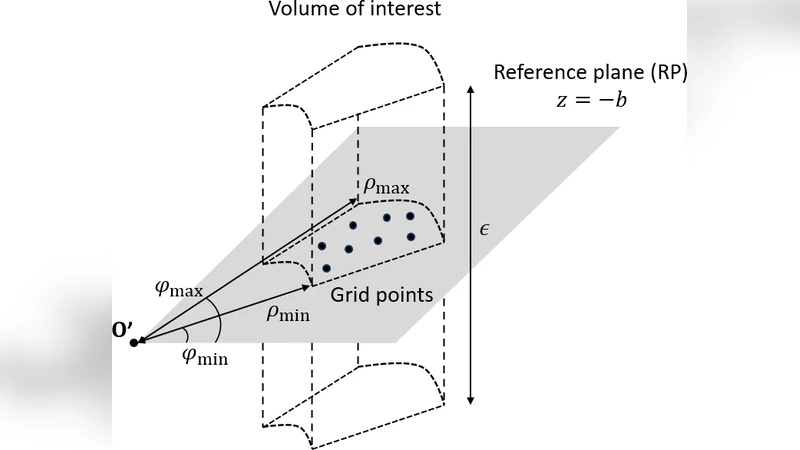
Near-field ultra-massive MIMO (U-MIMO) systems provide enhanced spatial resolution but present challenges for channel estimation, particularly when hybrid architectures are employed. Within this framework, dictionary-based channel estimation schemes are needed to achieve accurate reconstruction from a reduced set of measurements. However, existing near-field dictionaries generally provide full three-dimensional coverage, which is unnecessary when user equipments are primarily located on the ground. In this paper, we propose a novel near-field grid design tailored to this common scenario. Specifically, grid points lie on a reference plane located at an arbitrary height with respect to the U-MIMO system, equipped with a uniform planar array. Furthermore, a channel accuracy metric is used to improve codebook performance, and to remark the limitations of the traditional far-field angular sampling in the near field. Results show that, as long as user equipments are not far from the reference plane, the proposed grid outperforms state-of-the-art designs in both channel estimation accuracy and spectral efficiency.
💡 Research Summary
This paper addresses the channel‑estimation problem in ultra‑massive MIMO (U‑MIMO) systems that employ hybrid analog‑digital architectures. In the near‑field regime, which is typical for the large antenna arrays operating at millimeter‑wave or terahertz frequencies, the conventional far‑field dictionaries become inadequate because they ignore the distance dimension and assume planar wavefronts. Existing near‑field dictionaries try to cover the full three‑dimensional space (azimuth, elevation, range), which leads to very large codebooks and high computational burden for compressed‑sensing (CS) based estimators.
The authors observe that, in most practical deployments, user equipments (UEs) are located on or near a planar surface (e.g., ground, a floor, or a rooftop). Exploiting this fact, they propose a novel “reference‑plane‑based” near‑field dictionary. A reference plane (RP) is placed at an arbitrary height relative to the base‑station array, and all dictionary grid points are constrained to lie on this plane. Consequently, the dictionary samples only the azimuth‑elevation angles together with a limited range offset from the plane, dramatically reducing the number of atoms while still capturing the essential wave‑front curvature for users that are close to the RP.
The system model assumes a uniform planar array (UPA) on the Y‑Z plane with M_H = 101 horizontal and M_V = 11 vertical elements (total M = 1111 antennas). A fully‑connected hybrid architecture with N_RF = 50 RF chains is considered, and the uplink LOS channel is modeled as h_m = β_m e^{−j2πr_m/λ}. Pilot symbols are combined through random ±1/√M analog combiners, whitened, and then processed either by a least‑squares (LS) estimator or by a sparse recovery algorithm. The authors use the polar‑simultaneous orthogonal matching pursuit (P‑SOMP) algorithm with the proposed dictionary.
Two key methodological contributions are highlighted. First, the RP‑based grid design: by limiting the dictionary to a 2‑D surface, the codebook size is reduced by roughly 30 % compared with full‑3D designs, yet the angular and range resolution remains sufficient as long as the UE‑to‑RP distance is within a few meters. Second, a new performance metric, NMSE_opt, is introduced. Unlike the commonly used column coherence, NMSE_opt directly measures the normalized mean‑square error of the reconstructed channel, providing a more meaningful objective for dictionary optimization. Minimizing NMSE_opt often leads to angular sampling densities that differ from the traditional far‑field angular spacing, revealing that far‑field sampling is sub‑optimal in the near‑field regime.
Simulation results consider two scenarios: (i) “on‑dictionary” where the UE direction exactly matches one of the dictionary atoms, and (ii) “off‑dictionary” where the UE direction is random. When the number of observations N_RF·τ exceeds the number of antennas (e.g., τ = 100, N_RF·τ = 5000 > M), the LS estimator already achieves low NMSE in the near field, confirming that abundant measurements make a dictionary unnecessary. However, when observations are limited (N_RF·τ < M), LS performance degrades sharply, while P‑SOMP with the RP‑based dictionary maintains high accuracy. Across a range of UE distances (20–100 m) and for both on‑ and off‑dictionary cases, the proposed design consistently outperforms state‑of‑the‑art full‑3D dictionaries in terms of NMSE (2–3 dB gain) and spectral efficiency (≈10 % increase).
The paper also discusses robustness to mismatches: even when UEs deviate from the RP by a few meters, the performance loss remains modest, confirming the practicality of the approach. Finally, the authors outline future work, including extensions to multi‑user scenarios, adaptive placement of the reference plane for non‑planar environments, and low‑complexity online dictionary updates.
In summary, the work delivers a practically motivated, mathematically sound, and experimentally validated near‑field dictionary design that reduces pilot overhead and computational load while improving channel estimation accuracy and overall system throughput in hybrid massive MIMO deployments.
Comments & Academic Discussion
Loading comments...
Leave a Comment