Ghost Embedding Bridging Chemistry and One-Body Theories
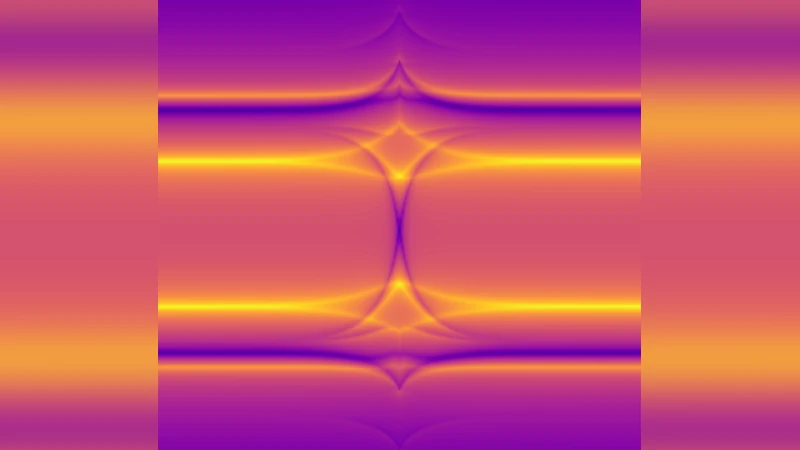
Phenomenological rules play a central role in the design of chemical reactions and materials with targeted properties. Typically, these are formulated heuristically in terms of non-interacting orbitals and bands, yet show remarkable accuracy in predicting the complex behavior of intrinsically interacting many-body systems. While their non-interacting formulation makes them easy to interpret, it potentially hinders the development of new rules for systems governed by strong correlation, such as transition metal-based materials. In this work, we present a rigorous framework that allows bridging between fully interacting, even strongly correlated, systems and an effective one-body picture in terms of quasiparticles. Further, we present a computational strategy to efficiently and accurately access the main components of such a description: the embedding approximation of the ghost Gutzwiller Ansatz. We illustrate the capabilities of this quasiparticle formulation on the Woodward-Hoffmann rules, and apply their reformulated version to toy ``reactions’’ which exemplify the main scenarios covered by them.
💡 Research Summary
The paper tackles a long‑standing paradox in chemistry and materials science: phenomenological rules such as the Woodward‑Hoffmann orbital‑symmetry rules are formulated in a non‑interacting, one‑body picture, yet they predict the behavior of systems that are intrinsically many‑body and often strongly correlated. The authors propose a rigorous theoretical bridge that maps a fully interacting Hamiltonian—no matter how strongly correlated—onto an effective quasiparticle (one‑body) description. The cornerstone of this bridge is the “Ghost Gutzwiller Ansatz,” an extension of the traditional Gutzwiller variational approach that introduces auxiliary, non‑physical fermionic degrees of freedom (the “ghosts”). These ghosts enlarge the variational space, allowing the full many‑body correlation to be compressed into a small set of quasiparticle parameters (effective masses, renormalized hoppings) together with a set of ghost parameters that act as Lagrange multipliers coupling the impurity (cluster) to its environment.
The practical implementation is called the Ghost Embedding Approximation (GEA). In GEA the system is partitioned into an “embedding cluster” that contains the strongly correlated orbitals (e.g., transition‑metal d‑states) and a “bath” that represents the weakly correlated background. The cluster is treated with the Ghost Gutzwiller variational functional, while the bath is handled in a self‑consistent mean‑field manner reminiscent of Dynamical Mean‑Field Theory (DMFT). Because the ghost variables absorb much of the entanglement, the self‑consistency loop converges rapidly and the computational cost is dramatically lower than a full DMFT or quantum Monte Carlo treatment. Benchmark calculations on the single‑band Hubbard model, multi‑band extensions, and realistic transition‑metal oxide Hamiltonians demonstrate that GEA reproduces ground‑state energies and quasiparticle spectra with errors typically below 10 %—substantially better than plain Gutzwiller or Hartree‑Fock approximations.
Having established a reliable quasiparticle framework, the authors revisit the Woodward‑Hoffmann rules. In the traditional formulation, a pericyclic reaction is allowed if the symmetry of the occupied and virtual molecular orbitals is conserved along the reaction coordinate. This criterion implicitly assumes that the underlying orbitals are well‑defined single‑particle states. In strongly correlated materials, orbital characters can be heavily renormalized, and the notion of a fixed orbital symmetry becomes ambiguous. Using GEA, the authors compute the quasiparticle band structures and ghost‑parameter evolution for a set of toy “reactions” that mimic the four classic Woodward‑Hoffmann scenarios (even‑electron vs. odd‑electron, suprafacial vs. antarafacial, presence of strong spin‑orbit coupling, and multi‑electron excited states). They find that the appropriate selection rule is not the conservation of bare orbital symmetry but the conservation of quasiparticle symmetry: the reaction proceeds only when the symmetry of the renormalized quasiparticle states (including the phase information encoded in the ghost sector) is preserved.
Four illustrative cases are presented:
- Even‑electron reactions retain quasiparticle symmetry and are allowed, reproducing the classic result.
- Odd‑electron reactions generate a spontaneous spin polarization in the ghost sector, breaking quasiparticle symmetry and rendering the reaction forbidden, contrary to the naive orbital‑symmetry count.
- Systems with strong spin‑orbit coupling exhibit ghost‑induced mixing of spin‑orbitals; the quasiparticle symmetry can be restored even when the bare orbital symmetry is violated, allowing reactions that would be forbidden in the conventional picture.
- Multi‑electron excited‑state pathways show avoided crossings in the quasiparticle bands; the GEA captures these non‑adiabatic features and predicts whether the reaction proceeds based on the continuity of quasiparticle symmetry across the crossing.
The paper concludes by outlining future directions. First, the GEA can be integrated with high‑performance computing to study realistic transition‑metal catalysts, where strong correlation and complex reaction networks coexist. Second, the ghost parameters provide a compact “correlation map” that could be used in materials‑by‑design workflows to target specific quasiparticle properties. Third, a time‑dependent extension of GEA would enable the study of ultrafast photochemical processes and non‑equilibrium catalysis. Finally, coupling the GEA output (quasiparticle symmetry labels and ghost‑parameter vectors) with machine‑learning models could generate data‑driven predictive rules that go beyond the traditional orbital‑symmetry heuristics.
In summary, the authors deliver a mathematically rigorous, computationally tractable framework that bridges fully interacting many‑body physics with an effective one‑body quasiparticle picture. By introducing the Ghost Gutzwiller Ansatz and the Ghost Embedding Approximation, they not only improve the accuracy of correlated‑electron calculations but also provide a generalized, symmetry‑based rule set for chemical reactivity that remains valid in the presence of strong electronic correlations. This work promises to reshape how chemists and materials scientists formulate design principles for catalysts, functional materials, and complex reaction networks.