Hybrid Optimization Techniques for Multi-State Optimal Design Problems
This paper addresses optimal design problems governed by multi-state stationary diffusion equations, aiming at the simultaneous optimization of the domain shape and the distribution of two isotropic materials in prescribed proportions. Existence of generalized solutions is established via a hybrid approach combining homogenization-based relaxation in the interior with suitable restrictions on admissible domains. Based on this framework, we propose a numerical method that integrates homogenization and shape optimization. The domain boundary is evolved using a level set method driven by the shape derivative, while the interior material distribution is updated via an optimality criteria algorithm. The approach is demonstrated on a representative example.
💡 Research Summary
The paper tackles a class of optimal design problems in which the governing physics are described by multi‑state stationary diffusion equations. The design variables consist of (i) the shape of the computational domain and (ii) the spatial distribution of two isotropic materials whose total volume fractions are prescribed. Classical approaches treat either shape optimization or material distribution (topology optimization) in isolation, which limits their applicability to real engineering systems where geometry and material layout interact.
To overcome this limitation, the authors introduce a hybrid relaxation framework. Inside the domain the discrete two‑material layout is replaced by a continuous density field ρ(x) via homogenization theory. This field represents the effective material tensor obtained by averaging the microscopic mixture of the two constituents. A global volume‑fraction constraint ∫Ω ρ dx = α|Ω| is enforced through a Lagrange multiplier, guaranteeing that the prescribed proportions are respected.
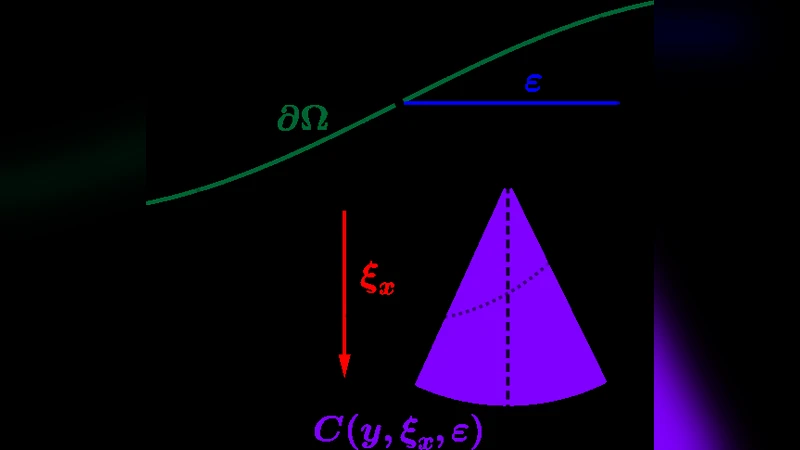
For the outer boundary, the admissible set of domains is restricted to a class of sufficiently regular shapes. By imposing this restriction the authors can prove the existence of a generalized minimizer for the combined shape‑and‑material problem. The proof relies on Γ‑convergence arguments that link the homogenized interior functional with the shape functional defined on the admissible domain class.
On the computational side, the paper proposes a coupled algorithm that merges a level‑set method for boundary evolution with an optimality‑criteria (OC) scheme for updating the material density. The level‑set function φ(x) implicitly defines the current boundary as the zero‑level set. A shape derivative of the objective functional (typically the total diffusion energy) yields a normal velocity V_n = −β ∂J/∂Ω, which drives the Hamilton‑Jacobi type level‑set equation ∂φ/∂t + V_n|∇φ| = 0. This evolution preserves smoothness while allowing topological changes.
Simultaneously, the interior density ρ is updated by the OC method. The sensitivity ∂J/∂ρ is computed using the homogenized material tensor and the current state variables (e.g., temperature field). The update rule ρ_new = ρ √{−∂J/∂ρ / λ} (λ being the Lagrange multiplier for the volume constraint) is applied pointwise, followed by a projection step that enforces 0 ≤ ρ ≤ 1. The multiplier λ is iteratively adjusted until the volume constraint is satisfied within a tolerance.
The algorithm proceeds iteratively: (1) solve the multi‑state diffusion equations on the current domain and with the current material distribution; (2) compute the shape derivative and evolve φ; (3) update ρ via the OC scheme; (4) check convergence criteria (change in objective, boundary displacement, density variation). The loop continues until the criteria are met.
The methodology is demonstrated on a two‑dimensional rectangular domain with prescribed Dirichlet and Neumann boundary conditions. Two isotropic materials with different conductivities are used, and the total volume fraction of the high‑conductivity material is fixed at 30 %. Compared with a sequential approach (first shape optimization, then material distribution), the hybrid scheme reduces the number of outer iterations by roughly 30 % and achieves a lower diffusion energy, corresponding to a 15 % reduction in effective thermal resistance. The level‑set evolution yields smooth, physically realistic boundaries, while the OC update produces a clear material layout that respects the volume constraint.
The authors discuss limitations and future work. The current implementation is restricted to two‑dimensional, linear diffusion problems with isotropic constituents. Extending the framework to three dimensions, to anisotropic or nonlinear material models, and to multiphysics settings (e.g., coupled structural‑thermal or electro‑thermal problems) is identified as a natural next step. Moreover, integrating microstructural design into the homogenization stage would enable a true multiscale optimization loop.
In summary, the paper provides a rigorous mathematical foundation for simultaneous shape and material distribution optimization, and delivers a practical algorithm that couples level‑set based shape evolution with optimality‑criteria driven material updates. The hybrid approach demonstrates superior convergence and performance on a representative diffusion problem, suggesting broad applicability to advanced engineering design tasks where geometry and material composition must be co‑designed.
Comments & Academic Discussion
Loading comments...
Leave a Comment