Evolutionary Advantage of Diversity-Generating Retroelements in Switching Environments
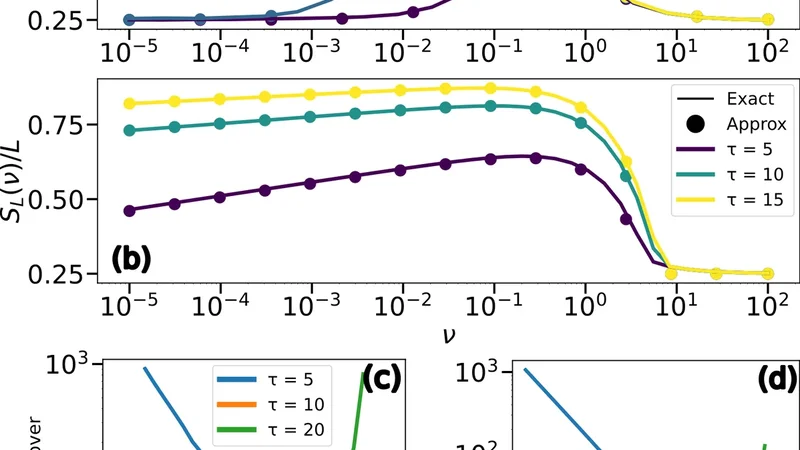
Diversity-Generating Retroelements (DGRs) create rapid, targeted variation within specific genomic regions in phages and bacteria. They operate through stochastic retro-transcription of a template region (TR) into a variable region (VR), which typically encodes ligand-binding proteins. Despite their prevalence, the evolutionary conditions that maintain such hypermutating systems remain unclear. Here we introduce a two-timescale framework separating fast VR diversification from slow TR evolution, allowing the dynamics of DGR-controlled loci to be analytically understood from the TR design point of view. We quantity the fitness gain provided by the diversification mechanism of DGR in the presence of environmental switching with respect to standard mutagenesis. Our framework accounts for observed patterns of DGR activity in human-gut \textit{Bacteroides} and clarifies when constitutive DGR activation is evolutionarily favored.
💡 Research Summary
The paper tackles the long‑standing question of why diversity‑generating retroelements (DGRs), which impose a high mutational load, are widespread in phages and bacteria. The authors introduce a two‑timescale theoretical framework that separates the rapid diversification of the variable region (VR) from the slow evolution of the template region (TR). In the fast timescale, the VR is repeatedly rewritten by error‑prone reverse transcription of the TR, producing a high‑mutation, localized sweep of sequence space each generation. In the slow timescale, the TR itself drifts under selection, gradually reshaping the “design space” from which VR mutations are drawn.
To assess the adaptive value of this mechanism, the authors embed the model in a switching environment where the optimal phenotype changes periodically with period τ. They derive an analytical expression for the expected fitness gain ΔW conferred by DGR activity relative to a baseline model of uniform random mutagenesis. The key result shows that ΔW scales with the factor (1‑e^{‑μ_VR τ})·s minus the cost of mutagenesis (c·μ_VR), where μ_VR is the VR mutation rate, s is the selective advantage of a perfectly adapted genotype, and c is the per‑mutation fitness penalty. When τ is shorter than the average waiting time for a beneficial mutation under standard mutagenesis (i.e., τ < 1/μ_VR), DGRs provide a substantial advantage because they generate many candidate variants each environmental cycle, increasing the probability of hitting the new optimum.
The authors validate the theory with data from human‑gut Bacteroides species, which experience frequent dietary‑driven shifts in nutrient availability. In these microbes, DGRs are highly active, and the observed TR sequences match the model’s prediction of an “optimal design” that maximizes the likelihood of producing beneficial VR variants under the measured switching period.
A further layer of analysis compares constitutive (always‑on) DGR activation with inducible activation that is triggered only upon environmental cues. The model predicts that constitutive activation is favored when the cost of mutations is low and environmental changes are rapid, whereas inducible activation is advantageous when mutation costs are high or the environment is relatively stable. This trade‑off explains the diversity of regulatory strategies observed across DGR‑bearing taxa.
Overall, the study provides a rigorous quantitative framework that clarifies when and why hyper‑mutating DGR systems are evolutionarily maintained. By linking the kinetics of VR diversification, the slow drift of TR, and the statistics of environmental switching, the work demonstrates that DGRs are not merely sources of genetic noise but finely tuned adaptive tools. The authors suggest that the two‑timescale approach could be extended to other systems that generate localized hyper‑mutation, such as antibody diversification in vertebrates, and that future work should integrate regulatory network dynamics and host‑microbe interactions to fully capture the ecological relevance of DGRs.
Comments & Academic Discussion
Loading comments...
Leave a Comment