Neutral species facilitate coexistence among cyclically competing species under birth and death processes
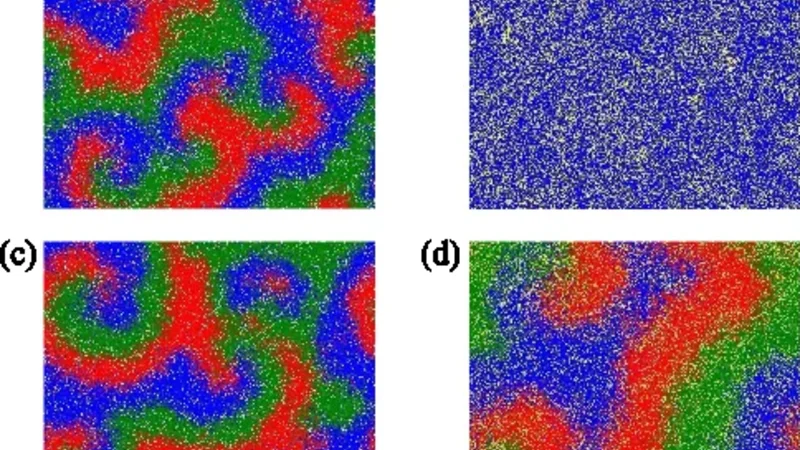
Natural birth and death are fundamental mechanisms of population dynamics in ecosystems and have played pivotal roles in shaping population dynamics. Nevertheless, in studies of cyclic competition systems governed by the rock-paper-scissors (RPS) game, these mechanisms have often been ignored in analyses of biodiversity. On the other hand, given the prevalence and profound impact on biodiversity, understanding how higher-order interactions (HOIs) can affect biodiversity is one of the most challenging issues, and thus HOIs have been continuously studied for their effects on biodiversity in systems of cyclic competing populations, with a focus on neutral species. However, in real ecosystems, species can evolve and die naturally or be preyed upon by predators, whereas previous studies have considered only classic reaction rules among three species with a neutral, nonparticipant species. To identify how neutral species can affect the biodiversity of the RPS system when species’ natural birth and death are assumed, we consider a model of neutral species in higher-order interactions within the spatial RPS system, assuming birth-and-death processes. Extensive simulations show that when neutral species interfere positively, they dominate the available space, thereby reducing the proportion of other species. Conversely, when the interference is harmful, the density of competing species increases. In addition, unlike traditional RPS dynamics, biodiversity can be effectively maintained even in high-mobility regimes. Our study reaffirms the critical role of neutral species in preserving biodiversity.
💡 Research Summary
The paper investigates how a neutral, non‑participating species influences biodiversity in a spatial rock‑paper‑scissors (RPS) system when natural birth and death processes are explicitly incorporated. Traditional RPS studies usually assume a fixed total population and only pairwise interactions (A beats B, B beats C, C beats A). In contrast, the authors introduce (i) stochastic birth (probability b) and death (probability d) events that allow the total number of individuals to fluctuate, and (ii) higher‑order interactions (HOIs) mediated by a neutral species N. N does not directly compete with A, B, or C, but it can affect the interaction between any adjacent pair of competing species. The effect is parameterised by a coefficient α: when α > 0 the interaction is positively interfered (N suppresses the competition), and when α < 0 the interference is harmful (N enhances the competition).
The model is implemented on a two‑dimensional lattice. Each site can be occupied by one of the three cyclic competitors (A, B, C) or by the neutral species N, or be empty. The elementary processes are: (1) birth – an empty site becomes occupied by a neighbouring individual with rate b; (2) death – an occupied site becomes empty with rate d; (3) mobility – an individual swaps with a neighbour with rate m; (4) HOI – if N is adjacent to a competing pair, the pair’s interaction rate is multiplied by (1 ± α) depending on the sign of α. The authors explore a broad parameter space (b, d, m, α) using extensive Monte‑Carlo simulations.
Key findings can be summarised as follows.
- Positive HOI (α > 0) promotes neutral‑species dominance. N spreads rapidly, occupying large patches of the lattice and thereby fragmenting the spatial domains of A, B, C. This fragmentation prevents any single competitor from forming a large, coherent wave front, which is the usual route to species extinction in high‑mobility RPS systems. Consequently, biodiversity is maintained even when the mobility parameter m is large, a regime where classic RPS models predict rapid loss of coexistence.
- Negative HOI (α < 0) enhances the density of the cyclic competitors. By amplifying the effective competition between A, B, C, N indirectly raises their reproduction rates. The total population density rises, but the three species still display the characteristic rotating spiral patterns, and coexistence persists.
- Birth‑death balance (b/d) modulates the stability of the system. When the ratio r = b/d is low (high death relative to birth), the system becomes more vulnerable to stochastic extinctions, especially if α is near zero. In this regime, high mobility again leads to dominance by a single species, reproducing the classic RPS outcome.
- Phase‑diagram analysis. By scanning (r, m, α) the authors identify three broad regimes: a coexistence region where all four types survive, a dominance region where the neutral species outcompetes the cyclic trio, and an extinction region where one of A, B, C eliminates the others. The coexistence region expands dramatically for α > 0, showing that positive HOI can counteract the destabilising effect of high mobility.
The study provides several conceptual advances. First, it demonstrates that incorporating realistic demographic processes (birth and death) fundamentally alters the dynamics of cyclic competition. Second, it shows that a neutral species, when engaged in higher‑order interactions, can act as an “ecological engineer” that reshapes spatial patterns and stabilises biodiversity. Third, the work challenges the widely held notion that high mobility inevitably destroys coexistence in RPS systems; instead, the presence of a positively interfering neutral species can preserve diversity even under rapid dispersal.
From an applied perspective, the results suggest that introducing or supporting neutral organisms (e.g., non‑predatory plants, habitat‑modifying microbes) could be a viable strategy for conserving biodiversity in fragmented or highly mobile ecosystems. The authors propose that future extensions could include multiple neutral species, heterogeneous mobility, or temporally varying environmental resources, which would bring the model even closer to natural ecosystems and help design robust conservation policies.
In summary, by coupling stochastic birth‑death dynamics with higher‑order neutral‑species interactions, the paper uncovers a robust mechanism through which biodiversity can be maintained in cyclically competing communities, especially under conditions that would otherwise lead to collapse in traditional rock‑paper‑scissors models.
Comments & Academic Discussion
Loading comments...
Leave a Comment