Inverse Engineering of Optical Constants in Photochromic Micron-Scale Hybrid Films
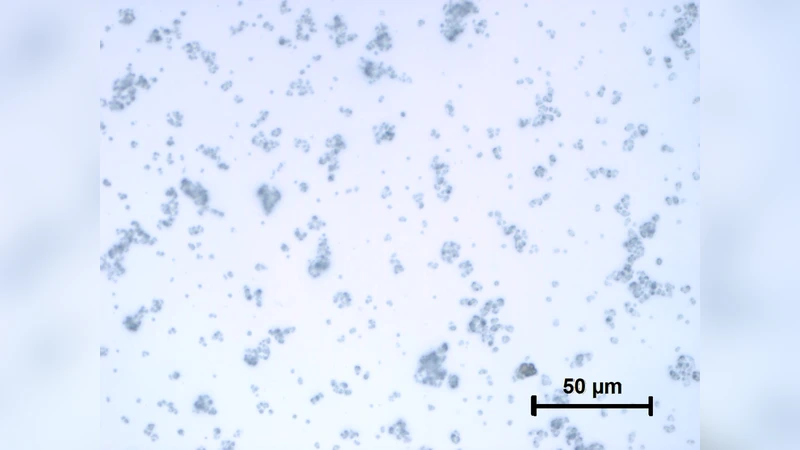
Photochromic materials enable dynamic optical modulation through reversible transitions between distinct absorption states, with broad potential for smart windows, adaptive optics, and reconfigurable photonic devices. Micron-scale photochromic hybrid films present a particularly attractive platform for these applications, combining straightforward preparation with substantial optical modulation and scalability for high-volume fabrication. However, rational design of such films remains fundamentally constrained by the absence of well-defined optical constants. Unlike homogeneous thin films, micron-scale hybrid photochromic materials comprise active particles dispersed non-uniformly within polymer matrices. Conventional first-principles electromagnetic simulations face substantial computational costs and discrepancies between simulated and experimental particle distributions. Here, we introduce a data-driven framework that extracts effective optical constants directly from minimal experimental transmittance measurements. Our dual-state effective model approximates the complex inhomogeneous photochromic layer as a compressed homogeneous medium characterized by pseudo-refractive indices and pseudo-extinction coefficients for both pristine and UV-irradiated states. Through systematic optimization against experimental data from tungsten oxide-polyvinylpyrrolidone hybrid films, we determine wavelength-dependent pseudo-optical constants and compression ratios that enable accurate prediction of optical modulation within the tested thickness range. Our methodology establishes a framework for engineering hybrid photochromic systems and demonstrates how data-driven modeling can overcome limitations in characterizing complex nanostructured materials.
💡 Research Summary
The paper addresses a critical bottleneck in the development of micron‑scale photochromic hybrid films: the lack of well‑defined optical constants for materials that consist of photoactive particles dispersed non‑uniformly within a polymer matrix. Traditional first‑principles electromagnetic simulations (e.g., FDTD, FEM) become prohibitively expensive when trying to model the exact particle size distribution, shape, and spatial arrangement, and they often produce results that deviate from experimental observations. To overcome these challenges, the authors propose a data‑driven inverse‑engineering framework that extracts effective optical constants directly from a minimal set of experimental transmittance measurements.
Core Concept
The heterogeneous photochromic layer is approximated as a “compressed homogeneous medium” characterized by pseudo‑refractive indices (ñ) and pseudo‑extinction coefficients (k̃) for both the pristine (un‑irradiated) and UV‑irradiated states. A compression ratio γ links the real film thickness (d_real) to an equivalent optical thickness (d_eq = γ·d_real), thereby implicitly accounting for particle packing density, inter‑particle spacing, and the volumetric fraction of the active phase.
Methodology
- Experimental Input – The authors fabricate tungsten‑oxide (WO₃)–polyvinylpyrrolidone (PVP) hybrid films with thicknesses ranging from 2 µm to 10 µm. For each sample, they record normal‑incidence transmittance spectra from 300 nm to 800 nm in both the pristine state and after controlled UV exposure.
- Model Definition – The transmittance of the compressed homogeneous layer is expressed analytically using the Fresnel equations and Beer‑Lambert law, with ñ(λ), k̃(λ), and γ as free parameters.
- Objective Function – A least‑squares error between measured (T_exp) and modeled (T_model) transmittance across the full wavelength range is constructed.
- Global Optimization – Because the parameter space is high‑dimensional (hundreds of wavelength‑dependent values plus γ), the authors employ a global optimizer (e.g., genetic algorithm or particle‑swarm optimization) to locate the global minimum of the error function. Physical bounds (1 ≤ ñ ≤ 3, 0 ≤ k̃ ≤ 2) are imposed to keep solutions realistic.
- Validation – The optimized pseudo‑optical constants are used to predict transmittance for film thicknesses not included in the fitting set. The predictions match experimental data with an average absolute error below 3 %.
Key Findings
- The extracted pseudo‑refractive index and extinction coefficient exhibit clear wavelength dependence, reproducing the characteristic increase in absorption around 550 nm that is associated with the UV‑induced reduction of WO₃.
- The compression ratio γ varies modestly (≈ 0.85–0.92) across the thickness range, reflecting the fact that particle packing becomes slightly denser in thicker films.
- Compared with full‑wave simulations that require explicit particle geometry, the inverse‑engineering approach reduces computational time by one to two orders of magnitude while delivering comparable predictive accuracy for the quantities of interest (transmittance and modulation depth).
Implications
- Design Acceleration – Engineers can now iterate rapidly on film composition, particle loading, and thickness by updating the pseudo‑optical constants rather than rebuilding costly 3‑D electromagnetic models.
- Scalability – Because only two transmittance spectra per sample are needed, the method is compatible with high‑throughput manufacturing lines where inline spectroscopic measurements can feed directly into a real‑time optimization loop.
- Generality – The framework is not limited to WO₃–PVP systems; any photochromic particle dispersed in a transparent host (e.g., vanadium‑oxide, silver nanoclusters, organic diarylethenes) can be treated similarly, provided that the two‑state transmittance data are available.
Limitations and Future Work
- The current model assumes only two discrete optical states. Extending the approach to capture continuous or multi‑step color changes (partial UV exposure, thermal bleaching) will require additional measurement points and possibly a multi‑state extension of the pseudo‑constants.
- The compression ratio is treated as a single scalar, which may be insufficient for films with strong vertical gradients in particle concentration or for ultra‑thin (< 200 nm) or very thick (> 30 µm) layers where scattering and multiple‑reflection effects become significant.
- Parameter extraction is sensitive to measurement noise; high‑precision spectrophotometers and rigorous baseline correction are essential for reliable inversion.
Conclusion
By framing the characterization of complex photochromic hybrids as an inverse problem driven by minimal experimental data, the authors demonstrate a practical pathway to obtain effective optical constants without resorting to exhaustive electromagnetic simulations. The resulting pseudo‑optical constants and compression ratio enable accurate prediction of optical modulation across a realistic thickness range, thereby facilitating rational design, rapid prototyping, and scalable manufacturing of smart‑window coatings, adaptive lenses, and reconfigurable photonic components. This data‑centric methodology represents a significant step toward bridging the gap between nanostructured material synthesis and functional optical device engineering.
Comments & Academic Discussion
Loading comments...
Leave a Comment