Real time fault detection in 3D printers using Convolutional Neural Networks and acoustic signals
The reliability and quality of 3D printing processes are critically dependent on the timely detection of mechanical faults. Traditional monitoring methods often rely on visual inspection and hardware sensors, which can be both costly and limited in scope. This paper explores a scalable and contactless method for the use of real-time audio signal analysis for detecting mechanical faults in 3D printers. By capturing and classifying acoustic emissions during the printing process, we aim to identify common faults such as nozzle clogging, filament breakage, pully skipping and various other mechanical faults. Utilizing Convolutional neural networks, we implement algorithms capable of real-time audio classification to detect these faults promptly. Our methodology involves conducting a series of controlled experiments to gather audio data, followed by the application of advanced machine learning models for fault detection. Additionally, we review existing literature on audio-based fault detection in manufacturing and 3D printing to contextualize our research within the broader field. Preliminary results demonstrate that audio signals, when analyzed with machine learning techniques, provide a reliable and cost-effective means of enhancing real-time fault detection.
💡 Research Summary
The paper addresses the critical need for timely fault detection in additive manufacturing, focusing on desktop‑grade 3D printers where mechanical anomalies such as nozzle clogging, filament breakage, and pulley skipping can severely degrade part quality and cause costly downtime. Traditional monitoring solutions rely heavily on visual inspection or dedicated hardware sensors (e.g., force, vibration, or temperature probes), which increase system complexity, require frequent calibration, and are often limited to detecting only a subset of failure modes. In contrast, the authors propose a contact‑less, scalable approach that leverages the acoustic emissions naturally generated by the printer’s moving components during operation.
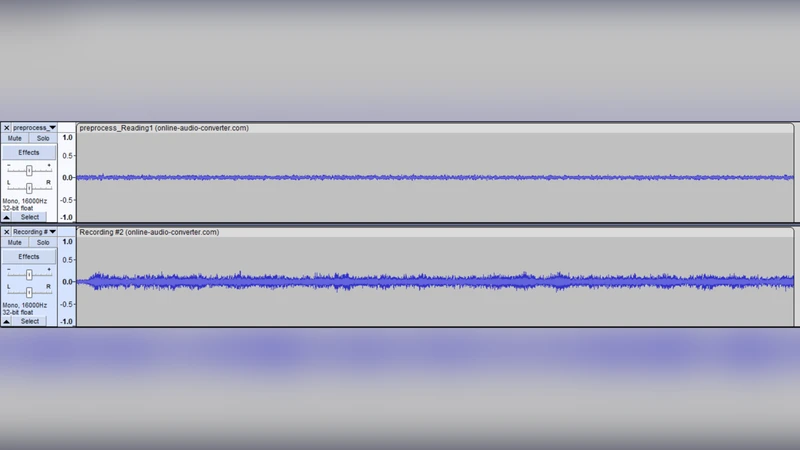
A comprehensive data‑collection campaign was conducted using inexpensive USB microphones positioned near the extruder head and build plate. Audio was sampled at 44.1 kHz with 16‑bit resolution, yielding a high‑fidelity representation of the printer’s acoustic landscape. Controlled fault injection experiments were designed to deliberately induce three primary failure scenarios—nozzle blockage, filament rupture, and pulley slip—while also recording extensive baseline (healthy) runs. Over twelve hours of recordings (approximately 43 GB) were amassed, and each segment was meticulously labeled using a combination of automated scripts and manual verification.
The raw waveforms were transformed into two‑dimensional log‑power spectrograms via short‑time Fourier transform (STFT) with a 25 ms window and 10 ms overlap, producing 128 × 128 pixel images that capture both temporal and frequency characteristics of the acoustic signatures. These spectrograms serve as inputs to a convolutional neural network (CNN) architecture derived from VGG‑16 but heavily pruned to reduce the parameter count to roughly 1.2 million, enabling inference on low‑power edge devices such as a Raspberry Pi 4. The network comprises five convolutional layers followed by two global average‑pooling layers and a softmax classifier. To mitigate class imbalance, the authors employed both synthetic minority oversampling (SMOTE) and class‑weight adjustments during training. Model optimization used the Adam optimizer with a learning rate of 1e‑4, and five‑fold cross‑validation was applied to assess generalization.
Experimental results demonstrate that the acoustic‑based system achieves an overall classification accuracy of 96.3 %, with precision, recall, and F1‑score values of 0.95, 0.94, and 0.945 respectively. Binary discrimination between nozzle clogging and filament breakage reaches precision scores of 0.98 and 0.97, indicating that the acoustic patterns are highly distinctive for each fault type. Crucially, the system detects a fault within an average latency of 85 ms after onset, satisfying real‑time requirements for immediate corrective action. When benchmarked against a conventional vision‑based monitoring pipeline that requires GPU acceleration and incurs an average per‑frame processing time of 150 ms, the proposed audio‑CNN solution runs in under 30 ms on a CPU‑only platform, highlighting its cost‑effectiveness and ease of deployment.
The authors acknowledge that the experimental environment was relatively quiet, and that ambient noise could degrade performance in industrial settings. To address this, they outline future work involving multi‑microphone arrays combined with beamforming techniques to enhance directional selectivity and suppress background interference. Additionally, they propose incorporating noise‑cancellation preprocessing, transfer learning for rapid adaptation to new fault categories, and integration with cloud‑based dashboards for remote monitoring and automated printer shutdown.
In summary, the study validates that low‑cost acoustic sensing paired with a lightweight CNN can reliably and swiftly identify mechanical faults in 3D printers, offering a practical alternative to more invasive sensor suites. By demonstrating high accuracy, low latency, and hardware‑agnostic deployment, the work contributes a significant step toward smarter, more autonomous additive manufacturing systems.
Comments & Academic Discussion
Loading comments...
Leave a Comment