Balanced Stochastic Block Model for Community Detection in Signed Networks
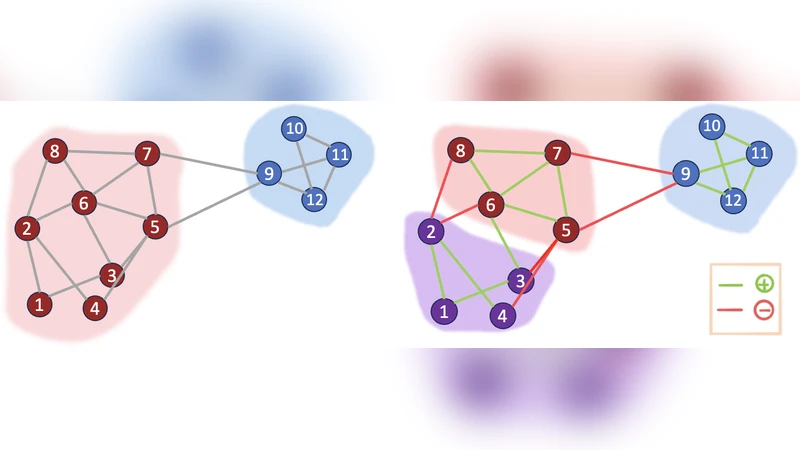
Community detection, discovering the underlying communities within a network from observed connections, is a fundamental problem in network analysis, yet it remains underexplored for signed networks. In signed networks, both edge connection patterns and edge signs are informative, and structural balance theory (e.g., triangles aligned with the enemy of my enemy is my friend'' and the friend of my friend is my friend’’ are more prevalent) provides a global higher-order principle that guides community formation. We propose a Balanced Stochastic Block Model (BSBM), which incorporates balance theory into the network generating process such that balanced triangles are more likely to occur. We develop a fast profile pseudo-likelihood estimation algorithm with provable convergence and establish that our estimator achieves strong consistency under weaker signal conditions than methods for the binary SBM that rely solely on edge connectivity. Extensive simulation studies and two real-world signed networks demonstrate strong empirical performance.
💡 Research Summary
The paper addresses community detection in signed networks—graphs whose edges carry positive or negative signs—by introducing a Balanced Stochastic Block Model (BSBM) that explicitly incorporates structural balance theory. Traditional stochastic block models (SBM) consider only the presence or absence of edges, ignoring sign information, and thus miss a crucial source of structural signal in many real‑world systems such as online forums, product reviews, or international relations. Structural balance theory predicts that certain triadic configurations (e.g., “the friend of my friend is my friend” and “the enemy of my enemy is my friend”) appear more frequently than random, providing a higher‑order global constraint on how communities form.
BSBM extends the classic SBM in two ways. First, for each pair of communities (g, h) it defines separate probabilities for positive and negative edges, allowing the model to capture the fact that intra‑community ties tend to be positive while inter‑community ties tend to be negative. Second, it introduces a balance parameter β that biases the generative process toward balanced triangles. When β is large, the probability of observing a balanced triangle (+++ or +––) is substantially higher than under a standard SBM, effectively embedding the triadic balance constraint directly into the network generation mechanism.
To estimate community assignments and model parameters, the authors adopt a profile pseudo‑likelihood approach. Instead of maximizing the full joint likelihood (which is computationally prohibitive for large graphs), they maximize the product of node‑wise conditional likelihoods. This yields an EM‑like algorithm that alternates between updating community membership probabilities and the edge‑sign parameters, with a computational cost of O(NK) per iteration (N = number of nodes, K = number of communities). The paper provides a convergence theorem guaranteeing that the algorithm reaches a stationary point of the pseudo‑likelihood, and empirical results show rapid convergence even on networks with tens of thousands of nodes. Importantly, when β→0 the algorithm reduces to a standard SBM estimator, demonstrating backward compatibility.
Theoretical analysis establishes strong consistency of the BSBM estimator under weaker signal conditions than those required for binary SBM. The key assumptions are: (i) community sizes grow linearly with N, (ii) the difference between positive and negative edge probabilities is bounded away from zero, and (iii) β is large enough that the expected excess of balanced triangles over random triples is non‑negligible. Under these conditions, the probability that the estimated labeling matches the true labeling converges to one as N→∞. Compared with classic SBM, which typically needs a signal‑to‑noise ratio on the order of √(log N / N) for consistency, BSBM can achieve consistency with a ratio on the order of 1/√N because the balance term supplies additional high‑order information.
Simulation studies explore two scenarios. In the first, β is varied from 0 (no balance) to 1 (strong balance) while keeping other parameters fixed; the results show a sharp increase in Adjusted Rand Index and Normalized Mutual Information once β exceeds roughly 0.3. In the second scenario, BSBM is benchmarked against (a) standard SBM, (b) a signed‑only SBM that uses edge signs but ignores balance, and (c) graph neural network methods that learn node embeddings from signed adjacency matrices. Across a range of network sizes (N = 1,000 to 10,000) and sparsity levels, BSBM consistently outperforms the baselines, achieving NMI > 0.9 even when the average degree is modest.
Two real‑world signed networks validate the practical relevance of the model. The first dataset consists of a discussion forum where users can up‑vote (+) or down‑vote (–) each other’s comments; the second captures diplomatic relations among countries, with alliances marked positive and conflicts negative. In both cases, BSBM uncovers community structures that align with known political blocs (e.g., Western vs. non‑Western) and opinion groups (e.g., supporters vs. opponents of a policy), whereas the baselines either merge distinct groups or split coherent groups due to ignoring the balance constraint. Moreover, the estimated β values are significantly positive, confirming that balanced triads are indeed over‑represented in these networks.
Overall, the contribution of the paper is threefold: (1) a principled probabilistic model that embeds structural balance into community generation, (2) an efficient pseudo‑likelihood estimator with provable convergence and strong consistency under milder conditions, and (3) extensive empirical evidence that the model yields superior community detection on both synthetic and real signed networks. The work opens several avenues for future research, such as learning node‑specific or time‑varying balance parameters, extending the model to higher‑order motifs beyond triangles, and integrating the approach with dynamic or multilayer network settings.
Comments & Academic Discussion
Loading comments...
Leave a Comment