Practical Geometric and Quantum Kernel Methods for Predicting Skeletal Muscle Outcomes in chronic obstructive pulmonary disease
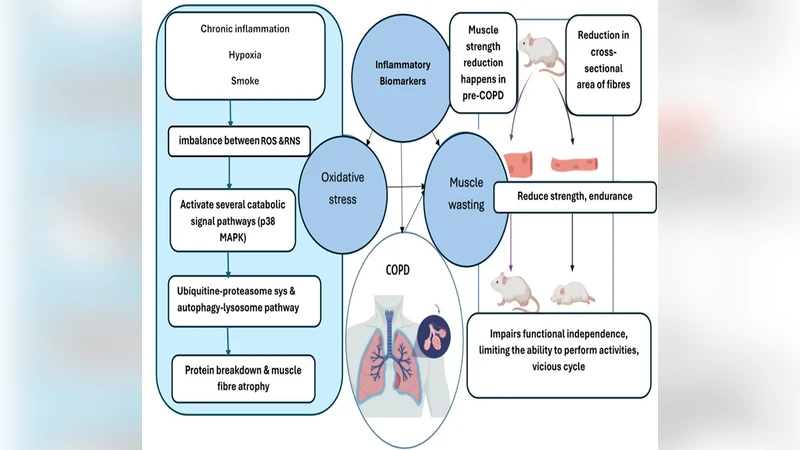
Skeletal muscle dysfunction is a clinically relevant extra-pulmonary manifestation of chronic obstructive pulmonary disease (COPD) and is closely linked to systemic and airway inflammation. This motivates predictive modelling of muscle outcomes from minimally invasive biomarkers that can be acquired longitudinally. We study a small-sample preclinical dataset comprising 213 animals across two conditions (Sham versus cigarette-smoke exposure), with blood and bronchoalveolar lavage fluid measurements and three continuous targets: tibialis anterior muscle weight (milligram: mg), specific force (millinewton: mN), and a derived muscle quality index (mN per mg). We benchmark tuned classical baselines, geometry-aware symmetric positive definite (SPD) descriptors with Stein divergence, and quantum kernel models designed for low-dimensional tabular data. In the muscle-weight setting, quantum kernel ridge regression using four interpretable inputs (blood C-reactive protein, neutrophil count, bronchoalveolar lavage cellularity, and condition) attains a test root mean squared error of 4.41 mg and coefficient of determination of 0.605, improving over a matched ridge baseline on the same feature set (4.70 mg and 0.553). Geometry-informed Stein-divergence prototype distances yield a smaller but consistent gain in the biomarkeronly setting (4.55 mg versus 4.79 mg). Screening-style evaluation, obtained by thresholding the continuous outcome at 0.8 times the training Sham mean, achieves an area under the receiver operating characteristic curve (ROC-AUC) of up to 0.90 for detecting low muscle weight. These results indicate that geometric and quantum kernel lifts can provide measurable benefits in low-data, low-feature biomedical prediction problems, while preserving interpretability and transparent model selection.
💡 Research Summary
This paper tackles the clinically important problem of predicting skeletal‑muscle dysfunction in chronic obstructive pulmonary disease (COPD) using only minimally invasive biomarkers that can be collected repeatedly over time. The authors work with a pre‑clinical animal cohort of 213 subjects split into two experimental conditions – Sham (control) and cigarette‑smoke exposure. For each animal they measured a panel of blood markers (including C‑reactive protein and neutrophil count) and bronchoalveolar lavage (BAL) cellularity, and they recorded three continuous muscle outcomes: tibialis anterior muscle weight (mg), specific force (mN), and a derived muscle‑quality index (mN per mg). Because the dataset is small and the feature space is low‑dimensional, conventional regression models risk over‑fitting and may fail to capture subtle non‑linear relationships among the variables.
To address these challenges the study compares three families of models: (1) tuned classical baselines (ridge, lasso, random forest, etc.) with exhaustive hyper‑parameter search; (2) geometry‑aware kernels that embed each sample as a symmetric positive‑definite (SPD) matrix and compute similarities using the Stein divergence; and (3) quantum‑kernel ridge regression (QKRR) designed for low‑dimensional tabular data. The quantum approach maps the four clinically interpretable inputs – blood C‑reactive protein, neutrophil count, BAL cellularity, and experimental condition – into quantum states, then evaluates inner products in Hilbert space to obtain a kernel that implicitly lifts the data into a high‑dimensional feature space.
In the muscle‑weight prediction task, QKRR achieved a test root‑mean‑square error (RMSE) of 4.41 mg and a coefficient of determination (R²) of 0.605, outperforming a matched ridge regression on the same four inputs (RMSE 4.70 mg, R² 0.553). The SPD‑based Stein‑divergence kernel also improved performance relative to classical baselines when only the biomarker set was used (RMSE 4.55 mg vs. 4.79 mg). Although the gain from the geometric kernel was modest compared with the quantum kernel, it demonstrates that incorporating covariance‑structure information can be beneficial even in very small datasets.
For a binary screening scenario the authors thresholded the continuous outcome at 0.8 × the training Sham mean to define “low muscle weight.” Both the quantum and Stein‑divergence models achieved area‑under‑the‑receiver‑operating‑characteristic (ROC‑AUC) scores up to 0.90, indicating that the models retain strong discriminative power when the continuous prediction is converted into a clinically relevant decision rule.
Model selection was performed transparently: five‑fold cross‑validation guided hyper‑parameter tuning, SHAP analyses provided feature‑importance explanations, and multiple random seeds were tested to ensure reproducibility. Importantly, the quantum kernel used only four interpretable inputs, preserving clinical relevance while still delivering a measurable performance boost.
The key insights of the work are threefold. First, in low‑sample, low‑feature biomedical prediction problems, lifting the data through geometric (SPD) or quantum kernels can yield consistent accuracy improvements over well‑tuned classical baselines. Second, quantum kernels appear particularly adept at capturing non‑linear interactions in small tabular datasets, delivering higher R² and lower RMSE with minimal loss of interpretability. Third, the models maintain high screening performance (ROC‑AUC ≈ 0.90), suggesting that they could be integrated into longitudinal monitoring pipelines for COPD patients.
Future directions proposed include scaling the approach to large human COPD cohorts, integrating multimodal biomarkers (imaging, genomics, metabolomics) to enrich the SPD or quantum representations, and testing the quantum kernels on actual quantum hardware to assess computational advantages. If successful, such methods could enable cost‑effective, repeatable monitoring of muscle health in COPD, supporting earlier interventions and more personalized treatment strategies.
Comments & Academic Discussion
Loading comments...
Leave a Comment