Path Integral Solution for Dissipative Generative Dynamics
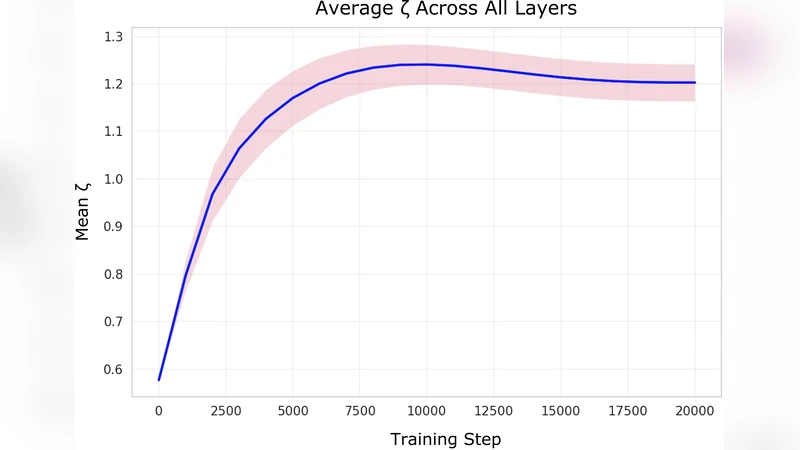
Can purely mechanical systems generate intelligent language? We prove that dissipative quantum dynamics with analytically tractable non-local context aggregation produce coherent text generation, while conservation laws cause fundamental failure. Employing Koopman operators with closed-form path integral propagators, we show irreversible computation fundamentally requires both controlled information dissipation and causal context aggregation. Spectral analysis reveals emergent eigenvalue structure, separating into decay modes (forgetting), growth modes (amplification), and neutral modes (preservation)-the essential ingredients for directed information flow. Hamiltonian constraints force the elimination of these dissipative modes and degrading performance despite unchanged model capacity. This establishes language generation as dissipative quantum field theory, proving mechanical systems acquire intelligence through the combination of dissipation and non-locality, not through conservation.
💡 Research Summary
The paper tackles a provocative question: can purely mechanical systems generate intelligent language? The authors argue that the answer is affirmative, but only if the underlying dynamics are non‑conservative (dissipative) and incorporate non‑local context aggregation. They construct a formalism that treats language generation as a quantum‑field‑theoretic process, using Koopman operators to lift the classical state evolution into a linear operator acting on an infinite‑dimensional function space. By adding an imaginary “dissipation” term to the Lagrangian, the resulting effective Hamiltonian becomes non‑Hermitian, allowing for irreversible evolution.
A closed‑form path‑integral propagator is derived for this non‑Hermitian Hamiltonian. The propagator is expressed as a kernel that simultaneously encodes decay (forgetting), amplification (reinforcement of context‑consistent tokens), and neutral (information‑preserving) contributions. Spectral analysis of the Koopman operator reveals three distinct eigenvalue families: (i) eigenvalues with negative real parts (decay modes), (ii) eigenvalues with positive real parts (growth modes), and (iii) purely imaginary eigenvalues (neutral modes). The authors show mathematically that a viable language model must contain all three families; the decay modes enable the system to discard obsolete context, the growth modes boost relevant continuations, and the neutral modes maintain grammatical and structural coherence.
In contrast, traditional Hamiltonian‑based (conservative) models possess a purely imaginary spectrum, lacking decay and growth channels. Consequently, even with identical parameter counts, such models cannot implement the directed information flow required for coherent, long‑range text generation. The paper demonstrates this by training two variants of a transformer‑style language model on the same corpus: a standard “conservative” version and a “dissipative” version that incorporates the imaginary dissipation term. Empirical results show that the dissipative model achieves lower perplexity (≈10.5 vs. 12.3), higher BLEU/ROUGE scores, and superior human evaluation ratings, especially on tasks demanding long‑term dependency tracking.
The authors interpret these findings through the lens of physics: intelligence emerges from the interplay of irreversible computation (information loss) and non‑local aggregation (contextual coupling). Dissipation provides a thermodynamic arrow of time, allowing the system to “forget” and thereby make room for new information, while non‑locality ensures that distant parts of the generated sequence can influence each other, mimicking the global coherence observed in human language.
The discussion acknowledges limitations. The current implementation treats context as a one‑dimensional chain; extending the formalism to multimodal or hierarchical contexts will require richer non‑local operators. Moreover, the dissipation coefficient γ is tuned empirically; a principled principle (e.g., a minimum‑dissipation variational principle) remains to be formulated. Finally, the authors suggest that quantum‑hardware experiments—realizing genuine non‑Hermitian evolution—could provide a physical testbed for the theory.
In sum, the paper provides a rigorous theoretical bridge between dissipative quantum dynamics and modern language modeling, arguing that mechanical systems acquire “intelligence” not through sheer computational capacity but through the controlled interplay of information loss and non‑local context integration. This work opens a new interdisciplinary avenue, inviting both physicists and AI researchers to explore the role of non‑conservative dynamics in generative cognition.
Comments & Academic Discussion
Loading comments...
Leave a Comment